Two narrators tell the story of the simmering tensions between their two communities as they travel out to a new planet, colonise it, then destroy themselves when the tensions turn into outright war.Adam Roberts is a new writer completely in command of the SF genre. This is a novel that is at once entertaining and philosophical. The attitudes and prejudices of its characters are subtlety drawn and ring completely true despite the alien circumstances they find themselves in. The grasp of science and its impact on people is instinctive. But above all it is the epic and colourful world building that marks SALT out - the planet Salt rivals Dune in its desolation and is a suitably biblical setting for a novel that is powered by the corrupting influence of imperfectly remembered religions on distant societies.From the early scenes set on a colony ship towed by a massive ice meteorite, to the description of a planet covered in sodium chloride, to the chilling narrative of a world sliding into its first war, this is a novel from a writer who shouts star quality.
Adam Roberts (born 1965) is an academic, critic and novelist. He also writes parodies under the pseudonyms of A.R.R.R. Roberts, A3R Roberts and Don Brine. He also blogs at The Valve, a group blog devoted to literature and cultural studies.
He has a degree in English from the University of Aberdeen and a PhD from Cambridge University on Robert Browning and the Classics. He teaches English literature and creative writing at Royal Holloway, University of London. Adam Roberts has been nominated twice for the Arthur C. Clarke Award: in 2001, for his debut novel, Salt, and in 2007, for Gradisil.
Романът "Сол" на Адъм Робъртс е твърда научна фантастика на много добро ниво, който ми беше интересен до края си. По нищо не личи, че е дебют!
"Сол" - това е името на негостоприемната планета, станала дом за част от разселващото се почти на сляпо сред Космоса човечество.
Но за съжаление, заселниците носят със себе си всички слабости и проблеми, съпътствали ги и на Земята.
Робъртс описва един суров свят, на който обаче може да се оцелее. Основен проблем се оказва пренесената зараза на религията, която може да доведе само и единствено до война. Така, вместо да си сътрудничат, хората се заемат да си пречат и да се избиват - безсмислено, жестоко и изобретателно.
Разказът се води от основно от перспективата на Барлей - президент/диктатор на Сенаар, общност основана от религиозни фанатици и от тази на Петжаа, обикновен алсианец, превърнал се в изобретателен и неумолим партизански командир, отмъстител за разрушения анархистки рай на своето общество.
По този начин успяваме да следим напълно абсурдните реакции на двете общности и да разберем, че човешката природа може да се измени трудно. Неразбирането на чуждия е абсолютно фундаментално в тези отношения и е предпоставка за все повече конфликти и проблеми.
Препоръчвам.
P.S. Имам забележки по превода и корицата естествено е отвратителна, но пък по-важно е, че въобще е била издадена на български. :)
Salt is an interesting sort of book; it does have a plot, but really the central point is not the setting (the planet Salt) or background, though we do see that, but a clash between two different ideologies. Roberts handles it pretty cleverly: as soon as you find yourself sympathising with one side, they do something awful. The voices are clever, too — more Barlei than Petja, because he reveals who he is and his self-satisfied, propagandist agenda with every word. I could never quite sympathise with his side of things, given that. I didn’t really side with either of them: it seemed like such a typical case of two different ways of life clashing, with no one really trying to understand the other — with the very act of trying to understand the other even being part of the problem, because they were just so incompatible.
The only place the voice really fails for me is when Rhoda Titus takes over narrating. It feels like the story just trickles to a stop there; there’s no resolution. Now, maybe the story warrants none; maybe there is none. But when you’re writing a book you can’t just let it dribble into silence in this awkward way.
It’s a clever/interesting set-up, and well-written for the most part — some of the passages about the landscape of Salt are gorgeous, and the voice of President Barlei is perfect too (unless, uh, you’re meant to like him and not see right through him). Just failed to satisfy when it comes to the ending.
‘We are fragile. We dissolve in immensity like salt in water.
And after thirty-seven years of travel through the vastness of space we arrived on the planet Salt. And we took Heaven and Hell with us.
SALT is the story of a planetary colonisation that slips into a tragedy of biblical proportions. United by the dream of a new beginning, isolated in a landscape of cruel majesty, the two communities who went to Salt were torn apart by ancient enmities.’
Blurb from the 2001 Gollancz paperback edition.
An exceptional debut novel from Roberts which in some aspects is reminiscent of LeGuin’s ‘The Dispossessed’. We learn that a mission to colonise new planets has been funded by a Christian Church on Earth (although the particular denomination is not known, they are of a fundamentalist persuasion). The bold and imaginative concept is to hitch individual ‘ships’ together like beads on a wire, which in turn were attached to a net which has lassooed a comet. The ‘tail’ of ships is balanced at the far end by a vast iron-ore counterweight, and the comet is steered toward an already detected Earth type world. The colonists are put into hypersleep for most of the thirty-seven year journey, but even in the eighteen months prior to hypersleep commencing, serious rifts are developing between at least two of the encapsulated communities. The leader of the Senaar ship invites a representative of the Als ship to discuss their differences and how to proceed after a suicidal Als woman steals a shuttle and crashes into the iron counterweight, endangering the entire mission. The beauty of the narrative in this novel is that it is alternately voiced by Barlei, the nominal head of the Senaar community, and by Petja, a member of the Als community, who is the one chosen to visit Senaar for the fateful meeting. That there is a problem in communication between the two communities becomes immediately obvious. What we discover later is the Als community is composed entirely of anarchists who have lied about their religious commitment in order to found a community on a new planet. Senaar, conversely, is composed of what we would today call ‘The Christian Right’. And so, through the medium of this dual narrative we get two different viewpoints of events, a catalogue of cultural intolerance and a lack of even the will to try and understand the other’s point of view that eventually spirals out of control into war and madness. When the comet reaches its destination, they discover their new world to be covered with salt, a substance whose symbolism is echoed on various levels within the text. Nevertheless, the communities land, set up individual cities around a salt-saturated sea and despite the environmental obstacles, begin the process of transforming their world. It would seem though, that during inter-ship fraternisation in the initial eighteen months of the journey, men from the Senaar visited Als and (Als having a very liberated sexual culture) fathered several children. This becomes a major political hot potato since the Senaarian fathers want – at least initially – contact and access to their children while the Alsists have a policy of the mother having complete responsibility for the child, to the extent of the child not knowing – or caring – who the father might be. So, with each change of narrative voice one has to read between the lines in order to see the true situation. Certainly, Petja’s narrative seems to be the most honest, but as he is as committed to his beliefs as Barlei, it is difficult for him to find any failings in his own society. Barlei’s narrative is more obviously falsified, since he is a politician and his words are tailored to show him and his people in a favourable light, although sometimes there are chilling moments when, despite Barlei’s talk of glory and God’s Will, we realise that atrocities have been committed. Petja, by his own admission finds it hard to empathise people which, - it seems – might be a consequence of living in an anarchist state with no hierarchical structure where people only take responsibility for their own actions and have an obligation to no one else. It is to Roberts’ credit that he is able to explain lucidly how a society like this would function. In a shocking episode, Petja, returning the Senaaran ‘ambassador’ Rhoda Titus following the Senaaran attack, rapes her, assuming that she will be complicit with this act, and never realising or suspecting that he has done anything wrong. The act is doubly tragic since it appears that Rhoda was at least attempting to understand the Als mindset and might well have become a bridge between the communities. The war becomes all-important for Barlei and Petja, which costs them both dearly. Petja, realising that in a war situation, hierarchical command structures are necessary. loses the respect of his people (the phrase ‘my people’ is itself an obscenity to the Alsists since it denotes possession, but yet Petja find himself using it) and ultimately his life to the effects of prolonged exposure to solar radiation. Barlei, if we read between the lines of his propaganda, loses not only someone he loved as a son to the needlegun of a sniper, but the respect of many of his people and neighbouring nations. The final chapter is a testimony by Rhoda Titus which gives another viewpoint. Although announcements are made in Senaar that the war is over, she evinces a cynicism and a distrust of her Leader’s announcements and speeches. ‘Salt’ is a powerful allegory of the wars of ideology which have raged through history and continue to rage between communities and nations of diametrically opposed views today.
Two human societies settle the same hostile planet and build opposite answers to survival. One values freedom and improvisation. The other prizes order and obedience. Each sees itself as the only rational way to live.
Told through alternating narrators, Salt becomes a study in conviction and miscommunication. The anarchists rely on flexible tools and cooperation. Their rivals reshape even their own bodies to fit authority. Both adapt to the same harsh environment, yet their technology and language reveal what they fear and what they worship.
This is Adam Roberts’s first novel, and it is a remarkably assured debut. The ideas are ambitious, the structure confident, and the execution far beyond what most writers manage in a first book.
A spare, thoughtful story about ideology under pressure and the thin line between belief and necessity. Four stars.
Privacy becom distantly heaven and hell another blood river in salt plante in dreamy war in spice far away frome the core hell to survive without life pain with love oh dare oh dare salt in my tong in my blood its not me here they explore
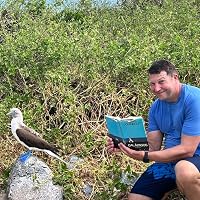
I picked this up at a used book store probably over a decade ago for about a dollar. After that time, the book was summarily ignored and actually lay in the basement collecting dust. When planning my trip to the world's largest salt flats, I happened to remember the book and decided that it would be perfect for my photo-ops. It turned out to be a perfect book for my vacation as a whole.
I don't read much sci-fi, so it's hard for me to know what is considered normal for the genre. Regardless, I am inclined to say that this wasn't really "sci-fi-y." Sure, its protagonists travel across the universe and colonize a planet that is essentially made of...you guessed it...Salt. However, it doesn't matter where in the universe the characters are because they are still humans--and that means they bring the best and worst of humanity with them. This is really a book about cultural misunderstanding, cultural myopia, and what happens when different belief systems (and political systems) collide.
The people of Als are individualistic, socialistic anarchists--in the absolute best way possible! “Visitors were sometimes puzzled, and even angered, by the lack of hierarchy or formalized relations in Als. They expected to be met; they were bothered by the fact that nobody demanded to see passports or threatened to throw them in gaol as illegal immigrants; they disliked the lack of police, the absence of restrictions, all those chains that reinforce in slaves their sense of themselves” (84). They have a functioning society that is truly free. That is why they see the authoritative, nationalistic, militaristic people of Senaar as slaves. As one Als citizen tells a Senaarian: “Because you have a law, you naturally immediately think of breaking that law…So then you have the law, and then you need the police and army to prevent people from breaking the law, and you need prisons and executions to punish those who do, and you need something greater than all this; you need the edifice of thought in which you wish every citizen to live, the prison in which thinking the opposite of the law is forbidden” (152)." Of course, the Senaarian's reply is that it is really the people of Als who are enslaved to their “own primitive lusts and urges. To the ego and monstrousness inside each person” (152). Of course, Senaar also believes that “The anarchists must understand the Will of God, and if they do not understand it I shall make them understand” (202). What IS the Will of God, you ask. Of course, Senaar equates the "Senaarian destiny [with] the Will of God for this world” (167) and sees other nations who fail to recognize this Divine fact as simply afraid--as one Senaarian describes it "The fear that our success, our closeness to the Will of God, sets in the hearts of less successful, less devout nations” (165) .
Obviously I took away from this the fact that intense Nationalism is scary (and devastating), that claiming to understand the Will of God is scary (and devastating), and that actually acting on your interpretation of the Will of God is scary (and devastating and INSANE). In a nut shell, I read this book in accordance with my own already established belief system: never elect someone like Trump, and organized religion is absolutely awful as it has been and will continue to be the source of most major genocidal conflicts.
So how was that the perfect vacation read? Well, I sort of digressed. It was actually a much more positive lesson that I took away from the book that was apropos to my travels. Different people, especially in different cultures, see the world differently than I do and have different social protocols. As a citizen of Als laments, “it was so difficult talking with this strange creature [from Senaar] who never said what she wanted or what she did not want, but rather expected you to read the complexities of her alien social relations in her moods” (134). My example: when I arrived to a Bolivian restaurant early for my reservation, I was kindly told I could sit at the bar and wait for my table (and for the restaurant to actually open!). After finishing my drink, watching not only the restaurant open but seeing other patrons arrive and be taken to their tables, and waiting another fifteen minutes after my reservation time, I began to fume not only at the injustice but at the utter lack of common courtesy. Thus, I sat with a very discontent, frumpy face. My mood changed little throughout the meal and was topped off by waiting far too long for the check. Horrible review on TripAdvisor, right? Well, no all thanks to this book. I began to think that maybe my expectations of immediacy were very...American. After all, the staff was all very pleasant when we did have exchanges. Perhaps, the Bolivian staff was not snubbing me but rather trying not to interrupt me from enjoying quality time with my wife. Perhaps they actually thought that I should be enjoying my night out, sitting, relaxing, without a care in the world and with no hurry whatsoever. Perhaps this is what I should have been doing all along, especially instead of stewing over some imagined slight.
Колонисты-реднеки не способны договориться с колонистами-анархистами, просто потому что ни те ни другие даже не будут пытаться. Почему? Потому. А ещё и те и другие в одинаковой степени, пусть и по-разному отвратительны.
А ещё война это плохо, очень плохо. Такие дела.
Книжка хороша тем, что дает сюжет через два POVа попеременно, но одного этого недостаточно.
If I had known where this was going, I'd have abandoned it early on. What appeared to be the premise was interesting. Multiple communities/nations are on their way to settle a planet that seems promising. The story is built around two of these "nations," one anarchist (the Alsists), in which people take turns doing the work that needs doing, and one strictly orderly (the Senaarians), in which everything--including the ability to vote in elections--has a price. The planet, Salt, is not as promised, life is hard, and eventually the long-simmering tensions between the Senaarians and the Alsists explode into brutal war. I should have quit when it became clear that the "anarchists," unlike any anarchists I've ever know, have no vision beyond individual freedom, no apparent concern for or connection to anyone beyond their own individual skin, and at least one of the men rapes without giving it a thought. The other side is painted with every bit as much depth, though there is at least the vision of personal wealth and heavy-duty religion. There actually is no end to the novel, beyond what I assume is the author's personal vision of God. Hours of my life that I'll never get back.
I read this because, after finishing The Thing Itself and finding it interesting, goodreads reviews said Salt was better. It's not. It's worse. But having given Thing 3 stars, I would then have to give Salt 2 and it's better than 2. But if I manage to read through to the end of something I feel a book deserves a 3 for that alone.
Look at me hoarding my star ratings like a citizen of Senaar! I was rooting for the Alsists all along, for despite their Cartesian isolated minds, I could groove on their hippy ways while Senaar was too much like the worst of middle America.
So it's about a clash of cultures, too bound up in their ways to have much understanding of each other. But we start with that and not much happens, really. No one grows. Maybe Rhoda, slightly. Very slightly. Even I shrunk reading it. I liked the beginning enough that I kept expecting more. I almost want to drop it down to 2 stars now as revenge.
The debut of Adam Roberts which I've had for many years but never found the mood to read; a dark and somewhat depressing novel written in alternate first person narrations from two very different pov's - with an exception at the end that adds a lot - and who resembles an extreme take on The Dispossessed.
A very good debut that presages the awesome later novels of Adam Roberts that made him one of the best current sf writers
Roberts’ compelling tale of two cities far far away, told through dual perspectives, follows the tragedy of incompatible worldviews driven to mutual destruction amid the ruins of a promised paradise. A breathtaking debut… but it does goes on a bit…
This fine, inventive and engaging tale of conflict among groups of interstellar colonists on the planet Salt suffers from an inconsistent narrative perspective. It is told in the first person, past tense, almost entirely by two people. But the author has not had a clear idea of where and when they are when telling their stories.
In the first half of the book, they both speak dispassionately and from a great distance in time, apparently two fairly serene old people commenting on things that happened in the prime of their lives. "Back in those days we used to do this, but now I hear that the young folks do that." But in the second half the author decides that they are in fact describing things that happened three years ago or less, and that they are speaking from a situation where they have both been drastically changed and damaged. We learn in the last chapter that in subjective human time, the entire exodus to Salt and the events there take only 10-15 years, and the narrators are speaking at the end of that period.
Много добър дебют на Адам Робъртс (и мой дебют с него). Супер е този подход на пълно отстранение на автора и изграждане на свят, герои и конфликт изцяло чрез две противопоставящи се ключови и силно нерентабилни гледни точки. И интересно е как в края читателят успява да си изгради разибране за двете култури, което хем няма как да не е подвеждащо, защото ясно, че разказвачите волно или неволно те подвеждат, хем е по особен начин автентично.
The story, while undeniably sci-fi, is not really that interesting. What makes this work is the storytelling, the same story is told twice from two very different angles: anarchy and capitalism. I found it impossible not to take sides.
Loses a star for not being "The Dispossessed" Uses unreliable narration to explore Terrorism V Freedom Fighting , and the barbed nature of imperialism. There's a spectacularly unpleasant rape scene which adds little.
Science fiction is often at its best when it uses a hard-edged fantasy of alternative reality to cast a light on our own species. A desolate world, whether that of 'Dune' or of Sterling's 'Involution Ocean', can often clear the imaginative palate.
Entering a desolate world allows us to concentrate on human reactions instead of being boondoggled by the writer showing off 'gizmos' or a multiplicity of thought experiments. The desolate world is the thought experiment. What is it to be human when the human needs to survive in such conditions?
Roberts' brilliant book avoids cliche at every stage of the game. For a start, it postulates conflicting positions within one quasi-Biblical religious tradition rather than the hackneyed science versus religion position instinctive to much science fiction. The conflict is well within a belief system.
Settlers undertake a somewhat ramshackle interstellar trek to a new world to escape a busted homeland (shades of the religious migrations of the European past). The conflicts, which are subtle to start with, begin on the journey there.
The story depends on a truth - that no religious (or ideological) tradition can be represented by a single personality type and that every such tradition will tend to break down into its major personality components, the authoritarian and the libertarian. Both are doomed not to understand each other.
Roberts lands these latter day pilgrims on a disappointingly harsh salty world of not merely desolation but high levels of radiation. The new arrivals (who find it effectively lifeless) have to be resourceful in coming to terms with it. They build contrasting societies.
The skill of the author at this point lies not only in creating a desolation we can believe in but also a humanity we know. Neither side in what becomes all-out war is either entirely good or bad. We understand the points of view of both sides and puzzle at their extremities.
Roberts shuttles between the voices of a disciplined and well-intentioned military strong man and a self-centred anarchistic settler forced into guerrilla leadership who simply cannot see that rape is rape in a particularly disturbing scene.
No one understands the consequences of their actions. The 'strong man' thinks he does and is confused when things do not turn out as planned. The anarchic narcissist does not care but lives in the moment regardless of the consequences or effects on others. Freedom does not look good here.
It is, in fact, an extended parable about the way brutal violence and force, reluctant in the name of order and self-deluding or passionate and liberationist but also downright nasty, emerge out of mutual incomprehension. Neither side is capable of entering into the logic of the other.
On the one side, we have a militaristic capitalist society that sees survival as necessitating order yet the ordering cannot be truly said to be fascist or vile. On the other, we have a self-centred anarchic culture of individualists.
We may admire the freedom of the latter only to be uncomfortable about its Stirnerite solipsisms and the ease by which it switches from free love and communalism towards the dark pleasures of Jungerian violence in apparent defence of itself.
We may deplore the lack of freedom and pomposities of a culture of hierarchy and self-belief amongst the authoritarians but we can also see them as victims (at least in their own eyes) of the terrorism of irrationalism in the cause of freedom. Yet they had triggered all this by their own crass behaviours.
Lack of resources on a salted planet, ambition to be hegemonic, refusal to live and let live, locked-in ideologies, resourcefulness (as much amongst the libertarians as the authoritarians in the conduct of war) and actual or repressed emotion make this a true reflection of our own species.
No matter where we may go - not excluding Mr. Musk's Mars - our species will take its psychological and emotional baggage with it alongside its cunning and inventiveness. The gloomy suspicion is that war and conflict are built into our species and that good intentions will be no defence.
Salt by Adam Roberts is a compelling science fiction novel that explores the tensions between two very different human societies during and after an interstellar colonization mission. Surface Composition is landscape and terrain dominated by vast, sweeping deserts of pure sodium chloride (salt). Roberts uses salt as a philosophical and religious metaphor. Sodium and chlorine represent humanity's extremes: sodium is vital for life (heaven), while chlorine is a toxic, burning gas (hell). The colonists effectively bring their own earthly "sins" and conflicts to this harsh, desolate environment. The salt planet tests whether order or freedom better suits human fallenness.
One group has always been waiting to assume its manifest destiny though, and soon after landing war "breaks out" as they attempt to subsume or destroy (their Leader gives them the choice) a neighbouring colony under various flimsy pretexts as an example of its power to all the other colonies.
That's the plot; the story is something else altogether.
The story alternates between the perspectives of Petja from the Als ship and Barlei from the Senaar. Their contrasting viewpoints effectively highlight the cultural divide: the Alsists live in a loose, anarchic, and individualistic manner, while the Senaarians maintain a structured, hierarchical, and religiously grounded society. This setup creates natural conflict from the pre-voyage period through the long journey and into the settlement on the planet Salt.
Roberts handles the generational ship concept with clear, grounded details - tethering to a comet for propulsion, the year of high-gravity acceleration, the sensory-deprivation trance for the long cruise phase, and the challenges of waking communities in shifts. Psychological experience: A dreamlike, timeless state blending memory processing, nirvana-like emptiness, and slow bodily maintenance. This allows efficient crew rotation with minimal aging. The writing stays precise and observant, whether describing the physical discomforts of acceleration, the psychological strain of confinement, or the philosophical differences between the groups. The salt metaphor threads through the narrative in interesting ways, both literally (as a planetary feature) and symbolically.
The characters feel distinct and believable. Petja’s reflective, somewhat detached narration and Barlei’s more formal, duty-bound voice establish the ideological clash without simplifying either side into caricature. The novel builds its central conflict organically from small pre-launch disagreements - particularly around family and children - into larger societal friction on the new world.
Senaar's Leader, in a singularly revealing statement notes that: "This war has been the savour in our meat. Without it, life would have been the dull round of planting and reaping, of giving in marriage and giving birth, of growing and dying. But the war has given us interest, excitement; it has rendered the meat more palatable". This seems to me a superlative statement of just how worthless some would seem to find the basic miracle of human life.
Als is not an idyllic anarchist utopia; I found their society rude and even inhuman. The apparent naiveté in dealing with the other, more rigid societies around them seems unrealistic at the best of times - can they really have become so dissociated from the rest of human civilisation despite having developed on a crowded Earth?
But it's because of this ideological blind spot that Salt actually works.
Barlei’s narration is saturated with explicit religious language and imagery, portraying the Senaar mission as a holy endeavor:
New Zion / Outpost of Zion: The voyage is framed as establishing “another outpost of Zion in the skies.” This draws on Jewish and Christian eschatology - the promised land, new covenant, and exodus motif. The long interstellar journey parallels the Israelites’ wandering.
Eden on the Ship: The Senaar’s central park is explicitly an “Eden” - lush lawns, trees, canal with fish, artificial sun, bandstands, and order. It represents a carefully engineered paradise maintained through hierarchy, discipline, and worship (chapels, hymns, music as ordered beauty). Barlei contrasts this with Alsist “anarchy,” implying that true freedom requires structure, like musical notation enabling expression.
Silver and Tabernacle Imagery: Barlei’s proposed name Keseph references biblical silver (Exodus 26:19, Zechariah 6:11), symbolizing purity, redemption, and sacred architecture. His discomfort with “Salt” reflects a preference for positive, blessing-oriented symbolism over the planet’s bleaker (yet truthful) character.
Divine Mission and Moral Order: References to God’s will, self-defense as righteous, and the need for hierarchy echo Puritan or theocratic ideals. Barlei sees his society’s order as harmonious with divine law, while viewing Alsist individualism as license for immorality (especially regarding family and children).
Als (Freedom, Individualism, Anarchy): Less overtly religious in the excerpt, but Petja’s narration mixes scientific/philosophical reflection with spiritual undertones (God’s diamond, yin/yang). Their rejection of formal authority and emphasis on maternal primacy challenges Senaar’s religious-social order, leading to conflict over the “children of Senaarians.” This symbolizes broader tensions between law/grace, authority/liberty, or Old Testament structure vs. a more antinomian spirit.
Music is not merely entertainment in Senaar - it is ideological infrastructure. It models the balance between individual expression and collective order that Barlei believes is essential for a godly society. This makes music both a source of cultural pride and a subtle tool for reinforcing hierarchy and religious values. The novel uses it effectively to humanize Senaar while highlighting the philosophical gulf with the Alsists.
Where Senaar music embodies disciplined harmony and ideological order, Alsist creativity appears fluid, personal, ephemeral, and integrated into everyday life rather than formalized or institutional.
Alsist culture having "eclectic music, reading, ideas" with possible Celtic/medieval influences or Magyar naming conventions, pointing to a syncretic, non-dogmatic approach. Creativity emphasizes personal freedom and brief intensities ("to have love" in sexual or momentary forms) over enduring monuments. This aligns with their refusal of ownership: art as experience or gift, not possession.
This is the novel's key dynamic. Senaar music is structured (hymns, piano recitals, choirs competing for silver cups, mathematical soul of work), reinforcing hierarchy, divine order, and communal harmony under God. Alsist expression lacks this framework. Petja's voice is more literary and ambivalent, using salt as a multifaceted metaphor (scientific, philosophical, spiritual) without Barlei's biblical certainty.
Overall, it embodies freedom without form - vital yet vulnerable - mirroring the society's strengths and tragic vulnerabilities.
Humanity is inherently “salty” - ambivalent, containing both creative and destructive forces. This prefigures the ideological clash between Als (freedom/individualism) and Senaar (order/hierarchy), and the war that erupts on the planet.
“We are so fragile. We dissolve in immensity like salt in water.”
Loss of Savour (Spiritual and Sensory Despair):
“The vending restaurants added salt to everything, but the salt did not add savour to our living.”
During the brutal acceleration year, even literal salt fails to restore meaning or pleasure.
Alludes to the biblical warning: “If the salt loses its savour, wherewith shall it be salted?” (Matthew 5:13). Petja’s society risks becoming tasteless - lifeless, apathetic - amid hardship, a subtle critique of both anarchy’s potential emptiness and rigid order’s failures.
“Salt tears fell upon the salt ground” - human suffering merges with the planet’s essence.
Petja’s metaphors are ambivalent and integrative, refusing simple moral binaries. Unlike Barlei’s more didactic biblical framework, Petja’s salt is paradoxical - essential for life yet corrosive, beautiful yet harsh, divine yet infernal. It mirrors the novel’s exploration of human nature: societies (and individuals) are “salty,” carrying the seeds of both civilization and conflict wherever they go.
Salt is a thoughtful and well-crafted work of literary science fiction. It examines themes of governance, freedom, order, and human nature in a believable future setting. The novel appears to critique rigid theocracy while also questioning whether pure anarchy can sustain community - leaving readers to weigh the “salt” of both approaches. It feels like a bridge between classic hard SF and more philosophical colonization tales. I found it consistently engaging and would recommend it to readers interested in ideological clashes and confined or frontier environments.
The narrative alternates between two characters who are both absolute bastards living in different settlements on a newly-colonized salt desert planet. One of them rises to be the dictator of a militaristic patriarchy. The other narrator is from a society that has an individualist culture and an anarchist communist labor organization.
It was really difficult to puzzle out the meaning behind this book. It felt like the author got stuck in world-building mode and just kept going. I think the idea is that two characters come from ideologically "opposite" societies, but they are still the same because they are both narcissists and hypocrites who never admit to their bad behavior.
I think what makes the novel difficult is that it seems like a science-heavy SF novel, then seems like it's going to be social science fiction, but it actually just seems to be character studies about two individuals. Maybe trying to say that harmful people can be harmful in any society? I think the reason so many people don't like the book is because you have to hear from two unpleasant characters about their bad behavior and it seems like the point is that there is some kind of moral equivalence between them...but ultimately one of them is a dictator and the other one is not, so it just comes across as confusing.
The book doesn't explore and scientific/technological "what ifs", provides little escapism, and has a muddled message. It does showcase the author's writing skill very well. The author shows he can produce very readable prose and seems very adept at saying something without saying it. The book was also peppered with interesting details that make it something I'd enjoy talking about, even though I would be mostly puzzling out what it meat that the author included these details.
I'd read another book by this author because I like his writing style, but if I do I hope the story has a little more meat to it. This book is mostly setting.
I'm struggling between 3 or 4 stars on this - will go for 3 as the weight of the themes makes it very hard to read this for entertainment. Overall really a 7/10 book for me.
Salt deals with loss a lot as a theme, which I'm coming to realise is a big part of Roberts' work as I read more of it - and the emotional impacts of the losses in the story are profound. It's also quite a good commentary on the dangers of extremism, featuring two factions at absolutely opposite ends of a political spectrum, but we come to find out that both factions are capable of atrocity. The fascist city of Senaar is really built up as the villain of the story for most of the first half to three quarters of the book, and their conflict with the anarchist Alsists is centered on the perceived loss of children accidentally fathered in space. However, as the war that becomes central to the plot and conclusion of the story draws on, we see the people of Als as being just as capable as vile acts. Our Alsist protagonist (the book has two viewpoints, one from each faction) gleefully rapes a Senaarian and perceives absolutely no problem with it - his society has given him no moral compunctions and the Alsist philosophy against property rights blinds him to anyone's right to their own bodily autonomy. The Alsists go on to commit various acts of wanton destruction that only serve to harm civilian infrastructure, like bombing a wall that keeps out the storms of titular Salt.
Overall, it's a pretty compelling read, despite being fairly horrifying. It solidly challenges preconceptions about narrative structure, with the twist of both factions being thoroughly villainous, not just the Senaarians. However, if you're likely to be strongly moved or triggered by the events of the novel, there's not much closure to be had in the ending, and there's not sufficient merit in the novel to push through that barrier.
This entire review has been hidden because of spoilers.
An interesting story written mainly from the perspective of Barlei, leader (a.k.a. dictator) of the hierarchical and deeply religious Senaarians and Petja, a representative Als, an anarchistic society that rejects hierarchy . Following the long journey from Earth and colonisation of Salt tensions (for lack of a better word) have built up between Senaar and the Als and war has broken out with heavy losses on both sides.
Light on sci-fi, heavy on ideology; it is easy to draw parallels between conflicts on Earth today (or yesterday). It seems inevitable early in the book that conflict should occur between Senaar and the Als whose cultures are so far removed from one another that they seem to lack any common ground on which to begin a relationship. Readers are forced to interpret the two perspectives and draw their own conclusions regarding the real nature and purpose of the conflict, and judge for themselves the right or wrong of it.
By far the most interesting aspect of this story, however, was how unlikable each of the characters were; even at their best and at their lowest points of suffering I was made to feel that they were somehow less than people. Whilst there were moments where you would be considered a monster for not empathising with their positions, there is no effort on the author's part to endear them to you, which was surprising given what Rhoda suffers at the hands of Petja.
An interesting story written mainly from the perspective of Barlei, leader (a.k.a. dictator) of the hierarchical and deeply religious Senaarians and Petja, a representative Als, an anarchistic society that rejects hierarchy . Following the long journey from Earth and colonisation of Salt tensions (for lack of a better word) have built up between Senaar and the Als and war has broken out with heavy losses on both sides.
Light on sci-fi, heavy on ideology; it is easy to draw parallels between conflicts on Earth today (or yesterday). It seems inevitable early in the book that conflict should occur between Senaar and the Als whose cultures are so far removed from one another that they seem to lack any common ground on which to begin a relationship. Readers are forced to interpret the two perspectives and draw their own conclusions regarding the real nature and purpose of the conflict, and judge for themselves the right or wrong of it.
By far the most interesting aspect of this story, however, was how unlikable each of the characters were; even at their best and at their lowest points of suffering I was made to feel that they were somehow less than people. Whilst there were moments where you would be considered a monster for not empathising with their positions, there is no effort on the author's part to endear them to you, which was surprising given what Rhoda suffers at the hands of Petja.
A number of religious groups fly a joint mission to colonise the planet Salt. When they arrive conditions are harsher than they were led to believe. Salt is a barren, salt encrusted world with little water and no protection from the sun’s radiation.
Two of the groups are deeply divided in their philosophies. One is a very ordered hierarchy while the other is an individual, anarchistic settlement. They get caught up in a dispute over the ‘ownership’ of a group of children fathered by one group and mothered by the other.
I had read some promising reviews of this and other novels by Roberts, but my experience was less than satisfying. It got bogged down in the comparison of the different settlements and I would have given up sooner if it were not for some interest generated once conflict arose. I couldn’t finish this effort and have no plans to read anything more by Roberts as a result.
Gutted to give Adam 3 stars, loved everything else he's written. This novel is ok but just not what I expected. It's not about the new world and terraforming and creating new ways of living. It is anthropology in the way a novel about settling a new world would be except that it's about the existing ideology that is imported from the old world. That wouldn't be a bad thing is most of the story wasn't just one single war. And then it ended quite abruptly.
The cover makes comparisons to Dune. I guess that's warranted, but not particularly useful. It would be better presented as a mashup of Dune, The Dispossessed, Rashomon and The Vietnam War. Rather ambitious for a first novel, but quite enjoyable. I have to admit I wouldn't have minded an extra 200 pages, but Roberts leaves us pondering what he wants us to ponder rather than sending us off with a full belly.
DNF. Won't rate because this was his first novel, and I liked his more 'boilerplate' recent novel. Just taking forever, and I dislike the MC. I know he's an unreliable narrator, but I can't take his POV any more. Not very sci-fi. More like who's sleeping with whom on a planet. Some minor SF points sprinkled on top of long internal monologues. I started two books while trying to push through this.
While this book doesn't go to a super-strange setting as his other books usually do, it does go into the mind of deeply politically different people. One of the characters I liked and the other one I actively detested. I think the idea was that as a reader, I was supposed to become sympathetic to him but I never did. So it was a hard go.
I enjoyed the space travel/colonization and political aspects but I got bogged down in the MilSF of the latter chapters. So overall not my cup of tea but Roberts still tells a compelling human story with some hard science aspects tossed in, so kudos for that. Look forward to reading more of his stuff.