Jump to ratings and reviews
Rate this book

Felix Holt, The Radical

Rate this book
Two men vying for the hand of Esther, a young woman of charm and virtue, are Felix Holt, an idealistic young artisan, and Harold Transome, the intelligent heir to an estate. She is drawn to Holt yet has dreams of marrying into a life of refinement.

Audio Cassette

First published January 1, 1866

143 people are currently reading
4996 people want to read

About the author

George Eliot

3,111 books4,905 followers
Mary Ann Evans, known by her pen name George Eliot, was an English novelist, poet, journalist, translator, and one of the leading writers of the Victorian era. She wrote seven novels: Adam Bede (1859), The Mill on the Floss (1860), Silas Marner (1861), Romola (1862–1863), Felix Holt, the Radical (1866), Middlemarch (1871–1872) and Daniel Deronda (1876). Like Charles Dickens and Thomas Hardy, she emerged from provincial England; most of her works are set there. Her works are known for their realism, psychological insight, sense of place and detailed depiction of the countryside.
Middlemarch was described by the novelist Virginia Woolf as "one of the few English novels written for grown-up people" and by Martin Amis and Julian Barnes as the greatest novel in the English language.

Ratings & Reviews

What do you think?
Rate this book

Friends & Following

Create a free account to discover what your friends think of this book!

Community Reviews

5 stars
1,127 (26%)
4 stars
1,519 (35%)
3 stars
1,172 (27%)
2 stars
357 (8%)
1 star
157 (3%)
Displaying 1 - 30 of 256 reviews
Profile Image for Fionnuala.
886 reviews
Read
May 14, 2018
Towards the end of this long but intensely interesting narrative, the reader is told exactly how much time has passed since the first of the many events of the story. The narrator sounded surprised at how brief a period it had been, and I was surprised too because I'd been reading this book for quite a while and I'd come to associate it with the passing of a considerable period of time. That was partly due to the many events that occurred in my own life while I'd been reading about Felix Holt's life, but also to the fact that I'd read two books by Ali Smith in the meantime. Felix Holt had had to wait calmly in the background while I helterskeltered through Smith's Autumn and Winter.

The contrast between Smith's twenty-first century urban Britain and the rural world of George Eliot's 19th century Loamshire couldn't be more stark at first glance but it has occurred to me on finishing Felix Holt that it and Ali Smith's Seasonal series are not so very different after all. One of the key events in Eliot's novel concerns the election of a candidate to parliament. This was a time before universal suffrage so only the small number of men who owned land or property had votes. However election agents often roused great mobs of landless people to demonstrate in favour of a particular candidate. In this way, people with no vote managed to have an influence on the outcome of elections. The mobs might have had only the barest notions about the candidate's policies, but, inflamed by free drink and scurrilous handbills circulated by the election agents, they could make such a clamor in support of the agent's favourite, and against the opposition, that they could sway the course of the voting.

Ali Smith's Seasonal series touches on a voting issue too, the referendum that resulted in Britain leaving the European Union. Though every adult citizen in Britain now has a vote, it could be argued that many of the voters had only a partial understanding of what they were voting for and were manipulated by the twenty-first century equivalent of the 'election agent' and their clever use of media. We have come a long way from handbills and free drinks but people are still as open to influence from misleading headlines as ever they were. Election results are still controlled by small groups of powerful people.

The other overlap between this Eliot novel and the Smith books concerns the role of women in the narrative. Readers who are familiar with Ali Smith know that her main characters are invariably woman - but making the main character a woman is not a given in the case of George Eliot. She has several books in which the main focus is on a male character: Silas Marner, for example, and Adam Bede and Daniel Deronda. But while this book is named after a male character, Eliot's story is predominantly about a female character, Esther Lyon. Felix Holt is essential to the plot but it is Esther who makes the key choices and decisions that influence all the outcomes.

There are two other important characters in this novel, the parliamentary candidate, Harold Transome, and his mother, the doyenne of Transome Court. Harold strides through the book as if he owns it but it is his mother who holds the controls of his life. His decisions become meaningless in the face of hers.

We know that in the mid-nineteenth century, women, even if they owned land or property, didn't have the right to vote, and that they had little power over their own lives. Husbands were chosen for them by their fathers and everything thereafter was chosen by their husbands, or eventually by their sons. George Eliot presents us here with two rare cases of women who refuse to let fathers, husbands or sons decide for them - for better or for worse...
Profile Image for Paul.
1,471 reviews2,167 followers
February 7, 2017
4.5 stars
One of the least read of Eliot’s novels; sitting in the middle of her output. I found it had a surprising resonance for today. It was published in 1866 but was set in the time of the Great Reform Act in 1832, when the vote was extended (not by much, the electorate increasing from about 500,000 to just over 800,000). As Eliot was writing the Second Reform Act was being promulgated. The landed classes and aristocracy were bringing on board some of the wealthier middle classes.
The plot centres around an election in a Midlands town in 1832; probably modelled on Eliot’s home town Nuneaton; the riot in the book is very like the one in Nuneaton in 1832. The voices of the Tory side are as you would predict. On the other side is Harold Transome, a wealthy landowner just returned from abroad a widower with a son. He returns to find his estate is causing some concern and shocks his mother and friends by announcing he is standing as a Radical. Felix Holt is an educated, but poor Radical who has also returned from journeying (in Scotland) to stay with his mother and work as a watch repairer. Meanwhile the Rev. Rufus Lyon (a dissenting minister) and his step-daughter Esther make up the other main protagonists. There develops a sort of legal and electoral thriller with some twists relating to birth and inheritance and a significant riot on Election Day. Inevitably there is a love triangle involving Esther, Felix and Transome and Eliot works it all out in an interesting way. All the lawyers are corrupt and self-serving and true to type. The working class characters are a little less convincing.
There are some interesting lines of thought. Eliot looks at the situation of older women in the form of Mrs Transome and Mrs Holt, the mothers of the male protagonists. Both feel helpless in the face of their strong-minded sons who barely tolerate them: Contrast the very sympathetic relationship between Esther and her father, Rev. Lyon.
Another major theme is of course political change and the book (often in the form of Holt) asks difficult questions. Does the electorate always get things right? That brings us straight to the US and UK today! The political landscape in the novel is out of joint and all are aware of it and there is a good deal of anger at the grassroots level, often without direction. Holt himself is not arguing for extending the franchise; he believes in gaining power for the working class by building a movement from the bottom based on education. Partial change at the top was no change. Holt, of course was right, as there was now a larger electorate to bribe, so you had to be even richer to enter politics.
Of course there is a love story going on, but I was much more interested in the parallels with Trump and Brexit.
Profile Image for Kathleen.
Author 1 book264 followers
April 29, 2023
“Such was the old-fashioned, grazing, brewing, wool-packing, cheese-loading life of Treby Magna, until there befell new conditions, complicating its relation with the rest of the world, and gradually awakening in it that higher consciousness which is known to bring higher pains.”

Treby is a fictional town set in the English Midlands, and the “new conditions” are the Reform Act of 1832, which changed the way people voted, to include smaller landowners and shopkeepers. The working class were still largely excluded, as were women, though the fight for women’s suffrage had begun in 1817.

The Debarry and the Transome families are Treby’s old money Tories, except for the prodigal son Harold Transome, who has returned from many years in the East and announced he will run in the upcoming election for Parliament as a Radical, against a Tory Debarry, causing quite a ruckus, and a particular strain on his long-suffering mother.

There is another long-suffering mother across town, the mother of Felix Holt. Felix has returned from studying medicine in Glasgow, only to announce he prefers a working-class life as a watchmaker.

But this is the story of two contests: an election, yes, but also the contest for a woman’s heart. Esther is the daughter of the town’s “dissenting” minister and as her story develops, her complicated origins are revealed and her inner-struggles unfold. (The title is misleading, by the way. This is Esther’s story.)

So what we have here is quintessential George Eliot! Intricate characters navigating politics, religion, and personal growth. The only downside was Eliot’s typical very, very slow buildup.

I had the feeling this novel was practice for Middlemarch. You could say that about much of Eliot’s work, I guess, but this was the major novel in her oeuvre that preceded that masterpiece. Felix Holt had many of the same features, but in Middlemarch I think, she figured out how to avoid the slow first-half, by having multiple main characters, and alternating the buildup of one’s story with the action of another’s.

Here is how I’d rank the George Eliot books I have read so far.
Middlemarch
Felix Holt: The Radical
Scenes of Clerical Life
The Mill on the Floss
Adam Bede

Felix Holt is not a book for everyone, but it should be read more, particularly by Eliot fans.

“It is not true that love makes all things easy; it makes us choose what is difficult.”
Profile Image for Jonathan.
1,009 reviews1,229 followers
December 12, 2020
There are, I think, two problems with this generally excellent novel. The first relates to how it is approached, and tends to lead to some of the issues readers have with it, and the second arises from the choices made by its main character at its end.

The first issue comes from the book's title. The book is, as is the case with a number of other books by Eliot, not really about its title character. The core of this novel is Esther. Holt is one of the forces operating on her, as are Harold, the political and religious conflicts surrounding her, law, society, class, gender and money. Holt is irritating in his priggishness, in his self-righteousness, regardless of the fact that he is correct at core in his political beliefs - simple expansions of the franchise without education and other social change will not result in betterment of life for all. Giving the working class the vote, while keeping them in ignorance and plied with bribes of booze and bread and circuses will not end up in things improving for them. But as a character he is not nuanced and interesting enough to be the "hero", he is more a device, a force that pushes Esther from her complacency.

But this is where the second issue comes in. While Esther's choice at the end of the novel was largely inevitable, I found it extremely frustrating.

Regardless of all this, there is much to recommend in the book, and I see no reason for it to languish in the second tier of her novels. In particular the political aspects of the book (which take up so much less of the text than you may have been led to believe) remain often remarkably (and sadly) relevant. And, of course, the writing on every page is as wonderful as one would expect from one of the greatest writers of the 19thc.

If you have read others of hers, but left this one behind because of some sense it is a lesser work, I would urge you to pick it up and give it a go. This is my 4th novel of hers this year, and all have been masterpieces of the highest order. She is up there with Zola as my joint favourite 19thc author.
Profile Image for Tristram Shandy.
875 reviews264 followers
March 29, 2022
“[…] ‘[B]ear in mind there are two ways of speaking an audience will always like: one is to tell them what they don’t understand; and the other is, to tell them what they’re used to.’ […]”

This clever advice, cynical as it may seem, is nevertheless true and it may also account for why George Eliot’s novel Felix Holt, which was completed in 1866, is nowadays still amongst her most-neglected works, together with Romola, its predecessor. In other words, it is not the quality of the book, but it might be our expectations which have made this novel drift into oblivion.

Felix Holt is often referred to as Eliot’s political novel, and there is certainly a lot of politics going on in it: One of the events the plot focuses on is an election in a little town called Treby Magna, and we get a good impression of how voters in the early 1830s were intimidated, browbeaten and catcalled by riotous mobs, and this had two reasons: First of all, you did not cast your ballot in a secret vote in those days, but you were obliged to go onto a stage, some kind of hustings, and openly declare the name of the candidate you wanted your vote to go to. This happened in front of everyone that was interested looking on, from the simplest coal miner, who had no right to vote, to your own landlord, who not rarely expected you to vote for the candidate he himself was backing (unless he were not one of the candidates himself). The second reason was that most candidates, be they Tories, Liberals or Radicals, mobilized large parts of the population who had no votes because of their insufficient income, often with the help of free drinks and made them come to the elections where they actively bullied the voters in order to make them throw in their votes with the candidate who had treated them. One may well imagine that going to give one’s vote required a lot of courage and cold-bloodedness from any man in those days.

Nevertheless, Felix Holt is not only, not mainly, a political novel but what you may call a bildungsroman because it tells us the story of the moral development of Esther Lyon, a young woman, who, unbeknownst to herself, is entitled to a great inheritance, and who stands between two men: One of them is Harold Transome, a young, self-confident landowner, who decides to run for the Radical Party and whose campaign staff also employ the means sketched above. Transome is a man who is mainly concerned with his own career (and not so much with the welfare of the workers whose interests he has on his lips) and who does not really care a lot either for his own mother or for Esther, whom he regards as an enchanting woman and a means to further his personal ends. The other man is the eponymous Felix Holt, a young idealist, who says things like this,

”[…] I would never choose to withdraw myself from the labour and common burden of the world; but I do choose to withdraw myself from the push and the scramble for money and position. Any man is at liberty to call me a fool, and say that mankind are benefited by the push and the scramble in the long-run. But I care for the people who live now and will not be living when the long-run comes. As it is, I prefer going shares with the unlucky.”


And who acts accordingly and does not spare Esther for her own genteel pretensions and her obsession with form and propriety. What a reader of Felix Holt may therefore look forward to is a mixture of a love triangle, the story of the intellectual and moral maturation of an intelligent young woman, a tale of intrigue around an estate – Eliot’s lawyer Jermyn is a villain of Dickensian proportions – and an account of political upheaval, a rather unusual, an in its construction not always quite successful mixture because the author has to rely heavily on coincidences to keep her team of thematic horses in rein. For example, Esther’s presence in the little market town where an entire estate happens to actually belong to her is quite a stretch of the laws of likelihood, and there are other such instances.

What always impresses me about George Eliot, especially in regard to her later works, is the psychological insight she offers into her characters, very often through the comments and observations of her narrator’s voice, which admittedly might seem old-fashioned and down-talking to a modern reader, but not less frequently through the characters’ words and actions. Very early, we are made aware of Harold Transome’s lack of regard for other people as individuals in their own right by his treatment of his mother or his calling the family retainer Hickes ”a neat little machine of a butler”. His tendency to objectify other people also becomes clear when he admires Esther’s beauty and tells her she would make a wonderful painting in her dress, while around them the family portraits of the Transomes spread an air of gloomy barrenness. While Ester and especially Mrs. Transome are equally psychologically believable characters, the latter being one of the most impressive characters in 19th century literature I ever came across, strangely, Felix Holt comes over as a programmatical monolith of an idea the author wants to illustrate and to advocate. There is as much subtlety in him as in Ayn Rand’s literary creations. Similarly, Esther’s father, the Dissenting preacher Rufus Lyon is little more than a garrulous bore, ready to argue ad nauseam how many angels could dance on a pinhead (and yet we are supposed to like him, which I did not!), but many of the other side characters are very well-drawn, and the complexity of country life that the author conjures up in this novel already hints at Felix Holt’s famous successor Middlemarch.

Another pièce de résistance in this novel is the introduction, which features a journey on a stage coach through the England of the early 1830s and which cleverly advocates Eliot’s rather conservative attitude of building a future carefully on the treasures of the past instead of wilfully cutting all traditions and regarding human beings as a malleable and arbitrary mass that can be formed at will by social engineers. This ruthless will to reform without any regard of inner continuities and traditions is what makes Harold Transome prone to fail in all his enterprises because there is no respect in him for his environment and the people inhabiting it, and which is counterbalanced by Holt’s readiness to care for people as they exist and establish modest improvement with an eye to the world as it is. It is obvious where Eliot’s sympathies lie.

This spirit of a partly romanticizing, partly enlightened conservatism may seem strange and quaint to modern readers, lacking any flavour of great sociological or philosophical theorizing, and it may therefore be something they are neither used to nor ready to expect. This is maybe one reason why Felix Holt has dropped out of favour with modern readers, which is a pity because the novel is a great example of Eliot’s skills in world-building as well as in stylistic clarity.
Profile Image for Janelle.
1,619 reviews344 followers
September 16, 2021
Well that was unexpected… I loved this book!
I found this novel when looking for books from 1866 for one of the classics buffet challenges. I’m pretty sure I was unaware of it before.
Felix Holt arrives in the village of Little Treby to return to his mother’s home after giving up his study of medicine. He’s a radical and has many strong beliefs, he certainly doesn’t think much of the rich. Harold Transome also returns to his family home, and is also a radical but he is rich and stuns many of the other upper class families when he doesn’t stand as a Tory in the upcoming election. The year is 1832 and the reform act has opened up voting to more men (men with property of course!). Much of the early parts of the novel concern the election but the main character is Esther Lyon, daughter of a dissenting minister and I thought she was a wonderful character, an interesting young woman and her relationship with both Felix and Harold, simply put, is what the novel is about. But there’s much more, a bit of politics, some lawyer shenanigans, inheritances, affairs, and it’s written so well! Brilliantly constructed, I couldn’t put the novel down for the last quarter or so.
1 review4 followers
July 26, 2008
I commented in relation to John Updike’s ‘Terrorist’ that a sentence of 157 words was the nail in its coffin. I noticed while reading ‘Felix Holt’ that there were four consecutive sentences of 78, 13, 100, and 64 words. The difference is that in 1866 George Eliot wrote perfect prose, properly punctuated and capable of being understood and enjoyed despite the sentence length. The whole book is a clever, frank portrayal of the 1832 election when England ( I use the specific advisedly) was in the middle of Reform. As is to be expected with George Eliot there is an element of romance, pathos and moralising but the less than happy endings found in some of here books has been left aside for once.
Thoroughly enjoyable.
I can recommend the Everyman edition which has footnotes to help with some of the more obscure classical or contemporary references and words which are now obsolete like ‘megrims’. A delightful little word, meaning whims or fancies, I wonder what poor little megrims did to fall into disuse! Similarly, ‘opodeldoc’ – a medical plaster or liniment (not linement as Everyman’s editor spelled it) of soap, opium and herbs is a wonderful word. I wish I had a chance to drop that into the conversation.
As always with Victorian novels I learn a lot about the social life and times and sometimes I am surprised by simple little things. I had, for example, always assumed that the use of the word Jew as synonymous with money-lending was simply because of their predominance in that field. What I had failed to realise was that Christians were forbidden by Canon Law from money-lending and that is how the Jewish predominance in that field first arose.
As with many of the best books the number of quotations I could have included here are legion but I will settle for a couple of the shorter ones:-
“These social changes in Treby parish are comparatively public matters, and this history is chiefly concerned with the private lot of a few men and women; but there is no private life which has not been determined by a wider public life, from the time when the primeval milkmaid had to wander with the wanderings of her clan, because the cow she milked was one of a herd which had made the pastures bare.”
“Esther was a little amazed herself at what she had come to. So our lives glide on: the river ends we don’t know where, and the sea begins, and then there is no more jumping ashore.”

Profile Image for Kara Babcock.
2,110 reviews1,593 followers
August 1, 2020
I make no secret of the fact that I think George Eliot is a literary badass, and Felix Holt: The Radical is just the latest example of these well-deserved credentials. This is essentially a political and legal thriller set in 1832 England on the cusp of the passage of the First Reform Act. (Among other things, the Reform Acts of the 1800s redefined the electoral districts for the English Parliament and expanded the franchise ever so slightly.) The sleepy English town of Treby finds itself the centre of political action during the latest election campaign. Harold Transome returns home after fifteen years abroad and decides to run as the Radical candidate, much to the surprise of his Tory family. Meanwhile, in typical Eliot fashion, the Felix Holt doesn’t show up for the first fifty pages of his own book! Despite Transome and Holt’s self-declared Radicalism, the two butt heads, and soon it’s obvious neither really embodies the label they’ve chosen. Meanwhile, a dastardly lawyer plots possible revenge against Transome, and it all hinges on the question of paternity and inheritance of a preacher’s daughter.

You hooked yet? Because I know that the language in novels like this can be an obstacle to enjoying them. Eliot is a fan of lengthy sentences and even longer paragraphs. Her description belabours points until they become entire discourses; her dialogue is more of a series of speeches fired back and forth like broadside salvos. With this style, however, comes a consummate ability to draw out the most intricate descriptions of human foibles and fragility. We see this quite early in Eliot’s portrayal of the ageing Mrs Transome, and later when we delve into Esther’s motivations for obsessing over the strange and somewhat offensive Mr Holt. Unlike modern thrillers, which tend to sacrifice depth of character for depth of field in the action, Felix Holt is a character-driven thriller in which Eliot asks how our upbringing, gender, and political convictions influence the choices we make and how far we will go to get what we want.

First, we have Harold Transome. He comes back home after living in “the East” (mostly Smyrna), where he had a wife (who since died) and a kid (whom he mostly ignores, in that great fashion of the English gentility). Like many a man convinced of his competence, he essentially swoops down on Transome Court like the North Wind: we’re doing things the Harold Transome way, and if you don’t like it, then tough. He engages the Transomes’ lawyer, Jermyn, as his election agent even while plotting to remove Jermyn at the most convenient opportunity. He ignores his mother and the tough time she’s been having of keeping up the estate—but that’s mostly because Transome ignores women in general, finding the weaker sex useless for everything except stroking his ego and likely stroking … well … you know what I mean.

Transome runs as the Radical candidate for this district. I never completely understood why he was going for Parliament, except perhaps because he felt it was the prestigious thing to do. He certainly never evokes a sense of statesmanship. Although he good-naturedly (and naively) attempts to put a stop to the rabble-rousing activities Jermyn’s minion engages in on Transome’s behalf, Transome does not in and of himself spend much time espousing Radical views. His political allegiance seems more a reaction against the stagnant Toryism of the countryside than any conviction that England needs to change.

I guess the most redeeming thing we can say about Transome is that he’s not a total dick. When he learns that Esther has legal claim to Transome Court, his first reaction is not to conceal the news but actually tell her and then kind-of-sort-of attempt to court her in the hopes he can keep the estate this way. (Now, the cynical would point out he’s just pre-empting the uncomfortable disclosure from Jermyn, and he obviously talks himself into loving Esther instead of harbouring true feelings for her. And there is something to that. But Transome is not a villain so much as an opportunistic upper–middle-class businessman; granted, the distinction between these two labels is not always clear.)

Whereas Transome considers himself a “man of the world” in a quite literal sense and almost condescends to bring himself down to the worker’s level, Felix Holt is quite proud of his poverty. He looks down on the rich, in a moral sense. Like Transome, he identifies as a Radical but doesn’t necessarily embody that philosophy: he in fact discourages workers from getting it into their heads that they need to vote to effect political change. Holt wants everyone to behave nicely in the hopes that this will persuade the people in charge to be nicer in return. In her “Address to the Working Man” included as an appendix to this edition, Eliot writes in Holt’s voice and explains that expanding the franchise to uneducated workers would be a bad idea right now, because it would encourage a kind of ignorant populism that would pull the country down.

And so Felix Holt is fascinating, because it is not actually a very radical novel. At the time Eliot was writing it, of course, those in favour of Reform were seen as quite radical people (and then you had the unions, and later, the people advocating for secret ballots). But if anything, this novel shows that Eliot is herself calling only for gradual change. She doesn’t want workers to have the right to vote until they also have the education she feels is necessary for them to vote “properly.” I find this paradox fascinating, because in some ways she has hit on the crucial point: franchise is no good if the people enfranchised have little knowledge on which to base a decision. Simply guaranteeing everyone over 18 the right to vote is not enough, then; we are obligated to provide civic education—and in this respect, I don’t think our present government does nearly enough….

So Holt, then, is the “common man” who nevertheless acts as a voice of caution. He is continually trying to apply the brakes, as seen in his foolish and ill-fated attempt to curb the rioting on election day. It sometimes seems like Eliot focuses less on him than on any other main character. Nevertheless, his role as titular character is deserved more because he ties all the other characters together. He interacts with everyone else, subtly shaping the nature of the conversation. It is the not-quite-love-triangle among Holt, Esther, and Transome that precipitates the novel’s conclusion.

In Esther we see Eliot wrestle with ideas of femininity, education of women, and the duties that children have for their parents. I’ve always lauded the way Eliot’s writing has a feminist tone for the Victorian period in which she lived; and, by all accounts, Mary Ann Evans was a pretty spectacular woman. Nevertheless, Esther demonstrates some of the limits of Eliot’s endorsement of “women’s liberation.” On one hand, Eliot mocks those women around Treby who look down on Esther for being “over-educated” for a preacher’s daughter and for putting on airs. On the other, she uses Felix as a foil for Esther’s ego and high opinion of herself: after a single meeting, Esther becomes desperate to prove to Felix at every turn that she can be humble and be open to being lead by a man (i.e., him) in matters of substance. Eliot places Esther in a role complementary to the men in her life: she must support and aid her ageing father; be led by the man she chooses as a husband; and nurture the children in her charge, whether it’s as a mother or a teacher. In this respect, while Eliot is quick to call out the double standards that adversely affect women’s quality of life, she is not quite ready to tear down conventional gender roles.

Felix Holt culminates in an election, a riot, a trial, and shenanigans over estate ownership. It all ends in tears, and then a wedding, and finally a happily-ever-after, for most involved. The winds of change are evident throughout the novel, but the ending seems to assure us that all will go on as it largely was before: the rich will be rich, the poor will be poor, and there will be Tories and Whigs and the occasional Radical doing whatever it is men of means do in Parliament while your average worker drinks and works the mines. This is not, therefore, that radical of a book. But Eliot manages to deliver an amazing story full of intrigue, backstabbing, characters who are all out for themselves.

I picked an excellent time to read this as well. And I don’t just mean because Thanksgiving Saturday was unseasonably pleasant and I could read this outside while listening to the new Florence + the Machine album. No, I mean that in Canada we’re a week away from a federal election. The campaigning in this book reminded me of the lengthy campaigning happening here. Eliot’s coverage of the Reform Act is a potent reminder that we are lucky we have the right to vote—and by we, I don’t just mean land-owning white men. While I completely understand why some people are discouraged by our political system and don’t believe their vote will “count,” I’m still disappointed when someone I know shrugs off the idea that they should vote. It is a duty, and it is not one we should take for granted considering that some of us have had it for less than a century. And it’s certainly in the interests of the people in power to keep you from voting, particularly if you are young, or poor, or from a minority group and interested in expressing your opinions.

This might sound trite, but one of the most radical things you can do as a Canadian on October 19 is vote. Go do it.

And then go read Felix Holt. It’s far from my favourite Eliot novel, but it shows the beginnings of all the skill and ability with character and setting that makes her one of my favourite authors. Eliot manages to convey a sense of entirety, that microcosm of the human experience: she is not overly cynical or overly optimistic; she simply shows what is—and what might be.

Creative Commons BY-NC License
Profile Image for booklady.
2,729 reviews172 followers
July 18, 2017
Very enjoyable story was further enhanced by Nadia May’s superb rendition of it for Blackstone Audio/AudioBookStand. This was my husband’s introduction to George Eliot and I’m glad it was a mostly cheerful—even humorous—novel as her works can be dark. Mrs. Holt, Felix’s mother, is a hoot and May has captured her perfectly. Highly recommended especially in the audio format.
Profile Image for Darryl Friesen.
178 reviews49 followers
June 23, 2024
I heed and hawed over giving this novel four stars or five, but the first half of this novel was challenging and slow enough, in an imbalanced way compared to the rest of the book’s action and plot, that I’m giving my first four-star rating to a GE novel!

The book is incredibly ambitious on GE’s part. The first half of the book is absolutely crucial to the overall story, as it sets up the political unrest and environment of 1830s England, as well as giving the background for the legal case at the heart of the Transome Estate—on top of introducing and fleshing out all of the characters. However, I feel as though the combination of an intricately detailed political scene AND a complex legal situation bogged the story down in all of the necessary particulars GE had to include to make the story feasible. I’m used to the philosophical tangents that GE takes in her writing, and largely really appreciate them, but the minutiae of 1830s politics and the legalities concerning estate inheritance were a departure for her—admirable, but ultimately a little impenetrable in places.

Having said that, the characters were wonderfully drawn. Esther, Rev. Lyon, Felix, Harold, Mr Jermyn, Mrs Transome, Christian, Mrs Holt—what a cast of complex and interesting characters. GE kept me guessing right to the end! She is such a master of surprises, and her novels have a wide variety of happy, sad, and mixed endings. I particularly appreciated Esther’s character arc, and how she is faced with very challenging and morally nuanced issues, in both relationships and circumstances. Her growth and evolution as a character, and seeing how she matured and grew in wisdom, humility, confidence, and empathy were very moving.

Another truly wonderful GE reading experience, with wonderful friends to keep me company along the way!
Profile Image for Nick Imrie.
329 reviews184 followers
March 24, 2019
I once read an essay about the objections to women's suffrage. One argument that anti-suffrage activists made was that voting was a proxy for fighting: men will wage war over political power, but they can save blood and energy by taking a vote, allowing the larger army to win without the smaller one having to die. Very civilised, no?
Women should not be allowed the vote because women don't fight - imagine if there was a vote in which women all voted one way and men all voted the other. What, exactly, would prevent the men from doing what they wanted anyway, safe in the knowledge that women couldn't stop them?

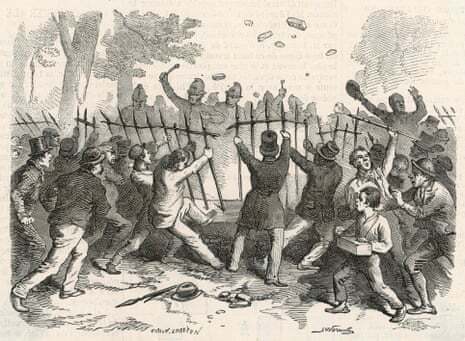
Now I suspect that you (and I) can poke some holes in that argument, but Felix Holt: The Radical does have some scenes that wonderfully illustrate the pugillistic nature of early voting. Voters had to get up on platform to declare their vote publicly, surrounded by the drunken mob, with their employer and landlord looking on sternly. Some men crept in to vote early, before the crowd had had time to grow big and rowdy. One character wrapped all his limbs in flannel, put on three coats, and went to vote like the michellin man. Another fell into the hands of the crowd, and was so befuddled by everyone screaming the names of their preferred candidates in his ear that he accidentally blurted out the wrong name on the stage. In the end, the crowd got completely over-excited and went off on a riot, with disastrous consequences for all the characters in the book.

But that's by-the-by. The election is the event that the plot hangs on - but it's not really the point. The meat of the story is Esther Lyon's romantic choice between fake, snobby, radical Harold Transome, and literally perfect human-being, radical Felix Holt. Incidentally, for reasons only tangentially related to the text I imagine Felix Holt to look alot like Jamie Fraser:

Literally Perfect

So, on one level Esther's dilemma is the standard dilemma of every trashy YA romantic subplot: 'Oh no! Which of these two men will I choose? It's so tough being loved by two men. Poor me!' And Esther's dilemma is not the only part of the book that seems weirdly trashy to me. There's also the mysterious matter of Esther's parentage (apparently 'love of velvet cushions' is a gene). And the mysterious matter of that other question of parentage, which resolves itself with a very satisfying level of melodrama. What I'm saying is: this is my first ever George Eliot novel and I was not expecting this level of Wilkie Collins. I like it! I was just surprised.
Anyway, Esther's dilemma: it's not a spoiler to say that she picks the right guy (which is to say the good guy), because the interesting part is Eliot's exquisite, fine-lined depiction of each character, their thoughts, failings, virtues, and reasoning. Each of them is completely plausible, even as they walk this somewhat clichéd path (and don't we all? As if our own loves and marriages were somehow wildly original!).

I was especially touched by Harold Transome's vague realisation that he might've been a better man - that Esther might've made him a better man. I felt an awful pang for him when he learnt The Terrible Secret - because it's the sort of secret that's shocking for a Victorian and irrelevant for us, so his struggle to behave honourably upon learning the truth is doubly poignant. I felt terribly sorry for Mrs Transome, for her rather tragic life, and for the painful way that her tragedy was born entirely of her own actions, her own character, and her own beliefs. And Esther who struggles with herself to discern substance from appearance - this was an especially good depiction of youth and the mingled pride, folly, idealism, naïvety, wilfullness, good-intentions, bad-temptations, and basically everything that goes into being young and trying to make good decisions while simulataneously learning how to make good decisions.

And finally, Felix, who is perfect, but still a pretty well-drawn perfection.
Profile Image for Issicratea.
229 reviews475 followers
June 10, 2016
Felix Holt (1866) is not the best-loved of George Eliot’s novels, and in some ways it’s easy to see why. The male protagonist, the earnest idealist Felix Holt, is too idealized himself to be a truly compelling character, and the tale of his moral “conversion” of the beautiful and worldly Esther Lyon may be a little too pious and pedagogical for most modern readers. The plot has its creaks as well, rather, sometimes lurching perilously close to the model of the Victorian sensation novel à la Wilkie Collins in respect both of melodramatic subject matter and of narrative devices. There are coincidences here at which even Collins would raise an eyebrow.

Despite these criticisms, there is plenty to enjoy in Felix Holt. The narrative is set at the time of the English parliamentary reform bill of 1832, and the plot centers around local electoral politics in the invented Midlands town of Treby Magna. Eliot shows her usual, sure hand in evoking an entire society in all its sedimented complexity, caught here at a moment of transition. A stunning, filmic opening scene, representing the approach to Treby Magna from the back of a stagecoach, shows a land half in the industrial nineteenth century, and half still in the ancient, unchanging agricultural world (In these midland districts the traveller passed rapidly from one phase of English life to another: after looking down on a village grimy with coal-dust, noisy with the shaking of looms, he might skirt a parish all of fields, high hedges, and deep-rutted lanes; after the coach had rattled over the pavement of a manufacturing town, the scene of riots and trades-union meetings, it would take him in another ten minutes into a rural region, where the neighbourhood of the town was only felt in the advantages of a near market for corn, cheese, and hay.) The episode serves as a perfect frame for the political landscape of Treby, rooted in an ancient, feudal logic whereby land ownership signifies political preeminence, but shaken by the promptings of a newer, nineteenth-century world, of politically organized labor and “radical,” post-Enlightenment thought.

All of this works very well, as do the socially-defined spaces of the novel, from the leafy glades of Treby Manor, home to the brooding Lady Transome; to the cramped lodgings of Esther’s father, the nonconformist preacher Rufus Lyon; to the “publics”—or alehouses—of the hardscrabble colliers of surrounding mining towns. There are also some fine minor characters: Lady Transome herself; her radical son, Harold, returning from a louche period in the moral wasteland of “abroad;” their slick, shady, secret-harboring lawyer Matthew Jermyn; and the equally suave and secretive Maurice Christian, secretary of the Tory candidate Phillip Dubarry. These shadowy souls are a splendid crew, with enough moral murkiness between them to compensate for the whiter-than-whiteness of the novel’s protagonists. I was disappointed when they faded out at the end.

Reading the novel soon after Thomas Hardy’s early novel Desperate Remedies (1871), I was struck by how much Hardy was influenced by Felix Holt. Eliot’s Lady Transome must surely be the prototype for Hardy’s striking Miss Aldclyffe, her more sexualized, less melancholy twin. I wondered also whether Eliot’s smug squire Harold Transome, with his “padded yoke ready for the neck of every man, woman, and child that depended on him,” lurked somewhere in the literary ancestry of the title character of George Meredith’s 1879 The Egoist, another of my recent Victorian reads.


Profile Image for Elizabeth (Alaska).
1,569 reviews553 followers
June 7, 2017
Ugh. Double Ugh. I struggled with this almost from the beginning and, frankly, wish I'd abandoned it before I got far enough that I felt I had too much invested in it to do so. Eliot kept going off on tangents. Sometimes my mind would wander and I'd read passages again, just to make sure I hadn't missed anything. And I hadn't. Not all of the tangents were of the religious nor even the political sort. The below was more understandable than many, but gives you a glimpse. Keep in mind that not one character ever plays chess, there is never any suggestion of a match.
Fancy what a game at chess would be if all the chessmen had passions and intellects, more or less small and cunning: if you were not only uncertain about your adversary's men, but a little uncertain about your own; if your knight could shuffle himself on to a new square by the sly; if your bishop, in disgust at your castling, could wheedle your pawns out of their places; and if your pawns, hating you because they are pawns, could make away from their appointed posts that you might get checkmate on a sudden. You might be the longest-headed of deductive reasoners, and yet you might be beaten by your own pawns. You would be especially likely to be beat, if you depended arrogantly on your mathematical imagination, and regarded your passionate pieces with contempt.
I found the characterizations to be mostly one-dimensional and the plot to be fairly predictable. (Remember, I'm the one who doesn't know what will happen next!) Read others by George Eliot. Read this only if you insist on reading her entire oeurvre.
Profile Image for Patrick Peterson.
520 reviews317 followers
May 14, 2024
2024-05-14 Finished early this morning - what a neat book!
Excellent ending - the big tension and mystery was not revealed till the very end. Cool ending - quite fitting. Such an uplifting book.

I don't think that Eliot has much clear to say about economics or politics (except how sleazy the latter can be in some significant aspects), but her clarity on morality, exalted purposes of life, the value of an intense pursuit of the truth and other important aspects of life is unequaled!

I have shared many quotations from the book below, to give you plenty of snippets of what I thought were often rare insights or turns of phrase that were just delightful, or profound.

2024-05-08 About 55% into this and this is turning into a very big mystery story too, besides all the other things Eliot describes. Becoming a real "page-turner."

2024-05-06 only about 35% into this so far, but am enjoying it very much.
A note on the edition I am reading. It is a Kindle Edition, though I am not sure it is the one here highlighted.
The one I am reading has some significant deficiencies:
- far too many annoying and sometimes confusing typos (leading me to wonder if a word I don't recognize is really the word that should be there or a typo?)
- no table of contents - sure would be nice to have that for reference, navigation, etc.
- no editor notes - which would be very helpful for the words, phrases and references that are not able to be found in the pop-up dictionary & Wikipedia references that the Kindle edition DOES provide

Funny that the book, so far, is NOT mostly focused on the title character and his political type.
Exploration of that type was one of the main reasons I actually started reading the book. But since I have continued this far, and am looking forward to finishing, you can probably tell I find other aspects of the book quite compelling.

To Be Continued...
Profile Image for Kim.
712 reviews13 followers
December 22, 2024
Felix Holt, the Radical written in 1866 is a social novel written by George Eliot about political disputes in a small English town at the time of the First Reform Act of 1832. Well that sounds boring. This novel happens to be now anyway, one of her most neglected works. Perhaps because of what I said in the sentence before that. It is often referred to as her "political novel", which makes it surprising I ever read it at all.


The story is set during the time of the Reform Act of 1832, and we get to center on an election contested by Harold Transome, a local landowner, in the "Radical cause", contrary to his family's Tory traditions. Contrasting with the opportunism of Transome is the sincere, but opinionated, Radical Felix Holt. And here is a tiny bit of just what the Reform Act was:

The Reform Act was an Act of Parliament of the United Kingdom that introduced major changes to the electoral system of England and Wales. It abolished tiny districts, gave representation to cities, gave the vote to small landowners, tenant farmers, shopkeepers, householders who paid a yearly rental of £10 or more, and some lodgers. Only qualifying men were able to vote; the Act introduced the first explicit statutory bar to women voting by defining a voter as a male person.

There's a lot more to it than that, but I don't want to go into a really long discussion on the Reform Act of anyone, anywhere. As the story starts, we are introduced to the fictitious community of Treby in the English Midlands in 1832, around the time of the First Reform Act, obviously. Harold Transome, a local landowner, has returned home after a fifteen-year trading career in the Middle East. Wealthy from trade, he stands for election to Parliament from the county seat of North Loamshire. But contrary to his family's Tory traditions, he intends to stand as a Radical. This alienates him from his traditional allies and causes despair for his mother, Mrs. Transome. Harold Transome gains the support of his Tory uncle, the Rector of Little Treby, and enlists the help of his family lawyer, Matthew Jermyn, as an electioneering agent. I am going to hate this book if I have to talk about politics for too much longer, 2016 cured me of ever wanting to think of elections ever again, and after 2020, all I have to do is see a politician on television and I change the channel. But the people in our story didn't have to go through our elections and they still seem to like having them and even being in them.

Something I can't help wondering how things would go if we did this here was that back in the days of our story elections weren't in secret. You didn't get to go into a little booth and make your selections away from all the crazy people, you did it out in the open. You had to declare the name of the candidate you wanted to vote for. I can hardly imagine this. And everyone there watched everyone else vote, my word I'd still be in fights with my neighbors. Next, you just come early (if you are the one running for office), bribe everyone with free drinks, and they'll vote for you, if they are allowed to vote that is. If you are one of those not allowed to vote, just come anyway and help bully the people who are there to vote into voting for your candidate. I think I'll just stay home.


So this is what poor Felix Holt has to deal with. Felix is upset when he sees the workers being treated with beer in exchange for their vocal support. He is told not to interfere. Then comes election day, drinking, rioting, murder, just your average election day.


Luckily for me, there is a subplot, one of those, two men are in love with the same woman kind of subplot. It doesn't matter what it is, as long as it takes my mind off elections for a while. And with that, I'm on to the next book.
Profile Image for Lee Foust.
Author 11 books213 followers
March 24, 2019
OK, so this is my first ever Eliot so bare with me. It's New Year's Day and I find myself in an Air BnB (Of course I'm ashamed of myself, but willing to admit my faults--or the faults of poverty) in Budapest and my wife wants to go to lunch so I'll quickly sketch out a few thoughts. I went back 'n' forth a bit pleasure-wise with this novel. I love Victorian novels, intricate plotting, and the dialogic clashing of characters, so those aspects pleased me very much. Eliot is obviously a star in the form and all of these aspects are classic features of novels of the period and are handled exquisitely. I'm also an author completely opposed to the modern pressures of bourgeois writing so I loved the fact that there were no likable characters at all in this novel. This is as it should be. Did I feel for and suffer with the characters by the end--of course! This is how empathy is constructed and maintained in a world of self-interested, frightened, and desperate human beings all very wary of one another. The love story palled, however, on this older and perhaps too jaded twice-divorced romantic failure. (My third wife is standing by the door tapping her foot so, you see, failure.) On the bright side, I loved the politics and the close description of the machinations that went into a British election of the period. Very engrossing! The big revelation toward the end was pretty evident from the earliest scenes dealing with those characters so that's either good or bad, I suppose, depending upon the author's intention (something we will never know!) and/or a reader's annoyance/delight in having things hidden and revealed dramatically in a narrative's denouement. Speaking for myself, I'm usually a very naive reader hoodwinked normally by such devices--although they neither please nor annoy me--so the fact that I figured this one out almost from the get-go probably means it was over-telegraphed, again depending upon some subjective measure of such things. Anyway, I will leave off comparing the novel's politics to today's swamp rats and all of their anti-rhetorical rhetoric, but you will certainly find something upon which to meditate here in whatever political situation you find yourself, for the business of and the reasons for obtaining political office in the Western democracies remain pretty much unchanged these last two hundred plus years. Also I will say that I liked Felix Holt, The Radical well enough to continue on reading Eliot. Perhaps Romola next? I do live in Florence and I have a lovely old hardback edition with photos of my adopted city from the last century. Cheers, and Happy New Year everybody!
Profile Image for Brian Fagan.
415 reviews128 followers
March 16, 2023
Mary Ann Evans (1819 - 1880) wrote under the pen name of George Eliot, and her novel Middlemarch is considered by many to be among the finest written in the English language. Felix Holt: The Radical (1866) concerns life in small-town England in 1832. The principal characters are Felix, a young man driven by his ideals to live a life of relative depravation in order to make himself useful in human rights endeavors, which includes supporting the Radical candidate in the upcoming election, Harold Transome, a young widower recently returned from years in the East to his family estate, who is that local Radical candidate, Mr Lyons, a local pastor sympathetic to the Radical cause, his grown daughter Esther, who finds herself drawn romantically to both young men, and the lawyer Jermyn, who Transome has put in charge of his candidacy, but to whom he ascribes serious mismanagement of the family affairs during his time out of the country.

I have to say that, for whatever reason, Eliot, for a writer reported to have been sympathetic to the advancement of women's rights, doesn't particularly portray her women, aside from Esther, in a beneficial light. They tend to be meek and focused on trivial things. I have to imagine that she felt that demonstrating the pervasive result of society's choking restrictions on women would be more enlightening than populating her novel with strong women characters.

The book contains several memorable and well done dramatic scenes. When Mr. Lyon makes a long-delayed and shocking revelation to his daughter Esther, her compassionate reaction to him is wonderful - the stuff of a movie highlight. I enjoyed Eliot's observation on Esther's dilemma of two agreeable men in pursuit of her: "There is no point on which young women are more piqued than their sufficiency to judge the man who is making love to her." The detailed comparison Esther reflects upon in terms of the personal characters of, and her possible futures with, Felix Holt and Harold Transome is fascinating and beautifully written.

There is an uncomfortable scene between Felix's aged but sharp mother and the Harold's father, who suffers from dementia, and has earlier been referred to literally as an imbecile. Although characters with mental illnesses are often depicted in Victorian literature, I'm not sure that I remember previously reading scenes in which those with dementia are not just mentioned, but featured in a touching and pitiful scene.

After plenty of deftly handled twists and turns, Eliot brings about the conclusion of her novel at quite a rapid pace. I've read three of her other novels, and I rank this one slightly below them in my overall enjoyment.

One observation that I've had in fairly extensive reading of Victorian novels over 30+ years was brought to mind again as I read Felix Holt, although I don't think Eliot was more guilty of this than other writers of that era - my favorite era in fact. There is a tone that is pervasive and probably the only disagreeable thing about Victorian literature to me. It is the venom that authors and their narrators used in describing people in every imaginable occupation and walk of life. While it was a time of outstanding writing, it was unfortunately also a time of widespread social intolerance. In 20th century novels, the antagonist generally bears the major brunt of the writer's stink-eye. Victorian writers acted as if pointing out the failings of so many of their characters revealed their own moral superiority. Of course books are full of imperfect people, because the world is. But the MANNER and TONE in which Victorian writers degrade fictional characters is transparently ill-tempered.
Profile Image for adam.
41 reviews4 followers
June 15, 2007
Felix Holt: The Radical is one of Eliot's finer works and a great 19c. novel. In many ways, it's a shorter and much more readable version of Middlemarch , and, being the book which directly precedes it, can be read as its predecessor. In F.H., Eliot explores her constant concern: the tensions between the intricate and overpowering contingencies of historical circumstance which influence and determine human action and the innate spirit of sympathy and virtue that struggles to transcend those contingencies. This all takes place in a plot that is coherent, thoroughly compelling, and even suprising. Moreover, all of the characters in the novel are complexing drawn and thoroughly sympathetic. In short, Felix Holt has everything you could want: entail, intrigue, illegitimacy, electioneering, riots; in it, Eliot is reaching her peak of realist representation that is perfected in Middlemarch .

The two most difficult aspects of the novel are the complicated legal plot, and its deep enmeshment in history. Like Middlemarch , the novel is set in the years around the Reform Act of 1832, but, unlike the later novel, F.H. provides a denser and more precise historical account, making it a perfect read for anyone interested in that extremely important period of British history. If fractions were allowed, I would give this 4.5 stars.
Profile Image for Lady Clementina ffinch-ffarowmore.
942 reviews243 followers
Read
March 27, 2023
A novel of society, politics and elections; of people and relationships; of principles and the lack of them; of secrets; and of women’s role and place in society and family, among others, Felix Holt: The Radical (1866) was George Eliot’s fifth published novel. Set in a small (fictional) industrial town in the midlands, Treby Magna, the events of the book unfold in the context of the Reform Act of 1832 and the changes it bought in terms of people who had the right to vote, how elections were conducted at the time, and relatedly the politics (Tories vs Radicals mostly).

The younger son of the Transome family (one of the wealthy families in the neighbourhood) is returning to town after 15 years in the East, having made a substantial sum of money. His mother, Mrs Transome is anticipating his return eagerly for he is her pride and joy; her husband is described as an ‘imbecile’ while the older son (now dead) was dissipated and much like his father. But Harold has done well, and is expected to return and take over the Transome estate (which is in trouble), perhaps even contest elections. And while he does do that, the Transomes and other noble families in town are in for a shock, for Harold intends to contest as a radical. Harold means well, but his own interests and way are the priority for him—for instance, his mother’s well-being and wants are looked after but he has no care or value for her opinions (though it is she who has been managing things so far); the property agent/lawyer Jermyn is appointed as his election agent since he needs him, but Harold dislikes Jermyn and means to make him pay for his mismanagement of the Transome estates.

Meanwhile in Treby Magna, we also meet Felix Holt, a radical in his own right, and one far more principled than Harold. Felix has trained as a doctor but scorns genteel life and occupations, choosing to earn his living as a watchmaker. He wishes to work among the workmen—educating them, making them aware of their responsibilities. But he too, like Harold disappoints his mother, for he also disdains the small pill business on which his family depends and makes Mrs Holt (who like Mrs Transome has been managing her family) give it up, dubbing it as no more than quackery.

We also have the Lyons, Mr Lyon the dissenting minister who is also somewhat of a scholar and preaches among a small congregation, and his lovely daughter Esther, fond of the finer things in life to which she applies her earnings as a teacher. Felix soon befriends the Lyons, and while Felix and Esther’s relationship starts out with a little friction (he disapproves of her reading tastes [Byron] or love of finery), soon Esther finds herself admiring his idealism and ideas, wanting to earn his approval in what she does, while his feeling too deepens, though he sees no place for love in his life.

As campaigning for the elections begins, practices like treating the miners and workmen to free liquor (thereby gathering unruly support) too, start to take place, something Felix takes strong objection to trying to drum some sense into the workmen; Harold mayn’t want these in theory, but is ok with closing his eyes to what his agents might get up to. Alongside, there are secrets in both Harold and Esther’s lives—ones they themselves aren’t aware of, and as these are revealed, relationships and dynamics alter, and matters of property, manipulation and blackmail start to emerge.

In Felix Holt, Eliot gives us an engaging read, blending personal and romantic stories with broader social issues and commentary such that both aspects move together without either taking the novel over and giving the reader enjoyment while also delivering its messages.

Elections and politics, and especially things as they unfolded post the Reform Act of 1832 are both the context and subject of the book. And at a time when suffrage wasn’t available to all men, let alone universal suffrage, one issue that plagued the election process was the use of treating (free alcohol) workmen so as to get them to support one or the other candidate. While these men didn’t have the vote, their numbers and the violence (rioting and disorder) they could be worked up to were used freely by unscrupulous agents and candidates to either simply disturb the process or in their favour. (Election day as portrayed in the book was quite the eye-opener.) Amidst this Felix is Eliot’s voice of reason trying to get the workmen to see that the vote is important but of itself of no value if it isn’t exercised responsibly—and knowledge, ability and honesty all play a part in this. This line of thought is as relevant in the present for (and I couldn’t help but think back to Hannah Arendt and Rosa Luxemburg here), mechanical or passive participation in the process can as well mean that these elements (even if we have them) are not necessarily employed.

Another broader issue that Eliot highlights is of women and their role in society. Though unlike in Middlemarch, where Dorothea Brooke wished to do something worthwhile rather than live the typical wealthy woman’s life but lacked the education or guidance to do so, here we simply see women affected by social mores and expectations. Mrs Transome and Mrs Holt have both held the reigns of their families in their own ways, yet as their sons grow up and ‘take over’ so to speak, their opinions are sidelined and they are simply expected to fall in with the young men’s wishes and thoughts.

Our heroine, Esther is fond of feminine things and finery (which she works to provide for herself), dreams of a life of luxury, but under Felix’s influence begins to grow and change, at a point finding herself in a dilemma between her dreams and the alternative path that seems possible with Felix’s love. (Love itself though, is seen differently by different characters—Felix for instance, vis-à-vis his ideals; or Mrs Transome in terms of power).

Felix Holt himself is an interesting character. He is young and idealistic, and not so only in theory but also in practice, trying to do as he preaches, while also trying to help the workmen through encouraging their children to get an education, spreading awareness, trying to intervene where he witnesses election malpractices and such. And yet, his idealism also leads to a fair bit of trouble for himself which causes much discomfort even though he continues to live by his principles all through. Admirable though he may be, his approach does throw up the question of perhaps a need to balance ideals and practical considerations, even if not for one’s own comfort but at least of those for whom one is responsible.

But with these more serious themes there are also more entertaining ones; with more than one character with secrets and others out to use these to their own advantage, we get a fair bit of excitement in the book too. One is able to guess part of these right at the start (though nothing is ever expressly stated), but it is still interesting watching how these will play out and how these impact our characters’ lives. There is also one rather humourous episode involving a theological debate which Mr Lyon proposes, which I thought made for a really enjoyable and light segment in the book.

Felix Holt is a book which is equal parts thought provoking and entertaining, with ideas which resonate even today and characters that are flawed and sympathetic. I read this over February and March in instalments with a Goodreads group.
Profile Image for Sharon Weinschreider.
190 reviews29 followers
June 24, 2024
The first half of the book was tough to get through — lots of tedious election politics in 1832 rural England, and inheritance and land law — with tantalizing bits of story thrown in. Then about halfway through, the story finally takes center stage! Loved the second half.

Trudged through the first half and only stayed with it because I was reading it with a group. Thanks to Darryl, Elizabeth, Anjie, and Libby for dragging me through the first half!

The second half was so great it almost made up for the beginning.
Profile Image for Andy.
1,175 reviews221 followers
October 16, 2024
George Eliot delivers once again. One of her less well-known novels, but excellent. It bridges the gap between Elizabeth Gaskell and Thomas Hardy. Elections, politics, court cases and love triangle. Usually ingredients, but there is a sparkle in Eliot‘s writing which marks are out from the crowd.
251 reviews3 followers
March 10, 2016
My favorite George Eliot book is Silas Marner, a book a hold in such high regard that every Eliot I have read since then has always been a slight disappointment to me by failing to be like Silas. That does not mean I didn't like them - indeed, The Mill on the Floss and Middlemarch are both excellent books that I recommend to everyone. But they are simply not at all like Silas Marner.

In Felix Holt, I think I finally found an Eliot that recapture some of that beauty and aesthetic that I so loved in Silas; indeed, Felix Holt is the first George Eliot book I have read that I thought bore a strong kinship with the other works of the Eliot canon, being somewhat of a cross between Silas and Middlemarch. From top to bottom, I have nothing but praise for this book; the characters, like those from Middlemarch, are so multifaceted and so intriguing that the book could have sustained itself without much of a plot, and yet Felix Holt backs them up with one of Eliot's greatest plots, a brilliant study of bare-knuckle electoral politics in action, all culminating in a courtroom ending whose sense of drama and dramatic irony is on par with The Brothers Karamazov.

Truly this is a work of unparalleled excellence.
Profile Image for kay.
599 reviews11 followers
October 26, 2024
The fact that Eliot is not as widely suggested as Austen and the Brontë's is a crime.

And I have caused you to strain your conscience, have I? - it is I who have sullied your purity? I should think the demons have more honour - they are not so impudent to one another. I would not lose the misery of being a woman, now I see what can be the baseness of a man. One must be a man- first to tell a woman that her love has made her your debtor, and then ask her to pay you by breaking the last poor threads between her and her son.

They'll give us plenty of heaven. We may have land there. That's the sort of religion they like - a religion that gives us working men heaven, and nothing else. But we'll offer to change with 'em. We'll give them back some of their heaven, and take it out in something for us and our children in this world.
Profile Image for Pam Baddeley.
Author 2 books64 followers
November 5, 2021
The background to this novel is the 1832 Reform Act and the turmoil in local elections, as the novel was a historical one - published in 1866 it looks back to an earlier period when the vote was held only by landowners etc and was denied to all women and to working men. Of course, the reform that eventually did take place only extended the vote to categories of working men, women being denied it until well into the 20th century.

Despite the title, the novel does not focus totally on Felix Holt, a thirty-something man who gives up training to be a doctor, and also spurns an easier life of selling quack medicines originally pedalled by his deceased father, to instead become a watchmaker and live a fairly poor life. It is mainly the story of Esther, a young woman who is faced with the choice of Felix as husband or a more prosperous life, possibly as the wife of a local rich man who tries to enter politics as a candidate in the election. For Esther's true antecdents are gradually revealed in the novel and could lead her to becoming an heiress.

Meanwhile, Esther is torn between the two men. Felix's moral standards drive her to emulate him and abandon her superficial concerns with having a fine appearance etc. In the process, she becomes more caring to her father, the Dissenting minister.

I found this a slog in places partly because the style of writing is occasionally very convoluted and hard to follow. I also wasn't convinced by Felix's moral superiority. The refrain of women's inferiority (in a book written by a woman) did grate rather especially as Esther internalises it. Overall I would rate the book at 3 stars.
Profile Image for Z..
320 reviews87 followers
February 15, 2025
"But life is measured by the rapidity of change, the succession of influences that modify the being; and Esther had undergone something little short of an inward revolution. The revolutionary struggle, however, was not quite at an end."

A little-read Eliot for understandable reasons—you really feel the Victorian novel plot contrivances here, and the author assumes a familiarity with 1830s English political life which I can't imagine many readers, myself included, will possess or be eager to seek out—but one which in some ways seemed written just for me. This is, as the title makes obvious, a political novel, rooted firmly in the conditions of the era it depicts but also highly relevant to the struggles of would-be radicals in all times and places. Like Felix, we will probably always have to contend with the inadequacies of electoralism, the broken promises of careerist figureheads, the challenges of community organizing, the double-edged sword of the mob, and the difficulty of reconciling the utopia in our heads with the messy reality of the world as it is.

All the same, Eliot is not pushing an agenda. If there's a recurring motif here, it's the way in which the political, spiritual, or status-driven self—however committed—will always inevitably be influenced by the emotional and material selves. The all-in Felix can't help but fall for the politically-unengaged Esther. The dissenting minister Mr. Lyon feels his convictions wither, repeatedly, in the face of human affection. His upward-aspiring daughter finds that to love and be loved is more fulfilling than any riches. And so on.

It sounds sentimental, and it is; the village of Treby Magna, though not without its shadows, is a far less world-weary and more optimistic kind of place than Middlemarch, despite the fact that only five years separated their respective publications. This book is also (though only about half the length of that one) overlong, and far too dependent on wild, compounding coincidences to have any serious claim to "realism." Still, if Felix Holt is less mature and ultimately less convincing than Eliot's best, it's nevertheless easy enough to see the strands which will lead from the hotheaded, freethinking Felix to Will Ladislaw, from the studious and ascetic Mr. Lyon to Mr. Causabon, or from the pragmatic, secret-keeping attorney Matthew Jermyn to Nicholas Bulstrode. What Felix Holt truly lacks by comparison to that book is the deep, almost-realer-than-real-life humanity of a Dorothea Brooke or a Tertius Lydgate to arrange all these secondary personalities around. But since that book already exists, I don't fault this one very much for not being it.
Profile Image for Helen.
51 reviews19 followers
September 21, 2016
Typical of George Eliot, her focus is much more on ideas than on the story. Much of Felix Holt the Radical is about the political machinations of an election. The politics are dirty, no different in most respects than they are today. Reading the classics is always a reminder of how little humans change fundamentally.

As in Adam Bede, the title character is not really the main character, nor the most interesting. I, in accord with others who have written reviews of this book, think that Mrs. Transome is one of Eliot’s best characters, neither idealized nor demonized.

“This girl has a fine spirit—plenty of fire and pride and wit. Men like such captives, as they like horses that champ the bit and paw the ground: they feel more triumph in their mastery. What is the use of a woman's will?— if she tries, she doesn't get it, and she ceases to be loved. God was cruel when He made women."

Though it is somewhat slow going at first, Felix Holt has enough political chicanery, plot twists, surprises, and Eliot wit and wisdom to highly recommend it.
Profile Image for Shawn Mooney (Shawn Breathes Books).
707 reviews719 followers
did-not-finish
December 10, 2020
40% of the way in, I give up. The plot lines involving female characters were quite engrossing; however, the female plot lines form too slim a part of the story. The rest of it was mind-numbingly boring political dudes scheming and what-not – just shoot me now. I had a peek ahead and the next several chapters from where I got to also were all about the men and their political shenanigans, with nary a female character in sight - I’m done.
Displaying 1 - 30 of 256 reviews

Can't find what you're looking for?

Get help and learn more about the design.