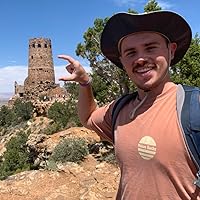
Tom Holland is an English historian and author. He has written many books, both fiction and non-fiction, on many subjects from vampires to history.
Librarian Note: There is more than one author in the Goodreads database with this name.
Holland was born near Oxford and brought up in the village of Broadchalke near Salisbury, England. He obtained a double first in English and Latin at Queens' College, Cambridge, and afterwards studied shortly for a PhD at Oxford, taking Lord Byron as his subject, before interrupting the post graduate studies and moving to London.
He has adapted Herodotus, Homer, Thucydides and Virgil for BBC Radio 4. His novels, including Attis and Deliver Us From Evil, mostly have a supernatural and horror element as well as being set in the past. He is also the author of three highly praised works of history, Rubicon, Persian Fire and Millennium.
He is on the committee of the Society of Authors and the Classical Association.
The two centuries from 900 to 1100 were a fascinating time in Europe. Somehow the centuries of chaos and decay after the fall of Rome were brought to an end and a dynamic and expansive Europe was born. This book attempts to tell the tale of those years and (according to the author in his Preface) to identify some of the key factors that contributed to Europe's rise. "Attempts" being the operative word: the telling is stylistically flawed, and the key factors insufficiently analyzed and structured.
Part of the problem is the complexity of the subject. Any book which tries to cover the end of the Dark Ages, the creation of the Middle Ages, the Christianization of northern Europe, the separation of Church and State, the rise of the Pope and the fall of Byzantium, the halting and then reversal of the tide of Islam in the West, and the genesis of the Crusades, has set itself a hard task. If on top of this it tries to explain why all these things happened as they did, well then it better be written by a literary Hercules.
All the more important then to approach the subject systematically. A clear structure is required, story-telling needs to be separated from analysis, endogenous and exogenous factors need to be distinguished, cultural, geographic, economic and military factors considered, the roots in the past as well as the consequences in the future sketched. But that's not what Holland does. Instead we get a confused mixture of story-telling and occasional analysis, repetitive emphasis of religious factors coupled with near total silence about any others, and all written in a naive and breathless style apparently intended to be reminiscent of contemporary chroniclers.
As narrative it is flawed: I was left longing for a modern voice, and the profusion of cliches, flowery language, and distracting and/or misleading references (for example, the last chapter's title is "An Inconvenient Truth", and yes, this was written after Al Gore's film was made), is just irritating.
As history, which I take to mean description and analysis of past events to help us better understand what happened and how, it is close to a failure. The central focus on Christianity is probably correct, but the rise of Papal Rome and the spread of Christianity throughout northern Europe is, it seems to me, insufficient to explain why Europe rose to dominate first the Mediterranean and then the world. There are many more parts to this story... but they are passed over or given short shrift here. As a result I am left less convinced than I might otherwise have been about the importance of Christianity in the overall process... not, I'm sure, the result that Tom Holland was hoping for.
I still read the book through to the end, because I am fascinated by the time and I learned enough that was new to me (even while gritting my teeth sometimes at the style) to make the effort worthwhile. But it could have been a so much better book than it is.
Tom Holland has the sort of talent many historians would give their index cards for. He can write about very complex issues, relying on mountains of source materials, and tell a good story with humour, even when it concerns the End of Days, the coming of Antichrist and the reappearance of the Messiah.
It’s hard from this remove, in the mostly secular society I inhabit, to begin to understand the massive influence that the preachings of St Paul and the Revelation of St John should have such mighty impact on the actions of war lords, peasants, bishops and priests over centuries. Yet they did, as Holland shows.
For the first time I really understand how and why the rivalry between the Popes of Rome and the Holy Roman Emperor arose, and why it persisted for so long. Who was it who truly spoke with the power of a special relationship with God? Who was to dominate Western Christendom? The East was a different matter, and Holland includes that power struggle too.
One seemingly minor detail that I really liked was that Holland called all war leaders, from anywhere, war lords, no matter what their title. Spot on. And he didn't muck around pretending that the Huns and the Hungarians were different. He calls them Hungarians. Just so we know.
I thoroughly enjoyed reading it, learned a lot and hope to find a copy somewhere.
I had my ups and downs with this book, but all in all I enjoyed it. If you are into history, then this is really only a retelling of everything you already know from 900AD to 1100AD with some history of religion and religious houses thrown in. Whilst I am very familiar with England's history during this phase, along with the Saracen's and the Northmen, I did learn much about France and the Wends and the Hungarians. Good book. It made me want to try another of Holland's books. I think I'll try Persian Fire sometimes in the future.
A classic example of the 'don't expect Barolo when you're drinking Vinho Verde' class; this is airplane history and as such quite successful- easy to read and rollicking tales, backed up by little analysis and couched as a tendentious and quite frankly pointless 'argument.' All you need to know about this book can be learned from the titles: in Australia and the UK, it's called 'Millennium: The End of the World and the Forging of Christendom.' In the U.S., it's called 'The Forge of Christendom: The End of Days and the Epic Rise of the West.' Why change the title like that? Is it about Millennarian tension? Is it about something called 'The West,' whatever that might be? Is it about the forging of Christendom (i.e., the creation of it) or Christendom's forge (where, presumably, Christendom makes things?) No. The only reason to read this book is to meet or meet again fabulous characters like Robert Guiscard, the Ottonians, William the Conqueror and Matilda of Tuscany. Read as such, it's fun, despite the lip-curling cliches (how many times can we be told that someone is a chip off the old block?) Expect that, and have some fun- with a great bibliography attached. On the other hand, if you're expecting history that will explain why things happen, or that gets details correct, or that will debunk rather than reinforce hoary legends, this will taste like really bad soft drink. Expect a lightly fizzy white wine, on the other hand, and it'll cool you off pleasantly.
Very cool and informative and well-written. If I had one suggestion, Tom, I would please signpost more. I know it would interrupt your flow, and it is a nice flow, but blease Tom. Tell me what you're going to tell me and then tell me it.
Tom Holland provides a thoroughly readable history, showing a sharp grasp of the history of the Dark Ages, as well as a passion for his subject. He reviews the history of Europe roughly from 900 CE to 1000. Always in the background is the alarm about the possible end of the world, Armageddon and the promise of the return of Christ, popularly known as millennial fever, as we saw again in the 1990s and the first few years of the 21st century.
Chapter One , 'The Return of the King' discusses the decline and fall of the Roman Empire, the spread of Christianity, the invasion of the old Roman domain by Germanic and Eastern tribes , the co called 'Barbarian invasions' and the shift from power from Rome to Byzantium.
Chapter Two , 'The Old Order Changeth' charts the building up of the Frankish Empire including West Frankia which would become the Kingdom of France and East Frankia which would become the Kingdom of Germany and the roots of the Holy Roman Empire as well as the 'end of days' fears gripping Europe. It also discusses the development of the church, the Muslim threat to Constantinople and Muslim slave trade in Europe. In the lands invaded and occupied by Muslims, Christians and Jews were either slaughtered (and there was massive genocide in this regard ignored by mainstream liberal historians) or else enslaved, with slaves referred to by Mohammed and his successors as 'human livestock'. Christians and Jews once brought to acknowledge their own subjugation were not to be slaughtered or converted but carefully husbanded, as befitted a valuable resource. "Tolerance had been carefully set at a price, the extortion of protection money from both Christians and Jews had been laid down by the Prophet as a most solemn duty of the faithful. all who paid it- dhimmis as they were termed by their Muslim conquerors-were made to feel themselves subdued". Thus began the practise of dhimmitude, the Islamic system of Apartheid that exists in many Muslim countries to this day, and is the reason for the roots of Islamic rage jihad, at being forced to be the equals of those of other faiths.
Chapter 3 , 'Yielding Place to New' provides how the Feudal System was created and took root in Europe, effectively enslaving the hitherto more free lower classes of Europe and robbing them of all they had, the effects still felt in the class system today. It also describes how the Church played a primary role in the creation of this system. And as the Bishop of Leon, Aldaberto lamented "Changed are all the orders of society! Changed utterly are the ways of men".
Chapter 4, 'Go West' discusses the shaping of Western Europe, the Vikings, the Franks, the evolution of the kingdoms of France, Germany and England, the latter with the great changing of it's social order, with the invasions of Britain by the Angles, Saxons and Jutes. And the creation of the Saxon kingdoms in England.
While Chapter 5 'Apocalypse Postponed' really gets to grips with religious matters of the time in Europe, and how the Catholic Church took hold of Europe. Chapter 6 '1066 and All That' chars the Norman invasion of England, and the consolidation of Feudalism and the domination of the Norman nobility in that country by William the Conqueror and his successors.
'Chapter 7' details the consolidation of the Holy Roman Empire , the Church in France and Germany including the importance of the Church and monastery at Cluny in France , the Popes and Papal system, and the causes of the Crusades, which were actually started (a politically incorrect but incontrovertible fact)by massacres of Christians in the Holy Land, the imposition of Islam by the sword, and the destruction of the Church of the Holy Sepulchre. The crusades though also influenced by political and theological issues in Europe, were essentially a reaction to this. Though the massacres of Jews by the Crusaders embarking on their mission was clearly caused by something different altogether and without justification.
Tom Holland shows a consummate understanding of Europe in the Dark Ages, and this is a highly readable and rewarding work.
My medieval history knowledge centres around the years 1097-1309, and I was terribly hazy on anything between Charlemagne and the First Crusade. The first chapter or so of this book is somewhat of a loose summary of Judith Herrin's absolutely magnificent full-length work The Formation of Christendom, which deserves reading on its own account; but the rest of the book was just what I needed to get a grip on the great cultural upheavals that Holland claims characterised the turn of the first millennium.
I was really excited to find a book on this time period that focused on the history through the lens of eschatology and its impact on people's actions, partly because eschatology is fascinating to me and partly since I had heard popular historians discuss the impact of eschatology in relation to the First Crusade but had never seen any support in the primary sources or scholarly materials for believing that a belief in the imminent end of the world might be any kind of motivating factor. Holland's book shows that there was widespread concern about the potential end of the world during the Millennium, but positions the First Crusade more as the response of a people who realised they were going to be around for a while longer and might need to take matters into their own hands. It was particularly fascinating to me to see two streams of thought awake during Christendom even then: St Augustine's postmillennial orthodoxy, versus the apocalyptic prophecies of the Pseudo-Methodius and others like him.
The really mind-blowing thing in this book was Holland's depiction of the rise of the feudal system as impelled by the castle-building of Fulk Nerra in the 900s, and characterised by the rounding up of peasant farmers into villages where the armed thugs in the castle could keep an eye on them. These were not serfs, but ostensibly free men suffering a wholesale loss of rights and dignity. If you want to know where the crime of poaching originated, it was because of lords enclosing the forests to prohibit hunting and gathering, so as to make the peasantry concentrate on their more easily-plundered grain crops. Similarly shocking to one who'd only ever heard good things about pre-Conquest England was the picture of an Old English regime supremely practiced in the art of fleecing its citizens; attractive to the Viking plunderers specifically because of the concentration of wealth in the king's hands. And what about the Saint Brice's Day Massacre of the English Danes presided over by Alfred the Great's great-great-grandson Ethelread the Unready, culminating in the burning of an Oxford church over the heads of a group of Danes who had fled there for sanctuary? It doesn't do to have too prettified and romantic a picture of medieval times.
This is not to say that I take Holland's picture without a grain of salt. Footnotes reveal that some of the assertions made by Holland are robustly contested by some scholars. And Holland does what many popular history writers do, either conjecturing liberally about various people's motivations, or overstating the historical certainty of some things (a peek at Simon MacLean's book Ottonian Queenship, for instance, suggests that historians are far from certain that the "colloquium regnarum" of powerful female rulers of 985 which Holland mentions on page 332, was in fact a Europe-wide gathering of female rulers, or just a regular council meeting of the Holy Roman Empire, then presided over by two queens dowager). At a minimum, I'd love to find some scholarly reviews of this book to see how the academic community views it.
That said, MILLENNIUM was a wonderfully vivid and readable overview of the history surrounding the turn of the first millennium, which I found extremely useful. I'm looking forward to reading Holland's other book, DOMINION, when I have the opportunity.
I did enjoy "Millenium" much more than "Dominion". It's a great synthesis of important historical events that happened around the year 1000AD and had a crucial impact on the further development of Europe: the forming of nation-states and the political rise of the Catholic Church.
Before you reach out for any of Holland's books, you should be warned that his style is ... specific. It feels slightly "inspired". What do I mean by that? When commenting on the events, Holland tries to mimic the way of thinking of the people of the time. That may appear odd to you, especially if the facts have some religious connotations - as in such a case, it almost seems like a religious book. It's a purely stylistic move (as the author remains objective and fact-focused), but it may put atheists off.
Another important point is that this book (just like Dominion) is all about Christianity, Christian civilisation and catholic countries - the historical and sociopolitical topics are strictly limited to that part of the world at that time.
OK, finally, after all these disclaimers - I've enjoyed "Millenium" a lot. Especially the fact that, for once, I've seen a coherent picture of the world not shattered into perspectives of individual countries/regions. Now it all made much more sense, some logical dependencies and cause-and-effect relationships were easier to follow. Sure, even at that book size, the author was very selective, but his choice of facts, events, and personas appears truly non-controversial. I've learned a lot about, e.g., the conflict between Henry IV and Gregory VII, Robert Guiscard, the complex political landscape of Nordics + England, the decaying Byzantine empire, etc.
Recommended if you're into the history of the early Middle Ages. After reading this one, I think many things will make much more sense to you.
Now that was a history book. As a fierce crusader for fictiondom all my life, this book shook my literary faith to its core. Well organised and superbly written, non-fiction or history like this stand above the rest.
I received this book as a present from my future wife for Christmas one year after she had seen me take great pleasure in The Silmarillion and in watching Ken Follet's Pillars of the Earth miniseries. I can't say I was thrilled when I opened the present as well what can I say it was obviously non fiction. I knew there would be no dragons or elves nor would there be Ian McShane and Rufus Sewell capturing my imagination.
Fast forward a year and after another heart breaking loss for the Baltimore Ravens in the AFC Championship, I was planning on starting the next Game of Thrones book ahead of my scheduled waiting period so as to prolong the series as long as I can until the bugger writes another one. But then instead I turned to Millenium, one I'd been coming closer to for a while but more I thought out of matrimonial guilt.
I have to give great respect to the Song of Ice and Fire series for creating a fantasy world that is very magical without being overtly magical. Yes there are dragons but only three of them and barely anyone knows about them. Yes some children shapeshift into wolves but half of them don't believe they're not just dreaming. What I'm getting at is that Game of Thrones and it's other books do a great job of pseudo-historical fiction. And after reading Millenium, I think that's why I came to get so enraptured in it; because portents in Christendom in 700 were no different than dragon sightings and pagan mysteries. Game of Thrones merely goes one step further to have first person narrators of the action.
So to all my fiction stalwarts out there, particularly you fantastical beasts, give this book a try. I'm not saying try any history as you might be disappointed by other authors but Tom Holland knows what he's doing. He's given me a new found respect for the Normans and I hope I'm descended from one; he's opened my eyes to the global effect of Constantine's vision and the ramifications for a religion out of the gate headed merely for the conglomeration of the Bahai; and he's given me a new understanding of the Caliphs across the sea and their part in showing barbarous Europe what civilised society was really all about.
Spoiler alert, Christ didn't return but my respect for the past fucking did.
A fascinating account of the rise of Christendom in the West, particularly against the backdrop of millennial expectations for the return of Jesus. The account perfectly illustrates how eschatology directly affects cultural development, both for good and for ill. Holland traces even such things as the use of the crucifix, the power of the papacy, celibacy of the priesthood, the rise of the Holy Roman emperors, the attention to the Holy Land, and of course the first crusade, to the popular expectation that the world would come to an end on or about the marking of the thousandth year since Christ's incarnation.
I'm FINISHED!!!! ja dat mag wel met een uitroepteken of 4 ;-) **** Ik had niet durven denken dat het me zou lukken, dat ik dit hele boek waar ik 10 jaar geleden al eens aan begon en na 20 blz al opgaf, nu wèl zou uitlezen :-). Phieuw! Het heeft lang geduurd eer ik ook maar enig ritme vond in het boek. Ellenlange zinnen, een deel geschiedenis in het begin waar ik waarlijk niets (meer?) over wist, het maakte de gang naar Canossa voor mij al even moeilijk als voor Hendrik IV. Onderwerp: het grote scharniermoment rondom het jaar 1.000 waar Europa onderhevig is aan heel wat veranderingen. In die tijd is Europa nog niet volledig gekerstend, na Karel De Grote vervalt het Frankische rijk in vele delen en is eenheid zoek. Daarenboven verwacht men bij de millenniumwisseling de komst van de Antichrist, dat was nl. aangekondigd in het evangelie van Johannes. Er is de wil om opnieuw een groot keizerrijk te vormen, één waarbij de zalving door de paus wel van waarde is. Men wil de opstandelingen en de heidense gebieden toevoegen aan het rijk en zo een groot Europees rijk vormen. Ondertussen zijn er ook invallen van Saracenen, Wenden en Noormannen. Geen wonder dat men het einde der tijden verwacht. In het boek zie je ook de macht fluctueren tussen koning/keizer en de paus, en terug. Het Heilig Roomse Rijk komt tot stand. Het boek komt soms wat warrig over, zeker in die delen waar je niet in thuis bent (wat wist ik nu nog van de Saksen?!?). Het was handig geweest had er een tijdlijn bij het boek gezeten zodat je hierop kon terugvallen en kijken wat er allemaal tegelijkertijd gebeurde. Maar het boek is wel ongemeen boeiend en bijwijlen zelfs spannend. Er zijn stukken geschiedenis bij (De Saksen, Hendrik De Vogelaar, Otto 1,2,3,...) die ik straks alweer vergeten zal zijn. Maar wanneer ik dit in een volgend boek nog eens tegenkom, zal er zeker een lichtje gaan branden. Dat was nu ook het geval bij het weerzien met de Normandiërs , de Hautevilles, zij veroverden delen van Italië, Sicilië, ... Over hen las ik in het boek over de Noormannen vorig jaar. Het was ook een fijn weerzien met Willem de Veroveraar, de aanloop naar de slag bij Hastings. De geschiedenis die ik al kende werd op een andere manier belicht, er werden andere details verteld, en zo werd mijn kennis hier ook weer vergroot. Dat is toch echt zalig! Op het einde leek de turbulente periode voorbij en kwam er vrede. De Antichrist was niet gekomen. Wij weten uiteraard dat die vrede niet lang blijft duren, dat hierna alleen maar meer oorlogen volgen. En zo blijkt eens te meer dat machtshonger en veroveringsdrang van alle tijden is.
In questi ultimi decenni molto sforzo è stato fatto da parte di scienziati, ricercatori ed accademici per avvicinarsi al grande pubblico ed introdurre il maggior numero di persone a scienza, arte e cultura. Missione fondamentale, specie in questi tempi di cialtroni, ignoranti e falsari che diffondono notizie false per pessimi fini - e, in un fruttuoso scambio, anche scrittori non specializzati nelle materie o giornalisti- divulgatori cominciano ad attrezzarsi con i "ferri del mestiere" necessari per trattare argomenti di varie discipline (in Italia, al solito, siamo ancora parecchio indietro, però....).
Tom Holland usa con disinvoltura le tecniche più moderne della narrazione, in cui trama e "storie da raccontare" sono i pilastri fondamentali della pagina scritta, con la coscienza della necessità di citare fonti riconosciute e la serietà di indicare cosa effettivamente sappiamo e quale sia il punto della ricerca storica.
La tesi del libro che è il famoso spauracchio medievale dell' "anno Mille", normalmente contestato come visione anacronistica e non corrispondente alla realtà storica, abbia in realtà basi solide in molti scritti che sono arrivati fino a noi. In realtà, la questione (per me) è di lana caprina: sicuramente l'ansia per l'Apocalisse era una presenza reale nella società del tempo, ma forse rimase una presenza sempre costante senza particolare e maggiore rilevanza nei pressi del passaggio del Millennio (e anche Holland tra le righe lo ammette, visto che si parla di venuta dell'Anticristo dai tempi di Agostino fino alle crociate). Poco male, perchè questo obiettivo spinge l'autore a realizzare un affascinante e coinvolgente volo per tutta l'Europa degli anni 950-1070, rendendo vive e molto interessanti parecchi vicende del tempo ed espandendo un periodo abbastanza limitato (poco più di un secolo) in una trattazione di 500 pagine.
Personalmente ho trovato parecchio interessante (data la mia basilare ignoranza del periodo storico) le vicende di zone "di frontiera": dal Rus' di Kiev di scandinava fondazione, all' Al-Andalus spagnolo passando per l'integrazione dentro l'Europa dei normanni e le vicende dell'Impero Bizantino che sono alla base dei diversi riti cristiani di oggi (e, per esempio, ho capito perchè la Chiesa Russa è di rito ortodosso).
Certo, c'è molta disinvoltura ed audacia nell'attribuire pensieri ed intenzioni ai protagonisti della vicenda storica e alcuni ammiccamenti al contemporaneo (molti titoli di capitoli sono "puns" dalla cultura pop di oggi), ma tutto è fatto sempre con riferimenti puntuali e precisi alle fonti - ed, in fondo, apprezzo il tentativo di narrare non solo la storia dei fatti ma anche quella dei concetti (nei limiti di quello che possiamo dedurre dalle fonti storiche)
The best histories tend to have a solid theme and narrow focus. With Rubicon and Persian Fire Holland captured this technique admirably. With Millennium, he may have bitten off more than he could chew, at least in a mere 400 pages.
The work deals primarily with the centuries prior to the year 1,000 AD, a momentous year by the accounts of this book, filled with foreboding about the loosing of Satan and the Anti-Christ upon the world for the next thousand years, and the solidification of Christianity as the predominant religion in Europe.
Of course, you can't talk about the solidification of Christianity in Europe without mentioning its beginnings during the Roman Empire; and you can't talk about Christianity's spread through Europe without discussing the assimilation of the religion by various barbarian nations; and you can't mention the fractured barbarian nations without addressing their leaders who consolidated them into factions (that in many cases soon fell apart); and you can't talk about these barbarian nations and their Christianity without discussing their relationship with the Pope; and you can't discuss relationships with the Pope without discussing the up-and-down power of the position; and you really, really can't discuss Christianity in Europe in the centuries preceding the millennium without discussing the Saracens and Islam in the Mediterranean...
You get the idea.
Holland has chosen what is absolutely a fascinating subject that few understand well. Of course, his well-chosen and interesting topic suffers for the very reason people don't understand it well--there are simply too many moving parts to mold into a cohesive narrative.
That doesn't stop Holland from trying, though, and it is a noble effort. In the end though, this subject doesn't fit well within Holland's modus operandi of grand, popular themes that can be addressed clearly and succinctly. The sheer volume of information, of rulers coming and going, of shifting borders, of the now-and-again influence of the Byzantine and various Islamic empires, was simply too great a strain in a work of comparatively little girth.
Here Holland's swift yet thorough style becomes problematic as we whisk back and forth between characters, regions, and places in time.
I enjoy Holland's work and I appreciate his ambition, and deep down I liked this book, but the work required separate volumes. Instead Holland tried to squeeze an entire elephant into a single, man-sized pair of pants, and as a result the book is dense and almost bursting at the seems.
I really enjoyed Tom Holland's book "Persian Fire". It was very well written and easily held my attention. This book "The Forge of Christendom" was a horrible slog to trudge through. It is extremely wordy, doesn't follow a consistent timeline, and is constantly flip-flopping from character to character. It has a few interesting points and covers an interesting time period. But I can't recommend anyone waste their time on this book. I would recommend Lars Brownworth's books (The Sea Wolves, The Normans, In Distant Lands, and Lost to the West) for better coverage of this time period.
Gave up on the final chapter, I just didn’t have the will to read on! I like Tom Holland’s books but this one just didn’t draw me in and keep me engaged the way his others did. Dense, lacking compelling narrative and chronologically all over the place.
It’s a shame because it’s clearly thoroughly researched and provides some moments of interest. But overall it’s a chore to read and not a pleasure.
“Like the crossing of the Rubicon, like the storming of the Bastille, the events at Canossa had served to crystallise a truly epochal crisis. Far more had been at stake than merely the egos of two domineering men. The Pope, locked into a desperate power struggle though he certainly was, had ambitions as well that were breathtakingly global in their scope. His goal? Nothing less than to establish the 'right order in the world'. What had once…appeared merely a pipedream was now, during Gregory's papacy, transformed into a manifesto. By its terms, the whole of Christendom, from its summit to its meanest village, was to be divided into two. One realm for the spiritual, one for the secular. No longer were kings to be permitted to poke their noses into the business of the Church. It was a plan of action as incendiary as it was sweeping: for it required a full-out assault upon presumptions that were ultimately millennia old.”
This is a delightfully entertaining piece of narrative history, written with Tom Holland's characteristic zest and relish for his subject. His objective is to explore how Western Europe rose to such prominence in the world, and he identifies the Middle Ages as a critical period that we need to understand if such an explanation is to be coherent. The narrative is brisk and engaging, and many of the period’s most significant figures are brought vividly to life. In particular, I would like to read much more about the late Anglo-Saxon and early Norman period in Britain. Arguably, however, the most important figure in the book (and perhaps in the history of Western Europe?) is Hildebrand of Sovana or, as he is better known, Pope Gregory VII:
“Although the new pope was thoroughly Roman in everything except his birth, his habit of thinking was nevertheless a global one. Whether it was the King of England, or the Abbot of Cluny, or the generalissimo of the Patarenes, Gregory had long been in the habit of regarding even the most celebrated men of the age as his agents. Of humble birth he might have been, and impeccably austere in all his personal habits - and yet an imperial cast of mind came to him no less naturally for that. Processing past the haughty monuments of an ancient and vanished empire, he showed no compunction in displaying himself to the Roman people arrayed in the traditional crown and robes of a Caesar: the first pope ever to flaunt such insignia in public. In private, seeking to order his thoughts about the destiny that God had entrusted to him, Gregory dared to go even further. To an unpublished memorandum, he confided a series of awesome convictions: ‘that the Roman pontiff alone is by right called ‘universal’’; ‘that all princes kiss the feet of the pope alone’; ‘that he is permitted to depose emperors’. Assertions so vaunting that even the author shrank from stating them aloud…And yet in truth, for all the unhesitating sternness with which Gregory was prepared to upbraid the pretensions of uppity princes, his concern was not with the ordering of their kingdoms, still less with any madcap attempt to refound the Roman Empire, but rather with a project that he saw as incalculably more important. Just as the monks of Cluny had laboured to make of their monastery a bulwark of the celestial set amid the woods and fields of Burgundy, so it was the gigantic ambition of Gregory to see the universal Church transfigured in an identical manner, in every princedom, in every town, in every village. For only then, once it had been freed for good from the cankered touch of grasping kings, and brought to shimmer with a radiant and unspotted purity, would it properly be able to serve the Christian people as a vision on earth of the City of God.”
Holland identifies Gregory’s facing down of the Holy Roman Emperor, and the reforms to the church that he spearheaded, as some of the most consequential events in European history: “Time would show that his pontificate, far from having led to the ruin of the Church's libertas, its freedom, had served instead to entrench it, and much else, beyond all prospect of reversal.”
Many of the ideas he unpacks more fully in Dominion are present here in an embryonic form, but it is fair to say that the sacral played an inestimably important role in the development of the West!
Tom Holland's latest book is about the slow recovery of Western Europe between 900 and 1100 AD, a period that he sees as the beginning of Western Europe's transformation from a decaying and dilapidated backwater to the mastery of the world. Tom Holland clearly thinks Christianity had much to do with this rise and presents the violent elimination of paganism in Scandinavia and Eastern Europe as positive achievements of the age. This is mostly done not by direct editorializing; it is done by using the language of the invading Christians (not as quotes from ancient books but as the text of the book itself) to describe the pagans. What the pagans thought of this transformation is rarely mentioned or is explicitly presented as a quote, not as the author's own text.
He sort of claims that this great transformation had something to do with rising apocalyptic expectations about the end of the first Christian Millennium, the disappointment of which was followed by the channelization of these energies into this-worldly revival and expansion. He does not really prove this hypothesis and it may be that it is mostly a device to frame the book and is not taken completely seriously by Tom Holland himself. Certainly I more or less ignored it while reading the book and you can get some value out of the book without paying this theory any mind either.
(The book's Amazon.com intro presents this as the central thesis of the book: "At the approach of the first millennium, the Christians of Europe did not seem likely candidates for future greatness. Weak, fractured, and hemmed in by hostile nations, they saw no future beyond the widely anticipated Second Coming of Christ. But when the world did not end, the peoples of Western Europe suddenly found themselves with no choice but to begin the heroic task of building a Jerusalem on earth." I did not find it convincing and I think you can ignore it too). That said, the book is still fun to read. Tom Holland always wants to make history fun, to tell stories, to quote contemporary accounts and to paint vivid pictures of life in those times. He is always interesting, but the reader will have to read other books to find out if the slant presented here is the most reasonable one or if Mr Holland is letting his storytelling side (or his Christian/English side) dictate how events and characters are presented.
There is definitely an element of subtly (and occasionally not-so-subtly) challenging the more "woke" interpretations of history that are currently popular in some elite Western universities. He wants the readers to see Christianity (specifically Catholicism) as an overall force for good (separation of church and state, suppression of elite violence, etc) and as an important source of cultural unity, growth and creativity in those troubled time. He is not necessarily wrong about this, but he rarely makes a solid evidence-based case case (with alternative views systematically evaluated and rejected) for his preferences, relying instead on eloquence and (selective?) presentation to convince the reader.
If you don't mind (or already approve of) his Christian and "Eurocentric" viewpoint, this is the book for you. Even if you do mind, it is a very entertaining read, full of zany anecdotes and interesting factoids. A reasonably good overview of the age and worth a read. But it will be a good idea to read other books about the period before you decide that the trends were exactly as described in this book.
Not quite sure what to make of this one. About halfway through, was really finding the book a slog. I generally have enjoyed Holland's books, but this one was a bit melodramatic even for me. Even though meticulously sourced, Holland writes in such a grandiloquent style that it tends to distract from the actual historical drama at times. Which is a shame. Because there is drama a plenty in the 10th and 11th centuries, so why the need to wax so poetic? But perhaps I am being overly harsh, because this is Holland's style after all - he writes of historical events and characters and does all he can to make them vivid and real. And if the style is a bit garish at times, that is part of the effect, is it not? Anyways, as I was saying. What is this book about? Holland's thesis seems to be that certain religious and political factors (variously numerated in the book and I shall not attempt to summarize!) led to the revitalization, forming and focusing of the Christian West (namely Europe, specifically England, France and the Holy Roman Empire...and the Pope) leading up to the launching of the First Crusade in 1095 AD under Urban II. The author does a good job of tracing the last few centuries of the first millennium, specifically the formation of certain power groups, dynasties and nation states (although that last may be slightly anachronistic) that held sway at the time of the First Crusade. It was interesting because reading this book, I wasn't actually sure where the history would end or what Holland was trying to say but as I got near the end, the lightbulb flashed on and I thought of course. The First Crusade - marking Europe as not just a boiling cauldron of banditry and gangsterism, but as an expansionary power turning its eyes East. So with that insight, this volume was really quite good and I only wish I had more properly appreciated the first half of the book. I think a lot of what bothered me in my initial reading was the heavy pushing that Holland did to show the impact the turning of the Millennium had upon the people of Europe. While I don't doubt that the idea that the apocalyptic end of days was coming had an impact on the actions of both peasants and kings, I wasn't entirely convinced that the 1000-year anniversaries of various points on the Christological calendar had as big of an effect as Holland seems to be postulating. Once Holland got past the 1000-year marks, I more appreciated his historical fervor. The last two chapters were superb and worth the cost of admission on their own. Reading about the various forces warring to make England their own ("1066 and All That") was purely a delight to read and kept me up far too late one night! And the chapter chronicling the war of wills between Henry IV and Gregory VII was utterly fascinating...culminating of course, in the power and surety of Urban II that led to the call to Holy Crusade. Deus Vult indeed. Having just recently read a fantastic history of the Crusades (Runciman's 3-volume set - read it!!), I really enjoyed this lead-up. While I will still continue to roll my eyes at times at Holland's writing style, I do enjoy his history. He somehow manages to pack quite a bit of history in a book that just rolls along effortlessly. A worthy volume to add to my rapidly expanding Holland collection.
A fascinating time in history less than fascinatingly retold on the back of a farfetched premise.
To say that the penance of Henry IV before Pope Gregory at Canossa in 1077 is more historically important than the Enlightenment, the Renaissance, and the Reformation is simply to ERR, to call Gregory 'godfather to the future' a blatant piece of hyperbole.
The twin fortunes of emperor and pope had waxed and waned long before this moment, and would continue to do so. Not long after Canossa itself Henry turned the tables and exacted his own humiliation on Gregory.
In reality, Church and State were closely entwined yet distinct for centuries to come, only the advent of democracy brought real separation. In terms of how far back the idea of the separation went, what did Jesus mean exactly when He said, "Render unto Caesar the things that are Caesar's, and unto God the things that are God's."
The forging of Christendom refers to the steady stream of conversions during the two centuries either side of the first millennium - the Hungarians, the Norsemen, the Rus, the Wends. For all that it's worth remembering that the Moors were still entrenched in Spain, the Saracens in Italy, the Turks in Byzantium.
This is 'narrative history,' where primary sources are discarded almost entirely, limited to the odd short quotation swallowed within the author's account. I can't call Holland's prose anything better than workmanlike for the most part. He never soars, instead inching along in seesawing paragraphs, making a point in one, only to start the next with 'And yet,' 'Not that,' 'Yet if,' or other contrary phrases to that effect.
As such, I found myself constantly craving the appearance of a letter, a decree, a monk's diary entry, anything from the time to break Holland's unvarying rhythm and style which, over 400+ pages, were almost enough to send me cringing to Canossa.
That said, history always interests me, the older the better. I never knew that Otto III, believing in the prophecy of John the Revelator, was prepared to go to Jerusalem as the last Holy Roman Emperor and hand over his crown on Golgotha before his early death from malaria; that Fulk the Black, Count of Anjou, who brought castles to French soil; burnt his wife at the stake for having an affair in one; that Al-Hakim bi-Amr Allah, the sixth Fatimid caliph, saw himself as <>'al-mahdi'<> (Rightly Guided One) who would put an end to injustice on the Day of Judgment.
I've also taken a note to read more about the abbey at Cluny. Established in 910, it's fortunes and reputation only grew over the next two hundred years while those of the Lateran were constantly menaced.
The crusades would bring Rome back to the fore, but that's another story.
Brilliant account of European history around the last millennium – with a particular interest in how people’s fear/faith of a millennium apocalypse in some form interacted with and sometimes shaped historical events. The key initial contention (although one not really covered thereafter) is that Pope Gregory’s successful attempts (which form a large part of the end of the book) to gain independence for the Roman church from the politicians (especially those of the Holy Roman Empire) developed Christendom as it is now by also freeing the state from the over-influence of religion and so leading in time to the Renaissance and Enlightenment.
The geographical sweep is huge and I gained significant insights into the Normans, the early days of the Russians, the Frankish empire (including the role of the Saxons), the development of a strong papal state, the rise of knights and castles in France, English history leading up to and through 1066, Scandinavia and Spain among others. The coverage of Byzantine is (presumably deliberately) a form of second hand account as this book very much focuses on Western Christendom (and hence only really on Byzantine when the two collided or interacted). Although broadly chronological the book also has themed chapters with large sections on one geography and this can be confusing. The book would have gained significantly from a time line showing in parallel the main events described against some of the main kings/popes/emperors for various states.
An excellent book – written in a narrative style which while at times meaning that the reader feels a more simple encyclopaedic type reference would be easier to follow, makes the book one of the few non-fiction books that does not seem over-long but by contrast is actually enthralling and gripping, almost like a thriller.
A very scattershot kind of book, even compared to other Holland works I've read. He clearly wanted to write a book focused on the investiture crisis and the reformation of the Papacy, but just kept adding more tangents because this period is a blind spot to a lot of people and without context the machinations of Hildebrand & co. would not mean anything to the reader, and then it spiraled out of control into a general history of Europe 800-1096. Fine by me, because I am one of those people. Or at least I was.
The prose in this is also much less offensive than the excesses he allows himself elsewhere. Most nouns are accompanied by at most one adjective, thankfully. I don't think I could've stomached another Dynasty-situation.
DNF. There are many good history books on the ending of the Early Middle Ages and the beginning of the High Middle Ages. This is not one of them. Excessively purple prose, complete lack of concrete historical analysis, jumbled narrative, persistent unscientific terminology, a creeping eurocentric conservatism, as if the writer wanted to immitate the early christian chroniclers or the 19th century historians who were using medieval history to celebrate the superiority of the European empires. 2 stars because the writer did his research and that is shown in the bibliography.
I loved reading Tom Holland’s book, and I imagine I’d love hearing him lecture even more.
The goal of history, it seems to me, should be to present history as argument, to use events of the past to support a thesis. But good luck finding much of that that isn’t dry, esoteric, or too invested in the debate with other studies in the field to invite you fully in.
Holland pulls it off. His argument here turns on the claim that “the West” – which is essentially Christian Europe – emerged as the dominant military-political force of the last millennium because it developed a distinct two-pronged seat of authority. It found a way to split cultural authority between church and state.
We see the implications of that echoing through today’s headlines. After all, authoritarianism – whether of the Putin or Trump variety – asserts itself as singular authority. The contemporary world may have a variety of institutions – media, corporate, communal, religious, and political – but it’s easy to see how radical it must have been to have a bifurcation of what would at one time have been singular authority.
As Holland sees it, that principle became established on the road to Canossa, when Holy Roman Emperor Henry IV kneeled before Pope Gregory VII to plead for a repeal of his excommunication. I studied the event in high school – as I imagine most of us did – but it’s part of so complex a web of politics and history as to be almost impossible to understand at a glance.
Here, Holland stares. He leaves his big claim to us mostly through implication, starting and ending with Canossa rather than exploring all that much of what follows. But he gives us an extended look at the dramatic changes taking place throughout the world just before and after the year 1000.
Maybe some of these theories repeat what serious historians have been saying for years, but I find this fresh and compelling. Holland claims that there was widespread anxiety as the first Christian millennium neared. Many expected either a second coming or an apocalypse. To hear Holland describe it, many expected the Book of Revelation’s Gog and Magog to emerge wage war. Somewhere, they seemed certain, Antichrist would announce his presence and bring about a war to end all wars.
That mood helped set in motion a variety of political forces. On the one hand, it brought about a rise in what we might see as authoritarian political figures. Many earls, dukes, castellans, and other proto-feudal powers began to centralize their power, forcing larger than ever numbers into serfdom. On the other, religious fervor brought about a separate social currency, one that often went to support for a centralized monarchy with the king seen as a kind of god’s representative on Earth with an interesting in bestowing mercy and even grace.
It's too complicated to retrace how those separate forces played out, but in that moment, we see a range of new political figures coming to power. The Holy Roman Emperor, often a ceremonial title in the century after Charlemagne established it, recouped some though hardly all of its authority. French Capetians and assorted Germanic princedoms emerged. Normans established kingdoms in France, England, and Southern Italy. Spanish Christian leaders in Leon and elsewhere reversed the movement of Islamic Jihad. And, all the while, Constantinople, the long-time center of Christian authority, waned.
In other words, Christian Europe experienced a rise in its political and military might at the precise moment that its religious leadership found a way to assert a separate authority.
In the moment of Canossa, then, Gregory demonstrated that it wasn’t enough merely to have the biggest armies.
As if all that weren’t enough, Holland writes with clarity and good humor. He has a way of describing and humanizing these long-dead figures. He has a way with a punch-line, one that I am certain hits home in his lectures. I’d call it snark, but snark comes from adolescents who don’t fully understand what they mock. Coming from someone with Holland’s expertise, it cements the larger picture but with a laugh.
His ultimate point resonates, though. For the last ten centuries, we’ve had multiple ways of asserting authority in the West, and it’s been part of what has led to such military and economic success. I’ll keep thinking about that concept as I hope – along with most of the world – that Putin fails in his push into Ukraine.
As a final kicker – one that Holland builds up to thoughtfully, it’s Gregory’s protégé and successor, Pope Urban, who calls on his religious authority to inaugurate the crusades just a couple decades later. The legacy of Canossa is certainly not all good, but it suggests a world dramatically different from the one before it.
Good history makes a point like that clear, and it’s a joy to read.
This book was really well done; Holland wrote a historical narrative that was very compelling to read and kept up a good pace. Keeping the focus of the book on the Christian nations during the turn of the millenium made it very easy for the reader to keep track of the intermingling plots and consistent themes. It definitely felt like there was pro-Christian bias in the narrative, but I assume that was left in intentionally to preserve a cohesive story from the viewpoint of the Christian kingdoms. It did take a bit of getting used to though.
The book focuses primarily on the century preceding and following the year 1000 CE. In particular on the spread of Christianity in Western and Central Europe, the development of those kingdoms, and the evolving role of the papacy in those kingdoms. The heaviest focus is on German and Frankish kingdoms, but also discussed are Scandinavia, England, and Italy, plus a few other less important mentions. It covers a few key historical events in Western history, most notable being 1066 and the events surrounding the Battle of Hastings.
Overall I thought this book offered a very good overview of a very interesting period of history. The Christian viewpoint of the history, while biasing the story, does offer an interesting perspective of the events.
Very solid book, not as analytical as I was hoping for; instead was more narrative driven, which still allowed for an enjoying read overall. I do think the title of The Forge of Christendom is a bit misleading, as it made me think of how Christianity came to be the dominant religion of the West; while Holland does speak on this here and there, the book's focus is less about the making of Christianity than it is about Christendom's view of the expected second coming of Christ around AD 1000 and how that shaped their world view in their dealings with those around them. Regardless, it is still overall a very fascinating and plainly fun book, though Holland at times could do without some of the fanciful language.