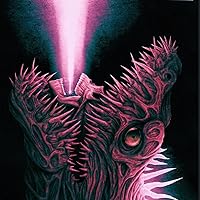
Jump to ratings and reviews
Rate this book

God's Demon #1

God's Demon

Rate this book
Lucifer's War, which damned legions of angels to Hell, is an ancient and bitter memory shrouded in the smoke and ash of the Inferno. The Fallen, those banished demons who escaped the full wrath of Heaven, have established a limitless and oppressive kingdom within the fiery confines of Hell. Lucifer has not been seen since the Fall and the mantle of rulership has been passed to the horrific Prince Beelzebub, the Lord of the Flies.
 
The Demons Major, Heaven's former warriors, have become the ruling class. They are the equivalent to landed lords, each owing allegiance to the de facto ruler of Hell. They reign over their fiefdoms, tormenting the damned souls and adding to their wealth.

One Demon Major, however, who has not forgotten his former life in Heaven. The powerful Lord Sargatanas is restless. For millennia Sargatanas has ruled dutifully but unenthusiastically, building his city, Adamantinarx, into the model of an Infernal metropolis. But he has never forgotten what he lost in the Fall--proximity to God. He is sickened by what he has become.
 
Now, with a small event--a confrontation with one of the damned souls--he makes a decision that will reverberate through every being in Hell. Sargatanas decides to attempt the impossible, to rebel, to endeavor to go Home and bring with him anyone who chooses to follow . . . be they demon or soul. He will stake everything on this chance for redemption.

352 pages, Hardcover

First published October 16, 2007

165 people are currently reading
3695 people want to read

About the author

Wayne Barlowe

27 books170 followers
Wayne Douglas Barlowe

Ratings & Reviews

What do you think?
Rate this book

Friends & Following

Create a free account to discover what your friends think of this book!

Community Reviews

5 stars
517 (36%)
4 stars
521 (36%)
3 stars
262 (18%)
2 stars
86 (6%)
1 star
39 (2%)
Displaying 1 - 30 of 179 reviews
Profile Image for Jeffrey Keeten.
Author 5 books252k followers
October 15, 2018
”Their appearance was as grotesque as their croaking chorus; they were as varied and individual as the capricious laws of the demons could create. Somewhere in Hell, a veritable army of lesser demons had their way with the endless flood of souls as they entered the realm. Legless, headless, corkscrewed, folded, torn, and pierced, each soul wore but the thinnest mask of mankind.”

 photo Souls_zps0bcaca2c.jpg
Painting by artist and author Wayne Barlowe

Lucifer has disappeared from Hell passing his administrative duties to Beelzebub. Cities have been built conjuring souls into blocks. Pain, anguish, torture, despair are the natural order of the day to say nothing of the heat, the incessant wind, and the bloody ash that covers everything. The fallen angels, now demons, are corrupted, twisted, and bear little resemblance to their former beautiful embodiments. Politics made up of shifting alliances born more out of mutual interest and fear than out of loyalty dominate the ongoing struggle for power in the realm. Beelzebub is cruel, even for a demon, and when a rival, Sargantanas begins to dream of redemption and a return to heaven. A war over that belief splits Hell into two mighty armies made up of creatures that only the most vivid imagination can conceive.

Lilith is here. She belongs to Beelzebub, tossed to him by Lucifer along with the staff of the kingdom. Every demon desires her, dreams of her, and wants to possess her. ”He wanted her just as did nearly all the demons of the court. As a sexual plaything, as a possession. She was, he thought, at turns beautiful and terrifying, sensuous and cold, fragile and strong, and, perhaps, because of these intimidating, unfathomable contradictions, almost irresistible. But, like all the demons, Adramalik knew what the penalty would be if Beelzebub even thought there was any competition. His paranoia was matched only by his wrath.” Unlike the hues, the colors of hell, that the demons assumed Lilith is bone white, a bit of snow in a world of violent colors. ”Lilith was close; he could see the red sclera of her eyes, the tiny nostrils, the thick, tight curls of her snowy mane. And, brought on perhaps by the stagnant, hot air, the thin sheen of perspiration that glazed her perfectly sculpted body.”

 photo Lilith_zpsdc65b840.jpg
Lilith painted by the author Wayne Barlowe

She begins carving bone white images of herself and has them delivered to souls and embodied in those carvings are the beginnings of a religious affirmation. When she escapes Beelzebub and the city of Dis for Saragantanas and the city of Adamantinarx-Upon-The-Acheron she becomes an added spark for conflict, the Helen of Troy of HELL.

Hannibal Barca receives one of the Lilith carvings and even though he doesn’t know exactly why it holds such power over him he feels the first glimmer of hope since he found himself in HELL. Out of a sea of souls he comes to the attention of Saragantanas and as the army emerges and alliances are formed Saragantanas realizes he needs the souls to help win this war and that Hannibal Barca, one of the greatest generals in the history of the world, would be the perfect one to lead them. Unprecedented changes are happening in HELL and the hope of redemption, though not fully believed by all of his followers, offers the first glimmer of hope of achieving what they have all lost.

 photo Hannibal_zps17872f01.jpg
Hannibal and his army of souls by the author Wayne Barlowe

Eligor is the chronicler of our story, a loyalist to Saragantanas, a demon of culture much happier when he is flipping through books made of souls than when he is preparing for war. His room is his sanctuary. ”The sealed chamber-doors, built tall and wide to accommodate his wings, were just as he had left them, his red seal affixed to the center, his handprint intact. As he swung the doors aside he smelled the familiar and comforting odor of his pace and his possession within. Sometimes, when he was abroad, he would call up that smell from his memory, to distract himself from some of the other smells prevalent in Hell, and sometimes simply to comfort himself. Orange light, shimmering in through the leaded-obsidian windows, bled through the darkness, playing upon his many things, and he smiled.

 photo 4fdef6a8-9b8f-4b02-92ad-4c4377325fb0_zpsd7f4bf85.jpg
Eligor painting by the author Wayne Barlowe

Valefar had given him one of Astaroth’s generals’ axes, hand still attached, and this Eligor hung from a pair of outstretched fingers on his wall. As he lit his many small braziers he saw that all his clutter was as he left it. Strange bits and pieces of his travels, his wars, his past, adorned nearly every flat surface visible....And there, just as he had left it, was his ongoing project, his diary, open to the last entry, the precious feather quill--his sole intact quill plucked from his own wing just after the Fall--lying upon it. A beam of firelight from outside touched the inscribed vellum as if its import was greater than he felt.”


This is an audacious book. Wayne Barlowe is an artist and writer and his vision of HELL in torment, a world breaking apart as one demon begins to question the necessity of all the pain without hope of redemption, is simply awe inspiring. The scenes are vivid and graphic beyond even what Bosch could conjure up in his horrifying paintings of HELL. The world that Barlowe builds is fully realized, as I lost myself in the details, the brush strokes, I was there feet burning, hair sizzling, gazing with wonder and fear at an artist’s ability to convey what he visualizes through the scratching of a quill on paper. Strangely enough instead of fearing HELL, and believe me there are plenty of scenes that might have you scrambling for the next available spot for a priesthood or joining a nunnery, I came away with the hope that if there truly is a HELL that punishment may not be forever, but that there is always a chance at redemption even for a fallen angel.

For more images and more information about this book please visit http://www.godsdemon.com
Profile Image for Stephen.
1,516 reviews12.4k followers
October 25, 2011
For good and ill, this book is all about the sickly delicious and lusciously demented imagery oozing forth from the creative centers of Wayne Barlowe's amazingly artistic brain. 

Taking inspiration from Milton's Paradise Lost, Barlowe presents an original retelling of the aftermath of the failed angelic coup d' etat and the initial construction of Hell as a fully realized fantasy setting, complete with enormous, towering cities built using "the damned" as living sentient building materials.  
Photobucket

Isn't that just fun and creepy?

Barlowe performs a wonderful balancing act by depicting Hell as both the "infernal realm" of unimaginable torment where souls sink to suffer and also as a living, breathing world complete with a government and social structure that can act as a believable setting for the story. A difficult result to achieve and I think Barlowe deserves a lot of credit for his fantastic world building.  

As the story unfolds, we learn that the big boss, Lucifer, is AWOL and that Hell has been parceled into various city-states each governed by the most powerful former angels, now known as Demons Major. In Luci's absence, Beelzebub (aka The Fly rules Hell as Prince Regent from the capital city of Dis. I wish I had an image to show you of Beelzebub's body composed of millions of sentient flies because his description is awesome. However, above is a nice shot of the streets of Dis. 

Most of the fallen angels have come to terms with their new role as demons and tormentors of souls, but Demon Major Sargatanas, our main character, deeply regrets his part in Lucifer's War and has tried, to the extent possible, to remember who he used to be (hence the title). Here is a nice shot of our hero: 
Photobucket

This conflict sets the ground work for the central plot which is witnessing preparations being made for a massive war between Sargatanas and his followers and those loyal to The Fly, whose armies are led by the wonderfully evil general Moloch:
Photobucket

Yes, the general has no legs, but do not let that fool you. He is lacking nothing in the way of skill, smarts and all manner of necessary asskickery. Moloch in many ways steals the show from the villain perspective as he is brutally efficient in leading his master's armies.

Like his locational world-building, Barlowe does a superb job creating hellish war machines and sentient battle beasts to use in Hell's armies and these are worth experiencing if you are a fan of well done world building. 
Photobucket
 
Photobucket

Barlowe's verbal descriptions of these creatures are almost as good as his visual artwork and really show the man to be a talented writer with a great eye for detail.

As much as I enjoyed the world-building, my big problem with the story, and the one that knocks it down to a 3 star read for me, is that the characters are not properly developed enough to really get behind them and care about the war to come. Without being able to engage with the characters, the story becomes nothing more than a beautifully described travelogue across an inventive landscape. Certainly interesting, but missing that necessary oomph to make it special. 

That said, there was one character that I thought was fairly well developed and added a nice dimension to the story. An important side plot involves Lilith, the mother of Demons and Beelzebub's consort, as she works to try bring about radical change in Hell. 
Photobucket
Lilith is sympathetic and was easily the best drawn character in the piece. I felt for her situation and cared enough about her plight to be engaged in her portion of the story.

Overall, this was a beautiful setting, a wonderfully imaginative world peopled by fantastic creatures. There just wasn't enough life in the characters...enough soul if you will..., to make me care about the trials they were facing as they try to reclaim a piece of their former angelic life and make amends for their past crimes.

Good and original...just missing that little spark to make it great. 3.0 stars. Recommended.
Profile Image for Gavin.
1,073 reviews445 followers
September 12, 2016
This is a hard book to assess because some aspects of it were really good and others were less than average. In the end it the good and the bad melded to give a fairly average read. The strengths lay with the world building and the plot. The main weakness was the fact that while Wayne Barlowe was an author with great ideas and imagination he was not a great storyteller. The result was that the pacing of the story felt a bit plodding at times and the characters always felt a bit distant.

I did love the idea behind the story. The Demon Lord Sargatanas, a general in Lucifer's army during the Fall, has grown restless and disillusioned with life in Hell over the millennia. He is sickened by how gleefully most of his brethren have taken to their task of doling out punishment to the souls of the damned and still remembers his old life as an angel in Heaven. A small confrontation with a damned soul proves the tipping point and Sargatanas decides enough is enough. He is determined that any who want a chance of redemption, be they demon or soul, join him in his march back to Heaven. Standing in his way is Lucifer's chosen regent of Hell the powerful Prince Beelzebub. Beelzebub has ruled Hell with an iron fist since being given the task by Lucifer, who has not been seen since shortly after the Fall, and is determined that none shall escape their punishment at his, and his minions, hands!

Barlowe's vision of Hell and its politics was interesting and had plenty of depth. It was a unique vision that borrowed from both Christianity and Judaism.

All in all I liked a lot of the basic building blocks of this book but was never caught up in the story. Which is a pity as there was much to admire in this book.

Rating: 3 stars.

Audio Note: This was narrated by Adam Verner who did a decent job without ever really hitting the heights he did while reading the Daniel Faust series. Maybe the lack of humor in this one limited him or maybe he has just improved over the years.


Profile Image for Lisa Reads & Reviews.
459 reviews130 followers
July 21, 2012
If I were a believer in mankind's rendition of hell (and especially of one so artfully sketched by Mr. Barlowe), I'd spend the rest of my days on earth in fear and on a constant campaign to become a saint. Fortunately, the truth of spirituality and the cosmos in general is likely beyond my comprehension, while all the imaginings and myths of heaven and hell were formed to accommodate human understanding, and fears. This line of musing, some might call it a rationalization, served as a protective shield against a total freak out while reading God's Demon.

First off, the story is marvelous, for who and where could a character yearn most for heaven if not a former angel in the depths of hell? Nowhere else could a greater struggle for forgiveness and salvation be rendered than that of an angel in hell who knows very well what he has lost and understands his punishment to be justly deserved. Barlowe ensconces the reader in horror and gore, and I squirmed because he pulled no punches, yet never did the scenes nor situations seem over the top, because, well, this was hell after all.

For such a large work, the writing is very good with only a few falters. For most of my personal ratings, a 5 is a book I'd highly recommend to anyone and everyone. While the subject matter in God's Demon cuts to a deep part of the reader's humanity, I'm not certain everyone would find it comfortable, nor helpful. In fact, the story and characters are deliberately disturbing. If stories are a vehicle for readers to wash in situations outside their immediate grasp, then this story is a dunking with lots of salt, yet it has the ability, like Paradise Lost, to explore a great truth about the extremes of good and evil, as well as the tai chi symbol demonstrates that the greatest good touches the tail of evil - and vice versa. For those interested in such subjects, I highly recommend God's Demon (but I still dislike the title).
Profile Image for Malum.
2,839 reviews168 followers
January 10, 2019
How do you make a novel about demons engaging in massive battles in hell boring? Ask Wayne Barlowe, because he pulled it off in spades.

The only thing I liked here was the world building. The world was so cool that I am genuinely disappointed that a more skilled author didn't write this book, because it could have been amazing. There are a lot of problems, however:

One-dimensional characters (everyone has just one drive and/or motivation that makes up their entire personality. Even worse, there are really only two personalities spread out over the entire cast here: either "I want to get back to heaven!" or "I want hell to stay as it is!").

Paper-thin plot (I want to go back to heaven because it's so pretty and junk, and killing a bunch of fools will let me do this somehow. Oh, by the way, I have been in hell for eons and am just now coming up with this super complex plan).

Stiff writing (battles are basically "He attacked here, and this guy attacked over there, and this other guy killed these guys").

In a world where an author is generally supposed to show and not tell, this might as well be Tell: The Novel. This entire book is just Barlowe either saying "This happened, then this happened, then this happened..." or "This place looks like this, and this other place looks like this...".

I didn't care about anyone in this novel, nor did I care about anything that anyone was doing. A nuclear bomb could have dropped and wiped out the entire cast and I wouldn't have cared at all.
Profile Image for Erin the Avid Reader ⚜BFF's with the Cheshire Cat⚜.
227 reviews126 followers
October 19, 2016
FINAL SCORE: 4.5 STARS OUT OF FIVE.

Even though I don't believe in Heaven OR Hell I Just have to say something...

Holy HELL this book is great. Seriously, I think this may be one of high fantasy novels I have read on quite some time. Just tow arm you though, Wayne Barlow gets hella creative and does NOT sugar-coat hell. Nope. Nothing saccharine here.

What's funny is this book has been sitting in my brother's shelf for a while and seeing the beautifully painted cover I decided to pick it up while still reading another novel. I have this rule where I don't read two books at one as to not distract myself from the first novel...but occasionally I cannot help myself. Curious, I opened the book and only meant to read the first chapter before finishing my first book.

Well...

Let's just say I ended up reading 140 pages in one night in one sitting. Yeah, I got kind of immersed into it. It really was that good. I haven't been this immersed in a book since "The Amulet of Samarkand", which I read in one sitting and is slightly better than this book, but this one is still a great novel.

Some parts of this book I admit grossed me out a little bit and some parts made me super sad, so read this epic book during Summer where your emotions tend to heal themselves quicker.


Even though I would definitely read this again and would reckoned it to high fantasy fans and sci-fi fans in a heartbeat, the only thing that doesn't allow me to give this book a full five stars is if they have a little more development to Beelzebub (the Prince of hell and the bad guy in this novel). Even though he was indeed creepy as sh*t I felt like he was underdeveloped and had a backstory that could have been told. I thought he was interesting, and was disappointed that I didn't get to learn to much about him, so some points went down from that.

You see, how I rate my books is from the beginning they all start out as five-star books, but then as so continue reading I downgrade the points on flaws I see/things I don't like and then when the novel is done the final rating is revealed.

This book only lost five freaking points. Unbelievable. I'm actually kind of surprised. I thought this book would just be mediocre, but nope!

I seriously recommend this book. If you like fantasy, pick up the damn book now and also check out the author! Very creative, talented and inspirational guy.

Now, moving from a book about ward and rebellion in hell, and one with a book about pacifism and enlightenment! I'm looking at you, Siddhartha!
2 reviews
April 25, 2009
I RARELY comment on books that i've read in these boxes, but I felt that this one warranted commenting. To be honest, the sheer originality of this book is amazing. Barlowe's depiction of hell's landscape, how hell works, and the fact that he's turned souls (human beings which have landed in hell) and demons into heroes and cataloged one demon major's struggle to return to his former place in heaven is a fantastic read. The ideas of cities and a class system in hell is very interesting throughout this story. The author is extremely creative in his depictions and there are a couple of turns the book takes that makes you go "whoa." When you get about halfway through the book, go online to the website (www.hellsdemon.com) and look at the art that the author created to go with the story. It helps you to visualize so much better. The guy is a great artist and author. I wish he'd turn this book into a series.

Whether you are religious or non religious, i highly recommend you give this book a try.
Profile Image for Derek Pegritz.
23 reviews29 followers
June 17, 2008
Sargatanas is my boy, and this is one of the best books I've ever read.
Profile Image for Terry.
470 reviews115 followers
June 14, 2018
Mixed feelings for me on this one. I really wanted to like it as the whole angels and demons idea is fascinating to me. Maybe I wanted it too much. I never felt like I truly connected with it, either the story or the characters. I felt as if I wanted to know more about a lot of these different demons, but was left wanting as there wasn’t enough background. Anyway, it’s not terrible, but not terrific either. A firm 3 stars. On a different note, the author’s artwork of hell is really good. If you’re a fan of horror, it’s worth checking out his website.
Profile Image for Doug.
85 reviews69 followers
April 10, 2020
A massively ambitious project with remarkable ideas in it. Unfortunately great ideas are a dime a dozen, and need to be complemented with good writing and storytelling. Wayne Barlow's novel has great ideas, but is written in a bland and dull way, with too much exposition and far too little suspense for a tale that is literally about heaven vs. hell and fallen angels fighting each other. It is too bad, as the story is very original and to my knowledge this type of story hasn't been tried nearly enough recently.
Profile Image for Ellis ♥.
999 reviews10 followers
June 26, 2020
L'ambientazione e la varietà dei personaggi si prestano bene nel ricreare l'atmosfera di dannazione eterna tipicamente infernale, eppure quello che viene proprio a mancare è quel fascino demoniaco che dovrebbero avere. La narrazione è spaventosamente lenta, l'autore si sofferma su particolari non necessari ai fini della trama facendo perdere ritmo e interesse nella lettura stessa. Non è un libro brutto, ma ciò nonostante non brilla come dovrebbe.
Consigliato, con riserva.
Profile Image for Sabrina Ryan.
6 reviews2 followers
August 9, 2008
Very historical, theological and thought provoking. Not what I expected when my boyfriend wanted me to read it. It was actually a very good book.
Profile Image for Rosalind M.
641 reviews28 followers
July 13, 2008
I love redemption stories. There are many ways to redemption and many different kinds of redemption to seek. This book reminds you that the rewards might not be all that you hoped for--or they might be even more.
Profile Image for Sherry.
121 reviews
August 31, 2009
I was torn between giving this book 4 or 5 stars as it was powerful enough to move me to tears. I went with 5 stars when I looked at my other 5 star books. All were books that I was, and still am, passionate and excited about.

Perhaps others who read this book will not find it moving or interesting, perhaps it will never be regarded as "classic literature," but I had the same feeling while reading this book as I did while reading The Robe; I felt a sense of truth, of power, of wonder. And I was also delighted to not know where the book was going, which, I know, sometimes is not a plus. As the threads of the story wove together, I was almost holding my breath waiting to see what would happen next, which is rare especially in a first-time author.

As I said in my last update, I happened upon this book at the library on the New Books shelf. It truly was serendipity! The summary on the jacket intrigued me: the story of an angel who was cast down to hell after the war in heaven who realizes he was wrong and ponders returning to The Above. Wow. Not your usual subject matter. How could I pass it up? I was quite sure that it would not sync up with my beliefs on the war in Heaven or my beliefs about hell, but, as fiction, I do not expect it to. I just hoped it would give me golden nuggets to think about. And I wasn't disappointed.

Let me say at this point that I am a very fast reader. A 200 or 300 page book will usually take me a day or two to go through. Needless to say, the 352 pages of God's Demon took me way longer to read. Part of the challenge was in the language; some of the words were definitely SAT level words, and I wished I had kept a pocket dictionary handy or kept a list of words to look up. However, the vocabulary was perfectly suited to the work and never seemed pretentious or just for show. The other part of the language challenge was keeping all of the character and place names straight, as well as ranks, titles, former titles, etc. I actually reread the first chapter just to try to get things straight in my mind.

The protagonist, Sargatanas, is a former Seraphim who is now a Demon Major ruling his own little kingdom in hell. Beelzebub is the reigning prince over all of hell, and Lucifer hasn't been seen since they were all cast down from The Above (their term for Heaven). Sargatanas treats the souls and demons in his kingdom with, hmmmm, not kindness since it is hell, but restraint. He feels that even though he has lost his place in Heaven he can still keep his dignity. Sargatanas' kingdom is the nicest place in hell, and, of course, the other demons don't like that.
They also don't like it when Sargatanas starts talking about returning to Heaven as he now fully admits that he was caught up in Lucifer's rhetoric and fought on the wrong side in the war.

So, what did I get out of the book? I did find so many nuggets, little lines that would make me lie awake and think about them. For instance, Sargatanas fully admitting to being caught up in the rhetoric of Lucifer, only not realizing it until it was after the consequence. And still he retained his "angelic" nature so to speak, not taking pleasure in the punishment of souls, trying to retain his dignity even in the worst of circumstances. Do I admit to my misjudgments or do I defend them even while internally knowing they were wrong? Do I choose to live with dignity and retain my "angelic" nature even in the face of horrific circumstances? And most of all, do I yearn to make things right and bring myself back into the Father's good graces when I do err? Can we change? Are we trapped by our nature? How do we make up for the things we have done wrong? Is our greatest punishment knowing what we gave away? What is the true nature of punishment? Can we ever truly make up for some things? Each day I thought about all of these things and more as I read of Sargatanas' quest.

I was surprised when reading the review blurbs on the dust jacket; it didn't even sound like the same book! True, it is a story of a classic war where army goes against army, generals try to out strategize and out maneuver each other. But to me it was the eternal struggle of man against his own nature in the battle for his own soul. Which, as all reviews do, says the most about the reviewer and not the book.

As a note to the squeamish, the book has some pretty gruesome descriptions of conditions in hell, which is as it should be. Thankfully, I didn't spend lots of time trying to imagine how gruesome they were, just accepted it was horrible and tried to imagine the characters just as people-ish. The author, who is an artist and illustrator by trade, has a website with his artistic vision of the book; I chose, purposefully, not to look until I was done. And there are probably only a handful of paragraphs of a sexual nature, fully keeping in line with the overarching themes of the story. And they are not terribly graphic. Not a book for young kids on any level, maybe advanced high school and up. Definitely one I will remember for a long time.
Profile Image for Yael.
135 reviews19 followers
April 25, 2010
Lucifer's war, war in heaven, has been over and done with for tens of thousands of years. The Fallen, demons who had once been angels before being cast out of Heaven for their rebellion against the Will of God, have established their own vast kingdom in the ash-shrouded, mephitic desolation that is Hell. and Lucifer himself, having achieved what he sought to do, has vanished, leaving the tyrant-God Beelzebub the Lord of Hell.

The Demons Major, who were once, before their fall from grace, warrior-seraphim, are Hell's aristocrats, the equivalent of landed lords, each owning allegiance to Hell's horrific de facto ruler, Beelzebub, Lord of the Flies. Lucifer, once the greatest of Heaven's angels, leader of the rebellion against the Creator, has not been seen since the Fall. The Demons Major rule over their fiefdoms, tormenting the damned souls and using them up as workers and raw material for the building of their palaces, continuously adding to their wealth and power . . . and their anguish, cut off as they are from the light and love of God.

But one Demon Major has never forgotten Heaven, nor his former life there. Lord Sargatanas, a brigadier general in Beelzebub's vast armies, one of the most powerful Demons Major in Hell, is not content with his life in Hell. For millennia he has ruled dutifully but without enthusiasm over his domains, building his great city, Adamantinarx, into a model Infernal metropolis. But he has never forgotten Heaven and the proximity to God that he lost in the Fall, the knowledge of heaven's eternal treasures of untrammeled joy. He is sickened by what he has done and become since the Fall. Now, a seemingly insignificant confrontation with one of the damned souls inspires him to make a decision that will rock all Hell and every being in it. Sargatanas decides to attempt the impossible, to rebel against Beelzebub and win his way back to Heaven, bringing with him anyone who chooses to follow, whether demons, souls, the Salamandrine men that have populated Hell's wastelands since before the Fall, or anyone or anything else. Comforted and supported by the beautiful, claw-footed Lilith, who has fled her erstwhile master Beelzebub and taken refuge in Adamantinarx, Sargatanas stakes everything he has on battling all the forces of Hell arrayed against him. The prize: nothing less than redemption.

Modeled on John Milton's epic poem Paradise Lost, God's Demon is a masterpiece of literature. Wayne Barlowe, the author of Barlowe's Guide to Extraterrestrials (http://www.amazon.com/Barlowes-Guide-...), has, in God's Demon, created a meticulously researched, gorgeous fictional universe peopled with some of the most remarkable beings ever found in Western literature. A must for anyone who has an interest in science fiction, the literature of horror, theology, or Western mystery traditions.
Profile Image for Christian Freed.
Author 56 books747 followers
September 28, 2019
I would have given it 4 stars just for the idea of fallen angels rebelling against Hell and trying to get back to Heaven in atonement, but there was just too much thick prose and not enough dialogue to move the story faster. The visuals were great and it reinforces my having zero desire to go to Hell. Still, the story was good. The author admits he is an artist first, and there was enough in the story to get me to want to snatch up the next book.
Profile Image for Michael Brookes.
Author 15 books211 followers
September 20, 2015
I discovered Wayne Barlow through his artwork, in particular the imagery of Hell he created for this book. When I discovered that he wrote a book involving those characters I immediately bought it. The book draws a great deal of inspiration from Paradise Lost and the Divine Comedy. As anyone familiar with me knows that I'm a huge fan of Paradise Lost. I also enjoy people's different interpretations of it and this is a good one.

The author's realisation of Hell is outstanding with a great attention to detail. As can be expected it is a brutal domain, but it's a cold and unfeeling Hell. Hell existed with its own denizens before the Fall and the arrival of the cast out angels and condemned human souls transforms the landscape.

Beyond the well crafted setting there's the core story of the search for redemption with one of the Demon Lords wanting to return to Heaven. It's a grand quest and one that involves the first true war in Hell. The campaign follows a familiar path, however there are some twists and turns and imaginative use of the demons and souls abilities to keep things interesting.

The tale is told from a few different perspectives, each carrying a different theme. Lilith's is a fascinating story, mainly because it differs from the others considerably. She's also the only female character of any significance in the story.

While I enjoyed the story a lot it does have some issues. The first is that the author doesn't wield words quite as well as paintbrush and the writing has a ponderous feel to it. It captures the scale of the events, but provides a bit of barrier for the first few chapters.

Considering the subject matter I expected more on the philosophical side and in particular more about the war in Heaven. It's mentioned as background and Lucifer is portrayed as the bad guy - he takes no part in the story directly though. He has mysteriously disappeared and I hope there is a future book revealing more about that.

Overall I liked it a lot. There are some flaws with the book, but it's a fine and imaginative read.
275 reviews5 followers
June 10, 2009
There is a point in the early part of John Milton's "Paradise Lost" when Lucifer is wandering the Earth, thinking of all he'll do with it, and God opens a stairway back to heaven for him, saying if he will return home, all will be forgiven. Lucifer rejects the offer saying "'Tis better to reign in Hell, than serve in Heaven." (In that moment he ceases to be Lucifer, Bearer of Light, and fully becomes Satan, the Father of Lies, according to Milton.)

Fantasy artist Wayne Barlowe uses this as his basis for "God's Demon." Sargantanas, is a fallen angel--one who had been a Seraphim--and a brigadier in Beelzebub's army in Hell and rules over a huge metropolis of demaons, and damned souls. However, he has never been able to forget what he was before the Fall, what he gave up in choosing to follow Lucifer, and an encounter with a soul makes him decide he's had enough of Hell and what it has done to him and what he has become in living in exile. He decides to see if he can return to Heaven--or the Above.

Barlowe has a fantastic imagination and sometimes that does hinder his writing because he seemd to focus on the visual too much at times. And his vision of Hell is one that is grotesque at times--particularly Beelzebub's palace. The landscape of Hell is part organic--and organs are a real part of this--and part rock.

The intriguing part of this is the exploration of the themes of forgiveness, hope, and redemption. Barlowe not only mines Paradise Lost, but the Divine Comedy as well, and religious myths from around the world.

An interesting book. I'm including it in the religious bookshelf because it does touch upon forgiveness and redemption. It does make you think.
Profile Image for Logan.
94 reviews43 followers
May 31, 2008
The story of a fallen angel who seeks redemption by rebelling against the Prince of Hell (Beelzebub in this book, as Lucifer is missing). It was a good story, though the writing often felt awkward. That it is Barlowe's first book is easily seen by the over-foreshadowing and the sometimes shallow character development. I would have loved to have actually SEEN Lucifer in this, but I understand Barlowe's reason for not having him. It would have been much harder to want the main character to succeed in his rebellion if it meant the demise of the darkly noble and enigmatic Lucifer. A good read for fans of Paradise Lost.
Profile Image for J W.
29 reviews
April 26, 2013
Gets 4 stars just for being different from the typical horror being schlepped about these days. The imagery alone is creepy enough to make this good horror, and the plot is interesting. The authors voice is the only thing keeping this from 5 stars, the pace is a little slow at times, the ending a little predictable. Still a very fun read!
Profile Image for Antonio Fanelli.
1,030 reviews203 followers
December 18, 2014
idea e ambientazione spettacolari, davvero belli e resi molto bene.
Alcuni personaggi promettono.
Purtroppo la scrittura è sciatta e lo svolgimento della storia è spesso zoppicante.
Finale deludente.
Profile Image for Scott.
176 reviews16 followers
January 9, 2010
This is the debut novel by famed artist Wayne Barlowe. I have read rumblings around the internet that he is to have a sequel of this book soon, though it appears that it won't be directly. Just another story following the events of this first book. I hope this is true, because I really enjoyed this one.

Here is the description on Amazon's web site about the book:

Lucifer's War, which damned legions of angels to Hell, is an ancient and bitter memory shrouded in the smoke and ash of the Inferno. The Fallen, those banished demons who escaped the full wrath of Heaven, have established a limitless and oppressive kingdom within the fiery confines of Hell. Lucifer has not been seen since the Fall and the mantle of rulership has been passed to the horrific Prince Beelzebub, the Lord of the Flies. The Demons Major, Heaven's former warriors, have become the ruling class. They are the equivalent to landed lords, each owing allegiance to the de facto ruler of Hell. They reign over their fiefdoms, tormenting the damned souls and adding to their wealth. One Demon Major, however, who has not forgotten his former life in Heaven. The powerful Lord Sargatanas is restless. For millennia, Sargatanas has ruled dutifully but unenthusiastically, building his city, Adamantinarx, into the model of an Infernal metropolis. But he has never forgotten what he lost in the Fall-proximity to God. He is sickened by what he has become. Now, with a small event - a confrontation with one of the damned souls - he makes a decision that will reverberate through every being in Hell. Sargatanas decides to attempt the impossible, to rebel, to endeavor to go Home and bring with him anyone who chooses to follow . . . be they demon or soul. He will stake everything on this chance for redemption.


Obviously, I was struck with the idea of a demon/fallen angel trying to gain it's entrance back into Heaven. It is an easy concept to come up with, but quite hard to fathom creating an actual novel out of it. At first, the idea really grabbed me. I put this book on my wish list at Amazon, only to delete a couple of months later. It had not been released yet, and I was unsure now that I really wanted to read it. Only after it's release did I go back to it and start to read the reviews. What really struck me was people that were big admirers of Milton's Paradise Lost and Dante's Inferno actually saying how well this book holds up against these classics. It sparked my interest in it again.

One reason, I am sure, that this book holds up well is it's style. Barlowe's writing is as imaginative as his artwork. His prose is flowing and graceful, or harsh when it needs to be, without being a first time novelist trying too hard. His descriptions are breathtaking, whether the scenes around Hell, or those describing "life" in Hell. To add, some of his concepts, especially what can happen to the damned souls of Hell, is very original (to me) and quite terrifying (if you really think about it). He took things that were simple, made them seem complex and in a bigger scope then could be imagined, yet was concise with his presentation of it in the story. It is quite impressive.

As for the story itself, he does a good job giving the reader something to really hold on to.

The story gives us a few battles, and the military machinations that are needed with it. So at times it is part action story. Those scenes, like many in the fantasy genre before it, hold up quite well. I am not an expert, or really read many books with battle scenes, but from those I have read, these are well put together.

Some of the sequences in the book were not well defined as far as time elapsed in the story. Out of the gate there seems to be feel that it is very recently after The Fall, and those that have fallen are figuring out what they want to do and how they will build their cities. But soon we are many millennia down the road. There are new characters brought in and talk of how it has been hundreds of years since they have seen each other. Most of the time there is no good grasp of how time is progressing. And though sometimes it had me shaking my head, it seems so completely appropriate. After all, do we really know how time will elapse in the afterlife? Considering it's eternity, in many respects it doesn't matter.

The characters were well displayed and showed some depth. Some I felt could have used more. Especially Sargatanas considering his discovery of what his feelings were and what he wanted to do about them. A lesser demon, a military leader for Sargatanas named Eligor, and one of the main characters of the story, has more depth then the main figure. Also, one character changed in the middle of the story, though it can be seen as appropriate, it still kind of bothered me. He is a soul trying to get Sargatanas' attention, then finds out who he truly was in life. This part also had me thinking it was a little too forced or convenient. The soul turns out to be a famous military general and is asked to train and lead an army of souls into battle. Though given Sargatanas' feelings towards life in Hell, and the idea of redemption to those fighting the dark forces, even the souls, is very much in line.

A lot of what I liked in this book was the visual descriptions that Barlowe gives the reader. I tend to really like well thought out "worlds" in fantasy and science fiction. But the biggest draw for me is the sheer audacity that Barlowe had for even thinking to write such a story. And overall he does it well. His writing skills really hold up throughout. Part of that is the story, too. That audacity the author showed carried over to the main character, and with his supporting cast, it made for a great novel.
15 reviews
January 13, 2025
Really good, taking off a star because it didn't pull me in immediately but after finishing I immediately wanted to reread.

If you're running a Descent into Avernus DnD campaign I recommend skimming for Barlowe's descriptions of Hell alone, the prose is quite evocative, and also the 'Hell' section of his website as he is an accomplished concept artist and was able to bring illustrations of exactly what he was writing to life.
Profile Image for Lucy .
225 reviews10 followers
October 14, 2021
Loved this book! It's full of so many elements. Hope. Despair. Redemption. Forgiveness. Loyalty. Nobility. Ambition. Peace. War. Love.
All wrapped up w spies, action battle scenes, imaginative landscapes, weapons and characters. I would love a book 2 to follow the other characters -Eligor, lilleth, Hannibal and his brother and of course Dramatic and Lucifer
Profile Image for Anna Petersen.
51 reviews
August 25, 2023
This kept me on tender hooks. It was scary in a new way but then pay off at the end was WELL worth the stress that came from reading it.
Profile Image for Federica Lup.
114 reviews11 followers
August 12, 2018
Un'accozzaglia di visioni e battaglie più che una narrazione omogenea. Sarebbe stato molto più avvincente se l'autore avesse approfondito i background dei personaggi o della fondazione dell'inferno e quelle poche volte che fa degli accenni, sono contraddittori e scarni. Mi aspettavo tutt'altro da questa lettura.
Profile Image for Yvan Argeadi.
Author 54 books6 followers
June 29, 2013
RECENSIONE: http://atelierdiunalettricecompulsiva...

Città sotterranee, anime peccatrici che vengono tenute come schiave o utilizzate come ‘’mattoni’’ per edificare edifici fatti di membra umane. Buio, fiamme, sangue e cadaveri ovunque. Questa è l’ambientazione in cui si svolgono i fatti narrati ne Il demone di Dio, vi dice nulla? Certo che si, si tratta dell’Inferno.
Protagonista della vicenda il demonio Sargatanas, uno dei primi ad aver affiancato Lucifero durante la ribellione e la guerra contro le potenze del cielo, ma anche il primo ad essersi pentito. Sargatanas sogna la redenzione e la riammissione al Paradiso, e per ottenerla dovrà sconfiggere il terribile sovrano dell’Inferno, Belzebùb. Tanto per complicare le cose ci si mette l’amore di una donna ad alimentare la rivalità tra i due signori infernali, la regina Lilith, consorte di Belzebùb contro la sua volontà, e segretamente innamorata del protagonista.
Riuscirà Sargatanas a salvare Lilith, redimersi dal suo peccato e tornare nelle immensità del cielo? Che fine ha fatto Lucifero, di cui nessuno ha più traccia dal momento della sua caduta? E a chi appartiene quella voce che straziante grida dai sotterranei di Dis, la capitale dell’Inferno?
Queste sono soltanto alcune delle domande a cui troverete risposta leggendo il romanzo di Wayne Barlowe, cui molti hanno trovato analogie con Il Paradiso perduto di Milton.
Il libro ha una discreta longevità e mostra a tempi alterni la storia sia dal punto di vista del demone Sargatanas, sia da quello del principe Belzebùb, una rivalità che sfocerà in un conflitto epico tra eserciti infernali e senza esclusione di colpi, fino ad arrivare al naturale duello finale.
La storia è molto coinvolgente, anche se reputo sia stato scritto utilizzando un linguaggio non certo alla portata di tutti. L’esagerata e ossessiva ricerca dei particolari di ogni singola cosa, dagli edifici ai vestiti alle città e altro, rischia di far sfumare l’interesse del lettore e alla lunga di annoiare.
Ho letto molti libri di grandi autori e di tutti i generi, e ho sempre amato la descrizione particolareggiata soprattutto degli ambienti, ma l’esagerazione, come in ogni cosa, rischia di rovinare alcuni aspetti del prodotto finale e farlo risultare pesante, poco scorrevole e di sfumare l’interesse del lettore.
Il Demone di Dio è certamente un buon libro, ma non alla portata di tutti ( e ve lo dice uno che ha letto testi di un certo livello come l’Illiade, la Divina Commedia, l’Anabasi di Alessandro, ma anche libri più ‘’leggeri’’ di odierni scrittori fantasy e romance ). Insomma consigliato solo ai più sfegatati appassionati di fantasy. Chi ha apprezzato opere come Il Signore degli Anelli certamente troverà questo acquisto molto interessante.
Profile Image for Rob .
637 reviews26 followers
February 11, 2010
A nice recommendation from another Goodreads member. This may be an odd association, but to me God's Demon presents the same theological/philosophical question that is at the heart of the Annakin Skywalker story from Star Wars: At what point does a person become unredeemable? Neither Star Wars nor God's Demon provides a satisfactory answer, although this story of a fallen angel determined to regain his status in Heaven, is a better effort. In Star Wars, I always felt that it cheapened the story to say that one "good" act by Vader (killing the Emperor at the end of ROJ) atoned for the mass murders (an entire planet, thank you) and torture sessions (Leah twice, Solo and Chewie once, and who knows beyond that) he was responsible for. Seemed a bit much for him to be arm-in-arm with Kenobi and Yoda at the end of the story. Here, the issue is dealt with in more detail, and with some self-questioning along the way. Our "hero" has been one of the Bad Boys of Hell for thousands of years and has the skins on the wall (literally) to prove it. Is his "War of Ascension" realy an effort to atone for his conduct and redeem himself, or is it just the next natural step for a born rebel? What is particularly troubling is that as the book develops, less and less of the narrative is from the main character's perspective, and he becomes a figure that we can observe, but we can't crawl into his head. So the more interested we become in the question, the less information we get to help us along the way. Although he finds his redemption, we aren't completely sure why, and we don't really know what that redemption means. Still, VERY thought provoking. Avoid this one if you have a weak stomach or like to do your reading just before falling asleep: Beelzebub nightmares suck out loud.
This entire review has been hidden because of spoilers.
Displaying 1 - 30 of 179 reviews

Can't find what you're looking for?

Get help and learn more about the design.