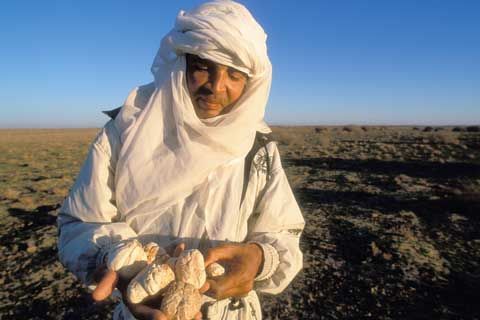
A Tuareg youth ventures into trackless desert on a life-threatening quest to find the father he remembers only as a shadow from his childhood, but the spirit world frustrates and tests his resolve. For a time, he is rewarded with the Eden of a lost oasis, but eventually, as new settlers crowd in, its destiny mimics the rise of human civilization. Over the sands and the years, the hero is pursued by a lover who matures into a sibyl-like priestess. The Libyan Tuareg author Ibrahim al-Koni, who has earned a reputation as a major figure in Arabic literature with his many novels and collections of short stories, has used Tuareg folklore about Anubis, the ancient Egyptian god of the underworld, to craft a novel that is both a lyrical evocation of the desert's beauty and a chilling narrative in which thirst, incest, patricide, animal metamorphosis, and human sacrifice are more than plot devices. The novel concludes with Tuareg sayings collected by the author in his search for the historical Anubis from matriarchs and sages during trips to Tuareg encampments, and from inscriptions in the ancient Tifinagh script in caves and on tattered manuscripts. In this novel, fantastic mythology becomes universal, specific, and modern.
Ibrahim al-Koni (Arabic: إبراهيم الكوني) is a Libyan writer and one of the most prolific Arabic novelists. Born in 1948 in Fezzan Region, Ibrahim al-Koni was brought up on the tradition of the Tuareg, popularly known as "the veiled men" or "the blue men." Mythological elements, spiritual quest and existential questions mingle in the writings of al-Koni who has been hailed as magical realist, Sufi fabulist and poetic novelist. He spent his childhood in the desert and learned to read and write Arabic when he was twelve. Al-Koni studied comparative literature at the Maxim Gorky Literature Institute in Moscow and then worked as a journalist in Moscow and Warsaw. By 2007, al-Koni had published more than 80 books and received numerous awards. All written in Arabic, his books have been translated into 35 languages. His novel Gold Dust appeared in English in 2008.
'"We must slay our father in order to search for our father. We must slay our father in order to find our father."'
According to the author's note, al-Koni crisscrossed the desert in search of every shred and variant of a tale about someone who crisscrosses the desert in search of every shred and variant of their elusive father. Thus, this strange little book is a patchwork interpretation of a cave-scrawled, leather-etched, campfire tale. And so while it's labeled "a desert novel," its origins should be kept in mind.
The story, in which the spiritual world is omnipresent and metamorphoses are quotidian, somewhat evokes Ben Okri's The Famished Road, although it's more sparse and leans on paradoxical/philosophical musings about paternal longings and the unreliability of 'reality.' The last part of the novel is a collection of (un)related aphorisms that al-Koni encountered during his journey. More than a handful of them hold fairly regressive views about women. Here are some non-sexist ones:
"The desert is a paradise of nonexistence."
"The tree is a hero that only falls once."
"Sweat is the body's blood. Blood is the spirit's sweat."
"Time is a vessel with life on its outside and annihilation inside."
"The creator vanishes with the death of his creation. The creation becomes eternal through the creator's death."
While not mind-blowing, Anubis is worth the brief read. If nothing else, it definitely illustrates the desert's menagerie of mirages, a parched fever dream that might make you reach for a glass of water.
The author retells the legend of the origin of the Tuaregs and of how evil came into the world, through greedy people at an oasis. The protagonist Anubi searches for his father, shape shifts, has encounters with several female jinni, which to me were temptresses. The star of the novel is the trackless desert over which he wanders. The language was absolutely gorgeous. The story exuded desert and I felt as though I were there.
لا نقنع حقاً إلا بما نراه ، ولا نؤمن الا بما لا نراه . لأننا نعبد ما لا نرى ، ولكننا لا نحب الا ما نرى تمثل القصة الابن مجهول الاب الابن الغير الشرعي بداية القصة تمثل تكرار للنهاية بنفس التفاصيل البحث عن الاب طوال الرحلة وقتله دون معرفته بأنه والده
أنوبيس إبراهيم الكوني ................. حينما تذهب لقراءة شيء باحثا عن شيء معين ولا تجده، يصبح ما تقرأه مملا وصعبا حتي ولو كان في نفسه غير ممل ومهم، هذا ما جري معي في هذه الرواية التيس حازت علي إعجاب كل من قرأها تقريبا، لكناه لم تعجبني؛ لأنني بحثت عن شيء يتعلق بأنوبيس إله المصريين القدماء. توقعت في الرواية شيء عن تراث مصر القديم، لكنها كانت بعيدة تماما عما توقعته، الرواية عن حياة الصحراء، رغم حبي للصحراء ورهبتي منها إلا أن الرواية لم تستحوذ علي اهتمامي كما يجب. .............................
I came across Anubis randomly and decided to give it a try mainly because it’s the first novel I’ve encountered by a Libyan author. The story follows a boy journeying through the desert in search for his father layered with lots of symbolic meaning.
I appreciated the exploration of identity and loss but I didn’t enjoy the novel as much as I hoped. That said, the ending stood out to me with the full circle moment. The highlight for me was Part 4: the aphorisms were thought provoking and beautifully written.
‘Is happiness a vibratory hum that pervades us only while it is far from our thoughts, so that once we perceive it and attempt to grasp hold, it slips through our fingers and flees far away?’
‘This is an inexorable wheel that reclaims today what it created yesterday and resurrects tomorrow what it assassinated today.’
‘The fault of the ruler lay in forgetting that woman flees from a wealthy man who gives her a kingdom if he veils his heart from her; and she surrenders herself to a shepherd who offers her a residence outdoors but awards her his heart.’
‘Don’t you know that it is her death that restored you to life? Don’t you know that the birth of children presupposes the destruction of their mothers?’
اظل اتسائل متى ياترى سافقد حماستي وانا اقرا كتابا جديد لابراهيم الكوني، لكن كتابا بعد الاخر ، يزيد تعلقي بهذا الحكيم الساحر، ومثلما الصحراء كلما غطست اكثرا في اغوارها زاد السحر والعطش لبع جديد..
ابوبيس هذه الاسطورة الاخذةالمليئة بالحكمة والدرر ، لغتها سحرية واجوائها عالم من الفانتازيا من الغلاف للغلاف تشدك الاحداث في رحلة بحث الابن عن الاب ، رحلة يتجسد فيها كل طبع الانسان بخيره وشره ، لاكتشاف الحنين الاول الذي لا يشبعه شيء في هذه الدنيا الفانية
اخاف ان اقتبس للكوني، لاني لن اتورع مرة اخرى في اقتباس كل الكتاب ، ولكل هذه الاسباب ساظل اغفر للكوني ميله لابعاد الانثى في نطاق الشر وان كساه بالخير احيانا
تستحق 5 نجوم من غير مبالغة
وساظل شاكرة للانسان الذي وهبني احلى كتب عمري .. sb
يبدو أن الكوني يطبق حكمة -أو نبوءة كما يحلو له أن يسميها- علقت في ذهني من كتابه "الصحف الأولى.. أساطير ومتون" تنص على :- الكتاب بيانٌ - حقيقته في ما أخفى، لا في ما أبدى. ولأن الرمزية لعبتي المفضلة لما فيها من إعمال للعقل وتحدي خفي بين منظم الأفكار والقارئ، أندفعت في القراءة مرتضيًا بالنزال.. أنوبيس الآله الحارس على أرض الموتى أسطورة من أساطير القدماء ألهمت الكوني ليطرح فلسفته بحثًا عن حقيقة الوجود في الصحراء أرض الأسلاف ومهد الأفكار وحاضنة الأبناء. أتذكر قول للكوني بإمكانه وصف عمله يقول : الرواية - رحلة استكشاف المخلوق بحثًا عن الخالق. أنوبيس المتحرر من قيد أمه بحثًا عن أبيه يإيعاز من كاهنه، تتنازعه الصحراء بمتهاتها دائمة التوالد، يلجأه الظمأ للسؤال المضني عن ماهية الحياة والموت، ثم تبرز المرأة في رحلته ككائن انتشله من الأبدية ووثقه بالأرض بإنتاج السلالة.. وما بين أهل الخفاء وأهل الدهاء تشتت عقلي وتاه بين الأحاجي.. وبالرغم من أن العمل يحفل بالكثير من الطلاسم خفية المعانى إلا أنه يمتاز بجمالية سرده ورقي لغته. بعض مما راق لي من وصايا أنوبيس التي توج بها الكوني رائعته.. - لا وجود للأب بالجوار كوجود الأم، لأن الأب سماء، ولكن الأم أرض الأب دومًا ناموس غياب، لأن الأم دائمًا جسد، ولكن الأب، وحده رب. هذا السر في إننا نلتصق بأمهاتنا صغارًا، ونجد في طلب آبائنا كبارًا.. - فضيلة المال أنه يستطيع أن يحررنا من الحاجة إلى المال، رذيلة المال أنه لا يستطيع أن يحررنا من الموت.. -حتى الجحيم، عندما يتحول ذكرى، يصير نعيمًا. بعض النعيم أيضًا، عندما يتحول ذكرى ينلقب جحيمًا..
OVERVIEW Packed within this rather short novella is a bewildering search for oneself amid solitude, the disorientations of desire, and a rise and loss of a sense of place and of power. Partly anthropological, Anubis lays out an origin story for the Libyan Tuareg nation, and its cultural and religious traditions which partly barrow from Ancient Egypt. In addition, it finds capacity to weave in some Christian rituals like baptism. Extending further, the novella presents a slightly broader reflection on the genesis of humanity. As a political treatise, it fleshes out an ancient theory on propriety and error of governance. In contrast to much of Ancient Egypt, however, this Ancient Amazigh theory among Tuareg is buttressed by a predominant matrilineal influence on nation-building and state-building, coupled with endemic predestined cyclical loss of males and fatherhood. It is also a sociological reflection on the clash between personal whims and family relations, revealing the depths of catastrophe befalling a tribalistic society when that irreconcilable imbalance surfaces at its monarchal apex. There’s also frequent obsession with solitude and the desert, and with physical and sexual hunger—weaving intersections between human needs for personal space and for integrating into (or creating) surroundings.
THEMES ••Loss within space and belonging/disorientation. ••Loss of family via death or betrayal ••Survival ••Sense of destiny/pre-determination Vs individual initiative on choice and action ••Insurmountable and obsessive passion, greed, appetite/hunger (carnal and food) Vs duty and perspective of discipline.
DICTION AND STYLE Abundance of esoteric language depicted in wise Tuareg cultural idioms or advisories/ warnings/ admonitions in form of cultural proverbs. Biblical verses headlining beginnings of parts. An appendix comprises a disjointed list of societal cultural proverbs that may otherwise help to explain characters’ mentalities. .
PLOT AND CHARACTER ANALYSES
ORIGINS AND METAPHYSICS OF THE DESERT We can’t be sure of Wa’s age, but the intensity and adventurous restlessness indicates very late adolescence or early young adulthood. We come to know of him as a larger-than-life character with enormous convictions and passions, concurring doubts and pangs of unrequited self-fulfillment. Resuming as backbone throughout the novella, those forces are loosely defined among (1) the higher-order philosophical reliance upon aesthetics; (2) the more-mundane, material urgency for the both realms of sexual/corporal and the hunger of food/survivalism; (3) and deep flaws (negligence of/lethargy towards duties;an infidelity of sorts; propensity for reckless violence; etc), Do these tracts represent metaphors for masculinity? For humanness? In the periods of wandering—and in his later obsession with the vague “doll”—-the connection between carnal desire and food is disturbingly presented as a primal motivation and raison d’être for the central protagonist/antagonist. Given that he alone seems to be driven and troubled by the connection, It is also, we learn later, a significant factor in Wa’s downfall.
There are quite a few examples which illustrate the masculinity metaphor. One human sexual encounter is Incredibly vivid and risqué. Secondly, obsession with sheep herds (both for purposes of feasting on in a predator-and-prey relationship, and contrastingly for animal camaraderie). Finally, the obsession/captivation with seduction and lust towards single gazelles, as if they were lovers across the animal kingdom organism divides.
Later in the novella, this stereotypical metaphor for masculinity is somewhat equally counter-balanced by a reductive stereotype of portraying a feminine need for both passion and protective assurance from males. We see this in Queen Consort’s embrace of The Master (a mysterious, manipulative character who ingratiates himself to the Queen, then exercises predominance over her) into the private fold of her household, and into a political leadership role that eventually neutralizes her.
Initially, confusing relationships abound. Was the seductive priestess his sister, in which case a physically intimate encounter would point to incest? There appears to be a repetitive confusion surrounding the nature of the females in general that Wa is romantically involved with, the former transiting between the physical statuses of human and jinn. Meanwhile, Tin Hanan (a major character who will later become the Queen and the highest priestess of the Tuaregs) continuously entices, seduces, manipulates, taunts, scolds, and offers gems of wisdom to Wa. She succeeds in her mission to betrothe Wa and conceive a son with him to safeguard both their personal family lineage and the continuation of Tuaregs’ existence (and it is implied, by extension, of humanity)
Later in the novella, this primordial stereotypical(?) metaphor for masculinity is somewhat counter-balanced by a reductive portrayal for a feminine need for both passion and protective assurance from males. We see this in Queen Consort’s embrace of The Master into the private fold of her household. A mysterious, manipulative character who ingratiates himself to the Queen, The Master meticulously works himself into a political leadership role that eventually neutralizes her.
Gradually, we discover that a welding of personalities occurs across several main characters. From a literary perspective, the amalgamation serves to utilize the religious/folkloric traditions of Libya’s Tuaregs and a certain rationale of ancient political realism (if you will) to advance the novella’s plot lines. As the oasis grows and develops into what materializes as the beginnings of a proto-tribe/nation or proto-nation-state, so too do the two main characters mature in stature and roles. It turns out that Tin Hanan is in fact Wa’s sister. She quickly emerges as the priestess signifying a pivotal spiritual role for the nascent Tuareg nation. Then she adopts the titles of “Queen” and “consort”, signifying an addition of political leadership shared with Wa. Wa also faces significant metamorphosis over the course of the novella. From lonely youth to eventually “Anubis” the ill-fated Tuareg king, he ultimately becomes a metaphor for Tuareg men (and by extension, for human males).
Their son Ara, referred to as the “sister’s son, not the father’s son”, is given a name that interestingly means “son” and “grandfather”, or “offspring” and “progenitor” simultaneously. This naming by Tin Hanan reflects a biological significance in the establishment of matrilineal lineage, and a political significance in the establishment of matriarchal power and influence. It contrasts with the relegation of Tuareg males (according to mythology and tradition), whereby fathers (including Wa’s) were meant to exist only as a figment of imagination—and an anonymous phantom of obscure identity— to be distrusted, condemned, and killed (metaphorically and materially). Indeed Wa’s priest father repeatedly lingers around the former, ephermally taunting him in his dreams and elsewhere. And Wa enacts a revenge killing upon the father after learning of mistreatment towards his mother.
In a partially tense conversation between Tin Hanan and Wa, females and mothers, on the other hand, are declared by her according to Tuareg prophecy as “always authentic” … anyone else is “fraudulent”. The matrilineal orientation of Ara also thus serves as a signifier/harbinger and rhetorical reinforcement of gendered tensions and distrust, with a legacy being replicated across generations.
In the same conversation she hints that Wa will face the same fate of banishment, death, and absenteeism as their father. This is a further tragedy for a character who starts his movement in the novel as one of a continuously (almost perpetually) lost and disoriented person. Indeed, by the end of Anubis, Wa/Anubis is still restless and remains in a state of want where he passionately longs for wandering about. His wandering, we are led to surmise, concerns a dilemma or debate between two types of torturous longing: once again, the search for beauty and the pangs of hunger he must endure in solitude. It is implied that underlying the crave for beauty is a both a sexual and an aesthetic desire to behold and possess it; while hunger is purely a manifestation of the impetus for survival.
This dilemma unfolds in an surface-level inaccessible framework of symbolism and interaction. What was the point of the gazelle, when Wa lost his way wandering in the desert before encountering the priestess Tin Hanan? And a creature which he continues thereafter to encounter throughout the novella? The gazelle is both a target of his avaricious hunger for food (and presumably carnal lust) and for his near-philosophical pull towards and attachment to beauty. Beauty and hunger are presented as a stern dichotomy of interests and objectives, which nonetheless move together in the same direction. Secondly the gazelle construct serves as a subject-matter for Wa to emulate in hopes of assimilating into the herds he encounters on his wandering journey (including that of sheep) and more broadly into nature. If the assimilation is successful, it is implied, he will eventually find peace and orientation in/with himself. By anthropomorphizing the herds, Al Kony suggests that Harmony and convergence with nature and the cosmic order implies as such within himself. and thus, by extension, will harmony and convergence be callibrated or achieved within the Tuareg polity.
In parallel to the status suffered via establishment of lineage and of political system, Wa loses out in his bid to name his son “Hur” after his devoted servant/slave. The book’s first appendix states that among the Tuareg, “Hur” means “guardian” and is analogous to diety Horus of Ancient Egypt. This signals a further weakening of fathers/males in the present, and hints to the instability of their legacy, in Tuareg society. Thus, fathers/males are expectedly and constantly absent while lacking the undergirding necessary for existence and functioning among the tribespeople.
DISTURBANCE IN THE KINGDOM After a period of peace and prosperity, there is the turmoil of insurrection. One of the nobles (Amnay) plots to exploit the tensions in the royal couple. Meanwhile, defections of the nobility from the temple mount. Wa had lost his way, submitting to frivolity and hedonism in place of sound governance. There is both a political as well as personal undergirding to these character faults: as Wa becomes negligent in his duties towards wife and nation, he loses grasp of both. Wa is sentenced once more to exile. The Master Warrior (presumably head of the army) rises to the top of all contenders and conspirators, both by challenging others and by forming an alliance Tin Hanan. This indicates a coup d’etat. This figure manages to sway and emotionally manipulate the Queen until he renders her his consort, and then installs her as a ceremonial figurehead for his power consolidation.
Meanwhile, Wa is once again in a state of loss, disorientation mixed with endless torment of longing, (aimlessness?). However, this time, Al Koni describes an environment where there is less reflection on beauty. Plot lines are more somber and action-paced.
A reckless, hawkish expansionist foreign policy pursued by the Master Warrior via-a-vis neighboring tribes and polities prompts a retaliatory siege by neighbors upon the oasis ( named Targa all along?). Combined with a downturn in domestic production, the relentless expansionist campaigns by WA’s army and the continuing siege of WA’s kingdom by enemies cumulatively contribute to both a dramatic increase in taxation and massive misery. Combined with a repressive response, the resulting down-spiral boils into popular discontent and ill-will toward the Queen and the Master Warrior.
A few oasis nobles journey with Hur to the desert to seek out Wa and convince him to lead a campaign to reassume the throne. We also learn that Ara is banished from the oasis by the Master Warrior, being suspected by the latter that he is a threat to to his consolidation on power. Wa agrees to return to the oasis, but only temporarily and in disguise for a reconnaissance mission. Witnessing the decline and wasteland that his former homeland had transformed into, Wa flees again to the desert.
A chance encounter with a younger male passerby sparks intense interests in Wa. After Wa develops an unusually friendly rapport and camaraderie (not least due to a consensus over the significance and shades of longing), he gently but persistently presses the other to stay and spend more time with him. This intense desire violates Wa’s near-sacred solitude, and the meditative and metaphysical values derived from it. The stranger rebuffs Wa’s reiterated entreaties, initially politely then resolutely. When Wa reveals to the stranger that he has discovered/surmised the latter’s true identity as his own son, the son fatally stabs the former. Perhaps Ara responds violently due to anger towards abandonment and fear of distrust towards patrimony/fathers, as laid out in the Anubis’ earlier prophecy. With the remaining energy of life and spirit, Wa successfully struggles to inscribe the symbol of Anubis on a leather (or a rock?) for posterity.
CONCLUSION The novel travels full circle. It starts with patricide; exile-triggered, and disorientation- and- meditation- filled journey; and the declaration of premonition/ prophecy in death and banishment. It then transitions to the creation of purpose and prosperity (the oasis kingdom). Finally, it concludes with patricide and the fulfillment of aforementioned premonition/prophecy of meaningless loss (from readers’ viewpoint), banishment, and death. The motives and circumstances vary between the two parts of the cycle (murder to avenge Wa’s mother, in contrast to Wa son’s Ara’s desire to protect his own identity). Yet, all these developments are encapsulated as the cursed fate of the Anubi. Fathers are destined to be lost/absent. Sons are destined to follow a wandering search for their abandoning fathers; sons are destined to eventually eliminate fathers.
The narrative/plot circle also presents, by contradistinctive negation and limitation, an interesting reflection on the central female character priestess/sister/Queen consort Tin Hanan. From the outset, we are told that Tuareg society is matriarchal and matrilineal. There is a pronounced spiritual and political investiture here. Yet, Al-Koni uses the novella’s plot lines to restrict her role as a co-ruler who lends religious and political legitimacy to Wa during his reign. We see very little administrative involvement. It is Wa who assembles and deliberates with the nobility at their court. It is Wa’s failure as an administrator that helps push the oasis kingdom into decline and vulnerability to foreign invasion. When the nobility rebellion and military coup banish Wa, Tin Hanan’s role is further relegated. She becomes gradually isolated and placed under house arrest. [A contraction between ostensible Tuareg tradition and novella plot developments?]
The only moments when Tin Hanan is observed as a proactive individual deal with her pursuit and seduction of Wa in the desert wilderness. She is on a vital mission of ensuring the continuation of what will emerge as divinely-inspired royal bloodline. But the connection of this mission to the putative essentiality of matrilineality and matriarchy on its own is not completely convincing. For that matriarchy , and for the matrilineal lineage to be substantiated, there has to be a demonstration of decisive female leadership. We are left with an open-ended dilemma as to whether there will be a queen of the Tuaregs who will rule and reign in her own right, or at least be the first among equals within the elites.
Like Tin Hanan, Wa’s position of strength and authority is ephemeral and fickle. Unlike his former Queen consort, the trajectory of his life follows a gendered prophecy. The prophecy states that Wa, like all males/fathers, have faulty characters and will betray and abandon their trusts from the personal to the political. It adds that this betrayal will lead to their tragic downfall, at the hands of their closest relatives.
Perhaps from a contemporary standpoint, there is an interesting preceding and peculiar selection of primordial predeterminism embedded in both the Anubis and Tuareg traditions. Yet, that predeterminism is seemingly deliberately laid to flesh out ruminations on the nature and evolutions of gender relations. We as readers find ourselves meandering through deceptive depictions of status and emotions primarily within families, and less so within communities. Similarly without that very same determinism, there also would be no possible reflections on creation of, and changes within, political authority and the exercise of power. For instance as readers, we then wouldn’t be able to witness manifestations of weakness in human sentiment (greed, passion, obsession) and conduct (from abuse of prerogative, to manipulation, to betrayal).
Why does Al-Koni choose to give us this paradox? It is as if the author is laying down a contradicting paradigm of predeterminism vs individual choice to postulate that trajectories within humanity—those which define the very essence of humanity—are complex. That their courses of action, response, and the provocative circumstances they encounter, however predetermined such courses appear, are riddled with emotive vivacity. They are riddled with conscious choice and response, bubbling at the surface andwaiting to be tapped. That perhaps both mundanely and surprisingly there is human agency in the high ideals and low conduct of humanity—desire, remorse, pursuit, doubt, happiness, fear. Yet is this a satisfactory resolution?
Could we not find a simplistically dangerous romanticization of the desert and of the nomadic life, within such juxtapositions? And that that romanticization is unmistakably characterized as “freedom” herein?
In all despite its relative short length, Anubis presents a pithy yet profound masterpiece of storytelling, and one of the more challenging works of literary fiction I’ve come across. 3.8-4
This entire review has been hidden because of spoilers.
الكوني ورحلة البحث عن الذات بين الاب والام... بين النبوءة والصحراء!!
** الا يعني هذا اني مخلوق بلا بداية ولا نهاية مثله في ذلك مثل الصحراء... وما موتى سوي غيبة تحتمها الغفوة..وما حياتي سوي الوجود تحتمه الصحوة **
أخبروني انه لكي تصل إلى سر الحياة ومعناها يجب ان ترحل بعيدا يا انوبيس وتتوه في الصحراء وتتوه الصحراء فيك.. لتصبحوا كيان واحد.... في رحلتك في البحث عن الأب ستكتشف الجمال والظمأ والاشتهاء والقيود والحرية... فلا ذنب سيطهرك من جريمة قتلك لابيك.... انت الذي رحلت عن والدتك باحثا عن ظل والدك على الأرض و ناكرا للنبوءة بداخلك وتاركا روحك المعذبة تجلدك حتى نهاية الرحلة.... ولكن هل نهاية الرحلة ليست سوي بداية لرحلة جديدة ستكون انت بدايتها.......
ابراهيم الكوني ذلك للكاتب الذي يحمل من لقبه في كتاباته الكثير والكثير... ثاني قرائاتي مع ( كون) ابراهيم الكوني الروائي المتخصص في الأدب الصحراوي... الذي اعتقد انه وصل لحالة من التوحد مع الصحراء لتصبح كتاباته والصحراء وسحرها والغازها وفلسفتها شيئا واحد لا يتجزأ ولا ينفصل عن الاخر... فالكوني لا يقدم لك فلسفات او أساطير بل يجعلك تبحث عن الفلسفة والاسطورة بداخل عقلك وروحك كقارئ فتكتشف جوانب جديدة في نفسك كإنسان لم تكن لتراها بدون كتابات الكوني......
انوبيس... تلك الاسطورة الفرعونية عن ذلك الإله حارس بوابة العالم الاخر والابن الغير شرعي لرع او كما قيل في روايات اخري انه ابن الإله ست.... ياخذ الكوني تلك الاسطورة بعيدا عن أصولها ويقدمها في شكل جديد لا يمت بصورة مباشرة الي الاسطورة الأصلية ليلقيها في أحضان الصحراء واحضان فلسفته.... ليقدم لك تجربة روائية مزجت بين الاسطورة والفلسفة والاسقاطات الواقعية عن أحوال النفس البشرية والمعاناة... فتجد نفسك كقارئ متحيرا كيف لكاتب بتلك القدرات الإبداعية والسردية ولا يملك حظا من الشهرة والانتشار في أوساط اغلب القراء... ابراهيم الكوني صحراء ستتوه بداخلها حتى تجد نفسك في ما يكتبه وتشعر بالارتواء بعد الظمأ وبالحرية بعد القيد... ( الفصل الاخير من الرواية وصايا انوبيس حاول الكاتب ان يلخص فيه كل الأفكار التي كتب عنها في تلك الرواية بكلمات بسيطة وصغيرة وكانها نصائح لك كقارئ وكأنسان).....
** نحن سلالة مفقودة مثلنا مثل ناموسنا المفقود لأننا ننتمي بالأبوة الي النبوءة وننتمي بالأمومة الي الصحراء **
قبل أن تبدأ الرواية عليك ان تعرف من هو أنوبيس و يبدو أن الكاتب هنا يخاطب تلك الفئة المهتمة فقط بأنوبي/أنوبيس..كنت أظن أن فكرة أنوبيس في الحضارة المصرية القديمة فقط لكن أدركت امتدادها و جذورها عند الطوارق(تارجا) و الأمازيغ و بفضل الكاتب تعرفت على كثير من مفردات التيفيناغ(لسان الطوارق القديم)الشبيه كثيرا بالمدو-نترو أي النقوش المقدسة.. خلال الرواية بطلنا يجول في الصحراء بحثًا عن الأب و يقابل الكثير من الهوام لا تدري اهم من الإنس أم الجان حتى قابل ظل الأب و ألقى عليه النبوءة التي جعلته هو الآخر أب و لكنه عندما وجده قتله كي يحقق نبوءته و قدره الخفي فأصبح يشارك أهل الخفاء خفاءهم و اقتسم مع اهل الظل ظلالهم حتى لاقى نفس مصير أباه على يد ابنه...فالبداية هي النهاية و نسير في نفس الاطلال المستديرة فنبدأ من حيث انتهينا لا ندري هل الزمن يعيد نفسه و تتغير الشخوص أم يتغير الزمن و تُعاد نفس الشخوص... في النهاية سندرك من هو أنوبي و كيف يحافظ على سلالته نقية دون أن يشوبها شائبة لكن لكل شيء ثمن و الثمن كما يبدو أن النبوءة و الحقيقة مقابل الحياة و السعادة ...و نستنتنج ان أنوبي لم يكن ظلا أو وهما لكنه إنسان عبر الصحراء يوماً متلحفًا آلامه كي يكمل سلالة التيه ذكر الكاتب شيء غريب ان الحكمة هي مقابل الحديد و ان بوجود الحديد تنتهي الحكمة و تباد لان بالحديد تصنع السيوف و الأسلحة و تبدأ الحرب و الدم الذي لا ينتهي و معه ينتهي السلام الذي ينبع عنه الحكمة لان الحكمة ترتوي من نبع التسليم و الحديد لا يرتوي الا من نبع الدم...و ذلك يطرح علينا سؤال ماذا لو اختفى الحديد من الطبيعة ؟؟هل سيعم السلام أم سيبحث عن معدن آخر يطوعه للقتل؟؟
Innovative in style, reconstructing myth into a really strange narrative. The description of the desert is amongst the best I've read. It's a book about the impending doom of mirage, fatamorgana, and oasis. There's one thing that really fascinates me about patricide in the context of mythology and folklore: that desert and patricide is a synonymous. I feel al-Koni presents this concept poetically. Perhaps this is one of the most poetic books about the desert I've ever read.
من هو انوبيس الذي بحث عنه ابراهيم الكوني طويلا ولن يجده؟ سافر في اعماق الصحراء لعله يتعرف إليه، فكانت اسطورة جديدة ينقلها عن الخلف الذي نقلها عن السلف حتى وصلت إلينا.! لا احد يعلم كيف تتحول الصحراء الى شيء اسطوري كل ما كتب عنها "الكوني" لغته، أسلوبه، تسلسل السرد الروائي في رواياته تجعل الصحراء اسطورة حية على مر القرون مرة اخرى ابراهيم الكوني يستحق الخمسة نجوم بجدارة...
Anubis, in Egyptian mythology, is a guide to the underworld. Anubi, the name of the protagonist of the story, means a child of an unknown father. This novel is about Anubi’s search for his father, guided (or misguided) by prophecies and Jinns – which acts as a metaphor to humanity’s search for meaning... https://theworldincultures.com/373-an...
Story of a Tuareq nomad who embarks on a desert odyssey in order to find his father. The book blends Islamic mysticism and folklore mythology to create a fantasy world of dreamlike imagery and adventure. It reads more like a poem or a dream than a traditional novel. It's good to read, it provides an interesting experience, although it doesn't provide much more than this dreamlike experience.
That being said, I gave the book a lot more of my patience than I would have normaly. But honestly, I'm glad that I did. It's a fine book for what it is, it's just.. a bit.. cringe (at times)! There, said it! <3
الرواية كأنها واحات من الفردوس تتدفق منها البلاغة المفرطة بالروعة في هذا الصمت المميت من روح العدم.... من الصعب الإمساك بها وسط هذا الضجيج... لصحراء قاحلة تتطلب جهد من التركيز للاستمتاع ببلاغة الكتابة ...
1. لغة رائعة 2. أسلوب كتابة يتماشى مع الأسطرة في النص 3. شكل النص من تقسيم وعتبات يخدم القصة 4. الصحراء حاضرة كوصف وفلسفة 5. هناك إدخال سياسي وآخر حول شكل النص مشغولين بشكل جميل 6. المشكلة الوحيدة في تعاليم أنوبيس إذا نظرنا لها بعدسة نسوية
As a story or plot, mmm, I have reservations. But as a thinking-through of the desert, lovely; and as a reconstruction of stories and myth, interesting and worthwhile.
أنوبيس لـ إبراهيم الكوني عدد الصفحات 235 ما هي الصحراء؟ ألا تشبه حياتنا الصحراء الممتدة التي يخالها التائه منقطعة النظير و معدومة الحد أو النهاية , ها نحن نسير كل في صحرائه ولا نلتقي حتى بنقطة بدايتنا , لأسطورة أنوبيس فكرة تشبه في قعودها وليس في قيامها فكرة رواية مئة عام من العزلة لماركيز ألا وهي الزمن المكتوب المقرر الذي يدور في حلقات يورثها الأب للابن , يورثها الضائع للباحث عنه , في قصتنا يولد الطفل الذي أسمته الأم(ما) بـ (وا) ويلمح هذا الطفل في ميلاده الأول شبح قرب أمه عند الركيزة يدرك فيما بعد أنه شبح الأب , ولكن لأن الآباء في الصحراء وهم , لأنه باطل لا حقيقة , يختفي الأب كما كل الآباء ويخرج الابن مخالفاً وصية الام بحثاً عنه فيتوه ويشرب بول غزال من شدة عطشه مخالفا الناموس القديم فيستحيل بجسد حيوان ورأس إنسان فتدفع الام حياتها للكاهن في سبيل انقاذ الابن , وعندما يعرف الابن بنحر الكاهن للأم ينحره فتخبره الفتاة التي لطالما لعب معها أن الكاهن كان له أب وفيهيم في الصحراء ويلقى مارداً من أهل الخفاء فيهبه واحة يعطي الناس من ماءها فيعطوه من خيراتهم , ووجد الفتاة التي كان يلعب معها طريقها إليه لتهبه الذرية فوهبته سليلاً ما رآه كثيراً اسمه آرا وكان عارفاً بضمر الجان له الشر فغير اسمه فيما بعد لما يساوي لفظ المنفي في لغتنا , ولأنه غاص في لهو ولانه وهبه زوجته مملكته وليس قلبه هجرته لأجل العشيق فترك الواحة ومضى إلى الصحراء عارفاً حينها أن ما قتله كان ظل الأب وليس الأب ثم يصدف ابنه فيخبره أنه يعرفه وأن اسمه آرا ولكن الابن يقتل الاب لأنه يظن أنه سيفشي بحقيقته لمن يريدون قتله فيخبره الأب أنه قتل أباه فيقول أن كثراً من ادعوا أبوته ويتركه ويمضي , وبذا يموت كما كره , يعود كما كان , دائما وأبداً , أنوبيس (أي الابن المجهول الأب) والشخص المجهول الوحيد. في نهاية الكتاب تقبع الوصايا التي كتبها أنوبيس والتي لا تقل جمالاً بل تفوق الكتاب جمالية وحكمة ... ما كتب إبراهيم الكوني إلا وأبدع وجاء بقصة غير مألوفة ومتناسقة كما في كتابه من أنت أيها الملاك , لكن يسعني القول أنني استمتعت ولم أستمتع بهذا الكتاب لأنني في كتير من المقاطع كنت تائهة ولكنني الآن أظن أن هذا ما أراده الكاتب أن نكتشف فعلياً معنى الصحراء.
Welch wunderbare Wüstengeschichte - die Fabel des Berbers auf der ewigen Suche nach seinem Vater; die verwunderliche Verwandlung in den Schafe reissenden Schakal und Totenwächter Anubis und die Einsamkeit der Wüste. Fantastische Eindrücke aus der Wüste die man speziell in Libyen nachempfinden kann. Auch die Struktur (3x8 Kapitel-3 Lebens/Tagesabschnitte) überzeugt und lässt eine tiefe Sehnsucht zurück, ehestmöglich wieder den grossen Sandsee heimzusuchen...