

What do you think?
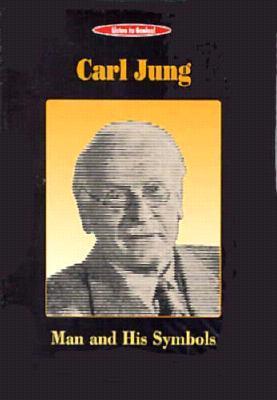
Man and His Symbols: Approaching the Unconscious
This was the last work undertaken by Swiss psychologist Carl Jung. Its catalyst was a dream Jung had in which he recognized the need to explain his theories to the lay public. Man and His Symbols is a succinct rendering of his life's work. "Brilliantly read", -- AudioFile"The entire series merits serious attention by librarians and booksellers". -- Publishers Weekly
"Listening to these works in shortened form highlights aspects of each author's personality. Recommended". -- Library Journal
"The professional narrators have a relaxed, serious style that invites thoughtful listening. These sets are fine way to become acquainted with the classics". -- Booklist
"Listening to these works in shortened form highlights aspects of each author's personality. Recommended". -- Library Journal
"The professional narrators have a relaxed, serious style that invites thoughtful listening. These sets are fine way to become acquainted with the classics". -- Booklist
3 pages, Audio Cassette
Published January 1, 1999
About the author
C.G. Jung
1,927 books12.3k followersCarl Gustav Jung (/jʊŋ/; German: [ˈkarl ˈɡʊstaf jʊŋ]), often referred to as C. G. Jung, was a Swiss psychiatrist and psychotherapist who founded analytical psychology. Jung proposed and developed the concepts of extraversion and introversion; archetypes, and the collective unconscious. His work has been influential in psychiatry and in the study of religion, philosophy, archeology, anthropology, literature, and related fields. He was a prolific writer, many of whose works were not published until after his death.
The central concept of analytical psychology is individuation—the psychological process of integrating the opposites, including the conscious with the unconscious, while still maintaining their relative autonomy. Jung considered individuation to be the central process of human development.
Jung created some of the best known psychological concepts, including the archetype, the collective unconscious, the complex, and synchronicity. The Myers-Briggs Type Indicator (MBTI), a popular psychometric instrument, has been developed from Jung's theory of psychological types.
Though he was a practising clinician and considered himself to be a scientist, much of his life's work was spent exploring tangential areas such as Eastern and Western philosophy, alchemy, astrology, and sociology, as well as literature and the arts. Jung's interest in philosophy and the occult led many to view him as a mystic, although his ambition was to be seen as a man of science. His influence on popular psychology, the "psychologization of religion", spirituality and the New Age movement has been immense.
The central concept of analytical psychology is individuation—the psychological process of integrating the opposites, including the conscious with the unconscious, while still maintaining their relative autonomy. Jung considered individuation to be the central process of human development.
Jung created some of the best known psychological concepts, including the archetype, the collective unconscious, the complex, and synchronicity. The Myers-Briggs Type Indicator (MBTI), a popular psychometric instrument, has been developed from Jung's theory of psychological types.
Though he was a practising clinician and considered himself to be a scientist, much of his life's work was spent exploring tangential areas such as Eastern and Western philosophy, alchemy, astrology, and sociology, as well as literature and the arts. Jung's interest in philosophy and the occult led many to view him as a mystic, although his ambition was to be seen as a man of science. His influence on popular psychology, the "psychologization of religion", spirituality and the New Age movement has been immense.
Ratings & Reviews
Friends & Following
Create a free account to discover what your friends think of this book!
Community Reviews
Displaying 1 - 30 of 35 reviews

June 21, 2019
This is where I learn that I might have a budding love affair with the work of Carl Gustav Jung.

December 17, 2012
Really good stuff and I have to say that I appreciated the clarity of the narrator's voice. Ever since I've had a dream recently on the merging of my consciousness and the unconsciousness (and how wonderful such merged perspective was!), I've been searching more into this subject.
I found this essay very clear and direct. It is apparent that Jung is struggling to talk about and define, or more specifically, speak consciously about the unconscious - a task that is particularly challenging. This would be as if a human tried to talk about and discuss ultra violet colours that a bee sees (but a human doesn't) without the apparatus of today. A challenging task and I command Jung for it.

Having said that, I wish he would be more specific on ways to get into contact with the uncosncious. I realise that this adaptation of Man and His Symbols is appropriately subtitled "Approaching the Subconscious". I guess what I wanted was more tips on integrating it, or entering it.... but perhaps not diving, which I do think could, due to its immediacy, create madness in the individual.
Good stuff nonetheless. I'm looking forward to reading more of his work. :)
I found this essay very clear and direct. It is apparent that Jung is struggling to talk about and define, or more specifically, speak consciously about the unconscious - a task that is particularly challenging. This would be as if a human tried to talk about and discuss ultra violet colours that a bee sees (but a human doesn't) without the apparatus of today. A challenging task and I command Jung for it.
Having said that, I wish he would be more specific on ways to get into contact with the uncosncious. I realise that this adaptation of Man and His Symbols is appropriately subtitled "Approaching the Subconscious". I guess what I wanted was more tips on integrating it, or entering it.... but perhaps not diving, which I do think could, due to its immediacy, create madness in the individual.
Good stuff nonetheless. I'm looking forward to reading more of his work. :)

October 28, 2020
Get it free here:
https://www.youtube.com/watch?v=xZSbf...
Reading/listening to Jung is like reading the Necronomicon except that it's real.
https://www.youtube.com/watch?v=xZSbf...
Reading/listening to Jung is like reading the Necronomicon except that it's real.

August 12, 2026
certified dream interpreter

November 9, 2024
C.G. Jung's Man and His Symbols is a fascinating exploration of the symbolic language that shapes our unconscious mind. Jung’s insights into archetypes and the role of symbols in guiding personal growth remain valuable, inviting readers to delve into the deeper layers of human experience. His work encourages a journey of self-discovery, revealing the hidden connections between dreams, myths, and personal transformation.
However, the book does feel somewhat dated in its psychological framework, as later developments in psychology have offered more nuanced perspectives. While the symbolic lens is still compelling, some of Jung’s ideas may feel overly rigid or less applicable to the modern context of understanding the self. Nonetheless, it remains an important starting point for exploring the rich world of symbols and their impact on personal evolution.
However, the book does feel somewhat dated in its psychological framework, as later developments in psychology have offered more nuanced perspectives. While the symbolic lens is still compelling, some of Jung’s ideas may feel overly rigid or less applicable to the modern context of understanding the self. Nonetheless, it remains an important starting point for exploring the rich world of symbols and their impact on personal evolution.
August 7, 2025
This book is the first quarter of the book Man And His Symbols and since it is the only part written by Carl Jung himself, I decided to review it seperately. I enjoyed his chapter quite a lot. It made me remember there is a grand part of our psyche that we humans neglect most of the time. It makes itself and its ideas and symbols known to us through dreams and meditation. With the latter being my own interpretation based on my own experiences – Jung doesn’t mention meditation in this book. Which I found odd, since I find that the unconscious and meditation intuitively have quite a strong link. This book made me even more interested in dreams and on top of that, because of my own connection, made me think differently about meditation.
Aside from that I appreciate that Jung states in his part that dream analysis is highly personal and that dreams and elements of dreams cannot be judged universally, since the meaning of a dream is highly dependent on the individual dreamer. So no, teeth falling out of one's mouth in a dream doesn’t inherently have one specific meaning!
Aside from that I appreciate that Jung states in his part that dream analysis is highly personal and that dreams and elements of dreams cannot be judged universally, since the meaning of a dream is highly dependent on the individual dreamer. So no, teeth falling out of one's mouth in a dream doesn’t inherently have one specific meaning!

November 5, 2025
Sinceramente me leí este libro porque me estaba ligando a una tía que le gustaba la psicología.

August 26, 2020
Not a one-stop Jung book, but the last book Jung wrong, which alone makes it very interesting. It's eminently readable and gets at Jung's idea of the unconscious and avoids some pitfalls. To me, there's a lot of places to go, but first I'll say that reading the seven basic plots (which is just Jung popularized) was absolutely revolutionary for my thinking whenever I read it, so I really can't dismiss Jung and so I want to read more of him. In particular, if you want to think about homosexuality or the proper relation of the sexes, he was helpful, or at least his popularizations were. The most interesting thing about Jung to me at this stage is the fact that he's such a voice of anti-civilization, which of course leaves me super conflicted, because there's a lot of junk that comes with that attitude towards so-called "modernity" and a lot of really good insights that help Christians as we look at an increasingly atheistic world. So I probably will read more of him and skip everything else by Freud.
One more thing: Jung is good on symbols: he's careful not to merely think of them as allegories, but as things with internal meaning. Probably more sane even than the popularizers.
One more thing: Jung is good on symbols: he's careful not to merely think of them as allegories, but as things with internal meaning. Probably more sane even than the popularizers.

February 18, 2018
In this short and fascinating read, Carl Jung makes a case for the unconscious and how it manifests in dreams and symbols. The rational part of me is rebelling hard but the case made is very strong. I had never really thought about times when I’m absent minded or I forget what I came into a room for. Jung argues that in these moments and others, our thoughts can sink into the unconscious but they continue driving our actions even when we don’t recall why we’re doing what we’re doing! That’s plain to see. To a large extent this is how we live our lives, we feel we’re in control but we are at the mercy of the unconscious mind. Dreams in this sense are for the purpose of complimenting and compensating the conscious mind.
It’s an intriguing and appealing view.
It’s an intriguing and appealing view.

Read
October 17, 2015“The girl dreams she is dangerously ill. Suddenly birds come out of her skin and cover her completely ... Swarms of gnats obscure the sun, the moon, and all the stars except one. That one start falls upon the dreamer.”
Image: Mert Alas and Marcus Piggott, Natalia Vodianova, 2006
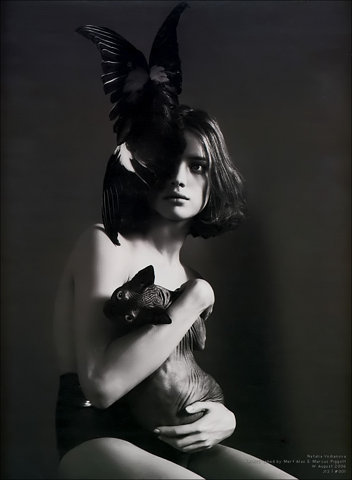
Image: Mert Alas and Marcus Piggott, Natalia Vodianova, 2006

January 8, 2026
A book written for those who already feel the walls.
Jung did not write Man and His Symbols to explain psychology. He wrote it to wake something up. This was his last book, dictated while dying, and he chose not to speak to academics, institutions, or the obedient class. He spoke to the uninitiated individual — the one who senses that words lie, laws decay, and yet something else quietly governs reality.
That “something” is captured in the phrase attributed to Confucius:
“Signs and symbols rule the world, not words nor laws.”
Jung knew this was not metaphor. It is operational truth.
Words appeal to reason.
Laws threaten behavior.
Symbols program perception.
They bypass debate and install meaning directly into the psyche. A symbol does not argue — it reveals. It anchors itself in the unconscious, where identity, fear, loyalty, and desire are formed. That is why power has always preferred symbols to explanations.
This is also why every enduring elite formation in history — mystery cults, priesthoods, knightly orders, secret societies, modern corporate empires — speaks symbol first and language second. Symbols compress knowledge, enforce hierarchy, signal belonging, and filter outsiders instantly. They persist across generations without needing translation. A child understands a symbol before he understands a sentence. Power understands this.
Jung exposes the mechanism without naming the operators.
Man and His Symbols is therefore not for the masses, even though it was written as if it were. It is a filter. Those who read it casually will call it “interesting.” Those who read it correctly will feel uneasy — because they begin to see how deeply they have been shaped without consent.
Jung’s true objective was individuation — but not the sanitized, self-help version. Individuation is separation from the collective psychic field. It is the refusal to let inherited symbols, myths, and social rituals dictate one’s inner orientation. It is the moment the individual stops living inside someone else’s cosmology.
That is why this book is dangerous.
It teaches the reader how to recognize when a symbol is guiding, when it is enslaving, and when it is lying. It quietly hands the reader a counter-weapon against propaganda, branding, ideology, nationalism, and corporate mythology — all of which are nothing more than symbol systems competing for psychic territory.
Jung does not tell you what to believe. That would defeat the point.
He teaches you how belief gets inside you.
Man and His Symbols is not meant to be loved. It is meant to be survived. Those who finish it unchanged did not read it. Those who truly absorb it will never again be fully comfortable inside mass culture, slogans, or “normal life.” That discomfort is not a flaw — it is the first symptom of sovereignty.
This book does not recruit.
It does not persuade.
It separates.
And that is exactly why it still matters.
Jung did not write Man and His Symbols to explain psychology. He wrote it to wake something up. This was his last book, dictated while dying, and he chose not to speak to academics, institutions, or the obedient class. He spoke to the uninitiated individual — the one who senses that words lie, laws decay, and yet something else quietly governs reality.
That “something” is captured in the phrase attributed to Confucius:
“Signs and symbols rule the world, not words nor laws.”
Jung knew this was not metaphor. It is operational truth.
Words appeal to reason.
Laws threaten behavior.
Symbols program perception.
They bypass debate and install meaning directly into the psyche. A symbol does not argue — it reveals. It anchors itself in the unconscious, where identity, fear, loyalty, and desire are formed. That is why power has always preferred symbols to explanations.
This is also why every enduring elite formation in history — mystery cults, priesthoods, knightly orders, secret societies, modern corporate empires — speaks symbol first and language second. Symbols compress knowledge, enforce hierarchy, signal belonging, and filter outsiders instantly. They persist across generations without needing translation. A child understands a symbol before he understands a sentence. Power understands this.
Jung exposes the mechanism without naming the operators.
Man and His Symbols is therefore not for the masses, even though it was written as if it were. It is a filter. Those who read it casually will call it “interesting.” Those who read it correctly will feel uneasy — because they begin to see how deeply they have been shaped without consent.
Jung’s true objective was individuation — but not the sanitized, self-help version. Individuation is separation from the collective psychic field. It is the refusal to let inherited symbols, myths, and social rituals dictate one’s inner orientation. It is the moment the individual stops living inside someone else’s cosmology.
That is why this book is dangerous.
It teaches the reader how to recognize when a symbol is guiding, when it is enslaving, and when it is lying. It quietly hands the reader a counter-weapon against propaganda, branding, ideology, nationalism, and corporate mythology — all of which are nothing more than symbol systems competing for psychic territory.
Jung does not tell you what to believe. That would defeat the point.
He teaches you how belief gets inside you.
Man and His Symbols is not meant to be loved. It is meant to be survived. Those who finish it unchanged did not read it. Those who truly absorb it will never again be fully comfortable inside mass culture, slogans, or “normal life.” That discomfort is not a flaw — it is the first symptom of sovereignty.
This book does not recruit.
It does not persuade.
It separates.
And that is exactly why it still matters.
May 27, 2026
mira pami el psicoanalisis cmo ciencia es un mojon pero este libro trata mas d temas filosoficos tipo el cmo el hombre se crea dioses q son en velda en velda proyectadas d este el cmo la energia masculina y femenina son constructos sociales q luego genera parte del inconsciente d la gente todo el tema d arquetipos la sombra el anima y el animus esta super tocao bacan e interesante y le descargue cantida lo recomiendo mucho si estudias psicologia o si estas algo interesado en el cmo iniciar en la lectura del inconsciente pero tienes q tener la mente bastante abierta leyendo esta vaina y qmas deja ver naeso es medio pesaon por ser un trabajo academico pero vale la pena
June 16, 2023
Before reading this book, I only had a broad understanding of Jung. After reading it, I have a vague sense of the outline of Jung’s system. It must be of great help to me in understanding more of Jung’s works and Jung’s related systems in the future. Jung and his disciples deliberately wrote this book in English, which is also more accessible to modern readers. Personally, I feel that the most valuable part of the book is the first and third parts, which are Jung's general theory and Franz's individuation process respectively. They are concise and worth re-reading.
November 23, 2024
Excellent book as well as accurate information! In a world that neglects the unconcious mind and intuition, this is the reason for modern views of "scientific facts only" has descended this world into chaos inevitably. Humanity to easily rejects what they do not understand out of fear of the unknown! The consequences of this choice is extremely destructive to say the least, without the courage or foresight to explore the future effects. These choices will cause fundamental damage to our generations to come. Absolutely devastating!
August 10, 2025
This is one of the first books I read by Dr. Jung,
So helpful as a deep dive into the Psyche and its associations.
He also mines the depth of Ancient Religions,
The significance of the Hero Myth,
The Native American trickster cycle,
Dreams about God, Religion, Greek Mythology. Hindu Mythology,
"rites of initiation", why we sometimes punish ourselves,
and Cyclical religions.
This book is absolutely the "best"
So helpful as a deep dive into the Psyche and its associations.
He also mines the depth of Ancient Religions,
The significance of the Hero Myth,
The Native American trickster cycle,
Dreams about God, Religion, Greek Mythology. Hindu Mythology,
"rites of initiation", why we sometimes punish ourselves,
and Cyclical religions.
This book is absolutely the "best"
December 26, 2023
Een van de meest intressante dingen die ik ooit heb gelezen. Als je iets meer wilt weten over de psychologische functies van symbolen, dromen, het onderbewustzijn en de relatie daartussen is dit de beste plek om te beginnen. Als je dit niet intressant vind is het waarschijnlijk heel gaar
Read
January 11, 2024One of the best book that i have read.


April 6, 2024
Whatever this man has wrote, I liked it. I’ll make sure to read more of his opinions, Reflections and innovations
November 22, 2024
Maybe the best book I've ever read.
January 12, 2025
Have only dipped in and out of this one.
September 24, 2025
I didn't expect the book to deal with so many spiritual concepts. Truly science has moved into investigation of the mystical and spiritual as there isn't any other way for it to proceed.
March 12, 2026
Only read Jung's section. Brilliant discussion about human use of imagery etc
May 17, 2026
This book is the reason I wasted four years and my loving parents money on a psychology degree. By far Jung's most accessible and spiritually titilating works. One of those books I will be re-reading time and time again, as I am now. 9.1/10

November 1, 2017
I enjoyed listening to a youtube audio book of this. The amount of information stored in our unconscious is incredible. It proves why we can act off of our intuition and do amazing things but if we try to overthink the situation and do what is right we are cut off from our wisdom. Being present and quieting the conscious mind can give us access to all the memories and reflexes and knowledge stored in our unconscious either from our earlier life or from the life of our ancestors. Someone can spend days thinking out an amazing garden, creating a schedule and doing things step by step and somewhat succeed but......the person that plants it how they feel they should, looks at it everyday and makes adjustments going off the present situation and ideas that pop up will be much more successful. Fear, anxiety, depression all lead to facing our shadow, something inside of us that we need to bring conscious attention to and address and rearrange. If we resist facing what makes us shake in our bones we will be in a constant state of fear, running always. I think being diagnosed, taking pills and saying "this is how i will always be, it's in my genes", is a surefire way to bring personal development and transformation to a halt.

December 18, 2016
It's always a pleasure to read Jung when he's not babbling on about alchemy. He lists these mythological correspondences and primitive animistic beliefs, explains them as underpinnings for the entirety of the human psych, and just as you're halfway to thinking "That's wackadoo bullshit" he ties it back into perception and the unconscious so deftly that you feel like sort of a dick for doubting him.
I like learning foreign languages, because I'll notice etymological similarities between the words and it gives me a deeper understanding of how these words should be used in either language, as well as what they really mean. Jung does that with everything. He finds signs and symbols from these radically deviating fields and links them together through the backs of our brains, and it feels like a step toward a more holistic understanding.
Plus, he absolutely shat on Freud for like three pages. It was amazing. If it had been modern day, the shit he talked would have justified a straight up if-I-see-you-I'm-swinging-on-you rap beef.
I like learning foreign languages, because I'll notice etymological similarities between the words and it gives me a deeper understanding of how these words should be used in either language, as well as what they really mean. Jung does that with everything. He finds signs and symbols from these radically deviating fields and links them together through the backs of our brains, and it feels like a step toward a more holistic understanding.
Plus, he absolutely shat on Freud for like three pages. It was amazing. If it had been modern day, the shit he talked would have justified a straight up if-I-see-you-I'm-swinging-on-you rap beef.

February 7, 2021
If I understood correctly, he does not like the "by association" interpretation of Frayd and made his own method. With his own words, tell us, that no "fixed" interpretation should be translated as there is no universality in meaning on our individual dreams. Only by investigating our mind and making our own freehand interpretations one is able to bridge the gap between conscious and unconscious mind. He tried to illustrate a guide on how to do those free will interpretations by encouraging to translate Symbols. By translating symbols maybe one receives a "training" on how to interpret his own dreams. That's basically what I understood and could be that I'm wrong.

November 6, 2014
This was one of the pivotal books in my adolescent developing awareness of consciousness. I read it, basically, because The Last Whole Earth Catalog told me to do so; at that period of life I was pretty much working my way through a rather long book list based on reviews in the Catalog. There's not much I can add to the more detailed reviews of Man and His Symbols, except to say that I can't really imagine anyone NOT being engaged by this book.

August 25, 2024
Starts off alright by stating that we can never fully know the mind and dreams but he lost me when he started talking about 'sticking with the dream' opposed to free association, as if the analyst suddenly can directly access the dream. The whole point of Freud (and Lacan) is that we can only ever talk about it, and this seemed to be first acknowledged and immediately forgot by Jung.
Displaying 1 - 30 of 35 reviews