

What do you think?

قصههای آشوب
ترس همیشه باقی میماند. آدم شاید بتواند بر هرچیزی در درون خود غلبه کند. عشق و نفرت و باور و حتی تردید را هم میتوان در دل از میان برد اما هر کس تا زمانی که به زندگی چنگ میزند نمیتواند وحشت را از دلش بیرون کند، همان وحشت پنهانی و نابودناشدنی و هولناک که آرام در وجود آدمی رخنه میکند، افکار او را تیرهوتار میکند، در دل او پنهان میشود و آخرین نفسهای او را به هنگام جان دادن نظاره میکند.
232 pages, Paperback
First published January 1, 1898
About the author
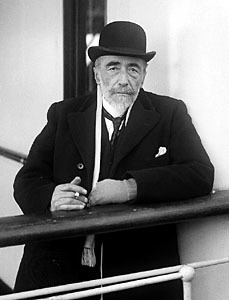
Joseph Conrad
3,522 books5,118 followersJoseph Conrad was a Polish-British novelist and story writer. He is regarded as one of the greatest writers in the English language and, although he did not speak English fluently until his twenties, he became a master prose stylist who brought a non-English sensibility into English literature. He wrote novels and stories, many in nautical settings, that depict crises of human individuality in the midst of what he saw as an indifferent, inscrutable, and amoral world.
Conrad is considered a literary impressionist by some and an early modernist by others, though his works also contain elements of 19th-century realism. His narrative style and anti-heroic characters, as in Lord Jim, for example, have influenced numerous authors. Many dramatic films have been adapted from and inspired by his works. Numerous writers and critics have commented that his fictional works, written largely in the first two decades of the 20th century, seem to have anticipated later world events.
Writing near the peak of the British Empire, Conrad drew on the national experiences of his native Poland—during nearly all his life, parceled out among three occupying empires—and on his own experiences in the French and British merchant navies, to create short stories and novels that reflect aspects of a European-dominated world—including imperialism and colonialism—and that profoundly explore the human psyche.
Conrad is considered a literary impressionist by some and an early modernist by others, though his works also contain elements of 19th-century realism. His narrative style and anti-heroic characters, as in Lord Jim, for example, have influenced numerous authors. Many dramatic films have been adapted from and inspired by his works. Numerous writers and critics have commented that his fictional works, written largely in the first two decades of the 20th century, seem to have anticipated later world events.
Writing near the peak of the British Empire, Conrad drew on the national experiences of his native Poland—during nearly all his life, parceled out among three occupying empires—and on his own experiences in the French and British merchant navies, to create short stories and novels that reflect aspects of a European-dominated world—including imperialism and colonialism—and that profoundly explore the human psyche.
Ratings & Reviews
Friends & Following
Create a free account to discover what your friends think of this book!
Community Reviews
Displaying 1 - 30 of 73 reviews

March 19, 2016
A hidden gem of Conrad mastery.
This collection of short works represent some of Conrad’s earlier work. First published in 1898, four of the five stories had been previously published. A reader will find many of Conrad’s most frequently explored themes: isolation, distinctions between East and West, between colonial and native, a discernment and critique of civilization. But these shorter works also reflect his sharp observation of human nature and his adept ability to dissect relationships.
"Karain: A Memory" – similar in tone to Lord Jim, this also highlights the duality of Conrad’s views on racism. A Malaysian hero is memorialized by Western friends.
Set in Brittany "The Idiots" is perhaps his most dated work, possibly more anachronistically non politically correct than his use of the “N” word. Here, Conrad describes a family cursed with mental illness in the French countryside and how the inchoate difficulties unravel the parents. Subtly disturbing.
"An Outpost of Progress" – In the Heart of Darkness segment of his canon, this describes a trading post in the heart of the jungle. Deep up an in country river, two unlikely custodians, maintain an outpost and the tension of loneliness and of the suffocating forest gets to them both.
"The Return" – may be the surprise jewel of this crown. Very much dissimilar to any of his works, like Amy Foster in that regard, far afield from any of his ubiquitous themes, this one will stay with me, partly because of the high quality of his prose and also partly because it is so out of character. His virtuosity with imagery and with psychological characterization is in full force in this novella (the longest work in the collection). Conrad captures the essence of the dynamics of infidelity that would make modern writers like Stephen King and Richard Mathieson envious. Yet at the same time, if looked at from a slightly different angle “The Return” embodies and fairly represents his body of work in that he examines as with a sharp instrument the subtle and fragile superficiality of what we call civilization. In tone and design this is also reminiscent of August Strindberg’s Miss Julie.
"The Lagoon" – A very short work, almost a sketch of native power and influence. Reminiscent of Melville or Jack London’s south seas stories.
I had heard of some of these stories before and I am glad to have found them all in one cover. This would make a good introduction for a new reader and a fan of Conrad, I am one, will want to know this work.
This collection of short works represent some of Conrad’s earlier work. First published in 1898, four of the five stories had been previously published. A reader will find many of Conrad’s most frequently explored themes: isolation, distinctions between East and West, between colonial and native, a discernment and critique of civilization. But these shorter works also reflect his sharp observation of human nature and his adept ability to dissect relationships.
"Karain: A Memory" – similar in tone to Lord Jim, this also highlights the duality of Conrad’s views on racism. A Malaysian hero is memorialized by Western friends.
Set in Brittany "The Idiots" is perhaps his most dated work, possibly more anachronistically non politically correct than his use of the “N” word. Here, Conrad describes a family cursed with mental illness in the French countryside and how the inchoate difficulties unravel the parents. Subtly disturbing.
"An Outpost of Progress" – In the Heart of Darkness segment of his canon, this describes a trading post in the heart of the jungle. Deep up an in country river, two unlikely custodians, maintain an outpost and the tension of loneliness and of the suffocating forest gets to them both.
"The Return" – may be the surprise jewel of this crown. Very much dissimilar to any of his works, like Amy Foster in that regard, far afield from any of his ubiquitous themes, this one will stay with me, partly because of the high quality of his prose and also partly because it is so out of character. His virtuosity with imagery and with psychological characterization is in full force in this novella (the longest work in the collection). Conrad captures the essence of the dynamics of infidelity that would make modern writers like Stephen King and Richard Mathieson envious. Yet at the same time, if looked at from a slightly different angle “The Return” embodies and fairly represents his body of work in that he examines as with a sharp instrument the subtle and fragile superficiality of what we call civilization. In tone and design this is also reminiscent of August Strindberg’s Miss Julie.
"The Lagoon" – A very short work, almost a sketch of native power and influence. Reminiscent of Melville or Jack London’s south seas stories.
I had heard of some of these stories before and I am glad to have found them all in one cover. This would make a good introduction for a new reader and a fan of Conrad, I am one, will want to know this work.

April 29, 2013
The stories here are from Conrad's early period, in the last decade of 19th century. Given below are my ratings for each of them, along with the setting.
Karain: a memory - 4 (Malaya)
The Idiots - 4.5 (Rural France)
An Outpost of Progress - 5 (Congo)
The Return - 4.5 (London)
The Lagoon - 3 (Malaya)
Of these, An Outpost of Progress stands out, and can be read as a sort of precursor to Heart of Darkness. In the story, we see the disintegration that befalls when white men stay in an outpost in dark dark Africa.
The general collapse toward some sort of hysteria / insanity remains a common theme in all the stories. And except the Congo story, the Woman remains an enigmatic locus, at once the object of desire and the agency of deception and folly.
As far as the writing goes, it is top notch, if one focuses on the turn of phrases and the metaphors more than the statis that Conrad forces on his scenes. Let me give some sentences from the story 'The Return'
The inner circle train from the City rushed impetuously out of a black hole and pulled up with a discordant, grinding racket in the smirched twilight of a West-End station.
She strode like a grenadier, was strong and upright like an obelisk, had a beautiful face, a candid brow, pure eyes, and not a thought of her own in her head.
There are in life events, contacts, glimpses, that seem brutally to bring all the past to a close. There is a shock and a crash, as of a gate flung to behind one by the perfidious hand of fate. Go and seek another paradise, fool or sage. There is a moment of dumb dismay, and the wanderings must begin again; the painful explaining away of facts, the feverish raking up of illusions, the cultivation of a fresh crop of lies in the sweat of one's brow, to sustain life, to make it supportable, to make it fair, so as to hand intact to another generation of blind wanderers the charming legend of a heartless country, of a promised land, all flowers and blessings . . .
He stood in the revealing night—in the darkness that tries the hearts, in the night useless for the work of men, but in which their gaze, undazzled by the sunshine of covetous days, wanders sometimes as far as the stars.
Reading Conrad is perhaps acknowledging two things - (1) The necessary abstinence from venturing into that which is impossible to know, and the necessity of making peace with that impossibility, whether that be the mores and customs of another race or the absurdity of women (Conrad's idea, not mine) (2) The old notion that a lot of work needs to go into making a descriptive sentence, and that it has to be long.
All in all, depending on your attention levels in various paragraphs, your reactions will vary. You'll feel subject to sublime art in some places, and skim over many others. The essence of the stories won't be missed though - promise.
Karain: a memory - 4 (Malaya)
The Idiots - 4.5 (Rural France)
An Outpost of Progress - 5 (Congo)
The Return - 4.5 (London)
The Lagoon - 3 (Malaya)
Of these, An Outpost of Progress stands out, and can be read as a sort of precursor to Heart of Darkness. In the story, we see the disintegration that befalls when white men stay in an outpost in dark dark Africa.
The general collapse toward some sort of hysteria / insanity remains a common theme in all the stories. And except the Congo story, the Woman remains an enigmatic locus, at once the object of desire and the agency of deception and folly.
As far as the writing goes, it is top notch, if one focuses on the turn of phrases and the metaphors more than the statis that Conrad forces on his scenes. Let me give some sentences from the story 'The Return'
The inner circle train from the City rushed impetuously out of a black hole and pulled up with a discordant, grinding racket in the smirched twilight of a West-End station.
She strode like a grenadier, was strong and upright like an obelisk, had a beautiful face, a candid brow, pure eyes, and not a thought of her own in her head.
There are in life events, contacts, glimpses, that seem brutally to bring all the past to a close. There is a shock and a crash, as of a gate flung to behind one by the perfidious hand of fate. Go and seek another paradise, fool or sage. There is a moment of dumb dismay, and the wanderings must begin again; the painful explaining away of facts, the feverish raking up of illusions, the cultivation of a fresh crop of lies in the sweat of one's brow, to sustain life, to make it supportable, to make it fair, so as to hand intact to another generation of blind wanderers the charming legend of a heartless country, of a promised land, all flowers and blessings . . .
He stood in the revealing night—in the darkness that tries the hearts, in the night useless for the work of men, but in which their gaze, undazzled by the sunshine of covetous days, wanders sometimes as far as the stars.
Reading Conrad is perhaps acknowledging two things - (1) The necessary abstinence from venturing into that which is impossible to know, and the necessity of making peace with that impossibility, whether that be the mores and customs of another race or the absurdity of women (Conrad's idea, not mine) (2) The old notion that a lot of work needs to go into making a descriptive sentence, and that it has to be long.
All in all, depending on your attention levels in various paragraphs, your reactions will vary. You'll feel subject to sublime art in some places, and skim over many others. The essence of the stories won't be missed though - promise.

September 8, 2022
Um conjunto de contos que retratam o lado negro do colonialismo, explorando a loucura e a selvejaria das personagens. Tratam-se das primeiras histórias de Conrad, recomendo principalmente a leitura de "An outpost of progress" Uma espécie de prólogo para a sua obra mais aclamada "The heart of darkness".

March 9, 2017
Like most everything I've read recently, I'm GOING to review. Just not today.

November 18, 2020
4.5-star
Collected and published as Tales of Unrest in 1898, his five-story tales decisively prove a bit tough to me with lots of unknown words, many new and worth challengingly interpreting, but literally enjoyable due to his rich and deepening narratives, thrilling plots, unique suspense, true-to-life dialogs, etc. As an overview, we should know that 'Karain: A Memory' and 'The Lagoon' have the settings in Malaya (I guess at the time of his writing, it was called/known as the Malay Archipelago, presumably, so we won't find the name of the country anywhere in the two stories), 'The Idiots' in rural France, 'An Outpost of Progress' in the Congo and 'The Return' in London.
I think its brief synopsis is worth reading and keeping in mind:
To continue . . .
Collected and published as Tales of Unrest in 1898, his five-story tales decisively prove a bit tough to me with lots of unknown words, many new and worth challengingly interpreting, but literally enjoyable due to his rich and deepening narratives, thrilling plots, unique suspense, true-to-life dialogs, etc. As an overview, we should know that 'Karain: A Memory' and 'The Lagoon' have the settings in Malaya (I guess at the time of his writing, it was called/known as the Malay Archipelago, presumably, so we won't find the name of the country anywhere in the two stories), 'The Idiots' in rural France, 'An Outpost of Progress' in the Congo and 'The Return' in London.
I think its brief synopsis is worth reading and keeping in mind:
Set in Central Africa, 'An Outpost of Progress' is suffused with irony and represents a ruthlessly mocking view of European imperialism. 'Karain' and 'The Lagoon' are exotic tales of the Malay Archipelago and discord between Western traders and the indigenous inhabitants. 'The Return' recounts the story of "a desirable middle-class town residence which somehow manages to produce a sinister effect". The collection also includes "The Idiots", the first of Conrad's short stories to be serialized in an English magazine. (back cover)
To continue . . .
March 5, 2009
Conrad, Polish born, is recorded as having written his first letter in English aged 28 in 1885. In 1896, aged almost 40, his first novel was published. Of this, his publisher's reader, Edward Garnett, wrote: "When he read aloud to me some new MS pages of 'An Outcast of the Islands' he mispronounced so many words that I followed him with difficulty. I found then that he had never once heard these English words spoken, but had learned them all from books."
This is only one of the fascinations that reading Joseph Conrad holds,
his 'secondhand' mastery of the English tongue.
The other great pleasure and fascination are the writings themselves.
Drawn from wide and varied experiences, distilled by a sharp and sensitive intelligence, here is a writer with something to say.
These 5 stories illustrate all of the above and probably much more.
Two are set in Europe.'The Idiots' tells of a hideous tragedy in a propertied Breton family; the other, a rather dry, sardonic retelling of the disintegration of an upper-class London marriage.
The other three settings draw on Conrad's experiences in the East and the Congo. 'An Outpost of Progress' illustrates the shallowness of civilised values amongst Europeans in supposedly savage primitive cultures. A story I reread with evergrowing pleasure and agitation.
The other two set in the East illustrate the mystery and respect that the values of unknown cultures should elicit from us, the foreigner and alien.
I look forward to MORE!!!

July 9, 2018
When Joseph Conrad is mentioned, the idea of him as a chronicler of the evils of imperialism is mixed with the notion of his undeniable bigotry. Rarely has an author so clear-eyed about the evil that men do been so comfortable with the idea of racial hierarchy. But Conrad's theme is the isolation of the soul. He is as truthful about that as any literary artist has ever been.
TALES OF UNREST is his second published book; a collection of five stories. It was published in 1898, the year he turned 41. He'd been writing for about five years. Conrad is one of the few writers whose achievement as a writer is, indeed, put in relief by the achievements of his life before his writing career commenced. He was born in Poland and, by his teens, was orphaned when his parents, de facto political prisoners, died several years apart in exile. He was sent to live with his aristocratic uncle in Krakow. He went to France to learn about sailing when he was seventeen. By his mid-twenties he had obtained a Master Shipman's certificate in England. For the next twenty years or so, he was the captain of commercial vessels sailing in remote corners of the world. In the last three or four years of his sailing life he wrote stories in his third language, English (which he didn't start learning until he was twenty) and then, under the encouragement of the novelist John Galsworthy, who'd met him as a passenger on a ship Conrad commanded, began submitting them to literary reviews. He retired from the sea, physical ailments dogging him and literary artistry calling him, and inside of a decade became one of the unquestioned masters of the English novel. He wrote HEART OF DARKNESS, LORD JIM and THE SECRET AGENT all before the first decade of the 20th century had ended. THE SECRET AGENT is considered one of the greatest books about terrorism ever written.
TALES OF UNREST is mostly made up of stories which appeared in periodicals in the late 1890s. One story in it, though, was one the magazines wouldn't publish, "The Return." We associate Joseph Conrad with the sea or the workings of sinister political movements, but "The Return" is the story of a couple whose marriage is falling apart. If you need proof that Conrad was nuanced, study "The Return." He, of course, is at his best when he describes people in psychological strife while facing tremendous physical hardship. But it's easy to see his stories of men against the elements as simply melodramatic adventures. Read "The Return" if you want to see the minute detail Conrad had at his command without the distraction of his having to describe a ship's hold or craggy road.
This collection contains the prototypical Conrad story "An Outpost Of Progress." It may be one of the most influential stories ever written. A 21st-century reader will know almost from the start how it's going to end, but in its short pages, it contains almost everything Graham Greene, for example, ever wound up saying. (And if "The Return" didn't inform Greene's THE END OF THE AFFAIR, well, I'll retract all of this.)
There are several motifs throughout this book. people are haunted, at some level, in most of the stories, or, I should say, they feel haunted. Connected to this is doubling. One character mistakes himself, briefly, for another who has just died. One sees himself replicated multiple times in the many mirrored surfaces of a room. For an author who wrote almost exclusively about men, there are a number of confrontations here between men and women. Conrad, in the euphemistic language of the day, indeed deals with sexual congress, either consensual or forced, which is to say he does not shy away from the subject of rape. There is a respect for women in Conrad's work. I hesitate to call it feminism, but he has a sense of the danger many women are surrounded with, a subject most of his contemporaries simply do not discuss. In this book, Conrad broaches the subject of rape within marriage.
His attitudes about many things are so outdated as to be shocking. His views of the retarded would make the story "The Idiots" intolerable if it weren't ultimately clear that he thinks the world mistreats them. His attitudes toward anyone other than Europeans are backwards. But it was Conrad, not Henry James, Stephen Crane or James Joyce who pulled the curtain back on the atrocities Europeans were committing against Africans and Asians.
Joseph Conrad's writings are still relevant.
I'm putting a link here. It leads you to a PDF of Chinua Achebe's 1975 lecture at the University of Massachusetts at Amherst, "An Image Of Africa." It addresses Conrad's racism and the western world's reluctance to face it. He stresses that he considers Conrad "undoubtedly one of the great stylists of modern fiction and a good story-teller into the bargain," but that he has profound reservations about Conrad's work, particularly HEART OF DARKNESS. "The question," Achebe writes, "is whether a novel which celebrates...dehumanization, which depersonalizes a portion of the human race, can be called a work of art. My answer is: No, it cannot." https://polonistyka.amu.edu.pl/__data...
TALES OF UNREST is his second published book; a collection of five stories. It was published in 1898, the year he turned 41. He'd been writing for about five years. Conrad is one of the few writers whose achievement as a writer is, indeed, put in relief by the achievements of his life before his writing career commenced. He was born in Poland and, by his teens, was orphaned when his parents, de facto political prisoners, died several years apart in exile. He was sent to live with his aristocratic uncle in Krakow. He went to France to learn about sailing when he was seventeen. By his mid-twenties he had obtained a Master Shipman's certificate in England. For the next twenty years or so, he was the captain of commercial vessels sailing in remote corners of the world. In the last three or four years of his sailing life he wrote stories in his third language, English (which he didn't start learning until he was twenty) and then, under the encouragement of the novelist John Galsworthy, who'd met him as a passenger on a ship Conrad commanded, began submitting them to literary reviews. He retired from the sea, physical ailments dogging him and literary artistry calling him, and inside of a decade became one of the unquestioned masters of the English novel. He wrote HEART OF DARKNESS, LORD JIM and THE SECRET AGENT all before the first decade of the 20th century had ended. THE SECRET AGENT is considered one of the greatest books about terrorism ever written.
TALES OF UNREST is mostly made up of stories which appeared in periodicals in the late 1890s. One story in it, though, was one the magazines wouldn't publish, "The Return." We associate Joseph Conrad with the sea or the workings of sinister political movements, but "The Return" is the story of a couple whose marriage is falling apart. If you need proof that Conrad was nuanced, study "The Return." He, of course, is at his best when he describes people in psychological strife while facing tremendous physical hardship. But it's easy to see his stories of men against the elements as simply melodramatic adventures. Read "The Return" if you want to see the minute detail Conrad had at his command without the distraction of his having to describe a ship's hold or craggy road.
This collection contains the prototypical Conrad story "An Outpost Of Progress." It may be one of the most influential stories ever written. A 21st-century reader will know almost from the start how it's going to end, but in its short pages, it contains almost everything Graham Greene, for example, ever wound up saying. (And if "The Return" didn't inform Greene's THE END OF THE AFFAIR, well, I'll retract all of this.)
There are several motifs throughout this book. people are haunted, at some level, in most of the stories, or, I should say, they feel haunted. Connected to this is doubling. One character mistakes himself, briefly, for another who has just died. One sees himself replicated multiple times in the many mirrored surfaces of a room. For an author who wrote almost exclusively about men, there are a number of confrontations here between men and women. Conrad, in the euphemistic language of the day, indeed deals with sexual congress, either consensual or forced, which is to say he does not shy away from the subject of rape. There is a respect for women in Conrad's work. I hesitate to call it feminism, but he has a sense of the danger many women are surrounded with, a subject most of his contemporaries simply do not discuss. In this book, Conrad broaches the subject of rape within marriage.
His attitudes about many things are so outdated as to be shocking. His views of the retarded would make the story "The Idiots" intolerable if it weren't ultimately clear that he thinks the world mistreats them. His attitudes toward anyone other than Europeans are backwards. But it was Conrad, not Henry James, Stephen Crane or James Joyce who pulled the curtain back on the atrocities Europeans were committing against Africans and Asians.
Joseph Conrad's writings are still relevant.
I'm putting a link here. It leads you to a PDF of Chinua Achebe's 1975 lecture at the University of Massachusetts at Amherst, "An Image Of Africa." It addresses Conrad's racism and the western world's reluctance to face it. He stresses that he considers Conrad "undoubtedly one of the great stylists of modern fiction and a good story-teller into the bargain," but that he has profound reservations about Conrad's work, particularly HEART OF DARKNESS. "The question," Achebe writes, "is whether a novel which celebrates...dehumanization, which depersonalizes a portion of the human race, can be called a work of art. My answer is: No, it cannot." https://polonistyka.amu.edu.pl/__data...

February 26, 2024
just incredibly affective secondhand epics - some nameless trader who has come upon a body or a ruin. so many moments of dignity, folly, belief, disbelief, and total a-belief

March 4, 2013
I had read these stories at least three times previously before coming to them again, today. And they were well worth rereading. These are among Conrad's earliest efforts. But all of them manage to create an atmosphere that foreshadows what will appear in later works. Only one, "The Return," falls short of expectations. Frankly, it's simply too wordy. The attempt at psychoanalyzing his two main characters doesn't quite succeed. Even so, it's an important piece within the context of Conrad's overall writing. And because I am currently reading and rereading through several Conrad stories and novels, I am able to see connection that weren't as obvious to me before.
One of these connections, coming out "The Return," will recur throughout Conrad's tales about men and women. It is the preoccupation with misdirected love. Of course, you could already see a bit of that in Almayer's Folly. And it's also, here, in the last story of this volume, "The Lagoon," which I understand from the author's note was written in the immediate aftermath of finish Almayer's Folly. Or at least hints of it are there. But the greater connection can be seen in later stories, "A Smile of Fortune," "Freya of the Seven Isles," "The Planter of Malata," and, especially, in "Because of the Dollars." In each instance, men are able to redeem themselves through walking away from a cold, loveless lair to seek further adventures or they have their lives ruined by undeserving women suspicious of all that is good and true in a person.
Another story, "The Idiots," traces the history of a mismatched marriage in the French countryside. The other two stories, "Karain: A Memory" and "An Outpost of Progress," are trader's tales. One is set in Southeast Asia and the other in Africa. Both allude to the other great "mismatch" in Conrad's work, the presence of colonial governments and their colonizer in parts of the world they fail to understand and always underestimate.
One of these connections, coming out "The Return," will recur throughout Conrad's tales about men and women. It is the preoccupation with misdirected love. Of course, you could already see a bit of that in Almayer's Folly. And it's also, here, in the last story of this volume, "The Lagoon," which I understand from the author's note was written in the immediate aftermath of finish Almayer's Folly. Or at least hints of it are there. But the greater connection can be seen in later stories, "A Smile of Fortune," "Freya of the Seven Isles," "The Planter of Malata," and, especially, in "Because of the Dollars." In each instance, men are able to redeem themselves through walking away from a cold, loveless lair to seek further adventures or they have their lives ruined by undeserving women suspicious of all that is good and true in a person.
Another story, "The Idiots," traces the history of a mismatched marriage in the French countryside. The other two stories, "Karain: A Memory" and "An Outpost of Progress," are trader's tales. One is set in Southeast Asia and the other in Africa. Both allude to the other great "mismatch" in Conrad's work, the presence of colonial governments and their colonizer in parts of the world they fail to understand and always underestimate.

March 5, 2017
Fantástico uso del lenguaje en cada uno de los relatos. La única crítica que tengo es que durante algunos pasajes, la prosa se va construyendo de una manera que podríamos definir como muy reiterativa y en exceso descriptiva. Supongo que ha sido el fin deseado por el autor para así destacar determinada situación dentro del relato, mediante el uso excesivo de los mismos conceptos pero con diferentes palabras, creando de esta forma una atmósfera que consideré agobiante. No obstante, cada una de sus historias presentan rasgos importantes de la denominada "angustia psicológica" del personaje, característica que marcará todo un género literario durante el siglo XX. Recomendable para quienes gusten del género y deseen visitar tierras lejanas y misteriosas.

May 18, 2016
The early work of famous writers can sometimes be an interesting experience as we see them stretch themselves, attempting new subjects and approaches that they had not tried before, and which we will not see them attempt again. Hence the five stories that make up Joseph Conrad’s Tales of Unrest are full of interesting surprises for the Conrad admirer.
The book opens and ends with two fairly similar stories, and I will begin with those. The first story in the book is ‘Karain: A Memory’. While the book once more returns to the same part of the world as Conrad’s first two novels, its biggest surprise lies in its portrayal of a sympathetic Malayan character, something conspicuously absent in Conrad’s other books set in this region. Indeed Karain is actually the hero of the story.
Superficially the story outline could easily have been that of another work negatively portraying non-European peoples, like so many of Conrad’s. Karain is the leader of several remote villages. However, he is haunted by a superstitious fear. While he and his brother are tracking down a disgraced woman from their home who ran off with a European man, he becomes besotted with the thought of this woman who he barely knows, and who does not remember him. This causes him to kill his brother, and he is haunted by the fear of his brother’s spectre.
The story ends on a strange note of bathos when the European gun-traders, whom Karain has befriended, find a way to exorcise his fears by giving him a cheap coin with Queen Victoria’s head on it, and persuading him that this is a talisman that will protect him.
Conrad would usually have taken these elements to suggest the simplicity, ignorance and lack of moral restraint to be found in the Asian character, but for once he takes a different tack. Instead Karain is portrayed as a brave, wise and resourceful leader of his people, and he commands the respect of the traders he talks to.
Even the final device whereby Karain is hoodwinked into a false reassurance is portrayed only half-humorously. The men are not trying to cheat Karain for mercenary motives – we are told that this is intended to be their last visit to the area anyway. Nor are the men seeking to mock Karain. Indeed, they regard him as a friend, and one of their own, and the trick is a genuine and kind attempt to help Karain. The story therefore ends with the men showing their solidarity and support for their Malayan friend and helping to return his peace of mind.
In the final story, ‘The Lagoon’, a similar tale is played out. Once again we have a likeable Malayan, though admittedly we are told that he is liked a little less than a favourite dog would be. Arsat has made a similar fall from grace. With his brother, he takes away a woman that he loves from his ruler. However, whilst they are faced with an army of the ruler’s men, he pushes off in his boat and leaves his brother to his fate.
The story does not have a similar important role for the European visitor, who here only listens to the story. It is a minor story, but with interesting use of darkness and light, motion and stillness. Arsat believes he can take his woman to a remote area where everything will stand still. However, he cannot prevent her from dying, and the story ends with him planning to return and fight the ruler’s men, presumably a futile gesture.
In ‘The Idiots’, Conrad unusually opts for a European setting. It is set in post-revolutionary France, and concerns a family where the children are all born idiots. The history of the parents is told to us with some pathos. No attempts by the father and mother are able to reverse the curse of all their children being born with the same condition, and the story ends with the mother murdering the father before committing suicide.
Conrad uses the story to make a point about the notion of god, and there are a few allusions to imply that the existence of children such as this serves to disprove the idea of a benevolent god, e.g. ‘They were an offence to the sunshine, a reproach to empty heaven…’ At one point, the revolutionary father reluctantly agrees to go to church and seek help from a priest, but this proves to be as futile as any other attempt.
The story and the idea behind it are certainly interesting. It is indeed a moral question that all religious people need to ask themselves – why does god create children born with these disadvantages? The Idiots’ is a moving and uncharacteristic experiment for Conrad. It is a little bit let down by its ending however, which is somewhat overwrought and melodramatic. Conrad himself hated the story.
By contrast, Conrad thought ‘An Outpost of Progress’ was one of his best works. The story suffers a little by comparison with Heart of Darkness, to which it bears a certain resemblance in location and subject matter. It lacks the wider scope and powerful writing of the more famous work. Also there are fewer surprises in ‘An Outpost of Progress’ since Kayerts and Carlier are already weak men, whereas Kurtz was a strong man of good principles. His fall is genuinely inscrutable, whereas theirs is inevitable.
However, viewed on its own merits, ‘An Outpost of Progress’ is an excellent story. It tells the tale of two Europeans who are left to look after an African trading post. Their employer has little respect for them, and no faith in their ability to cope, and he proves right in this. Things first begin to go wrong when their Sierra Leone workmate Makola sells the other employees (and indeed a few locals) into slavery in exchange for ivory.
Kayerts and Carlier are appalled by this, but have too few principles to put up much of a fight. Shunned by the locals and waiting for a greatly-delayed ship with more supplies from their employer, the moral character of the two men disintegrates under the pressure. Finally in an argument over a bag of sugar Kayerts kills Carlier, and then hangs himself.
While Conrad’s earlier novels were glancingly anti-imperialist, ‘An Outpost of Progress’ is the first story in which Conrad makes this his main theme. He portrays the two European men with withering irony, as poor samples of civilisation and progress, mollycoddled by European civilisation, and too lazy, talentless and insipid to survive for long when put in a position that requires moral character.
All these stories are united by their overseas setting. Conrad may have given up the sea forever in his working life, but in his books, he is still away from home most of the time. We catch a briefly glimpse of England when the Narcissus finally arrives there at the end of The Nigger of the Narcissus, but so far this has been all.
‘The Return’ is therefore something of a surprise, in that it is actually set in Britain, and deals with a purely domestic drama. Alvan Harvey a respectably dull life with his wife (like Noah’s wife she has no name). They lack a single original thought of their own, and are entirely conventional in embracing all the morals, fashions and customs of society.
However, one day Alvin returns home to find a note saying that his wife has left him for another man. In the event, she returns home instead of leaving with that man, but Alvin is devastated by the shock of discovering his wife was capable of doing this, and all his moral and social certainties begin to disintegrate. The story ends with him leaving her instead, and we are told that he never returns.
While the story is rather heavy and wordy, and perhaps owes too much to other French writers, it is not without merit. Conrad lifts the lid on domestic respectability, and we see that conventional bourgeois values can soon be turned on their head. We get a glimpse of the fragmentation of the world of Alvin in the repeated image of the various mirrors in the room showing many different images of him.
Perhaps the most interesting element of the story is that in some ways it shares the same theme as ‘An Outpost of Progress’, unlikely as that sounds. In the earlier story, Conrad puts the blame firmly on a European civilised society that has protected weak and useless men like Kayerts and Carlier for too long. Similarly the Harveys have lived in an enclosed and insular world of hypocritical respectability that leaves them ill-prepared for dealing with an unprecedented crisis.
Indeed, we never really learn why Alvin’s wife nearly leaves him. Alvin is incapable of communicating with her, and merely spouts pompous platitudes of which she is clearly contemptuous. It somehow seems almost like her action is a rebellion against the gilded prison in which they have been living, and in a way perhaps his own departure is something similar.
Conrad’s stories are notable for setting up problems, and seeing how the characters come out of them. Sometimes, as with the crew of the Narcissus, this is done almost in spite of their foolishness. Sometimes, as in Karain, it is achieved successfully through co-operation and kindness. Often however, it ends in failure for all concerned, as in ‘An Outpost of Progress’, ‘The Idiots’, ‘The Return’, and Conrad’s first two novels.
We may well ask what are the qualities that help to keep people together, and which prevent them from cracking up. Firstly, solidarity and working together will help. Hence Karain can be saved because of an act of comradeship. Secondly, a commitment to selfless hard work is a saving grace. Kayerts and Carlier are doomed because they are lazy and lack the fibre to work hard. In Heart of Darkness and The Nigger of the Narcissus, relentless hard work helps to keep people from cracking up.
Thirdly, an ability to resign oneself to fate is important, and this is the quality that might have saved the family in ‘The Idiots. Finally, the ability to be tough and resilient and self-sufficient, not dependent on society to support one – this will also give people a stronger ability to cope. The absence of this quality is what dooms Kayerts and Carlier, and also signals the end of the marriage of the Harveys.
While the five stories here are not the best that Conrad has ever written, they are well-written and present many intriguing ideas. They are interesting experiments that show a writer testing out new areas, and they will be a valuable addition to the collection of anyone who admires Joseph Conrad.
The book opens and ends with two fairly similar stories, and I will begin with those. The first story in the book is ‘Karain: A Memory’. While the book once more returns to the same part of the world as Conrad’s first two novels, its biggest surprise lies in its portrayal of a sympathetic Malayan character, something conspicuously absent in Conrad’s other books set in this region. Indeed Karain is actually the hero of the story.
Superficially the story outline could easily have been that of another work negatively portraying non-European peoples, like so many of Conrad’s. Karain is the leader of several remote villages. However, he is haunted by a superstitious fear. While he and his brother are tracking down a disgraced woman from their home who ran off with a European man, he becomes besotted with the thought of this woman who he barely knows, and who does not remember him. This causes him to kill his brother, and he is haunted by the fear of his brother’s spectre.
The story ends on a strange note of bathos when the European gun-traders, whom Karain has befriended, find a way to exorcise his fears by giving him a cheap coin with Queen Victoria’s head on it, and persuading him that this is a talisman that will protect him.
Conrad would usually have taken these elements to suggest the simplicity, ignorance and lack of moral restraint to be found in the Asian character, but for once he takes a different tack. Instead Karain is portrayed as a brave, wise and resourceful leader of his people, and he commands the respect of the traders he talks to.
Even the final device whereby Karain is hoodwinked into a false reassurance is portrayed only half-humorously. The men are not trying to cheat Karain for mercenary motives – we are told that this is intended to be their last visit to the area anyway. Nor are the men seeking to mock Karain. Indeed, they regard him as a friend, and one of their own, and the trick is a genuine and kind attempt to help Karain. The story therefore ends with the men showing their solidarity and support for their Malayan friend and helping to return his peace of mind.
In the final story, ‘The Lagoon’, a similar tale is played out. Once again we have a likeable Malayan, though admittedly we are told that he is liked a little less than a favourite dog would be. Arsat has made a similar fall from grace. With his brother, he takes away a woman that he loves from his ruler. However, whilst they are faced with an army of the ruler’s men, he pushes off in his boat and leaves his brother to his fate.
The story does not have a similar important role for the European visitor, who here only listens to the story. It is a minor story, but with interesting use of darkness and light, motion and stillness. Arsat believes he can take his woman to a remote area where everything will stand still. However, he cannot prevent her from dying, and the story ends with him planning to return and fight the ruler’s men, presumably a futile gesture.
In ‘The Idiots’, Conrad unusually opts for a European setting. It is set in post-revolutionary France, and concerns a family where the children are all born idiots. The history of the parents is told to us with some pathos. No attempts by the father and mother are able to reverse the curse of all their children being born with the same condition, and the story ends with the mother murdering the father before committing suicide.
Conrad uses the story to make a point about the notion of god, and there are a few allusions to imply that the existence of children such as this serves to disprove the idea of a benevolent god, e.g. ‘They were an offence to the sunshine, a reproach to empty heaven…’ At one point, the revolutionary father reluctantly agrees to go to church and seek help from a priest, but this proves to be as futile as any other attempt.
The story and the idea behind it are certainly interesting. It is indeed a moral question that all religious people need to ask themselves – why does god create children born with these disadvantages? The Idiots’ is a moving and uncharacteristic experiment for Conrad. It is a little bit let down by its ending however, which is somewhat overwrought and melodramatic. Conrad himself hated the story.
By contrast, Conrad thought ‘An Outpost of Progress’ was one of his best works. The story suffers a little by comparison with Heart of Darkness, to which it bears a certain resemblance in location and subject matter. It lacks the wider scope and powerful writing of the more famous work. Also there are fewer surprises in ‘An Outpost of Progress’ since Kayerts and Carlier are already weak men, whereas Kurtz was a strong man of good principles. His fall is genuinely inscrutable, whereas theirs is inevitable.
However, viewed on its own merits, ‘An Outpost of Progress’ is an excellent story. It tells the tale of two Europeans who are left to look after an African trading post. Their employer has little respect for them, and no faith in their ability to cope, and he proves right in this. Things first begin to go wrong when their Sierra Leone workmate Makola sells the other employees (and indeed a few locals) into slavery in exchange for ivory.
Kayerts and Carlier are appalled by this, but have too few principles to put up much of a fight. Shunned by the locals and waiting for a greatly-delayed ship with more supplies from their employer, the moral character of the two men disintegrates under the pressure. Finally in an argument over a bag of sugar Kayerts kills Carlier, and then hangs himself.
While Conrad’s earlier novels were glancingly anti-imperialist, ‘An Outpost of Progress’ is the first story in which Conrad makes this his main theme. He portrays the two European men with withering irony, as poor samples of civilisation and progress, mollycoddled by European civilisation, and too lazy, talentless and insipid to survive for long when put in a position that requires moral character.
All these stories are united by their overseas setting. Conrad may have given up the sea forever in his working life, but in his books, he is still away from home most of the time. We catch a briefly glimpse of England when the Narcissus finally arrives there at the end of The Nigger of the Narcissus, but so far this has been all.
‘The Return’ is therefore something of a surprise, in that it is actually set in Britain, and deals with a purely domestic drama. Alvan Harvey a respectably dull life with his wife (like Noah’s wife she has no name). They lack a single original thought of their own, and are entirely conventional in embracing all the morals, fashions and customs of society.
However, one day Alvin returns home to find a note saying that his wife has left him for another man. In the event, she returns home instead of leaving with that man, but Alvin is devastated by the shock of discovering his wife was capable of doing this, and all his moral and social certainties begin to disintegrate. The story ends with him leaving her instead, and we are told that he never returns.
While the story is rather heavy and wordy, and perhaps owes too much to other French writers, it is not without merit. Conrad lifts the lid on domestic respectability, and we see that conventional bourgeois values can soon be turned on their head. We get a glimpse of the fragmentation of the world of Alvin in the repeated image of the various mirrors in the room showing many different images of him.
Perhaps the most interesting element of the story is that in some ways it shares the same theme as ‘An Outpost of Progress’, unlikely as that sounds. In the earlier story, Conrad puts the blame firmly on a European civilised society that has protected weak and useless men like Kayerts and Carlier for too long. Similarly the Harveys have lived in an enclosed and insular world of hypocritical respectability that leaves them ill-prepared for dealing with an unprecedented crisis.
Indeed, we never really learn why Alvin’s wife nearly leaves him. Alvin is incapable of communicating with her, and merely spouts pompous platitudes of which she is clearly contemptuous. It somehow seems almost like her action is a rebellion against the gilded prison in which they have been living, and in a way perhaps his own departure is something similar.
Conrad’s stories are notable for setting up problems, and seeing how the characters come out of them. Sometimes, as with the crew of the Narcissus, this is done almost in spite of their foolishness. Sometimes, as in Karain, it is achieved successfully through co-operation and kindness. Often however, it ends in failure for all concerned, as in ‘An Outpost of Progress’, ‘The Idiots’, ‘The Return’, and Conrad’s first two novels.
We may well ask what are the qualities that help to keep people together, and which prevent them from cracking up. Firstly, solidarity and working together will help. Hence Karain can be saved because of an act of comradeship. Secondly, a commitment to selfless hard work is a saving grace. Kayerts and Carlier are doomed because they are lazy and lack the fibre to work hard. In Heart of Darkness and The Nigger of the Narcissus, relentless hard work helps to keep people from cracking up.
Thirdly, an ability to resign oneself to fate is important, and this is the quality that might have saved the family in ‘The Idiots. Finally, the ability to be tough and resilient and self-sufficient, not dependent on society to support one – this will also give people a stronger ability to cope. The absence of this quality is what dooms Kayerts and Carlier, and also signals the end of the marriage of the Harveys.
While the five stories here are not the best that Conrad has ever written, they are well-written and present many intriguing ideas. They are interesting experiments that show a writer testing out new areas, and they will be a valuable addition to the collection of anyone who admires Joseph Conrad.

July 15, 2017
I love Joseph Conrad so much I actually wrote in the margins of this book whenever I came across a passage that blew my mind. And as someone who normally cringes at the thought of defacing a book by writing in margins, it's the highest compliment I can pay.

September 6, 2021
Meh...
Yeah, not of my taste.
The descriptions of nature are rather good.
Plus, it's interesting to read a more nuanced view of the colonised.
Still, though the use of the language is OK, overall as a book is forgettable.
Yeah, not of my taste.
The descriptions of nature are rather good.
Plus, it's interesting to read a more nuanced view of the colonised.
Still, though the use of the language is OK, overall as a book is forgettable.

December 8, 2023
An outpost of progress 5/5

May 17, 2020
I read this book long after reading the Heart of Darkness, and that set expectations.
Conrad excels in tales of exotic locales and adventure, whether it is Africa or the Malay archipelago. His understanding of the colonial interaction with the native is deep and nuanced and darkly humorous and often critical of the then prevailing mindset. His other stories in this book based in France and Britain are dark and heavy and are a study of the traumatised human psyche, without the benefit of the exotic or adventure.
Conrad excels in tales of exotic locales and adventure, whether it is Africa or the Malay archipelago. His understanding of the colonial interaction with the native is deep and nuanced and darkly humorous and often critical of the then prevailing mindset. His other stories in this book based in France and Britain are dark and heavy and are a study of the traumatised human psyche, without the benefit of the exotic or adventure.

March 25, 2025
از میان ۵ داستان این کتاب به ترتیب برایم بازگشت ، عقب مانده ها و پایگاه پیشرفت جذابیت بیشتری داشتند
خود کنراد در مقدمه نوشته است سال ها بعد که به کارائین : یک خاطره برگشته برایش ملموس تر شده ، نمی دانم شاید برای من هم بعدا چنین اتفاقی بیفتد
و جالب اینکه باز گفته برای نوشتن داستان بازگشت بسیار خون دل خورده و اذیت شده ( داستانی که خیلی دوست داشتم )
کلا فهمیدم از فضای این مدل داستان های مجمع الجزایر مالزی مثل کارائین و مرداب چندان خوشم نمی اید
شاید درکم فعلا درست نیست و فضای وهم الود و رعب اور این داستان ها بر دریافت و علاقه ام سایه انداخته باشد ( نمی دانم )
خود کنراد در مقدمه نوشته است سال ها بعد که به کارائین : یک خاطره برگشته برایش ملموس تر شده ، نمی دانم شاید برای من هم بعدا چنین اتفاقی بیفتد
و جالب اینکه باز گفته برای نوشتن داستان بازگشت بسیار خون دل خورده و اذیت شده ( داستانی که خیلی دوست داشتم )
کلا فهمیدم از فضای این مدل داستان های مجمع الجزایر مالزی مثل کارائین و مرداب چندان خوشم نمی اید
شاید درکم فعلا درست نیست و فضای وهم الود و رعب اور این داستان ها بر دریافت و علاقه ام سایه انداخته باشد ( نمی دانم )

June 29, 2025
Five short stories, published in literary magazines in the early part of Joseph Conrad’s career, and later collected in a volume in 1898. Three of the stories foreshadow the themes that animate his more famous works, such as the breakdown of (white) moral codes at the edge of the wilderness and intercultural encounters (Karain, An Outpost of Progress, and The Lagoon). But the other two are located in a European milieu (The Idiots, The Return). All the stories are marked by Conrad’s unparalleled powers of evoking mood through physical description, and incisive understanding of mental states and though processes. All are also marked by a sense of doom and futility, wistfulness and regret—or in the Return, by emotional and moral blindness leading to disaster. But as works that may count as the author’s juvenilia, the stories are also relatively shallow, often turning on a single theme.
Short summaries follow (SPOILERS).
In Karain, white smugglers and gunrunners encounter a young local chieftain in a Malayan principality, with almost godlike respect and adoration from his people. But Karain has a secret. Years ago, he had left from home to accompany a friend on a quest for honor (the friend’s sister had run away with a white man and they were going to hunt down the couple and kill them). But in the years chasing after the two, Karain became obsessed with her and at the decisive moment, he turned on his friend and killed him instead of helping him achieve his vengeance. Consumed by guilt, Karain wanders on and eventually becomes the chieftain of his little kingdom. But he is haunted by the shade of his dead friend and has a shaman accompany him always. Then the shaman dies, and terrified that his nemesis is about to catch up with him, Karain takes refuge on the white men’s ship. He begs for the white men’s magic – a talisman empowered with the Westerner’s science and unbelief. And the white men oblige, giving him a medallion of Queen Victoria. His sense of safety restored, Karain returns to his people.
In the Idiots, a young man inherits his family farm and marries a local woman with the aim of passing it on to his heirs. But the couple repeatedly have “idiots,” four of them. The man even abandons his republican ideals and turns to religion, but to no avail. He then becomes disillusioned with god too, and in a drunken fit, shouts imprecations outside the local church. But still undaunted, the man approaches the woman once more. The woman stabs the man in the neck with her sewing scissors. Wildly escaping from home, she runs to the seashore while the tide is out. As the tide returns, she realizes her predicament and starts running back but has a fall and breaks her neck. The four “idiot” children grow up uncared for, on the farm and can often be sighted by passersby in the fields – the story opens with the narrator seeing them one by one staring at his carriage as it passes on the country road beside the farm.
In An Outpost of Progress, two men are sent to a lonely outpost somewhere in tropical Africa where they are expected to collect ivory for the trading ship that comes every six months. To assist them is a native overseer and about ten natives recruited from a faraway tribe. The men have ambitious goals of improving the outpost and maybe founding a settlement which will grow into a city, but they are indolent and inept and soon sink into a tropical stupor. They are jerked out of their lethargy when a group of armed men arrive (slavers! But they do not know it yet). The native overseer persuades the whites to stay indoors one night and to let the native workers have palm wine. That night they hear shots and scuffles in the dark, and the next morning, they see a scene of violence – one man dead and all the others missing. But in the storage shed, there is a load of new ivory. Racked by guilt at selling their men into slavery but still avaricious of the ivory, the two whites turn on each other – one accidentally kills the other. The native overseer advises the surviving man that they could just say the victim died of a fever and bury the body. But before they can carry out their scheme, the trading steamer arrives – the culprit too hangs himself rather than be discovered and brought to justice.
The Return is perhaps the most different of all the stories and hinges on the internal dynamics of a young upper-class couple. It reminded me of the interaction between Dombey and his wife Edith Granger, in Dickens’s Dombey and Son. The story starts when Alvan Hervey returns home early one day and sees a letter from his wife saying she is leaving him. Alvan is rich, handsome, and well-connected, but also self-centered, smug, haughty, and conceited. His wife of five years is also from a well-to-do family, beautiful, well-educated, and accomplished. But for him, she is just part of the accoutrements of his life, along with his tastefully decorated apartment, well-appointed carriage, and glittering social circle. He has no conception of her inner life, and no curiosity about it either. Bored and stifled with her life, the woman has turned to a poet and journalist who frequents their circle. The husband is shocked that she would abandon him for a penniless man, who is also unhealthy, pudgy and socially inferior – a mere hanger-on whose literary endeavors Alvan has financed. [The Dombey parallel will be Carker the manager.] But a further surprise – the woman returns. She cannot bring herself to abandon her marriage. But why did she return? Did she return for love? She realizes full well that her husband was too self-centered to love her, indeed, she says enigmatically that if she had thought Alvan loved her, she would not have returned! [She knows Alvan cares more about social appearances than about her and would take her back.] Alvan could still have retrieved their marriage if he was still a little less emotionally blind – but all he can say are empty phrases and platitudes about “social responsibility,” and “self-restraint” and “duty” and “shame.” He is supercilious and “towering in solitary grandeur above the unprofitable waste of (her) errors and passions.” The woman will submit to the marriage, but both know it is a tawdry arrangement, and trust has been irretrievably broken. He can never again be certain that her placid beautiful exterior is not concealing resentments and rebellions. He storms out of the house to never return.
The last story is the Lagoon which has parallels with Karain. Here a white sampan captain encounters a young man, who is living in an isolated house on a black lagoon, that the locals say is haunted. Arsat had fallen in love with a woman, who is bonded to the royal household and therefore taboo for commoners. But he is determined to have her, and his brother agrees to help him elope. They escape with the woman, but with the Rajah’s men in pursuit. The brother stays back to hold off the pursuers while Arsat and his lover make their getaway. Looking back, Arsat sees the brother beset by the soldiers but does not go to help. Now he has the girl but is racked by guilt. They take up residence beside the haunted lagoon, isolated from all social contact. As the sampan captain arrives, the girl is sick and on the verge of death. And at dawn, as the blazing hot sun rises above the hills, she dies. The last glimpse we have as the sampan rounds the corner of the creek, is of Arsat looking “beyond the great light of a cloudless day into the darkness of a world of illusions.”
Short summaries follow (SPOILERS).
In Karain, white smugglers and gunrunners encounter a young local chieftain in a Malayan principality, with almost godlike respect and adoration from his people. But Karain has a secret. Years ago, he had left from home to accompany a friend on a quest for honor (the friend’s sister had run away with a white man and they were going to hunt down the couple and kill them). But in the years chasing after the two, Karain became obsessed with her and at the decisive moment, he turned on his friend and killed him instead of helping him achieve his vengeance. Consumed by guilt, Karain wanders on and eventually becomes the chieftain of his little kingdom. But he is haunted by the shade of his dead friend and has a shaman accompany him always. Then the shaman dies, and terrified that his nemesis is about to catch up with him, Karain takes refuge on the white men’s ship. He begs for the white men’s magic – a talisman empowered with the Westerner’s science and unbelief. And the white men oblige, giving him a medallion of Queen Victoria. His sense of safety restored, Karain returns to his people.
In the Idiots, a young man inherits his family farm and marries a local woman with the aim of passing it on to his heirs. But the couple repeatedly have “idiots,” four of them. The man even abandons his republican ideals and turns to religion, but to no avail. He then becomes disillusioned with god too, and in a drunken fit, shouts imprecations outside the local church. But still undaunted, the man approaches the woman once more. The woman stabs the man in the neck with her sewing scissors. Wildly escaping from home, she runs to the seashore while the tide is out. As the tide returns, she realizes her predicament and starts running back but has a fall and breaks her neck. The four “idiot” children grow up uncared for, on the farm and can often be sighted by passersby in the fields – the story opens with the narrator seeing them one by one staring at his carriage as it passes on the country road beside the farm.
In An Outpost of Progress, two men are sent to a lonely outpost somewhere in tropical Africa where they are expected to collect ivory for the trading ship that comes every six months. To assist them is a native overseer and about ten natives recruited from a faraway tribe. The men have ambitious goals of improving the outpost and maybe founding a settlement which will grow into a city, but they are indolent and inept and soon sink into a tropical stupor. They are jerked out of their lethargy when a group of armed men arrive (slavers! But they do not know it yet). The native overseer persuades the whites to stay indoors one night and to let the native workers have palm wine. That night they hear shots and scuffles in the dark, and the next morning, they see a scene of violence – one man dead and all the others missing. But in the storage shed, there is a load of new ivory. Racked by guilt at selling their men into slavery but still avaricious of the ivory, the two whites turn on each other – one accidentally kills the other. The native overseer advises the surviving man that they could just say the victim died of a fever and bury the body. But before they can carry out their scheme, the trading steamer arrives – the culprit too hangs himself rather than be discovered and brought to justice.
The Return is perhaps the most different of all the stories and hinges on the internal dynamics of a young upper-class couple. It reminded me of the interaction between Dombey and his wife Edith Granger, in Dickens’s Dombey and Son. The story starts when Alvan Hervey returns home early one day and sees a letter from his wife saying she is leaving him. Alvan is rich, handsome, and well-connected, but also self-centered, smug, haughty, and conceited. His wife of five years is also from a well-to-do family, beautiful, well-educated, and accomplished. But for him, she is just part of the accoutrements of his life, along with his tastefully decorated apartment, well-appointed carriage, and glittering social circle. He has no conception of her inner life, and no curiosity about it either. Bored and stifled with her life, the woman has turned to a poet and journalist who frequents their circle. The husband is shocked that she would abandon him for a penniless man, who is also unhealthy, pudgy and socially inferior – a mere hanger-on whose literary endeavors Alvan has financed. [The Dombey parallel will be Carker the manager.] But a further surprise – the woman returns. She cannot bring herself to abandon her marriage. But why did she return? Did she return for love? She realizes full well that her husband was too self-centered to love her, indeed, she says enigmatically that if she had thought Alvan loved her, she would not have returned! [She knows Alvan cares more about social appearances than about her and would take her back.] Alvan could still have retrieved their marriage if he was still a little less emotionally blind – but all he can say are empty phrases and platitudes about “social responsibility,” and “self-restraint” and “duty” and “shame.” He is supercilious and “towering in solitary grandeur above the unprofitable waste of (her) errors and passions.” The woman will submit to the marriage, but both know it is a tawdry arrangement, and trust has been irretrievably broken. He can never again be certain that her placid beautiful exterior is not concealing resentments and rebellions. He storms out of the house to never return.
The last story is the Lagoon which has parallels with Karain. Here a white sampan captain encounters a young man, who is living in an isolated house on a black lagoon, that the locals say is haunted. Arsat had fallen in love with a woman, who is bonded to the royal household and therefore taboo for commoners. But he is determined to have her, and his brother agrees to help him elope. They escape with the woman, but with the Rajah’s men in pursuit. The brother stays back to hold off the pursuers while Arsat and his lover make their getaway. Looking back, Arsat sees the brother beset by the soldiers but does not go to help. Now he has the girl but is racked by guilt. They take up residence beside the haunted lagoon, isolated from all social contact. As the sampan captain arrives, the girl is sick and on the verge of death. And at dawn, as the blazing hot sun rises above the hills, she dies. The last glimpse we have as the sampan rounds the corner of the creek, is of Arsat looking “beyond the great light of a cloudless day into the darkness of a world of illusions.”
July 27, 2026
Early stuff from the master, and there are moments it shows. Karain has a narrator within a narrator, which Conrad liked doing. Here the 2nd narrator is a Malay native, which doesn’t quite work. A young chieftain sets out to avenge the chap who ran off with his sister. It’s quite an adventure, told straight. Conrad doesn’t necessarily give us a clue as to where he stands on this barbaric Islamic practise of denying women any say in who they marry. He’s just here for the adventure. “The Lagoon” almost seems like the same story told from 1 of the other protagonists perspective.
“The Idiots” was written during Conrad’s honeymoon on île-Grande in Brittany. I know it well! Spent quite a few days on the lovely beaches (with its v chilly sea), walked around it at low tide, and enjoyed its quaint village & dolmens, & poor quality farming. This must have been a helluva living during Conrad's time. Conrad must have walked the savagely rocky coastline and shuddered in memory of his seafaring days. The story is set there, and much of the island life appears. A family has 4 retarded children. The mum kills the dad then drowns. You’d have thought he’d be in more optimistic spirits during his honeymoon.
“An Outpost of Progress” is about Belgian traders in Congo ivory country. The mediocrity of men in these colonial outposts as Conrad gives them to us is nowhere near the frontiersman heroism that legend would have us believe. Suddenly these chaps find themselves outside civilisation and are unprepared for the hostility of natives, insufficient food and a pure fight for survival. It doesn’t go well in the white man’s grave. Conrad commented on the Congo more famously in a later novella. He spends little time talking of what these guys were doing; measuring the ivory brought to them by terrified villagers fearing reprisals by the Belgian authorities. There’s a brilliant set of “Rest Is History” podcasts on the Congo. Nearly all Belgians involved in this slavery and extortion racket were far more evil and personally implicated than these 2 dunderheads. But break down tyranny into its component parts and you find jobs that ordinary people will do without overly troubling their consciences.
“The Return” is all about English respectability in the wealthier suburbs. A shallow married couple who don’t understand the depth of love. She has an affair. He is devastated by the shame rather than heartbreak. Then 40 pages of recrimination which could have been shorter, I must say.
“The Idiots” was written during Conrad’s honeymoon on île-Grande in Brittany. I know it well! Spent quite a few days on the lovely beaches (with its v chilly sea), walked around it at low tide, and enjoyed its quaint village & dolmens, & poor quality farming. This must have been a helluva living during Conrad's time. Conrad must have walked the savagely rocky coastline and shuddered in memory of his seafaring days. The story is set there, and much of the island life appears. A family has 4 retarded children. The mum kills the dad then drowns. You’d have thought he’d be in more optimistic spirits during his honeymoon.
“An Outpost of Progress” is about Belgian traders in Congo ivory country. The mediocrity of men in these colonial outposts as Conrad gives them to us is nowhere near the frontiersman heroism that legend would have us believe. Suddenly these chaps find themselves outside civilisation and are unprepared for the hostility of natives, insufficient food and a pure fight for survival. It doesn’t go well in the white man’s grave. Conrad commented on the Congo more famously in a later novella. He spends little time talking of what these guys were doing; measuring the ivory brought to them by terrified villagers fearing reprisals by the Belgian authorities. There’s a brilliant set of “Rest Is History” podcasts on the Congo. Nearly all Belgians involved in this slavery and extortion racket were far more evil and personally implicated than these 2 dunderheads. But break down tyranny into its component parts and you find jobs that ordinary people will do without overly troubling their consciences.
“The Return” is all about English respectability in the wealthier suburbs. A shallow married couple who don’t understand the depth of love. She has an affair. He is devastated by the shame rather than heartbreak. Then 40 pages of recrimination which could have been shorter, I must say.

October 4, 2023
Bardzo chciałabym mieć wszystkie dzieła Josepha Conrada. Wprawdzie mam LORDA JIM'a, KORSARZA i SMUGĘ CIENIA (właściwie LINIĘ CIENIA), ale np. gdzieś przepadło mi JĄDRO CIEMNOŚCI - a to przecież nie wszystko! OPOWIEŚCI NIEPOKOJĄCE wychodzą naprzeciw mym pragnieniom, bo w tej książce dostaję aż pięć opowiadań mistrza!
Bez wątpienia Joseph Conrad był geniuszem pióra. Mój ukochany tekst, to SMUGA CIENIA (wybitna. niezwykła, fascynująca opowieść o tym, że to co było, nie wróci, a po przekroczeniu linii cienia nie ma już powrotu). Jednak ten pisarz nigdy się nie mylił - literacko doskonały i takie właśnie są jego opowiadania z OPOWIEŚCI NIEPOKOJĄCYCH - doskonałe.
Przesycone ponurą prawdą o ludzkim gatunku, przypominające zmęczonego, ciężko stąpającego człowieka - niewiarygodnie celne i niewiarygodnie smutne. Wstrząsające i NIEPOKOJĄCE - bo tak bardzo prawdziwe. Jak to u Conrada bywa - morze jest bohaterem, a jego fale, raz ciche, niepozorne. raz głośnie i groźne... zabierają czytelnika w podroż życia.
Niepowtarzalny styl Conrada, jego intensywne zdania i emanujące naturalistyczną prawdą opisy sprawiają, że przed oczami czytelnik MA TEN ŚWIAT. Joseph Conrad, to czołówka pisarzy moje życia - to mistrz, a o autorytety w dzisiejszych czasach trudno. Teraz książki są "byleinne", "byleodmienne"... byle jakie. Przykro mi to pisać, ale tak czuję. Autorzy współcześni chcą szokować, ale robią to często bez talentu - i wszystko, co im wychodzi, to szok... a opowieści brak.
Zachęcam do czytania Conrada i zawsze zachęcać będę. W tym przepięknym wydaniu od Zysk i S-ka mamy także bezcenne OD AUTORA (koniecznie przeczytajcie, bo Conrad uchyla rąbka tajemnicy swego warsztatu - pióra idą w ruch), oraz bardzo mądre i ciekawe słowo od tłumacza Radosława Różyckiego (swoją drogą gratuluję tłumaczenia).
ten nasze statki... płynąć chcą i ominąć docelowy port
Wydawnictwo Zysk i S-ka
egzemplarz recenzencki
Bez wątpienia Joseph Conrad był geniuszem pióra. Mój ukochany tekst, to SMUGA CIENIA (wybitna. niezwykła, fascynująca opowieść o tym, że to co było, nie wróci, a po przekroczeniu linii cienia nie ma już powrotu). Jednak ten pisarz nigdy się nie mylił - literacko doskonały i takie właśnie są jego opowiadania z OPOWIEŚCI NIEPOKOJĄCYCH - doskonałe.
Przesycone ponurą prawdą o ludzkim gatunku, przypominające zmęczonego, ciężko stąpającego człowieka - niewiarygodnie celne i niewiarygodnie smutne. Wstrząsające i NIEPOKOJĄCE - bo tak bardzo prawdziwe. Jak to u Conrada bywa - morze jest bohaterem, a jego fale, raz ciche, niepozorne. raz głośnie i groźne... zabierają czytelnika w podroż życia.
Niepowtarzalny styl Conrada, jego intensywne zdania i emanujące naturalistyczną prawdą opisy sprawiają, że przed oczami czytelnik MA TEN ŚWIAT. Joseph Conrad, to czołówka pisarzy moje życia - to mistrz, a o autorytety w dzisiejszych czasach trudno. Teraz książki są "byleinne", "byleodmienne"... byle jakie. Przykro mi to pisać, ale tak czuję. Autorzy współcześni chcą szokować, ale robią to często bez talentu - i wszystko, co im wychodzi, to szok... a opowieści brak.
Zachęcam do czytania Conrada i zawsze zachęcać będę. W tym przepięknym wydaniu od Zysk i S-ka mamy także bezcenne OD AUTORA (koniecznie przeczytajcie, bo Conrad uchyla rąbka tajemnicy swego warsztatu - pióra idą w ruch), oraz bardzo mądre i ciekawe słowo od tłumacza Radosława Różyckiego (swoją drogą gratuluję tłumaczenia).
ten nasze statki... płynąć chcą i ominąć docelowy port
Wydawnictwo Zysk i S-ka
egzemplarz recenzencki
August 28, 2021
Four stars out of five, for four brilliant, beguiling stories and one dud!
The dud in question is The Return, which is the only one of Conrad's Tales of Unrest to be set in England.
Conrad is at his best when he is probing the human spirit through the lens of colonialism. His short stories, novellas and novels that are set in Africa, the Malay Archipelago and even the wide open sea (see The N of the Narcissus) are invariably primal, primordial, atavistic and vital. There is something about Conrad's aesthetic that, for me, does not transpose well onto the grey and gloomy canvas of Victorian Britain.
Case in point, The Return is a bland, insipid story, in which an emotionally stunted Victorian man reels from the social ignominy brought on by his wife's infidelity. Neither character is particularly likable and I didn't really care how their relationship developed.
Conceptually, I understand why Conrad included The Return in his Tales of Unrest collection - to attempt to transpose the same struggle for meaning that he battles with in his international fables onto the streets of London. If x, y and z is true in Africa or Mindinao, it must also be true in London. Conceptually it works, it's just that The Return is a dull, stilted chore to read!
Don't let this one dud put you off though. Kerain: A memory, The Idiots, An Outpost of Progress and The Lagoon are all fantastic, and see Conrad flexing his literary muscles with a stylish sense of elan.
The dud in question is The Return, which is the only one of Conrad's Tales of Unrest to be set in England.
Conrad is at his best when he is probing the human spirit through the lens of colonialism. His short stories, novellas and novels that are set in Africa, the Malay Archipelago and even the wide open sea (see The N of the Narcissus) are invariably primal, primordial, atavistic and vital. There is something about Conrad's aesthetic that, for me, does not transpose well onto the grey and gloomy canvas of Victorian Britain.
Case in point, The Return is a bland, insipid story, in which an emotionally stunted Victorian man reels from the social ignominy brought on by his wife's infidelity. Neither character is particularly likable and I didn't really care how their relationship developed.
Conceptually, I understand why Conrad included The Return in his Tales of Unrest collection - to attempt to transpose the same struggle for meaning that he battles with in his international fables onto the streets of London. If x, y and z is true in Africa or Mindinao, it must also be true in London. Conceptually it works, it's just that The Return is a dull, stilted chore to read!
Don't let this one dud put you off though. Kerain: A memory, The Idiots, An Outpost of Progress and The Lagoon are all fantastic, and see Conrad flexing his literary muscles with a stylish sense of elan.
March 16, 2011
Tales of Unrest is a collection of Joseph Conrad’s first five short stories, including “An Outpost of Progress,” which is closely linked by setting and theme to Heart of Darkness. In fact, all of the stories in this collection share the existential probing that is so compelling in Conrad’s famous novella. Though the settings vary from story to story (the Congo, upper-class London, rural France and two in Malaysia), in each tale the writer explores how men commit immoral acts, justify their actions and then are haunted by their crimes for the rest of their lives.
In “Karain: A Memory,” Conrad paints a beautifully rendered portrait of a stunning and powerful war-chief of “three villages on a narrow plain; the master of an insignificant foothold on the earth.” (14) On the ship’s last trip to the island, the narrator learns that Karain’s advisor, an old man who never left his side, has died. The usually garrulous Karain is absent during their visit until one night he swims by himself out to the ship, boarding the vessel crazed and fearful for his life. He tells the story of a white man who came to his country and steals the heart of his best friend’s sister, the most beautiful girl in the village, and then takes her away. The two friends search for many years for the red-headed man and the sister, an “obscure Odyssey of revenge” (43), but along the way, Karain falls in love with visions he has of the sister. When they finally find the pair, the friend moves closer to kill both his sister and the man who took her, to bring honor back to his family. Before he can do it, Karain shoots his friend, and he is haunted by this deed until he meets the old man. “People here called him my sorcerer, my servant and sword-bearer; but to me he was father, mother, protection, refuge and peace” (44). After the old man dies, the ghost of his friend begins to haunt him again, and he has come to the English ship in search of a talisman that might ward of the spirit.
The subject matter of “The Idiots” reminded me of Cormac McCarthy’s early work, though different in style and setting. In Conrad’s story, a couple in rural France take over the family farm and begin having children, but each child they have is severely mentally retarded. In the parlance of Conrad’s day, they were “idiots.” The husband and wife each suffer in their own way, and in the end the wife commits an atrocious act that drives her mad and leads to her end.
“An Outpost of Progress” tells of two lazy and incompetent Belgian agents manning an outpost on the Congo River in the late 19th century. Kayerts and Carlier are left alone for six months to continue trading ivory with the locals and storing it for the next time the company boat comes upriver. The native Makola, who acts as their bookkeeper and negotiates the trading of ivory, hates the two men, and one night he tricks the bumbling agents into staying in their cabins as he trades members of the local tribe into slavery for an enormous amount of ivory. When Kayerts and Calier realize what has happened the next day, they are horrified, but eventually come to rationalize the trade because the profits from the ivory will be substantial, and they will look good in the eyes of their boss. When the steamboat is diverted and the men must stay on month after month, and now with no local tribe to trade with and to get food from, they begin to deteriorate physically, emotionally and morally. Eventually an argument over whether or not to use their rationed sugar leads to the accidental killing of Carlier, and in shame Kayerts hangs himself just as the steamboat comes to relieve them of their solitude.
“The Return” is the oddball of the collection in some ways, and personally I found it unenjoyable. Conrad seems to have hated the story himself, calling it a “left-handed production” (11) in the Author’s Note, and then stops himself, writing, “I don’t want to talk disrespectfully of any pages of mine” (11). Set in the London apartment of upper class socialites, the story deals with a man’s discovery of a note from his wife saying that she has left him for another man. Not long after he has ripped the note to shreds and started considering the consequences that this betrayal has for his life and his social standing, his wife returns. She has changed her mind and was hoping to retrieve the letter before he found it. The 60-page story is mostly a recounting of the couple’s arguments and confessions. Surrounded by four exotic and gothic tales about remorse and revenge, “The Return” falls flat, though there are many brilliant Conradian lines, and the ending felt like the author just got to the point where he had exhausted every morsel from the idea and just had to abruptly end it.
In his Author’s Note, Conrad says that “The Lagoon” was the first short story he ever wrote, which would make almost any writer envious. Not a bad start to a literary career! The story concerns a man named Arsat who lives in a lagoon in Malaysia with his wife, who is now sick and near death. When his white friend visits him on a trip upriver, the man tells the story of how he and his wife came to live in the lagoon. He had fallen in love with a woman who was a servant of their Ruler. One night, Arsat and his brother stole the girl away, and their canoe was pursued by the Ruler’s men. When the men caught up with the brothers and the girl, the brother created a diversion while Arsat and his true love crossed a small island to get to another boat. Instead of waiting for his brother the man paddled away with his bride, leaving his brother to die at the hands of the men chasing them. After his wife dies Arsat vows to go back and seek revenge for his brother’s death.
Conrad’s use of language is extraordinary, especially considering it was his third language, after Polish and French. Every word rings with meaning and every sentence is nearly perfect. With the exception of “The Return,” the stories were executed beautifully and structured with the precision of a craftsman. The way Conrad injects social agendas and existential dilemmas into the stories, without being preachy or condescending, is inspiring. I like the idea of literature with a moral purpose, and Conrad’s gorgeous prose mines for an understanding of humanity.
This entire review has been hidden because of spoilers.

June 27, 2024
‘Tales of Unrest’ is a collection of short stories Conrad wrote and serialized(other than ‘The Return’) in the late 1890’s. Each story presents a moral dilemma and ambiguity that Conrad is often associated with.
Each story varies greatly in length and feel - all seem to be recollections or memories of the narrator.
My feelings are as follows:
Karain: A Memory (1897) - A folklorish tale. Dreamlike and presents the illusion of life versus death. This story didn’t do much for me. 5/10
The Idiots (1896) - Tragic, heartbreaking, and exciting; Conrad tells the story of a family torn by their lack to produce what they wish. 6.5/10
An Outpost Of Progress (1897) - A must read for anyone who enjoys ‘Heart of Darkness’. It reads like a precursor and a more interesting critique of bureaucracy and colonialism that I anticipated. Great quotes, great action and fantastic symbolism. 8/10
The Return - A tale of a married couple under the threat of separation. Far too long a story and emotionally pedantic to the point of frustrating me as the reader. Page after page of internal feelings expressed by the narrator that seemed beyond unnecessary. 3/10
The Lagoon (1897) - Short, effective and presents the same motif as ‘Karain: A Memory’ - only better in my opinion. 6/10
Each story varies greatly in length and feel - all seem to be recollections or memories of the narrator.
My feelings are as follows:
Karain: A Memory (1897) - A folklorish tale. Dreamlike and presents the illusion of life versus death. This story didn’t do much for me. 5/10
The Idiots (1896) - Tragic, heartbreaking, and exciting; Conrad tells the story of a family torn by their lack to produce what they wish. 6.5/10
An Outpost Of Progress (1897) - A must read for anyone who enjoys ‘Heart of Darkness’. It reads like a precursor and a more interesting critique of bureaucracy and colonialism that I anticipated. Great quotes, great action and fantastic symbolism. 8/10
The Return - A tale of a married couple under the threat of separation. Far too long a story and emotionally pedantic to the point of frustrating me as the reader. Page after page of internal feelings expressed by the narrator that seemed beyond unnecessary. 3/10
The Lagoon (1897) - Short, effective and presents the same motif as ‘Karain: A Memory’ - only better in my opinion. 6/10
September 29, 2020
Kurzer Auszug a.d. längeren Rezension m. Links u. Hintergründen i. m. Blog:
Fazit:
Joseph Conrad (1857 – 1924) präsentiert in fünf frühen Kurzgeeschichten äußerst gemischte Themen, Kulissen, Stile und Wortzahlen – vielleicht nicht ideal für einen Kurzgeschichtenband, aber zu ähnlich sollen die Geschichten ja auch nicht klingen.
Zu den Themen gehören: Rasend Verliebter bringt unschuldige Nahestehende zu Tod und ist darob unhappy ever after (2x). Weiße Handelstreibende in Malaiia oder den südlichen Philippinen pflegen respektvolle Freundschaft mit Einheimischen (2x). Asiatische Frauen werden von Männern gegriffen und nicht nach ihrer Meinung gefragt (2x). Geistig Behinderte Jungs. Einsame unerfahrene Handelsvertreter in Afrika. Gediegener Bürgersmann wird von Ehefrau verlassen.
Schauplätze: Südostasiatisches Inselreich (2x). Ländliche Bretagne. Kongoufer. Gehobenes London.
Stilmittel: ausführliche Beschreibungen von Natur und Nacht (in Asien). Gewissenswürmer. Geschichte in der Geschichte (2x). Satire (2x).
Fazit:
Joseph Conrad (1857 – 1924) präsentiert in fünf frühen Kurzgeeschichten äußerst gemischte Themen, Kulissen, Stile und Wortzahlen – vielleicht nicht ideal für einen Kurzgeschichtenband, aber zu ähnlich sollen die Geschichten ja auch nicht klingen.
Zu den Themen gehören: Rasend Verliebter bringt unschuldige Nahestehende zu Tod und ist darob unhappy ever after (2x). Weiße Handelstreibende in Malaiia oder den südlichen Philippinen pflegen respektvolle Freundschaft mit Einheimischen (2x). Asiatische Frauen werden von Männern gegriffen und nicht nach ihrer Meinung gefragt (2x). Geistig Behinderte Jungs. Einsame unerfahrene Handelsvertreter in Afrika. Gediegener Bürgersmann wird von Ehefrau verlassen.
Schauplätze: Südostasiatisches Inselreich (2x). Ländliche Bretagne. Kongoufer. Gehobenes London.
Stilmittel: ausführliche Beschreibungen von Natur und Nacht (in Asien). Gewissenswürmer. Geschichte in der Geschichte (2x). Satire (2x).

December 14, 2022
Boy, could Conrad write. His sentences are a joy to read and the short stories here dealt with an interesting period of time when colonialism was in full force and the perceived differences between nations and races and class and gender were on full display.
This collection of earlier works was an interesting read and you can see the obvious threads which will later appear in his other novels, notably 'An Outpost of Progress'. I particularly enjoyed the author's introduction where he reflects on each piece in the context of his broader work.
Unfortunately, there was one story that completely fell flat for me, and that was 'The Return' - far too long and the character development and attempts at psychoanalysis just didn't work. I had to constantly push myself to finish this one, and, even worse for me, it was the longest work in the collection. Take each of the sentences individually and they make for lovely prose, but together, it was an overly written mysoginistic drag. Par for the time, but it needed something else which wasn't there to make it worthwhile.
This collection of earlier works was an interesting read and you can see the obvious threads which will later appear in his other novels, notably 'An Outpost of Progress'. I particularly enjoyed the author's introduction where he reflects on each piece in the context of his broader work.
Unfortunately, there was one story that completely fell flat for me, and that was 'The Return' - far too long and the character development and attempts at psychoanalysis just didn't work. I had to constantly push myself to finish this one, and, even worse for me, it was the longest work in the collection. Take each of the sentences individually and they make for lovely prose, but together, it was an overly written mysoginistic drag. Par for the time, but it needed something else which wasn't there to make it worthwhile.

January 27, 2025
5/10
Jestem pełna podziwu dla warsztatu i umiejętności autora- z pewnością potrzeba nie lada talentu, by opisywać obrazowo miejsce i akcję dziejącą się w opowiadaniach ale mam wrażenie że w pewnym momencie ilość owych opisów dorównywałaby pani Elizie Orzeszkowej. Tu nie chodzi o to, że były długie nawet- były niesamowicie powtarzalne i odbierały mi w pewnym momencie radość z całej dynamiki akcji, gdzie przerywnik między momentem a i b był trzema akapitami opisu wyglądu stołu. Same punktu kulminacyjne opowiadań (może poza "Powrotem"!) były ciekawe i trzymały w napięciu do samego końca. Jedyne opowiadanie, które nie pasuje mi do zamysłu zbioru to właśnie "Powrót"- nie jestem już pewna czy to dobrze czy źle że wzbudziło we mnie tyle emocji. Głównym odczuciem była irytacja postawą głównego bohatera, irracjonalność zdarzeń i egoizm jednostki ale nie chce zawierać wam tu spoilerów! Podsumowując: mocny średniak ale gdyby wyciąć kilkadziesiąt zbędnych opisów akcja toczyłaby się przyjemniej i z pewnością by na tym zyskała.
Jestem pełna podziwu dla warsztatu i umiejętności autora- z pewnością potrzeba nie lada talentu, by opisywać obrazowo miejsce i akcję dziejącą się w opowiadaniach ale mam wrażenie że w pewnym momencie ilość owych opisów dorównywałaby pani Elizie Orzeszkowej. Tu nie chodzi o to, że były długie nawet- były niesamowicie powtarzalne i odbierały mi w pewnym momencie radość z całej dynamiki akcji, gdzie przerywnik między momentem a i b był trzema akapitami opisu wyglądu stołu. Same punktu kulminacyjne opowiadań (może poza "Powrotem"!) były ciekawe i trzymały w napięciu do samego końca. Jedyne opowiadanie, które nie pasuje mi do zamysłu zbioru to właśnie "Powrót"- nie jestem już pewna czy to dobrze czy źle że wzbudziło we mnie tyle emocji. Głównym odczuciem była irytacja postawą głównego bohatera, irracjonalność zdarzeń i egoizm jednostki ale nie chce zawierać wam tu spoilerów! Podsumowując: mocny średniak ale gdyby wyciąć kilkadziesiąt zbędnych opisów akcja toczyłaby się przyjemniej i z pewnością by na tym zyskała.

November 1, 2021
Certaines des premières nouvelles de Joseph Conrad préfigurent ses grands romans. Notamment, "Karain" un magnifique portrait d'un rajah déchu, quand la folie ne touche pas que les blancs de passage.. Mais aussi un avant-poste du progrès, sorte d'antichambre de "Au coeur des ténèbres", avec ces deux employés naïfs, perdus dans la forêt tropicale, censés apporter la civilisation aux "sauvages" qui se révéleront sages et malicieux. L'ironie grinçante, la médiocrité des hommes, les espoirs déçus sont déjà présents. D'autres nouvelles montrent une autre voie que Conrad aurait pu suivre, notamment l'étonnant "le retour" au sujet d'un adultère dans la bonne société londonienne. Malgré l'éloignement thématique, l'auteur cherche y une vérité peu reluisante, pointe les contradictions de la nature humaine.

July 6, 2017
Early short stories by one of the great stylists of literature. Rediscovering Conrad has been a profound pleasure and these stories make a great reintroduction. Several of them are set in a colonial world where Europeans often behave abominably and are undone by their own natures. One of them is also a ghost story. The one story set in an English home, "The Return," is a masterpiece of agonizing introspection by a man who seems to have no real capacity for the act . . . told in a way that prefigures stream of consciousness while also reveling in sensory detail. I'm looking forward to further renewing my acquaintanceship with this most excellent author.

September 8, 2021
Es innegable que Joseph Conrad sabía escribir, las descripciones en los relatos de este volumen ponen los pelos de punta. Pero también es innegable que es Conrad es insufriblemente prejuicioso, sin duda el escritor más racista del siglo XIX que he leído (y eso es mucho decir). En este libro hace gala del lenguaje más despectivo y los tópicos más ridículos para hablar de personas no blancas, con enfermedades mentales o mujeres, en resumen, todos los que no son exactamente como él. El disfrute que saques de estos relatos va a depender de tu capacidad para evadirte de este tipo de comentarios.

November 23, 2021
Man is haunted no matter what shadows they hide in or from across the globe: haunted by the spirits of those given up for the sake of love, by the shocking choices of those we thought could be loved, and by the darkness that eats away at the soul when left without shield against brutality. Conrad weaves a beautiful collection of short tales that will remain with readers long after shelved, poetically stark and unforgivingly somber in its ageless, chilling prose. Is there any sense of man left when one is caught in the pangs of guilt, loss and horror?
October 19, 2024
I have real problems with some of Conrad's work I find some of the tales set in what were then the colonies patronising at best and verging on racism at worst. This collection to me is let down by the fact that the two longest stories are the worst Karin has the problems previously referred to and The Return is far too long and melodramatic. Having said that the story An Outpost of Progress is a gem and well worth reading. It is a condemnation of colonialism and has a raw savegery to it. It is a pity that the other stories are not of the same quality
Displaying 1 - 30 of 73 reviews