Jump to ratings and reviews
Rate this book

James Joyce: A Biography

Rate this book
Gordon Bowker's biography incorporates recently unearthed material, of interest to the hardcore Joycean. It includes the palaver surrounding Joyce's 1931 marriage ceremony to Nora Barnacle and his rejection of an Irish passport underscoring his ambivalence towards his homeland. Bowker is concerned with Joyce's life, capturing the sorrowful aspects of his circumstances - the religious apostasy that would bring his mother such heartache and the increasingly precarious health of Joyce's beloved daughter, Lucia.

640 pages, Hardcover

First published May 26, 2011

57 people are currently reading
393 people want to read

About the author

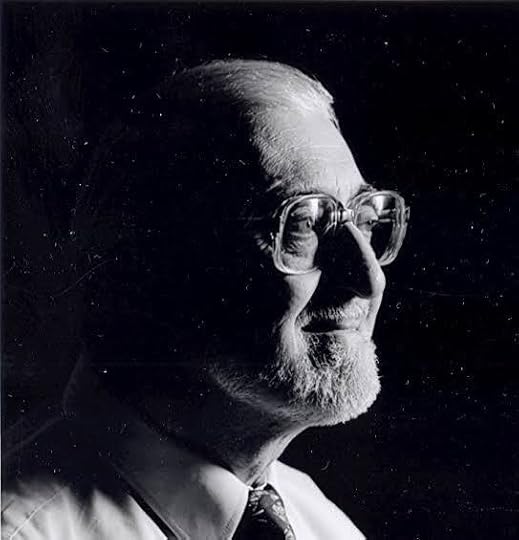
Gordon Bowker

13 books12 followers

Ratings & Reviews

What do you think?
Rate this book

Friends & Following

Create a free account to discover what your friends think of this book!

Community Reviews

5 stars
66 (27%)
4 stars
97 (40%)
3 stars
54 (22%)
2 stars
20 (8%)
1 star
5 (2%)
Displaying 1 - 30 of 38 reviews
Profile Image for Kim.
426 reviews541 followers
August 3, 2015


I remain drawn to literary biographies even though I tell myself that I don't need to know anything about a writer's personal life in order to appreciate their work. Sometimes reading a biography makes me like its subject even more than I did before: Jay Parini's biography of John Steinbeck had that effect on me, as did Gordon Bowker's biography of George Orwell . At other times, a biography leads me to conclude that, as much as I appreciate their work, I wouldn't have liked the author. I felt that way after reading Margaret Forster's biography of Daphne du Maurier, Jennifer Kloester's biography of Georgette Heyer and Kenneth S Lynn's biography of Ernest Hemingway.

It was Noël Riley Fitch's excellent biography of Sylvia Beach, Sylvia Beach and the Lost Generation: A History of Literary Paris in the Twenties and Thirties that inspired me to move beyond a lifetime of avoiding James Joyce and finally read his work. Reading Joyce's fiction and coming to understand its autobiographical foundation in turn made me want to read a biography of its author. I chose this one, rather than the better known 1959 biography written by Richard Ellmann because (a) it was available, (b) I enjoyed Bowker’s biography of George Orwell and (c) I assumed (possibly without justification) that a more recent biography would have the benefit of sources not previously available.

Having not read the Ellmann biography, I can't compare it to Bowker's effort and I can't otherwise comment on the accuracy of Bowker's sources or on the reasonableness of his conclusions. However, as far as biographers go, Bowker is competent. His prose is readable, if stylistically unremarkable. This is a good thing, because when I read a biography I'd rather not be distracted by literary flourishes. Bowker isn't in awe of his subject, which is also good thing because there is no tendency to hagiography. In addition, he doesn't appear to theorise beyond the material at hand, or in event I wasn't distracted by too many instances of "he must have" or "he would have". I would have preferred more detailed endnotes, but the bibliography is extensive and the book is well-indexed.

I found the account of Joyce's early life, his relationship with Nora Barnacle and his literary life up to and including the publication of Ulysses most interesting. The latter part of Joyce's life - and particularly his last few years - were more sad than interesting and made (at times) for tedious reading. However, there was never a time when I didn't want to finish the work.

As for Joyce himself - well, he joins the ranks of writers whose work I admire but who I don't like very much as people. However, he’s still a fascinating figure and reading this biography hasn’t made him any less so. I'm particularly interested in how women related to him. Nora’s life long devotion to Joyce is extraordinary given the difficulties that life with him involved. Apart from Nora (whose almost silent presence in this work makes me want to read her biography), Joyce's closest relationships with women were with Sylvia Beach (who published the fist edition of Ulysses) and with Harriet Weaver (who financially and emotionally supported him for many years). Beach’s loyalty to Joyce eventually faltered in the face of the demands Joyce made of her, but Weaver’s never did, an attitude even more extraordinary than Nora’s.

Joyce’s complexity is summed up in the final paragraph of the biography. After listing the various occupations in which Joyce had been engaged and the roles he played in the course of his life, Bowker notes:
But he was other things, too. He was brutally honest but highly manipulative, a social rebel who preferred the bourgeois life, a Catholic apostate who retained a strong infinity for the church and its liturgy, an exile who never left Dublin, a maker of the future who lived in the past, a shy man who loved his fame. If we're looking for one continuous strand running throughout his life, the literary genius stands out. Not only did he demonstrate his command of a wide range of styles of writing from Chaucer to modern slang, but he was able also to create his own style, a style which has been immensely influential, emulated but never matched.

This is a biography well worth reading. It has enhanced my understanding of those of Joyce’s works I’ve read to date, even though it hasn’t exactly inspired me to tackle Finnegan’s Wake. Now to decide whether I want to read Ellmann to give me something to compare it to.
Profile Image for Nick Sweeney.
Author 16 books30 followers
January 24, 2013
Gordon Bowker’s biography of James Joyce is not Richard Ellman’s, I was glad to see. The style and content of this biography shows a man more like the one portrayed in Carol Schloss’ Lucia and Brenda Maddox’s Nora. All Joyce’s vanity, arrogance, disingenuity and self-indulgent foolishness is firmly to the fore. I was also happy to see this; we know Joyce was a (kind of) genius, so we need a bit more if we are to remain interested in him.

The Ellman biography, published in 1959, was for many years the last word on Joyce lore. It’s a great book, and I was glad to refer to it a few times while reading the new biography. Maybe Ellman was a little too reverent at times, but that’s for a different discussion. Bowker’s book stands up very well against it, and, indeed Ellman is rarely mentioned in it, which is how it should be.

I also read a lot of Joyce’s own work while reading the book; I caught up with a largely neglected (by me, I mean) collection of his essays, articles and reviews (mainly very curmudgeonly ones) of popular culture. I’ve never liked these very much – a pompous 21-year-old is always going to sound like a pompous 21-year-old, even if he’s James Joyce… and probably more so – but it was still good to catch up with them and get a glimpse into his thinking at the time other than that set out by the biographer, a glimpse of Joyce in formation as an artist. I also re-read some of the stories in Dubliners, which I like a lot, and some of my favourite bits of Ulysses. As ever, I avoided Finnegans Wake.

My position (if I need one) is that I like Joyce’s collection of short stories, Dubliners, very much, and am also a big fan of Ulysses. I’m not keen on his semi-autobiographical A Portrait of the Artist as a Young Man and have never been able to make head nor tail of Finnegans Wake. That’s where I am (and have been, as far back as I can remember) with Joyce. I find I’m more interested in the man – and the people around him, the times, the travels – than the works themselves these days, so it’s great to have a new biography.

The biography is thorough and rigorous. It is scholarly and, at times, funny. Does he mean the comedy, I sometimes wondered. Episodes like this one:

… a man brushed past Joyce and muttered something inaudible to [his companion Djuna Barnes]. Joyce turned pale and began trembling. ‘That man,’ he said, ‘whom I have never seen before, said to me as he passed, in Latin, “You are an abominable writer!” That is a dreadful omen the day before the publication of my novel.’

Not ordinary paranoia, then, but pretentious paranoia. The incident is typical of Joyce’s self-obsession; the man wasn’t even talking to Joyce.

I enjoyed Bowker’s rendition of the phases of Joyce’s writing – he managed to make it interesting, to show Joyce’s thinking at the time, and to portray the dreary day-to-day mechanics of knuckling down and writing in an entertaining way. The machinations behind getting the works published is a saga in itself, and, again, well examined in this book.

Is there anything new in it? Well, to me, yes, though after a while I began to recognise that there were many things I’d forgotten, after reading them elsewhere. Every capricious house move is detailed – by John Joyce, James’ father, as he squandered his inheritance and kept one step ahead of bailiffs, and by James himself, often on a similar mission to escape landlords and other debt collectors. This seems obsessive, but actually helps to give a clear picture of their lives at the time. Every trip outside Paris, especially, made by Joyce whenever he got bored (which was frequent) is recounted too – by train, or bus, by sea. Every little illness Joyce experienced is there too. At times it reminded me of a book that could have been called ‘The Story of a Narcissistic Hypochondriac’. Joyce was undoubtedly one, but he was also a very sick man indeed for the last twenty years of his life; his eye problems were horrific, the number of operations he had performed on them doing their bit to save him, but also edge him a little nearer to total blindness, and Bowker’s text leaves the reader in no doubt of the seriousness of his various conditions.

I sensed the absence of Nora from this book. Perhaps Bowker felt that he couldn’t cover Nora in too much detail, with Brenda Maddox’s biography of her such a recent success – and his book is, after all, about Joyce himself. There were many incidents, though, which made me wonder: what did Nora think of that? In the same way, Bowker has to go into the story of Joyce’s daughter Lucia’s madness, and the devastating effect it had on the family, but she tends to be sidelined – again, Carol Schloss’ biography of Lucia is out there in any case.

One of the women in Joyce’s life does not escape detailed scrutiny, and that is Harriet Shaw Weaver, who supported Joyce for much of his life, at first as an anonymous donor, only coming forward much later to reveal herself to him. She was an ardent supporter of the man who wrote Ulysses; her ardour cooled over the years when it became clear that Joyce was a money-spending machine – his letters to her for more became more and more demanding and graceless as the years went on – and was going on to be the man who was writing the ‘difficult’ Finnegans Wake. I’m always glad to be reminded that I’m not alone in being unable to understand what there is to like about Finnegans Wake. The literati of the day, fans, friends, supporters, and even helpers on the book itself, were all puzzled by the turn in Joyce’s thinking that led him to spend 17 years on his lengthy rendition of a dream. Harriet Shaw Weaver gets a rather bad write-up in Bowker’s biography, I think. He makes her look a bit of a dupe, Joyce’s hapless sugar-mommy, whereas I think the relationship was a little more complicated; like any friendship, it went through good and bad patches. The book points out that the money she passed on to Joyce, from her own inheritance, would count in the millions at today’s rates. I feel that Bowker is a little hard on her, as Joyce was in his most petulant phases.

He was often petulant, treating family like his loyal, and more down-to-earth brother Stanislaus, and his sisters Eileen and Eva, as if they had been put on the planet only to serve his higher artistic purpose. While temporarily rolling in money – due to his profligate spending, Joyce’s affluence was only ever temporary – he begrudged paying back loans to Stanislaus in particular, who took care of many of the house moves they made, and, inevitably, of debts too, out of his meagre salary as a teacher. Joyce wasn’t afraid to make enemies, but he was less good at dealing with the enmity that arose, and nearly always found somebody, a relative, a supporter, a solicitor, to look after that side of things for him.

All in all, Bowker’s biography stands up well against others – though it seems unfair, it will be judged in comparison to Ellman’s forever. I liked Bowker’s presentation of Joyce not only as an artist but as a rounded full-on individual, with all his weaknesses and drawbacks. Along with his works, Joyce was a hard man to know, and, I think a harder man to like.
Profile Image for Bettie.
9,977 reviews5 followers
June 4, 2016


http://www.bbc.co.uk/programmes/b011tz8h
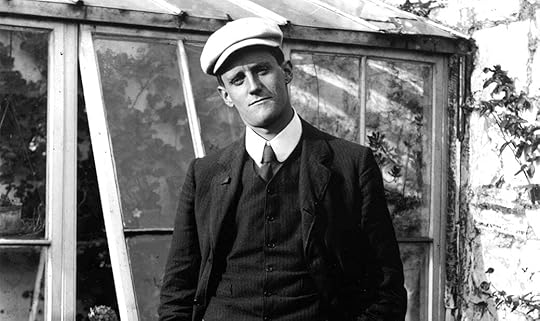
Description: "Living In Ireland had lost all meaning for Joyce; and the lure of 'exile' began to possess him. But if he was to elope with Nora he would need to secure an income, and would Nora go with him? Fortunately, she was as captivated by him as he was by her..."

Our five part reading of this voluminous account looks at Joyce's years spent in Europe, when he held down menial jobs, caroused a lot, experienced the ups and downs of married life, but still managed to produce works of literature that stand the test of time.


1. Gordon Bowker's study of the great writer, abridged for radio by Penny Leicester, begins with his early life in Dublin, which is full of japes with friends and then an eye to exile...

2. Joyce and Nora have left Ireland for Pola and then Trieste, where literary ambitions are at odds with the need to eke out a living. So maybe Joyce's brother Stannie should join them?

3. Exile leads to Rome which is not an idyll but all 'Pprrpffrrppff' to Joyce. So it's back to Stannie in Trieste...

4. It's February 1914, Joyce is 32. Tensions in Trieste increase with the prospect of war. Exile now means Zurich, a haven for writers and artists and gossip. Jung is there, so is Lenin, but Joyce wants
to focus on writing Ulysses.

5. To Trieste, then later to Paris, and by 1919 it's the efforts of some determined women, Margaret Anderson, Harriet Weaver and Sylvia Beach, who help Joyce in the publication of Ulysses.
Profile Image for Carl Rollyson.
Author 131 books141 followers
October 5, 2012
James Joyce called biographers "biografiends." And yet his work is so autobiographical, and he was so meticulous about documenting the real world of Ireland, that he might as well have set up a business licensing biographers. Wary of the curse Joyce had cast upon biographers, Richard Ellmann, the colossus of Joyce biography, proceeded with caution when approaching Joyce's friends and contemporaries, assuring them that his interest arose from a desire to show how Joyce's life gave birth to such great literature. The result, first published in 1959, was not merely a highly regarded biography of Joyce, but a virtual gold standard by which other contemporary literary biographies have been measured.

Gordon Bowker acknowledges Ellmann and other Joyce biographers and scholars, expressing his debt to them, but he is silent on what his biography adds to Ellmann's -- other than to note that he draws on a good deal of new material, which, his publisher adds, has "only recently come to light." Well, a good deal of it has been sitting for some years in Ellmann's archive at the University of Tulsa. As you can tell only from reading Bowker's "Notes" section, he makes good use of Ellmann's papers, including correspondence. Indeed, we get a less refined version of what Ellmann was told, without the pacifying prose of his published biography. In short, Gordon Bowker has at last set Richard Ellmann free. It is understandable why Bowker would not want to put matters that way, but there it is.

In the main, Bowker's methods are not much different from Ellmann's, which means the biographer traces the scenes and characters of Joyce's fiction to their sources in extraliterary Ireland. Bowker is no literalist -- that is, he does not posit a one-to-one correlation between fictional characters and real people. Instead, he does something more insidious in sentences like this one describing the perambulations of Joyce's father: "And John's habit of regular long walks around Dublin and environs, caught by his children, foreshadows the wandering narrative line which snakes through most of his son's fiction." Really? Seriously? This kind of factitious connectifying is what gives some readers of biographies the willies.

No matter. When Bowker is not succumbing to such stretchers, he provides nuanced readings of Joyce's fiction and -- because most of Joyce's relatives and friends are dead and can no longer carp -- more revealing glimpses of Joyce's life than we have seen before. If Ellmann remains a touchstone because he was able to make contact with Joyce's contemporaries and immediate heirs and render their memories with fidelity, Bowker is equally indispensable, owing to his willingness to rip away that deftly applied layer of protective gauze Ellmann used to bandage his biography and show what those memories concealed.
Profile Image for Ryan.
1,181 reviews62 followers
October 11, 2023
Bowker gives a more rounded portrait of Joyce than Richard Ellmann. The master of Modernism, you may be astonished to learn, drank too much white wine, sponged off everyone in sight, and was inept at managing money or buying the right trousers. He also wove Dublin slang into the stuff of literature, closed a chapter of Ulysses with a fart joke, and put Virgina Woolf’s nose well and truly out of joint.

No higher praise.
Profile Image for Maher Battuti.
Author 31 books195 followers
August 26, 2012
I have to interrupt my current readings to read this book that has been just published. Another biography of Joyce is a proof enough that serious works of art are still alive. Will evaluate after reading it.

Just finished reading the book, and it is worth it. The author introduces new features of Joyce's life in a professional way of a master in the art of Biography. The language is elegant and the book is well documented.
Profile Image for James Hartley.
Author 10 books146 followers
May 18, 2020
3.5 stars, really.
Comprehensive, over-long, incredibly square-minded (given the subject), this is one of those day to day, minute to minute, this happened, then this, then this, then this, then this biographies. I came to it knowing very little about Joyce and I certainly can't pretend to not know much about him now, but the narrative raised many more questions than it answered.
Although Bowker links almost everything which happens in Joyce's "real life" with his fiction, the only real light shed on what Joyce wanted to do and thought he was doing and tried to do comes from Joyce's own quotes (and some reviews quoted in the text). This seems strange to me. Nor does Bowker dive off even the shallow end in describing/explaining the fasinating Lucia and her relationship with her father, nor, really is Nora brought to life.
All in all, a very long biographical entry in the book of life but sadly little else.
Profile Image for Paul H..
868 reviews457 followers
October 12, 2023
There are two kinds of literary biographies in the world -- Ellmann's James Joyce and D. T. Max's biography of DFW.

Ellmann has an encyclopedic knowledge of literature, history, culture, etc., and uses this to inform a multi-layered portrait of Joyce; you almost learn more about early twentieth-century literature than Joyce himself, though of course Ellmann has also thoroughly grasped Joyce's personality and work.

Then you have what Gore Vidal referred to as "scholar-squirrel" biographies (in the context of Bruccoli on Fitzgerald), where an unimaginative scribbler takes a filing cabinet full of mostly-trivial historical research, arranges the notes in strictly chronological order, and writes a 400-page Wikipedia article.

The only 'analysis' found in Max's biography of DFW, or in Bowker's biography of Joyce, is superficial to the point of self-parody: "Joyce ate a ham sandwich at 10 a.m. on March 23, 1898; this was clearly referenced in his later work, when a character in Ulysses ate a ham sandwich. With this vitally important later reference to Joyce's youth, we can see the impact that ham sandwiches had on . . . " etc. etc.

With all that said, Ellmann's biography is very, very old at this point (even the updated version is 40 years old), so for obsessive fans of Joyce it is still, unfortunately, worth reading this new biography just to get access to the new material that has been unearthed. Hopefully one day Bowker will learn how to write, though.
Profile Image for Peter Dunn.
473 reviews23 followers
April 20, 2020
I finished Joyce’s Ulysses on the third attempt twenty-two years ago in 1998, but I still haven’t been brave enough to take Finnegan’s Wake out of my to be read piles. However, I thought I would give this mighty tome on Joyce a go. It took me almost a month to finish it, not because it was as challenging a read as Ulysses, but because I pretty much limited it to a chapter or so each day. It was very much worth the read, and the pacing was right.

It’s clear, well researched and well written, and Bowker brings in a wealth of new material (though that new material doesn’t really lead to any significant departures in our understanding of the man).

The biography doesn’t idolise Joyce, and it takes no side (except maybe making you feel even more sorry for Stanislaus and all he put up with).

As any good literary biography should it provided even more insight into and understanding of Joyce’s writings, and with Joyce as we all know every little helps…. It has almost encouraged me to pick up Finnegan’s Wake again, and have a go. I say almost, but I think I am still just a little bit too scared, but I might do, and even making me just consider that idea is an illustration of just how powerful a biography this is.
Author 3 books5 followers
July 3, 2013
Why do I keep reading these literary biographies.

His grandmother was named Margaret Flynn, just like me.

Coincidence, probably. It does appear that we are related to the same
Flynn's in Ireland.

What does this mean? That I, too, may make no money on my writing during my lifetime.
608 reviews
September 14, 2012
Bowker had so much material at his disposal, more than any Joyce biographer to date. I don't think he uses his sources well, or even adequately, and his practice for source acknowledgments and citations is sorely deficient. He needs serious lessons in clear and complete acknowlegment of sources, both in terms of text and in terms of photographs and illustrations included in his book. I am disappointed in Farrar, Straus and Giroux for allowing the book to be published as is. Quite apart from that, I am left cold by Bowker's avowed purpose: "this biography will attempt to go beyond the mere facts and tap into Joyce's elusive consciousness. Furthermore, the work is informed by the belief that it is enlightening to view the work of a highly autobiographical writer like Joyce in the context of his life" (8). A biographer tapping into his subject's consciousness? No. Please, no. And since Bowker insists on reading just about EVERYTHING that he mentions about or in Joyce's works as being DIRECTLY based on his life, it is no big suprise to me that he doesn't succeed in discussing Joyce's artistry and creativity well. And he is simply wrong about several things; he has misread (I'm not talking about interpretation) Joyce's content many times. His "Preface" ends with this bizarre paragraph that convinces me to stay away from extended metaphor for awhile ... for a long while: "Sorting through the relics of a life is not unlike sorting through the tangled wreckage of a deserted house - windows shattered, rooms in chaos, bits of broken furniture, smashed china, books & papers torn & scattered, smithereens of mirrors bouncing back flashes of fractured sunlight & fragmented images. Amid the chaos we may catch a fleeting impression of what the place once was like when occupied, a presumption of lives lived, of memories stored & passions spent. Salvaging all the scattered pieces & reassembling them can only produce an approximation of the original, & the drama of ghostly existences will depend on efforts of imagination as much as accumulations of facts" (10). I don't know about Joyce's consciousness, but I wouldn't be surprised if he is turning in his grave.
Profile Image for Liam Guilar.
Author 13 books62 followers
September 27, 2012
If you want to know where Joyce was living on any given day, this is your book. For anything else, read Ellmann.

Part of the problem for his biographer is that Joyce didn't do a great deal except write several books and a lot of unattractive letters. Bowker never gets beyond the details.

But for anyone interested in Joyce's life and his writing, I'd suggest they read Ellmann's biography of Joyce which is everything this book isn't...and Brenda Maddox's "Nora" which fills in the bits Ellmann left out. (And Nora was worth her own biography).

Profile Image for John.
98 reviews
October 8, 2012
BTW this book is available...picked it up in a Barnes and Noble .....Just started....interesting new insights , for me anyway , into Joyce and his life and times.....
Profile Image for Quo.
343 reviews
January 14, 2024
Gordon Bowker's James Joyce: A New Biography presents the reader with a virtual catalogue of the author's life, omitting virtually nothing but also convincingly embedding all of Joyce's prose + some of his poems, in chronological fashion.


While Bowker's 2011 biography is to be distinguished from the classic, scholarly 1959 study of Joyce by Richard Ellmann, revised in 1982, I found it of rather invaluable benefit in the midst of my reading of Joyce's Ulysses.

Through Bowker's James Joyce: A New Biography, we come to have a glimpse of Joyce's childhood, his keen devotion to his father in spite of the man's wasteful ways & intoxication, his haunting failure to follow his mother's counsel on her deathbed, his increasing alienation from his siblings, his drift away from Catholic piety & an inherited Irish sensibility--seemingly casting aside both "mother church & mother Ireland."

The close relationship between Joyce & his character Stephen Dedalus in his first successful book, Portrait of the Artist as a Young Man becomes apparent, as does that of his other fictional characters and those within Joyce's family and his circle of friends. Lifelong, he was an impressive mimic, a talented compositor of almost everyone he encountered.


Harold Nicholson, statesman & member of the British Parliament, as well as the husband of Vita Sackville-West, Virginia Woolf's lover, called Joyce the "Einstein of the English language". Meanwhile, Joyce's friend, Oliver St. John Gogarty, who gained a medical degree in Dublin & dabbled in psychoanalysis, a man some said acted as his Joyce's Mephistopheles, labeled his friend schizophrenic.

As Joyce's life unfolds, he becomes anti-English, longing for the independence of Ireland and anti-clerical, following his father's antagonism for both. Yet, later in life & after countless years exiled from Ireland, Irish partisans see Joyce as pro-British, while he is consistently scorned by the Catholic Church with its dominant influence in Ireland, which its fabled writer had consigned to be a "priest ridden race".

Joyce's loving relationship with fellow Irish refugee Nora Barnacle is deeply probed in Bowker's biography and it is the day that the two met, June 16th, 1904 that becomes the backdrop for all that happens in Ulysses. The main character within that amazing but often perplexing novel is Leopold Bloom, with Joyce equating the global exile of Jews with his own expatriation from Ireland.


I found the intersection with those who befriended James Joyce well handled in Bowker's book, among them Sylvia Beach, whose "Shakespeare & Company" bookstore on the Left Bank of Paris served as a kind of "literary Elysium" for Joyce, an oasis for writers of many persuasions, among them Hemingway, F. Scott Fitzgerald, Sherwood Anderson, Ezra Pound, Gertrude Stein & Andre Gide. Ms. Beach also published the initial version of Joyce's Ulysses when more conventional publishing houses feared to touch it due to the threat of lawsuits that afflicted the novel.

As Joyce moves about from Trieste, Paris, Zurich & other places, his life always seems hectic and peripatetic, with he & family often in flight from debts, financial uncertainty plaguing the author. And, as his literary career expands, sounds & basic speech patterns often seem to take the place of more formal, readily decipherable language.

Joyce phrased it like this: "There is no past, no future; everything flows in an eternal present, with Ulysses a tower of Babel. The history of people is the history of language."

In considering the life of James Joyce, it appears that as Joyce's sight increasingly diminished over his life, his insight into his own psychological underpinnings & that of those he encountered, seemed to be enhanced. Joyce's myopia caused him to frame his intellectual vision more intensely & his heightened imagination inflated his prose.


While Gordon Bowker's biography seemed overly long & at times rather plodding, his writing style causes the book to flow well and to remain quite memorable, as in his concluding comments on Joyce's life:
Joyce was as polymorphic & mercurial as any of his characters. He passed phases of Jesuitical piety, Parnellite nationalism, anticlerical & anti-bourgeois rebellion, socialism & intellectual aloofness.

He was at times an altar boy, classroom joker, a young know-all, great operatic tenor manque', a carousing medics' pal, a patron of brothels, a lifelong exile, prurient lover, writer of licentious letters, 'undiscovered genius', fond father, failed businessman, temporary bank clerk, English language teacher, eccentric dancer, a blind Dante-like figure, a fighter against censorship & literary piracy, a lyrical poet, opera buff, a brave experimental writer of prodigious virtuosity and finally an acclaimed genius.

He was also brutally honest but highly manipulative, a social rebel who preferred the bourgeois life, a Catholic apostate who retained a strong affinity for the Church & its liturgy, an exile who never seemed to leave Dublin, a maker of the future who lived in the past, a shy man who loved his fame.

Above all, he was extremely egocentric; others hardly existed for him, except to be used to serve his needs, keep him in funds or to provide material for his fiction. He could be heartless but also caring, as he was with his wife Nora, his daughter & his dying father and he was moved to help those threatened with Nazi persecution. All in all, Joyce was a man of extremes.
In spite of some misgivings about its length, my tour of Joyce's life & times via Gordon Bowker's James Joyce: A New Biography was time well-spent. I highly recommend the biography to anyone attempting to deal with Joyce's prose, including his more challenging later works, Ulysses & Finnegan's Wake, with that last book being described as "literary acupuncture".

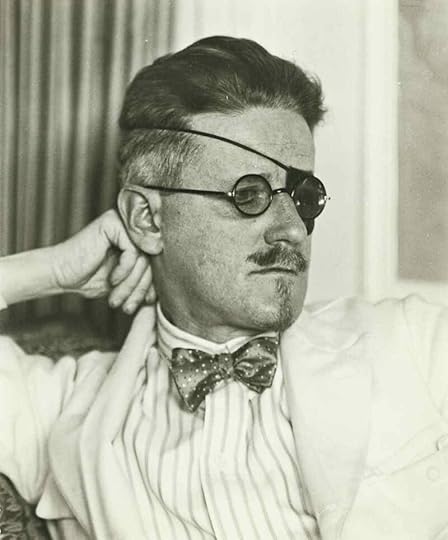
*Within my review are a photo image of this book's author, Gordon Bowker and three images of James Joyce, including one with Sylvia Beach at her "Shakespeare & Company" bookstore in Paris. **Within Bowker's biography, there are 2 inserts of photos illustrating Joyce's life.
Profile Image for Edward Champion.
1,643 reviews127 followers
July 16, 2022
The Bowker bio stands in the imposing shadow of the Ellmann bio -- which is obviously one of the greatest literary biographies ever written. Thus, it can never live up. It reveals more of Joyce as a family man than Ellmann. Nora Barnacle is treated with greater attention (Ellmann's fatal flaw). It corrects a few modest Ellmann errors. Why then did this book take me forever to read then? I'm far from disinterested in Joyce. (And, in fact, I just started reading Brenda Maddox's biography on Nora, which has captivated me.) But I did feel that I was reading a biography that was almost a carbon copy of Ellmann at times, covering the same points and only working as somewhat useful supplement. I've read some of Bowker's other literary biographies, but this one feels inexplicably sloggish for some reason. Largely because it's a little exhausting having to read five pages of points you already know, only to get one paragraph of new information (such as Joyce wearing a white coat to reflect light so that he could see). It's a very readable book, don't get me wrong. But I felt very much like I was stuck in a meeting. I did finish the thing. Because I'm a stubborn reader. And I honestly can't fault the book, other than Bowker not really pulling off a biography that stands on its own terms, separate from Ellmann. In other words, Bowker was doomed from the start. It's almost like believing that you could write ULYSSES when there is nobody else who could have. But you carry on anyway. So I carried on. But ultimately I was annoyed that there was so much reading expenditure for such little new information.
Profile Image for Keith Taylor.
Author 20 books93 followers
November 7, 2024
It has probably been 50 years or close since I read the Ellman biography. I can't say I remember the details, only that most of what I know of Joyce's life comes from that, reinforced by introductions and essays since then.

So I can't really compare this one to the its gigantic predecessor. This, too, is a big book, although I found it very readable. Bowker doesn't feel the need to sugarcoat JJ's character -- his egocentrism, his often callous relationship with his family (although he was often overly devoted to them, too), his willingness to use anyone and everyone to further his genius -- but Bowker is obviously in awe of the achievement, too. Joyce's life wasn't easy, and Bowker does a good job showing the extraordinary concentration JJ was able to have for the work at hand.

But I will always judge literary biography by its ability to take me back to the work itself. And this helped, even if at times I felt I was getting a bit too much about Joyce's daughter illness when what I really wanted was help with Finnegans Wake. And I read this because I was already involved in a rereading of the books. So yes, it helped.

One thing that nags at me, that I haven't figured out. In the book Bowker says something like Joyce was the last of the great 19th century novelists, the ones who would do all the work to exhibit individual genius. And that now we have moved to a new place. I vaguely understand what it means, but I would love to figure out what that new place might be!
Profile Image for Federico.
125 reviews10 followers
December 29, 2024
Picked this up at Shakespeare and Company. A cheesy choice, maybe, but who cares. I loved the man, and I’d never read a bio about him before. Despite my passion for his work, this was an amazing biography—capturing his ups and downs without worshipping him (which is necessary, considering Joyce’s efforts in Ellmann’s original book).

It places him in his rightful place in art history, using all the latest research while avoiding the nuttier and more speculative recent theories. A beautiful biography of a beautiful life.
Profile Image for Human Being.
57 reviews1 follower
December 9, 2019
This was my third bio on Joyce and by far the best. Mr Bowker is much more balanced in his appraisal of Joyce's life. It is very well done!
Profile Image for Charles.
Author 2 books10 followers
September 27, 2024
Very long, fact-heavy, and external, despite Bowker's statement in the preface that "this biography will attempt to go beyond the mere facts and tap into Joyce’s elusive consciousness" (8).
Profile Image for Ed .
479 reviews43 followers
May 6, 2015
The Barnes and Noble e-book of this title for the Nook reader.

This isn't a literary biography although it is, obviously, a biography of a literary giant. Bowker doesn't do the extended literary analysis and plot summaries of the genre although he does find plenty of autobiographical references in Joyce's fiction.

Borwick sometimes a bit too sure, almost glib in drawing a direct parallel from a house in which the young Joyce lived or an encounter with a relative or friend and an episode or image in his work, particularly "Finnegan's Wake" and "Dubliners". While the conformity between life and work is often convincing, it remains the fiction was about made up characters and how they acted, spoke and thought.

While working on both "Ulysses" and "Finnegan's Wake" Joyce often wrote and revised for 12 hours per day, every day, for months at a time, while he was going blind and, particularly during the composition of "Finnegan's Wake" suffering horribly from attempts of cure his failing eyesight including several operations and (amazing, at least to me, for Europe in the 1920s) the application of leaches to his eyes. Joyce agonized over every line, every word, of his novels, so to say that this particular image was a result of this chance meeting on the street may be assuming too much.

It suffers from a few extreme infelicities, almost verbal tics, that are impossible to ignore and therefore distracting. An example: "Paris was flooded that January and Joyce's imagination was also in flood". Another, describing the death of a James Joyce sibling from typhoid fever: "Everyone knew the boy was unlikely to survive, including George himself." George Joyce was 14 when he died; no one knew what he thought of his chances for living to his fifteenth birthday--Bowker cites no reference for this bald statement.

Despite its shortcomings the new biography is worth reading. Bowker portrays Joyce as brilliant but exploitative, completely committed as an artist but often scandalous and agonizing to know as a husband, brother or friend. It has a real ring of truth.

Joyce, his wife Nora and his children Lucia and Giorgio, were dirt poor in Trieste, Rome, Zurich and Paris. James' father, John Joyce, had to move his family from house to house in Dublin always one step (or not quite one step) ahead of a landlord with a notice to evict them and seize their dwindling household goods. Bowker describes in detail how James and his family were constantly having to find new living quarters--he was generally broke, trying to make a living as an English teacher while making time to write. He wrote in a letter that The "Circe chapter of "Ulysses" was rewritten nine times over seven years of hard labor through eight illnesses and nineteen changes of address across Austria, Switzerland, Italy and France.

Among those indispensable to Joyce during his constant battles with publishers and censors were Ezra Pound (while he was still more or less sane) Sylvia Beach, the proprietor of the Left Bank bookshop and library Shakespeare and Company, who published the first edition of "Ulysses" and Harriet Shaw Weaver, an English heiress who bankrolled him--essentially supporting the Joyce family for ten years before she even met him, based on her reading of "Dubliners", "Portrait of the Artist" and Ulysses as drafts in progress. They and many others were able to look past the dreadful mess that Joyce continually made of his life to realize that he was a genius of the first order.

Bowker writes well--this book is recommended to those who have read Joyce and Richard Ellmann's magisterial biography.
Profile Image for Carol.
78 reviews
April 29, 2013
This book is no Ellman, but it was written in a straightforward, chronological manner that I liked. I also liked how the author tied events in Joyce's life to his writings. No doubt Joyceans may have a problem with some liberties that might be taken in that regard, but as an a mere enthusiastic reader it was an enjoyable and enlightening read. I would have liked to hear a bit less on the daily updates to Joyce's bank account and borrowings, but it is clear that money played a large role in Joyce's correspondence.
Profile Image for Jason Fritz.
15 reviews4 followers
March 24, 2013
Bowker does a fine job describing Joyce's life - his mental state, living conditions, interlocutors - that inspired his work. Bowker also does an admirable job connecting the characters in Joyce's life to the characters they inspired (for better or worse) in Joyce's fiction. If I have one major complaint is that the author does a poor job in managing the sheer influx of people into Joyce's world, making it difficult to remain up to date on who is who. A simple table would have aided in this. Otherwise, this book has inspired me to read Joyce's books again, making this biography worthwhile.
Profile Image for AH.
127 reviews
August 1, 2022
I had to use a biographical approach for analyzing Stephen in the Portrait and this book was of tremendous help to me. The depth of the detail and the fact that the author is quick to give references and mention the parallels between the authors life and the reflection of himself in his characterizations is just awesome. While you will see numerous references to Ellmann's work, Bowker nevertheless has some new insights to offer. I've been told that his work is of quality and I would be lying if I said I'm not considering his book on Orwell.
Profile Image for Chuck Lowry.
61 reviews25 followers
November 6, 2012
If you are interested in who the model was for every drunken carouser or feckless layabout in Joyce's fiction his is the book for you. I am not, however, a professional reader. I merely want a literary biography to make me want to read the author again.

The constant financial struggle and vision struggle are interesting stories, but they certainly do not make me want to read or reread more Joyce. One did, though, feel very sympathetic to Nora and Lucia by the end of the book.
Profile Image for Sean de la Rosa.
189 reviews1 follower
February 19, 2014
I tried to read Ulysses but found it totally inaccessible. I thought reading his biography would give me insights into the author and his cryptic work. Surprisingly the biography confirmed that he wrote his books in such a way that a "key" was required to understand them and that his works were widely considered a frustrating read at the best of times. His life for me was reminiscent of Proust. It truly was a life lived at the extremes.
Profile Image for Pat.
1,317 reviews16 followers
December 25, 2012
I must confess that I abandoned this book 1/2 through, not because I didn't like it, but because it is so heavy I have to take a break. In fact, I love the book but it is a library book and has to be returned tomorrow. I can't renew it because of the requests for it. I will request it again in a couple of months after some lighter reading.
Profile Image for Zachary Martin.
55 reviews4 followers
August 30, 2013
I think the information is fine, but found some sections to be glossed over with subjective judgements that I am not really sure are necessary. I think Bowker's book on Lowery is a very good biography on a writer who neede one, this one not so much. That said I did enjoy reading it and would recommend.
Profile Image for Andrew Higgins.
Author 37 books42 followers
July 21, 2011
Brilliant very well written bio of Joyce - a must for all lovers of his works. Especially enjoyed Bowker's analysis of Ulysses and Finnigan's Wake which I am planning to re-explore sometime before I leave this realm!!!
Displaying 1 - 30 of 38 reviews

Can't find what you're looking for?

Get help and learn more about the design.