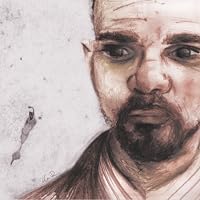
A Treatise of Human Nature / An Enquiry Concerning Human Understanding / An Enquiry Concerning the Principles of Morals / Dialogues Concerning Natural Religion
David Hume was a Scottish philosopher, historian, economist, and essayist, known especially for his philosophical empiricism and skepticism. He is regarded as one of the most important figures in the history of Western philosophy. This Collection includes the full essays of A Treatise of Human Nature, An Enquiry Concerning Human Understanding, An Enquiry Concerning the Principles of Morals, and Dialogues Concerning Natural Religion. All essays include internal working Table of Contents.
David Hume was a Scottish historian, philosopher, economist, diplomat and essayist known today especially for his radical philosophical empiricism and scepticism.
In light of Hume's central role in the Scottish Enlightenment, and in the history of Western philosophy, Bryan Magee judged him as a philosopher "widely regarded as the greatest who has ever written in the English language." While Hume failed in his attempts to start a university career, he took part in various diplomatic and military missions of the time. He wrote The History of England which became a bestseller, and it became the standard history of England in its day.
His empirical approach places him with John Locke, George Berkeley, and a handful of others at the time as a British Empiricist.
Beginning with his A Treatise of Human Nature (1739), Hume strove to create a total naturalistic "science of man" that examined the psychological basis of human nature. In opposition to the rationalists who preceded him, most notably René Descartes, he concluded that desire rather than reason governed human behaviour. He also argued against the existence of innate ideas, concluding that humans have knowledge only of things they directly experience. He argued that inductive reasoning and therefore causality cannot be justified rationally. Our assumptions in favour of these result from custom and constant conjunction rather than logic. He concluded that humans have no actual conception of the self, only of a bundle of sensations associated with the self.
Hume's compatibilist theory of free will proved extremely influential on subsequent moral philosophy. He was also a sentimentalist who held that ethics are based on feelings rather than abstract moral principles, and expounded the is–ought problem.
Hume has proved extremely influential on subsequent western philosophy, especially on utilitarianism, logical positivism, William James, the philosophy of science, early analytic philosophy, cognitive philosophy, theology and other movements and thinkers. In addition, according to philosopher Jerry Fodor, Hume's Treatise is "the founding document of cognitive science". Hume engaged with contemporary intellectual luminaries such as Jean-Jacques Rousseau, James Boswell, and Adam Smith (who acknowledged Hume's influence on his economics and political philosophy). Immanuel Kant credited Hume with awakening him from "dogmatic slumbers".
The greatest work of philosophy in the English language, or any other, for modern times. Every issue of science, psychology, religion and morality is Hume's domain. Not to be missed.
'The Collected Writings of David Hume' (1711-1776) include: 'A Treatise on Human Nature', 'An Enquiry Concerning Human Understanding', 'An Enquiry Concerning the Principles of Morals', and 'Dialogues Concerning Natural Religion'. In these books, David Hume shares his joy of curiosity and discovery. I’ll largely limit this review to 'A Treatise on Human Nature', as 'An Enquiry Concerning Human Understanding', and 'An Enquiry Concerning the Principles of Morals' are largely reiterations of the first and third sections of 'A Treatise on Human Nature'. Here are a few ideas I took away from studying it:
Book I Understanding “All the perceptions of the human mind resolve themselves into two distinct kinds which I call impressions and ideas. The difference consists in the degrees of force and liveliness with which they strike the mind and make their way into consciousness. Those perceptions which enter with most force and violence, we may name impressions, and under this name I comprehend all our sensations, passions, and emotions... By ideas I mean faint images of these in thinking and reasoning… Our ideas are images of our impressions… There is another division of our perceptions.. . which extends itself to both our impressions and ideas. This division is simple (indivisible) and complex (divisible into parts)… Impression may be directed into two kinds, those of sensation and reflection…” “We find by experience, that when any impression has been present within the mind, it makes its appearance there as an idea, and this it may do after two different ways: either when its new appearance retains a considerable degree of its first vivacity, and is somewhat between an impression and an idea, or when it loses vivacity and is a perfect idea. The faculty by which we repeat our impressions is called memory, and the other imagination.” Association of Ideas – “The uniting principle among ideas is an inseparable connection based on resemblance, contiguity in time and place, and cause and effect… the operations of the human mind divide themselves into two kinds, the comparing of ideas, and the inferring of matters of fact… were virtue to be discovered by understanding: it must be an object of one of these operations… Ideas are associated by resemblance, contiguity, and causation; and impressions only by resemblance.” Paradox: the doctrine of infinite indivisibility – “… the capacity of the mind is limited and can never attain a full and adequate conception of infinity – the difficulty lies in enlarging our conceptions.” Analogy – microscopes and telescopes do not produce new rays of light, only spread the same rays differently. Cause and Effect must be contiguous, and Cause must precede effect. Cause cannot be named with certainty; both induction and inference of cause are limited. “.. we define a cause to be, an object precedent and contiguous to another, and so united with it in the imagination that the idea of the one determines the mind to form the other, and the impression of the one to form a more lively idea of the other.” Hume suggests that we base our judgments on observation and experience. This is how we choose whether to accept the verity of a hypothetical proposition. We also infer cause and effect from experience. We experience two species of objects and remember that they are in contiguity, succession, and constantly associated (conjoined); and from these three associations infer cause and effect. Causes of Belief – a lively idea from a present impression – based on sensations of ideas with resemblance and contiguity that suggest cause and effect – repetition of ideas leading to custom and habit – education. Belief – a more vivid and intense conception of an idea. “What is our idea of necessity, when we say that two objects are necessarily connected together?” Hume tells us that mathematical sciences feel sensible, determinate, and free of ambiguity or variation. Metaphysics seems uncertain, especially when words like power, force, energy, or necessary connection are used to try to eliminate the feeling of uncertainty. In the final analysis, we must be content with observing the conjunction of objects without asserting cause. “… all knowledge resolves itself into probability, and becomes of the same nature with that evidence, which we employ in common life, we must examine this species of reasoning and see on what evidence it stands… (If asked) whether I be one of those skeptics who hold that all is uncertain, and our judgment is not possessed of truth or falsehood; I should reply that the question is superfluous… Nature, by an absolute and uncontrollable necessity, has determined us to judge as well as to breathe and feel… my hypothesis is that all our reasonings concerning causes and effects are derived from nothing but custom (habit); belief is more an act of the sensitive than the cognitive…” Our sensual experience of the continued existence of an object depends on our imagination, and memory of the coherence and constancy of our sensual perceptions – the Principle of Identity, and Variation or Interruption versus Invariableness or Uninterruptedness “What we call a mind is nothing but a collection of different perceptions united together by certain relations, and supposed, though falsely, to be endowed with perfect simplicity and identity… The substance of the soul is absolutely unintelligible.” Hume’s conclusions - “Methinks I am like a man … who has narrowly escaped shipwreck, and has yet the temerity to think of compassing the globe in these disadvantageous circumstances… When I look abroad, I see on every side, dispute, contradiction, anger, calumny, and detraction. When I turn my eye inward, I find nothing but doubt and ignorance… I find myself absolutely and necessarily determined to live and talk and act like other people in common affairs of life… I am ready to throw all my books and papers into the fire, and never more renounce the pleasures of life for the sake of reasoning and philosophy…And to what end can it serve either for the service of mankind, or for my private interest? … I cannot forbear having a curiosity to be acquainted with the principles of moral good and evil, the nature and foundation of government, and the cause of those passions which govern me. I am uneasy to think I approve of one object, and disapprove of another… decide concerning truth and falsehood, reason or folly, without knowing upon what principles I proceed… I feel an ambition arise in me of contributing to the instruction of mankind…” “For my part, my only hope is that I may contribute a little to the advancement of knowledge, by giving in some particulars a different turn to the speculation of philosophers, and pointing them… to those subjects, where they can expect assurance and conviction… Human Nature is the only science of man, and yet has been hitherto neglected… (I intend no) dogmatical spirit, nor conceited idea of my own judgment…”
Book II Passions Hume further divides his subject into original impressions or impressions of sensation, and secondary or reflective impressions. Reflective impressions are further divided into calm and violent. Violent, reflective impressions Hume called passions; these include love or hate; grief or joy; and pride or humility. Direct passions arise immediately from good or evil, or from pain or pleasure. Hume lists desire, aversion, grief, joy, hope, fear, despair, and security as examples of direct passions. Indirect passions arise in conjunction with some additional quality. Hume includes pride, humility, ambition, vanity, love, hatred, envy, pity, malice, and generosity with dependents as examples of indirect passions. Pride and Humility are both directed at the self. A wide variety of self-related subjects may be the sources of either pride or humility. Pride can become vanity – boasting, seeking praise and applause… taking pride in luck, or cheating (unfair advantage). Fame or the desire for approbation… Indirect passions are influenced by others, through comparison and sympathy (sensitive to the sentiments of others). Sympathy is influenced by what we value - our self-image; closeness of the other (for example, family); whose opinions we value. Love and Hatred “As the immediate object of pride and humility is the self… whose thoughts, actions, and sensations we are intimately conscious; so the object of love and hatred is some other person, of whose thoughts, actions, and sensations we are not conscious… the causes of love and hatred are diverse… both of these passions are always related to a thinking being that is the cause of either pleasure (love) or uneasiness (hatred).” “The passions of love and hatred are always followed by, or rather conjoined with benevolence and anger. It is this conjunction which chiefly distinguishes these affections from pride and humility. For pride and humility are pure emotions in soul, unattended with any desire, and not immediately exciting us to action. But love and hatred are not completed within themselves, nor rest in that emotion, which they produce, but carry the mind to something further.” “It is impossible to do good to others, from whatever motive, without feeling some touches of kindness and good-will towards; as the injuries we do, not only cause hatred in the person who suffers them, but even in ourselves.” This important insight forms the basis of the psychological principle that by changing our behavior, we can change our perception of ourself (identity). Will and Direct Passions We can observe (experience) the laws of Newtonian mechanics without ever answering the question, Why? “… by the will, I mean nothing but the internal impression we feel and are conscious of, when we knowingly give rise to any new motion of our body, or new perception of our mind… it is universally acknowledged, that the operations of external bodies are necessary, and that in the communication of their motion, in their attraction and mutual cohesion, there are not the least traces of … liberty… in no single instance is the ultimate connection of objects discoverable, either by senses or reason, and we an never penetrate so far into the essence and construction of bodies to perceive… on what their mutual influence depends…” “Necessity makes an essential part of causation; and consequently liberty, by removing necessity, removes causes and is the same thing as chance. As chance is commonly thought to imply a contradiction, and is at least directly contrary to experience, there are always the same arguments against liberty or free-will.” “I define necessity two ways, comparable to the two definitions of cause, of which it makes an essential part. I place it either in the constant union and conjunction of like objects, or in the inference of the mind from one to the other.”
Book III Morals – ‘How we play with others’… Virtue and Vice: “The rules of morality… are not conclusions from our reason… Laudable and blameworthy are not the same as reasonable and unreasonable… Actions may be laudable or blameworthy, not reasonable… Moral distinctions are not the offspring of reason.” “In every system of morality instead of the usual proposition is and is not, I meet with the propositions ought or ought not.” “There is no spectacle so fair and beautiful as a noble and generous action; nor any which gives us more abhorrence than one which is cruel and treacherous.” Justice and Injustice - “All virtuous actions derive their merit from virtuous motives, and are considered merely signs of those motives… no action can be virtuous or morally good unless there be in human nature some motive to produce it, distinct from the sense of morality…” Justice is an artificial, human invention; not a natural virtue. Justice is about the rules required to live peacefully, in society, with other men. Interest is more about virtues which are ‘their own reward’ in how they make us feel about ourselves… Man is selfish, but he must collaborate to survive, much less prosper. Man is not guided by a universal sense of benevolence; the solution is to … develop a sense of fairness, or justice... “Justice establishes itself by a kind of convention, supposedly common to all…” “Promises are human inventions founded on the necessities and interests of society… artificial contrivances for the convenience and advantage of society…” Government – an agreement, or contract, between men, for mutual protection and/ or large group organization… Pleasure and Pain - Virtue elicits pleasure. Vice causes pain. Virtue is worthy of praise. Vice is blameworthy by means of sympathy and comparison. Greatness of Mind – Excessive pride, haughtiness, and continued self-praise are unpleasant and disagreeable. But self-esteem and confidence are necessary traits of leadership. Heroic virtues – courage, intrepidity, ambition, magnanimity all require an admixture of self-esteem. “When we enumerate the good qualities of any person, we always mention those parts of his character which render him a safe companion, an easy friend, a gentle master, an agreeable husband, or an indulgent father.” Reading Hume’s texts, followed by a brief investigation into Hume’s life, gave vivacity (?) to my conception of imperfect heroes. Hume was denied faculty positions at both Edinburgh and Glasgow, in large part due to his religious sentiments. Several of his political and philosophical ideas got him not trouble. Although he supported the American Revolution, his books were banned by Thomas Jefferson (too much a Whig?). Hume is accused of investing in Caribbean slave plantations although that issue has been disputed. I do not understand or agree with all of Hume’s ideas. Nonetheless, I recommend the study of these ‘classics’ as intellectual exercises. I learned a lot, and I was humbled and inspired – all marks of a good read.
David Humes „Ein Traktat über die menschliche Natur“ ist ein Meilenstein des Empirismus, der die Philosophie durch seine radikale Skepsis gegenüber Kausalität und dem Substanzbegriff des „Ich“ revolutioniert hat. So bahnbrechend diese erkenntnistheoretischen Teile auch sind, am faszinierendsten finde ich Humes Moralphilosophie, insbesondere seine Theorie des Versprechens. Mit beeindruckender Klarheit entzaubert Hume diese moralische Pflicht: Für ihn ist das Halten von Versprechen keine „natürliche“ Tugend oder ein göttliches Gebot, sondern eine durchdachte menschliche Konvention – ein künstliches Werkzeug, das wir erfunden haben, weil wir es brauchen. Hume zeigt, dass diese Konvention aus der praktischen Notwendigkeit von Vertrauen und Stabilität entsteht. Da wir für zukünftige Kooperationen auf andere angewiesen sind, brauchen wir ein Signal des Vertrauens. Genau hier kommt die Freiwilligkeit ins Spiel: Das Versprechen ist ein bewusster Akt, durch den wir uns selbst binden – nicht aus Magie, sondern aus Vernunft und sozialem Bedarf. Diese pragmatische Begründung macht den Traktat zu einem erstaunlich modernen Werk – und erinnert daran, dass Moral nicht vom Himmel fällt, sondern aus den Bedürfnissen menschlichen Zusammenlebens erwächst.
The first work, A Treatise of Human Nature examines the foundations of our cognition, emotions and behavior. It tries to blend these empirical observations in a metaphysical sense.
The second work, Enquiry Concerning Human Understanding, then talks about these ideas further by exploring human knowledge and the limitations of reason. I think the term "mitigated skepticism” is so fitting.
An Enquiry Concerning the Principles of Morals was an analysis on the ethical principles that highlight sentiment over rationality in moral judgments, showing the nuanced nature of ethics.
Lastly, the Dialogues Concerning Natural Religion was a critique on religious dogma and the arguments for the existence of God.
I must say, this is a difficult read, and I’ve been going back to it every year or so just to see how much more I can appreciate these works. In essence, if you think the search for knowledge and moral clarity is grounded not within books and discussions, but the careful observation of human experience and the humble recognition of our own limitations, then you will find yourself surprised that someone from the 1700s has written down your thoughts into words.
This guy invented empiricism. Need I say more? For centuries philosophers have sought to overcome David Hume’s problem of induction and for centuries they have failed. The doubts he expresses in these essays continue to beleaguer great thinkers even today. The very principle of cause and effect shivers in its boots upon hearing the name David Hume. A classic and an easy five stars.