

What do you think?

Quirke #1
Christine Falls
Quirke's pathology department, set deep beneath the city, is his own gloomy realm: always quiet, always night, and always under his control. Until late one evening after a party he stumbles across a body that should not be there and his brother-in-law falsifying the corpse's cause of death. This is the first time Quirke has encountered Christine Falls, but the investigation he decides to lead into the way she lived and died uncovers a dark secret at the heart of Dublin's high Catholic network; one with the power to shake his own family and everything he holds dear.
390 pages, Paperback
First published January 1, 2006
About the author
Benjamin Black
37 books711 followersPen name for John Banville
Banville was born in Wexford, Ireland. His father worked in a garage and died when Banville was in his early thirties; his mother was a housewife. He is the youngest of three siblings; his older brother Vincent is also a novelist and has written under the name Vincent Lawrence as well as his own. His sister Vonnie Banville-Evans has written both a children's novel and a reminiscence of growing up in Wexford.
Educated at a Christian Brothers' school and at St Peter's College in Wexford. Despite having intended to be a painter and an architect he did not attend university. Banville has described this as "A great mistake. I should have gone. I regret not taking that four years of getting drunk and falling in love. But I wanted to get away from my family. I wanted to be free." After school he worked as a clerk at Aer Lingus which allowed him to travel at deeply-discounted rates. He took advantage of this to travel in Greece and Italy. He lived in the United States during 1968 and 1969. On his return to Ireland he became a sub-editor at the Irish Press, rising eventually to the position of chief sub-editor. His first book, Long Lankin, was published in 1970.
After the Irish Press collapsed in 1995, he became a sub-editor at the Irish Times. He was appointed literary editor in 1998. The Irish Times, too, suffered severe financial problems, and Banville was offered the choice of taking a redundancy package or working as a features department sub-editor. He left. Banville has been a regular contributor to The New York Review of Books since 1990. In 1984, he was elected to Aosdána, but resigned in 2001, so that some other artist might be allowed to receive the cnuas.
Banville also writes under the pen name Benjamin Black. His first novel under this pen name was Christine Falls, which was followed by The Silver Swan in 2007. Banville has two adult sons with his wife, the American textile artist Janet Dunham. They met during his visit to San Francisco in 1968 where she was a student at the University of California, Berkeley. Dunham described him during the writing process as being like "a murderer who's just come back from a particularly bloody killing". Banville has two daughters from his relationship with Patricia Quinn, former head of the Arts Council of Ireland.
Banville has a strong interest in vivisection and animal rights, and is often featured in Irish media speaking out against vivisection in Irish university research.
http://us.macmillan.com/author/benjam...
Banville was born in Wexford, Ireland. His father worked in a garage and died when Banville was in his early thirties; his mother was a housewife. He is the youngest of three siblings; his older brother Vincent is also a novelist and has written under the name Vincent Lawrence as well as his own. His sister Vonnie Banville-Evans has written both a children's novel and a reminiscence of growing up in Wexford.
Educated at a Christian Brothers' school and at St Peter's College in Wexford. Despite having intended to be a painter and an architect he did not attend university. Banville has described this as "A great mistake. I should have gone. I regret not taking that four years of getting drunk and falling in love. But I wanted to get away from my family. I wanted to be free." After school he worked as a clerk at Aer Lingus which allowed him to travel at deeply-discounted rates. He took advantage of this to travel in Greece and Italy. He lived in the United States during 1968 and 1969. On his return to Ireland he became a sub-editor at the Irish Press, rising eventually to the position of chief sub-editor. His first book, Long Lankin, was published in 1970.
After the Irish Press collapsed in 1995, he became a sub-editor at the Irish Times. He was appointed literary editor in 1998. The Irish Times, too, suffered severe financial problems, and Banville was offered the choice of taking a redundancy package or working as a features department sub-editor. He left. Banville has been a regular contributor to The New York Review of Books since 1990. In 1984, he was elected to Aosdána, but resigned in 2001, so that some other artist might be allowed to receive the cnuas.
Banville also writes under the pen name Benjamin Black. His first novel under this pen name was Christine Falls, which was followed by The Silver Swan in 2007. Banville has two adult sons with his wife, the American textile artist Janet Dunham. They met during his visit to San Francisco in 1968 where she was a student at the University of California, Berkeley. Dunham described him during the writing process as being like "a murderer who's just come back from a particularly bloody killing". Banville has two daughters from his relationship with Patricia Quinn, former head of the Arts Council of Ireland.
Banville has a strong interest in vivisection and animal rights, and is often featured in Irish media speaking out against vivisection in Irish university research.
http://us.macmillan.com/author/benjam...
Ratings & Reviews
Friends & Following
Create a free account to discover what your friends think of this book!
Community Reviews
Displaying 1 - 30 of 1,713 reviews

January 13, 2019
A solid 4 stars.
This is the first book in the Quirke series by John Banville, writing as Benjamin Black. Banville had previously written literary fiction and won a Man Booker prize. He decided to write a mystery under the pen name Benjamin Black and this is the result. I took my time reading this mystery(3 weeks), enjoying the finely crafted images of 1950s Dublin, Ireland.
Quirke is a pathologist in Dublin, and discovers his brother-in-law Malachy Griffin falsifying a death certificate. Quirke starts asking questions, and because of this, a woman is murdered and Quirke is attacked. Quirke does solve the mystery, which has a US connection. This story has long buried secrets coming out and causing pain.
Some quotes:
"It was the first real day of autumn and the sky was a luminous mist that cast a milky reflection on the water."
Descriptions of Quirke: "This office was too small--everywhere was too small, for him....His excessive size had always been a burden for him."
"Padding barefoot about the floor, all shoulders and little feet and big, broad back, he had the look of some wild animal, a bear, maybe..."
Friend of Quirke's: "He said it was a long time since he had seen the world in the morning, and that in the interval there had been no improvement at all that he could make out."
I received this book from Goodreads friend Theresa, in a book exchange. We met when my wife and I visited the UK.
Thank You Theresa for this excellent book!
Update April 9,2019: My wife read this book and plans to read the rest of the series.
Update May 14, 2020: This book and 2 more in the series have been adapted for tv. They can be found on BritBox as Quirke.
This is the first book in the Quirke series by John Banville, writing as Benjamin Black. Banville had previously written literary fiction and won a Man Booker prize. He decided to write a mystery under the pen name Benjamin Black and this is the result. I took my time reading this mystery(3 weeks), enjoying the finely crafted images of 1950s Dublin, Ireland.
Quirke is a pathologist in Dublin, and discovers his brother-in-law Malachy Griffin falsifying a death certificate. Quirke starts asking questions, and because of this, a woman is murdered and Quirke is attacked. Quirke does solve the mystery, which has a US connection. This story has long buried secrets coming out and causing pain.
Some quotes:
"It was the first real day of autumn and the sky was a luminous mist that cast a milky reflection on the water."
Descriptions of Quirke: "This office was too small--everywhere was too small, for him....His excessive size had always been a burden for him."
"Padding barefoot about the floor, all shoulders and little feet and big, broad back, he had the look of some wild animal, a bear, maybe..."
Friend of Quirke's: "He said it was a long time since he had seen the world in the morning, and that in the interval there had been no improvement at all that he could make out."
I received this book from Goodreads friend Theresa, in a book exchange. We met when my wife and I visited the UK.
Thank You Theresa for this excellent book!
Update April 9,2019: My wife read this book and plans to read the rest of the series.
Update May 14, 2020: This book and 2 more in the series have been adapted for tv. They can be found on BritBox as Quirke.

November 15, 2013
This, the first in the series of detective novels written pseudonymously by John Banville, is set in 1950's Dublin and features the melancholy pathologist Quirke, who, though scarred by failure and a widower's grief, still possesses a spark of intellectual curiosity and a few glowing embers of compassion. When he discovers his brother-in-law, a prosperous physician, altering the death records of young Christine Falls, he begins an investigation that leads him through the low and high ranks of Dublin society and across the Atlantic to Boston, where a conspiracy by prominent citizens of both nations--as well as certain institutions of the Roman Catholic Church--is soon revealed.
Banville is a fine writer, and I don't think you'll find a bad metaphor or a poorly balanced sentence anywhere in this book. He develops his characters so economically and tells his tale so efficiently that he is also able to include a few bravura literary showpieces (a description of a St. Stephen's Green beating, the last thoughts of a murderer soon to crash his car) without interrupting the flow of his narrative or calling undue attention to his elegant prose.
If I have a quarrel with the book, it is a minor one: I do not think that Banville quite gives the genre its due. "Christine Falls" is a good novel and a good mystery, but it is not always both of these things, at the same time, together.
Banville, however, is such a good writer that I am sure he solves this problem in later entries in the series. I look forward to reading about Quirke again.

November 25, 2016
The Law As Enemy
In the long ago past of an Ireland still ruled by the Church, when people actually said things like “Have you a cigarette itself to lend me?” and called policemen ‘peelers’, there lived an alcoholic consultant pathologist, with persistently questionable taste in women, named Quirke. As idiosyncratic as his name implies, most days he has a constant buzz on from whiskey, gin, or wine. It is fortunate therefore that he doesn’t have much to do with living patients. Not so fortunate, at least for him, that he antedates the Boys From Brazil.
The plot depends crucially on an unarticulated Irish cultural prejudice: that the Law in both its substance and its enforcement is an English invention intended to oppress. This prejudice is what allows Mr. Quirke to tolerate not just death and murder but his own near demise while concealing crucial evidence from the police. Without this thin, almost invisible premise, what Alfred Hitchcock called the MacGuffin, of the alienation from Law, Christine Falls would fall flat for lack of suspenseful narrative.
But while creating the story, the persistence of alienation from Law does leave the reader continuously frustrated and puzzled. What must it take to provoke Quirke to seek a civilised solution to the problem in which he chooses to immerse himself? If it's that important to him, it would seem verging on the psychotic not to enrol the legal resources that are close at hand. Hitchcock had much more plausible MacGuffins.
Ah but ultimately who am I to judge the judgement of such a magnificent writer as John Banville? After all he kept me avidly reading right to the last page.
In the long ago past of an Ireland still ruled by the Church, when people actually said things like “Have you a cigarette itself to lend me?” and called policemen ‘peelers’, there lived an alcoholic consultant pathologist, with persistently questionable taste in women, named Quirke. As idiosyncratic as his name implies, most days he has a constant buzz on from whiskey, gin, or wine. It is fortunate therefore that he doesn’t have much to do with living patients. Not so fortunate, at least for him, that he antedates the Boys From Brazil.
The plot depends crucially on an unarticulated Irish cultural prejudice: that the Law in both its substance and its enforcement is an English invention intended to oppress. This prejudice is what allows Mr. Quirke to tolerate not just death and murder but his own near demise while concealing crucial evidence from the police. Without this thin, almost invisible premise, what Alfred Hitchcock called the MacGuffin, of the alienation from Law, Christine Falls would fall flat for lack of suspenseful narrative.
But while creating the story, the persistence of alienation from Law does leave the reader continuously frustrated and puzzled. What must it take to provoke Quirke to seek a civilised solution to the problem in which he chooses to immerse himself? If it's that important to him, it would seem verging on the psychotic not to enrol the legal resources that are close at hand. Hitchcock had much more plausible MacGuffins.
Ah but ultimately who am I to judge the judgement of such a magnificent writer as John Banville? After all he kept me avidly reading right to the last page.

October 17, 2025
Talk about Noir! This book played out like an old black and white movie in my mind while reading it. This book does in fact takes place 1950s Dublin. Dr. Garret Quirke is a pathologist who observes his brother-in-law tampering with medical records of a young woman's corpse. Intrigued he begins looking into what happened to the Christine Falls, the dead young woman.
This book is dark, and Quirke is consumed with finding out what happened to the dead woman. He is not willing to let it go and won't let anyone get in his way of learning the truth. He will face several deterrents, but he is stubborn as a mule and like a dog with a bone. He is unwilling to let go of his quest for the truth.
I'll say it again - Noir, noir, noir! The mystery in this book is intriguing, and I enjoyed the 'detective' work that Quirke did. My biggest issue with this book is that it's a slow burn and I struggle with slow burns. Having said that, I can also say that John Banville created a unique set of characters and an intriguing main character. I can fault his writing or his well thought out plot, I just grew impatient and wanted things to move along faster. This is the case of it's me and not the book.
Those who enjoy slow burn mysteries will most likely enjoy this book.
Thank you to Henry Holt and Co. who provided me with a copy of this book in exchange for an honest review. All the thoughts and opinions are my own.
Read more of my reviews at www.openbookposts.com 📖
This book is dark, and Quirke is consumed with finding out what happened to the dead woman. He is not willing to let it go and won't let anyone get in his way of learning the truth. He will face several deterrents, but he is stubborn as a mule and like a dog with a bone. He is unwilling to let go of his quest for the truth.
I'll say it again - Noir, noir, noir! The mystery in this book is intriguing, and I enjoyed the 'detective' work that Quirke did. My biggest issue with this book is that it's a slow burn and I struggle with slow burns. Having said that, I can also say that John Banville created a unique set of characters and an intriguing main character. I can fault his writing or his well thought out plot, I just grew impatient and wanted things to move along faster. This is the case of it's me and not the book.
Those who enjoy slow burn mysteries will most likely enjoy this book.
Thank you to Henry Holt and Co. who provided me with a copy of this book in exchange for an honest review. All the thoughts and opinions are my own.
Read more of my reviews at www.openbookposts.com 📖

July 13, 2022
One of my favorite books of 2022. Great (2006) book, brilliantly crafted.
PS: Just last night began watching the terrific tv series based on this mystery series featuring Gabriel Byrne as Quirke [and finished it; I wish it were longer than one season!! Maybe some other producer can pick it up, because it is so good].
John Banville, like Graham Greene, made a distinction I have never accepted between his “literary” novels and his mysteries, something Greene called “entertainments.” Both Greene and Banville are among the very best writers ever, so you can’t easily see why they thought their mysteries/thrillers were somehow “less.” Banville chose a pseudonym, Benjamin Black, whom he calls his “dark twin,” to write his series about a quirky Irish pathologist, Quirke. The distinction between literary fiction and mysteries for Banville is that in the former he says he focuses on “art” and the latter on “craftsmanship.” He writes mysteries much faster than his other books, too, he says. Genre-fiction, sure, but I'd hardly say formulaic [And I know he is a student and fan of detective fiction, even writing a novel for the Raymond Chandler foundation, a novel in-the-manner-of].
So I think the distinction is a false one, as Christine Falls is a great novel, period, intricately layered and complex, featuring a moody pathologist, who is still grief-stricken from the death of his wife, Delia, in childbirth (some folks refer to Quirke as Doctor Death, more comfortable with the dead than the living). Though he went to medical school, he feels he never really achieved anything in his life, where whiskey has propped him up for decades, especially after the death of his wife. Then, for reasons that are not even clear to him, he becomes interested in the case of a woman, Christine Falls, who died--the autopsy report makes clear--from a pulmonary embolism, also apparently during childbirth. There’s a lot about babies in this book, including the making of them, and what sex and desire and reproduction may have meant for men and women in fifties Irish Catholic society.
Well, there’s one reason Quirke gets initially interested in the Falls case: Quirke finds his brother-in-law, Malachy Griffin (or, Mal) apparently altering an autopsy report one night. Mal is also Quirke’s half-brother through Quirke’s adoption by a prominent judge.
Later, Quirke gives an answer to the question of why he is interested in Christine Falls, (yes, and actually why Christine falls--his nod to Agatha Christie is in using names like Quirke for the quirky doc, “Mal” [perhaps to signal some darkness?], as well as Christine, who actually does “fall” [“She’s well-named,” Quirke observes]): Quirke was raised in an orphanage, as was Christine Falls. And as Quirke looks into the why, doing his own post-mortem surgery on Falls, asking questions--such as where is the baby?--more bodies begin to fall, even as Quirke is warned--first gently, then less so--to stay away from this Falls case.
But beyond the whimsical naming there are not a lot of laughs in this novel:
--“When you think of the material God has to work with,” he said, “you have to feel sorry for Him, sometimes.”
Set in a fifties Ireland Banville/Black knows painfully well, a time and a place that didn’t--without spoiling the plot too much--serve women and girls very well. He references at one point the horrific Magdalen Laundries, where the Church housed “wayward” girls and where they were often worked to death as expiation for--as Joni Mitchell writes in her song about them--“the way men looked at them.” Claire Keegan's Small Things Like These is also about the Magdalen Laundries, and I am sure there are many others now, as there well should be.
Again, Black identifies Quirke as an orphan who survived a Catholic boarding school education (as were both true for Banville himself), so the treatment of orphans and their parents and The Church play a central role in the plot, one that implicates Quirke’s own family background.
Quirke is morose, often either drinking or hungover; it “occurred to him that he was sick of being Quirke, but knew there was no one else he could be.”
Maybe I just like sad, whisky-soaked crime-solvers better than goofy ones. But I also like serious novels of all kinds that feature the mysteries of the heart as much or more than the mere whodunnit mysteries. Banville, who was awarded the Booker Prize for The Sea in 2005, and this book was also awarded prizes; it's moving, and disturbing, involving a series of long kept secrets, including one involving Dublin and High Catholic Society in the fifties. A few of such secrets become surprising revelations to Quirke (and us).
As important as the story's events are to helping Quirke uncover the mysteries of own his life, this is a book that honors women--Delia; Delia’s sister and Mal’s wife Sarah; their daughter Phoebe (who is not allowed by them to marry a Protestant boy she loves); working class Claire; some of the nuns, and of course Christine Falls, and all her many many sad sisters, so I like that about this book appearing during this Year of Women, 2022.
I loved the masterful reading of this book by Timothy Dalton. I so look forward to delving deeper in the mysteries of Quirke!
PS: Just last night began watching the terrific tv series based on this mystery series featuring Gabriel Byrne as Quirke [and finished it; I wish it were longer than one season!! Maybe some other producer can pick it up, because it is so good].
John Banville, like Graham Greene, made a distinction I have never accepted between his “literary” novels and his mysteries, something Greene called “entertainments.” Both Greene and Banville are among the very best writers ever, so you can’t easily see why they thought their mysteries/thrillers were somehow “less.” Banville chose a pseudonym, Benjamin Black, whom he calls his “dark twin,” to write his series about a quirky Irish pathologist, Quirke. The distinction between literary fiction and mysteries for Banville is that in the former he says he focuses on “art” and the latter on “craftsmanship.” He writes mysteries much faster than his other books, too, he says. Genre-fiction, sure, but I'd hardly say formulaic [And I know he is a student and fan of detective fiction, even writing a novel for the Raymond Chandler foundation, a novel in-the-manner-of].
So I think the distinction is a false one, as Christine Falls is a great novel, period, intricately layered and complex, featuring a moody pathologist, who is still grief-stricken from the death of his wife, Delia, in childbirth (some folks refer to Quirke as Doctor Death, more comfortable with the dead than the living). Though he went to medical school, he feels he never really achieved anything in his life, where whiskey has propped him up for decades, especially after the death of his wife. Then, for reasons that are not even clear to him, he becomes interested in the case of a woman, Christine Falls, who died--the autopsy report makes clear--from a pulmonary embolism, also apparently during childbirth. There’s a lot about babies in this book, including the making of them, and what sex and desire and reproduction may have meant for men and women in fifties Irish Catholic society.
Well, there’s one reason Quirke gets initially interested in the Falls case: Quirke finds his brother-in-law, Malachy Griffin (or, Mal) apparently altering an autopsy report one night. Mal is also Quirke’s half-brother through Quirke’s adoption by a prominent judge.
Later, Quirke gives an answer to the question of why he is interested in Christine Falls, (yes, and actually why Christine falls--his nod to Agatha Christie is in using names like Quirke for the quirky doc, “Mal” [perhaps to signal some darkness?], as well as Christine, who actually does “fall” [“She’s well-named,” Quirke observes]): Quirke was raised in an orphanage, as was Christine Falls. And as Quirke looks into the why, doing his own post-mortem surgery on Falls, asking questions--such as where is the baby?--more bodies begin to fall, even as Quirke is warned--first gently, then less so--to stay away from this Falls case.
But beyond the whimsical naming there are not a lot of laughs in this novel:
--“When you think of the material God has to work with,” he said, “you have to feel sorry for Him, sometimes.”
Set in a fifties Ireland Banville/Black knows painfully well, a time and a place that didn’t--without spoiling the plot too much--serve women and girls very well. He references at one point the horrific Magdalen Laundries, where the Church housed “wayward” girls and where they were often worked to death as expiation for--as Joni Mitchell writes in her song about them--“the way men looked at them.” Claire Keegan's Small Things Like These is also about the Magdalen Laundries, and I am sure there are many others now, as there well should be.
Again, Black identifies Quirke as an orphan who survived a Catholic boarding school education (as were both true for Banville himself), so the treatment of orphans and their parents and The Church play a central role in the plot, one that implicates Quirke’s own family background.
Quirke is morose, often either drinking or hungover; it “occurred to him that he was sick of being Quirke, but knew there was no one else he could be.”
Maybe I just like sad, whisky-soaked crime-solvers better than goofy ones. But I also like serious novels of all kinds that feature the mysteries of the heart as much or more than the mere whodunnit mysteries. Banville, who was awarded the Booker Prize for The Sea in 2005, and this book was also awarded prizes; it's moving, and disturbing, involving a series of long kept secrets, including one involving Dublin and High Catholic Society in the fifties. A few of such secrets become surprising revelations to Quirke (and us).
As important as the story's events are to helping Quirke uncover the mysteries of own his life, this is a book that honors women--Delia; Delia’s sister and Mal’s wife Sarah; their daughter Phoebe (who is not allowed by them to marry a Protestant boy she loves); working class Claire; some of the nuns, and of course Christine Falls, and all her many many sad sisters, so I like that about this book appearing during this Year of Women, 2022.
I loved the masterful reading of this book by Timothy Dalton. I so look forward to delving deeper in the mysteries of Quirke!

Read
November 13, 2012I've already read two of the later books in John Banville's Quirke series written under the pseudonym Benjamin Black, so I decided to try the first in the series. I had thought initially that Banville was simply amusing himself creating wry stories about a quirky pathologist and his police inspector side-kick as they tracked down the perpetrators of various crimes in 1950s Dublin. I now realise that he intends more than amusement, for himself as well as for his readers. There’s an underlying theme running through all of these books; the whole is more than the sum of its parts. Quirke/Black/Banville is indeed chasing perpetrators of crimes but his real quarry is the pious brigade, a grouping surely unique to Ireland but perhaps it also existed in a lesser form in some Irish-American communities.
This group is not exclusively made up of the clergy, nor of men, nor even of the middle-aged as you might expect. Its members were to be found in every town and village in Ireland, and still are, if recent headlines are a reliable guide—woman dies of septicaemia after hospital refuses to carry out abortion of unviable foetus.
However, the pious brigade were a particularly powerful force in Ireland in the 1950s and always found clever and insidious ways of justifying their stance so that it was difficult to attack their position. Some of the best Irish writers were censored during that period, and had no choice but to leave the country. Many abuses and hypocrisies were covered up for decades for fear that the foundations of this sanctimonious establishment might crumble.
This is what Banville is skewering in each of the books, and from a different angle every time. He is very thorough.
This group is not exclusively made up of the clergy, nor of men, nor even of the middle-aged as you might expect. Its members were to be found in every town and village in Ireland, and still are, if recent headlines are a reliable guide—woman dies of septicaemia after hospital refuses to carry out abortion of unviable foetus.
However, the pious brigade were a particularly powerful force in Ireland in the 1950s and always found clever and insidious ways of justifying their stance so that it was difficult to attack their position. Some of the best Irish writers were censored during that period, and had no choice but to leave the country. Many abuses and hypocrisies were covered up for decades for fear that the foundations of this sanctimonious establishment might crumble.
This is what Banville is skewering in each of the books, and from a different angle every time. He is very thorough.

February 26, 2011
The End Justifies the Mean
I originally bought this as a remainder and left it unread for several years, suspecting it might be a vain or indulgent experiment in crime genre fiction by one of my favourite authors, John Banville.
Instead, it’s a masterful and easy to read pathological, if not necessarily surgical, dissection of family, social and religious issues in 1950’s Irish Catholic Dublin and Boston. Banville subtly utilises all of his literary skills to conjure a convincing irreverent, if not slightly sacrilegious, crime thriller.
Writing in the guise or disguise of Benjamin Black, he juggles adoption, abortion, murder and petty thuggery; parenthood actual, surrogate, foster and unsuspecting; sisters spiritual, nursing and consanguine; life lived and tasks undertaken with both caution and abandonment; systemized vice and spontaneous virtue; evangelism, charity, love, violence and power all dispensed and discharged in the name of the Father and of the father.
Black’s target is those who would argue that we know what’s good for you better than you do, and that the end justifies not just the means, but the meanness. Religion is less under threat from those who would question it than those who would declare false allegiance.
Quirke of Love and Fate
The protagonist, Quirke, himself a motherless child, a black sheep, a widower, an uncle, a coveter, a doubter, and a dreamer, is flawed but tenacious in his pursuit of the truth, even if he risks pulling the temple of family, employment, society and religion down around him.
I originally wondered whether "Christine Falls" was a natural water feature. It turns out to be the name of the victim who triggers Quirke’s rollercoaster ride, but I wonder whether it symbolizes the decline and fall of virtuous religious influence on society through the eyes of a mother and daughter who would have had every right to feel let down by the powers that be, both mortal and immortal.
I originally bought this as a remainder and left it unread for several years, suspecting it might be a vain or indulgent experiment in crime genre fiction by one of my favourite authors, John Banville.
Instead, it’s a masterful and easy to read pathological, if not necessarily surgical, dissection of family, social and religious issues in 1950’s Irish Catholic Dublin and Boston. Banville subtly utilises all of his literary skills to conjure a convincing irreverent, if not slightly sacrilegious, crime thriller.
Writing in the guise or disguise of Benjamin Black, he juggles adoption, abortion, murder and petty thuggery; parenthood actual, surrogate, foster and unsuspecting; sisters spiritual, nursing and consanguine; life lived and tasks undertaken with both caution and abandonment; systemized vice and spontaneous virtue; evangelism, charity, love, violence and power all dispensed and discharged in the name of the Father and of the father.
Black’s target is those who would argue that we know what’s good for you better than you do, and that the end justifies not just the means, but the meanness. Religion is less under threat from those who would question it than those who would declare false allegiance.
Quirke of Love and Fate
The protagonist, Quirke, himself a motherless child, a black sheep, a widower, an uncle, a coveter, a doubter, and a dreamer, is flawed but tenacious in his pursuit of the truth, even if he risks pulling the temple of family, employment, society and religion down around him.
I originally wondered whether "Christine Falls" was a natural water feature. It turns out to be the name of the victim who triggers Quirke’s rollercoaster ride, but I wonder whether it symbolizes the decline and fall of virtuous religious influence on society through the eyes of a mother and daughter who would have had every right to feel let down by the powers that be, both mortal and immortal.

December 21, 2014
Suprisingly Brilliant Noir

I didn't have high expectations for this book.
But I was taken by surprise.
It was much better than I expected.
Benjamin Black a.k.a. John Banville has written a suprisingly good noir crime novel, albeit a very dark one.
Quirke (whose first name we never discover) is a pathologist in a Dublin hospital. He's the guy who does autopsies and determines cause of death.
Late one night, after a holiday party, he is amazed to discover his brother-in-law (and brother by adoption) Malachy Griffin, a distinguished obstetrician in the same hospital, in Quirke's territory, the morgue.
Quirke almost never sees Malachy, even though they work in the same hospital. Their relations are frosty, to put it mildly.
Malachy seems to be doing something with the file of a recent corpse, Christine Falls. And the next day, the body disappears.
Quirke, for some reason, feels driven to find out what this business is all about. Even though several people warn him to stay out of it.
What follows is a taut trip through the history and relations of a family of "afflicted" (Quirke's expression) people.
It's well written and as tense as a tightly stretched wire.
A number of characters are involved (or drawn into it). These include Quirke's late wife, Delia Griffin Quirke, Quirke's niece, Phoebe; Quirke's sister-in-law (and Malachy's wife), Sarah; Judge Garret Griffin, Quirke's adoptive father; Josh Crawford, Quirke's wealthy elderly father-in-law; Rose Crawford, Josh's stunning and much younger wife; Andy and Claire Stafford, a poor Boston couple; Brenda Rutledge, a nurse at Quirke's hospital; and Dolores Moran, a local Dublin woman.
The action takes place in Dublin and in the Boston area.
Many of the characters are very unsavory, although some are quite sympathetic.
Quirke, for all of his many failings (alcoholism, womanizing, brusqueness, cynicism, etc.), is a surprisingly sympathetic main character. He is true to the trope of the damaged investigator who isn't a professional detective, but is compelled to find out the truth about a death. One can't entirely fault him for being so cynical, given what he's seen and how his life has turned out.
There were several nasty surprises at the end (and even in the middle).
The book dredges through the very damaged psyches of most of its characters.
But, somehow, it's not entirely depressing, although it's certainly very dark.
Things do not work out well for most of the characters, but it does remind us of real life, where things often do not work out well.
I found myself able to sympathize with several of the more likeable characters (Sarah Griffin, Phoebe, even Quirke himself).
British actor Timothy Dalton is a fantastic audio reader. He maintains an appropriate air of menace and dread throughout the novel.
I didn't have high expectations for this book.
But I was taken by surprise.
It was much better than I expected.
Benjamin Black a.k.a. John Banville has written a suprisingly good noir crime novel, albeit a very dark one.
Quirke (whose first name we never discover) is a pathologist in a Dublin hospital. He's the guy who does autopsies and determines cause of death.
Late one night, after a holiday party, he is amazed to discover his brother-in-law (and brother by adoption) Malachy Griffin, a distinguished obstetrician in the same hospital, in Quirke's territory, the morgue.
Quirke almost never sees Malachy, even though they work in the same hospital. Their relations are frosty, to put it mildly.
Malachy seems to be doing something with the file of a recent corpse, Christine Falls. And the next day, the body disappears.
Quirke, for some reason, feels driven to find out what this business is all about. Even though several people warn him to stay out of it.
What follows is a taut trip through the history and relations of a family of "afflicted" (Quirke's expression) people.
It's well written and as tense as a tightly stretched wire.
A number of characters are involved (or drawn into it). These include Quirke's late wife, Delia Griffin Quirke, Quirke's niece, Phoebe; Quirke's sister-in-law (and Malachy's wife), Sarah; Judge Garret Griffin, Quirke's adoptive father; Josh Crawford, Quirke's wealthy elderly father-in-law; Rose Crawford, Josh's stunning and much younger wife; Andy and Claire Stafford, a poor Boston couple; Brenda Rutledge, a nurse at Quirke's hospital; and Dolores Moran, a local Dublin woman.
The action takes place in Dublin and in the Boston area.
Many of the characters are very unsavory, although some are quite sympathetic.
Quirke, for all of his many failings (alcoholism, womanizing, brusqueness, cynicism, etc.), is a surprisingly sympathetic main character. He is true to the trope of the damaged investigator who isn't a professional detective, but is compelled to find out the truth about a death. One can't entirely fault him for being so cynical, given what he's seen and how his life has turned out.
There were several nasty surprises at the end (and even in the middle).
The book dredges through the very damaged psyches of most of its characters.
But, somehow, it's not entirely depressing, although it's certainly very dark.
Things do not work out well for most of the characters, but it does remind us of real life, where things often do not work out well.
I found myself able to sympathize with several of the more likeable characters (Sarah Griffin, Phoebe, even Quirke himself).
British actor Timothy Dalton is a fantastic audio reader. He maintains an appropriate air of menace and dread throughout the novel.

August 5, 2015
"I'm no more morbid than the next pathologist."
- Benjamin Black, Christine Falls

"The murdered dead,
You thought.
But could it not have been
some violent shattered boy
nosing out what got mislaid
between the cradle and the explosion."
- Seamus Heaney, from 'The Badger'
It is hard to review this novel without wanting to give the whole chreche away. The nasty, dark, secretive details of this book are where it's all at, but I'm afraid if I started swinging around just one detail, I would end up spilling it all. Dropping the baby I was dangling. So, I'll just stick with some of the things that are obvious and have already been said.
Benjamin Black is really John Banville. The Man Booker award winner who wrote The Sea and The Untouchable. Banville is a serious artist. He has been honored with such wild descriptions as the "the heir to Proust, via Nabokov." So, what does a serious, literary author do for money? I remember reading once that the poet Allen Ginsberg made less than $70k per year at the height of his success. For most authors/poets, literature just doesn't sell or pay the damn mortgage. So, there is option 1) literature + professorship. This seems to be the route of a lot of serious fiction writers. William H. Gass is a professor, so too was Vladimir Nabokov. Yes, true. Many of these top tier authors get their jobs because of their notoriety and the benefit it brings to the University. It works well for all involved. So, there is option 2) literature + other job. This is the route chosen by T.S. Eliot and Franz Kafka. You write at night, work selling insurance or something during the day. But there is also option 3) literature + entertainments.* This happens, but not as often as the others.
Probably the best example of this is Graham Greene. He wrote his serious major novels: Brighton Rock, The Power and the Glory, The Heart of the Matter, The End of the Affair, The Quiet American, etc. But he also wrote his entertainments: Stamboul Train, A Gun for Sale, The Confidential Agent, The Third Man, Our Man in Havana, Travels With My Aunt, etc. These were his less serious novels. His spy novels. I'm not sure if Greene meant they were inferior, but I don't think he took them quite as seriously. The reason I bring this up is because I think that is what the Quirke novels of John Banville are. His quirky (sorry, I had to) entertainments. They aren't mean to be dripping with poetry. They aren't supposed to be masterpieces. They are supposed to be entertaining. But because they are written by Banville they can't help being great entertainments. The writing is tight. They pacing is fantastic. It works. I loved it. It wasn't a perfect novel, but I'll give it to Banville. I think he has the opportunity to write a perfect entertainment. One that is on par with John le Carré or Graham Greene.
Addition on 12/31/2024 - Read these novels in order. This is one series where it pays to start at the beginning and work through each one.
* There is also family money, etc., but I'm already bored with my list making.
- Benjamin Black, Christine Falls
"The murdered dead,
You thought.
But could it not have been
some violent shattered boy
nosing out what got mislaid
between the cradle and the explosion."
- Seamus Heaney, from 'The Badger'
It is hard to review this novel without wanting to give the whole chreche away. The nasty, dark, secretive details of this book are where it's all at, but I'm afraid if I started swinging around just one detail, I would end up spilling it all. Dropping the baby I was dangling. So, I'll just stick with some of the things that are obvious and have already been said.
Benjamin Black is really John Banville. The Man Booker award winner who wrote The Sea and The Untouchable. Banville is a serious artist. He has been honored with such wild descriptions as the "the heir to Proust, via Nabokov." So, what does a serious, literary author do for money? I remember reading once that the poet Allen Ginsberg made less than $70k per year at the height of his success. For most authors/poets, literature just doesn't sell or pay the damn mortgage. So, there is option 1) literature + professorship. This seems to be the route of a lot of serious fiction writers. William H. Gass is a professor, so too was Vladimir Nabokov. Yes, true. Many of these top tier authors get their jobs because of their notoriety and the benefit it brings to the University. It works well for all involved. So, there is option 2) literature + other job. This is the route chosen by T.S. Eliot and Franz Kafka. You write at night, work selling insurance or something during the day. But there is also option 3) literature + entertainments.* This happens, but not as often as the others.
Probably the best example of this is Graham Greene. He wrote his serious major novels: Brighton Rock, The Power and the Glory, The Heart of the Matter, The End of the Affair, The Quiet American, etc. But he also wrote his entertainments: Stamboul Train, A Gun for Sale, The Confidential Agent, The Third Man, Our Man in Havana, Travels With My Aunt, etc. These were his less serious novels. His spy novels. I'm not sure if Greene meant they were inferior, but I don't think he took them quite as seriously. The reason I bring this up is because I think that is what the Quirke novels of John Banville are. His quirky (sorry, I had to) entertainments. They aren't mean to be dripping with poetry. They aren't supposed to be masterpieces. They are supposed to be entertaining. But because they are written by Banville they can't help being great entertainments. The writing is tight. They pacing is fantastic. It works. I loved it. It wasn't a perfect novel, but I'll give it to Banville. I think he has the opportunity to write a perfect entertainment. One that is on par with John le Carré or Graham Greene.
Addition on 12/31/2024 - Read these novels in order. This is one series where it pays to start at the beginning and work through each one.
* There is also family money, etc., but I'm already bored with my list making.

February 11, 2008
Its unbelievable that this book has been nominated for an Edgar award!
Christine Falls, written by John Banville using the name Benjamin Black, is a mystery set in Ireland and also in eastern U.S.
Pathologist Quirke stumbles upon his brother-in-law falsifying the file of one Christine Falls. This sets in motion Quirke’s investigation of who Christine was, how she ended up in the morgue, and what happened to the child she was carrying at the time of her death.
Sure Black uses lots of fancy metaphors in an attempt to create an atmospheric story, but they become redundant and downright irritating. Both Quirke and one of the nuns have problems walking, but couldn’t Black have thought of more than one way to describe their plights? Examples:
Pg. 96: “…dragging her hip after her like a mother dragging a stubborn child.”
Pg. 213: “He shifted uneasily, his huge leg tugging at him like a surly, intractable child."
Pg. 275: “...swinging himself forward on his stick he yanked himself from the room, like an angry parent dragging away a stubbornly recalcitrant child.”
Enough!!
The men can’t keep their penises in their pants. Women throw themselves at Quirke (Why?? He isn’t portrayed as all that attractive.), the most laughable being a nurse who comes out of nowhere in the hospital after Quirke is beaten up, and jumps him. The women characters are for the most part portrayed as “damaged”, fragile, and weak.
NOT RECOMMENDED!
Christine Falls, written by John Banville using the name Benjamin Black, is a mystery set in Ireland and also in eastern U.S.
Pathologist Quirke stumbles upon his brother-in-law falsifying the file of one Christine Falls. This sets in motion Quirke’s investigation of who Christine was, how she ended up in the morgue, and what happened to the child she was carrying at the time of her death.
Sure Black uses lots of fancy metaphors in an attempt to create an atmospheric story, but they become redundant and downright irritating. Both Quirke and one of the nuns have problems walking, but couldn’t Black have thought of more than one way to describe their plights? Examples:
Pg. 96: “…dragging her hip after her like a mother dragging a stubborn child.”
Pg. 213: “He shifted uneasily, his huge leg tugging at him like a surly, intractable child."
Pg. 275: “...swinging himself forward on his stick he yanked himself from the room, like an angry parent dragging away a stubbornly recalcitrant child.”
Enough!!
The men can’t keep their penises in their pants. Women throw themselves at Quirke (Why?? He isn’t portrayed as all that attractive.), the most laughable being a nurse who comes out of nowhere in the hospital after Quirke is beaten up, and jumps him. The women characters are for the most part portrayed as “damaged”, fragile, and weak.
NOT RECOMMENDED!
This entire review has been hidden because of spoilers.

January 25, 2020
3 STARS!
I didn’t have a lot of expectations for this book. I went into it completely neutral due to not knowing who the author is, Benjamin Black or this book series.
This was a January book club suggestion for my Mystery Lover’s Book Club.
Christine Falls is the 1st book in a series about Quirke, a grumpy pathologist living in Dublin during the 1950s. He’s also a drunk most of the time and really struggles to do what’s right.
While at a Christmas party one night at the hospital, he goes down to the morgue and finds his brother-in-law changing paperwork on a deceased female. Mal, his brother-in-law is also a doctor at the hospital and looks to be hiding the circumstances of the death of Christine Falls.
Quirke decides to look into the death of Christine and uncovers a vast and complicated plot that involves Ireland, America, his family along with the Catholic church.
Some side history information that might help you while reading this:
Quirke was adopted into a rich family and Mal is also his brother. Mal and Quirke ended up marrying sisters from Boston so that’s how they are also brother-in-laws. Yeah, it’s a bit complicated and I struggled some with this. When I finally understood the whole wonky family tree, it was a better reading experience for me.
This book had a noir feel about it along with atmospheric writing. I didn’t really like anyone in this book even the main character. I think that was the point though. Most of the characters were flawed and some were worse than others. So in the end, you end up cheering for the less corrupt one of them all!
One thing that took my rating down was the amount of women that
I did figure out in the beginning who the main suspect was that's behind all the shady ass dealings and cover ups. I still enjoyed the book with having an idea who was behind it.
Recommended to fans of noir books along with mystery. If you also love a good conspiracy that involves the church, look no further!
I didn’t have a lot of expectations for this book. I went into it completely neutral due to not knowing who the author is, Benjamin Black or this book series.
This was a January book club suggestion for my Mystery Lover’s Book Club.
Christine Falls is the 1st book in a series about Quirke, a grumpy pathologist living in Dublin during the 1950s. He’s also a drunk most of the time and really struggles to do what’s right.
While at a Christmas party one night at the hospital, he goes down to the morgue and finds his brother-in-law changing paperwork on a deceased female. Mal, his brother-in-law is also a doctor at the hospital and looks to be hiding the circumstances of the death of Christine Falls.
Quirke decides to look into the death of Christine and uncovers a vast and complicated plot that involves Ireland, America, his family along with the Catholic church.
Some side history information that might help you while reading this:
Quirke was adopted into a rich family and Mal is also his brother. Mal and Quirke ended up marrying sisters from Boston so that’s how they are also brother-in-laws. Yeah, it’s a bit complicated and I struggled some with this. When I finally understood the whole wonky family tree, it was a better reading experience for me.
This book had a noir feel about it along with atmospheric writing. I didn’t really like anyone in this book even the main character. I think that was the point though. Most of the characters were flawed and some were worse than others. So in the end, you end up cheering for the less corrupt one of them all!
One thing that took my rating down was the amount of women that
I did figure out in the beginning who the main suspect was that's behind all the shady ass dealings and cover ups. I still enjoyed the book with having an idea who was behind it.
Recommended to fans of noir books along with mystery. If you also love a good conspiracy that involves the church, look no further!

June 7, 2020
Quirke is a pathologist in 1950s Dublin with personality flaws that remind one of Jo Nesbo’s character Harry Hole. He is haunted by the loss of a woman he loved and drinks way too much. In this offering, he discovers his physician brother changed the cause of death on Christine Falls’ death certificate. And thus, begins a convoluted plot that involves Quirke’s family and the Catholic Church. The writing is excellent, although melodramatic at times, as Black/Banville explores shame, sexual repression, and misogyny existing seventy years ago. Quirke is not an endearing character. I expected to find a clever pathologist with a strong sense of integrity—and perhaps future offerings in the series Quirke will develop these attributes. However, he is still too much of a mess in this one.
May 31, 2008
Filled with atmosphere, but not much else, opening Christine Falls evokes the kind of dark noir atmosphere of the early fifties, step into the book and you step back into smoky drawing rooms and corner bars, squat henchmen, sleek cars, and swirling gowns wrapping around the legs of elegant woman. Black (Banville) is expert at creating this sultry mood. I don’t read mysteries often, but when I do, it’s because I want to sink into a book where the many leads spin tighter and tighter, strands that had seemed random tie on, and the story is wrapped up by the end into a shining whole. Christine Falls works exactly the opposite. A story wound fairly tightly at the beginning, begins to unroll and open at its seams in very predictable ways, and by the end, the characters are left dangling, unresponsive, somehow less of themselves, less to us even, than they had been. A story that had begun with atmosphere and possibility fades flat and toneless, the characters are left limp and frayed, and I shut the book and wasn’t going to miss any of them.

February 16, 2024
Not a huge amount of mystery, but this is an interesting enough trafficking story with a few intriguing and dislikable characters. Of course nuns, priests and the Catholic Church in general do not come out smelling of roses. I found it difficult to understand the magnetism that the alcoholic Quirke had over the female population, but it’s still a decent introduction to the character.
November 3, 2022
Ross MacDonald is often quoted as saying that Raymond Chandler “wrote like a slumming angel”, a nice way of stating that the success of Chandler’s noir fiction rested largely on his talents as a stylist. (His plotting sometimes lacked any inherent logic.)
Enter John Banville, who brings to this crime fiction series the artistic gifts that earned him the Booker, and is even more successful than Chandler at transcending the noir genre. (Banville uses the pen name Benjamin Black for these books.) Quirke is no professional investigator. He’s a pathologist who stumbles into a set of circumstances that don’t make sense to him, and which, for some reason he doesn’t quite understand, he is determined to unravel.
The story revolves around the Irish Catholic hierarchy, both lay and religious, of Dublin and Boston, and a hoard of decades-old secrets. For me the comparison to the corruption of the wealthy and the politicos of Philip Marlowe’s L.A., and the well-guarded skeletons in their family closets, was inescapable. But the writing was superior to Chandler and the plot held together better. The venality of the Church and the well-heeled seeking to burnish their way to heaven was even more appalling to me than the more straightforward political and financial misdeeds of the Southern California crowd.
This statement from Quirke sums it up this way: “I envy your view of the world. … Sin and punishment — it must be fine to have everything so simple.” As Quirke himself well knows, that’s not the way real life works.
One last comment: Banville cites Simenon as his inspiration in writing crime fiction. I haven’t read much Simenon and it was long ago that I read it. Maybe if I had read more that connection would be stronger for me. But as it is, I’m stuck with Chandler, for the sense of time and place and corruption.
Enter John Banville, who brings to this crime fiction series the artistic gifts that earned him the Booker, and is even more successful than Chandler at transcending the noir genre. (Banville uses the pen name Benjamin Black for these books.) Quirke is no professional investigator. He’s a pathologist who stumbles into a set of circumstances that don’t make sense to him, and which, for some reason he doesn’t quite understand, he is determined to unravel.
The story revolves around the Irish Catholic hierarchy, both lay and religious, of Dublin and Boston, and a hoard of decades-old secrets. For me the comparison to the corruption of the wealthy and the politicos of Philip Marlowe’s L.A., and the well-guarded skeletons in their family closets, was inescapable. But the writing was superior to Chandler and the plot held together better. The venality of the Church and the well-heeled seeking to burnish their way to heaven was even more appalling to me than the more straightforward political and financial misdeeds of the Southern California crowd.
This statement from Quirke sums it up this way: “I envy your view of the world. … Sin and punishment — it must be fine to have everything so simple.” As Quirke himself well knows, that’s not the way real life works.
One last comment: Banville cites Simenon as his inspiration in writing crime fiction. I haven’t read much Simenon and it was long ago that I read it. Maybe if I had read more that connection would be stronger for me. But as it is, I’m stuck with Chandler, for the sense of time and place and corruption.

February 13, 2022
Una oscura conspiración que abarcará ambos lados del Atlántico, de camino entre Irlanda y Boston, con poderosas familias y altas esferas de la Iglesia Católica de por medio que mucho tienen que perder si el complicado entramado sale a la luz.
La primera parte resulta un poco lenta, sólo cuando la trama se traslada a Boston es cuando empieza a tener algo de acción. La ambientación es buena y los personajes están bien descritos, pero me ha resultado una novela triste y melancólica donde, para tratarse de una novela negra, he echado en falta algo más de acción y de ritmo.
La primera parte resulta un poco lenta, sólo cuando la trama se traslada a Boston es cuando empieza a tener algo de acción. La ambientación es buena y los personajes están bien descritos, pero me ha resultado una novela triste y melancólica donde, para tratarse de una novela negra, he echado en falta algo más de acción y de ritmo.

March 2, 2018
When I started reading I realised I'd seen this story as an episode of the Quirke series on tv. I remembered it well enough but still felt a need to read on in order to strike it off my list. I like Quirke, the Dublin pathologist, who likes the booze and seems to land himself in all kinds of difficult situations.
Unmarried pregnant girls were a disgrace to the Catholic Church well into the 20th century and were dealt with accordingly. The film Philomena with Dame Judi Dench in the leading role is a heartbreaking example of what happened to them.
I will probably find more familiar stories in this series, but hopefully also some new ones that I can enjoy.
Unmarried pregnant girls were a disgrace to the Catholic Church well into the 20th century and were dealt with accordingly. The film Philomena with Dame Judi Dench in the leading role is a heartbreaking example of what happened to them.
I will probably find more familiar stories in this series, but hopefully also some new ones that I can enjoy.

May 29, 2008
A joke from the 1970s : A stranger walks into a Belfast pub and orders a beer. The man next to him at the bar eyes him suspiciously for a few minutes, then leans over and says "what religion are you, then?". "I'm atheist.". "We're all atheist, but are you Catholic atheist or Protestant atheist?"
Mr. Quirke, consulting pathologist, is a Catholic atheist. He spent his early years in an orphanage until he was adopted by Judge Griffin, then a barrister. Griffin had a son, Malachy, but gave all his attention and care to Quirke. Malachy, thin, nondescript, dull in every way, became the city's leading obstetrician, sought out by the well-to-do mothers-to-be. Quirke, built like a bus but with ridiculously dainty feet, became a pathologist. He and Malachy married sisters, Delia and Sarah. Delia died in childbirth while Quirke was out getting drunk, leaving Quirke bitter, lonely, and unable to forgive himself.
Christine Falls is set in the 1950s, in an Ireland that is still completely dominated by the Catholic hierarchy, and in Boston, then an outpost of Ireland. A shadowy right-wing Catholic organization, the Knights of St. Patrick, are up to nefarious no-good involving the smuggling of infants. Quirke and, as it turns out, all of Quirke's adopted family, are drawn into a web of deception and betrayal.
This is a first-rate novel. Though it works absolutely as a crime/noir novel, it is stunning for the clarity and brilliance of the writing. Quirke, describing his sort-of-brother Malachy: "he was a kind of sphinx for Quirke: high, unavoidable, and monumentally ridiculous." The author, John Banville, drops these little gems throughout, never ostentatiously, but naturally.
This is the first in a series, perhaps, and I am looking forward to the next.
Mr. Quirke, consulting pathologist, is a Catholic atheist. He spent his early years in an orphanage until he was adopted by Judge Griffin, then a barrister. Griffin had a son, Malachy, but gave all his attention and care to Quirke. Malachy, thin, nondescript, dull in every way, became the city's leading obstetrician, sought out by the well-to-do mothers-to-be. Quirke, built like a bus but with ridiculously dainty feet, became a pathologist. He and Malachy married sisters, Delia and Sarah. Delia died in childbirth while Quirke was out getting drunk, leaving Quirke bitter, lonely, and unable to forgive himself.
Christine Falls is set in the 1950s, in an Ireland that is still completely dominated by the Catholic hierarchy, and in Boston, then an outpost of Ireland. A shadowy right-wing Catholic organization, the Knights of St. Patrick, are up to nefarious no-good involving the smuggling of infants. Quirke and, as it turns out, all of Quirke's adopted family, are drawn into a web of deception and betrayal.
This is a first-rate novel. Though it works absolutely as a crime/noir novel, it is stunning for the clarity and brilliance of the writing. Quirke, describing his sort-of-brother Malachy: "he was a kind of sphinx for Quirke: high, unavoidable, and monumentally ridiculous." The author, John Banville, drops these little gems throughout, never ostentatiously, but naturally.
This is the first in a series, perhaps, and I am looking forward to the next.

October 8, 2024
Mai puțină adrenalină decât m-aș fi așteptat, dar destul mister încât să mă țină curioasă până la final. Dacă vreți o carte cu mai multe detalii din zona anatomopatolgiei, ei bine, asta nu este potrivită. Extrem de puține amănunte legate de autopsii.
Dar apariția acestei tinere misterioase la morgă, Christine Falls, aprinde scânteia. Mel, doctor obstetrician și cumnatul legistului Quirke, face tot posibilul să ascundă adevăratul motiv care a dus la moartea fetei. Curiozitatea de detectiv a lui Quirke îl duce pe firul poveștii care dezvăluie o practică șocantă a fețelor bisericești.
Am intuit finalul, dar nu am nimerit "faptașul". Povestea mi-a amintit de "Fetița din scrisoare". Sunt curioasă de celelalte volume ale seriei, dacă sunt traduse la noi.
Dar apariția acestei tinere misterioase la morgă, Christine Falls, aprinde scânteia. Mel, doctor obstetrician și cumnatul legistului Quirke, face tot posibilul să ascundă adevăratul motiv care a dus la moartea fetei. Curiozitatea de detectiv a lui Quirke îl duce pe firul poveștii care dezvăluie o practică șocantă a fețelor bisericești.
Am intuit finalul, dar nu am nimerit "faptașul". Povestea mi-a amintit de "Fetița din scrisoare". Sunt curioasă de celelalte volume ale seriei, dacă sunt traduse la noi.

February 27, 2008
I sort of enjoyed this book as I was reading it, but when I got to the end I felt let down. Not well written, and sort of boring, this book could have and should have been better. The descriptions of the protagonist as a bear-like man were totally overdone -- I think the words "lumbering", "big," "massive" etc. appeared every time he did. Tiresome.

December 3, 2014
I like most of this book, but the ending let me down too much, a lot of WTF things happen in the ending part. =__=

July 3, 2022
4.5 star complex novel. Okay my U.K. Goodreads friends, laugh at me. CHRISTINE FALLS is the first Benjamin Black book I’ve ever read, even though it was published in 2006 in the U.K. and in 2007 in North America. But it didn’t take off in North America except amongst the literary intelligentsia. And, as a rule, I do not read “literary” novels, except for those written 100 hundred years ago or more (when, like Austin and Dickens, they were not “literary” novels but books written for the public to enjoy).
The author is John Banville, a Brooker prize-winning “literary” writer who created the pen name of Benjamin Black to write crime novels. CHRISTINE FALLS is the beginning of his series featuring Quirke, a pathologist in 1950s Dublin.
For North Americans, I assume it was a hard book to classify. It is a crime novel — two murders take place — but it is not a thriller, and the reader is left hanging with regards to the fate of most of the villains in the story. (Only one meets a fitting consequence.) Plus, although it takes place in the early 1950s — a period I remember well — it is not the 1950s familiar to most North American readers. Had I not lived in Newfoundland when the Christian Brothers scandal erupted, I may not have been able to relate to it at all, would have assumed it was an illusory world dreamed up by the author.
Ireland in the 1950s was not like the majority of the English-speaking world. It was more similar to 1930s England and America, and unlike both, tightly controlled by the Catholic Church. Had I not lived for a period in Newfoundland, I would never have believed how firmly the Church could have restrained its believers. (The Christian Brothers scandal released that grip in Newfoundland; it is interesting to note that in CHRISTINE FALLS, Quirke, an orphan, was raised for a time by the Brothers at Carricklea Industrial School.)
I learned about the Quirke series while reading a review by a Goodreads friend, and put it on my “maybe” list. Then it appeared on my public library ebook list and I decided to take a chance. After all, had I not liked it, I could have returned it after reading a few chapters with no loss except an hour or two of reading time.
I found it mesmerizing. Although slow-moving at the beginning — it is not a thriller, after all — the focus on character, beautiful writing, and sense of historical wrongs by the Catholic Church kept me reading deep into the night. It is not for all my friends, some of whom like their novels to read quickly and have a more clearly defined closure, but for those who like at least some of their readings to focus on atmosphere and political wrongs, it is a 4.5-star winner. I took off 0.5 stars because I was dismayed by Quirke, who seemed to be drunk throughout most of the book. Maybe in later books in the series, he sobers up. I hope so. Because I do plan to read some of the other books in the series; my library ebook section now contains four others.
Humorous addition: In one short sequence, Quirke muses: “Why would anyone anyone choose to wear spectacles with pale pink, translucent frames?” I wore glasses with pale pink, translucent frames when I was 13-15 (1953-55). It was the height of fashion for working class women at that time. Quirke can be somewhat of an upper-class chauvinist snob. This perspective surfaces from time to time in the novel, so ultra-feminist readers be forewarned. I was a “feminist” before it was popular to be one, especially among working class women; I never have never been an “ultra-feminist”, so I can accept this stance without getting upset.
The author is John Banville, a Brooker prize-winning “literary” writer who created the pen name of Benjamin Black to write crime novels. CHRISTINE FALLS is the beginning of his series featuring Quirke, a pathologist in 1950s Dublin.
For North Americans, I assume it was a hard book to classify. It is a crime novel — two murders take place — but it is not a thriller, and the reader is left hanging with regards to the fate of most of the villains in the story. (Only one meets a fitting consequence.) Plus, although it takes place in the early 1950s — a period I remember well — it is not the 1950s familiar to most North American readers. Had I not lived in Newfoundland when the Christian Brothers scandal erupted, I may not have been able to relate to it at all, would have assumed it was an illusory world dreamed up by the author.
Ireland in the 1950s was not like the majority of the English-speaking world. It was more similar to 1930s England and America, and unlike both, tightly controlled by the Catholic Church. Had I not lived for a period in Newfoundland, I would never have believed how firmly the Church could have restrained its believers. (The Christian Brothers scandal released that grip in Newfoundland; it is interesting to note that in CHRISTINE FALLS, Quirke, an orphan, was raised for a time by the Brothers at Carricklea Industrial School.)
I learned about the Quirke series while reading a review by a Goodreads friend, and put it on my “maybe” list. Then it appeared on my public library ebook list and I decided to take a chance. After all, had I not liked it, I could have returned it after reading a few chapters with no loss except an hour or two of reading time.
I found it mesmerizing. Although slow-moving at the beginning — it is not a thriller, after all — the focus on character, beautiful writing, and sense of historical wrongs by the Catholic Church kept me reading deep into the night. It is not for all my friends, some of whom like their novels to read quickly and have a more clearly defined closure, but for those who like at least some of their readings to focus on atmosphere and political wrongs, it is a 4.5-star winner. I took off 0.5 stars because I was dismayed by Quirke, who seemed to be drunk throughout most of the book. Maybe in later books in the series, he sobers up. I hope so. Because I do plan to read some of the other books in the series; my library ebook section now contains four others.
Humorous addition: In one short sequence, Quirke muses: “Why would anyone anyone choose to wear spectacles with pale pink, translucent frames?” I wore glasses with pale pink, translucent frames when I was 13-15 (1953-55). It was the height of fashion for working class women at that time. Quirke can be somewhat of an upper-class chauvinist snob. This perspective surfaces from time to time in the novel, so ultra-feminist readers be forewarned. I was a “feminist” before it was popular to be one, especially among working class women; I never have never been an “ultra-feminist”, so I can accept this stance without getting upset.

May 3, 2023
A moody, character-driven noir set in 1950s Dublin and Boston, the first in a series featuring brooding, heavy-drinking Quirke, a hospital pathologist. The writing is stellar—the prose sinuous, the observations apt and startling—which is no surprise, as Benjamin Black is the pen name (for the purpose of writing mystery and crime novels) of Booker-winning Irish novelist John Banville, legendary for his lapidary prose. (But if I’m not mistaken, Banville has relatively recently stopped using Black and now publishes all his books under his own name.) Quirke is a complex character with a very complicated past, an orphan rescued from a notoriously abusive industrial school and taken into the home of a judge and raised as his own, alongside his less favoured son, then both boys educated as doctors. His wife died many years earlier in childbirth, but his grief is complicated by the fact that he has always felt he married the wrong sister and continues to carry a torch for Sarah, who (of course) married his obnoxious adoptive brother, Malachy. (Told you it’s complicated.) Anyway, there is a mystery involving the corpse of a pretty young woman named Christine Falls, who died in childbirth, but Quirke catches his brother falsifying the cause of death in the report. There’s enough animosity between the brothers that that lie—the act of falsifying the report—has Quirke stubbornly pursuing what really happened to the girl, and her missing baby. Doing so puts Quirke himself in peril, and knowing too much, it soon becomes obvious, is very dangerous, as the secrets begin to unravel, implicating the highest levels of Irish Catholic society. Absolutely gorgeously narrated by British actor Timothy Dalton. I will definitely be reading the rest of this series.

April 19, 2008
So if The Night Gardener manages to be sort of like The Wire, only not as good, Christine Falls manages to be sort of like Murder She Wrote. Only not as good. And maybe a little darker.
Cars ooze up the road. Tulips are the flesh of dead men. The rise of moon is full of grim portent. All stares are baleful. Even the most minor characters insist on visually apprehending the world in a way that is grimly portentous and darkly baleful.
This is a paraphrase, but I remember the archetypal sentence of C.F. going something like this:
Quirke thought of his dead wife, and the woman he should've married, and the swans with their dead shark eyes, hooting balefully as they paddled across the impenetrable black slick of the pond. "Quirke," he said to himself, wincing around the backside of a whiskey chaser, "this book sucks but you're already 120 pages into it."
"Life is too short, Quirke."
Yes, too short indeed.
(Not an editorial addition - the anonymous narrator does say things like "Yes, too short indeed")
Somewhere after the 115th page, I quit. So it's altogether possible that the ending is fantastic. If so, I couldn't see it from the midpoint.
Cars ooze up the road. Tulips are the flesh of dead men. The rise of moon is full of grim portent. All stares are baleful. Even the most minor characters insist on visually apprehending the world in a way that is grimly portentous and darkly baleful.
This is a paraphrase, but I remember the archetypal sentence of C.F. going something like this:
Quirke thought of his dead wife, and the woman he should've married, and the swans with their dead shark eyes, hooting balefully as they paddled across the impenetrable black slick of the pond. "Quirke," he said to himself, wincing around the backside of a whiskey chaser, "this book sucks but you're already 120 pages into it."
"Life is too short, Quirke."
Yes, too short indeed.
(Not an editorial addition - the anonymous narrator does say things like "Yes, too short indeed")
Somewhere after the 115th page, I quit. So it's altogether possible that the ending is fantastic. If so, I couldn't see it from the midpoint.

July 17, 2017
Com o pseudónimo de Benjamin Black, John Banville escreveu uma série de sete romances - enquadrados no género de literatura policial – protagonizados por Quirke, um patologista que trabalha numa morgue em Dublin.
O Segredo de Christine, o primeiro da série, tem como tema a velha ambição humana de criar algo grandioso que mude o mundo (ou o mantenha na mesma); mesmo sendo ilícito será justificável pelos ideais, neste caso religiosos, e viável pelo poder económico.
É um bom livro mas prefiro o Banville “não negro”… muito mais sombrio e inquietante.
O Segredo de Christine, o primeiro da série, tem como tema a velha ambição humana de criar algo grandioso que mude o mundo (ou o mantenha na mesma); mesmo sendo ilícito será justificável pelos ideais, neste caso religiosos, e viável pelo poder económico.
É um bom livro mas prefiro o Banville “não negro”… muito mais sombrio e inquietante.

June 6, 2008
This is a hard book for me to rate. Christine Falls, written by Benjamin Black (Booker Prize-winning author of The Sea, John Banville in psuedonym), is marketed as a mystery-thriller - a more erudite Da Vinci code. In truth, it's much closer to the noir genre - ultimately acting as a character novel, built on a mystery, and surrounded by deathly overtones. It's Banville, so of course the writing is strong - elegant, descriptive, and engaging. The character development is the central trope of the novel - with Quirke the protagonist, drawn with all the power of an Irish Columbo; slightly eccentric, deeply isolated, an unrequited love, a heavy drinker, someone who walks on the dark side of life.
From a literary perspective, the novel is well-done. Solid. It's Banville after all. As part of the genre of mystery, however, the book lacks some of the dynamic energy that noir often contains. Mainly in the noir and mystery genre, there is a big reveal, often when many of the details that confounded you as a reader are revealed. Banville holds back, which isn't altogether unpleasant, but it is a departure from your standard genre novel. There are areas of character development that are never made clear: why does Quirke love Sarah? What puts an end to the relationship with Sarah and Quirke? And a few others that I can't pose here without giving away plot.
The idea, I think, is to build a mystery within what looks as if it will become a mystery-series. And that's a technique I actually like, even if I found it somewhat unsatisfying in Christine Falls.
From a literary perspective, the novel is well-done. Solid. It's Banville after all. As part of the genre of mystery, however, the book lacks some of the dynamic energy that noir often contains. Mainly in the noir and mystery genre, there is a big reveal, often when many of the details that confounded you as a reader are revealed. Banville holds back, which isn't altogether unpleasant, but it is a departure from your standard genre novel. There are areas of character development that are never made clear: why does Quirke love Sarah? What puts an end to the relationship with Sarah and Quirke? And a few others that I can't pose here without giving away plot.
The idea, I think, is to build a mystery within what looks as if it will become a mystery-series. And that's a technique I actually like, even if I found it somewhat unsatisfying in Christine Falls.

August 9, 2011
Benjamin Black is the pseudonym for Booker-prize winning author John Banville, and this novel reads very much like a practitioner of high literary fiction swapped his tweed blazer for a trench coat. And yet Banville does not seem able to match the concomitant gait and attitude of the trench-coat wearing type.
First, there's the dense, mellifluous prose, which was very enjoyable to read on the one hand, but as the action got underway it began to bog the story down. I'm all for delayed gratification and readerly tension, but there were frequent long, rangy paragraphs of scenery description plunked down in the middle of otherwise well-paced and sharp-eared dialogue, and overlong otherwise lovely passages of internality that proved to be distractions from the action. Still, the narrative is written in an elegant and confident free indirect style that constantly reminds you that this Banville guy really knows what he's doing when it comes to putting words down on the page. But the more crime novels I read the more I develop a bias in favor of those slim 200- to 250-page novels that are all story with only minimal scenery.
And then there is the plot, which I will not go into in detail lest I have to hide behind a spoiler alert, save to say that although the story does indeed develop into a pleasing, somewhat tense rolling boil after a while, the central mystery--which is really more of a conspiracy--at the heart of the novel amounts to very little in the end. Indeed, it seems like the most interesting part of the story is set to occur after the novel ends.
Finally, I found myself getting irked at some of the protagonist's characteristics that, had I not recently glutted myself on crime fiction, would perhaps not bother me so much. But when you read a lot of noir, post-noir, and wanna-be-noir fiction, it's hard not to notice an obvious, problematic pattern among protagonists: namely, they are all male, they are loners living alone with no spouse or children, they drink to excess on a daily basis and--most mysterious of all--are frequently objects of sexual desire to attractive women. It's hard not to feel that the entire genre is at root a male wish-fulfillment fantasy, wherein perpetually inebriated man children spend their permanent bachelorhood wading through back alleys and subterranean pool halls in pursuit of the TRUTH, all while fending off the advances of hot women with varying degrees of success and nursing some elusive, oblique man pain.
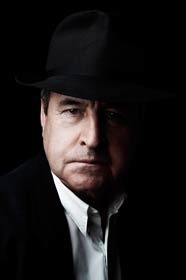
It's almost as if this particular brand of crime novel is less concerned with the crime than with soothing the fears of aging men by giving them a hero just like them, but who can still pick up women and solve crime while drinking to intervention-levels of excess on a daily basis. Now that I write that, I wonder just why it is that I've been reading so many of these books lately. But anyway....
I raise this all because Quirke, the sardonic scamp occupying the lead role of this novel, checks all these boxes: lone wolf alcoholic, develops an unhealthy involvement in a case for no clear reason beyond a sense of righteousness and because of some passing resonance to an old personal tragedy that pains him to this day. Quirke is pretty textbook in this regard. And despite the competence with which Banville/Black render his character--or perhaps because Quirke is drawn so well--these stereotypical noir hero vices seem to limit his character in important ways. It was hard not to feel that a dogmatic adherence to the noir prototype kept Quirke confined to the purgatory of two dimensional protagonists throughout this novel, much to his--and the novel's--detriment.
First, there's the dense, mellifluous prose, which was very enjoyable to read on the one hand, but as the action got underway it began to bog the story down. I'm all for delayed gratification and readerly tension, but there were frequent long, rangy paragraphs of scenery description plunked down in the middle of otherwise well-paced and sharp-eared dialogue, and overlong otherwise lovely passages of internality that proved to be distractions from the action. Still, the narrative is written in an elegant and confident free indirect style that constantly reminds you that this Banville guy really knows what he's doing when it comes to putting words down on the page. But the more crime novels I read the more I develop a bias in favor of those slim 200- to 250-page novels that are all story with only minimal scenery.
And then there is the plot, which I will not go into in detail lest I have to hide behind a spoiler alert, save to say that although the story does indeed develop into a pleasing, somewhat tense rolling boil after a while, the central mystery--which is really more of a conspiracy--at the heart of the novel amounts to very little in the end. Indeed, it seems like the most interesting part of the story is set to occur after the novel ends.
Finally, I found myself getting irked at some of the protagonist's characteristics that, had I not recently glutted myself on crime fiction, would perhaps not bother me so much. But when you read a lot of noir, post-noir, and wanna-be-noir fiction, it's hard not to notice an obvious, problematic pattern among protagonists: namely, they are all male, they are loners living alone with no spouse or children, they drink to excess on a daily basis and--most mysterious of all--are frequently objects of sexual desire to attractive women. It's hard not to feel that the entire genre is at root a male wish-fulfillment fantasy, wherein perpetually inebriated man children spend their permanent bachelorhood wading through back alleys and subterranean pool halls in pursuit of the TRUTH, all while fending off the advances of hot women with varying degrees of success and nursing some elusive, oblique man pain.
It's almost as if this particular brand of crime novel is less concerned with the crime than with soothing the fears of aging men by giving them a hero just like them, but who can still pick up women and solve crime while drinking to intervention-levels of excess on a daily basis. Now that I write that, I wonder just why it is that I've been reading so many of these books lately. But anyway....
I raise this all because Quirke, the sardonic scamp occupying the lead role of this novel, checks all these boxes: lone wolf alcoholic, develops an unhealthy involvement in a case for no clear reason beyond a sense of righteousness and because of some passing resonance to an old personal tragedy that pains him to this day. Quirke is pretty textbook in this regard. And despite the competence with which Banville/Black render his character--or perhaps because Quirke is drawn so well--these stereotypical noir hero vices seem to limit his character in important ways. It was hard not to feel that a dogmatic adherence to the noir prototype kept Quirke confined to the purgatory of two dimensional protagonists throughout this novel, much to his--and the novel's--detriment.

June 17, 2014
An excellent book by a writer I only knew so far from the foreword from the first newly printed Parker series by Richard Stark. I have as of yet not seen the TV show made of this book and its sequels.
The book does paint a dark and desperate mood in Ireland of the '50's, the main characters are not any ray of sunshine and the whole mood smells of alcohol and desperation. The main character is a nosy character who in his actions is willing to hurt anybody. He feels like a person who has lost it all and sometimes cares and the consequences be damned. This book is not so much a detective but more a dark thriller that wants to show some of the shady past from Ireland. And in that way it succeeds very well. The book is a moodpiece more than anything else and the twists in the story do not seem to add to a lighter mood.
A very well written book that asks you to return for more, which I undoubtely will do.
The book does paint a dark and desperate mood in Ireland of the '50's, the main characters are not any ray of sunshine and the whole mood smells of alcohol and desperation. The main character is a nosy character who in his actions is willing to hurt anybody. He feels like a person who has lost it all and sometimes cares and the consequences be damned. This book is not so much a detective but more a dark thriller that wants to show some of the shady past from Ireland. And in that way it succeeds very well. The book is a moodpiece more than anything else and the twists in the story do not seem to add to a lighter mood.
A very well written book that asks you to return for more, which I undoubtely will do.

December 26, 2011
A terrific read. Black has constructed a series of inter-related plot lines which he reveals slowly and under total control. Many surprises. Many serious societal issues illuminated by his far from perfect fictional characters.

March 27, 2010
Lyrical writing. Outstanding narration by Timothy Dalton. Dark & tragic.
Displaying 1 - 30 of 1,713 reviews