

What do you think?

Последната тайна на Земята
Пътувай до дъното на Земята в един свят, за чието съществуване не си подозирал.
Под леда малка група военни специалисти си пробива път към центъра на света. Те не са първите, одързостили се да проникнат в този подземен лабиринт. Онези преди тях, не са се завърнали.
Над скалите, през зиналите пещери, отвъд черната река... ти не си сам.
В мрака, където те очакват удивителни неща. И невъобразим ужас... Където се откриват неща, способни да преобразят света. Неща, чийто покой никога не би трябвало да се смущава...
Началото е на дъното на Земята. Продължи по-нататък... Към чудо, в което не можеш да повярваш... Към тайна, по-древна от времето - Последната тайна на Земята.
Под леда малка група военни специалисти си пробива път към центъра на света. Те не са първите, одързостили се да проникнат в този подземен лабиринт. Онези преди тях, не са се завърнали.
Над скалите, през зиналите пещери, отвъд черната река... ти не си сам.
В мрака, където те очакват удивителни неща. И невъобразим ужас... Където се откриват неща, способни да преобразят света. Неща, чийто покой никога не би трябвало да се смущава...
Началото е на дъното на Земята. Продължи по-нататък... Към чудо, в което не можеш да повярваш... Към тайна, по-древна от времето - Последната тайна на Земята.
416 pages, Paperback
First published June 1, 1999
About the author
James Rollins
109 books14.7k followersJames Rollins is the #1 New York Times bestselling author of international thrillers. His writing has been translated into more than forty languages and has sold more than 20 million books. The New York Times says, “Rollins is what you might wind up with if you tossed Michael Crichton and Dan Brown into a particle accelerator together.” NPR calls his work, “Adventurous and enormously engrossing.” Rollins unveils unseen worlds, scientific breakthroughs, and historical secrets matched with stunning suspense. As a veterinarian, he had a practice in Sacramento for over a decade and still volunteers at local shelters. Nowadays, Rollins shares his home up in the Sierra Nevada Mountains with two furry companions, Echo and Charlie. He also enjoys scuba diving, spelunking, kayaking, and hiking. Of course, he loves to travel and experience new places around the world, which often inspire his next globe-trotting adventure.
Ratings & Reviews
Friends & Following
Create a free account to discover what your friends think of this book!
Community Reviews
Displaying 1 - 30 of 1,079 reviews

September 13, 2012
Subterranean is an uninspired collection of clichés featuring dull, unlikable characters doing foolish things. Rollins is apparently incapable of writing women, mistaking shrill bitchiness for empowered and simpering helplessness for feminine. Ashley, his main character and "empowered" woman, is driven by the phoned-in motivation of motherhood. Her son exists as a character only to be put in danger so that tension can be artificially heightened, despite the fact that if she cared so much about the brat, it seems to me she wouldn't have taken him to an outpost in the most hostile environment on Earth in he first place. And if protecting her badly written son weren't enough to "endear" her to he reader, hang on...she had a MISCARRIAGE, too, and has never gotten over it. Isn't she relatable and sympathetic?
The story quickly unravels into a mess about a lost civilization evolved underground. This civilization does nothing to stand apart from any other lost people in dozens of better books before. They are romantically portrayed, of course, as being in perfect harmony with their underground ecosystem, in ways far wiser than the clumsy interlopers from the surface who can, naturally, learn a thing or two from the simple purity of the native population.
The characters bicker and banter excruciatingly as they struggle against a difficult environment and...yawn...monsters. At no point did I feel the main two characters were in any real danger, even less the kid. When the generically ethnic member of the party is revealed to be a terrorist, things go even further off the rails into pointless xenophobia and cartoon villainy.
Broad, caricatured characterization, tired, stale plotting, and forced attempts at suspense make this one of the worst books I have ever forced myself to finish. I can't recommend this to anyone.

November 21, 2022
Subterranean is a thriller novel written by James Rollins. After reading his Sigma Force series (finished the 2022 release during the summer), I wanted to explore more. I recall many of his books being on airport bookstore shelves, and I grabbed a few before flights. Always enjoyed them, and this one had a strong plot to it. What lurks below Antarctica? How does the animal and plant life compare with the evolution happening all over the rest of the world? Which nasty creatures will try to kill a newcomers? So many suspenseful moments, especially as the focus shifts chapter by chapter to different groups of explorers and scientists. What this lacked was the evil force trying to stop the teams from discovering history. There was definitely an evil character, and we learned which one it was fairly early on, but (s)he wasn't really working for someone else who was part of the story... so things felt lighter than usual from other books. But that said, the evolution aspects were intriguing, and it left me wondering what happened to the new life that was located in the caves below the least unknown continent?

March 25, 2013
More like Fraggle Rock than a serious adventure book
I’m a big fan of Rollins, when the guy is good he is very good and the entertainment is grand, sadly for me this was not the case but reading the 1-3 star reviews was comforting ( and hilarious) enough to know that I’m not crazy and that this book was a dud to many other readers as well. Subterranean is one of his first early efforts and it has a shape of a story but personally I found it lackluster, confused and not very well planned out. The first seventy pages were decent enough where I had some fun, thinking that it was a bit campy but all in good fun, wah what a turn after that… people seem to really appreciate the escapism here but escapism from good writing will never be my cup of tea, Rollins didn't seem to have any control over his wild stallion of a tale and instead he was taken on a ride versus being in control of the reigns.
The entire thing reads as one long action sequence, I’d still take it if it was good action but no…. Everything happens right away; before you really get to know anyone they are all ready all over the place panicking, it’s as if the book advertises itself to be one thing and turns into something completely different.
Basically the story is about confused and completely clueless military personnel who aren't proficient enough to work in kindergarten, never mind the Arctic, with some barely fleshed out main characters ( the usual team; archaeologist, biologist, cave and rock climber and few others with token personalities to match) and some bizzaro creatures – which are referred to in different detail depending on who’s describing them ( mammal or raptor? Make up your mind!) all compounded into one space running around doing unrealistic thing. The plot? Um.. it’s an octopus, a cat on roller skates in an ice rink spread out in all directions, basically an unpolished mess that really could have used a stern editor. I would highly recommend another read form the author, Ice Hunt, which was masterfully done and so enjoyable that I still think about it years later, now THAT was a monster in a creepy space story, this book is strangely similar, sometimes I feel like Rollins recycles whole chunks because they are so good, but still, it’s a bit odd… the only silver lining here is that Ice Hunt was written after Subterranean so Rollins has definitely improved and gained control of his ideas. I had to skim a lot of it towards the end because it looked like pages and pages of unnecessary stuff, needless to say the ending will not make it worth it, actually it wasn't satisfying in the least, if anything it ended very strangely. I really wanted to like this book, I did and it rejected me.. sigh, onto the next!
- Kasia S.
I’m a big fan of Rollins, when the guy is good he is very good and the entertainment is grand, sadly for me this was not the case but reading the 1-3 star reviews was comforting ( and hilarious) enough to know that I’m not crazy and that this book was a dud to many other readers as well. Subterranean is one of his first early efforts and it has a shape of a story but personally I found it lackluster, confused and not very well planned out. The first seventy pages were decent enough where I had some fun, thinking that it was a bit campy but all in good fun, wah what a turn after that… people seem to really appreciate the escapism here but escapism from good writing will never be my cup of tea, Rollins didn't seem to have any control over his wild stallion of a tale and instead he was taken on a ride versus being in control of the reigns.
The entire thing reads as one long action sequence, I’d still take it if it was good action but no…. Everything happens right away; before you really get to know anyone they are all ready all over the place panicking, it’s as if the book advertises itself to be one thing and turns into something completely different.
Basically the story is about confused and completely clueless military personnel who aren't proficient enough to work in kindergarten, never mind the Arctic, with some barely fleshed out main characters ( the usual team; archaeologist, biologist, cave and rock climber and few others with token personalities to match) and some bizzaro creatures – which are referred to in different detail depending on who’s describing them ( mammal or raptor? Make up your mind!) all compounded into one space running around doing unrealistic thing. The plot? Um.. it’s an octopus, a cat on roller skates in an ice rink spread out in all directions, basically an unpolished mess that really could have used a stern editor. I would highly recommend another read form the author, Ice Hunt, which was masterfully done and so enjoyable that I still think about it years later, now THAT was a monster in a creepy space story, this book is strangely similar, sometimes I feel like Rollins recycles whole chunks because they are so good, but still, it’s a bit odd… the only silver lining here is that Ice Hunt was written after Subterranean so Rollins has definitely improved and gained control of his ideas. I had to skim a lot of it towards the end because it looked like pages and pages of unnecessary stuff, needless to say the ending will not make it worth it, actually it wasn't satisfying in the least, if anything it ended very strangely. I really wanted to like this book, I did and it rejected me.. sigh, onto the next!
- Kasia S.

January 31, 2019
In the late 18th century, the famous British scientist Edmond Halley (yes, the same one that discovered the comet named after him) theorized that the Earth had a hollow core, capable of supporting life thanks to an inner sun. While the theory was later disproven by other scientists, the so-called “hollow earth” theory---much like the “flat earth” theory---still had several defenders well into the 19th century. Indeed, despite it being considered “pseudo-science” by many reputable scientists, a few vocal and adamant hollow earthers continued to perpetuate their theories, preposterous as it is.
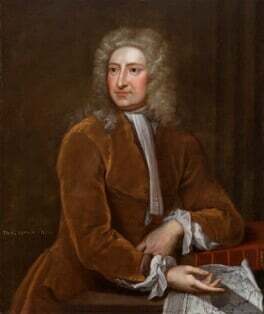
Edmond Halley
Today, the hollow earth theory has been relegated to the ash-heap of Silly Scientific Ideas, but occasionally it pops up in conspiracy theories and science fiction to help explain everything from what really happened to the dinosaurs, the disappearance of the continent of Atlantis, and the real source of UFOs.
Many famous science fiction authors, such as Jules Verne and H.G. Wells, have dipped their quills into the idea-stream of the hollow earth theory. It’s an idea that just can’t completely be extinguished.
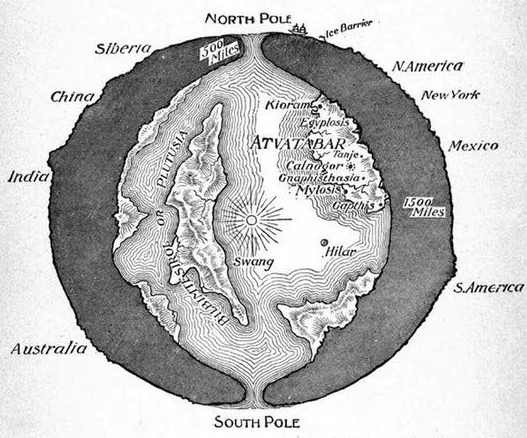
William R. Bradshaw, in his 1892 science fiction novel "The Goddess of Atvatabar" used the hollow earth theory as the basis for his subterranean world of Atvatabar
Which brings us to James Rollins’s 1999 novel “Subterranean”, a cheesy contemporary sci-fi action/adventure pulp novel that resurrects the hollow earth theory in a grand way.
According to his bio, Rollins is a veterinarian with a passion for spelunking and scuba diving. In between neutering cats and dogs, wandering in caves, and swimming with dolphins, Rollins also, apparently, has found time to write more than a dozen novels, all of which have been bestsellers.
Rollins is comfortably situated in that niche genre that Michael Crichton, Clive Cussler, and Steve Alten also inhabit: lots of science-y stuff, lots of action, and lots of testosterone. It’s contemporary pulp fiction.
“Subterranean” was Rollins’s first published novel, and for a first novel, it wasn’t bad. Highly derivative? Absolutely. It’s basically “Raiders of the Lost Ark” meets “Jurassic Park” meets “Congo”. (It’s not a coincidence that two of those three movies were based on Crichton novels, all of which I’m pretty sure Rollins read and used the plots as a template for this novel.)
But let’s be honest: if you’re going to write science/history-based action thrillers, and if you're going to borrow heavily from other sources, you really can’t pick any better sources than those.

The lost continent of Atlantis has long been tied to the theory of a hollow earth
In the novel, a scientific expedition has been formed to travel to Antarctica to discover an underground set of vast labyrinths. The team discovers an entirely new and undiscovered ecosystem of plants and animals that have evolved and flourished for millions of years. They also discover intelligent life.
Unfortunately, as things are wont to do in such novels, things go awry. Secret agendas are discovered. Tragic mishaps occur. Unexpected monster attacks. Global life-threatening revelations. Heroic derring-do. You get the idea...
As ridiculous as the novel is, though, it is still extremely entertaining, and it clearly demonstrates an early talent for this kind of action/adventure yarn for which Rollins has become so well-known.
Edmond Halley
Today, the hollow earth theory has been relegated to the ash-heap of Silly Scientific Ideas, but occasionally it pops up in conspiracy theories and science fiction to help explain everything from what really happened to the dinosaurs, the disappearance of the continent of Atlantis, and the real source of UFOs.
Many famous science fiction authors, such as Jules Verne and H.G. Wells, have dipped their quills into the idea-stream of the hollow earth theory. It’s an idea that just can’t completely be extinguished.
William R. Bradshaw, in his 1892 science fiction novel "The Goddess of Atvatabar" used the hollow earth theory as the basis for his subterranean world of Atvatabar
Which brings us to James Rollins’s 1999 novel “Subterranean”, a cheesy contemporary sci-fi action/adventure pulp novel that resurrects the hollow earth theory in a grand way.
According to his bio, Rollins is a veterinarian with a passion for spelunking and scuba diving. In between neutering cats and dogs, wandering in caves, and swimming with dolphins, Rollins also, apparently, has found time to write more than a dozen novels, all of which have been bestsellers.
Rollins is comfortably situated in that niche genre that Michael Crichton, Clive Cussler, and Steve Alten also inhabit: lots of science-y stuff, lots of action, and lots of testosterone. It’s contemporary pulp fiction.
“Subterranean” was Rollins’s first published novel, and for a first novel, it wasn’t bad. Highly derivative? Absolutely. It’s basically “Raiders of the Lost Ark” meets “Jurassic Park” meets “Congo”. (It’s not a coincidence that two of those three movies were based on Crichton novels, all of which I’m pretty sure Rollins read and used the plots as a template for this novel.)
But let’s be honest: if you’re going to write science/history-based action thrillers, and if you're going to borrow heavily from other sources, you really can’t pick any better sources than those.
The lost continent of Atlantis has long been tied to the theory of a hollow earth
In the novel, a scientific expedition has been formed to travel to Antarctica to discover an underground set of vast labyrinths. The team discovers an entirely new and undiscovered ecosystem of plants and animals that have evolved and flourished for millions of years. They also discover intelligent life.
Unfortunately, as things are wont to do in such novels, things go awry. Secret agendas are discovered. Tragic mishaps occur. Unexpected monster attacks. Global life-threatening revelations. Heroic derring-do. You get the idea...
As ridiculous as the novel is, though, it is still extremely entertaining, and it clearly demonstrates an early talent for this kind of action/adventure yarn for which Rollins has become so well-known.

May 30, 2018
I love James Rollins books, however, Subterranean is not one of my favorites. It's not bad, I love the whole world below the surface with strange creatures, and of course, the fact that this team that is sent to explore is not the first team sent down, not that they know that.
Alas, there is a kid in the story since the mom most definitely didn't want to leave him back with her ex, but he will be safe as the base. Yes, I saw right from the start that that wouldn't end well. Unfortunately, I could also see that the kid would be one of those "save the day" kids who just HAPPENS to overhear or find something that will save the day. Then, we have the romance story in the book....sigh. Will not even approach that storyline. All and all, not a bad book, but not I would recommend among Rollins books. Still, if you like stories with dangerous creatures, then you might want to check this book out.
Alas, there is a kid in the story since the mom most definitely didn't want to leave him back with her ex, but he will be safe as the base. Yes, I saw right from the start that that wouldn't end well. Unfortunately, I could also see that the kid would be one of those "save the day" kids who just HAPPENS to overhear or find something that will save the day. Then, we have the romance story in the book....sigh. Will not even approach that storyline. All and all, not a bad book, but not I would recommend among Rollins books. Still, if you like stories with dangerous creatures, then you might want to check this book out.

December 28, 2007
I grew up hating novels. Sad but true. As a child, the books I was introduced to (by school) were horribly boring and not relevant to my life at all. I grew up believing that all novels were boring, and by high school, I cringed at the sight of novels. I read comic books throughout high school and college, and it wasn’t until I came across Subterranean (on a flight) that I realized people wrote fun books. So, this is the book, and the author, who got me reading novels and opened my eyes to the possibility of writing them myself (I was a screenwriter at the time).

March 21, 2021
Subterranean
by James Rollins
I like books that have some exploration that discovers something amazing but hazardous too. The danger could be real or fantasy, a person or otherworldly, and the discovery itself could change history. This book has these things.
I have read a couple of this author's books but it's been ages. I liked them a lot so I saw this at the library and grabbed it.
I liked the suspense, creatures, very unique indigenous people, and I especially liked Ben's blood related talent. (You will understand when you read it or if you're part Australian aboriginal people in origin.)
I liked the characters, the world building, and plot. Great ending too! Don't recommend if you're claustrophobic.
by James Rollins
I like books that have some exploration that discovers something amazing but hazardous too. The danger could be real or fantasy, a person or otherworldly, and the discovery itself could change history. This book has these things.
I have read a couple of this author's books but it's been ages. I liked them a lot so I saw this at the library and grabbed it.
I liked the suspense, creatures, very unique indigenous people, and I especially liked Ben's blood related talent. (You will understand when you read it or if you're part Australian aboriginal people in origin.)
I liked the characters, the world building, and plot. Great ending too! Don't recommend if you're claustrophobic.
November 2, 2008
How to write a best selling thriller: Start by introducing each of your characters and summarize their life history in a single paragraph. Each person should have a stellar resume, while being young and attractive, yet totally down-to-earth. For example, a sexy 26 year-old world-renowned bioengineer who loves beer. Throw in one or two military assholes and an egotistical commander to add conflict to the story. Put your characters together in a bleak, desolate and impossible setting where each one's unique set of skills will be utterly crucial at some point. End each chapter with a nail-biting, yet totally manufactured sentence of suspense, like: "A gasp escaped her throat as the yetis crept closer." At least one romance between male and female characters should be formed and one member of your cast should have traitorous, ulterior motives. The element of timing is key. Everything must come down to the wire, and I mean, within fractions of a second. Remember, in the end, all your main characters survive to accomplish the mission and the only ones that were killed off were never that important to begin with. The entire story should take place over the course of a couple of days to a week, max. Don't worry about fancy words or sensible composition; your editors will handle that. Don't add any real cultural or historical content; that would take too many pages. Repeat formula with new book, simply swapping the character names, grim setting, and number of appendages that the gruesome creatures have.

September 22, 2024
so much hate 🥰
good premise, EXTREMELY poor execution
i wanted to read something about under the ocean under the sea give me something that will scare me to go back in the ocean! sadly, i was met with disappointment 😔
everything was from a male perspective, also i must say that it is quite sexist…. badly written characters, lots of deaths and i didn’t feel anything…..which means they are just words put together disguised as a book. the women’s personalities were mostly aggressive probably in an attempt to show them as “strong badass female lead” but they were just mean and aggressive.
waste of time.
“it’s so bad it’s good” — no, it’s just bad. bad book, i will Never read any book written by him ever again
good premise, EXTREMELY poor execution
i wanted to read something about under the ocean under the sea give me something that will scare me to go back in the ocean! sadly, i was met with disappointment 😔
everything was from a male perspective, also i must say that it is quite sexist…. badly written characters, lots of deaths and i didn’t feel anything…..which means they are just words put together disguised as a book. the women’s personalities were mostly aggressive probably in an attempt to show them as “strong badass female lead” but they were just mean and aggressive.
waste of time.
“it’s so bad it’s good” — no, it’s just bad. bad book, i will Never read any book written by him ever again
June 6, 2010
I made the mistake of asking my dad for a book recommendation and he recommended this. He has pretty terrible taste in books a lot of the time. Subterranean is a suspenseful book in some sense. But every event that happened was obviously setting up the next event. Every character was a stereotype. That makes for a very predictable suspense novel. You could see the ending of the book from page one. Oh, this person has claustrophobia ... I bet she gets stuck in a tight tunnel and has to overcome her fear. Oh, this lady brought her son ... I wonder if they are going to get separated somehow, and he is going to be in terrible danger? ... Ooo ... a Middle Eastern person ... surely he won't turn out to be a ... yep, he's a terrorist. Whoopsie, hope I didn't ruin the book for you.
August 29, 2011
I can't believe that I didn't review this book. (Sigh) And I call myself a James Rollins fan...
Okay, short review. ... no really, I mean it this time.
Fast paced book. This one wasn't as much the pace as the level of tension and intensity...okay, it was the pace too. The book flew by and left me wanting more. I found the supporting cast to be well done and, for once, I liked all or most of the main characters (including the main villain as a villain). Rollins usually attempts to write strong female characters, sometimes he falls short, sometimes he makes them almost human. This time, I think he got the ballance right. Even the Damsel in Distress (which is a fair and fine role for any character) came across as competent, intelligent, if also held hostage by the villain. The Heroine was a strong willed, intelligent woman as well. I also found the hero to be an interesting combination of strong male, piss, vinegar and testosterone mixed with some mushy-sensitivity. I kind of liked how he came across. Alert, paying attention and really "seeing" people in a Robert Crais-Joe Pike sort of way.
This reminded me of many different works. Some people pointed out books that this was like that I have never heard of. I thought it was like an old book made popular movie with sequels. Some of the characters (whom I liked) were from the trope-and cliche box but none of that mattered in the end.
A fun read's just a fun read. This was fun, one of the better Non-Sigma Force Books.
Okay, short review. ... no really, I mean it this time.
Fast paced book. This one wasn't as much the pace as the level of tension and intensity...okay, it was the pace too. The book flew by and left me wanting more. I found the supporting cast to be well done and, for once, I liked all or most of the main characters (including the main villain as a villain). Rollins usually attempts to write strong female characters, sometimes he falls short, sometimes he makes them almost human. This time, I think he got the ballance right. Even the Damsel in Distress (which is a fair and fine role for any character) came across as competent, intelligent, if also held hostage by the villain. The Heroine was a strong willed, intelligent woman as well. I also found the hero to be an interesting combination of strong male, piss, vinegar and testosterone mixed with some mushy-sensitivity. I kind of liked how he came across. Alert, paying attention and really "seeing" people in a Robert Crais-Joe Pike sort of way.
This reminded me of many different works. Some people pointed out books that this was like that I have never heard of. I thought it was like an old book made popular movie with sequels. Some of the characters (whom I liked) were from the trope-and cliche box but none of that mattered in the end.
A fun read's just a fun read. This was fun, one of the better Non-Sigma Force Books.
July 19, 2015
This was my second James Rollins being Amazonia. And personally I found myself enjoying this book a lot more then Amazonia.
Once again the adventure was great. And James Rollins does such a good job at crafting a really fun story that I really enjoyed reading. While this book was long it never really dragged. Being 530 pages the story really flows.
In this book you follow a wide range of characters. The main characters being. Ben and Ashley who are the leaders of the team. You also follow not enough in my opinion Jason who is Ashley's son. And he was personally a huge highlight for me in this book.
I did have a few problems with this book. The main one being that the secondary characters and story was way more interesting for me. And I just enjoyed reading there story more. And the last 50 pages really were just kinda boring. And the biggest problem I had was the Epilogue even though it was three pages. It was just boring and not really worth the read.
If you are a fan of a great adventure. You should take a look at James Rollings books. All in all this was a really fun book. And I will be reading more books from James Rollings.
Once again the adventure was great. And James Rollins does such a good job at crafting a really fun story that I really enjoyed reading. While this book was long it never really dragged. Being 530 pages the story really flows.
In this book you follow a wide range of characters. The main characters being. Ben and Ashley who are the leaders of the team. You also follow not enough in my opinion Jason who is Ashley's son. And he was personally a huge highlight for me in this book.
I did have a few problems with this book. The main one being that the secondary characters and story was way more interesting for me. And I just enjoyed reading there story more. And the last 50 pages really were just kinda boring. And the biggest problem I had was the Epilogue even though it was three pages. It was just boring and not really worth the read.
If you are a fan of a great adventure. You should take a look at James Rollings books. All in all this was a really fun book. And I will be reading more books from James Rollings.
March 30, 2022
Ako krenem pisati sve što mi je na umu ovo bi mogla biti najduža recenzija koju sam napisao. I to zato što stvarno ne znam koju ocjenu bih dao. Kec kao kuća ili čista petica haha. Jer ako samo pomislim na likove ne mogu se maknuti od jedinice jer su tako stereotipni da ni u najlošijem B filmu nećete takve naći. Ovako… Superultraturbozgodna ženska koja je i badass. Ima i klinca, pravi holivudski kao da je iz Home Alone ispao. Razvedena. Povrijeđena. Najbolja u svom poslu. Naravno, glavni frajer je Chris Hemsworth (ili bilo koji zgodni Chris… Pratt, Pine, Evans take your pick) koji je sav cocky i ima neku tajnu. Slijedi također zgodna ženska koja pati od klaustrofobije ali to saznamo tek kad uđe u pećine (alo, radnja je par kilometara ispod površine, fejspalm na kvadrat). Naravno za kraj idu šef, stari lik koji sve to balansira između politike i vojske, nekoliko vojnika koji služe samo za to da ih netko ubije i pojede i za kraj, drumroll please, arapski terorist. E da, osim vojnika svi su neki znanstvenici, znate ona fora jedan geolog, jedan biolog… Dijalozi su tako smiješni, interakcija među likovima još gora, ova naša opaka cura slini za Chrisom svako malo, ovaj baca loše fore na razini osnovne škole i to sve dok ih hrpa nekih polu raptora hoće pojesti. Ili spore ugušiti. Ima i pijavica. Ima i... a ne, to neću otkriti. I sve je to ispod Antarktike.
Zanimljivo je što su mi dvije osobe rekle da im je dobar Rollins i da čitam neku njegovu knjigu. Već sam počeo sumnjati u njihovo duševno stanje nakon stotinjak stranica.
Ali onda sam počeo ovo čitati kao da gledam nekakav Emmerichov film. Ma nema veze što je pokupio malo od Put u središte Zemlje, malo od Jurskog parka, malo od Dirka Pitta, malo tu, malo tamo… Tempo je filmski. Između radnji svako malo neki napeti kraj tipa: Pogledala je prema Chrisu Hemsworthu (da, lik je Australac) ali njega tamo više nije bilo! Da bi se prebacili na druge likove. I čekam ja ma tko mi je Chrisa pojeo pa nećeš mi Chrisa zgodnog pojest, nemoj tako Rollinse, čupam ja kosu, palim cigaretu, ne dajem maci keksiće, ručak zagorio…
Za kraj mogu napisati da ću nastaviti s čitanjem Rollinsa. Da. Hoću. Ne sramim se reći. A i ponestat će mi Reachera uskoro.
Zanimljivo je što su mi dvije osobe rekle da im je dobar Rollins i da čitam neku njegovu knjigu. Već sam počeo sumnjati u njihovo duševno stanje nakon stotinjak stranica.
Ali onda sam počeo ovo čitati kao da gledam nekakav Emmerichov film. Ma nema veze što je pokupio malo od Put u središte Zemlje, malo od Jurskog parka, malo od Dirka Pitta, malo tu, malo tamo… Tempo je filmski. Između radnji svako malo neki napeti kraj tipa: Pogledala je prema Chrisu Hemsworthu (da, lik je Australac) ali njega tamo više nije bilo! Da bi se prebacili na druge likove. I čekam ja ma tko mi je Chrisa pojeo pa nećeš mi Chrisa zgodnog pojest, nemoj tako Rollinse, čupam ja kosu, palim cigaretu, ne dajem maci keksiće, ručak zagorio…
Za kraj mogu napisati da ću nastaviti s čitanjem Rollinsa. Da. Hoću. Ne sramim se reći. A i ponestat će mi Reachera uskoro.

Did Not Finish
June 6, 2026Po 120 stronach widzę te same schematy co w Amazonii, tyle że podane bardziej łopatologicznie. O ile w przypadku tej drugiej byłam w stanie nad tym przejść do porządku dziennego, to w przypadku Podziemnego labiryntu nie mam już na to ochoty.
Być może wrócę do tej książki jeśli będę potrzebowała niezobowiązującego czytadełka.
Być może wrócę do tej książki jeśli będę potrzebowała niezobowiązującego czytadełka.

November 13, 2021
বই হিসেবে মিডিওকোর এক কথায়৷ রেগুলার থ্রিলার পড়ুয়ারা এধরণের ট্রোপের সাথে অনেক আগে থেকেই পরিচিত হবার কথা। আর অনুবাদ পাঠকদের এক্সক্যাভেশন, মায়ান কন্সপিরেসি বা আমাজনিয়া পড়া থাকলে ভালো লাগবে না খুব একটা৷
অনুবাদ দুর্দান্ত এক কথায়৷ সুযোগ বুঝে ভালোই রসিকতা করেছে অনুবাদক৷ ব্যাপারটা প্রশংসনীয়। নেগেটিভ সাইড বলতে কিছু শব্দের ভুল উচ্চারণ লেখা হয়েছে- লাসানিয়া, ডায়মন্ডব্যাক, বোলোনিয়া, কম্বাশ্চন৷ তাছাড়া 'প্রয়াস পেল' শব্দ দুটোর এত বেশি রিপিটেশন হয়েছে যে এক পর্যায়ে চরম বিরক্তির উদ্রেক করেছে৷
প্রচ্ছদ বেশ ভালো৷ কেভ+ব্ল্যাকের কালারের কম্বিনেশনটা চমৎকার লেগেছে। তবে গুহাবাসী হিসেবে গড অফ ওয়ার ক্রাটোসের মুণ্ডু না বসালে ১০০/১০০ দেয়া যেত৷
রলিন্স ফ্যান হলে পড়ুন, না হলে এড়িয়ে গেলেও সমস্যা নেই৷
অনুবাদ দুর্দান্ত এক কথায়৷ সুযোগ বুঝে ভালোই রসিকতা করেছে অনুবাদক৷ ব্যাপারটা প্রশংসনীয়। নেগেটিভ সাইড বলতে কিছু শব্দের ভুল উচ্চারণ লেখা হয়েছে- লাসানিয়া, ডায়মন্ডব্যাক, বোলোনিয়া, কম্বাশ্চন৷ তাছাড়া 'প্রয়াস পেল' শব্দ দুটোর এত বেশি রিপিটেশন হয়েছে যে এক পর্যায়ে চরম বিরক্তির উদ্রেক করেছে৷
প্রচ্ছদ বেশ ভালো৷ কেভ+ব্ল্যাকের কালারের কম্বিনেশনটা চমৎকার লেগেছে। তবে গুহাবাসী হিসেবে গড অফ ওয়ার ক্রাটোসের মুণ্ডু না বসালে ১০০/১০০ দেয়া যেত৷
রলিন্স ফ্যান হলে পড়ুন, না হলে এড়িয়ে গেলেও সমস্যা নেই৷

December 25, 2021
Disastrous introduction to James Rollins. I was looking forward to an adventure in Antarctica for a change instead of the usual adventures in jungles. That's why I picked this book. Subterranean is more suited to school kids. The writing was juvenile. Conversations between characters were so boring and clichéd. I couldn't bear this book and DNFed it.
I am still willing to give James Rollins another shot in future. Heard good things about Amazonia and the Sigma force series. I forgive him as this was his first adventure book and he may have made improvements in his subsequent books.
I am still willing to give James Rollins another shot in future. Heard good things about Amazonia and the Sigma force series. I forgive him as this was his first adventure book and he may have made improvements in his subsequent books.

April 7, 2012
Oh dear, where to start? I could go with witty remarks:
It's Jurassic Park! It's a movie script! It's...SUBTERRANEAN!!!!
Or I could liken it to a children's cartoon, in which case it's basically just Scooby Doo...underground. Fred and Daphne break off from the group and hump like cats while the remaining trio try to outsmart the old innkeeper who's dressed as a cave-trotting velociraptor to scare off the tourists. And he would have gotten away with it too, if it hadn't been for you pesky kids! Sadly, Laurel and Hardy don't inexplicably show up to lighten the mood...
Or I could just be realistic. It's a supermarket book and I should have been sitting on a beach with a margarita in one hand. If you can get past the asinine leaps of logic in literally every paragraph, the action is...well, dumb, which isn't always a bad thing. Cliffhanger is pretty dumb and I'll fight you to the death if you don't think it's awesome. This book is way worse than Cliffhanger, but the point is worth making.
In summary, it's dumb.
It's Jurassic Park! It's a movie script! It's...SUBTERRANEAN!!!!
Or I could liken it to a children's cartoon, in which case it's basically just Scooby Doo...underground. Fred and Daphne break off from the group and hump like cats while the remaining trio try to outsmart the old innkeeper who's dressed as a cave-trotting velociraptor to scare off the tourists. And he would have gotten away with it too, if it hadn't been for you pesky kids! Sadly, Laurel and Hardy don't inexplicably show up to lighten the mood...
Or I could just be realistic. It's a supermarket book and I should have been sitting on a beach with a margarita in one hand. If you can get past the asinine leaps of logic in literally every paragraph, the action is...well, dumb, which isn't always a bad thing. Cliffhanger is pretty dumb and I'll fight you to the death if you don't think it's awesome. This book is way worse than Cliffhanger, but the point is worth making.
In summary, it's dumb.

May 17, 2013
I think my favorite part of this trainwreck (after the diamond-softening fungus and the Islamic jihadist who drinks) was Major Michaelson's magical morphing arsenal: every paragraph or so his weapons loadout somehow changes to SOMETHING HE DIDN'T HAVE A MINUTE AGO. Why is a US marine carrying an AK-47? And why on earth would he have sawed the barrel off, thereby ruining the gas tube and making it incapable of firing more than a single shot at a time? And why doesn't he have any 7.62 ammunition for it? And why is it the only gun that he has that stays consistant throughout the entire story when he never actually gets to use it? And.. and.. oh FFS I'm just glad it's finally over and I never have to read it ever again.

July 15, 2011
What a thrilling, captivating page-turner. Wow, this was a terrific book. A group of scientists led by top archaeologist Ashley Carter are selected to investigate a subterranean labyrinth in Antarctica. Things don't go as planned and the action and excitement never let up. The set up is good, the story is great and the payoff is super. I loved it and am off to pick up my next James Rollins book.

April 18, 2019
Oh well, I was very excited to read this one. Antarctica expedition cave system sounded very adventurous. I’m not sure what I expect them to find but whoa this was just beyond my imagination, not in a good way. I love the beginning of the book so three stars.

May 14, 2022
This book reminds me of an over-the-top 80s action flick. Some bizarre left-field, non-necessary additions to the story. These might make you roll your eyes and ask yourself "Wtf am I reading?". In the end, I still found it pretty damn entertaining for what it was.
3.5/5
3.5/5

March 19, 2008
Subterranean is a solid adventure novel mixed with an archaeological mystery, somewhat similar to Douglas Preston and Lincoln Child's Thunderhead. Parts of it are a little trite (a team member exploring the story's deep caverns has claustrophobia, of course, leading to manufactured moments of suspense that you see coming a mile away), but it's a fun read if you're willing to just go with it. Ultimately, I think the job could have been done in fewer pages; by the last 100, I was skimming here and there just to move forward. The word on the street seems to be that Rollins gets better after this first novel, and I'm looking forward to reading more.

December 7, 2020
Che volete che vi dica? A me è piaciuto. Un po’ Jurassic Park (il riferimento è al film, non ho letto ancora il libro, sob!), un po’ Viaggio al centro della terra (questo invece l’ho letto), un po’ Indiana Jones (sempre film)... insomma c’è un po’ di tutto in queste pagine, ci sono tante cose, tanta azione, tanti colpi di scena, tanta adrenalina da sperperarla!
Lo so: i personaggi sono stereotipati, tutti belli, tutti coraggiosi, tutti eroi; c’è il cattivo (anzi, i cattivi) di turno, il ragazzino (ma che l’hanno portato a fare?!? ma poi in effetti ha fatto la sua parte), ci sono le bestie mostruose, una civiltà preistorica, un labirinto di cunicoli e grotte, un tesoro immenso, misteri, veleni, magia e tanta, tanta fantasia.
Tutto nelle profondità del vulcano Erebus, in Antartide. Se è vero che in superficie la vita è impossibile su questo continente, direi che nelle sue viscere il calore non manca; mi chiedo come non sia esploso!
Sarà pure un’americanata, ma ha assolto appieno alla sua funzione: mi ha catturata, mi ha trascinata in un’avventura assurda, quasi paradossale, fantastica e chi più ne ha più ne metta. Mi ha tenuta legata alle pagine più di quello che mi sarei aspettata.
Era ciò che mi serviva.
Il mio primo Rollins è stato promosso!
Avanti un altro...
🌏 LdM: Antartide 🇦🇶
🅰️ A come Avventura
📖 LxNL - TBR dic/20 task 3
Lo so: i personaggi sono stereotipati, tutti belli, tutti coraggiosi, tutti eroi; c’è il cattivo (anzi, i cattivi) di turno, il ragazzino (ma che l’hanno portato a fare?!? ma poi in effetti ha fatto la sua parte), ci sono le bestie mostruose, una civiltà preistorica, un labirinto di cunicoli e grotte, un tesoro immenso, misteri, veleni, magia e tanta, tanta fantasia.
Tutto nelle profondità del vulcano Erebus, in Antartide. Se è vero che in superficie la vita è impossibile su questo continente, direi che nelle sue viscere il calore non manca; mi chiedo come non sia esploso!
Sarà pure un’americanata, ma ha assolto appieno alla sua funzione: mi ha catturata, mi ha trascinata in un’avventura assurda, quasi paradossale, fantastica e chi più ne ha più ne metta. Mi ha tenuta legata alle pagine più di quello che mi sarei aspettata.
Era ciò che mi serviva.
Il mio primo Rollins è stato promosso!
Avanti un altro...
🌏 LdM: Antartide 🇦🇶
🅰️ A come Avventura
📖 LxNL - TBR dic/20 task 3

January 4, 2020
Mini-Review:
3.5 Stars Raised to 4 Stars for Great Narration
4 Stars for Narration by John Meagher (Some of the female voices were funny but overall, good job for the range of characters.)
3.5 Stars for Plot & Characters
If you're looking for a likeable adventure story, this one fits the bill. A nice balance of easy to get to know characters, interesting setting, quasi-believable science, a ton of action and a couple of "aww" moments. This one was better than the last book I read by Rollins. In fact, I liked this one enough to give the other series another shot. Well, I also need something to fill the gap where Space Team & Joe Ledger used to fill. I may be running out of good covert ops books too. =P
3.5 Stars Raised to 4 Stars for Great Narration
4 Stars for Narration by John Meagher (Some of the female voices were funny but overall, good job for the range of characters.)
3.5 Stars for Plot & Characters
If you're looking for a likeable adventure story, this one fits the bill. A nice balance of easy to get to know characters, interesting setting, quasi-believable science, a ton of action and a couple of "aww" moments. This one was better than the last book I read by Rollins. In fact, I liked this one enough to give the other series another shot. Well, I also need something to fill the gap where Space Team & Joe Ledger used to fill. I may be running out of good covert ops books too. =P

April 10, 2020
I had a bit of debate about what rating to give Subterranean. On the one hand, it was an extremely addictive read. I was happy to power through this one and was rapidly turning the pages to see how everything came together. On the other hand, there were too many predictable elements and times where I felt we were drowning under deus ex machinas.
In the end, I opted to round this up to a four-star rating. It was addictive, it was a story I was happy to devour, and the predictability and eye rolls were not enough to leave me unhappy with the book. Sure, I would have liked more. However, what I was given was perfect for an easy read.
All in all, not my favourite from James Rollins, but it was enjoyable.
In the end, I opted to round this up to a four-star rating. It was addictive, it was a story I was happy to devour, and the predictability and eye rolls were not enough to leave me unhappy with the book. Sure, I would have liked more. However, what I was given was perfect for an easy read.
All in all, not my favourite from James Rollins, but it was enjoyable.

September 15, 2020
A diamond statue is found in Antarctica, indicating a primitive society may once have lived there. An expedition leads a team of specialists under the ice. But what they find their surpasses their wildest imagination.
Basically, it’s a lost world story that could have come straight out of the pulp fiction era with some monster horror elements. This does have some issues but all the elements are there to succeed. It’s a fun, fast-paced and action-packed adventure story.
Basically, it’s a lost world story that could have come straight out of the pulp fiction era with some monster horror elements. This does have some issues but all the elements are there to succeed. It’s a fun, fast-paced and action-packed adventure story.

July 11, 2023
রলিন্সের অন্যান্য বইগুলোর মতই এই বইয়েও অ্যাডভেঞ্চার বেশ ভালো লেগেছে৷ বইটা অনেক বেশি ফাস্ট, মোটামুটি একটানাভাবে পড়া হল যতক্ষণ পড়েছি। প্লটটাও বেশ ইন্টারেস্টিং ছিল। রলিন্সের অন্যান্য বইগুলোতে বইয়ের শেষে যেমন কিছু ব্যাখ্যা থাকে এই বইটিতে পাইনি, এই ব্যাপারটা মিস করেছি। সবমিলিয়ে রলিন্স ফ্যানদের ভালো লাগার কথা বইটা। যদিও সিগমা সিরিজের বই কিংবা আমাজনিয়ার মত এক্সপেকটেশন নিয়ে না পড়াই ভালো।

March 20, 2021
Não é segredo nenhum que sou uma grande fã dos livros de James Rollins, nomeadamente da série Sigma. Por isso, quando soube que ia ser editado, em Portugal, mais um livro do autor, fiquei logo muito entusiasmada.
Subterrânio é um stand-alone e, por isso, quem tem algum receio de se iniciar com a Sigma porque são já quinze livro publicados, têm aqui, a par com Amazónia, um bom livro para ficarem a conhecer a escrita do autor.
Apesar de ser publicado agora em Portugal, foi originalmente, publicado em 1999 e foi o livro que tornou James Rollins num autor de bestsellers.
Vamos viajar até à Antártica, mais precisamente, às suas profundezas, onde acompanhamos uma equipa de vários especialistas, que irão explorar o local. Os que eles desconhecem, é que não são a primeira equipa a investigar este mundo subterrâneo e, que a equipa anterior, não voltou.
Para quem conhece os livros do autor, esta história tem os ingredientes habituais, pois vamos entrar numa narrativa, cheia de acção e muitos perigos. No entanto, temos uma novidade, a introdução de elementos que transformam esta história com contornos de fantasia/ficção-científica. Algo que a mim, me agradou imenso, e que me manteve sempre agarrada à história e às descobertas deste mundo subterrâneo. E, a sério! Este novo mundo, que tem então elementos mais fantasiosos, agradou-me bastante.
Como ponto, menos positivo, tenho de mencionar o epílogo que acabou por não acrescentar nada de mais à história.
É certo que não é o melhor livro do autor, mas, não esquecer, estamos a falar de um livro escrito em 1999, e que mesmo assim, manteve-me sempre agarrada à história. Sei que também não será um livro que agradará a todos os leitores, por ter aquele toque mais de ficção-científica mas, mesmo assim, sugiro que, se ficaram curiosos, lhe deem uma oportunidade
Opinião em vídeo aqui
Subterrânio é um stand-alone e, por isso, quem tem algum receio de se iniciar com a Sigma porque são já quinze livro publicados, têm aqui, a par com Amazónia, um bom livro para ficarem a conhecer a escrita do autor.
Apesar de ser publicado agora em Portugal, foi originalmente, publicado em 1999 e foi o livro que tornou James Rollins num autor de bestsellers.
Vamos viajar até à Antártica, mais precisamente, às suas profundezas, onde acompanhamos uma equipa de vários especialistas, que irão explorar o local. Os que eles desconhecem, é que não são a primeira equipa a investigar este mundo subterrâneo e, que a equipa anterior, não voltou.
Para quem conhece os livros do autor, esta história tem os ingredientes habituais, pois vamos entrar numa narrativa, cheia de acção e muitos perigos. No entanto, temos uma novidade, a introdução de elementos que transformam esta história com contornos de fantasia/ficção-científica. Algo que a mim, me agradou imenso, e que me manteve sempre agarrada à história e às descobertas deste mundo subterrâneo. E, a sério! Este novo mundo, que tem então elementos mais fantasiosos, agradou-me bastante.
Como ponto, menos positivo, tenho de mencionar o epílogo que acabou por não acrescentar nada de mais à história.
É certo que não é o melhor livro do autor, mas, não esquecer, estamos a falar de um livro escrito em 1999, e que mesmo assim, manteve-me sempre agarrada à história. Sei que também não será um livro que agradará a todos os leitores, por ter aquele toque mais de ficção-científica mas, mesmo assim, sugiro que, se ficaram curiosos, lhe deem uma oportunidade
Opinião em vídeo aqui

September 27, 2010
When an 80-something year old lady brings a bunch of books into my store, many of which catch my eye or are one I've read before, and points to this book and says, "I really liked that," I'm gonna snag it.
Thank you, old lady.
Immediately, I began to draw parallels from Subterranean to Jeff Long's The Descent. However, there's not really much in common between the two. Giant underground cavern systems populated by various creatures - that's it. Long's book is Horror, in my opinion. Rollins has written a more contemporary SciFi book.
With the exception of WHY the hell that damn kid was allowed to be brought along on an Antarctic exploration, I found the plot excellent, pacing tight, and characters believable. Some might groan at the Mimi'Swee, but Crichton has done weirder and gotten away with it. I must admit though, I just couldn't picture those skateboard things they used.
I will absolutely track down more by James Rollins. Unfortunately, the only one I have on hand at the moment is The Judas Strain, which is book 4 of his Sigma Force stuff. I hate starting in the middle of a series.
Thank you, old lady.
Immediately, I began to draw parallels from Subterranean to Jeff Long's The Descent. However, there's not really much in common between the two. Giant underground cavern systems populated by various creatures - that's it. Long's book is Horror, in my opinion. Rollins has written a more contemporary SciFi book.
With the exception of WHY the hell that damn kid was allowed to be brought along on an Antarctic exploration, I found the plot excellent, pacing tight, and characters believable. Some might groan at the Mimi'Swee, but Crichton has done weirder and gotten away with it. I must admit though, I just couldn't picture those skateboard things they used.
I will absolutely track down more by James Rollins. Unfortunately, the only one I have on hand at the moment is The Judas Strain, which is book 4 of his Sigma Force stuff. I hate starting in the middle of a series.

September 22, 2012
So this is by my mum's favourite writer--she has all of his books and frequently tells me about them as she's reading them. When she knew I was looking to read more with an adventure flavour (specifically caves), she gave me some of his.
I expected fun and I got it.
The book's structure is sound, the pacing is quite good. There are some beautiful turns of phrase when it comes to describing the terrain and exploration. Indeed, when the protagonists feel wonder regarding their surroundings and discovery, it leaps off the page, Rollins' enjoyment of the world he's created quite apparent and infectious.
Mum has another stack of books for me to read here, and I look forward to delving in; I believe this was Mr. Rollins' first published book and I've no doubt they get even better.
I expected fun and I got it.
The book's structure is sound, the pacing is quite good. There are some beautiful turns of phrase when it comes to describing the terrain and exploration. Indeed, when the protagonists feel wonder regarding their surroundings and discovery, it leaps off the page, Rollins' enjoyment of the world he's created quite apparent and infectious.
Mum has another stack of books for me to read here, and I look forward to delving in; I believe this was Mr. Rollins' first published book and I've no doubt they get even better.
Displaying 1 - 30 of 1,079 reviews