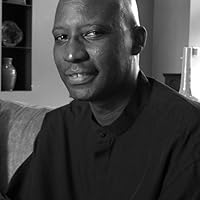
Patrice Evans is The Assimilated Negro, a hyperobservant, savagely pop-savvy instigator bent on pranking the crap out of our modern racial discourse. Since the debut of his popular “Ghetto Pass” column for Gawker.com, Evans has been the rare voice capable of speaking to junkies for both White Castle and Colson Whitehead with equal insight and aplomb. His first book, Negropedia, is a wide-ranging, deeply idiosyncratic tour through the tricky racial landscape of the Obama era, aimed at pop-culture consumers at the intersecting fan bases of South Park and Chappelle’s Show, Scott Pilgrim and The Boondocks . Whether deconstructing Lil Wayne’s “no homo hypocrisy,” outlining the all-important Clair Huxtable code for finding a mate, or assessing Susan Sontag’s street cred, Evans provides a stream of daring outsider anthropology.
Patrice Evans is an American writer and satirist, born March 2, 1976, in the Bronx, New York. He went to prep schools Choate Rosemary Hall and Pomfret School, and attended Trinity College in Hartford, CT. He currently lives in New York City and is author of Negropedia: The Assimilated Negro’s Crash Course on the Modern Black Experience. He has written online for Gawker, Deadspin, McSweeney's, Penthouse, The Village Voice, and OKAYPLAYER amongst others. Evans also writes under the pen-name "The Assimilated Negro." He is currently a staff writer for Grantland.com.
Suitable for all melanin levels. Teeheehee. I wish the book as a whole was as enjoyable to read as the title. Instead it ended up being a big ole disappointment. The good news is I received the book for free through Goodreads First Reads. Sure, there were giggles in the beginning and a chuckle or two at the end. It's the lackluster middle (pretty much the majority of the book) that brought it down. Negropedia is broken up into nine main sections. Here's what this "Swirl" (i.e. too mixed for the world to understand, p.67) thought of them...
Black Is the New Black...A Primer to Blackness for All and for None Off to a great start. I thought the pitch for the Nine-Step Nouveau Negro Assimilation Program (aka NoNap) was funny and a great way to set the tone for the book. It also introduced the first few "Ghetto Pass" segments. You know, in case you need to brush up on some ghetto institutions but don't actually want to venture too far out of your comfort zone. Curious about Gypsy cabs? Patrice Evans has got you covered. BTW, in Pittsburgh an unlicensed taxi is called a jitney.
The Little Black Book...Dating on the Color Line Hit and miss. The letters from "A Black Guy" and "A Black Woman" were pretty tired. The call for a mediocre black chick appreciation program was cringe-worthy. Mostly because I know there are still quite a few people who think dark = mediocre. This section also touches on the topic of interracial dating and offers an answer to the niggling question "Can I have sex with a Racist?" (Yes!)
The Black List...The Hall of Hallowed Negroes A lot of filler. Quick! Think of a famous black person of any ilk. Yeah, they are probably mentioned here somewhere. There are some bright spots, like an essay on "keeping it real" and a general introduction to Five Percenters.
The Hip-Hop Genome Project...Black Is Something You Do, Hip-Hop Is Something You Live Pretty straight forward stuff. Lots O' Lists. Which rapper should you be? Cipher demographics. The seven emcees you meet in hip hop. Yada yada yada.
Fade to Black...Welcome to Blollywood This section opens with a Ghetto Pass on "black movie theaters" and I LOLed. Magic Johnson Theater, anyone? Also, the author reeeeeally doesn't like the movie Crash.
Ballers...Don't Hate the Player Some more yawn-worthy anecdotes, but this time on black people in sports.
Ballin'...Change the Uniform Baggy jeans. Black people fashion brands. Blipsters. I was a bit confused when reading "Blipsters hate hip-hop unless they are spoofing it..." and then seeing Evans turn right around by listing Andre 3000 and Kanye West as blipster role models. Wait, what??
In the Black...Color-Blind Capitalism Happy to see Evans mentioned McDonald's hilarious attempts to appeal to the black consumer by way of the R&B and hip-hop jingles in their advertisements. Nearly impossible to watch or hear them without rolling my eyes.
Toward a Postracial Apocalypse Loved "The Nine Stages of Gentrifranchise Hell." It's currently happening to a neighborhood in Pittsburgh called East Liberty....or should I say Eastside. Ugh!! I'll spare you the rant. A multiplex is already in the works. This will include a movie theater and a modern (read: high-end) barbecue restaurant called Union Pig and Chicken (sigh).
Ultimately, I say give this a pass and watch The Boondocks instead for a funny, yet thought-provoking take on the modern black experience.
Evans may mislead the reader as to the comprehensiveness of his work by calling it Negropedia. Rather than an encyclopedic account of the assimilated black experience in the post-racial era, to use the kind of language he derides in the book, the author puts together a disparate, but small set of jokes, pop cultural observances, and even impassioned rhetoric. In fact, the work's biggest weakness is its tendency to abruptly change in tone from throw-away witticism to earnest cultural critique, eroding the power of its message. And at times, Negropedia reads like a book about hip hop. The author does argue that hip hop is so central to young, black American culture that it warrants extended treatment in his book, but surely there was more he could address in much of the space he dedicates to hip hop. Furthermore, Evans seems to obliviously conflate the black New York experience with the black American one, with his special analysis of New York rappers and bodegas. I'm trying to imagine a black Kansas City resident identifying with bodegas as an important part of his or her lifestyle.
Negropedia's strengths are its moments of touching racial honesty and genuine humor. Unfortunately, the former are not fleshed out enough, and the latter don't often rise above the level of a good blog post.
Interesting book. Not quite what I expected, but it was a good read nonetheless. Learned a few new things-some I knew already, some I didn't know. Book was awarded to me in a book giveaway, for which I thank the author.
I won this book for free through Goodreads First Reads. Thanks for choosing me! I actually read the book almost a month ago, but I was so thrown by it that I couldn't get a review together for a long time. Sorry about that!
I think this book may have changed my life. There were all these things bouncing around in my head and vocabulary (probably from studying black history more than war history and listening to lots of hip hop, R&B, and blues) that didn't make a damn bit of sense, and this book really shed light on a lot of them.
I mean, besides that, it's also got a great edge of humor and plays up the stereotypes. Seeing as I live under a rock (I tell people that if it's mass media that shaped their cultural perspective, they might as well assume I've never even heard of it and please get over it so we don't have this conversation every five minutes), I never really would have gotten the TV or underground music references without a lot of help. Patrice managed to throw that in my face, and he made sure I enjoyed it. I love it.
Great illustrations, great organization, great sense of humor, great information. Um, did I mention you want to read this book?
A funny book that was lighthearted & thought provoking. Although the only criminal and unforgiving thing about this book was in "The Five Asses That Changed The World" section he put Beyonce's ass over Kim Kardashian's ass and that is a cardinal sin.