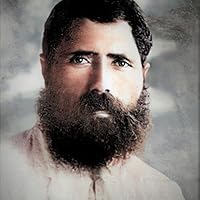
This book presents for the first time the complete text of the earliest known Ladino-language memoir, transliterated from the original script, translated into English, and introduced and explicated by the editors. The memoirist, Sa'adi Besalel a-Levi (1820–1903), wrote about Ottoman Jews' daily life at a time when the finely wrought fabric of Ottoman society was just beginning to unravel. His vivid portrayal of life in Salonica, a major port in the Ottoman Levant with a majority Jewish population, thus provides a unique window into a way of life before it disappeared as a result of profound political and social changes and the World Wars. Sa'adi was a prominent journalist and publisher, one of the most significant creators of modern Sephardic print culture. He was also a rebel who accused the Jewish leadership of Salonica of being corrupt, abusive, and fanatical; that leadership, in turn, excommunicated him from the Jewish community. The experience of excommunication pervades Sa'adi's memoir, which documents a world that its author was himself actively involved in changing.
Sa'adi Besalel a-Levi was born in Salonica in 1820 into a dynasty of printers, orphaned at six, and running the family press by thirteen with worn-out fonts, three aging typesetters, and the confident decision the rabbinate could go straight to the falaka.
Salonica in his day was the most Jewish city on earth, a teeming Ottoman port where Sephardim, Ashkenazim, Frankos, Turks, and Greeks coexisted in the dense, flammable wooden neighborhoods between the sea and the Vardar Gate, conducting commerce, spreading plague, and surviving earthquakes with equal resourcefulness.
Sa'adi taught himself the Bible from Protestant missionary pamphlets after his Talmud Tora teacher beat three classmates into converting to Islam. He supplemented his meager printing income by becoming the finest Ottoman-Jewish singer in the city, learning his craft from both the Muslim master Murteza Izeddinoglu and the Jewish maestro Aaron Barzilay, until the rabbis decided that a kaddish sung in the Turkish huzzam mode was a crime requiring two hundred lashes.
The chief villain here is Rav Shaul Molho, a four-foot-one ball of theological fury who excommunicated people at a rate of twenty-five to thirty per day, had a Sabbath violator flogged for clinging to a coffee sack, ordered a pregnant woman tortured until a British consul alerted the press, and once terrified a dying haham so effectively that the man summoned his last strength to announce he was dying of natural causes, so Rav Shaul should take no credit.
After Rav Shaul's death, his successor Chief Rabbi Asher Kovo continued the tradition of weaponizing the herem, a formal writ of excommunication, against Sa'adi and his son Hayyim on a trumped-up charge of Sabbath desecration in 1874. The mob chased father and son through the streets of Salonica. Only the timely intervention of the banker and philanthropist Allatini stopped the crowd.
Sa'adi's response to his excommunication was to found La Epoka in 1875, the first long-lived Ladino newspaper in Salonica, which he used to report on communal corruption, praise the Alliance Israelite Universelle schools he had helped Allatini establish, and expose such items as a Purim sideshow featuring a synagogue puppet of Haman being theatrically strangled to cries of "isa, isa, isa."
The herem, intended to last thirty-one years, was supposed to bar other Jews from working with him, speaking to him, or counting him in a prayer quorum. Instead it produced forty-two chapters of the most acidic memoir in Ladino literature. Sa'adi wrote it in soletreo cursive from 1881 onward, dictating to a scribe when his eyesight failed, the manuscript passing through four generations of his family, surviving wars, fire, and the Nazi murder of Salonica's Jews in 1943, before surfacing by accident on a library shelf in Jerusalem.
The world it describes, the language it was written in, and the city at its center were all erased. The book survives.
Today less than 1000 of Thessaloniki's 800,000 population are Jews. Greek antisemitic incidents, which the Central Board of Jewish Communities in Greece documents year after year, including racist graffiti and violent watermelon parades, vandalized cemeteries in Thessaloniki and Ioannina, swastikas on Holocaust memorials, and a 2021 arson attack on the Jewish Museum of Thessaloniki, follow the same grammar: dress the aggression in grievance, claim the victim provoked it, and wait for institutional memory to fade. Sa'adi knew that game. He wrote the rulebook down so future generations could see it coming. They saw it coming. They came anyway. ❤️ 🇮🇱
A fascinating little window into a bygone world, where Jews and Muslims lived in tolerance under the Ottoman rule. Something to remember in our times of renewed Zionism. Reading the original Ladino manuscript is a deeply moving experience for someone who was born in Spain, the country where the Sephardim of this book, living in faraway Salonica three hundred years afterwards, were exiled from.
A fascinating look into an era and a place that is not often discussed nowadays. The memmoir is gripping and gives you a look at some aspects of Jewish life at the time as well as their coexistence with their non Jewish neighbors.