

What do you think?
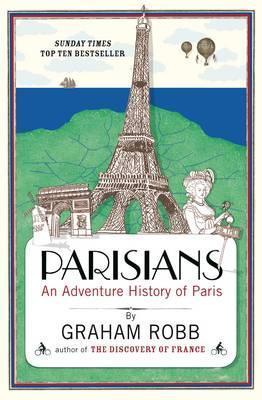
Parisians /anglais
No-one knows a city like the people who live there -- so who better to relate the history of Paris than its inhabitants through the ages? Taking us from 1750 to the new millennium, Graham Robb's Parisians is at once a book to read from cover to cover, to lose yourself in, to dip in and out of at leisure, and a book to return to again and again -- rather like the city itself, in fact. 'Quirky, amused and tres British' Julian Barnes 'A collection of true stories, culled from Robb's insatiable historical reading and lit by his imagination ...So richly pleasurable that you feel it might emit a warm glow if you left it in a dark room' John Carey, Book of the Week, Sunday Times 'This book is the sort of triumph that we have no right to expect to come from anyone in the steady way that Robb's masterly books come from him' Philip Hensher, Daily Telegraph 'As Parisian and as bracing as a freshly mixed Pernod and water' New York Times
496 pages, Paperback
First published January 1, 2010
Ratings & Reviews
Friends & Following
Create a free account to discover what your friends think of this book!
Community Reviews
Displaying 1 - 30 of 355 reviews

July 2, 2019
Allow Graham Robb to take you to Paris of the eighteenth century and then, with several stops along the way, all the way back to the new millenium. Mr Robb says that although he came to know Paris well, he also realised that he would never really know it. Believe me, he knows it better than the likes of most of us.
Allow Mr Robb to entertain you with obscure bits of information that you won't readily find in your average history or travel book. Mr Robb is an excellent tour guide. In his itinerary is included, for example:
* a meeting with a young lieutenant who is destined to become very well known - Napoleon Bonaparte.
* And then there is the case of The Man Who Saved Paris. This was the architect Charles-Axel Guillaumot(1730-1807), who saved Paris from literal collapse as a result of years of tunnelling and mining. After an initial catastrophic subsidence, his services were called upon. M. Guillaumot had previously been awarded the architectural Prix de Rome at the tender age of twenty. Learn how he accomplished his goal.
* Most of us know that Marie-Antoinette and her family attempted an escape prior to being guillotined. Mr Robb tells us more about the escape, and how Marie-Antoinette got hopelessly lost along the way, frittering away some valuable time. Bear in mind that at this time Paris had not yet been revamped by Baron Haussmann, and was still a maze of twisted little streets.
* Then there was the case of the Crayfish in which the famous (or infamous as he was a bit of both) Eugène-François Vidocq (1775-1857) pursues a notorious gang member known as the Crayfish. Vidocq is sometimes referred to as the first detective. He was particularly proficient at disguising himself, and as an ex-convict who had escaped prison several times he knew the tricks of the trade. Other Vidocq cases are also mentioned.
* Meet Henri Murger (1822-1861). M. Murger was the author of Scènes de la vie de bohème which later formed the basis for two La Bohème operas, one by Ruggero Leoncavallo and the other famous one by Giacomo Puccini over which many a tear is still spilled.
* Mr Robb also shows and tells us about a photograph taken in 1865 of a square that no longer exists, but he explores the area around Rue Saint-André-des-Arts in the Latin quarter (I can't believe that I stayed in that very street on my last visit to Paris) and delights with details of who where and why. In the process we also learn more about early photography.
As my review is running away from me, I had better rein it in. Information follows on beloved authors such as Baudelaire, Marcel Proust, Emile Zola and his wife. Mr Robb talks about the Eiffel Tower and the Métropolitain (or métro) and the telephone which apparently was a boon to the largely home bound Marcel Proust. There was also the théâtrophone on which he could listen to opera, as well as other newfangled gadgets. "He was more pleased than he would have thought when he learned that from the very day of publication, Parisians were reading À la recherche du temps perdu in buses and trams, and even in the Métro, oblivious to their neighbours and so engrossed in the novel that when they reached the end of a sentence, the station had passed, and they had to cross to the other platform to wait for the train that would take them back to their destination."
Oops, there it goes running away again! Suffice to say that our erudite tour guide talks about events, describes places as they were then and later, discusses art, music, masonic lodges (revealing some secrets about Nôtre Dame Cathedral), Pierre and Marie Curie. Mr Robb tells us about a little tour that Hitler made through the city upon the Occupation of Paris by the Germans in 1940. He also discusses several attempted assassinations on the lives of Charles de Gaulle and François Mitterand. We learn more about the student protests of 1968 and how they came about. Throughout he discusses changes to the city including the construction and impact of the Périphérique. There are plenty of people we know about and don't know about, and he more or less ends the tour with Nicolas Sarkozy.
In addition to facts galore there are pages and pages of sources, a chronology, maps and pictures.
This book is like a box of bonbons; I had one tidbit at a time and savoured each and every one.
Allow Mr Robb to entertain you with obscure bits of information that you won't readily find in your average history or travel book. Mr Robb is an excellent tour guide. In his itinerary is included, for example:
* a meeting with a young lieutenant who is destined to become very well known - Napoleon Bonaparte.
* And then there is the case of The Man Who Saved Paris. This was the architect Charles-Axel Guillaumot(1730-1807), who saved Paris from literal collapse as a result of years of tunnelling and mining. After an initial catastrophic subsidence, his services were called upon. M. Guillaumot had previously been awarded the architectural Prix de Rome at the tender age of twenty. Learn how he accomplished his goal.
* Most of us know that Marie-Antoinette and her family attempted an escape prior to being guillotined. Mr Robb tells us more about the escape, and how Marie-Antoinette got hopelessly lost along the way, frittering away some valuable time. Bear in mind that at this time Paris had not yet been revamped by Baron Haussmann, and was still a maze of twisted little streets.
* Then there was the case of the Crayfish in which the famous (or infamous as he was a bit of both) Eugène-François Vidocq (1775-1857) pursues a notorious gang member known as the Crayfish. Vidocq is sometimes referred to as the first detective. He was particularly proficient at disguising himself, and as an ex-convict who had escaped prison several times he knew the tricks of the trade. Other Vidocq cases are also mentioned.
* Meet Henri Murger (1822-1861). M. Murger was the author of Scènes de la vie de bohème which later formed the basis for two La Bohème operas, one by Ruggero Leoncavallo and the other famous one by Giacomo Puccini over which many a tear is still spilled.
* Mr Robb also shows and tells us about a photograph taken in 1865 of a square that no longer exists, but he explores the area around Rue Saint-André-des-Arts in the Latin quarter (I can't believe that I stayed in that very street on my last visit to Paris) and delights with details of who where and why. In the process we also learn more about early photography.
As my review is running away from me, I had better rein it in. Information follows on beloved authors such as Baudelaire, Marcel Proust, Emile Zola and his wife. Mr Robb talks about the Eiffel Tower and the Métropolitain (or métro) and the telephone which apparently was a boon to the largely home bound Marcel Proust. There was also the théâtrophone on which he could listen to opera, as well as other newfangled gadgets. "He was more pleased than he would have thought when he learned that from the very day of publication, Parisians were reading À la recherche du temps perdu in buses and trams, and even in the Métro, oblivious to their neighbours and so engrossed in the novel that when they reached the end of a sentence, the station had passed, and they had to cross to the other platform to wait for the train that would take them back to their destination."
Oops, there it goes running away again! Suffice to say that our erudite tour guide talks about events, describes places as they were then and later, discusses art, music, masonic lodges (revealing some secrets about Nôtre Dame Cathedral), Pierre and Marie Curie. Mr Robb tells us about a little tour that Hitler made through the city upon the Occupation of Paris by the Germans in 1940. He also discusses several attempted assassinations on the lives of Charles de Gaulle and François Mitterand. We learn more about the student protests of 1968 and how they came about. Throughout he discusses changes to the city including the construction and impact of the Périphérique. There are plenty of people we know about and don't know about, and he more or less ends the tour with Nicolas Sarkozy.
In addition to facts galore there are pages and pages of sources, a chronology, maps and pictures.
This book is like a box of bonbons; I had one tidbit at a time and savoured each and every one.
January 20, 2014
I would have given this book 3.5 stars if half stars existed on goodreads. I found out a couple of fascinating historical facts from this book that made it absolutely worth reading, even though I didn't always share the author's take on the events.
The book is written in a well-flowing prose, but the author's predominantly omnipotent tone sometimes feels annoying. I'm not sure I wouldn't have been disappointed with this book if I had no any previous knowledge of France's history and culture. It's a kaleidoscope of stories, each related to a certain historical period. Perhaps I would have been lost if it were my first book about Paris and France.
The book is written in a well-flowing prose, but the author's predominantly omnipotent tone sometimes feels annoying. I'm not sure I wouldn't have been disappointed with this book if I had no any previous knowledge of France's history and culture. It's a kaleidoscope of stories, each related to a certain historical period. Perhaps I would have been lost if it were my first book about Paris and France.

July 14, 2011
Robb seems to expect you to have some idea of History and even some of the French Language so I wouldn't say the book is an easy read, but it is a very entertaining one! His habit of setting a scene without letting you know who you are looking at can be a bit annoying at times. However the stories in here are wickedly fascinating and scandal/gore factor will get even the most upstanding of readers glued to the book like rubber-neckers to a traffic accident. It's intelligent yet throws in a tiny bit of the "Springer Show's" morbid curiosity so the drab bits or descriptions that might go on a bit too long eventually reward the reader for getting through it with a real juicy bit. I'm only 2/5 through the book but already dreading when it comes to an end.

March 25, 2011
I wanted to love this book. And being a super Les Misérables nerd, I was excited to see that the riot that much of the book revolves around got several pages. In ENGLISH, you guys. I wish this weren't so rare. And I did pick up some really interesting bits and pieces of information, especially in the early chapters.
But when a book of history doesn't cite its sources, I get uneasy. And there are no real citations to speak of here. At the end of the book, there's a short list of sources he used by chapter, but no specific statements are specifically sourced. And so I have no idea where Robb got any of his information. Here's an example that struck me: at one point, in a chapter set in the early 19th century, Robb writes that most (his exact word) convicts managed to escape from prison. It's a fascinating bit of trivia (and it puts Valjean's five successful escapes into perspective). But I have absolutely no idea where he got that bit of information. I want to know, and it bothers me that I don't.
I'm also not a fan of some of the odd experiments that were thrown in. A chapter written in script format? Another chapter written with study questions and answers? Odd, out of place, and they did nothing for me. I would have enjoyed more conventionally written chapters much better.
I don't think I'd recommend this for anyone who isn't already intensely interested in Parisian history. For Les Mis fans, there's some real gems of information in the first 200 pages or so. For me, it started to drag once the timeline hit the 20th century, and the poor citation bothers me.
But when a book of history doesn't cite its sources, I get uneasy. And there are no real citations to speak of here. At the end of the book, there's a short list of sources he used by chapter, but no specific statements are specifically sourced. And so I have no idea where Robb got any of his information. Here's an example that struck me: at one point, in a chapter set in the early 19th century, Robb writes that most (his exact word) convicts managed to escape from prison. It's a fascinating bit of trivia (and it puts Valjean's five successful escapes into perspective). But I have absolutely no idea where he got that bit of information. I want to know, and it bothers me that I don't.
I'm also not a fan of some of the odd experiments that were thrown in. A chapter written in script format? Another chapter written with study questions and answers? Odd, out of place, and they did nothing for me. I would have enjoyed more conventionally written chapters much better.
I don't think I'd recommend this for anyone who isn't already intensely interested in Parisian history. For Les Mis fans, there's some real gems of information in the first 200 pages or so. For me, it started to drag once the timeline hit the 20th century, and the poor citation bothers me.
April 2, 2013
I almost ALWAYS feel guilty, when abandoning a book. I picked this up in anticipation of my upcoming trip with the hopes that it's a Bill Bryson-style history of Paris, with lots of interesting little obscure tidbits about Parisian history. I hoped it would give me some enlightenment into the lives of the great Parisians throughout history, as well as to help me relate some of it to my surroundings when I finally get there.
The thing that made me so mad about this book was the writing. I think Graham Robb spent too much time trying to make it readable and narrative to really make it historically accurate. There was an incredible amount of detailed description of scenes and feelings, that would not have been possible to know from historical texts, diaries. There was a lot of "he took a nap for about an hour and awoke contemplating...." and "with the wind in his hair..." The second irritating thing he did was withhold the name of the person he was actually talking about until about half-way through the chapter about him or her. It didn't create suspense, just confusion.
Mostly, what made me put it down all together, was the part that was written as a screenplay. OK. I'm done. It was tedious, too descriptive and a deal breaker for me.
The thing that made me so mad about this book was the writing. I think Graham Robb spent too much time trying to make it readable and narrative to really make it historically accurate. There was an incredible amount of detailed description of scenes and feelings, that would not have been possible to know from historical texts, diaries. There was a lot of "he took a nap for about an hour and awoke contemplating...." and "with the wind in his hair..." The second irritating thing he did was withhold the name of the person he was actually talking about until about half-way through the chapter about him or her. It didn't create suspense, just confusion.
Mostly, what made me put it down all together, was the part that was written as a screenplay. OK. I'm done. It was tedious, too descriptive and a deal breaker for me.

September 7, 2015
"Plus ça change, plus c'est la même chose." Robb plays this theme with variations throughout his collection of anecdotes and vignettes focusing on The City of Paris and the Parisians. He explores the city that changes and yet, in many ways remains the same. Each section profiles individuals associated with the city, persons famous, infamous, and obscure. He weaves a ton of information into his stories, avoiding obtrusive info-dump like a seasoned historical novelist.
The subtitle is: An Adventure History of Paris. Robb narrates his stories with wit and irony; the chapters are both adventures and mysteries or riddles, with clues scattered throughout to hold the reader's interest. His narrative covers more than two centuries of cultural transformation through revolutions, wars, technological developments, social and economic disruption, the ups, downs, and sideways movements of history.
Robb varies his style to suit the changing times and subjects of each chapter. I believe most will find his display of narrative virtuosity compelling; others might find it annoying. As a writer, count me among the admiring camp. Highly recommended.
My paperback edition includes many useful illustrations and photographs, a chronology, and is well-sourced and indexed.
The subtitle is: An Adventure History of Paris. Robb narrates his stories with wit and irony; the chapters are both adventures and mysteries or riddles, with clues scattered throughout to hold the reader's interest. His narrative covers more than two centuries of cultural transformation through revolutions, wars, technological developments, social and economic disruption, the ups, downs, and sideways movements of history.
Robb varies his style to suit the changing times and subjects of each chapter. I believe most will find his display of narrative virtuosity compelling; others might find it annoying. As a writer, count me among the admiring camp. Highly recommended.
My paperback edition includes many useful illustrations and photographs, a chronology, and is well-sourced and indexed.

January 24, 2011
I cannot recommend this book. I suspect that Robb pilfered bits of history that didn't quite make it into his Birth of France book and so the effect of this book is one of piecemeal and choppiness. He has a quite annoying habit of beginning each chapter by refusing to name the protagonist ("The tall man walked down the left bank of the Seine . . .") so that the reader is left trying to guess who he is writing about. It seems a coy way of showing off his erudition. And then there are the silly formal experiments: a stilted screenplay for the chapter on Juliette Greco, and an "examination" with essay questions (and answers--ugh) for the May '68 student revolution. Avoid this and stick with Robb's biographies.

April 13, 2013
Robb is not just a short stories narrator, he is a thoroughly trained historian and apparently has a large literary talent. Paris comes alive in 15 pieces, fragments from the 19th and the 20th century (actually also the beginning of the 21st). Especially the bits about the subsurface of Paris, about the rebellion in New Caledonia which was precipitated by banned participants in the Commune of 1871, and the riots in the Paris suburbs in 2005 were worth reading. But occasionally, there are also failures: the Alchemy-chapter and the screenplay around Juliette Greco didn't resonate.

June 14, 2011
Graham Robb is a fantastic writer and a historian like no other. The first few chapters of this book are completely fascinating, history as novellas. Inevitably with such a range of subjects and styles, some parts are more successful than others, and in general the earlier parts are better than the later. To enjoy it to the full you need a) some patience as he toys with you, letting slip key facts late on in each chapter, b) a strong interest in French history and c) ideally at least basic knowledge of significant events in France since 1789.
My favourite chapters were the one about the incredible true story behind the Count of Monte Cristo, the one about the catacombs (a fascinating and little-known aspect of Parisian history), and the one about Marie Antoinette getting lost in Paris at night. At the other extreme, he lost a star for the annoying, self-indulgent chapter about Juliette Greco and Miles Davis, which took the form of a film script. Too clever by half. The last chapter seemed a bit pointless. And the chapter about the occupation, focussing on the Vel d'Hiv, was surprisingly cliched; I'd expected him to find a more original angle than this. Overall, though, anyone interested in Paris will find something to enjoy here, and you can't help but marvel at his ability to distil masses of research into compelling human stories.
My favourite chapters were the one about the incredible true story behind the Count of Monte Cristo, the one about the catacombs (a fascinating and little-known aspect of Parisian history), and the one about Marie Antoinette getting lost in Paris at night. At the other extreme, he lost a star for the annoying, self-indulgent chapter about Juliette Greco and Miles Davis, which took the form of a film script. Too clever by half. The last chapter seemed a bit pointless. And the chapter about the occupation, focussing on the Vel d'Hiv, was surprisingly cliched; I'd expected him to find a more original angle than this. Overall, though, anyone interested in Paris will find something to enjoy here, and you can't help but marvel at his ability to distil masses of research into compelling human stories.

August 26, 2011
I really loved Robb's previous book 'The Discovery of France', so I had certain expectations for this book. As before, the book consists of various vignettes or short stories bound by a common theme, in this case the city of Paris.
Robb has a very nice and easy style, at once familiar with and fond of France, yet sufficiently distant so as to note its peculiarities.
As has been pointed out by other readers, the quality of these parts is rather uneven: the film scenario with Juliette Gréco is particularly painful). What jarred most was the writer's tendency to describe historic events with fictionalised details. Robb has no way of knowing when exactly Hitler sighed during his tour of Paris, or what went through Napoleon's mind at a certain moment. The author probably intended to liven up his tale, but the effect is that the reader starts to doubt the veracity of the entire story. Has Mitterrand ever been the victim of a false assassination attempt, or is this too an embellishment by the author? The continuous irritating buzz of these questions interferes with the reading experience like a loud bluebottle in a quiet room.
As Parisians would say: Bof.
Robb has a very nice and easy style, at once familiar with and fond of France, yet sufficiently distant so as to note its peculiarities.
As has been pointed out by other readers, the quality of these parts is rather uneven: the film scenario with Juliette Gréco is particularly painful). What jarred most was the writer's tendency to describe historic events with fictionalised details. Robb has no way of knowing when exactly Hitler sighed during his tour of Paris, or what went through Napoleon's mind at a certain moment. The author probably intended to liven up his tale, but the effect is that the reader starts to doubt the veracity of the entire story. Has Mitterrand ever been the victim of a false assassination attempt, or is this too an embellishment by the author? The continuous irritating buzz of these questions interferes with the reading experience like a loud bluebottle in a quiet room.
As Parisians would say: Bof.

October 22, 2013
CAVEAT LECTOR: Upon reading Robb’s glorious book about the City of Lights you may experience something akin to Paris Syndrome, that is: acute delusional states, hallucinations, feelings of persecution, derealization, depersonalization, anxiety, and also psychosomatic manifestations such as dizziness, tachycardia, sweating, etc.The prose is a gleaming, perfectly calibrated time machine well worth these side effects. Dear Reader, you are in the presence of one of those rare intellects: an historian whose muscular erudition is only matched by his magus’ ability to dazzle and enthrall. Ricochet w/Marie Antoinette in her carriage through side streets and alleyways in a last-ditch attempt to flee Paris on the night before her execution; be privy to the plot of unspeakable evil and betrayal that inspired The Count of Monte Cristo; keep Zola company during a thunderstorm. But fear not, Dear Reader, there may be a palliative yet by book’s end: to follow Robb’s wise counsel to buy your ticket (while it’s still summer in that magnificent city).

January 21, 2015
This book is not a conventional narrative of the history of Paris, nor is it the comprehensive study of its denizens that its title might suggest. Rather, what Graham Robb has written is a collection of short tales about some of the people and events that have experienced and shaped the city, from a trip taken by a young Corsican lieutenant to Paris on the eve of of the French Revolution (spoiler: it's Napoleon Bonaparte) to an account of the riots by second-generation immigrants in Paris's suburbs in 2005. Robb uses these stories to illuminate the distinctive character of Parisians and how they both reflect and contributed to the development of the modern metropolis. There is considerable variety both in Robb's selections and in their presentation, as a few of the tales are presented as dialogues or scripts. Inevitably some will be of greater appeal to readers than others depending on their own interests, but nearly everyone interested in the history of the "City of Lights" will find something in its pages to entertain and inform them.

September 18, 2016
Robb's latest book is an insider's history of significant events and people in the history of Paris. As an inveterate Francophile who gave the author's previous book, The Discovery of France, five stars, I was prepared to be delighted. I wasn't. The tales are interesting but the voice that tells them suffers from a strait-jacketed style that avoids names in favor of anonymous descriptions of events. If this sounds confusing, it is. So for example, it takes a while to figure out that the person enroute to the guillotine is Marie Antoinette.
If you're looking for a good history of Paris, you will be better served by reading Alistair Horne's.
If you're looking for a good history of Paris, you will be better served by reading Alistair Horne's.

September 28, 2011
I wanted to give this book at least 3 stars, but really, it was just okay.
The premise is great: follow key characters of Paris through defining moments of their lives (Napoleon, Marie Antoinette, etc.), in a series of vignettes that will ultimately form a narrative of the city itself. Unfortunately, the writer's style pretty much ruined the narrative for me. He had the annoying habit of trying to with hold information, such as the character's name, until the last moment. I think this was an effort to be witty and to build tension, but it came across as affected and annoying.
The premise is great: follow key characters of Paris through defining moments of their lives (Napoleon, Marie Antoinette, etc.), in a series of vignettes that will ultimately form a narrative of the city itself. Unfortunately, the writer's style pretty much ruined the narrative for me. He had the annoying habit of trying to with hold information, such as the character's name, until the last moment. I think this was an effort to be witty and to build tension, but it came across as affected and annoying.

March 14, 2021
I wanted to finish this book but I will have to put it down.
Not my cup of tea....
Not my cup of tea....

July 13, 2023
There's a phrase I heard a few days ago: brain fog. Apparently it's an early sign of possible dementia. Hopefully I haven't got dementia but I now know what it feels like - a deadening of the receptors telling you what the heck is actually going on. This may be the worst written book I have ever read as well as one of the biggest disappointments I have had for a very long time. I read Robb's book on the history of France and loved its quirkiness and cohesive writing that informed and entertained me. This one is absolutely awful. The book purports to be an adventurous history of Paris told through a number of tales relating to specific individuals at particular times in the history of the city. It should work. It doesn't. Each story is written as if by one of the monkeys with a typewriter: sure - there's words, punctuation and content but they're mixed together in the most confusing style with the result that this reader reread paragraphs more than once, lost track of the point being made in mid-sentence several times, skipped sections and finally chucked the damned book on the discard pile in the garage. Utterly awful and abandoned with a real sigh of relief. C'est la vie, je suppose!

April 5, 2010
Blurbification - "The idea was to create a kind of mini Human Comedy of Paris, in which the history of the city would be illumined by the real experiences of its inhabitants."
So says the author Graham Robb about his new book 'Parisians'. And a whole host of characters walk, scuttle jump, run and flounce across his pages, beginning with the French Revolution and ending in more current times. These inhabitants are natives and visitors, and it is the likes of Charles Axel Guillaumot, Marie Antoinette, Alexandrine Zola, Adolf Hitler and Charles de Gaulle who lighten and darken the city's streets.
The series narrator is Stephen Boxer.
Series abridger is Katrin Williams
Producer Duncan Minshull.
Categories:
Factual, History, Drama
So says the author Graham Robb about his new book 'Parisians'. And a whole host of characters walk, scuttle jump, run and flounce across his pages, beginning with the French Revolution and ending in more current times. These inhabitants are natives and visitors, and it is the likes of Charles Axel Guillaumot, Marie Antoinette, Alexandrine Zola, Adolf Hitler and Charles de Gaulle who lighten and darken the city's streets.
The series narrator is Stephen Boxer.
Series abridger is Katrin Williams
Producer Duncan Minshull.
Categories:
Factual, History, Drama
This entire review has been hidden because of spoilers.

Read
September 27, 2016To call it history, at times seems disingenuous. There's a lot of speculation in here. Which is part of what makes Parisians seem more like a series of exceptionally compelling short stories than serious nonfiction, which Robb's The Discovery of France most certainly was.
Now this isn't necessarily a bad thing. Reading, as I was, more for interest and literary merit than for raw information, I was captivated, and I learned a thing or two about the development of the Parisian sewer system, the opportunistic meanderings of Monsieur Mitterrand, and so forth in the process. Not every vignette is a winner, but most are wonderful little Gothic things that make for a perfect Saturday afternoon at the coffee shop read.
Now this isn't necessarily a bad thing. Reading, as I was, more for interest and literary merit than for raw information, I was captivated, and I learned a thing or two about the development of the Parisian sewer system, the opportunistic meanderings of Monsieur Mitterrand, and so forth in the process. Not every vignette is a winner, but most are wonderful little Gothic things that make for a perfect Saturday afternoon at the coffee shop read.
September 10, 2011
i wanted to read this because i thought the concept was interesting- a history of paris told through the years through the writings and bits of history of ordinary and not so ordinary people. with the exceptions of a few stories, i felt like it dragged and didn't include any explanation to actually interest me if i didn't already know something about the background. for example, the revolts at nanterre in the late 60s. i had never heard of them before and by the time i'd pieced together what was happening and why, i was just no longer interested. which is a shame because i was actually interested in the background.

October 23, 2012
This sounded like a really interesting, varied look at a cross section of Parisians, both famous and not. Since I've never been to Paris, I thought this would be a good way to experience the city of lights.
Unfortunately, I was bored stiff. I listened to this on audio book, and even though the narrator had a wonderful voice, I was so bored that I couldn't keep my focus on the story. When you're more interested by the people jammed in beside you on the subway ride home than your audio book, you know it's time to send that book back to the library, which is exactly what I did. On to the next book on my list.
Unfortunately, I was bored stiff. I listened to this on audio book, and even though the narrator had a wonderful voice, I was so bored that I couldn't keep my focus on the story. When you're more interested by the people jammed in beside you on the subway ride home than your audio book, you know it's time to send that book back to the library, which is exactly what I did. On to the next book on my list.

November 1, 2011
Wonderful vignettes about Parisians and visitors known and unknown over hundreds of years, including Napoleon, Marie Antoinette, Hitler, DeGaulle, Miles Davis, the students in the 1968 uprising and teenagers in today's banlieue.

January 2, 2021
Thoroughly enjoyed a lot of sections and skimmed through the areas that aren't of as much interest to me - great book to dip in and out of to learn about your favourite places and periods of Parisian history!

April 2, 2026
Parisians: An Adventure History of Paris is an ambitious and often entertaining attempt to capture the spirit of Paris through its people, but it doesn’t always fully deliver on its promise.
The book’s greatest strength lies in its concept. By focusing on vivid snapshots of individuals—from revolutionaries to artists—Graham Robb brings moments of Parisian history to life in a way that feels immediate and human. Some chapters are genuinely fascinating, especially when they highlight lesser-known figures or unexpected connections between events.
However, the structure can feel uneven. The episodic approach, while engaging at first, lacks a strong sense of continuity, making the book read more like a collection of loosely connected essays than a cohesive narrative. At times, the transitions between stories are abrupt, which can make it difficult to maintain a clear sense of historical progression.
There’s also a tendency to sacrifice depth for breadth. Just as a particular story or figure becomes interesting, the book moves on, leaving some sections feeling underdeveloped. Readers looking for a deeper exploration of specific periods or personalities may find this frustrating.
That said, the writing is lively and accessible, and there’s an undeniable charm in the way the city’s history is presented. While not entirely satisfying as a comprehensive history, it remains an enjoyable and informative read for those who appreciate a more anecdotal, character-driven approach to the past.
The book’s greatest strength lies in its concept. By focusing on vivid snapshots of individuals—from revolutionaries to artists—Graham Robb brings moments of Parisian history to life in a way that feels immediate and human. Some chapters are genuinely fascinating, especially when they highlight lesser-known figures or unexpected connections between events.
However, the structure can feel uneven. The episodic approach, while engaging at first, lacks a strong sense of continuity, making the book read more like a collection of loosely connected essays than a cohesive narrative. At times, the transitions between stories are abrupt, which can make it difficult to maintain a clear sense of historical progression.
There’s also a tendency to sacrifice depth for breadth. Just as a particular story or figure becomes interesting, the book moves on, leaving some sections feeling underdeveloped. Readers looking for a deeper exploration of specific periods or personalities may find this frustrating.
That said, the writing is lively and accessible, and there’s an undeniable charm in the way the city’s history is presented. While not entirely satisfying as a comprehensive history, it remains an enjoyable and informative read for those who appreciate a more anecdotal, character-driven approach to the past.

August 1, 2024
The first 2/3 of this book are as good as anything I have read in a very long time--episodes of Parisian history masterfully presented and beautifully written. I was forcing myself to read it slowly so I could enjoy it longer. But then came the chapter titled "Lovers of Saint-Germain-des-Prés."
This immensely talented author could have done wonders with the story of Juliette Gréco and Miles Davis, had he written it in the same style as the previous chapters. But instead the story is presented in the form of an avant garde screenplay that, for this reader at least, was a fail and an unfortunate missed opportunity.
He returns to form in "The Day of the Fox," weaving the story of the (apparently) faked assassination attempt on François Mitterrand with the stories of the numerous attempts on de Gaulle's life (and his numerous and improbable survivals). But unfortunately in much of the rest of the book the history is obscured and weighed down by political and social commentary.
Not the masterpiece it started out to be, in my humble opinion, but a very worthwhile read nonetheless.
This immensely talented author could have done wonders with the story of Juliette Gréco and Miles Davis, had he written it in the same style as the previous chapters. But instead the story is presented in the form of an avant garde screenplay that, for this reader at least, was a fail and an unfortunate missed opportunity.
He returns to form in "The Day of the Fox," weaving the story of the (apparently) faked assassination attempt on François Mitterrand with the stories of the numerous attempts on de Gaulle's life (and his numerous and improbable survivals). But unfortunately in much of the rest of the book the history is obscured and weighed down by political and social commentary.
Not the masterpiece it started out to be, in my humble opinion, but a very worthwhile read nonetheless.
March 1, 2022
This book is described as being about '...the Paris you never knew. From the Revolution to the present, Graham Robb has distilled a series of astonishing true narratives, all stranger than fiction...' and I couldn't agree more - it is wonderful - it is not a comprehensive history of Paris and thank God for that - we are spared those dreary early chapters rummaging around amongst the ghostly remains of wattle and daub huts and vague traces of walls and foundations - never mind going back into the prehistory when all was rock and mountains and geographic formations - no there is none of that we go straight in to a time when the shape of Paris and many of its great buildings and monuments were already formed and the city is already home to a fascinating, variegated, intellectual, literate, violent, sexy and vastly bloody minded population in the years before then during the Revolution and on through ups-and-downs (and what ups-and-downs!) to the 21st century. This is not a guide, but an introduction and paean of praise to a city obviously very well known and loved by an author who has written marvellously about the greats of 19th century French literature and about France itself in the 19th century. If you are at all interested in French history and culture, or simply the history of Paris then do yourself a favour and read this book. If you are visiting the city then it is a far better preparation than any ordinary guide.

January 28, 2021
It takes a great talent to be able to tell something boring in an interesting way. Graham Robb manages, flawlessly, to do the opposite. He takes real events that happened in Paris, and interesting ones, and writes about them in the most tedious and boring way possible. He tries to give unique style to each story, in a pretentious way - for example, writing about the students riots in 1968 as if it was a student essay, or about Miles Davies and Juliette Greco like it's a Nouvelle Vague film screenplay - well, it doesn't work, and I found myself a lot of time searching for stuff he wrote about in Wikipedia and finding myself thinking: "huh, this is much more interesting and clear than the way he wrote about this".
There's, of course, always a matter of taste. Who am I to judge, after all? In any case, if pretentious writing is your thing, go for it!
There's, of course, always a matter of taste. Who am I to judge, after all? In any case, if pretentious writing is your thing, go for it!

August 7, 2012
Parisians is a set of non-fiction short "stories." I found these tales to be generally unsatisfying and, in a way, confusing. Each one felt like an introduction to a longer narrative. By the time I realized who was important and where the story was going, the tale would be over and the whole process would start again. I felt like someone who repeatedly sees a dinner table being set, but is never able to actually eat.

July 27, 2010
This is a book of nonfiction stories about Paris, written in the most distracting and flowery way possible. The earlier stories, which mostly focused on individuals, were interesting, even compelling at times. When the author deviated from the formula, results were not good (ugh, a faux-screenplay). Unless you're obsessed with Paris, don't bother.

October 30, 2021
This had the potential to be a good book. Sadly it didn't live up to that potential. The author's habit of telling the story but waiting almost until the end to reveal who it's about is particularly annoying.

July 23, 2019
A different kind of bio of Paris...through the eyes of various historical figures ranging over hundreds of years...some of it was confusing, but mostly it taught me a bit about Paris and its people.
Displaying 1 - 30 of 355 reviews