

What do you think?

De grote beschavingsoorlog: de verovering van het Midden-Oosten
Een Britse oorlogscorrespondent beschrijft zijn ervaringen in het Midden-Oosten.
1437 pages, Hardcover
First published October 3, 2005
About the author
Robert Fisk
45 books824 followersRobert Fisk was an English writer and journalist. As Middle East correspondent of The Independent, he has primarily been based in Beirut for more than 30 years. He has published a number of books and has reported on the United States'war in Afghanistan and its 2003 invasion of Iraq. Fisk holds more British and International Journalism awards than any other foreign correspondent. The New York Times once described Robert Fisk as "probably the most famous foreign correspondent in Britain.
Fisk has said that journalism must "challenge authority, all authority, especially so when governments and politicians take us to war." He is a pacifist and has never voted.
Fisk has said that journalism must "challenge authority, all authority, especially so when governments and politicians take us to war." He is a pacifist and has never voted.
Ratings & Reviews
Friends & Following
Create a free account to discover what your friends think of this book!
Community Reviews
Displaying 1 - 30 of 581 reviews

September 1, 2008
I was listening to an interview with Fisk, thirty years a reporter in the Middle East, on Democracy Now when Amy Goodman asked him what gave him hope. Five, ten, fifteen seconds of silence and then one word: nothing. The flat tone and finality of it caused me to choke on tears. Silence, then Goodman, almost incredulous, asked, “Nothing?” Fisk, responding, “No, nothing.” Then, sensing that this isn’t what the audience wanted—or perhaps needed—he back-pedaled and said something about compassionate people, etc. It is the “nothing” that stays in my thoughts.
And what other word is appropriate? No other word comes to mind after having read this massive personal/political memoir. Life and death and death and lies and suffering and hubris and death. History for you, yeah, and there was some joy mixed in.
From the Soviet invasion of Afghanistan to the U.S. and British invasion of Iraq in 2003, “Fisky” was there “monitoring the centres of power”, in the words of the Israeli journalist Amiri Haas. This 1000 page book about reporting from some of the most brutal conflicts is shot through with Fisk’s memory of his parents and historical notes that provide eerie parallels to modern times: such as the British invasion of Iraq in 1916. Fisk does not provide us with a vain reporter’s memoir filled with ego and triumph (he’s as hard on himself as on world leaders sometimes), but with an accounting of atrocities and a call to account to those in power. Brilliant, deadly, gruesome, compassionate, outraged, complicated, despondent—unflinchingly looks at horror and condemns all those who cause and condone it. Difficult to stomach just reading about the carnage and duplicity he has witnessed, but I don’t think Fisk believes in looking away, no matter how painful. Neither do I.
Highest recommendations.
And what other word is appropriate? No other word comes to mind after having read this massive personal/political memoir. Life and death and death and lies and suffering and hubris and death. History for you, yeah, and there was some joy mixed in.
From the Soviet invasion of Afghanistan to the U.S. and British invasion of Iraq in 2003, “Fisky” was there “monitoring the centres of power”, in the words of the Israeli journalist Amiri Haas. This 1000 page book about reporting from some of the most brutal conflicts is shot through with Fisk’s memory of his parents and historical notes that provide eerie parallels to modern times: such as the British invasion of Iraq in 1916. Fisk does not provide us with a vain reporter’s memoir filled with ego and triumph (he’s as hard on himself as on world leaders sometimes), but with an accounting of atrocities and a call to account to those in power. Brilliant, deadly, gruesome, compassionate, outraged, complicated, despondent—unflinchingly looks at horror and condemns all those who cause and condone it. Difficult to stomach just reading about the carnage and duplicity he has witnessed, but I don’t think Fisk believes in looking away, no matter how painful. Neither do I.
Highest recommendations.

March 23, 2016
If journalistic chronicle is first draft of history, here's a clarion call of a book that distills more than thirty years of reporting into a veritable micro history of the contemporary Middle East which, despite standing at 1300+ pages, feels too short for the staggering war saga in a state of flux.
This one book taught me more about the forces that shaped - rather misshaped - the Middle East post World War Two than the cacophony of "security experts" keeping publishing industry in business for their shallow analyses designed to hide more than reveal.
Robert Fisk warns in this book about the descent into chaos sitting just round the corner as a consequence of illegal Western wars of the previous decade, whether fought directly or by proxy, and West's propping up of the most illiberal forces in the region.
A decade later everything has come true.
This one book taught me more about the forces that shaped - rather misshaped - the Middle East post World War Two than the cacophony of "security experts" keeping publishing industry in business for their shallow analyses designed to hide more than reveal.
Robert Fisk warns in this book about the descent into chaos sitting just round the corner as a consequence of illegal Western wars of the previous decade, whether fought directly or by proxy, and West's propping up of the most illiberal forces in the region.
A decade later everything has come true.

May 24, 2008
Updated 18/06/09 (it's coincidence I finished this book exactly one year ago - currently rereading the chapters on Israel-Palestine)
Sorrow. Indignation. Dismay. Abhorrence. Horror. Disgust. Wrath. All the things that haunt you through the nights.
If there’s one history book that totally changes the way I see the world, it must be this one. It is an extremely hard read, not so much because of its length but the gruesome story told. Robert Fisk leads us through a harrowing journey of tremendous human sufferings, repugnant betrayal and indifference of the West, monstrous dictators and deplorable cowardice and hypocrisy of Western media and journalism.
While reading this book, the horror haunted me and a voice in my mind kept screaming: wtf? Isn’t it enough? How can we stop this? It was almost impossible not to cringe even when I skimmed through the passages describing the Armenian genocide, Saddam Hussein’s gassing his own people, Iraqi children withering away into oblivion in despair without medicine, Algerian babies dying with their throats slit open. The Middle East is a hell disaster, as Fisk describes it, and it has a lot to do with colonialism, conquest, war and “human folly at an unstoppable scale”. If you ever wonder why some “terrorist”, “barbarous” Palestinians, Iraqis hate America so much, this book offers a perfect explanation. It does not take that much, if your enemy is all-powerful and can kill your people with impunity or your would-be “liberators” imposed sanctions that silently killed and stunted half a million children and blasted your whole family to “liberate” you. No, it does not take that much at all. Just a “little” bit of indifference, cowardice, prejudice, ignorance and lots of “strategic interest”.
The tragedy started soon after the fall of Ottoman empire. The Middle East was carved up and given to a bunch of families without any regard for the wish of the people, despite Woodrow Wilson’s good intentions. The Kurds were betrayed, so too were the Armenians, the Syrians, the Palestinians, the Algerians, and later on the Iranians, the Saudi Arabs, the Iraqi Shiites and Kurds alike. One has all the right to doubt the Western slogan of democracy when they support all the most ruthless demons as long as they are on our side and typically conveniently walk away once their enemies are defeated without casting a single thought on those left behind.
Maybe the chapter that outraged me the most was the one on Iraq, with all heinous hypocrisy of the Americans. After liberating Kuwait and dropping more bombs on Iraq than on Japan and Germany during WWII, the USA appealed to the Iraqis people to stand up against Saddam Hussein and grotesquely abandoned them to Saddam’s callous forces. They stood a very good chance of getting rid of Saddam that year, but fearing the instability the Kurds might have caused to our good friend Turkey, the Americans preferred Saddam. And during that same decade, covert bombings destroyed the lives of thousands of people, with other millions dying without any medicine or clean water. And how ludicrously the Americans expected to be greeted as heroes years afterward.
Fisk’s story is one of human wickedness and viciousness, both from the powerful and the vanquished. It’s a vicious cycle of greed and brutality, despair and revenge, and more punishment, and more revenge. And I think this is exactly the problem with unquestionable power and the lack of just punishment for all sides, Americans or Israelis or Arabs. He also righteously expresses his disgust at the bias of western media in the face of authority and censorship. I believe Fisk has a clear bias, a bias toward the victims, the weak, the defenseless to bring their voices to the world, to speak strongly and harshly against power, empire and violence. Not only a depressing and brutally honest history work, the book is a passionate and bitter memoir of a man of impeccable courage and integrity.
There’s something very poignant and profound about this book that deeply affected me. It is perhaps our attitude toward history and responsibility in the present. I am not an American, not a Western, but let me pretend I am one just for a moment. There is something disgraceful and horrifying about the functioning of our democracy. When I saw the huge Gaza demonstration in Sydney, something very odd occurred to me. Somehow, our governments no longer represent our public opinion, which is against war and for a Palestinian state. America went to war in 2003 when the rest of the world was against it. Somehow, our voices no longer count, somehow, our government have this tremendous power to ignore us to go their way.
Our policy, often made by people who are ignorant of history or culture of the local people, indifferent to their wishes and have no idea what it is like to shiver in fear under the torrents of bombs and missiles, can kill and bring tragedy to so many people living on the other side of the world: Vietnam, Iraq, Afghanistan, Chile... The wounds never heal. That makes us bear this responsibility of learning about the past, the history, the disasters made by our past leaders, to avoid repeating the same blunders in the present, to ceaselessly remind ourselves that somewhere in the world, people are suffering because of our governments’ actions. As Noam Chomsky says, everyone becomes a nationalist when it comes to criticizing our own country. But we must hold our government accountable for all the “collateral damage” and civilian killings and violation of international law if we ever want to keep our humanity intact.
It is so easy to sit down, watch tv and believe in the endless soap opera of the war on terror. But we must ask ourselves: why are they so angry at us? I think it is incredibly irresponsible to not know, to be ignorant and to label them all as “terrorists”, “fundamentalists”, “generically violent”. Every story of rage is one of despair, despair in the face of unstoppable power and endless humiliation. Fisk probably believes in collective guilt, and I must agree with him to a certain extent that each of us living in a democracy is inevitably partially responsible for these atrocities and the silence from our leaders to the injustice visited upon the people in the region. Learning history is vital especially in times of war, to understand that our conquest is doomed to fail in the end, that no one wants to be occupied and they will fight until the end of days to get rid of us. I wonder if Obama remembers that the Afghans were one of the fiercest armies that fought the Russians and British out of Afghanistan more than a century ago, and then the Soviets 30 years ago, why is he still sending more troops to this unwinnable war?
“Soldier and civilian, they died in their tens of thousands because death had been concocted for them, morality hitched like a halter round the warhorse so that we talk about “target-rich environments” and “collateral damage”-that most infantile of attempts to shake off the crime of killing-and report the victory parades, the tearing down of statues and the important of peace.
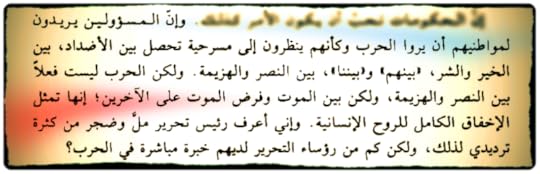
Governments like it that way. They want their people to see war as a drama of opposites, good and evil, “them” and “us”, victory or defeat. But war is primarily not about victory or defeat but about death and the infliction of death. It represents the total failure of the human spirit.
I have witnessed events that over the years can only be defined as an arrogance of power. After the Allied victory of 1918, the victors divided up the lands of their former enemies. In the space of just seventeen months, they created the borders of Northern Ireland, Yugoslavia and most of the Middle East. And I have spent my entire career- in Belfast and Sarajevo, in Beirut and Baghdad-watching these peoples within those borders burn. America invaded Iraq not for Saddam’s Hussein’s mythical “weapons of mass destruction” but to change the map of the Middle East, much as my father’s generation had done more than eighty years earlier.
We journalists should try to be the first impartial witnesses to history. If we have any reason for our existence, the least must be our ability to report history as it happens so no one can say: “We didn’t know- no one told us. “Our job is to monitor the centers of power”. That is the best definition of journalism I have heard: to challenge authority-all authority especially so when governments and politicians take us to war, when they have decided that they will kill and others will die.”
I was delighted by Obama’s speech in Cairo last week. For the first time, a US president acknowledged his country’s errors in the past and criticized Israel openly before a Muslim population. Finally, there is genuine apology and change of direction. Obama probably realizes that war does not work, terror does not work, and the healing must start from honestly facing the past. How he is going to translate his rhetoric into action, that is left as an open question that remains to be seen.
Sorrow. Indignation. Dismay. Abhorrence. Horror. Disgust. Wrath. All the things that haunt you through the nights.
If there’s one history book that totally changes the way I see the world, it must be this one. It is an extremely hard read, not so much because of its length but the gruesome story told. Robert Fisk leads us through a harrowing journey of tremendous human sufferings, repugnant betrayal and indifference of the West, monstrous dictators and deplorable cowardice and hypocrisy of Western media and journalism.
While reading this book, the horror haunted me and a voice in my mind kept screaming: wtf? Isn’t it enough? How can we stop this? It was almost impossible not to cringe even when I skimmed through the passages describing the Armenian genocide, Saddam Hussein’s gassing his own people, Iraqi children withering away into oblivion in despair without medicine, Algerian babies dying with their throats slit open. The Middle East is a hell disaster, as Fisk describes it, and it has a lot to do with colonialism, conquest, war and “human folly at an unstoppable scale”. If you ever wonder why some “terrorist”, “barbarous” Palestinians, Iraqis hate America so much, this book offers a perfect explanation. It does not take that much, if your enemy is all-powerful and can kill your people with impunity or your would-be “liberators” imposed sanctions that silently killed and stunted half a million children and blasted your whole family to “liberate” you. No, it does not take that much at all. Just a “little” bit of indifference, cowardice, prejudice, ignorance and lots of “strategic interest”.
The tragedy started soon after the fall of Ottoman empire. The Middle East was carved up and given to a bunch of families without any regard for the wish of the people, despite Woodrow Wilson’s good intentions. The Kurds were betrayed, so too were the Armenians, the Syrians, the Palestinians, the Algerians, and later on the Iranians, the Saudi Arabs, the Iraqi Shiites and Kurds alike. One has all the right to doubt the Western slogan of democracy when they support all the most ruthless demons as long as they are on our side and typically conveniently walk away once their enemies are defeated without casting a single thought on those left behind.
Maybe the chapter that outraged me the most was the one on Iraq, with all heinous hypocrisy of the Americans. After liberating Kuwait and dropping more bombs on Iraq than on Japan and Germany during WWII, the USA appealed to the Iraqis people to stand up against Saddam Hussein and grotesquely abandoned them to Saddam’s callous forces. They stood a very good chance of getting rid of Saddam that year, but fearing the instability the Kurds might have caused to our good friend Turkey, the Americans preferred Saddam. And during that same decade, covert bombings destroyed the lives of thousands of people, with other millions dying without any medicine or clean water. And how ludicrously the Americans expected to be greeted as heroes years afterward.
Fisk’s story is one of human wickedness and viciousness, both from the powerful and the vanquished. It’s a vicious cycle of greed and brutality, despair and revenge, and more punishment, and more revenge. And I think this is exactly the problem with unquestionable power and the lack of just punishment for all sides, Americans or Israelis or Arabs. He also righteously expresses his disgust at the bias of western media in the face of authority and censorship. I believe Fisk has a clear bias, a bias toward the victims, the weak, the defenseless to bring their voices to the world, to speak strongly and harshly against power, empire and violence. Not only a depressing and brutally honest history work, the book is a passionate and bitter memoir of a man of impeccable courage and integrity.
There’s something very poignant and profound about this book that deeply affected me. It is perhaps our attitude toward history and responsibility in the present. I am not an American, not a Western, but let me pretend I am one just for a moment. There is something disgraceful and horrifying about the functioning of our democracy. When I saw the huge Gaza demonstration in Sydney, something very odd occurred to me. Somehow, our governments no longer represent our public opinion, which is against war and for a Palestinian state. America went to war in 2003 when the rest of the world was against it. Somehow, our voices no longer count, somehow, our government have this tremendous power to ignore us to go their way.
Our policy, often made by people who are ignorant of history or culture of the local people, indifferent to their wishes and have no idea what it is like to shiver in fear under the torrents of bombs and missiles, can kill and bring tragedy to so many people living on the other side of the world: Vietnam, Iraq, Afghanistan, Chile... The wounds never heal. That makes us bear this responsibility of learning about the past, the history, the disasters made by our past leaders, to avoid repeating the same blunders in the present, to ceaselessly remind ourselves that somewhere in the world, people are suffering because of our governments’ actions. As Noam Chomsky says, everyone becomes a nationalist when it comes to criticizing our own country. But we must hold our government accountable for all the “collateral damage” and civilian killings and violation of international law if we ever want to keep our humanity intact.
It is so easy to sit down, watch tv and believe in the endless soap opera of the war on terror. But we must ask ourselves: why are they so angry at us? I think it is incredibly irresponsible to not know, to be ignorant and to label them all as “terrorists”, “fundamentalists”, “generically violent”. Every story of rage is one of despair, despair in the face of unstoppable power and endless humiliation. Fisk probably believes in collective guilt, and I must agree with him to a certain extent that each of us living in a democracy is inevitably partially responsible for these atrocities and the silence from our leaders to the injustice visited upon the people in the region. Learning history is vital especially in times of war, to understand that our conquest is doomed to fail in the end, that no one wants to be occupied and they will fight until the end of days to get rid of us. I wonder if Obama remembers that the Afghans were one of the fiercest armies that fought the Russians and British out of Afghanistan more than a century ago, and then the Soviets 30 years ago, why is he still sending more troops to this unwinnable war?
“Soldier and civilian, they died in their tens of thousands because death had been concocted for them, morality hitched like a halter round the warhorse so that we talk about “target-rich environments” and “collateral damage”-that most infantile of attempts to shake off the crime of killing-and report the victory parades, the tearing down of statues and the important of peace.
Governments like it that way. They want their people to see war as a drama of opposites, good and evil, “them” and “us”, victory or defeat. But war is primarily not about victory or defeat but about death and the infliction of death. It represents the total failure of the human spirit.
I have witnessed events that over the years can only be defined as an arrogance of power. After the Allied victory of 1918, the victors divided up the lands of their former enemies. In the space of just seventeen months, they created the borders of Northern Ireland, Yugoslavia and most of the Middle East. And I have spent my entire career- in Belfast and Sarajevo, in Beirut and Baghdad-watching these peoples within those borders burn. America invaded Iraq not for Saddam’s Hussein’s mythical “weapons of mass destruction” but to change the map of the Middle East, much as my father’s generation had done more than eighty years earlier.
We journalists should try to be the first impartial witnesses to history. If we have any reason for our existence, the least must be our ability to report history as it happens so no one can say: “We didn’t know- no one told us. “Our job is to monitor the centers of power”. That is the best definition of journalism I have heard: to challenge authority-all authority especially so when governments and politicians take us to war, when they have decided that they will kill and others will die.”
I was delighted by Obama’s speech in Cairo last week. For the first time, a US president acknowledged his country’s errors in the past and criticized Israel openly before a Muslim population. Finally, there is genuine apology and change of direction. Obama probably realizes that war does not work, terror does not work, and the healing must start from honestly facing the past. How he is going to translate his rhetoric into action, that is left as an open question that remains to be seen.

April 19, 2017
Superbly written. No punches pulled and harrowing, but recommended to anyone trying to make sense of the Middle East, and the West's meddling there...
I picked this up in an effort to try to make sense of the turmoil in the Middle East. Robert Fisk, Journalist/Correspondent of the Times and then the Independent shows that it's by no means easy to do that. This is always compelling reading whilst experiencing heartbreak and rage.
We follow his intrepid journeys into “trouble spots”, a euphemism as he's frequently under enemy fire. Be prepared to read of atrocities which beggar belief and make me feel ashamed at the number of times western eyes are averted, whilst steadily supporting the perpetrators. Our so-called democracies glistening in sunshine provided by media hacks running at their heels.
Robert Fisk gave me here an insight into quality international journalism at the sharp end – the ever human cameraderie of his fellow journalists, not all of whom would make it out alive. Contrast this with our media manipulations: eg “terrorist” = someone(s) who is anti Israel, committing “wicked crimes”. The most a U.S. president will say of an Israeli suicide gunman (who happens to be an Israeli army reservist) mowing down Arab worshippers in a mosque is 'a gross act of murder', 'a terrible tragedy'. But not a “wicked crime”. Only the other side commits those. Weasel words.
Israel's hold over the west, whatever the odds, is staggering.
There is so much here I don't know where to start – Afghanistan, Algeria, Iran, Iraq, Israel. Gaza, “Palestine”, Kuwait, Saudi Arabia…
Again and again, Robert Fisk shows this as a backdrop to his father Bill Fisk's experiences of fighting in WW1 (The Great War of Civilisation), the scars that left on him and those around him - eg. his refusal to execute a fellow comrade for desertion? His son's experiences on the journalistic front line bring him closer to his dead, irascible father, helping him to better understand the man and his world in general. Many of the chapters are prefaced very effectively with extracts from the war poets.
I read this on my Kindle - not ideal. I've since invested in a hard copy. I'll refer to it from time to time. Re- reading would be a long shot. But perhaps I could live to be 200+ with marbles intact! Unlikely, I fear.
Recommended – but in sensible doses.
I picked this up in an effort to try to make sense of the turmoil in the Middle East. Robert Fisk, Journalist/Correspondent of the Times and then the Independent shows that it's by no means easy to do that. This is always compelling reading whilst experiencing heartbreak and rage.
We follow his intrepid journeys into “trouble spots”, a euphemism as he's frequently under enemy fire. Be prepared to read of atrocities which beggar belief and make me feel ashamed at the number of times western eyes are averted, whilst steadily supporting the perpetrators. Our so-called democracies glistening in sunshine provided by media hacks running at their heels.
Robert Fisk gave me here an insight into quality international journalism at the sharp end – the ever human cameraderie of his fellow journalists, not all of whom would make it out alive. Contrast this with our media manipulations: eg “terrorist” = someone(s) who is anti Israel, committing “wicked crimes”. The most a U.S. president will say of an Israeli suicide gunman (who happens to be an Israeli army reservist) mowing down Arab worshippers in a mosque is 'a gross act of murder', 'a terrible tragedy'. But not a “wicked crime”. Only the other side commits those. Weasel words.
Israel's hold over the west, whatever the odds, is staggering.
There is so much here I don't know where to start – Afghanistan, Algeria, Iran, Iraq, Israel. Gaza, “Palestine”, Kuwait, Saudi Arabia…
Again and again, Robert Fisk shows this as a backdrop to his father Bill Fisk's experiences of fighting in WW1 (The Great War of Civilisation), the scars that left on him and those around him - eg. his refusal to execute a fellow comrade for desertion? His son's experiences on the journalistic front line bring him closer to his dead, irascible father, helping him to better understand the man and his world in general. Many of the chapters are prefaced very effectively with extracts from the war poets.
I read this on my Kindle - not ideal. I've since invested in a hard copy. I'll refer to it from time to time. Re- reading would be a long shot. But perhaps I could live to be 200+ with marbles intact! Unlikely, I fear.
Recommended – but in sensible doses.

June 18, 2010
But war is primarily not about victory or defeat but about death and the infliction of death. It represents the total failure of the human spirit.
It would be spurious to suggest that I'm not haunted by this book. Maybe it is a touch of American isolationism, perhaps a hint of xenophobia, that we -- meaning I -- don't peer more into these pages.
Robert Fisk has proven, amongst loftier achievements, to be an audible author. Dozens of times over the past three days I sighed and groaned under the spell of his vivid accounts. Whereas his devotion to the Iran-Iraq War was singular and crushing, his interlude revisiting the Armenian genocide was overly familiar given our reading last summer of Burning Tigris, a text Fisk cites on several turns. Yesterday afternoon I arrived at the plight of the Palestinians the expanse and compunction of the myriad Treaties and Accords, the all-too-familiar events which I recall so directly, the settlements, the Intifadas, the ultimate fall of Sharon and Arafat, who asked Fisk about Michael Collins’ fate.
All of these insights imprint themselves on the conscious reader. I hesitate to say accusations ring and that culpability adheres like the noisome legacy of an accident. I dare anyone to attempt otherwise.
It would be spurious to suggest that I'm not haunted by this book. Maybe it is a touch of American isolationism, perhaps a hint of xenophobia, that we -- meaning I -- don't peer more into these pages.
Robert Fisk has proven, amongst loftier achievements, to be an audible author. Dozens of times over the past three days I sighed and groaned under the spell of his vivid accounts. Whereas his devotion to the Iran-Iraq War was singular and crushing, his interlude revisiting the Armenian genocide was overly familiar given our reading last summer of Burning Tigris, a text Fisk cites on several turns. Yesterday afternoon I arrived at the plight of the Palestinians the expanse and compunction of the myriad Treaties and Accords, the all-too-familiar events which I recall so directly, the settlements, the Intifadas, the ultimate fall of Sharon and Arafat, who asked Fisk about Michael Collins’ fate.
All of these insights imprint themselves on the conscious reader. I hesitate to say accusations ring and that culpability adheres like the noisome legacy of an accident. I dare anyone to attempt otherwise.

November 8, 2009
I don't know why I read books like this. Or rather, I do--the Middle East is one of the more critical flash points of this century and I think it's important to know how we got to this point. But dammit, I just get so damn angry and depressed when I read such books that I sometimes think it's not worth it.
As I write this, the Chilcot inquiry into the Iraqi invasion is proceeding apace in the UK. The evidence that has come out so far has been bleak and depressing, and largely corroborates the views expressed by Robert Fisk in this book. Even more depressing is the thought that American supporters of the war will not view, read, or otherwise engage meaningfully with the evidence coming out of that inquiry.
As I write this, the Israeli government has declared a temporary stop to the building of settlements on land seized after the 1967 war. If history has anything to teach us, it is simply that this will mean nothing. If history has anything to teach us, it is that two peoples cannot demand the right to the same land without one being exterminated.
I can imagine Robert Fisk getting angry at all this. From this book, it would seem that he is, indeed, a very angry man. But he is pro-Arab? Pro-terrorist? Anti-American? A rabid anti-Semite? No. Fisk is not just angry at the actions of successive Israeli and American administrations. He is angry at Saddam, at the Iranian theocracy, at Yassar Arafat and at Hamas, and at all the various repressive and autocratic Middle Eastern regimes. He is angry at a history of colonial betrayals by British and French governments. He is especially angry at policies on all sides that result in innocent civilians, innocent women, children and babies, dying in pain, anguish and horror.
It should make us all angry.
I don't know why I read books like this. Or rather, I do. And you should read it too.
As I write this, the Chilcot inquiry into the Iraqi invasion is proceeding apace in the UK. The evidence that has come out so far has been bleak and depressing, and largely corroborates the views expressed by Robert Fisk in this book. Even more depressing is the thought that American supporters of the war will not view, read, or otherwise engage meaningfully with the evidence coming out of that inquiry.
As I write this, the Israeli government has declared a temporary stop to the building of settlements on land seized after the 1967 war. If history has anything to teach us, it is simply that this will mean nothing. If history has anything to teach us, it is that two peoples cannot demand the right to the same land without one being exterminated.
I can imagine Robert Fisk getting angry at all this. From this book, it would seem that he is, indeed, a very angry man. But he is pro-Arab? Pro-terrorist? Anti-American? A rabid anti-Semite? No. Fisk is not just angry at the actions of successive Israeli and American administrations. He is angry at Saddam, at the Iranian theocracy, at Yassar Arafat and at Hamas, and at all the various repressive and autocratic Middle Eastern regimes. He is angry at a history of colonial betrayals by British and French governments. He is especially angry at policies on all sides that result in innocent civilians, innocent women, children and babies, dying in pain, anguish and horror.
It should make us all angry.
I don't know why I read books like this. Or rather, I do. And you should read it too.

May 1, 2020
First class journalism.
A brutal, honest, accurate and heavily documented account of the many tragedies that have affected too many lives in modern Middle Eastern history.
It does not hide very uncomfortable but undeniable truths about events such as the British and French colonialism, the appalling Turkish genocide of the Armenian people (for which, shamelessly, the Turkish government has not yet taken full responsibility), the fanatical and inhumane ideology of the Taliban fighters, the criminal and shameful 2003 US/UK invasion of Iraq, for which Bush and his lackey Tony Blair have not been prosecuted (the lesson being: if you are head of a victorious military power, you can be responsible for the death of hundreds of thousand of innocent people and get away with it), the plight of the Palestinian people but also the many mistakes of their leadership, the horrific Sabra and Shatila massacre, and many other similar catastrophic events that have enveloped this troubled area in recent times.
Not for the faint-hearted, this is a book that strongly challenges the commonly-held belief that democracies always act externally in a democratic way, but that also sheds a cruel light on the corruption of many Middle-Eastern regimes, and on the toxic effects of religious fundamentalism and sectarianism in the minds of some groups and currents within the Middle East.
A very sobering but highly informative experience.
A brutal, honest, accurate and heavily documented account of the many tragedies that have affected too many lives in modern Middle Eastern history.
It does not hide very uncomfortable but undeniable truths about events such as the British and French colonialism, the appalling Turkish genocide of the Armenian people (for which, shamelessly, the Turkish government has not yet taken full responsibility), the fanatical and inhumane ideology of the Taliban fighters, the criminal and shameful 2003 US/UK invasion of Iraq, for which Bush and his lackey Tony Blair have not been prosecuted (the lesson being: if you are head of a victorious military power, you can be responsible for the death of hundreds of thousand of innocent people and get away with it), the plight of the Palestinian people but also the many mistakes of their leadership, the horrific Sabra and Shatila massacre, and many other similar catastrophic events that have enveloped this troubled area in recent times.
Not for the faint-hearted, this is a book that strongly challenges the commonly-held belief that democracies always act externally in a democratic way, but that also sheds a cruel light on the corruption of many Middle-Eastern regimes, and on the toxic effects of religious fundamentalism and sectarianism in the minds of some groups and currents within the Middle East.
A very sobering but highly informative experience.

March 19, 2021
Μου πήρε δυο μήνες για να το τελειώσω, με έκανε να βλέπω εφιάλτες, μου έμαθε πολλά πράγματα και δεν με άφησε να βαρεθώ στιγμή παρόλο το μέγεθός του. Ευχαρίστως διάβαζα άλλο τόσο.
Δεν έχω ξαναδιαβάσει κάτι τέτοιο. Δίνει ιστορικά στοιχεία για κάθε χώρα της Μέσης Ανατολής, εξηγεί πώς φτάσαμε στα σημερινά χάλια, μιλάει για τις δικές του εμπειρίες απο κάθε χώρα ( και έχει πολλές) και εκτός απο τις ιστορίες των ανθρώπων που έπαιξαν σημαντικό ρόλο στη διαμόρφωση της κατάστασης στην περιοχή, μας μιλάει και για τις ιστορίες απλών ανθρώπων, αυτών που ζουν τη φρίκη. Αυτών που γίνονται "παράπλευρες απώλειες". Που πεθαίνουν, βασανίζονται, χάνουν τους δικούς τους και ό,τι έχουν και δεν έχουν.
Απο την σοβιετική εισβολή στο Αφγανιστάν μεχρι την εισβολή των αμερικανών στο Ιρακ το 2003. Απο τις σπηλιές που κρυβόταν ο Οσάμα μπιν Λάντεν μέχρι την έρημο της Αλγερίας. Απο το ολοκαύτωμα των Αρμενίων μέχρι την άθλια πραγματικότητα στην Παλαιστίνη. Απο τα φρικτά βασανιστήρια στις φυλακές μέχρι τα χημικά όπλα του Σαντάμ. Απο τα μωρά που πέθαιναν με κομμένο το λαιμό στον εμφύλιο της Αλγερίας μέχρι τα χιλιάδες παιδιά που πέθαιναν στο Ιράκ λόγω του εμπάργκο.
Ιστορίες τρομαχτικές, φρικτές, εικόνες που στοίχειωσαν τον ύπνο μου. Mια συνεχής τραγωδία η ιστορία της Μέσης Ανατολής. Και δυστυχώς μάλλον έτσι θα συνεχίσει.
Ο Φισκ μιλάει και για τους συναδέλφους του. Για τον μονόπλευρο τρόπο που συχνά παρουσιάζουν τα γεγονότα και για το πώς επηρεάζουν την κοινή γνώμη και τελικά παίζουν ρόλο και στην διαμόρφωση της ιστορίας.
Είναι ένα βιβλίο που καλύπτει μια χρονική περίοδο απο την διάλυση της Οθωμανικής Αυτοκρατορίας μέχρι και το 2005 και έχει πολύ ενδιαφέροντα πράγματα να πει. Κρίμα που δεν έχει μεταφραστεί στα ελληνικά.
Δεν έχω ξαναδιαβάσει κάτι τέτοιο. Δίνει ιστορικά στοιχεία για κάθε χώρα της Μέσης Ανατολής, εξηγεί πώς φτάσαμε στα σημερινά χάλια, μιλάει για τις δικές του εμπειρίες απο κάθε χώρα ( και έχει πολλές) και εκτός απο τις ιστορίες των ανθρώπων που έπαιξαν σημαντικό ρόλο στη διαμόρφωση της κατάστασης στην περιοχή, μας μιλάει και για τις ιστορίες απλών ανθρώπων, αυτών που ζουν τη φρίκη. Αυτών που γίνονται "παράπλευρες απώλειες". Που πεθαίνουν, βασανίζονται, χάνουν τους δικούς τους και ό,τι έχουν και δεν έχουν.
Απο την σοβιετική εισβολή στο Αφγανιστάν μεχρι την εισβολή των αμερικανών στο Ιρακ το 2003. Απο τις σπηλιές που κρυβόταν ο Οσάμα μπιν Λάντεν μέχρι την έρημο της Αλγερίας. Απο το ολοκαύτωμα των Αρμενίων μέχρι την άθλια πραγματικότητα στην Παλαιστίνη. Απο τα φρικτά βασανιστήρια στις φυλακές μέχρι τα χημικά όπλα του Σαντάμ. Απο τα μωρά που πέθαιναν με κομμένο το λαιμό στον εμφύλιο της Αλγερίας μέχρι τα χιλιάδες παιδιά που πέθαιναν στο Ιράκ λόγω του εμπάργκο.
Ιστορίες τρομαχτικές, φρικτές, εικόνες που στοίχειωσαν τον ύπνο μου. Mια συνεχής τραγωδία η ιστορία της Μέσης Ανατολής. Και δυστυχώς μάλλον έτσι θα συνεχίσει.
Ο Φισκ μιλάει και για τους συναδέλφους του. Για τον μονόπλευρο τρόπο που συχνά παρουσιάζουν τα γεγονότα και για το πώς επηρεάζουν την κοινή γνώμη και τελικά παίζουν ρόλο και στην διαμόρφωση της ιστορίας.
Είναι ένα βιβλίο που καλύπτει μια χρονική περίοδο απο την διάλυση της Οθωμανικής Αυτοκρατορίας μέχρι και το 2005 και έχει πολύ ενδιαφέροντα πράγματα να πει. Κρίμα που δεν έχει μεταφραστεί στα ελληνικά.

September 8, 2017
وطني هل أنت بلاد الأعداء؟
وطني هل أنت بقية "داحس والغبراء" ؟
اقتتلوا بسيوف السنة والشيعة والعلويين
وحتى المنقرضين
نطاح كباش
ثيرانا تركب بعضا
فما أعجب مجتمع القردة
منذ قرون يشوون الشعب على نيران مناقلهم
قردة
سلطات القردة
أحزاب القردة
أجهزة القردة
قتلتنا الردة ...قتلتنا الردة
إن الواحد منا يحمل في الداخل ضده
ما زلنا نتوضأ بالذل ونمسح بالخرقة حد السيف
ما زلنا نتحجج بالبرد وحر الصيف
ما زال كتاب الله يعلق بالرمح العربية!
ما زال ....... بلحيته الصفراء
يؤلب باسم اللات
العصبيات القبلية
ما أوسخنا ...ما أوسخنا ...ما أوسخنا
ونكابر
ما أوسخنا.........
مظفر النواب - مع التصرف في ترتيب الأبيات
-------------------------------------------
هو الكتاب الأول من ثلاثية فيسكي بعنوان الحرب الكبرى تحت ذريعة الحضارة
وكما هو واضح من العنوان الفرعي : (الحرب الخاطفة) وهي التسمية التي أطلقها صدام حسين على حربه ضد إيران
ولكنها لم تكن حربا خاطفة بل كانت 8 سنوات دفعت فيها الحكومات والشعوب أثمان باهظة في السعي وراء سراب
فنلاحظ أن الكتاب ركز عليها بشكل كبير حوالي 5 فصول من أصل 8
الحرب الأفغانية لم يتم تغطيتها بالشكل الملائم تم تغطيتها في 3 فصول أي حوالي ثلث الكتاب .
الكتاب كمرجع تاريخي غير كافي لأنه لا يغطي الأحداث التاريخية بشكل كامل وشامل ،
لكن تبقى هناك جاذبية كبيرة لمؤلفات فيسكي (كما كان يحب أحد أصدقائه مناداته ) ، ما يشدني في كتب هذا الصحافي الحقيقي
هو موضوعيته ، والإنسانية الطاغية في طريقة عرضه ، أسلوبه السردي الجميل الذي يركز على قضية الإنسان والإنسان فقط ، لم تتشوه إنسانيته على مدار الأعوام ، ما شاهده خلال عمله يجعل الإنسان يفقد الرغبة في كل شئ ويلعن وجوده وحياته !!! ، لكنه مع هذا بقي محافظا على رسالته من أجل الأبرياء ومن أجل الحقيقة وطبعا كل هذا من أجل الإنسان ، كتبه هي صفحات من دماء تسطر ظلم الشعوب ومآسيهم وصراعهم مع طواغيتهم وضياعهم في عتمات السياسة ، و استلاب عقولهم بالشعارات الرنانة والوعود التي تحقق أمانيهم ورغباتهم .
الكتاب مليئ بالمعلومات والتفاصيل فمراجعة تفاصيل المحتوى ليست بالمهمة السهلة ، ولو أردت التكلم عن كل حادثة وعن كل تصريح وكل مجزرة فسأحتاج أن أكتب ملخص للكتاب ، وتعليق على كل فقرة منه .....
لكن هناك أمور لابد من الإشارة إليها :
1.إننا أمة تملك شئ عظيم في دينها ومحرك أساسي لتقدمها ونهوضها وهو ركيزة أساسية في الإسلام ألا هو الجهاد ، هذا الركن العظيم الذي مسخ وشوه وأخرج عن هدفه ومقصده وأصبح يستخدم فزاعة للتخويف من الدين ، روبرت فيسكي لاحظ هذا الأمر وبهره بشكل كبير وحتى أنه كان يقول أن الغرب لا يستطيع أبدا أن يفهم الحالة التي يخلقها هذا الركن العظيم في النفوس .
وطبعا معنى الجهاد الذي أقصده مختلف عن جهاد فاحش وداعش والملالي وغيرهم ، ربما أتحدث عن هذا الأمر في سياق آخر وفي مراجعة لكتاب يعالج هذا الموضوع .
2.تدرك مقدار تعاستنا بسبب لعنة النفط !!!!!!!!! هذا النفط الذي يسكب على الشعوب لإحراقها . أموال النفط الداعمة للمقاومة والثورات وصيغة الإسلام التي ترافق هذه الأموال وتصّدر للدول هي من عوامل بل من أهم العوامل التي تعيق ثوراتنا وكفاحنا ومحاولتنا للنهوض ، وأظن أن واقعنا المعاصر شاهد على هذا .
3.تتدرك أننا أمة بائسة تجتر تاريخها وتعيده بنفس الصورة وكأن تاريخنا مكرر بشكل ساخر فقط نستبدل الممثلين ، ما أشبه اليوم بالأمس كأن الدهر لا يرضى بنا حلفاء له ....
4.تدرك أن الدين من أهم الأركان التي يجب أن نبني عليها نهضتنا ، لأثره العظيم فلا نهضة من غير دين ،فلابد من إصلاح ديني (أو الأصح أن نقول نحتاج إلى عملية تنقية وإزالة تكلسات ، نحتاج عودة إلى الذات وإلى المنبع الاول دون أن تعيقنا تراكمات التاريخ و دون أن يقف تراثنا حائلا بيننا وبين تقدمنا نحتاج لإعادة قراءة للإسلام ونستفيد من الدرس التاريخي لصنع واقع أفضل ) حتى لا نبقى ندور في حلقة مفرغة .
كلامي كلام إنشائي ، أعرف ذلك ولكن لابد من قراءة التاريخ بتفاصيله
وكما قلت في مراجعة سابقة على كتاب من هذا النوع
أن الأمة التي لا تعرف تاريخها هي أمة بلا ذاكرة .
وطني هل أنت بقية "داحس والغبراء" ؟
اقتتلوا بسيوف السنة والشيعة والعلويين
وحتى المنقرضين
نطاح كباش
ثيرانا تركب بعضا
فما أعجب مجتمع القردة
منذ قرون يشوون الشعب على نيران مناقلهم
قردة
سلطات القردة
أحزاب القردة
أجهزة القردة
قتلتنا الردة ...قتلتنا الردة
إن الواحد منا يحمل في الداخل ضده
ما زلنا نتوضأ بالذل ونمسح بالخرقة حد السيف
ما زلنا نتحجج بالبرد وحر الصيف
ما زال كتاب الله يعلق بالرمح العربية!
ما زال ....... بلحيته الصفراء
يؤلب باسم اللات
العصبيات القبلية
ما أوسخنا ...ما أوسخنا ...ما أوسخنا
ونكابر
ما أوسخنا.........
مظفر النواب - مع التصرف في ترتيب الأبيات
-------------------------------------------
هو الكتاب الأول من ثلاثية فيسكي بعنوان الحرب الكبرى تحت ذريعة الحضارة
وكما هو واضح من العنوان الفرعي : (الحرب الخاطفة) وهي التسمية التي أطلقها صدام حسين على حربه ضد إيران
ولكنها لم تكن حربا خاطفة بل كانت 8 سنوات دفعت فيها الحكومات والشعوب أثمان باهظة في السعي وراء سراب
فنلاحظ أن الكتاب ركز عليها بشكل كبير حوالي 5 فصول من أصل 8
الحرب الأفغانية لم يتم تغطيتها بالشكل الملائم تم تغطيتها في 3 فصول أي حوالي ثلث الكتاب .
الكتاب كمرجع تاريخي غير كافي لأنه لا يغطي الأحداث التاريخية بشكل كامل وشامل ،
لكن تبقى هناك جاذبية كبيرة لمؤلفات فيسكي (كما كان يحب أحد أصدقائه مناداته ) ، ما يشدني في كتب هذا الصحافي الحقيقي
هو موضوعيته ، والإنسانية الطاغية في طريقة عرضه ، أسلوبه السردي الجميل الذي يركز على قضية الإنسان والإنسان فقط ، لم تتشوه إنسانيته على مدار الأعوام ، ما شاهده خلال عمله يجعل الإنسان يفقد الرغبة في كل شئ ويلعن وجوده وحياته !!! ، لكنه مع هذا بقي محافظا على رسالته من أجل الأبرياء ومن أجل الحقيقة وطبعا كل هذا من أجل الإنسان ، كتبه هي صفحات من دماء تسطر ظلم الشعوب ومآسيهم وصراعهم مع طواغيتهم وضياعهم في عتمات السياسة ، و استلاب عقولهم بالشعارات الرنانة والوعود التي تحقق أمانيهم ورغباتهم .
الكتاب مليئ بالمعلومات والتفاصيل فمراجعة تفاصيل المحتوى ليست بالمهمة السهلة ، ولو أردت التكلم عن كل حادثة وعن كل تصريح وكل مجزرة فسأحتاج أن أكتب ملخص للكتاب ، وتعليق على كل فقرة منه .....
لكن هناك أمور لابد من الإشارة إليها :
1.إننا أمة تملك شئ عظيم في دينها ومحرك أساسي لتقدمها ونهوضها وهو ركيزة أساسية في الإسلام ألا هو الجهاد ، هذا الركن العظيم الذي مسخ وشوه وأخرج عن هدفه ومقصده وأصبح يستخدم فزاعة للتخويف من الدين ، روبرت فيسكي لاحظ هذا الأمر وبهره بشكل كبير وحتى أنه كان يقول أن الغرب لا يستطيع أبدا أن يفهم الحالة التي يخلقها هذا الركن العظيم في النفوس .
وطبعا معنى الجهاد الذي أقصده مختلف عن جهاد فاحش وداعش والملالي وغيرهم ، ربما أتحدث عن هذا الأمر في سياق آخر وفي مراجعة لكتاب يعالج هذا الموضوع .
2.تدرك مقدار تعاستنا بسبب لعنة النفط !!!!!!!!! هذا النفط الذي يسكب على الشعوب لإحراقها . أموال النفط الداعمة للمقاومة والثورات وصيغة الإسلام التي ترافق هذه الأموال وتصّدر للدول هي من عوامل بل من أهم العوامل التي تعيق ثوراتنا وكفاحنا ومحاولتنا للنهوض ، وأظن أن واقعنا المعاصر شاهد على هذا .
3.تتدرك أننا أمة بائسة تجتر تاريخها وتعيده بنفس الصورة وكأن تاريخنا مكرر بشكل ساخر فقط نستبدل الممثلين ، ما أشبه اليوم بالأمس كأن الدهر لا يرضى بنا حلفاء له ....
4.تدرك أن الدين من أهم الأركان التي يجب أن نبني عليها نهضتنا ، لأثره العظيم فلا نهضة من غير دين ،فلابد من إصلاح ديني (أو الأصح أن نقول نحتاج إلى عملية تنقية وإزالة تكلسات ، نحتاج عودة إلى الذات وإلى المنبع الاول دون أن تعيقنا تراكمات التاريخ و دون أن يقف تراثنا حائلا بيننا وبين تقدمنا نحتاج لإعادة قراءة للإسلام ونستفيد من الدرس التاريخي لصنع واقع أفضل ) حتى لا نبقى ندور في حلقة مفرغة .
كلامي كلام إنشائي ، أعرف ذلك ولكن لابد من قراءة التاريخ بتفاصيله
وكما قلت في مراجعة سابقة على كتاب من هذا النوع
أن الأمة التي لا تعرف تاريخها هي أمة بلا ذاكرة .

December 10, 2017
I really don’t know what to do with this review. I’ve just read 1,300 pages detailing the worst kind of misery, torture, man’s inhumanity to his fellow man, greed, callousness, and naked aggression. Reading about the world Robert Fisk has seen during his 30+ years covering the Middle East quite simply leaves you with no hope. How can you read for example about the overthrow of the democratically elected president of Iran by American and British agents in 1953 and not draw a direct line to 1979 and the horrors the Ayatollah unleashed on the world and his own people? How can you not read about the US intervention in Iraq and its subsequent chaos and not draw a line to the British invasion 80 years earlier with similarly disastrous results? What of America proclaiming to the world the wonders of democracy and then supporting brutal regimes monetarily and militarily that crush democracy? Why must we time after time repeat the most horrific of mistakes and support the most brutal of men. Surely there must be some hope that this insanity will end? Sadly no, there is very little here that inspires hope. Very little that indicates anyone has learned any important lesson that could even temporarily delay the frightening downward trajectory the Middle East has been lurching toward for generations. And yet, we must continue, like Fisk, to bring light to these dark corners of the world where evil unfolds. If for no other reason than to give names to the thousands who die under brutal regimes or give their lives to win the freedom to rule themselves. Through telling the personal stories of those who suffer from the machinations of the great powers, this book does that and becomes an indispensable guide for anyone who wants to begin to understand this troubled patch of earth. Apologies for a somewhat incoherent review but this book truly shook me to my core. No amount of time or thought would allow me to write anything approaching what this book deserves.

April 2, 2017
With the world on the brink of another war, not much has changed and very little learned.
“For ‘terrorists’, read ‘guerrillas’ or – as President Ronald Reagan would call them in the years to come – ‘freedom fighters’. Terrorists, terrorists, terrorists. In the Middle East, in the entire Muslim world, this word would become a plague, a meaningless punctuation mark in all our lives, a full stop erected to finish all discussion of injustice, constructed as a wall by Russians, Americans, Israelis, British, Pakistanis, Saudis, Turks, to shut us up. Who would ever say a word in favour of terrorists? What cause could justify terror? So our enemies are always ‘terrorists’. In the seventeenth century, governments used ‘heretic’ in much the same way, to end all dialogue, to prescribe obedience.”
“For ‘terrorists’, read ‘guerrillas’ or – as President Ronald Reagan would call them in the years to come – ‘freedom fighters’. Terrorists, terrorists, terrorists. In the Middle East, in the entire Muslim world, this word would become a plague, a meaningless punctuation mark in all our lives, a full stop erected to finish all discussion of injustice, constructed as a wall by Russians, Americans, Israelis, British, Pakistanis, Saudis, Turks, to shut us up. Who would ever say a word in favour of terrorists? What cause could justify terror? So our enemies are always ‘terrorists’. In the seventeenth century, governments used ‘heretic’ in much the same way, to end all dialogue, to prescribe obedience.”

September 3, 2008
A Tour de Force...
This book is a literary opus. It is extremely well-written; and I am talking of a book of 1,000 plus pages. Surprisingly, it is written in the first person; based on interviews and up front experiences. The author has lived in the Middle East for over thirty years and the book is journalistic-history with the emphasis on journalism.
This is a book about war - this is no dry, academic dissertation - it is a personal experience and I suspect somewhat of a catharsis and a labour of love for the author to have written this book.
I am no expert on the Middle East, but I felt I learnt a lot from this book. Also, after reading this book I have no great desire to visit the Middle East - I prefer my quiet and peaceful Canadian homeland.
The book made me re-evaluate my views on Israel. To borrow a christian expression: there are NO saints in the Middle East - or more to the point; no peacemakers.
Mr. Fisk has spent considerable time in Lebanon and Israel - plus Afghanistan, Iraq, Iran, Jordan and Algeria. He writes with authority about each of these countries - about the turbulent catastrophic events that have occurred there: the Iran-Iraq wars, the Russian, and then American invasion of Afghanistan, the Gulf War and the current disastrous American invasion/occupation of Iraq, the Israeli-Palestinian-Lebanese war (or annexation of Palestinian land)- it is all in this book. Even the Armenian genocide has first-hand accounts by Mr. Fisk.
With war, Mr. Fisk does not spare us - some of the descriptions are horrific and some are beyond the horrific. There are mutilations of children by "Smart bombs," Israeli helicopters kill children in ambulances, suicide bombers kill children in pizzerias, Iranian armies recruit teenagers who believe they will go to "nirvana" to walk through minefields.
Torture is endemic. None who have gone to the Middle East have resisted this disease (we all saw the pictures of Abu Ghraib).
Mr. Fisk also does a Michael Moore by reclaiming the remnants of a missile that killed children. He returns with these fragments to the manufacturers in the United States and presents them with the photographic consequences of their nefarious product.
No one is spared or excused by Mr. Fisk. All come under scrutiny in his writings and first hand observations.
In a sense the book (all 1,038 pages) can be quite relentless. Part of this is because there are no solutions offered. How does one plea with a suicide bomber? How does one reason with a people who believe it their right to dispossess another group from their homes?
There are times when Mr. Fisk seems to feel he has a monopoly on the truth - he is for the most part quite scathing of other newspapers and media except his own. I am a frequent reader of "The New York Times" and cannot remember a favourable article on the Bush administration in that paper for several years. From reading Mr. Fisk's book, one would think that The New York Times was a virtual mouthpiece of the Bush administration; constantly trumpeting the alleged successes of the U.S. in all Middle Eastern countries.
Also in a chapter on Afghanistan, Mr. Fisk states that the Taliban were not actively profiting from the exportation of narcotics. Mr. Fisk cites a reference from "Taliban" a book by Ahmed Rashid -on the treachery of Afghan warlords. In the same book by Mr. Rashid, there is an entire chapter devoted to describing how the Taliban were profiting enormously from heroin and drug trafficking.
I also found Mr. Fisk on shakier ground when describing the world after-effects of 9/11. What does he expect a superpower to do when major cities are senselessly and ruthlessly attacked - initiate peace talks with Al Qaeda?!
Though it is deplorable and has cost massive human loss - the invasions of Afghanistan and Iraq are "civilized" if we compare them to other 20th century invasions - like the German invasion of Poland, or for that matter; the American invasion of Vietnam. In Iraq a vicious dictator was deposed and arrested. In both countries, real elections have occurred for the first time in many years.
Nevertheless this is a very moving and passionate book - there is much to be gained from a thorough reading of it. I now have a different perspective and will read articles on the Middle East with a more discerning eye.
This book is a literary opus. It is extremely well-written; and I am talking of a book of 1,000 plus pages. Surprisingly, it is written in the first person; based on interviews and up front experiences. The author has lived in the Middle East for over thirty years and the book is journalistic-history with the emphasis on journalism.
This is a book about war - this is no dry, academic dissertation - it is a personal experience and I suspect somewhat of a catharsis and a labour of love for the author to have written this book.
I am no expert on the Middle East, but I felt I learnt a lot from this book. Also, after reading this book I have no great desire to visit the Middle East - I prefer my quiet and peaceful Canadian homeland.
The book made me re-evaluate my views on Israel. To borrow a christian expression: there are NO saints in the Middle East - or more to the point; no peacemakers.
Mr. Fisk has spent considerable time in Lebanon and Israel - plus Afghanistan, Iraq, Iran, Jordan and Algeria. He writes with authority about each of these countries - about the turbulent catastrophic events that have occurred there: the Iran-Iraq wars, the Russian, and then American invasion of Afghanistan, the Gulf War and the current disastrous American invasion/occupation of Iraq, the Israeli-Palestinian-Lebanese war (or annexation of Palestinian land)- it is all in this book. Even the Armenian genocide has first-hand accounts by Mr. Fisk.
With war, Mr. Fisk does not spare us - some of the descriptions are horrific and some are beyond the horrific. There are mutilations of children by "Smart bombs," Israeli helicopters kill children in ambulances, suicide bombers kill children in pizzerias, Iranian armies recruit teenagers who believe they will go to "nirvana" to walk through minefields.
Torture is endemic. None who have gone to the Middle East have resisted this disease (we all saw the pictures of Abu Ghraib).
Mr. Fisk also does a Michael Moore by reclaiming the remnants of a missile that killed children. He returns with these fragments to the manufacturers in the United States and presents them with the photographic consequences of their nefarious product.
No one is spared or excused by Mr. Fisk. All come under scrutiny in his writings and first hand observations.
In a sense the book (all 1,038 pages) can be quite relentless. Part of this is because there are no solutions offered. How does one plea with a suicide bomber? How does one reason with a people who believe it their right to dispossess another group from their homes?
There are times when Mr. Fisk seems to feel he has a monopoly on the truth - he is for the most part quite scathing of other newspapers and media except his own. I am a frequent reader of "The New York Times" and cannot remember a favourable article on the Bush administration in that paper for several years. From reading Mr. Fisk's book, one would think that The New York Times was a virtual mouthpiece of the Bush administration; constantly trumpeting the alleged successes of the U.S. in all Middle Eastern countries.
Also in a chapter on Afghanistan, Mr. Fisk states that the Taliban were not actively profiting from the exportation of narcotics. Mr. Fisk cites a reference from "Taliban" a book by Ahmed Rashid -on the treachery of Afghan warlords. In the same book by Mr. Rashid, there is an entire chapter devoted to describing how the Taliban were profiting enormously from heroin and drug trafficking.
I also found Mr. Fisk on shakier ground when describing the world after-effects of 9/11. What does he expect a superpower to do when major cities are senselessly and ruthlessly attacked - initiate peace talks with Al Qaeda?!
Though it is deplorable and has cost massive human loss - the invasions of Afghanistan and Iraq are "civilized" if we compare them to other 20th century invasions - like the German invasion of Poland, or for that matter; the American invasion of Vietnam. In Iraq a vicious dictator was deposed and arrested. In both countries, real elections have occurred for the first time in many years.
Nevertheless this is a very moving and passionate book - there is much to be gained from a thorough reading of it. I now have a different perspective and will read articles on the Middle East with a more discerning eye.

April 14, 2018
Acknowledgements
List of Maps
Preface
--The Great War for Civilisation: The Conquest of the Middle East
Select Bibliography
Notes
Chronology
Index
List of Maps
Preface
--The Great War for Civilisation: The Conquest of the Middle East
Select Bibliography
Notes
Chronology
Index

October 31, 2017
Fisk'e katılmadığım bazı hususlar olsa da Ortadoğu'da (Afganistan, İran, Irak, İsrail, Filistin ve Cezayir'de) özellikle 1980-2005 arası yaşanan önemli olaylara tanıklık eden bir gazeteci olması nedeniyle Ortadoğu'yu tanımak için okumaya değer bir eser. Fisk yaşananları (savaş, işkence vs.) okuyanları rahatsız edecek şekilde detaylı olarak paylaşmış, okurken sarsıldığınız şeyleri birilerinin yaşadığını düşünmek çok acı.
Kitapla ilgili Goodreads'teki yorumlardan birini (Ryan Mishap isimli kullanıcın)çok etkileyici olduğu için paylaşmak istedim: "I was listening to an interview with Fisk, thirty years a reporter in the Middle East, on Democracy Now when Amy Goodman asked him what gave him hope. Five, ten, fifteen seconds of silence and then one word: nothing. The flat tone and finality of it caused me to choke on tears. Silence, then Goodman, almost incredulous, asked, “Nothing?” Fisk, responding, “No, nothing.” Then, sensing that this isn’t what the audience wanted—or perhaps needed—he back-pedaled and said something about compassionate people, etc. It is the “nothing” that stays in my thoughts."
"Biz tarihten kaçmayı başarabiliriz. Hayatlarımızda belli çizgiler çekebiliriz. Batı'daki yeni hayatlarımızı 1918 ve 1945 yılları yarattı. Yeniden başlayabildik. Aynısını Ortadoğu halklarına da tavsiye edebileceğimizi sanıyoruz. Ama yapamayız. Tarih (bir adaletsizlik tarihi) onları çok derinden sarıyor."
"... bu büyük korku diyarından nihayet ayrıldığımda ya da ayrılırsam, beni her zaman gözyaşlarına boğan tek şiirin, Christina Rosetti'nin 'Yaşgünü' şiirinin tavsiyesine uymaya çalışacağım: Hatırlamak ve üzülmektense
Unutmak ve gülümsemek çok daha iyi"
Kitapla ilgili Goodreads'teki yorumlardan birini (Ryan Mishap isimli kullanıcın)çok etkileyici olduğu için paylaşmak istedim: "I was listening to an interview with Fisk, thirty years a reporter in the Middle East, on Democracy Now when Amy Goodman asked him what gave him hope. Five, ten, fifteen seconds of silence and then one word: nothing. The flat tone and finality of it caused me to choke on tears. Silence, then Goodman, almost incredulous, asked, “Nothing?” Fisk, responding, “No, nothing.” Then, sensing that this isn’t what the audience wanted—or perhaps needed—he back-pedaled and said something about compassionate people, etc. It is the “nothing” that stays in my thoughts."
"Biz tarihten kaçmayı başarabiliriz. Hayatlarımızda belli çizgiler çekebiliriz. Batı'daki yeni hayatlarımızı 1918 ve 1945 yılları yarattı. Yeniden başlayabildik. Aynısını Ortadoğu halklarına da tavsiye edebileceğimizi sanıyoruz. Ama yapamayız. Tarih (bir adaletsizlik tarihi) onları çok derinden sarıyor."
"... bu büyük korku diyarından nihayet ayrıldığımda ya da ayrılırsam, beni her zaman gözyaşlarına boğan tek şiirin, Christina Rosetti'nin 'Yaşgünü' şiirinin tavsiyesine uymaya çalışacağım: Hatırlamak ve üzülmektense
Unutmak ve gülümsemek çok daha iyi"

Read
April 27, 2020Excellent

November 13, 2019
Absolutely stunning. Jaw-dropping in its scope and written to cut you to the bone with its honesty, this has been one of the best books I've *ever* read about conflict and what that does to humanity. Due to the experiences of the author and his life lived at the front line, his tone can at times be acid when he addresses the reader with regards to those he holds responsible for the murder and maim he has witnessed. But he is the voice of reason, the echo of morality in a world which wishes to dismiss the fact that humanity is in possession of a conscience. Some of the stories in this book will break your heart; the vivid descriptions of war, death and useless suffering are enough to make one want to forget these things are happening *every day*. Please read this, no matter if you are a history buff or not. If you're a human being, you should care about what Fisk has to tell us.

January 6, 2013
I imagine the editor of this book thinking once every two pages "hm... maybe we could cut this out?" and then the very next paragraph being a rant about editorial intervention/dilution/censorship, which leads the editor to think "hm... don't really want to be the subject of one of *those*. I guess I'll just let him ramble on. Which is too bad, because at 800 pages or so this would have been an amazing, amazing book. Without the subtraction of 500 pages, it's just really good.
It's also not really a book--it's a series of short books. There are great short books on Afghanistan, the Armenian genocide (um, I mean, 'random disappearance of hundreds of thousands of Armenians'), the Iran/Iraq war, the arms trade, and Algeria. There are pretty good short books about the first Iraq war and Israel/Palestine. There are very boring short books about Fisk's grandfather, Fisk's own massive sense of self-righteousness and self-doubt, and the invasion of Iraq (really? the 'willing' killed civilians? tell me more for another 200 pages!).
The problem for Fisk is that he quite rightly believes in bringing individuals to the reader's attention, so we don't get all abstract about the slaughter and carnage: these are real people. But when you pile on more than two or three names, the individuals become just as abstract, and my anger, at least, started to dissipate. Once we got back to narrative history, my anger picked up again. And surely that's the purpose of this book--to make Westerners angry at our governments and ourselves. Mission accomplished, as the President once said.
It's also not really a book--it's a series of short books. There are great short books on Afghanistan, the Armenian genocide (um, I mean, 'random disappearance of hundreds of thousands of Armenians'), the Iran/Iraq war, the arms trade, and Algeria. There are pretty good short books about the first Iraq war and Israel/Palestine. There are very boring short books about Fisk's grandfather, Fisk's own massive sense of self-righteousness and self-doubt, and the invasion of Iraq (really? the 'willing' killed civilians? tell me more for another 200 pages!).
The problem for Fisk is that he quite rightly believes in bringing individuals to the reader's attention, so we don't get all abstract about the slaughter and carnage: these are real people. But when you pile on more than two or three names, the individuals become just as abstract, and my anger, at least, started to dissipate. Once we got back to narrative history, my anger picked up again. And surely that's the purpose of this book--to make Westerners angry at our governments and ourselves. Mission accomplished, as the President once said.

May 17, 2017
This is a book that is about Fisk himself as it is about the events that he has witnessed and reported on inside the Greater Middle East. It is not a good book, by that I mean it does not leave the reader feeling pleasant or even satisfied. That is why it is in many ways a great book.
Fisk has lived in Lebanon and reported on the events of the Middle East since the late 1970s, he was on the ground when the Soviets invaded Afghanistan, he was there when they left and the nation was wracked with calamity and marred in tribal tragedy. He was there to interview Osama Bin Laden, when he was a freedom fighting hero to when he was a relatively unknown dangerous man of some interest. Reporting with constant wariness, warning not only from Afghanistan but throughout the Middle East, that something big was coming. And suddenly when it occurred in 2001, the Middle East, Islam, Bin Laden all suddenly mattered.
Fisk was there when the United States and its allies invaded Afghanistan and when Bin Laden’s name was suddenly on everyone’s lip alongside the words ‘evil’ or ‘terrorist’. He reported on the terrible crimes of the Taliban, the Northern Alliance and the murderous operations of the United States as they blew innocent human beings apart in their pursuit of Bin Laden and self-righteous justice.
This is a book that spans the recent histories of Algeria, Iraq, Iran, Syria, Palestine, the Gulf States and Lebanon. Though it was written in 2006, it is as still relevant. It foreshadows what we are now witnessing and what those inside the Middle East are suffering, now is history and the future is unfortunately horribly inevitable. Especially so long as we continue to see the same patterns of intervention and despotic leaders both government and tribal use religion, nationalism and ethnicity to sow further seeds of violence.
Fisk, though a journalist has the command of an interested and well informed historian. He does narrate and impose his opinions as he reveals facts and dates and while some facts have been slightly ajar, he gives extensive sources and notes to make this a comprehensive and important read. Because of that it is a dense book.
A book filled with names of actual human beings, not merely the great men of history. Those significant heroes and villains of the world stage who seem to take up so much attention and focus when depicting events and regions. This is a book that painfully tells, however briefly, the stories of the many dead. The people who were tortured to death, blown to pieces, beheaded, gunned down or shot out of the sky. Soldiers, journalists, women, children and old men. Those beings that make the bloody tapestry of history, it is with their sinews and flesh that the fabric of life is bound and yet it is easy to forget this. Fisk however does not let the reader forget so easy.
Many have condemned this book and Fisk in general of being Anti-Israel or Anti-West. This is not the case. He is anti-atrocity, anti-murder, anti-abuse. The book has as much criticism for Iraq and Iran under both the Shah and Ayatollah, and when Saddam was an important friend to the West to when he was a pariah ruler. It calls to attention the violence of both Hamas, Hezbollah and the PLO while also recounting the Israeli violations and the terrible conduct of their South Lebanese militia allies.
It is anti-West in the sense that it depicts the many crimes against individuals from the early days of colonial supremacy, whether this was in gassing tribesmen from aeroplanes, to the many massacres in the streets of Arab towns, deceit of politics as was the case at Versailles to the more recent support of tyrants and terror groups up to the invasions of Iraq and bombing of Lebanese towns during its civil war. It reports on the events as they horribly are. Western narrative be damned.
It is an unkind book to the legacies of both George Bush’s and Prime Minister Blair, along with their many eager allies. It is unflattering to the murderous Assad regimes of Syria, the torturers of Abu Gharib (both pre-American invasion and post), it criticises Yasser Arafat and his many Israeli counter parts with as much objectivity.
Is it empathetic to the Muslim world? In so much that Fisk lives among Shia, Sunnis, Maronite, Jew alike and sees them as human beings with unique perspectives and understandings of their own cultures and theologies. It does not tar Islam as the harbinger of global misery nor does he praise it as being a complete philosophy absent of some condemnations, especially when its holiest living men can so easily brutalise their fellow man. This goes for all religions, both theological and worldly. The problem lies in Man. Not in whatever ideology they claim to murder for. Fisk portrays this simply with the events of the real world.
Robert Fisk perhaps loves the Middle East as much as he despises it. He is honest with it. Such honesty is painful and important. We cannot live without truth and facts, at least not for the long run. I highly recommend this book as a historical read for those interested in the region. In some ways it is very prophetic, that comes as no surprise as journalists such as Fisk, shop keepers and taxi drivers along with peasants and hair dressers who live in the world that the pages depict all are in some ways all the prophets of now. Seeing then, what we now know now They see and feel the World as it thrives into perpetual chaos around them, while experts and elites dribble on and on with self-importance the mortals of common pain actually understand.
Unfortunately, those of us living in the powerful nations surround ourselves in the experts of failure, absorb ourselves in the lies or self-empowering narrative and elect rulers that revel in rhetoric and ply the craft of war and occupation. Imperialism is not dead, it is rebranded and has adapted. Its consequences are now far worse. Fisk has in this book and continues to do so from his minor pulpit at the Independent to tell the stories of real people as war and tyranny bludgeons on. For those brave enough, those moral enough, those respectful enough give Fisk your eyes and ears, it is the least we can do for our victims.
95 %
Fisk has lived in Lebanon and reported on the events of the Middle East since the late 1970s, he was on the ground when the Soviets invaded Afghanistan, he was there when they left and the nation was wracked with calamity and marred in tribal tragedy. He was there to interview Osama Bin Laden, when he was a freedom fighting hero to when he was a relatively unknown dangerous man of some interest. Reporting with constant wariness, warning not only from Afghanistan but throughout the Middle East, that something big was coming. And suddenly when it occurred in 2001, the Middle East, Islam, Bin Laden all suddenly mattered.
Fisk was there when the United States and its allies invaded Afghanistan and when Bin Laden’s name was suddenly on everyone’s lip alongside the words ‘evil’ or ‘terrorist’. He reported on the terrible crimes of the Taliban, the Northern Alliance and the murderous operations of the United States as they blew innocent human beings apart in their pursuit of Bin Laden and self-righteous justice.
This is a book that spans the recent histories of Algeria, Iraq, Iran, Syria, Palestine, the Gulf States and Lebanon. Though it was written in 2006, it is as still relevant. It foreshadows what we are now witnessing and what those inside the Middle East are suffering, now is history and the future is unfortunately horribly inevitable. Especially so long as we continue to see the same patterns of intervention and despotic leaders both government and tribal use religion, nationalism and ethnicity to sow further seeds of violence.
Fisk, though a journalist has the command of an interested and well informed historian. He does narrate and impose his opinions as he reveals facts and dates and while some facts have been slightly ajar, he gives extensive sources and notes to make this a comprehensive and important read. Because of that it is a dense book.
A book filled with names of actual human beings, not merely the great men of history. Those significant heroes and villains of the world stage who seem to take up so much attention and focus when depicting events and regions. This is a book that painfully tells, however briefly, the stories of the many dead. The people who were tortured to death, blown to pieces, beheaded, gunned down or shot out of the sky. Soldiers, journalists, women, children and old men. Those beings that make the bloody tapestry of history, it is with their sinews and flesh that the fabric of life is bound and yet it is easy to forget this. Fisk however does not let the reader forget so easy.
Many have condemned this book and Fisk in general of being Anti-Israel or Anti-West. This is not the case. He is anti-atrocity, anti-murder, anti-abuse. The book has as much criticism for Iraq and Iran under both the Shah and Ayatollah, and when Saddam was an important friend to the West to when he was a pariah ruler. It calls to attention the violence of both Hamas, Hezbollah and the PLO while also recounting the Israeli violations and the terrible conduct of their South Lebanese militia allies.
It is anti-West in the sense that it depicts the many crimes against individuals from the early days of colonial supremacy, whether this was in gassing tribesmen from aeroplanes, to the many massacres in the streets of Arab towns, deceit of politics as was the case at Versailles to the more recent support of tyrants and terror groups up to the invasions of Iraq and bombing of Lebanese towns during its civil war. It reports on the events as they horribly are. Western narrative be damned.
It is an unkind book to the legacies of both George Bush’s and Prime Minister Blair, along with their many eager allies. It is unflattering to the murderous Assad regimes of Syria, the torturers of Abu Gharib (both pre-American invasion and post), it criticises Yasser Arafat and his many Israeli counter parts with as much objectivity.
Is it empathetic to the Muslim world? In so much that Fisk lives among Shia, Sunnis, Maronite, Jew alike and sees them as human beings with unique perspectives and understandings of their own cultures and theologies. It does not tar Islam as the harbinger of global misery nor does he praise it as being a complete philosophy absent of some condemnations, especially when its holiest living men can so easily brutalise their fellow man. This goes for all religions, both theological and worldly. The problem lies in Man. Not in whatever ideology they claim to murder for. Fisk portrays this simply with the events of the real world.
Robert Fisk perhaps loves the Middle East as much as he despises it. He is honest with it. Such honesty is painful and important. We cannot live without truth and facts, at least not for the long run. I highly recommend this book as a historical read for those interested in the region. In some ways it is very prophetic, that comes as no surprise as journalists such as Fisk, shop keepers and taxi drivers along with peasants and hair dressers who live in the world that the pages depict all are in some ways all the prophets of now. Seeing then, what we now know now They see and feel the World as it thrives into perpetual chaos around them, while experts and elites dribble on and on with self-importance the mortals of common pain actually understand.
Unfortunately, those of us living in the powerful nations surround ourselves in the experts of failure, absorb ourselves in the lies or self-empowering narrative and elect rulers that revel in rhetoric and ply the craft of war and occupation. Imperialism is not dead, it is rebranded and has adapted. Its consequences are now far worse. Fisk has in this book and continues to do so from his minor pulpit at the Independent to tell the stories of real people as war and tyranny bludgeons on. For those brave enough, those moral enough, those respectful enough give Fisk your eyes and ears, it is the least we can do for our victims.
95 %

April 12, 2014
"We might be able to escape history. We can draw lines in our lives. The years of 1918 and 1945 created our new lives in the West. We could start again. We think we can recommend the same to the peoples of the Middle East. But we can't. History - a history of injustice - cloaks them too deeply" (1285). In the Gestalt's Web in which we live, the actions taken by living, conscious beings obey the universal laws of growth, cause, effect. They take on a life of their own, and continue to grow down through history, leaving their effects in ever larger patterns as the years go on. Fisk says: "How to correct history, that's the thing" (1286). How do we break cycles and begin new patterns of justice and reparation?
Fisk speaks as a pacifist and as one who has acquired his pacifism from direct experience of the horrors of war and the excesses of power through dehumanization. For 30 years at the time of writing this book, Fisk lived in the Middle East and was witness to some of the most horrific wars of the past 100 years. Fisk's perspective is equally critical of all sides in violent actions. Be it oppressed or oppressor, no one is safe when it comes to his criticism of injustices committed upon innocent human victims. He will call out the Palestinian for acts of violence as quickly as he will the Israeli soldier. Violence does beget violence, but Fisk attempts to show us that violence has a life of its own even without immediate reciprocal violence. It shapes the formative years of children who hear and see the realities of its after-effects, and conditions attitudes, minds, traditions, and narratives of foreign cultures and unfamiliar beliefs. This is part of the universal law. Given this, Fisk comments at one point about how remarkably restrained the Muslim world has been considering the violence and occupation inflicted on it by colonialists.
Fisk's love for human life comes through in his passion for telling us of atrocities. This passion is not meant simply to shock, it's meant to tell the truth as much as possible in a profession that cannot escape bias. Fisk's attempt at objectivity takes the form of valuing human life above all else, and from that equality of the human he will focus on the atrocity itself and speak against the motives of death. To Fisk, nothing justifies killing. It can be explained, but not justified. That is one of the central messages of this work. Another is the thread of hope that he sees in the small actions of others - beginning with his father's refusal to execute an Australian deserter in WWI, and continuing with the Iraqi Shiite soldier who comments: "Islam is a very easy religion, but some radicals make it difficult" (1270).
Religion, like anything else, becomes co-opted and distorted for the purposes of power. Ten years after this writing we see greater effects of the disregard of the human in favor of the ideological. Was religion created by the divine for its own sake, or for the sake of the All-Merciful? If the All-Merciful, how can it be interpreted in such a violent way? Ostensibly "religious" conflicts in places such as Syria, Iraq, Palestine, Egypt and Lebanon are at base about human failure and the growth of unjust historic actions and not about religion. Religion is a cultural cover - a language - in a part of the world where religion permeates every area of discourse. The distortion begins where the language becomes mixed up with personal human failures and shortcomings. The ideological becomes confused with ultimate truth, with the essence of the divine message.
Fisk is not a religious man per se, but his passion for justice gets to the core of all legitimate religious truth and purpose. This book is the statement of his career.
Fisk speaks as a pacifist and as one who has acquired his pacifism from direct experience of the horrors of war and the excesses of power through dehumanization. For 30 years at the time of writing this book, Fisk lived in the Middle East and was witness to some of the most horrific wars of the past 100 years. Fisk's perspective is equally critical of all sides in violent actions. Be it oppressed or oppressor, no one is safe when it comes to his criticism of injustices committed upon innocent human victims. He will call out the Palestinian for acts of violence as quickly as he will the Israeli soldier. Violence does beget violence, but Fisk attempts to show us that violence has a life of its own even without immediate reciprocal violence. It shapes the formative years of children who hear and see the realities of its after-effects, and conditions attitudes, minds, traditions, and narratives of foreign cultures and unfamiliar beliefs. This is part of the universal law. Given this, Fisk comments at one point about how remarkably restrained the Muslim world has been considering the violence and occupation inflicted on it by colonialists.
Fisk's love for human life comes through in his passion for telling us of atrocities. This passion is not meant simply to shock, it's meant to tell the truth as much as possible in a profession that cannot escape bias. Fisk's attempt at objectivity takes the form of valuing human life above all else, and from that equality of the human he will focus on the atrocity itself and speak against the motives of death. To Fisk, nothing justifies killing. It can be explained, but not justified. That is one of the central messages of this work. Another is the thread of hope that he sees in the small actions of others - beginning with his father's refusal to execute an Australian deserter in WWI, and continuing with the Iraqi Shiite soldier who comments: "Islam is a very easy religion, but some radicals make it difficult" (1270).
Religion, like anything else, becomes co-opted and distorted for the purposes of power. Ten years after this writing we see greater effects of the disregard of the human in favor of the ideological. Was religion created by the divine for its own sake, or for the sake of the All-Merciful? If the All-Merciful, how can it be interpreted in such a violent way? Ostensibly "religious" conflicts in places such as Syria, Iraq, Palestine, Egypt and Lebanon are at base about human failure and the growth of unjust historic actions and not about religion. Religion is a cultural cover - a language - in a part of the world where religion permeates every area of discourse. The distortion begins where the language becomes mixed up with personal human failures and shortcomings. The ideological becomes confused with ultimate truth, with the essence of the divine message.
Fisk is not a religious man per se, but his passion for justice gets to the core of all legitimate religious truth and purpose. This book is the statement of his career.

July 21, 2018
‘The Great War For Civilisation’ is where journalism meets history.
An exhausting litany (though certainly not in any religious sense) of crimes against humanity that leaves the reader’s sensibilities battered and bruised. Even at 1,200 pages the relentless and deliberate categorisation of torture, despotism, wars, assassinations, death and suffering allows the mind no space nor opportunity to acquire or develop its emotional self defence mechanism. Everytime numbness begins to set in, Fisk hits you with another injustice, another child lying dead in a hospital bed with its arms and legs missing.
His footnotes alone are exhaustive and exhausting. This is not an easy read.
Which helps to explain why I’ve previously never got beyond about 600 pages. This time I began at about the halfway point and made it successfully to the finish line. It was an ordeal.
I rarely give stars anymore, books are personal and what does it matter if I like it? But previously I gave this 5 stars, frankly it deserves more.
What strikes me as important about this work?
Firstly it is that Robert Fisk, who lived and worked in the Middle East for 40 years, died in 2020 without leaving a successor. My copy of ‘The Great War For Civilisation’ belonged to my father and for our generation, Fisk’s was the authentic voice of experience in a confused and bloody world of violence and political misinformation. His work for a British daily newspaper predates social media, a technological advancement that has enabled a multitude of the gullible to be informed by the deceitful.
His disdain for war correspondents who are willing to work whilst “embedded” with a variety of different armies. Fisk gets in a taxi in Baghdad whilst the B52s are flying overhead and cluster bombs are falling and goes where he chooses. He arrives unannounced at hospitals and interviews the doctors and the dying. He jots down their names in his notebook and then he publishes them, giving the victims a footnote in history, making them come alive in death rather than becoming just a statistic. He gives them a dignity in death that they were denied in life.
Collateral damage and terrorism are just two of the euphemisms that he identifies as delegitimising or obscuring the truth. He was a critical thinker who understood the power of language in the service of political power.
And because he lived and breathed the ethos of journalism's societal role as the ‘speaking of truth to power’, he made a lot of enemies. In 1982 he was there in Beirut when the IDF watched on as their Christian Falangist allies massacred Palestinian refugees. His evidence helped lead to the resignation of the Israeli defence minister Ariel Sharon. Truth to power indeed.
Saddam Hussein’s crimes against the Iraqi people and during the 8 years of the Iran Iraq war are similarly categorised. But Fisk reminds us that at the time Saddam had the support of the west and that the west had sold him the tanks and the chemicals he used to persecute those crimes.
Above all, Fisk's journalism consistently asked the question why?
When he was almost beaten to death in Pakistan by a group of Afghan refugees he absolved them of responsibility. He said that had he just fled from his home after being bombed by the liberating B52s and had then come across a westerner that he would have attacked Robert Fisk, He understood that brutality breeds more brutality. Of course that’s a lesson that the combatants don’t wish to heed.
But he wasn’t afraid to point out that one side in this fight has technology, whilst the other has only theology.
I recommend listening to his ‘Desert Island Discs’ on BBC i player. I think that a case can be made for equating a person’s worth with their taste in music.
RIP Robert Fisk. You are sorely missed, at least by me.
An exhausting litany (though certainly not in any religious sense) of crimes against humanity that leaves the reader’s sensibilities battered and bruised. Even at 1,200 pages the relentless and deliberate categorisation of torture, despotism, wars, assassinations, death and suffering allows the mind no space nor opportunity to acquire or develop its emotional self defence mechanism. Everytime numbness begins to set in, Fisk hits you with another injustice, another child lying dead in a hospital bed with its arms and legs missing.
His footnotes alone are exhaustive and exhausting. This is not an easy read.
Which helps to explain why I’ve previously never got beyond about 600 pages. This time I began at about the halfway point and made it successfully to the finish line. It was an ordeal.
I rarely give stars anymore, books are personal and what does it matter if I like it? But previously I gave this 5 stars, frankly it deserves more.
What strikes me as important about this work?
Firstly it is that Robert Fisk, who lived and worked in the Middle East for 40 years, died in 2020 without leaving a successor. My copy of ‘The Great War For Civilisation’ belonged to my father and for our generation, Fisk’s was the authentic voice of experience in a confused and bloody world of violence and political misinformation. His work for a British daily newspaper predates social media, a technological advancement that has enabled a multitude of the gullible to be informed by the deceitful.
His disdain for war correspondents who are willing to work whilst “embedded” with a variety of different armies. Fisk gets in a taxi in Baghdad whilst the B52s are flying overhead and cluster bombs are falling and goes where he chooses. He arrives unannounced at hospitals and interviews the doctors and the dying. He jots down their names in his notebook and then he publishes them, giving the victims a footnote in history, making them come alive in death rather than becoming just a statistic. He gives them a dignity in death that they were denied in life.
Collateral damage and terrorism are just two of the euphemisms that he identifies as delegitimising or obscuring the truth. He was a critical thinker who understood the power of language in the service of political power.
And because he lived and breathed the ethos of journalism's societal role as the ‘speaking of truth to power’, he made a lot of enemies. In 1982 he was there in Beirut when the IDF watched on as their Christian Falangist allies massacred Palestinian refugees. His evidence helped lead to the resignation of the Israeli defence minister Ariel Sharon. Truth to power indeed.
Saddam Hussein’s crimes against the Iraqi people and during the 8 years of the Iran Iraq war are similarly categorised. But Fisk reminds us that at the time Saddam had the support of the west and that the west had sold him the tanks and the chemicals he used to persecute those crimes.
Above all, Fisk's journalism consistently asked the question why?
When he was almost beaten to death in Pakistan by a group of Afghan refugees he absolved them of responsibility. He said that had he just fled from his home after being bombed by the liberating B52s and had then come across a westerner that he would have attacked Robert Fisk, He understood that brutality breeds more brutality. Of course that’s a lesson that the combatants don’t wish to heed.
But he wasn’t afraid to point out that one side in this fight has technology, whilst the other has only theology.
I recommend listening to his ‘Desert Island Discs’ on BBC i player. I think that a case can be made for equating a person’s worth with their taste in music.
RIP Robert Fisk. You are sorely missed, at least by me.

March 30, 2014
While I agree with many facets of his argument, I was distracted by how disorganized his writing was. At 1041 pages, this book is 300-400 pages too long. Furthermore, some of the stuff Fisk brought up, particularly the belabored connection he was trying to make between his father - a WW1 Vet- and the current situation in the Middle East, was irrelevant to his argument. Additionally, the veracity of his argument is at times hindered by flagrant historical inaccuracies. Mind you, these inaccuracies are mostly minor things (the number of U.S. deaths in Vietnam, the name of a U.S. ship, a "Naval First Lt" as a rank, stating that tomahawk cruise missiles came from the USS Kity Hawk (aircraft carriers do not carry cruise missiles) etc.), however compounded, they take away from his credibility. At times, I felt like this book was rushed, and that he really didn't spend much time editing it. Furthermore, I was curious as to why a writer who constantly lambasts the New York Times would place its praising review first on the back of his book. On message alone, the book merits four stars; however, his organization is extremely distracting. Therefore, I only felt it appropriate to give it a two.

October 2, 2022
This critically acclaimed one thousand page book was in a word - sprawling.
Fiske has a sharp eye for the injustices surrounding war and because he spent over three decades covering the Middle East he must be considered an authority.
Pros:
1. The chapters covering the history of the Armenian genocide and its modern day denial campaign was excellent.
2. The coverage of the Iran-Iraq War was short but insightful.
3. The explanation around the U.S. Navy downing of the Iranian passenger plane and then the British and American influence campaign to get Fiske to stop reporting on it was insightful.
4. Fiske writes with an unjaundiced eye towards the West routinely taking the British and American governments to task.
Cons:
1. Not a good job of summarizing chapters.
2. Fiske's chapters are often based on his contemporaneous reporting from decades ago and the dates and years and context are often lacking.
3. There are so few pages devoted to the landscapes of these places in which he lived and reported from.
4 stars.
Fiske has a sharp eye for the injustices surrounding war and because he spent over three decades covering the Middle East he must be considered an authority.
Pros:
1. The chapters covering the history of the Armenian genocide and its modern day denial campaign was excellent.
2. The coverage of the Iran-Iraq War was short but insightful.
3. The explanation around the U.S. Navy downing of the Iranian passenger plane and then the British and American influence campaign to get Fiske to stop reporting on it was insightful.
4. Fiske writes with an unjaundiced eye towards the West routinely taking the British and American governments to task.
Cons:
1. Not a good job of summarizing chapters.
2. Fiske's chapters are often based on his contemporaneous reporting from decades ago and the dates and years and context are often lacking.
3. There are so few pages devoted to the landscapes of these places in which he lived and reported from.
4 stars.

May 30, 2016
Great book! I did not quite understand the conflict and history of middle East until I have read this book. It is ultimate guide for anyone who truly wants to understand what are the causes of so many wars in that area. Robert Fisk is a brave man, a this book is his masterpiece.

August 5, 2011
Before reading this, I had a very limited knowledge of the history of the Middle East, or the issues that still affect it today. I feel I have a much better (although of course not comprehensive) understanding now. This book had me alternating between rage and tears on numerous occasions, and as other reviewers have said, it's not easy to read: at times I was left with such a feeling of responsibility and helplessness. I've been growing progressively more cynical in relation to the media as I've got older, and this book confirms a lot of what I already suspected; it certainly makes me see the news I've watched in recent weeks in a different light (Operation Moshtarak was reported as "going well" on Sky News this evening, despite the deaths of numerous civilians). This should be compulsory reading for everyone everywhere.

December 25, 2012
الجزء الأول من ثلاثية الصحافي البريطاني الشهير عن مشاهداته وانطباعاته عن الشرق الأوسط بحروبه ونزاعاته وصراعات قادته وهوسهم بالعنف وجنون حروبهم.
وصف شاهد عيان بأسلوب مميز للغزو السوفييتي لأفغانستان، الثورة الإيرانية، والحرب العراقية الإيرانية يسلط الضوء بقوة وحيوية على أحداث مهولة تقرب للخيال ولكنها بكل آسفة حقيقية لأقصى درجات الواقع المؤلم.
وصف شاهد عيان بأسلوب مميز للغزو السوفييتي لأفغانستان، الثورة الإيرانية، والحرب العراقية الإيرانية يسلط الضوء بقوة وحيوية على أحداث مهولة تقرب للخيال ولكنها بكل آسفة حقيقية لأقصى درجات الواقع المؤلم.

January 24, 2021
A useless mess of a never ending book. This book is insanely long, a meaningless rant that could be summarised as: “whatever is wrong in the Mena region, it’s the fault of the West (especially the US and Israel)”. Reading this gigantic book today is a useless effort: even if you agree with the central thesis of the author, why bothering in reading such a long, rambling book when it could be summarized in much shorter, better edited books?
This book sort of follows several conflicts that ravaged the Middle East and North Africa since the late ‘70s: the Soviet invasion of Afghanistan, the Iraq-Iran war… up to the US led invasion of Iraq in the early years of the 21st Century but it never, ever fully describes any of these: every chapter is a series of somewhat disjointed dispatches from the frontline (with lots of gory details, Fisk had quite a taste for those…) but you never get a full description of the events, and how/why even long finished conflicts ended.
For every single conflict described in “The Great War” Wikipedia is a much better (and concise at the same time!) source, and Wikipedia is very far from perfect. For example you’ll get no idea from this book why the Algerian Civil War was eventually won by the “pouvoir” and the Islamists lost, but Fisk is careful to write that some spent bullets he saw were French made, a useless detail when most of the Algerian army hardware was Soviet made, but hey… the reader must be reminded who’s the real culprit of the massacres. Or the Iran-Contras affair: a rather important part of the Iran – Iraq war, and Fisk hints at it several times… but pretty only to remind the reader how bad Oliver North and Ronald Reagan were, and there’s no way to learn what it was and how it mattered from this book.
To me the worst of the book is Fisk’s tendency to exonerate Mena people of any agency: when they commit some horror, it’s bad but it’s a sort of inevitable “bloody consequence” of some (real or imagined) wrong done to them by the “West”. This line of reasoning is never, ever applied to the actions of the West: if Israel attacks Lebanon, the US invades Afghanistan... it’s never explained as a “consequence” of say Lebanese militia attacking civilians in Galilee or the Taliban hosting the terrorist group that has killed thousands in New York. No, Westerners had and made a choice (according to Fisk every single time the wrong one, even opposite choices are both wrong), while Arabs, Iranians, Afghans… can’t, they’re mere instruments of the events. Sure, bin Laden’s actions are described as a crime against humanity, but if he hadn’t organized it, September 11 would have been done by someone else.
I could write much more… for example how Fisk erases Jews from the Middle East, and conveniently manages to “forget” they were 1/3 of the inhabitants of Baghdad until the mid 20th Century, and how most of their descendants… better, of the survivors of the “inevitable” massacres (hey, the Iraqi Arabs couldn’t avoid taking revenge of the wrongs Jews had committed to them, no?) now live in Israel, but then it would have been more difficult to describe the tiny Jewish state as another wrong, a Western colonial enterprise, right? But I guess I’ve devoted already too much of my time to this oversized, outdated rant.
This book sort of follows several conflicts that ravaged the Middle East and North Africa since the late ‘70s: the Soviet invasion of Afghanistan, the Iraq-Iran war… up to the US led invasion of Iraq in the early years of the 21st Century but it never, ever fully describes any of these: every chapter is a series of somewhat disjointed dispatches from the frontline (with lots of gory details, Fisk had quite a taste for those…) but you never get a full description of the events, and how/why even long finished conflicts ended.
For every single conflict described in “The Great War” Wikipedia is a much better (and concise at the same time!) source, and Wikipedia is very far from perfect. For example you’ll get no idea from this book why the Algerian Civil War was eventually won by the “pouvoir” and the Islamists lost, but Fisk is careful to write that some spent bullets he saw were French made, a useless detail when most of the Algerian army hardware was Soviet made, but hey… the reader must be reminded who’s the real culprit of the massacres. Or the Iran-Contras affair: a rather important part of the Iran – Iraq war, and Fisk hints at it several times… but pretty only to remind the reader how bad Oliver North and Ronald Reagan were, and there’s no way to learn what it was and how it mattered from this book.
To me the worst of the book is Fisk’s tendency to exonerate Mena people of any agency: when they commit some horror, it’s bad but it’s a sort of inevitable “bloody consequence” of some (real or imagined) wrong done to them by the “West”. This line of reasoning is never, ever applied to the actions of the West: if Israel attacks Lebanon, the US invades Afghanistan... it’s never explained as a “consequence” of say Lebanese militia attacking civilians in Galilee or the Taliban hosting the terrorist group that has killed thousands in New York. No, Westerners had and made a choice (according to Fisk every single time the wrong one, even opposite choices are both wrong), while Arabs, Iranians, Afghans… can’t, they’re mere instruments of the events. Sure, bin Laden’s actions are described as a crime against humanity, but if he hadn’t organized it, September 11 would have been done by someone else.
I could write much more… for example how Fisk erases Jews from the Middle East, and conveniently manages to “forget” they were 1/3 of the inhabitants of Baghdad until the mid 20th Century, and how most of their descendants… better, of the survivors of the “inevitable” massacres (hey, the Iraqi Arabs couldn’t avoid taking revenge of the wrongs Jews had committed to them, no?) now live in Israel, but then it would have been more difficult to describe the tiny Jewish state as another wrong, a Western colonial enterprise, right? But I guess I’ve devoted already too much of my time to this oversized, outdated rant.

intermittently-reading
August 21, 2010I'd love some day to settle into this behemoth and accompany Fisk through a decades-long recollection of futility, hope, hatred, bravery, cynicism, and internecine strife and betrayal as it uniquely existed, and exists, in the forlorn Middle East. However, I've yet to make that lengthy commitment - in part due to the sheer size of Fisk's monstrosity of a book and in another because of my younger brother's antipathy to TGWFC, which he perceived as a questionably accurate encomium to the British journalist rife with endless self-reference and egotism. Said brother is one of those somewhat rare Eastern Ontario right-wing hawks, and so his dislike of Fisk could be appropriately discounted; yet he has a taste in books very similar to mine and I take his negative reviews seriously. Add to that the fact that reading about the endless and rampant bloodshed, bad faith, hatred, propagandizing, and righteousness that has blighted this unfathomably tormented corner of the world is an exercise in weary despair and it's perhaps more understandable why Mr. Fisk's great affair stands, firm but forlorn, in a corner shelf off of the far window.
Thus, I've been reduced to flipping through chapters that intrigue me, while leaving this hefty beast mostly unread. One day, Señor Fisk, I shall dedicate myself to two or three weeks beside you as you stentoriously display the morbid wages of a savage accounting - just don't count on that day coming soon.
Thus, I've been reduced to flipping through chapters that intrigue me, while leaving this hefty beast mostly unread. One day, Señor Fisk, I shall dedicate myself to two or three weeks beside you as you stentoriously display the morbid wages of a savage accounting - just don't count on that day coming soon.

Read
February 25, 2014I'm not the type to read massive tomes by grand old lions of journalism, with their self-aggrandizing, bullet-dodging tales, but I made an exception for this one. It is by no means a complete history, but it's an excellent sent of dispatches from the Middle East and reports on the grim fruits of the imperial endeavor in Iran, Iraq, Syria, Armenia, Afghanistan, Algeria, Palestine, and other parched and unhappy places much abused by the Balfour Declaration and the machinations of Messrs. Rumsfeld and Wolfowitz. Throughout, Fisk's tone is cynical but humane, which is probably the best way you can be after decades of working as a foreign correspondent.

November 19, 2015
Lido já há uns anos, li agora novamente alguns capítulos. Sem dúvida continua actual, mais do que obrigatório para perceber os dias de hoje.

December 7, 2012
Very good info, but .... needs an editor for organization!
First, let me say that Fisk is a very good journalist, and it shows through in the personal details he records. He knows how to both write well and ask good questions. He also knows how to connect the dots well. And, he has stuck his head out -- a lot -- to get real war stories while refusing to "embed," whether with American troops, British ones, or any other forces.
Second is that he has what will probably seem to most Americans to be a refreshing, if not challenging, take on both Arab-Israeli issues and how the U.S. has often compounded trouble in the Middle East, primarily but by no means solely due to how it has handled Arab-Israeli issues.
Third, while, while his take on modern Israel could be called "anti-Zionist," it's a canard and a red herring to call it anti-Semitism. It's a canard because equating criticisms of the nation of Israel with attacks for ethnic reasons on the Jewish people is a simple lie, one propagated by intensely pro-Israel (vs. pro-Jewish/Judaism) lobbying agencies in the U.S. And, it's a red herring because it's designed to divert people's attention from Israel's legitimate human rights and international law problems, and the U.S.'s blind backing of much of this.
Related to that, he's not "anti-American" just against much of current American foreign policy in the Middle East.
Fourth, Fisk does report this fairly; above all, while asking the "why" questions about the 9/11 attacks that American journalists play "ostrich" with, he makes clear in many ways that he doesn't believe in "moral equivalence" or anything similar.
That said, the book is open to legitimate criticism. First, 1,000-plus pages is too long. About 750 would have been plenty; increase the type size 1 point and you're at 800. That said, better editing would have achieved that, plus tried to get more organization on the book. Fisk's reminisces about his father, while nice, should have been moved to another book. For organization, either a clearer chronological structure, or a tighter country-by-country structure, might have helped.
First, let me say that Fisk is a very good journalist, and it shows through in the personal details he records. He knows how to both write well and ask good questions. He also knows how to connect the dots well. And, he has stuck his head out -- a lot -- to get real war stories while refusing to "embed," whether with American troops, British ones, or any other forces.
Second is that he has what will probably seem to most Americans to be a refreshing, if not challenging, take on both Arab-Israeli issues and how the U.S. has often compounded trouble in the Middle East, primarily but by no means solely due to how it has handled Arab-Israeli issues.
Third, while, while his take on modern Israel could be called "anti-Zionist," it's a canard and a red herring to call it anti-Semitism. It's a canard because equating criticisms of the nation of Israel with attacks for ethnic reasons on the Jewish people is a simple lie, one propagated by intensely pro-Israel (vs. pro-Jewish/Judaism) lobbying agencies in the U.S. And, it's a red herring because it's designed to divert people's attention from Israel's legitimate human rights and international law problems, and the U.S.'s blind backing of much of this.
Related to that, he's not "anti-American" just against much of current American foreign policy in the Middle East.
Fourth, Fisk does report this fairly; above all, while asking the "why" questions about the 9/11 attacks that American journalists play "ostrich" with, he makes clear in many ways that he doesn't believe in "moral equivalence" or anything similar.
That said, the book is open to legitimate criticism. First, 1,000-plus pages is too long. About 750 would have been plenty; increase the type size 1 point and you're at 800. That said, better editing would have achieved that, plus tried to get more organization on the book. Fisk's reminisces about his father, while nice, should have been moved to another book. For organization, either a clearer chronological structure, or a tighter country-by-country structure, might have helped.
Displaying 1 - 30 of 581 reviews