Jump to ratings and reviews
Rate this book

Into the War

Rate this book
Set in Italy in the summer of 1940, this trio of stories explores the relationships between the different generations caught up in the war as well as Calvino's own experiences as a teenager. In the title story, 'Into the War', we are given an insight into what life was really like for those too young to be conscripted into Mussolini's army, while in 'The Avanguardisti in Menton', Calvino and his friends take a revealingly anti-climactic trip to the garrisoned French town of Menton, the sole Italian conquest of the early months of the conflict. The final story, 'UNPA Nights', is a touching, comic tale of friendship in a blackout, where the narrator's imagination wanders as he roams through the seedier parts of the darkened town instead of guarding the school buildings.

Into the War is Calvino at his autobiographical best, combining brilliantly recollected memory with compelling wit and perfect prose.

109 pages, Paperback

First published May 1, 1954

60 people are currently reading
1326 people want to read

About the author

Italo Calvino

560 books9,046 followers
Italo Calvino was born in Cuba and grew up in Italy. He was a journalist and writer of short stories and novels. His best known works include the Our Ancestors trilogy (1952-1959), the Cosmicomics collection of short stories (1965), and the novels Invisible Cities (1972) and If On a Winter's Night a Traveler (1979).

His style is not easy to classify; much of his writing has an air reminiscent to that of fantastical fairy tales (Our Ancestors, Cosmicomics), although sometimes his writing is more "realistic" and in the scenic mode of observation (Difficult Loves, for example). Some of his writing has been called postmodern, reflecting on literature and the act of reading, while some has been labeled magical realist, others fables, others simply "modern". He wrote: "My working method has more often than not involved the subtraction of weight. I have tried to remove weight, sometimes from people, sometimes from heavenly bodies, sometimes from cities; above all I have tried to remove weight from the structure of stories and from language."

Ratings & Reviews

What do you think?
Rate this book

Friends & Following

Create a free account to discover what your friends think of this book!

Community Reviews

5 stars
166 (9%)
4 stars
691 (40%)
3 stars
734 (42%)
2 stars
115 (6%)
1 star
10 (<1%)
Displaying 1 - 30 of 221 reviews
Profile Image for Ben Sharafski.
Author 2 books147 followers
January 17, 2022
A minor Calvino. Three early autobiographical stories, evoking coming of age at a time of war, mixing the tedium of life in a small provincial town with bizarre moments created by mass hysteria under the Fascist regime. As always, Calvino's vivid, precise prose is a pleasure to read.

(Available in English as Into the War)
Profile Image for Quân Khuê.
371 reviews892 followers
May 19, 2021
I have never read anything by Calvino that I don't like. This one is the same. Great prose as always.
Profile Image for Nate D.
1,654 reviews1,255 followers
March 11, 2016
Early works rooted firmly in Calvino's wartime experiences as a teenager, these have an unaccustomed directness and candor, as well as the observational insight that carried through his work in more embellished forms. Slight, but weighty in its context. And of interest to anyone who would like more insight into Calvino's formative years in troubled times. (Actually, the ways that being a teen is universal even in terribly troubled times is precisely what comes across here, a lot of the time.)
Profile Image for Jim.
2,417 reviews799 followers
August 13, 2024
Mussolini's Italy has just declared war, and a young Italo Calvino, while not himself a Fascist, has been dragooned into joining various Fascist youth groups in support of Italy's war effort (such as it was). Into the War consists of three biographical sketches about Calvino's participation in those youth groups: "Into the War," "The Avanguardists in Menton," and "UNPA Nights."

The book is a short read, but an entertaining one, as the author and his friends goof us in the guise of being patriotic Fascisti. Actually, Calvino was on his way to becoming a Communist as he reached adulthood.
Profile Image for Lazaros Karavasilis.
265 reviews61 followers
August 28, 2020
Κατώτερο των προσδοκιών, δηλαδή τον πήχη που έχει θέσει ο ίδιος ο Καλβίνο μέσω του έργου του.

Τρεις μικρές ιστορίες που αφορούν την πορεία ενός παιδιού κατά τον 2ο Π.Π. στην Ιταλία, η «Είσοδος στον πόλεμο», όπως έχει αποτυπωθεί στα ελληνικά, ενώ θα μπορούσε να αποτελέσει μια πολύ ωραία και εκτενέστερη ιστορία ενηλικίωσης, αποτυγχάνει. Σκεφτείτε μόνο ότι είναι 90 σελίδες και μου πήρε μια εβδομάδα να το τελειώσω. Με πολλά αυτοβιογραφικά στοιχεία, ο Καλβίνο δεν μας λέει για τον πόλεμο τον ίδιο, αλλά για την ανάμνηση του πολέμου, καθώς ο πρωταγωνιστής βρίσκεται στα μετόπισθεν και δεν παύει να είναι ένα παιδί, άρα να έχει μικρή εμπλοκή σε πολεμικές επιχειρήσεις.

Λίγο βαρετό, λίγο ανούσιο, με μερικές εκλάμψεις εδώ και εκεί. Σίγουρα όχι το αντιπροσωπευτικότερο του, καθώς μέχρι και ο ίδιος το είχε εμμέσως αποκυρήξει.
Profile Image for Georgina Koutrouditsou.
455 reviews
September 18, 2023
Εξαιρετική γραφή!
Μου θύμισε τις αναμνήσεις Ζέης-Σαρρής (αντίστροφα όμως).Βέβαια έχει και κάτι το κινηματογραφικό υφολογικά...
Δεύτερη επαφή μου (μετά από χρόνια) με Calvino και θέλω,όσο μπορώ,να αναπληρώσω το αναγνωστικό μου κενό.Καθώς ο λόγος του είναι σύντομος είναι μια ευχάριστη αναγνωστική ευκαιρία...
Profile Image for Daniella.
930 reviews16 followers
December 16, 2018
I really enjoyed this short book! I picked up a lot of Calvino's works after reading If On A Winter's Night a Traveller because his style interested me and I found the way he wrote to be beautiful and unique. Into the War was intriguing to me, not only because some of it takes place in Menton, but also to find out more about the author through his stories. His descriptions of the cramped houses of the Old Town, cut through by small enclosed staircases, with people all around in the eeriness of a blackout were full of imagery that felt realistic, describing normal cities in abnormal circumstances brought on by a war fought far away.

Here are some quotes I thought were particularly nice:

"see how many more things there are on earth, Ostero, than were dreamt of in our calm Anglophilia." (p. 18)

"The war had that colour and that smell; it was a grey, swarming continent, in which we were now immersed, a kind of desolate China, infinite like the sea." (p. 20)

"And perhaps because of my awkwardness in the way I wore my uniform, because it had been forced on me, and because I was predestined to belong to those human beings who have uniforms imposed on them and not to those who use them as an instrument of authority or for pomp, I felt myself moved by the moralism, the always slightly envious moralism, of the regular troops against shirkers and bullies." (p. 38)
Profile Image for Dominic Walton.
40 reviews1 follower
Read
April 7, 2025
quiet little vignettes about a very loud war. subtle notes of innocence slowly drifting away. sad to think of normalcy that will be forever erased some years in the future.
Profile Image for Debbie Robson.
Author 13 books179 followers
September 16, 2019
A lot of my fiction is set during WWI or WW2 and I have read quite a few novels and non fiction books set during these turbulent and distressing times. Two of the best novels that I would highly recommend are Her Privates We by Frederic Manning (WW1) and The Long March by William Styron (Korean War).
There are plenty of others, of course, that focus on all the death and destruction but Italo Calvino’s Into the War looks at a very different side of things - the home-front from the point of view of a young Italian boy who is part of Mussolini’s youth army - the Avanguardisti.
In the title story Into the War it is June 1940 the start of the war for Italy and the narrator is hanging with another boy called Jerry Ostero.
“The city was constantly criss-crossed by armoured cars heading for the front, and by civilian cars full of evacuees with their goods and chattels tied onto the roof. At home I found my parents perturbed by the orders for immediate evacuation of our towns in the lower Alpine valleys.”
The protagonist, as part of the Avanguardisti, has to go to the local school and help with all the refugees who are pouring into the building. He hands out soup and sees first hand the effects of war on these village people, who just days earlier were tending their fields. As he reacts to events, we get to find out about this sensitive narrator who feels immediately at ease helping the refugees, when, tellingly, he is out of his uniform.
In the second story, The Avanguardisti in Menton, the protagonist gets a chance to visit Menton with the Avanguardisti. “Menton had been annexed to Italy, but it was still off-limits to civilians, and this was the first chance I had to visit it. So I put my name down on the list, along with that of my schoolfriend, Biancone, whom I promised to notify.” This is my favourite story of the three. I love the way we are so close to the protagonist as he first discovers the transformed town of Menton and then watches as his comrades continue the looting of this seaside resort. But it is one house that he visits on this trip that affects him more than all the others (without his really knowing why). I really enjoyed this scene and ultimately, his behaviour at Menton.
In the final story, UNPA nights the translator notes: “It is perhaps the most complex of the three tales, in its mixture of narrative styles: a light-hearted portrayal of youth is combined with almost poetic descriptions of night-time in a blacked out town.”
UNPA was the Italian Anti-aircraft Corps and the school buildings in the town had to be protected whenever there was an air raid. “However, there had not been any air-raids up until then and this UNPA business seemed just another formality, like so many others,” the narrator decides.
“It was a moonless night. The school buildings still reflected a vague brightness. I had arranged to meet Biancone there, but of course he was not on time. Beyond the school, in the darkness, there were houses and fields. You could hear the sound of crickets and frogs. I could no longer muster my enthusiasm for the whole thing, the enthusiasm that had brought me thus far. Now wandering back and forth beneath that primary school, on my own, with my pyjamas, a pillow case and an illustrated magazine in my hand, I felt out of place and embarrassed.”
He and Biancone run amok and spend time with some prostitutes but as the night wears on they wander through the town aimlessly. The quiet of the poor people alters both boys’ consciousness.
“The presence of unknown people sleeping arouses a natural respect in honest minds, and in spite of ourselves were were intimidated by this. And that cracked, irregular concerto of breathing, and the ticking of the clocks, and the poverty of the houses, gave the impression of precarious, troubled rest; and the signs of the war that you could see all around - blue lights, poles propping up walls, piles of sandbags, arrows pointing the way to shelters, and even our very own presence - all this seemed a threat to the sleep of exhausted people.”
The last page is sheer magic. Highly recommended.
Profile Image for Dorin.
324 reviews103 followers
March 29, 2024
Here we have three short autobiographical stories dealing with the first experiences of an Italian teenager in the beginning of the Second World War, when there was not yet the sense of tragedy and helplessness that was to come. He is still young, sensitive, without much life experience, naïve and eager to prove himself. He takes everything that comes his way with enthusiasm. The (mild) war experiences he goes through do not change him completely. We see his confusion, his doubt, we see him developing a consciousness and a sense of morality, but the transformation is not complete. We see the birth of a cynic, but in the end, he can be saved still. If only…

I liked the setting and the characters. Calvino writes in a style dear to me. But the short stories fell short of what I expected… He made me wish for more. These three short stories had the potential of being something much more.

3.5/5
37 reviews
October 9, 2024
The 3 stories do not provide that much of an interesting insight into Italy at this time or into the mindset of someone who had been in facist groups in school, which is a shame. The ransacking of houses was interesting and that’s about it.

I wouldn’t recommend this book although it’s a quick easy read.
2.5
Profile Image for jeremy.
1,204 reviews310 followers
October 18, 2014
a trio of heretofore untranslated stories, into the war (l'entrata in guerra) was first published in 1954 - making it amongst italo calvino's earliest writings. these short, linked autobiographical tales ("into the war", "the avanguardisti in menton," and "unpa nights") relate the teenaged narrator's observations amidst the early days of world war ii. though the italian master's greatest works were still ahead of him, into the war features many of calvino's most signature elements in their incipient stages.
there were vines that had been uprooted to supply posts for a billet, healthy olive trees cut down for firewood, citrus groves where mules tied to the trees had killed them off by gnawing away at the bark; but there was also - and here the outrage seemed to be turned against human nature itself, and was no longer the fruit of vulgar ignorance, but a warning about a latent, painful ferocity - vandalism inside houses: smashing everything, down to the last cup in the kitchen, into a thousand pieces, defacing family photographs, reducing beds to shreds, or - overcome by god knows what depraved perversity - shitting into plates and saucepans. on hearing such tales, my mother said she could not believe such things could have been done by our people; and we were unable to draw any other moral except this: that for the conquering soldier every land is enemy territory, even his own.

*translated from the italian with an indispensable introduction by martin mclaughlin (eco, calvino's hermit in paris, why read the classics?, et al.)

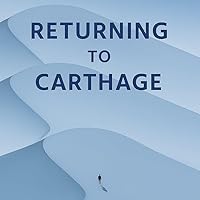
**into the war is one of the first releases in houghton mifflin harcourt's repackaging of calvino's backlist - with cover art by peter mendelsund (what we see when we read).
Profile Image for F J Gilbert.
60 reviews
January 20, 2019
This is not top notch Calvino, but these autobiographical anecdotes about Calvino's experiences as a young man in the Second World War in Italy are poignant and true. Calvino shows the boredom, banality and terror of war very well in his stories about dealing with refugees flooding into his town, and helping them with settling into their temporary accommodation; people who had lost everything, the old, the young, the bewildered. Calvino conveys his feelings of guilt about not helping them enough, and his terror very well.
Profile Image for Bardha.
133 reviews
March 23, 2020
This book, despite being set in the 40’s and dealing with the beginning of the second World War, is full of realizations that stand true even today and will be timeless. Standing true to one’s cardinal values is more important than many other things pertaining to this world.
Profile Image for João.
56 reviews
October 21, 2022
“So, with my thoughts following my father's footsteps through the countryside, I fell asleep; and he never knew that he had had me so close to him.”

I was quite interested in this book when I first found it, war time stories usually interest me quite a bit and coming of age ones even more so. I saddens me to say that neither of these 3 stories did it for me. My favourite one was The Avanguardisti in Menton, there are two things that stood out to me the most, one was a commentary about how the propaganda had told them that Italy would conquer half of France but then they only got a small town that had not been conquered, but evacuated by it's citizens. The other was when the protagonist found a house of a woodworker and her pictures with her family. Other than that the book was a bit unremarkable and Into the War and Unpa Nights weren't all that interesting but just good enough.
Profile Image for Ewan.
268 reviews14 followers
October 23, 2022
Very staged and tremendously static, although these brief pieces of Italo Calvino insights do provide another layer to the culture and attitudes that founded Italy in the early days of the Second World War. He presents those familiar offerings of running free before, during and after the plight of global warfare, but does so with a real lack of presence. There are clear reaches for what Calvino hopes will represent his thought patterns or his thoughts, but making it so obvious means it loses that potential. The child and the pan of oil, the detachment from his father, it all comes through far too clearly. Clear to the point that it leaves nothing to think on once this thankfully short piece comes to a close.
Profile Image for pae (marginhermit).
380 reviews25 followers
April 24, 2025
damn. i picked this randomly at my local library thinking its another white men campaign but damn.

i love how Calvino tells the story with We, as of him and his friends. started off with pre-war notion among peers, it goes with listening to parents rant on comparing WW1 & the upcoming war. the 1st story ended with banger- Mussolini actually marched into the town.

this feels like a storytelling - a smooth one. for Calvino beginner, starts with this and dont follow my step. nobody in the right mind would start with If on a Winter's Night a Traveler.
Profile Image for Kürbispampe.
177 reviews
April 30, 2025
A quiet, strange, and reflective collection, Into the War offers three semi-autobiographical stories about Calvino’s youth during the outbreak of WWII in Fascist Italy.

As expected, Calvino’s writing is vivid and tinged with surrealism. The first story—Into the War—was by far the most gripping and capturing. The remaining two stories, while still thoughtful, didn’t resonate as strongly and felt a little less developed.

Still, I found this slim volume worthwhile. I always find value in historical reads — they remind us to reflect on the past so we don’t repeat it.

[3⭐️]
Profile Image for Grant.
300 reviews
December 28, 2025
While this is a lesser Calvino, it provided an interesting insight into a man who rarely delves into autobiography (something he acknowledges in the preface of this book.) And even a lesser Calvino is worth reading.
Profile Image for gorecki.
266 reviews45 followers
May 9, 2022
There’s this period of time that always settles in before an event, when a person would feel restless or not knowing what to do. Like when you’re organising a dinner party and everything is ready, but your guests are running late. Or when a war is about to break out any day now, but you’re not sure when exactly. There’s this expectation in the air, a void, and you can’t really continue what you were doing because it’s either too late, or there’s just no sense, nor can you start anything new anymore because there’s no point.

It’s this vague time period that Italo Calvino’s collection of three autobiographical pieces is set in. The weeks before the Second World War broke out and with the air full of expectation, but also numbing and paralysing.

I enjoyed Calvino’s writing, his language, his slow pace, but at the same time I felt like the narration barely moved and I was barely invested or interested. Like sitting in a waiting room waiting for the doctor to see you and counting the flies in the waiting room on a hot summer day. In this sense, this book is great because it really does bring across that feeling of expectation, of waiting, of “bring it on, already”. But at the same time - who enjoys sitting around and waiting and counting flies?

So I’m afraid I have mixed feelings about this one. Is the writing great? Yes, it is. Is it enjoyable? Not really. Typical case of “it’s not the book, it’s me.”
Profile Image for Tyrone_Slothrop (ex-MB).
843 reviews113 followers
June 28, 2021
Una linea d'ombra nell'Italia di Mussolini

Tre racconti asciutti ma lucidi per raccontarci un passaggio, un attraversamento di confine, il superamento di quella Linea d'ombra di conradiana memoria dove un ragazzo diviene uomo - è un passaggio che coincide con l'entrata in guerra dell'Italia, una guerra che comincia in sordina, come un trionfo lontano di cui si sentono solo smorzati echi e che poi diventerà una trauma epocale. Ma non c'è nulla del nero futuro in queste poche pagine di Calvino, solo un ragazzo davanti alla sua età e al fascismo che cerca di arruolarlo nel suo ordine sociale posticcio e nei suoi valori di saccheggio vigliacco.
Profile Image for Margherita Dolcevita.
368 reviews38 followers
November 15, 2010
Certamente non è uno dei capolavori di Calvino così come non è forse memorabile, però oltre ad essere scritto bene (e ci mancherebbe, è di Calvino, è anche superfluo specificarlo) riesce ad intrattenere piacevolmente: la Storia si intreccia benissimo con le vicende dei protagonisti e con un modo di scrivere poetico, soave, incantevole.
Profile Image for Lisa.
7 reviews1 follower
February 19, 2019
Un Calvino minore. Quindi comunque una spanna sopra la media
Profile Image for Martyna.
56 reviews
July 3, 2024
Wasn’t bad but it’s not my favourite genre to read; Italo Calvino is a great writer and this is showcased here, I am a bigger fan of his other stuff.
Profile Image for Oleksandr Rovniahin.
28 reviews1 follower
March 17, 2025
Into the War by Italo Calvino encapsulates everything in it’s title, the experience of a person upon whom the war was brought on without his/her consent. Three rather simple (initially) stories of Italian people (through the eyes of our young protagonist) depict the struggles people faced encountering and edaling with different events as the WW2 unravels contain levels of preception.

Although I don’t necessarily think this book has a specific target audience, I do feel that these book is ought to be read in late teens or as a young adult, since the key themes and questions are explored through close observation of the moral code, dilemmas and conscience of the youth.

We don’t get the boring cliché progress with our protagonist changing radically in three month just to hammer in the obvious message, since even in times of war the real change of character takes time. What is, however, worth noting and praising is a constant cognitive dissonance that our protagonist experiences. Early on in the narrative, we get glimpses of this showcased in his inner thoughts that are a crucial medium for unravelling the complex mixture of childish and mature feelings. It is especially emphasized that parents didn’t waste time raising a young man of common decency and moral, which becomes apparent as the events of 1940 Italy began to unfold.

For the environment depiction, we get a zoom in on provincial Italian and later French towns with detailed (and honestly kind of haunting and sad) descriptions of places. All three stories share the same timeline, each within the universe, but highlkighting different aspects of the War, with days more chaotic and unsafe and night more lingering and calm, allowing us to immerse deeply in the thick air of mythical yet real experience. it gives a complex inner struggle of young Italian kid faced with the unprecedented (for him) challenge of accepting the reality. From helping the refugees to a curious field trip to a watch duty during the night, each story stands well on it’s own, yet is tied by the same feeling unease hanging somewhere in the distance.

The beautiful thing about this small book is the prose flowing through the pages, making seemingless transitions from one story to another, without us feeling the shift of a narrative. The values and stance of the Mr. Calvino doesn’t give space to interpretation, upon reading closely into the descriptions of Avanguardisti, Young Falangists, Fascist Militia, you can unmistakenly feel the spirit of the resistance to the Fascism and it’s awful consequences (Example: shown wonderfully in the looting scenes of a “conquered” French town). The author shows us that even tho the Regime forces rules and obedience upon its people, painting the vision as it “ought to be”, you cannot take the ethics and moral of a citizen without his mental compliance.

P.S. On a side note I feel like that this book is felt differently by the people, who (unfortunately) have experienced war or aggression sometime in their youth, allowing for some careful self-reflection on our own choices and desciesions made during those times.
Profile Image for Trevor Seigler.
988 reviews12 followers
May 30, 2025
Discovering the work of Italo Calvino is a blessing to your reading life. His two most famous works, "Invisible Cities" and "If On a Winter's Night, A Traveler," are moving works of art, full of beautiful, evocative, and ethereal prose. The three stories in this collection, from early in his career, aren't quite up to the standards of his best work, but come on; they're by Italo Calvino. They're worth your time.

"Into the War" features three stories, autobiographical in nature, that capture a young man's adolescent response to the entry of Italy into the Second World War. Set during the summer of 1940, when Mussolini picked up enough hits from Hitler that he (Il Duce) should honor the terms of the Axis agreement, we follow our unnamed narrator on the day that war is declared, a trek to a "conquered" French town just over the border a few months later, and a long night of civil defense patrol later on. All three stories reflect the protagonist's sense of unease with life during wartime, and what it means when he doesn't hold with the Fascist view of things.

Calvino, who served with the partisans against Fascist Italy during the war, recaptures a sense of youthful fascination with war and what it means to have your country get involved, while being unable to fully participate yet and unsure of which side to be on if you do. His narrator is no fan of the Fascists, but he also doesn't know what to do about it. He goes along with the young Fascist organization he is a member of in order to get a free trip to a French city being held by Italian forces, but it's a lark and a chance to plunder without fear of violence. Similarly, his adventure as a night warden is really an excuse to roam the city after dark, and to play at being an adult without the responsibilities that adulthood entails. This slight, short collection snuck up on me; nothing here screams "literary masterpiece," but the prose is so deftly handled that I found it moving and funny and heartbreaking all the same (sometimes all on the same page, within the space of a few sentences).

"Into the War" isn't about war in the conventional sense, but it's an examination of what it means to be young and to have the threat of doom hanging over you. As playful as these stories are, the weight of world events hovers over the lighthearted nature of our narrator's quest, be it for loot or for amusement. Because the war, the real war, will be closing in on Italy in just a few years, once the Allies drive the Axis out of North Africa and begin their assault on the European mainland. And Italy will be a major battleground for the armies soon enough. But for a brief moment, the narrator of "Into the War" still has a measure of childhood left to him. It won't last, but nothing ever does.
Profile Image for Cristian1185.
508 reviews55 followers
December 24, 2025
Tres cuentos conforman este breve libro del italiano Italo Calvino, publicado en 1954 bajo el nombre del cuento homónimo La entrada en guerra, los que se encuentran protagonizados por un atento adolescente que experimenta los últimos instantes de su vida marcada esta por la transición a la adultez, como así también por la incertidumbre y los cambios vertiginosos que asume la Italia fascista al contraer sus responsabilidades bélicas durante los primeros años de la II GM.

Representación de las tensiones que nacen de lo cotidiano supeditado al estado de guerra, los cuentos expresan lo anterior ilustrando las menudencias del día a día de gentes sencillas, trastocadas estas por la emergencia de las bombas, los desfiles y las jerarquías militares impuestas, tanteando en su desarrollo el desorden, la confusión y la improvisación que acompañan lo anterior en cuanto procesos aún no involucrados totalmente en la vida de los personajes contenidos en las historias. A veces cómico y ligero, y en ocasiones oscuro y augur de tragedias, Calvino repasa la atmósfera previa al desastre de la guerra a partir de una mirada que aún no escapa de las particularidades de la adolescencia, inscrita en el umbral de transición que le ofrece distancias que le permiten observar situaciones y acciones bajo un lente, a ratos, diferente al de sus contemporáneos.

Un pequeño libro que ofrece la oportunidad de querer continuar leyendo a Calvino. ¡Muy bueno!
Displaying 1 - 30 of 221 reviews

Can't find what you're looking for?

Get help and learn more about the design.