

What do you think?

Cantos de experiencia. Songs of Experience
This fascimile edition of one of Blake's celebrated "Illuminated Books" reproduces a collection of calligraphed poems, each enclosed in a masterful full-colored illustration. Twenty-six plates reprinted from a rare 1826 etched edition include "London," "A Little Boy lost," "Holy Thursday," 'The Voice of the Ancient
Bard" and other immortal verse. To enhance reading, the texts of all the poems are transcribed seperately, following the plates.
Dynamic designs and simplicity of language convey Blake's vision of mankind and his condemnation of a wealthy society insensitive to poverty and unhappiness. Moreover, its universal themes make Songs of Experience just as poignant and profound today. Lovers of literature and fine art will want to add this faithful, inexpensive fascimile of an immortal classic to their libraries.
Bard" and other immortal verse. To enhance reading, the texts of all the poems are transcribed seperately, following the plates.
Dynamic designs and simplicity of language convey Blake's vision of mankind and his condemnation of a wealthy society insensitive to poverty and unhappiness. Moreover, its universal themes make Songs of Experience just as poignant and profound today. Lovers of literature and fine art will want to add this faithful, inexpensive fascimile of an immortal classic to their libraries.
Paperback
First published January 1, 1794
About the author
William Blake
1,324 books3,303 followersWilliam Blake was an English poet, painter, and printmaker. Largely unrecognised during his lifetime, Blake's work is today considered seminal and significant in the history of both poetry and the visual arts.
Blake's prophetic poetry has been said to form "what is in proportion to its merits the least read body of poetry in the language". His visual artistry has led one modern critic to proclaim him "far and away the greatest artist Britain has ever produced." Although he only once travelled any further than a day's walk outside London over the course of his life, his creative vision engendered a diverse and symbolically rich corpus, which embraced 'imagination' as "the body of God", or "Human existence itself".
Once considered mad for his idiosyncratic views, Blake is highly regarded today for his expressiveness and creativity, and the philosophical and mystical currents that underlie his work. His work has been characterized as part of the Romantic movement, or even "Pre-Romantic", for its largely having appeared in the 18th century. Reverent of the Bible but hostile to the established Church, Blake was influenced by the ideals and ambitions of the French and American revolutions, as well as by such thinkers as Emanuel Swedenborg.
Despite these known influences, the originality and singularity of Blake's work make it difficult to classify. One 19th century scholar characterised Blake as a "glorious luminary", "a man not forestalled by predecessors, nor to be classed with contemporaries, nor to be replaced by known or readily surmisable successors."
Blake's prophetic poetry has been said to form "what is in proportion to its merits the least read body of poetry in the language". His visual artistry has led one modern critic to proclaim him "far and away the greatest artist Britain has ever produced." Although he only once travelled any further than a day's walk outside London over the course of his life, his creative vision engendered a diverse and symbolically rich corpus, which embraced 'imagination' as "the body of God", or "Human existence itself".
Once considered mad for his idiosyncratic views, Blake is highly regarded today for his expressiveness and creativity, and the philosophical and mystical currents that underlie his work. His work has been characterized as part of the Romantic movement, or even "Pre-Romantic", for its largely having appeared in the 18th century. Reverent of the Bible but hostile to the established Church, Blake was influenced by the ideals and ambitions of the French and American revolutions, as well as by such thinkers as Emanuel Swedenborg.
Despite these known influences, the originality and singularity of Blake's work make it difficult to classify. One 19th century scholar characterised Blake as a "glorious luminary", "a man not forestalled by predecessors, nor to be classed with contemporaries, nor to be replaced by known or readily surmisable successors."
Ratings & Reviews
Friends & Following
Create a free account to discover what your friends think of this book!
Community Reviews
Displaying 1 - 30 of 37 reviews

November 16, 2024
'Songs of Experience' together with their idyllic counterpart 'Songs of Innocence' have become my first attempt to approach the world of William Blake (although I have found 'The Tyger' here, the poem which made an impression on me many years ago). This iconic figure who, having been ahead of his time (or maybe our time, too) and misunderstood by his contemporaries, doesn't fit in any group or category.
'Songs of Experience' are about loss of of innocence, social injustice, religious hypocrisy, the inevitable human suffering and the necessity of spiritual renewal. The powerful, often dark or contrastic imagery with mystical undercurrents stays with you for a long time as well as the poet's philosophical reflections.
The Garden of Love
I went to the Garden of Love,
And saw what I never had seen:
A Chapel was built in the midst,
Where I used to play on the green.
And the gates of this Chapel were shut,
And 'Thou shalt not' writ over the door;
So I turn'd to the Garden of Love,
That so many sweet flowers bore.
And I saw it was filled with graves,
And tomb-stones where flowers should be:
And Priests in black gowns, were walking their rounds,
And binding with briars, my joys & desires.
The Human Abstract
Pity would be no more
If we did not make somebody poor;
And Mercy no more could be
If all were as happy as we.
And mutual fear brings peace,
Till the selfish loves increase;
Then Cruelty knits a snare,
And spreads his baits with care.
He sits down with holy fears,
And waters the ground with tears;
Then Humility takes its root
Underneath his foot.
Soon spreads the dismal shade
Of Mystery over his head;
And the caterpillar and fly
Feed on the Mystery.
And it bears the fruit of Deceit,
Ruddy and sweet to eat;
And the raven his nest has made
In its thickest shade.
The Gods of the earth and sea
Sought thro’ Nature to find this tree;
But their search was all in vain:
There grows one in the Human brain.
'Songs of Experience' are about loss of of innocence, social injustice, religious hypocrisy, the inevitable human suffering and the necessity of spiritual renewal. The powerful, often dark or contrastic imagery with mystical undercurrents stays with you for a long time as well as the poet's philosophical reflections.
The Garden of Love
I went to the Garden of Love,
And saw what I never had seen:
A Chapel was built in the midst,
Where I used to play on the green.
And the gates of this Chapel were shut,
And 'Thou shalt not' writ over the door;
So I turn'd to the Garden of Love,
That so many sweet flowers bore.
And I saw it was filled with graves,
And tomb-stones where flowers should be:
And Priests in black gowns, were walking their rounds,
And binding with briars, my joys & desires.
The Human Abstract
Pity would be no more
If we did not make somebody poor;
And Mercy no more could be
If all were as happy as we.
And mutual fear brings peace,
Till the selfish loves increase;
Then Cruelty knits a snare,
And spreads his baits with care.
He sits down with holy fears,
And waters the ground with tears;
Then Humility takes its root
Underneath his foot.
Soon spreads the dismal shade
Of Mystery over his head;
And the caterpillar and fly
Feed on the Mystery.
And it bears the fruit of Deceit,
Ruddy and sweet to eat;
And the raven his nest has made
In its thickest shade.
The Gods of the earth and sea
Sought thro’ Nature to find this tree;
But their search was all in vain:
There grows one in the Human brain.
June 15, 2021
Blake's follow up/companion piece to his Songs of Innocence is even better than its older sibling. The poems are truly wonderful, presenting Blake's dichotic view of the world, and the illustrative plates are the perfect illumination.
I'm not even going to make any terrible U2 jokes this time, you'll be pleased to hear.
London
I wander thro’ each charter’d street,
Near where the charter’d Thames does flow,
And mark in every face I meet,
Marks of weakness, marks of woe.
I every cry of every Man,
In every Infant’s cry of fear,
In every voice, in every ban,
The mind-forg’d manacles I hear.
How the Chimney-sweeper’s cry
Every black’ning Church appalls;
And the hapless Soldier’s sigh
Runs in blood down Palace walls.
But most, thro’ midnight streets I hear
How the youthful Harlot’s curse
Blasts the new born Infant’s tear,
And blights with plagues the Marriage hearse.
My next book: The Book of Los
I'm not even going to make any terrible U2 jokes this time, you'll be pleased to hear.
London
I wander thro’ each charter’d street,
Near where the charter’d Thames does flow,
And mark in every face I meet,
Marks of weakness, marks of woe.
I every cry of every Man,
In every Infant’s cry of fear,
In every voice, in every ban,
The mind-forg’d manacles I hear.
How the Chimney-sweeper’s cry
Every black’ning Church appalls;
And the hapless Soldier’s sigh
Runs in blood down Palace walls.
But most, thro’ midnight streets I hear
How the youthful Harlot’s curse
Blasts the new born Infant’s tear,
And blights with plagues the Marriage hearse.
My next book: The Book of Los

June 10, 2019
The second part of Blake's 2 volume poetry collection. 26 poems. Cotains some of Blake's most famous poams. Highlights ~ "earth's answer" " the clod and the pebble "the little girl lost \ the little girl found" " the sick rose" "the angel" "the tyger" " the human abstract" and "a poison tree"

October 9, 2015
Also posted on Eva Lucias blog
William Blake is indeed one of my favourite poets. He has a certain specific way of writing that intrigues me every time I read his literary works.
I especially love the poem “The Nurse’s song” which I would consider my favourite. I was even so inspired that I made music to the poem and turned all of his beautiful words into a musical product. It’s featured on my album "Tundra" and it has a ver special place in my heart.
Come come leave off play, and let us away
Till the morning appears in the skies
No no let us play, for it is yet day
And we cannot go to sleep
Besides in the sky, the little birds fly
The way William Blake played with words – so simply, he used nature, Christianity and love as inspiration for his poems. His way of writing is so special. There are so many elements; a beautiful lyrical flow, symbolism and atmosphere. I have always been fascinated of how he was able to create a really dark atmosphere but still give a hint of hope in the end. The light is always there, you just have to search for it.
My opinion on the collection of poems:
William Blake will always have a special place in my heart. He was one of the first poets I ever read and until this day, I have been (still am!) very touched when reading his works. He possessed a true talent. When I meet writers or songwriters today who write in this way, I feel connected...
Blog ~ Facebook ~ Instagram ~ Youtube ~ Spotify ~
William Blake is indeed one of my favourite poets. He has a certain specific way of writing that intrigues me every time I read his literary works.
I especially love the poem “The Nurse’s song” which I would consider my favourite. I was even so inspired that I made music to the poem and turned all of his beautiful words into a musical product. It’s featured on my album "Tundra" and it has a ver special place in my heart.
Come come leave off play, and let us away
Till the morning appears in the skies
No no let us play, for it is yet day
And we cannot go to sleep
Besides in the sky, the little birds fly
The way William Blake played with words – so simply, he used nature, Christianity and love as inspiration for his poems. His way of writing is so special. There are so many elements; a beautiful lyrical flow, symbolism and atmosphere. I have always been fascinated of how he was able to create a really dark atmosphere but still give a hint of hope in the end. The light is always there, you just have to search for it.
My opinion on the collection of poems:
William Blake will always have a special place in my heart. He was one of the first poets I ever read and until this day, I have been (still am!) very touched when reading his works. He possessed a true talent. When I meet writers or songwriters today who write in this way, I feel connected...
Blog ~ Facebook ~ Instagram ~ Youtube ~ Spotify ~

February 5, 2023
4.5 ok now Blake is really shining and once again we get some direct precursors to the Marriage of Heaven and Hell . This book really is just a direct upgrade of Songs of Innocence and even some of the same poems show up in this one, sometimes with changes. I would say SoE is Blake being much more discerning and the ratio of mid to gold is just way way better here. My favorite poems include Earth's Answer, The Clod and the Pebble, Holy Thursday, The Sick Rose, The Fly, The Tyger, The Garden of Love, The Little Vagabond, The Human Abstract, A Little Boy Lost, To Tirzah . As you can see, this is a very long list and I think I'll go down the line and say a few things about each one. Before I do that though I just want to say I also like the introduction just bc I think its so fun how it announces itself / the book. Anyway:
Earth's Answer: first of all, love the little plant flourishes around the words and the snake at the bottom. Blake rly holds back with the illustrations on this one and they are much more background than accompaniment to the poem. I just love the contrast between the selfish, greedy and controlling "Father of Ancient Man" and the chained and weeping "Mother Earth" (ofc I would as I am fascinated by the Chaoskampf metamyth and the idea of God (the sky father / thunder warrior) as the violent divider / controller of Nature / Chaos. It was cool to see some of that reflected here and we get hints at Blake's worldview.
The Clod and the Pebble: Love the illustration of all the cows in a row feeding and then the smaller animals below. Looove this idea of the contrasting songs, one sang by a clod of clay being stamped on by feeding cows, the other by a pebble in a brook. This is also the most clear precursor we get to the inversion of Heaven and Hell that we would see in TMoHaH. I also just love the message. Basically the clod is singing that if one loves selflessly and seeks to bring ease and happiness to others one will make a heaven in hells despair while the pebble sings that if you seek in love only personal gain/ if you bind another with your love and take without giving you have made a hell in heaven. Solid ass message and just love the image of a clod of dirt and a pebble both belting these songs out.
Holy Thursday: this is the first of many diatribes against poverty and the state of London during the Industrial Revolution. My boy got class consciousness and his words here are very direct and cutting. There is nothing great about a place where babies are born into misery.
The Sick Rose: Love the v prickly rose illustration here. Here is a poem where I just straight up love the writing. I love the images conjured here: the worm flying through the night in the howling storm, honing in on the rose and killing it with its destructive love/ desire. V strong, v short and v to the point.
The Fly: this is one of my favorites of the bunch. I love how Blake draws the parallel between himself (man) and the fly, thinking about how in many ways they are the same. Just as a fly's joy can be cut short, being clipped by a thoughtless hand, so too can a common man's joy/ life be cut short by blind forces so large and outside of his control. I however love the note we end on with the last stanza.
The Tyger: Boiiii I'm not even going to say shit about this one it is literally a classic, it is iconic, we all probably had to analyze it in English class at some point.
The Garden of Love: I just love the image of this free and beautiful garden of love being corrupted by the restraining forces and rules of the church and state. This definitely prefigures the ideas that he would go on to develop further in tMoHaH.
The Little Vagabond: ok this is the blueprint, this is the OG Suicidal Thoughts by Biggie (atleast the v beginning when B.I.G is contrasting the boring, passive heaven with the permissive and lively hell) and the little boy here is just spitting. I also love this poem being paired with the figure being embraced by God above it. Just a beautiful image even on its own.
The Human Abstract: Ok this is just a beautiful poem and I love how it all comes together in the last stanza, the tree in the human brain. Some great animal images here and this one rly rly directly prefigures tMoHaH with the idea that the knowledge, divinity etc already exists inside of us, that the search for it outside ourselves is is vein and is even destructive and cruel.
A Little Boy Lost: The line "I love you like a little bird that picks up crumbs around the door" fucking impales me. This poem is sooo sad and is once again another one about how the ways we must restrain and conquer our natural divinity leads to violence and injustice. How could they kill a little boy so cruelly, how can the gentle priest stand at the pulpit and call him a field, burn him at the stake. Ughhhh this one kills me.
To Tirzah: love the image of the sexes being born out of shame and pride respectively but then when sleep replaces death they are forced to work and weep respectively. The last line is excellent as well.
Anyway that ended up being more intensive than I realized. Highly recommend this lil book of poems as it has some of the best and most iconic, it holds up very well in many regards.
Earth's Answer: first of all, love the little plant flourishes around the words and the snake at the bottom. Blake rly holds back with the illustrations on this one and they are much more background than accompaniment to the poem. I just love the contrast between the selfish, greedy and controlling "Father of Ancient Man" and the chained and weeping "Mother Earth" (ofc I would as I am fascinated by the Chaoskampf metamyth and the idea of God (the sky father / thunder warrior) as the violent divider / controller of Nature / Chaos. It was cool to see some of that reflected here and we get hints at Blake's worldview.
The Clod and the Pebble: Love the illustration of all the cows in a row feeding and then the smaller animals below. Looove this idea of the contrasting songs, one sang by a clod of clay being stamped on by feeding cows, the other by a pebble in a brook. This is also the most clear precursor we get to the inversion of Heaven and Hell that we would see in TMoHaH. I also just love the message. Basically the clod is singing that if one loves selflessly and seeks to bring ease and happiness to others one will make a heaven in hells despair while the pebble sings that if you seek in love only personal gain/ if you bind another with your love and take without giving you have made a hell in heaven. Solid ass message and just love the image of a clod of dirt and a pebble both belting these songs out.
Holy Thursday: this is the first of many diatribes against poverty and the state of London during the Industrial Revolution. My boy got class consciousness and his words here are very direct and cutting. There is nothing great about a place where babies are born into misery.
The Sick Rose: Love the v prickly rose illustration here. Here is a poem where I just straight up love the writing. I love the images conjured here: the worm flying through the night in the howling storm, honing in on the rose and killing it with its destructive love/ desire. V strong, v short and v to the point.
The Fly: this is one of my favorites of the bunch. I love how Blake draws the parallel between himself (man) and the fly, thinking about how in many ways they are the same. Just as a fly's joy can be cut short, being clipped by a thoughtless hand, so too can a common man's joy/ life be cut short by blind forces so large and outside of his control. I however love the note we end on with the last stanza.
The Tyger: Boiiii I'm not even going to say shit about this one it is literally a classic, it is iconic, we all probably had to analyze it in English class at some point.
The Garden of Love: I just love the image of this free and beautiful garden of love being corrupted by the restraining forces and rules of the church and state. This definitely prefigures the ideas that he would go on to develop further in tMoHaH.
The Little Vagabond: ok this is the blueprint, this is the OG Suicidal Thoughts by Biggie (atleast the v beginning when B.I.G is contrasting the boring, passive heaven with the permissive and lively hell) and the little boy here is just spitting. I also love this poem being paired with the figure being embraced by God above it. Just a beautiful image even on its own.
The Human Abstract: Ok this is just a beautiful poem and I love how it all comes together in the last stanza, the tree in the human brain. Some great animal images here and this one rly rly directly prefigures tMoHaH with the idea that the knowledge, divinity etc already exists inside of us, that the search for it outside ourselves is is vein and is even destructive and cruel.
A Little Boy Lost: The line "I love you like a little bird that picks up crumbs around the door" fucking impales me. This poem is sooo sad and is once again another one about how the ways we must restrain and conquer our natural divinity leads to violence and injustice. How could they kill a little boy so cruelly, how can the gentle priest stand at the pulpit and call him a field, burn him at the stake. Ughhhh this one kills me.
To Tirzah: love the image of the sexes being born out of shame and pride respectively but then when sleep replaces death they are forced to work and weep respectively. The last line is excellent as well.
Anyway that ended up being more intensive than I realized. Highly recommend this lil book of poems as it has some of the best and most iconic, it holds up very well in many regards.
June 29, 2026
“Is this a holy thing to see,
In a rich and fruitful land,
Babes reduced to misery,
Feed with cold and usurous hand?"
― William Blake
Companion piece to the Songs of Innocence. A few poems have the same names and present contrasting images in each other and while the poems in Songs of Innocence were easy to understand and held child-like wonder and hope, the poems in this volume addressed the 'mind-forged manacles' of society and the ills of organized religious authority.
The language used is complex, often with layers of allegory. Innocence is celebratory; Experience is somber and laced with subtle warnings.
In a rich and fruitful land,
Babes reduced to misery,
Feed with cold and usurous hand?"
― William Blake
Companion piece to the Songs of Innocence. A few poems have the same names and present contrasting images in each other and while the poems in Songs of Innocence were easy to understand and held child-like wonder and hope, the poems in this volume addressed the 'mind-forged manacles' of society and the ills of organized religious authority.
The language used is complex, often with layers of allegory. Innocence is celebratory; Experience is somber and laced with subtle warnings.

January 29, 2008
I LOVE having the color plates. I take Blake very personally, because when I went to grad school, I was split between the idea of studying printmaking and studying poetry writing, and as you can imagine William Blake was a great model for me--the great model for me--of a western poet who managed to integrate the two arts. I've always loved his work, almost decided to write my dissertation on the guy, but couldn't get into the later, wild, wacko epic poems. These early poems, though, kick butt, and The Marriage of Heaven and Hell is a wonderful, wonderful book.

January 25, 2024
• Songs of Experience (1794)
Introduction (to Songs of Experience), William Blake *** - This picks up where the end of ‘Songs of Innocence’ concluded with ‘The Voice of the Ancient Bard’:
“Hear the voice of the Bard, / Who present, past, and future, sees;
Whose ears have heard / The Holy Word / That walked among the ancient trees..”
Earth's Answer *** - There is an intensity and drama to Blake’s ‘Romantic’ poetry about Nature, e.g.
“Earth raised up her head / From the darkness dread and drear, / Her light fled, / Stony, dread, / And her locks covered with grey despair.”
The Clod and the Pebble *** - Contrasting selflessness and selfishness, heaven and hell. “Love seeketh not itself to please, / Nor for itself hath any care, / But for another gives its ease, / And builds a heaven in hell's despair.”
Holy Thursday (from Experience) *** - I wish I knew more of where Blake is coming from. He clearly has a burning heart of compassion and empathy and seems to creatively mix this with a Christian narrative in his poems.
“Is this a holy thing to see / In a rich and fruitful land, - / Babes reduced to misery, / Fed with cold and usurous hand?”
The Chimney-Sweeper (from Experience) *** - The optimism (or epitaph) of justice that awaits the little children exploited in that place in that time of history. “A little black thing among the snow, / Crying! 'weep! weep!' in notes of woe! / 'Where are thy father and mother? Say!' - / 'They are both gone up to the church to pray.”
Nurse’s Song (from Experience) *** - Children playing
The Sick Rose *** - Beautiful and sad grieving poem
“O Rose, thou art sick! / The invisible worm, / That flies in the night, / In the howling storm, /
Has found out thy bed/ Of crimson joy; / And his dark secret love / Does thy life destroy.”
The Fly *** - Brevity of the life span of a fly, “Little Fly, / Thy summer's play / My thoughtless hand / Has brushed away.”
The Angel *** - From youthfulness to old age. “I dreamt a dream! What can it mean? / And that I was a maiden Queen / Guarded by an Angel mild: / Witless woe was ne'er beguiled!”
The Tyger *** - Exotic! “Tyger Tyger, burning bright, / In the forests of the night ..”
My Pretty Rose Tree *** - Jealousy! “A flower was offered to me, / Such a flower as May never bore; / But I said, 'I've a pretty rose tree,' / And I passed the sweet flower o'er.”
Ah! Sun-flower: A poem by William Blake *** - Time, snow, graves
The Garden of Love *** - Despair. “I went to the Garden of Love, / And saw what I never had seen; / A Chapel was built in the midst, / Where I used to play on the green...”
The Little Vagabond *** - Hard existence for homeless children. “Dear mother, dear mother, the Church is cold; / But the Alehouse is healthy, and pleasant, and warm...”
London **** - I am giving this a high score of 4 stars for such a short poem because it recognises and voices the pain and heartache of the real people who populate this glorious city, e.g. “I wander through each chartered street, / Near where the chartered Thames does flow, / A mark in every face I meet, / Marks of weakness, marks of woe.”
The Human Abstract **** - Another profound Blake poem on the mystery, justice, heartache, cruelty and longing of humanity and nature, e.g. “Pity would be no more / If we did not make somebody Poor, / And Mercy no more could be / If all were as happy as we.” … “The Gods of the earth and sea / Sought thro’ Nature to find this Tree / But their search was all in vain: / There grows one in the Human Brain.”
Infant Sorrow *** - Such interesting premise to begin with, Blake often reflected on the suffering and joy of being human, e.g. “My mother groaned! My father wept. / Into the dangerous world I leapt: / Helpless, naked, piping loud: / Like a fiend hid in a cloud.”
A Poison Tree **** – Wow, a stunning vivid image of “the root of bitterness” (as described in Scripture, Hebrews 12:15), which echoes with the tale of the serpent in the garden and the forbidden fruit.
There is a simplicity in the rhythm of some of Blake’s poems which actually adds to the striking impact (similar to Emily Bronte & Emily Dickinson half-a-century later)
“I was angry with my friend: / I told my wrath, my wrath did end. / I was angry with my foe: / I told it not, my wrath did grow.”
A Little Boy Lost - “Nought loves another as itself, / Nor venerates another so, / Nor is it possible to thought / A greater than itself to know.”
A Little Girl Lost *** - Another poem of longing, ache, tenderness and care, e.g. “Children of the future age, / Reading this indignant page, / Know that in a former time / Love, sweet love, was thought a crime.”
To Tirzah **** - Short and punchy, Mother Earth engaged with ‘Adam & Eve’ and the sacrificial act of Jesus, .. and self.
“Whate'er is born of mortal birth / Must be consumed with the earth, / To rise from generation free: / Then what have I to do with thee?”
A Divine Image (from Experience) *** - a sense of deep regret at the dark side of humanity's actions, e.g. “Cruelty has a Human Heart, / And Jealousy a Human Face; / Terror the Human Form Divine, / And Secrecy the Human Dress...”

July 28, 2007
Another pocket-sized book. To me, this is Blake's masterpiece and having the plates alongside the poems is a visual delight.
February 1, 2025
"Hear the voice of the Bard,
Who present, past, and future, sees;
Whose ears have heard
The Holy Word
That walked among the ancient trees:
Calling the lapsed soul,
And weeping in the evening dew:
That might control
The starry pole,
And fallen, fallen light renew!"
—
"Because I was happy upon the heath,
And smiled among the winter & snow,
They clothed me in the clothes of desth,
And taught me to sing the notes of woe.
And because I am happy and dance and sing.
They think thay have done me no injury.
And are gone to praise God and His priest and King.
Who made up a heaven of our misery."
—
"O rose, thou art sick!
The invisible worm.
That flies in the night,
In the howling storm
Has found out thy bed
Of crimson joy
And his dark secret love
Does thy life destroy."
—
“I dreamt a dream! What can it mean?
And that I was a maiden Queen
Guarded by an Angel mild:
Witless woe was ne'er beguiled!
And I wept both night and day,
And he wiped my tears away;
And I wept both day and night,
And hid from him my heart's delight.
So he took his wings, and fled;
Then the morn blushed rosy red.
I dried my tears, and armed my fears
With ten thousand shields and spears.
Soon my Angel came again;
I was armed, he came in vain;
For the time of youth was fled,
And grey hairs were on my head.”
—
“Am not l
A fly like thee?
Orart not thou
A man like me?
For I dance,
And drink, and sing.
Till some blind hand
Shall brush my wing.
If thought is life
And stength and breath,
And and want
Of thought is death:
Then am I
A happy fly.
If I live,
Or if I die.”
—
"What the hammer? what the chain?
In what furnace was thy brain?
What the anvil? what dread grasp
Dare its deadly terrors clasp?
When the stars threw down their spears,
And watered heaven with their tears.
Did He smile His work to see?
Did He who made the lamb make thee?”
—
“How can the bird that is born for joy
Sit in a cage and sing?
How can a child, when fears annoy,
But droop his tender wing.
And forget his youthful spring!
O father and mother if buds are nipped,
And blossoms blown away:
And if the tender plants are stripped
Of their joy in the springing day.
By sorrow and care's dismay.—
How shall the summer arise in joy,
Or the summer fruits appear?
Or how shall we gather what griefs destroy.
Or bless the mellowing year,
When the blasts of winter appear?”
Who present, past, and future, sees;
Whose ears have heard
The Holy Word
That walked among the ancient trees:
Calling the lapsed soul,
And weeping in the evening dew:
That might control
The starry pole,
And fallen, fallen light renew!"
—
"Because I was happy upon the heath,
And smiled among the winter & snow,
They clothed me in the clothes of desth,
And taught me to sing the notes of woe.
And because I am happy and dance and sing.
They think thay have done me no injury.
And are gone to praise God and His priest and King.
Who made up a heaven of our misery."
—
"O rose, thou art sick!
The invisible worm.
That flies in the night,
In the howling storm
Has found out thy bed
Of crimson joy
And his dark secret love
Does thy life destroy."
—
“I dreamt a dream! What can it mean?
And that I was a maiden Queen
Guarded by an Angel mild:
Witless woe was ne'er beguiled!
And I wept both night and day,
And he wiped my tears away;
And I wept both day and night,
And hid from him my heart's delight.
So he took his wings, and fled;
Then the morn blushed rosy red.
I dried my tears, and armed my fears
With ten thousand shields and spears.
Soon my Angel came again;
I was armed, he came in vain;
For the time of youth was fled,
And grey hairs were on my head.”
—
“Am not l
A fly like thee?
Orart not thou
A man like me?
For I dance,
And drink, and sing.
Till some blind hand
Shall brush my wing.
If thought is life
And stength and breath,
And and want
Of thought is death:
Then am I
A happy fly.
If I live,
Or if I die.”
—
"What the hammer? what the chain?
In what furnace was thy brain?
What the anvil? what dread grasp
Dare its deadly terrors clasp?
When the stars threw down their spears,
And watered heaven with their tears.
Did He smile His work to see?
Did He who made the lamb make thee?”
—
“How can the bird that is born for joy
Sit in a cage and sing?
How can a child, when fears annoy,
But droop his tender wing.
And forget his youthful spring!
O father and mother if buds are nipped,
And blossoms blown away:
And if the tender plants are stripped
Of their joy in the springing day.
By sorrow and care's dismay.—
How shall the summer arise in joy,
Or the summer fruits appear?
Or how shall we gather what griefs destroy.
Or bless the mellowing year,
When the blasts of winter appear?”

April 21, 2025
It was fascinating; I found myself applauding almost every poem written in this book!
.
Here are a few of those mesmerizing poems:
.

.
.

.
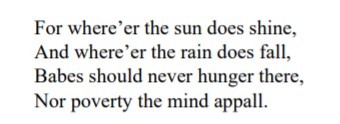
.
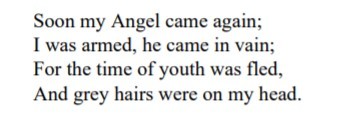
.
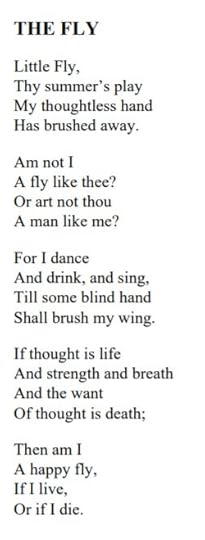
.

.

.
Here are a few of those mesmerizing poems:
.
.
.
.
.
.
.
.

January 15, 2020
It was fascinating; I found myself applauding almost every poem written in this book!
.
Here are a few of those mesmerizing poems:
.
.
.
.
.
.
.
.
.
Here are a few of those mesmerizing poems:
.
.
.
.
.
.
.
.

January 13, 2019
To be honest, this book of poetry had some really startling poems and I actually preferred it to Songs of Innocence.
A few that stood out to me:
Earth's Answer
The Clod and the Pebble
The Chimney Sweeper P.2
My Pretty Rose Tree
The Little Vagabond**
The Divine Image
It goes to show that no matter how much "patriotism" or loyalty you provide to your country - you can still end up being fucked. Instead of discussing Mercy, Love, etc. he instead discusses Cruelty, Jealousy, Terror, and Secrecy. A plain and direct shot at religion where he reminds the audience that the same church that created the Tyger (Evil) is the same that constructed the Lamb (Meek and Pure). If the church created the Devil to create our fear and keep us obedient then the church is much more of a punitive and cold place than the Alehouse. In this book, God is a blacksmith, forging away in the furnace we call Earth - welcome to Industrialization.
A few that stood out to me:
Earth's Answer
The Clod and the Pebble
The Chimney Sweeper P.2
My Pretty Rose Tree
The Little Vagabond**
The Divine Image
It goes to show that no matter how much "patriotism" or loyalty you provide to your country - you can still end up being fucked. Instead of discussing Mercy, Love, etc. he instead discusses Cruelty, Jealousy, Terror, and Secrecy. A plain and direct shot at religion where he reminds the audience that the same church that created the Tyger (Evil) is the same that constructed the Lamb (Meek and Pure). If the church created the Devil to create our fear and keep us obedient then the church is much more of a punitive and cold place than the Alehouse. In this book, God is a blacksmith, forging away in the furnace we call Earth - welcome to Industrialization.
December 15, 2024
3.5
"Didst close my Tongue in senseless clay
And me to Mortal Life betray:
The Death of Jesus set me free,
Then what have I to do with thee?"
"Cruelty has a Human Heart
And Jealousy a Human Face
Terror, the Human Form Divine
And Secrecy, the Human Dress"
"Love seeketh not Itself to please,
Nor for itself hath any care;
But for another gives its ease,
And builds a Heaven in Hells despair."
"Could frame thy fearful symmetry?"
"And what shoulder, & what art,
Could twist the sinews of thy heart?
And when thy heart began to beat,
What dread hand? & what dread feet?"
"Didst close my Tongue in senseless clay
And me to Mortal Life betray:
The Death of Jesus set me free,
Then what have I to do with thee?"
"Cruelty has a Human Heart
And Jealousy a Human Face
Terror, the Human Form Divine
And Secrecy, the Human Dress"
"Love seeketh not Itself to please,
Nor for itself hath any care;
But for another gives its ease,
And builds a Heaven in Hells despair."
"Could frame thy fearful symmetry?"
"And what shoulder, & what art,
Could twist the sinews of thy heart?
And when thy heart began to beat,
What dread hand? & what dread feet?"

September 21, 2021
"The Tyger" is a classic and I just really like. (I agree with the speaker's reaction to the idea that the same guy who created the lamb also created the ferocious tiger. It is captured so well here.) I also was surprised by "The Poison Tree." It feels like a simple Christian rhyme about the dangers of wrath at first, but then turns very dark. The bonus image of Blake's artwork really adds to the experience of the poem.

November 18, 2022
We followed up Songs of Innocence with Songs of Experience (as is fitting), but the girls overwhelmingly voted Innocence their favorite of the two. (I am zero percent surprised.) The Tyger was the standout poem of this volume, and we took a detour to listen to Greg Brown's folk versions of some of the poems. As with the previous volume, I love having reproductions of the original artwork, but don't love the organization.
May 16, 2026
Actual rating: like 3.5
Better than Songs of Innocence, prose was more concrete and the poems focused and punchy. Still dreadful cries to above, with more introspection on the human aspect of the “divine”.
Standouts:
Introduction
Earth’s Answer
The Clod & The Pebblie
Holy Thursday
The Fly (Strongest Standout)
The Angel
The Garden Of Love
The Human Abstract
A Poison Tree
A Divine Image
Better than Songs of Innocence, prose was more concrete and the poems focused and punchy. Still dreadful cries to above, with more introspection on the human aspect of the “divine”.
Standouts:
Introduction
Earth’s Answer
The Clod & The Pebblie
Holy Thursday
The Fly (Strongest Standout)
The Angel
The Garden Of Love
The Human Abstract
A Poison Tree
A Divine Image

November 9, 2019
In general, I do not like William Blake's poetry even though I will soon complete reading all of his poems. I enjoyed The Schoolboy the most. It reminded me much of Meggin's experiences when she started attending Catholic school in New Zealand in the book The Thorn Birds.

July 23, 2018
My favourites are the sick rose and the poison tree.

October 1, 2018
I much prefer this volume to _Innocence_, but they undoubtedly work better as "contraries" compiled in one volume.

August 4, 2019
Fitting sequence to the songs of innocence. Dark & lovely

December 10, 2020
2 stars because these poems were a wee better than the first set
rip blake’s brother, man
rip blake’s brother, man
November 17, 2022
william blake said church should serve a little alcohol

December 27, 2024
The Fly & The Tyger stand out. From The Fly: “For I dance / And drink & sing: / Till some blind hand / Shall brush my wing”…

November 15, 2025
Superb. The Angel, The Tyger, A Poison Tree, The Voice of the Ancient Bard, and many more are exceptionally insightful, mystical, moving. A masterpiece.

April 15, 2014
This wonderful little edition of Blake's masterpiece is best experienced along with Dover's facsimile edition of Songs of Innocence. Several years after publishing that illuminated book, Blake expanded it into Songs of Innocence and of Experience; the Experience section is reproduced here. Blake moved several poems from Innocence to Experience, and added several poems, like "The Chimney Sweeper" and "Holy Thursday," which share titles with earlier poems in Innocence.
The Dover edition is reproduced from a late copy (c. 1826), and the growth of Blake's visual art is readily apparent when compared to the Dover Songs of Innocence. The colors are richer, and the illustrations are striking. As in the Dover Innocence, printed versions of the poems are included at the end. This is welcome, since a few of the poems are difficult to read in the illuminated versions.
The poems themselves are darker and grimmer than those of Songs of Innocence. Passage after passage strikes me as presenting an all-too-accurate picture of human existence today, over 200 years after these poems were written. "Pity would be no more, If we did not make somebody Poor." Blake's view of religion in this poems is complex; in "The Garden of Love" he finds a chapel in the garden: "And the gates of this Chapel were shut, And Thou shalt not. writ over the door." And if the doomed chimney sweep, dressed in the "clothes of death," no longer wanders the streets of London, other children are in equal misery today.
The Dover edition is reproduced from a late copy (c. 1826), and the growth of Blake's visual art is readily apparent when compared to the Dover Songs of Innocence. The colors are richer, and the illustrations are striking. As in the Dover Innocence, printed versions of the poems are included at the end. This is welcome, since a few of the poems are difficult to read in the illuminated versions.
The poems themselves are darker and grimmer than those of Songs of Innocence. Passage after passage strikes me as presenting an all-too-accurate picture of human existence today, over 200 years after these poems were written. "Pity would be no more, If we did not make somebody Poor." Blake's view of religion in this poems is complex; in "The Garden of Love" he finds a chapel in the garden: "And the gates of this Chapel were shut, And Thou shalt not. writ over the door." And if the doomed chimney sweep, dressed in the "clothes of death," no longer wanders the streets of London, other children are in equal misery today.

January 31, 2014
The William Blake Archive:
http://www.blakearchive.org/blake/
Songs of Innocence, and Songs of Experience: http://www.gutenberg.org/ebooks/1934
Songs of Innocence, and Songs of Experience (Audio): http://www.gutenberg.org/ebooks/21160
SONGS OF INNOCENCE
Introduction
The Shepherd
The Echoing Green
The Lamb
The Little Black Boy
The Blossom
The Chimney-Sweeper
The Little Boy Lost
The Little Boy Found
Laughing Song
A Cradle Song
The Divine Image
Holy Thursday
Night
Spring
Nurse’s Song
Infant Joy
A Dream
On Another’s Sorrow
SONGS OF EXPERIENCE
Introduction
Earth’s Answer
The Clod and the Pebble
Holy Thursday
The Little Girl Lost
The Little Girl Found
The Chimney-Sweeper
Nurse’s Song
The Sick Rose
The Fly
The Angel
The Tiger
My Pretty Rose Tree
Ah, Sunflower
The Lily
The Garden of Love
The Little Vagabond
London
The Human Abstract
Infant Sorrow
A Poison Tree
A Little Boy Lost
A Little Girl Lost
A Divine Image
A Cradle Song
The Schoolboy
To Tirzah
The Voice of the Ancient Bard
http://www.blakearchive.org/blake/
Songs of Innocence, and Songs of Experience: http://www.gutenberg.org/ebooks/1934
Songs of Innocence, and Songs of Experience (Audio): http://www.gutenberg.org/ebooks/21160
SONGS OF INNOCENCE
Introduction
The Shepherd
The Echoing Green
The Lamb
The Little Black Boy
The Blossom
The Chimney-Sweeper
The Little Boy Lost
The Little Boy Found
Laughing Song
A Cradle Song
The Divine Image
Holy Thursday
Night
Spring
Nurse’s Song
Infant Joy
A Dream
On Another’s Sorrow
SONGS OF EXPERIENCE
Introduction
Earth’s Answer
The Clod and the Pebble
Holy Thursday
The Little Girl Lost
The Little Girl Found
The Chimney-Sweeper
Nurse’s Song
The Sick Rose
The Fly
The Angel
The Tiger
My Pretty Rose Tree
Ah, Sunflower
The Lily
The Garden of Love
The Little Vagabond
London
The Human Abstract
Infant Sorrow
A Poison Tree
A Little Boy Lost
A Little Girl Lost
A Divine Image
A Cradle Song
The Schoolboy
To Tirzah
The Voice of the Ancient Bard

November 20, 2014
2014.11.21–2014.11.21
Contents
Blake W (1794) Songs of Experience
Introduction
• Earth’s Answer
• The Clod and the Pebble
• Holy Thursday
• The Little Girl Lost
• The Little Girl Found
• The Chimney Sweeper
• Nurse’s Song
• The Sick Rose
• The Fly
• The Angel
• The Tyger
• My Pretty Rose Tree
• Ah! Sunflower
• The Lily
• The Garden of Love
• The Little Vagabond
• London
• The Human Abstract
• Infant Sorrow
• A Poison Tree
• A Little Boy Lost
• A Little Girl Lost
• To Tirzah
• The Schoolboy
• The Voice of the Ancient Bard
Contents
Blake W (1794) Songs of Experience
Introduction
• Earth’s Answer
• The Clod and the Pebble
• Holy Thursday
• The Little Girl Lost
• The Little Girl Found
• The Chimney Sweeper
• Nurse’s Song
• The Sick Rose
• The Fly
• The Angel
• The Tyger
• My Pretty Rose Tree
• Ah! Sunflower
• The Lily
• The Garden of Love
• The Little Vagabond
• London
• The Human Abstract
• Infant Sorrow
• A Poison Tree
• A Little Boy Lost
• A Little Girl Lost
• To Tirzah
• The Schoolboy
• The Voice of the Ancient Bard

March 2, 2016
Read this for an editing project in my bibliography and methods class. So many good poems I never got to read in undergrad because we were busy slothing through Daughters of Albion and The Marriage of Heaven and Hell. One favorite I'm starring for future use is basically a treatise for the integration of beer into church. This is a great snippet of Blake for beginners.
Displaying 1 - 30 of 37 reviews