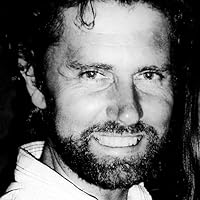
Phillip Adams writes in the forward, "... Peter Barnett's literary efforts have something in common with the rememberings of Nugget [Coombs] and Manning [Clark]. Like them, Peter's life has been remarkable both in its breadth and depth. And like Coombs and Clark, Barnett writes with kindness and generosity."
A combination of skill and influential contacts and mentors saw Barnett move quickly up through the media ranks.
Barnett covered Britain's entry into the Nuclear Club in 1952 off the coast of Western Australia with the explosion of their first atom-bomb.
"After the initial shock, a dense and magnificently turbulent cloud almost immediately shot to a height of 2000ft. At first pink, it quickly changed to mauve in the centre, with brilliantly white turbulent edges."
Today, with hindsight such reporting would smack of being 'embedded'. Needless to say this all took place during the dark days of the Cold War; an essential field of reference to read Barnett's accounts.
In '54 Barnett sat across from Menzies in Canberra shortly after the Petrov affair unfolded.
Barnett recalls of that time, "[m]any Labor supporters believed - still believe - that anti-Communist forces, particularly ASIO, had engineered the entire [Petrov affair] scenario, to ensure the Menzies Government continued in office."
Political intrigues in Canberra didn't have a hold over Barnett for long. Soon he was off. Passing through the Philippines, Japan, Singapore, Vietnam, Indonesia, Afghanistan, Pakistan and India, he eventually landed in Washington, where he engaged presidents and senior world figures.
He notched up one notable after another;
* Madame Ngo Dinh Nhu (the First Lady of Vietnam). Barnett notes, "[S]he was proud of her Women's Solidarity Movement. She claimed it had 950,000 members."
* President Diem. Barnett quotes Diem saying, "The fact is, that in addition to the Communist plot, these is also a powerful conspiracy organised on a world scale against the Government of Free Vietnam." Sounds eerily family to Karzai?
* President Sukarno. "I encountered him," Barnett states,"when he was sixty-two and his energy was exceptional."
* President Lyndon Johnson. "Little did I envisage," Barnett reflects, "that I would become friends of this flawed leader of the Western World."
Barnett's career which included 13 years in America is best summed up using his own words;
"Members of the White House Press Corps were the most privileged journalists on earth. There was only one word for it - they were pampered."