Auguste Rodin-the most famous artist in the world at the turn of the twentieth century-led a life as sensational and intense as the great sculptures he created. In this major reinterpretation of Rodin`s life and times, the accomplished Rodin scholar Ruth Butler draws for the first time on closely guarded archives and letters to disentangle the facts of this legendary artist`s life from the many myths that have grown up around him. Lavishly illustrated, the book also provides new interpretations of the motivations, execution, and reception of Rodin`s extraordinary artistic creations.
Ruth Butler was an American art historian and academic who specialized in 19th-century French sculpture and the roles of artists' models and collaborators. She taught at the University of Maryland, College Park and the University of Massachusetts Boston, and authored works on Auguste Rodin and the lives of women associated with artists of the era.
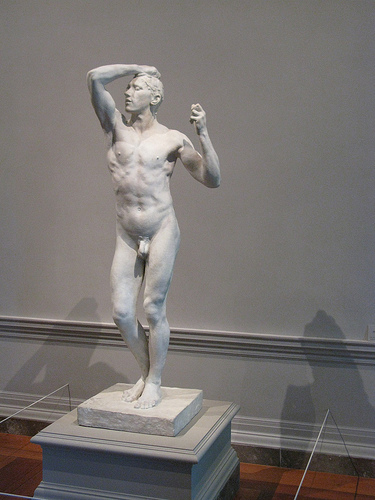
Age of Bronze National Gallery of Art, Washington DC
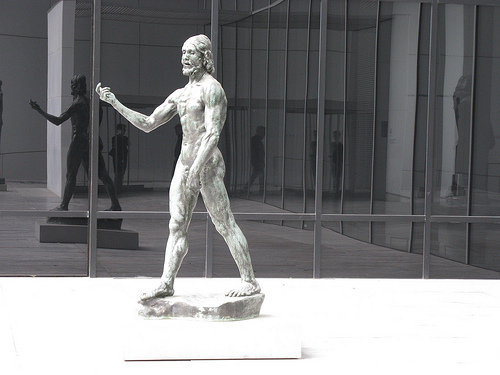
The Walking Man MOMA, New York City
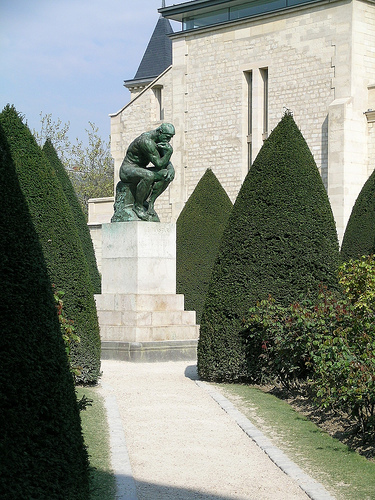
The Thinker The Musee Rodin garden in Paris
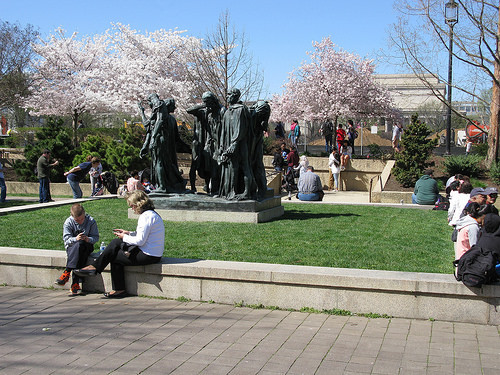
Burghers of Calais,Outdoor Sculpture Garden at the Hirshhorn Museum, Washington DC
This is a passionate biography of the French sculptor Auguste Rodin. It captures his beauty and anguish. It also shows us the strength of French society in the late 19th century that loved and promoted art.
Page 55 (my book)
Paris in the Second Empire, especially in the late 1860’s, was an artist’s dream: ... it was a time and a place when the creative individual believed the life he had chosen was particularly grand. He was born to participate in the magisterial richness of the imagination. Writers, musicians, and artists moved with ease from their studios to theaters and cafes. Their activity was especially visible in newly popular gathering places on the Right Bank, in Batignolles and Montmartre.... conjure up glittering conversations carried on within a brilliant society of men.
The government sponsored huge national exhibitions where Rodin’s creations were often refused by the judges; this was part of Rodin’s’ anguish. The author outlines for us the sculptures that Rodin created and how he had to cajole and argue for their public presentation. As the years went on Rodin became more adept at the marketing of his sculptures, he also formed a strong network of influential people who believed in his talent and helped him in this regard.
I was most affected by the stirring passages Rodin wrote of his life and his creative struggle. The author, Ruth Butler, quotes from many of his letters. There was, throughout Rodin’s long life (he died at the age of 77 in 1917), a great deal of unrestrained criticism of his works. Many in France thought highly of Rodin’s art, other less so, and they were not inhibited in their editorial remarks.
Starting in the mid-1880’s Rodin’s influence started to spread to Europe, to England, and then to the United States. Many rich, and not so rich, made the pilgrimage to see Rodin in person. Many were women who wanted to study with Rodin. Some would become his lovers.
This leads us to another of the sorrows of Rodin’s life. The author narrates the relationships with women that Rodin had. He started a common-law relationship with Rose Beuret in the 1860’s – they remained together until she died in 1917 (Rodin died a few months later). It would be nice to say that they had a long fulfilling relationship, but alas no. Very sadly she was shunted aside after a few years. Many of Rodin’s friends and contacts were hardly aware of her existence. The author speculates that Rose became a mother/sister symbol to Rodin. Rodin, in the 1880’s, formed another intense relationship with Camille Claudel. She was a very talented sculptor and Rodin helped to promote her career, that is, until this relationship starting its downward spin in the early 1890’s. Camille Claudel never recovered from her broken relationship with Rodin – she spent the last years of her life in a psychiatric ward.
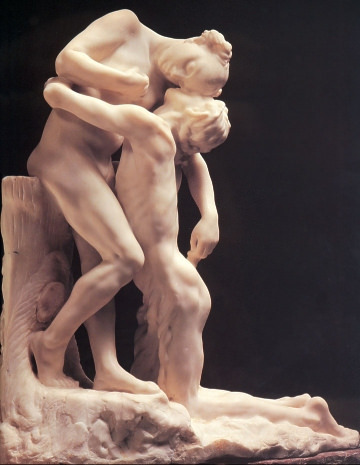
Shakuntala by Camille Claudel
This book gives us a thorough portrait of the artist and those surrounding him. It also provides a phenomenal picture of Paris and France during this vibrant era, where art and artists were venerated.
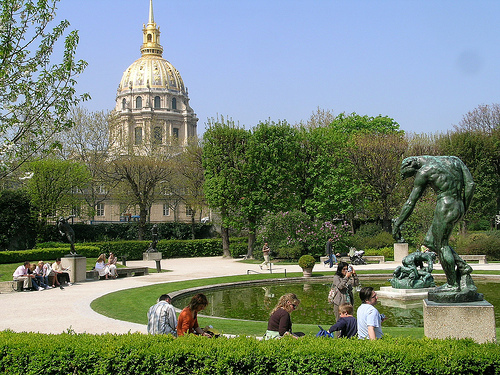
The Musee Rodin garden in Paris (the dome of Les Invalides in the background)
If you are interested in the life, times, and also in the other artists creating during Rodin's lifetime-- this is a terrific biography. Fully illustrated with Rodin's work and also the work of other sculptors that Rodin's work was compared to. Fascinating wonderful carefully researched biography.
This is a HIGHLY DETAILED account of Rodin's life and career, informed by letters and documents from the Musee Rodin in France. I read it for work, and I'm grateful for the knowledge gained, but it's not exactly an easy read, more like an extremely extensive chronology than an insightful biography.
This book is a window into Rodin's complex life. I am a bit biased to this book, because I am so in-love with everything Rodin. His scultpures are the most beautiful pieces of art I have ever seen. His house in Paris is magnificient, and the love story between him and Camille Claudel is beautiful and painful at the same time. Her sculptures also reflect their passion. I think he is a person you might want to get to know, if even through a book.
Ah, Rodin! You can't help but focus on his works, but the book's added context gives each sculpture and painting more meaning. The description of (the creation of) Balzac is particularly well done. I wish this book could stay on my coffee table.