

What do you think?

Lost Kingdom: Hawaii's Last Queen, the Sugar Kings and America's First Imperial Adventure
Around 200 A.D., intrepid Polynesians arrived at an undisturbed archipelago. For centuries, their descendants lived with little contact from the western world. In 1778, their isolation was shattered with the arrival of Captain Cook.
Deftly weaving together a memorable cast of characters, Lost Hawaii brings to life the ensuing clash between a vulnerable Polynesian people and relentlessly expanding capitalist powers. Portraits of royalty and rogues, sugar barons, and missionaries combine into a sweeping tale of the Hawaiian Kingdom’s rise and fall.
At the center of the story is Lili‘uokalani, the last queen of Hawai‘i. Born in 1838, she lived through the nearly complete economic transformation of the islands. Lucrative sugar plantations gradually subsumed the majority of the land, owned almost exclusively by white planters, dubbed the “Sugar Kings.” Hawai‘i became a prize in the contest between America, Britain, and France, each seeking to expand their military and commercial influence in the Pacific.
The monarchy had become a figurehead, victim to manipulation from the wealthy sugar plantation owners. Lili‘uokalani was determined to enact a constitution to reinstate the monarchy’s power but was outmaneuvered by the U.S. The annexation of Hawai‘i had begun, ushering in a new century of American imperialism.
Deftly weaving together a memorable cast of characters, Lost Hawaii brings to life the ensuing clash between a vulnerable Polynesian people and relentlessly expanding capitalist powers. Portraits of royalty and rogues, sugar barons, and missionaries combine into a sweeping tale of the Hawaiian Kingdom’s rise and fall.
At the center of the story is Lili‘uokalani, the last queen of Hawai‘i. Born in 1838, she lived through the nearly complete economic transformation of the islands. Lucrative sugar plantations gradually subsumed the majority of the land, owned almost exclusively by white planters, dubbed the “Sugar Kings.” Hawai‘i became a prize in the contest between America, Britain, and France, each seeking to expand their military and commercial influence in the Pacific.
The monarchy had become a figurehead, victim to manipulation from the wealthy sugar plantation owners. Lili‘uokalani was determined to enact a constitution to reinstate the monarchy’s power but was outmaneuvered by the U.S. The annexation of Hawai‘i had begun, ushering in a new century of American imperialism.
445 pages, Hardcover
First published December 13, 2011
About the author
Julia Flynn Siler
3 books71 followersJulia Flynn Siler is a New York Times best-selling author and journalist. Her new book, The White Devil’s Daughters: The Fight Against Slavery in San Francisco’s Chinatown, will be published by Alfred A. Knopf in May of 2019. Her most recent book is Lost Kingdom: Hawaii’s Last Queen, the Sugar Kings, and America’s First Imperial Adventure. Her first book was the The House of Mondavi: The Rise and Fall of an American Wine Dynasty.
As a veteran correspondent for the Wall Street Journal and BusinessWeek magazine, Ms. Siler spent more than two decades in the Europe and the United States, reporting from a dozen countries on topics as varied as biotechnology, cult wines, puppy breeding, and a princess’s quest to restore a Hawaiian palace’s lost treasures. Her stories and reviews have also appeared in the New York Times, the Washington Post, the Los Angeles Times, and the Oxford Encyclopedia on Food and Drink in America.
A front page story for the Wall Street Journal led to her book The House of Mondavi, which involved more than 500 hours of interviews and examination of tens of thousands of pages of documents. Published by Penguin's Gotham Books in 2007, The House of Mondavi was honored as a finalist both for a James Beard Award and a Gerald Loeb Award for distinguished reporting and is now in its eleventh printing.
Her critically-acclaimed second book, Lost Kingdom, was also a New York Times bestseller.
In August of 2016, the National Endowment for the Humanities awarded Ms. Flynn Siler a “Public Scholar” grant for 2016-2017 to support her latest project, The White Devil’s Daughters.
In June of 2017, the Mayborn Graduate Institute of Journalism announced that Ms. Siler had been awarded a Mayborn Fellowship in Biography to support the book. She was also named a Logan Nonfiction Fellow at the Carey Institute for Greater Good, where she spent the fall of 2017 completing her manuscript.
Ms. Siler is a longtime member of the San Francisco-based writing group North 24th Writers, whose members have published fourteen nonfiction books as well as hundreds of articles and essays in major magazines, newspapers and literary journals. She is also a member of the San Francisco Writer’s Grotto. She has taught journalism at the University of London’s Birkbeck college and led nonfiction workshops at the Community of Writers at Squaw Valley.
As a veteran correspondent for the Wall Street Journal and BusinessWeek magazine, Ms. Siler spent more than two decades in the Europe and the United States, reporting from a dozen countries on topics as varied as biotechnology, cult wines, puppy breeding, and a princess’s quest to restore a Hawaiian palace’s lost treasures. Her stories and reviews have also appeared in the New York Times, the Washington Post, the Los Angeles Times, and the Oxford Encyclopedia on Food and Drink in America.
A front page story for the Wall Street Journal led to her book The House of Mondavi, which involved more than 500 hours of interviews and examination of tens of thousands of pages of documents. Published by Penguin's Gotham Books in 2007, The House of Mondavi was honored as a finalist both for a James Beard Award and a Gerald Loeb Award for distinguished reporting and is now in its eleventh printing.
Her critically-acclaimed second book, Lost Kingdom, was also a New York Times bestseller.
In August of 2016, the National Endowment for the Humanities awarded Ms. Flynn Siler a “Public Scholar” grant for 2016-2017 to support her latest project, The White Devil’s Daughters.
In June of 2017, the Mayborn Graduate Institute of Journalism announced that Ms. Siler had been awarded a Mayborn Fellowship in Biography to support the book. She was also named a Logan Nonfiction Fellow at the Carey Institute for Greater Good, where she spent the fall of 2017 completing her manuscript.
Ms. Siler is a longtime member of the San Francisco-based writing group North 24th Writers, whose members have published fourteen nonfiction books as well as hundreds of articles and essays in major magazines, newspapers and literary journals. She is also a member of the San Francisco Writer’s Grotto. She has taught journalism at the University of London’s Birkbeck college and led nonfiction workshops at the Community of Writers at Squaw Valley.
Ratings & Reviews
Friends & Following
Create a free account to discover what your friends think of this book!
Community Reviews
Displaying 1 - 30 of 240 reviews

March 15, 2016
When you stop to think about it, it's pretty insane that Hawai‘i is a state at all. I mean – it's not even in the Americas. There was no cultural link between the islands and the United States. And it wasn't like the Wild West – land that you just naturally stumbled onto while expanding into your manifest destiny. You really had to head out there into the middle of the Pacific and look for the place.
And many did, quite assiduously. Guidebooks and histories will tell you that the fiftieth state was ‘added’ in 1959, but until recently the rather ugly annexation process underlying this euphemism was not so easy to come across. ‘I am ashamed of the whole affair,’ wrote Grover Cleveland, under whose second presidential term much of the process played out – though he was out of office by the time annexation was finalised in 1898. Julia Flynn Siler's approach, in common with a lot of more recent writers, is to see the whole affair as a curtain-raiser for the growth of American imperialism.
These native Hawaiians from across the islands had been united under one ruling monarchy towards the end of the eighteenth century, and Siler's book examines the territory's annexation through the story of its last monarch, Queen Lili‘uokalani. Educated in American-run missionary schools and descended from a long line of Hawaiian ali‘i or nobles, she was well-versed in both Western and native traditions and was popular among her subjects.
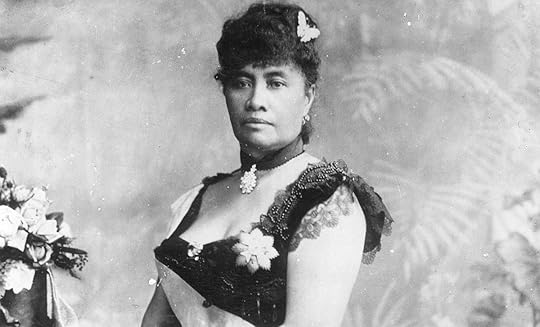
Lili‘u was not under any illusions about her kingdom, and she probably knew what was coming quite early – she had grown up in a Hawai‘i already under considerable pressure from external corporate and military interests. The islands' wealth was built on sugar, and the biggest landowners were all either foreigners or the descendants of foreigners (known in Hawai‘i as haole). Principally, that meant the descendants of missionaries, whose ‘conversion from church-sponsored altruism to brisk mercantilism’ was so often observed that it had led to a cynical local saying: ‘They came to do good and did well.’
The most powerful of these sugar barons had quite colossal influence. The German-American Claus Spreckels – known as the Sugar King, or ‘His Royal Saccharinity’ – owned fully half the country's public debt, and was also a major personal creditor for the royal family. As it happens, Spreckels supported Hawaiian independence, but most of the other haole businessmen wanted more and more ties with the United States, which (if the import tariffs could be overcome) was a stupendously lucrative market for their sugar.
Events moved with gathering speed. First, the cash-strapped monarch was forced to sign a so-called ‘bayonet constitution’, surrendering a great deal of royal authority and giving more power to non-native landowners. Soon there was a US warship parked permanently off Honolulu, just in case American business interests felt threatened. The US was already leasing Pearl Harbor: it was recognised that Hawai‘i was not just the main stopover on the trade route from North America to Asia, it was also the key to military control of the Pacific. Hawkish types in Washington started talking openly about annexing this completely peaceful, independent kingdom – Secretary of State John W Foster, for instance:
The atmosphere became increasingly polarised, with every little disagreement turning into a major political division and militias forming around both pro-royalty and pro-annexation groups. One such confrontation in 1893 served as the pretext to send in a detachment of US Marines – in order, they said, to protect the safety and property of American lives on Hawai‘i. The action soon crystallised into a coup d'état. Opposition groups, backed by the US forces, declared a Republic and had the queen confined to house arrest. The Hawaiian flag was taken down and replaced by the Stars and Stripes; one observer recorded, with a complete absence of irony, the ‘glorious sight’ of the ‘ensign of Freedom floating over the tower of the Government Building’ whose original incumbents had been arrested and jailed.
Lili‘uokalani signed a document of surrender, believing that Washington would surely reverse the decision once it learned what local troops had done. And the reaction in the US varied a lot – the Fresno Expositor wrote dismissively and racistly that the islanders had ‘dethroned the fat squaw’, but the New York Times ran the story under the headline
But by then it was too late to get the toothpaste back in the tube. Annexation followed in 1898, and – long after Lili‘uokalani had died more-or-less penniless in Honolulu – statehood, ultimately, came in the 1950s.
Some recent gestures towards this awkward past have been made. Clinton offered a formal apology to Hawaiians on the centenary of the coup in 1993. Various versions of the so-called Akaka Bill, which would give native Hawaiians similar recognition and rights as American Indians, have been proposed to Congress since 2000, and some parts of these bills have been accepted.
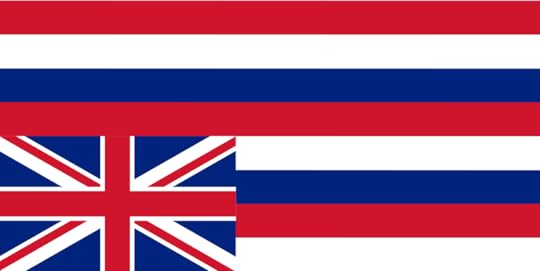
The inverted Hawaiian flag is supposed to show the Kingdom of Hawaii ‘in distress’, and has been adopted by the modern Hawaiian sovereignty movement
Lili‘u's political legacy is slight – she was there at the wrong time, and her modest gifts of statesmanship were nowhere near equal to the occasion. She made a good figurehead, however, reacting with great dignity to an impossible situation; she spoke well on behalf of her people and her tradition, translated Hawaiian myths, and left a hugely popular repertoire of her own Hawaiian verses and songs, including some of the most famous Hawaiian music such as Aloha ‘Oe.
Her story is respectfully and carefully told by Siler, in a book with no especial narrative flair but with a great handle on the period and the material, and an admirable sensitivity to Hawai‘i's native culture and language. There was loads in here I knew nothing about – well worth a look for anyone interested in Polynesian culture, American imperialism, Gilded Age politics, and for anyone else who wants the lowdown on the Aloha State.
And many did, quite assiduously. Guidebooks and histories will tell you that the fiftieth state was ‘added’ in 1959, but until recently the rather ugly annexation process underlying this euphemism was not so easy to come across. ‘I am ashamed of the whole affair,’ wrote Grover Cleveland, under whose second presidential term much of the process played out – though he was out of office by the time annexation was finalised in 1898. Julia Flynn Siler's approach, in common with a lot of more recent writers, is to see the whole affair as a curtain-raiser for the growth of American imperialism.
What happened to the Kingdom of Hawai‘i was one of the most audacious land grabs of the Gilded Age, in which 1.8 million acres of land now worth billions of dollars was seized from native Hawaiians and claimed by American businessmen.
These native Hawaiians from across the islands had been united under one ruling monarchy towards the end of the eighteenth century, and Siler's book examines the territory's annexation through the story of its last monarch, Queen Lili‘uokalani. Educated in American-run missionary schools and descended from a long line of Hawaiian ali‘i or nobles, she was well-versed in both Western and native traditions and was popular among her subjects.
Lili‘u was not under any illusions about her kingdom, and she probably knew what was coming quite early – she had grown up in a Hawai‘i already under considerable pressure from external corporate and military interests. The islands' wealth was built on sugar, and the biggest landowners were all either foreigners or the descendants of foreigners (known in Hawai‘i as haole). Principally, that meant the descendants of missionaries, whose ‘conversion from church-sponsored altruism to brisk mercantilism’ was so often observed that it had led to a cynical local saying: ‘They came to do good and did well.’
The most powerful of these sugar barons had quite colossal influence. The German-American Claus Spreckels – known as the Sugar King, or ‘His Royal Saccharinity’ – owned fully half the country's public debt, and was also a major personal creditor for the royal family. As it happens, Spreckels supported Hawaiian independence, but most of the other haole businessmen wanted more and more ties with the United States, which (if the import tariffs could be overcome) was a stupendously lucrative market for their sugar.
Events moved with gathering speed. First, the cash-strapped monarch was forced to sign a so-called ‘bayonet constitution’, surrendering a great deal of royal authority and giving more power to non-native landowners. Soon there was a US warship parked permanently off Honolulu, just in case American business interests felt threatened. The US was already leasing Pearl Harbor: it was recognised that Hawai‘i was not just the main stopover on the trade route from North America to Asia, it was also the key to military control of the Pacific. Hawkish types in Washington started talking openly about annexing this completely peaceful, independent kingdom – Secretary of State John W Foster, for instance:
The Hawaiian pear is now fully ripe and this is the golden hour for the United States to pluck it.
The atmosphere became increasingly polarised, with every little disagreement turning into a major political division and militias forming around both pro-royalty and pro-annexation groups. One such confrontation in 1893 served as the pretext to send in a detachment of US Marines – in order, they said, to protect the safety and property of American lives on Hawai‘i. The action soon crystallised into a coup d'état. Opposition groups, backed by the US forces, declared a Republic and had the queen confined to house arrest. The Hawaiian flag was taken down and replaced by the Stars and Stripes; one observer recorded, with a complete absence of irony, the ‘glorious sight’ of the ‘ensign of Freedom floating over the tower of the Government Building’ whose original incumbents had been arrested and jailed.
Lili‘uokalani signed a document of surrender, believing that Washington would surely reverse the decision once it learned what local troops had done. And the reaction in the US varied a lot – the Fresno Expositor wrote dismissively and racistly that the islanders had ‘dethroned the fat squaw’, but the New York Times ran the story under the headline
A SHAMEFUL CONSPIRACY IN WHICH THE UNITED STATES WAS MADE TO PLAY A PART
__________________
The Political Crime of the Century
But by then it was too late to get the toothpaste back in the tube. Annexation followed in 1898, and – long after Lili‘uokalani had died more-or-less penniless in Honolulu – statehood, ultimately, came in the 1950s.
Some recent gestures towards this awkward past have been made. Clinton offered a formal apology to Hawaiians on the centenary of the coup in 1993. Various versions of the so-called Akaka Bill, which would give native Hawaiians similar recognition and rights as American Indians, have been proposed to Congress since 2000, and some parts of these bills have been accepted.
The inverted Hawaiian flag is supposed to show the Kingdom of Hawaii ‘in distress’, and has been adopted by the modern Hawaiian sovereignty movement
Lili‘u's political legacy is slight – she was there at the wrong time, and her modest gifts of statesmanship were nowhere near equal to the occasion. She made a good figurehead, however, reacting with great dignity to an impossible situation; she spoke well on behalf of her people and her tradition, translated Hawaiian myths, and left a hugely popular repertoire of her own Hawaiian verses and songs, including some of the most famous Hawaiian music such as Aloha ‘Oe.
Her story is respectfully and carefully told by Siler, in a book with no especial narrative flair but with a great handle on the period and the material, and an admirable sensitivity to Hawai‘i's native culture and language. There was loads in here I knew nothing about – well worth a look for anyone interested in Polynesian culture, American imperialism, Gilded Age politics, and for anyone else who wants the lowdown on the Aloha State.

September 16, 2017
I was born in 1939 and grew up when the United States was becoming the leader of the free world -
literally. We had won the World War ("The Greatest Generation," and all that) and we had elected a general, Dwight David Eisenhower, as our president. My white teachers in my all white schools in Des Moines, Iowa, enthused on our national morals, and my all white church leaders and Billy Graham extolled the obvious rewards of an almighty God for our dedication to him.
SO.....you'll have to forgive me if, now that I am 78 and reading more and more modern American history, I am a little late in realizing and understanding that we, as a nation, were some pretty BAD PEOPLE - and we did SOME PRETTY BAD THINGS.
And stealing HAWAII was just ONE of those pretty bad things. This may not be greatest book in the world and it may not be the best history of Hawaii - BUT it certainly shows - in the grimmest way - one of those BAD things we have done, in a long line of bad things.
Our original sin, of course, is slavery, on which our nation was built (and for which we never really apologized or asked for forgiveness, let alone compensated the victims). Then we slaughtered our original native people by the thousands and "imprisoned" the rest on reservations. This is just another chapter - the imperial adventure of our American "sugar kings" and the military to steal HAWAII from the Hawaiian people.
And now, we are burdened down with another adventurer, Donald Trump, who (without any apparent awareness of the irony) wants to "Make America Great Again." He is supported, of course, by today's evangelical religious leaders (read "Franklin Graham" Billy's son, et. al.), just like the "missionaries" in Hawaii supported the overthrow of Queen Liliuokalani - and then made themselves rich.
Okay, enough of my diatribe. This is supposed to be a book review - but this book MADE ME MAD. And that means it must be a good book. I think I'm going to go back and add a fourth star.
literally. We had won the World War ("The Greatest Generation," and all that) and we had elected a general, Dwight David Eisenhower, as our president. My white teachers in my all white schools in Des Moines, Iowa, enthused on our national morals, and my all white church leaders and Billy Graham extolled the obvious rewards of an almighty God for our dedication to him.
SO.....you'll have to forgive me if, now that I am 78 and reading more and more modern American history, I am a little late in realizing and understanding that we, as a nation, were some pretty BAD PEOPLE - and we did SOME PRETTY BAD THINGS.
And stealing HAWAII was just ONE of those pretty bad things. This may not be greatest book in the world and it may not be the best history of Hawaii - BUT it certainly shows - in the grimmest way - one of those BAD things we have done, in a long line of bad things.
Our original sin, of course, is slavery, on which our nation was built (and for which we never really apologized or asked for forgiveness, let alone compensated the victims). Then we slaughtered our original native people by the thousands and "imprisoned" the rest on reservations. This is just another chapter - the imperial adventure of our American "sugar kings" and the military to steal HAWAII from the Hawaiian people.
And now, we are burdened down with another adventurer, Donald Trump, who (without any apparent awareness of the irony) wants to "Make America Great Again." He is supported, of course, by today's evangelical religious leaders (read "Franklin Graham" Billy's son, et. al.), just like the "missionaries" in Hawaii supported the overthrow of Queen Liliuokalani - and then made themselves rich.
Okay, enough of my diatribe. This is supposed to be a book review - but this book MADE ME MAD. And that means it must be a good book. I think I'm going to go back and add a fourth star.

December 10, 2013
I would absolutely recommend this book to someone who wants to know about Hawaiian history. This book introduces the reader to Hawaiian vocabulary as well as famous Hawaiian Royalty. Before you even start the actual book, the introduction punches you in the face with some exceptionally interesting prehistoric Hawaiian culture. I learned that the Hawaiian people migrated over to the islands from places like Fiji and Tahiti. They were also known for sacrificing themselves in order to make the goddess, Pele, happy. This is an excellent book to read if you want to know more about Hawaiian culture and how Hawaii became what it is today. I learned more in thirty seven pages of this book than I did scrolling through one hundred pages of Google!
Julia Flynn Siler’s Lost Kingdom tells the story of Hawai’i last queen and the events during her reign which was a devastating and heartbreaking tale of how the foreigners took over this kingdom. The book is set in the islands of Hawai’i during the 1800’s, when the gold rush was attracting the colonists of the mainland to California. All the Hawaiian monarchy wanted to do was co-exist peacefully alongside the haoles or whites, but they ended up changing Hawai’i and its traditions forever. The monarchy does everything in their power to try to remain an independent kingdom, leaving the Hawaiians no choice but to conform to the the ways of the haoles. The book explains the hardships of the Hawaiians, who have been forever changed into the people they never intended to be.
The most memorable scene in this book so far would have to be when the last queen, Lili’uoklani was born and was given to another family. This tradition is called hāni which new born children were given to other family members or close friends. Lili’uokalani or Lili’u for short, was given to an ali’i or high ranking family, the Pauhai’s, who were relatives of the ruling king King Kamehameha. It was said that when Lili’u was born that a rainbow had shown in the sky and it had also begun to rain, which meant the gods we signaled as a propitious birth. Hawaiian customs say that rainbows and rain are signs that the gods are “contacting” you and is also a sign of good luck. Lili’u was born during the time known as “Māhoe Hope"or the time when plums of sugar cane began to unfurl from their sheaths, signaling a very successful sugarcane season, bringing fortunes to Hawaii.
Ultimately, the story of Hawai’i troubled history shows the reader of the hardships of the Hawaiian people, having to deal with economic,land, and sickness problems, reminding the reader how much Hawai’i had to sacrifice, leaving the reader regretful for what the mainlanders (people of the U.S.) did to this once strong and independent nation. It all adds up to the tail of sacrifice and naivete, an example of how manipulative and greedy the haoles (whites) were. The Lost Kingdom tells the story very well, pointing out how much and how far Hawai’i has come from its monarchy days.
After reading The Lost Kingdom i’ve gained a greater knowledge on the Hawaiian culture and how much was taken away from this paradise. I read about ancient traditions that the mainlanders destroyed because it wasn’t “fit for society”. Imagine, doing something for years and then having someone you don’t know tell you that you are no longer allowed to continue your ancient beloved customs. I learned to appreciate what is left of the Hawaiian culture and continue to pass on the history of their people. I learned that even though the independent nation was torn down because of the U.S., the remaining Hawaiians continued to keep some traditions alive.
Throughout the duration of the book, I felt sad and heartbroken because of the hardships they endured and problems they faced. The sadness was masked by fascination due to all the new information I was learning throughout the book. I learned more in the first chapter of this book than I would have if I was flipping through my history textbook! Alongside fascination, I felt angry because of all the elements that the Hawaiians had to endure. For example, they were forced into worshiping Christianity. To sum this whole book up in a few words: informational, fascinating and I couldn’t put it down.

December 15, 2012
It was a little difficult listening to this wonderfully-told story of Hawaii's transformation from an island paradise to an American territory. The desire for money and power, and therefore land, is pervasive in this transition. I loved the quip concerning the missonaries who came to the islands but often took up commerical enterprises since the opportunites were great. The natives quipped "Those who came to do good, did well."
It was a little difficult starting the book because it seemed like it was going to be a slow coverage of the many actions, mostly greedy, that brought Hawaii to a US possession. AQ Pacific western, I imagined. But the book increasingly took on a biographical direction as the events were viewed from the perspective of Hawaii's last queen, Liliuokalani, as she watched the painful transition and how it was deviously crafted by the descendents of the missionaries who, by then, had strong financial interests, especially in the sugar trade.
In short, it starts slowly and then builds into a suspense drama where I found myself hoping the Hawaiian people would win, even though I knew the ending. It is great to have a factual story told with suspense and feeling.
It was a little difficult starting the book because it seemed like it was going to be a slow coverage of the many actions, mostly greedy, that brought Hawaii to a US possession. AQ Pacific western, I imagined. But the book increasingly took on a biographical direction as the events were viewed from the perspective of Hawaii's last queen, Liliuokalani, as she watched the painful transition and how it was deviously crafted by the descendents of the missionaries who, by then, had strong financial interests, especially in the sugar trade.
In short, it starts slowly and then builds into a suspense drama where I found myself hoping the Hawaiian people would win, even though I knew the ending. It is great to have a factual story told with suspense and feeling.

January 11, 2021
As some of you may know, my current job is in the travel industry, and that has made the past year... interesting, to say the least. One of the things I come across in my job that's become especially striking during the COVID-19 pandemic is the intense sense of entitlement that many Americans feel towards vacationing in Hawaii. It was something I thought about pre-COVID, too - one of my close friends from college hailed from Hawaii, though though she was careful to distinguish being from Hawaii with being Hawaiian, and she spoke frankly about the islands' homelessness problem and cultural conflicts. But now, as Hawaii struggles with the question of when and how to reopen to tourism, and mainland travelers practically chomp at the bit to get back on a plane... it feels particularly pointed.
The impression I have is that a lot of American mainlanders treat Hawaii like... a Starbucks, in that they expect it will always be there for them, will cater to their desires, and will provide a generally consistent experience. (To be clear, this attitude exists towards other beach destinations too, especially Cancun, Cabo, and the Caribbean, but it's a little more freighted here because of Hawaii's history.) I had one conversation where someone expressed shock that Hawaii even had the authority to ban mainland travel over the summer, believing that the state 'had' to let them in, pandemic be damned. As soon as the scantest flexibility in travel restrictions opened up, the tourists swarmed in, with varying degrees of pique about being asked to get tested before they went. Any effort to explain that, since it was located in the middle of an ocean 2,400 miles from California, the state really couldn't afford to overload its hospitals, fell on deaf ears.
That's what was on my mind as I started this book, seeking a better understanding of just what happened to land Hawaii in this situation. Ultimately, I don't feel like Siler's book was particularly revelatory for me, as I had a basic understanding of the major events going in, but her treatment of Hawaii's last independent years was thorough and clearly well-researched, which I appreciated. She definitely comes at this story with... I would say sympathy for Lili'uokalani, though she doesn't hesitate to portray the failures of Hawaii's monarchy either. It's a difficult, complicated story about the consequences of cultural contact, and it's hard to really pinpoint where the fall begins. Is it when Western (white) influences led to the privatization of land, after which Westerners promptly bought up Hawaiian land? Is it when Hawaii's kings spent (and borrowed) recklessly to give themselves a lifestyle more in line with European royalty? Or was it simply the first time Captain Cook sailed into the harbor and the vastly better-armed nations of the world learned of the existence of this beautiful, strategic kingdom?
It's hard to imagine a timeline in which Hawaii could have retained its independence in perpetuity; surely if nothing else, World War II would have ended with it being annexed by either the U.S. or Japan. And yet, however inevitable it feels, the loss of its independence is still a tragedy. It was not as violent a takeover as that of the mainland United States, but some similar tactics of cultural imperialism were employed: reorganizing land and community structure, shifting diets and import dependency as acreage once used for subsistence agriculture becomes commercialized, banning the native language from schools. That native Hawaiian culture survives at all is a testament to the will of its people, and the effort that many have put into preserving language, history, and traditions against the grinding cultural hegemony of the United States.
I was very impressed with the thorough work Siler put into this book, and while I'm not a historian or a historiographer myself, I feel like she did an admirable job of weaving together a lot of factual information from different perspectives for a fairly comprehensive - to the extent that it's possible - portrayal of events. The book doesn't quite rise to five stars because it lacks the je ne sais quoi of nonfiction which manages to be compulsively readable, but it's still a great piece of work and definitely worth picking up if you're interested in Hawaii and its relationship to the rest of the United States.
The impression I have is that a lot of American mainlanders treat Hawaii like... a Starbucks, in that they expect it will always be there for them, will cater to their desires, and will provide a generally consistent experience. (To be clear, this attitude exists towards other beach destinations too, especially Cancun, Cabo, and the Caribbean, but it's a little more freighted here because of Hawaii's history.) I had one conversation where someone expressed shock that Hawaii even had the authority to ban mainland travel over the summer, believing that the state 'had' to let them in, pandemic be damned. As soon as the scantest flexibility in travel restrictions opened up, the tourists swarmed in, with varying degrees of pique about being asked to get tested before they went. Any effort to explain that, since it was located in the middle of an ocean 2,400 miles from California, the state really couldn't afford to overload its hospitals, fell on deaf ears.
That's what was on my mind as I started this book, seeking a better understanding of just what happened to land Hawaii in this situation. Ultimately, I don't feel like Siler's book was particularly revelatory for me, as I had a basic understanding of the major events going in, but her treatment of Hawaii's last independent years was thorough and clearly well-researched, which I appreciated. She definitely comes at this story with... I would say sympathy for Lili'uokalani, though she doesn't hesitate to portray the failures of Hawaii's monarchy either. It's a difficult, complicated story about the consequences of cultural contact, and it's hard to really pinpoint where the fall begins. Is it when Western (white) influences led to the privatization of land, after which Westerners promptly bought up Hawaiian land? Is it when Hawaii's kings spent (and borrowed) recklessly to give themselves a lifestyle more in line with European royalty? Or was it simply the first time Captain Cook sailed into the harbor and the vastly better-armed nations of the world learned of the existence of this beautiful, strategic kingdom?
It's hard to imagine a timeline in which Hawaii could have retained its independence in perpetuity; surely if nothing else, World War II would have ended with it being annexed by either the U.S. or Japan. And yet, however inevitable it feels, the loss of its independence is still a tragedy. It was not as violent a takeover as that of the mainland United States, but some similar tactics of cultural imperialism were employed: reorganizing land and community structure, shifting diets and import dependency as acreage once used for subsistence agriculture becomes commercialized, banning the native language from schools. That native Hawaiian culture survives at all is a testament to the will of its people, and the effort that many have put into preserving language, history, and traditions against the grinding cultural hegemony of the United States.
I was very impressed with the thorough work Siler put into this book, and while I'm not a historian or a historiographer myself, I feel like she did an admirable job of weaving together a lot of factual information from different perspectives for a fairly comprehensive - to the extent that it's possible - portrayal of events. The book doesn't quite rise to five stars because it lacks the je ne sais quoi of nonfiction which manages to be compulsively readable, but it's still a great piece of work and definitely worth picking up if you're interested in Hawaii and its relationship to the rest of the United States.

September 7, 2023
The subtitle exactly describes the content of the book . Yet for me to care about the royal house of Hawaii, I need to know about the kingdom of Hawaii, something about the culture, about how the royal house served the greater good. I was left reading this book for points with GR Nonfiction Book Club.
A drab little reveals-nothing review for a drab little reveals-nothing-to-care-about book.
A drab little reveals-nothing review for a drab little reveals-nothing-to-care-about book.

December 29, 2021
Julia Flynn Siler's Lost Kingdom discusses the Kingdom of Hawaii's efforts to remain independent through the 19th Century in the face of imperialist subversion. Siler shows the Hawaiians forging a national identity under Kamehameha in response to Western exploration and increased trade with the outside world; thus a far-flung collection of islands became, for a time, an important Pacific player. The country's independence was alternately tolerated and undermined by foreign powers, particularly Britain and the United States (though Germany and Japan also periodically threatened Hawaii), who instigated coups and landed troops periodically in an effort to control and exploit the island's resources, particularly sugar. A large European population of missionaries and sugar planters became a lynchpin in these schemes, along with indigenous Hawaiians who for one reason or another disliked the Royal Family. The balance of the story centers Liliʻuokalani, the last independent Queen of Hawaii, whose attempts to reform the country's economy and rewrite an onerous constitution triggered an overthrow of her government which led to the United States annexing the islands. Siler is good at navigating this history, better-known in some aspects than others, and showing the fraught nature of Hawaiian society under the Kamehameha Dynasty where class, race and other predictable flashpoints caused prolonged instability. Her portrait of Lil'uokalani, who traveled abroad to gain support for Hawaiian independence, shows that she was a gallant but largely ineffectual ruler who nonetheless became a symbol of her country's unique identity. A well-written account of an oft-forgotten slice of history.

May 13, 2025
A beautiful tribute to the tragedy of the kingdom of Hawaii, thoroughly explaining all of the people and events involved in the overthrow of native rule for the sake of American profits. The narrative moved forward in a compelling way that urged me to keep reading, while also being laden with well-researched historical detail. I feel like I have a well-rounded, nuanced view of Queen Lili’uokalani, her family, her experiences, and her accomplishments as a leader and an artist. This book is an excellent read if you’re interested in women in leadership or American imperialism, as it establishes a deep understanding of both.

March 7, 2012
Hawai’i has been a U.S. state for just over fifty years; but its history is far longer, more complex and more contentious than most likely realize. Julia Flynn Siler’s Lost Kingdom: Hawaii’s Last Queen, the Sugar Kings, and America’s First Imperial Adventure skillfully makes the case of the unfortunate effects of American imperialism on both Hawai’i’s monarchy and its inhabitants – the effects of which are still in evidence today.
Following in a series of recently published histories elaborating on America’s penchant for intervening in other countries’ affairs, such as Evan Thomas’ The War Lovers, and Sarah Vowell’s somewhat irreverent but equally incisive Unfamiliar Fishes, Lost Kingdom is a painstakingly researched and crisply narrated complement to the growing cache of evidence of America’s often selfish and destructive colonial adventurism. In addition to the powerful external political forces bearing down on the tiny archipelago during the mid-late 1800s, business interests, including those of sugar industry magnate Claus Spreckles, sought to ingratiate themselves to the royal family – often through corruption and a host of likewise devious means.
Commencing with the re-discovery of Hawai’i by British Captain James Cook - who christened them the Sandwich Islands in honor of Britain’s Earl of Sandwich - in 1778, Siler describes the ascendancy of King Kamehameha I, the first of the ali’i or noble class who united Hawai’i’s islands into a kingdom in 1810. It then progresses through the reign of Queen Lili’uokalani or “Lili’u” who, though adopted by the Kamehameha dynasty, served as Hawai’i’s queen effectively until January 17, 1893, when her reign – as well as Hawai’i’s monarchy - was irreparably impacted by a coup of revolutionary haole: white American business and political figures - many of whom had designs on Hawaiian annexation by the United States. Such annexation was advanced as a key component of America’s ever-broadening doctrine of “Manifest Destiny”, which the U.S. originally advanced in order to defend its interests in its own hemisphere; but which was now being proactively applied to justify interventionism and colonialism.
Lili’u’s brother, David Kalākaua, who became king in 1883, sought to establish a new royal dynasty to succeed the Kamehamehas. However, his besotted rule over Hawai’i was largely marked by his bottomless appetite for liquor, corruption, profligacy and late-night poker games to the point where Spreckles, emboldened by the King’s weakened financial position, collaborated with Kalākaua’s prime minister – an excommunicated Mormon entrepreneur and opportunist Walter Murray Gibson – to secure land, water rights, and other business-favorable concessions in Spreckles’ favor. This was compounded by a trio of unfortunate developments during 1887 that conspired to reinforce the reality that Kalākaua’s status as monarch had become severely diminished.
In the first instance, the so-called “Opium Scandal” had Kalākaua allegedly accepting a total of $155,000 in bribes from a pair of Chinese businessmen looking to influence legislation relating to opium licensing. The second saw Kalākaua reluctantly agreeing to a “reciprocity treaty” with the U.S. giving the latter rights to Pearl River Basin in exchange for favorable trade considerations (the treaty would be abrogated in 1890 by President McKinley with his signing of the “McKinley Tariff Bill”). Kalākaua’s capitulation to U.S. “diplomacy” over what is now Pearl Harbor was widely criticized as the metaphorical “foot in the door” paving the way to later U.S. annexation of the islands. But lastly and most devastatingly was the king’s acquiescence in accepting the so-called “Bayonet Constitution” – so-called because Kalākaua likely signed it at the point of a bayonet.
Lorrin Andrews Thurston, a grandson of New England missionaries and unrepentant annexation advocate, led an insurgent group of radical yet powerful haole businessmen calling themselves the “Committee of Thirteen” - representing the leadership of the larger “Hawaiian League” – which forced Kalākaua to sign the constitution that, in addition to disenfranchising nearly 18,000 Chinese subjects, imposed property requirements for membership in of the house of nobles as well as for electing representatives to that body. The armed militia of the Hawaiian League, the “Honolulu Rifles”, ensured for Thurston that this constitution, like the Declaration of Independence before it, would be “forcibly effected and forcibly maintained.”
After Kalākaua’s passing in 1891, his sister Lili’u ascended to the throne. She was regarded as fiercely loyal to the Hawaiian cause, and presided over a failed attempt to promulgate a new document to replace the “Bayonet Constitution”. This led to yet another coup, led by Thurston, which installed a Provisional Government, or “P.G.” of which Sanford Ballard Dole, a Williams College-educated lawyer and cousin of Dole Food Company founder James Drummond Dole, was nominated president. Lili’u’s attempt to incite insurrection against the P.G. resulted in her being temporarily jailed, and to make matters worse, her niece (David Kalākaua’s daughter) the princess Ka’iulani - who had been schooled in England and was a young woman in her twenties at this time, was rumored to be scheming against her to usurp the throne. But by 1898, the throne itself became moot as the Spanish American War with its perceived (one might say “manufactured”) threats in the Pacific resulted in passage of the law annexing Hawaii for the United States.
Julia Flynn Siler, author of the bestselling The House of Mondavi: The Rise and Fall of an American Wine Dynasty, has woven a fascinating and authoritative tale of intrigue and imperialism, supplemented throughout with anecdotes of such literary luminaries as Robert Louis Stevenson, Mark Twain, Herman Melville – all of whom traveled to and opined on the islands. Lost Kingdom, above all else, is an important and necessary contribution to the chronicling of America’s often heavy-handed and regrettable exploits in statecraft.
Following in a series of recently published histories elaborating on America’s penchant for intervening in other countries’ affairs, such as Evan Thomas’ The War Lovers, and Sarah Vowell’s somewhat irreverent but equally incisive Unfamiliar Fishes, Lost Kingdom is a painstakingly researched and crisply narrated complement to the growing cache of evidence of America’s often selfish and destructive colonial adventurism. In addition to the powerful external political forces bearing down on the tiny archipelago during the mid-late 1800s, business interests, including those of sugar industry magnate Claus Spreckles, sought to ingratiate themselves to the royal family – often through corruption and a host of likewise devious means.
Commencing with the re-discovery of Hawai’i by British Captain James Cook - who christened them the Sandwich Islands in honor of Britain’s Earl of Sandwich - in 1778, Siler describes the ascendancy of King Kamehameha I, the first of the ali’i or noble class who united Hawai’i’s islands into a kingdom in 1810. It then progresses through the reign of Queen Lili’uokalani or “Lili’u” who, though adopted by the Kamehameha dynasty, served as Hawai’i’s queen effectively until January 17, 1893, when her reign – as well as Hawai’i’s monarchy - was irreparably impacted by a coup of revolutionary haole: white American business and political figures - many of whom had designs on Hawaiian annexation by the United States. Such annexation was advanced as a key component of America’s ever-broadening doctrine of “Manifest Destiny”, which the U.S. originally advanced in order to defend its interests in its own hemisphere; but which was now being proactively applied to justify interventionism and colonialism.
Lili’u’s brother, David Kalākaua, who became king in 1883, sought to establish a new royal dynasty to succeed the Kamehamehas. However, his besotted rule over Hawai’i was largely marked by his bottomless appetite for liquor, corruption, profligacy and late-night poker games to the point where Spreckles, emboldened by the King’s weakened financial position, collaborated with Kalākaua’s prime minister – an excommunicated Mormon entrepreneur and opportunist Walter Murray Gibson – to secure land, water rights, and other business-favorable concessions in Spreckles’ favor. This was compounded by a trio of unfortunate developments during 1887 that conspired to reinforce the reality that Kalākaua’s status as monarch had become severely diminished.
In the first instance, the so-called “Opium Scandal” had Kalākaua allegedly accepting a total of $155,000 in bribes from a pair of Chinese businessmen looking to influence legislation relating to opium licensing. The second saw Kalākaua reluctantly agreeing to a “reciprocity treaty” with the U.S. giving the latter rights to Pearl River Basin in exchange for favorable trade considerations (the treaty would be abrogated in 1890 by President McKinley with his signing of the “McKinley Tariff Bill”). Kalākaua’s capitulation to U.S. “diplomacy” over what is now Pearl Harbor was widely criticized as the metaphorical “foot in the door” paving the way to later U.S. annexation of the islands. But lastly and most devastatingly was the king’s acquiescence in accepting the so-called “Bayonet Constitution” – so-called because Kalākaua likely signed it at the point of a bayonet.
Lorrin Andrews Thurston, a grandson of New England missionaries and unrepentant annexation advocate, led an insurgent group of radical yet powerful haole businessmen calling themselves the “Committee of Thirteen” - representing the leadership of the larger “Hawaiian League” – which forced Kalākaua to sign the constitution that, in addition to disenfranchising nearly 18,000 Chinese subjects, imposed property requirements for membership in of the house of nobles as well as for electing representatives to that body. The armed militia of the Hawaiian League, the “Honolulu Rifles”, ensured for Thurston that this constitution, like the Declaration of Independence before it, would be “forcibly effected and forcibly maintained.”
After Kalākaua’s passing in 1891, his sister Lili’u ascended to the throne. She was regarded as fiercely loyal to the Hawaiian cause, and presided over a failed attempt to promulgate a new document to replace the “Bayonet Constitution”. This led to yet another coup, led by Thurston, which installed a Provisional Government, or “P.G.” of which Sanford Ballard Dole, a Williams College-educated lawyer and cousin of Dole Food Company founder James Drummond Dole, was nominated president. Lili’u’s attempt to incite insurrection against the P.G. resulted in her being temporarily jailed, and to make matters worse, her niece (David Kalākaua’s daughter) the princess Ka’iulani - who had been schooled in England and was a young woman in her twenties at this time, was rumored to be scheming against her to usurp the throne. But by 1898, the throne itself became moot as the Spanish American War with its perceived (one might say “manufactured”) threats in the Pacific resulted in passage of the law annexing Hawaii for the United States.
Julia Flynn Siler, author of the bestselling The House of Mondavi: The Rise and Fall of an American Wine Dynasty, has woven a fascinating and authoritative tale of intrigue and imperialism, supplemented throughout with anecdotes of such literary luminaries as Robert Louis Stevenson, Mark Twain, Herman Melville – all of whom traveled to and opined on the islands. Lost Kingdom, above all else, is an important and necessary contribution to the chronicling of America’s often heavy-handed and regrettable exploits in statecraft.

January 31, 2025
An approachable introduction to this period of Hawaiian history. I liked Liliʻuokalani's parallels to Queen Victoria, and their brief meeting.

February 18, 2012
First visited by foreigners in when Captain James Cook arrived in 1778, Hawaii was already an established society with a thriving culture and economy. The arrival of Christian missionaries thirty years later and the subsequent conversion of the Royal Family to Christianity was only the first link in a chain of events that eventually led to the American military annexation of this sovereign nation in America's first act of international imperialism beyond its own borders.
Award-winning journalist and author of the New York times best-seller, The House of Mondavi: The Rise and Fall of an American Wine Dynasty, Julia Flynn Siler, tells the story of Queen Lili'uokalani, sovereign of a nation already heavily mortgaged to foreign interests when she took power at the end of the nineteenth century. The gradual erosion of a broad-based subsistence economy eventually led to the creation of a one-crop system based on the raising and exporting of sugar cane for the benefit of a small group of wealthy men known as the sugar kings. Finally, the U.S. Marines landed on the island and, marching to the palace, incited the monarch's overthrow.
Ms. Flynn Siler's accessible style brings the reader into the life of the island immediately with her glossary of native Hawaiian words so important to our understanding of local cultural concepts. The main players are introduced straight off and then the historical drama begins to proceed to, what seems to be, its inevitable conclusion. Her lively writing avoids the pitfall of dry, historical reportage, retaining the colorful palate of the islands themselves in order to better illustrate their unique story.
Equal parts history lesson, human drama and social, political and economic commentary, Lost Kingdom is an insightful look into America's past and may provide an important lesson for those who will determine her future. For today's Americans, desirous of a more responsible participation in world affairs, this examination of the events of the last century may lead to better understanding of a unique part of our own nation and a clearer view of the effects of our participation in the affairs of other nations.
I received a free copy of this book from the publisher in exchange for an honest review.
Award-winning journalist and author of the New York times best-seller, The House of Mondavi: The Rise and Fall of an American Wine Dynasty, Julia Flynn Siler, tells the story of Queen Lili'uokalani, sovereign of a nation already heavily mortgaged to foreign interests when she took power at the end of the nineteenth century. The gradual erosion of a broad-based subsistence economy eventually led to the creation of a one-crop system based on the raising and exporting of sugar cane for the benefit of a small group of wealthy men known as the sugar kings. Finally, the U.S. Marines landed on the island and, marching to the palace, incited the monarch's overthrow.
Ms. Flynn Siler's accessible style brings the reader into the life of the island immediately with her glossary of native Hawaiian words so important to our understanding of local cultural concepts. The main players are introduced straight off and then the historical drama begins to proceed to, what seems to be, its inevitable conclusion. Her lively writing avoids the pitfall of dry, historical reportage, retaining the colorful palate of the islands themselves in order to better illustrate their unique story.
Equal parts history lesson, human drama and social, political and economic commentary, Lost Kingdom is an insightful look into America's past and may provide an important lesson for those who will determine her future. For today's Americans, desirous of a more responsible participation in world affairs, this examination of the events of the last century may lead to better understanding of a unique part of our own nation and a clearer view of the effects of our participation in the affairs of other nations.
I received a free copy of this book from the publisher in exchange for an honest review.

December 5, 2011
This fascinating book about the history of Hawaii leading up to its annexation by the United States covers some of the same material as Sarah Vowell’s recent and also wonderful book, Unfamiliar Fishes, but Lost Kingdom goes into greater detail, especially about the life of Lili’uokalani, Hawaii’s last queen. Lili’uokalani was educated by missionaries and devoutly Christian, but that didn’t cause her to demean her native arts and customs which she supported, celebrated and led. She wrote the lovely and still well-known song Aloha Oe, many versions of which can be heard on YouTube—including one by Elvis—and an autobiography that can be found in Google Books.
Hawaii is the only state in the country that used to be a sovereign nation with a monarchy recognized around the world. Christian missionaries came to Hawaii with the best of intentions, but inevitably brought disease and prejudices that decimated the native people and culture, and some of the missionary’s offspring became greedy sugar barons who overthrew the lawful government and replaced it with one more favorable to their financial interests, a shameful episode in American history that embarrassed even President Grover Cleveland.
Author Julia Flynn Siler has included a glossary of Hawaiian words and a list of characters, both very helpful. Though much of this book’s story is sad it’s beautifully written and not heavy-handed, leaving me with a sense of yearning and hope for what Hawaii was, still is and can be rather than a feeling of despair.
Hawaii is the only state in the country that used to be a sovereign nation with a monarchy recognized around the world. Christian missionaries came to Hawaii with the best of intentions, but inevitably brought disease and prejudices that decimated the native people and culture, and some of the missionary’s offspring became greedy sugar barons who overthrew the lawful government and replaced it with one more favorable to their financial interests, a shameful episode in American history that embarrassed even President Grover Cleveland.
Author Julia Flynn Siler has included a glossary of Hawaiian words and a list of characters, both very helpful. Though much of this book’s story is sad it’s beautifully written and not heavy-handed, leaving me with a sense of yearning and hope for what Hawaii was, still is and can be rather than a feeling of despair.

September 26, 2011
Siler strikes again! I fell in love with this author's writing in her book The House of Mondavi: The Rise and Fall of an American Wine Dynasty and her writing is just as thorough, intense and gripping in this book on the history of Hawaii. This book gives an excellent depiction on why our 50th state is, hands down, our best state in regards to history and culture. I just cannot wait for her next book!! Her writing always entertains me!

September 29, 2018
After a vacation in Hawaii and a visit to the wonderful Bishop museum, I was very keen to read a history of the late monarchy and annexation period. This book was very well researched and written story of the key members of the Hawaiian royalty as well as rich and powerful European immigrants during this time. There was however, unfortunately, almost no information about how the ordinary people lived, or other immigrants such as the Japanese or Chinese. Partly such information is harder to obtain, but there are certainly some records (perhaps in Chinease and Japanese) and surely a bit of attention could have been paid to these other folks. Nonetheless a good read.
November 9, 2017
A bit of a snoozer, literally. I had several lovely naps while my dad drove listening to this book. The Lost Kingdom stays true to the subtitle by only following Queen Liliʻuokalani until Hawai'i is officially not hers, and focuses extensively on social life of the upper crust, including incessant music concerts. Extra star because I didn't actively dislike the book, and I needed the sleep.

December 6, 2011
A fascinating, richly detailed, and vividly told chronicle of how greedy white businessmen conspired to depose the last monarch of the Kingdom of Hawaii and overthrow the sovereign government, leading to annexation by the United States in 1898.

November 14, 2020
Power and money took over the Hawaiian islands and they couldn’t fight it. The audio version is terrific with the native language phrases. I wish I had read it while I still lived there so I could visit a few places mentioned that I did not know about.

January 29, 2018
This book was really interesting and well-researched. It was a harrowing read in the post-2016 election days -- there's so much abominable behavior by white "Christian" Americans in the history of Hawaii, and it was depressing to read about that while being surrounded by so much abominable behavior by white "Christian" Americans in current events. But I'm really glad I read it -- I'm glad to know the history. And it was interesting to read such a balanced take after having visited a lot of historic sites in Hawaii and gotten just the Hawaiian version of events. This book also explored how decisions made/actions taken by Hawaii's ali'i paved the way for their own demise. (Of course, I'm not saying that excuses what happened in the end; it's just interesting to have a fuller picture.) Anyway, I highly recommend this for anyone interested in the history of Hawaii.
October 10, 2020
This book tells the tragic story of how America helped topple the last kingdom in Hawai'i and annexed it for America. The story centers around the life of Queen Lili'uokalini, the last monarch, and her family through the 1800s. A strong Christian herself, she lost her crown to a group of American-Hawai'ian missionary children who felt like it would be better to have it run by the United States than native Hawai'ians. As a missionary kid myself, I was terribly saddened that these sons felt it was in their right to make it part of America, when they should feel part of both places and not have overriding allegiances. Our darker nature came through in their actions. The book could have a wider focus than centering on one main character, but the story is told well.

March 2, 2020
Hawaii is the only state in the US that was once a royal monarchy. The road from monarchy to statehood reads like a hostile business takeover. Many people only know Hawaii as a tropical vacation paradise, but it has a rich and often heartbreaking history. How it came to be a state is not the proudest moment in US history. Siler gives us a rich portrait of the events and the players involved.

Read
June 27, 2025This book was interesting, but I should not have tried to read a history book to get out of a book slump.
June 10, 2021
free hawaii

April 8, 2022
This work focuses essentially upon the personal lives and intrigues of the primitive Hawaiian monarchy, as opposed to any concise historical overview of the islands. This is essentially a lengthy lamentation for the loss of the Hawaiian kings, queens, and princesses. Largely written from the perspective of the deposed monarchs, this author generally vilifies as imperialists those who modernized Hawaii. The author connects the environmental degradation in Hawaii to the white American missionaries who initiated the integration of native Hawaiian society with the rest of the world.
Hereditary Monarchy Should be Overthrown
This book follows today’s popular sentiment to vilify Western imperialism, and it leaves the reader with an erroneous viewpoint that somehow primitive societies would still be living in blissful ignorance had it not been for Caucasian intruders. Such views ignore the reality that change is inevitable. Change is an indisputable fact of life and those who fail to adapt to it become subject to those who do.
The gene that promotes exploration and adventure has historically come to dominate the gene that extols passivity and parochialism. People naturally lament the passing of historical antecedents, which is why so many of us cling to ritualistic traditions; but history clearly reveals that reward goes to those most proficient in adaptation. We must learn, change, assimilate, and adapt amidst an environment that is constantly swirling with diverse alterations. Instead of lamenting historical losses, we must focus on where we are going and how to make the best of our resources.
The Hawaiian monarchs were less concerned with the masses than with their own egos, and this ultimately lead to their downfall. The monarchs were technologically inept and often outmaneuvered politically. While this book identifies their mistakes, it fails to fully attribute their errors to the decline of the monarchy, instead choosing to blame the more ambitious whites that came to dominate Hawaiian society.
While one does not wish to excuse the aggressiveness of foreign domination in Hawaii, one must recognize that both the monarchy, and the republican government that followed it, exploited the indigenous Hawaiian people. While this book seeks to imply that the former were more benevolent, it offers no evidence in this regard. Instead, this book reports the monarchy’s possession of vast acreage and riches obviously sustained through decades of domination.
Despots Use Religion to Maintain Power
With receipt of power comes the fear of losing it and the same applies to wealth and other possessions. This sort of fear is perhaps at its height with modern governmental elites, who constantly pile up arms in readiness to address any threat that emerges to contest their dominance. Because the modern masses are gaining awareness of the absurdity in subservience solely for mythical compliance, reliance upon armaments is increasing.
Since the dawn of civilization, ruling factions have succeeded in dominating the masses by promulgating untruths designed to brainwash and indoctrinate them into servitude. Expounding myths suggesting they were tapped by God to rule, hereditary monarchs have sustained their families in power for many generations. Similarly, emperors, czars, caesar’s, and pharaohs have secured their power through religion and various legends designed to internalize the reality of their superiority in the minds of the masses. More modern political avenues to thwart this, such as communism or democracy, have fallen victim to the same sort of exploitations, the former extracting self-sacrifice from the masses for the mythical social whole, and the latter luring the masses into incessant work via an illusive dream for achieving riches for themselves, all the while extracting heavy taxes.
Certainly, this book exemplifies the absurdity of hereditary monarchy and the nascent republicanism that followed it. Whether it be the ferocious Hawaiian goddess Pele, or the fabrications of the insurgent missionaries, the goal is the same: control of the populace. As we see with the sugar barons, once men achieve wealth and power, it is most often accompanied by greed and a willingness to spend their whole life appeasing their ego, constantly striving for more and more, even to the extent of toppling governments and snatching land from indigenous peoples. We see it, even now, in modern times, as the Russian czar Putin, the spiritual prodigy of the peasant Rasputin, runs rampant over those seeking a fairer form of government in Ukraine.
The phrase Manifest Destiny was coined by the United States in 1845 to promulgate the idea that the nation was destined by God to expand its dominion of democracy and capitalism across the entire North American continent. Manifest Destiny was nothing less than a religious rally cry to encourage expansion of the dominion of a governing realm of elitists. Missionary activity has often served as a catalyst for American imperialism and is, even today, supported by the United States, which offers tax deductions for missionary travels.
In his rashly presumptive work, The God Virus , Darrel Ray equates such religious proselytizing to a viral contagion. In much the same way, this author uses the fact that mosquitos were first introduced into Hawaii when they accompanied the American missionaries as symbolism for the inability of indigenous people to exterminate pesky new religious ideas. Mythology, even in modern times, easily captivates the minds of those less educated and impoverished. Until the masses can come to settle down and recognize God as God, instead of falling for the constant inventing and re-inventing of gods for purposes of control, we will always be besieged with wars, conflicts, and the economic wastes they entail.
A problem that inevitably arises is that the powerful become more concerned with who is ruling than they do with cooperatively doing what is best for the populace as a whole. In fact, the interests of the populace get shoved aside amidst the egotistical jostling for power among the greedy political petitioners, who egotistically crave the spotlight offered by national politics. And, even more tragic, the concerns of those generations yet to come, those yet unborn, are totally ignored, as lands are clear-cut, soils eroded into the ocean, and oxygen-generating foliage destroyed for ephemeral purposes. The clamor among the powerful over mere trinkets of fame is so trivial in comparison to the sacrifices of diverse bio systems they oversee.
Humans are Insatiable
Indisputably, the thrust of the disruption of Hawaii’s eco system began with the missionaries, as has been the case with much of America’s imperialism, but this was inevitable due to the nature of human beings. If not the Americans, it would have been the British, French, or Japanese, all of which have participated in imperialistic efforts of their own. Human beings are never satisfied with the state of nature and are always modifying it and exploiting it for their own creative purposes, even to the point of exploiting one another. The Manifest Destiny so loudly proclaimed by the Americans is in fact the manifest destiny of all mankind to systematically exploit all of the earth’s resources; until ultimately annihilating itself as a species, inexorably consuming the very last of resources, like maggots and flies finishing off the last piece of rotting meat.
Is it not inevitable that lesser advanced people groups will be dominated by technologically superior ones? Isn’t it time for us to understand the clear message in human history: that we are all, by nature, opportunistic, adventurous, and largely self-motivated? Can anyone realistically expect an advanced human race that encounters a primitive one occupying resource rich lands to refrain from exploitation?
Todays liberals envision a time when human beings will become advanced enough to avoid war, sacrifice personal gain on behalf of the world’s peoples, and share the earths resources equitably. They seem to believe this in spite of the fact that no system of governance on this planet has ever been able to effectuate such a system. Humans are as insatiable as any other life form, rapidly devouring available resources until its ultimate demise for lack of them; all the while, dispensing vast accumulations of waste, from which some other future organisms will arise, feeding upon our pollution, just as we feed upon fossil fuels, converting it into yet another form of waste.
Life writhes, turns, and transforms, like the turbulent sea in Stanislaw Lem’s classic sci-fi Solaris . Our existence is ephemeral and beset by inner genetic motivations we may never fully understand. Generation follows generation, each exhibiting its hunger for consumption now, with only a futile and limited concern for the generations that follow. We need not read histories such as this with disgust over the actions of our forebears because we ourselves daily exhibit the same voracious appetites in the present day.
Conclusion
There is today a growing tendency for history writers to vilify the white explorers who opened up the world as somehow the destroyers of aboriginal cultures and peoples. And while they were indeed catalysts for such destruction, the real reason for the demise of primitive cultures was their inability to adapt and their recalcitrant attitude toward change. Survival entails adaptation because the world is in flux. New technologies are constantly changing us rapidly and those who fail to adapt to them will be left behind, just as were the indigenous Americans and Africans.
Vilifying ambitious historical figures for the demise of primitive cultures is an error because these people were simply endeavoring to explore, learn, and thrive. Even if their intrusions accelerated the deterioration of primitive cultures, it was not premeditated. Hopefully, we can now learn from such historical encounters and be more careful if we encounter primitives out in the cosmos. Just as we have suffered the loss of the Mayan codices because Catholic priests destroyed their writings, we now know that we must tread lightly with primitive cultures and recognize they can teach us much, even when they appear so primitive. Nevertheless, we must continue to respect historical personages with the understanding that they operated within the circumstances of their own time.
-End-
Hereditary Monarchy Should be Overthrown
This book follows today’s popular sentiment to vilify Western imperialism, and it leaves the reader with an erroneous viewpoint that somehow primitive societies would still be living in blissful ignorance had it not been for Caucasian intruders. Such views ignore the reality that change is inevitable. Change is an indisputable fact of life and those who fail to adapt to it become subject to those who do.
The gene that promotes exploration and adventure has historically come to dominate the gene that extols passivity and parochialism. People naturally lament the passing of historical antecedents, which is why so many of us cling to ritualistic traditions; but history clearly reveals that reward goes to those most proficient in adaptation. We must learn, change, assimilate, and adapt amidst an environment that is constantly swirling with diverse alterations. Instead of lamenting historical losses, we must focus on where we are going and how to make the best of our resources.
The Hawaiian monarchs were less concerned with the masses than with their own egos, and this ultimately lead to their downfall. The monarchs were technologically inept and often outmaneuvered politically. While this book identifies their mistakes, it fails to fully attribute their errors to the decline of the monarchy, instead choosing to blame the more ambitious whites that came to dominate Hawaiian society.
While one does not wish to excuse the aggressiveness of foreign domination in Hawaii, one must recognize that both the monarchy, and the republican government that followed it, exploited the indigenous Hawaiian people. While this book seeks to imply that the former were more benevolent, it offers no evidence in this regard. Instead, this book reports the monarchy’s possession of vast acreage and riches obviously sustained through decades of domination.
Despots Use Religion to Maintain Power
With receipt of power comes the fear of losing it and the same applies to wealth and other possessions. This sort of fear is perhaps at its height with modern governmental elites, who constantly pile up arms in readiness to address any threat that emerges to contest their dominance. Because the modern masses are gaining awareness of the absurdity in subservience solely for mythical compliance, reliance upon armaments is increasing.
Since the dawn of civilization, ruling factions have succeeded in dominating the masses by promulgating untruths designed to brainwash and indoctrinate them into servitude. Expounding myths suggesting they were tapped by God to rule, hereditary monarchs have sustained their families in power for many generations. Similarly, emperors, czars, caesar’s, and pharaohs have secured their power through religion and various legends designed to internalize the reality of their superiority in the minds of the masses. More modern political avenues to thwart this, such as communism or democracy, have fallen victim to the same sort of exploitations, the former extracting self-sacrifice from the masses for the mythical social whole, and the latter luring the masses into incessant work via an illusive dream for achieving riches for themselves, all the while extracting heavy taxes.
Certainly, this book exemplifies the absurdity of hereditary monarchy and the nascent republicanism that followed it. Whether it be the ferocious Hawaiian goddess Pele, or the fabrications of the insurgent missionaries, the goal is the same: control of the populace. As we see with the sugar barons, once men achieve wealth and power, it is most often accompanied by greed and a willingness to spend their whole life appeasing their ego, constantly striving for more and more, even to the extent of toppling governments and snatching land from indigenous peoples. We see it, even now, in modern times, as the Russian czar Putin, the spiritual prodigy of the peasant Rasputin, runs rampant over those seeking a fairer form of government in Ukraine.
The phrase Manifest Destiny was coined by the United States in 1845 to promulgate the idea that the nation was destined by God to expand its dominion of democracy and capitalism across the entire North American continent. Manifest Destiny was nothing less than a religious rally cry to encourage expansion of the dominion of a governing realm of elitists. Missionary activity has often served as a catalyst for American imperialism and is, even today, supported by the United States, which offers tax deductions for missionary travels.
In his rashly presumptive work, The God Virus , Darrel Ray equates such religious proselytizing to a viral contagion. In much the same way, this author uses the fact that mosquitos were first introduced into Hawaii when they accompanied the American missionaries as symbolism for the inability of indigenous people to exterminate pesky new religious ideas. Mythology, even in modern times, easily captivates the minds of those less educated and impoverished. Until the masses can come to settle down and recognize God as God, instead of falling for the constant inventing and re-inventing of gods for purposes of control, we will always be besieged with wars, conflicts, and the economic wastes they entail.
A problem that inevitably arises is that the powerful become more concerned with who is ruling than they do with cooperatively doing what is best for the populace as a whole. In fact, the interests of the populace get shoved aside amidst the egotistical jostling for power among the greedy political petitioners, who egotistically crave the spotlight offered by national politics. And, even more tragic, the concerns of those generations yet to come, those yet unborn, are totally ignored, as lands are clear-cut, soils eroded into the ocean, and oxygen-generating foliage destroyed for ephemeral purposes. The clamor among the powerful over mere trinkets of fame is so trivial in comparison to the sacrifices of diverse bio systems they oversee.
Humans are Insatiable
Indisputably, the thrust of the disruption of Hawaii’s eco system began with the missionaries, as has been the case with much of America’s imperialism, but this was inevitable due to the nature of human beings. If not the Americans, it would have been the British, French, or Japanese, all of which have participated in imperialistic efforts of their own. Human beings are never satisfied with the state of nature and are always modifying it and exploiting it for their own creative purposes, even to the point of exploiting one another. The Manifest Destiny so loudly proclaimed by the Americans is in fact the manifest destiny of all mankind to systematically exploit all of the earth’s resources; until ultimately annihilating itself as a species, inexorably consuming the very last of resources, like maggots and flies finishing off the last piece of rotting meat.
Is it not inevitable that lesser advanced people groups will be dominated by technologically superior ones? Isn’t it time for us to understand the clear message in human history: that we are all, by nature, opportunistic, adventurous, and largely self-motivated? Can anyone realistically expect an advanced human race that encounters a primitive one occupying resource rich lands to refrain from exploitation?
Todays liberals envision a time when human beings will become advanced enough to avoid war, sacrifice personal gain on behalf of the world’s peoples, and share the earths resources equitably. They seem to believe this in spite of the fact that no system of governance on this planet has ever been able to effectuate such a system. Humans are as insatiable as any other life form, rapidly devouring available resources until its ultimate demise for lack of them; all the while, dispensing vast accumulations of waste, from which some other future organisms will arise, feeding upon our pollution, just as we feed upon fossil fuels, converting it into yet another form of waste.
Life writhes, turns, and transforms, like the turbulent sea in Stanislaw Lem’s classic sci-fi Solaris . Our existence is ephemeral and beset by inner genetic motivations we may never fully understand. Generation follows generation, each exhibiting its hunger for consumption now, with only a futile and limited concern for the generations that follow. We need not read histories such as this with disgust over the actions of our forebears because we ourselves daily exhibit the same voracious appetites in the present day.
Conclusion
There is today a growing tendency for history writers to vilify the white explorers who opened up the world as somehow the destroyers of aboriginal cultures and peoples. And while they were indeed catalysts for such destruction, the real reason for the demise of primitive cultures was their inability to adapt and their recalcitrant attitude toward change. Survival entails adaptation because the world is in flux. New technologies are constantly changing us rapidly and those who fail to adapt to them will be left behind, just as were the indigenous Americans and Africans.
Vilifying ambitious historical figures for the demise of primitive cultures is an error because these people were simply endeavoring to explore, learn, and thrive. Even if their intrusions accelerated the deterioration of primitive cultures, it was not premeditated. Hopefully, we can now learn from such historical encounters and be more careful if we encounter primitives out in the cosmos. Just as we have suffered the loss of the Mayan codices because Catholic priests destroyed their writings, we now know that we must tread lightly with primitive cultures and recognize they can teach us much, even when they appear so primitive. Nevertheless, we must continue to respect historical personages with the understanding that they operated within the circumstances of their own time.
-End-

June 1, 2023
Review to follow, Briefly, it's a tragic story.
July 14, 2019
2019 Pop Sugar Reading Challenge-a book with pop, sugar, or challenge in the title.
Very interesting book about Hawaii's last days as a kingdom. Greed is bad.
Very interesting book about Hawaii's last days as a kingdom. Greed is bad.

January 3, 2012
As America expanded beyond its original 13 colonies, almost all new states and territories were added through treaties, purchases or by claiming land the U.S. government felt no one owned. Texans will tell you their state was an independent country before annexation although Mexico refused to acknowledge its independence.
Then there’s Hawaii. The chain of islands, annexed in 1898, was originally a series of island kingdoms before being unified in 1810 under Kamehameha I after a series of battles. Seven kings and one queen ruled the island chain before the monarchy crumbled under an influx of foreigners who invested heavily in the country.
Julia Flynn Siler’s Lost Kingdom details the end of Hawaiian independence in a fact-filled book that falls just short of a must-read.
The story of Hawaii’s downfall is readymade for Hollywood – kings and queens fighting for their people, villainous sugar-cane magnates, midnight coups, secret messages encoded in songs. The facts as Siler lays them out should be a more compelling read than they are. Perhaps Lost Kingdom’s shortcomings are only apparent when judged against other history books, such as those by Erik Larsen. And it may be unfair to judge Siler’s work against Larsen. The two writers have different styles, and a reader’s personal preference may determine which comes out on top.
Siler begins her tale of Hawaii before its last monarch, Queen Lili’uokalani takes the throne. The book explains the Hawaiian acceptance of visiting missionaries and lays the groundwork for what should be a peaceful future.
To the Hawaiians’ detriment, the foreign population brings disease for which the native population has no natural defense. The native population begins to decrease as Europeans and Americans increase their numbers. Marriages between Hawaiians and outsides further dilute the native population.
As children raised by missionaries come of age, economic forces begin to tug at Hawaii. The islands can grow sugar and foreign investors are quick to start building empires and making their fortunes. When the crown needs to borrow money, it is foreign loans that shore up the throne. And with those loans come requests for favors and political power.
Siler portrays an almost inevitable march to Hawaii’s subjugation to outside influence. By 1887, King Kalākaua is forced to sign what becomes known as the Bayonet Constitution. The new constitution moves power from the King to his cabinet and legislature. Foreign resident aliens could now vote as could Hawaiians who met economic and literacy requirements. Asian immigrants, who made up a substantial part of the islands’ population, saw their right to vote taken away.
Lost Kingdom wants to place Lili’uokalani as its central figure, but history dictates other figures take center stage before Lili’uokalani gains the throne. Siler is rightly fascinated by Hawaii’s queen (whose authorship of one of Hawaii’s most famous songs “Aloha Oe” is among her many accomplishments), but that fascination sometimes leads to a less detailed portrayal of other monarchs or the sugar barons. The book is not an objective look at Hawaii’s history; Siler tells the story from Hawaii’s point of view. Claus Spreckels, Lorrin Thurston and other foreigners are clear villains, motivated by profit and not caring about the Hawaiian people. After reading Lost Kingdom, it’s hard to argue otherwise, particularly in the case of Thurston who seemed to take personal pleasure in destroying the monarchy. One suspects another side of the story exists.
Lost Kingdom is a worthwhile read for those interested in Hawaiian history and culture, America’s expansion and how less powerful governments and people can be swept away by an economic tide. It’s not a perfect book and readers truly interested in Hawaii should seek out a more balanced book, but Siler’s story is interesting.
Then there’s Hawaii. The chain of islands, annexed in 1898, was originally a series of island kingdoms before being unified in 1810 under Kamehameha I after a series of battles. Seven kings and one queen ruled the island chain before the monarchy crumbled under an influx of foreigners who invested heavily in the country.
Julia Flynn Siler’s Lost Kingdom details the end of Hawaiian independence in a fact-filled book that falls just short of a must-read.
The story of Hawaii’s downfall is readymade for Hollywood – kings and queens fighting for their people, villainous sugar-cane magnates, midnight coups, secret messages encoded in songs. The facts as Siler lays them out should be a more compelling read than they are. Perhaps Lost Kingdom’s shortcomings are only apparent when judged against other history books, such as those by Erik Larsen. And it may be unfair to judge Siler’s work against Larsen. The two writers have different styles, and a reader’s personal preference may determine which comes out on top.
Siler begins her tale of Hawaii before its last monarch, Queen Lili’uokalani takes the throne. The book explains the Hawaiian acceptance of visiting missionaries and lays the groundwork for what should be a peaceful future.
To the Hawaiians’ detriment, the foreign population brings disease for which the native population has no natural defense. The native population begins to decrease as Europeans and Americans increase their numbers. Marriages between Hawaiians and outsides further dilute the native population.
As children raised by missionaries come of age, economic forces begin to tug at Hawaii. The islands can grow sugar and foreign investors are quick to start building empires and making their fortunes. When the crown needs to borrow money, it is foreign loans that shore up the throne. And with those loans come requests for favors and political power.
Siler portrays an almost inevitable march to Hawaii’s subjugation to outside influence. By 1887, King Kalākaua is forced to sign what becomes known as the Bayonet Constitution. The new constitution moves power from the King to his cabinet and legislature. Foreign resident aliens could now vote as could Hawaiians who met economic and literacy requirements. Asian immigrants, who made up a substantial part of the islands’ population, saw their right to vote taken away.
Lost Kingdom wants to place Lili’uokalani as its central figure, but history dictates other figures take center stage before Lili’uokalani gains the throne. Siler is rightly fascinated by Hawaii’s queen (whose authorship of one of Hawaii’s most famous songs “Aloha Oe” is among her many accomplishments), but that fascination sometimes leads to a less detailed portrayal of other monarchs or the sugar barons. The book is not an objective look at Hawaii’s history; Siler tells the story from Hawaii’s point of view. Claus Spreckels, Lorrin Thurston and other foreigners are clear villains, motivated by profit and not caring about the Hawaiian people. After reading Lost Kingdom, it’s hard to argue otherwise, particularly in the case of Thurston who seemed to take personal pleasure in destroying the monarchy. One suspects another side of the story exists.
Lost Kingdom is a worthwhile read for those interested in Hawaiian history and culture, America’s expansion and how less powerful governments and people can be swept away by an economic tide. It’s not a perfect book and readers truly interested in Hawaii should seek out a more balanced book, but Siler’s story is interesting.

July 21, 2012
Hawai’i (fn1) has been of great interest to me since 1975 when I first visited these wonderful islands. My knowledge of its flora, fauna and history was initially shaped by good tourism literature. This background was greatly enhanced for a ten year period during which I had the honor and pleasure of representing two Hawai’i governors in Washington on aviation matters; many briefings and just friendships with my official contacts took that superficial and somewhat glazed view of the islands and their relationship with the United States to a next level.
A couple of other not so memorable books added to my increasing concerns about how Hawai’i was annexed and concerns about what “civilizing” of the people of these islands did to them, their culture and the ecology of these unique lands. That trend line was further influenced by Sarah Vowell’Unfamiliar Fish.
Having just finished Julie Flynn Siler’s ,Lost Kingdom: The Last Queen, the Sugar Kings and America's First Imperial Adventure, that skepticism has turned to shame and those concerns now are expressed as anger. The author does a masterful job of proving that the nefarious haole (fn2) second generation American, Brits and other foreigners did to rob these lands from the people who paddled from Polynesia to this line of archipelagic islands. Their predecessors, most missionaries, came to educate and civilize the peoples which they perceived as heathens. Siler’s history makes it clear that the results of this religious zeal really bastardized the people, their culture and their lands.
The focus of the book is the unlawful and unwarranted deposing of Queen Lili’uokalani. The records that support the book make the case that the haole’s mission was commercial and their American allies were apostles of the bible of Manifest Destiny and related theories developed to justify imperialism. Their treatment of Queen Lili’uokalani was borderline criminal and absolutely tragic.
I hope to return to Hawai’i some day to renew my aloha (fn2) of these incredible islands, to reconnect with the Hawaiian people and to express my sorrow and displeasure at the story that unlawfully annexed the people and their lands.
----------------------
1The “glottal stop or ‘okina, separating vowels (the symbol’)…indicating that the sound of that vowel is drawn out.” Siler’s Lost Kingdom, A Note on Languages, Kindle Edition, locations 5498-5506. The spell check function of most word programs highlights this spelling, the official spelling of the people and the State of Hawai’i shows this form as an error. It shows the degree to which, at a very basic level, imperialism still exists; these dictionaries know better that the heathens!!!
2 Haole ( /ˈhaʊliː/; Hawaiian [ˈhɔule]), in the Hawaiian language, is generally used to refer to an individual that fits one (or more) of the following: "White person, American, Englishman, Caucasian; American, English; formerly, any foreigner; foreign, introduced, of foreign origin, as plants, pigs, chickens".[
3 Aloha in the Hawaiian language means affection, peace, compassion and mercy. Since the middle of the 19th century, it also has come to be used as an English greeting to say goodbye and hello.
A couple of other not so memorable books added to my increasing concerns about how Hawai’i was annexed and concerns about what “civilizing” of the people of these islands did to them, their culture and the ecology of these unique lands. That trend line was further influenced by Sarah Vowell’Unfamiliar Fish.
Having just finished Julie Flynn Siler’s ,Lost Kingdom: The Last Queen, the Sugar Kings and America's First Imperial Adventure, that skepticism has turned to shame and those concerns now are expressed as anger. The author does a masterful job of proving that the nefarious haole (fn2) second generation American, Brits and other foreigners did to rob these lands from the people who paddled from Polynesia to this line of archipelagic islands. Their predecessors, most missionaries, came to educate and civilize the peoples which they perceived as heathens. Siler’s history makes it clear that the results of this religious zeal really bastardized the people, their culture and their lands.
The focus of the book is the unlawful and unwarranted deposing of Queen Lili’uokalani. The records that support the book make the case that the haole’s mission was commercial and their American allies were apostles of the bible of Manifest Destiny and related theories developed to justify imperialism. Their treatment of Queen Lili’uokalani was borderline criminal and absolutely tragic.
I hope to return to Hawai’i some day to renew my aloha (fn2) of these incredible islands, to reconnect with the Hawaiian people and to express my sorrow and displeasure at the story that unlawfully annexed the people and their lands.
----------------------
1The “glottal stop or ‘okina, separating vowels (the symbol’)…indicating that the sound of that vowel is drawn out.” Siler’s Lost Kingdom, A Note on Languages, Kindle Edition, locations 5498-5506. The spell check function of most word programs highlights this spelling, the official spelling of the people and the State of Hawai’i shows this form as an error. It shows the degree to which, at a very basic level, imperialism still exists; these dictionaries know better that the heathens!!!
2 Haole ( /ˈhaʊliː/; Hawaiian [ˈhɔule]), in the Hawaiian language, is generally used to refer to an individual that fits one (or more) of the following: "White person, American, Englishman, Caucasian; American, English; formerly, any foreigner; foreign, introduced, of foreign origin, as plants, pigs, chickens".[
3 Aloha in the Hawaiian language means affection, peace, compassion and mercy. Since the middle of the 19th century, it also has come to be used as an English greeting to say goodbye and hello.
May 28, 2013
If you don't know anything of Hawaii's monarchy or the missionaries and sugar kings that laid waste to Hawaiian cultures in ALL aspects-- this book will fill in all the blank spaces. Most of us know Hawaii as a tourist paradise, Barack Obama's birthplace and the location of numerous movies and television programs. The fate of the the last serving queen of the monarchy --Queen Lilo'uokalani is truly heart breaking. But her strength of character, her love of her home and her people shine through. She faces the challenges of a changing homeland with courage, tenacity and a powerful will to survive.
Hawaii from its first discovery was a place where missionaries move in like crows on corn to Christianize the heathens and bring them into the fold while simultaneously attempting to erase the Hawaiian culture from the gods they prayed to and worshiped to what clothes they wore and what foods they could eat. A full scale take over under the guise of god... tragic and catastrophic to say the least.
The missionaries who eventually discover they can harvest sugar cane--then take over the land, the political structure and the monarchy with a swiftness even faster than the Manifest Destiny of the original 48 states. The Queen faces political corruption, arrest, and disruption of her way of life-ending in her removal from the throne. She became a symbol of Hawaiian culture and character--she is what Hawaii is and should be-- a strong testament to the importance of self identity, culture and strength in a rapidly changing world. This was a moving, intrguing and well written book about a state few of us realize was once a reigning kingdom. A must read on Hawaii as it was. is and should be-- an asset to all and a much beloved state. Hawaii is the ultimate American story-- a valiant woman, the challenges of her homeland and her willingness to stand strong in the face of adversity. This was an outstanding book!
Hawaii from its first discovery was a place where missionaries move in like crows on corn to Christianize the heathens and bring them into the fold while simultaneously attempting to erase the Hawaiian culture from the gods they prayed to and worshiped to what clothes they wore and what foods they could eat. A full scale take over under the guise of god... tragic and catastrophic to say the least.
The missionaries who eventually discover they can harvest sugar cane--then take over the land, the political structure and the monarchy with a swiftness even faster than the Manifest Destiny of the original 48 states. The Queen faces political corruption, arrest, and disruption of her way of life-ending in her removal from the throne. She became a symbol of Hawaiian culture and character--she is what Hawaii is and should be-- a strong testament to the importance of self identity, culture and strength in a rapidly changing world. This was a moving, intrguing and well written book about a state few of us realize was once a reigning kingdom. A must read on Hawaii as it was. is and should be-- an asset to all and a much beloved state. Hawaii is the ultimate American story-- a valiant woman, the challenges of her homeland and her willingness to stand strong in the face of adversity. This was an outstanding book!

January 3, 2012
Disclaimer: I received this book in a Goodreads giveaway in the expectation that I would write a review of it.
This is not the happy story of how altruistic Americans freed the Hawaiian people from tyranny. (I'm sure there is such a book, somewhere.) It is, however, a well-researched look at the life and times of Lili'u, the last queen of Hawai'i.
Hawai'i's time as an independent kingdom was relatively short, with no one thinking to unite the islands before the coming of Westerners and the almost inevitable whittling away of sovereignity once the great powers of the Nineteenth Century took interest.
One can see that it wasn't just greedy white men's ambition that brought about the theft of power from the native Hawaiians, but a string of bad luck--if the royal family of Hawai'i had flourished, they might have been better able to stand up to economic and social pressures. If Lili'u's husband had been more compatible with her, and not died at a crucial moment, she might have gotten better advice. And if a war hadn't started at just the wrong moment, Hawai'i might not have seemed so important to annex.
I'd recommend this book to history buffs, those wanting to know more about Hawai'i, and school kids looking for something slightly different to do a book report on.
For more history-related reviews, see http://www.skjam.com/tag/history/
This is not the happy story of how altruistic Americans freed the Hawaiian people from tyranny. (I'm sure there is such a book, somewhere.) It is, however, a well-researched look at the life and times of Lili'u, the last queen of Hawai'i.
Hawai'i's time as an independent kingdom was relatively short, with no one thinking to unite the islands before the coming of Westerners and the almost inevitable whittling away of sovereignity once the great powers of the Nineteenth Century took interest.
One can see that it wasn't just greedy white men's ambition that brought about the theft of power from the native Hawaiians, but a string of bad luck--if the royal family of Hawai'i had flourished, they might have been better able to stand up to economic and social pressures. If Lili'u's husband had been more compatible with her, and not died at a crucial moment, she might have gotten better advice. And if a war hadn't started at just the wrong moment, Hawai'i might not have seemed so important to annex.
I'd recommend this book to history buffs, those wanting to know more about Hawai'i, and school kids looking for something slightly different to do a book report on.
For more history-related reviews, see http://www.skjam.com/tag/history/

January 21, 2012
This book was a wonderful and sad book of what happened to Hawaii's last Queen and her nation.For me being an american I am ashamed of what happened to the peaceful people.The book starts out with Captian Cooks landing and ends with Hawaii becoming a state.There are so many things that happened in between. This author did a great job researching every thing she could get hands on.This book sheds light on a part of the history of america that I was never taught in school and I can see why I wasn't it was not one of our more shinning moments.Hawaii was pure in a way that was unlike any where else in the world at that time.Then people saw they could make millions from sugar and that's what they did reguardless of the natives wellfare history or ownership of the land.I couldn't help but think of the Native American Indians in the United States.This book was so well researched the author was able to read personal letters of the queens and others from the time.You get to feel like your there with the poor queen hoping that she will get back what is rightful hers but alas it wasn't to be.
I would read more books written by this author in a heartbeat.
I would read more books written by this author in a heartbeat.
Displaying 1 - 30 of 240 reviews