Caddie Blair feels everything strongly--and so she works hard to keep her distance. It's the ethical thing for a journalist to do, especially in a war-torn region like the Middle East. And Caddie wants to believe that nothing is as important as covering "the story."There's room for passion in her life--but that's only physical. And Caddie keeps even those fleeting attachments under wraps, secretive, because she knows that when a journalist even appears to lose her detachment, she is already lost.So what is Caddie to feel when her lover dies beside her--shot in an ambush on the way to the next promising political interview, across the Israeli border into Lebanon?An authentic look at the emotional and ethical chaos within a war correspondent who becomes a bit too involved, Masha Hamilton's The Distance Between Us is a straight-ahead story of human passion--desire, conviction, and the guilt of a survivor--struggling for order within the frayed justice of the Middle East conflict.A seasoned journalist herself, Masha Hamilton brings to this revealing novel the sharp eye and deep empathy that marked her debut, Staircase of a Thousand Steps (BlueHen, 2001). Beautifully turned, and peopled with an astounding cast of characters who are as true as they are perceptive, The Distance Between Us is finally the portrait of one woman's search for the narrow pass between vengeance and emotional survival, when her only true attachment has been torn away from her."If we knew where we were going to fall," the novel's most enigmatic character tells her, "we could spread straw."
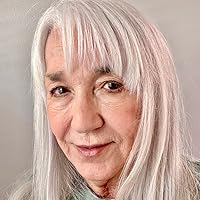
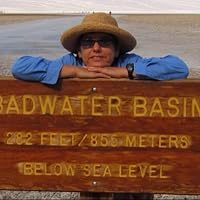
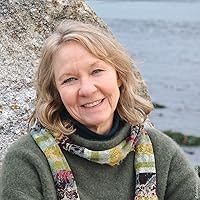
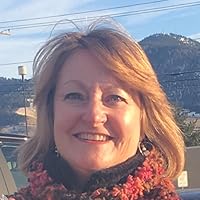
Masha Hamilton is the author of five novels: Staircase of a Thousand Steps, (2001) a Booksense pick by independent booksellers and a Barnes & Noble Discover Great New Writers selection; The Distance Between Us, (2004) named one of the best books of the year by Library Journal, The Camel Bookmobile, (2007) also a Booksense pick, and 31 Hours, named by the Washington Post as one of the best books of 2009. Her latest novel, What Changes Everything, comes out in May 2013.
Currently serving as the Director of Communications and Public Diplomacy at the U.S. Embassy in Kabul, she worked as a foreign correspondent for The Associated Press for five years in the Middle East, where she covered the intefadeh, the peace process and the partial Israeli withdrawal from Lebanon. She also spent five years in Moscow, where she was a correspondent for the Los Angeles Times, wrote a newspaper column, “Postcard from Moscow,” and reported for NBC/Mutual Radio. She reported from Afghanistan in 2004 and in 2006, she traveled in Kenya to research The Camel Bookmobile and to interview street kids in Nairobi and drought and famine victims in the isolated northeast.
She has founded two non-profits, the Camel Book Drive to supply books to children in northeastern Kenya, and the Afghan Women's Writing Project, to support the voices of Afghan women. A Brown University graduate, she has been awarded fiction fellowships from Yaddo, Blue Mountain Center, Squaw Valley Community of Writers and the Arizona Commission on the Arts. She has taught for Gotham Writers’ Workshop, at the 92nd Street Y in New York City, and in numerous other settings. She is a licensed shiatsu practitioner and is currently studying nuad phaen boran, Thai traditional massage.
When foreign correspondents pass through our Boston newsroom, they radiate a kind of Old World glamour. For us Walter Mittys who confront nothing more dangerous than a jammed photocopier, the experiences of intrepid reporters working in the world's hot spots are the stuff of daydreams. But I also want to yell out, "Why on earth would you do this?"
One complex response to that cry of mingled respect and bewilderment comes in a new novel from Masha Hamilton called The Distance Between Us. Hamilton worked as a foreign correspondent for the Associated Press and the Los Angeles Times. She covered the collapse of the Soviet Union. She's traveled through Afghanistan. But it was her five-year assignment in the Middle East that informs this exciting novel.
Caddie, a correspondent covering the intifada for a New York paper, is the story's veiled version of the author. We first meet her on the way to interview an Arab crime lord in Lebanon. She's traveling with other journalists, including her lover, a photographer named Marcus.
During four years on this hazardous beat, Caddie has developed two cardinal rules: 1) Don't get emotionally involved with the story and 2) Don't be overconfident. But in a moment's miscalculation, her plans go horribly awry. Their jeep is sprayed with bullets. Caddie gets hit in the arm, but she remains conscious long enough to realize that Marcus is dead. When she comes out of shock a week later, her cardinal rules are shredded.
The bulk of this sometimes poetic, sometimes gripping story concerns Caddie's efforts to get back to work while seething with hatred for whoever murdered Marcus. Knowing she can't report on a conflict that's struck her so directly, her editor wants her back in New York, but she stalls for weeks, claiming that she needs a vacation. Actually, she's ruminating over revenge fantasies. "How much would it cost to have one killed?" she wonders. "It's a crazy idea," she knows, "a nighttime thought, dark and fleeting," but she can't shake it.
First, though, she must penetrate her own cloudy memories of the attack to identify the gunman. And that effort takes her further back into memories of her life with Marcus, who, she finally realizes, had long been sending her intimations of despair.
The book's structure taxes the emotional power of this relationship somewhat. Marcus dies so early that we're forced to infer a lot from snippets of his journal and the negative space he leaves behind in Caddie's heart.
The poignancy of their relationship is also obscured by a Russian academic who floats out of the dust to encourage Caddie's revenge. He's handsome, steamy, and tragic. On at least two occasions, his shoulders appear broader than Caddie remembered, which suggests that he's growing quickly or that she has a bad memory for the men she sleeps with. In any case, he moves through an erotic haze, which, along with some spicy sex scenes, cheapens the novel a little and spoils the more profound connection between these two.
Far better are the bracing chapters in which Caddie ventures into the settlements on either side of this conflict. One night, she even manages to ride with a group of vigilantes out to settle old scores. It's treacherous territory for a reporter (and a novelist), but Hamilton handles these encounters with wounded, angry people deftly, and we're left thinking about the human tragedy rather than the political scorecard. The Palestinians and Israelis she meets endure and inflict so much agony that the loss of her own friend is gradually subsumed into contemplation about the futility of revenge.
The Distance Between Us also dramatizes difficult issues about what draws reporters -- and readers -- to stories of violence. What does it cost to become the kind of person who "can step over bloody ground for a quote"? It's a continuation of the questions raised so disturbingly by Anthony Loyd in My War Gone By, I Miss It So about the narcotic thrill of war reporting. To what extent are we voyeurs?
Hamilton knows noble answers to these questions -- the need for witnesses to break the world's complacency and lead to resolution -- but she also knows how pat those answers can become. She's determined to plumb the conflicted motives of people who rush to see danger in the world or in their newspaper. The result is a powerful portrayal of religious warfare and an unsettling challenge to anyone watching.
Sometimes the best books are ones you stumble upon. I was so excited to find this book at my local library so I could participate in 'The Novel Ideas' book club read that I didn't even notice that while the title was right-the author was not the same. I read the book anyway and am so glad I did. Hamilton is a former foreign correspondent and her experience comes through in her writing. This is a powerful book. Caddie is a journalist living in Jerusalem and working the Middle East beat when tragedy strikes. And even though she has lived and worked in the area and seen as much violence as a person can witness-the loss of Marcus, fellow journalist, friend and lover shakes her to her core. And this book is really about the sorting out of this experience for Caddie. One passage from the book struck me-she is helping to explain to a colleague why they are drawn to do what they do: "For Christ's sake, I'll tell you why. Because we get a front row seat to all this passion. We get to write about it, make it ours. Because the life-and-death drama of this story raises our adrenalin and clarifies our minds and keeps us so busy we cant get bogged down in the bullshit minutiae of normal life-the mortgages, the Sunday barbecues, the PTA meetings. All that stuff is-goddamnit, face it-boring. What do you want, to spend the rest of your life as a dead white male?"
This is a story of a reporter in the Middle East covering the Arab-Israeli conflict. Her personal life gets mixed up with her reporting when a friend/lover dies in an ambush. The rest of the story is about her finding her way back. An interesting read.
one of the classes i am observing at rincon is reading this book. i had a chance to read a couple of chapters today and totally was hooked.
---------------------------- (8/14/08) Now that I've finally gotten a chance to read the book in its entirety, I'm glad I did. Staying away from political commentary (which would be easy to slip into in a novel set in a war zone), Hamilton writes beautifully about loss and violence and war and revenge, all topics which really aren't beautiful at all. I appreciated how she shows many sides of the conflict and no one is completely good or evil--everyone, from Jew to Arab to journalist, is just human.
My rating would be higher but for a couple things: 1. The protagonist Caddie is a character who can either be very sympathetic or incredibly difficult to relate to--this could just be a personal thing. Trying to decide whether or not I liked her was getting a little tiring. 2. The ending is a little too neat, I think. It comes at you quickly. Once I realized how many pages I had left, I knew almost exactly how it would end. Not to say it wasn't unsatisfying--but the novel that preceded it could have used a deeper ending.
Yes, she does write beautifully about war, violence, loss and tragedy. But she tries to live her life as a dispassionate observer in the midst of some other persons hell. Her life is about recording moments while not letting the real events playing out before her distract from her profession.
So, like a wildlife photographer, she is enraptured with capturing the moment, so, she blocks out the violence happening before her eyes, while she keeps the camera trained on the action, and she makes no attempt to intercede or save the victims. Later she and her colleagues will equate their lack of compassion to professionalism. And, tomorrow there will be another assignment and another adrenalin rush.
I am being unjust. She does feel conflicted by her job and she does feel compassion for victims, but not enough to let it interfere with her sense of professionalism.
It is a good book, but it is also, a bleak look at life ..when compromise is not an option.
This author creates a character based on her own experience as a war correspondent. Caddie Blair is a war correspondent based in Jerusalem, and covers the violence and fighting there by forays to the West Bank, Lebanon, and other parts of the Middle East. Caddie feels she has seen it all, and that she can handle anything; she describes herself as "a stranger to astonishment". Caddie challenges herself and those she works with to take continual risks, but following a tragic death on one of these trips, Caddie begins to question her role as a journalist especially the need to maintain complete neutrality. In the face of threatened violence and death, can a journalist stay detached and keep themselves from becoming part of the story? Ms. Hamilton's writing is excellent, but this book is so stark that it was sometimes difficult to read.
Caddie Blair is an American journalist who has been covering the Middle East conflict for years. She knows the scent of teargas and the sound of tank fire, and has had to step over bodies to get the story. But when her lover dies beside her on the way to the next promising interview, she must reassess the violent world in which she�s become immersed. She struggles to find the proper response to the killing of someone she loves. Then she meets Goronsky, himself a victim of terrorism and a believer in revenge as the moral response to evil. The Distance Between Us is the portrait of one woman�s search for the narrow line between vengeance and emotional survival.
Fabulous writing about a woman war reporter who goes through a terrible experience while in the field. Masha Hamilton really 'put me in the scene' throughout most of her novel, and seriously snagged my attention with some of her writing a few times. The setting, for the most part in Israel and adjoining countries, comes to life, as does Hamilton's characters in THE DISTANCE BETWEEN US. I recommend it to anyone who enjoys a powerful read.
Another amazing book from Hamilton. I need to re-read this one as my own life (and another book, I confess....) got in the way and I wasn't able to focus the way I wanted to. Still, Hamilton is so gifted, writing about war, revenge, and other complexities in a way that makes it look effortless. Such a talent.
"By days end she sensed what lay over the city like a quilt; large rules with horrifying consequences. Rules way beyond the superficial restrictions of manners she'd known before. Absolute, binding, primitive rules that got their backbone from blood and stones and God."
Reflections of Caddie, a reporter, after her first day in the Middle East
10 March 2011 -- A strange novel that starts weakly. The lack of a strong beginning that connects to the main story affects the reading experience. It was an interesting scenario if considered from the viewpoint of it being an insight into the lives of war correspondents but it seemed too surreal. Maybe that is what war reporting is like but it didn't ring true for me.
Woman with crush on photographer in Middle East realizes she loved him after he's killed…she tries to exact revenge so gets "inside" the Israeli-Palestinian conflict.
Caddie is a journalist is Lebanon and Israel trying to survive the death of her lover, a photographer. The author covered conflicts such as this and knows how to describe it extremely well.
I thought this was interesting, but at times I just didn't get it. Maybe I just didn't like the decisions the main character made. It is an interesting look at the Israel/Palestine situation.