The Pulitzer Prize-winning author of Lenin's Tomb now presents the crucial second act--the attempt to form a Russian state from the ruins of the U.S.S.R. and the chaotic election of 1996. As before, readers will turn to Remnick for the essential story, the flesh-and-blood account of one of history's great turning points.
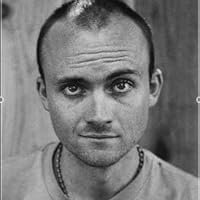
David Remnick (born October 29, 1958) is an American journalist, writer, and magazine editor. He won a Pulitzer Prize in 1994 for his book Lenin s Tomb The Last Days of the Soviet Empire. Remnick has been editor of The New Yorker magazine since 1998. He was named Editor of the Year by Advertising Age in 2000. Before joining The New Yorker, Remnick was a reporter and the Moscow correspondent for The Washington Post. He has also served on the New York Public Library’s board of trustees. In 2010 he published his sixth book, The Bridge The Life and Rise of Barack Obama.
Remnick was born in Hackensack, New Jersey, the son of a dentist, Edward C. Remnick, and an art teacher, Barbara (Seigel). He was raised in Hillsdale, New Jersey, in a secular Jewish home with, he has said, “a lot of books around.” He is also childhood friends with comedian Bill Maher. He graduated from Princeton University in 1981 with an A.B. in comparative literature; there, he met writer John McPhee and helped found The Nassau Weekly. Remnick has implied that after college he wanted to write novels, but due to his parents’ illnesses, he needed a paying job—there was no trust fund to rely on. Remnick wanted to be a writer, so he chose a career in journalism, taking a job at The Washington Post. He is married to reporter Esther Fein of The New York Times and has three children, Alex, Noah, and Natasha. He enjoys jazz music and classic cinema and is fluent in Russian.
He began his reporting career at The Washington Post in 1982 shortly after his graduation from Princeton. His first assignment was to cover the United States Football League. After six years, in 1988, he became the newspaper’s Moscow correspondent, which provided him with the material for Lenin's Tomb. He also received the George Polk Award for excellence in journalism.
Remnick became a staff writer at The New Yorker in September, 1992, after ten years at The Washington Post.
Remnick’s 1997 New Yorker article “Kid Dynamite Blows Up,” about boxer Mike Tyson, was nominated for a National Magazine Award. In 1998 he became editor, succeeding Tina Brown. Remnick promoted Hendrik Hertzberg, a former Jimmy Carter speechwriter and former editor of The New Republic, to write the lead pieces in “Talk of the Town,” the magazine’s opening section. In 2005 Remnick earned $1 million for his work as the magazine’s editor.
In 2003 he wrote an editorial supporting the Iraq war in the days when it started. In 2004, for the first time in its 80-year history, The New Yorker endorsed a presidential candidate, John Kerry.
In May 2009, Remnick was featured in a long-form Twitter account of Dan Baum’s career as a New Yorker staff writer. The tweets, written over the course of a week, described the difficult relationship between Baum and Remnick, his editor.
Remnick’s biography of President Barack Obama, The Bridge, was released on April 6, 2010. It features hundreds of interviews with friends, colleagues, and other witnesses to Obama’s rise to the presidency of the United States. The book has been widely reviewed in journals.
In 2010 Remnick lent his support to the campaign urging the release of Sakineh Mohammadi Ashtiani, the Iranian woman sentenced to death by stoning after being convicted of ordering the murder of her husband by her lover and adultery.
In 2013 Remnick ’81 was the guest speaker at Princeton University Class Day.
Remnick provided guest commentary and contributed to NBC coverage of the 2014 Winter Olympics in Sochi Russia including the opening ceremony and commentary for NBC News.
“The process of change went through three phases. The first began with the rise of Gorbachev in 1985 - a time of liberal communists of the sixties generation, who had sought to preserve the old system and modernize it. They wanted to introduce some elements of democracy - a limited free press called glasnost, limited free elections to prolong the life of the system and to prevent alienation between the people and the state (perestroika). Gorbachev accomplished this to a great extent and made his major contribution, but he failed to keep pace with the second wave.”
“The second wave began with the elections in 1989, which helped sweep away communist ideology and established a desire for real, not limited, democratic institutions. A real constitution, a real legislature, real elections - these were the new values. The coalition supporting them was built around Boris Yeltsin and Andrei Sakharov, and the radical deputies, the Baltic leaders and so on. The high point was the August coup and the collapse of the Communist Party, and the state’s control of the economy. The victory was a mixed blessing. We had reached a distant shore long before we thought we ever would.”
“The third phase began and we were not ready. Democrats who had been in the opposition were suddenly in power, and in many ways we were not prepared. The weakness was that the idea of a ‘new Russia’ should be had not been considered at all. We had to create a consensus on the general future of Russia, and we’ve been unable to do that. As politicians, we can’t afford to think as we once did - as radicals, opponents. We are now in power, and we have to reorganize a gigantic country, of a hundred and fifty million people, all with their own views and interests.”
- Sergai Stankevich, political adviser to Yeltsin
“There are a few axioms about Soviet (and now Russian) politics that are not necessarily true, yet everyone seems to believe them: winter, its threat of hunger and calamity, breeds conservatism; summer works in favor of reformers; the czar runs into trouble when he goes on vacation; and everything ends badly. The last one is a particularly Russian formulation, and it was, in fact, becoming clearer by the day that the conflict between Yeltsin and parliament would end badly.”
- Resurrection: The Struggle for a New Russia by David Remnick
************ ‘Resurrection’ is David Remnick’s follow up to the 1994 ‘Tomb of Lenin’ which was an eyewitness account of the collapse of the USSR. It won a Pulitzer Prize and Remnick became the longtime editor of The New Yorker. Published in 1997 it was too early to foresee the rise of Putin. Some of his prognostications weren’t proven in the march of time, but his observations are still invaluable to understand the mood and milieu of the period. A Russian speaker and Moscow correspondent for the Washington Post, he had connections with powerful politicians and other prominent people during the period.
A welcome aspect of this account is Remnick’s writing, not the staid old prose of historians but dynamic depictions of a top notch journalist. He describes the fall of Gorbachev and the laissez faire economy that followed, meeting with him as he contemplates a comeback in the 1996 election. Gorbachev came to power in 1986 with intentions to preserve the Party and the backing of Sakharov. Yeltsin became a fierce rival of his with a populism contrasting Gorbachev’s rise through the ranks. After exile Yeltsin returned in 1991, leading the opposition’s victory.
Gorbachev and Yeltsin had discussed decentralization with leaders of the Soviet republics and reached an accord in the summer of 1989. The KGB listened in and a failed coup was attempted by the hardliners to remove Gorbachev. With the weakness revealed one nation after another ceded from the Soviet Union and he lost power. Gorbachev had proposed a confederation of former USSR states, not an independence. Remnick had frequent contact with him at the time. Yeltsin was for a commonwealth but the former republics wanted a clean break with Russia and could hardly be blamed given their past history.
Once in power Yeltsin accepted the breakup of the Soviet Union. There was not really much else he could do other than to roll in the tanks on three fronts. He became drunk and fell off his chair as the founding states of 1922, Russia , Ukraine and Belarus, discussed the dissolution. Once awake he called G H W Bush and announced the end of the USSR. The leader of Belarus informed Gorbachev, adding insult to injury. Before the 1996 re-election Remnick traveled in the Foreign Minister’s jet, proof of the access he had. He met with Gorbachev who rightly viewed his ouster as the main objective of Yeltsin.
Remnick visits the village where Gorbachev grew up and no one has fond memories of him. The local collective had been turned into a joint stock company where farmers couldn’t afford to shop. Instead they stole the food while managers stole the money. Russians hated him as ‘the man who lost the empire’. In the city streetside vendors sold goods that were in short supply but taxes put them out of business. Free education, health care and pension were things of the past, now replaced by rampant inflation and paltry wages in both urban and rural areas. The new economic system suited no one but future kleptocrats.
In parliament the right wing nationalists and left wing communists attacked Yeltsin’s free market reforms, and represented 60% of the legislators. Clashes in the civil arena persisted through 1992-93. Yeltsin was compelled to replace a cabinet of democratic theorists with business practitioners. Concerns about his health and alcohol consumption were spread and used against him by his opponents. Although he won a referendum Kremlin corruption charges emerged. Low wages bred petty bribery in the civil service. Along with his spring mandate he prepared a fall decree to disband and replace the parliament.
The hardliners called an emergency session, voted out Yeltsin and replaced him with Rutskoi, the vice president army general, and his right wing ministers. ‘Young men wearing red swastika-like armbands and berets marched around the hallways’ of the White House, government seat in the Russian Federation. The US, UK and European states supported Yeltsin despite his unconstitutional dismissal of parliament, seeing him as leader of free market reforms. He cordoned off the White House as Rostropovich performed Shostakovich in Red Square, and a political circus amassed in the Moscow streets.
Demonstrators led attacks on police and property. In the early morning hours of October 4 the army shelled the White House under Yeltsin’s orders, now known as the 1993 Constitutional Crisis. By the time it was over nearly five hundred people were killed or wounded. Yeltsin would rule by presidential decree, a new constitution was ratified and elections held with nationalists and communists excluded from politics. Rutskoi and legislators were imprisoned but soon released by the Duma, the new bicameral legislature. Skepticism about the events convinced some democracy was unsuitable in Russia.
After a close call with civil war Yeltsin posed atop a tank and publications viewed as radical were banned or restricted. During the 1993 midterm elections a fascist faction called for restoring the Russian Empire from the Baltic states to Alaska and Poland to Ukraine. The party swept the polls west of Vladivostok to east of the Ural mountains. The goals seem reflected in the rhetoric of Putin to come. Zhirinovsky was their leader, admiring Hitler, Le Pen and Karadzic, while appealing to the poor, young and old, who gained no benefit from the economic reforms and were embittered by a loss of their national pride.
Among the hatreds circulating were those directed at Jews, Chechnyans, Westerners from the EU, UK and in particular the US, believed to be working to militarily and economically weaken Russia. After supporting the 2014 seizure of Crimea and 2022 invasion of Ukraine Zhirinovsky was honored with a medal and statue, given a state funeral with the patriarch of Russia presiding and Putin attending. A suspected KGB agent and parliamentary leader, he forced Yeltsin to make concessions with the nationalists. Democracy reformists began to quote Ivan Ilyin, Putin’s fascist philosopher from the past century.
With an economy based on capitalism but without rule of law Russia became a leader in organized crime, collaborating and coordinating with the top Italian mafia families and international mobsters in traffic of drugs, prostitution and arms sales. Ministries of foreign trade and law enforcement were likewise corrupt; under Soviet rule regulations had been strictly enforced. In the largest property redistribution since the Revolution opportunities were rife for graft and greed. Even Yeltsin had to admit that 65% of commercial enterprises and 40% of individual businessmen engaged in bribery.
There had been a love/hate relationship between Russia for the West since Peter the Great, some admiring Europe for its Enlightenment ideals while others rejecting it for corruption of Slavic culture. It was a major theme of nationalists who harkened back to the 19th century historian Karamzin, a critic of Westernization. Lingering elements of the Great Schism between Orthodox and Catholic churches in 1054 complicated matters. Gorbachev had been a hero in his opening to Europe but the affair ended after the collapse of the Soviet empire. Glasnost wouldn’t be realized, Perestroika in unforeseen form.
Solzhenitsyn, an ardent nationalist, wrote thirty years earlier about the future dissolution. Remnick met with Solzhenitsyn in America before his return to Russia in 1990 after the 1974 exile. His faith he would return was founded on a belief in the demise of the USSR, but Gorbachev and Yeltsin’s tenures disappointed him. He later endorsed Putin to bring order back into politics. As a neo-conservative he criticized the US in the 1970’s for lax negotiations with the Soviets, cultural rot and tolerance towards protests, his 1970 Nobel Peace Prize and political dissident status for nearly eighteen years notwithstanding.
In the time between Yeltsin’s rise in 1991 and re-election in 1996 Moscow street vendors had been replaced by shopping malls, class and privilege re-established among the noveau riche. Now the wealthy lived in gated mansions, dined world cuisine and sent children to Western boarding schools. There was also the chance of being blown up in your luxury sedan by remote control bomb. Poorer Russians found living costs less accommodating. The street signs were restored to pre-revolutionary names, churches reconsecrated and museums remodeled to reflect seventy years of communism in a more critical light.
In the mid 90’s programs converted state housing to tenant ownership, with 90% of retail stores and 70% of businesses privatized. Although changes were accelerated they couldn’t undo the lingering malaise among Russians about their new identity as a republic rather than an empire. It would haunt them in the first quarter of the new millennium and lead to autocracy, oligarchs and military tragedies with a new face as the ‘forever leader’. Ironically this regression would result in economic sanctions and a dead end to the international trade that it had sought, except with other pariah states it tried to escape.
The people and events in ‘Resurrection’ focus more on Yeltsin, overlapping with the Gorbachev years in ‘Tomb of Lenin’. Remnick doesn’t adhere to a strict chronology and structure for the books as a whole, but offers a series of vignettes and interviews that could have been individual articles planned for publication in The New Yorker. His access to the key players of the period as a reporter and the insights he provides are impressive. They had happened during a brief period where despite the political pitfalls and competing interests there was a slight chance for democracy now widely reviled.
************ Postscript: I once had a young driver on the way to Veliky Novgorad from St. Petersburg who spoke a bit of English and wanted to practice. He asked me what I thought of Obama. I said “Good” and he said “Monkey”. Asked about Putin I was reluctant to answer but he offered “Oligarch”. On the West I judged “Okay” and he responded with “Civilization”. I’ve been left to ponder the meaning of this exchange for over a decade. I wonder where he is now?
Remnick’s firsthand account of the early to mid -90s in Russia is a fascinating one. He is able to capture an image of a country in transition. Post Gorbachev, pre-Putin… a very interesting time. Some of his predictions have not withstood the test if time, but the reporting is top notch.
Resurrection is a chronicle of Russia’s convulsive 1991–1996 transition. With insightful reportage and close-up views of the emerging power structures, it is both a portrait and a premonition of a system sliding from hopeful liberalisation into a realm ruled by cash, spectacle and coercion.
Remnick tracks Russia from the Soviet collapse through Yeltsin’s turbulent presidency, capturing the siege of Parliament, the first Chechen war, the 1996 election and the rise of media-political conglomerates that bent a fledgling democracy to oligarchic will. Figures such as Zhirinovsky, Gaidar, Solzhenitsyn, Gorbachev and Gusinsky appear in brisk profiles that double as case studies of a society where rules are unwritten and leverage is everything.
His portraits of Gorbachev and Yeltsin are particularly sharp. Gorbachev emerges as idealistic yet indecisive, unable to turn reform into a viable post-Soviet order. Yeltsin at first embodies defiance and democratic promise but soon deteriorates—physically, politically and morally—into an erratic, hyper-presidential ruler reliant on security chiefs, oligarch money and media manipulation to survive. This decline, culminating in the 1996 re-election campaign, reveals how fragile Russia’s democratic experiment had become.
A central theme is the erosion of Russia’s moral compass. Dissidents such as Andrei Sakharov and Aleksandr Solzhenitsyn once acted as public conscience; by the 1990s their authority had withered. Into the vacuum rushed moneymen, media magnates and demagogues. Remnick shows how “investment in politics” became a hedge against lawlessness, emblematic of a society losing shared ethical bearings.
Although written before Putin’s rise, Resurrection maps the enabling conditions he would inherit. Remnick’s strengths—access, scene-making and a crisp braid of anecdote and analysis—give the book immediacy and moral bite. It endures as an anatomy of how post-Soviet hope curdled into the conditions for Putinism.
Fascinating and horrifying to re-read this today, amidst the willful collapse of American democracy and MAGA’s giddy embrace of strongman authoritarianism. I wonder who will write “Washington’s Tomb” a la Remnick’s Pulitzer winner?!? The American exceptionalism that pervades this reporting neither aged well nor survived still more recent history.
Good journalistic look at mid-1990s Russia, Boris Yeltsin, and early post-Soviet events. Interesting quotes from his many interviews enliven this contemporary report and the details touched on give pause now that events have advanced for another 25 years. No mention of Putin, so interesting to see that he wasn't even on the radar yet, but plenty of headline-grabbing familiar names in the see-saw for political and economic power. Remnick's overly positive conclusion serves to highlight how much potential the Russians wasted and how Putin picked some of the least impressive options to grab and hold onto power successfully. Revisiting recent Russian history with a goal of understanding (more) what's happening today and how we got there. This is a good starting place and helps set the stage.
Not as good as Lenin's Tomb but a worthwhile read nevertheless. After reading Remnick's two books, I felt that I had a much better understanding of Russia than previously.
I read this after reading "Lenin's Tomb," which is the precursor to this book. I have to admit, I only got halfway through "Resurrection," as I was a little burned out with the Soviet Union at that point. This book focuses on the events immeditately following the fall of the USSR, namely, Boris Yeltsin's political career and the beginning of a democratic Russia. "Lenin's Tomb" was more interesting to me, as it addressed the history of the Soviet Union more generally, whereas this book was much more focused on a particular moment in Russia's political history. For those interested in that period, however, this is a great book.
It's nearly impossible to follow such a book as Lenin's Tomb but Remnick does a wonderful job at picking up where he left off. In Resurrection, Remnick focuses on how the democratic revolution contended with disillusion. Yeltsin is the perfect character in this world: democratic promise gives way to oligarchy, poor health, and flirtations with Russia's communist and czarist past.
This book definitely sets the stage for the Russia we know today. Interestingly enough, Putin does not appear on the scene...
For Remnick's take on Putin, check out his profile in Reporting.
All the glowing sentiment towards Boris Yeltsin, alongside with a hope for a better, freer future after the collapse of the Soviet Union in Lenin's Tomb is dashed to pieces in Resurrection. Remnick writes a vivid account of Russia's political and cultural atmosphere during the mid-90s - corruption and the rise of the oligarchy. I particularly liked the chapter on Solzhenitsyn.
Not a bad analysis of the early years of Russia following the fall of the Soviet gov't. He writes well, and I think I would have enjoyed this more had I not been so burned out writing my Master's Thesis.
Not as captivating as Lenin's Tomb, with many reiterations from chapter to chapter that seem as if each chapter was its own project and the editor just pieced them all together without much summarization.
Remnick’s two books on Russia adequately explain two key moments in modern Russian history but may not fully explain Remnick’s rise to power in the New York(er) intelligentsia.