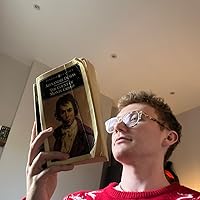
This book is a treasure for lovers of the simplicity movement. It is now one of my favourite, and one which I would come back to again and again.
It’s not just Thoreau’s message of simplicity, self-reliance and independent thinking which resonates strongly with me. The passion, vigour and clarity in which he puts forward his arguments is incisive and convincing. His writing style is exactly as he is – straightforward, concise, uncompromising and often sarcastic and contemptuous against those he believes to be hypocrites, who allow the mundane to obscure higher spiritual truths and who let expediency over-ride their conscience.
Him being a giant and me being a mere mortal, I am guilty of many short-comings that he riled against so a part of me is also a target of his critique. Yet his sarcasm is sometimes so wicked, I just could not help but laugh at myself at the same time.
You can hardly rely on Thoreau obediently flow with the conventional wisdom of his day. He criticizes men for giving up freedom and allowing themselves to be imprisoned by mundane materialistic life; defends the vilified radical abolitionist Captain John Brown as a man of principle and courage against the vast majority; and refused to pay taxes to support the state government whose support of the Fugitive Slave Law he believed to be morally-wrong. He is unapologetic about his beliefs and uncompromising with his principles. To go with mainstream thought and behaviour when is against truth and conscience is unacceptable. From his writings, it is clear that he believes in the maxim that oftimes, majority simply means that all fools happen to be on the same side.
“Public opinion is a weak tyrant compared with our own private opinion. What a man thinks of himself, that is which determines or rather indicates, his fate.”
“If a man does not keep pace with his companions, perhaps it is because he hears a different drummer.”
His rally call is in Walden - for men to unchain themselves, live simple lives, appreciate and learn the lessons that nature has to offer, and to aspire to higher spiritual lives.
“The mass of men lead lives of quiet desperation. What is called resignation is confirmed desperation.”
“The spending of the best part of one’s life earning money in order to enjoy a questionable liberty during the less valuable part of it reminds me of an Englishman who went to India to make a fortune first, in order that he might return to England and live the live of a poet. He should have gone up garret at once.” (Yes, carpe diem spirit!)
Thoreau’s experiment in the woods near Walden Pond shows that one can live simply and have more time to observe nature, and more time for higher learning which is important for spiritual growth, lest one should die and not having lived.
On simplicity, he has this to say:
“In proportion as he simplifies his life, the laws of the universe will appear less complex, and solitude will not be solitude, nor poverty poverty, nor weakness weakness.” (This I truly believe, after I have started the road to simplity.)
“Superfluous wealth can buy superfluities only. Money is not required to buy one necessary of the soul.”
“None can be an impartial or wise observer of the human life but form the vantage ground of what we should call voluntary poverty.” (Three cheers to Thoreau – our grandfather of voluntary simplicity!)
Ultimately, Thoreau argues against being settled in one’s way out of tradition or habit, and for each to develop independent thinking:
“It is remarkable how easily and insensibly we fall into a particular route, and make a beaten track for ourselves….How worn and dusty, then, must be the highways of the world, how deep the ruts of tradition and conformity!”
“Our universe is wider than our views of it…Nay, be a Columbus to whole new continents and worlds within you, opening new channels, not of trade, but of thought.”
“I had learned this, at least, by experiment: that if one advances confidently in the direction of his dreams, and endeavours to live the life which he has imagined, he will meet with a success in uncommon hours. He will put some things behind, will pass and invisible boundary; new, universal and more liberal laws will begin to establish themselves around and within him; or the old laws be expanded, and interpreted in his favour in a more liberal sense and he will live with the license of a higher order of beings.” (similar to the message in Jonathan Livingston Seagull)
I could go on and on but this would suffice, to encourage others to read Thoreau.
Lastly, Thoreau's exhortation for solitude, for an inner life, is similar to what the yoga and Buddhism advocate in meditation and quietness of mind, as well as the Christian approach for quiet time for prayer and contemplation.
“When our lives cease to be inward and private, conversation degenerates into mere gossip”
I identify with his praise of the sacred hour of dawn for higher inspiration, which is what yogis, spiritual aspirants and poets share. He said that our lives are “frittered away by details” and kept asking us to “Simplify! Simplify! Simplify!” because:
“Knowledge does not come to us by details, but in flashes of light from heaven.” (Amen!)
*Last word – interestingly, Thoreau used the word “pow-wow” 150 years ago. I thought that this is a recent American invention! Also, he mentioned Singapore (where I live!) "We are told that within three miles of the centre of the East Indian city of Singapore, some of the inhabitants are annually carried off by tigers...". Yes Mr Thoreau, but the very last tiger in Singapore was shot in the Long Bar in the now famous and very, very expensive Raffles Hotel. The only tigers are now in the Singapore Zoo...very nice tourist attraction too...
**Last, last word - the commentaries of Thoreau by Van Wyck Brooks and EB White at the end of the big are gems, throwing more light on this strange creature, this accident (and gift) of nature called Thoreau. EB white is especially entertaining and witty in his account (a must read).
***Last, last, last word - As I am impatient, I had intended to skip the sections on nature but they really deserve a reading because they are not merely descriptive. Thoreau writes beautifully and evocatively for one, but the nature writings also show him to be an innovative and scientific naturalist eg the method he uses to measure the depth of Walden pond. I am amazed that he describes the pond almost like giving a tribute to a lover, and by the energetic manner in which he gives a "live" commentary on a battle between one big black ant and two small ones - like on wrestlemania haha.