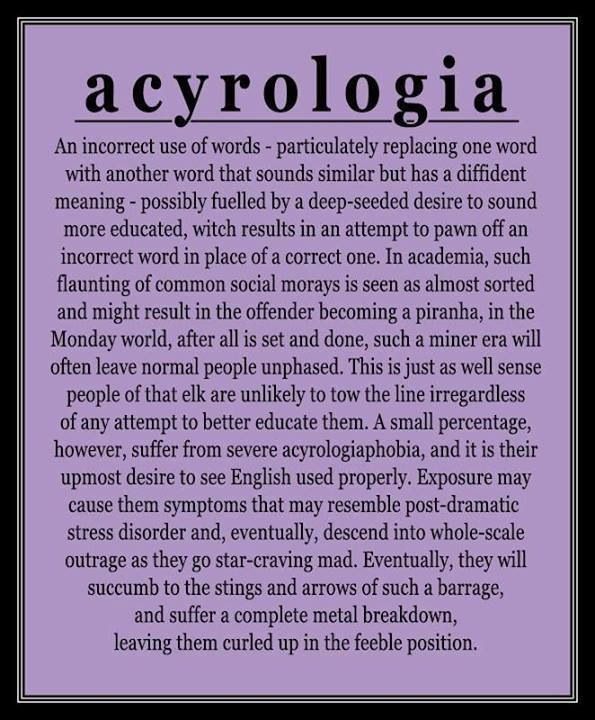
Exquisitely painful - or was it painfully exquisite? Even an English-history nekulturny like me can enjoy the acyrologia, malapropisms, misunderinformation, and delightful alternative fax so deadpannily presented here. A real treat for lingua files.
Originally published in the 1950s as a piece in Furioso Magazine, this parody work is a fun jaunt through notable moments in classic literature. While gathering information for a PhD thesis, college-age Myers, finding himself inspired by some of the funny little historical nuggets he was hitting upon, put together this little collection of humorous stories about famous authors and imagined alternate histories accompanied by parody artwork such as:
* The famous portrait of Henry VIII identified as William Jennings Byron, while also suggesting in a footnote that Byron was a lycan! (Myers also does some interesting "re-telling of the history of Henry's daughter, Elizabeth I.)
* Mona Lisa tagged as poet Elizabeth Barrett Browning * A country scene of the "Bucolic Plague" * A depiction of the "Invisible Spanish Armada" (a painting of an empty sea) * Keats, famous poet of "Ode to a Greasy Urn", later dying of tuber roses 😆
Just to name a few.
In this satirical, very much tongue-in-cheek work, we also cover :
* Virginia Woolf's "Rum of One's Own" * "Ben Johnson enjoying a chat with Mrs. Thrale over tea and strumpets" * William the Conqueror -- "William was, according to his usual custom, killed in battle."
While certainly entertaining, the humor, for me, got a little tiresome after awhile. There is such a thing as pun overload for my brain (though the illustrations repeatedly cracked me up!). The Beowulf essay in Chapter 1 felt like it was going for the laugh a little too hard, but I did like the immediate follow-up in Chapter 2 with Big Bad Wolf: Muddle English Literature.
This illustrated parody of histories of national literatures has many clever puns and purposeful mixing of authors' names and historical periods (such as "Victorious" for "Victorian"). "Ralph Walden Thoreau," for example, "founded the Transmigration Movement."
A farcical "Literary Map of England" identifies landmurks like "The Hence of Forth," "Parade's End," and "The Puritan Interlude."
Some of the most amusing (or strained) puns have nothing directly to do with literature, such as "perpetual emotion" and "cerebral hemorrhoid."
What did I just read? Nonsensical and hilarious, full of groaning puns and sly malapropisms, this book was just plain silly and I enjoyed it quite a bit. It was sort of like reading an academic version of "Drunk History," and the illustrations apropos of nothing just added to the romp. Luckily the book is short so the shenanigans did not have time to get old. And to think I initially bought the book only because the cover of it was done by Edward Gorey!