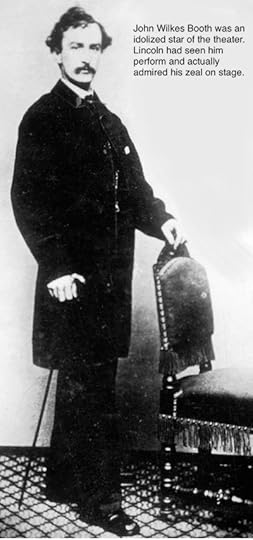
With a single shot from a pistol small enough to conceal in his hand, John Wilkes Booth catapulted into history on the night of April 14, 1865. The assassination of President Abraham Lincoln stunned a nation that was just emerging from the chaos and calamity of the Civil War, and the president's untimely death altered the trajectory of postwar history. But to those who knew Booth, the event was even more shocking-for no one could have imagined that this fantastically gifted actor and well-liked man could commit such an atrocity. In Fortune's Fool, Terry Alford provides the first comprehensive look at the life of an enigmatic figure whose life has been overshadowed by his final, infamous act. Tracing Booth's story from his uncertain childhood in Maryland, characterized by a difficult relationship with his famous actor father, to his successful acting career on stages across the country, Alford offers a nuanced picture of Booth as a public figure, performer, and deeply troubled man. Despite the fame and success that attended Booth's career--he was billed at one point as "the youngest star in the world"--he found himself consumed by the Confederate cause and the desire to help the South win its independence. Alford reveals the tormented path that led Booth to conclude, as the Confederacy collapsed in April 1865, that the only way to revive the South and punish the North for the war would be to murder Lincoln--whatever the cost to himself or others. The textured and compelling narrative gives new depth to the familiar events at Ford's Theatre and the aftermath that followed, culminating in Booth's capture and death at the hands of Union soldiers 150 years ago. Based on original research into government archives, historical libraries, and family records, Fortune's Fool offers the definitive portrait of John Wilkes Booth.
You've got a bad hand; it's full of sorrow. Trouble plenty everywhere I look. I see you'll break hearts. You'll die young, and you will leave many to mourn you. You'll be rich, you'll be free but you're born under an unlucky star - the portentous words of an old gypsy fortune teller were inscribed on a scrap of paper, worn from frequent reading by the not-yet infamous murderer.
Abraham Lincoln awoke to a sunny spring morning, April 14th, 1865, 'Good Friday' in more ways than religiously, as the four year battle that burned the divisions between the North and South had ended just a few days prior. He had every reason to feel euphoric and lighthearted; finally peace was palpable, and ready was he to guide the country to healing its savagely wrought wounds. Never did he sense that he would not get to see it to fruition. By day's end, as he sat enjoying the stage performance of Our American Cousin at the Ford Theater, Abraham Lincoln would be fatally shot by one of the theater's own acting 'royalty.' John Wilkes Booth would complete his last scene in the premeditated scheme to murder the President; the Secretary of State, William H. Seward and the Vice President, Andrew Johnson.
Historian Terry Alford expertly examines and narrates Booth's life before he became the most notorious assassin in American history. Far from being seen as the madman who had done the most heinous of acts, Alford says that although people "shrank away from what he did, they didn't really shrink from him. They remembered things about him like courtesies and acts of heroism," such as the rescue of an actress from being burned when her dress caught fire on stage. Alford sees Booth as bright, naturally intense, tempestuous and dramatic ( born to an accomplished and successful acting family), and strongly passionate to the cause of the South.
Booth was very outspoken on his views of emancipation of the slaves and had deep seated hatred of antislavery activism, a point he made clear by earnestly attending the execution of the abolitionist, John Brown whose philosophy he abhorred even though he admittedly admired his courage.
He saw the United States as the best country in history until Lincoln came along; that by boosting up control to the Federal government and freedom for the black man, Lincoln seemed to be establishing himself like a king.
Booth's fanatic extremism was aggravated by his self-imposed retraction to fight with the Confederate army, a promise he made to his mother in an attempt to assuage her fears for his fate should he enter the war, leading him to devise schemes to abduct Lincoln, thinking that would be his contribution to the Southern cause. Those plans having failed miserably, Booth's energies were directed toward his acting career that soon soared to celebrated heights, playing a mix of good and bad characters with utmost fervor, sensitive roles like Romeo and dark roles such as Richard III, becoming an idol of the stage and nearly as famous as his world-renowned father, Junius Brutus Booth.
Sic Semper tyrannis! The cry of revenge was heard from the thespian after the deed was done. Brutus conspired with his fellow senators to rid themselves of Julius Caesar, incited by melodramatic ideas of glory and heroism in saving the country from a 'tyrant.' A raving madman? No, indeed, nor one who suffered 'temporary insanity' since Booth proved that his final act was a thought-out plan, a political statement in extremis - avenging the demise of the South and, perhaps, an apology for letting down his brethren through his absence on the battlefield.
Destiny would still have her way as the maternal fears that kept Booth from death on the battlefield were eventually turned to inconsolable tears. In exceptional detail, Alford unfurls the highly charged escape effort after the crime as Booth, injured with a broken leg, fled from a widespread manhunt, was harbored by sympathizers and hid in a barn, inevitably to be cornered and fatally shot in the head. Irony indeed that Booth's flight resembled, so distinctly, the attempts of so many slaves who ran for their lives, for freedom; secondly, to be mortally wounded in nearly the same manner he did the president days before. Irony again, that by killing Lincoln, Booth ensured the everlasting exaltation of his victim, forever sealing the deification of the latter; rather than the heroic greatness he thought he might achieve for himself.
Fascinating book about the man who killed Abraham Lincoln. The author does an incredible job describing all the many sides of John Wilkes Booth. The spoiled child, doted on by his older brothers and sisters. (His father was a great actor who had periods of insanity. So you can pretty much see what predetermined his doom.) The dazzling actor, handsome and sexy, adored by every possible type of woman. The southern romantic, desperate to hold on to his illusions about the glories of the Confederacy. The cunning conspirator, evil and darkly dominating his cult of followers. The crazed madman, plotting murder when all is lost. The hunted fugitive, dying in agony, playing the romantic hero even as the whole world hates him for his cruel murder, unable to the very end to distinguish between reality and fantasy. This book really brings John Wilkes Booth to life!
Terry Alford’s FORTUNE’S FOOL: THE LIFE OF JOHN WILKES BOOTH is an important contribution to the literature dealing with Lincoln’s assassin, the life he lived, and the reasons behind his actions. Alford has filled a void by preparing the first full length biography of John Wilkes Booth through the exploration of a vast amount of primary and secondary sources used to correct many of the myths surrounding his subject, and the assassination itself. Alford provides numerous insights into Booth’s personality, career as an actor, and the evolution of his political views that led to the death of the president. Alford accomplishes his task by a thoughtful approach to his research material that he successfully integrates into his narrative. Primary source quotations from family members, friends, stage acquaintances, conspirators, and others abound as Alford takes the reader inside Booth’s mental state at various stages of life and what emerges is a complete picture of his protagonist.
From birth Booth had an albatross around his neck in the name of Junius Brutus Booth, his father. The senior Booth was one of the most creative actors of his era, and his son had to deal with his father’s successful career to the point that he would not use his own last name for a good part of his own career. In addition, Junius Brutus was an alcoholic prone to wide mood swings who beat his children, and left child rearing to his wife, Mary Ann. Throughout his life Booth and his friends worried about the effect of alcoholism on his own behavior. Alford includes numerous quotes relating to this fear, and when Booth abused alcohol, he was prone to violence. This created a very strong bond between Booth and his mother to the point when the Civil War broke out, despite his strong pro-southern views he refused to join the Confederacy in order to care for his mother. Alford speculates a great deal about the effect of Booth’s childhood on his later actions particularly being raised in Baltimore and the Maryland countryside. Though Maryland would be a border state and stayed out of the Confederacy during the Civil War the southern part of the state was a hotbed of pro-southern sentiment, and it was here that Booth attended boarding schools that reflected his “deep southern seasoning.”
The first half of the book is devoted to Booths early years and apprenticeship as a stage actor. Booth began his acting career in 1857 in Philadelphia and Richmond where he remained until 1860 under the name of J. B. Wilkes. The early years were difficult as he feared disgrace and failure as he abhorred comparisons to his father. By 1862 he became a star in his own right and returned to Baltimore. Alford does an excellent job tracing the evolution of Booth as an actor referencing critic’s reviews and peer reactions to his performances. During the first three years of his career Booth took on many different roles, mostly small parts in numerous plays in order to refine his craft. Booth had to overcome the obstacles of a poor memory and general nervousness to achieve success. Many who knew him felt he was extremely vain and lazy in learning his craft, which created a great deal of difficulty. As an addendum to Booth’s life story, Alford provides the reader with a useful history of American theater during the 1850s and 60s. In doing so Alford conveys the difficulties young actors faced and this allows the reader to understand what obstacles Booth had to overcome. As Booth’s acting career developed a number of things become very clear. First, his sensitivity to the mixed legacy of his father. Second, his own battle with alcohol and a fierce temper. Lastly, his intense southern nationalism.
We first learn of Booth’s political views and attitude toward slavery in November, 1860 when he attends a debate between Alabama Congressman William Yancey and Illinois Senator Stephen A. Douglas. At that point in his intellectual development Booth appreciated the defense of states’ rights, but recoiled from the consequences of disunion. Alford does a credible job tracing Booth’s ideological evolution as he “held views more common to the Upper South than in deepest Dixie.” He deplored the election of Lincoln because he felt it would tear his beloved union apart. His unionist views were roundly attacked while he performed during this period in Birmingham, Alabama and this led to an emotional crisis and forced him to leave for New York. His motto at the time was “concession before secession.” For Booth the main culprit for all of the nation’s problems were the abolitionists who he felt were as radical as secessionists. This view would hold for Booth’s entire life as Alford includes his scathing commentary in dealing with the opponents of slavery. Booth’s viewpoint rested on the belief that the south only wished to tend to its own business and maintain its traditional rights as it held an unassailable moral high ground in the debate. Booth wrote after Lincoln’s election, “I will not fight for secession. This union is my mother. A Mother that I love with unutterable affection. No, I will not fight for disunion. But I will fight with all my heart and soul, even if there’s not a man to back me for equal rights and justice to the south.” Many questioned why Booth did not join the Confederate army. Alford’s answer is simple in that he viewed his promise to care for his mother as sacred. This did not stop Booth from fiercely advocating for the southern cause as he traveled widely for his acting career.
Alford spends a great deal of time analyzing Booth’s character. He seemed to be a person of extremes. On the one hand he was mild and somewhat engaging so most people seemed to enjoy and wanted to be in his company, especially women! But his persona could easily shift to one of nastiness and temper tantrums depending on the situation he found himself. For Booth fist fights were very common. The behavioral extremes can be traced to his childhood in dealing with a very dysfunctional family situation. Most people who knew Booth felt that once he made up his mind it was impossible to change it. According to Alford, “Booth never had a new thought after his core opinions were formed in his teenage years.” He was a very close minded individual who was confounded by his inability to let go of his troubles. He could be the nicest person, but too often his nasty disposition took over. Booth “did not want to hear what he did not want to,” and developed the ability to rationalize things that did not go as he expected, particularly news that was detrimental to the south during the Civil War.
According to contemporaries, Booth developed into an exceptional actor considering he only spent seven years on stage. The first three as an apprentice, a year as a fledgling lead, and three years as a star. Alford dissects his career and concludes that his acting reflected genius and greatness as he performed as Shakespeare’s RICHARD III, Raphael in THE MARBLE HEART, and as Pescaria in THE APOSTATE. As the New York Times noted, “His Richard is acknowledged to be without a rival on the American stage.” The turning point for Booth came with the announcement of the Emancipation Proclamation in January, 1863 which confirmed Booth’s worst fears regarding Lincoln and the war. From this point to May, 1864 when he quit the stage, Booth was in a quandary as what path his life should take. He believed that his career was hard and lonely work and his success came at a high cost to his mind and body. He never liked touring and felt he was a slave to the north because more and more he could not express his opinions. As Lincoln’s reelection grew nearer he decided to break his pledge to his mother as he could tolerate a war that was a stalemate, but with the north on the verge of victory, he had to take action.
Alford spends a great deal of time discussing Booth’s plan to kidnap Lincoln and trade him for southern prisoners of war. The south suffered from a manpower shortage with 66,000 Confederate troops in northern prison camps. He believed that if he could capture Lincoln and exchange him for southern prisoners he could change the course of the war. Alford follows Booth and his conspirators as they plan Lincoln’s capture, delves into the disagreements among Booth’s accomplices, and the final failure of all of his planning.
Any biography of Booth must treat the Lincoln’s assassination in great detail and Alford measures up strongly to others in his coverage. Booth acted on his own as he developed plans to assassinate Lincoln and never considered acting in concert with the Confederate government as a letter Booth wrote located soon after the assassination attested to. Booth believed that Lincoln was a tyrant and a dictator and something had to be done. Alford develops the argument that Booth’s acting roles in Shakespearean plays contributed to his thought pattern in developing his assassination plot. This is not a far-fetched approach as Booth when on stage had the ability to become the person that he played, including their mindsets. For Booth in discussing Brutus, “the humanity and high motives of Caesar’s assailant were compelling. His patriotism and decency were beyond question,” and this may have weighed heavily on Booth’s thought process as did his “terribly earnest and emotional temperament.” Alford is correct in arguing that Booth was fueled by his ambition to be great and was “fired by guilt over his failure to become a soldier,” and he told friends in Baltimore that “he was going to do something that would bring his name forward in history.”
After the fall of Richmond in early April, 1865 Booth grew more and more depressed. According to friends he began to drink heavily and grew increasingly irritable, restless, and suffered from wide mood swings. When Lincoln entered Richmond on April 4th and sat in Jefferson Davis’ chair, Booth was provoked beyond measure. The news from Appomattox a few days later that Lee had surrendered was the last straw. Once Lincoln announced that he favored voting rights for Negroes Booth told a friend “that is the last speech he will ever make.” Alford then follows Booth’s actions until he enters Ford’s Theater and assassinates Lincoln on the 14th. Alford’s description brings the reader inside Booth’s mental state and it continues as Booth escapes and makes his way into the Virginia countryside. Alford’s detail is exceptional as Booth is finally seized and shot on April 26th.
Alford brings his narrative to a conclusion with an excellent Epilogue that concentrates on the many myths associated with Booth’s death, and the deification of Abraham Lincoln. Alford also includes a brief annotated bibliography for those interested. Overall, Alford has written the definitive biography of Booth and one that historians and Civil War buffs will be consulting for a long time to come.
As a Brit, the total extent of my knowledge of the Lincoln assassination was that some guy called John Wilkes Booth shot him in a theatre. This biography sets out to examine the whole life of Booth with a view to seeing what brought him to that point.
Booth was one of a family of ten, son of the famous actor Junius Booth, and destined for the stage from an early age. His father was a drunk who had spells of drink-related violence. Often away from home because of his career, much of the children's upbringing fell to their mother, who seems to have been a loving but rather ineffectual soul. When John was thirteen, it came to light that his parents' marriage was bigamous, his father having been married before to a wife still living. The book tells us about young John's education and early attempt at running the family farm after his father's death, before finally accepting that he couldn't make a financial go of it and going into the family tradition of acting. While it's interesting to speculate how much these early experiences may have affected John, speculation it must remain. The accounts of his character at this time, and later, come mainly from people speaking or writing after Lincoln's assassination, so it's hard to know how much their views are coloured by hindsight. While some people seem to have seen him as a nice, polite young boy and a good friend, there are conflicting stories of him being a bully and torturing cats. You pays your money, and you takes your choice.
The section on his early acting career is better documented as far as the facts go – where he performed, what roles he played, etc – but the confusion surrounding his character remains. Being handsome and athletic, he became a heartthrob, with legions of admiring female fans, but he clearly felt overshadowed by his father's reputation, and perhaps his elder brothers', choosing at first to drop Booth from his name and to be billed as John Wilkes. Alford looks at contemporaneous reviews and later reports to try to determine how good he was as an actor, concluding that though he showed a great deal of promise, his career wasn't long enough for this to fully develop. At this young age, his general fitness enabled him to be a very physical performer, specialising in realistic swordfights, in which he sometimes took it so far that he injured his opponents. His signature role was Shakespeare's Richard III, and his opponents in the fight scene would sometimes have to remind him to 'die' before he wore them down completely.
The real interest, of course, is in trying to get at the roots of why Booth developed such a hatred of Lincoln. Although not really a Southerner, Booth came to love the South, especially Virginia, and was violently anti-abolitionist. He was present at the execution of John Brown, having begged to be allowed to join the Virginia militia who were sent to Charlestown to ensure peace during Brown's incarceration. But when war broke out, his mother made him promise not to join the Confederate army, and Alford suggests that this may have been part of the reason for his later actions – guilt at having played no active part in the fighting. His family lived in the North, and his brother Edwin was pro-Union and a Lincoln supporter. At first, John also was pro-Union, but held Lincoln and the abolitionists guilty for causing the secession of the Southern states. As the war dragged on, reports suggest that Booth became more extreme in the expression of his views, putting himself at risk of unpopularity, if not worse, in the Northern states where during this period he was spending most of his time. At this stage, some people were beginning to describe him as 'crazy' (though again, how much of that is hindsight isn't totally clear).
Alford goes into great detail over the plot, which was originally to kidnap Lincoln and ransom him for the freedom of Confederate soldiers held prisoner in the North. Delay after delay, however, meant that the war ended before the plan was carried out. While it's clear from the plotting that Booth wasn't quite the 'lone gunman' I'd wrongly supposed, he certainly seems to have been the main mover and in the end it appears he alone decided to change the plan to assassination. The description of the assassination and Booth's flight and eventual capture is detailed and well-told and, whatever people felt about his actions, it appears that in the end Booth died bravely, winning the admiration, sometimes grudging, of those who witnessed his death. Alford interestingly looks at the heroic roles Booth had been steeped in from an early age and speculates on the influence they had on Booth's actions – in particular the role of Brutus and his assassination of Julius Caesar. It seems clear that Booth expected to be the darling of the South for his actions, and he died disappointed that the general feeling in the South was that he had made the post-war situation even tougher for them.
Alford concludes by debunking some of the mythology that grew up of Booth having escaped and made a new life for himself elsewhere. He follows the body, so to speak, from the barn to its final resting place, showing how Booth's corpse was identified by family members and people who knew him well.
There are two fundamental things that are required to make a great biography – a well-researched, well-written narrative and an interesting subject. This one certainly meets the first criterion; Alford has researched his subject thoroughly and has a flowing, accessible writing style. Unfortunately though, apart from shooting Lincoln, Booth's story is only moderately interesting and, despite Alford's best endeavours, many things about his character and actions remain clouded, relying on hindsight rather than contemporaneous reports. For what it's worth (not much), my own conclusion is that Booth was an attention-seeking nutcase, determined to go down in history at whatever cost to himself or those around him. And since we're still interested in him 150 years on, perhaps he achieved part of his aim – though in the end playing the villain rather than the hero.
NB This book was provided for review by the publisher, Oxford University Press.
Alford describes what a likeable, charismatic and charming man Booth initially was, and how the Civil War changed him into a more tragic figure. He comes off as a psychopath waiting to happen, rather than some sort of patriot who made a “mistake.” Booth’s early life was rather mundane and ordinary despite his father being America’s most famous Shakespearean actor, and Alford shows how he nurtured racism and formed attachments to the South during this period. Booth would spend the Civil War acting but still preparing for bold action.
The narrative is rich and exhaustive. The book, however, ends up focusing more on Booth’s actions than character, and bogs down a bit at times.
Going into this book I was thinking that John Wilkes Booth is one of the most iconic figures in history and yet I didn’t really know too much about him. As do most people, I knew he was a well-regarded actor from a family of actors, was a Southern sympathizer, that he shot Lincoln at Ford’s theater on a Good Friday shortly after General Robert E. Lee’s surrender at Appomattox, and that he escaped for a while before being captured and shot to death in a barn. Beyond that, I really didn’t know much.
After reading this book, I have filled in many details but those are still the high points. Really, the life of John Wilkes Booth wasn’t very remarkable other than his one act on the stage of history. It is important to keep in mind the subtitle of this book: “The Biography of John Wilkes Booth”. It is not “The Assassination of Abraham Lincoln.” It is a true biography, laying out the chronological path of Booth’s life, from beginning to end. Most of that life was spent as an actor and so the first half of the book is spent on his acting career. There is lots of detail about where he was playing and in what roles and with whom he was sharing the stage as well as how audiences were reacting to his rising star power. Also much is presented about the Booth family of actors and how John interacted with them. It does serve for the reader to get to know Booth in many respects but let’s face it. If not for his later act of assassination nobody outside of theatrical historians would know his name today and his acting career would not be of much interest to most readers.
Many testimonials by Booth’s acquaintances are also included but many are contradictory. Most are related after the assassination and along the lines of “I knew him when...” So it’s difficult to sort out what is true and what is exaggerated. What emerges is a portrait of a man of contrasts: nice/mean, brave/cowardly, a fine actor with major star appeal/not as good as his father or brother. But despite this I did feel like I was getting a fairly good sense of who the man was.
The second half of the book was far more interesting to me as the Civil War winds down and we get closer to the climax. Many people today don’t realize that Booth’s plot to assassinate Lincoln actually began much earlier with a plan to kidnap him and ransom him for the return of Southern prisoners. Several attempts were made by Booth and his associates but repeated failure only served to heighten Booth’s enmity towards Lincoln and raise his level of frustration. As the book zeroes in on the actual event at Ford’s theater, the tension grows and I was thoroughly absorbed in the details of what happened that day. The actual assassination and the conspiracy to take out VP Johnson and Secretary of State Seward, as it turns out, was planned in only a single day.
The 12 days immediately after the murder are also laid out in excruciating detail and filled with numerous eyewitness accounts. The book does do a great deal to debunk some urban legends surrounding the plot to abduct/assassinate Lincoln as well as provide incontrovertible evidence that Booth really was killed in the barn at the Garrett farm. Like all events with such import, many conspiracy theories took root, especially the one about how Booth had actually hired a double to escape Ford’s Theater and who was ultimately captured and shot in the barn while Booth escaped to live a long and fruitful life in other parts of the world. But the evidence is clear that the history books have it right.
In summary, one can read the Wikipedia article on John Wilkes Booth and get 95% of the story. If you want to try to understand the man himself, what made him tick, what caused his attitudes toward Lincoln, etc. this book will certainly help with that although I can’t honestly say I have close to a perfect understanding even now. It is extensively researched and exactingly referenced. The book includes ~100 pages of reference notes all footnoted from the text. I recommend it for those seeking a high level of detail in a biography of John Wilkes Booth.
Fortune’s Fool by Terry Alford follows the life of the infamous John Wilkes Booth best known for his assassination of President Lincoln. A life filled with drama as the legacy of a leading American actor, we see Booth destined for the stage. It was easy to see how Wilkes felt he was fulfilling the roles he had played by killing the tyrant Lincoln even if what Wilkes saw was an extremely distorted version of the truth. The author takes us on a meandering and often contradictory look at Wilkes life. We see a gentleman well regarded amongst the actors he works with and eventually claiming a popular mantle amongst American actors. On the other side we see a man quick to temper, described as a bully in school and given to extremes when dealing with family. The author tends to dismiss this other side and focus more on the gentleman side to show that the act by Wilkes was out of character. Like many biographies of John Wilkes Booth the actual planning of kidnapping Lincoln, and its eventual failure leading to the assassination attempt of not just Lincoln but multiple cabinet members is covered very well. The days after the murder and his time on the run during the massive manhunt that followed are well cataloged and Alford spends more time on Wilkes state of mind than most. Overall it is a good biography and a comprehensive one but gets bogged down in places that for the casual reader will make the book to slow. For an equally thorough but more engaging read I would recommend American Brutus but for those interested in a deep dive into John Wilkes Booth this will be a satisfying read.
This book was amazing! I have studied Lincoln for 30 years and could have cared less about Booth. This was an in depth and fascinating look at a man who possessed theatrical genius and loved kids and dogs and most people he encountered, but was insane on the subjects of abolition and secession and later, Lincoln. His pot to kidnap turned into murder in April 1865 and the rest is history. I feel Booth always belongs in a "wall of shame" in American history, but I understand him much more after reading this very well done and entertaining book.
It was informative for someone who knows nothing (like me) But not worth a whole book. it's more of a very long article padded with a lot of speeches. Not worth the price
Really good biography of John Wilkes Booth. I've read a bunch of books about Booth and the Lincoln assassination, and still found quite a bit of information I hadn't seen before. Understandably, a lot of the information about Booth's youth mostly comes from people reminiscing after his death, which might affect the views of people; it's still remarkable the number of people who, years after April 1865, look back on John Wilkes Booth with fondness.
I volunteer at Ford's Theatre and, understandably, one of the questions I get most frequently is "Why did John Wilkes Booth kill Abraham Lincoln?" I had the idea down, but this book did a great job clarifying this for me. My basic answer was right (Booth was racist and thought Lincoln was a tyrant, combined with ideas of performing one major act that would be remembered forever), but Alford fleshed it out for me.
Alford also brings to life Booth, the person. He's portrayed as a charmer, a gentleman, of whom many were fond--but prone to angry outbursts if you bring up the wrong topic (e.g., abolitionists). You read along, and find yourself liking Booth, and then Alford throws out a tidbit like the time Booth killed all of the cats on his farm.
Details about Booth's acting career, time in oil speculation, and possible Confederate ties were also fascinating. From the reviews included in the book of Booth as an actor, I could easily see biographers cherry-picking to portray Booth as either a fantastic actor or a bad one. Alford seems to think that Booth was gearing up to be a great actor, but did indeed have off nights. In Sondheim's Assassins, there's a line, "Some say it was your voice had gone" that helped drive Booth to assassination. And it does indeed look like Booth had given up acting--perhaps because of voice problems. Alford also delves a bit into the next line of the song--"Some say it was booze"--detailing Booth initially trying to avoid alcohol, after seeing what it did to his father, but winding up being a drinker himself.
The book is somewhat heft, but it doesn't seem that Alford lingers too long anywhere; you'd want to supplement reading about the assassination itself with other books (Manhunt: The 12-Day Chase for Lincoln's Killer, American Brutus: John Wilkes Booth and the Lincoln Conspiracies). Learning more about the initial kidnapping plot and Booth's time with the Virginia army who attended John Brown's execution were probably among the most enlightening parts of the book for me.
Definitely a worthwhile read, and a good look into Booth's life and mindset.
"Fortune's Fool" is a well written, exhaustive biography of John Wilkes Booth, assassin of President Lincoln. As far as the narration, certain points come fast and fluid; they flow and make the reader feel like they are right alongside the assassin. This is especially true during the twelve day escape that is suspenseful and riveting. The distracting aspect of "Fortune's Fool" was the voluminous amount of quotes from newspapers and editors saying the same thing over and over. How many times do we have to hear how handsome Booth was? Really, I got it after a few mentions. The theatrical section was also lengthy and boring after awhile. I wish there was more emotional family connections and synthesis. When Alford does include family anecdotes, the bio come to life. However, Alford does an especially fine job with pivotal moments such as Booth's witnessing the abolitionist John Brown's hanging, one of the seminal moments inciting the Civil War, taking up with the Richmond Confederates for a time but clearly at first, his loyalties were torn. We read about his temper, the injuries he sustained, the duels, his bursts of anger and his skulking around Lincoln's inauguration fuming with rage. These events and more establish the motive and then the opportunity Booth was developing in order to carry out the dastardly deed. Booth thought he would be a savior for the South's cause. The parts that are gripping and captivating make this book a worthwhile read. It would have been helpful to cull the myriad quotes about JWB's looks and theater talent that caused the reading to become redundant at times.
Great book. I can see why critics raved about it. My only criticism is that the narrative doesn't really pick up until about halfway through, about the time Booth begins to put his dastardly plan in action. That said, nothing builds the attention of an audience like story-telling, and wise historians know to use this for their own benefit.
Booth was from Maryland, a native of Baltimore, to be more specific. Civil War history doesn't spend much time discussing the nature of the conflict in the border states--of which Maryland was one. Though times have changed, the clannish nature of Marylanders (outside of the DC metro area) has not. I am a native Southerner, with ancestors who fought for the South and the notion of the Grand Lost Cause is not lost on me. I may be the last generation to hold an institutional memory of it. The echoes of that great gamble still reverberate--though by now, there are too many ironies mixed up in all of the tragedy for anyone's satisfaction.
John Wilkes Booth is not a satisfying villain. He is too human and imperfect. Even those sent to capture him could not see him as totally evil and corrupted. In these days, where propaganda rules and we'd prefer to see things in terms of White hats and Black hats, Booth reminds us that Civil Wars of all kinds are horrible tragedies. The Civil Was was, at bottom, a family affair.
This is a very interesting biography about John Wilkes Booth, the man who assassinated President Lincoln. It tells a lot about his family’s history on the stage, beginning with his father who was widely considered to be the greatest actor of his time. It moves on to his brother Edwin’s career in which he made a name for himself as a great actor, as well and then to JWB who accomplished the same. The descriptions of the culture and profession of stage acting in the mid-nineteenth century were nothing short of fascinating, particularly those descriptions of the many Shakespearean plays that were performed during that period. The book moves on to Booth’s total agreement with the Confederate cause although he would not enlist in the Confederate army due to a promise that he had made to his mother. Booth became more fanatical about his hatred of the Union sympathizers and particularly of Lincoln and eventually planned, with a group of accomplices, to kidnap him and deliver him to Confederate President, Jefferson Davis. When that plan fell through Booth took it upon himself to assassinate the President whom he considered to be a tyrant. The book moves on after the assassination to cover Booth’s attempted escape to Mexico and his eventual capture. The information in this book is a very good slice of American history.
We spend an exorbitant amount of time in the theater, with contradictory glimpses of a disturbed young man who tortured/killed cats, clung too tightly to his mother, used women - particularly Lucy Hale, spouted hatred to anyone who would listen, yet we're repeatedly told what a societal gem he was. He was cheerful and kind, " ... never a viscious or bad minded boy ..." Yet, he was. In spades. Kind, cheerful gentlemen do not skulk through theater corridors and shoot unsuspecting men in the back of the head in the presence of their wives, expecting notoriety and praise for the cowardly act. The manner of his death was a bit of a revelation for me: I knew he'd been shot in the barn and subsequently dragged out, but had no knowledge as to the nature of the injury, or how much he suffered. Strangely, I found some justice and even comfort in that.
A fascinating and scintillating full biography of John Wilkes Booth (JWB), Abraham Lincoln's assassin and consequential alterer of history (I describe as such because at his death, Lincoln seemed intent on leniency to the South after the Civil War, thus honoring the soul of his second inaugural address -- with malice toward truly none). The JWB in Alford's treatise comes fully alive. Evidently, he was an excellent actor -- AND overly zealous and misguidedly pro-Confederate. Good looking and articulate, he was probably THE matinee idol of his day. The scion of a famous acting family, JWB had a push-pull relationship with his very accomplished father Junius and John's equally talented thespian brothers Edmund and Junius Jr. Terry Alford successfully captures JWB in all of his passionate and pernicious glory.
Like most people, all I knew about John Wilkes Booth was that he was an actor and he shot Lincoln. Booth’s life was far more interesting than I expected it to be. He was a talented man with a lot going for him, but a fanaticism that seems almost pathological drove him to an extreme act that ultimately did pretty much the opposite of what he intended. His life was tragic on many different levels, which this book presents in a detailed and engaging way.
Excellent piece of work! I must disclose that I took this author’s US History class at NoVA Community College @1986. While reading this book, his voice was telling it in my head. That is how effective his skill and knowledge is better than thirty years later. Thank you Professor Alford.
Wowwwww… honestly so intriguing and exciting. I’m totally nerding out over this book. Alford spent 25 years writing this- collecting and checking and researching. It’s just fascinating and EYE OPENING for so many reasons.
This was a solid biography of Booth. I did not have that much interest in the parts of his life as an actor but that was a necessary part of the story.
I hate this book so much it’s written like a bad fan fiction and the authors voice is annoying. It’s one of those history books that is written like a novel and just throws in random true events like the author was actually there to witness them. If that sounds interesting to you go ahead and read this 300+ hunk of paper
John Wilkes Booth is famous, as he wanted to be. But the brand he designed isn't the one he got. With the death of Lincoln the tyrant, he figured, the north would collapse into anarchy, the confederacy would rise victorious, and he'd be hailed as a savior. All that trouble for nothing. Less than nothing.
Terry Alford's Fortune's Fool carefully details Booth's road to the ignominious act that put him in the history books. Useful knowledge, much of it, though the details bog down the narrative to the point that the narrative bogs down as badly as the assassin's escape attempt bogs down in the Maryland swamps.
Wilkes, as his colleagues called him, grew up an actor in a family of actors. His father, Junius, was renowned. His older brother, Edwin, was eminently successful. Wilkes was blessed with considerable talent and rising success at the point where he abandoned the stage for conspiracy. He put money in Pennsylvania oil--tales a lot of money to finance such skulduggery--and began plotting against the despotic yankee in the white house.
He was born in the border state of Maryland, which never joined the confederacy, but which seethed with confederate sympathizers. Booth among them. He promised his mother he would never put himself in harm's way, which was the putuative reason he never joined the army. Late in the war, however, he apparently couldn't stand it any longer. He never did take up arms as a proper soldier but became an anti-Lincoln conniver instead.
It's while he tells the part of the story leading up to Booth's turn toward assassination that Alford's story becomes rather turgid. He has gathered a considerable body of correspondence and publication testifying to Booth's good looks and acting talent. The former are universal in praise of his handsome countenance, the latter give mixed reviews of his on-stage proficiency and future prospects. Good enough, but Alford uses dozens of these testimonials when one dozen would have been more than enough. I found myself skipping page after page of accounts of his dark, flashing eyes and wavy hair and convivial personality. Meanwhile, back to the story at hand. . .
Booth's original idea was to kidnap Lincoln, take him south, and hold him for ransom--money and freedom for rebel POW's. He went from Montreal, where a considerable number of confederates hung out (who knew?) to New York to Boston and back to Baltimore. The kindapping plot foundered after multiple attempts to pierce Lincoln's security failed. He then turned to assassination as the tool of the day. Some of hs co-consipirators dropped off at the idea, leaving him with a couple of partners of as doubtful rationality as he himself. Eventually, the plot, which he conceived of as an attack on the entire administration, became virtually a solo act. One man did succeed in stabbing Secretary of War Stanton. The one who was supposed to kill the vice-president chickened out entirely.
When he finally gets down to cases, Alford tells a good story. From Booth's sneaky approach to the box seat to the famous leap to the stage, the narrative is suspenseful even though we know how it turns out. The details of Booth's escape into Maryland and Virginia, his disappointment in finding hostility rather than hospitality, his anger at how his act was "misunderstood" all make for an adventurous tale. The story of his capture, his fatal gunshot wound, and the disposition of his remains are a fascinating post-mortem. One particular piece of interest to me was that many who had sympathized with his act in the beginning changed their minds in hindsight. In light of the vicious acts of the Johnson congress's reconstruction, one person opined, it seemed that Lincoln might have been the best friend the south would have had.
I'm left with a question. Why do we so desperately need demons? Why do we go to such lengths to slay the ones we invent? And whose life do we better by so doing? RIH, John W.
In the minds of many Americans John Wilkes Booth appears spontaneously as an accomplished actor standing outside of the Presidential Box in Ford’s Theatre which he enters, shoots Lincoln, jumps onto the stage and rides off to someplace where he is shot. “Fortune’s Fool” tells us the rest of the story.
John Wilkes Booth was the scion of an acting family, son of premier Shakespearean actor Julius Brutus Booth and younger brother of Edwin. Portrayed as a likeable, witty and outgoing young man, Wilkes’ career took him across America from the east coast as far west as Missouri. This book provides a balanced account of its subject, showing, for example, that the claim that he was not the actor that his father was may reflect that he died at age 26, to early for his talents had time to mature. His Maryland upbringing contributed to his pro-Southern sentiments, although Edwin was a Union man who voted for Lincoln in 1864.
Roughly half of the book deals with Booth’s personal and professional life before transitioning, as did that life, into a fixation on politics, the Confederate cause and Lincoln. Readers will receive an introduction to the antebellum thespian landscape. Author Terry Alford places Booth in the context of his times and the movement. He was far from the only Southerner who plotted to kidnap Lincoln to exchange him for some concessions to the Confederacy. As Southern prospects faded and Lee surrendered Booth’s aim turned from kidnapping for an exchange to murder for revenge. Drawing inspiration from his characters, Wilkes saw himself as a modern day Brutus who shed blood to save his country from a perceived tyrant. Booth is portrayed as a true Southern patriot, one attached to the cause, not to its heroes. He lost faith in Lee when he met Grant and saw himself as the one who would avenge Southern honor. This tome progresses fairly quickly through the assassination itself and Booth’s desperate flight into Virginia to the rendezvous with the New York cavalryman who would kill him. In death Booth remained a hero and fiend, buried in a grave both unmarked and frequently decorated.
Readers must be aware that this book is a whole life biography. While it devotes almost half of the book to the assassination, its preparation and flight, it is fit into the context of a life of the subject and that of a turbulent of a nation on the verge of reuniting. What I appreciated most about it is its portrayal of the milieu in which Booth lived and acted. I find it amazing that there were so many plots, involving so many people and known of by countless others. We read of Booth wandering into, through and out of this culture of intrigue amidst the targets of its actions.
Readers seeking a detailed account of the Lincoln assassination would be better served by looking elsewhere. This is a book for those wondering how Wilkes Booth developed into the man who would plot the attack and do the deed. I acquired a better understand of the theatre of Booth’s day and the political climate in which he thought that he would achieve heroic status by killing the President and why, in the eyes of some, he did.
Back in the day, I was an MFA student in DC and I had the opportunity to do some work at Ford's Theatre. It was an amazing experience to be on the stage where Booth had jumped and see the box where the President was assassinated. With these memories in the back of my mind, I discovered this book in the "Hot Picks" section of my local library and knew I had to read it. I was surprised to discover that this is one of the few actual biographies of the actor and assassin, as most work on Booth focuses (understandably) on his final act. Having studied theatre history, I knew a bit about his father (Junius Sr.) and his brother (Edwin) but about John Wilkes I knew very little. This book helped eliminate that deficiency. I for one never knew just how overwhelmingly popular he was as an actor, both among his audiences, his peers and his critics. Alford does a masterful job showing us what life in the Booth household was like and how both nature and nurture had their influences on the young Booth. He was quite a bit more complicated than terms like "vainglorious actor" or "common cutthroat" could illustrate. He seems to have had it all: fame, fortune and the adulation of just about every woman whom he encountered. And yet, he was preoccupied with a fanatical support of the state of Virginia and the Confederate cause in general, a feeling that would prove his downfall. It was interesting to see how the other Booth sons turned out. This was not a family of miscreants or Southern fanatics; in fact, Edwin was as much pro-North as his brother was pro-South and heckled him endlessly about it. It's almost 200 pages into the book before we begin to learn about Booth's plans for Lincoln, and this is where I had another big learning. I was of the impression (as I think most people are) that Booth was some rogue who one day cooked up this scheme to assassinate a President. Not so at all. First, he had plenty of help, though not usually very competent or devoted. Second, the assassination was not his first plot against Lincoln (it was sadly, his last). Third, his hatred of Lincoln did not just one day ignite; it had been smoldering for quite some time.
The author's style is easy to read and does an excellent job of weaving in all kinds of personalities from throughout Booth's life. That may be one of my only criticisms of the book; there just seem to be TOO MANY people to keep track of, but I think this illustrates the impressive amount of research that Alford had to do on Booth, a man who was hated and expunged from the public memory as quickly and thoroughly as possible. Overall, I highly recommend this book!
For 12 days in April 1865, when President Lincoln was assassinated, the nation was in a state of deep mourning. Thousands of federal troops, detectives, and police scoured the country in search of the assassin who shot President Abraham Lincoln. The assassins, John Wilkes Booth and co-conspirator David Herold go on the run through the Maryland countryside, across the Potomac River, and finally into northern Virginia.
In this book, author Terry Alford analyzes the troubled life of John Wilkes Booth responsible for the assassination of President Lincoln. Several authors have looked at the life of Booth, but Terry Alford says that few people close to Booth believed that he was not capable of committing such a crime. History has shown that Booth was a strong supporter of Confederate Army, and at the closing of the war in the spring of 1865, Booth considered his last option to assassinate the President to revive the conflict, by causing a state of panic and confusion in the country. Booth and his friends originally plotted to kidnap President Lincoln, but later abandoned that plan and planned to shoot him inside the Ford Theater, Washington D.C. John Wilkes Booth was a popular actor in his days and performed at the Ford's Theatre regularly, He was well known to its owner, John T. Ford, and he had given Booth free access to all parts of the theater.
John Wilkes Booth was not only a supporter of the Confederates but also strongly opposed to the abolitionists of the day. He even joined the Richmond Grays militia who had sent 1500 men to Harpers Ferry, WV to guard against any attempt to rescue John Brown from the gallows by his fellow abolitionists. Booth was wearing his militia uniform and standing near the scaffold as a key member of the militia.
Robert Redford revisited and reevaluated the historical facts about the life of John Wilkes Booth and produced the movie "The Conspirator" in 2010, starring Toby Kebbell as Booth. Redford's version of story has some differences with the story of Terry Alford. In 2008, the History channel tells the compelling story of the hunt for John Wilkes Booth based on the book by Michael Kauffman's "American Brutus: John Wilkes Booth and the Lincoln Conspiracies."