

What do you think?

The Underpainter
In Rochester, New York, a seventy-five-year-old artist, Austin Fraser, is creating a new series of paintings recalling the details of his life and of the lives of those individuals who have affected him—his peculiar mother, a young Canadian soldier and china painter, a First World War nurse, the well-known American painter Rockwell Kent, and Sara, a waitress from the wilderness mining settlement of Silver Islet, Ontario, who became Austin's model and mistress. Spanning more than seven decades, from the turn of the century to the mid-seventies, The Underpainter— in range, in the sheer power of its prose, and in its brilliant depiction of landscape and the geography of imagination—is Jane Urquhart 's most accomplished novel to date, with one of the most powerful climaxes in contemporary fiction.
368 pages, Paperback
First published September 1, 1997
About the author
Jane Urquhart
39 books394 followersJane Urquhart (June 21, 1949 - ) is a Canadian novelist and poet.
She is the author of seven internationally acclaimed novels entitled, The Whirlpool, Changing Heaven, Away, The Underpainter, The Stone Carvers, A Map of Glass, and Sanctuary Line.
The Whirlpool received the French Prix du Meilleur Livre Étranger (Best Foreign Book Award). Away was winner of the Trillium Book Award and a finalist for the prestigious International IMPAC Dublin Literary Award. The Underpainter won the Governor General's Award for English-language fiction and was a finalist for the Rogers Writers' Trust Fiction Prize.
The Stone Carvers was a finalist for the Giller Prize and the Governor General's Award, and was longlisted for the Booker Prize. A Map of Glass was a finalist for a regional Commonwealth Writers' Prize for Best Book.
She is also the author of a collection of short fiction, Storm Glass, and four books of poetry, I Am Walking in the Garden of His Imaginary Palace, False Shuffles, The Little Flowers of Madame de Montespan, and Some Other Garden. Her work has been translated into numerous foreign languages.
Urquhart has received the Marian Engel Award, Calgary's Bob Edwards Award and the Harbourfront Festival Prize, and is a Chevalier dans l’Ordre des Arts et des Lettres in France. In 2005 she was named an Officer of the Order of Canada.
Recently, she was named the 2007 Banff Distinguished Writer.
Urquhart has received numerous honorary doctorates from Canadian universities and has been writer-in-residence at the University of Ottawa and at Memorial University of Newfoundland, the University of Toronto, and the University of Guelph.
She has also given readings and lectures in Canada, Britain, Europe, the U.S.A., and Australia.
In 2007 she edited and published The Penguin Book of Canadian Short Stories, and in 2009 she published a biography of
Lucy Maud Montgomery as part of Penguin’s “Extraordinary Canadians” series.
Urquhart lives in Northumberland County, Ontario, Canada, and occasionally in Ireland.
http://en.wikipedia.org/wiki/Jane_Urq...
She is the author of seven internationally acclaimed novels entitled, The Whirlpool, Changing Heaven, Away, The Underpainter, The Stone Carvers, A Map of Glass, and Sanctuary Line.
The Whirlpool received the French Prix du Meilleur Livre Étranger (Best Foreign Book Award). Away was winner of the Trillium Book Award and a finalist for the prestigious International IMPAC Dublin Literary Award. The Underpainter won the Governor General's Award for English-language fiction and was a finalist for the Rogers Writers' Trust Fiction Prize.
The Stone Carvers was a finalist for the Giller Prize and the Governor General's Award, and was longlisted for the Booker Prize. A Map of Glass was a finalist for a regional Commonwealth Writers' Prize for Best Book.
She is also the author of a collection of short fiction, Storm Glass, and four books of poetry, I Am Walking in the Garden of His Imaginary Palace, False Shuffles, The Little Flowers of Madame de Montespan, and Some Other Garden. Her work has been translated into numerous foreign languages.
Urquhart has received the Marian Engel Award, Calgary's Bob Edwards Award and the Harbourfront Festival Prize, and is a Chevalier dans l’Ordre des Arts et des Lettres in France. In 2005 she was named an Officer of the Order of Canada.
Recently, she was named the 2007 Banff Distinguished Writer.
Urquhart has received numerous honorary doctorates from Canadian universities and has been writer-in-residence at the University of Ottawa and at Memorial University of Newfoundland, the University of Toronto, and the University of Guelph.
She has also given readings and lectures in Canada, Britain, Europe, the U.S.A., and Australia.
In 2007 she edited and published The Penguin Book of Canadian Short Stories, and in 2009 she published a biography of
Lucy Maud Montgomery as part of Penguin’s “Extraordinary Canadians” series.
Urquhart lives in Northumberland County, Ontario, Canada, and occasionally in Ireland.
http://en.wikipedia.org/wiki/Jane_Urq...
Ratings & Reviews
Friends & Following
Create a free account to discover what your friends think of this book!
Community Reviews
Displaying 1 - 30 of 225 reviews

May 11, 2016
The Art of Concealment
The strange title of this prizewinning novel is explained gradually over the course of the book. Its protagonist Austin Fraser, a highly successful American artist, has adopted an unusual approach to his mature works. Although he begins each painting in the realistic style of the landscapes and nude studies of his Canadian model Sara Pengelly with which he originally made his name, he now paints over this underpainting with concealing glazes and even white impasto, so that only the faintest outlines of the original remain. Although Urquhart has several real artists appear in the book, among them the great teacher Robert Henri and that Hemingway of the frozen North, Rockwell Kent, she does not identify Austin Fraser with any real-life original, but it is not hard to imagine his new style fitting in with mid-century Abstract Expressionists such as Clyfford Still or the painted-over images of Robert Rauschenberg. Trained as an art historian herself and twice married to artists, Urquhart knows art; the insight into the painter's craft is one of the deep pleasures of her book.
More importantly, though, Fraser's painting style is a metaphor for his emotional detachment. What he would describe in Robert Henri's words as the necessary distance between the painter and his model, is in fact a refusal to allow himself to feel, deliberately removing himself from a situation until there is almost no connection left. Not for nothing are his late paintings known as "the erasure series"; it is himself that he is rubbing out. Nowhere is this more clear than in his relationship with Sara Pengelly, a waitress in a hotel in the Canadian village of Silver Islet, at the tip of the Sleeping Giant peninsula jutting out into Lake Superior. Even though Sara becomes his model, lover, and companion over the course of fifteen summers on the Canadian shore, and he knows every inch of her body, he is more reluctant to penetrate her mind, and deflects all her attempts to reach his own. While we can understand Fraser as an artist, and perhaps (if we are honest) recognize a similar need for self-protection in ourselves, he nonetheless comes over as the least warm of Urquhart's protagonists, though one of the most fascinating.
The novel is contained entirely in memory with no significant action in the present time. This is unusual for Jane Urquhart, although her most recent novel, Sanctuary Line, comes close. Memory, however, is one of the persistent themes in Urquhart's work, as are art, imagination and the supernatural, immigration, the Great Lakes landscape, the disappearance of former lifestyles and places, and the effects of war, all of which have a place in this story. As in The Stone Carvers, the novel that would follow this, the war in question is World War I, which draws in the two other members (with Austin and Sara) of the quartet around whom the novel revolves. These are George Kearns, a young Canadian china painter, and Augusta Moffatt, a wartime nurse who becomes George's lover. George is the antithesis of Austin as an artist, painting charming miniatures on cups and thimbles; it is only gradually that Austin realizes what his friend has to teach him as a human being, and by then we have already reached the searing climax of the book. Augusta is a less clear figure at first, though she eventually emerges with more clarity than Sara, with features that distinguish many of Urquhart's heroines: strength, sensitivity, a lonely childhood, and the power of second sight. Though pursuing obscure occupations in a Canadian backwater, George and Augusta have been thorough the mill of experience, and thus act as a contrast to Austin who remains on the sidelines throughout.
The sideline aspect is something that may make some readers enjoy The Underpainter less than Urquhart's more active novels, such as Away, Changing Heaven, or A Map of Glass. It is an interior book in which very little happens. But Austin Fraser's journey into the frozen depths of his soul will have results: in his final work, the underpainting will remain uncovered.
The strange title of this prizewinning novel is explained gradually over the course of the book. Its protagonist Austin Fraser, a highly successful American artist, has adopted an unusual approach to his mature works. Although he begins each painting in the realistic style of the landscapes and nude studies of his Canadian model Sara Pengelly with which he originally made his name, he now paints over this underpainting with concealing glazes and even white impasto, so that only the faintest outlines of the original remain. Although Urquhart has several real artists appear in the book, among them the great teacher Robert Henri and that Hemingway of the frozen North, Rockwell Kent, she does not identify Austin Fraser with any real-life original, but it is not hard to imagine his new style fitting in with mid-century Abstract Expressionists such as Clyfford Still or the painted-over images of Robert Rauschenberg. Trained as an art historian herself and twice married to artists, Urquhart knows art; the insight into the painter's craft is one of the deep pleasures of her book.
More importantly, though, Fraser's painting style is a metaphor for his emotional detachment. What he would describe in Robert Henri's words as the necessary distance between the painter and his model, is in fact a refusal to allow himself to feel, deliberately removing himself from a situation until there is almost no connection left. Not for nothing are his late paintings known as "the erasure series"; it is himself that he is rubbing out. Nowhere is this more clear than in his relationship with Sara Pengelly, a waitress in a hotel in the Canadian village of Silver Islet, at the tip of the Sleeping Giant peninsula jutting out into Lake Superior. Even though Sara becomes his model, lover, and companion over the course of fifteen summers on the Canadian shore, and he knows every inch of her body, he is more reluctant to penetrate her mind, and deflects all her attempts to reach his own. While we can understand Fraser as an artist, and perhaps (if we are honest) recognize a similar need for self-protection in ourselves, he nonetheless comes over as the least warm of Urquhart's protagonists, though one of the most fascinating.
The novel is contained entirely in memory with no significant action in the present time. This is unusual for Jane Urquhart, although her most recent novel, Sanctuary Line, comes close. Memory, however, is one of the persistent themes in Urquhart's work, as are art, imagination and the supernatural, immigration, the Great Lakes landscape, the disappearance of former lifestyles and places, and the effects of war, all of which have a place in this story. As in The Stone Carvers, the novel that would follow this, the war in question is World War I, which draws in the two other members (with Austin and Sara) of the quartet around whom the novel revolves. These are George Kearns, a young Canadian china painter, and Augusta Moffatt, a wartime nurse who becomes George's lover. George is the antithesis of Austin as an artist, painting charming miniatures on cups and thimbles; it is only gradually that Austin realizes what his friend has to teach him as a human being, and by then we have already reached the searing climax of the book. Augusta is a less clear figure at first, though she eventually emerges with more clarity than Sara, with features that distinguish many of Urquhart's heroines: strength, sensitivity, a lonely childhood, and the power of second sight. Though pursuing obscure occupations in a Canadian backwater, George and Augusta have been thorough the mill of experience, and thus act as a contrast to Austin who remains on the sidelines throughout.
The sideline aspect is something that may make some readers enjoy The Underpainter less than Urquhart's more active novels, such as Away, Changing Heaven, or A Map of Glass. It is an interior book in which very little happens. But Austin Fraser's journey into the frozen depths of his soul will have results: in his final work, the underpainting will remain uncovered.

May 1, 2012
Jane Urquhart's fourth novel is a staggering yet restrained portrait of an emotionally cold and withholding American minimalist painter, Austen Fraser, now 83 years old and reflecting on his life. Born in in Rochester, NY, around the turn of the twentieth century, his fertile experiences took place in New York, Ontario, and a tiny island called Silver Islet on Lake Superior in Canada.
He was influenced by two eminent artists with diametrically opposed views; Rockwell Kent, who believed that art and life were exuberant mirrors of each other, and Robert Henri, who had the most austere philosophy toward art--isolate, don't share your vision or your heart, keep it all for your art. Fraser's turmoil has roots in his internal struggle to choose which artist to emulate philosophically.
The novel, written from Fraser's point of view, resonates with a haunting, glacial regret and deep sorrow, a Munch scream in the gloaming of his life. The layers of the novel are stunning, astonishing, and cohere and accrete in an evocative inversion to the artist's style of painting. Urquhart's writing commands this novel so eloquently, so exquisitely, I felt Fraser's old bones nearly shatter on the icy, boreal frontiers of his life.
Each character is finely, lucidly drawn, nuanced men and women that pierce the landscape with immeasurable poignancy and stoic hearts. They are so well-developed that they live in my heart like imperishable ghosts. Sarah Pengelly was Fraser's model for fifteen years, a steadfast miner's daughter living in obscurity in an outpost island. Fraser stole from her while never giving of himself-- her flesh, the muscular sinew of her calf, the soft vulnerability of her wrist, her mouth, her color, her shadow.
He met George Kearns in Ontario, a painter of china who managed his father's china shop. Fraser held George in mild contempt, accusing him of not being a "real" artist. Fraser barely scratched the surface of his dearest friend, so busy was he being an arrogant artist and self-made enigmatic recluse. He never knew the carnage that Kearns witnessed in WW1, but George's friend, Augusta Moffet, knew. Kearns shares a deep, melancholic suffering with this war nurse that underscores the story with a lethal glow that, ironically, haunts the reader with its almost imperceptible defiance of the narrator.
Jane Urquhart is the daughter of a prospector/mining engineer, which explains the mining motif and landscape she uses so fluently in several of her books.
"Art is a kind of mining...The artist a variety of prospector searching for the sparkling silver of meaning in the earth."
And Urquhart uses a keen blend of environment and social observance to render her landscape.
"There is always a moment of wholeness, recollected when the world is torn, raw-edged, broken apart, a moment when the tidiness, the innocence of landscape--sometimes of the society that created the landscape--allows you to predict with accuracy the discord to come."
This is a complex, gradually disclosing story of epic loss, and also a terrifying confession of a man who, over the course of the novel, discloses himself intimately, all his ugly, disturbing truths, so that you know him, hate him, pity him, in all his superciliousness-- and you will be moved, possibly, to forgive him.
He was influenced by two eminent artists with diametrically opposed views; Rockwell Kent, who believed that art and life were exuberant mirrors of each other, and Robert Henri, who had the most austere philosophy toward art--isolate, don't share your vision or your heart, keep it all for your art. Fraser's turmoil has roots in his internal struggle to choose which artist to emulate philosophically.
The novel, written from Fraser's point of view, resonates with a haunting, glacial regret and deep sorrow, a Munch scream in the gloaming of his life. The layers of the novel are stunning, astonishing, and cohere and accrete in an evocative inversion to the artist's style of painting. Urquhart's writing commands this novel so eloquently, so exquisitely, I felt Fraser's old bones nearly shatter on the icy, boreal frontiers of his life.
Each character is finely, lucidly drawn, nuanced men and women that pierce the landscape with immeasurable poignancy and stoic hearts. They are so well-developed that they live in my heart like imperishable ghosts. Sarah Pengelly was Fraser's model for fifteen years, a steadfast miner's daughter living in obscurity in an outpost island. Fraser stole from her while never giving of himself-- her flesh, the muscular sinew of her calf, the soft vulnerability of her wrist, her mouth, her color, her shadow.
He met George Kearns in Ontario, a painter of china who managed his father's china shop. Fraser held George in mild contempt, accusing him of not being a "real" artist. Fraser barely scratched the surface of his dearest friend, so busy was he being an arrogant artist and self-made enigmatic recluse. He never knew the carnage that Kearns witnessed in WW1, but George's friend, Augusta Moffet, knew. Kearns shares a deep, melancholic suffering with this war nurse that underscores the story with a lethal glow that, ironically, haunts the reader with its almost imperceptible defiance of the narrator.
Jane Urquhart is the daughter of a prospector/mining engineer, which explains the mining motif and landscape she uses so fluently in several of her books.
"Art is a kind of mining...The artist a variety of prospector searching for the sparkling silver of meaning in the earth."
And Urquhart uses a keen blend of environment and social observance to render her landscape.
"There is always a moment of wholeness, recollected when the world is torn, raw-edged, broken apart, a moment when the tidiness, the innocence of landscape--sometimes of the society that created the landscape--allows you to predict with accuracy the discord to come."
This is a complex, gradually disclosing story of epic loss, and also a terrifying confession of a man who, over the course of the novel, discloses himself intimately, all his ugly, disturbing truths, so that you know him, hate him, pity him, in all his superciliousness-- and you will be moved, possibly, to forgive him.

July 2, 2009
I'm still wrestling with my thoughts on this novel and I'll use this post to help pin them to the mat, or should I say, the canvas...
The Underpainter was a tough read, at times, yet rewarding. Tough because the story is told using summary narrative throughout, from the POV of the protagonist, an aging, self-centered and rather selfish man recounting his life. So there aren't many (if any) full scenes in this story but rather several half-scenes to show what he's telling us.
Yet the prose is lyrical and smooth and lovely, making the abundant details of setting and of the protag's incessant introspections and observations, pleasant (for the most part) to read.
There is not much here in terms of plot or story arc, but the vivid characters are interesting and have us caring for how they will fare. And this, in my opinion, shows great skill by the author, given the confining style of storytelling she used. (That is, using mostly summary narrative with a first person POV.)
The novel dragged slowly near its middle, but by the end, I felt I'd participated in the life of this unhappy man, and got to know his entourage. And it's a sad life. It portrays the chicken-shit side of all of us. The part that encourages us to remain staid observers rather than diving in, heart first.
The Underpainter is a story that will haunt this reader for a long while.
The Underpainter was a tough read, at times, yet rewarding. Tough because the story is told using summary narrative throughout, from the POV of the protagonist, an aging, self-centered and rather selfish man recounting his life. So there aren't many (if any) full scenes in this story but rather several half-scenes to show what he's telling us.
Yet the prose is lyrical and smooth and lovely, making the abundant details of setting and of the protag's incessant introspections and observations, pleasant (for the most part) to read.
There is not much here in terms of plot or story arc, but the vivid characters are interesting and have us caring for how they will fare. And this, in my opinion, shows great skill by the author, given the confining style of storytelling she used. (That is, using mostly summary narrative with a first person POV.)
The novel dragged slowly near its middle, but by the end, I felt I'd participated in the life of this unhappy man, and got to know his entourage. And it's a sad life. It portrays the chicken-shit side of all of us. The part that encourages us to remain staid observers rather than diving in, heart first.
The Underpainter is a story that will haunt this reader for a long while.

December 19, 2019
Even though there is nothing in me that wants to court the past, it fills my mind, enters my painting. The tock tock of my cane striking ice is like the noise that beads make as they click together on a string. It is the sound of memory at work, creating a necklace of narrative.
*
There are any number of ways to lose the people who make up the fabric of one’s life. Sometimes the alteration is slow, internal, almost invisible, so that one does not notice until years later that the other has been gone for half a decade. Sometimes the person one has become attached to changes so radically it is as if he or she has died, to be replaced by someone else altogether.
*
But my mother was right about the danger of fixed images. I want none of this. A pebble from a Great Lake shoreline, a coin with a leaf and a king embossed on either side, a shard of porcelain — the smallest thing is capable of driving you mad if you are unable to forget it. I am like an old museum filled with relics no one is able to identify any more. But there it is.
*
[...] there were two kinds of waiting: the waiting that consumes the mind and that which occurs somewhere below the surface of awareness. The latter is more bearable, but also more dangerous because it manifests itself in ways that are not at first definable as such. She then told me that over the period of the last winter she had finally realized that everything that she did or said — every activity — was either a variant of, or a substitute for, waiting and therefore had no relevance of its own.
*
But nothing successfully removed that episode from my mind. It bruised my memory in some way. I felt invaded by it.
*
“It is not necessary to tame a creature to love it,” she said. “To have it love you.”
*
Sometimes in the evening, when I am too tired to work, the grief, the remorse comes so close to me that I feel I could reach out and touch it with my hand, and then it’s almost more than I can bear.
*
And those you never forgive you find impossible to forget.
*
There are any number of ways to lose the people who make up the fabric of one’s life. Sometimes the alteration is slow, internal, almost invisible, so that one does not notice until years later that the other has been gone for half a decade. Sometimes the person one has become attached to changes so radically it is as if he or she has died, to be replaced by someone else altogether.
*
But my mother was right about the danger of fixed images. I want none of this. A pebble from a Great Lake shoreline, a coin with a leaf and a king embossed on either side, a shard of porcelain — the smallest thing is capable of driving you mad if you are unable to forget it. I am like an old museum filled with relics no one is able to identify any more. But there it is.
*
[...] there were two kinds of waiting: the waiting that consumes the mind and that which occurs somewhere below the surface of awareness. The latter is more bearable, but also more dangerous because it manifests itself in ways that are not at first definable as such. She then told me that over the period of the last winter she had finally realized that everything that she did or said — every activity — was either a variant of, or a substitute for, waiting and therefore had no relevance of its own.
*
But nothing successfully removed that episode from my mind. It bruised my memory in some way. I felt invaded by it.
*
“It is not necessary to tame a creature to love it,” she said. “To have it love you.”
*
Sometimes in the evening, when I am too tired to work, the grief, the remorse comes so close to me that I feel I could reach out and touch it with my hand, and then it’s almost more than I can bear.
*
And those you never forgive you find impossible to forget.

December 29, 2007
Beautiful descriptive writing. Excruciatingly stupid plotline.
The premise is all right - a painter is musing over his life, which he spent going back and forth from the city to spending his summers in a tiny town, painting his landlady. He muses for a LONG time about how he would be subtly cruel to her (enjoying her discomfort, posing her for hours and not letting her move, thinking of her as nothing, having sex with her and covering her body entirely with his own so that she couldn't move, etc)
and the story see-saws between how nasty he was and the life of a man in the town, a simple china painter.
This was not done well.
The premise is all right - a painter is musing over his life, which he spent going back and forth from the city to spending his summers in a tiny town, painting his landlady. He muses for a LONG time about how he would be subtly cruel to her (enjoying her discomfort, posing her for hours and not letting her move, thinking of her as nothing, having sex with her and covering her body entirely with his own so that she couldn't move, etc)
and the story see-saws between how nasty he was and the life of a man in the town, a simple china painter.
This was not done well.

November 12, 2017
Three times I began to write a review of this book, only to discard all that I had written and start over in an entirely different mode.
The Underpainter could only have been written by a writer supremely confident of her powers and unconcerned at the risk of rejection -- by a publisher, readers or both. I suspect there have been readers who abandoned it after the first hundred pages or so; that would be their loss.
I cannot claim to have found it enjoyable reading in the conventional sense. There are major obstacles, mostly having to do with Austin, the narrator/protagonist, a man I found it impossible to like. He inhabits an inner life bereft of empathy, love, compassion. He is a user of the people, artifacts and surroundings that he encounters: they are all mere ingredients for his paintings. And those paintings -- especially those done late in life where all his meticulously executed detail (underpainting) is then deliberately obscured by layer upon layer of glaze -- those paintings become a metaphor for Austin himself.
In his student days, Austin fell under the influence of a teacher, Robert Henri who proclaimed that the subject of a painting is of no consequence; it's only the execution of the art that matters and everything must be sacrificed to that art. This pernicious creed appeals to Austin's self-serving sociopathic nature and governs his actions. The question that I faced as I continued reading was: Can this man come to terms with his iniquities, can he seek redemption? And if so, does he even deserve it?
In many places, Urquhart's writing is sublime, able to overcome the bleak nature of the story and illuminate the dark winter of Austin's frozen psyche. It's an impressive piece of work, greater than the sum of its parts and fully merits four stars.
The Underpainter could only have been written by a writer supremely confident of her powers and unconcerned at the risk of rejection -- by a publisher, readers or both. I suspect there have been readers who abandoned it after the first hundred pages or so; that would be their loss.
I cannot claim to have found it enjoyable reading in the conventional sense. There are major obstacles, mostly having to do with Austin, the narrator/protagonist, a man I found it impossible to like. He inhabits an inner life bereft of empathy, love, compassion. He is a user of the people, artifacts and surroundings that he encounters: they are all mere ingredients for his paintings. And those paintings -- especially those done late in life where all his meticulously executed detail (underpainting) is then deliberately obscured by layer upon layer of glaze -- those paintings become a metaphor for Austin himself.
In his student days, Austin fell under the influence of a teacher, Robert Henri who proclaimed that the subject of a painting is of no consequence; it's only the execution of the art that matters and everything must be sacrificed to that art. This pernicious creed appeals to Austin's self-serving sociopathic nature and governs his actions. The question that I faced as I continued reading was: Can this man come to terms with his iniquities, can he seek redemption? And if so, does he even deserve it?
In many places, Urquhart's writing is sublime, able to overcome the bleak nature of the story and illuminate the dark winter of Austin's frozen psyche. It's an impressive piece of work, greater than the sum of its parts and fully merits four stars.

January 26, 2009
I can't explain why this book fascinated me, but it carried me along with its dark story of self absorption and fear of participation in life. Metaphorically, the Underpainter is a part of all of us—that part that holds us down, until we look in the mirror and see that we've grown old. Profound.

April 22, 2020
Five Stars of the Canadian Scale.
Having been born in the same mining townsite as Jane Urquhart (i.e. Little Longlac) and having lived near Silver Islet where much of the action takes place, I can say that in “The Underpainter” Urquhart gives a masterful portrait of the history and society of Northern Ontario’s mining communities in the 20th Century. Currently residing near and frequently working in Cobourg (a.k.a. Davenport), I can say that she does a similarly splendid job with Northumberland County, Ontario. Sadly, I know essentially nothing about the “Ashcan” school of painting and thus am unable to say if her treatment of this artistic movement is as good although I would not be surprised to learn that it is.
In terms of its character conflict and plotting, “The Underpainter” is a tour-de-force. Austin Fraser the protagonist is a totally abject character who through the skill of Urquhart nonetheless holds the reader’s interest the very end. Despite Urquhart’s warnings that he will not, the reader still hopes to the end that Fraser will seize the opportunity to redeem himself once he understands the depth of his iniquity. Urquhart shows comparable skill in the way that she connects a seemingly tangential sub-plot involving Austin’s childhood friend George to the defining crisis in Austin’s life. Finally, Urquhart brilliantly links her reflection on the Ashcan school of painting to Austin’s fundamental problem in life.
“The Underpainter” is a magnificent novel about being an English Canadian and a very worthy winner of the 1997 Governor General’s prize.
Having been born in the same mining townsite as Jane Urquhart (i.e. Little Longlac) and having lived near Silver Islet where much of the action takes place, I can say that in “The Underpainter” Urquhart gives a masterful portrait of the history and society of Northern Ontario’s mining communities in the 20th Century. Currently residing near and frequently working in Cobourg (a.k.a. Davenport), I can say that she does a similarly splendid job with Northumberland County, Ontario. Sadly, I know essentially nothing about the “Ashcan” school of painting and thus am unable to say if her treatment of this artistic movement is as good although I would not be surprised to learn that it is.
In terms of its character conflict and plotting, “The Underpainter” is a tour-de-force. Austin Fraser the protagonist is a totally abject character who through the skill of Urquhart nonetheless holds the reader’s interest the very end. Despite Urquhart’s warnings that he will not, the reader still hopes to the end that Fraser will seize the opportunity to redeem himself once he understands the depth of his iniquity. Urquhart shows comparable skill in the way that she connects a seemingly tangential sub-plot involving Austin’s childhood friend George to the defining crisis in Austin’s life. Finally, Urquhart brilliantly links her reflection on the Ashcan school of painting to Austin’s fundamental problem in life.
“The Underpainter” is a magnificent novel about being an English Canadian and a very worthy winner of the 1997 Governor General’s prize.

November 24, 2011
A friend recommended this book to me as I traveled to Thunder Bay, Ontario for a short trip. It was the perfect place to be reading this book - staying on the 4th floor of the Prince Arthur Hotel looking out from my bed at the Sleeping Giant each morning and evening.
A significant part of this story takes place in Silver Islet, located on the Sleeping Giant peninsula- and I was actually reading the part about Sarah coming across the frozen lake on the skiis while in the Prince Arthur Hotel - betting that I was in the very same room that Austin was watching Sarah from!
It was just so cool!!!!
I loved the tensions in this book - and I also loved how Jane Urquhart got me to hate Austin so much!!!
One of my favs for sure.
A significant part of this story takes place in Silver Islet, located on the Sleeping Giant peninsula- and I was actually reading the part about Sarah coming across the frozen lake on the skiis while in the Prince Arthur Hotel - betting that I was in the very same room that Austin was watching Sarah from!
It was just so cool!!!!
I loved the tensions in this book - and I also loved how Jane Urquhart got me to hate Austin so much!!!
One of my favs for sure.

September 25, 2013
Нямах търпение да я свърша (а и доста прескачах), за да й дам ниските 2 звезди. В някои моменти на разсъждения на главния герой (особено за рисуването) си казвах, че не е чак толкова лоша. Но той така и не ми стана близък (най-често за другите „говореше“, самият Остин ми остана забулен в неяснота). Всъщност не мога да преценя книгата лоша ли е, хубава ли е, има нещо, което ми напомняше на „булеварност“, макар че има вид на доста по-изтънчена книга. Просто мен ме дразнеше и с нищо не ме развълнува. A Сара – с нея започна книгата, но после се появяваше само като сянка, очаквах да бъде по-вълнуващ герой…
С две думи според мен – скучна и разпокъсана. Като се има предвид, че все пак харесвам един друг вид „скучни“ книги, а има и немалко „разпокъсани“ романи, които харесвам…
За войната – не беше написано така, че да ме трогне ли или пък просто не ми се четеше отново за войната сега…
Явно не трябва да се увличам по всичко, свързано с изкуството. Като видя заглавие „Художникът“, не трябва да се захласвам. Като видя картина на Дега не корицата, не трябва да очаквам същото литературно качество. Можеше да е друго и заглавието. Не само за да се различава от „Художникът“ на Уилиам Уортън, а и за да се придаде някак това, на което може би е искала да наблегне авторката със заглавието си „The Underpainter”. Освен това ме измори лошото качество на хартията/шрифта.
За рисуването – някак по-претенциозно и северноамериканско ми беше (без да обобщавам и да отхвърлям света на изкуството в САЩ и Канада), май харесвам повече мекото парижко рисуване на героите на Уортън (макар и улично…). За Канада – подобни впечатления имах и от другата канадска книга, която съм чела. Сигурно важи връзката „по-северно = по-странно“. Книжка „мина и замина“.
С две думи според мен – скучна и разпокъсана. Като се има предвид, че все пак харесвам един друг вид „скучни“ книги, а има и немалко „разпокъсани“ романи, които харесвам…
За войната – не беше написано така, че да ме трогне ли или пък просто не ми се четеше отново за войната сега…
Явно не трябва да се увличам по всичко, свързано с изкуството. Като видя заглавие „Художникът“, не трябва да се захласвам. Като видя картина на Дега не корицата, не трябва да очаквам същото литературно качество. Можеше да е друго и заглавието. Не само за да се различава от „Художникът“ на Уилиам Уортън, а и за да се придаде някак това, на което може би е искала да наблегне авторката със заглавието си „The Underpainter”. Освен това ме измори лошото качество на хартията/шрифта.
За рисуването – някак по-претенциозно и северноамериканско ми беше (без да обобщавам и да отхвърлям света на изкуството в САЩ и Канада), май харесвам повече мекото парижко рисуване на героите на Уортън (макар и улично…). За Канада – подобни впечатления имах и от другата канадска книга, която съм чела. Сигурно важи връзката „по-северно = по-странно“. Книжка „мина и замина“.

August 6, 2008
Unless something unbelievable happens in the next 40 pages (which given the pace so far would be shocking indeed), I'm not sure he's going to redeem himself. ETA Aug 1/09: It didn't.
Is Jane Urquhart one of the more overrated Canadian writers, or am I just excessively grumpy these days?
I do recall liking The Stone Carvers but right now, couldn't tell you why. I also think I've read this one before, but it obviously left no impression on me. Not sure why I seem to feel drawn to this author, but I come away with no lasting memory of any of her novels. Does this happen to anyone else, or am I just a really lazy reader?!?

March 17, 2018
4.5? So what. So many gleaming moments. Not as great-novel-y as Away, which I've read twice and which has profoundly influenced my thinking about who North Americans are as a people and a culture. Still a terrific read. Okay, you have to give it 20 pages to find its stride. And okay, the narrator is a prick. Nevertheless, somehow, the book absolutely sings.
I've reviewed several other books that have explored the role of ruthlessness in the life of the artist--the need to keep an emotional distance in order to push art into the world. Colm Toibin's The Master, Claire Messud's The Woman Upstairs are two that come to mind. This book's narrator is another who has gone that route, though at least one of his friends, another famous and perhaps fundamentally more successful, artistically, painter, is indeed a man of great passion. Because The Underpainter does not allow us to see Rockwell Kent as fully (the narrator does not really see anyone very clearly--this is one of the tradeoffs Urquhart had to make), or his art (unless we know it or are able to visit it somewhere or can get enough of a sense of it by Googling), we can't really make enough of judgment about which path gets you where.
Though of course we've got our own instincts, and we know what the narrator has come to believe or at least suspect. After all, he does paint it it all, underneath. He just buries it.
One wonders at the collectors who buy Austin Fraser's art. The work of a man who never went to war, but who sat and listened to the stories of those who did. Though even those took an awful long time to sink in--why are you still shell-shocked ten years after the war, my friend? Painted them, and then buried the images under layers and layers of glaze and then layers and layers of white paint.
What better way to characterize (North) American culture?
Cold as hell, Rockwell Kent says, cold as hell.
Are we?
I've reviewed several other books that have explored the role of ruthlessness in the life of the artist--the need to keep an emotional distance in order to push art into the world. Colm Toibin's The Master, Claire Messud's The Woman Upstairs are two that come to mind. This book's narrator is another who has gone that route, though at least one of his friends, another famous and perhaps fundamentally more successful, artistically, painter, is indeed a man of great passion. Because The Underpainter does not allow us to see Rockwell Kent as fully (the narrator does not really see anyone very clearly--this is one of the tradeoffs Urquhart had to make), or his art (unless we know it or are able to visit it somewhere or can get enough of a sense of it by Googling), we can't really make enough of judgment about which path gets you where.
Though of course we've got our own instincts, and we know what the narrator has come to believe or at least suspect. After all, he does paint it it all, underneath. He just buries it.
One wonders at the collectors who buy Austin Fraser's art. The work of a man who never went to war, but who sat and listened to the stories of those who did. Though even those took an awful long time to sink in--why are you still shell-shocked ten years after the war, my friend? Painted them, and then buried the images under layers and layers of glaze and then layers and layers of white paint.
What better way to characterize (North) American culture?
Cold as hell, Rockwell Kent says, cold as hell.
Are we?
August 7, 2014
It took a little time to get into this book, as it jumps around in time and introduces characters in brief, tantalizing vignettes with hints that they are related but no clear indications for the longest time where the pivotal incidents of the novel will be. The build to the resolution of all these threads is slow but masterfully crafted. The main character is not at all sympathetic; initially this seems quite intentional and perverse, but gradually I started to feel a sad compassion for him and all he had missed in his life.
The book's title is explained in the very end as the proposed title for a picture that he is contemplating that will act as a summary of his life, but early on as I was reading about his use of the technique of underpainting, it was already starting to feel like a description of his life, where every human experience was overlaid with dogma and emotional repression and obscured from view- underlived, you could say. It's the people in his life that he failed to see and get to know despite years of 'friendship' who become so compelling and vivid, so tragic in their nobility, so sharply in contrast with this emotionally dead man so central to their lives.
I loved the way all the disparate elements were so successfully and meaningfully pulled together in the end. Not a happy ending, but certainly satisfying.
The book's title is explained in the very end as the proposed title for a picture that he is contemplating that will act as a summary of his life, but early on as I was reading about his use of the technique of underpainting, it was already starting to feel like a description of his life, where every human experience was overlaid with dogma and emotional repression and obscured from view- underlived, you could say. It's the people in his life that he failed to see and get to know despite years of 'friendship' who become so compelling and vivid, so tragic in their nobility, so sharply in contrast with this emotionally dead man so central to their lives.
I loved the way all the disparate elements were so successfully and meaningfully pulled together in the end. Not a happy ending, but certainly satisfying.
September 1, 2018
This was a book where I loved and hated it. The main character is so flawed and unlikable for most of the book, yet in the end it is these flaws that pulls this story together.
I like the moments in the book when we learned about the other characters lives. They were so interesting and moving. Then we unfortunately had to go back to the main character.
It is a work of literary skill, and would deserve study and dissection. As a casual reader the literary greatness gets hidden behind the unlikable main character so it loses some of that magic that you see in other parts of the book.
I can see why it is a Canadian literary marvel, I just wished you didn't have to wait to the last hundred pages to see it that way.
I like the moments in the book when we learned about the other characters lives. They were so interesting and moving. Then we unfortunately had to go back to the main character.
It is a work of literary skill, and would deserve study and dissection. As a casual reader the literary greatness gets hidden behind the unlikable main character so it loses some of that magic that you see in other parts of the book.
I can see why it is a Canadian literary marvel, I just wished you didn't have to wait to the last hundred pages to see it that way.

February 24, 2020
11-oji XXa. aukso fondo knyga. Kanadiečių rašytojos romanas apie dailininką, kuris gyvena tik savo meno pasaulyje ir nesugeba įvertinti tikros meilės ir draugystės. Toks žmogaus slydimas gyvenimu, kai emocijos, prisirišimas prie kitų žmonių kelia tik diskomfortą, todėl geriau laikytis nuo jų atokiau.
June 15, 2015
Austin Fraser is an eighty three year old artist who is looking back on his life and the mistakes he has made. He is a man haunted by the memories of the people he never let into his life. One of them is George, a china painter he grew to know as a young man visiting the town of Davenport in the summer. Another is Sara, the model he painted in the grand landscapes of the Great Lakes on the shores of Silver Islet where his father once owned a silver mine.
Austin grew up in a home where affection never paid a big role in his solitary life. He travelled to New York City as a young man bent on a career in painting. There, under the tutelage of the famed artist and teacher Robert Henri, his tendency to tread carefully through life was enforced by Henri’s philosophy of painting. Henri encouraged his art students to remain distant from the world and their own feelings. His philosophy was that for an artist, these things belonged only on paper or canvas.
While in New York City, Fraser met another man who had once been a student of Henri’s but had broken away from his teaching. Rockwell Kent was a man who drank hungrily of life and immersed himself in pain and pleasure, a man who craved the catastrophe of every experience he encountered or created. Austin and Rockwell became friends although Austin remained a voyeur in the relationship, a traveler who accompanied Kent on his quest for experiences but who did not deeply involve himself in any of them. It was Robert Henri who had really won his soul.
Austin learned to paint using a technique which masked the reality he painted. After rendering a realistic scene or figure on canvas, he overpainted it with layers of paint and glazes to hide his initial piece underneath. His greatest fear was that some of the underpainting would later be revealed on the canvas and he hung on to some of his paintings for years to ensure that if some of the original subject matter rose to the surface, that he could paint over it and “correct it”.
Austin loved the hustle and bustle of Greenwich Village and New York City in the twenties and thirties. He had a studio there and painted during the winter months. Although mesmerized by all the activity around him, he remained an observer rather than entering the fray and experiencing it. During the summer Austin would travel from this hectic life to head to Davenport where his friend the sensitive and gentle George Kearns lived and painted china, an art Austin frowned on. This was also where the two as young men had met the heartless Vivian, a beautiful and vivacious singer with whom George became obsessed.
Later, after his visits with George, Austin would head to Silver Islet where for years he painted and made love to Sara, his longtime model and mistress. Sara opened her heart and home to Austin and gave him everything he wanted or needed, but Austin always remained distant from her, remembering the words of Henri his teacher. He did not find this difficult and actually it was what he preferred. He did not like forming close or lasting attachments as he believed distance and a certain coldness were essential to his art.
Austin recounts the events leading up to the war when George as a Canadian left to fight for the British Empire. When George was injured overseas and in hospital recovering, he met Augusta Moffat, a Canadian nurse who he met up with later when they both returned to Canada. Both were broken by the trauma of war and Augusta spent several months in hospital suffering from shell shock. Over time, the two developed a caring relationship and during one of his visits, Austin was struck by the tenderness with which they treated one another.
When Austin meets Vivian many years later, they spend the night together. The next morning she asks Austin to take her back to Davenport to see George. He quickly agrees to her request without thinking of its implications, a mistake which proves fatal.
Following the events in Davenport, Austin messages Sara asking her to meet him. Even though he has not spoken to her for several years, he knows she will come. Sara heads out on a difficult and dangerous journey miles across a snowy landscape to meet him, while he waits for her in Port Arthur. He is determined he will try to love her when they meet up again. He watches for her from the window, relentlessly checking every few hours to see a glimpse of her coming across the lake. But as her approach slowly reduces the miles that separate them, Austin becomes fearful, changes his mind and leaves, abandoning the woman who truly loved him. He had spent fifteen years of his life with her, but his fears of intimacy prevented him from ever loving her.
This is a rather sad story of a man who could not learn to engage in life and who now wanders around an isolated, cold and minimally furnished house, nattering with a housekeeper and beginning his final painting. It is of himself, a man who could never accept the love that came to him. He is now left empty and alone, with the memories of his mistakes and the ghosts of his past who insist on accompanying him through his final days.
Urquhart’s writing is beautiful. She has a way of rendering the Canadian landscape in broad sweeps of texture and color. And I applaud the originality of her story, using the underpainting technique as a metaphor for Austin Fraser’s life. Her account of Augusta’s war time experiences and those of her friend Maggie are also heart rendering. But I could not connect with the lead character. I could not even empathize with him. I grew to almost hate him and I did not want to read any more about him, which is the reason I awarded this Governor General Award winner the score I did. It should have been higher, but emotionally I never felt I could be enveloped in Austin Fraser’s story, the story of a self-centered man who disliked human contact and walked carefully through a life he never really lived. He was a man so blind to life’s subtleties that he did great harm to those who cared for him.
Austin grew up in a home where affection never paid a big role in his solitary life. He travelled to New York City as a young man bent on a career in painting. There, under the tutelage of the famed artist and teacher Robert Henri, his tendency to tread carefully through life was enforced by Henri’s philosophy of painting. Henri encouraged his art students to remain distant from the world and their own feelings. His philosophy was that for an artist, these things belonged only on paper or canvas.
While in New York City, Fraser met another man who had once been a student of Henri’s but had broken away from his teaching. Rockwell Kent was a man who drank hungrily of life and immersed himself in pain and pleasure, a man who craved the catastrophe of every experience he encountered or created. Austin and Rockwell became friends although Austin remained a voyeur in the relationship, a traveler who accompanied Kent on his quest for experiences but who did not deeply involve himself in any of them. It was Robert Henri who had really won his soul.
Austin learned to paint using a technique which masked the reality he painted. After rendering a realistic scene or figure on canvas, he overpainted it with layers of paint and glazes to hide his initial piece underneath. His greatest fear was that some of the underpainting would later be revealed on the canvas and he hung on to some of his paintings for years to ensure that if some of the original subject matter rose to the surface, that he could paint over it and “correct it”.
Austin loved the hustle and bustle of Greenwich Village and New York City in the twenties and thirties. He had a studio there and painted during the winter months. Although mesmerized by all the activity around him, he remained an observer rather than entering the fray and experiencing it. During the summer Austin would travel from this hectic life to head to Davenport where his friend the sensitive and gentle George Kearns lived and painted china, an art Austin frowned on. This was also where the two as young men had met the heartless Vivian, a beautiful and vivacious singer with whom George became obsessed.
Later, after his visits with George, Austin would head to Silver Islet where for years he painted and made love to Sara, his longtime model and mistress. Sara opened her heart and home to Austin and gave him everything he wanted or needed, but Austin always remained distant from her, remembering the words of Henri his teacher. He did not find this difficult and actually it was what he preferred. He did not like forming close or lasting attachments as he believed distance and a certain coldness were essential to his art.
Austin recounts the events leading up to the war when George as a Canadian left to fight for the British Empire. When George was injured overseas and in hospital recovering, he met Augusta Moffat, a Canadian nurse who he met up with later when they both returned to Canada. Both were broken by the trauma of war and Augusta spent several months in hospital suffering from shell shock. Over time, the two developed a caring relationship and during one of his visits, Austin was struck by the tenderness with which they treated one another.
When Austin meets Vivian many years later, they spend the night together. The next morning she asks Austin to take her back to Davenport to see George. He quickly agrees to her request without thinking of its implications, a mistake which proves fatal.
Following the events in Davenport, Austin messages Sara asking her to meet him. Even though he has not spoken to her for several years, he knows she will come. Sara heads out on a difficult and dangerous journey miles across a snowy landscape to meet him, while he waits for her in Port Arthur. He is determined he will try to love her when they meet up again. He watches for her from the window, relentlessly checking every few hours to see a glimpse of her coming across the lake. But as her approach slowly reduces the miles that separate them, Austin becomes fearful, changes his mind and leaves, abandoning the woman who truly loved him. He had spent fifteen years of his life with her, but his fears of intimacy prevented him from ever loving her.
This is a rather sad story of a man who could not learn to engage in life and who now wanders around an isolated, cold and minimally furnished house, nattering with a housekeeper and beginning his final painting. It is of himself, a man who could never accept the love that came to him. He is now left empty and alone, with the memories of his mistakes and the ghosts of his past who insist on accompanying him through his final days.
Urquhart’s writing is beautiful. She has a way of rendering the Canadian landscape in broad sweeps of texture and color. And I applaud the originality of her story, using the underpainting technique as a metaphor for Austin Fraser’s life. Her account of Augusta’s war time experiences and those of her friend Maggie are also heart rendering. But I could not connect with the lead character. I could not even empathize with him. I grew to almost hate him and I did not want to read any more about him, which is the reason I awarded this Governor General Award winner the score I did. It should have been higher, but emotionally I never felt I could be enveloped in Austin Fraser’s story, the story of a self-centered man who disliked human contact and walked carefully through a life he never really lived. He was a man so blind to life’s subtleties that he did great harm to those who cared for him.

September 30, 2020
Jane Urquhart published, “The Underpainter”, in 1997, and I am just now getting to it via an enthusiastic recommendation from a reading/reviewing friend. I’m so glad I did, it’s an arresting and heart-wrenching story.
First-person narrator painter Austin Fraser, now 83 years old, has been pursued by memories of his past lately, and these he shares with the reader.
In examining his memories of the past, Austin comes to realize that he has always been a bit of a jerk: “A man in love with the stifling order he had imposed upon his own life.” The story deals with several of the people who were important in his life, and who he never really knew, because Austin was a “bad friend” and he is now realizing this. I was compelled to keep reading to find out what his final conclusions would be.
This is the second Jane Urquhart novel I’ve read recently, the other being “The Stone Carvers”, which I loved. She has a true talent for writing about artists and their experience, and for spinning a fascinating plot filled with memorable characters.
First-person narrator painter Austin Fraser, now 83 years old, has been pursued by memories of his past lately, and these he shares with the reader.
In examining his memories of the past, Austin comes to realize that he has always been a bit of a jerk: “A man in love with the stifling order he had imposed upon his own life.” The story deals with several of the people who were important in his life, and who he never really knew, because Austin was a “bad friend” and he is now realizing this. I was compelled to keep reading to find out what his final conclusions would be.
This is the second Jane Urquhart novel I’ve read recently, the other being “The Stone Carvers”, which I loved. She has a true talent for writing about artists and their experience, and for spinning a fascinating plot filled with memorable characters.
July 24, 2026
6/10
Maybe if I liked painting I’d have enjoyed this more but I don’t so I didn’t
Maybe if I liked painting I’d have enjoyed this more but I don’t so I didn’t
July 14, 2025
As rich with colour and composition as a piece painted by a master.
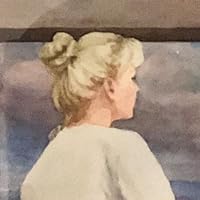
This painting will be of a nude with a window showing the northern Ontario landscape. In the room china and porcelain on rough wooden shelves. The colours are rich and the objects and figure full of meaning and emotion.
This painting will be of a nude with a window showing the northern Ontario landscape. In the room china and porcelain on rough wooden shelves. The colours are rich and the objects and figure full of meaning and emotion.
September 2, 2017
Favorite book so far this year.
"This is what I have so effortlessly inherited; this cold, this dark, this emptiness. It is odd how vacancy becomes a kind of presence, how it becomes tangible, real.
It is what I live with now, this vacancy. I am full of emptiness."
Don't worry, this is not a spoiler. We learn this about the narrator very early in the story as he is looking back on his life.
This WWI era novel about a fictional artist contains just enough real happenings and characters in it that I found myself googling and researching as I read.
The main character and narrator Austin Fraser paints beautiful, vivid landscapes and figures and then obscures these underpaintings with layers of paint until the original subject is barely visible or not visible at all. As you may have guessed, he lives his life in the same way.
One of his mentors, Robert Henri encourages him to "remain aloof" so as not to hold him back while another friend and mentor Rockwell Kent accuses him of painting without feeling.
Austin feels the painting of pastoral scenes on china his only life long friend George does for a living as inferior to real art.
'I paint winged beings,' he (Thayer) said. 'The larger ones are angels, the middle-sizes ones are portraits of my children, who are angels but whose wings are cleverly disguised by concealing coloration..'
I love the art of Abbott Thayer and he makes an appearance in this story.
I love the idea of my children's wings being cleverly disguised by 'concealing coloration'.
The Underpainter by Jane Urquhart took forever to read because I was underlining every other passage. It was a beautiful and emotional read for me.
"This is what I have so effortlessly inherited; this cold, this dark, this emptiness. It is odd how vacancy becomes a kind of presence, how it becomes tangible, real.
It is what I live with now, this vacancy. I am full of emptiness."
Don't worry, this is not a spoiler. We learn this about the narrator very early in the story as he is looking back on his life.
This WWI era novel about a fictional artist contains just enough real happenings and characters in it that I found myself googling and researching as I read.
The main character and narrator Austin Fraser paints beautiful, vivid landscapes and figures and then obscures these underpaintings with layers of paint until the original subject is barely visible or not visible at all. As you may have guessed, he lives his life in the same way.
One of his mentors, Robert Henri encourages him to "remain aloof" so as not to hold him back while another friend and mentor Rockwell Kent accuses him of painting without feeling.
Austin feels the painting of pastoral scenes on china his only life long friend George does for a living as inferior to real art.
'I paint winged beings,' he (Thayer) said. 'The larger ones are angels, the middle-sizes ones are portraits of my children, who are angels but whose wings are cleverly disguised by concealing coloration..'
I love the art of Abbott Thayer and he makes an appearance in this story.
I love the idea of my children's wings being cleverly disguised by 'concealing coloration'.
The Underpainter by Jane Urquhart took forever to read because I was underlining every other passage. It was a beautiful and emotional read for me.

February 28, 2015
This was kind of a let down after The Stonecarvers. Not to say that I won't read more from Urquhart, as she's a very talented writer, but The Underpainter was a disappointment for me.
Why I didn't enjoy The Underpainter like I should have:
-The narrator is first person, however several other characters' points of views are shown through third person storytelling. Urquhart does a variation of this in The Stonecarvers, but pulls it off much better in that novel. In The Underpainter it feels almost like the reader is trapped by the protagonist's pov and isn't able to relate as well to the other characters.
-And the other characters? Though this might have been intentional through the protagonist's perspective, they come off as trivial to the story, though in the end they very much are not. And the main character? We just didn't click. Maybe others will, but I couldn't relate enough to him.
-There is some suspense in how little bits of the climax are fed to the reader, but in the end I didn't feel that the climax was all that worthy.
Why The Underpainter is still an enjoyable read
-The main character is thoroughly unique, and like all Urquhart's characters, very detailed.
-Even if I didn't like the plot that much, the writing is still flawless and if I could have I would have read the book in one sitting.
Probably not something I'd read again, but worthy of hanging out on my shelf.
Why I didn't enjoy The Underpainter like I should have:
-The narrator is first person, however several other characters' points of views are shown through third person storytelling. Urquhart does a variation of this in The Stonecarvers, but pulls it off much better in that novel. In The Underpainter it feels almost like the reader is trapped by the protagonist's pov and isn't able to relate as well to the other characters.
-And the other characters? Though this might have been intentional through the protagonist's perspective, they come off as trivial to the story, though in the end they very much are not. And the main character? We just didn't click. Maybe others will, but I couldn't relate enough to him.
-There is some suspense in how little bits of the climax are fed to the reader, but in the end I didn't feel that the climax was all that worthy.
Why The Underpainter is still an enjoyable read
-The main character is thoroughly unique, and like all Urquhart's characters, very detailed.
-Even if I didn't like the plot that much, the writing is still flawless and if I could have I would have read the book in one sitting.
Probably not something I'd read again, but worthy of hanging out on my shelf.

May 31, 2015
This book is truely Jane Urquhart - there is a very complex main character who lacks emotion. His mother died at an early age and he is unable to recover from this traumatic event; having also to deal with an emotionless father, whom he says he never really knew in the end. As a distraction from his emotional damage, the main character Austin Fraser turns to painting and his profession becomes the focus of his future life.
In comparison to Urquhart's pervious novel Away I missed a character whom I was really able to relate to. Nevertheless, Austin Fraser has many layers and him - looking back at his life at the age of 83 - is an adventurous story taking place before, during and after WWI. I really liked the way Urquhart incorporated the art of painting in the novel. In my opinion, it is a great idea to explore something so destructive as war by contrasting it with something intrinsically beautiful as art and the profession of the artist, since Austin Fraser isn't the only artist in The Underpainter.
Overall, the novel is beautifully written (as you would expect a Jane Urquhart novel to be) and features - of course - a lot of illustrative landscape description that bring Canadian wilderness directly to the inner eye of the reader. I found this novel an interesting, fairly easy and enjoyable read that everyone should take the time to explore. After all, I give it a very good 3 out of 5 stars!
In comparison to Urquhart's pervious novel Away I missed a character whom I was really able to relate to. Nevertheless, Austin Fraser has many layers and him - looking back at his life at the age of 83 - is an adventurous story taking place before, during and after WWI. I really liked the way Urquhart incorporated the art of painting in the novel. In my opinion, it is a great idea to explore something so destructive as war by contrasting it with something intrinsically beautiful as art and the profession of the artist, since Austin Fraser isn't the only artist in The Underpainter.
Overall, the novel is beautifully written (as you would expect a Jane Urquhart novel to be) and features - of course - a lot of illustrative landscape description that bring Canadian wilderness directly to the inner eye of the reader. I found this novel an interesting, fairly easy and enjoyable read that everyone should take the time to explore. After all, I give it a very good 3 out of 5 stars!

October 19, 2013
This is set around the time of the first world war and is about a painter and artist and his interaction with a few friends in North America and Canada.
After he looses his mother, his father makes some investments in silver and makes a fortune, enabling Austin to become and artist and be independent. A friend who he went with to dances, and had an infatuation with a girl, is sent off to war in the trenches.
Austin becomes a painter, and develops a relationship with a lady who is older than him, both as a lover and as a model for him. He paints and draws her nude over fifteen summers, and learns that her, father who was a miner had effectively worked for his father as an investor. George return from the war with shell shock and brings a nurse who cared for his as a partner. His relationship with Austin, which was always strained, never really improves.
It is a book that is about the selfishness of relationships and the tragedy of war and loss. It doesn't have a hugely strong plot, and the main character is someone who is not someone that you would ever warm to.
However, the book is beautifully written, almost effortless at times, and is compelling in its descriptions.
After he looses his mother, his father makes some investments in silver and makes a fortune, enabling Austin to become and artist and be independent. A friend who he went with to dances, and had an infatuation with a girl, is sent off to war in the trenches.
Austin becomes a painter, and develops a relationship with a lady who is older than him, both as a lover and as a model for him. He paints and draws her nude over fifteen summers, and learns that her, father who was a miner had effectively worked for his father as an investor. George return from the war with shell shock and brings a nurse who cared for his as a partner. His relationship with Austin, which was always strained, never really improves.
It is a book that is about the selfishness of relationships and the tragedy of war and loss. It doesn't have a hugely strong plot, and the main character is someone who is not someone that you would ever warm to.
However, the book is beautifully written, almost effortless at times, and is compelling in its descriptions.

January 17, 2013
This 1997 winner of Canada’s Governor General’s Literary Award is the third novel I’ve read by this talented writer.
It’s told from the point of view of painter Austin Fraser, living in his old age in his childhood hometown of Rochester NY. The setting moves from upstate New York to the northern shores of Lake Ontario and Lake Superior – both Canadian locations. It’s told in flashbacks from Austin’s present (1970s) to 1914 and the ensuing years. I was struck by the different affects that the declaration of war in 1914 had on Canada, and on the United States.
The title refers to the method which Austin now uses for all his paintings: blank white over an “underpainting”. Why he paints like this is revealed as the story is.
Urquhart weaves her story skillfully, building to a heart-rending climax.
Read this if: you appreciate beautiful prose and understated stories; or you’re interested in the contrast between the effects of WWI on Canada and its closest neighbour the United States.
4 stars
It’s told from the point of view of painter Austin Fraser, living in his old age in his childhood hometown of Rochester NY. The setting moves from upstate New York to the northern shores of Lake Ontario and Lake Superior – both Canadian locations. It’s told in flashbacks from Austin’s present (1970s) to 1914 and the ensuing years. I was struck by the different affects that the declaration of war in 1914 had on Canada, and on the United States.
The title refers to the method which Austin now uses for all his paintings: blank white over an “underpainting”. Why he paints like this is revealed as the story is.
Urquhart weaves her story skillfully, building to a heart-rending climax.
Read this if: you appreciate beautiful prose and understated stories; or you’re interested in the contrast between the effects of WWI on Canada and its closest neighbour the United States.
4 stars
September 7, 2020
This is one of the books I inherited when my mother had to move into an eldershome. I think my brother gave it to her. He crossed the Atlantic Ocean a long time ago and lives in Canada. For what other reason could there be a Canadian author on our bookshelves I wonder. We are not used to read Canadian books... I am sorry to say. It is a very interesting story about the difference between people and how they cope with their youth, their experiences and their emotions. For me there were a lot of difficult words in the book, so I often needed tot translate words in Dutch. But well... that is good for my languages. :-) Urquhart playes a lot with time in the book. And sometimes she writes about the same thing in a total different part of the book. That was a bit annoying, because sometimes I forgot where I stopped reading and couldn't find the rigth page again. Often I read pages for the second of third time before I found out where I had to start reading. But all in all I liked it very much. Maybe we Dutch should read more Canadian authors.
Read
September 26, 2021Compelling was my first thought as I read through the pages of this book. Intense, hard to put down followed. The prose was rich with insight and description. Why did I keep reading about a self-centred protagonist who didn't care about anyone, who selfishly used others for his own gain and who was indifferent to others needs and lacked self-awareness? Because he is a reflection of many in society. He is almost soulless. This was a book one could pick up, read for a minute or two and put down. It is abundantly rich in words and characters, eloquent and breathtaking in phrases and descriptions. For example - sun candles. If you have been to Lake Superior, you would understand. This is a book one could reread and learn from the history of world wars and rapid change. The author talks about art with insight and I learned from it. The characters who faced war, hardship, isolation are our great grandparents, grandparents and parents. It is a book that one may remember for life, a rare treasure for those who have a small list of unforgettable reads. It made my top three.

July 3, 2012
Beautifully written in spots, this novel has some subtle and heartfelt descriptions of Austin Fraser's life and psyche. However it felt, ultimately, empty. He was a cruel, selfish, greedy character, who felt regret at the end of his life, but he had many, many opportunities over several years, to change and apologize, but never did. So his regret and anguish seems very hollow. He ruins the lives of so many and never makes even the smallest gesture of humanity. He never deserved the friendships he had.
The descriptions of his painting process and his rise to fame are uneven and unresolved as well.
A rough read and it really rang untrue to me.
The descriptions of his painting process and his rise to fame are uneven and unresolved as well.
A rough read and it really rang untrue to me.

September 28, 2018
Jane Urquhart is fabulous. I am so proud that she is Canadian. She is one of the great literary writers of her time.
The Underpainter is not a quick flip through read but rather a strong literary marvel. Something you can really sink your teeth into with a cup of tea on a cold winter day.
What I love about this novel are the varied relationships the underpainter - Austin Fraser has with each person in his life. How these relationships shape his worldview is in my opinion the great tragedy that befalls him in the end. What makes this book fantastic is how Urquhart explores the impact we have on one another; for better or for worse.
The Underpainter is not a quick flip through read but rather a strong literary marvel. Something you can really sink your teeth into with a cup of tea on a cold winter day.
What I love about this novel are the varied relationships the underpainter - Austin Fraser has with each person in his life. How these relationships shape his worldview is in my opinion the great tragedy that befalls him in the end. What makes this book fantastic is how Urquhart explores the impact we have on one another; for better or for worse.

March 20, 2014
An American artist who painted around the turn of the 20th century, was especially drawn to the Northern shore of Lake Superior. In that area, he meets the best friends of his life but never fully is able to tap into the richness of those connections. His paintings also seem to be underpaintings of his true expression even though he becomes a successful artist who sells his work in NYC. Close friends who fought in WW ! were scarred by that and come to a sad demise. This book won a Canadian literary award but I found it to be slow, plodding, and depressing.

May 23, 2019
I was startled to see many critical reviews since I found it exquisitely drawn with lyrical prose and depth of characterization. History, memory and art were brilliantly woven as was Austin’s emotional detachment. I highly recommend this engaging book
Displaying 1 - 30 of 225 reviews