The novel finds its focus in the sad demise of the last of the Moolmans, little Noah du Pisani (illegitimate son of the rootless water-finder Dowser du Pisani and the mad but extraordinarily beautiful CrazyTilly Moolman), who falls down a borehole and dies. Was he pushed, or did he stumble? And when he lay there, his little cries winging up to the ears of the assembled living (and dead, for the spooks are of course all present and correct) Moolmans at the top of the hole, was he put out of his misery by a single shot from Abel Moolman's rifle? And if so, how many of the other Moolmans knew?
These are the questions put by the investigating magistrate, Abraham van der Ligt, who has one arm and intersperses the narrative with detailed explanatory letters home to his beloved wife.
One by one the members of the Familie and the Skaamfamilie (deceased and undeceased) give their accounts, until finally we have a clear picture of the strange sequence of events that took place on the fateful day.
Etienne Roché van Heerden grew up in a dual medium household. After matriculating he decided to join the navy, but since he is blind in the right eye, was not called up for combat duty. Instead he served as a dog handler, playing his alsatian at major festivals.
Van Heerden initially studied law, and was admitted to the South African Side Bar as attorney. He freelanced as deputy sheriff for the Civil Court, and moved about in the townships around Cape Town, dispensing civil summonses and learning a great deal about life in these suppressed communities. As a young practitioner, his clients were mostly from the black and coloured crime-ridden communities around Cape Town.
Van Heerden also lectured Legal Practice at the Peninsula Technikon and spent two years in advertising. At age thirty, with the birth of his eldest daughter, Van Heerden left the routine of a budding Cape Town advertising agency. He and his family relocated to northern Natal where he started out on his academic career in Literature at the University of Zululand. His PhD was a study on engagement and postmodernism.
During the eighties he was member of a group of Afrikaans writers secretly meeting the banned ANC of Mandela and exiled writers at the (now famous) Victoria Falls Writers’ Conference, held in Zimbabwe.
He regularly teaches at universities in Europe, and has been Writer in Residence at the University of Leiden in the Netherlands, and the University of Antwerp in Belgium. He was a member of the University of Iowa’s prestigious International Writing Program in 1990, and has been back on visits to this university, of which he is an Honorary Fellow in Writing. He regularly reads his fiction at events such as the Edinburgh Festival in Scotland, the Winter Nights Festival in the Hague, Netherlands, the Time of the Writer Festival in Berlin, Germany, the Zimbabwe Book Fair and other festivals and events internationally.
Van Heerden now teaches at the University of Cape Town, where he is the Hofmeyr Professor in the School of Languages and Literatures, and chairs the Afrikaans and Netherlandic Studies Section. He is also the brain behind the literary e-zine "LitNet".
Van Heerden is married to Kaia, a practising doctor, and lives in Stellenbosch. The couple has two daughters, Imke and Menán.
There’s nothing worse than a reading slump and when you commit yourself to a project like this they inevitably happen. It is impossible to like something that you don’t feel like reading and from Matigari onwards (with the exception of Watchmen) this was happening. Unfortunately I’ve experienced this slump with every decade I’ve tackled and I’m waiting for at least one decade where I love every single book.
However once you get out of the slump it’s a great feeling. There was some light shining with The Beautiful Mrs. Seidenman but now with Ancestral Voices I think the only way is upwards.
The is a family saga, much in the same line as both Garcia Marquez and Steinbeck. This means that there are elements of magic realism mixed with moments of stark realism. Oh yes there’s a character who shares my surname (Pisani) and considering that the book takes place in South Africa, I was greatly surprised to see this!
As I said the setting takes place in South Africa , on a farmland which has been owned by the Moolmans for a century. During these hundred years there have been killings, rebellions and ex communicated family members. The tragedy begins when one of the grandchildren falls down a boorhole and then shot in the process and a magistrate has to visit this family in order to see who is the culprit.
Due to the largeness of the Moolman’s this magistrate has to inspect the whole family tree and comes across some nasty surprises.
Murder mystery aside (we do find out who the killer is) van Heerdeen is presenting a South Africa where Apartheid is rife and mentalities are still to be adhered to, in fact the banished members of the family are the ones who went against convention and mingled with Africans. One character in the novel who fights for rights is seen as the biggest traitor of the Moolmans. So this is quite political, although it’s quite disguised in the beginning.
My only gripe about this book is that it is out of print, surely a novel of this magnitude should be widely available. Sometimes I don’t understand.
Om in 1986 al die storie van grond teen die draai van die 19de eeu so sensitief oop te skryf moes helse moed en morele verbeelding geverg het. Toorberg hou vandag nog vir ons lesse in oor waarom die patrone van grondbesit altyd 'n emosionele en politieke saak sal wees wat ons nie gaan los nie.
Dit was een van my matriek voorgeskrewe boeke en ek onthou dat ek baie mal was daaroor!!! Het dit 12jaar later weer gelees en ek dink dit het toe 'n nog groter impak op my gemaak. "Moenie vergeet waarvandaan jy kom nie, maar moenie dat dit jou verhoed om te gaan waarheen jy moet nie"
This intriguing and excellent novel is set in the remote countryside of South Africa, far from the big cities. It was written during, and concerns the Apartheid era.
The family tree printed at the beginning of the book is of great importance to the tale and its comprehension. During my investigations into my family's South African 'roots', I soon discovered that genealogy is a major preoccupation of the Afrikaner people. And, so it is in this novel, which is based on the activities (past and present) of the Moolman and Riet families. The Riet family, otherwise known as the 'shame family', is a branch of the Moolman family that is tainted in the eyes of the Moolmans because some (non-white) African blood flows in their veins. The Riets have mixed African-Dutch roots.
The Moolmans own land on the Toorberg, a mountainous area that they tamed and which was rich in springs when they first occupied it. When the water supply begins to fail badly and the water dowser is finding it difficult to detect underground water, Abel Moolman, the paterfamilias, buys a mechanised drilling machine to drill boreholes. I read somewhere that in the past mining the earth was frowned upon because it was believed that drilling or digging deep into the earth might disturb supernatural spirits that reside deep below the surface. And, this is what happens when the drilling machine begins boring deep into the Toorberg. The vibrations caused by the machine wake the spirits of dead members of the Moolman and Riet families.
Soon after this, Trickle, the young son of the dowser and his curious (maybe insane) wife, is discovered trapped deep down in a borehole. Despite strenuous attempts to rescue Trickle, who incidentally also has supernatural powers, the poor child dies. His death triggers a judicial investigation, which is conducted by a one-armed magistrate who arrives in the nearby town from afar.
The magistrates's arrival and his subsequent detailed enquiries are not welcomed by the locals, least of all by the Moolmans (both alive and dead). Through the letters that the magistrate writes to his wife, we learn more and more about the Moolman and Riet families. As he begins to realise the complexity of the case he is dealing with - whether Trickle died accidentally or otherwise - the spirits of the dead members of the two families reveal to the reader more and more about their histories and also keep an eye on the activity of the magistrate, who despite himself becomes gradually drawn towards the people whom he is investigating.
Mystery, history, and suspense, are skilfully interwoven in this unusual and beautifully written story that touches on the problems caused by Apartheid in South Africa. I recommend this highly.
I really enjoyed this multigenerational story of a rigid patriarchal farm family in an isolated region of South Africa. It was full of history and mixed with mystery. It also dealt with age-old secrets and inherited anxieties, especially the unforgivable shame of interracial marriage. If you are interested in learning about the problems caused by Apartheid in South Arfica, then I think you will enjoy reading this book.
3.5 stars. An intriguing, interesting novel about the fall of the Moolmans, a pioneering Afrikaans family, who have farmed Toorberg, for one hundred years. Noah, the patriarch’s illegitimate and backward grandson, aged five, dies after mysteriously falling forty feet into a borehole dug in the search for water. One year on, a magistrate is sent tot he property to investigate whether the original finding of accidental death is true. He discovers that judging Noah’s killer means judging an entire dynasty, both the living and the dead.
The Moorman men dominate. They reject any in the generation who choose to go a different way….to the city…to become a pastor…crossing the colour line…
A slow moving plot with interesting characters. A worthwhile read.
This book was first published in South Africa in 1986.
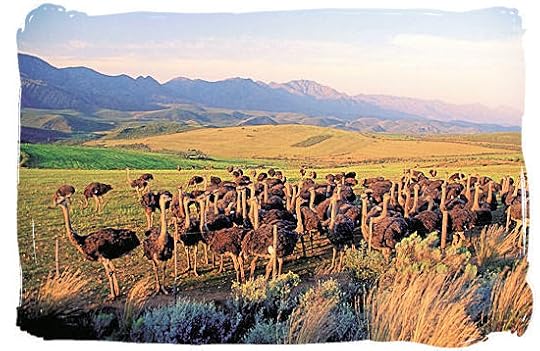
In this book we get a lot of local color of the Little Karoo, a unique landscape of semi-arid steppe in South Africa that had its 15 minutes of fame and prosperity in the late 1800’s when it exported ostrich and other bird feathers to European fashion capitals.
A government magistrate has come to this backward rural area of mixed-race folks to investigate the mysterious death, some time ago, of a five-year old boy. Everyone in the town knows what happened but no one is revealing anything to the outsider. What’s going on? Shades of Shirley Jackson’s Lottery?
The chronology of the story jumps back and forth. A lot of it is told as the magistrate returns each evening to his hotel to write letters about his day, ostensibly to his wife, but there’s a mystery there as well.
It’s a good story and you can see in this novel the makings of van Heerden’s later, and I think more polished work, The Long Silence of Mario Salviati. Both have similarities in structure: the rural folks suspicious of the visiting outsider; the town’s secrets and family rivalries; the crazy names; the bit of fantasy; the weight of ancient history. The book is translated from the Afrikaans.
Ausgehend von dem Todesfall wird im Zuge der Aufklärung die ganze facettenreiche Geschichte der Menschen und des Ortes aufgerollt. Sie ist geprägt von dem Willen, über die Natur und somit auch über die Ureinwohner zu herrschen und der Besitzgier der burischen Moolmans, die diesen Landstrich zivilisierten. Es spiegelt sich auch die Geschichte Südafrikas wieder, die Kolonisierung, der Kampf um Unabhängigkeit vom britischen Empire, sowie die Unterdrückung und Benachteiligung der Schwarzen. Da ist zum Beispiel Floors Moolman, der ein Verhältnis mit einer Schwarzen anfing und deshalb verstoßen wurde. Sois Moolman schloss sich den Rebellen im Burenkrieg an, und wurde auf dem Besitz seiner Familie erschossen. Sein vergossenes Blut ist nach Jahrzehnten immer noch zu sehen. Auch vom Schicksal der Frauen, die an der Seite der Farmer zwar herrschten, aber unter der Strenge, mit der das Leben am Rande der Zivilisation geregelt wurde, zu leiden hatten, wird erzählt. Die Erzählweise ist diesem Land, in dem Wildnis und Zivilisation aufeinanderstoßen, gewissermaßen angepasst. Magisches findet ebenso Platz wie aufgeklärt europäisches. Sie fängt auf eine faszinierende Art das Untergründige, rational nicht Fassbare ein, die Beziehung der Bewohner zu ihrem Land. Die Toten sind ebenso wie die Lebenden Handlungsträger. Die Vergangenheit ist nicht tot, sie ist eins mit der Gegenwart. (Der einarmige (!) Untersuchungsrichter muss am Ende abreisen, ohne je erfahren zu haben, was wirklich geschehen ist.) Man bekommt als Leser einen Eindruck, warum die Buren so an ihrem Land hängen. "Geisterberg" ist ein Werk des magischen oder besser phantastischen Realismus, das im Spiegel einer Familienchronik die Geschichte eines Landes, in diesem Falle Südafrika, zu erzählen und damit auch zu begreifen versucht. Das ist ambitioniert und das macht das Buch lesenswert, auch weil man nebenher sehr viel über das Land und das Leben der Bewohner erfährt.
Mooi, sfeervol, magisch-realistisch verhaal over 2 naast elkaar levende, verwante families en een tragische gebeurtenis ...ietwat teleurstellend, onduidelijk einde
Ancestral Voices takes places in the countryside of South Africa during apartheid. The Moolman clan is a pioneering Afrikaans family who has been farming on Toorberg (Magic Mountain) for generations. When the water supply starts drying up on the farm, Abel Moolman uses a massive drilling machine to search for water. This drilling disturbs his buried ancestors who start reappearing on the farm. Abel’s bastard grandson, four-year old Noah “Trickle” du Pisani, falls down a borehole and eventually dies.
A year after the event, the one-armed city magistrate Abraham van der Ligt is charged with coming to the farm to investigate Noah's death.
This story is a kind of murder mystery and ghost story taking place in rural South Africa. The author provides a family tree of the Moolman clan and the neighboring Riet family. The Riet family is a broken off branch of the Moolmans known as the Skaamfamilie (shame family), due to their mixed-race blood.
There are several characters named Abel from four different generations: FounderAbel, OldAbel, (present day) Abel, and CrossAbel (Abel’s rowdy son). I found myself constantly referring to the genealogical chart at the start of the book in order to keep the characters straight.
This book has plenty of mystery and suspense as the magistrate starts prying into the families' past while investigating Noah's death. There is an eerie feeling throughout the story as the dead ancestors start telling their stories and relive past moments that happened on Toorberg (magic mountain). I enjoyed this book. The book has 47 fairly short chapters with lots of interactions and connections between the numerous family members.
This book is on Boxall’s “1001 Books You Must Read Before You Die” list.
Dette var kanskje for fremmed for meg. Jeg har lest bøker fra alle verdensdeler og noe kjenner jeg meg bedre igjen i enn andre ting. Denne boken havnet i den helt fremmede delen. Det var til og med vanskelig å kjenne seg igjen i forholdet familien igjennom. Boken er gitt ut i 1983, men jeg følte hele tiden at jeg leste en historie fra -50 eller -60-tallet. Der kan jeg ta helt feil, men det var sånn det opplevdes. Jeg kan dessverre ikke anbefale denne boken, siden jeg rett og slett ikke likte den. Men som portrett av apartheid innad i en delvis svart og delvis hvit familie var den ok. Hele min omtale finner du på bloggen min Betraktninger
Een mooie literaire streekroman waarin het wel en wee van twee families wordt belicht aan de hand van de onopgeloste dood van een kind dat door een magistraat uit de stad wordt onderzocht. Achterin het boek is een verklarende woordenlijst opgenomen want het boek is doorspekt met typisch Zuid-Afrikaanse woorden.
To me this was like Hundred Years of Solitude, admittedly not quite as brilliant, but still--a novel that really captures the magic and mystery in a culture, in this case, the culture of white and brown Afrikaners sharing a farm in the Eastern Cape.
It is doubtlessly a topic the writer researched well, and even though Etienne is a master at showing true human nature through fictional events, it also takes a hard look at the history between the peoples living in South Africa, and their complex mix. Prescribed reading for my matriculating year, even though it was not in my taste, I do have a lot of respect and more of a down-to-earth view of the problems and struggles all people had during the times before I came along.
A must if you want a better understanding of the South African Mix.
There were too many characters, I was confused for most of the book. The plot was virtually non-existant. Some beautiful language and good portrayal of bitterness and inheritance.