

What do you think?

Myths & Legends of the Celtic Race
This book was converted from its physical edition to the digital format by a community of volunteers. You may find it for free on the web. Purchase of the Kindle edition includes wireless delivery.
359 pages, Kindle Edition
First published January 1, 1911
About the author
T.W. Rolleston
64 books9 followersThomas William Hazen Rolleston (1857-1920) was an Irish writer, literary figure and translator, known as a poet but publishing over a wide range of literary and political topics. He lived at various times in Dublin, Germany, London and County Wicklow; settling finally in 1908 in Hampstead, London, where he died.
He was educated at St Columba's College, Dublin and Trinity College, Dublin. After a time in Germany he founded the Dublin University Review in 1885; he published Poems and Ballads of Young Ireland (1888), and a Life of Lessing (1889). In London in the 1890s he was one of the Rhymers' Club; he was to cross paths several times, and sometimes to clash, with W.B. Yeats. He was also involved in Douglas Hyde's Gaelic League.
He also spent time as a journalist, and as a civil servant involved with agriculture. He had eight children, from two marriages.
His seminal works Celtic Myths and Legends and The High Deeds of Finn Mac Cumhail are widely hailed as the best representation and description of all the legends, myths and spiritual history of all Celtic peoples of Ireland, Britain, and Wales.
He was educated at St Columba's College, Dublin and Trinity College, Dublin. After a time in Germany he founded the Dublin University Review in 1885; he published Poems and Ballads of Young Ireland (1888), and a Life of Lessing (1889). In London in the 1890s he was one of the Rhymers' Club; he was to cross paths several times, and sometimes to clash, with W.B. Yeats. He was also involved in Douglas Hyde's Gaelic League.
He also spent time as a journalist, and as a civil servant involved with agriculture. He had eight children, from two marriages.
His seminal works Celtic Myths and Legends and The High Deeds of Finn Mac Cumhail are widely hailed as the best representation and description of all the legends, myths and spiritual history of all Celtic peoples of Ireland, Britain, and Wales.
Ratings & Reviews
Friends & Following
Create a free account to discover what your friends think of this book!
Community Reviews
Displaying 1 - 30 of 88 reviews

July 10, 2022
Throughout Celtic myth is the theme of transmigration, transformation into new shapes and forms of life and animation, and migration across land, sea, air, and even through digestion and reproduction. This is seen in the Irish tales of the Ultonian and Ossianic/Fenian cycles, and in the Welsh myths, primarily in the legend-poetry of Taliesin. Transmigration might also be an apt way to describe many of the myths themselves, as they developed over centuries and spread from the British Isles to continental Europe, and back again, in different but familiar forms. Some of the myths and symbols have more ancient and mysterious origins, sharing a few things in common with aspects of distant Indians and Egyptians, suggesting a further reaching transmigration through various forms and names and cultural references.
Celtic Myths and Legends by T.W. Rolleston was the perfect capstone to my year-long deep dive into the Celtic mythology, poetry, and sagas. Written in 1911, it is an expert survey of a huge world of ancient literature, by a man whose encyclopedic knowledge of this world is brought alive by his love for it, and made stronger by the specific knowledge of many other scholars of his time. He covers a detailed history of the Celts and Gauls, their glories and ruins and victories and conquests, their movements across the lands. He peers into their religion, discussing our sources of knowledge on this obscure topic.
If you’ve read other reviews of this book on Goodreads, you’ll get the wrong impression this is a dry and dated book. It is anything but, and on closer inspection we see this characterization is coming from those with only a cursory, casual interest in mythology. What’s more, there are complaints that this book has too much content. Think about that for a moment, and whether or not a person who criticizes a book for having too much information and content can be taken seriously. I know this is the usual state of Goodreads, but let’s for a moment pretend this is still a website for serious readers, curious people, and those who appreciate books precisely because they take us far away, not because they are modern and familiar and mundane.
The megaliths and dolmens and Iron Age structures and artifacts are gone over, and remarkable parallels are drawn between Celts and other ancient peoples, such as the Egyptians, pulling from linguistics, carved stones, and similar beliefs. Celtic solar ship carvings (images carved into stone of a ship with a sun symbol above) have cousins in strangely similar Egyptian solar ship carvings. This is traced back as far as Babylon, with ship carvings believed to be associated with different gods. The respective views on immortality, transmigration, and the appearance of the ank symbol appearing on Celtic megaliths, suggest other fascinating parallels that are not understood. There is also the Two Feet symbol, something that appears in Irish myth, Scandinavian, Buddhist, Egyptian, and Aztec cultures. These similarities do not seem entirely coincidental, but suggestive of something universal and inexplicably primordial.
These historic and somewhat scientifically minded sections bring us to the core of the book, the summary and analysis of most of the best known and important myths, legends, and sagas of the Celtic people, focusing on Ireland and Wales. Most of these myths I have read elsewhere in their entirety, so I won’t discuss them here. Rolleston retells them in a way that “avoids any adaptation of its material for the popular taste,” and for this alone he deserves praise. Those sorts of retellings are often devoid of the magic and allure of the originals, and they lack the substance that makes them so intriguing to begin with. He keeps all of the character intact, and pulls us far into the Otherworld of these products of the intellect and imagination, when people began “to coordinate their scattered impressions and felt the impulse to shape them into poetic creations embodying universal ideas.”
As he explains, “Crudities have not been refined away, things painful or monstrous have not been suppressed.” He has also not attempted to make the stories or characters or settings or mysteries more palatable, showing instead how they truly were. He is acutely aware of the beauty and artistry and uniqueness of the old Celtic imagination, and knew what set it aside from contemporary mythologies and legends and writers. He brings all of this to life, and shares thoughtful analysis of these stories in context, comparing themes across legends and lands, and arriving at sometimes surprising conclusions about the evolution of certain myths.
He offers the best summary I have seen of the early Invasion myths of Ireland, including all its invaders, settlers, and battles. As an example of his sharp insight, he ties the sword, the spear, the stone, and the cauldron of these earliest myths to relics witnessed in the castle of the story Peredur, from the Mabinogion of Wales many centuries later. This brilliantly draws a connection between the oldest Irish legends and the shadowy, obscure Arthurian grail that has, itself undergone many literary transformations through the ages. This subject becomes a major point of discussion toward the end of the book, and is handled with incredible aptitude.
Something that’s hard to find when seeking out Celtic mythology is what is today known as the “Cycle of the Kings,” a collection of legends about ancient Irish kings, some real and some imaginary and some a mixture of myth and reality. Rolleston includes almost 30 pages discussing this lore, building off the invasions which came prior, developing it from the Danaans after the Milesian conquest. Some of these tales are part of what is known as the “Mythological Cycle”, and so I had read them before. But at least half of this material was new to me, and let me peer into another vast chasm of wonder I had not known.
The thing almost entirely new to me here was the saga known as the Voyage of Maeldūn. There is a good two page synopsis of this in The Celtic Realms by Myles Dillon and Nora Chadwick, but Rolleston gives a fuller treatment, with over twenty pages devoted to summarizing the adventure, the purpose, the people, and the strange, dreamlike, fantastical destinations of our heroes. His discussion of the many fable-like threads, or the legendary events contained in this story make its pleasures reverberate in the mind long after the adventure has ended.
There is a brief look at the Bardic philosophy, which we are told does not likely come down to us from the real bards or druids, but is most likely invented by a noteworthy scholar of the late sixteenth century, borrowing at least a little of the philosophy and worldview that must have belonged to the druids who refused to share their knowledge in writing.
This leads us to the rest of the Welsh literature which lays the foundation by for the Arthurian cycle that would grip continental Europe for centuries to come, and ignite the imaginations of writers across continents to this day. This section not only recounts the most important Welsh myths and places them in context with the larger European romances and Charlemagne chivalry tales. It includes a short who’s-who of many of the names who were most impactful in the formative years of the Arthurian myths, like Marie de France, Chrestien de Troyes, Nennius, Wolfram von Eschenbach, and Geoffrey of Monmouth.
Rolleston explores the more primitive and long lost sources for these tales, connecting Arthur with the Celtic deity Artaius, and tracing the growth of these tales into their better known forms. As in other regions of the Celtic lore, Rolleston explains how Christian monks and scholars would come to transform these pagan beliefs and figures into saints and themes more befitting medieval Christian sensibility and morality. Despite this, glimmers of the old and original character can be seen of this literature, and he draws our attention to threads and evidence and connections between names, words, and places that keep these original things alive. Genealogy tables here make clear some of the speculation regarding parallels between Arthurian and Irish myth, showing similar figures in the Gods of the House of Dōn and the Gods of the House of Llyr.
This was a fitting end to such a substantial book, because it provides me a smooth transition into my next long reading list: the Arthurian legends. That adventure will begin soon. Until then, the memories and reflections of this colorful and peerless mythology will carry me on waves across the sea.
Special attention should be given to the amazing illustrations in this volume of the book, published by Dover. It includes 72 illustrations by J.C. Leyendecker, Stephen Reid, and Arthur C. Bell. This art envisions the people and events of these forgotten times, rendered in great detail and creativity, while conveying a sense of the grandeur that the old bards and writers imbued their stories with.
Celtic Myths and Legends by T.W. Rolleston was the perfect capstone to my year-long deep dive into the Celtic mythology, poetry, and sagas. Written in 1911, it is an expert survey of a huge world of ancient literature, by a man whose encyclopedic knowledge of this world is brought alive by his love for it, and made stronger by the specific knowledge of many other scholars of his time. He covers a detailed history of the Celts and Gauls, their glories and ruins and victories and conquests, their movements across the lands. He peers into their religion, discussing our sources of knowledge on this obscure topic.
If you’ve read other reviews of this book on Goodreads, you’ll get the wrong impression this is a dry and dated book. It is anything but, and on closer inspection we see this characterization is coming from those with only a cursory, casual interest in mythology. What’s more, there are complaints that this book has too much content. Think about that for a moment, and whether or not a person who criticizes a book for having too much information and content can be taken seriously. I know this is the usual state of Goodreads, but let’s for a moment pretend this is still a website for serious readers, curious people, and those who appreciate books precisely because they take us far away, not because they are modern and familiar and mundane.
The megaliths and dolmens and Iron Age structures and artifacts are gone over, and remarkable parallels are drawn between Celts and other ancient peoples, such as the Egyptians, pulling from linguistics, carved stones, and similar beliefs. Celtic solar ship carvings (images carved into stone of a ship with a sun symbol above) have cousins in strangely similar Egyptian solar ship carvings. This is traced back as far as Babylon, with ship carvings believed to be associated with different gods. The respective views on immortality, transmigration, and the appearance of the ank symbol appearing on Celtic megaliths, suggest other fascinating parallels that are not understood. There is also the Two Feet symbol, something that appears in Irish myth, Scandinavian, Buddhist, Egyptian, and Aztec cultures. These similarities do not seem entirely coincidental, but suggestive of something universal and inexplicably primordial.
These historic and somewhat scientifically minded sections bring us to the core of the book, the summary and analysis of most of the best known and important myths, legends, and sagas of the Celtic people, focusing on Ireland and Wales. Most of these myths I have read elsewhere in their entirety, so I won’t discuss them here. Rolleston retells them in a way that “avoids any adaptation of its material for the popular taste,” and for this alone he deserves praise. Those sorts of retellings are often devoid of the magic and allure of the originals, and they lack the substance that makes them so intriguing to begin with. He keeps all of the character intact, and pulls us far into the Otherworld of these products of the intellect and imagination, when people began “to coordinate their scattered impressions and felt the impulse to shape them into poetic creations embodying universal ideas.”
As he explains, “Crudities have not been refined away, things painful or monstrous have not been suppressed.” He has also not attempted to make the stories or characters or settings or mysteries more palatable, showing instead how they truly were. He is acutely aware of the beauty and artistry and uniqueness of the old Celtic imagination, and knew what set it aside from contemporary mythologies and legends and writers. He brings all of this to life, and shares thoughtful analysis of these stories in context, comparing themes across legends and lands, and arriving at sometimes surprising conclusions about the evolution of certain myths.
He offers the best summary I have seen of the early Invasion myths of Ireland, including all its invaders, settlers, and battles. As an example of his sharp insight, he ties the sword, the spear, the stone, and the cauldron of these earliest myths to relics witnessed in the castle of the story Peredur, from the Mabinogion of Wales many centuries later. This brilliantly draws a connection between the oldest Irish legends and the shadowy, obscure Arthurian grail that has, itself undergone many literary transformations through the ages. This subject becomes a major point of discussion toward the end of the book, and is handled with incredible aptitude.
Something that’s hard to find when seeking out Celtic mythology is what is today known as the “Cycle of the Kings,” a collection of legends about ancient Irish kings, some real and some imaginary and some a mixture of myth and reality. Rolleston includes almost 30 pages discussing this lore, building off the invasions which came prior, developing it from the Danaans after the Milesian conquest. Some of these tales are part of what is known as the “Mythological Cycle”, and so I had read them before. But at least half of this material was new to me, and let me peer into another vast chasm of wonder I had not known.
The thing almost entirely new to me here was the saga known as the Voyage of Maeldūn. There is a good two page synopsis of this in The Celtic Realms by Myles Dillon and Nora Chadwick, but Rolleston gives a fuller treatment, with over twenty pages devoted to summarizing the adventure, the purpose, the people, and the strange, dreamlike, fantastical destinations of our heroes. His discussion of the many fable-like threads, or the legendary events contained in this story make its pleasures reverberate in the mind long after the adventure has ended.
There is a brief look at the Bardic philosophy, which we are told does not likely come down to us from the real bards or druids, but is most likely invented by a noteworthy scholar of the late sixteenth century, borrowing at least a little of the philosophy and worldview that must have belonged to the druids who refused to share their knowledge in writing.
This leads us to the rest of the Welsh literature which lays the foundation by for the Arthurian cycle that would grip continental Europe for centuries to come, and ignite the imaginations of writers across continents to this day. This section not only recounts the most important Welsh myths and places them in context with the larger European romances and Charlemagne chivalry tales. It includes a short who’s-who of many of the names who were most impactful in the formative years of the Arthurian myths, like Marie de France, Chrestien de Troyes, Nennius, Wolfram von Eschenbach, and Geoffrey of Monmouth.
Rolleston explores the more primitive and long lost sources for these tales, connecting Arthur with the Celtic deity Artaius, and tracing the growth of these tales into their better known forms. As in other regions of the Celtic lore, Rolleston explains how Christian monks and scholars would come to transform these pagan beliefs and figures into saints and themes more befitting medieval Christian sensibility and morality. Despite this, glimmers of the old and original character can be seen of this literature, and he draws our attention to threads and evidence and connections between names, words, and places that keep these original things alive. Genealogy tables here make clear some of the speculation regarding parallels between Arthurian and Irish myth, showing similar figures in the Gods of the House of Dōn and the Gods of the House of Llyr.
This was a fitting end to such a substantial book, because it provides me a smooth transition into my next long reading list: the Arthurian legends. That adventure will begin soon. Until then, the memories and reflections of this colorful and peerless mythology will carry me on waves across the sea.
Special attention should be given to the amazing illustrations in this volume of the book, published by Dover. It includes 72 illustrations by J.C. Leyendecker, Stephen Reid, and Arthur C. Bell. This art envisions the people and events of these forgotten times, rendered in great detail and creativity, while conveying a sense of the grandeur that the old bards and writers imbued their stories with.

April 22, 2017
This book wasn’t quite what I expected it to be. For one thing, it has to be realised that it is very dated, so the writing style isn’t what it would be today. Then you have to realise that this is simply an overview of Celtic history and their later mythology.
The book starts with a brief overview of the history of the Celts, where they came from, a bit about their religion, where they went, and where they are today (most of which I’ve heard is quite outdated compared with modern thinking). This section was quite interesting, as I wasn’t actually aware of the beginnings so far away, although I did know that there were Celtic peoples scattered about Europe who eventually were pushed out and migrated to the UK.
Then, however, we come to our largest, most tedious section – the myths themselves. Probably around sixty percent of the entire book revolves around Irish tales. Then, afterwards, there’s a small section of Welsh tales. Also, despite what the back-cover blurb says, there is very little to be had on Arthurian tales, as the majority of these, according to the book (although something which I’ve been partially aware of through other books), are actually imported from France. I was already aware that we had Chrétien de Troyes (called Crestien de Troyes in this book) to blame for such characters as Lancelot, who didn’t actually appear in the original tales (indeed, Mallory’s work includes much of the French translations, which are said to be a mix of the tales imported from Welsh immigrants to Brittany and French tales), but I didn’t realise how few characters that we’ve come to know through popular works actually do appear in the surviving Welsh tales. We have Owain and Peredur (Percival), even Gwenhwyvar (Guinevere) and Myrddin (Merlin), but all familiarity pretty much stops there. Of course, the Grail Quest was influenced by the spread of Christianity, even if some of the original mysticism survives in the tale, but the tale we know is also unfortunately another de Troyes creation (it is said that the original tale, however, was possibly one involving a quest for a stone). And another surprise in there, for me, was that Arthur himself may be based upon a deity called Artaius? Yet some of the Welsh tales weren’t actually told, for being near identical to the Irish tales. There were no Scottish tales to be had (Scots and Irish Gaelic were once the same language, therefore the tales are pretty much the same) and none from elsewhere within the British Isles. This last part, for me, was perhaps my biggest disappointment after the pages upon pages of commentary on the Irish tales. The Irish tales are interesting, and perhaps contain the strongest hints of the mythology during the pre-Christian days of the Isles (even with the changes made in them during the transition and post-Christian period – Saint Patrick even makes an appearance), but I was perhaps looking for something more that I could link into on a personal level, like the tales of Bran the Blessed, mythology that still survives in the ravens at the Tower of London. I want to be able to feel the history as I walk through the lands once walked by the ancients. Ireland is interesting in being still captured by that mythology, most particularly as perceived from outsiders, yet it is not my land.
But, however, the biggest trouble was how all these tales were written. They were dry, brief, perhaps direct translations, interspersed with various comments on how the tales relate to various things. We do not simply have a list of the tales here (although I guess there are other sources for the tales themselves in full); we have more a commentary on the tales and their meaning. It should be no surprise, then, that it took me six months to finish this book! I guess that, on a reference level, there is plenty of interesting information contained within, whether for serious study or just out of curiosity (like with myself). I have heard that it’s not a bad book to be had on the shelf for either. Yet there are more modern books on the subject that could perhaps cover everything much better. Considering that I was gifted this book, more than ten years ago now, and had planned to keep it just for reference using the index rather than giving it a thorough read, a part of me thinks that maybe I should have done just that. Yet I have learnt a few things through the full read through, so perhaps I shouldn’t regret the effort required to get through it after all.
Final rating: ★★★☆☆ – Sort of liked/OK
The book starts with a brief overview of the history of the Celts, where they came from, a bit about their religion, where they went, and where they are today (most of which I’ve heard is quite outdated compared with modern thinking). This section was quite interesting, as I wasn’t actually aware of the beginnings so far away, although I did know that there were Celtic peoples scattered about Europe who eventually were pushed out and migrated to the UK.
Then, however, we come to our largest, most tedious section – the myths themselves. Probably around sixty percent of the entire book revolves around Irish tales. Then, afterwards, there’s a small section of Welsh tales. Also, despite what the back-cover blurb says, there is very little to be had on Arthurian tales, as the majority of these, according to the book (although something which I’ve been partially aware of through other books), are actually imported from France. I was already aware that we had Chrétien de Troyes (called Crestien de Troyes in this book) to blame for such characters as Lancelot, who didn’t actually appear in the original tales (indeed, Mallory’s work includes much of the French translations, which are said to be a mix of the tales imported from Welsh immigrants to Brittany and French tales), but I didn’t realise how few characters that we’ve come to know through popular works actually do appear in the surviving Welsh tales. We have Owain and Peredur (Percival), even Gwenhwyvar (Guinevere) and Myrddin (Merlin), but all familiarity pretty much stops there. Of course, the Grail Quest was influenced by the spread of Christianity, even if some of the original mysticism survives in the tale, but the tale we know is also unfortunately another de Troyes creation (it is said that the original tale, however, was possibly one involving a quest for a stone). And another surprise in there, for me, was that Arthur himself may be based upon a deity called Artaius? Yet some of the Welsh tales weren’t actually told, for being near identical to the Irish tales. There were no Scottish tales to be had (Scots and Irish Gaelic were once the same language, therefore the tales are pretty much the same) and none from elsewhere within the British Isles. This last part, for me, was perhaps my biggest disappointment after the pages upon pages of commentary on the Irish tales. The Irish tales are interesting, and perhaps contain the strongest hints of the mythology during the pre-Christian days of the Isles (even with the changes made in them during the transition and post-Christian period – Saint Patrick even makes an appearance), but I was perhaps looking for something more that I could link into on a personal level, like the tales of Bran the Blessed, mythology that still survives in the ravens at the Tower of London. I want to be able to feel the history as I walk through the lands once walked by the ancients. Ireland is interesting in being still captured by that mythology, most particularly as perceived from outsiders, yet it is not my land.
But, however, the biggest trouble was how all these tales were written. They were dry, brief, perhaps direct translations, interspersed with various comments on how the tales relate to various things. We do not simply have a list of the tales here (although I guess there are other sources for the tales themselves in full); we have more a commentary on the tales and their meaning. It should be no surprise, then, that it took me six months to finish this book! I guess that, on a reference level, there is plenty of interesting information contained within, whether for serious study or just out of curiosity (like with myself). I have heard that it’s not a bad book to be had on the shelf for either. Yet there are more modern books on the subject that could perhaps cover everything much better. Considering that I was gifted this book, more than ten years ago now, and had planned to keep it just for reference using the index rather than giving it a thorough read, a part of me thinks that maybe I should have done just that. Yet I have learnt a few things through the full read through, so perhaps I shouldn’t regret the effort required to get through it after all.
Final rating: ★★★☆☆ – Sort of liked/OK

February 15, 2011
Wow, this book is really old! Both when it was published (early 1900s) and the particular copy I have.
The introduction, history and religion chapters are outdated- there is a bit of a Noble Savage framing of the Celts and he takes seriously the fabricated "Barddas" of Iolo Morganwg that was claimed to be ancient Welsh Bardic wisdom. However the re-tellings of the myths seem like they are good. There are even a few myths that I haven't seen before, like the story of Tuan Mac Carell. The edition I have also has nice Art Noveau illustrations. Actually this is the most extensive collection of Celtic myth and legend I have seen in one book- that is the best reason to buy, borrow and read this book.
The introduction, history and religion chapters are outdated- there is a bit of a Noble Savage framing of the Celts and he takes seriously the fabricated "Barddas" of Iolo Morganwg that was claimed to be ancient Welsh Bardic wisdom. However the re-tellings of the myths seem like they are good. There are even a few myths that I haven't seen before, like the story of Tuan Mac Carell. The edition I have also has nice Art Noveau illustrations. Actually this is the most extensive collection of Celtic myth and legend I have seen in one book- that is the best reason to buy, borrow and read this book.

Did Not Finish
May 22, 2017 Going to put this aside for awhile.
The title is very deceiving. This is more or less a history book..and very dryly written.
It is interesting but not what I expected.
Will come back to it at another time.
The title is very deceiving. This is more or less a history book..and very dryly written.
It is interesting but not what I expected.
Will come back to it at another time.
March 18, 2013
The overall subject of the book was very interesting and educational, however it seemed to have what I call "thought vomit" throughout the entire book. There was a lot of information to be had and needed to be introduced to the reader but a better, more concise way I think could have been found. I had taken an Irish literature class in college so I knew most of what the author was talking about, but if someone, not having the background of information that I had, to pick up this book and start reading it they would immediately get lost or put it back down because the flow of the information was as if someone said--"I have a lot of knowledge about this subject and I have to convey all of it in a short amount of period of time, then proceeded to 'vomit' their thoughts onto the pages." Again, I enjoyed the subject matter, but the flow I would say needs improvement.

August 16, 2015
Spent ages on this thing! I read it on my phone, so it wasn't the best reading experience for such a big book.
I am very interested in mythology and folklore, so I thought this would be an interesting read.
It's full of stories from lots of characters in celtic mythology, and it was pretty cool and enlightening.
I'd only recommend it for specially interested people though, as it's not a casual read.
I am very interested in mythology and folklore, so I thought this would be an interesting read.
It's full of stories from lots of characters in celtic mythology, and it was pretty cool and enlightening.
I'd only recommend it for specially interested people though, as it's not a casual read.

January 31, 2011
This book was OK for 1911, but is now horribly out of date. It is of use only for those wanting to understand how Celtic studies has progressed over the last century.

August 24, 2022
As a complete ignorant person on Celtic Mythology, I can state that this book has been really helpful for me to have a first impression and idea on how is divided and how vast is Celtic Mythology.
Some parts of the book were maybe too much encyclopedic for my tastes and there some times were too many strange names (most of them I can't remember), however now I have a good basic knowledge of the myths of the different sagas and cycles, so to deepen my knowledge through other books.
Surely it's been a charming reading, even if many times it resulted pretty heavy, and I suggest this to every mythology appasionate that knows little about this wonderful mythology that - sadly - was pretty much lost in time.
Some parts of the book were maybe too much encyclopedic for my tastes and there some times were too many strange names (most of them I can't remember), however now I have a good basic knowledge of the myths of the different sagas and cycles, so to deepen my knowledge through other books.
Surely it's been a charming reading, even if many times it resulted pretty heavy, and I suggest this to every mythology appasionate that knows little about this wonderful mythology that - sadly - was pretty much lost in time.

August 5, 2017
A good read and beautifully illustrated, although it should more accurately be titled "Irish myths and legends, with a bit of Welsh at the end". This didn't ruin the book for me, but it wasn't quite what I had expected. Recommended for all who love fairies, myths and legends!

December 16, 2024
Oh boy this is so very dry. It's not the time it was written. I've read a lot from around the turn of the century and almost all of it has more oomph to it than this. I think the main problem is that instead of telling the myth and then discussing it, myth and discussion are intertwined throughout, which really destroys the pacing, and leaves you feeling the Celtic myths are terribly dull, which they most certainly are not!
It also contains an intersting overview of the history of the Celts.
Overall, I also think the title a little misleading, as it really only covers the Irish Celts, and a smidge of Welsh, rather than something more comprehensive that you'd expect from the title.
It also contains an intersting overview of the history of the Celts.
Overall, I also think the title a little misleading, as it really only covers the Irish Celts, and a smidge of Welsh, rather than something more comprehensive that you'd expect from the title.

February 16, 2022
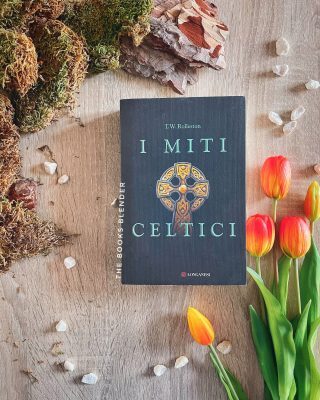
Recensione completa -> https://thebooksblender.altervista.or...

March 22, 2016
I'm usually a fast reader, but this book was so boring it took me three months to finish. I literally did everything to avoid reading this. I can count all the things I would have rather done than read this dribble.
The title of this book is misleading because there are no fairy tales or mythology. Just skip the two chapters and start from Chapter 3. This book is a Dover reprint. Celtic Myths and Legends was first printed in 1817. I expected for this book to be condescending and full of narrow-minded remarks. In that sense this book did not disappoint.
This book should really be called: Why I think the Irish and Welsh are Inferior: A study by some racist jerk. Rolleston claims that the Celts contributed so much to society yet he belittles their culture and their stories. How's that for respect?
Other than the fact that Rolleston believes that Celtic is too broad of term because there were several Celtic tribes across Europe. Or the fact that he includes the Mabinogion (Welsh epic). I do not see a single positive thing about this book. If the reader can get through even one chapter without falling asleep than one might actually learn something. In addition, the illustrations included are gorgeous probably to keep the reader from destroying the book.
Other things I learned: CuChulain is a manchild, literally. In order for CuChulain to fight with men he had to smear blackberry juice on his chin to trick them into thinking he has a beard. Grown men would not fight a boy. He killed his liege's dog and didn't even apologise for it. Although this is meant to represent the sacrifice of killing and becoming your spirit animal. CuChulain kills his only son and doesn't care. He cheats on his wife, Emer who has done nothing, but put up with him. Lastly he denies the Morrighan. No one taught CuChulain that if he wants to be king one never deny sovereignty or a war/sex goddess. Honestly I have no pity for him . This is not a hero. This is an irresponsible person who reaped what he sowed.
What I have taken from this book is that the women of Ireland and Wales are tenacious, kind, patient, and full of more love than I will ever be able to understand. Most of these "events" could have been easily avoided if it wasn't for the arrogance of these "kings" and "heroes".
The title of this book is misleading because there are no fairy tales or mythology. Just skip the two chapters and start from Chapter 3. This book is a Dover reprint. Celtic Myths and Legends was first printed in 1817. I expected for this book to be condescending and full of narrow-minded remarks. In that sense this book did not disappoint.
This book should really be called: Why I think the Irish and Welsh are Inferior: A study by some racist jerk. Rolleston claims that the Celts contributed so much to society yet he belittles their culture and their stories. How's that for respect?
Other than the fact that Rolleston believes that Celtic is too broad of term because there were several Celtic tribes across Europe. Or the fact that he includes the Mabinogion (Welsh epic). I do not see a single positive thing about this book. If the reader can get through even one chapter without falling asleep than one might actually learn something. In addition, the illustrations included are gorgeous probably to keep the reader from destroying the book.
Other things I learned: CuChulain is a manchild, literally. In order for CuChulain to fight with men he had to smear blackberry juice on his chin to trick them into thinking he has a beard. Grown men would not fight a boy. He killed his liege's dog and didn't even apologise for it. Although this is meant to represent the sacrifice of killing and becoming your spirit animal. CuChulain kills his only son and doesn't care. He cheats on his wife, Emer who has done nothing, but put up with him. Lastly he denies the Morrighan. No one taught CuChulain that if he wants to be king one never deny sovereignty or a war/sex goddess. Honestly I have no pity for him . This is not a hero. This is an irresponsible person who reaped what he sowed.
What I have taken from this book is that the women of Ireland and Wales are tenacious, kind, patient, and full of more love than I will ever be able to understand. Most of these "events" could have been easily avoided if it wasn't for the arrogance of these "kings" and "heroes".

December 28, 2018
Celtic Myths and Legends is a great book. Written by T. W. Rolleston, it has the unusual property of beginning with what we actually know about the Celtic People from historical sources. The book gives a thorough grounding in the life and times of the Celts and even goes into etymology, particularly with place names. Starting out in this book, I only knew the bare minimum about the Celts. I knew approximately where they were located and had a rough idea of when they were at their zenith, but most of that comes from Civilization IV, the classic PC Strategy Game. I did not know about the Sacking of Rome that they did, and I was not aware of the art that they did and so on. However, something occurred to dissolve their unity and cohesion, and they separated into a number of small factions that were easily taken out. Their influence survives in the names of places and in certain words.
Once we get over all of the historical details the book gets into the Myths and Legends. It reminds me of the other book on Celtic Myths and Legends that I had read, and that is not a bad thing. There are a number of powerful warriors and legendary weapons in the Celtic Myths. The stories are also quite entertaining. It is unfortunate that they lose out in popularity from the Greeks and the Romans. The book contains pictures of legendary scenes from the myths and images of places that it talks about. It is quite interesting as I mentioned.
The only problem I had with this book isn’t even the fault of the book. It was printed in 1985 and belongs to my Public Library system, so it is rather worn. In some sections, it appears as though some of the pages are about to come out of the spine. Although it is hardcover, the page binding seems to be weakening. Also, since it is a Library book, it seems that someone had underlined some of the paragraphs and I hate when people do that. Other than that, I would say that the book is excellent.
Once we get over all of the historical details the book gets into the Myths and Legends. It reminds me of the other book on Celtic Myths and Legends that I had read, and that is not a bad thing. There are a number of powerful warriors and legendary weapons in the Celtic Myths. The stories are also quite entertaining. It is unfortunate that they lose out in popularity from the Greeks and the Romans. The book contains pictures of legendary scenes from the myths and images of places that it talks about. It is quite interesting as I mentioned.
The only problem I had with this book isn’t even the fault of the book. It was printed in 1985 and belongs to my Public Library system, so it is rather worn. In some sections, it appears as though some of the pages are about to come out of the spine. Although it is hardcover, the page binding seems to be weakening. Also, since it is a Library book, it seems that someone had underlined some of the paragraphs and I hate when people do that. Other than that, I would say that the book is excellent.

Read
March 21, 2019Part of the charm of this book is passion and critique of the collector of the stories. He had a high regard for the earlier, more mythological works of Celtic, and less for the latter, more romanticized tales, with quotes like:
"The nobler vein of literature seems to have become exhausted, and we now have beauty for the sake of beauty, romance of the sake of romance, horror or mystery for the sake of the excitement they arouse. The Ossianic tales, are, at their best, 'Lovely apparitions, sent to be a moment's ornament' They lack that something, found in the noblest art as in the noblest personalities, which has the power 'to warn, to comfort, and command.'"
Yet, of the Celtic, he said
"And how beautiful they are--how steeped in the magic light of romance! The colours live and glow, the forest murmurs in our ears, the breath of that springtime of our modern world is about us, as we follow the lonely rider down the grassy track into an unknown world of peril and delight." The author's passion is evident in his commentary woven into the stories.
I must note that the author is an academic at the turn of the previous century, and some terminology used reflects that. His idea of "The Celtic Race" is better thought of as "culture," and he holds strong opinions in other areas.
Still, this book introduced me to many Celtic (Irish and Celtic) legends and myths, some very brutal, and some quite beautiful. It is not a retelling, however, and many of the legends are summarized, so for the real stories or poems, I'll have to do some digging. I'm now reading some ancient Irish poetry, and have already come across the original poems cited in this book.
"The nobler vein of literature seems to have become exhausted, and we now have beauty for the sake of beauty, romance of the sake of romance, horror or mystery for the sake of the excitement they arouse. The Ossianic tales, are, at their best, 'Lovely apparitions, sent to be a moment's ornament' They lack that something, found in the noblest art as in the noblest personalities, which has the power 'to warn, to comfort, and command.'"
Yet, of the Celtic, he said
"And how beautiful they are--how steeped in the magic light of romance! The colours live and glow, the forest murmurs in our ears, the breath of that springtime of our modern world is about us, as we follow the lonely rider down the grassy track into an unknown world of peril and delight." The author's passion is evident in his commentary woven into the stories.
I must note that the author is an academic at the turn of the previous century, and some terminology used reflects that. His idea of "The Celtic Race" is better thought of as "culture," and he holds strong opinions in other areas.
Still, this book introduced me to many Celtic (Irish and Celtic) legends and myths, some very brutal, and some quite beautiful. It is not a retelling, however, and many of the legends are summarized, so for the real stories or poems, I'll have to do some digging. I'm now reading some ancient Irish poetry, and have already come across the original poems cited in this book.
July 21, 2020
Interesting canter through mainly Irish ancient tales with a few Welsh and a bit about King Arthur. These are not the stories in full but enough for you to imagine them and all the references you need to dive deeper. Absence of Scottish, Cornish and Breton literary references is disappointing.
My cheap paperback edition meant that the illustrations were of limited impact. Originally published in 1910 the writing style is a tad archaic but that is somehow fitting.
Overall it maybe falls between two stools. Too long and detailed in parts for an overview while not giving the full stories. Still an interesting and enjoyable read.
My cheap paperback edition meant that the illustrations were of limited impact. Originally published in 1910 the writing style is a tad archaic but that is somehow fitting.
Overall it maybe falls between two stools. Too long and detailed in parts for an overview while not giving the full stories. Still an interesting and enjoyable read.

June 8, 2016
Would have been better if the compiler's commentary and opinions about the "meaning" of the old stories had been placed in footnotes or left out altogether. I don't want to be reading a delightfully horrifying old story filled with curses and revenge and suddenly have the story interrupted to read, "And this is clearly symbolic of...." or "And this is an excellent example of the Ossian sensibility, untouched by the chivalric influences of continental Europe." Ruins the atmosphere, buddy.

April 6, 2024
If there is one thing that British people enjoy claiming, it is that they have Celtic blood in them. Few English people have any understanding of the history, culture, music or literature of Scotland, Wales or Ireland, but they still find the idea of having Celtic heritage romantic.
If T W Rolleston is correct, we do not even have to look to evidence of Irish, Scottish or Welsh ancestry. Those who can claim some Celtic descent are not just those of Anglo-Irish parentage like me; people who were arguably Celtic settled in most of England too.
Rolleston devotes around a hundred page to Celtic history, much to the dismay of readers who just wanted to hear the ancient stories. He also describes the background to the myths in a way that some readers find dry and dated.
Dry? Certainly Rolleston’s approach is scholarly, rather than aimed at ready appeal to readers of short attention span. However I find the book eminently readable for the main part.
Dated? Yes, very possibly. Rolleston’s views about Celtic ethnicity will doubtless be debated by modern scholars, and I do not know enough about the area to know how well the book holds up in modern times. He goes generalise too wildly about the Celtic personality.
Sometimes Rolleston makes remarkable assumptions. The Celts were once a very active warrior race. They travelled around Europe, and even went into Russia. Rome was sacked by Celts. Yet after a while they are only prominent in the British Isles, and often as a race of people subjugated by the English.
For Rolleston, the reason for this is that Celtic society did not make any distinction between religious bases of authority and political governance. Clearly Rolleston believes that government should be secular, so he attributes this as the cause of the decline in the Celts.
Now I believe in secular government too, and I would not wish to set my ignorance against Rolleston’s expertise, but I can only say that Rolleston makes the assertion without offering any supporting evidence to back the statement up.
It would be interesting to know if the modern scholar has moved far from Rolleston’s ideas, or whether there has been a move back towards them.
The problem with academic research on subjects like history and interpretation of ancient texts is that each scholar is less concerned with finding the absolute truth, and more concerned with finding a new angle which will sell a book.
No scholar wants to write a book that says ‘I have no new ideas, and believe my colleagues were correct’. No publisher wants to release a book of that kind. So the truth is endlessly distorted by the need for novelty and originality.
A more interesting question that I would have liked to hear about is why Celtic mythology is not as well-known as, say, Greek, Norse or Egyptian mythology, especially since I live in a country that contains many actual and many wannabe Celts. Some of the Celtic myths and legends might be better known in Ireland, Scotland and Wales, but why not England too?
Some of it may be political. England has colonised all its Celtic neighbours at some point in history, so there may have been some repression of the original Celtic culture. The Celtic myths and legends do not even, as Rolleston points out, have a creation myth for how the universe began.
It might be that the Celtic myths and legends are comparatively flat. There are no especially famous or great writers that are widely known. The gods are less powerful than in other myths and legends, making them less interesting.
Some of the stories here are less memorable too, though I certainly enjoyed reading them. Think of the Voyage of Maeldūn. Like Odysseus, he travels around many islands, but most of the stories on each island have no real point to them. Nothing really happens, and they stir none of the excitement or fascination we feel when we read of Odysseus meeting the Cyclops, Circe, the Lotus Eaters, Scylla and Charybdis, Calypso or Nausicaa.
Whatever the limitations of famous Celtic myths and legends, it is always interesting to read about the ideas that make up another culture, and to realise that my own culture is merely one of many, none any more right than another.
If T W Rolleston is correct, we do not even have to look to evidence of Irish, Scottish or Welsh ancestry. Those who can claim some Celtic descent are not just those of Anglo-Irish parentage like me; people who were arguably Celtic settled in most of England too.
Rolleston devotes around a hundred page to Celtic history, much to the dismay of readers who just wanted to hear the ancient stories. He also describes the background to the myths in a way that some readers find dry and dated.
Dry? Certainly Rolleston’s approach is scholarly, rather than aimed at ready appeal to readers of short attention span. However I find the book eminently readable for the main part.
Dated? Yes, very possibly. Rolleston’s views about Celtic ethnicity will doubtless be debated by modern scholars, and I do not know enough about the area to know how well the book holds up in modern times. He goes generalise too wildly about the Celtic personality.
Sometimes Rolleston makes remarkable assumptions. The Celts were once a very active warrior race. They travelled around Europe, and even went into Russia. Rome was sacked by Celts. Yet after a while they are only prominent in the British Isles, and often as a race of people subjugated by the English.
For Rolleston, the reason for this is that Celtic society did not make any distinction between religious bases of authority and political governance. Clearly Rolleston believes that government should be secular, so he attributes this as the cause of the decline in the Celts.
Now I believe in secular government too, and I would not wish to set my ignorance against Rolleston’s expertise, but I can only say that Rolleston makes the assertion without offering any supporting evidence to back the statement up.
It would be interesting to know if the modern scholar has moved far from Rolleston’s ideas, or whether there has been a move back towards them.
The problem with academic research on subjects like history and interpretation of ancient texts is that each scholar is less concerned with finding the absolute truth, and more concerned with finding a new angle which will sell a book.
No scholar wants to write a book that says ‘I have no new ideas, and believe my colleagues were correct’. No publisher wants to release a book of that kind. So the truth is endlessly distorted by the need for novelty and originality.
A more interesting question that I would have liked to hear about is why Celtic mythology is not as well-known as, say, Greek, Norse or Egyptian mythology, especially since I live in a country that contains many actual and many wannabe Celts. Some of the Celtic myths and legends might be better known in Ireland, Scotland and Wales, but why not England too?
Some of it may be political. England has colonised all its Celtic neighbours at some point in history, so there may have been some repression of the original Celtic culture. The Celtic myths and legends do not even, as Rolleston points out, have a creation myth for how the universe began.
It might be that the Celtic myths and legends are comparatively flat. There are no especially famous or great writers that are widely known. The gods are less powerful than in other myths and legends, making them less interesting.
Some of the stories here are less memorable too, though I certainly enjoyed reading them. Think of the Voyage of Maeldūn. Like Odysseus, he travels around many islands, but most of the stories on each island have no real point to them. Nothing really happens, and they stir none of the excitement or fascination we feel when we read of Odysseus meeting the Cyclops, Circe, the Lotus Eaters, Scylla and Charybdis, Calypso or Nausicaa.
Whatever the limitations of famous Celtic myths and legends, it is always interesting to read about the ideas that make up another culture, and to realise that my own culture is merely one of many, none any more right than another.
August 13, 2025
It’s ok. It’s most useful in giving an overview of the huge volume of celtic mythology and identifying various themes and associations. The mythology discussed is mostly irish, which is an almost endless source of rich and varied tales, the welsh tales are definitely lesser versions of the same, with the exception of the arthur stories which as we know them are as much french as welsh. The only problem is that despite devoting 3/4 of his book to these stories, Rolleston just kind of summarizes them in a rather dry, almost academic manner, which kind of loses the point of reading them in the first place. It’s maybe best read as a kind of introduction or guide to the material since he is able to give some context and analysis to the stories. But basically I got this book from someone for free, and otherwise I’m not sure I would have gone out of my way to read it all the way through.
I’ll now quickly go through the chapters:
1.History- I skimmed a lot of this because it’s obviously super outdated but the summaries given of the ancient accounts is interesting.
2.Religion- skimmed a lot of this too, but it covers a lot of the archaeological sites of Celtic burials and monuments. the speculation about religion is more spurious and skipable.
3.Irish Invasion Myths- This and the following chapter are I think the most interesting chapters in the book. They introduce the whole basis of the Irish mythology, the Danann dieties that enter into all the subsequent tales existing in an invisible fairyland, a kind of separate reality of Ireland that only they inhabit (in later times they get downgraded to leprechauns or something more like hobgoblins).
4.Milesian Kings- There are now three tale cycles starting with the milesians that have their own little world of characters and stories that interact with the Danann.
5.Ultonian- This is the next cycle and maybe the most heroic in character, very much like ancient greek or vedic mythology.
6.Ossianic (or Fiannic)- the next cycle is clearly more recent probably being developed at the same time as the Welsh Arthurian tales and sometimes they’re similar to those tales in character but ultimately are a lot less interesting than the earlier Irish material.
7.Voyage of Maeldūn- summarizes a very curious allegorical quest sort of in the style of Virgil or Dante.
8.Myths of Cymry-here’s where we get to the Welsh tales, and basically you should just read the Mabinogion instead.
If you want to read this (it’s on Project Gutenberg) I basically think chapters 3 - 5 are definitely worth reading but the rest you can probably just look up on wikipedia and proceed from there.
I’ll now quickly go through the chapters:
1.History- I skimmed a lot of this because it’s obviously super outdated but the summaries given of the ancient accounts is interesting.
2.Religion- skimmed a lot of this too, but it covers a lot of the archaeological sites of Celtic burials and monuments. the speculation about religion is more spurious and skipable.
3.Irish Invasion Myths- This and the following chapter are I think the most interesting chapters in the book. They introduce the whole basis of the Irish mythology, the Danann dieties that enter into all the subsequent tales existing in an invisible fairyland, a kind of separate reality of Ireland that only they inhabit (in later times they get downgraded to leprechauns or something more like hobgoblins).
4.Milesian Kings- There are now three tale cycles starting with the milesians that have their own little world of characters and stories that interact with the Danann.
5.Ultonian- This is the next cycle and maybe the most heroic in character, very much like ancient greek or vedic mythology.
6.Ossianic (or Fiannic)- the next cycle is clearly more recent probably being developed at the same time as the Welsh Arthurian tales and sometimes they’re similar to those tales in character but ultimately are a lot less interesting than the earlier Irish material.
7.Voyage of Maeldūn- summarizes a very curious allegorical quest sort of in the style of Virgil or Dante.
8.Myths of Cymry-here’s where we get to the Welsh tales, and basically you should just read the Mabinogion instead.
If you want to read this (it’s on Project Gutenberg) I basically think chapters 3 - 5 are definitely worth reading but the rest you can probably just look up on wikipedia and proceed from there.

June 11, 2017
Quando Picasso andò a vedere gli affreschi di Lascaux e Altamira, disse due cose che riutilizzo per la mia recensione:
1. "Non abbiamo inventato niente di nuovo."
2. "Da Altamira in poi, non è che decadenza."
Per quel poco che ho letto delle gesta celtiche/gaeliche dei vari cavalieri non posso che ripetere le parole di Picasso adattandole alla letteratura.
Non tenterò di usare parole mie per far capire quello che intendo. Basta che riporti qualche stralcio di questo breve racconto:
"(...) Quando i 4 si sedettero a desinare, il montone si alzò e salì sul tavolo. Uno dopo l'altro i guerrieri Fianna cercarono di tirarlo giù, ma quello se li scrollò di dosso buttandoli a terra. Goll, infine riuscì a tirarlo giù dal tavolo, ma poi il montone buttò a terra anche lui e salì sopra di loro. Il vecchio allora, pregò il gatto di condurre il montone al suo posto e di legarlo, e il gatto riuscì a farlo con facilità. I 4 campioni, sopraffatti dalla vergogna, avrebbero voluto andarsene da quella casa, ma il vecchio spiegò loro che non avevano subito nessun disonore: il montone contro cui avevano lottato era il mondo e il gatto era la potenza che avrebbe distrutto il mondo stesso, cioè la morte. Quella notte i 4 eroi si coricarono in una grande camera e nella stessa stanza andò a dormire anche la fanciulla. La sua bellezza richiarava le pareti come una candela e uno dopo l'altro i Fianna si avvicinarono al suo giaciglio, ma ella li respinse tutti. "Un tempo ti appartenni", disse a ciascuno, "ma non ti apparterrò mai più perché io sono la Giovinezza." (...)"
1. "Non abbiamo inventato niente di nuovo."
2. "Da Altamira in poi, non è che decadenza."
Per quel poco che ho letto delle gesta celtiche/gaeliche dei vari cavalieri non posso che ripetere le parole di Picasso adattandole alla letteratura.
Non tenterò di usare parole mie per far capire quello che intendo. Basta che riporti qualche stralcio di questo breve racconto:
"(...) Quando i 4 si sedettero a desinare, il montone si alzò e salì sul tavolo. Uno dopo l'altro i guerrieri Fianna cercarono di tirarlo giù, ma quello se li scrollò di dosso buttandoli a terra. Goll, infine riuscì a tirarlo giù dal tavolo, ma poi il montone buttò a terra anche lui e salì sopra di loro. Il vecchio allora, pregò il gatto di condurre il montone al suo posto e di legarlo, e il gatto riuscì a farlo con facilità. I 4 campioni, sopraffatti dalla vergogna, avrebbero voluto andarsene da quella casa, ma il vecchio spiegò loro che non avevano subito nessun disonore: il montone contro cui avevano lottato era il mondo e il gatto era la potenza che avrebbe distrutto il mondo stesso, cioè la morte. Quella notte i 4 eroi si coricarono in una grande camera e nella stessa stanza andò a dormire anche la fanciulla. La sua bellezza richiarava le pareti come una candela e uno dopo l'altro i Fianna si avvicinarono al suo giaciglio, ma ella li respinse tutti. "Un tempo ti appartenni", disse a ciascuno, "ma non ti apparterrò mai più perché io sono la Giovinezza." (...)"

March 24, 2023
This was published in 1911 so keep that in mind because the writing style is old-fashioned and might put some readers off. The first two chapters are a historical overview of parallels between the Celts and other cultures such as that of the Ancient Egyptians, but I think this section is outdated as the modern books I've read on the Celts make no mention of this.
The real meat and value of the book is the section on Irish mythology as it's a systematic discussion from the earliest myths about how Ireland was founded through to the most famous mythological cycles. It's a lot to digest but Rolleston jumps between a retelling of the myths and incisive commentary about them. It's a good foundation for a reader with only a cursory knowledge of Celtic mythology who wants to do further reading.
The sections on Welsh mythology and Arthurian legends seem rushed in comparison but they still offered a solid introduction and I found the discussion about the authors who retold and thus influenced the Arthurian legends over the centuries fascinating.
I'd recommend this book to readers who can wade through a somewhat antiquated style without being put off and those looking for a solid introduction to Celtic mythology.
The real meat and value of the book is the section on Irish mythology as it's a systematic discussion from the earliest myths about how Ireland was founded through to the most famous mythological cycles. It's a lot to digest but Rolleston jumps between a retelling of the myths and incisive commentary about them. It's a good foundation for a reader with only a cursory knowledge of Celtic mythology who wants to do further reading.
The sections on Welsh mythology and Arthurian legends seem rushed in comparison but they still offered a solid introduction and I found the discussion about the authors who retold and thus influenced the Arthurian legends over the centuries fascinating.
I'd recommend this book to readers who can wade through a somewhat antiquated style without being put off and those looking for a solid introduction to Celtic mythology.

May 24, 2019
This book is a retelling of some of the myths and legends of the Celts. The book was written about a hundred years ago and as I read it I wondered how much of the first chapter which is a general scholarly overview of the Celtic literary and mythological tradition would still be accepted. The rest of the book is composed of a retelling of these myths. The emphasis is on older and Irish traditions, rather than Gaelic or Welsh. This is really driven by what remains. Rolleston is primarily interested in seeing the original prechristian mythology, which no doubt these tales are based in but they are so corrupted that this will always be speculative. The retellings are pretty good and the whole thing is lavishly illustrated. I found it quite compelling in many ways, but the book occupies a slightly uncomfortable place between scholarship and disseminating the tales. Still, quite enjoyable.

March 15, 2025
This work's value lies in its comprehensive attempt to survey the vast wealth of Celtic (primarily Irish) mythology (not folklore), with sufficient historical context, as well as presenting a glimpse into the era in which Rolleston wrote this (1911), and all that period's exploration and pride in the Irish literary heritage. Rolleston himself was a co-founder of the Irish Literary Society, along with W.B. Yeats, in 1892, and quite likely had his finger on the then-current pulse of academic study of the subject.
Admittedly, a century has passed in both literary and academic writing, and this sometimes comes across as dry textbook with a not-terribly objective author. Rolleston also seems to drift quickly from summary to quotation and back, without clear signposts. And, of course, he also lacks something of the poetry or narrative flair so necessary to make the subject matter sing.
Admittedly, a century has passed in both literary and academic writing, and this sometimes comes across as dry textbook with a not-terribly objective author. Rolleston also seems to drift quickly from summary to quotation and back, without clear signposts. And, of course, he also lacks something of the poetry or narrative flair so necessary to make the subject matter sing.
Read
August 19, 2026Weirdly structured book, but the source material is fascinating. One of the most interesting takeaways for me was that there are lacunae in the folklore and creation myths of the Irish Celts in particular because Druidism forbid written documentation of its tenets & mythologies as a way to safeguard prestige and mystery among the initiated. A reminder once again that our understanding of history is shaped by the pen 🖋️
The brief end section on the authentic Welsh Arthurian tales was also fascinating, as it turns out the Arthurian legends are largely an externally developed mythos; there are limited Welsh-origin stories about someone named Arthur, and he barely resembles Mallory or Monmouth’s man. Loved the brief mention of the evolution of the names and language as well, long live the OG Gwenhyfar.
The brief end section on the authentic Welsh Arthurian tales was also fascinating, as it turns out the Arthurian legends are largely an externally developed mythos; there are limited Welsh-origin stories about someone named Arthur, and he barely resembles Mallory or Monmouth’s man. Loved the brief mention of the evolution of the names and language as well, long live the OG Gwenhyfar.
August 15, 2026
I've had this for yonks and dip into it occasionally. It was written in 1911 and the writing style is clunky. There is a general failure to acknowledge sources, so it's not much use to a scholar. He is excessively fond of the work of Marie-Henri d'Arbois de Jubainville, which I have never accessed, and would probably find even more excruciating in terms of not naming its sources. Nonetheless the book is a handy reference when I want to remember the rough nature of the Irish cycles, and who did what to who, and in what order. I've been re=reading it recently but I actually read it first in the 90s.

September 21, 2019
Lo acquistai oramai 30 anni fa, a un remainders, quello tra Cordusio e Cairoli a Milano.
Sono stato sempre interessato alle mitologie, specialmente quelle celtiche, norrene e mesoamericane.
Questo volume, economico, in inglese, mi fu d'aiuto in qualche occasione ed è sempre pronto per essere consultato nella mia biblioteca casalinga.
Negli anni mi sono reso conto che non è particolarmente preciso e che risente di informazioni imprecise e interpretazioni distorte di epoche precedenti, ma resta comunque un buon strumento d'informazione.
Sono stato sempre interessato alle mitologie, specialmente quelle celtiche, norrene e mesoamericane.
Questo volume, economico, in inglese, mi fu d'aiuto in qualche occasione ed è sempre pronto per essere consultato nella mia biblioteca casalinga.
Negli anni mi sono reso conto che non è particolarmente preciso e che risente di informazioni imprecise e interpretazioni distorte di epoche precedenti, ma resta comunque un buon strumento d'informazione.
March 24, 2022
This was a good overview of Celtic myth and culture, however...
Having been written in 1911 there is a very outdated preoccupation with "racial characteristics" which permeates the introduction to the "Celtic race". It almost felt as if the first few chapters told me more about European attitudes of the time, and how they contributed to the absolute shitshow that was to come soon after the publication of this book, than they did about the actual Celts.
Having been written in 1911 there is a very outdated preoccupation with "racial characteristics" which permeates the introduction to the "Celtic race". It almost felt as if the first few chapters told me more about European attitudes of the time, and how they contributed to the absolute shitshow that was to come soon after the publication of this book, than they did about the actual Celts.

August 27, 2017
This book, like most collections had some dry spots but others part were sheer magic. A lot of tales are covered in this book so it is a great overview and the stories are broken up and are not overly long. I really liked the version of Etain and Midir. The illustrations are also charming.

July 29, 2018
Interesante historia sobre los celtas con un contexto histórico y geográfico que ayuda a comprender de mejor manera su cultura. Los mitos se centran sobretodo en los Tuatha dé Danann, los hijos de la diosa Dana, y sus gestas llevadas a cabo con la ayuda de objetos mágicos.
November 20, 2017
I didn't finish, but I skimmed around. A decent overview of the different myths, but I found myself just wanting to go read more complete versions.

August 13, 2019
Celtic myths, good read. Sometimes long
Displaying 1 - 30 of 88 reviews