

What do you think?

The Buddha Eye: An Anthology of the Kyoto School and Its Contemporaries
Contains essays by many of the most important twentieth century Japanese philosophers, offering challenging and illumination insights into the nature of Reality as understood by the school of Zen.
289 pages, Paperback
First published January 1, 1982
Ratings & Reviews
Friends & Following
Create a free account to discover what your friends think of this book!
Community Reviews
Displaying 1 - 5 of 5 reviews

Did Not Finish
June 7, 2019"Willows are green, flowers are red....the eyes are horizontal, the nose is vertical ...only man has lost suchness. He is in ignorance."
Abe Masao in "Emptiness is suchness"
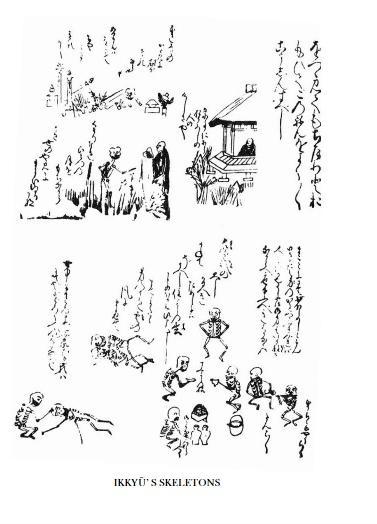
"While I marveled at the sight, one of the skeletons approached me and said:
Memories there are none:
when they depart,
all is a dream;
My life-how sad!
If Buddhism
is divided into Gods
and Buddhas;
how can one enter
The Way of Truth?
For as long as you breathe
a mere breath of air,
a dead body
at the side of the road
seems something apart from you."
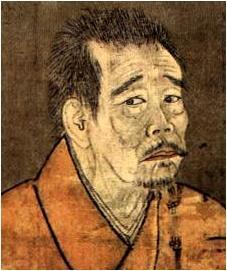
Ikkyu (1394-1481) "the most remarkable monk in the history of Japanese Buddhism..." according to R. H. Blyth.
Abe Masao in "Emptiness is suchness"
"While I marveled at the sight, one of the skeletons approached me and said:
Memories there are none:
when they depart,
all is a dream;
My life-how sad!
If Buddhism
is divided into Gods
and Buddhas;
how can one enter
The Way of Truth?
For as long as you breathe
a mere breath of air,
a dead body
at the side of the road
seems something apart from you."
Ikkyu (1394-1481) "the most remarkable monk in the history of Japanese Buddhism..." according to R. H. Blyth.

October 25, 2015
A wide-ranging collection of essays from philosophers of the Kyoto school, a Japanese school of thought in the early 20th century that sought to fuse Zen Buddhism with the ontological existentialism of Husserl,Heidegger et al. The initial essays thus starts off with fairly simple expositions of traditional Zen Buddhist thought vis a vis the established Western worldview, which thus serves as a primer to the radically different interpretation of existence that the Kyoto School (and the names associated with it) proceeds with as a pre-requisite. However, towards the end, things rapidly start sinking into the depths of Buddhist terminology (that luckily can be handled with a helpful glossary) and the last few essays seem to require for their grasping the state of "no-mind" that is well-known in Buddhist philosophy.
Having said that, this is obviously not simply a primer on Zen, but rather, a modern treatment of Zen Buddhism through the lens of Western philosophy. I would expect that a person with sufficicent knowledge of the Western tradition, along with an educated interest in the Buddhist one, would be best-placed to gain the most traction from this book, as the essays zigzag between the two schools of thought when a particular author attempts to pin down the meaning of such terms as a self, consciousness, the other, art, and God ; in the process, we see how close the two traditions are in certain aspects, and how wildly different they are in others.
The names presented in this collection are a steady mix of stalwarts (Nishida Kitaro himself, DT Suzuki) and others not as well-known to the Western gaze. I found these latter group far more varied and more piercing in their insights, freed I suppose from the need to assimilate into the dominant discourse of the Western public.
Overall, an intriguing and valuable collection, but I would think a modicum of preparation is required before heading in.
Having said that, this is obviously not simply a primer on Zen, but rather, a modern treatment of Zen Buddhism through the lens of Western philosophy. I would expect that a person with sufficicent knowledge of the Western tradition, along with an educated interest in the Buddhist one, would be best-placed to gain the most traction from this book, as the essays zigzag between the two schools of thought when a particular author attempts to pin down the meaning of such terms as a self, consciousness, the other, art, and God ; in the process, we see how close the two traditions are in certain aspects, and how wildly different they are in others.
The names presented in this collection are a steady mix of stalwarts (Nishida Kitaro himself, DT Suzuki) and others not as well-known to the Western gaze. I found these latter group far more varied and more piercing in their insights, freed I suppose from the need to assimilate into the dominant discourse of the Western public.
Overall, an intriguing and valuable collection, but I would think a modicum of preparation is required before heading in.

January 28, 2023
The Buddha's Eye
Opens to You
Each Page You Turn
He Watches
With Compassion
The One Seeking
The Source of All
Through Words
Opens to You
Each Page You Turn
He Watches
With Compassion
The One Seeking
The Source of All
Through Words
August 7, 2023
Special place in my heart as one of the earlier Buddhist texts I’ve read. Also when any given essay hits it makes up for some of the slower ones.
January 16, 2026
very zen focussed view of the Kyoto school but superb introductory collection
Displaying 1 - 5 of 5 reviews