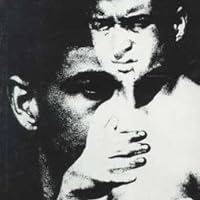
A major event in the history of twentieth-century thought, Notebooks for a Ethics is Jean-Paul Sartre's attempt to develop an ethics consistent with the profound individualism of his existential philosophy.
In the famous conclusion to Being and Nothingness, Sartre announced that he would devote his next philosophical work to moral problems. Although he worked on this project in the late 1940s, Sartre never completed it to his satisfaction, and it remained unpublished until after his death in 1980. Presented here for the first time in English, the Notebooks reveal Sartre at his most productive, crafting a masterpiece of philosophical reflection that can easily stand alongside his other great works.
Sartre grapples anew here with such central issues as "authenticity" and the relation of alienation and freedom to moral values. Exploring fundamental modes of relating to the Other—among them violence, entreaty, demand, appeal, refusal, and revolt—he articulates the necessary transition from individualism to historical consciousness. This work thus forms an important bridge between the early existentialist Sartre and the later Marxist social thinker of the Critique of Dialectical Reason. The Notebooks themselves are complemented here by two additional essays, one on "the good and subjectivity," the other on the oppression of blacks in the United States.
With publication of David Pellauer's lucid translation, English-speaking readers will be able to appreciate this important contribution to moral philosophy and the history of ethics.
Jean-Paul Sartre (1906-1980) was offered, but declined, the Nobel Prize for literature in 1964. His many works of fiction, drama, and philosophy include the monumental study of Flaubert, The Family Idiot, and The Freud Scenario, both published in translation by the University of Chicago Press.
Jean-Paul Charles Aymard Sartre was a French philosopher, playwright, novelist, screenwriter, political activist, biographer, and literary critic, considered a leading figure in 20th-century French philosophy and Marxism. Sartre was one of the key figures in the philosophy of existentialism (and phenomenology). His work has influenced sociology, critical theory, post-colonial theory, and literary studies. He was awarded the 1964 Nobel Prize in Literature despite attempting to refuse it, saying that he always declined official honors and that "a writer should not allow himself to be turned into an institution." Sartre held an open relationship with prominent feminist and fellow existentialist philosopher Simone de Beauvoir. Together, Sartre and de Beauvoir challenged the cultural and social assumptions and expectations of their upbringings, which they considered bourgeois, in both lifestyles and thought. The conflict between oppressive, spiritually destructive conformity (mauvaise foi, literally, 'bad faith') and an "authentic" way of "being" became the dominant theme of Sartre's early work, a theme embodied in his principal philosophical work Being and Nothingness (L'Être et le Néant, 1943). Sartre's introduction to his philosophy is his work Existentialism Is a Humanism (L'existentialisme est un humanisme, 1946), originally presented as a lecture.
Even if what you are performing is art, if you have an existential mentality, you will always find a flaw in what you are doing. The work you do will never convince you. Sometimes this is based on the delusion of a perfectionist, but it's all about your existentialism. Tintoretto, Giacometti, Lapoujade and Calder were also names who struggled to complete this deficiency until the end of their lives. In this work, Sartre tremendously conveys his existentialist art and activism to the reader through these existentialist names.
The fact that these names, who have a socialistic and libertarian streak, reflect these philosophies in their works is subjected to a deep examination by Sartre. On the one hand, devoted himself to the Catholic Church and the pope, and adhering missing again(his own words) who ended his life Tintoretto, on the other hand, working to complete the statue until the moment of death Why do you always felt there is something missing endless thought and effort, got stuck at the point where it is soyutlasmis art and figurative art, but this Lapoujade who saved himself from the narrow mold, and if an action is going to be if this is the only work to date and the one that will take the audience by providing a place for non-stop Sartre's existential universe brings us Calder. When he tells them, on the one hand, he tells us about art, works of art and philosophy in a different way, and perhaps he does it through the most beautiful, most intelligent receiver of humanity, that is, through art.
WHAT ARE WE, WHO ARE WE and WHY DO WE REALLY EXIST?
It was the discovery of these painful questions (although not the exact answer and Decency) that caused Sartre to bring these artists and his philosophy together that he found himself in the present. The fact that the works belong not to the future, but to the present, to that moment, causes these artists and existentialism to constantly live in the present, and not in the future. and this is a happening that is constantly turning over in cyclic time. The fact that constant repetition is in such a meaningful, passionate and boring state of being is really one of the only phenomena that helps us to calm down our existence that comes before our essence...
According to this view, the main issue in aesthetics and art is not to put forward the best. The important thing is to liberate ourselves from the universe of values* taught to us outside and reveal the content, meaning, map of our own universe. In order for this to be achieved, Sartre puts action and freedom in front of us as a condition. Indeed, it is a very justified prerequisite, because we must be the reason for our own choices. As a human being, this is actually our main responsibility. to be the reason for our own choices...
So take action, take action... While taking responsibility for your actions, stop and criticize yourself every time. And now it's time to take action again...
I am currently reading this, as well as his first volume to The Critique of Dialectical Reason.
I can’t believe how little reviews and recognition this book has, since it is a major work after all.
Out of all of his major works and texts, including posthumous releases, this book seems to be one of if not the least well known? To be fair, it is also hard to obtain a physical copy, and finding a good PDF online can be hard too.
This book came out in 1983, 3 years after Sartre passed away, however, around 40 years earlier, Sartre mentions at the end of Being and Nothingness that there would be a work dedicated to ethics, so the Notebooks fills that role. Even when Existentialism and Human Emotions came out in 1957, it was also mentioned at the end that there would be a work devoted on the ethics. Truth and Existence came out in 1989, but was written in 1948, and it has a few allusions to the Notebooks as well.
Some quotes:
“If you seek authenticity for authenticity’s sake, you are no longer authentic.”
“Give someone who is thirsty something to drink not in order to give him something or in order to be good but in order to overcome his thirst.”
“Don’t wait for an ethics filled with hope. Men are ignoble. We have to love them for what they might be, not for what they are.”
“One cannot be converted alone. In other words, ethics is not possible unless everyone is ethical.”
This is one of those cruel, painful books to read. It consists of the notes Sartre assembled in his attempt to fulfill the promise he made at the end of "Being and Nothingness" to write an ethics based upon the ontology of "Being and Nothingness". Sartre abandoned the project because he was not satisfied with the results he was getting from writing the notebooks.
I have tried several times to get all of the way through this book. I have given up for now. It is incomprehensible to me.