Akira Kurosawa is known for (among others) a string of great historic films from the 1950s and 60s like Throne of Blood and Dan (based on McBeth and King Lear), The Seven Samurai, Yojimbo, Shintaro (I’ve purposely left in my obvious mistake, I meant to write, Sanjuro, but wrote the name of the famous TV show character I watched as a boy, from The Samurai. Oddly, Shintaro and Sanjuro are much alike, wandering nomadic samurai swordsmen. They have different purposes, but not dissimilar, and the action scenes where one samurai can wipe out a bunch of amateurs with a few strokes is identical in both).
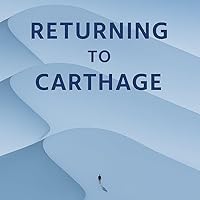
I’ve been watching his films on our local TV station lately and when I saw this book in my favourite little 2nd hand bookshop, I got it immediately. I had in fact been looking for a copy for years. Having read Luis Bunuel’s memoir a few years ago, I thought to myself that film makers might be interesting tellers of tales about themselves. This one is much different. Unlike Bunuel, Kurosawa is less self-consciously clear that memory both informs and deceives us about ourselves. Despite the fact that his great turning point film, Rashomon, is exactly about our self-perceptions, self-deceptions, the fact that we struggle with truth about ourselves. Truth is slippery when people don’t like to know what it is, or see themselves in a bad light.
He tells in freakishly vivid details stories from his early life that I often wondered how he could recall it. But funnily, he acknowledges that before he wrote it, he met and consulted with several people he knew well to go over some of the material. Two of the people missing from that list were two older brothers who both died in their twenties leaving an indelible mark upon his life. The brother closest to him, Heigo, shaped his life in a number of ways. Initially, by creating distance (he was several years older) he showed the younger brother indifference especially at school. Heigo was strong compared to Kurosawa’s own weak demeanour. As Akira grew up the older brother had more influence, protecting him at school, guiding him to be better and in a formative moment, taking him aged 13 to the centre of Tokyo after the great earthquake of 1923 to see first-hand and not shy away from the utter devastation and cost of life. He witnessed a hellscape of burnt buildings and the repulsive loss of human life, still piled up, bloated, burned, drowned, asphyxiated everywhere. Later, Heigo got a job as a narrator in a silent movie picture house and through that introduced Akira to a new cultural world. I can’t help thinking how fascinating this brother would be if he hadn’t died in his mid 20s.
I also can’t help thinking how history shapes all of us. Akira was born at the end of the Meiji period, the decades long rapid industrialisation and social eruption where Emperor Meiji took central control of the country, dismantled the old shogun, samurai class and propelled Japan into the modern world in all spheres – social classes were dismantled, commerce and industry changed, new thinking and cultural exposure occurred and education was open to all. Kurosawa’s own father came from that samurai class, reduced to a role only in military life in service to the nation in this case. He comes across as free thinking, widely educated and influenced by many forces culturally, intellectually and socially.
I had expected much more discussion about his films, but that’s OK because it’s what ends up on the cutting room floor that matters, as they say, and in this case it’s true. He spends much time on this early life but interestingly also on his landing a job at a film production company in his 20s during the 1930s. Long days spent working as an assistant director, learning his craft, gaining a reputation, the tricks of the trade, the hard work, the teamwork and camaraderie, and long nights of drinking (ah, to be young again…). It’s quite fascinating how raw film-making was in the 30s and especially how during war time, resource restrictions right down to food rationing meant film makers became very astute judges of how to make something look as good as can be with very little, survive on little food for long, long days, and somehow get around wartime censorship which looked maniacally at anything that felt “British-American” as well as metaphors for sexual acts ( a film set in a women’s only factory making munitions was almost scrapped because of an extensive metaphor about the open gates of the factory, go figure). Those looking for perversions in films come across as perverted themselves.
As I get closer to the end, I’m wondering if he’ll get to discuss his great works in detail - the Seven Samurai and Throne of Blood. I realised, we’re only going to get to around 1951. But he leaves the book right there, the final chapter of the life that he tells, ends with Rashomon. The tale of an 11thC crime of rape and murder in the woods and the tribunal that interviews all the parties involved. The play of light and shade in a forest, the interminable rain while waiting at the city gate, testimonies of each party and the way points of view change with each speaker, so we always know that we simply never can get to the truth because human ego, the need to make up the version of the self that we want, all influence the telling. Where else could a life story end but that, not a post-modern bit of trickery, but a point of reflection on the nature of who we are. Beautifully framed from a masterful director on the human condition. Rashomon was a film that brought the rest of the world to the attention of Japanese cinema. An Italian critic had seen it somewhere and nominated it at the Venice Film Festival in 1951 where it won the Golden Lion Award and later, after screening in the US, won the Academy Award for best foreign film. The rest is unnecessary to write about perhaps. Anyway, the rest is on film.
Postscript. I’d been watching the films and reading this book over the same weeks I had been clearing out my mother’s house. My parents had a propensity to keep old documents. I found gas bills, garden supply invoices, handwritten accountants tax filings, payslips going back to the 1970s. Perhaps, to my immigrant parents, barely literate in English, every piece of paper with writing on it held value, or at least the same value since the value that discriminates one piece of paper from another is difficult to discern and hence categorise; so it was all kept. And there, in that box, I found my school permission slip to see Throne of Blood in year 10 at the cinema, filled in. Meaning, I never handed it in and didn’t go. I’ll watch it tonight.