"The black community is in trouble." -- Anthony B. Bradley Continuing the renowned "Cosby Conversation" first started in 2007 by Bill Cosby and Dr. Alvin Poussaint, Anthony Bradley has assembled a team of pastors, scholars, and leaders to address specific issues within the black community. Covering topics such as the black family, hip-hop, masculinity, and the prosperity gospel, this book will open your eyes to the serious challenges facing the black church today. It will leave you with hope, however, as each contributor brings the conversation back to historic role of the black church as the source of true, enduring change.
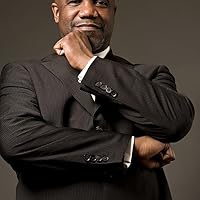
Dr. Anthony Bradley (PhD, Westminster Theological Seminary) is a professor of religious studies, chair of the program in Religious and Theological Studies, and director of the Center for the Study of Human Flourishing at The King’s College.
Dr. Bradley lectures at colleges, universities, business organizations, conferences, and churches throughout the U.S. and abroad. His writings on religious and cultural issues have been published in a variety of journals, including: the Philadelphia Inquirer, the Washington Examiner, the Atlanta Journal-Constitution, the Detroit News, Christianity Today, and World Magazine.
The only thing I lament about this book is how long it took me to get if off the shelf and get it read. This book and the topics covered by African-American Christian leaders is a true gift to the church. In these uncertain times of how to move forward in engaging, reconciling, and learning across racial lines this book is the perfect primer.
Ten chapters, essays submitted by various leaders, make up the content of the book. Primarily this is an entrance of the black church into the conversation started by Bill Cosby & Alvin Poussaint in their book "Come on People." The benefit for me, as a white evangelical, is that the writers don't assume the reader is well acquainted with background information and share enough to get you to the point you understand why the issue should be addressed.
Looking back over the book now I appreciate the commitment of the writers to keep the gospel central to the hope that is needed not only in the black community but in all of our homes and communities across the U.S. However, the writers help someone coming from a place of naivety see the complexity of the issues inside the African-American community. This helps me understand that while the gospel is necessary there are also systematic and institutional blocks to the true flourishing of blacks in America.
In closing I would say this book is worth your investment of time and money to read. The cited works are beneficial as introductions to more works to read to better understand issues you may be largely ignorant of. Lastly, the thing I love most about this book is that it reminds me that I, a white middle-class reformed believer, don't know or have a handle on everything and its worth sitting and learning from our brothers and sisters in the faith in the African-American community.
Preface: this book is largely a constructive response to Bill Cosby and Alvin Poussaint's Come on People: On the Path from Victims to Victors (2007).
Chapter 1: More than Victims: the benefits of a theological vision (Vincent Bacote) First part briefly summarizes the chapters of Cosby and Poussaint's Come On People. "Here is what many African-Americans live with every days: black males as an endangered species, unstable communities, children subject to poor parenting, deficient education, seductive and misleading media, poor health, excessive violence, and poverty. The relentless drumbeat of these elements would make anyone perceive himself or herself as a victim..." (27-28).
What does it mean to be black? Eddie Glaude favors the 'archaelogical approach.' There is a real way and false way of being black. Blacks need to replace the false narrative (given by the oppressor) with the true one (uncovered and passed on by those who have learned about our true African selves). The idea is that an 'authentic story will yield authentic practices and facilitate liberation' (31). Identity is thus a cultural retrieval project.
Bacote advocates a biblical-theological approach to identity. God reveals our identity in story of Scripture. We must get at a theological anthropology. The issue is Creation, Fall, Redemption, and Renewal.
Creation: We are image-bearers. Genesis 1-2 makes no reference to skin color. "...the significance of being human has nothing to do with the percentage of melanin in one's skin" (33). Creation mandate entails (1) responsibility to seek the flourishing of other humans, compels us to seek the best for everyone (2) responsible participation in God's world is central to our purpose as humans. Our responsibility comes not from parents, community or loyalty to group, but from our creational purpose given by God.
Fall: fractures us internally, vertically, horizontally, and cosmically. Responsibility becomes twisted. Power is used oppressively and stewardship is disregarded. We make our home in a hall of mirrors and think that distortion and fallenness is 'normal.' White supremacy is just one example of cycles of oppression that go all the way back to Cain's murder of Abel. "Post-fall reality is often a living hell."
Redemption: If the Fall were the final word, then victim is the proper label for every human (even the ones who don't know it as they bask in self-worship) (35). In terms of identity, the good news of the gospel is that our full humanity is given back to us in Christ. Being saved is reconciliation and justification with God, but also much more. "Redemption is the good news that we are God's children, members of His family who model the realities of God's kingdom wherever we find ourselves" (36). How does this relate to concern of Cosby? 1) we can never see ourselves as victims if we see our true humanity through gospel lens. 2) path to improvement is called sanctification
Renewal: Eschatology shapes how we live. Our hope in the future directs our gaze to a day when we are free from our personal, relational, and societal dysfunction. Good eschatology is far from 'pie in the sky'; rather it tells us what we will become and where we are headed.
A Plea for Catechesis: purpose of catechesis is to educate those who enter the church so that they understand what it means to be part of God's people. Catechesis does not just mean verbal transmission of information.
Chapter 2: The Black Family: The Hope of 'True Religion' (Bruce Fields) Fields wants to demonstrate that the wisdom of the ancient, corporate church is applicable today, even for the black family. Interestingly, Fields begins with Augustine--who had not so smooth household. He struggled with father, strained relation with mother, he had son born out of wedlock. The truth that Augustine held onto was that the Lord Himself was the only stable thing in life.
Fields not convinced that movements like the Great Society in the 60's, though well-intentioned, did not provide God's solutions to the problems facing black in America. Great Society was a movement away from dependence on God to dependence on human institutions and government. "Because of God and His ways, any solutions that only involve governmental programming and do not intentionally protect and preserve the black family are doomed to failure" (46).
Fields looks at Gen 1:26-27; Gen 12; Deut 5 (5th Commandment); Proverbs; Matt 19 to show that the biblical-redemptive story line demonstrates that God intends to guard the perpetuation of marriage. What happens in the family greatly influences other familial and societal developments.
Church must... (1) Witness to the gospel: Humanity's greatest need is to be reconciled to God. This insistence, admittedly, may lack sociocultural, economic, political, and historical sophistication, but it is the foundation for all hope (Colossians 1:27). True religion begins with a living, vital relationship with God through faith in the Lord Jesus Christ. (2) Centers for study, sharing, and prayer: formal services are crucial, but lay level stuff is important to. Centers simply means 'small groups.' Pastors cannot possibly cover all needs of congregation. Identify lay leaders and let them help. (3) Reconciliatory Liturgy: maybe sometimes some type of formal ceremony could be used to show forgiveness and reconciliation that has occurred. (4) Outreach to the surrounding community: you need lay listeners who are able and willing to listen and pray with people in the neighborhood who need someone to talk to.
Chapter 3: Sexuality in the Black Community (Howard Brown) Great chapter. The Place our sexuality began: unashamed nakedness in paradise. Sexuality reveals our humanity. The Place of sexual brokenness: statistics about broken black sexuality. The Place of family in our sexuality: We were made as relational beings to influence and shape each other. See Gen 2:22-23. The Place of marriage in our sexuality: many blacks are raised with the idea that marriage is for white people. There is a decline of marriage in black community. "If marriage becomes the exception instead of the norm, we are doomed to sexual weariness" (67). The Place of broken relationships in our sexuality: Before Adam and Eve sinned they did not fear exploring and being explored by each other; their differences did not make them insecure, but connected them to each other. In sinning, they lost sense of worth, respect and trust for God and each other and themselves. "Shameless behavior is an outward cry of the inner rage and sorrow of a person whose humanness is unmet, untouched, and unknown" (69). The Place of men in our sexuality: Cosby and Poussaint claim that black men are struggling with real manhood. Black men suffer from being boys who cannot handle the internal rigors and demands of committed relationships and adult responsibilities. They refuse to grow up because they fear being weighed, measured, and found wanting. "Hit it and quit it" becomes the modus operandi of the black man who is afraid to be found emotionally and financially incapable of being a "real man." Men become vigilantes of lost manhood by conquering women sexually. They wrongly seek justice for what they deem unjust and unfair measurements of their manhood by being sexual Robin Hoods. Some men abandon sex with women completely and turn to homosexuality as a safe haven from constant reminders of their lack of true manliness. Adam also tried to run and hide from his shame, from himself, God, and his responsibilities. The Place of women in our sexuality: oftentimes women turn to sex and foolishness in an attempt at wholeness. The Place of children in our sexuality: book, Silently Seduced: When Parents Make Their Children Partners (Kenneth Adams) coins term 'covert incest' in contrast to physically abusive over incest. Covert incest occurs when child becomes the object of a parents' affection, love, passion, and preoccupation. This is big problem between mothers and sons in black community. Often this turns the son into a womanizer. Can occur also with fathers and sons--it occurs when men brag about sexual conquests to pubescent and prepubescent boys incapable of committed emotional relationships with women. God created humans with an ability to pass on our sense of worth--the point is that parents are passing on our sinful, unhealthy, broken sexuality to children, contributing to the ethos of our children's sexuality. The Place of Redeemed Sexuality: Cosby & Poussaint point to education, civil rights, and better health care as the cure. Those are important but Brown says church offers the true hope, the gospel. In Genesis, God asks Adam "Where Are You?" We need to ask ourselves today crouching in fear and disgrace, "Where are you?" God calls us to examine and confront our sin and brokenness. He turns us to face Him, a position that allows Him to heal us. God clothes Adam and Eve (Gen 3:21). Church is a clinic--a spiritually therapeutic place that redeems the emotional, social and mental souls of people. This community is a place of healing because a person of healing is central to it. "We know how great an impact a mother, father, boyfriend, girlfriend can have on our progeny and on us. Just imagine if there were a new Adam. Imagine if there were a new source of our humanity that could have just as great an impact as Adam and Eve's on our sexual lives. Without a new Adam redemption could not occur, and the world would continue to bear the brokenness caused by Adam's sin. But God has provided a new Adam to heal our sexual brokenness. God sent someone to be intimate with us and to meet us in our shameful condition. God sent someone who feels all that we feel in our sexual pain and yet does not let it make Him hate, despise, use, or condemn us. That's seen in Gen 3:15...Come on, people! (play on words of Cosby's book) I know a place where redemption and healthy sexuality can be found" (78-79).
Chapter 4: Gangsta Rap Made Me Do It: What's really goin' on (Ralph C. Watkins) Interesting chapter. Some history on gangsta rap. NWA was first gangsta rap with 1988's Straight Outta Compton. Gangsta rap isnt promoting; rather real gangsta rap is about reporting. Basically, guys like Ice Cube were the CNN of the inner city black community. They were showing the systemic problems of the poor black communities and the issues it was creating. Watkins calls the church to bring back its prophetic voice. This begins with church communities engaging with hip hop culture, listening to it, dialoguing. Watkins even proposes a playlist to get people unfamiliar with hip hop introduced to some of the issues.
Chapter 5: Black Men and Masculinity (Eric Mason) Mason begins chapter with short explanation of cultural, historical, social influences that shape black masculinity. 'Yo Brutha, where you at?' is the most riveting question of Bible. See Gen 3:9. Shows three principles: 1) God was not lost--the man was. God is still looking for men and recreating them in Jesus. 2) God wanted to show the man where God was and where the man wasn't--Irony of man who prophesied of husband and wife connectivity is now separating himself from wife. He makes first statement of masculinity and first statement of emasculation and selfishness (Gen 3:10). Thuggism: smoke screen of anger and intimidation to keep people at distance. Having the cred of the block, resources of CEO, eye of the ladies, and envy of the haters is mark of thug. Thug is not criminal, but having nothing and yet still succeeding and overcoming obstacles. Importance of Grandmothers in black community--most men grow up in matriarchal society. Grandmothers are ones leading families and churches. That needs to be switched. 3) God was willing to go after the man--God has a missionary flare.
Toward a basic biblical theology of manhood: Gen 1:26-27--manhood and womanhood are distinct and different, but unified in goal--reflection of One who created them. Man was supposed to reflect and replicate God's glory and image--but after Fall he reflected his own (Gen 6). Jesus is the image of God who reflects and replicates God's glory as 2nd Adam. Rom 5--first Adam flunked; 2nd Adam graduated with honors. Exod 20:18-21 was last time God spoke from heaven before Matt 3:17 in Jesus' baptism.
Key Characteristics of Biblical Manhood: 1) An Initiator--not timid, i.e. an unwillingness to execute God-centered mandates (2 Tim 1:7; 1 Tim 2:8--men are supposed to initiate prayer and worship--husky, raspy voices should be first ones to respond in prayer meeting. Eph 5 says that men are to initiate biblical vitality in home, just as Jesus confronts his church in Rev 1-3. Yet He does it in ways that are nourishing and cherishing. 2) Gospel courage--Dying to evil is the gateway into gospel-centered living for the Christian. Manhood at its best is Acts 16 and Phil 1:12-30. 3) Speaking into the future of men--Gen 49, Jacob knew his sons and speaks prophetically to them and prays over them. We need men like Jesus who regularly rebuke and encourage. 4) Setting men up to win--see 1 Chron 22:2-19--David knew he wasnt going to build temple, but he set up Solomon with what he needed to exceed David's reign. He alley-oop the legacy to his son by providing resources for his needs. We've got to want to see younger men win and exceed us. Don't let competition get in the way.
Keys to developing masculine men: 1) ability to use resources wisely--see Luke 16:1-8. 2) Ability to emotionally connect--Hip hop culture is full of music that condones using women but not getting attached or invested in them, e.g. Snoop Dogg's 'we don't love dem hoes' and Jay-Z's The Blueprint, 'girls girls girls, all over the world.' But man was made to love God with whole being--but he failed. God made first move through Jesus (Rom 5:8). 3) able to reproduce properly and purposefully--spiritual reproduction. Matt 28:18-20 is for all church members. We've got to foster a culture of discipleship. Lead men, teach them on character studies in Bible or gospel-centered manhood, show them biblical manhood in action. 4) Physical reproduction--Jesus wants legitimate reproduction.
Chapter 6: The Church & Community (Lance Lewis) Chapter 7: Redeemed and Healed for Mission (Anthony Bradley) Chapter 8: The Black Church and Orthodoxy (Anthony Carter) Chapter 9: The Prosperity Gospel (Ken Jones)
Chapters 7-9 were interesting. I didn't really find anything in them that was necessary to write down.
"The black community is in trouble," writes Anthony Bradley. "Some might even call it a crisis." So begins a book by America's new black Christian leaders, dealing with social consciousness and the Cosby conversation. Keep Your Head Upis an attempt to provide biblical hope to the troubles facing the black community.
Why write a book like this? The reason for the book like this is obvious. As editor Anthony Bradley bluntly put it in the preface, "the black community is in trouble." In an effort to help, along came Cosby and Poussant with their book Come On People: On the Path from Victims to Victors(2007).The book served to start a constructive conversation — the "Cosby conversation" — but didn't provide a set of comprehensive answers. The authors of Keep Your Head Up "believe that we will not make progress until we hear from black religious leaders who hold the work and person of Christ in high esteem" (17). The authors take the conversation beyond the circles of academia and into the alleys of the ghetto and the pews of the black churches. Although astutely researched and academically credible, this book is not just about scholarly interaction. It's about concrete action, Christ-centered answers, and most importantly, biblical hope for the black community.
Who wrote the book? (See author list above.) The authors are a group of religious leaders with the credentials for writing on this dicey subject. From scholars (Bruce Fields, Craig Mitchell) to pastors (Eric Mason, Anthony Carter), each writer enters the discussion with a decidedly evangelical, orthodox, and Reformed approach. Their collective response is bold and confrontational, but fair and full of hope.
What are the problems addressed in the book? Each of the chapters addresses a specific issue facing the black community. Chapter one provides a theological understanding of personhood, providing a helpful framework for the remainder of the book. Chapter two discusses the black family. In chapters three through five, the book addresses sexuality, gangsta rap, and masculinity, some of the most noticeable problems in the black community. The second half of the book hones in on issues of faith, dealing with the church (chapter 6), mission (chapter 7), orthodoxy (chapter 8), and the prosperity gospel (chapter 9). The last chapter provides a critique of Rev. Michael Eric Dyson and his book Is Bill Cosby Right? Or Has the Black Middle Class Lost Its Mind?
At times, I found myself wanting more understanding on whether the authors were discussing the black community overall, or the black church as a whole. Nonetheless, the problems addressed seem to have found their way into both the church and the community. The authors all share seem to share a conservative, evangelical, and Reformed stance, and I would like a better understanding of the impact (or lack thereof) of the black Christian leaders who may espouse varying views (and solutions) of the problems, including church leaders who are part of NBCA, AMEC, NMBCA and other predominately black mainline denominations.
Who should read this book? Although the book's primary audience is African American pastors, it will be helpful for any Christian to read. The book is helpful, because it introduces the reader to a conversation that is authentic, robust, and insightful. The non-black reader should understand, as Mason asserts, that "blacks and whites are on two completely different sociological and economic planes" (99), but also understand the inherent unity of all Christians regardless of racial or socioeconomic boundaries.
Conclusion Overall, the book was helpful for me — and I am not an African American —to understand the conversation (a little bit better) and appreciate the leadership of black Christian brothers.
Regardless of one's race or place within the economic strata, this book should not be read with an "us/them" approach. It should be read with an "us" approach. As Christians, we are all involved in the black culture, not as their redeemers, but as their brothers — not as their problem-solvers, but as their fellow-sufferers. A malady of the black culture is something for all Christians to proactively engage with gospel solutions. This book describes the way to do so.
Keep Your Head Up: America's New Black Christian Leaders, Social Consciousness, and the Cosby Conversation is an attempt by ten black Christian teachers and pastors to address and come alongside issues raised by Drs. Bill Cosby and Alvin Poussaint in their 2007 work, Come on People on the Path from Victims to Victors, that directly addressed problems within the African American community, particularly social ills among young black men. The original Cosby & Poussaint conversation, while very useful, and controversial, did not directly address the core spiritual concerns that a community so attuned to the leadership of the church, needed to hear. The ten writers here do address the problems of black America, with the assumption that at its center, it is a spiritual problem, and the Christian church has something meaningful and direct to say, to change, lead and council.
Anthony Bradley, a theologian and public intellectual, has a deep heart to speak to the younger generation and those that have given up on them, real solutions and real wisdom, for the peace and growth of the church. I'm a young Southern white man, while of the same denomination as Dr. Bradley, I approached this book and its tremendous wisdom, as a chance to listen in on a conversation that while not my own, directly, is my own, in that I needed to hear the guidance and know what these wise men teach as the way out, for so many entrapped in bad ethics, bad theology and victimhood.
The strongest chapters to me were Anthony Carter's, regarding Black Church and Orthodoxy and Eric Mason's Black Men and Masculinity, in that both are tremendous examples of how strong and clear theology, properly applied, shows a way of genuine relief, in the way that no self generated common sense can ever do. The chapters on how many young blacks are ensnared by much of the entertainment industry could certainly be written about young white men (who might have different entertainment interests), but just as empty; in that it shows that it is not the outside other that is the problem, but what the desire is, and how so much of our youth are deeply hungry, but looking in so many wrong places for emulation and guidance.
This book is hard hitting, but a real encouragement, regardless of your race or ethnicity, to the power of the multi generational and multi class church in really effecting real change, as people seek mutual submission and loving servant hood with one another. It is highly recommended.
Really helpful and a great introduction for a white evangelical seeking to understand more about the black church and black community at large. Certain chapters were especially good (namely the chapter on Gangsta Rap and other insights into the dysfunctions of the black family). Many times I found my heart grieved and felt helpless but I'm "keeping my head up" about the future.
Another thing that is worth noting: every solution in this book toward the restoration of the black community in America is rooted in one common denominator: the gospel. In that regard, much of the wisdom transcended blackness since all "issue" is inherently a "gospel issue". The continual hammering of the theme of the creation/fall/redemption/restoration of the gospel is a drum worth pounding loudly and proudly. I am thankful for these men and how their words transcend race and were a healthy encouragement to me.
Good but unremarkable. Probably a little disappointing based upon my hopes / expectations going in. But still a worthwhile read to help me better understand the Black church in the U. S.