Jump to ratings and reviews
Rate this book

The Well of the Unicorn

Rate this book
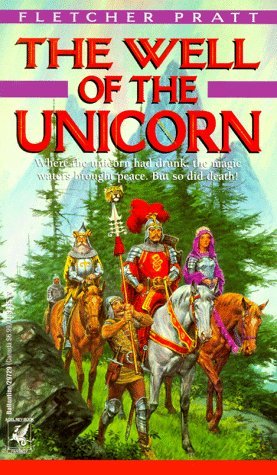
Robbed of lands and heritage by the rapacious Vulkings, young Airar Alvarson had only his limited gift for sorcery to aid him against a world of savage intrigues. Then he met a mysterious sorcerer and was given a strange iron ring -- a ring that led him into a futile conspiracy and soon had him fleeing for his life.

Driven by enchantments and destiny, he found himself leading a band of warriors against the mighty empire of the Vulkings. With him was a warrior maid who mocked him while she sought to serve by fair means or foul. Then he met the Imperial Princess who preached the peace of the Well but it soon became apparent she would bring him only turmoil and strife!

388 pages, Mass Market Paperback

First published January 1, 1948

39 people are currently reading
1450 people want to read

About the author

Fletcher Pratt

256 books33 followers
Murray Fletcher Pratt (1897–1956) was a science fiction and fantasy writer; he was also well-known as a writer on naval history and on the American Civil War.

Pratt attended Hobart College for one year. During the 1920s he worked for the Buffalo Courier-Express and on a Staten Island newspaper. In the late 1920s he began selling stories to pulp magazines. When a fire gutted his apartment in the 1930s he used the insurance money to study at the Sorbonne for a year. After that he began writing histories.

Wargamers know Pratt as the inventor of a set of rules for civilian naval wargaming before the Second World War. This was known as the "Naval War Game" and was based on a wargame developed by Fred T. Jane involving dozens of tiny wooden ships, built on a scale of one inch to 50 feet. These were spread over the floor of Pratt's apartment and their maneuvers were calculated via a complex mathematical formula. Noted author and artist Jack Coggins was a frequent participant in Pratt's Navy Game, and L. Sprague de Camp met him through his wargaming group.

Pratt established the literary dining club known as the Trap Door Spiders in 1944. The name is a reference to the exclusive habits of the trapdoor spider, which when it enters its burrow pulls the hatch shut behind it. The club was later fictionalized as the Black Widowers in a series of mystery stories by Isaac Asimov. Pratt himself was fictionalized in one story, "To the Barest", as the Widowers’ founder, Ralph Ottur.

Pratt is best known for his fantasy collaborations with de Camp, the most famous of which is the humorous Harold Shea series, was eventually published in full as The Complete Compleat Enchanter. His solo fantasy novels Well of the Unicorn and The Blue Star are also highly regarded.

Pratt wrote in a markedly identifiable prose style, reminiscent of the style of Bernard DeVoto. One of his books is dedicated "To Benny DeVoto, who taught me to write."

Ratings & Reviews

What do you think?
Rate this book

Friends & Following

Create a free account to discover what your friends think of this book!

Community Reviews

5 stars
155 (17%)
4 stars
278 (31%)
3 stars
278 (31%)
2 stars
132 (14%)
1 star
42 (4%)
Displaying 1 - 30 of 57 reviews
Profile Image for Derek.
1,382 reviews8 followers
May 15, 2011
This is a challenging read from the point of view of theme, style, and plot. It's deliberately written in a pseudo-archaic form, tackles some deep philosophical issues about government and rulership, and details the political and military machinations of a continent. Sort of A Game of Thrones by way of E. R. Eddison. All in less than 400 pages, of course.

The modest beginning was deceptive, leading me to believe it a bildungsroman of the main character, who was unwillingly set loose in the world to make his fortune. In a way it was--he grows in prestige and influence--but also develops political and moral entanglements that complicate the story. What was originally a very black-and-white moral viewpoint becomes increasingly complex as Airar develops working relationships with soldiers and rebels whose goals do not necessarily match his own. His early assertion that men can cooperate without being dominated seems increasingly unlikely; indeed his own freedom becomes more and more limited with every step up the rung of power and respect.

The situation is complex enough that a glossary would be welcome. There are many place names used that don't appear on the map, as well as a host of ethnicities / regionalities referred to using several names.

Most fun was using the title of 'doctor' to describe a local wizard figure, reference to Airar as a 'clerk' to reflect his magical learnings, and those learnings themselves as the 'grammary'. Eddison had a similar scheme and I wonder if this is drawn from some literary tradition.
Profile Image for sara r..
38 reviews14 followers
Read
February 3, 2025
Non amo abbandonare i libri, specie se li ho presi all’usato per cercare di trovare loro una nuova casa. E così ho pescato al Libraccio questo fantasy scritto nel 1948 (per intenderci: pre-Tolkien) secondo un criterio affidabilissimo, cioè facendomi abbindolare dalla copertina, perché queste illustrazioni anni ‘70 con dame e unicorni e spade sono la materia di cui sono fatti i miei sogni. Mi aspettavo di trovarci dentro quello che c’era fuori. Cristo santo, un disastro, una catastrofe talmente intollerabile che dopo due interi pomeriggi di lettura, avendo letto circa 1/3 del libro, ho deciso che le mie diottrie valevano molto di più di Fletcher Pratt.
La storia inizia senza la minima introduzione, anche se definire l’avvio in medias res sarebbe troppo spocchioso per questo libro terribile. Vista la confusione iniziale, almeno ti aspetteresti che mentre si svolge la trama vengano al pettine tutti i nodi che ti hanno fatto penare prima, no? Te lo scordi.
Un certo Airar (la mia edizione ha talmente tanti errori che la prima parola del libro è Arar, senza i), viene privato della sua stessa casa da un balivo rappresentante del conte Vulk; il nuovo padrone della regione ha aumentato così tanto le tasse e i debiti hanno maturato interessi talmente salati che il giovane è costretto ad accettare i termini che gli vengono imposti. Così se ne va, diretto verso l’orizzonte, con solo uno zaino in spalla. Airar inizia a camminare per i boschi pedinato da un gufo che lo chiama per nome, finché non si imbatte nella cascina del mago Meliboё - di cui il gufo era familio - che lo ingaggia per una missione segretissima: deve mettersi in contatto con la compagnia dell’Anello (ha!) d’Argento, costituita da alleati di tutte le città contro il cattivissimo conte Vulk.

Cercherò di procedere in maniera graduale sul perché questo libro manca dell’umano senso di decenza.

Nel centinaio di pagine che ho letto (scritte a caratteri microscopici, su due colonne), vengono nominati popoli, etnie, regioni, governanti, sindaci, magistrati, che non prendono forma perché non hanno sostanza sotto al loro nome. Anche di fronte a una mappa (che nella mia copia è assente, ma so che era presente nell’edizione originale) se dietro a un toponimo non è scritta una storia, allora è inutile infronzolare quel posto con nomi complicati da ricordare e da leggere, perché in questo modo non si fa che aggiungere ulteriore confusione a una già pressante frustrazione. Per esempio, durante un concilio in una taverna prendono parola una dozzina di personaggi, tutti da posti diversi, con ragioni diverse da far valere. Non ricordo una parola, un discorso, una motivazione, se non che Pratt almeno si preoccupa di dirci che i pescatori hanno la barba spessa e i montanari il cappello a punta a loro tipico. Mi fa immensamente piacere vedere le etnie differenziate nell’abbigliamento e nell’accento, ma se le loro voci acquistano lo stesso tono e si confondono sulla pagina, allora la missione è fallita in partenza. È altrettanto interessante la proverbialità con cui si esprimono molti signori («Un uomo alla deriva in mare si lamenta forse se non ha pepe per i pesci che pesca?»), ma ancora una volta se questi non sono differenziati a dovere (come, mi dispiace citarlo, in Tolkien), quale funzione ricoprono, esattamente, se non quella di abbellire il testo qua e là, senza altri fini?
Ho scelto di partire da questo punto critico perché dopo 100 pagine (su 250) il livello di confusione è diventato tale che ho dovuto concretamente smettere di leggere il libro. Essere complessi non è un difetto, ma essere incomprensibili è abbastanza limitante, direi. Per essere più chiara, ho deciso di fermarmi dopo che i personaggi si sono spostati da un rifugio all’altro, con uno stacco temporale di due inverni, senza che questi importanti cambiamenti venissero spiegati da nessuna parte. Si è in parte intuito da un dialogo nel capitolo successivo, con nuovi personaggi di una fazione di cui non ricordo il nome se non per il fatto che iniziava per C, di nessuna rilevanza, ma improvvisamente giunti a condividere un racconto in retrospettiva. Se già prima facevo fatica a tenere il filo, a questo punto della faccenda non ho potuto fare altro che prendere un paio di forbici e tagliarlo di netto.
La carne al fuoco, però, era piena di potenziale. Si discute, molto brevemente, del fatto che sostituire il singolo conte Vulk a tanti differenti padroni non cambierebbe la situazione per i sudditi; o ancora, si sottolinea la brutalità del potere militare, così prepotente che ride di fronte a un patto scritto su pergamena, perché la spada taglia la carta e non viceversa. Questioni sicuramente interessanti, che purtroppo vengono tralasciate a favore di descrizioni di pasti e battaglie.

Come se non fosse abbastanza snervante la confusione narrativa, la storia ha trovato un ulteriore rallentamento nella lingua in cui è scritto. Pur tenendo conto degli errori in italiano presenti nella mia traduzione, ho letto da altre recensioni che anche l’originale è piuttosto vetusto nel linguaggio. A tratti, in realtà, ha il pregio di essere molto atmosferico, specie nelle descrizioni dei luoghi, anche banalmente di un bosco sul calare della sera. Come ammetto sempre, apprezzo uno stile di scrittura ricco, quasi barocco nel senso di sfarzoso, ma qui dall’antiquato si passa al mummificato. Ho letto parole come ‘gabbare’, ‘gargarozzo’ e ‘parapiglia’ che era come se stessi ascoltando una canzone di Elio e le Storie Tese. In particolare, quando un artigiano si rifiuta di vendere una daga, si legge: «Se questa è la tua regola, porta il tuo sudicio sgozzapolli dal buon Lord Commissario e ficcaglielo nel gargarozzo con i miei saluti». Non credo siano necessari altri esempi su questo versante.

Uno scoglio insormontabile è stata la mia intolleranza nei confronti del protagonista, Airar. Viene eletto a eroe quasi come se fosse stato scelto dal destino, ma non lo è. Tutti si fidano di lui, lo stimano e riveriscono, corrono prontamente in suo aiuto (è un po’ troppo sfruttato il meccanismo del deus ex machina). Airar non porta su di sé la minima qualità. È un ragazzo qualunque, ma non è come tutti gli altri ragazzi, capito? Viene costantemente lodato come esempio di modestia, discrezione e intelligenza, ma sembra che solo io abbia effettivamente colto la sua inutilità. Per rispondere a tono a Pratt, Airar è un pisquano, un citrullo, un belinone (variante regionale). La sua personalità è piatta come una tavola; non sai nulla di quello che sente: questa nuova avventura, che lo ha reso nemico al signore che governa le sue terre, come lo fa sentire? è impaurito oppure impavido? è speranzoso o disilluso? Non ti è dato a sapere nulla. D’altronde anche tutti gli altri personaggi sembrano degli NPC.
L’unico tratto che sembra farlo spiccare sugli altri è la sua capacità di praticare l’arte occulta, cioè la magia. Però è un principiante della materia, non un cultore. È un mago di scarso livello, spossato dopo ogni incantesimo, che spesso non riesce nemmeno a concludere. Non accenna a migliorare, dunque non c’è crescita, non è un paladino in formazione. Non solo i suoi trucchi sono di scarso livello, ma sembra che chiunque, conosciute le parole magiche e i gesti previsti, possa praticare qualche magiuccola. Il sistema magico in questo fantasy è inesistente. Una cosa però la voglio condividere: Airar è abbastanza abile da praticare una magia di attrazione su una ragazza per giacere con lei, e alla fine del rapporto lei rinsavisce e, piangendo, commenta: «Se solo fosse Visto [un altro uomo]!». Grandioso, uno stupro magico! Cristo in croce, questa mi mancava!
Come se non bastasse, ovviamente è proprio a questo lucco che viene affidata una cinquantina di uomini, che lo seguono… perché devono? Ma perché devono? Ma perché scelgono di fidarsi di questo ragazzo che non ha titolo, che non ha garanzie di fiducia da parte di nessuno, che non ha mai comandato un manipolo di uomini, che fino a letteralmente qualche giorno prima non conosceva nemmeno la causa per cui queste persone si battono da anni?
Per di più, Airar pecca di uno dei tratti caratteriali più spossanti da una prospettiva femminile: Airar è un frignone che si piange addosso di continuo. Si lamenta di non essere nessuno e di non fare nulla (quando, per esempio, ha appena liberato alcune navi dagli spaventosi mostri marini, e ha insegnato a tutti a tirare con l’arco): la sua è una falsa modestia in disperata ricerca di compassione. E si aspetta pure che la persona di turno (leggasi: una donna) controbatta e gli offra la spalla per piangere. Per esempio, qui cerca un responso positivo da una ragazza, lamentandosi dicendo: «Quale signora, grande o piccola, dovrebbe guardare uno come me, così inutile?». Se Pratt fosse nato un secolo più tardi, avrebbe potuto aggiungere uwu alla fine della frase. Oppure, «Era molto triste rendersi conto che Gython [la ragazza], sulla quale aveva fatto in parte affidamento, lo aveva abbandonato in quel modo, non riconoscendo il suo bisogno di incoraggiamento e comprensione».
Contemporaneamente, in questi momenti di debolezza, anziché sfogare la tristezza nelle lacrime e manifestare i suoi sentimenti, Airar si rimprovera perché un vero uomo non mette in dubbio la propria virilità facendo mostra delle sue emozioni. La citazione precedente, infatti, prosegue così: «Ma nessuna donna avrebbe voluto che il suo uomo le si aggrappasse alla gonna quando erano la forza e il valore a essere lodati». Per mettere la ciliegina sulla torta, dopo che la ragazza, Gython, si è arrabbiata con Airar per i suoi falsi lamenti di autocommiserazione, il narratore di parte commenta: «La colpa era stata di Gython, più che di Airar».
Lo odio, lo detesto, lo trovo insopportabile. Airar è, in una parola, un coglione. E Pratt con lui. Un nome, una garanzia.

Il problema più grande di questo libro, che è poi lo stesso motivo per cui l’ho abbandonato con così tanta rabbia, come era prevedibile, è il sessismo: «Chiedono molto e danno poco. Le donne sono fatte così, anche se il padrone è l’uomo».
Dalle primissime pagine, Airar, che è un bel giovanotto, viene invitato da chiunque a cercarsi una bella ragazza con cui stare. Queste ragazze, però, non sono mai ‘donne’, ma «puledre che vogliono farsi cavalcare». Sono sempre e in ogni caso animali che hanno solo in mente di giacere con gli uomini, bestie focose e ninfomani che sfiancano gli uomini, che possono servirsi di loro quando vogliono. Le donne sono fatali, distruggono popoli e maschioni. A un certo punto, alla corte di un barone, si dice che tutte le donne hanno un solo passatempo: scopare. E non mi scuso nemmeno per la violenza delle mie parole, perché la rabbia che provavo leggendo era così umiliante che mi vergogno pure ad avere tollerato queste cattiverie per due giorni.
La misoginia farcisce l’intero romanzo, anche in punti dove non te l’aspetteresti. Qui, per esempio, Airar osserva le navi in mare, e dopo un bellissimo paragone, scade in un commento rivoltante: «Un alito di brezza terrestre spirava dalle montagne; non era sufficiente a spingere appieno la piccola nave e le sue sorelle, ma Airar fu catturato dalla loro bellezza, osservando le imbarcazioni che dondolavano lente su e giù come signore maestose nei loro abiti vivaci di tela, con le vele di testa che fungevano da corsetti». Molto originale questa figura! Ma poi: «Verso il calar del sole, quando lo Spanhavid [una montagna] era solo una chiazza più scura in fondo al cielo blu, il vento cominciò ad alzarsi, e le signore del mare divennero anziane matrone coi petti e i deretani di vela turgidi». Mi chiedo: era seriamente necessario?
O ancora: «Non sarebbe meglio cercare una donna con molte qualità che mi racconti storie nelle sere di primavera mentre i cavoli crescono?» chiede al mago un umile pescatore che ha come sorella (ovviamente) una zitella noiosa e rumorosa (le donne non lo sono forse sempre?). La risposta: «No, no. Solo le donne stupide cercano la contentezza. Le altre mirano tutte alla fama, non sono felici finché non hanno le vesti adorne di barbe reali, e sono peggiori degli agitatori di regni, perché esse stesse agitano qualsiasi uomo». In pratica, la donna è rimasta limitata al modello omerico di Elena.
Ovviamente, mentre la storia si affolla di uomini valorosi, sono solo due le donne di cui si parla in queste prime cento pagine. Una è la figlia di un governatore, Kry (grazie per questo nome così pieno di delicatezza, del tutto privo di stereotipi!), descritta come «una donna nera, di capelli e di pelle scura, che aveva sempre l’aria di non essersi lavata»: sessista e razzista! Non vedo l’ora di vedere come procede la storia! Come come? L’unica donna di cui si racconta una storia attorno al fuoco finisce per essere lapidata perché turbata mentalmente al punto da uccidere l’amante del proprio marito insieme al neonato bastardo per gelosia? Fantastico!

L’altra donna, su cui vorrei soffermarmi un momento, è la già citata Gython. Dapprima viene presentata come l’unica eccezione a questa follia mentale propria delle femmine che qui sono sempre malefemmine. Per poco il suo è stato un personaggio pure interessante, perché per sfuggire all’obbligo di matrimonio impostole dal padre (ovviamente, perché cos’altro avrebbe in serbo un uomo per sua figlia?), si traveste da uomo e va a combattere. Diversamente da Clorinda e dalle sue epigone paladine (Éowyn…), viene subito scoperta: talmente bella che nemmeno il puzzo di pesce può coprirla. Si parla anche di un’altra donna guerriera, ma è talmente brutta e mascolina che non merita l’attenzione di Airar e del lettore. Gython, invece, anche quando è travestita (e mi permetto di dire, quando dovrebbe essere al sicuro dagli uomini dal punto di vista sessuale) viene subito puntata, non da uno, ma da tre, quattro, uomini. Addirittura il barone della città vuole farla sua concubina. Così lei, pur di salvare letteralmente una popolazione intera, pronta al sacrificio, si offre al barone. Airar, che ha messo gli occhi su di lei e si crede l’unico giusto possessore di questa donna, è disposto a far perdere la guerra e le speranze all’intero gruppo dell’Anello d’Argento, pur di avere per sé e solo per sé Gython. Vuole tradire patti appena stretti, fuggire dai suoi compagni di battaglia, nascondersi per sempre con lei, senza avere espresso nei suoi confronti il minimo desiderio di affetto: ecco quanto vale per lui la causa contro il cattivissimo conte Vulk, ecco quanto vale il suo immenso amore per lei. Come ho scritto prima, per ottenerla la sottomette con un sortilegio: giace con lei, e la lascia sul letto che piange. Ovviamente la colpa è tutta della fanciulla: quando andranno in guerra e lei verrà lasciata indietro, Airar scoprirà che sarebbe diventata effettivamente concubina del barone, e si strugge al punto di pensare di morire di crepacuore (il mio commento a margine, di fianco a questo paragrafo è molto eloquente: buuuu). Airar non si strugge per averle fatto violenza, no, ma perché lei è andata con un altro per salvare la vita a se stessa e a tutti gli altri suoi compatrioti e compagni di guerra.

Concludo nell’esatto punto dove si è interrotta la mia lettura, cioè con questa frase: «L’ho lasciata a vedersela coi Vulking [i cattivi]. Glmff. Che dovevo fare? Era una signora di città, non adatta alla fuga. Le donne hanno la salvezza nelle gambe, ma non devono usarle per correre».

E non ci sono manco unicorni.
Profile Image for Kelly.
Author 13 books789 followers
December 4, 2013
The cover on my copy is way better than the cheeseball cover shown here on Goodreads. This book is considered one of the first modern epic fantasies; it was published six years before The Lord of the Rings. And boy howdy, is it dark. Like the His Dark Materials series by Philip Pullman, this book operates on more than one level: on one level, it's a great epic story that would make one hell of a kick-ass CGI blockbuster, with sea demons and embittered mercenaries and scary dark towers galore. On another level, though, it's a fairly intense exploration of the nature of power and free will and sex and gender and war, and how they all intersect. It's not always easy reading; the prose is very dialect-heavy and has a little bit of that faux-medieval stilted fantasy thing going on. Pratt also isn't a huge fan of exposition, which means that sometimes it's a little hard to follow plot-wise. But this is one of those books that I've had for years and finally decided that I either needed to read or get rid of, and I'm glad that I read it.
Profile Image for Simon Mcleish.
Author 2 books142 followers
November 21, 2012
Originally published on my blog here in June 2001.

Lester del Rey considered this forgotten novel "the best piece of epic fantasy ever written". This is overstating things, particularly given the way in which the genre has evolved in sophistication since it was published, but there is certainly something more to it than most of its contemporaries.

The basic plot is fairly typical of the genre. After an invasion of his native country of Dalarna, Airar Alvarson is unable to pay the increased taxes demanded of him by the new Vulking overlords, and loses his family's farmstead. Refusing to work for the Vulkings as a serf, he ends up joining a resistance movement. Through this, he meets three women who play a large part in his increasing good fortune, a fisher girl, a woman who dresses as a man to be a mercenary captain, and finally the one he really falls for, a princess of the Empire who is way beyond his social reach.

One of the interesting aspects of the novel is the spring from which it is named. This is the centre of the Empire's authority, and one of the most sacred sites of Pratt's world. It has magical properties, and if the parties to a dispute travel to the Well and drink of its water, it will bring peace to them. This should resolve the dispute, but it does not erase the personality of the drinker, and one of the stories about the Well recounted in the novel is of a Vulking count who defies the water's properties to attack his enemies again.

The Well of the Unicorn also has philosophical concerns unusual in the genre at the time. These centre around two main issues: free will (can it exist if the future can be foreseen magically?) and social organisation (how can people be free yet society still exist in an meaningful way?). No conclusions are reached, but the way that the ideas are incorporated into the novel is interesting.

Perhaps now seeming rather old-fashioned in style, The Well of the Unicorn has a bit more to it than many fantasy novels.
Profile Image for Simon.
587 reviews271 followers
November 9, 2009
I overcame my dislike of the cover of this book, that I would never have picked up had it not been part of the fantasy masterworks series. Although it does depict a scene in the story, thankfully it is quite out of context and doesn't really give you any idea as to what to expect within.

And what we have is one man's story of his rise to prominence within the revolutionary movement attempting to throw off the reign of the oppressive Vulkings. In addition to his travels and fighting from one end of the continent to the other (and back again), we follow his deliberations and moral dilemmas as to what is the ideal form of rulership. What is he trying to replace the current regime with and is it really any better? Is freedom paramount and to what extent must it be sacrificed for security and safety from aggressive neighbours?

In addition we follow his personal trials and tribulations. To what extent is he in charge of his own destiny or a pawn of the mysterious sorcerer who seems to foresee his future and seeks to help his rise? He seems unlucky in love as well as we follow his awkward encounters with the women he meets (and invariably falls in love with) on the way.

All in all it is an epic story set in a complex world, of a simple man attempting to come to terms with the complexities of reality. In addition the archaic, antiquated prose (stylised to excess) serves as a barrier to engaging with the story but not unmanageable once you get used to it.

A worthy entry in the Masterworks series although it won't be to everyone's taste.
Profile Image for Joseph.
775 reviews127 followers
June 20, 2025
An undeservedly although probably not unsurprisingly obscure fantasy novel from the late 1940s.

(And this is ostensibly set in the world of Lord Dunsany's play King Argimenes and the Unknown Warrior, which I guess technically makes it fan fiction or pastiche, but it takes place hundreds of years after the events of that play and as far as I can tell, the only thing from the play that carries over to the book is that, well, it takes place long after the rain of King Argimenes, so in practical terms it really matters not.)

The world feels somewhere between dark ages and middle ages Europe; it's well drawn out geographically and politically, and the book opens with an Author's Note to bring the reader up to speed.

Our hero (well, protagonist, at least) is one Airar Alvarson, one of the Dalecarles of Vastmastad, recently conquered by the unpleasant Vulkings. Airar gets booted from his ancestral homeland and, having no desire to join his father in the city and knuckle under to the Vulkings, finds himself hooking up with various groups of rebels and partisans (few of whom seem, at least initially, to actually accomplish much) and trekking across a goodly chunk of the continent, adding or losing followers and falling in & out of love with a succession of ladies; and always in the background looms the Empire (sort of a Rome analogue?) and its command of the Well of the Unicorn, from which whomsoever drinks will forswear war and achieve peace.

But Airar's journey won't take him anywhere near the Empire or the Well; instead, he'll find himself joining in any number of very well-drawn clashes at arms and sieges against the Vulkings and their supporters.

And it's a fine tale, and fascinating in terms of where it fits into the fantasy lineage, predating The Lord of the Rings and presumably following more in the footsteps of E.R. Eddison or even William Morris, but it's also written in a deliberately archaic style that makes it not especially approachable these days; but I'd say it's worth the effort.

Profile Image for Yve.
245 reviews
March 26, 2017
The first time I tried to read this book, I abandoned it after ~60 pages. I had the same exact feelings this second time around, but soldiered through because after all I did kind of like the Harold Shea stories that Pratt cowrote and this novel seems to be highly regarded. But The Well of the Unicorn... it's one of the most pointlessly confusing beginnings to a novel that I've ever read. Airar is "taxed out" of his home, then forced into the least magical meeting with a wizard ever, then somehow in window shopping has to get a friend (maybe?) to vouch for him only to have that friend (maybe?) killed for little reason outside a tavern, but spares no feelings and attends the most boring meeting with a rebel group ever. On both readings I found it dull and lifeless and torturous to slog through, and couldn't even tell when or if the story proper began! Even having read the whole book, the plot structure is a mystery to me. I couldn't care about any of the characters (in fact could barely distinguish them) or the world they live in. I've read historical fiction with a greater sense of the fantastical than this. Worst unicorn book ever.
Profile Image for Monte.
18 reviews3 followers
May 9, 2019
Moorcock’s Elric stories are said to bear the influence of Camus and Sartre, Eddison’s ‘The Worm Ourobouros’ Nietzsche, and Tolkein’s ‘The Lord of the Rings’ Catholicism; there’s an argument to be made that Fletcher Pratt’s ‘The Well of the Unicorn’ is a (the?) fantasy novel of (American) pragmatism. When they are not being disparaged at worst, downplayed and ignored at best, magic, metaphysics, and the supra-human take a back seat. Practical rationality (planning, negotiation) and the limits of knowledge are the drivers of the story. Airar’s leadership powers are derived from his talents for planning and negotiation, but it seems he’s also the character in the motley alliance against the Vulkings with the least at stake. Is Pratt is making a point here or just playing with irony?

As David Pringle has noted, Pratt’s prose is ‘knotty’, yet for all that a delight to read. His neologisms are an economical world-building device. ‘Well of the Unicorn’ really ought to be read aloud, not simply because it sounds so good, but because it checks any temptation to skim read: readers should be prepared to reread lengthy sections to find some important detail they may have missed, especially in the discussions as the characters leave much unsaid. The middle third does drag; but this only appropriate as winter puts a hold on campaigning. Weather must be negotiated too.

Two other features of the book stand out. Maps are a staple of fantasy novels, but 'The Well of the Unicorn' stands out for beginning each chapter with a small map, a detail from the book's general map, representing the location of that chapter’s events. It doesn't sound like much, but its orienting effect (both at the onset of the chapter and during it) is charming and, in a work so preoccupied with reason and argument – often very unpredictable reasons and arguments, settling. Second, Pratt begins his book with a note outlining its origin in the work of Lord Dunsany and some recent history of the novel’s world, but also a declaration that he has no guide to pronunciation: he is leaving that to readers and their community. How very pragmatic.
Profile Image for Aaron.
902 reviews14 followers
July 5, 2011
This is a superior fantasy novel in many ways. The casting of magic has drawbacks, the war scenes are intense and brutal, the romance is not simplistic, and the politics are fully realized. Unfortunately it is this last positive that too often became a negative. Long scenes consisting of arguments over policy and war tactics soon became the focus of each chapter. Character development that had been at the forefront took a backseat to long round table discussions that were interesting at first but soon became repititious. If Pratt had edited himself better he could have created a difinitive fantasy.
Profile Image for Amber Scaife.
1,627 reviews18 followers
April 8, 2019
A young man is dispossessed of his family land and sets out to seek his fortune, then gets caught up in a war between a mean king and his overtaxed and unhappy subjects. He's a wizard, sort of, and 'helps' in that way, and then becomes a leader in the war.
Yeah, this one was pretty awful. The characters have absolutely no dimension whatsoever, and the plot of the rebellion and war is set out in absolutely painful dead-horse-beating detail. Just, NOPE.
Profile Image for James.
9 reviews
October 23, 2020
Took longer than I'd have liked to get through this. Though my interest in the book changed from 'into it' to 'kind of into it, but not really, and I want to get back to the black company already'.

This was a lot different from what I was expecting. From the era, I was expecting something more black & white morally, but this book is just one big block of grey morality, where nothing is clear. The theme of masculinity was something that was a really pleasant surprise, that was even well handled. A nice surprise was that women aren't trophies to be won in the usual fashion, though that might be a goal, Pratt doesn't treat them like pretty damsels to be saved, but rather, dare I say it, people with a brain?! With thoughts and ambitions of their own? But still keeping it a medieval-esque world where women played a lesser role in positions of power, but questions that. It was refreshing compared to other stuff I've read written in the same era.

The language did take some getting used to, but once I got the gist of a few words, it was smooth sailing, and really added to the flavour, helping me immerse myself in the world. A problem though was conversations that did once reveal character, that moved arcs forwards, soon just became bickerings of politics and war tactics that didn't really move anything forward, but left the book with blocks of stagnation. The complexities seemed to have dropped to just the bickering. I feel like with some good editing, pages could be shaved off to make a tighter novel that really could stand next to the big contemporaries of the time.

Still, the final product is something I'm glad to have read, the delved into issues and themes I wasn't expecting, though I feel Pratt was more interested in the broad political, which is a shame because he had a knack for making complex, intriguing characters, and exploring interesting issues.

Worth a read if it looks like it could be your thing, and you're fine with pseudo-archaic prose.
Profile Image for Jörg.
478 reviews54 followers
March 1, 2016
The Well of the Unicorn is an early heroic fantasy novel with glaring weaknesses but still worth reading.
I rarely read a book that weak in exposition. Readers are constantly confronted with unexplained facts and names that partly are explained somewhere else later but enough things are left unattended. Was this published as a serial novel? That could at least explain how these faults have passed an editor.
The development of the plot and the characters is not very plausible. What is it that makes Airar a leader? How does he end up with his strategic skills in planning battles? How come that he's as powerful a magician when this seems to be such a rare skill in Dalekarlia? Why does the Princess of the Well fall in love with him? These are just a few of the questions relating to the main character.
The only parts of the plot that show some understanding of story-telling are the battles that are detailed although a bit too much for my liking. This is understandable given the author's primary occupation as a writer of military history books.
In terms of plot, the Well of the Unicorn would be a clear miss. What is rescuing the novel, is the author's focus on political and moral issues that are frequently discussed among the characters. While shallow at times, the basic questions of freedom, free will to choose one's own destiny, sexual moral and ethical behavior are thematized in a way that goes beyond what the genre usually offers and puts the novel closer to high fantasy novels from that time such as Tolkien than the pulp stories.
The characters are not as stereotyped as in today's fantasy. Even on the 'good' side characters feature evil traits, boast, betray, act cruel and without honor. Promiscuity is a prevalent feature. A few of the heroes are gay which is astonishing for a book from 1948.
Parallels to history can be seen on two levels:
On a more distant level, the emperor can be equated with the Holy Roman Emperor of the German nation, the Vulkings could symbolize the Franks or a comparable dominant medieval realm.
On a more recent level it could be argued that the author took up the recent history from WW II and translated the powers to this story with the Vulkings representing the Nazis, the sea-based liberty adoring pirate realm could be the United States and the Carrhoenes who only decide jointly, could be the USSR.
This is what makes the Well of the Unicorn a remarkable novel worth reading. Without the political parallels and the unusually textured characters it would have been at best a two-star novel. As is, it deserves my 3* rating.
Profile Image for Jerry.
Author 10 books27 followers
December 19, 2017
“There’s a magic in love that is better than all your spells.”


Fletcher Pratt has one book listed in the Advanced Dungeons & Dragons “Appendix N”, The Blue Star, and then “et al”. The Well of the Unicorn is probably one of the et als. Wizardry is either illegal or déclassé depending on where they are in the world, so they call themselves philosophers; they carry a grammarion instead of a spellbook, but they’re clearly that. Spells are not used often, and rarely one after another, though this is due to the strain it puts on the caster rather than a Vancian memorization scheme.

Pratt is known among gamers for enjoying and popularizing tabletop wargaming, and if he wanted to much of this book could be reproduced as a game scenario. Much of the action is about acquiring soldiers, equipment, and allies, in preparation for battles. At one point, some of the characters even create a sand table to work out their strategy.

Besides all that may appeal to D&D fans, the story is a good one on its own. Pratt’s use of language is interesting; he uses the word “a” to replace pretty much any pronoun, a use I’ve seen in other fantasy works; he also uses “un” in what appears to be the same way.

Visto shrugged and the shadows danced again. “Not tall Erb. He’s been consulted, say’s a’s [she’s] right, to have her at the court will make a bond which keeps Salmonessa forever faithful to the project of this war, and when men give their lives to bring down the mountain, a woman can afford her body. I’m none so sure but I am with un [him], yet thought your interest should just have its word to speak.”


In this case it’s fairly easy to parse out the modern pronouns (she and him). In other places it isn’t as easy; he also plays with grammar to a lesser extent. Overall it works, if in places it requires reading a passage twice.

The well of the unicorn in the title is a place of religious devotion; when people drink from it, it enforces a sort of peace upon them. Whether it truly does so is questionable, but other magic clearly exists in the world. The well is a destination never reached, which plays into the sentiments at the end.

This is a very different fantasy epic, a farmboy’s journey that ends almost as it might in the real world, if the real world had sea-demons and sorcerors.
Profile Image for Ivan Lanìa.
215 reviews19 followers
August 20, 2021
A suo tempo Fletcher Pratt mi è stato descritto da alcuni saggi come "il maestro statunitense di fantasy epico ingiustamente eclissato da John Tolkien" (titolo che altre fonti attribuiscono a Poul Anderson, per altro), dunque nel 2020 ho voluto cimentarmi con la sua opera ultima, The Blue Star – che si è rivelata un porno a base di stupri vagamente mascherato da storia di spionaggio in un mondo secondario settecentesco...
Ora, circa un anno dopo e a mente fredda, a ho recuperato l'altro presunto capolavoro di Pratt, The Well of the Unicorn , e a questo giro sono rimasto positivamente impressionato – curiosamente, proprio come Anderson mi aveva inizialmente deluso con La spada spezzata per poi riscattarsi con Tre cuori e tre leoni.

Partiamo togliendoci un dente, il romanzo non è eccelso: la prosa è magniloquente e oscilla costantemente fra forme auliche e dialettismi, la trama mediamente molto dinamica si impelaga un po' troppo spesso in momenti morti, certi personaggi sono così poco caratterizzati da sembrare "nomi propri senza corpo", il lodevolissimo sforzo di Pratt di non ricorrere mai a "spiegoni", così che il pubblico debba "mettere assieme" per conto proprio i dettagli d'ambientazione, raggiunge qua e là vette parossistiche di cripticità – al punto che la mia edizione postuma include una prefazione di "geostoria e politica" che sbobina almeno i dettagli principali di worldbuilding, nel tentativo di ammorbidire il primo impatto.

Questo detto, sotto queste imperfezioni e grossolanerie si nasconde un testo validissimo che davvero fa ancora scuola: il buon ingegner Pratt ha creato un mondo immaginario politicamente complesso in cui i singoli regni e potentati assomigliano sì a Stati reali del Tardo Medioevo, ma sfuggono alle equivalenze facili e grossolane, e la magia funziona per trasmutazioni alchemiche, predizioni astrologiche ed evocazione di spiritelli come nella philosophia naturalis umanistica – e infatti gli stregoni sono necessariamente pure filosofi.
Ha messo in scena un'appassionate vicenda di insurrezioni e guerre civili, con oscillazioni di bandiera e momenti di pianificazione tattica e strategica, più alcune scene di battaglia molto gustose e altre troppo contorte.
Ha raccontato la vicenda attraverso lo sguardo di un giovanotto partito contadino e divenuto condottiero, giovanotto che a volte manca di carattere ma nel complesso dà la birra a tutti i paesanotti "Prescelti per un Destino Epico" imperanti in altri romanzi (e non solo).
Ha inserito nella vicenda disquisizioni di etica e politica (a volte troppo prolisse), deliziose leggende incastonate nella trama principale, personaggi femminili con una volontà propria (cosa non da poco per il 1948) e "uomini sodomiti" che però non muoiono male in quanto invertiti (idem come sopra).
In poche parole, ha anticipato di cinquant'anni quella formula di "dramma politico-militare in un mondo secondario" che il buon George R. R. Martin ha popolarizzato con il suo Canto del Ghiaccio e del Fuoco, ma senza cadere nelle trappole di politicheggiamenti sempliciotti e pornografia gratuita che, secondo me, rendono estremamente mediocre e adolescenziale la scuola martiniana (trappole che, per paradosso, il Pratt leggermente più anziano ha invece anticipato in The Blue Star).

In conclusione, The Well of the Unicorn in sé e per sé è "solo" un romanzo gradevole con imperfezioni grosse, ma in termini di impatto storico è una pietra miliare tuttora da imitare sotto alcuni aspetti.
Profile Image for Reni.
312 reviews33 followers
August 27, 2024
There's a lot of to like here:

Interesting take on magic. However, since the protagonist's opinion on magic sours very early in the story, magic is used only very sparingly in this book and magic as a whole stays rather underexplored. Which is a stame, and I'd have loved to see more of it. I'm particularly fond of the idea of certain building being erected to imprison trolls and demons and so when the building is destroyed these creatures are freed.

Meliboë ist a fantastically entertaining character. Here's a mentor character who sets out to follow and advise a young hero he doesn't even particularly like, simply because they both bear a grudge against the same group of people and frankly he got nothing better to do and he can't wait to see what the hero will do next. He also has a very questionable set of morals and while he's a skilled wizard, the way he does his magic is kinda lazy; never putting more effort into a spell than he absolutely has to. One part I particular liked had Meliboë act contracy to advice he'd given the protagonist a couple of chapters earlier. When called out on this by the protagonist, Meliboë reminded him, that he'd been given this advice because the protagonist had asked for advice on how to be a good and just leader, and since Meliboë had no interest in being a good and just leader, his own advice didn't apply to him. Fantastic character.

I also really enjoyed the way the main character tried and failed to reconcile the established political systems of the world with all he had come to learn about different people and people's needs.

Sadly, much of the book focuses on stuff I just couldn't bring myself to care for. The characters' battle plans all sound reasonable, but I could've done without reading about them in detail in pretty every second chapter. Followed by chapter in which the characters execute these plans.

I also found myself not caring about most of the characters. The protagonist himself of something of a petty bastard, a quality he never really grows out of and the rest of the cast remains pretty undeveloped throughout the story.

However, given that it was first published in the 1940s and it’s as straight (ha!) a hero’s journey fantasy as you can get, I was positively surprised by how many gay characters featured in this book, and non of them are villains. In some cases these characters' homosexuality is simply a means to preventing them from becoming romantic rivals to the protagonist, but they are nontheless among the more memorable and likeable of the side characters.

Finally, I simply didn't enjoy the writing style. This is my fault for repeatedly picking up fantasy classics for which this writing style is common, so I have only myself to blame, but that doesn't change the fact that the style is the main reason I took ages to finish this book. I would have enjoyed this book better if the author had just gone a bit more lightly on the faux archaic language.
Profile Image for Benjamin.
1,437 reviews24 followers
Read
June 12, 2010
I know Fletcher Pratt from his collaborations with L. Sprague de Camp on the "Harold Shea" stories, in which a psychologist uses symbolic logic to travel to other realities(!), each of which is patterned after some pre-existing myth or fictional universe. They're light stories, lovingly parodic of their source material.

By contrast, though The Well of the Unicorn vaguely borrows its fantasy world from a Dunsany play (as Pratt says in the intro, he projects the history of that world several generations into its future), it takes its setting seriously--no jokes are made here at the expense of fantasy as a genre, except...

When you read the jacket of this book, it may sound classic, i.e., boring: a farmboy goes on a journey and fulfills his great destiny. But Pratt is writing in '48, years before Tolkien's Lord of the Rings and Lucas's Star Wars would really cement the fantastic archetypes into their current shape. So, yes, the farmboy does leave his farm, but not because his wizard friend marks him out (as in The Hobbit) or he inherits an artifact of great evil or imperial soldiers kill his family--he leaves because he can't pay the taxes. He leads a rebellion, but armies don't just show up--there's a lot of back-room politicking and deal-making, shows of force, needful betrayal, motivating lusts (both hetero- and homo-sexual), etc.

If you wrote that today, people would probably (and probably rightly) call it a meta-commentary on fantasy, playing with the generic tropes; and I like meta. (I'd call that a "confession," but everyone should know that by now.) But I think Pratt's book is useful to read not so much because it plays with the tropes as it is an example of a work written before the tropes; Pratt's gritty realistic fantasy is an example of the road that is not taken by mainstream fantasy (except for a few examples, like George R. R. Martin (I've been assured)).

Though if you do read it, I'd say give it a few pages; the language is a little strange and archaic and it takes a while to absorb the meaning, in my experience.
Profile Image for Silvio Curtis.
601 reviews40 followers
December 30, 2014
An early twentieth-century fantasy published at the same time as Tolkien was writing The Lord of the Rings. It shows a strong tendency in the direction of Tolkien's careful construction of a "secondary world," especially in geography and political-military history; the front of the book has a map like the ones typical of post-Tolkien fantasy, and the map really is important for the plot, which ranges all over it. Of course he doesn't have Tolkien's linguistics; the proper names, depending on region, are a hodgepodge of obvious imitations of various European languages, and even some unadulterated Latin and Greek! The plot is about an uprising of one region against foreign but historically closely related overlords, mostly with conventional violence but with some help from "clerkish" or magical power. Some of the characters are given to reasonably thoughtful meditations on the ethical foundation for political governance. Less comfortably, they're also given to some viciously sexist and racist attitudes (the latter mostly regarding to the "barbarous Mictons" of the North, who are not on either side of the main conflict) that make Middle-Earth look like a model of political correctness.
Profile Image for Sean.
90 reviews13 followers
July 4, 2018
I enjoyed this a great deal and devoured it in relatively short order. What prevents me from five-starring this is a lack of strong characterization and somewhat unsatisfying story arc.

I will say that I enjoyed the writing. Missing characterization is made up for by insight and poetical rhetoric. I enjoyed the dynamic of the wizard advisor and the war leader, which borrowed some Arthurian tones but was more satisfying to me in this reading. I plan to revisit this book at a later date in order to tease out more understanding from the text. I read relatively quickly to pad my page count for 2013. All legit of course.
Profile Image for Jonathan.
601 reviews15 followers
May 26, 2012
Closely written account of how a man begins in rebellion from good motives, gradually acquiring dubious allies of more cruelty than those they overthrow, moving to a state of constant strife.

Re-read May 2012 - I enjoy the philosophising and would benefit hugely from reading some critical commentary on whether the Well is a good thing or not. Its means of preventing strife seem quite questionable, as do the motives of many a character. Not the easiest of reads, you do have to pay quite close attention.
Profile Image for D-day.
573 reviews9 followers
March 23, 2016
It took me two attempts to read this. It is, in fact, a pretty good book; good world building and realistic takes on the problems of government, rebellion and war. The problem is the writing style is very difficult to read. It is written in a kind of psuedo-archaic style that made me give up after a chapter or two. I tried again a few months later and just powered through. I eventually got used to the style and ended up liking the book. It is a classic of the genre, which is why I gave it a second chance, just be forewarned.
Profile Image for Mike.
Author 5 books7 followers
November 2, 2010
An amazing epic; dark, thoughtful, occasionally disturbing and horrific, and written in a style all its own. It was published several years before The Lord of the Rings, and could not be more different from from it, apart from the fact that both conjure such vivid, familiar but alien worlds. I've heard about this book for years, but only got around to reading in this year, and will probably re-read it as much as I have LotR.
Profile Image for Howard Curzer.
459 reviews
March 22, 2014
"The reader is not introduced to this world in easy stages; it is a going concern when the reader arrives on the scene and he is expected to find his way around in it by the same process of keeping his mouth shut and his eyes and ears open that he is frequently forced to use when he takes a new job or mores to a new community." - Fletcher Pratt
I like books that do this. That is why I sometimes skip the first volume of a multi-volume series.
Profile Image for Keith Davis.
1,100 reviews15 followers
November 29, 2009
A surprisingly complex Fantasy novel complete in one volume. If it were written today it would probably be stretched out to at least seven volumes. Pratt delves into the political complexities behind the Fantasy adventure, and our hero sacrifices his happiness and those of his friends and loved ones in order to achieve the goals he believes his father would have wanted him to achieve.
Profile Image for Jeffrey.
903 reviews131 followers
February 27, 2008
classic fantasy. Should be read as a menas ot understand some of the basic ideas in fantasy.
Profile Image for David.
590 reviews16 followers
July 25, 2011
Oddball, pre-Tolkien classic. Pretty dark and gritty for high fantasy.
Profile Image for William Herbst.
234 reviews12 followers
May 25, 2012
Above average fantasy novel. I forget much if the specifics but enjoyed the discussion of siege warfare.
96 reviews
April 28, 2014
Written before the genre got established, this book is refreshingly fresh due to its absence of fantasy cliches. But not exactly a page turner. I petered out before finishing.
Profile Image for Ryan Buck.
3 reviews
November 15, 2013
The cadence took me awhile before I got it flowing. Magnificent otherwise. A world with working plumbing. Can you ask for more from epic fantasy?
Profile Image for Pedro Pascoe.
225 reviews4 followers
January 29, 2019
This is one of those books I'd purchased decades ago (nearly 4 of them, yoiks!) that had sat on my shelf taunting me with its unread status. It became a 'gift' to 'future me' at 'some stage in the distant future', and finally 'the time had come'.
What was I expecting after all this time? Published some time after 'The Hobbit' but some time before 'The Fellowship of the Ring', I guess I had loose expectations of some sprawling high fantasy yarn untouched by the future epic success of 'Lord of the Rings'. Having recently read 'The Worm Ouroboros', and previously works by Lord Dunsany, I was imagining something along those lines, and that was more or less what the general feel of this book was.
Having read and re-read 'Lord of the Rings', I noted with some amusement a note from Pratt at the start of the book, informing us in essence that the pronunciation of names in this work was essentially up to the reader, the polar opposite of Tolkien's rigorously defined langauges and pronunciations. Which immediately established a rather relaxing approach to the array of names and places Pratt had built into his world. This must have seemed almost apologetic and necessary at the time, when world-building in fantasy fiction was still a nascent practice, unlike today when fantasy readers in particular are used to and expect such practices.
The narrative centres around a dispossessed young Airar Alvarson, 'taxed out' of his home by Count Vulk. Through a series of fortuitious (and not so fortuitous) events, he ends up leading an ever-increasing group of fighting men in a rebellion against the Vulkings, does something of a large lap of his corner of the world, and ends up back just about where he started, leader of an army, married off to an Emperor's daughter, and about to face off against the Count himself, having ruminated about politics, love, magic and leadership along the way.
While the rhythm was somewhat difficult to get into, and one minor character's 'anachronistic manner of speech' in particular proving something of a stumbling block to a smooth reading, the book does move along, with a highlight being the siege of Os Erigu. I wasn't entirely sure where the whole story was leading, and with only a few pages to go in the book, was wondering how the whole story was going to be wrapped up to any satisfactory manner, given there was no sequel. I'm not entirely convinced it was.
The blurb on the back of the book promised 'Rapine and Sorcery', and there was certainly both, in measured doses, and neither elements portrayed particularly romantically, which added a more adult tone to the story. The politics of this story were a little difficult to grasp on a casual first read, but Wikipedia assures us that they are based on medieval Denmark, fortunately covered by Pratt's 'The Third King', which enthusiasts can no doubt chase down and read for a deeper understanding of the spirit of the political background of this book.
The philosophical ruminations throughout the book throw up a few quotable gems to pepper what would have otherwise been a bit of a literate plod through an allegorical history.
Often quoted as a fantasy classic, I can see the merit in reading this story. I was largely drawn into fantasy pre-Lord of the Rings fame, not because I dislike Tolkien (far from it), but moreso because fantasy has become a victim of Tolkien's deserved success, and reading pre-Tolkien fantasy is a glimpse into what else fantasy could have become, in this case, a more mature take (in some respects) on world building and fantasy narrative, but minus the far richer characterization and world building excellence of Tolkien.
Displaying 1 - 30 of 57 reviews

Can't find what you're looking for?

Get help and learn more about the design.