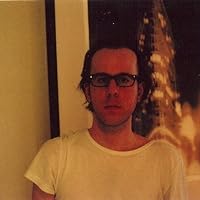
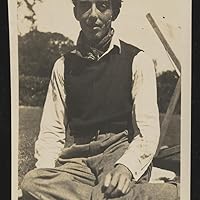
Brian Howard was expected to become one of the leading authors of his generation, but instead he became a secondary character in the books of others. Marie-Jaqueline Lancaster’s biography makes him — at last — the protagonist of his own highly entertaining story. Packed with dishy reminiscences and extracts from Howard’s letters and writings, this book details the outrageous parties, stunts, and confrontations that were second-nature to this ne'er-do-well. Chronicling 30 years of waste and dereliction, Lancaster captures a prototypical gay literary life, perfect for anyone curious about gay history, the 1920s, modernism, or the mystery of failed artistic promise. From austere libraries in Oxford to seedy hotels in Amsterdam to darkened cinemas in Tangiers, Howard lived and died precociously and — most importantly — as he pleased. Brian Howard: Portrait of a Failure is the next best thing to an invitation to one of his famous parties.
This is an interesting biography and feels almost like an autobiography. This is because Lancaster uses Howard’s extensive letters and writings, so he speaks for himself and also draws on his friends (and enemies) letters and writings to and about him. This does tend to make the book a little disjointed.
Howard was one of the central figures in the group known as the Bright Young Things in the 1920s. He was outrageous, openly gay (most of the time) at a time when it was dangerous to be so, a would be poet and writer, perpetually broke, a practical joker and generally a failure at most everything he turned his hand to. This is the legend that survives. It was perpetuated by Evelyn Waugh (who disliked him), who referred to him as “mad, bad and dangerous to know” (though his poetry was not of Byron’s standard) and used parts of his personality in Brideshead Revisited as Anthony Blanche. He was central in the Bruno Hat hoax which he devised with the help of Bryan Guinness and Tom Driberg. Brian set himself up as a newly discovered German modernist painter and an exhibition was set up; with some hastily cobbled together art. Pretty much everyone in society bought it and some of the paintings even sold. Much fun was had by the hoaxers.
Looking back on Howard’s life; he became an alcoholic and dependant on sedative drugs later in his life; he produced some poems of promise and wrote some reviews, travelled almost constantly and was known for his promiscuity. He continued to try to write, but failed to produce. His personal life was troubled, but he did have two relationships that lasted several years. Like his contemporary Stephen Tennant he has been dubbed a failure and talented underachiever.
BUT; for me he has a significant saving grace and I came to have some admiration for him as the book progressed. He was one of the first English people who saw the Nazis for what they really were and vocally said so. I was impressed by the following quote from Erika Mann (daughter of the novelist Thomas Mann) describing the time Brian went with her to a Nazi rally (at his request) to see what they were really about. This was the summer of 1931; two years before the Nazis came to power, there is a member of the Nazi party speaking in a large tent full of people;
“ “The Jews!” hurls the barking voice, in a monotonous paroxysm of fury. “Those filthy Jews have done it, who else?” A young chap not far from our place screams abruptly, as if bitten by a snake and unable to repress his outcry: “Hang the Jews!” Whereupon the voice with slimy banter: “Patience! Patience, my friend! They’ll hang all right.” .... “Dear me!” whispers our English friend {Howard} ... “He is a paranoic” The voice bellows “Who dominates this so-called republic?” The crowd responds “The jews!” “How extraordinary!” whispers the English friend, “He is positively demented. Don’t they notice it? Or are they crazy themselves?” He looks aghast with surprise. The speaker continues to attack the League of Nations, the Catholic Church and especially the Jews. “Are they mad? Or what?” our friend keeps asking. He repeats his question in various idioms, finally in German. “Sind Sie toll, mein fraulein?” he inquires politely of a buxom Hitler maiden sitting next to him. Happily she is too excited even to hear his question. Brian however persists and insists with merciless courtesy “I beg your pardon, Madam. Did you ever consult a really good psychiatrist?” How much like him that is! That’s the way Brian is, Brian Howard, a young writer from London ... he doesn’t care a straw about people hissing him and piercing him with their looks. One of those husky fellows might rise and knock him out with his little finger. Brian doesn’t care."
In retrospect Erika Mann said of Brian in that summer; “Like every decent person he was, of course, an anti-Fascist, but he was probably the first Englishman to recognise the full immensity of the Nazi peril and to forsee, with shuddering horror, what was to come. While people like Klaus and myself could still laugh disdainfully at the Nazis, any mention of them put an end to gaiety as far as Brian was concerned.”
Brian began to write about the Nazis, he tried to persuade Unity Mitford to introduce him to Hitler, but they fell out. Alannah Harper (another Bright Young Thing who changed in the 30s) summed up Brian in the 30s;
“He was acutely aware of the evil forces at work in the early thirties – a time when most people considered Nazism a joke – Brian was haunted by the knowledge that Concentration Camps existed all over Germany even by 1933-4. How few people cared enough to find out, as Brian did, or even wanted to know. I can hear Brian’s voice saying; “The knock at the door in the night, the brute in uniform, then – hurled into the darkness – the Jew, the Liberal, the leftist and the artist – never to be heard of again.” Brian watched the evil monster .... he saw only too clearly what was to come. When the inevitable came, the horror and cruelty of war broke his heart.”
Howard was in France when war broke out; he confided to friends and acquaintances like Somerset Maugham that he was afraid that when danger came he would be a coward. He had to leave France via Nice in a cargo ship with other civilians and he would soon find out if he was a coward. They were found by an Italian submarine and he recalled looking at the sea watching a torpedo track towards them; it narrowly missed. Howard, as he had binoculars, volunteered to be a spotter for torpedoes and to the consternation of the crew sat on a box of the high explosive cordite with a cigarette in one hand and his binoculars in another. After dark he teamed up with a man with two young children, offering to take charge of one of them if they had to swim for it.
During the war Howard initially worked for MI5, but wasn’t really discreet enough to be an intelligence officer. He wrote scripts for the BBC about Nazi eugenics and joined the RAF. After the war he declined into alcoholism and drugs. He had a long standing partner called Sam. Four days after they moved into a house together in France in 1958 Sam died in the bathroom of carbon monoxide poisoning. Brian couldn’t live without him and took his own life. They were buried together.
Howard was selfish, temperamental, a derivative (though talented) poet, dangerous and unpredictable when drunk. He was also brilliant and witty; a wasted talent. I can forgive him a great deal and if more people had listened to him sooner who knows what may have happened. I want to end this review with one of Brian’s poems. It was written during the war and is his reflection on the Bright Young Things and their era. It is called;
Gone to Report
For twenty-one years he remained, faithful and lounging There, under the last tree, at the end of the charming evening street, His flask was always full for the unhappy, rich, or bold; He could always tell you where you wanted to go, what you wanted to be told, And during all the dear twenty-one years he remained exactly 21 years old. His eyes were the most honest of all, his smile the most naturally sweet.
Many, many trusted him who trusted no one. Many extremely clever Persons will kill themselves unless they find him. They search Sparkling with fear, through the whole quarter. They even enter the Church. Crowds, across all Europe, are beginning to feel they’ve been left in the lurch. But it’s worse than that. It’s something they couldn’t tell anyone, ever.
He’s abandoned his post because he was the greatest of all informers, And now he’s gone to report. He never had a moment’s leisure. He was paid by so many powers that one shakes with shame To think of them. Time, the Army and Navy, Pain and Blame, The Police, the Family and Death. No one will escape. He got every name And he wasn’t at all what he said he was. Mr Pleasure.
The story of the Brian Howard would hardly have earned the title of Failure if he hadn't been born to such privilege and then had such an prodigious early start to his poet's career - being admired and coddled by Edith Sitwell while still only seventeen. High on his brilliance and marred by his own particular mix of aristocratic snobbery with an extremely uncompromising artistic integrity which together pushed him beyond his adolescent success into a wasteful but fabulous stint as one of the Bright Young People in nineteen twenties London. The story continues as he emerges serious again about poetry but this time his distraction takes the form of politics, whereby after a visit to Germany he becomes virtually the first Englishman to speak out again Nazism. The for a full decade before the onset of war he worries and tires himself out with the threat of Hitler that seemed to go unchecked. When war does come he is wilted and spent and already working his way up from serious drinking to drugs. It is a fascinating tale of a life spent in a sort of retrograde delay. Plagued by laziness, prone to restless travel and either a victim or a hero because of his standards, he was a reckless, bitchy, perhaps truly mad, minor poet, who went missing, couldn't reemerge, and ended badly.
The review here by Paul says a great deal of what I might have written had it not been already said there. It was a very interesting book indeed, valuable for anyone interested in the Bright Young Things and especially the challenges faced by gay men before attitudes toward homosexuality became more enlightened, as well as a fascinating character study. Brian Howard died in 1958; the Sexual Offences Act did not officially decriminalize consensual gay acts (in England and Wales) until 1967 and, "across the pond," the landmark Stonewall Riots did not happen until 1969 in the US. And although Lancaster's portrait is quite sympathetic, there are hints that it was too soon (1968, when originally published) not to include some speculation as to what "caused" Howard to be gay. Also, possibly a sign of the times (which may be addressed in later editions): the last name (Langford) of Howard's lover of more than a decade, "Sam," was not given anywhere.
Howard does emerge as a "difficult" (though fascinating) personality here, but Lancaster does emphasize his positive traits: loyalty to his friends, dedication to his ideal of what his own art ought to be (despite the inner turmoil and paralysis of inaction this caused him), and his genuine love for Sam Langford.
The one substantive aspect of the book not addressed by the other reviews is the account of Howard's abilities as a critic. He is shown to be a perceptive (and witty!) reviewer of visual art as well as theater and literature.
Minor complaints about the description: It probably made for sales-enhancing jacket copy for later editions (which appears to be the source), but the 1968 edition certainly does not have "dishy reminiscences" about "seedy hotels in Amsterdam" or "darkened cinemas in Tangiers." Howard's promiscuity is mentioned many times, but not at all in a voyeuristic fashion. And if one wanted a "prototypical gay literary life," one would be better served by a biography of Christopher Isherwood or W.H. Auden (among Howard's contemporaries).