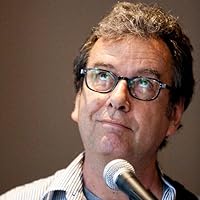
Anthony Malcolm Daniels, who generally uses the pen name Theodore Dalrymple, is an English writer and retired prison doctor and psychiatrist. He worked in a number of Sub-Saharan African countries as well as in the east end of London. Before his retirement in 2005, he worked in City Hospital, Birmingham and Winson Green Prison in inner-city Birmingham, England.
Daniels is a contributing editor to City Journal, published by the Manhattan Institute, where he is the Dietrich Weismann Fellow. In addition to City Journal, his work has appeared in The British Medical Journal, The Times, The Observer, The Daily Telegraph, The Spectator, The Salisbury Review, National Review, and Axess magasin.
In 2011, Dalrymple received the 2011 Freedom Prize from the Flemish think tank Libera!.
I went to Bradford (UK) for the weekend (fucked up, yeah, I know) . What better holiday literature for this occasion than a work by Theodore Dalrymple, the walking barometer of decline in England.
I guess that after working for years and years with the lowest scum on earth, one does start to feel the compulsive need to smash the head of one of this species with a large, blunt object. While that would give you an enormous feeling of relief, it would also give you twenty to life. Unlike the protagonist Graham Underwood, Dalrymple realises it's a bad move you won't get away with. So he decides to write a fictional work to vent his frustration, anger and disgust. It doesn't take a rocket scientist to figure out Underwood is doing what Dalrymple could only dream of.
While nothing really happens (we never get to know the victims, we never get detailed accounts of the killing) this is an entertaining read. For a philosophical argument stretched over some 100 pages this is quite an achievement. I really enjoyed the reasoning of the serial killer, and the way he tries to portray us as criminals, not him. There's some serious mindfucking going on, spiced with the occasional quote from a famous writer/thinker.
For most part of the book everything the killer says sounds very reasonable. It's only at the end when he's somehow starting to sound delusional. Still I think Underwood did a great job getting rid of 22 (not 15) people who are only a burden to society. Well done!
This novel is actually Dalrymple's non fictional writings served with a little plot. I love it ( and so should you).
A very strange, troubling book. The author was a prison psychiatrist at Winson Green Prison, which housed Fred West, among others. (as a side note, one of his predecessors was the father of my consort's best and oldest friend: the job drove him into deep depression). What is so alarming about this book is that you KNOW, absolutely, that what the protagonist is doing is wrong, but it's very hard to give a reason WHY it's wrong.
Theodore Dalrymple kruipt in de ziel van een seriemoordenaar. Grappig geschreven en gebaseerd op de jarenlange praktijkervaring van de schrijver zelf die als arts werkzaam was in de gevangenis van een grote Britse stad.
I misinterpreted the initial point of the book. I was left with the initial impression that the author wanted to answer the question were serial killers born or created by circumstances. Abandoned by his father and raised by a mother that appeared to resent his presence, the author begins to torture insects and other small living creatures before moving on to cats, setting the first one on fire.
Yet, as the book continues, it becomes clear that the goal is to elucidate the hypocrisy of moral relativism. The author also throws is a few jewels:
Tanto por fazer, de Theodore Dalrymple, é um romance que se resume às confissões que Graham Underwood (um serial killer que matou mais de 15 pessoas) faz a pedido de seu psiquiatra. Underwood não se arrepende de seus feitos, que, aliás, considera dignos de enaltecimento e aplauso, em vez da punição e da prisão que está recebendo. A partir desse pressuposto, o autor desenvolve suas habituais críticas ao welfare state e à burocracia kafkiana inglesa. Lançando mão do recurso do narrador não confiável, Dalrymple dá vazão à vingança por todas as frustrações acumuladas nas décadas em que trabalhou no serviço público. No entanto, a história não decola, salvo uma ou outra situação em que fica claro o nonsense da administração pública, o que rende algumas gargalhadas. Enfim, como romancista, Dalrymple é um ótimo ensaísta.
A moral justification of a serial killer's 'selected' crimes. The narrator reduced his arguments to supposedly pure reasoning. He draws on literature, philosophy and psychology sources to support his point of view. Mainly criticizing on the hypocrisy of the society, the narrator fiercely questions the social, economical, institutional power structure and tackles the questions of 'free will', 'freedom', 'morality', 'humanity' and 'human values', etc. Can such type of 'reasoning' be of any values to us? Is it a satirical text mocking the absurdity of modern culture that deems human logic/reason so high? Can a world that is reduced to technology, symbols and science eventually ends up like Cecil Rhodes'?
Een aantal jaren geleden, heb ik de toneelbewerking van dit boek gezien en die heeft veel indruk gemaakt. Het is een goed boek, maar de toneelbewerking heeft meer indruk gemaakt, vooral omdat het verhaal natuurlijk ingekort moest worden en de minder sterke passages van het boek daarin gesneuveld zijn. Toch heb ik dit boek met plezier (en met afschuw: tja, de man plaatst zich moreel ver boven de rest van de mensheid en het is dus een sociopaat/psychopaat en een fascist) gelezen. Aanrader.
Theodore Dalrymple typcally writes nonfiction about his work as a doctor, this to my knowlege is his only fictional work. Dark, but of the typical Dalrymple style, I really enjoyed it. About an "ethical" serial killer, very little about the killing but rather about the moral "justification" of his actions relative to the reader.
Hoewel de (behoorlijk arrogante en hautaine) protagonist zichzelf af en toe al dan niet onbedoeld tegenspreekt, geven veel van zijn niet alledaagse argumenten en theorieen over onze morele inconsistentie, zin en nut van het leven en verhoudingen tussen mensen onderling en mens en dier stof tot nadenken. Erg goede vertaling van Jabik Veenbaas trouwens.
I know that I am drifting to the right as I age, however I was shocked at how difficult it was to disagree with the logic of the arguments put forward by this fictional serial killer in support of his crimes. This book touched something deep and dark in my psyche. Maybe I've just lost my sense of humour.
The scary thing about the killer is the fact that his ideas are completely mainstream, too bad the book title "The Banality Of Evil" was already taken.