

What do you think?

The Acts of Caine #4
Caine's Law
SOME LAWS YOU BREAK. SOME BREAK YOU.
AND THEN THERE’S CAINE’S LAW.
From the moment Caine first appeared in the pages of Heroes Die, two things were clear. First, that Matthew Stover was one of the most gifted fantasy writers of his generation. And second, that Caine was a hero whose peers go by such names as Conan and Elric. Like them, Caine was something a civilized man who embraced savagery, an actor whose life was a lie, a force of destruction so potent that even gods thought twice about crossing him. Now Stover brings back his greatest creation for his most stunning performance yet.
Caine is washed up and hung out to dry, a crippled husk kept isolated and restrained by the studio that exploited him. Now they have dragged him back for one last deal. But Caine has other plans. Those plans take him back to Overworld, the alternate reality where gods are real and magic is the ultimate weapon. There, in a violent odyssey through time and space, Caine will face the demons of his past, find true love, and just possibly destroy the universe.
Hey, it’s a crappy job, but somebody’s got to do it.
AND THEN THERE’S CAINE’S LAW.
From the moment Caine first appeared in the pages of Heroes Die, two things were clear. First, that Matthew Stover was one of the most gifted fantasy writers of his generation. And second, that Caine was a hero whose peers go by such names as Conan and Elric. Like them, Caine was something a civilized man who embraced savagery, an actor whose life was a lie, a force of destruction so potent that even gods thought twice about crossing him. Now Stover brings back his greatest creation for his most stunning performance yet.
Caine is washed up and hung out to dry, a crippled husk kept isolated and restrained by the studio that exploited him. Now they have dragged him back for one last deal. But Caine has other plans. Those plans take him back to Overworld, the alternate reality where gods are real and magic is the ultimate weapon. There, in a violent odyssey through time and space, Caine will face the demons of his past, find true love, and just possibly destroy the universe.
Hey, it’s a crappy job, but somebody’s got to do it.
496 pages, Paperback
First published January 1, 2012
About the author
Matthew Woodring Stover
54 books1,055 followersMatthew Woodring Stover is an American fantasy and science fiction author. He is perhaps best known for his Star Wars novels -- Traitor, Shatterpoint, Revenge of the Sith and Luke Skywalker and the Shadows of Mindor. He has also published several pieces of original work, such as Heroes Die, which Stover described as 'a piece of violent entertainment that is a meditation on violent entertainment'. Stover's work often emphasises moral ambiguity, psychological verisimilitude and bursts of intense violence.
Stover is deeply interested in various forms of martial arts, having trained in the Degerberg Blend, a concept that utilises the thought behind Bruce Lee's Jeet Kune Do as its foundation.
Stover is deeply interested in various forms of martial arts, having trained in the Degerberg Blend, a concept that utilises the thought behind Bruce Lee's Jeet Kune Do as its foundation.
Ratings & Reviews
Friends & Following
Create a free account to discover what your friends think of this book!
Community Reviews
Displaying 1 - 30 of 141 reviews

September 21, 2015
This latest novel that just came out a few years ago is still a high quality Caine adventure, but there's a new twist.
He's being ridden by a god. He's still the badass that everyone fears (and respects), but he prefers to go by other names and live by his own slightly milder agenda. He wants to be left alone. He wants to not need to kill people.
Of course, he has the gratitude of a god and near unlimited power to wield in the name of chaos and pure severing, all of which he doesn't want, so in all real effects, this novel is the tale of a wandering reluctant cleric, and NOT of the master assassin that just doesn't give a fuck about who he kills as long as he saves the ones he loves.
Don't get me wrong. This is also a novel of growing up even after you're past age 50. It also happens to be another of a great revenge novel, a smite your ass novel, and the trickling after effects of a GENOCIDE from the previous novel.
It also happens to be full of fantastic revelations like the first two, rife with not just fantasy and SF worlds, but also a ton of time travel and that peculiar black oil that makes people's heads explode on command. Gotta love that shit. This old man still knows how to kill gods.
My only complaint, strangely enough, is that I think I might have preferred to read a clever editing of both the 3rd and 4th novels combined as one. That way we can have the full force of the great fighting scenes, the rising tension and genocide, right up against the wall of Caine's becoming.
Sure, it would be one hell of a long novel, but that's not too different from the first two, and together, 3 and 4 make an explosively awesome tale that yet again outdoes the predecessors in scale and implication.
I love fulfilled expectations. This is doing it. Totally cool shit.
I won't lie and say it's the end-all of all SF and Fantasy, because it isn't. But it is a (relatively) quiet exploration of good and evil, forgiveness and permission, the wounds that make up a person, memory, and justice. It's still smart as hell and doesn't flinch at asking the really hard questions. It's not just good action and plot and characters. It's philosophical in just the right tone as to not get pedantic.
Okay, let's face it, Caine can't get pedantic. He'd probably kill your ass before he finished trying to make his point. :)
I absolutely loved seeing the dragon fly over the studios. Righteous. :)
Oh yeah, and horse witch?
Yeah. I love her loads. What a character she is! What romance! :) I kept thinking of the timey-wimey stuff from Doctor Who and Dr. River Song. :)
He's being ridden by a god. He's still the badass that everyone fears (and respects), but he prefers to go by other names and live by his own slightly milder agenda. He wants to be left alone. He wants to not need to kill people.
Of course, he has the gratitude of a god and near unlimited power to wield in the name of chaos and pure severing, all of which he doesn't want, so in all real effects, this novel is the tale of a wandering reluctant cleric, and NOT of the master assassin that just doesn't give a fuck about who he kills as long as he saves the ones he loves.
Don't get me wrong. This is also a novel of growing up even after you're past age 50. It also happens to be another of a great revenge novel, a smite your ass novel, and the trickling after effects of a GENOCIDE from the previous novel.
It also happens to be full of fantastic revelations like the first two, rife with not just fantasy and SF worlds, but also a ton of time travel and that peculiar black oil that makes people's heads explode on command. Gotta love that shit. This old man still knows how to kill gods.
My only complaint, strangely enough, is that I think I might have preferred to read a clever editing of both the 3rd and 4th novels combined as one. That way we can have the full force of the great fighting scenes, the rising tension and genocide, right up against the wall of Caine's becoming.
Sure, it would be one hell of a long novel, but that's not too different from the first two, and together, 3 and 4 make an explosively awesome tale that yet again outdoes the predecessors in scale and implication.
I love fulfilled expectations. This is doing it. Totally cool shit.
I won't lie and say it's the end-all of all SF and Fantasy, because it isn't. But it is a (relatively) quiet exploration of good and evil, forgiveness and permission, the wounds that make up a person, memory, and justice. It's still smart as hell and doesn't flinch at asking the really hard questions. It's not just good action and plot and characters. It's philosophical in just the right tone as to not get pedantic.
Okay, let's face it, Caine can't get pedantic. He'd probably kill your ass before he finished trying to make his point. :)
I absolutely loved seeing the dragon fly over the studios. Righteous. :)
Oh yeah, and horse witch?
Yeah. I love her loads. What a character she is! What romance! :) I kept thinking of the timey-wimey stuff from Doctor Who and Dr. River Song. :)
February 13, 2018
Apotheosis (also called divinization and deification) is the glorification of a subject to divine level. The term has meanings in theology, where it refers to a belief, and in art, where it refers to a genre. In theology, apotheosis refers to the idea that an individual has been raised to godlike stature. In art, the term refers to the treatment of any subject (a figure, group, locale, motif, convention or melody) in a particularly grand or exalted manner. [source:wikipedia]
This is the final battle for actor Hari Michaelson, the second half of the story began in Caine Black Knife , and the stakes couldn't be higher. Its not only Overworld that is threatened, or the people back home on our own planet. It's the whole fabric of reality that is about to unravel because the Gods are no longer restrained by the Covenant of Pirichanthe – a long ago treaty that forbids the Gods from intervening directly into the affairs of men. And the person responsible for the whole mess is none other than Caine. Now he wants to put Humpty Dumpty back together, but it may be more than one man can carry on his shoulders, even one that is secretly ridden by one of the escaped Gods.
I'm in awe. He's killed people, and saved people. He's fought monsters, and he's fought people who became monsters. He's saved kingdoms and toppled empires. Now he has set himself against the gods to save a universe ...
I recommend reading this immediately after book 3 because there are a lot of references to past events, even from the first two books. Mr. Stover took a gamble here and experimented heavily with continuity and alternate realities, making the journey through this last episode a deliberately twisted path that only resolves in the last couple of pages. Because one of the things Gods are good at is messing with the fabric of time.
See, the whole point of being a god is that there's no such things as consequences, right? You don't like how something turned out, you reach into reality and stir it around until you get something you like better.
The solution to this paradox is for Caine to set up camp outside reality, in a virtual space that doesn't follow the established rules of physics or causality. Think of it like the place a shaman visits in one of his out of body journeys.
"If this isn't a dream or my afterlife, what is it?"
"Complicated.[...] I can't explain it. Language fails. The easiest way to think of it is that everything happens right now. Even though it doesn't. Consequences can precede causes. There are causes that have effects only when they never happen."
"Chaos."
also, "What the hell are you talking about?"
"Powers have been loosed upon the world who would make the future more frantic than a lunatic's nightmare, and make the past less than words you might write with your finger on the surface of this river."
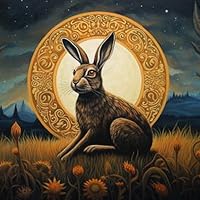
Into this space Caine brings the people that are the most important to him – his father, his former wife, his godlike adversary and a new mysterious woman called only by her occupation: the horse-witch. They spend their time on a desolate plain debating philosophy and morality, metaphysics and the practicalities of assassination. The best way I can describe these chapters that represent almost half of the novel (the other half is a series of violent action involving one of Caine's avatars doing what he does best: killing stuff and foul-mouthing everybody) is as a round-table debate between Leto Atreides ("God Emperor of Dune"), Gorgik ("Neveryona") and Atticus Finch ("To Kill a Mockinbird")
Here's the thing: this place is a real place, but it's also a metaphor, just like the sword is a metaphor but still a real sword. Just like I am. You need to understand that so are you. We're each here to represent something.
Atticus Finch is actually in the story, not one of my quirky similes. Caine blames him for why he has become a sobriquet for murder with prejudice, blaming his father for being a hopeless idealist unfit to face the realities of a dystopian society.
Atticus f—ing Finch made him believe there are things more important than winning. [...] he made my father believe that how you lose can change people, and that changing people changes the world.
Caine doesn't believe in the better side of our human nature. He's seen us at our worst, both on Home and on Overworld. (For Caine, order is delusion: a film of rationality we create to veil the random brutality of existence. His narrative arc leads from one state of chaos to another. ) And he's tired of the whole shebang, wondering if it isn't better to let the whole universe expire in a sea of flames. The only people he cared about (his father, his ex-wife, his daughter, his former friend turned arch enemy) have been brought down by the existing world order, often with a helping push from Caine himself. Only the newcomer, the horse-witch, seems to still believe there is another side to Caine's personality.
"I know you," she repeats. "You're the walking knife. The shapeshifter's echo. The shadow cast by darkness and scars."
Caine and the Blind God that rides his soul are thus pitched in battle against chaos, against a corrupt order of Knights that enslaves his adopted tribe of oggrilloi and against the 1% of fat cats back on Earth that would exploit the resources of Overworld and export the politics of Home to this fantasy alternate universe. To make a long and confusing story short – Caine must travel back and forth through time and through potential turning points until he is in a position to reunite two superpowerful artifacts that are also metaphors for existence : The Hand of Justice must meet the Blade of War. Meaning that somehow Caine must make the ones in Power obey the rules of Ethics. This, or kill the bastards and be done with it.
"So if I understand the question, the choice is either to leave the world – the universe, reality, whatever – as it is, in all its darkness and despair, or to make, ah, mmm ... one thing ... happen the way I wish it had happened."
also, An Aspect is what we call a body created or taken by an Ideational Power – a god like Khryl – to express his will. Autotheurgic is just a fancy way to say that you are the answer to your own prayer.
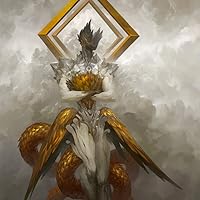
Caine and his several Avatars in this last novel achieve godlike status through this prayer thing to Ideational Powers. Khryl is the god of Justice, the horse-witch is something to do with healing and forgiveness ( "You were what you were. Now you can be what you are. You did what you did. Now you can do what you do." ), Pallas-Ryll is about nature and rebirth, the Blind God is Chaos, Mael K'oth is Order. But the most important Aspect / metaphor might be Caine's own father Duncan – the wife beater, alcoholic loser that once subscribed to the Atticus Finch school of thought.
If anybody had given my father a choice, he would have lived and died a gentle man. He believed – he believes – that the use of force degrades, and eventually destroys, civil society. He believes that hands are for helping people up, not for knocking them down.
You're probably aware that I do not share his opinion.
The novel (heck, the whole series) turns into a debate about our thirst for violent entertainment and our admiration for ruthless, venal people that equate success with power. Caine, the avatar of destruction, is a mirror held out to our own psyche.
"Just before I killed him, Purthin Khlaylock told me 'fear of God is the beginning of wisdom.' I think he was wrong. I think the more you fear God, the scarier God gets. Fear His Anger, and He starts tossing thunderbolts and earthquakes and whatever. Fear His punishment, and He gives you eternal damnation. People need to know they don't have to be afraid. It's 'God' who needs to be afraid."
Replace God in this statement with the oppressive religion or autocratic government of your choice, and you can expand the discussion to current affairs, something most well written speculative fiction does.
"To have better gods, be better people"
Right now, Caine is the god we deserve.
What about 'Caine's Law' from the title? At first you imagine is something like "an eye for an eye", but don't get too comfortable in your assumptions. Without giving away too much from this plotless, philosophical final novel, there's more to Caine than his talent for killing.
You could say that he's doing it for Love in the abstract sense – for the right to love, and the chance to be loved. Not for himself. For everyone. He would deny this, angrily, because he thinks the abstract is where good things turn bad, and he may be right. That is a matter too deep for me. I can tell you that there is nothing abstract in his love; his love is specific, and concrete. Love is his law. His only law.
This is the final battle for actor Hari Michaelson, the second half of the story began in Caine Black Knife , and the stakes couldn't be higher. Its not only Overworld that is threatened, or the people back home on our own planet. It's the whole fabric of reality that is about to unravel because the Gods are no longer restrained by the Covenant of Pirichanthe – a long ago treaty that forbids the Gods from intervening directly into the affairs of men. And the person responsible for the whole mess is none other than Caine. Now he wants to put Humpty Dumpty back together, but it may be more than one man can carry on his shoulders, even one that is secretly ridden by one of the escaped Gods.
I'm in awe. He's killed people, and saved people. He's fought monsters, and he's fought people who became monsters. He's saved kingdoms and toppled empires. Now he has set himself against the gods to save a universe ...
I recommend reading this immediately after book 3 because there are a lot of references to past events, even from the first two books. Mr. Stover took a gamble here and experimented heavily with continuity and alternate realities, making the journey through this last episode a deliberately twisted path that only resolves in the last couple of pages. Because one of the things Gods are good at is messing with the fabric of time.
See, the whole point of being a god is that there's no such things as consequences, right? You don't like how something turned out, you reach into reality and stir it around until you get something you like better.
The solution to this paradox is for Caine to set up camp outside reality, in a virtual space that doesn't follow the established rules of physics or causality. Think of it like the place a shaman visits in one of his out of body journeys.
"If this isn't a dream or my afterlife, what is it?"
"Complicated.[...] I can't explain it. Language fails. The easiest way to think of it is that everything happens right now. Even though it doesn't. Consequences can precede causes. There are causes that have effects only when they never happen."
"Chaos."
also, "What the hell are you talking about?"
"Powers have been loosed upon the world who would make the future more frantic than a lunatic's nightmare, and make the past less than words you might write with your finger on the surface of this river."
Into this space Caine brings the people that are the most important to him – his father, his former wife, his godlike adversary and a new mysterious woman called only by her occupation: the horse-witch. They spend their time on a desolate plain debating philosophy and morality, metaphysics and the practicalities of assassination. The best way I can describe these chapters that represent almost half of the novel (the other half is a series of violent action involving one of Caine's avatars doing what he does best: killing stuff and foul-mouthing everybody) is as a round-table debate between Leto Atreides ("God Emperor of Dune"), Gorgik ("Neveryona") and Atticus Finch ("To Kill a Mockinbird")
Here's the thing: this place is a real place, but it's also a metaphor, just like the sword is a metaphor but still a real sword. Just like I am. You need to understand that so are you. We're each here to represent something.
Atticus Finch is actually in the story, not one of my quirky similes. Caine blames him for why he has become a sobriquet for murder with prejudice, blaming his father for being a hopeless idealist unfit to face the realities of a dystopian society.
Atticus f—ing Finch made him believe there are things more important than winning. [...] he made my father believe that how you lose can change people, and that changing people changes the world.
Caine doesn't believe in the better side of our human nature. He's seen us at our worst, both on Home and on Overworld. (For Caine, order is delusion: a film of rationality we create to veil the random brutality of existence. His narrative arc leads from one state of chaos to another. ) And he's tired of the whole shebang, wondering if it isn't better to let the whole universe expire in a sea of flames. The only people he cared about (his father, his ex-wife, his daughter, his former friend turned arch enemy) have been brought down by the existing world order, often with a helping push from Caine himself. Only the newcomer, the horse-witch, seems to still believe there is another side to Caine's personality.
"I know you," she repeats. "You're the walking knife. The shapeshifter's echo. The shadow cast by darkness and scars."
Caine and the Blind God that rides his soul are thus pitched in battle against chaos, against a corrupt order of Knights that enslaves his adopted tribe of oggrilloi and against the 1% of fat cats back on Earth that would exploit the resources of Overworld and export the politics of Home to this fantasy alternate universe. To make a long and confusing story short – Caine must travel back and forth through time and through potential turning points until he is in a position to reunite two superpowerful artifacts that are also metaphors for existence : The Hand of Justice must meet the Blade of War. Meaning that somehow Caine must make the ones in Power obey the rules of Ethics. This, or kill the bastards and be done with it.
"So if I understand the question, the choice is either to leave the world – the universe, reality, whatever – as it is, in all its darkness and despair, or to make, ah, mmm ... one thing ... happen the way I wish it had happened."
also, An Aspect is what we call a body created or taken by an Ideational Power – a god like Khryl – to express his will. Autotheurgic is just a fancy way to say that you are the answer to your own prayer.
Caine and his several Avatars in this last novel achieve godlike status through this prayer thing to Ideational Powers. Khryl is the god of Justice, the horse-witch is something to do with healing and forgiveness ( "You were what you were. Now you can be what you are. You did what you did. Now you can do what you do." ), Pallas-Ryll is about nature and rebirth, the Blind God is Chaos, Mael K'oth is Order. But the most important Aspect / metaphor might be Caine's own father Duncan – the wife beater, alcoholic loser that once subscribed to the Atticus Finch school of thought.
If anybody had given my father a choice, he would have lived and died a gentle man. He believed – he believes – that the use of force degrades, and eventually destroys, civil society. He believes that hands are for helping people up, not for knocking them down.
You're probably aware that I do not share his opinion.
The novel (heck, the whole series) turns into a debate about our thirst for violent entertainment and our admiration for ruthless, venal people that equate success with power. Caine, the avatar of destruction, is a mirror held out to our own psyche.
"Just before I killed him, Purthin Khlaylock told me 'fear of God is the beginning of wisdom.' I think he was wrong. I think the more you fear God, the scarier God gets. Fear His Anger, and He starts tossing thunderbolts and earthquakes and whatever. Fear His punishment, and He gives you eternal damnation. People need to know they don't have to be afraid. It's 'God' who needs to be afraid."
Replace God in this statement with the oppressive religion or autocratic government of your choice, and you can expand the discussion to current affairs, something most well written speculative fiction does.
"To have better gods, be better people"
Right now, Caine is the god we deserve.
What about 'Caine's Law' from the title? At first you imagine is something like "an eye for an eye", but don't get too comfortable in your assumptions. Without giving away too much from this plotless, philosophical final novel, there's more to Caine than his talent for killing.
You could say that he's doing it for Love in the abstract sense – for the right to love, and the chance to be loved. Not for himself. For everyone. He would deny this, angrily, because he thinks the abstract is where good things turn bad, and he may be right. That is a matter too deep for me. I can tell you that there is nothing abstract in his love; his love is specific, and concrete. Love is his law. His only law.

November 5, 2012
I've rated this book lower than the other books in the series. The reason is not that "in it's way" it's not as good, but that simply as "a novel" it's not as good or as satisfying.
This book is set in a shifting universe of temporal anomalies and philosophical epiphany. It's in many ways far more philosophical debate than it is a novel. There is a story-line buried within the points that are being made built upon what we've seen go before and the "events" swirling around Caine/Hari/John here. I found the story still interesting and I also found the debates interesting (though didn't always agree with the conclusions being drawn). I think if you found the other books interesting mainly for the conflict and action this one may leave you cold. On the other hand if the main character's journey from who he's been to who he's being is the draw, then it will be more to your taste.
As for the book itself...subjectively, I didn't find it quite as satisfying. The Horse Witch mostly just annoyed me and I didn't find her much of a character. The character of Caine/Hari/John et al still sounds and acts about the same but the shift in book style here makes some of that almost anticlimactic. His vocabulary/dialogue is still salted every second or third word with a profanity, obscenity or crudity but here it sort fell flat. It didn't carry the "gut wrench kick" that it did earlier.
In the end I thought the book in many ways went in a circle. Of course dealing with [as said] temporal anomalies that may not be a big surprise. It may in fact be the/a point. So...3 stars but I'm still willing to read others by the author. The earlier installments of this series are very well done and recommended a bit more than this one. Of course if you're like me, you'll "need" to finish and tie said series up. :)
This book is set in a shifting universe of temporal anomalies and philosophical epiphany. It's in many ways far more philosophical debate than it is a novel. There is a story-line buried within the points that are being made built upon what we've seen go before and the "events" swirling around Caine/Hari/John here. I found the story still interesting and I also found the debates interesting (though didn't always agree with the conclusions being drawn). I think if you found the other books interesting mainly for the conflict and action this one may leave you cold. On the other hand if the main character's journey from who he's been to who he's being is the draw, then it will be more to your taste.
As for the book itself...subjectively, I didn't find it quite as satisfying. The Horse Witch mostly just annoyed me and I didn't find her much of a character. The character of Caine/Hari/John et al still sounds and acts about the same but the shift in book style here makes some of that almost anticlimactic. His vocabulary/dialogue is still salted every second or third word with a profanity, obscenity or crudity but here it sort fell flat. It didn't carry the "gut wrench kick" that it did earlier.
In the end I thought the book in many ways went in a circle. Of course dealing with [as said] temporal anomalies that may not be a big surprise. It may in fact be the/a point. So...3 stars but I'm still willing to read others by the author. The earlier installments of this series are very well done and recommended a bit more than this one. Of course if you're like me, you'll "need" to finish and tie said series up. :)

April 5, 2014
I didn't understand half of what happened in this book and I'm not sure the half I did understand made any sense, but fuck me like a goat if I didn't enjoy it anyway.
April 6, 2012
Matthew Stover has, in this book, repudiated everything that made the first three so kickass. Before this book Caine was more powerful than some, less powerful than others, and absolutely ruled when he was in his element. But he spends this whole book staging a cosmic coup and putting together a kind of Ultimate Power Committee in order to overthrow essentially every power structure and god in both worlds and redeem Caine in the eyes of some chickenshit liberal cocktail party crowd Stover's trying to impress.
This book employs Stupid Time Travel. If you do decide to read it, don't bother wasting effort trying to figure out who is who when or in what incarnation or from what universe, or which God is more powerful than what God. There's no logic or causality to it. Things happened the way they needed to happen in order to get the ending Stover was looking for, and they happen in no other way. Nothing happens naturally.
This book reminds me of the Harry Potter series, where Rowling would introduce a completely new and unheard of aspect of magic in every book in order to get the plots to happen the way she wanted them to. Stover turned the reality of this series on its head in order to make a happy ending. I don't buy it.
This book employs Stupid Time Travel. If you do decide to read it, don't bother wasting effort trying to figure out who is who when or in what incarnation or from what universe, or which God is more powerful than what God. There's no logic or causality to it. Things happened the way they needed to happen in order to get the ending Stover was looking for, and they happen in no other way. Nothing happens naturally.
This book reminds me of the Harry Potter series, where Rowling would introduce a completely new and unheard of aspect of magic in every book in order to get the plots to happen the way she wanted them to. Stover turned the reality of this series on its head in order to make a happy ending. I don't buy it.

April 4, 2012
This is another book that just came too late for me; I remember loving the first Caine duology and also the first half of the duology ending here, but when I opened this one I realized that I kind of forgot most of what was about except in a vague sense. I did a quick refresh and i realized that I simply cannot suspend disbelief any more for the ultimate simplistic super hero taking revenge on an unjust society storyline which this series amounts too in the end; yes, the hero is complicated, with dark impulses but when all is said and done there is very little depth and nuance; anger, violence in droves but I couldn't find the magic of a few years ago and I simply did not care about the hero, the secondary characters or the the setting
A four star for the first books, but this one on its own would have been a two star book as I felt I wasted my time with it
A four star for the first books, but this one on its own would have been a two star book as I felt I wasted my time with it

April 19, 2012
Four and a half stars, really. I've been a fan of Matthew Stover for a very long time, and have read all his books set in his own worlds and most of the ones from SW or other book franchises. I loved Heroes Die and Blade of Tyshalle, was slightly less enthralled with Caine Black Knife because that book felt like it was going for shock value and grotesqueness over plot at times.
But I'm reviewing Caine's Law now. You definitely want to be familiar with the other books in the Caine series before reading this one- you'll need to know more about the secondary characters and about past plot points. This book avoided the pitfalls of falling too much into violence and bloodsplatter like the previous book did; in fact; fight scenes are surprisingly absent for a Caine book. Not that they're entirely gone, though- no worries.
The back page says that "Matthew Stover thinks that pretty much all there is to know about him can be found in his books"- maybe not an exact quote. To me, this means that the author has changed his philosophy about writing. He's always been an excellent writer- he can move a plot, write an action scene, make a vivid and fascinating setting, and portray psychologically complex characters. Either his personal or his writing philosophy has changed: this book is much more about the power of love and friendship, where previous books were about survival of self and family at all costs. This book is about metaphysics and metaphor, not nearly as Nietzschian and grim. I thought about what this book was saying during and after the reading of it. The author wants to entertain, but I also think that he wants to leave you with something after you're done munching the popcorn. I know there were layers that I didn't get and references that I didn't catch, but I still think the premise was much more about self-acceptance and less about whistling in the dark.
The minus half star is because I'm not sure how all the vignettes in the the hung together. Don't know what was real and what wasn't, and I'm not sure I'm supposed to know. It felt a bit like this book was written in many different parts and then pieced together, and I'm not sure all the scenes "really happened" or were necessary to the plot- although the plot of this book is almost impossible to explain. And plot isn't the point, the interior journey of the hero is the point. I also think I lost some nuances because it's been too long since I've read the previous books in the series- it would be good to reread them before getting into this book, hardly an onerous chore with Stover books.
I wish I knew if Stover was going to write more books. His website seems to be down- any other fans know the score? It would be a real shame not to get anything more from this author.
But I'm reviewing Caine's Law now. You definitely want to be familiar with the other books in the Caine series before reading this one- you'll need to know more about the secondary characters and about past plot points. This book avoided the pitfalls of falling too much into violence and bloodsplatter like the previous book did; in fact; fight scenes are surprisingly absent for a Caine book. Not that they're entirely gone, though- no worries.
The back page says that "Matthew Stover thinks that pretty much all there is to know about him can be found in his books"- maybe not an exact quote. To me, this means that the author has changed his philosophy about writing. He's always been an excellent writer- he can move a plot, write an action scene, make a vivid and fascinating setting, and portray psychologically complex characters. Either his personal or his writing philosophy has changed: this book is much more about the power of love and friendship, where previous books were about survival of self and family at all costs. This book is about metaphysics and metaphor, not nearly as Nietzschian and grim. I thought about what this book was saying during and after the reading of it. The author wants to entertain, but I also think that he wants to leave you with something after you're done munching the popcorn. I know there were layers that I didn't get and references that I didn't catch, but I still think the premise was much more about self-acceptance and less about whistling in the dark.
The minus half star is because I'm not sure how all the vignettes in the the hung together. Don't know what was real and what wasn't, and I'm not sure I'm supposed to know. It felt a bit like this book was written in many different parts and then pieced together, and I'm not sure all the scenes "really happened" or were necessary to the plot- although the plot of this book is almost impossible to explain. And plot isn't the point, the interior journey of the hero is the point. I also think I lost some nuances because it's been too long since I've read the previous books in the series- it would be good to reread them before getting into this book, hardly an onerous chore with Stover books.
I wish I knew if Stover was going to write more books. His website seems to be down- any other fans know the score? It would be a real shame not to get anything more from this author.

December 4, 2020
Notes:
When I started the book, I really wanted Hari/Caine to kick ass and he did. Stover managed to write a fairly abstract themed series with concrete characters, brutal action, many dives into the various inner psyche and wrap it all up with a tidy bow at the end.
A part of me did not want certain things to be laid out in clear manner but I'm glad it happened the way it did. I really wish he wrote more books. He's still alive and kicking. Maybe it'll happen!
**I really do need to sit down and write a review for the series. I should get around to that some day. =P
Recommendation:
You can read the first two books of the Acts of Caine and get a great adventure story.
The third book is a combination of transition, fill in important blanks and setup for the final novel.
The last book would be impossible to admire in all of it's wacko glory without reading the whole series. There's a lot going on in this book. Great stuff to scramble your brains and light up your imagination.
The books were a wonderful, epic fantasy with a splash or two of SF. I'll definitely re-read the books. =)
When I started the book, I really wanted Hari/Caine to kick ass and he did. Stover managed to write a fairly abstract themed series with concrete characters, brutal action, many dives into the various inner psyche and wrap it all up with a tidy bow at the end.
A part of me did not want certain things to be laid out in clear manner but I'm glad it happened the way it did. I really wish he wrote more books. He's still alive and kicking. Maybe it'll happen!
**I really do need to sit down and write a review for the series. I should get around to that some day. =P
Recommendation:
You can read the first two books of the Acts of Caine and get a great adventure story.
The third book is a combination of transition, fill in important blanks and setup for the final novel.
The last book would be impossible to admire in all of it's wacko glory without reading the whole series. There's a lot going on in this book. Great stuff to scramble your brains and light up your imagination.
The books were a wonderful, epic fantasy with a splash or two of SF. I'll definitely re-read the books. =)

February 16, 2016
From the foreword of this book I knew I would love it!! This book could be hard to follow if you don't pay attention!! After the third book Caine Black knife I was left with quite a bit of head scratching about what was going on with the plot almost like I was missing content. This book filled in the blanks. Now with all that I have said, YOU absolutely have to read the foreword before you read this book. If you cannot get your mind around the concept(s) presented this book will be a complete waste of your time and read like a hot mess. The plot is as erratic as a child with a.d.d. on WAY too much sugar so you have to buckle up and keep both eyes firmly open.

November 16, 2022
DNF at 19%
Confusing as hell. Abstract concepts that aren't explained. Complete different direction (as with every book in this series). Not much that I can see of Caine being Caine (as in book 1). I have no idea what the point to this story is at all. Nope.
Confusing as hell. Abstract concepts that aren't explained. Complete different direction (as with every book in this series). Not much that I can see of Caine being Caine (as in book 1). I have no idea what the point to this story is at all. Nope.

July 25, 2023
A weirdly metaphysical and mind-bending finale to one of my new favourite series. I didn’t quite understand it, but I loved it anyway

April 28, 2023
Patīkams sērijas noslēgums, Kains sērijas laikā ir ļoti daudz piedzīvojis un šajā grāmata jau ir nokļuvis citā līmeni. Jāsaka, ka ne viss, ko izlasīju man bija saprotams pilnībā, un domāju, ka tas ir piedodams, ja pat pats galvenais varonis ik pa laikam šokējas, kā gan tas ir iespējams... Bet nu dievu spēlīšu noteikumi jau ir ļoti īpaši, un ja vēl ir iesaistīti ceļojumi laikā....
April 4, 2012
As what will probably be the final book in the series, what could easily have been a bittersweet book (by any standards) ends up being a surprisingly heartwarming affair.
... Of course, seeing as this is a book about Caine by Matthew Stover, one must remember that everything is relative. One of the most heartwarming and tender moments of the entire series is framed with the story of a person who suffered even more than Hari/Caine.
Caine's Law continues the non-linear approach from Caine Black Knife, but cranks it up to 11 with at least five different threads (and a few one or two chapter fibres) that don't necessarily converge (There is a reason that the most used phrase in the book is "It's complicated").
Does Caine's Law provide true closure to the story we have read over the years? No, there are lot's of unresolved issues at the end of the book. And that's okay. Because this isn't a series about Home or Earth/Hell. This isn't even a series about the adventures of Caine.
This is a series about Hari/Caine/Fist/Shade himself, and Caine's Law definitely resolves that. Hari/Caine/Fist/Shade, and the reader, finally understand him, as much as anyone could.
And bonus points for managing to introduce a character who is even better at the Role of Caine (as of Heroes Die) than Caine himself was.
... Of course, seeing as this is a book about Caine by Matthew Stover, one must remember that everything is relative. One of the most heartwarming and tender moments of the entire series is framed with the story of a person who suffered even more than Hari/Caine.
Caine's Law continues the non-linear approach from Caine Black Knife, but cranks it up to 11 with at least five different threads (and a few one or two chapter fibres) that don't necessarily converge (There is a reason that the most used phrase in the book is "It's complicated").
Does Caine's Law provide true closure to the story we have read over the years? No, there are lot's of unresolved issues at the end of the book. And that's okay. Because this isn't a series about Home or Earth/Hell. This isn't even a series about the adventures of Caine.
This is a series about Hari/Caine/Fist/Shade himself, and Caine's Law definitely resolves that. Hari/Caine/Fist/Shade, and the reader, finally understand him, as much as anyone could.
And bonus points for managing to introduce a character who is even better at the Role of Caine (as of Heroes Die) than Caine himself was.
March 22, 2012
Po kolejnej odsłonie serii mogę powiedzieć tylko jedno: Uwielbiam Caine'a. Ta postać jest wręcz genialna - największy twardziel w historii literatury jakiego spotkałem, chociaż już zdeczko podstarzały i (jak wiedzą Ci, którzy czytali poprzednie części), dość mocno sfatygowany, ale jak widać to mu wcale nie przeszkadza. Caine'a ciężko jest zaklasyfikować - to nie jest postać ani dobra ani zła. Choć robił takie rzeczy w życiu, że mogłoby to wypełnić biografię niejednego czarnego charakteru. Jest w nim też sporo pozytywów, szczególnie dba o tych, których kocha, a każdemu kto będzie próbował zrobić im krzywdę jest w stanie zgotować prawdziwe piekło. Niewątpliwie, główny bohater jest najmocniejszą stroną tej serii.
A o czym jest sama książka? Określiłbym ją jako kolejną odsłonę konfliktu pomiędzy dwoma światami - Ziemią z bardzo odległej przyszłości i Nadświatem, krainą typowo "fantasy" - magia, inne rasy, bogowie, itp. Relacje pomiędzy tymi światami, dawno już odbiegły od tych przedstawionych w pierwszej części, gdzie wydawało się, że Nadświat jest tylko miejscem, które dostarcza Ziemianom rozrywki, nieświadomym istnienia innej rzeczywistości. Konflikt szaleje na całego, a teraz do zabawy włączają się jeszcze bogowie...no i oczywiście Caine.
Zmienił się też sposób opowiadania historii. Autor pomieszał trochę w chronologii, dorzucił mnóstwo wątków oraz pewien dość popularny w sci-fi motyw, którego jednak nie zdradzę (ahh te spoilery). To co pozostało, to wartka akcja,ciekawe postacie i świetne dialogi (uwaga dużo "łaciny", jak ktoś nie lubi..), a wyszła z tego całość, od której ciężko się oderwać.
A o czym jest sama książka? Określiłbym ją jako kolejną odsłonę konfliktu pomiędzy dwoma światami - Ziemią z bardzo odległej przyszłości i Nadświatem, krainą typowo "fantasy" - magia, inne rasy, bogowie, itp. Relacje pomiędzy tymi światami, dawno już odbiegły od tych przedstawionych w pierwszej części, gdzie wydawało się, że Nadświat jest tylko miejscem, które dostarcza Ziemianom rozrywki, nieświadomym istnienia innej rzeczywistości. Konflikt szaleje na całego, a teraz do zabawy włączają się jeszcze bogowie...no i oczywiście Caine.
Zmienił się też sposób opowiadania historii. Autor pomieszał trochę w chronologii, dorzucił mnóstwo wątków oraz pewien dość popularny w sci-fi motyw, którego jednak nie zdradzę (ahh te spoilery). To co pozostało, to wartka akcja,ciekawe postacie i świetne dialogi (uwaga dużo "łaciny", jak ktoś nie lubi..), a wyszła z tego całość, od której ciężko się oderwać.

August 9, 2017
Another solid addition to the Caine series (perhaps the conclusion? It's hard to tell...), and probably the most ambitious of the four. Stover dives straight into the deep end with this one, juggling time-travel (kinda?), parallel timelines (probably?), events erasing the existence of other events (I think?), and general chaos.

December 26, 2023
4.5 stars

April 5, 2012
A preamble, if you will. Matthew Stover is one of my three or five favorite speculative fiction writers. Trying to write this review, I admit now, I felt intimidated and not sure if my abilities are up to the task of doing right by what Stover did in this novel, with the Acts of Caine, and up to the task of not completely gushing with fanboy joy at hearing Caine’s voice once again. Here goes…
The not-so-straightforward narrative not only changes POV character and voice, but time / history as we see a young Duncan Michaelson before he’s married and a father, a young Hari Michaelson while he’s a boy in the hospital where his mother dies, and an older grizzled Caine, among other character time-points. One of, if not the central question, of the narrative is whether or not one would change a past event filled with regret, given the opportunity. A simple question, on the surface, but of course the implications of such a question are more interesting than the question itself. To summarize the plot any more would be an injustice to the multiple branches of the narrative Stover leads the reader, but suffice it to say Caine’s Law is a novel about heroes and gods, past and present, power and manipulation. It’s about saying fuck you to the people trying to hold you down, control you and mess with your family; it’s about love and honor; and sometimes about being the right guy even if that means not being the good guy all the time. Simple enough, right? Didn’t think so.
As I was reading the novel, I could not get out of my head the resonance of the overall theme and feeling I felt between Caine’s Law and the great ”Last Superman Story” Whatever Happened to the Man of Tomorrow by Alan Moore. The same sense of nostalgia, past coming forward to effect the present, and almost bittersweet melancholia pervaded the story for me. By many, Alan Moore is considered the greatest storyteller in the history of comic books and his “Last Superman Story” is considered a defining moment for the character and quite possibly the template by which any hero should get their sendoff from being a hero. Put another way, it’s a comic book story I have to revisit very regularly because to me, it’s just that damned good. With Caine’s Law, Stover has achieved very much a similar effect with Caine’s story and supposed send off in this novel. I only say supposed because The Acts of Caine was never intended to be a series and two of the books in the series were, according to Stover himself, written as the last story for Caine.
The full review can be read here: http://www.sffworld.com/brevoff/833.html
The not-so-straightforward narrative not only changes POV character and voice, but time / history as we see a young Duncan Michaelson before he’s married and a father, a young Hari Michaelson while he’s a boy in the hospital where his mother dies, and an older grizzled Caine, among other character time-points. One of, if not the central question, of the narrative is whether or not one would change a past event filled with regret, given the opportunity. A simple question, on the surface, but of course the implications of such a question are more interesting than the question itself. To summarize the plot any more would be an injustice to the multiple branches of the narrative Stover leads the reader, but suffice it to say Caine’s Law is a novel about heroes and gods, past and present, power and manipulation. It’s about saying fuck you to the people trying to hold you down, control you and mess with your family; it’s about love and honor; and sometimes about being the right guy even if that means not being the good guy all the time. Simple enough, right? Didn’t think so.
As I was reading the novel, I could not get out of my head the resonance of the overall theme and feeling I felt between Caine’s Law and the great ”Last Superman Story” Whatever Happened to the Man of Tomorrow by Alan Moore. The same sense of nostalgia, past coming forward to effect the present, and almost bittersweet melancholia pervaded the story for me. By many, Alan Moore is considered the greatest storyteller in the history of comic books and his “Last Superman Story” is considered a defining moment for the character and quite possibly the template by which any hero should get their sendoff from being a hero. Put another way, it’s a comic book story I have to revisit very regularly because to me, it’s just that damned good. With Caine’s Law, Stover has achieved very much a similar effect with Caine’s story and supposed send off in this novel. I only say supposed because The Acts of Caine was never intended to be a series and two of the books in the series were, according to Stover himself, written as the last story for Caine.
The full review can be read here: http://www.sffworld.com/brevoff/833.html

April 11, 2012
Caine's Law is tough to summarize. The plot leaps around like flubber on crack, except that that's not insane enough to illustrate the degree to which most of the chapters fail to hang together.
It reads like a series of unrelated short stories involving assorted versions of the main characters. It's explained in the prologue that these events might be happening, or could happen, or are happening out of order, or didn't unhappen, or something. A weird framing device has Caine pin his father--who's brain dead somewhere else with cables coming out of his eyesockets...isn't he?--to the ground with his sword while people who are not who they are (yes I typed that correctly) come and talk to him. It's exactly as unclear as it sounds.
Okay, the ending did tie much of it together--and in fairly awesome fashion--but not all of it. And I still have a bald spot above one ear from all the head-scratching.
Caine's Law was for me the first disappointment of the series. I think this was the first time I've ever felt too stupid for whatever I was reading....and I'm still waiting eagerly for book 5. Sigh.
It reads like a series of unrelated short stories involving assorted versions of the main characters. It's explained in the prologue that these events might be happening, or could happen, or are happening out of order, or didn't unhappen, or something. A weird framing device has Caine pin his father--who's brain dead somewhere else with cables coming out of his eyesockets...isn't he?--to the ground with his sword while people who are not who they are (yes I typed that correctly) come and talk to him. It's exactly as unclear as it sounds.
Okay, the ending did tie much of it together--and in fairly awesome fashion--but not all of it. And I still have a bald spot above one ear from all the head-scratching.
Caine's Law was for me the first disappointment of the series. I think this was the first time I've ever felt too stupid for whatever I was reading....and I'm still waiting eagerly for book 5. Sigh.
April 8, 2012
An excellent ending to the Caine series. Caine's Law does what I've come to expect from the Caine books - a mixture of violent sword&sorcery, and overarching social commentary. This book does reference the other books heavily, and shifts location and time period with little warning - being familiar with the previous books is absolutely necessary to understanding this latest book. While this sort of skipping around can be aggravating and confusing, it is used to good effect if you're already familiar with the Caine storyline, and Stover knows how to gradually build understanding out of seemingly random pieces.
I hadn't read the first books very recently, and spent about half of Caine's Law frustrated, not sure if I was supposed to remember references or if they were new 'teasers'. I would absolutely recommend rereading the first books before tackling Caine's Law, or be prepared for some confusion and frustration. It still feels like a strong book, and I was able to pick up the threads enough to enjoy it. I intend to reread the entire series to better follow Caine's Law on re-read.
I hadn't read the first books very recently, and spent about half of Caine's Law frustrated, not sure if I was supposed to remember references or if they were new 'teasers'. I would absolutely recommend rereading the first books before tackling Caine's Law, or be prepared for some confusion and frustration. It still feels like a strong book, and I was able to pick up the threads enough to enjoy it. I intend to reread the entire series to better follow Caine's Law on re-read.

March 11, 2017
Normally I start reviews with a mini-plot summary but I won't do that here, because trying to condense Caine's Law down to a paragraph without indulging in major spoilers or causing my brain to leak out of my nose is simply impossible.
What Caine's Law is, however, is the fourth and to date final book in the Acts of Caine series. Future sequels are possible but this book provides enough closure that the series can end here if necessary. It's also the second half of the previous novel, Caine Black Knife, which ended on a series of cliffhangers which Caine's Law does - eventually - resolve. It does take its sweet time doing so, however because Stover's primary focus in the rest of the book is tapping on his readers brains until they turn into confused mush.
Caine's Law takes place before, during and after Caine Black Knife. It riffs on elements from Blade of Tyshalle, and events that took place between that book and the first novel, Heroes Die. It explains exactly how some rather implausible events in earlier books really unfolded. It has time travel and alternate timelines, and uses the term 'unhappen' a lot. Events in the deep back-history of Overworld are explained. Major characters reappear, despite some of them being very dead indeed.
This is the sort of book where a very clear, action-adventure chapter (and few authors do action-adventure as well as Stover) can be followed by an interrogation sequence where both captors and captive spend most of their time debating the literary merit of To Kill a Mockingbird. Chapters featuring heavy magic use and explosive set pieces sit alongside explorations of a key thematic element involving horses and how they see the world. Caine being a smart-arse and swearing a lot is mixed up with discussions on the nature of reality, friendship and acceptance. Caine confronts the demons of his past and deals with them, sometimes maturely, sometimes by kicking them in the balls, and sometimes by making sure they never happened at all. If the Acts of Caine series wrong-foots the audience with each book being a shift in gear and almost genre, Caine's Law delights in wrong-footing them chapter by chapter.
This is a novel that is severely confusing and ultimately you have to stop trying to understand it and instead read each section (the book is broken up into episodes) on its own merits. Eventually the book's mind-shredding narrative structure coalesces into something that does make sense. In the wrong hands this would be disastrous, but Stover ensures that even when you can't see how a particular episode fits into the overall structure of the novel and the series, it's still enjoyable on its own terms. As usual his actions scenes as visceral and vivid, his characterisation is nuanced and complex and his worldbuilding is sublime. The novel is also as 'grimdark' as anything in the genre but also has a very powerful commentary on issues such as gender relations and power imbalances without every getting preachy.
Caine's Law (*****) feels like a collaboration between Richard Morgan and Christopher Priest, but with an attitude and energy that is 100% Stover. Intelligent, thought-provoking, action-packed and featuring a recursive narrative structure that borders on genius, Caine's Law is a totally different kind of fantasy novel, and confirms this series as the most criminally underread series in the genre. The novel is available now in the USA and as an ebook-only release in the UK.
What Caine's Law is, however, is the fourth and to date final book in the Acts of Caine series. Future sequels are possible but this book provides enough closure that the series can end here if necessary. It's also the second half of the previous novel, Caine Black Knife, which ended on a series of cliffhangers which Caine's Law does - eventually - resolve. It does take its sweet time doing so, however because Stover's primary focus in the rest of the book is tapping on his readers brains until they turn into confused mush.
Caine's Law takes place before, during and after Caine Black Knife. It riffs on elements from Blade of Tyshalle, and events that took place between that book and the first novel, Heroes Die. It explains exactly how some rather implausible events in earlier books really unfolded. It has time travel and alternate timelines, and uses the term 'unhappen' a lot. Events in the deep back-history of Overworld are explained. Major characters reappear, despite some of them being very dead indeed.
This is the sort of book where a very clear, action-adventure chapter (and few authors do action-adventure as well as Stover) can be followed by an interrogation sequence where both captors and captive spend most of their time debating the literary merit of To Kill a Mockingbird. Chapters featuring heavy magic use and explosive set pieces sit alongside explorations of a key thematic element involving horses and how they see the world. Caine being a smart-arse and swearing a lot is mixed up with discussions on the nature of reality, friendship and acceptance. Caine confronts the demons of his past and deals with them, sometimes maturely, sometimes by kicking them in the balls, and sometimes by making sure they never happened at all. If the Acts of Caine series wrong-foots the audience with each book being a shift in gear and almost genre, Caine's Law delights in wrong-footing them chapter by chapter.
This is a novel that is severely confusing and ultimately you have to stop trying to understand it and instead read each section (the book is broken up into episodes) on its own merits. Eventually the book's mind-shredding narrative structure coalesces into something that does make sense. In the wrong hands this would be disastrous, but Stover ensures that even when you can't see how a particular episode fits into the overall structure of the novel and the series, it's still enjoyable on its own terms. As usual his actions scenes as visceral and vivid, his characterisation is nuanced and complex and his worldbuilding is sublime. The novel is also as 'grimdark' as anything in the genre but also has a very powerful commentary on issues such as gender relations and power imbalances without every getting preachy.
Caine's Law (*****) feels like a collaboration between Richard Morgan and Christopher Priest, but with an attitude and energy that is 100% Stover. Intelligent, thought-provoking, action-packed and featuring a recursive narrative structure that borders on genius, Caine's Law is a totally different kind of fantasy novel, and confirms this series as the most criminally underread series in the genre. The novel is available now in the USA and as an ebook-only release in the UK.
October 9, 2020
A review of the whole series:
1: Heroes Die is great. The dynamic between the two worlds is great, and all the forces on Caine play off each other in great ways, and Caine himself is a great protagonist. Gritty, bloody, and very funny. This is the best book in the series. The ending is very conclusive, and the book works great standalone.
2: Blade of Tyshalle is good. Shockingly introspective, but still a violent action filled book. The competing forces around Caine are just as good as in the first book, if not better. The black goo felt out of place, and didn't sit well with me as a plot device. Not as good as the first book, but still enjoyable. The ending was so conclusive I wasn't sure how the series could continue.
3: Caine Black Knife is just okay. The flashback sections are great, but the main timeline is pretty weak. Caine doesn't have the tension around his actions that made the first two books so good, and the actual main story isn't super engaging. This book has to be read with book 4, as they are sort of two sides of the same story, with book 4 having the real ending.
4: Caine's Law is the weakest book in the series. While it was interesting trying to figure out how the scenes presented tied back into Caine Black Knife, they didn't make for an interesting story. There was no tension around Caine's actions, and even less of an actual goal. Lots of random scenes trying to justify the ending and talking about how neat horses are. The ending it does give you is not noticeably better than the one in Blade of Tyshalle. Caine is still a fun protagonist, and piecing everything together is neat, but the book isn't great.
I'd treat the first book as a standalone, and if you are interested in reading more and seeing a more fitting conclusion, read the first two as a duology. The last two should really just be read if you loved Caine as a protagonist and would read anything about him. I don't regret reading them, but I can't say I really recommend them.
1: Heroes Die is great. The dynamic between the two worlds is great, and all the forces on Caine play off each other in great ways, and Caine himself is a great protagonist. Gritty, bloody, and very funny. This is the best book in the series. The ending is very conclusive, and the book works great standalone.
2: Blade of Tyshalle is good. Shockingly introspective, but still a violent action filled book. The competing forces around Caine are just as good as in the first book, if not better. The black goo felt out of place, and didn't sit well with me as a plot device. Not as good as the first book, but still enjoyable. The ending was so conclusive I wasn't sure how the series could continue.
3: Caine Black Knife is just okay. The flashback sections are great, but the main timeline is pretty weak. Caine doesn't have the tension around his actions that made the first two books so good, and the actual main story isn't super engaging. This book has to be read with book 4, as they are sort of two sides of the same story, with book 4 having the real ending.
4: Caine's Law is the weakest book in the series. While it was interesting trying to figure out how the scenes presented tied back into Caine Black Knife, they didn't make for an interesting story. There was no tension around Caine's actions, and even less of an actual goal. Lots of random scenes trying to justify the ending and talking about how neat horses are. The ending it does give you is not noticeably better than the one in Blade of Tyshalle. Caine is still a fun protagonist, and piecing everything together is neat, but the book isn't great.
I'd treat the first book as a standalone, and if you are interested in reading more and seeing a more fitting conclusion, read the first two as a duology. The last two should really just be read if you loved Caine as a protagonist and would read anything about him. I don't regret reading them, but I can't say I really recommend them.

April 22, 2012
This is another case of a very satisfying ending. Matthew Stover's writing is both beautiful and absolutely disgusting at the same time (an interesting talent, I may add). There were so many mind blowing action scenes, and some eloquently written passages. Anytime Caine makes reference to To Kill a Mockingbird, you always knew something significant was about to happen. In some ways, I wish I had more to say, but I found myself speechless through the last fifty pages. It was just so damn satisfying. The whole series is highly recommended.
May 15, 2012
I've been anticipating this book the way that I used to look forward to Christmas. It wasn't quite what I expected. It was better than that. Take Tolkien without the boring bits, add in some Moorcock, Gaiman, gratuitous profanity, time travel, violence, and salt it with a little Orwell and you've got Caine's Law. It was awesome. Don't start with Caine's Law, of course. You must first read Heroes Die, and Blade of Tyshalle, and Caine Black Knife. I would reread them all, but someone has stolen my copies.

May 26, 2016
I will write a proper review on this later. I am such a fan of non-liner storytelling and have been for a long time. This book was beautiful. I could wax lyrically on its execution... and I will, but just now I am eating some delicious peanut butter and cinnamon sugar toast before it goes cold.

January 4, 2018
The structure of this book was too confusing. Some chapters were great and the ending was allright. Decent end to the series I gues. Not too impressed.

April 2, 2025
I legitimately do not know where to rank this novel in the series. When things are sensible and Caine is progressing as a character, the series is arguably at its best. While not a bad novel by any way shape or form, I felt like Matthew Stover went a little crazy with the whole timeline-warping stuff to the point where me being confused by when and where I was at wound up detracting a bit from my enjoyment. I actually loved the character of the horse witch as well as the new Actor that befriended Caine. I say all this like I won’t immediately pick up and read then next book set in the Caine universe, whenever it drops
8.25/10
8.25/10

August 22, 2013
Com Caine’s Law, Mathew Stover encerra uma série extremamente viciante de fantasia brutal misturada com ficção científica. O experimentalismo e a quebra de clichês chegam a um nível impressionante com esse livro. Caine’s Law é a segunda parte da história iniciada em Caine Black Knife, e amarra todos os acontecimentos desde o primeiro livro da série, o Heroes Die.
Caine’s Law é uma piração total, comparado com os outros livros. Como resultado de um evento cataclísmico que alterou o espaço tempo, a própria narrativa espelha esse evento, se fragmentando em várias linhas narrativas em diversos momentos no tempo e no espaço da saga. Essas narrativas exploram mais ainda a alma de Caine e a natureza do universo em que vive. E, de maneira impressionante, o autor usa de conceitos da física quântica para abordar os paradoxos gerados pela fragmentação do espaço tempo, tudo isso dentro de uma história de ação que mistura os gêneros de fantasia brutal e ficção científica distópica.
Caine’s Law reafirma a minha predileção para a literatura como um dos melhores meios de se contar uma história. Falar que a saga Caine leva a literatura de fantasia a novas fronteiras é fazer pouco da complexidade dos temas abordados na série.
Os temas recorrentes na série Acts of Caine aparecem e se delineiam com mais força em Caine’s Law. Homem versus os deuses que ele mesmo cria, a questão da identidade, do pessoal versus o abstrato, do pragmatismo versus o idealismo e o papel da violência na própria formação da psicologia humana são retomados e expandidos. E a ação continua visceral e muito bem escrita, mostrando que a experiência com artes marciais do autor se traduziu muito bem no papel.
Caine’s Law é um trabalho mais amadurecido e não recomendado para leitores iniciantes de fantasia. A trama é complexa (apesar de tudo se encaixar no final), ambígua, amoral, com muita profanação, sexo explícito, violência, discussões pesadas e humor negro; ou seja, tudo que me fascinou nos primeiros livros da série, porém com mais intensidade.
A série Acts of Caine precisa ser lida desde o começo, para que o leitor sinta a intensidade da obra. Recomendadíssimo!
Caine's Law na Amazon
Caine’s Law é uma piração total, comparado com os outros livros. Como resultado de um evento cataclísmico que alterou o espaço tempo, a própria narrativa espelha esse evento, se fragmentando em várias linhas narrativas em diversos momentos no tempo e no espaço da saga. Essas narrativas exploram mais ainda a alma de Caine e a natureza do universo em que vive. E, de maneira impressionante, o autor usa de conceitos da física quântica para abordar os paradoxos gerados pela fragmentação do espaço tempo, tudo isso dentro de uma história de ação que mistura os gêneros de fantasia brutal e ficção científica distópica.
Caine’s Law reafirma a minha predileção para a literatura como um dos melhores meios de se contar uma história. Falar que a saga Caine leva a literatura de fantasia a novas fronteiras é fazer pouco da complexidade dos temas abordados na série.
Os temas recorrentes na série Acts of Caine aparecem e se delineiam com mais força em Caine’s Law. Homem versus os deuses que ele mesmo cria, a questão da identidade, do pessoal versus o abstrato, do pragmatismo versus o idealismo e o papel da violência na própria formação da psicologia humana são retomados e expandidos. E a ação continua visceral e muito bem escrita, mostrando que a experiência com artes marciais do autor se traduziu muito bem no papel.
Caine’s Law é um trabalho mais amadurecido e não recomendado para leitores iniciantes de fantasia. A trama é complexa (apesar de tudo se encaixar no final), ambígua, amoral, com muita profanação, sexo explícito, violência, discussões pesadas e humor negro; ou seja, tudo que me fascinou nos primeiros livros da série, porém com mais intensidade.
A série Acts of Caine precisa ser lida desde o começo, para que o leitor sinta a intensidade da obra. Recomendadíssimo!
Caine's Law na Amazon
January 26, 2013
Have you ever read a book and felt like you were talking to yourself? Well, it you haven't, it's a weird feeling. It's like someone got inside your head, pulled everything that you think and feel out and wrote it all down in a far more eloquent and sensible way than you ever could. Weird.
Anyway, that was this book for me. I'm now a little bit worried.
If you haven't read any of the other Acts of Caine, this is NOT the place to start. Caine's Law and Caine Black Knife are like two sides of the same coin: They flip back and forth between the two timelines, and timelines that are far before or slightly after both.
Once again, Stover's action kicks major amounts of ass. Caine is still a badass, even if he's trying to finally be a little less of an asshole. Plot in this particular book gets crazy though. Time is not stable and the book is told in flashes. I love that shit. I makes you work for the story and gives the book an incredible depth.
In keeping with his other works, there is quite a bit of philosophy and commentary going on this book. It's not an author filibuster like a lot of Blade of Tyshalle, but it's quite clearly there. Once again, I love mixing philosophy and adventure, so that was a big draw for me.
Finally, the characters are so well done. This is the case in all of the Acts of Caine, but in this book some formerly minor characters really take on their own lives. We get to know Duncan Michaelson, Tyrkilld, Angvasse Khlaylock and several other former redshirts well, and they take on important roles. We also get to see more of Orbek, who is sometimes funnier and snarkier than Caine himself. Stover also introduces my favorite character of all time, the horse-witch. She is what she is and always will be, and through her, we finally come to understand Caine. With the horse-witch, Stover manages to make some absolutely profound comments on the nature of love.
Overall, I loved this book. All the usual warnings about violence and language apply, but definitely recommended.
Anyway, that was this book for me. I'm now a little bit worried.
If you haven't read any of the other Acts of Caine, this is NOT the place to start. Caine's Law and Caine Black Knife are like two sides of the same coin: They flip back and forth between the two timelines, and timelines that are far before or slightly after both.
Once again, Stover's action kicks major amounts of ass. Caine is still a badass, even if he's trying to finally be a little less of an asshole. Plot in this particular book gets crazy though. Time is not stable and the book is told in flashes. I love that shit. I makes you work for the story and gives the book an incredible depth.
In keeping with his other works, there is quite a bit of philosophy and commentary going on this book. It's not an author filibuster like a lot of Blade of Tyshalle, but it's quite clearly there. Once again, I love mixing philosophy and adventure, so that was a big draw for me.
Finally, the characters are so well done. This is the case in all of the Acts of Caine, but in this book some formerly minor characters really take on their own lives. We get to know Duncan Michaelson, Tyrkilld, Angvasse Khlaylock and several other former redshirts well, and they take on important roles. We also get to see more of Orbek, who is sometimes funnier and snarkier than Caine himself. Stover also introduces my favorite character of all time, the horse-witch. She is what she is and always will be, and through her, we finally come to understand Caine. With the horse-witch, Stover manages to make some absolutely profound comments on the nature of love.
Overall, I loved this book. All the usual warnings about violence and language apply, but definitely recommended.

May 17, 2012
Stover falls into the trap of over-writing this installment, much as he did with "Blade of Tyshalle" two books ago. If you're going to write a non-linear book, then it should serve some grand purpose, but I'm not sure if this one wouldn't have been even better if Stover had just written it near chronologically. As it is, with all the time jumps, it's very difficult to read and follow, and there are certain things that don't quite hang together by the end. That being said, there is one nice "a-ha" moment right toward the end that pays off a portion of the time-skipping structure.
The individual pieces/chapters/sections are brilliantly written and absolutely engrossing at all turns. Caine's history is deepened in a satisfying way, and there are many memorable scenes throughout. I never get tired of reading about Caine, and everything I love about him is on display throughout this novel.
The individual pieces/chapters/sections are brilliantly written and absolutely engrossing at all turns. Caine's history is deepened in a satisfying way, and there are many memorable scenes throughout. I never get tired of reading about Caine, and everything I love about him is on display throughout this novel.

March 5, 2015
Forget story lines. That done, I was rewarded with sequences which frankly made my heart (or whatever the fuck) soar with delight. For this I rated „Caine Black Knife“ 5 stars and became a fan. I got that here, too.
What I also got is Caine ( = self declared bad guy) refusing the offer of casual sex because he is „with someone“. Which unfortunately does not mean you get to read about meaningful sex with this someone. This horse witch relationship stuff is just too sentimental. (However, I wish them all the best.)
Also, I know Caine’s Dad is sick, not himself a lot of the time. Still, I’m not getting over his beating Mommy to death quite as easily as Caine does.
Family values…
So, 4 stars this time.
What I also got is Caine ( = self declared bad guy) refusing the offer of casual sex because he is „with someone“. Which unfortunately does not mean you get to read about meaningful sex with this someone. This horse witch relationship stuff is just too sentimental. (However, I wish them all the best.)
Also, I know Caine’s Dad is sick, not himself a lot of the time. Still, I’m not getting over his beating Mommy to death quite as easily as Caine does.
Family values…
So, 4 stars this time.
Displaying 1 - 30 of 141 reviews