Jump to ratings and reviews
Rate this book

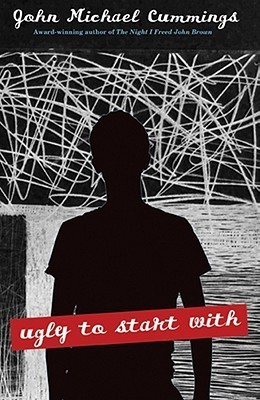
Ugly to Start With

Rate this book
Jason Stevens is growing up in picturesque, historic Harpers Ferry, West Virginia in the 1970s. Back when the roads are smaller, the cars slower, the people more colorful, and Washington, D.C. is way across the mountains—a winding sixty-five miles away.
 

Jason dreams of going to art school in the city, but he must first survive his teenage years. He witnesses a street artist from Italy charm his mother from the backseat of the family car. He stands up to an abusive husband—and then feels sorry for the jerk. He puts up with his father’s hard-skulled backwoods ways, his grandfather’s showy younger wife, and the fist-throwing schoolmates and eccentric mountain characters that make up Harpers Ferry—all topped off by a basement art project with a girl from the poor side of town.


Ugly to Start With punctuates the exuberant highs, bewildering midpoints, and painful lows of growing up, and affirms that adolescent dreams and desires are often fulfilled in surprising ways.

168 pages, Paperback

First published October 1, 2011

2 people are currently reading
49 people want to read

About the author

John Michael Cummings

5 books12 followers
I'm the author of three novels, two novellas, and more than one hundred short stories. My debut novel, The Night I Freed John Brown (Penguin Group, 2008), won The Paterson Prize for Books for Young People and was selected for Black History Month by USA Today. Ugly To Start With (West Virginia University Press, 2011) was a finalist in the Foreword INDIES Book of Year Award. Don't Forget Me, Bro (Stephen F. Austin University Press, 2016) was widely excerpted in the Chicago Tribune. My nonfiction has been published by New York Daily News, The Providence Journal, and The Newark Star-Ledger. My short stories have appeared in Kenyon Review, North American Review, and The Iowa Review. I was a finalist in the Miami University Novella Contest, a semi-finalist in the Winnow Press 2004 First Book Award for Fiction, was twice-nominated for the Pushcart Prize, and received an Honorable Mention in The Best American Short Stories series. I taught English at Seminole State College of Florida and wrote business news for the Fairfax Times and alternative news for the Utne Reader. I hold a BA in studio arts and graphic design from George Mason University and an MFA in creative writing from University of Central Florida.

My short story collection The Spirit in My Shoes is forthcoming from Cornerstone Press/University of Wisconsin (November 2023). To pre-order directly from the press, email: cornerstone.press@uwsp.edu

Ratings & Reviews

What do you think?
Rate this book

Friends & Following

Create a free account to discover what your friends think of this book!

Community Reviews

5 stars
12 (12%)
4 stars
32 (33%)
3 stars
34 (35%)
2 stars
9 (9%)
1 star
8 (8%)
Displaying 1 - 30 of 86 reviews
Profile Image for Joseph.
Author 11 books103 followers
March 19, 2012
This was reviewed at my site, JV Radio Pictures by Garry Puffer

Ugly to Start With is a novel of the 1970’s, written in the first person by teenager Jason Stevens, who dreams of being an artist and getting out of Harper’s Ferry,

Full disclosure: I am basically a genre reader. I love mysteries, science fiction, horror, police procedurals, etc. I used to read “serious” literature, but I seldom do any more. I am less interested in a character’s inner being or with a writer’s pyrotechnics than I am in what happens. I love intricate plots, I hate inner monologues and literary flashiness. I do not even care much about character development these days, that sine qua non of serious writing.

That said, this is one of the finest novels I have ever read. John Michael Cummings has created an irresistible literary work that can stand with the best.

I guess it qualifies as a novel, although it is really a series of short stories, each one different and each one truly excellent, all connected but not with a single plot line. It reminds me of Susan Straight’s marvelous Aquaboogie, and it is Susan Straight who leads off the list of adulatory quotes about this book.

Although the narrator is a teenager, this is not really a young adult novel. One story deals with a parent’s unfaithfulness, one with sexual impropriety in the community, one with spousal abuse, one with interracial sex, and one with Jason using a deaf character to practice his Tourette’s imitation. Even the stories with less adult topics are not really written with the teenage reader in mind. Jason lays out some very uncomfortable events often with little indication that he understands the ramifications. He is, after all, a teenager, but not a teenager who sees with the eyes of an adult, so often the case with writing like this.

Jason’s family pretty much defines dysfunctional. His mother (“I could see every one of her forty-seven years whittled out to the end of her nose.”) lives one step away from reality and his father doesn’t allow any visitors into his house because he is ashamed of it (although he claims he doesn’t want anyone to see his collection of precious, restored guns). He either fails to fix things to make it better or he fixes them in a half-assed way, such as when he installs sewage plumbing above ground using clear plastic pipe, which exposes the family’s flushes to anyone watching the pipes, not to mention that the pipes often come apart, spewing toilet paper and worse over the yard. The mother, in a later story, moves one-half step closer to reality by evicting the father from this house.

Every story is a gem, but my two favorites are “The Scratchboard Project” and “Ugly to Start With.” The former finds Jason going “across the tracks” to Bolivar to the home of a black family to sketch his schoolmate Shanice for an art project he needs to do well on in order to pass art. His reasons for choosing Shanice, whom he does not really like and doesn’t even know very well, remain obscure to him until Shanice exposes them. The dialogue is crisp and perfect, and the story is as good a study in race relations as I have ever read. The unusual resolution is made to seem inevitable by Cummings’ precise writing.

The title story, especially for animal lovers, is a heart-wrenching look at how we can treat those we once loved when they no longer make us comfortable.

I cannot recommend this book highly enough. Eight stars out of five.
Profile Image for Grady.
Author 51 books1,820 followers
January 13, 2012
'Full of hollers, twisting roads, and shadows.'

John Michael Cummings writes short stories like few other authors. Though his latest book - UGLY TO START WITH - is posted as a series of short stories, what it seems to this reader is a series of memory vignettes of not only a young boy Jason growing up in Harper's Ferry, West Virginia, but also a running dialogue of what it feels like taking the steps to becoming an adult for any boy. It is 'full of hollers, twisting roads, and shadows', to quote a description of this twisted little town. And that is what makes it more universal, more than just a quasi-camouflaged autobiographical novel by a lad who learned life's lessons in the shadow of an abusive, poverty tainted family in the historical but crumbling chards of an old American town not far from the nation's capitol. His writing style is appropriately bleak, terse, and so rich in imagery that, just as Jason's mother doesn't need to visit Italy because she has a book of pictures of that foreign place, we feel we have witnessed Harper's Ferry after reading this collection of thirteen window stories.

At times it is disturbing to read this book of short stories, thinking that there is some linear pattern, some semblance to an examination of the maturing of the book's main character. If that seems to be the case when reading this book, then jump around and read the stories out of order. That increases appreciation for the gifts of Cummings' writing skills. The title story of the book, 'Ugly to start with' concerns a feral cat (Skinny Minnie) who at first provides comfort to Jason while he is confined to his bed with a case of shingles, but the story progresses until after some cat fights the Skinny Minnie is increasingly absent and becomes target practice for Jason's BB gun: the spectrum of relationships, whether to animals or to family or to friends rises out of the dust of this tale. Jason's need for relating to a girlfriend is the subject of 'The Fence', a study in demarcations between families challenged but not only the approach/avoidance of a young boy and girl, but of a wandering father's secrets. 'Two Tunes' wanders through a family's idiosyncrasies as to being an active member of a tourist attraction town or maintaining the slovenly shack they call home. The stories contain some highs and some hurtful lows that influence the way Jason will remember childhood and adolescence that will mold his adult life.

For this reader the strongest story in the book, and certainly the most challenging for readers is 'Carter' - a tale of Jason's introduction to and affiliation with a lonely old bisexual man, an experience that as well as any described in literature defines the panic at a young lad's facing his own concerns about his sexuality. Every word, every pause, every moment of description is superb, brave writing, and after reading this pungent story there will be little doubt that John Michael Cummings is a major new talent.

Grady Harp
Profile Image for Sheila.
Author 85 books190 followers
March 13, 2012
Short stories aren’t the same as novels. And literary shorts aren't even as simple as stories. They start somewhere after the beginning of the tale and end before the conclusion—at least, the ones I enjoy best do that, leaving the reader chasing after something precious, haunted by the need to catch up then hauntingly breathless as words run out.

John Michael Cummings’ Ugly to Start With is a set of literary stories that works just as well as a novel. Think Olive Kitteridge, or better still Kermit Moyer’s The Chester Chronicles. The stories have been published in various journals before, so you know from the start the writing will be good. But together they form a powerfully evocative novel of a young man’s coming-of-age in the wrong part of 1970s Harpers Ferry, West Virginia. Washington D.C., only sixty-five miles away, might as well be on the moon, as might the gated community where Jason’s grandfather lives, or the ramshackle squalor of an African American town next door. A poor boy in an increasingly affluent city, a small boy in a world of the muscled and strong, an artist where finer sensibilities are generally despised, Jason’s struggles to fit in and find friendship play over a backdrop of junkyard, mountain and town, where the passage of time really does change things and people, and death is just a part of life, whether of cat or friend or family.

As I read the later stories in this collection I found myself thinking of Beethoven’s symphonies. Okay, it's a strange analogy I suppose, but I remember that feeling of a perfect ending, that moment when you want to pause and take breath and think “Wow,” but the music plays on, to another wow, to another, until the end. A friend tried to teach me musical appreciation and said Beethoven’s 'problem' was he didn’t know how to end, but it’s also part of what makes his music unique.

In John Michael Cummings’ stories I found the same feeling—the end of a scene, the indrawn breath, the “Wow,” but the story’s not done. I almost wished there were chapter divisions, or blank lines (perhaps there were and I missed them on my kindle) or some other separator so I could pause for longer. But I read on to another Wow, and on.

Recurring characters become vivid and real. The world shrinks and expands. Washington and dreams of art draw closer. And this collection of stories ends with one final “Wow” and the feeling I’ve just read a classic.

It’s billed as young adult but I don’t suppose I’m young, so can’t it be for all of us?


Disclosure: I received a free ecopy of this novel from the author in exchange for my honest review.
Profile Image for Paige.
381 reviews618 followers
August 18, 2017
Check out my review here: http://thepaige-turner.blogspot.com/2...
Ugly To Start With is, by far, unlike any other book I have ever read. The book doesn't have a definitive plot and is, rather, a collection of short stories that are told through the point of view of Jason Stevens. Jason is a teenager growing up in Harper's Ferry, West Virginia in the 70's and throughout the short stories we see how he explores many different aspects not only of himself, but of his town, and the social pressures surrounding him and his family.
I really liked this book! I don't really read short stories, and I've certainly never read a book that had short stories that were all strung together, but it worked! It felt like the story was moving faster and since it was a looser style of writing, more adventures were told. I think if this book had had a singular plot then we wouldn't have discovered as much as we did about Jason, his family, his town, and most importantly, his own thoughts surrounding all the events that he encountered.
Jason has such a fresh way of telling things like they are, but he still has a boyish innocence that leads him to making mistakes (isn't that how all teenage years are though?). Was I able to relate to Jason? Not too much, mainly because he grew up in a different time period, but he was still easy to root for and I wanted to see where his follies would take him.
The end was a little bit of a cliff-hanger for me! I was disappointed that I couldn't learn what was going to happen next, but that left room for me to fill in my own fantasies about what Jason would go on to see and experience. Maybe it wasn't a cliff-hanger then, but more of an open-to-interpretation sort of ending.
Of course Jason could be a snob at times, but he always had his reasons for his actions. As a struggling artist, who has to put up with his ornery father, and neighborhood of gossiping women and no-nonsense men, Jason lives a very confused life it seems. For this reason he is often confused about which action to take in certain situations, but this leads to a more exciting stories of ups and downs.
This was such a quick and easy read and I flew through the book because I always was curious as to what crazy situation Jason would get himself into next. I would definitely read more books like this if they're out there because this really made me appreciate short stories more. This was also a great historical fiction read!
Profile Image for Heather.
176 reviews19 followers
May 28, 2012
Jason Stevens is a boy growing up in Harper's Ferry, West Virginia in the 1970's. His family doesn't have a lot of money and he is often treated unfairly by the people he cares about. The book is actually a collection of true short stories that are combined under one main character, Jason. The stories chronicle different periods of time in his life and how he survived them.

The earlier chapters of the book deal with Jason and his family. The family is embarrassed by their small house and rarely do they let anyone inside. Whenever anyone does get inside the entire family is tense and jumpy. Jason's father is verbally abusive and takes out his shortcomings on Jason. There's a chapter that deals with Jason's friends, one of whom is homosexual and another who is mentally retarded.

In each chapter another issue comes in to play and we find how Jason reacts to it. The issues run the gauntlet from family problems and infidelity to sexuality and racism. I found that the way Jason acts in each of these situations is very realistic though not consistent. He often acts one way in one situation but then does a complete 180 in another situation. This is most likely because each chapter is a story from a different person.

The book is different from most books I've read though it is enjoyable. It's thought provoking on so many different issues. It's a little hard to follow at times because because it jumps around so much.

I also enjoyed this collection because I live fairly close to Harper's Ferry and was able to picture many of the places the author was writing about. Many of the families in my area are similar to Jason's family and the entire book felt very real to me.

I give this book 3 out of 5 stars.
Profile Image for Owen.
209 reviews
November 17, 2012
I was thinking this one over overnight. It's not like any other book (young adult or anything else) that I have read. Ugly To Start With explores new elements in fiction for young adults. The small town portrayed in this book is so different than the ones I've experienced. Harpers Ferry is more messed up then most, but there is also a strange feel of community.


The book is about a boy named Jason growing up in Harpers Ferry, West Virginia during the 1970s. He has a dysfunctional family and the town is often subject to trouble. Many people in this town are kind of weird, but together they make a community. In the book Jason explores his sexuality, tries to understand his family, and experiences adolescent life. The chapters (which are actually short stories) portray different events that shape Jason as a person.


There isn't much I can say about the plot. Basically, the story just describes Jason and how he grows up. I'm guessing a lot of this comes from the author's own experiences. The language in Ugly To Start With is so vivid and I could imagine Harpers Ferry in my head. The way the author wrote this book suggested that it isn't fiction, but real life. All of the characters are excellent and they add a lot to the story, despite their brief appearances. My favorite was probably Shanice.


I apologize for the short review. I am not really sure how to review a book like this. I just want to say that I loved this book and it is so original.I highly recommend it to anyone that is looking for a great book to read. It is only 168 pages long, but often great stories are found in short books and this is one of them. It is easily better than a lot of YA books I have read recently. Definitely check this one out.

Profile Image for Holly.
1,908 reviews128 followers
December 8, 2011
I was given a free copy of this by the author, so I feel obliged to give a good review of it while sharing my real opinion. And by "good", I mean worthwhile to read, not necessarily that I give it high marks just to give it high marks. It has to earn those.

This is the story of Jason Stevens, a young boy growing up in Harper's Ferry, West Virginia, in the 1970s. Unlike a traditional story, this is more of a compilation of short stories taken from distinct moments in his early teen years.

I didn't think I was going to like choppy quality that comes with a fragmented story. But by the end, I did. It fit Jason and told his story effectively. Yes, it was quite choppy and there was really no way to know if the stories were even in chronological order, but it didn't really need to be. One thing that was made more difficult by the writing structure was character development. Really, none of the characters showed up in more than one or two stories, besides Jason and his parents. So it was really hard to get a handle on characters when you knew they weren't going to show up again.

I usually don't read books like this, so I feel like I may not be the best judge of its quality. All I can tell you is that I did generally like it. There were a few short stories that didn't sit well with me for various reasons, but they told the story they needed to in order to create a more complete picture of Jason. For that reason, I can't really complain.
Profile Image for Idris.
113 reviews21 followers
August 26, 2011
Ugly to Start With is a book that has 13 chapters and each chapter represents a different story, but all the stories talk about Jason, a young boy who lives in West Virginia in the 1970s, and also talk about his family and his friends. So, in each chapter we have the opportunity to read about different issues and problems in his life, problems that kids of his age can find, like family problems, infidelity, sexuality, sex and racism.

This book was a big surprise for me, first, because I hadn't had the opportunity to read a book like this before, and also because even though it talks about important things about real life, the author kept it very simple so it's really easy to read, enjoyable, witty and sometimes sad. I read it in one day (It only has 160 pages) and I couldn't put it down until I finished. And finally, because it's very realistic, and I'm sure readers of all ages will find similarities with their own live.

So, what can I say? I really enjoyed this book, and I recommend it to young adults and adults who like realistic and short stories about boys and how they see the life they have around them. This book does not disappoint.
Profile Image for Dana Burgess.
246 reviews35 followers
March 23, 2012
Throughout this book, the one recurring thought I had was that I wanted to reach in and pull Jason out. I felt so sorry for this sweet boy growing up poor in such a hugely dysfunctional family. It often seemed like there was no one on his side - although he was his mother's favourite. Jason is like no one else he knows. He is artistic - soft. It takes almost the entire book before we realize that he is actually most like the one person in his life that he has the hardest time connecting with.

ugly to start with is dark but compelling. Mr Cummings does a great job of drawing the reader into Jason's life and experiences. The first chapter change confused me, mostly because I was expecting continuity. Instead, the chapter breaks move the reader through time and circumstances. It was a startling shock the first time but once I knew to expect it, things got better. Many of the events of Jason's life are very disturbing and off putting but it's like a train wreck - I just couldn't quit reading.
1 review1 follower
November 22, 2011
Cummings perfectly describes the weird, wild West Virginia that he grew up in. His Harper's Ferry (and Charles Town and Bolivar) are painted perfectly, from the petty possessiveness of those who have too little, to the odd smugness of those who have just a little more. I grew up just ten miles away from where this book is set, and too often felt as though I was reading my own story. Like Stephen Dedalus caught in the meanness of parochial Dublin, Cummings' Jason Stevens is a sensitive, intelligent child trapped in a tacky, tawdry, heartbreakingly realistic world that's just an hour outside of D.C., but completely out of the reach of the narrator. And like in Joyce's Portrait, Cummings shows us everything--the hollers, the government town, the neighborhood denizens--through the eyes of an intelligent narrator, but one who gives us the information and lets us draw our own conclusion. This intriguing collection will stay with you long after you've finished the last story.
Profile Image for Jordan.
3 reviews1 follower
March 25, 2012
The only real failing of this novel was with the person reading it. Me, that is. I wasn’t prepared for what was a novel of short stories strung together by the characters – more specifically and obviously, the narrator – they had in common. This, admittedly, is a gray area that my brain struggles with; I tend to prefer either a nice book of unconnected short stories or a nice novel and I have difficulty with anything in between. Like The House on Mango Street? I understand why people like it but, personally, fuck that shit. That said, however, I think it really means something that I am looking forward to giving Ugly to Start With another go at some point.

It took a good couple of stories for me to warm up to Jason and his world, and I think this is mostly because of the way these stories introduce the subject matter. I read recently in an article that I linked to on how to know how much backstory is enough and how much is too much for a short story, and it immediately hit me that Cummings practiced exactly what this article dictates to a T: the set-up and backstory included is only as much as is needed for the individual story.

Here’s why I had trouble with that though: I’m not very well traveled and I admit it openly. I’m not proud of it but it’s a fact. Despite the fact that West Virginia is a matter of minutes away from me, I cannot automatically come up with a feeling for the mountains of West Virginia on command. Why does this matter? Faulkner has Yoknapatawpha County, Cummings has Harpers Ferry, and both I had to develop a feel for over time. The short story approach, however, made it more difficult for me to piece together what Jason’s home and surroundings are like.

Let’s take this bit by bit.

“The World Around Us”: I don’t trust my assessment of the first few stories for the reasons I mentioned before. At this point, I had no idea what I was reading yet. I liked the idea of this story, but I still had a completely incorrect perception of who Jason was and what his mother was like. In retrospect, I want to reread this story as a juxtaposition of a rugged and cosmopolitan artist – Jason’s ideal? – with his meek, backwoods mother.

“Two Tunes”: This story gave me a much better idea of Jason’s family and living situation. I especially appreciated Jason’s father, who is quite a character (for lack of a better word) but never totally ventures into caricature. My favorite bit of the story is when there are visitors in the house and Jason and his brothers are trying oh-so-discretely to figure out who is in trouble:

"Downstairs, Dad was going into his “personality routine.” That’s what we called it, when he tried to be all smiles and jokes. It was his disguise, his way to make himself seem happy when inside he was as ornery and twisted up as a piece of petrified hickory – twisted up from all those years working at the post office and living among tourists in Harpers Ferry.

He was talking loud, too. That was his way of alerting Mom to keep the kitchen door shut so that Marty couldn’t see in.

When I began crawling down the stairs on my stomach like and alligator, Andy and Greg backed up. As I peered down into the living room, I saw Marty’s tall body cramped down under our low ceiling. Every time he started talking, he’d stand up straight, and when his ranger hat hit our ceiling, mashing down over his head, he’d duck down again."

“Ugly to Start With”: This story about a cat who hangs around at Jason’s home just long enough to begin to feel like a pet is heart-wrenching in the truest sense of the words. Jason being forced to listen as Skinny Minnie is simultaneously dying slowly and refusing to die skips right over the sad animal story cliche and plunges straight into the horror of how and why a person can actually cross their fingers in hopes of a tragedy. Truth be told, I’m actually hoping to teach this story to my students next year.

“The Fence”: If we weren’t already clear that Jason’s father is nuts, we are in this story. The best thing about it, however, is watching Jason’s father mock him for the exact feelings and behaviors that he himself eventually seems to have been guilty of.

“We Never Liked Them Anyway”: If the book weren’t actually titled Ugly to Start With, I would want this to be the book’s title. This story actually reminded me of the recent issue of One Story, Stephen Ornes’s “Hilarious, in the Wrong Way.” Both stories involve somewhat of a confrontation of a bully, either directly or indirectly, but this is not the focal point of either story. While the narrator of Ornes’s story mourns the fact that he has difficulty mourning a death, Jason takes out frustration and confusion regarding the alleged indiscretions of a respected member of the community and his own mother’s reaction to this news. This story was one of my favorites in the book.

“The Wallet”: Whether or not he should be, Billy may be my favorite character in the entire book. I can’t remember the last time I read a more pitiable character that, again, did not ever actually fall into caricature. Billy does not, though he is a complete mess. I was anticipating exasperation at a story of a woman whose husband is an abusive alcoholic and blah blah blah… Thankfully, we get to know Billy more than we do Melinda in this story, and the effect is, again, heart-wrenching. I quoted my favorite part of this story – maybe my favorite part of the entire book – on my last Thursday’s Random Read. That part of the story broke my heart. We all know it makes for a better story to make the bad guy appealing, but it’s only a truly talented storyteller who can give us a seemingly black-and-white situation like Billy and Melinda, make me buy it, and then make me genuinely devastated when Melinda doesn’t give him (or his wallet) another thought.

“Rusty Clackford”: This is a very funny story, albeit a little sad. Jason is invited into Rusty Clackford’s home in Pipertown, and being invited to dinner in Pipertown in his dad’s eyes is “the best mark of a man”… even if that dinner is canned spaghetti and squished Wonder Bread. Rusty Clackford is old, shriveled, inconveniently (or conveniently?) deaf, and seems not to know that his wife is dead. Jason’s visit with Rusty begins in this way:

"As I rapped on the paint-blistered door of Rusty’s whitewashed shack, I could see him through the screen window, eating. I knew from looking at him he wouldn’t hear a dozen pots and pans if you dropped them at his feet. So I went to the screen window nearest him and yelled in point-blank. Still no response. His veiny, ugly profile just went on staring at the TV and chewing like a skinny dying cow. So I went around the house to the far window behind the TV, where he’d have no choice but to see me if I waved long enough.

By the time I got there, he had stood and was now teetering over to the window I had just been at. Unwisely, I started yelling out from this side of the house, too. The TV was louder over here – no chance he’d hear me. I hurried back around the house. But by the time I got back to the first window – you guessed it – the old fool was shuffling over to the second window, where I had unwisely yelled from. And no amount of additional yelling would stop him. Yelling only created sounds Rusty could never catch up to. I decided to wait it out on the front step. Eventually he’d think to check there.

Sure enough, a good five minutes later he came to the door in a dingy tee-shirt and rumpled tan pants held up with red suspenders. No socks or shoes, though."

In retrospect, though, one of the most effective things about this story is that it comes a couple of spots ahead of “Carter.”

“Mountain Wake”: My favorite thing about this story is the very relate-able feeling of embarrassment at being shown off by a parent.

“John Brown the Quaker”: On the flip side, my favorite thing about this story is how protective Jason feels of his father, despite his father’s insanity. I know I’m not the only one, but I do consider myself an expert in the field of I-will-complain-about-my-father-all-I-want-but-don’t-you-dare-say-a-word-about-him, and Cummings captures it perfectly in Jason’s uneasiness at making his father the butt of the community’s jokes...

"The man dressed up as the Civil War soldier said he had heard that Bill Stevens had a gun collection that would rival Grant’s 42nd militia. Everyone laughed again. I looked at Mr. Collins, but he looked almost as embarrassed and helpless as I was. All I could do was laugh along, the makeup on my face cracking in a thousand places – across the forehead, around the chin."

“Carter”: My favorite story of the book. A fresh version of a child molestation story, if you can imagine. Oprah blew people’s minds once upon a time when she said that one of the horrifying things about being molested as a child is that it feels “good” and a child’s brain struggles to reconcile that feeling with the obvious confusion and shame involved. Cummings captures this perfectly in the story of Jason’s encounter with a pedophile that both fascinates and horrifies him...

"I felt my mouth about to pop open in laughter. There were other fags in Boatwright Junction, and we teased them, but never got within a mile of them. We had to yell names at them from the hill. But this was an old man who was gay,and it had never occurred to me that an old man could be gay or, for that matter, that a gay man could be old. But here one was, old like my grandfather, though he didn’t sound like my grandfather at all. All my grandfather ever talked about was how the railroad was disappearing, how the Orioles were having another bad season, and how much effort it took to grow pumpkins every year."

We almost expect Carter to be just another loony old man, much like Rusty Clackford, until things quickly turn not sinister, but troubling.

“Indians and Teddy Bears Were Here First”: There is nothing worse than a letdown, and Jason is let down tremendously when his grandfather 1) has married a younger, phonier woman, 2) isn’t proud of Jason’s misguided activism, and 3) doesn’t support Jason’s desire to study art in Washington, D.C. I am always down for a good disillusionment story, and this one got a visceral reaction from me.

“The Scratchboard Project”: I don’t remember when I last read a story so racially charged, and what better (ostensible) conflict to center this story around than a black-and-white scratchboard project for art class? There are stories that are “appropriately” racist for the context and the time period, there are stories that acknowledge racism and handle it carefully, but this story accepts racist attitudes as fact without batting an eye. It was somewhat difficult to read, but certainly worth it. SPOILER: My knee-jerk reaction was to be somewhat satisfied with the end of the story, but the more I think about it the more delightfully troubling it is. It occurs to me that Jason’s interest in Shanice seems to have more to do with a fascination of the exotic than a putting aside of differences. (I know, I know. “Duh.”)

“Generations”: This story leaves Jason just as frustrated and uncertain as we met him if not moreso. I prefer it that way.

I’m looking forward to whatever John Michael Cummings has on the horizon as well as, like I said, giving this book a good second read. Remember that these reactions are the sometimes-distracted first impressions of a harried teacher, but I still feel confident in saying that there are more than a couple of gems in this book and the overall experience of reading this book is certainly a valuable one.
Profile Image for Katie Fitzgerald.
Author 28 books252 followers
December 19, 2016
Ugly to Start With is a collection of related short stories about Jason Stevens, a talented teen artist growing up poor in 1970s Harper’s Ferry, West Virginia. Though each story can stand on its own, each segment in this book also contributes to a larger portrait of family dysfunction and childhood unhappiness brought about by Jason’s alcoholic, racist, philandering father and the fact that Jason never feels masculine enough, interesting enough, or worthy enough to impress his dad.

I studied creative writing in college, and these stories reminded me a lot of the various attempts I and my fellow students made to create literary fiction. They all have a certain academic tone which, at times, feels forced and false, as though the story is trying too hard to sound intelligent. Obviously, these stories have been successful in literary publications, based on the number of literary magazines mentioned in the book’s acknowledgments, but I’m less certain of how the young adult audience will receive them. The stories do focus on issues that appear in many books for teens - sexual orientation, racial identity, family relations, dating and sex, etc. - but the tone is decidedly adult. It’s clear that the narrator is looking back on his experiences, rather than living them in real time as the story progresses. Teens who are used to the immediacy of the writing in many YA novels will notice that distinction, and some of them - especially those not yet reading adult fiction on their own - might be turned off by it. On a similar note, I also think there is a disconnect between Jason and the reader that is uncommon in YA fiction. I felt as though I were watching Jason and studying him as a character, rather than living inside his head and sharing in his experiences.

Questions about reception aside, however, these stories are decidedly well written. Though the writing is uneven in some places, there are moments of real brilliance that shine through and really satisfy the reader. I could feel in every moment the pervasiveness of Jason’s dad’s negativity and how that weighs so heavily on his entire family. I also loved the way Cummings handles Jason’s own awakenings - sexual, artistic, and otherwise. Jason might live under the tyranny of his father, but through experiences with characters from different walks of life, he starts to develop his own sense of the world as well. Especially beautiful is the story near the end of the book entitled “The Scratchboard Project” in which Jason visits the home of a young black girl in a neighboring town in order to draw her portrait for a school assignment. While there, he begins to understand something about the girl’s racial identity, and realizes that she and he have much more in common than his father could ever imagine or accept. (This story, incidentally, received an honorable mention in The Best American Short Stories 2007.) I also loved the story called “John Brown the Quaker”, wherein Jason and his family attend a play about the life of John Brown at a neighbor’s house. What starts out as a way for his family to actually be a part of normal life in Harper’s Ferry becomes a forum for important members of the community to badmouth Jason’s dad.

One of the most memorable lines from this collection also sums up its attitude and message.

Life, I thought, was like finger-painting with a hopeless mess of gruesome colors. You kept smudging it around until you got it right.

Jason’s life is pretty hopeless at many points throughout this book, but he still manages to find the color amidst all the gloom; he still works hard to do the right thing and achieve a positive outcome. Any teen who has survived even a day of high school knows that feeling of desperation, and readers of this book can take comfort in the fact that this author, at least, understands what it means to be surrounded by darkness but always looking for the light.

Ugly to Start With may appeal to fans of authors like Chris Crutcher, whose books often tackle difficult family situations, and questions of racial and sexual identity, and John Green, who writes with great intelligence and complexity and whose books appeal to older teens and adults alike.
Profile Image for Lexlingua.
17 reviews11 followers
March 22, 2012
There have been authors who have brought little-known lands to life through their books, like Prince Edward Island in L. M. Montgomery’s Anne of Green Gables series, and the Guernsey Islands in Mary Ann Shaffer’s The Guernsey Literary and Potato Peel Pie Society. Add to that list, author John M. Cummings’ Ugly to Start With, which is set in a small historic town of Harpers Ferry in West Virginia, USA.

As someone with not too much knowledge of the American Civil War (1861-65), Harpers Ferry proved to be a revelation to me. The Harpers Ferry Armoury was being used as both arsenal and armoury before the civil war, which was raided by the great abolitionist leader John Brown in an armed slave revolt in 1859 [See picture below]. This revolutionary and his small band of men were however defeated by the U.S. marine, Robert E. Lee. John Brown’s act of bravery was, in a famous trial, condemned as treason, and Brown was executed.
Since then, Harpers Ferry, as the first stronghold of black freedom, has been a major historic town, and frequented by many tourists every year. This town is located on a floodplain at the confluence of two rivers, and is surrounded by the ‘Mountain’. The town currently only has a population of 286, one of those places where everyone knows everyone else.

All this and more is the subject of Cummings’ book, Ugly to Start With. Ugly to Start With is not a continuous novel, but is a collection of stories at various points in the life of the narrator, Jason. Jason is a sensitive, artistic teenage boy who has hopes of escaping Harpers Ferry, and his father’s shadow. He is the typical small-town boy who wants to escape and make a better life for himself.

What’s the meaning of the title, you will wonder. When I started reading the book, I thought Jason would be some kind of ugly duckling to swan story, which in a way, is true. Jason and his family live in a small, tumbledown house. His father is, to put it mildly, not the best of men, and is a tad too much status-conscious. Things that are ugly to start with, or things that become ugly, are not of much importance, such as an old, disfigured and bleeding cat. Jason has a secret fear that he is too much like his boorish Irish father, and that his more cultivated English mother has mollycoddled him into a wimp.

Life in a small town can be terribly constrained and Jason unconsciously resists the trappings of stereotypical labels and wants to deserve better. What is admirable about Cummings’ book is that he is consistent in the characterization of Jason. Cummings never directly states the shades of Jason’s character, but reveals them to us through certain events in Jason's teenage life. These short narratives are rather more in the form of diary journalings of an adolescent boy, however, and sometimes I would get confused about the timeline and the narrator’s age.

My favourites among these journal-like entries were ‘John Brown the Quaker’, ‘The Scratchboard Project’, ‘Rusty Clackford’, and ‘Carter’. In ‘John Brown the Quaker’, Jason is part of a play about John Brown’s famous trial scene, and the lawyer in me loved it to pieces. In the ‘Scratchboard Project’, we get to see the subtle racial tensions that exist between the blacks and whites, and how Jason proves himself to be quite different from his bigoted father. In ‘Carter’, I lived through Jason’s fear of being molested when his curiosity leads him to become entangled with a neurotic tourist. In ‘Rusty Clackford’, I fell in love with Jason when he pretended alongwith his old neighbour Rusty who is deluded that his wife still lives. The tales always have one purpose— to throw light on Jason as he comes of age.
Most stories in the book have abrupt endings, and I would have liked to follow Jason out of his teenage years into the future, when he goes to his much-sought-after art school and how he continues to relate to his dysfunctional family and the eccentric mountain folk. He has all the potential to grow into a truly fine fellow.

Profile Image for Nazish Ahmed (Nazish Reads).
945 reviews38 followers
February 12, 2012
I just reviewed this on my blog a few hours ago.
To view the full review and other reviews, click here Ugly to Start With by John Michael Cummings


This is a standalone novel by John Michael Cummings. It has about 13 short stories of the main character (Jason Stevens), with different kinds of experiences.

The book starts with the short story called "The World Around Us," it's about how a street artist from Italy charms Jason's mother. After that are a bunch of other short stories, all different lengths. I liked some of the stories and some I didn't.

This book tells many stories of a teenage boy named Jason Stevens whose life isn't all that great. His family is poor, like many of the people around them in Harpers Ferry. His mother is kind and guiding, but his father is eccentric, mean and heartless towards him.

This is different from any book I have read in years, because it's a collection of short stories (which I haven't read books of since grade 10), and because there's no mystery in it.

It was kind of hard to tell what exactly Jason's personality is, because during some of stories, it's hard to understand who Jason is, although it does make sense since he is growing up and trying to figure out who he is.

He's very curious, loves art, smart, is very different from his brothers, lives in a really small house (which he and his dad are really embarrassed about), he's also embarrassed with his father's behaviour at times (like in the second story), has some strange friends, etc.

Jason's father does not show up much in the middle stories. Most of the middle stories are about him dealing with someone's abusive husband (even though he was supposed to stay away from him), meeting new people, making new friends, his dream of going to art school, and becoming a little confused about who he really is. Although, some of the situations that he was facing were disturbing, but some people do deal with those in real life.

The book leaves us with him being a little more sure about his himself, and him wanting to pursue art in college. Although, because of of a certain event, he's not so sure what kind of father he has anymore.

It's an interesting idea to tell the story of one boy's life by dividing it into short stories of events that made the most impact in his teenage years.

These stories all represent some big, disturbing but informative events that still happen to some people these days. This book isn't for everyone because of some of the risky subjects: for ex: dealing with a racist father, homosexuality, etc

Overall, I found this book in the middle, meaning that I didn't love this book, but I also didn't hate it either. It was still pretty good.

Thank you to the author for sending me the the print copy for review. (I'm pretty sure everyone knows how much I hate reading ebooks)


It was hard to rate this book, but I ended up rating this book: 3 stars.
Profile Image for shadesofwords.
194 reviews5 followers
October 26, 2012
On reading the opening story “The World Around Us” from John Cummings collection of short stories, I knew that I was going to get a glimpse into small town America.
“Ugly to Start With” is a collection of interrelated stories that escapes being a novel simply because you can’t quite always connect the events, the people and the passing of time. The constants are our protagonist and narrator, a teenaged white boy, Jason and his home town of Harper Ferry.
I don’t usually read short stories and I am not a frequent reader of American fiction, however, I was pulled in from the first story. Cummings uses the opening story “The World Around Us’ to pin the location of Harper’s Ferry not only geographically but also to drive home the nature of the mundane existence of Jason’s boyhood. There is this really funny exchange of dialog in which Jason and his mother argue about the distance of Harper’s Ferry from Washington DC and whether that’s long enough to justify never visiting the capital. With “Two Tunes” we get a glimpse of Jason’s dysfunctional home which has its moments of redemption.
The rest of the stories we are introduced to some other characters in Harper’s Ferry that Jason or his family has had to deal with. As a reader your heart often reaches out to Jason’s pitiful existence, but Cumming’s keeps the narrative light and does not get into philosophizing.
“The Scratchboard Project” is another endearing story tackling adolescence love. I like how Cumming’s describes Jason’s reaction into stepping for the first time into an African-American household, and his confusion and mumbling respect. Everything is new and weird, but only when he gets to know his classmate Ty better, does he realize that how similar and more human they both are in spite of the color of their skin.

It may sound clichéd but my favorite story of the lot is “Ugly to Start with” which is the story of a cat which the family adopts. Skinny Minnie is beautiful and brings comfort to the family but soon she falls sick and gets into fights into with other cats. As her usefulness wanes off so does the interest of the family . There was something about this story that was too close to the shallowness of human nature, that makes us want to look into our inner selves. I remember that I wanted to cry when I finished reading it
The story that I least enjoyed was “We never liked them anyway”. It’s pivotal in the way that it exposes the relationship between Jason’s parents but it does refer to his precarious and non-existent circle of friends and the danger of gossips of small town. I just find that distasteful.
Cumming’s writing is fluid. The language is simple, effective and potent. Some of the chapters are really well written.
Profile Image for Silver.
87 reviews
September 30, 2012
Ugly to Start with is essentially a collection of short stories that become the "chapters" of this novel. The main character, Jason, is an aspiring artists who just wants to leave his hick town, Harpers Ferry, in West Virginia. I have mixed feelings about this book. It leaves you unsettled the entire way through.

Jason is a sweet kid and it's not his fault that his family acts like a bunch of hermits/neanderthals. No one seems to understand his desire to achieve the higher things in life, the stuff that really matters to a person. Through the chapters, we get to see Jason grow as he faces issues such as racism and homosexuality (really creepy chapter). I thought Jason was a pretty clueless person the whole entire book. He didn't take charge of his life, but was rather content with just being an observer. He seemed more like a narrator, than the main character. I never got a deep character impression from him.

Since this book is a collection of short stories, the voicing in each chapter is very different. Some chapters work to move along the story and connect ideas, but the rest of the chapters don't feel as cohesive. It feels very choppy and I had a lot of "What the Heck?" moments. The ending was done pretty sloppily. I didn't get that feeling that Jason went on a "journey". I felt like the book just stops halfway up the story.

Pedobear


Overall: I recommend this book if you're interested in reading a variety of writing styles and if you like reading realistic fiction.

This review can also be found on my blog: Berds Fly
Profile Image for Precious Mae.
237 reviews46 followers
August 26, 2015
Warning: others may find the book way too disturbing.

I had a hard time finishing this novel. Maybe because this is not the genre of book I always read but also I had a hard time because it was kind of disturbing in some parts. My first impression of the novel was a bit awkward and a bit innocent. But as I progressed with my reading, it was more of that. It wasn't that awkward and defintely not innocent.

The novel has thirteen different stories from thirteen different people. One link is about Jason and his experiences while he was growing up. His childhood might be the same with the other kids in some parts but majority is about how society is cruel to others in so many ways. His family is definitely not perfect down to their house, which I consider a bad one, and their place. I was kind of disturbed with how Jason described his family. He said that there were many things not to ask in his family and his Dad acting like an ape so he could win an argument.

There are some disturbing experiences Jason had while he was growing up. He was being picked for being a softy and also because he is the son of his father. His father also questioned him about his art and his love of it. One thing that played a major part while Jason is growing up was when he was being introduced to homosexuality and burden and comfort.

There are some lines in the book that I really find worth remembering and reflecting and these are:

*"It was my only comfort, my only recourse, too, for once I started crying, I found my place in the family again.Crying reminded me that I was the youngest and would always be the youngest."

*"Love, you see, was a word we didn’t say in our family."

*"In the moments after that, we stared so long at each other that I wasn’t sure whether his eyes were mine or mine his."

*"If you put two men together in bed, in the dark, neither, he said, would know the difference."

*"Life, I thought, was like finger-painting with a hopeless mess of gruesome colors. You kept smudging it around until you got it right.

*"She may have been poor and black and from Bolivar, but she knew how to put her arms around someone when it mattered."

And also one person that really left a mark to me was Rusty Clackford. He taught me that sometimes being silent will bring answers to all your questions.

As a whole, it was like Jason left me hanging. I want to know about what his life would be as time goes by.

What I like:
*The different people in every chapter
*how the chapters were being named
*Jason and how he lived his life while growing up.
Profile Image for Briana.
722 reviews15 followers
December 22, 2011
Source: Sent from author for review.

Ugly to Start With is an ambitious and unique book , as short stories are not often marketed toward teen readers. The format alone had me intrigued before I began reading it, but I am torn as to whether I think it was a success. The chapters are not so much stories in my opinion, as they are snapshots of events in Jason’s life in which he struggles to decide who he is. They appear chronologically but do not always build upon each other in an evident manner, and it occasionally seems as if the gaps between the stories must have included some moments even more formative to Jason than the ones that are chronicled. Alone each story is interesting; together they leave the reader with the sense that something is missing. Perhaps there is some artistic merit to feelings of incompleteness and questions left unanswered, a way to make readers remember what it can feel like to be a teenager, but at the end of the book it is just unsatisfying.

The myriad issues presented also indicate that Cummings is an ambitious author. He takes on cancer, race, poverty, sexuality, parenting, alcoholism, and sexual harassment. Each chapter pretty much has its own tough theme. My concern is that there are so many that they have time only to be introduced, not to be fully explored or explained, before the next story and its theme begin. Again, each chapter is an absorbing, well-written snapshot, but compiling them into a single book has the unfortunate effect of drawing attention away from that.

The strengths that shine through despite the format include beautiful and moving descriptions of the Harpers Ferry region, which Cummings obviously knows and loves well despite its imperfections, and a delightful smattering of historical facts that will unobtrusively bring readers unfamiliar with Harpers Ferry’s past up to speed. Not many of the characters come across as particularly likeable, barring the mothers, but they are very relatable. Jason in particular has a lot of dreams and fears with which teens might empathize. Again, if a reader has any experience with alcoholism, estranged parents, exploration of sexuality, et cetera, there will be something for him or her in Ugly to Start With. There just might not be as much as he or she wants.

This review is also posted at Pages Unbound Book Reviews
Profile Image for Daniela.
107 reviews
June 28, 2012
Ugly To Start With is a collection of short stories from Jason Stevens's firs point of view as he matures and faces life's hard challenges. It's the 1970's in West Virginia, Jason Stevens is a growing boy who wishes to become an artist one day and get out of Harper's Ferry. The beginning chapters starts with his family, whom are very much dysfunctional. His father is verbally abusive and won't allow anyone into their small house, because he's ashamed of it. His mother acts like she's in la-la-land half the time and his brothers don't seem very helpful. Later on Jason faces challenges such as animal brutality (Which absolutely broke my heart), his sexuality, poverty, and making other difficult choices in life as he grows older.
Ugly To Start With was raw and intensely touching. I'll admit that it's not the type of book up my alley, but I found myself liking it far more than I expected. Yes, I did have a problem with the choppy time sequencing, but that was only for a second or two. I even got comfortable with it, it's a refreshing read. But it might not be for everyone. The book focuses on a lot of delicate subjects that make most people find uncomfortable (such as sexual harassment, racism, diseases, poverty, etc.). Maybe I found myself liking this one because I could relate to Jason at some points, and some of the things he went through weren't as unsettling to me because I was accustomed to it already, but I can't say the same for everyone.
The stories had a smooth flow and I loved the way Cummings described everything in a very picturesque manner. It made it easier for me to imagine everything and believe in the things that happened.
Jason was a really interesting character who developed along the way, learning from everything he faced and making him stronger. His reaction to everything was realistic and sometimes heart-wrenching.
Overall, I really really liked Ugly To start With. Cummings found a way to express the truth without having to be so blunt. He made it easier to understand and far more emotional, showing us what we sometimes don't want to be shown and making us think about things we like to keep in the dark without really getting us upset about it.
As I mentioned before, this type of book isn't generally up my alley so I don't have that much experience reviewing them, but I would definitely give this one 4 out of 5 stars. It's a very powerful read that'll stay with you for a really long time.
Profile Image for Emma.
46 reviews
July 21, 2012
Review also posted on The Book Barbies.

A beautiful combination of heart-touching short stories.

Ugly To Start With is not a novel, but a compilation of short stories John Cummings had previously written. However, they all follow the life of Jason Steven growing up in the 70's. I'm not one for reading historical fiction, but it was beyond fascinating to see how the way people lived back then. 

That being said, Jason leads no typical life even back then. From the very first chapter, it's evident that his family has problems every family does, and even more. Jason, out of his two brothers, is the one his father seems to pick on most, and is his mother's favourite. His father is slightly abusive and too aggressive and you can see how that's affected Jason as a person. 

Each chapter deals with a completely different situation in Jason's life. I had trouble keeping up with the pace. It tended to jump from place to place with no obvious start or end. However, each chapter individually was written in a beautiful prose, clear and detailed.

I think the most memorable chapter for me was Ugly To Start With, which is the third chapter. John Cummings talks of a beautiful stray cat with thick white fur. It was welcome to the Steven's household, often keeping Jason company. That was until the day the cat got into fights with the neighbouring cats and ultimately got her perfectly white fur marred with blood. Tainted by the violence, the Steven's no longer wanted her near.
"Night after night, I heard her crying. A long, painful cry that wouldn't stop. I covered my ears with pillows, but still I could hear it. The Groves' fat cats were picking on her. I opened my window and shot my BB gun into the dark, trying to hit her or whatever was scaring her, to make the whole thing go away."

It's a sad realization that nobody wants to face the unfortunate side of life but everyone has to. There are those 'unspeakable' things that people never want to think of again but demand to be confronted. It's those hardships that people find hardest to overcome. Ugly To Start With is a book full of brilliant moments that are seemingly insignificant but ultimately define the steps in one's life. Unforgettable.
Profile Image for Yiota.
295 reviews43 followers
May 7, 2012
Review by Nina ( http://splashofourworlds.blogspot.com... )

I remember when Yiota send me the e-mail in which the synopsis of the book was included, I told her that the book sounded really, really good, and that she should totally send me a copy. Unfortunately, the book was not what I was expecting.

Firstly, we have a perplex story. In each chapter we read different facts from Jason's life, in which the only common link is Jason himself. We cannot be sure if what we are reading is in a straight chronological line. You understand it only by some facts, Jason may think during something else is happening to him. But still you cannot be sure, about the distance from the previous facts.

Secondly, the writing part was weird. It was nothing like the styles I've been used to. You don't really understand why someone is reacting the way he does. The characters' character is changing in an instant and there are many thoughts unspoken which cause those reactions. Sometimes I was lost. It may happen that in one point everything is peaceful and the next all hell break loose.

Lastly, every single story in this book is true. There are thirteen different stories from thirteen different people, written on their own journals. The author just took those stories and combined them together under a main character. The good thing in it is that you appreciate the book more. The bad thing is that you learn in in the end, in the acknowledgement part. The other bad thing is that even though you learn that the book is almost true, it still feels like you read a journal of facts and not a novel which describe feelings and details.

Bottom line, it's different. For me different is good. I cannot say it was the best book I've ever read and I cannot say it was the worst. It's small, but it took me some time to finish it, due to my college reading. It's not a book of relaxation after a day's work. It's just different and the author leaves you with many questions during the end for what happens next into Jason's life. So, basically, it's up to you, to read it or not.

P.S.: Sorry for not being clearer, guys and gals. If you decide to read it, please tell me your opinion too.
Profile Image for Nea Barabea.
328 reviews46 followers
Read
July 9, 2012
Review taken from my blog

The story is set in the 1970s. His father was a tipical man of history - you know, like only the man has a say in everything. The wife was closed in the kitchen when someone arrives at their home. He was kind of mean to their children. Uh, I didn't like him. But at least his mother stood up at one point and I was glad about it.

The writing of this book is really good. The author made a good job with it ;) The story on the other hand, well, it's a story I've never came across. It's different. And the point of view of the main character was.. disturbing. To him, everyone is a fool. His friends. Other people. I think the only person he has a good relationship is his mother. As an almost psychologist I had a hard time connecting with him.

The main character, Jason, is well, in my opinion kind of weird. There was a chapter with a cat. You all know what a kitty person I am, and when I saw how he didn't like his cat anymore because she became ugly - meaning - she fought a lot and and her fur wasn't perfect anymore. I was shocked. I was petting my cat and reading and then I just stared at my cat and thought, my dear Muri, you will never ever be ugly to me. And also, in one chapter the father of two sons, which were kind of friends with Jason, had been accused of sexual harassment. And Jason shown no empathy at all. He was laughing at them. And I was like "What? You can't laugh at people who are suffering". Really, I didn't get him.

I've read only half of the book, because I couldn't connect with the story or the main character. BUT, I must say, that this book isn't my genre or any kind of genre I've ever read. I usually read different kind of stories. So people interested in reading about history, small town life and the difficulties about growing up would love it! This book, interlaced with 13 short stories also an award after all :) So, I guess it was me, because I've found it really difficult to connect with the main character and reading about history really isn't my thing :P

And because I haven't finished it, I decided I won't rate this book. It would be unfair :/
7 reviews
July 7, 2012
The book is made up of thirteen short stories, each of them interconnecting. I found out from the acknowledgments that they were originally published separately in magazines, but personally I think they work better in one volume

These are not the sweet, picturesque stories of a young boy bridging the gap between child and manhood. No, these are not happy stories. Jason's family is surrounded by shame. They're ashamed of their house, of each other, of the people around them. Many- no, most of the stories are about how Jason delves deeper into his shame- be it discovering the outcast girl at school's story, or finally telling his father the truth- and in a few cases, overcomes it.

Now, on to what I thought. The thing about a collection of short stories, is that you can't become invested in them the way you can a good novel. This wasn't the kind of book that kept me up at night because I couldn't rip my eyes from the page, it was the kind of book that kept me up at night because I couldn't stop thinking about the stories. They deal with some themes such as homophobia, racism, classism, various other 'isms', expectations, love, family and appearances. So, not exactly beach material, so one thing that was... not so much surprising as unexpected was the writing itself. Simple, concise, it was the writing of a teenager, it was the writing of the narrator. That was refreshing. I think a lot of authors overestimate the kind of language teens use in their everyday lives.

But did I like it? Hmm, this is a question I'm still wrestling with myself. I know I appreciated it; the fact that an adult is able to recognize that these are things that teenagers everywhere- yup, even us city kids- deal with, and that Cummings was able to basically write the memoirs of a kid that grew up too fast, that was impressive. But did I like it... it was the sort of book that you kept on reading because you felt a need to, (Cue furrowed brows. Yes, I get that into my books. Sue me.) not so much because you wanted to. Although this was targeted toward a YA audience, I think it's something an adult might have a better understanding of, therefore enjoy it more. So would I recommend it to a friend? Sure, but it'd have to be the right friend.
Profile Image for Kelly Brocklehurst.
Author 8 books34 followers
January 2, 2012
John Michael Cummings' writing reminds me of Sherman Alexie. While I was reading Ugly to Start With, I kept thinking about The Lone Ranger and Tonto Fistfight in Heaven, and how both books are made up of short stories that come together to form a whole. I love Sherman Alexie, and I liked it that Ugly to Start With reminded me of Alexie's writing.

My favorite story in Ugly to Start With was The Scratchboard Project. There is so much packed into that story that shows Jason's character, all the positive and negative things about him. Of course, a lot of the negative things about him, like his instances of racism, come from his parents and the environment he grew up in, but the positive things come from his realizing that parents aren't always right, although he never acknowledges it. I liked seeing both sides of him because it made him more realistic as a character.

I loved how we get to know the other characters through Jason's perspectives of them. I love how Jason doesn't just describe people based on what they look like. One of my favorite descriptions of another character in the book was when Jason described his mother by saying that for her, pictures are as good as the real thing, and that she has a coffee table book of Italian pottery that has the pictures she talks about in it. It tells us so much about Jason's mother, and it tells us so much about he sees her.

There were parts of the book that made me cringe, not necessarily in a bad way, but in way where I was thinking, "Is this really happening?" or "Did he really just say/think that?" One story that had me cringing throughout was Carter. It was a really tough story to read because of the subject matter, but it was so well-written that even though I hesitate to say I enjoyed it, because of the subject matter, it certainly did hold my interest.

John Michael Cummings did a fabulous job with this book. From the beginning to the end, it held my interest. The writing was wonderful, the characters were great, the imagery was vivid. As far as short story collections go, this is a short story collection that is absolutely worth reading.
Profile Image for Christine.
719 reviews6 followers
September 3, 2017
From start to finish this book is consistently a great read. Each chapter tells a different story about the main character, Jason, as he goes through his adolescence. Some chapters are funny, dramatic, thoughtful, or sad, including one dismal chapter about a cat named Skinny Minnie that had me in tears by the third page. I enjoyed the change that each new chapter brought; not only do you learn more about the main character but you discover more about the people and town of Harpers Ferry. I really never had any reason to put the book down because each page brought a refreshing piece to the overall story. Because the chapters are all different, this gives the author the opportunity to cover many different themes such as equality or sexuality. Our adolescent years are when our eyes are opened to so many different parts of our society that might have been hidden from us before, and the fact that the book addresses so many of these important themes reflects the complex learning process we all experience in our teen years as we grow up.

The only thing I didn't like was the ending. Why? Because I wanted more! Ok, but in all seriousness, the final chapter didn't have anything that really distinguished itself from the other chapters except a bit of a closing in the last pages. I would have liked to have a more closed feeling at the end then what is given. I feel like the story just cuts off instead of leaving us with a cleaner picture of where the character is going based on all of his experiences.

Either way, hands down this is a book you need to read. It's short and simple but that doesn't mean it doesn't lack power. And I think if a book's only problem is that it made me want more of it, then that says something about the quality of the story. I could definitely see this book being assigned in a high school class right next to The Catcher in the Rye when discussing coming of age stories but it's also, in general, an interesting tale that adults can find enjoyment in as well.

*I received a free copy of this book for this review from the author.
Profile Image for Julianna Helms.
277 reviews137 followers
January 3, 2012
Quick Reaction: Believable characters, unique situations, and edge-of-your-seat coincidences collide in this authentic novel of growing up in West Virginia. There were a few plot hole inconsistencies, and the overall story wasn't like, BAM!, I still really enjoyed it.

Actual, full review: Original is here. (Note: Due to copy-and-paste, formatting and links have been lost.)

Ugly to Start With is a book about sexuality, racism, and abuse, among other things. It is not a light read--and it's not for everyone. What I can say about it is this: your perspective on several taboo subjects will change, and this book is just as thought-provoking as it is heart-wrenching.


Jason is this boy I never really could relate to, though that may be because of the things he goes through so early in life. He's a dreamer, but he's also afraid, and though that made me sympathize for him, it didn't make me entirely feel for him. I surmise I just never really recognized his voice. That's one of the reasons why this book didn't blow my mind away, but still, I was shocked and timorous about quite a number of the situations Jason faces in this book, and I feared for him as well as with him.


It's not easy being a teenager, Jason very well proves that. John is very bold in approaching several topics the way he did. But the thing is, the teenage voice is difficult to nail, and I felt like the lasciviousness and obscenity was superfluous and overwhelming. It distracted me for a while, and I can't say the excess content minimized as the story progressed.


Overall, though, this novel is sure to wreck your brain for answers you don't have, and astonish you with questions you never thought of. Despite its flaws, it offers you something you don't normally get--the truth. Brace yourself, because you're in for a whirlwind of emotions you won't be forgetting about very soon.
Profile Image for Lulu (The Bookworm is Here!).
76 reviews6 followers
August 3, 2016

A very raw, colorful, intense book. Definitely not my normal read and one that I wouldn't find myself quite ready to read again. I give props to the author for tackling some hard-core issues in this book!

Throughout this short set of 13 stories I just couldn't quite get a feeling of who Jason was - no doubt at the stage in life he's at he doesn't know but I just didn't get a feel of him, I was confused and disconnected. The only person I liked in this book was his mother. She was what a mother should be; protective and caring - the only ray of sunshine in this book. The variety of personalities in this 'story' is quite a range, I'm surprised at how each individual was composed of different qualities. The characters and plot were very layered and I think would create quite the discussion!

I was uncomfortable with some of the situations and subjects; in particular the chapter regarding Carter. Truthfully I had to skip it and I don't think I could have read that bit. It was just too ... mature, disturbing? There was an excessive use of cursing in here that made me squirm too, I mastered the ability to fly over the words I didn't want to process. The chapters, were like I said before, separate accounts in different points in Jason's life and I couldn't follow too well.

All that being said, I can see that the author has a deep understanding of events in the world. He has this insight and touches on many different subjects; abuse, prejudice, harassment, and others. It shows skill to tackle these. There were a couple accounts that interested me too.

Overall, I just don't think this was the book for me - or my age group. I would say if you are thinking about this book, look into different reviews and then decide for yourself if you want to read it. Apparently most others (on Goodreads) think this was a great book but its definitely for older audiences. Mr. Cummings, great job - it just wasn't for me!
Profile Image for Ruby Jo.
242 reviews81 followers
February 29, 2012
Originally published at Ruby's Books


his was a very interesting book. Set in the 70s, the story shows you different chapters from Jason's life, a teenager living in Harpers Ferry, Virginia.

The stories are all strong and some are sad and filled with so much irony it was a little painful. Jason is living in a small town, where everyone knows everyone and where you're judged by the size of your house or the street you live in or some other simple things, like is you nod or wave to your neighbors every day.

The book touches a lot of difficult, touchy subjects, like racism, homosexuality, cancer, alcoholism, poverty, physical abuse, but Cummings manages to combine these subjects so well and even though you might cringe at some point, you're still intrigued and you still turn the page, wanting to know more.

There were moments in the book where I couldn't relate to Jason at all, like in Ugly to Start With, when he rejects a cat because she was ugly, the same cat that had stayed by his bed when he was sick. I couldn't empathize with him, but I somehow understood his reasons for rejecting her. Then there where the moments where I completely understood him, like in We Never Liked Them Anyway, where he tries to lash out at the boy who's been bullying him for a very long time and Jason does that when the boy was hurt.

I loved the open ending. It kind of gave me a sense that Jason has the ball now, he can make the big decision of whether or not he should leave Harpers Ferry and become an artist or stay in his hometown and see his dreams ruined. Though part of me wanted a firm ending, the certainty that Jason will in fact leave his hometown and continue his education, I can see how that ending is an interesting subject to talk about and debate.

All in all, the books was a good read. If you're not bothered by the occasional cursing, then you should read it.
Profile Image for Jade Eby.
Author 27 books275 followers
February 2, 2012
Originally posted at my blog Chasing Empty Pavements

When I was approached by Mr. Cummings to read Ugly to Start With, I was a little apprehensive. While I love short stories, I wasn't quite sure how a series of them would work as a full novel. I am glad, however that I agreed to read and review Ugly to Start With because it was a pleasant surprise...and I'll be honest...the blurb intrigued me!


The Good: First of all, I actually really loved the short story approach to this novel. Once I was finished, I realized that it went by so much quicker than I realized. I absolutely adored the main character Jason. I enjoyed watching his growth and journey throughout the novel. His father was a character that I loved to hate. I just didn't like him at all, but there were times when Cummings made him almost likable...and then the dad would go and do something stupid and I'd be right back to not liking him. I also loved the setting in this novel. Cummings did so well pulling us into Harpers Ferry, West Virginia. I especially loved Jason's house descriptions. I felt like I was in his house, just as uncomfortable as he was during the novel.

The Bad: There were times during the novel where I felt the action, plot and dialogue bordering on boring. It's a relatively short novel compared to most novels I read, but some passages felt longer and more drawn out than full length novels.

Overall, I really enjoy Ugly to Start With and I REALLY want to read The Night I Freed John Brown by the author now. I'm very impressed by his characterization and his setting descriptions. I give Ugly to Start With a B-

**I received this book free from the author in exchange for an honest review. All the opinions are my own and I was not obligated to write a favorable review.
Profile Image for Gold Grino.
60 reviews2 followers
July 20, 2012
I don't know how to start this review but here it is...

The story started with Jason and his mom driving somewhere having this drift between them I don’t understand. They met this artist and I don't know why his mom was sort of reluctant to give him a lift. It was sort of confounding and I don't see the meaning of this chapter. Oh! Enlighten me please.

There's this part where Jason's dad talked about guns, I don't have any interest in knowing the history of guns, so I didn't digest that seriously. Just so you know, I did not read the synopsis, haven't heard this book before, so I didn't have any idea what was it all about.

The meeting with Marty and Pat started somewhat off, as if they are on a drama, especially Jason's parents. The mood is set to caution: every move, every word, every smile has some meaning and they are very cautious of it. Maybe afraid to give or show something they are not supposed to. But when Jason's dad started playing a musical instrument, all the rigidity were gone and smiles are now genuine. One thing I can say, this Stevens family is very weird.

I started hating them when they did what they did to the cat. "Whatever it was, if it was ugly to start with, or turned ugly, we were ashamed of it and wanted it to go away." This family is sick, dysfunctional and very negative. Their father pushed them to isolate their selves from people. Reasons were mentioned but I still don't understand why.

Every chapter has this different mood, different story and I had a hard time connecting them all. I thought I hated this book all the way but my outlook changed towards the end. A little bit boring, this book isn't really good but not bad too. The story is really deep and you just have to dig deeper.


Please check this website for more amazing reviews: wefancybooks.blogspot.com
Displaying 1 - 30 of 86 reviews

Can't find what you're looking for?

Get help and learn more about the design.