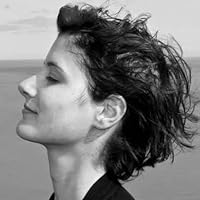
Anton Chekhov (1860-1904) – a Russian short story writer, playwright and physician – is considered to be one of the greatest short story writers in world literature. He won the Pushkin Prize in 1887 for his short story collection At Dusk. He died in 1904 from tuberculosis.
Dramas, such as The Seagull (1896, revised 1898), and including "A Dreary Story" (1889) of Russian writer Anton Pavlovich Chekhov, also Chekov, concern the inability of humans to communicate.
Born (Антон Павлович Чехов) in the small southern seaport of Taganrog, the son of a grocer. His grandfather, a serf, bought his own freedom and that of his three sons in 1841. He also taught to read. A cloth merchant fathered Yevgenia Morozova, his mother.
"When I think back on my childhood," Chekhov recalled, "it all seems quite gloomy to me." Tyranny of his father, religious fanaticism, and long nights in the store, open from five in the morning till midnight, shadowed his early years. He attended a school for Greek boys in Taganrog from 1867 to 1868 and then Taganrog grammar school. Bankruptcy of his father compelled the family to move to Moscow. At the age of 16 years in 1876, independent Chekhov for some time alone in his native town supported through private tutoring.
In 1879, Chekhov left grammar school and entered the university medical school at Moscow. In the school, he began to publish hundreds of short comics to support his mother, sisters and brothers. Nicholas Leikin published him at this period and owned Oskolki (splinters), the journal of Saint Petersburg. His subjected silly social situations, marital problems, and farcical encounters among husbands, wives, mistresses, and lust; even after his marriage, Chekhov, the shy author, knew not much of whims of young women.
Nenunzhaya pobeda, first novel of Chekhov, set in 1882 in Hungary, parodied the novels of the popular Mór Jókai. People also mocked ideological optimism of Jókai as a politician.
Chekhov graduated in 1884 and practiced medicine. He worked from 1885 in Peterburskaia gazeta.
In 1886, Chekhov met H.S. Suvorin, who invited him, a regular contributor, to work for Novoe vremya, the daily paper of Saint Petersburg. He gained a wide fame before 1886. He authored The Shooting Party, his second full-length novel, later translated into English. Agatha Christie used its characters and atmosphere in later her mystery novel The Murder of Roger Ackroyd. First book of Chekhov in 1886 succeeded, and he gradually committed full time. The refusal of the author to join the ranks of social critics arose the wrath of liberal and radical intelligentsia, who criticized him for dealing with serious social and moral questions but avoiding giving answers. Such leaders as Leo Tolstoy and Nikolai Leskov, however, defended him. "I'm not a liberal, or a conservative, or a gradualist, or a monk, or an indifferentist. I should like to be a free artist and that's all..." Chekhov said in 1888.
The failure of The Wood Demon, play in 1889, and problems with novel made Chekhov to withdraw from literature for a period. In 1890, he traveled across Siberia to Sakhalin, remote prison island. He conducted a detailed census of ten thousand convicts and settlers, condemned to live on that harsh island. Chekhov expected to use the results of his research for his doctoral dissertation. Hard conditions on the island probably also weakened his own physical condition. From this journey came his famous travel book.
Chekhov practiced medicine until 1892. During these years, Chechov developed his concept of the dispassionate, non-judgmental author. He outlined his program in a letter to his brother Aleksandr: "1. Absence of lengthy verbiage of political-social-economic nature; 2. total objectivity; 3. truthful descriptions of persons and objects; 4. extreme brevity; 5. audacity and originality; flee the stereotype; 6. compassion." Because he objected that the paper conducted against [a:Alfred Dreyfu
Opening: I was standing on the bank of the River Goltva, waiting for the ferry-boat from the other side. At ordinary times the Goltva is a humble stream of moderate size, silent and pensive, gently glimmering from behind thick reeds; but now a regular lake lay stretched out before me.
3.7 Stars to be specific. Chekov is a master of the short story. I'm still thinking of Jerome, on the river, sad and lonely, clutching the cable as if it was his last connection to his dead friend.
Holiday lanterns turn the monastery into a glowing backdrop. A solitary ferryman drifts through the dark, carrying a grief the story never fully earns. A mourning monk spends the night recounting his lost companion, a man who possessed a rare talent for composing sacred praises. The narrative clings to this simple split between the loud crowd celebrating on the bank and the silent watcher on the river, leaving the human drama flat and staged.
There is a tender respect for faith here, but the prose lacks the cold, precise edge that makes his best work cut so deep. Long lectures on the formal craft of writing hymns stall the narrative momentum, stretching the quiet night out too far. These gentle debates show a sincere reverence for artistic devotion, even as they bring the boat's passage to a crawl and keep the men distant and muted. By favoring mood over sharp psychological truth, the story dissolves into a forgettable sadness.
True, they briefly enter the church, but it's still with the reverent sense of Easter and revolving around monks so I guess it counts. The prose is really beautiful. Briefly referenced in Eudora Welty's On Writing. It's not his masterwork, but a little delight.
A very beautiful short story expressing grief for a cherished dead friend, genius unrecognized by the community in which he lives and the shallowness of religious belief more interested in externals than in the sublime.
Super sick priest/poet suddenly dies and his biggest fan, a simpleton monk, is forced by his fellow church “brothers” to operate the local ferry while they attend the funeral, proving once again, that the church, just like life, isn’t fair.
Some folk take religion in without really considering it, even excluding or ignoring their brothers… The death of a friend will really make you look for truth. Especially if that friend was especially skilled at interpreting the word… Maybe a little overlong considering his other works?



 Read here...