Jump to ratings and reviews
Rate this book

Kesik Bir Baş

Rate this book
" “Özgürlük, insanın yalnızca kendi irade gücünü ortaya koyması, onu gerçekleştirmesi değildir. Özgürlük daha çok bizim başkalarının varlığını tasarlayabilme gücümüz, başkasını başkası olarak kabul edebilme yeteneğimizdir” diyen Murdoch, dünya edebiyatının önde gelen yazarlarından kabul ediliyor.

Romanlarında daha çok polisiye romanlarda görülen gerilimi başarıyla kurgulamasının yanı sıra, felsefi ögeleri de kullanan Murdoch Kesik Bir Baş’ta “evlilik kurumu”nu merkez alarak “ahlâk” kavramını sorguluyor. Okuru, hemen her şeyin olabileceği bir beklenti içine sokarak, üç kadın ve üç erkeğin birbirleriyle girdikleri “çok eşli” ilişkiler çerçevesinde sadakat, yalancılık, ensest, dürüstlük vb. kavramları mizahi bir dille tartışıyor. Roman okumanın kimi zaman “keyif ülkesinde gezinmek” anlamına geldiğini kanıtlayan bir metin.

“Felsefe ile hikâyeyi çok özgül bir biçimde buluşturması onun sanatının özelliği ve başarısı. Kesik Bir Baş ise Murdoch’un belki de en tipik romanı.” Nazan Aksoy / Milliyet Sanat

“Murdoch bir detay ve atmosfer yazarıdır. Bütün romanlarında her bir sahne, bir polis romanı gibi düzenlenmiş, konumlanmış ve anlatılmıştır.” Güven Turan / Çerçeve

“Son aylarda yayımlanan çeviri romanlar içinde en ilginçlerinden biri, belki de birincisi Kesik Bir Baş.” Nokta

“Iris Murdoch’un yapıtı, çağdaş ahlaki seçimleri yansıtma açısından, ‘iyinin’ olmaktan çok ‘kötünün’, eşitsizliğin olmaktan çok kulluk ve tapınmanın, düzenin olmaktan çok kaosun, tanrısal adaletin olmaktan çok pagan acımasızlığının romanı.” Pelin Başçı / Birikim "

205 pages, Paperback

First published January 1, 1961

233 people are currently reading
8785 people want to read

About the author

Iris Murdoch

141 books2,548 followers
Dame Jean Iris Murdoch

Irish-born British writer, university lecturer and prolific and highly professional novelist, Iris Murdoch dealt with everyday ethical or moral issues, sometimes in the light of myths. As a writer, she was a perfectionist who did not allow editors to change her text. Murdoch produced 26 novels in 40 years, the last written while she was suffering from Alzheimer disease.

"She wanted, through her novels, to reach all possible readers, in different ways and by different means: by the excitement of her story, its pace and its comedy, through its ideas and its philosophical implications, through the numinous atmosphere of her own original and created world--the world she must have glimpsed as she considered and planned her first steps in the art of fiction." (John Bayley in Elegy for Iris, 1998)
http://en.wikipedia.org/wiki/Iris_Mur...

Ratings & Reviews

What do you think?
Rate this book

Friends & Following

Create a free account to discover what your friends think of this book!

Community Reviews

5 stars
1,482 (21%)
4 stars
2,786 (41%)
3 stars
1,856 (27%)
2 stars
502 (7%)
1 star
116 (1%)
Displaying 1 - 30 of 823 reviews
Profile Image for Adam Dalva.
Author 8 books2,158 followers
November 17, 2017
Extraordinarily funny, lean novel that somehow manages to be completely cynical while maintaining a belief in the possibility of love. The plot is hurtlingly insane, as the lead, Martin Lynch-Gibbon, and the 5 most important people in his life form an improbable love-hexagon whose Freudian complications are legion. The protagonist knows the least of anyone, which is always fun, and though his behavior throughout the book is repellent, Murdoch accomplishes the difficult task of making him likable, mostly through the parodist stiff-upper-lip way he approaches the dissolution of his marriage, his affair, his family, his crush, and his (marvelously concealed except for one glimmering line) gay crush.

The writing is often amazing, generous. Martin's wine-selling co-workers, for example, are completely non-important to the plot, but they are described as such:

"Mytten was a Roman Catholic, a sybarite, and an ass, but he was loyal and a decent judge of wine, and went down splendidly with my more snobbish clientele...(The secretaries) had been with me for some years now and I had been very worried in case one or other of them should take it into her head to get married , until the day when I realized, through some imperceptible but cumulative gathering of impressions, that they were a happy and well-suited Lesbian couple...Their faces and attitudes expressed their respective modes of sympathy: tall air Miss Hernshaw, long vainly courted by the imperceptive Mytten, swaying moist-eyed and ready to hold my hand, short dark Miss Seelhaft, frowning with concern as she polished her spectacles, darting me glances of brisk commiseration."

This is pyrotechnic craft, Murdoch indulging herself in the name of some deep understanding of why we are reading her. These characters don't matter to the book, but they make it come alive all the same. The novel has its small experimental flourishes as well - there is a wonderful sequence of unsent letters, and this is the best line break I've ever seen, during a fight between Martin and his mistress.

"'When you took me to Hereford Square,' said Georgie, 'you took me through the looking glass. There's no going back now. I've had enough of having things around that I'm afraid to think of.'
'Well I'm not going to introduce you to Antonia, and that's that.'

'Antonia, this is Georgie Hands. Georgie, my wife.' I found these incredible words passing my lips. I was able to speak without stammering or choking. No one fainted."

It's difficult to talk about this book without spoiling it, because beyond the writing, the plot is nuts. 6 characters are treated generously and with abandon. Honor Klein, in particular, is an absolute wild card, who has a sort of mystic dance scene with a samurai sword and some napkins that I will never forget. I see some negative attention being paid to this book by other Goodreads reviewers, and I was not surprised. The novel falls into the book-club trap, when characters are assessed as if they are real people, and their bad behavior (and everyone is so very, very bad) can seem a disappointment. Martin is a shiftless, lying, mostly dumb cad who commits physical violence against women, the kind of lead you will never see in a book in 2017. But Murdoch is a master, and she has created something more real than our expectations of reality. In this, A SEVERED HEAD reminds me a bit of Magic Mountain - each character has a personal philosophy, and they will follow it into oblivion. Beautiful, beautiful ending too, with an amazing last paragraph.

My only complaints: too many descriptions of light, and too many uses of the word "golden." I'll live.


Profile Image for Paul Bryant.
2,408 reviews12.6k followers
September 11, 2022
My name is Martin Lynch-Gibbon. I am a 41 year old hoity toity wine dealer living in London with my wife, a devastatingly elegant old thing called Antonia who is old enough to be my mother. Well, she’s five years older than I am. That’s really old you know. But she keeps ladling on the mascara and she still looks not too bad if the light is not too harsh. I am madly in love with her. Now, I also have a girlfriend only because this is the late 50s or some such time I call her my mistress, isn’t that just too too amusing, I know. She is 26 year old Georgie, who is some kind of lecturer, I don’t know what subject, I never asked. I stashed her away in a flat and I go round and give her a good seeing to whenever I feel like it. I always bring along a frisky bottle of Prun Gaacher Himmelreich.


Two days later

Damn, I found out that my wife Antonia is having a deeply passionate affair with her psychiatrist Palmer. She says she has been madly in love with him for a year. How very dare she! Only I am allowed to adulterate, because I am a man, and a wine dealer. And now she has had the temerity to ask me for a divorce! This has put the cat among the pigeons, as now Georgie when she hears about it will want me to marry her. They always do, you know. Well, she is madly in love with me. And quite honestly, she is a pretty good shag, but as a wife for actual me I think not. Sorry Georgie. Anyway I am still madly in love with my wife.

Two days later

Damn! Antonia and Palmer have found out about Georgie! Now I can’t sneer at them like I want to. In fact they are sneering at me! It’s unbearable. I have drunk three bottles of a fairly presentable whisky to help me think it through.

Two days later

Damn! It was the eerie demonic Honor Klein, who is Palmer’s half-sister and an anthropology professor, that stitched me up. So I bashed her face in. Well, anybody would. Okay I was a bit drunk.

Two days later

Damn! I finally realised I am madly in love with Honor Klein! That’s awkward, because I bashed her face in. Oh well, I’m a man and we are very passionate, so I’m quite sure she will forgive me. They always do.

Two days later

Damn! I followed the eerie demonic Honor Klein to Cambridge and broke into her house and blow me down, I found her in bed with her half brother Palmer! What a turn up for the books! I didn’t know where to put my face.

Two days later

I am a very honorable man, as you’ve realised, so I didn’t mention the scandalous scene to Antonia. Anyway, the good news is that my gorgeous spindly wife doesn’t love Palmer any more and she has come crawling back to me. So now I have her back, still got Georgie stashed somewhere, I forgot the address but I’ll remember it soon, and I’ll shag that eerie demonic Honor Klein soon, I know I will. I am a very insightful person.

Two days later

Damn! My brother who always likes to steal my girlfriends came waltzing round with Georgie and they brazenly said they were going to get married because they’re madly in love. This is intolerable. It calls for a drink. Two bottles of a positively cheeky Chateau de Boursault will restore my equilibrium.

Two days later

Damn! I realised I’m actually madly in love with myself. This is awkward. I need a drink.

Two days later

Damn! My brother, my girlfriend, my wife, her lover and his half sister have all sailed to the Caribbean where they are now madly in love with each other. What a bizarre twisted story this has been. Anyone would think I made it all up.
Profile Image for Orsodimondo.
2,457 reviews2,429 followers
July 7, 2023
LE TESTE SCAMBIATE


Ian Holm e Lee Remick sono Martin e Antonia, moglie e marito.

”Sei sicuro che non sappia?” disse Georgie.
“Antonia? Di noi? No di certo.”

Dopo un tale incipit la prima sorpresa, o meglio, una delle numerose sorprese che aspettando il lettore, è scoprire che non ci potrebbe essere nulla di meno vero, di più sbagliato.
Pur se in quel momento, in effetti è vero che Antonia non sia a conoscenza della storia fedifraga tra suo marito Martin, quarantenne agiato mercante di vino, e la ben più giovane assistente universitaria Georgie, relazione extraconiugale che va avanti da tempo, Antonia è destinata a scoprirla anche se Martin preferirebbe continuare a tacerla.


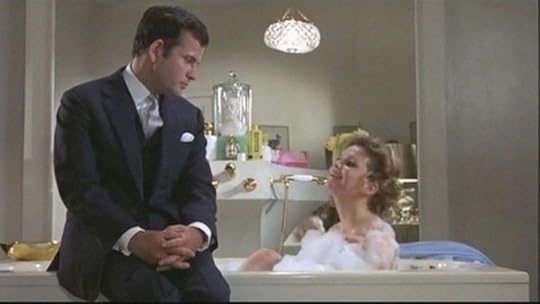
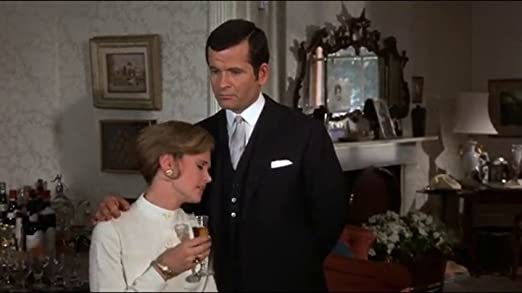
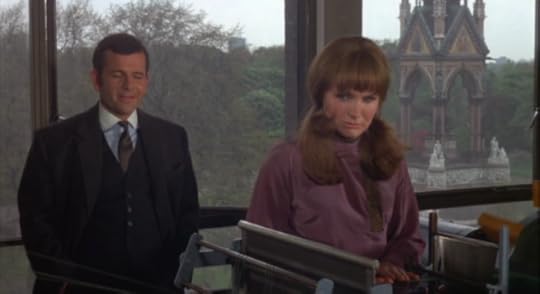
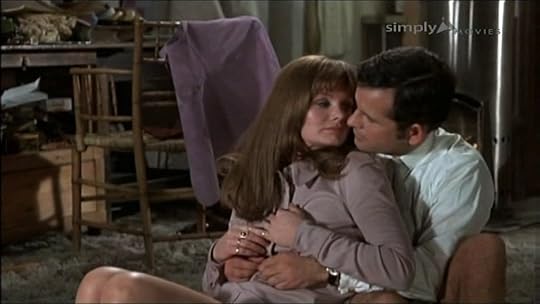
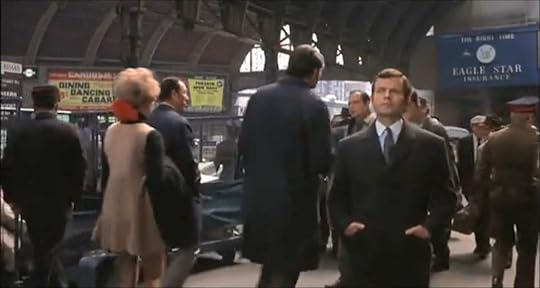
Il film, con lo stesso titolo, è del 1971, produzione americana diretta da Dick Clement.

E più che scoprirla, Antonia ne verrà informata: non da Martin e neppure da Georgie, ma da Honor, sorellastra del suo psicanalista Palmer, stranamente anche amico della coppia Antonia-Martin.
Col quale Palmer Anderson, Antonia, oltre che fare sedute di analisi, fa anche ricco sesso, e non da poco.
Dimenticavo di dire che Antonia è un po’ più agée del marito e a un certo del romanzo assumerà un atteggiamento quasi materno nei confronti del consorte.
Pur volendolo abbandonare: perché un bel giorno, piuttosto all’inizio del libro, Antonia annuncia a Martin che da parecchio ha una relazione col loro amico palmer Anderson, e di lei psicoterapeuta, e che vuole divorziare e andare a vivere con lui.


Se non che, pur muovendo i primi passi in questa direzione, Antonia non se ne andrà con Palmer, perché Palmer finirà col fare coppia con… dopo essere stato beccato a letto con…

Una manciata di personaggi, tre uomini e tre donne, tra Londra e le città universitarie di Oxford, dove vive Alexander, il fratello maggiore di Martin, e Cambridge dove invece vive Honor, la sorellastra di Palmer. Sono tutti borghesi agiati, accademici. Siamo all’inizio degli anni Sessanta (il romanzo è stato pubblicato la prima volta nel 1961), l’amore libero e poligamico è praticato e discusso un po’ per via dei tempi, un po’ per via della cultura ed estrazione sociale dei personaggi, un po’ perché è argomento che non passerà mai di interesse, in quanto la monogamia può forse essere un rimedio, ma non è la soluzione.


Ian Holm/Martin con Claire Bloom/Honor, il ciclone che rimescola le carte.

Murdoch sceglie Martin, un maschio, come sua voce narrante. E questo chissà magari ha fatto storcere la bocca ai lettori che credono che scrittore uomo voglia dire protagonista dello stesso sesso, e viceversa in caso di scrittrice donna.
Io invece mi diverto e appassiono davanti a punti di vista non convenzionali.
Non si parla solo di amore libero, matrimonio, amore extraconiugale, coppia, relazioni e tradimenti: compare anche l’incesto e un tentato suicidio, oltre a amanti fatte scappare dalla porta sul retro.
Murdoch infarcisce il romanzo di molti dialoghi, brillanti e veloci, è forse la sua storia più divertente, e sembra pronta per un adattamento teatrale, che c’è stato, più di uno credo, come anche quello cinematografico, che data all’inizio degli anni Settanta, periodo in cui questi temi erano ancora ‘caldi’.
Oltre che divertente, il romanzo ha però anche momenti delicati, dove fa capolino un accenno di tristezza. Il tono si alterna, anche se predomina quello brillante.


La testa tagliata, oltre al tentato suicidio e all’invio di una ciocca di capelli, la testa separata dal corpo si riferisce alla distanza tra mente e cuore, tra sesso e intimità
Non credo che mi piaccia molto, una testa senza il corpo… Mi sembra un vantaggio sleale, una relazione illecita e incompleta… Ci sono persone, comprese quelle accoppiate o sposate, che mai, in tutta la loro vita, sono entrate in intimità.
Hanno vissuto per anni l’una accanto all’altra ma senza per questo immaginare di “sporgersi,” anzi
non ne hanno nemmeno sospettato la possibilità; non hanno mai oltrepassato questa soglia, non ci hanno nemmeno pensato… L’Altro è diventato un essere familiare ma non intimo,


Il numero ristretto di personaggi, gli scambi e gli incroci, la facilità di dialogo, l’ambientazione perlopiù in interni, soprattutto abitazioni, come dicevo suggerisce un impianto teatrale, e pertanto stimola echi, paralleli con altre storie già lette, già viste. Presa la giusta distanza, quella che al momento mi suona di più è il divertente film in bianco e nero di Sally Potter The Party.
Il film ha ormai cinquant’anni e da quel che immagino non è stato una trasposizione pienamente riuscita.


A sinistra Richard Attenborough che interpreta Palmer lo psicanalista amico della coppia e amante della moglie dell’amico.
Profile Image for BlackOxford.
1,095 reviews70.3k followers
November 23, 2020
An Oh So English Tragedy... Not

I have never met anyone of the types in Murdoch’s The Severed Head. I doubt anyone has. I can only trust her that they have some meaning: those independently wealthy landed gentry who can remain perfectly civil when their best friends run off with their wives. Martin, the husband in question, can in fact maintain that “He’s still my best friend,” about the American cad, Anderson. And Antonia, the out-of-love wife, without the least embarrassment, can say to her soon to be ex “We won’t let go of you, Martin,... We’ll never let go of you.” Who are these people really?

The stiff upper lip, psychological repression, emotional aridity - these seem like cliches of the English personality. Add to these, things like pea-soup fog, late trains, and vague derision of anything European as Jewish and downtrodden and the question starts to form: Is good old Iris doing a send-up, employing that other cliche of English character, irony, to undermine her own narrative?

I live only two miles or so from one of Murdoch’s fictional locations, ‘Rembers’, a house set on the edge of the Cotswolds in the actual stone village of Sibford Gower. It’s less than 20 miles from Murdoch’s Oxford college and undoubtedly she knew the place well. Yet she describes the house as being constructed of a timber frame with light pink infill panels, a sort of Elizabethan bordello.

I don’t claim to know every house in Sibford Gower, but I can say categorically that nothing like the Rembers described exists there. Historically, timber-framed houses can’t be found for miles yet into neighbouring Warwickshire; and modern planners would never have permitted such an atrocity in a village of honey-coloured stone. For me this tips the intention of the book from polite irony to serious sarcasm.*

A trivial observation? Perhaps, but Murdoch is never trivial with her details. In her literary philosophy, everything signifies. I think what Rembers signifies is the sincere falsity of the book. Even if there are characters like this in reality, they are incorrectly placed. They belong more in the Mittel Europa of 1900 than the Middle England of 1976. In fact I think they are Freudian ‘types’ - Oedipal, Electral, Narcissistic, etc.

That is, Murdoch’s characters are mythical figures playing out psycho-analytic roles. They are not parodies of Englishness but of psychological theory. And in good Murdochian style, they represent how psychological theory has invaded (infected?) our intelligence and conversation. There’s just enough in psychological theory to be plausible but not nearly enough to account for the neuroses of those who formulated it, or who currently practice it.

Murdoch tips her hand as to motive early on when she has Martin suggest about Anderson, the psychiatrist, that “Anyone who is good at setting people free is also good at enslaving them, if we are to believe Plato.” He also criticises the philosophical foundation of psycho-analysis as “a metaphysic of the drawing-room.” The imaginary head cannot be severed from the reality of the body to which it is attached without severe distortion, not to say disfigurement. In short, psychoanalysis is simply badly thought out philosophy of mind and should receive the disrespect it deserves.

*Another indication of her displacing hints, as it were, is her aside that Rembers overlooks the River Stour. It can’t, because Sibford Gower is on the River Sib, a tributary of the Stour. She directs with misdirection.
Profile Image for Manny.
Author 48 books16.1k followers
October 27, 2010
I got hooked on Iris Murdoch for a year or so when I was around 20 and read more than half of her novels. But I did wonder where she got her ideas from. I mean, here she was, respectable married professor of philosophy and whatnot, and her plots are always this tangled mess of everyone sleeping with everyone else in between dropping clever epigrams about Wittgenstein. I guessed that she just had a very active imagination.

It's always strange to look back and wonder how one could have been so naive. As the whole world now knows, Murdoch's life was a tangled mess of everyone sleeping with everyone else. I don't know whether her lovers dropped clever epigrams about Wittgenstein, but I bet she did, and they probably felt they needed to keep up. I can just see them frantically preparing with their understanding wives. "Darling, I'm meeting Iris this afternoon, and I need a few more witty things to say in bed. Any suggestions? No, sorry, I used that one last time."

Now, where does Iain Banks get his ideas? Evidently, his life can't be a guilt-soaked nightmare of incest, rape and murder...
Profile Image for Lisa.
1,108 reviews3,290 followers
April 24, 2017
I had no patience for this.

I appreciate the prose style, and can see that Murdoch makes important statements on sexual liberation, but... It is tiring. All characters are equally unsympathetic, and their lives form a panorama of sexual behaviours that challenged the bourgeois minds in 1976 for sure.

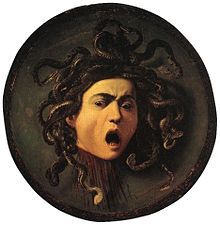
They all consistently made me think of Caravaggio's Medusa, with her outraged expression of injustice done to her while her snake-hair is still dangerously alive and capable of causing major damage to others. Definitely not very likable, but beautifully painted.


What are they? Victims? Perpetrators? Both? Or just hollow, shallow marionettes carrying out a danse macabre that has lost its charm after decades of sexual over-stimulation in media, art and literature?

Or maybe just not relevant to me at this moment in time? Possible. This was my first Iris Murdoch, and I suspect I expected more, as my prejudice was that she is one of the great modern writers. I won't drop my carefully built idea (based on nothing tangible) until I have read at least one or two more. She clearly can write.

But not necessarily the kind of novel I get excited about.
Profile Image for Shovelmonkey1.
353 reviews963 followers
November 19, 2012
Well, what a messed up little love pentangle that was. I put off reading this book for a while because to be frank, I am a coward. Scared of the weighty prose? Taut wit? Scathing analogies of the middle classes on the cusp of a sexual revolution?

No actually. Just a bit scared of the front cover. Sinister looking serial killer lady wielding a samurai sword or sabre of some description. It just freaked me out and I can't explain it. My friend Dana will corroborate this irrational fear of book covers because she was scared of my copy of The Master and Margherita for aaaaaages and when we were working together she always had to turn the book over so she couldn't see the cover with the picture of the big scary cat in the dinner jacket. See, I'm not the only one here.

If you love to loath the characters that feature in your reads then this is the book for you. The delightful (and I do not mean this sincerely) Martin Lynch-Gibbons is a man who wears his "I'm an alpha male" hat with pride. I would say the hat was a baseball cap but he's so middle class it is probably a fedora. After embarking on an affair with a much younger lady he is then scandalised when his wife pips him to the punch and leaves him for her therapist. Ohhh the audacity! The he falls for someone else anyone but they don't really fall for him and before you know it, it's all a bit like Friends but its the episode where they all put their keys in a bowl. And it's not as funny and there is no Joey character.

I didn't really have any sympathy for any of the characters, aside from Georgie Hands, the original paramour of loathsome Lynch-Gibbons, who seemed to get passed around like some kind of pet or trophy or bargaining tool, depending on whose emotional clutches she was in at the time. I failed to observe any castration in the novel, despite what it says in the blurb on the back (at one point I was wondering where the samurai sword might swing) but I suspect the castration is the implied mental castration of some of the characters, especially Martin who is largely responsible for creating a number of emotionally stunted situations and with each twist and affair he becomes less and less powerful.

So to sum up; an unlikeable cast and no castration but an excellent short novella which is much less scary than the cover.
Profile Image for Fabian.
1,001 reviews2,121 followers
July 16, 2019
Reading like an early draft of the 2004 play/film "Closer," this brilliant book was conceived by a woman whose p.o.v. is that of a man, Martin, who experiences degradation and despair, while he seeks sexual specters. It is an exact, almost samurai-sharp (more on that later...) case study of both true incest & a social, more acceptable type of partner swapping.

Let me try to explain the plot (SPOILER! SPOILER! SPOILER!!): Martin's in love with his wife, Antonia, who is herself having an affair with Martin's bff, Anderson (as in Cooper--the two seem the same person!), just as Martin "loves" his mistress, Georgie. He then falls for Anderson's sister, Honor, who herself has a sick relationship with her brother, who then falls for Martin's mistress after being rejected by Alexander, Martin's bro. Phew!

So its obviously more than this. That the plot is so exquisitely convoluted is half it's charm. Every line of dialogue discloses some intimate feeling trying but failing to escape each character. It is clever. It is very risque... taking the incest issue to new frightful heights. The main character himself is a Tom Ripleyesque figure... one we trust only because there is no one else to side with. The Japanese imagery that sticks out at crucial points indicates the feeling of war that accompanies betrayal. Sword play is obviously motif for sex play.

Martin tries to have different lives with all the different women in his life. They are "severed heads" in that they are emblematic of nothing, perhaps only of history or symbols of the sexually-stunted psyche. They are bodiless, have no spine, are heartless. These are the characters in the novel, truly magnificent beings for being truly unmagnificent.

Next to "The Blithedale Romance" and Arthur Schnitzler's "Traumnovelle" this gem of "Normal" sexual depravity on the bookshelf goes.
Profile Image for Ian "Marvin" Graye.
948 reviews2,782 followers
October 5, 2016
Who's Afraid of Iris Murdoch?

Well, I was for one! I bought this novel in 1980 and only got around to reading it now.

I think I was apprehensive about her formidable intellect and wondered whether the book might be too earnest or a chore to read. However, it was anything but! It takes you on a journey from psychological realism to Freudian satire to outrageous farce.

Female Author, Male Narrator

The narrator is Martin Lynch-Gibbon, the son of a wine merchant and now the proprietor of the family business.

Murdoch uses a male character to define the perspective on the events that occur in the novel. If she had used a female narrator, it's possible that she would have been more overtly judgmental about Martin's behaviour. Instead, adopting his perspective allows her to skewer him with his own words, thoughts, self-justifications and pretensions.

Many readers question the right of a male author to speak through a female narrator/narratrix. I think this proposition is misguided. The issue is more one of ability than entitlement. Not all males can credibly pull it off; that just means that they don't have the insight or skills required, not that they shouldn't be entitled to try. If the proposition were legitimate, then it would limit the scope of fiction as a whole. Presumably, if the first proposition is legitimate, then the converse proposition should equally apply: that female authors shouldn't be able to speak through a male narrator. "A Severed Head" demonstrates that Murdoch has the ability necessary to succeed in her endeavour, and therefore to question the validity of both propositions.

The Severed Head

Paradoxically, Murdoch's strategy allows readers to view the female characters through the eyes of a male. This isn't necessarily a bad thing. There are four, and, apart from his sister, Martin falls in love with them all.

Despite having been married to Antonia for 11 years, he has been having an affair with Georgia for two years.

He encounters the anthropologist Honor Klein (she is the severed head of the title) during the course of the novel and promptly falls in love with her as well, largely because of her apparent inaccessibility and lack of reciprocation of his interest. She says to Martin:

"Your love for me does not inhabit the real world. Yes, it is love, I do not deny it. But not every love has a course to run, smooth or otherwise, and this love has no course at all.

"Because of what I am and what you saw I am a terrible object of fascination for you. I am a severed head such as primitive tribes and old alchemists used to use, anointing it with oil and putting a morsel of gold upon its tongue to make it utter prophecies. And who knows but that long acquaintance with a severed head might not lead to strange knowledge...

"But that is remote from love and remote from ordinary life. As real people we do not exist for each other."


The Need for Love

Martin seems to have a need for a finite amount of love, and he is determined to satisfy it, regardless of how many women it takes or hurts. His need must prevail in and against all circumstances, despite the dictates of any conventional sense of morality or rationality.

The farce emerges as we learn that the female characters (not to mention the other males, including Martin's brother, Alexander, and Antonia's 50-something psychoanalyst friend, Palmer Anderson) are subject to the same needs and that Martin too has been cheated on, misled, cuckolded and played for a fool, just as they have.

The Potential for Elimination of the Survivor

This allows the supposedly gentle (if occasionally violent) Martin to portray himself as a victim, albeit a resilient one:

"I pictured myself indeed as a survivor."

Towards the end of the novel, facing his biggest challenge yet, he says:

"I wonder if I shall survive it."

The answer: "You must take your chance!"

This novel documents the reckless taking of risks with emotions, both your own and others'.

The rationalising is little more than a mask (transparent at that) for the conceitedness of the characters.

"Let's Have a Quintet!"

Early on, Martin's wife Antonia confesses that she has been having an affair with Palmer Anderson (Honor's half-brother). Notwithstanding his profession, Palmer seems to obey even fewer moral and ethical dictates than Martin. Everything is possible and permissible (he is the ultimate advocate of permissiveness), as long as it can be rationalised and understood.

Martin foreshadows future developments when, soon after learning of the affair, he says to Palmer:

"You were on about all three of us some time ago. Now it's all four. Why do you leave your sister out? Let's have a quintet."

description

Medusa's Head Severed from Her Body

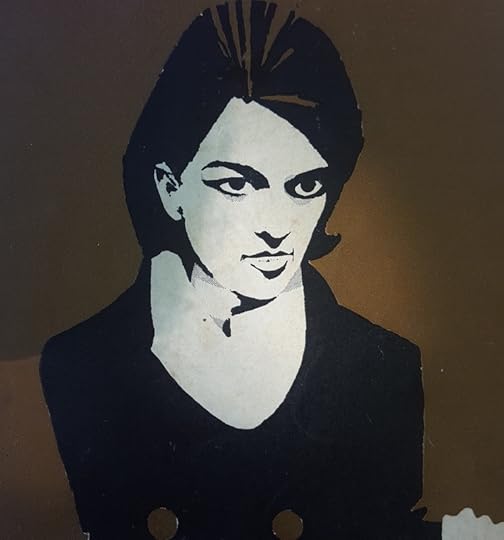
Honor Klein was by far the most fascinating character in the novel from my point of view. A fictitious portrait features on the cover of the book I read, and her physical features as described and portrayed reminded me of an early photo of Susan Sontag, who was a student of Iris Murdoch at Oxford in 1958, three years before the publication of the novel.

Martin's brother, Alexander, is a sculptor, who avoids sculpting heads that have been severed from their bodies. They represent "an illicit and incomplete relationship. Perhaps an obsession. Freud on Medusa. The head can represent the female genitals, feared not desired."

Honor owns a Japanese sword, which she handles adeptly. Both she and Martin acknowledge its symbolism of control and power, as well as the castration complex. Rather than be horrified, Martin sees it as a challenge as he does a relationship with Honor, no matter how improbable it might seem. Despite his fear (of the power of both Honor and her sword), he has succumbed to a frenzy of need and desire:

"...it was in truth a monstrous love such as I had never experienced before, a love out of such depths of self as monsters live in."

Cursed by the Tawny-Breasted Object of Taboo

Martin imagines Honor as a:

"tawny-breasted witch the vision of whom, her jagged black hair in disorder, her face stern and angelic above her nakedness, never ceased now to be before me; and I felt equally that I was cursed for life, like men who have slept with temple prostitutes and, visited by a goddess, cannot touch a woman after."

She is "aloof, frightening, sacred, and in a way which I now more clearly understood, taboo...I awaited Honor as one awaits, without hope, the searing presence of a god."

Murdoch neatly assembles her fascinating taboo-ridden tale around a structure inspired by cultural anthropology ("The Golden Bough"), ancient history, mythology (Herodotus' tale of Gyges and Candaules) and psychoanalysis (Freud).

This novel is intelligent, witty and exhilarating. I highly recommend it for fans of Rikki Ducornet, Angela Carter and Martin Amis.

SOUNDTRACK:

Robyn Hitchcock - "Dark Princess"

https://m.youtube.com/watch?v=4fXUxIg...

Robyn Hitchcock - "No, I Don't Remember Guildford"

https://www.youtube.com/watch?v=LaY5n...
Profile Image for Cecily.
1,320 reviews5,327 followers
July 14, 2015
This catalogues a disintegrating 60s marriage: Martin is happy with his wife Antonia and mistress Georgie. Antonia then leaves Martin to be with their friend and her psychoanalyst, Palmer, who has a sinister half-sister, Honor. It’s all creepily amicable, rational and analytical. Martin’s siblings, Alexander (a sculptor) and Rosemary, also feature.

There are no sympathetic characters, but their thoughts and motives are mostly so well described (albeit not necessarily credible) that it hardly matters, and in fact it creates a better dynamic of the reader's sympathy. They are all utterly selfish, self-absorbed, hypocritical and fickle: their emotions flick from one extreme to another on a whim and remorse is a barely known concept. Martin is (just) the main character: potent in the literal sense, but emasculated in all other senses.

Antonia’s beliefs “create a rich centripetal eddy of emotion around her” and her Christmas decorations “combined a traditional gaiety with restrained felicity”. In contrast, repeated observations of the weather (mostly rain and fog) are rather clichéd. Also, some of the references to Honor’s Jewishness read uncomfortably nowadays, although they would probably have raised few eyebrows when the book was published.

Freudian and Oedipal analogies abound and it questions which betrayal is the worst: spouse, sibling, friend or lover? More than once it dismisses happiness as not being something attainable/to aim for, and love seems to depend on secrecy and be aroused by jealousy. In this perverse universe, betrayal leads to freedom!

Murdoch’s novels often feature a Svengali-type figure, manipulating other characters, but in this book, there is more than one such character, which twists the threads of the story even more – an appropriate analogy when all of the characters are linked to several others by multiple threads.


Profile Image for Carmo.
726 reviews566 followers
September 6, 2016
Então é mais ou menos assim: temos um homem casado; o relacionamento é morno acomodado na pacatez do dia a dia, mas ele ama a mulher que é uma senhora linda e elegante, daquelas que deixam as outras ruídas de inveja e os homens a escorrer baba caninamente - um amor "quente e radioso, tingido do ouro da dignidade humana". Mas não lhe chega, também tem uma amante; muito mais nova, desleixada, desarrumada, um mimo pra saborear clandestinamente e por quem sente um amor " terno, sensual e alegre". Era feliz? Claro!" Precisava de ambas e, tendo ambas, possuía o mundo."
Correu tudo bem? Claro que sim! Até ao dia em que a mulher lhe comunica alegremente que o vai deixar porque se apaixonou pelo seu psicanalista.
Só por acaso é o melhor amigo dele!
Ao vê-la escapar-se, reacendeu-se-lhe toda a paixão e desejo e soçobrou perante o "par de cornos na testa" .
A amante? Ah, essa ficou em stand by...
Toda a previsibilidade deste livro acaba aqui. O que se encontra até à última página é uma sucessão de acontecimentos e comportamentos inesperados de nos deixar de boca aberta.
Parece brincadeira, mas é - de uma maneira exagerada - muito autêntico e capaz de nos pôr a pensar como reagiríamos numa destas situações. Como o protagonista é que não. Não sendo nenhum santo e com muitas culpas no cartório, revela-se porém, perante um cardápio de difícil digestão, de uma civilidade inacreditável.

Foi uma delícia descobrir a escrita desta senhora: Iris Murdoch
Profile Image for James Barker.
87 reviews58 followers
August 11, 2016
Six terribly middle-class central characters play bedroom twister. Does loving many people equate to really loving no-one? It's a question that befits this fickle schoolyard. Martin adores his wife, loves his mistress, has homosexual fantasises about his chum Palmer while simultaneously yearning for Palmer's sister, Honor (noticing Palmer's hairy legs and Honor's hairy lip, he clearly has a hair fixation; both his wife and his mistress have Rapunzel-like hair). Martin's brother, Alexander, is in the melange too and, if it all is starting to sound incestuous, prepare yourself for the genuine article, handled by Murdoch deliciously without sensationalism. This is a book, after all, that reeks of the author's love of myth ('The Golden Bough' is name-checked). And it is so much fun!

The 60s Penguin edition I have adds to the enjoyment. Its cover has a premonition of Tracey Emin camping it up (in a scene from 'Kill Bill'?)... Perhaps about to decapitate everyone she has ever slept with (for the sake of art)! But it's actually Honor Klein, the is-she-isn't-she demonic figure that first repels the narrator and then draws him in, for she is bolder than his mistress and less of a drama queen than his wife.

We have a choice, as adults, to attempt to live life utilising the best characteristics of childhood (being friendly, open, inclusive, looking with wonder at the world around us) or the worst (taking the one way system to the egocentric city centre in Bratsville). Murdoch tended to write about people firmly in the second camp, so much so that her characters are often very hard to love. None the less, this is my favourite Murdoch so far. It captures eerily the fine line between a surfeit of emotion and a lack thereof.
Profile Image for Bettie.
9,978 reviews5 followers
August 28, 2015


http://www.bbc.co.uk/programmes/b066v39v

Description: When Martin Lynch-Gibbon's wife runs off with her analyst and his best friend, Palmer Anderson, the three characters attempt to behave in a civilised manner; but there is the matter of Martin's mistress and Palmer's sister to contend with and undoubtedly the thin veneer of civilisation will crack in Murdoch's witty and wise story.
"You can recognise the people who live for 
others by the haunted look on the faces of
the others."

1/5: Satire on analysis as a group of over-cultivated characters swap partners.

2/5: With his wife having left him, how does he feel about his mistress, Georgie.

3/5: Martin is forced to explain his adultery to his adulterous wife and her lover.

4/5: Martin finds ever more enthralled to the goddess-like qualities of Honor Klein

5/5: the merry-go round of partner swapping comes grinding to a halt.

Très amusant. Set in 60s London, this was my first ever Murdoch back in the day...
Profile Image for Rebecca.
4,182 reviews3,447 followers
March 29, 2018
A strange but very readable satire on who you’re supposed to love versus who you actually do. My sixth Murdoch novel, and a very good one for book clubs or for newcomers to start with, I think, given how much it tackles in its just over 200 pages.

Love Triangle

As in Under the Net, we have a male narrator; here it’s Martin Lynch-Gibbon, 41, a wine merchant’s son who’s writing a work of military history. He’s been married to Antonia, five years his senior, for 11 years now. Martin also has a mistress, 26-year-old Georgie Hands. The thrill of the illicit, of possessing both these appealing women, is too much to resist, but he has a sense of being on the cusp – his delicately balanced life is about to go up in flames.

Love Quadrilateral

Antonia gets home from her psychoanalysis appointment and appears to be acting strangely. She soon confesses to Martin that she’s madly in love with her therapist, Palmer Anderson, who is half-American and has been Martin’s friend for years. They amicably agree to part. Martin goes to talk with Palmer, who lays on the Freudian patter and convinces Martin that Antonia is more of a mother figure for him because of their age gap. It’s all very civilized.

[This awful cover image is a still from the 1970 film, presumably portraying Martin and Antonia in flagrante on Palmer’s therapy couch? Starring Lee Remick, Richard Attenborough and Ian Holm.]

Love Hexagon?

We meet Martin’s brother Alexander and sister Rosemary when he goes to Rembers, the family estate in the Cotswolds, for the Christmas holidays. It seems Alexander’s always been somewhat in love with Antonia – he even sculpted her head. After lovely scenes of the snow seen from the train via Reading and a Christmas spent en famille, another player comes onto the scene: Palmer’s sister, Honor Klein, whom Martin picks up from Liverpool Street station. She’s cool and a bit domineering, and a dab hand with a samurai sword. Martin is smitten. But just wait until he goes to visit her in Cambridge…

As the members of this small group fall in and then out of love with each other, Murdoch explores any number of weighty ideas and themes. With a samurai sword around (as pictured on a couple of more recent Penguin covers), you have to wonder if, like Chekhov’s gun, it’s bound to be used in a violent way. At the very least it’s a phallic symbol, turning up in dreams along with blood, which itself is symbolized by the red wine so frequently consumed and sometimes spilled in the novel. I thought of the title as asking what happens when the mind and body become detached from each other and want different things. There are also plentiful references to ancient superstitions and taboos: the cuckold’s horns, the Oedipal impulse, and the rituals surrounding the oracular voice.

What with all the scenes of people bursting into a room and declaring their love for someone else now, and Martin moving his belongings back and forth, this is something like a comic play. It’s one of the few Murdoch novels to have been adapted for the theatre or cinema (it has also been a radio play), and you can see why: it has a theatrical, quick-moving story line, and Murdoch even deliberately references “actors in a play” and “the drama.” Martin’s sense of helplessness is also likened to feeling destined to play one role in life, whether he likes it or not. It’s a very visual novel, too, with objects (like the Audubon prints and the Meissen cockatoos decorating the Lynch-Gibbons’ place, or “we sat enlaced like a beautiful netsuke”) and colors taking on significance in a way that I’m sure must have influenced A.S. Byatt.

A couple of small things bothered me: the overkill in describing Honor’s features as Jewish, and the overall short shrift given to Georgie. But on the whole I really enjoyed this one, especially Martin’s three (increasingly informal and defensive) versions of the same apology letter, and the fact that Palmer almost always appears in his dressing gown. In one 2017 year-end recommendation for Sally Rooney’s Conversations with Friends, I saw it compared with A Severed Head, and I guess I can see why: the love quadrilateral, the blend of tragic and comic themes, and the perhaps recklessly optimistic ending. Both are well worth reading.

My favorite snippet of dialogue:

(Martin) “‘We’ve been happy. I want to go on being happy.’

‘Happy, yes,’ said Antonia. ‘But happiness is not the point. We aren’t getting anywhere. You know that as well as I do.’

‘One doesn’t have to get anywhere in a marriage. It’s not a public conveyance.’”

Originally published on my blog, Bookish Beck.
Profile Image for merixien.
671 reviews664 followers
December 19, 2020
3,5 ⭐️

Iris Murdoch evlilik, sadakat ve bu kuramlara toplumsal bakışa dair muazzam bir hiciv ortaya koyuyor. Klasik bir aldatma ile başlayan hikaye böyle bir dramda yaşanabilecek bütün kombinasyonları önünüze sererek sizi öyle yerlere sürüklüyor ki artık hiçbir şeye hayret edemeyeceğiniz bir noktaya getiriyor. Yazar öyle sürprizler hazırlıyor ki hiçbir karakterle empati kuramamanızı sağlıyor. Kitap boyunca kibirli tavrına ve üstten bakışına bilendiğiniz karaktere bir noktadan sonra acıyacak hale gelebiliyorsunuz. Çok farklı bir kitap. Ağ ya da The Bell kadar hayranı olmasam da beğendim.

(Gecenin karanlığında samuray kılıcıyla oturan kadın, seni asla unutmayacağım)
Profile Image for Luís.
2,370 reviews1,358 followers
August 21, 2025
In this work, "The Severed Head," we can envision a plot full of twists and turns. Everything revolves around Martin Gibbon, a man who believes he can have any woman he wants.
The story begins with the heartthrob still married and having a lover, who believes both would die for him. But in the first few pages, we're surprised by his wife, Antónia, leaving him for her therapist.
What I can guarantee is that the book features many changes in the couples, as well as touching on incest between the characters.
Is it worth reading? Yes, it is, but I won't say it's the best work by her I've ever read, because that would be a lie. Even so, I thoroughly enjoyed the narrative and finished it quickly.
Profile Image for Ben Loory.
Author 4 books728 followers
September 19, 2012
iris murdoch reminds me a lot of henry james, in that her style is almost scientific. there's a method and a premise and the rest is investigation; it proceeds step by step until the story's done. nothing ever stands out, everything is perfectly in place. as far as novels go, they all seem completely flawless.

this one was a lot more farcical than the others of hers i've read. everybody's fucking everybody and nobody tells the truth. it doesn't quite have the emotional heart of, say, The Sandcastle, but it's still just delightful and surprising on every page.

i think i'm starting to understand that one of the things murdoch is dealing with is the impossibility of knowing ourselves. most stories start out with someone wanting something, and then somewhere along the way they maybe reconceptualize. in iris murdoch stories, people are changing all the time; their desires switch from scene to scene depending on everyone and everything else. the difficulty for her characters is not getting what they want, but dealing with the fact that what they want is forever in flux. i don't even really know how to wrap my head around that. but when i read her books i always get these weird geometric shapes floating in my mind.

(that last line may seem like a non sequitur. and i guess it is. but hey. what the hell.)
Profile Image for Frona.
27 reviews42 followers
October 15, 2016
What ties people together when they (by choice or necessity) escape the security of their own habits and find comforts of domestic life insufficient? The author seems to anwser this question in a row of equaly unlikable charachters mixing up together in an accidental way, where no emotion is strong or lasting, no relationship reliable or inconvenient and no thought independent of other people's whims. In a new-found freedom, we don't, as expected, witness autonomos, powerful beings, but the ones suffering from dispair and immobility. None can now be overly cautious of everyone else, since it becomes obvious that anybody can be and is a cheater. Being on the watch is also the only way of orientation in a newly opened horizone where foreign rules take charge (of which 'the severed head', coming from one of her distant tribe-expeditions, is the simbol). Seeking for humanity when attachment is not a necessity anymore, the protagonists have to find comfort in 'I suffer, therefore I care' mentality, yet they are suffering from nothing but vanity, jelousy and leisure. The initial crossing of borders opens them only to fleeting, forbidden and dissapointing experiences. After the painful rearrangements, a little gratification can nevertheless be found.
Profile Image for Sarah.
29 reviews3 followers
October 29, 2009
Oh Iris, Iris, Iris....I just love her. This book is filled to the brim with flawed and fabulously unlikable characters who nonetheless manage to drum up my sympathies. They're like lab rats. I'm not particularly fond of rats, but seeing them trapped in mazes and getting zapped as they're forced to navigate their confined little world--well, after a while I'm thinking, "awww...poor things." Such is the case with these self-involved, amoral characters. But the confined maze-like lives in this book aren't quite as limited or predictable as the poor rat's. Doors open and the maze grows and changes, and occasionally so do the characters. Although more often they're like Shaggy and Scooby Doo, inadvertently and absent-mindedly leaning against a bookcase that unexpectedly flips them into some previously unknown place (Ruh-roh, Raggy!). A few folks manage a small iota of emotional growth here and there, but mainly everyone is merely finding a new lover better suited to them than their last without any pesky new personal awareness. Oh, it's all good fun. If you haven't read any Iris Murdoch, then I recommend you dive right in and enjoy.
Profile Image for A. Raca.
768 reviews171 followers
December 13, 2020
"İnsanın evlilikte bir yere varması gerekmez. Ortaklaşa kullanılan bir taşıt değildir evlilik."

Kendi hayatında mutlu mesut yaşadığını düşünen karakterimizin başına gelen bazı şeyleri öğrendikçe, yok daha olamaz diyorsunuz. Dahası da oluyor.
Ne yazsam spoiler, okuyun konuşalım.
Profile Image for Josefina Wagner.
591 reviews
December 31, 2022
https://edebiyatdanostalji.blogspot.c...

Murdoch’a göre özgürlük, insanın yalnızca kendi istenç gücünü ortaya koyması, onu gerçekleştirmesi değildir; özgürlük daha çok bizim başkalarının varlığını tasarımlayabilme gücümüz, başkasını başkası olarak kabul edebilme yeteneğimizdir. Sevgi adı verilen duygu da, bu başkalığın tanınmasıdır.

Murdoch'un dünyası anlatımı hem öyle şaşırtıcı ve ilginç ki ordan ayrılmak istemiyorsunuz.
Profile Image for Jean-Luke.
Author 3 books484 followers
December 16, 2025
Ah, yes, nothing like a bit of incest over Christmas in what is probably Murdoch's most absurd novel. Not that it contains anything her other novels don't—everyone in love with everyone else, incest, a touch of heavy-handed natural phenomena—only in this case it is crammed into 200 pages, and is narrated by an annoying whinger. The only way to take this book in any way seriously is to read it as a farce since it is impossible to feel any pity for Martin Lynch-Gibbon. He is nothing but a smug and whiny manchild and I enjoyed watching him suffer, which I hope was the point. He's one of the many Murdoch men who think they deserve the love of two (or more) women, only he can't handle a taste of his own medicine. I don't have much patience for eternal victims these days, probably due to one particularly putrid example constantly hogging the headlines, and I really did struggle to see the point of him or of the book, except as an exploration of self-induced torment. Ever read the Sylvia Plath poem "Soliloquy of the Solipsist"?—...my look's leash Dangles the puppet-people Who, unaware how they dwindle, Laugh, kiss, get drunk, Nor guess that if I choose to blink They die. Well, Iris Murdoch has written the novelization, and given that I hate Martin as much as I do, she has done it well.
Profile Image for David.
638 reviews129 followers
August 23, 2013
"On the whole 'do what you want' costs others less than 'do what you ought'."

Or does it? 'A Severed Head' is a doozy! Quality time spent with a glorious love pentagon in a foggy South Ken. God is dead and everyone has lots of lovely money ... who's to say what's the right thing to do?
Profile Image for Gretchen Rubin.
Author 44 books138k followers
July 7, 2022
I'm on a Murdoch kick. They're always worth reading, though this wasn't one of my favorites.
Profile Image for Jo.
681 reviews79 followers
April 13, 2018
A severed head is only 200 pages but it’s hard to imagine the novel being any lengthier without ruining it and its compactness just intensifies the tightness of the prose and the tension of the story. In this novel Murdoch goes back to the single narrative voice as in Under the Net and this adds to the intimacy of the book for as Martin’s is the only perspective we get, so the tautness of his emotions and their rollercoaster is on every page.

Martin Lynch-Gibson begins the novel apparently having the best of both worlds, a beautiful wife he loves, a young and independent mistress he also loves and all is right in the world. After two chapters his life is upended and the book follows how this evolves in an almost farcical manner with the question of who is misleading who played with again and again.


Five books in to Iris Murdoch’s twenty-six novels, A Severed head seems the epitome of an author at the peak of her writing prowess yet there are many more to go. I am intrigued to see if one of the next twenty-one can rival this one as my favorite so far.

Favorite Lines

‘Only with a person so eminently sensible could I have deceived my wife.’

‘It was like being flayed. Or more exactly as if the bright figured globe of my existence, which has been so warmly symmetrical to the face of my soul, were twisted harshly off, leaving my naked face against a cold wind and darkness.’

‘Mytten was a Roman Catholic, a sybarite and an ass, but he was loyal and a decent judge of wine, and went down splendidly with my more snobbish clientele.’

‘London was misty, with a golden sun-pierced mist in which buildings hung as insubstantial soaring presences. The beautiful dear city, muted and softened, half-concealed in floating and slightly shifting clouds, seemed a city in the air, outlined in blurred dashes of grey and brown.’
Profile Image for Lavinia.
749 reviews1,041 followers
May 8, 2011
Oh, Iris, what have you done to me? How will I ever be able to read one of your books again? If I stop here and now it's only because of you!

Remember my infatuation with Charles last summer? Of course you do, because every now and then I go back and compare male characters with him. Now, guess what? Not only I didn't like Martin (Charles' counterpart for this novel) but I didn't like any of the characters.
Stop for a minute and try to imagine how awful it is for the reader to look for someone to like (identify with is so out of the question) and find no one. You could have had me, you know I have a soft spot for classy, witty, art-loving, wine connoisseur Brits, I can even indulge a little infidelity and some twisted relationships, it's not that I'm living in a bell jar, but hey, this maze was too much for me.

The same 6 people bonding and breaking up between themselves, showing no remorse, but, my goodness, so much well-behaving and understanding towards each other's choices and wanting to divide their refined furniture equally so that no one is deprived of the luxury and comfort they're accustomed to. Rats! It feels like these people are devoid of the most basic human feelings ever. Or maybe it's just me. Maybe I am living in a bell jar, after all.

I suppose the humour is not intentional, but after a certain number of combining possibilities I found myself bursting into laughter, thinking "My goodness, Iris, this is worse than a soap opera!" :)
Profile Image for Sketchbook.
698 reviews265 followers
March 26, 2011
The Dame explores the gothic genre in "The Unicorn." Here she cracks the nut of "artificial comedy," with a bow to Schnitzler and Coward, as her intimate circle pops amid beds while shelling bons mots. It's not meant to be taken seriously. Sensibility without sense, and sex as a form of nervousness.
Profile Image for Jorge.
301 reviews457 followers
July 11, 2024
El título del libro podría sugerir una novela ya sea gótica, de terror o al menos de suspenso; nada más alejado de la realidad ya que en esta obra la autora explora y pone de manifiesto las contradicciones, los miedos, la tensiones y los confusos sentimientos que habitan en el ser humano exacerbados por las rígidas normas sociales y, sobre todo, por la moral imperante. Todo esto lo desarrolla mediante sus personajes pertenecientes a una clase acomodada del Londres de 1960 quienes viven en estrecha convivencia, lo que siempre plantea retos a veces insalvables.

La novela está construida con toda la inteligencia y todos los grandes talentos de Iris Murdoch (1919-1999), incluyendo un barniz de fino sentido del humor que envuelve el relato. Definitivamente su prosa reflexiva, a veces filosófica, refinada, elegante y minuciosa vuelve a encantarme y se reafirma en mis gustos como una de mis escritoras favoritas del siglo XX.

El personaje y narrador sobre el que gira la trama es Martin Lynch-Gibbon, un comerciante de vinos y esposo de Antonia, él es quien recibe, dado su carácter, la mayor parte de los golpes morales que se asestan alternadamente los personajes sin que ninguno se salve de las arremetidas que la convivencia impone y en este caso ¡vaya acometidas!

Tanto Martin como Antonia tienen una relación extramarital que da pie a confusiones y situaciones llenas de enredos que se acentúan cuando todos los personajes entran en interacción. Los otros caracteres principales son la joven Georgie Hands, amante de Martin; el exitoso psicoanalista llamado Palmer Anderson que es el amante de Antonia y un personaje increíble por cómo está cincelado, independientemente de sus características buenas o malas: Honor Klein, antropóloga, media hermana de Palmer, quien va adquiriendo una suerte de protagonismo subterráneo y gradual. Ella es severa, tosca, indiferente, impenetrable, una mujer rara y casi omnipresente que suele aparecer silenciosamente en los momentos más complicados de la trama y “cuyo rostro parece estar tallado en madera”.

No sé cuál de los dos personajes, Honor o Martin me ha gustado más desde el punto de vista literario ya que ambos carecen de elementos que los hagan admirables desde otro punto de vista. Martin es una persona insegura, dubitativa, egoísta que quiere el mejor de los mundos jugando a dos bandas con su esposa y su amante y cuya actitud vital se debate ente una heroicidad deleznable y la más abyecta de las humillaciones.

Dado que es Martin quien narra la novela podemos conocer sus emociones profundas, sus motivaciones, sus dudas, sus miedos, sus valores morales y sus escasos momentos de tranquilidad. En cambio de los demás personajes percibimos cuestiones menos profundas pero narradas con extraordinaria habilidad y a veces con un toque poético.

Conforme avanza el relato nos vamos encontrando con situaciones inesperadas, virajes impensados en donde la moral se vuelve una materia exageradamente moldeable. La trama toma giros nuevos continuamente provocados por las intensas emociones, la enfermiza susceptibilidad, la imaginación que produce problemas y laberintos mentales, la insensatez humana, los celos, la inestable esperanza y en fin todos los ingredientes al servicio de un relato que se debate entre la tragedia y la comedia con sus dosis de fina ironía. Sin duda una novela muy bien acabada que se lee con mucho placer.

“No volvimos a hablarnos en serio, sino que nos tratamos con gran delicadeza, como una pareja de inválidos”.
Author 2 books461 followers
Read
January 19, 2022
"Sessizlikten de derin ve boğucu bir iç çekişle sis her yanımı kuşattı. Ona bağırmak için ağzımı açtım, ama adını unutmuş olduğumu fark ettim." (s.117)

Bazı kitaplar vardır, insanı merakla karışık bir gerginliğe sürükler. Dişlerinizi sıkarak okursunuz ama bir yandan da ne olacağını merak edersiniz... İşte Murdoch'un Kesik Bir Baş'ı da böyle bir eser.

Dilimize Serdar Rifat Kırkoğlu'nun çevirdiği, Ayrıntı Yayınları'ndan çıkan bu eserin dilimizde ilk baskısı Mart 1988'de yapılmış, bendeki de ekim 1989 baskısı. Benim doğumumdan bir ay sonra basılmış bu elimdeki kitabın benim yaşımda olması bir garip hissettirdi.

Yüksek Lisans'ın dersleri başlamadan okuyabildiğim kadar edebiyat okumaya çalışıyorum şu sıralar. Kütüphanemde olup da muhakkak okumalıyım diye öncelik tanıdığım kitaplardan birisi buydu. Lakin bu kitap bende David Lynch filmi izlerken yaşadığım hisleri yaşattı. Samimi olarak söylemek gerekirse, bir modernizm eleştirisi yazmak isterken edebi değerinden biraz kaybeden bir eser çıktığını düşünmekteyim. Kitapta psikolojik çözümlemeler oldukça ağırlıkta, bu haliyle "psikolojik roman" diye kategorilendirilen eserlere benziyor. Ana karakteri sanki Peyami Safa karakterleri gibi fazla naif ve gerçek olamayacak denli mantık-dışı. Haliyle de okuma sürecimden yeterince keyif alamadım.

Mersin'de havalar hafif serinlemeye başladı.
Okumakla kalın.
Ama güzel kitaplar okuyun, Schopenhauer dememiş miydi,
hayat kötü kitap okuyacak kadar uzun değildir; diye.

Dostunuz, M.B.
06.09.2019

https://agacingovdesi.com/2021/03/21/...
Displaying 1 - 30 of 823 reviews

Can't find what you're looking for?

Get help and learn more about the design.