✰ 3.75 stars ✰
“THAT is what I want to write about—why life is SAD. And what people do for Love (everything)—whether they're gay or not.”
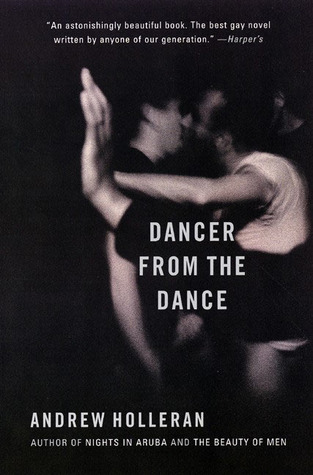
Dancer in the Dark is a novel that gives an illustrious glimpse into gay culture in the glittering world of New York during the early 70s. And with it's languid yet profane prose, jarringly distasteful vocabulary, tinged with a hint of a melancholic love for the zest of living the life at that time, it just left me feeling very sad. At times, I felt like I was floating through their lives - a mere spectator to their world, much like the nameless narrator, himself, who could neither act nor react as he witnessed the friendship between Malone and Sutherland evolve. Malone, a 'a literal prisoner of love', searching in vain for the right kind of love, and Sutherland - a glitzy 'queen thought to have come from another planet' who 'dressed Malone like a doll each night and ushered him out into the city to be a fantasy for someone', simply believing that it was the only right way of life for someone to live.
“Now of all the bonds between homosexual friends, none was greater than that between the friends who danced together. The friend you danced with, when you had no lover, was the most important person in your life; and for people who went without lovers for years, that was all they had.
It was a continuing bond and that is what Malone and Sutherland were for years, starting that fall: two friends who danced with one another.”
I cannot relate at all to the time that this story was depicting, so I can not say with confidence that it was depicted correctly. However, I can say, that how it was described here, for the generation it was showcasing - it was that time to be alive. A time to be whoever you wanted to be, a time to love whoever you thought you could have, a time to cling onto the existence that you have been given, to sleep your way through the challenges of everyday life and live and breathe simply in the now - searching for that gripping glow of love.
“Do you understand? As Auden says, we want not only to be loved, but to be loved alone...”
And at the crux of it was Malone - a man raised with the Christian faith, but somehow, found himself drawn to the wants of being with other men - falling in love with the one man he found attractive, only to find that he simply wanted more - searching for that attainable desire of love. And when his lover beat him and threw him onto the streets, and it is there when he stumbles upon Sutherland - a man, so colorfully flamboyant and fashionable, so rich in the know-how of what entertains the mind and desires for all gay people at the time, that he could be Malone's confidante, savior, and pimp - all in one, was what made their friendship all the more scintillating and bizarre then what it appeared.
“Isn't it strange that when we fall in love, this great dream we have, this extraordinary disease, the only thing in which either one of us is interested, it's inevitably with some perfectly ordinary drip who for some reason we cannot define is the magic bearer, the magician, the one who brings all this to us. Why?”
Were Malone and Sutherland likable characters? Were they tragic romantics who were blazing through life - existing in the now, making the most of what was offered to their present existence? It's hard for me to judge - how can I? How can I fault either of them? Malone who moved from man to man, almost in a dream-like state, neither here nor there, searching for a chance to feel that feeling of true love. Or as Sutherland emphatically informed him,
"Looking for love is not one of the standard entries on the résumé. You see, you have been writing a journal for the past ten years, and everyone else has been composing a résumé."
And Sutherland, who spouted tall tales and loud words that boasted of the grandiose with his brazenly bold thinking and zealous lifestyle that was the envy of all - attainable by so very few, was a character that came alive with his words, that could either make you love him or despise him - or even both for how he could make you feel about yourself. But, it is what Malone confided to that nameless narrator at a moment of contemplative reflection on his life - simply wondering where did the time go - that just hit me in my core.
“...life, if you just let yourself float," he said in the voice of a child wondering over some extraordinary fact, "you can end up anywhere! There are tides flowing anywhere!" he said, looking over at me with his chin still resting on his hands.
"Why," I said, "do you think you've wasted your life?"
"Does it matter?" he smiled. "And do I have enough strength to save it? If I do want to?" he said.”
When I read this bit, my mind immediately drifted to that most poignant and iconic line from the movie, Papillion.
❝Yours is the most terrible crime a human being can commit. I accuse you of a wasted life… The penalty is death.❞
And somehow, this hurt me even more, at how ironic this statement will play out for the outcome for both men. As much as primarily, the focus of this novel is to offer us a look into what life was for the gay man at that time, this was also the tragedy of Malone - a man who felt that he had spent the betterment of his years, squandering his youth. A man who did not know that he could destroy a man's life and heart, simply because they set eyes on him - a man who had the rich and famous wrapped around his finger, who did not know that he was simply a mirage of what he was - that he did want to, at times, be something more than what he had become.
For the times when he really did try to break free from Sutherland - there were so many moments where he made an effort to say that he wanted something different, he didn't want to be pimped out anymore, he wanted to settle down, but...it is wrong that I looked at Sutherland as a villain - someone who was noticeably harmful for Malone - that he could have been better off after being broken by Frankie, that he had never met him? Clinging onto him to make his life a little more colorful - so he wouldn't be at the service of this one man - granted, he was still meandering through life - searching for the love of his life - but, this one contemplative thought that eventually led to his inevitable end - it just hurt me deeply. Sometimes I wonder if I read a little too differently into what the book's initial aim was - maybe, I am - doesn't mean it hurt any less as I reached the end.
I ended this book with a heavy heart - not that I was disappointed, just that I felt so hollow inside - it's hard to explain, really. Or perhaps I'm looking at it in the wrong light - that in fact, this book was only written to emphasize and portray what was the way of living for gay people during the pre-AIDS 70s - a cultural lifestyle so vibrantly passionate with the glam for the daring and sensual disco-ball glare - the desire to have the unobtainable - the allure of the heady glances and obscene objectifying - that yet, at the heart of it all - they were just men - normal men - searching for someone to love - that you could still have that someone - just as you are.
So you must be wondering, why did I feel that way - that sudden turn of uplifted spirit? Well, allow me to explain the reason why. The book starts off with two correspondents exchanging letters, as the narrator mentions that he would like to write a novel about their friendship. Each of their letters end with a famous name from history. As the story draws to a conclusion, as the two contemplate the ending of Malone and Sutherland's lives, the recipient of the narrator's letters signs of his message with his name - not a famous figure, not a historical leader - just simply his name. And with these parting words, which pushed the rain cloud out of my heart with the knowledge and understanding that somehow, somewhere, someday, there will still be happiness and hope for them.
“No, darling, mourn no longer for Malone. He knew very well how gorgeous life is—that was the light in him that you, and I, and all the queens fell in love with. Go out dancing tonight, my dear, and go home with someone, and if the love doesn't last beyond the morning, then know I love you.”
“Life can never be
Exactly what you want it to be.”
-"Dedicated to The One I Love"