

What do you think?

Prohibited Zone
In the dark days that followed 9/11, the hardest thing was sorting the good guys from the bad. In Australia they got it wrong. Saira Abdiani and her friend, Amir Ali Khan, are Afghan refugees with a violent past. When Saira and Amir both disappear from the Woomera Refugee Detention Centre, the cops, the secret service and a ragtag gang of vigilantes are all on the trail. Steve West is a former football hero turned mining engineer who just wants a dirty weekend in town. He ends up seeing the dirty side of the War on Terror.
363 pages, Paperback
First published January 1, 2011
About the author
Alastair Sarre
4 books4 followersAlastair Sarre studied forestry at the Australian National University and worked for a mining company in Western Australia before obtaining a writing diploma and embarking on a career as an editor and writer specialising in forestry. He lives with his family in the Adelaide Hills.
Ratings & Reviews
Friends & Following
Create a free account to discover what your friends think of this book!
Community Reviews
Displaying 1 - 14 of 14 reviews

June 20, 2011
I don’t read enough thrillers to know if there are many set in Australia but this one managed to overcome my resistance to reading the genre: there are no Yankee gangsters or Russian mafia men, instead the bad guys are opportunistic guards from the notorious Woomera Refugee Detention Centre out in the middle of the hostile Australian desert…
Do a Google search on Australian refugee policy and top of the search list will be articles highly critical of government policy. You could get the impression that everyone from Amnesty International to the UNHCR or the Jewish Board of Deputies would like a more humanitarian policy. (And that’s now, when Woomera has been closed since 2003). The chorus of disapproval is intense but successive Australian governments (just like other Western nations) persist with refugee deterrence regimes of one sort or another because it’s electoral suicide to do anything else. There is a huge gulf between the public discourse of intellectuals and humanitarians on the one hand, and opinion polls on the other, and polticians know it.
So this book wearing its humanitarian heart firmly attached to its sleeve is entering into vexed territory. It’s a brave thing for a debut author to do but he’s handled it well. It’s an assortment of knockabout Aussies who are – in their own sweet laconic way – sympathetic to the refugee cause, and it’s their entirely convincing scepticism about all things to do with government that makes them resistant to the politics of fear and scare campaigns. The heroes are likeable, authentic characters who swear like sailors, as far from professional do-gooders and academics as you could imagine. They are as un-’unAustralian’ as you could get.
To read the rest of my review please visit http://anzlitlovers.wordpress.com/201...
Do a Google search on Australian refugee policy and top of the search list will be articles highly critical of government policy. You could get the impression that everyone from Amnesty International to the UNHCR or the Jewish Board of Deputies would like a more humanitarian policy. (And that’s now, when Woomera has been closed since 2003). The chorus of disapproval is intense but successive Australian governments (just like other Western nations) persist with refugee deterrence regimes of one sort or another because it’s electoral suicide to do anything else. There is a huge gulf between the public discourse of intellectuals and humanitarians on the one hand, and opinion polls on the other, and polticians know it.
So this book wearing its humanitarian heart firmly attached to its sleeve is entering into vexed territory. It’s a brave thing for a debut author to do but he’s handled it well. It’s an assortment of knockabout Aussies who are – in their own sweet laconic way – sympathetic to the refugee cause, and it’s their entirely convincing scepticism about all things to do with government that makes them resistant to the politics of fear and scare campaigns. The heroes are likeable, authentic characters who swear like sailors, as far from professional do-gooders and academics as you could imagine. They are as un-’unAustralian’ as you could get.
To read the rest of my review please visit http://anzlitlovers.wordpress.com/201...

November 20, 2014
PROHIBITED ZONE, despite being touted on the cover as a 'thriller in the desert', is very much a crime novel centred around an escapee of the Woomera Detention Centre and her accomplices as they traverse Adelaide city and it's outlying suburbs.
Former Adelaide Crows football player and now mining engineer Steve West becomes embroiled in a search for a presumed terrorist, newly escaped from the Detention Centre following a spate of riots. Assisted by a handful of activists and detention centre guards, Saira and Amir flee their captures in search of a better life. Becoming separated in the outbreak, Saira stays with Kara, one of the activists and her only link to the Australia she'd hoped to see after fleeing her country. While Amir goes missing in the endless desert.
Steve, convinced by Kara to help her and Saira agrees to take them to Adelaide so Saira can tell her story to the world of the gross injustice undertaken within the confines of the detention centre. With a bounty on offer to bring all the escapees back to Woomera, a group of detention centre guards sets out to retrieve the attractive Saira and her friend and accused terrorist Amir.
PROHIBITED ZONE was a lot of fun to read. I got a real kick out of reading a book set in my home state and enjoyed the familiarity of the place-setting with many landscapes and towns instantly recognisable.
The cat and mouse nature of these types of 'search and retrieve' crime thrillers can be tedious, however PROHIBITED ZONE doesn't suffer from that with each twist and turn electrifying and believable.
PROHIBITED ZONE is author Alastair Sarre's debut novel (2011) and I'm certain to be on the look out for more of his work - and that of crime/thrillers centred in my home state.
I highly recommend PROHIBITED ZONE for crime and thriller fans, as well as those wanting a distinct brand of Aussie fiction that doesn't hold back on the colourful dialect and mannerisms unique to Australiana.
Review also appears on my blog: http://justaguythatlikes2read.blogspo...
Former Adelaide Crows football player and now mining engineer Steve West becomes embroiled in a search for a presumed terrorist, newly escaped from the Detention Centre following a spate of riots. Assisted by a handful of activists and detention centre guards, Saira and Amir flee their captures in search of a better life. Becoming separated in the outbreak, Saira stays with Kara, one of the activists and her only link to the Australia she'd hoped to see after fleeing her country. While Amir goes missing in the endless desert.
Steve, convinced by Kara to help her and Saira agrees to take them to Adelaide so Saira can tell her story to the world of the gross injustice undertaken within the confines of the detention centre. With a bounty on offer to bring all the escapees back to Woomera, a group of detention centre guards sets out to retrieve the attractive Saira and her friend and accused terrorist Amir.
PROHIBITED ZONE was a lot of fun to read. I got a real kick out of reading a book set in my home state and enjoyed the familiarity of the place-setting with many landscapes and towns instantly recognisable.
The cat and mouse nature of these types of 'search and retrieve' crime thrillers can be tedious, however PROHIBITED ZONE doesn't suffer from that with each twist and turn electrifying and believable.
PROHIBITED ZONE is author Alastair Sarre's debut novel (2011) and I'm certain to be on the look out for more of his work - and that of crime/thrillers centred in my home state.
I highly recommend PROHIBITED ZONE for crime and thriller fans, as well as those wanting a distinct brand of Aussie fiction that doesn't hold back on the colourful dialect and mannerisms unique to Australiana.
Review also appears on my blog: http://justaguythatlikes2read.blogspo...

March 25, 2012
The authors published by Wakefield Press are generally South Australians writing either about the state, or stories set in the state. I've read many of their titles and have never come across one I haven't liked. This one, by a new author, is up there as one of the most enjoyable thrillers I've read in some time. The story revolves around the escape of two detainees from the Woomera Dentention Facility. The characters are quite different, led by Steve West, a mining engineer and retired Adelaide Crows football, with a cast of spooks, police, love interests and colour characters. The familiarity of the settings, ranging from Pimba through to Port Willunga, is part of the appeal, yet even if these places are not familiar, the story is still gripping and thrilling. I hope the author has a few more Steve West stories up his sleeve and never loses sight of the vastness and grandeur of South Australia as the setting to tell great tales. Highly recommended.
March 10, 2016
PROHIBITED ZONE by Alastair Sarre was published by Wakefield Press in 2011 with the follow-up, ECSTASY LAKE, out early in 2016. If, like me, somehow you missed the first book then you really should rectify that as soon as possible. It is a stellar debut filled with great characters, a really good and interesting plot and comes with a quintessentially Australian feel to it - in the setting and the language.
Blurbed as a "thriller in the desert", PROHIBITED ZONE is centred, as referenced to by the title, in the area around the Woomera Detention Centre in South Australia. With sojourns to Adelaide as well, somehow this novel retains that sense of the bush all the way through it - regardless of where the characters are situated. Probably because the central character - former Australian rules football player, mining engineer Steve West is a beautifully realised example of an outback bloke. It makes such sense that this laid back, somewhat private man somehow gets himself embroiled in the search for (and the hiding of) a declared terrorist and his younger friend. On the other side of the coin, Kara is well pitched as a deeply committed activist trying very hard to do what she believes is the right thing, with an absolutely take no prisoner's attitude barely concealing somebody paddling darn hard to keep their head above some very murky waters.
These two combining to move Saira Abdiani out of the way of the detention centre guards looking for her, and a bunch of assorted goons and heavies attached to them, makes perfect sense, as does the friends, family and cohorts who step in to assist along the way. The desire to have Saira out and able to tell her story about mistreatment and the gross injustice of the detention system also makes perfect sense, and works as an impetus for Kara, even though Steve's motivation becomes somewhat more personal. The pace of the getaway of Saira, and their fast stepping to keep out of the hands of the pursuer's is really well done - there's not a lot of time to contemplate or take a breath in PROHIBITED ZONE. Which is kind of a pity in many ways as there is much that is sobering quietly built into this tale - revealed as part of the overall action, dropped into the middle of the whirlpool, designed to make you read on for a while then suddenly go ... what the?
A lot of fun to read, PROHIBITED ZONE was one of those books that this reader just could not put down. Afterwards, with hindsight there are also a lot of points being particularly well made. Which makes this one of those crime fiction books that's important - fun, believable, great characters with a sting in the tail to boot.
https://www.austcrimefiction.org/revi...
Blurbed as a "thriller in the desert", PROHIBITED ZONE is centred, as referenced to by the title, in the area around the Woomera Detention Centre in South Australia. With sojourns to Adelaide as well, somehow this novel retains that sense of the bush all the way through it - regardless of where the characters are situated. Probably because the central character - former Australian rules football player, mining engineer Steve West is a beautifully realised example of an outback bloke. It makes such sense that this laid back, somewhat private man somehow gets himself embroiled in the search for (and the hiding of) a declared terrorist and his younger friend. On the other side of the coin, Kara is well pitched as a deeply committed activist trying very hard to do what she believes is the right thing, with an absolutely take no prisoner's attitude barely concealing somebody paddling darn hard to keep their head above some very murky waters.
These two combining to move Saira Abdiani out of the way of the detention centre guards looking for her, and a bunch of assorted goons and heavies attached to them, makes perfect sense, as does the friends, family and cohorts who step in to assist along the way. The desire to have Saira out and able to tell her story about mistreatment and the gross injustice of the detention system also makes perfect sense, and works as an impetus for Kara, even though Steve's motivation becomes somewhat more personal. The pace of the getaway of Saira, and their fast stepping to keep out of the hands of the pursuer's is really well done - there's not a lot of time to contemplate or take a breath in PROHIBITED ZONE. Which is kind of a pity in many ways as there is much that is sobering quietly built into this tale - revealed as part of the overall action, dropped into the middle of the whirlpool, designed to make you read on for a while then suddenly go ... what the?
A lot of fun to read, PROHIBITED ZONE was one of those books that this reader just could not put down. Afterwards, with hindsight there are also a lot of points being particularly well made. Which makes this one of those crime fiction books that's important - fun, believable, great characters with a sting in the tail to boot.
https://www.austcrimefiction.org/revi...

January 30, 2014
If you are a fan of thrillers, but desperate for a breath of fresh air that doesn't follow airport trade paperback formulas and free of stock characterization, why not give this first-time Australian author a go? I stumbled upon his work by pure chance, and that's a shame. If this book is marketed better to a more international audience outside Australia and given a fair go, it will more than stand its own against the very best.
Mr. Sarre is a master wordsmith, a talented storyteller and a painter of words that light up your senses. And isn't that what we want our books to do to us? I've lived in Australia for many years, and could feel, smell, hear and touch the world he's created in Prohibited Zone. While his characters are unique and original, they carry a distinct cultural DNA that only an astute observer of contemporary Australia - an insider really - could channel. Regardless of your politics and stance on immigration - and illegal immigrants to Australia being a key theme in the novel - you will not be able to resist the delicious literary meal he's cooked up.
From the very first passage, you know this is going to be special. Take this from the scene-opener at the top of manuscript:
"The plain couldn't have been more plain. It stretched in all directions, treeless and childless and motherless and loveless, like it had been yesterday and the day before and for a million years before that."
When I read something like this, I marvel at the simplicity of the prose, but bask in its power. I've read enough fiction - the good, the bad, and the ugly - to recognize talent of this magnitude. Nothing facetious here. No showmanship or one word more than necessary to transport you exactly to where this writer wants to take you.
I took a risk on Prohibited Zone and the heretofore unheard of Mr. Sarre, only to discover a writer I am keenly keeping an eye on.
I trusted my instincts. They more than paid off. You should too.
Mr. Sarre is a master wordsmith, a talented storyteller and a painter of words that light up your senses. And isn't that what we want our books to do to us? I've lived in Australia for many years, and could feel, smell, hear and touch the world he's created in Prohibited Zone. While his characters are unique and original, they carry a distinct cultural DNA that only an astute observer of contemporary Australia - an insider really - could channel. Regardless of your politics and stance on immigration - and illegal immigrants to Australia being a key theme in the novel - you will not be able to resist the delicious literary meal he's cooked up.
From the very first passage, you know this is going to be special. Take this from the scene-opener at the top of manuscript:
"The plain couldn't have been more plain. It stretched in all directions, treeless and childless and motherless and loveless, like it had been yesterday and the day before and for a million years before that."
When I read something like this, I marvel at the simplicity of the prose, but bask in its power. I've read enough fiction - the good, the bad, and the ugly - to recognize talent of this magnitude. Nothing facetious here. No showmanship or one word more than necessary to transport you exactly to where this writer wants to take you.
I took a risk on Prohibited Zone and the heretofore unheard of Mr. Sarre, only to discover a writer I am keenly keeping an eye on.
I trusted my instincts. They more than paid off. You should too.
March 30, 2016
This was a fabulous book. I really appreciated all of the progressive themes Alastair Sarre pulled together at the end – primarily the theme of fairness, not just towards the refugees, but all disadvantaged members of society. The big picture thoughts on our role in the universe – the purpose of it all – was extremely compelling, sobering, and poignant. I think that anyone with any sense of purpose could readily identify with it. Anyone who fights for anything, would both appreciate and celebrate, Kara’s victory for the refugees. They would probably also identify that the battle is never actually won – that it just involves a lifetime of work for an end goal.
The overarching theme of the human rights violations within the detention centers was so on point. In fact, I just heard a story on National Public Radio about Australia’s stance on not accepting refugees arriving by boat in any circumstance. I’m assuming that is the same rule that inspired the story. I liked Saira’s story about what happened in Afghanistan because it helps people like me understand the importance of having some sort of transition plan so a country doesn’t devolve with the resulting anarchy.
His story also picks up on another disturbing theme taking place in the US – anti-Muslim sentiment. The bombing threats at local mosques, Muslims being taunted, and our political leaders/presidential nominees calling for widespread removal of Muslims from the country - all of which are extremely unacceptable.
This book is so timely in so many ways and I think it could do very well in the US with broader distribution. I think people absolutely need to read this book!
The overarching theme of the human rights violations within the detention centers was so on point. In fact, I just heard a story on National Public Radio about Australia’s stance on not accepting refugees arriving by boat in any circumstance. I’m assuming that is the same rule that inspired the story. I liked Saira’s story about what happened in Afghanistan because it helps people like me understand the importance of having some sort of transition plan so a country doesn’t devolve with the resulting anarchy.
His story also picks up on another disturbing theme taking place in the US – anti-Muslim sentiment. The bombing threats at local mosques, Muslims being taunted, and our political leaders/presidential nominees calling for widespread removal of Muslims from the country - all of which are extremely unacceptable.
This book is so timely in so many ways and I think it could do very well in the US with broader distribution. I think people absolutely need to read this book!

April 20, 2016
The Woomera Immigration Reception and Processing Centre (IRPC) was an Australian immigration detention facility near the village of Woomera in South Australia. Unauthorised arrivals, which had exceeded the capacity of other detention facilities. It was originally intended to hold 400 people, however at its peak in April 2000 it had nearly 1,500 detainees. After ongoing public pressure in response to several well publicised riots from 2000, accusations of human rights abuses, and capacity issues, the centre closed in April 2003. (Wikipedia)
Thirteen years on the issue of how to handle illegal immigrants still plagues Australia's political parties and so the issues behind this novel are still familiar to Australia readers. It wasn't really until after the closure of Woomera that Australians became aware of how inhumanely its residents had been treated. (See Four Corners programme)
Set very squarely in the South Australian landscape with lots of landmarks that local readers will be familiar with, PROHIBITED ZONE is very readable, the characters colourful, and the scenarios quite credible.
Thirteen years on the issue of how to handle illegal immigrants still plagues Australia's political parties and so the issues behind this novel are still familiar to Australia readers. It wasn't really until after the closure of Woomera that Australians became aware of how inhumanely its residents had been treated. (See Four Corners programme)
Set very squarely in the South Australian landscape with lots of landmarks that local readers will be familiar with, PROHIBITED ZONE is very readable, the characters colourful, and the scenarios quite credible.
February 10, 2016
I loved this book! And I don't normally read thrillers. It was a 'page-turner'. I finished it in just two days! I liked the flawed and lonely character, Steve West. I also loved the beautiful prose and the vivid descriptions of the harsh Australian outback - with characters who seemed to mirror the landscape.
I'm looking forward to reading more about Steve West: I hope he finds happiness and sorts himself out in future novels. I also look forward to more of the lovely prose of Alastair Sarre - who clearly understands the 'back of beyond' in Australia: The imagery, the people, the vernacular, and the dangers.
I'm looking forward to reading more about Steve West: I hope he finds happiness and sorts himself out in future novels. I also look forward to more of the lovely prose of Alastair Sarre - who clearly understands the 'back of beyond' in Australia: The imagery, the people, the vernacular, and the dangers.
February 11, 2016
Well written, engaging, great tension ... and when is the next novel in the Steve West series coming out?! Always a good sign if a book makes you sad to finish it. If only there were already more in the series to read! Great start to a wonderful thriller series!
September 2, 2011
A fast paced novel, full of strong characters and intrigue. Thought provoking and intelligent.
August 7, 2019
I picked this up for free at the local library give away table because I liked the cover and it’s Australian heavy blurb. This book is a fantastic read. A thriller in the dessert is a perfect description with action, politics, abuse of authoritative power, lust, trust and mistrust. An absolute page turner, not what I was expecting, a quick and exciting read. I liked relating to the Australian grammar and locations. The characters were very well developed and I was quickly invested in what was going to happen to them. It’s an easy 4.5 ⭐️
May 8, 2023
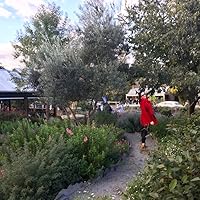
I really appreciated being able to recognise local landmarks and settings. I also liked the effort made by Sarre to ensure the Aussie way of speaking and interacting was authentic.

January 26, 2023
This story of an easy-going ex-footy player who gets drawn into a refugee drama in the Australian outback is a wonderful mix of fast-paced storytelling and vivid descriptions anchored with a strong sense of place.
Sarre plays liberally with language, managing to evoke both character and setting in the same breath, as in this depiction of one of the regulars at a roadside bar: “He grinned quickly, showing an array of teeth that were as crooked, as dirty and as sparse as the headstones in the Pimba cemetery”.
He uses bathos to good effect, inviting the reader to enjoy a burst of lyricism before undercutting it with a more prosaic remark: “Streaks of cloud were caught in the same spectrum of colours, and remnants of blue graded into blackness on the eastern fringes of the sky. ‘Not a bad sunset,’ I said. ‘Fuck the sunset,’ said Hindmarsh.”
This rollicking yarn ultimately also grapples with some of the more complex aspects of Australia’s social and political landscape – immigration, religion, human rights… – without ever being heavy-handed or sanctimonious.
A brilliant first novel.
Sarre plays liberally with language, managing to evoke both character and setting in the same breath, as in this depiction of one of the regulars at a roadside bar: “He grinned quickly, showing an array of teeth that were as crooked, as dirty and as sparse as the headstones in the Pimba cemetery”.
He uses bathos to good effect, inviting the reader to enjoy a burst of lyricism before undercutting it with a more prosaic remark: “Streaks of cloud were caught in the same spectrum of colours, and remnants of blue graded into blackness on the eastern fringes of the sky. ‘Not a bad sunset,’ I said. ‘Fuck the sunset,’ said Hindmarsh.”
This rollicking yarn ultimately also grapples with some of the more complex aspects of Australia’s social and political landscape – immigration, religion, human rights… – without ever being heavy-handed or sanctimonious.
A brilliant first novel.

January 19, 2013
Very Australian descripitions of both characters and environment centring around the Woomera detention centre and its 'going ons'. Interesting with some suspense and although not mind blowing, was a good read.
Displaying 1 - 14 of 14 reviews