

What do you think?

Effie: The Passionate Lives of Effie Gray, John Ruskin and John Everett Millais
Effie Gray, a beautiful and intelligent young socialite, rattled the foundations of England's Victorian age. Married at nineteen to John Ruskin, the leading art critic of the time, she found herself trapped in a loveless, unconsummated union after Ruskin rejected her on their wedding night. On a trip to Scotland she met John Everett Millais, Ruskin's protégé, and fell passionately in love with him. In a daring act, Effie left Ruskin, had their marriage annulled and entered into a long, happy marriage with Millais. Suzanne Fagence Cooper has gained exclusive access to Effie's previously unseen letters and diaries to tell the complete story of this scandalous love triangle. In Cooper's hands, this passionate love story also becomes an important new look at the work of both Ruskin and Millais with Effie emerging as a key figure in their artistic development. Effie is a heartbreakingly beautiful book about three lives passionately entwined with some of the greatest paintings of the pre-Raphaelite period.
306 pages, Kindle Edition
First published May 1, 2010
About the author
Suzanne Fagence Cooper
12 books31 followersDr. Suzanne Fagence Cooper was educated at Merton College, Oxford, Christie's Education and the Courtald Institute before becoming the Victoria & Albert Museum Research Fellow at Buckinghamshire New University in 1999. Her involvement with the V&A dates back to 1996, when she was appointed curator, and in 2001 she co-curated the V&A's major exhibition 'The Victorian Vision.'
Suzanne's published work includes the book Victorian Women (V&A Publications, 2001) and two essays for the book that supported the exhibition 'The Victorian Vision' in 2002. Her book Pre-Raphaelite Art in the Victoria and Albert Museum (V&A Publications, 2003) brought together objects normally dispersed around the museum to examine the relationship between the V&A and this group of Victorian artists.
Her renowned knowledge of Victorian art and culture has led to numerous broadcast opportunities. She has been interviewed for Radio 4, the BBC World Service, and the television programme Victorians Roadshow (BBC2), and has worked as a consultant for the programmes What the Victorians Did for Us, (BBC2), presented by Adam Hart-Davis, and Simon Schama's series History of Britain (BBC2). She has also given many public lectures, including regularly on Cunard's Queen Mary II, as part of the Oxford University Discovery programme (2004).
Suzanne lives between London and York with her husband and two daughters
Suzanne's published work includes the book Victorian Women (V&A Publications, 2001) and two essays for the book that supported the exhibition 'The Victorian Vision' in 2002. Her book Pre-Raphaelite Art in the Victoria and Albert Museum (V&A Publications, 2003) brought together objects normally dispersed around the museum to examine the relationship between the V&A and this group of Victorian artists.
Her renowned knowledge of Victorian art and culture has led to numerous broadcast opportunities. She has been interviewed for Radio 4, the BBC World Service, and the television programme Victorians Roadshow (BBC2), and has worked as a consultant for the programmes What the Victorians Did for Us, (BBC2), presented by Adam Hart-Davis, and Simon Schama's series History of Britain (BBC2). She has also given many public lectures, including regularly on Cunard's Queen Mary II, as part of the Oxford University Discovery programme (2004).
Suzanne lives between London and York with her husband and two daughters
Ratings & Reviews
Friends & Following
Create a free account to discover what your friends think of this book!
Community Reviews
Displaying 1 - 30 of 140 reviews

September 19, 2015
Aaaaaaaaaaaaah, il Vittorianesimo … c’è mai stata un’epoca tanto ricca di contraddizioni quanto questa?
Il mio docente di letteratura inglese diceva sempre che ciò che i Vittoriani “sbattevano fuori dalla porta rientrava comunque, di soppiatto, dalla finestra”. Non per niente il “Dr. Jeckyll e Mr. Hyde”, di Stevenson, è stato scritto allora. Non per niente si coprivano le gambe dei tavoli, perché sessualmente allusive e, al contempo, fioriva alla grande la prostituzione. Non per niente la rivoluzione industriale e la novità delle macchine a vapore attraevano e assieme atterrivano le persone.
E questa biografia restituisce tutto il sapore di quel periodo storico. Ricchissima di dettagli e di riferimenti, ci porta a spasso per seguire la vita di Effie Gray e dei suoi due mariti, consentendoci al contempo di ficcare il naso nelle case di illustri personaggi, nella Confraternita dei Preraffaelliti e, qualche volta, persino nelle stanze della stessa Regina Vittoria.
Una lettura davvero piacevole. Invece, vi sconsiglio il film che ne è stato tratto, perché è molto riduttivo e si concentra soprattutto sulla storia d’amore tra Effie e John Everett Millais (e sul quel cattivaccio di John Ruskin), rendendola un po’ troppo mielosa. Emma Thompson, però, è molto brava.
Il mio docente di letteratura inglese diceva sempre che ciò che i Vittoriani “sbattevano fuori dalla porta rientrava comunque, di soppiatto, dalla finestra”. Non per niente il “Dr. Jeckyll e Mr. Hyde”, di Stevenson, è stato scritto allora. Non per niente si coprivano le gambe dei tavoli, perché sessualmente allusive e, al contempo, fioriva alla grande la prostituzione. Non per niente la rivoluzione industriale e la novità delle macchine a vapore attraevano e assieme atterrivano le persone.
E questa biografia restituisce tutto il sapore di quel periodo storico. Ricchissima di dettagli e di riferimenti, ci porta a spasso per seguire la vita di Effie Gray e dei suoi due mariti, consentendoci al contempo di ficcare il naso nelle case di illustri personaggi, nella Confraternita dei Preraffaelliti e, qualche volta, persino nelle stanze della stessa Regina Vittoria.
Una lettura davvero piacevole. Invece, vi sconsiglio il film che ne è stato tratto, perché è molto riduttivo e si concentra soprattutto sulla storia d’amore tra Effie e John Everett Millais (e sul quel cattivaccio di John Ruskin), rendendola un po’ troppo mielosa. Emma Thompson, però, è molto brava.

May 24, 2017
Wow.
I've always admired Pre-Raphaelite art and I'd heard a few things here and there about Effie Gray, the wife of painter John Everett Millais, but I had no idea that she'd been through so much grief with her first husband, the critic John Ruskin.
Ruskin never consummated his marriage to Effie; he had a taste for slender young girls in early adolescence. "John Ruskin loved young girls, innocents on the verge of womanhood. He became enchanted with twelve-year-old Effie when she visited Herne Hill in the late summer of 1840. The next time he saw her, John Ruskin felt she was 'very graceful but had lost something of her good looks'. After he had won her hand in 1847 and she was still only nineteen... Effie was too old to be truly desirable." The last girl he developed a crush on was just ten years old.
Ruskin tried to make people believe the rift was all Effie's fault because she was mentally ill and that he had taken the blame for the failed marriage to spare her. Creepy Gaslighting Alert! Ruskin had been friends with John Everett Millais (Effie's new husband), and after this mess told Millias he wanted to remain friends. Millais naturally declined.
This is a great story, well written and researched.
I've always admired Pre-Raphaelite art and I'd heard a few things here and there about Effie Gray, the wife of painter John Everett Millais, but I had no idea that she'd been through so much grief with her first husband, the critic John Ruskin.
Ruskin never consummated his marriage to Effie; he had a taste for slender young girls in early adolescence. "John Ruskin loved young girls, innocents on the verge of womanhood. He became enchanted with twelve-year-old Effie when she visited Herne Hill in the late summer of 1840. The next time he saw her, John Ruskin felt she was 'very graceful but had lost something of her good looks'. After he had won her hand in 1847 and she was still only nineteen... Effie was too old to be truly desirable." The last girl he developed a crush on was just ten years old.
Ruskin tried to make people believe the rift was all Effie's fault because she was mentally ill and that he had taken the blame for the failed marriage to spare her. Creepy Gaslighting Alert! Ruskin had been friends with John Everett Millais (Effie's new husband), and after this mess told Millias he wanted to remain friends. Millais naturally declined.
This is a great story, well written and researched.

June 18, 2015
Al di là della competenza nella scrittura di Suzanne Fagence Cooper, la storia di Effie è effettivamente un romanzo.
Siamo nel regno della regina Vittoria, un'epoca curiosa e piccante più di quanto non si creda normalmente. La giovane Effie va in sposa a John Ruskin, critico d'arte sulla via del successo, ma non sarò mai felice con lui. Da questa narrazione il marito appare come un uomo incapace di lasciare la famiglia d'origine per costruirne una sua. Effie invece è una scozzese indipendente e ne soffre. Quando la convivenza diventa intollerabile sarà lei a chiedere l'annullamento del matrimonio, dichiarando al mondo che il marito non ha mai voluto consumare il matrimonio.
Ruskin non si opporrà all'accusa ed il matrimonio verrà sciolto, ma la vita di Effie non si ferma qui. Come signora Ruskin aveva conosciuto uno dei pittori apprezzati dal marito, il pre-raffaellita John Everett Millais. Si innamorarono, si sposarono e vissero felici e contenti: Millais fu un dei pittori più apprezzati nel Regno Unito, fino a diventare il presidente della Royal Academy, ed Effie lo aiutò a costruire buona parte del suo successo agendo come una PR ante litteram. Ebbero molti figli, condivisero successi e lutti, e alla fine possiamo dire Effie ha saputo trarre il meglio dalla sua seconda occasione. Il tutto sullo sfondo di una Inghilterra che cambia, passando dalla Grande esposizione delle opere dell'industria di tutte le Nazioni del 1851 di Londra alle suffragette, via Svizzera, Francia ed Italia.
L'Ofelia di Millais è uno dei miei quadri preferiti, ed ora che conosco la storia dell'autore lo apprezzo ancora di più
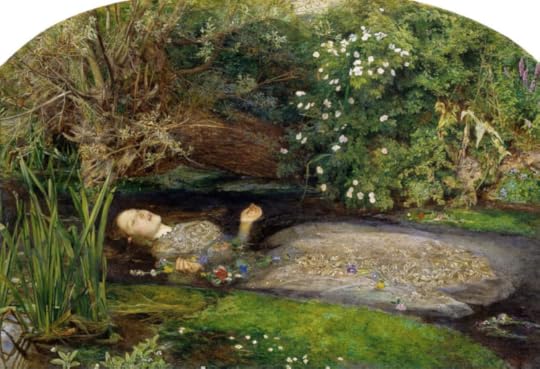
Siamo nel regno della regina Vittoria, un'epoca curiosa e piccante più di quanto non si creda normalmente. La giovane Effie va in sposa a John Ruskin, critico d'arte sulla via del successo, ma non sarò mai felice con lui. Da questa narrazione il marito appare come un uomo incapace di lasciare la famiglia d'origine per costruirne una sua. Effie invece è una scozzese indipendente e ne soffre. Quando la convivenza diventa intollerabile sarà lei a chiedere l'annullamento del matrimonio, dichiarando al mondo che il marito non ha mai voluto consumare il matrimonio.
Ruskin non si opporrà all'accusa ed il matrimonio verrà sciolto, ma la vita di Effie non si ferma qui. Come signora Ruskin aveva conosciuto uno dei pittori apprezzati dal marito, il pre-raffaellita John Everett Millais. Si innamorarono, si sposarono e vissero felici e contenti: Millais fu un dei pittori più apprezzati nel Regno Unito, fino a diventare il presidente della Royal Academy, ed Effie lo aiutò a costruire buona parte del suo successo agendo come una PR ante litteram. Ebbero molti figli, condivisero successi e lutti, e alla fine possiamo dire Effie ha saputo trarre il meglio dalla sua seconda occasione. Il tutto sullo sfondo di una Inghilterra che cambia, passando dalla Grande esposizione delle opere dell'industria di tutte le Nazioni del 1851 di Londra alle suffragette, via Svizzera, Francia ed Italia.
L'Ofelia di Millais è uno dei miei quadri preferiti, ed ora che conosco la storia dell'autore lo apprezzo ancora di più

June 10, 2012
A wonderfully written account of Effie Millais' life and a great depiction of what Victorian England must have been like.
Suzanne Fagence Cooper writes a story using Effie's Letters to and from her family and friends, her and her husbands diaries.
When I first picked up 'Effie' in Waterstones,I was expecting some great love affair-But it's more then that. It's the woman behind the two men she called husband. After finishing the book, I felt an acute sense that I knew Effie and I really felt for her. I came away from the book feeling as if I had made a friend.
Effie was probably one of the more influential woman of early victorian woman's rights.
Effie, married to John Ruskin,a renowned art critic in the Victorian England as well as a man who refused to consummate his marriage.
We are left in the dark sadly about why John Ruskin refused Effie-except by what Effie said and what Ruskin himself said.
In a letter to her Father,George Gray,after five years of marriage and the catalyst of falling in Love with John Everett Millais,who's patron was Ruskin!
Effie finally told her father about her unfortunate marriage and his apparent reasons for his rejection of her.
"He alleged various reasons, hatred to children, religious motives, a desire to preserve my beauty, and, finally this last year he told me his true reason... that he had imagined women were quite different to what he saw I was, and that the reason he did not make me his Wife was because he was disgusted with my person the first evening 10th April."
John Ruskin confirmed these in his statements at court:
"It may be thought strange that I could abstain from a woman who to most people was so attractive. But though her face was beautiful, her person was not formed to excite passion. On the contrary, there were certain circumstances in her person which completely checked it.''
His Disgust with Effie's person is unknown.
Effie went through the undignified act of a virginity test. Effie passed,proving that Ruskin had not consummated his marriage and therefore it was not legally binding.
Effie got her annulment.
A year after the annulment, Effie married John Everett Millais. The Man who had made her want to be free in order to marry again, even though she was hesitant about entering into another marriage after the marriage she had just been through-a marriage she never fully got over.
You would think the tale ends here, but no. Suzanne Fagence Copper takes us through Effie's entire life up until her death. We find out the fates of her children--The trails of Victorian England.
Effie's life was not all sunshine and happiness after her second marriage.
She was no longer accepted into Queen Victoria's Presence because of her annulment. Queen Victoria thought Effie should have kept her mouth shut! Even though Victoria's children still liked Effie and Everett.
Her children and her parents and sisters were riddled with sickness and insanity.
To go through this must have been hard and increases my view that Effie is in fact one of the strongest Victorian woman that I know of.
Effie is my favorite but Georgiana Cavendish comes in second, as of now.
One of the most romantic things that I have read of in a long while is the story of when Everett Millais was dieing in his deathbed,dieing of throat cancer,Queen Victoria's daughter, Princess Louise, Duchess of Argyll went to visit the Millais and while she was there gave Millais message from the Queen, who wondered if there was anything she could do for him.
John Everett could no longer speak due to the cancer and simply wrote
''Yes,let her receive my wife.''
To me that shows an enduring love, that even on his deathbed he thought only of her.
People familiar with John Everett Millais work will have seen the portrait of thirteen year old Sophy Gray-Effie's Younger sister-simply titled 'Sophy Gray'.
The painting is-Apparently-a sensual and ''knowing'' image which provoked questions of Millais relationship with his sister in law.
There was a strong affection between the two, and it could have possibly lead to a mutual infatuation between them.
However,I don't believe this due to the fact that there is not enough evidence and Effie, as well as Her parents did not seem to care about the friendship between the two-Letting him chaperone her.
It is RUMORED that Effie had to send Sophy away because of concerns that she and Millais were growing too close.
But the sisters remained close until the end of their lives and Effie often invited Sophy to stay with herself and Everett.
My interpretation of the 'Sophy Gray' is of a girl coming into awareness of her beauty and her body. The knowing look is sort of like 'I know I'm hot.' And 13 year old Sophy Gray did-so much so that she tried to stay that way as she grew into a woman. She suffered from Anorexia nervosa. She refused to eat thinking she was to fat and became semi infertile(she later went on to become a mother of one.)-not having her ''monthly illnesses''. Basically Anorexia nervosa is the Victorian Version of today's anorexia.
Suzanne goes into great detail about the treatments-which I found very interesting.I know that sounds weird but I have a obsession with knowing how 'insanity' was dealt with in the past as I have OCD and often wonder about past treatments.
ANYWAY! Back on subject, BRILLIANT BOOK! I felt as if I walked away with a friend in the ending of the biography.
A Beautifully written, well-researched biography which gives reader's a look into Victorian life.BLOODY GOOD SHOW, CHAPS! 5 STARS!!!
NOW FOR SOME PICTURES!!


Effie Gray


John Everett Millais
Mr and Mrs Millais and their daughters Effie jr and Mary Millais. Photograph was taken by Lewis Carroll


John Ruskin
The History of Effie,Ruskin and Millais has caught the attention of movie makers(:P) and there are now two movies that are coming out.
Effie-Starring Dakota Fanning
Untouched-Starring Keira Knightley
Out of the two, I'm looking forward to ''Untouched'' starring Keira Knightley. Keira is my favourite actress out of the two and has some of Effie's facial features-very little but Dakota dosent have a lot either.

Effie Gray and Keira Knightley

Effie Grey And Dakota Fanning
Suzanne Fagence Cooper writes a story using Effie's Letters to and from her family and friends, her and her husbands diaries.
When I first picked up 'Effie' in Waterstones,I was expecting some great love affair-But it's more then that. It's the woman behind the two men she called husband. After finishing the book, I felt an acute sense that I knew Effie and I really felt for her. I came away from the book feeling as if I had made a friend.
Effie was probably one of the more influential woman of early victorian woman's rights.
Effie, married to John Ruskin,a renowned art critic in the Victorian England as well as a man who refused to consummate his marriage.
We are left in the dark sadly about why John Ruskin refused Effie-except by what Effie said and what Ruskin himself said.
In a letter to her Father,George Gray,after five years of marriage and the catalyst of falling in Love with John Everett Millais,who's patron was Ruskin!
Effie finally told her father about her unfortunate marriage and his apparent reasons for his rejection of her.
"He alleged various reasons, hatred to children, religious motives, a desire to preserve my beauty, and, finally this last year he told me his true reason... that he had imagined women were quite different to what he saw I was, and that the reason he did not make me his Wife was because he was disgusted with my person the first evening 10th April."
John Ruskin confirmed these in his statements at court:
"It may be thought strange that I could abstain from a woman who to most people was so attractive. But though her face was beautiful, her person was not formed to excite passion. On the contrary, there were certain circumstances in her person which completely checked it.''
His Disgust with Effie's person is unknown.
Effie went through the undignified act of a virginity test. Effie passed,proving that Ruskin had not consummated his marriage and therefore it was not legally binding.
Effie got her annulment.
A year after the annulment, Effie married John Everett Millais. The Man who had made her want to be free in order to marry again, even though she was hesitant about entering into another marriage after the marriage she had just been through-a marriage she never fully got over.
You would think the tale ends here, but no. Suzanne Fagence Copper takes us through Effie's entire life up until her death. We find out the fates of her children--The trails of Victorian England.
Effie's life was not all sunshine and happiness after her second marriage.
She was no longer accepted into Queen Victoria's Presence because of her annulment. Queen Victoria thought Effie should have kept her mouth shut! Even though Victoria's children still liked Effie and Everett.
Her children and her parents and sisters were riddled with sickness and insanity.
To go through this must have been hard and increases my view that Effie is in fact one of the strongest Victorian woman that I know of.
Effie is my favorite but Georgiana Cavendish comes in second, as of now.
One of the most romantic things that I have read of in a long while is the story of when Everett Millais was dieing in his deathbed,dieing of throat cancer,Queen Victoria's daughter, Princess Louise, Duchess of Argyll went to visit the Millais and while she was there gave Millais message from the Queen, who wondered if there was anything she could do for him.
John Everett could no longer speak due to the cancer and simply wrote
''Yes,let her receive my wife.''
To me that shows an enduring love, that even on his deathbed he thought only of her.
People familiar with John Everett Millais work will have seen the portrait of thirteen year old Sophy Gray-Effie's Younger sister-simply titled 'Sophy Gray'.
The painting is-Apparently-a sensual and ''knowing'' image which provoked questions of Millais relationship with his sister in law.
There was a strong affection between the two, and it could have possibly lead to a mutual infatuation between them.
However,I don't believe this due to the fact that there is not enough evidence and Effie, as well as Her parents did not seem to care about the friendship between the two-Letting him chaperone her.
It is RUMORED that Effie had to send Sophy away because of concerns that she and Millais were growing too close.
But the sisters remained close until the end of their lives and Effie often invited Sophy to stay with herself and Everett.
My interpretation of the 'Sophy Gray' is of a girl coming into awareness of her beauty and her body. The knowing look is sort of like 'I know I'm hot.' And 13 year old Sophy Gray did-so much so that she tried to stay that way as she grew into a woman. She suffered from Anorexia nervosa. She refused to eat thinking she was to fat and became semi infertile(she later went on to become a mother of one.)-not having her ''monthly illnesses''. Basically Anorexia nervosa is the Victorian Version of today's anorexia.
Suzanne goes into great detail about the treatments-which I found very interesting.I know that sounds weird but I have a obsession with knowing how 'insanity' was dealt with in the past as I have OCD and often wonder about past treatments.
ANYWAY! Back on subject, BRILLIANT BOOK! I felt as if I walked away with a friend in the ending of the biography.
A Beautifully written, well-researched biography which gives reader's a look into Victorian life.BLOODY GOOD SHOW, CHAPS! 5 STARS!!!
NOW FOR SOME PICTURES!!
Effie Gray
John Everett Millais
Mr and Mrs Millais and their daughters Effie jr and Mary Millais. Photograph was taken by Lewis Carroll
John Ruskin
The History of Effie,Ruskin and Millais has caught the attention of movie makers(:P) and there are now two movies that are coming out.
Effie-Starring Dakota Fanning
Untouched-Starring Keira Knightley
Out of the two, I'm looking forward to ''Untouched'' starring Keira Knightley. Keira is my favourite actress out of the two and has some of Effie's facial features-very little but Dakota dosent have a lot either.
Effie Gray and Keira Knightley
Effie Grey And Dakota Fanning

December 16, 2022
Due to scrupulously preserved correspondence, meticulous research and a riveting writing style the Victorian scandal of Effie Gray, John Ruskin and Everett Millais is revealed in thrilling detail by biographer Suzanne Fagence Cooper.
This is a superb and superior biography that leaves other biographies of this scandal in its wake. Letters are quoted in detail and the personalities of all the major characters seem to reverberate from the pages. Effie, the innocent, graceful and charming beauty of her time is, initially at least, an archetype of her era and society: a perfect daughter but neglected wife of a genius. Ruskin the brilliant art critic/Philosopher and prolific writer of an exhaustive range of topics, is essentially difficult to like. Portrayed as selfish and intrinsically cold hearted, he comes off as a cold fish, unwilling or unable to consummate his marriage. Millais, on the other hand, who was part of the important and innovative pre-Raphaelite artists, who revelled in idealised beauty of myth and poetry, is a composite of passion and honour; a man to be admired.
There are several wonderful renderings of other players in the scandal too. Effie’s tragic younger sister, Sophie, who was Millais’s later muse is given more detail and analysis than other biographies. Also, the supportive Gray parents, determined to not only save Effie’s good name but also to support their daughter’s general well-being represent a distinctive contrast to Ruskin’s suffocating, judgemental and belligerent parents.
A wonderful example of biography at its finest. Highly recommended.
This is a superb and superior biography that leaves other biographies of this scandal in its wake. Letters are quoted in detail and the personalities of all the major characters seem to reverberate from the pages. Effie, the innocent, graceful and charming beauty of her time is, initially at least, an archetype of her era and society: a perfect daughter but neglected wife of a genius. Ruskin the brilliant art critic/Philosopher and prolific writer of an exhaustive range of topics, is essentially difficult to like. Portrayed as selfish and intrinsically cold hearted, he comes off as a cold fish, unwilling or unable to consummate his marriage. Millais, on the other hand, who was part of the important and innovative pre-Raphaelite artists, who revelled in idealised beauty of myth and poetry, is a composite of passion and honour; a man to be admired.
There are several wonderful renderings of other players in the scandal too. Effie’s tragic younger sister, Sophie, who was Millais’s later muse is given more detail and analysis than other biographies. Also, the supportive Gray parents, determined to not only save Effie’s good name but also to support their daughter’s general well-being represent a distinctive contrast to Ruskin’s suffocating, judgemental and belligerent parents.
A wonderful example of biography at its finest. Highly recommended.

October 27, 2018
Just watched a movie based on this three characters, written by Emma Thompson.
A look at the scandalous love triangle between Victorian art critic John Ruskin, his teenage bride Effie Gray, and Pre-Raphaelite painter John Everett Millais.
A look at the scandalous love triangle between Victorian art critic John Ruskin, his teenage bride Effie Gray, and Pre-Raphaelite painter John Everett Millais.

June 21, 2021
È un saggio romanzato questo Effie Gray. E devo dire che la tecnica ha reso bene, mettendo in evidenza il lavoro di ricerca storica sottostante. L'unico difetto è la frequente mancanza di linearità nella narrazione. I salti temporali avanti e indietro mi hanno messo un po' in difficoltà e talvolta dovevo fermarmi, fare mente locale e chiarirmi in quale punto della vita di Effie eravamo.
Per quanto riguarda il soggetto del libro, che io non conoscevo minimamente, non ci sono dubbi sul fatto che Effie abbia vissuto una vita molto ricca di esperienze. Ha sofferto molto ma è stata anche molto fortunata a nascere in una famiglia che aveva sani principi e che le è stata accanto in ogni momento. È stata fortunata ad avere accanto sé, nei bene e nel male, due uomini che hanno stimolato la sua vita intellettuale, permettendole di viaggiare e di conoscere l'arte e più in generale la cultura del tempo e quella passata. Insomma è stata una grande donna, che è riuscita a resistere e ad opporsi al rigidi schemi vittoriani che la volevano solo moglie e madre, priva di aspirazioni e di desideri.
Per quanto riguarda il soggetto del libro, che io non conoscevo minimamente, non ci sono dubbi sul fatto che Effie abbia vissuto una vita molto ricca di esperienze. Ha sofferto molto ma è stata anche molto fortunata a nascere in una famiglia che aveva sani principi e che le è stata accanto in ogni momento. È stata fortunata ad avere accanto sé, nei bene e nel male, due uomini che hanno stimolato la sua vita intellettuale, permettendole di viaggiare e di conoscere l'arte e più in generale la cultura del tempo e quella passata. Insomma è stata una grande donna, che è riuscita a resistere e ad opporsi al rigidi schemi vittoriani che la volevano solo moglie e madre, priva di aspirazioni e di desideri.

October 11, 2017
This account is about three prominent people in Victorian England. Effie married a man who was abusive and refused to consummate their relationship. She sued for an annulment which was unheard of at the time. He was an up-and-coming art critic. She and one of her first husband's associates, a famous painter in his own right, fall in love, marry & have 8 children. The book explores these and other close relationships with a watchful eye.
The book is also about what it was like to live in Victorian society. I learned several important things. 1. The life of women at the time was repressed, oppressed, and only significant when associated with a man. 2. Most of these people suffered from ill health. Medicine was very backward. Most doctors prescribed behavioral treatments or other superstitious remedies that were ineffective. 3. Many suffered from mental illness (anorexia, depression, and anxiety) but these were often experienced and treated as body maladies. 4. Childbirth was dangerous. For example, Effie's mother had 17 pregnancy and lost 8 of them.
Overall, the story was sad and made me glad I was born during a more enlightened time.
The book is also about what it was like to live in Victorian society. I learned several important things. 1. The life of women at the time was repressed, oppressed, and only significant when associated with a man. 2. Most of these people suffered from ill health. Medicine was very backward. Most doctors prescribed behavioral treatments or other superstitious remedies that were ineffective. 3. Many suffered from mental illness (anorexia, depression, and anxiety) but these were often experienced and treated as body maladies. 4. Childbirth was dangerous. For example, Effie's mother had 17 pregnancy and lost 8 of them.
Overall, the story was sad and made me glad I was born during a more enlightened time.

March 14, 2025
I love a real story with a happy ending.
I have read a number of books on the scandalous triangle of writer and Art Critic John Ruskin, Effie Gray, and the brilliant Pre Raphelite founder and painter, John Everett Millais.
This book gives a bit more insight into Effies life due to the author gaining access to many of Effies' letters and Diary.
At 239 pages and reasonable font size, it is a very easy and enjoyable read.
I have read a number of books on the scandalous triangle of writer and Art Critic John Ruskin, Effie Gray, and the brilliant Pre Raphelite founder and painter, John Everett Millais.
This book gives a bit more insight into Effies life due to the author gaining access to many of Effies' letters and Diary.
At 239 pages and reasonable font size, it is a very easy and enjoyable read.

January 30, 2014
*Special Content only on my blog, Strange and Random Happenstance during "This" Summer: A Lauren Willig Theme Month for the release of That Summer (May 2014)
Effie Grey thought that in marrying the erudite author and art critic John Ruskin that she was entering a life of parties and soirees peopled by the elite of London. Instead this young Scotch girl entered a loveless marriage where she was repeatedly berated and belittled not just by her husband but by her in-laws as well. She suffered through six years of daily horrors but was willing to accept her fate because it was the life she had chosen. But then John Everett Millais showed up in her life. They had once met at a dance years ago, before their lives took different paths, a meeting Millais remembered well. Those paths would converge when Ruskin took Millais under his wing. The two men working together and even vacationing together meant the young Effie and Everett where often thrown together, perhaps by Ruskin's doing, and love soon stirred in their hearts. Effie had the grounds to do something unheard of in Victorian England. Effie could leave Ruskin because their marriage was unconsummated and therefore was not a real marriage at all. With Everett's encouragement, she took this unheard of step to reclaim her life. But in trading one man for another, was Effie able to get what she wanted or was she stifled yet again?
There are two ways in which this biography could have worked. One would have been to write more in the style of Philippa Gregory and make it a fictionalized biography though as thoroughly based in fact as possible. The other would have been to go more scholarly and linger on details and events. Instead Effie is a book that leaves you wondering why you are reading a book obviously dumbed down for the masses. At times the writing style shifts into a conversational conspiratorial style only to be followed up with dull facts and figures. I just wanted to shake the author and tell her to pick a style, any style. This mishmash of styles gave me extreme dissatisfaction and at times annoyed me to the point of wanting to throw the book. I've read my fair share of art history books and biographies but I don't think I've ever been this bored and frustrated by a book that combines two passions of mine.
At a little over two hundred pages, minus all the appendices, Suzanne Fagence Cooper has written little more then a fleshed out outline for a book. I got no sense of the three people one who this book hinges. In fact, Ruskin, Millais, and Effie, seemed nothing more then cardboard cut outs that occasionally mimicked Victorian stereotypes, but usually remained two dimensional. I'm sorry but two dimensional characters can not, by definition, have passion, so right there the title of the book is wrong. There's a part of me that just wishes to rewrite this whole book. Cooper had unheard of access to documents that have never been seen and the soapy miniseries Desperate Romantics did a better job of making these people flesh and blood in their minimal screen time then a scholar whose life is the Pre-Raphaelites. The fact that the secondary family members and friends were far more interesting then the subjects of the book is a sign that your book isn't working, just so you know for future reference.
But it's not just the writing style that is irksome. The structure of the book is such that I have a feeling I plot out my book reviews more then the author did this book. She relied too much on the gimmickry of using Millais artwork as chapter headings, work that is not included in the book, but more on that later, then bothering to realize her timeline was fucked. There is no way to capture her structure then by saying it's wibbly wobbly timey wimey. I get why Cooper starts out with a little flash forward to Effie leaving Ruskin, because it gives the beginning of the book a thrust, an event, a crisis we are building to. We only cover twenty-seven years in the first eight chapters, most of those concentrating on the six to seven years of Ruskin and Effie together, leaving us five chapters to cover the remaining forty-two years of her life, of which two chapters don't even deal with Effie, the supposed topic of this book. And it's these remaining five chapters I have the most issue with. They jump around and go forwards and backwards over events from different points of view and at different times. I have no freakin' idea of a coherent timeline of events in Effie's life other then she had tons of children. If there was just some through line, some way to sort things out into order instead of writing in such a way that it feels like Cooper forgot to tell part of her story and instead of going back and adding it in in the appropriate spot, she just wrote it into the section of the book she was on even if it made no sense, then I might have at least come to grips with the book.
Adding to the issues of the book making no sense is the fact that Effie and Millais really had too many children, and Effie too many siblings, and couple that with the propensity for using the same names in different branches of the family and you are at sea. Not to mention all the children had nicknames and while Cooper claims she will use the same naming conventions throughout the book, she does not, not that this is a surprise given the grammatical errors and the abysmal mess that is the appendices. I hope she knows there are standards for appendices, you can't sight something differently each time... which ties back in with the naming issues. Effie's eldest daughter is Effie... yep, this wasn't fun, because Cooper would quite often forget to say Effie the younger and so, who knows which Effie was which. There reached a point pretty early on when I realized I didn't care. Also, the multiple Everetts, the eldest son's nickname being Evie, which, when you are reading fast, as you do with books you are growing more and more in hate with and longing for the time when you can write a scathing review, well, it too reads like Effie. But again, what does this all matter. All these people, all their lives, I couldn't care less about any of them as they are portrayed by Cooper.
Now I must finally vent on a personal pet peeve. Graphics! I'll first just state I hate this cover with a passion. You have one of the greatest painters of ALL TIME as your subject and he painted his wife quite often and you have a crappy stock photo of a girl with ill fitting gloves. If there's one thing I learned, Effie loved her clothes and those gloves wouldn't do. Are you trying to appeal to the common demographic who you might lure to see the upcoming movie by making it look not about art? Cause right there, you're pissing me off with underestimating me, but then again, the book was written at such a basic level, perhaps the people who this book appeals to will find it fascinating, ie, not me. Yet this little cover rant isn't my main issue. My main issue is that when you have a book about artwork you MUST include pictures of ALL THE WORK! Yes, there are some pieces featured, but Cooper goes into great detail annoyingly waxing her own views on Millais' work only to not have the work included in the book. You talk about it, we have the right to see it. You can't get printing rights or some other snafu that doesn't let you include the art, you omit that section wherein you tried to color my views of the work with yours. Here's an idea lady, you go off and write your bland pap for the unwashed masses who hope to seem educated in picking up this paltry tome, and I'll avoid you and read fascinating works by real scholars.
Effie Grey thought that in marrying the erudite author and art critic John Ruskin that she was entering a life of parties and soirees peopled by the elite of London. Instead this young Scotch girl entered a loveless marriage where she was repeatedly berated and belittled not just by her husband but by her in-laws as well. She suffered through six years of daily horrors but was willing to accept her fate because it was the life she had chosen. But then John Everett Millais showed up in her life. They had once met at a dance years ago, before their lives took different paths, a meeting Millais remembered well. Those paths would converge when Ruskin took Millais under his wing. The two men working together and even vacationing together meant the young Effie and Everett where often thrown together, perhaps by Ruskin's doing, and love soon stirred in their hearts. Effie had the grounds to do something unheard of in Victorian England. Effie could leave Ruskin because their marriage was unconsummated and therefore was not a real marriage at all. With Everett's encouragement, she took this unheard of step to reclaim her life. But in trading one man for another, was Effie able to get what she wanted or was she stifled yet again?
There are two ways in which this biography could have worked. One would have been to write more in the style of Philippa Gregory and make it a fictionalized biography though as thoroughly based in fact as possible. The other would have been to go more scholarly and linger on details and events. Instead Effie is a book that leaves you wondering why you are reading a book obviously dumbed down for the masses. At times the writing style shifts into a conversational conspiratorial style only to be followed up with dull facts and figures. I just wanted to shake the author and tell her to pick a style, any style. This mishmash of styles gave me extreme dissatisfaction and at times annoyed me to the point of wanting to throw the book. I've read my fair share of art history books and biographies but I don't think I've ever been this bored and frustrated by a book that combines two passions of mine.
At a little over two hundred pages, minus all the appendices, Suzanne Fagence Cooper has written little more then a fleshed out outline for a book. I got no sense of the three people one who this book hinges. In fact, Ruskin, Millais, and Effie, seemed nothing more then cardboard cut outs that occasionally mimicked Victorian stereotypes, but usually remained two dimensional. I'm sorry but two dimensional characters can not, by definition, have passion, so right there the title of the book is wrong. There's a part of me that just wishes to rewrite this whole book. Cooper had unheard of access to documents that have never been seen and the soapy miniseries Desperate Romantics did a better job of making these people flesh and blood in their minimal screen time then a scholar whose life is the Pre-Raphaelites. The fact that the secondary family members and friends were far more interesting then the subjects of the book is a sign that your book isn't working, just so you know for future reference.
But it's not just the writing style that is irksome. The structure of the book is such that I have a feeling I plot out my book reviews more then the author did this book. She relied too much on the gimmickry of using Millais artwork as chapter headings, work that is not included in the book, but more on that later, then bothering to realize her timeline was fucked. There is no way to capture her structure then by saying it's wibbly wobbly timey wimey. I get why Cooper starts out with a little flash forward to Effie leaving Ruskin, because it gives the beginning of the book a thrust, an event, a crisis we are building to. We only cover twenty-seven years in the first eight chapters, most of those concentrating on the six to seven years of Ruskin and Effie together, leaving us five chapters to cover the remaining forty-two years of her life, of which two chapters don't even deal with Effie, the supposed topic of this book. And it's these remaining five chapters I have the most issue with. They jump around and go forwards and backwards over events from different points of view and at different times. I have no freakin' idea of a coherent timeline of events in Effie's life other then she had tons of children. If there was just some through line, some way to sort things out into order instead of writing in such a way that it feels like Cooper forgot to tell part of her story and instead of going back and adding it in in the appropriate spot, she just wrote it into the section of the book she was on even if it made no sense, then I might have at least come to grips with the book.
Adding to the issues of the book making no sense is the fact that Effie and Millais really had too many children, and Effie too many siblings, and couple that with the propensity for using the same names in different branches of the family and you are at sea. Not to mention all the children had nicknames and while Cooper claims she will use the same naming conventions throughout the book, she does not, not that this is a surprise given the grammatical errors and the abysmal mess that is the appendices. I hope she knows there are standards for appendices, you can't sight something differently each time... which ties back in with the naming issues. Effie's eldest daughter is Effie... yep, this wasn't fun, because Cooper would quite often forget to say Effie the younger and so, who knows which Effie was which. There reached a point pretty early on when I realized I didn't care. Also, the multiple Everetts, the eldest son's nickname being Evie, which, when you are reading fast, as you do with books you are growing more and more in hate with and longing for the time when you can write a scathing review, well, it too reads like Effie. But again, what does this all matter. All these people, all their lives, I couldn't care less about any of them as they are portrayed by Cooper.
Now I must finally vent on a personal pet peeve. Graphics! I'll first just state I hate this cover with a passion. You have one of the greatest painters of ALL TIME as your subject and he painted his wife quite often and you have a crappy stock photo of a girl with ill fitting gloves. If there's one thing I learned, Effie loved her clothes and those gloves wouldn't do. Are you trying to appeal to the common demographic who you might lure to see the upcoming movie by making it look not about art? Cause right there, you're pissing me off with underestimating me, but then again, the book was written at such a basic level, perhaps the people who this book appeals to will find it fascinating, ie, not me. Yet this little cover rant isn't my main issue. My main issue is that when you have a book about artwork you MUST include pictures of ALL THE WORK! Yes, there are some pieces featured, but Cooper goes into great detail annoyingly waxing her own views on Millais' work only to not have the work included in the book. You talk about it, we have the right to see it. You can't get printing rights or some other snafu that doesn't let you include the art, you omit that section wherein you tried to color my views of the work with yours. Here's an idea lady, you go off and write your bland pap for the unwashed masses who hope to seem educated in picking up this paltry tome, and I'll avoid you and read fascinating works by real scholars.

August 3, 2017
Storia di uno scandalo, e di un acquisto postumo.
Più che una semplice biografia, ci troviamo a leggere un trattato sulla condizione femminile in epoca vittoriana, un saggio di storia dell'arte, un diario di vita e di viaggio.
La narrazione è strettamente basata sull'epistolario dei personaggi, e la sua attendibilità è particolarmente resa dalla mancanza di inutili fronzoli.
Leggiamo della vita di Effie Gray e scopriamo molto di più, tutto un mondo che la circonda, quello artisico e culturale della Londra di metà ottocento.
Ma la figura di Effie sembra svanire gradatamente nella narazione per lasciare spazio prima al marito Millais e alle sue opere e poi alle vicende dei loro figli. Quasi come se, nonostante le sue battaglie precedenti, soccombesse alla società dell'epoca che voleva la donna sempre un passo indietro.
Se non fossi appena stata alla mostra sui Preraffaeliti forse non lo avrei trovato così interessante e, forse, non avrei perdonato la scrittura un po' troppo documentaristica del libro, questa è quindi la dimostrazione che ogni libro aspetta solo il momento giusto per essere letto.
E per essere acquistato, vorrei aggiungere. Letto in digitale, non ho resistito alla tentazione del cartaceo, anche se non impazzisco per le copertine che rimandano alla trasposizione cinematografica, il libro merita assolutamente di esser posseduto.
Più che una semplice biografia, ci troviamo a leggere un trattato sulla condizione femminile in epoca vittoriana, un saggio di storia dell'arte, un diario di vita e di viaggio.
La narrazione è strettamente basata sull'epistolario dei personaggi, e la sua attendibilità è particolarmente resa dalla mancanza di inutili fronzoli.
Leggiamo della vita di Effie Gray e scopriamo molto di più, tutto un mondo che la circonda, quello artisico e culturale della Londra di metà ottocento.
Ma la figura di Effie sembra svanire gradatamente nella narazione per lasciare spazio prima al marito Millais e alle sue opere e poi alle vicende dei loro figli. Quasi come se, nonostante le sue battaglie precedenti, soccombesse alla società dell'epoca che voleva la donna sempre un passo indietro.
Se non fossi appena stata alla mostra sui Preraffaeliti forse non lo avrei trovato così interessante e, forse, non avrei perdonato la scrittura un po' troppo documentaristica del libro, questa è quindi la dimostrazione che ogni libro aspetta solo il momento giusto per essere letto.
E per essere acquistato, vorrei aggiungere. Letto in digitale, non ho resistito alla tentazione del cartaceo, anche se non impazzisco per le copertine che rimandano alla trasposizione cinematografica, il libro merita assolutamente di esser posseduto.

October 17, 2013
I really enjoyed this book! The Pre-Raphaelites are one of my favorite periods of art, so I’m always glad to read a story related to them. Effie Gray was a beautiful educated young woman when she married art critic John Ruskin at age 19. Ruskin had become obsessed with her at age 12, but when he saw her on their wedding night, it was not what he had expected. I did some research on him after reading the book and it looks like he was not homosexual as some have suggested but may have been a pedophile, although looking at child pornography was not illegal or considered dangerous during the Victorian Age. It can be linked through several of his relationships with young girls that he usually fell in love with them at a very young age, but was less interested once they got older. In any case, he did not consummate his marriage to Effie, even though they were married for 6 or 7 years. Effie wanted to get out of the marriage, and so filed for annulment and Ruskin was pronounced impotent. While she was married to Ruskin, she fell in love with Ruskin’s young protégé, John Everett Millais, whom she later married.
This first half of the book was fascinating and very well-done. Although Ruskin is made to look like a crazy pervert and his parents come off rather creepy as well, I’m still very curious about his books as they sound fascinating. It seems that Effie did marry a very brilliant man, but one with almost no social skills. I rather think the author should’ve stopped the book at the halfway mark, but she decided to continue and talk about Effie and Millais’s (or Everett as he was known) marriage, their children, and Everett’s art career with and after the Pre-Raphaelites. There was a lot of talk calling Everett a sell-out after he left the Pre-Raphaelite Brotherhood (or PRB), but I think he was ingenious. Unlike a lot of other artists of the period, he had to support himself and his wife and eight children, so he did whatever he had to do to survive and make money. So yes, his picture style naturally changes from the Medieval/detailed look of his earlier pictures to the more Aesthetic-looking pictures of his later career. Pretty much everyone knows who Millais is from one of his PRB paintings “Ophelia” (http://en.wikipedia.org/wiki/Ophelia_...). I liked how much Effie and her family were and how much she depended on them to deal with her marriages and loss of children. I thought the chapter on Sophy Gray, Effie’s younger Gray, particularly interesting. As to whether or not Sophy and Everett had an affair, I cannot speculate on that. It is intriguing to note that there will be two movies out in 2014 about Effie Gray, though I think I will see the one written by Emma Thompson. 4 stars.
This first half of the book was fascinating and very well-done. Although Ruskin is made to look like a crazy pervert and his parents come off rather creepy as well, I’m still very curious about his books as they sound fascinating. It seems that Effie did marry a very brilliant man, but one with almost no social skills. I rather think the author should’ve stopped the book at the halfway mark, but she decided to continue and talk about Effie and Millais’s (or Everett as he was known) marriage, their children, and Everett’s art career with and after the Pre-Raphaelites. There was a lot of talk calling Everett a sell-out after he left the Pre-Raphaelite Brotherhood (or PRB), but I think he was ingenious. Unlike a lot of other artists of the period, he had to support himself and his wife and eight children, so he did whatever he had to do to survive and make money. So yes, his picture style naturally changes from the Medieval/detailed look of his earlier pictures to the more Aesthetic-looking pictures of his later career. Pretty much everyone knows who Millais is from one of his PRB paintings “Ophelia” (http://en.wikipedia.org/wiki/Ophelia_...). I liked how much Effie and her family were and how much she depended on them to deal with her marriages and loss of children. I thought the chapter on Sophy Gray, Effie’s younger Gray, particularly interesting. As to whether or not Sophy and Everett had an affair, I cannot speculate on that. It is intriguing to note that there will be two movies out in 2014 about Effie Gray, though I think I will see the one written by Emma Thompson. 4 stars.

August 10, 2012
This is an excellent look into the life of Effie Grey, who is primarily known for her marriages in the world of Victorian art. Cooper had unprecedented access to Effie's letters, generously lent by the Millais family. For the most part, Cooper makes excellent use of them as she untangles Effie's first, and rather troubled, marriage to John Ruskin. Ruskin's voice is so powerful and so authoritative even all these years later that it is a joy to finally hear Effie, to get her side of the tale. However, I would have liked to have literally heard her voice more instead of the novel-like descriptions of what Effie must have been feeling or seeing that Cooper relied upon to set the scene. Cooper also worked to rehabilitate Effie's reputation as the cause of Millais "selling out" and her discussion on the working relationship in their marriage is a must for any Millais scholar.
The early chapters on the Ruskin marriage/annulment are the strongest, perhaps because they are naturally the most dramatic and are the best documented in Effie's correspondence. After Effie's marriage to Millias, Cooper's sense of time starts to unravel. I enjoyed and commend Cooper's tackling the idea of how Effie's surprising stand against Ruskin (fighting for an annulment and her freedom instead of quietly moving out of the house) affected future generations of women in her family and women as a whole. Cooper demonstrates the trajectory of women's freedom and how the vanguard soon becomes the status quo. However, she often jumps around too much in time, leaving the reader feeling a bit adrift. Her chapter on Sophy Grey, Effie's young sister, is likewise rich, though it too often felt like armchair psychology.
Overall an excellent and revealing biography of an exceptional woman.
The early chapters on the Ruskin marriage/annulment are the strongest, perhaps because they are naturally the most dramatic and are the best documented in Effie's correspondence. After Effie's marriage to Millias, Cooper's sense of time starts to unravel. I enjoyed and commend Cooper's tackling the idea of how Effie's surprising stand against Ruskin (fighting for an annulment and her freedom instead of quietly moving out of the house) affected future generations of women in her family and women as a whole. Cooper demonstrates the trajectory of women's freedom and how the vanguard soon becomes the status quo. However, she often jumps around too much in time, leaving the reader feeling a bit adrift. Her chapter on Sophy Grey, Effie's young sister, is likewise rich, though it too often felt like armchair psychology.
Overall an excellent and revealing biography of an exceptional woman.

September 21, 2014
I read this about 10 years ago and thoroughly enjoyed it. However, a valued friend read it recently and pointed out that she demonstrates a real failure to understand chronic illness. This is an aspect of Effie’s story which I expect it will take another decade or so to properly analyse, as we are now starting to see research into how psychological abuse can affect the human body.
I think Cooper is a good writer and I love that she tries to really see things from 19th century perspectives. I’m not sure I’d give it four stars if I reread it, but that was my rating at the time.
I think Cooper is a good writer and I love that she tries to really see things from 19th century perspectives. I’m not sure I’d give it four stars if I reread it, but that was my rating at the time.

November 11, 2024
i love reading well-written biographies - i get incredibly attached to their subjects, and it feels like the closest i will ever get to seeing the world from someone else's eyes and living their experiences - and then, inevitably, i always cry at the end, even though of course all the 19th century painters are dead.... that is the bittersweet price i pay for choosing to be a historian and a silly girl who always cares too much at the same time....
anyway. it was very good. well-done blend of dilligent research and literary descriptions bringing it back to life. both an art historian wanting to specialize in this period like myself and a casual history enjoyer will devour this. also the tea goes crazy. i always had a specific view of the ruskin/effie/millais affair, but this book proved me completely wrong and changed me from a ruskin apologist to a ruskin hater❗️ why the fuck did you do this john
also i cannot help but wonder if my lovely research subject was there in the shadows of these stories.... i mean surely she knew many of the characters here.... dont worry laura theresa i am coming to bring you back into the canon just you wait
anyway. it was very good. well-done blend of dilligent research and literary descriptions bringing it back to life. both an art historian wanting to specialize in this period like myself and a casual history enjoyer will devour this. also the tea goes crazy. i always had a specific view of the ruskin/effie/millais affair, but this book proved me completely wrong and changed me from a ruskin apologist to a ruskin hater❗️ why the fuck did you do this john
also i cannot help but wonder if my lovely research subject was there in the shadows of these stories.... i mean surely she knew many of the characters here.... dont worry laura theresa i am coming to bring you back into the canon just you wait

April 3, 2025
Ho una lotta tra molte opinioni differenti per quanto riguarda questo libro, l'ho un po amato, un po odiato, alcune volte mi ha inorridita e spesso mi ha fatto fare il segno della croce 🤣.
Da un lato, la storia mi è abbastanza piaciuta. Ho adorato il fatto di avere tanti dettagli sui quadri, sulle opere realizzate nei periodi della vita di Effie, in quanto leggendo il libro si può facilmente reperire un'immagine, dei vari quadri e vedere le varie epoche, le varie trasformazioni, anche della protagonista.
Dall'altro lato è stato un romanzo abbastanza ricco di contraddizioni, dove si elogia il suo comportamento per uscire da una situazione sgradevole e irrispettosa per le donne dell'epoca, ma dall'altra viene anche condannata per averlo fatto.
E comunque ha dovuto subirne le conseguenze.
È stata molto fortunata ad aver trovato un altro compagno, che l'ha comunque amata e rispettata fino alla fine dei suoi giorni. L'ultimo gesto di Everet mi ha colpita parecchio.
Ma è stato anche un pochino macabro visto e dato che è stata una famiglia circondata solo da morti di ogni tipo, sia infantili che di età adulta, ha sottolineato parecchio il fatto delle spose bambine che all'epoca era di uso comune, se non normale, quindi conviene leggere questo volume senza preconcetti e adattandosi alla mentalità dell'epoca.
Da un lato, la storia mi è abbastanza piaciuta. Ho adorato il fatto di avere tanti dettagli sui quadri, sulle opere realizzate nei periodi della vita di Effie, in quanto leggendo il libro si può facilmente reperire un'immagine, dei vari quadri e vedere le varie epoche, le varie trasformazioni, anche della protagonista.
Dall'altro lato è stato un romanzo abbastanza ricco di contraddizioni, dove si elogia il suo comportamento per uscire da una situazione sgradevole e irrispettosa per le donne dell'epoca, ma dall'altra viene anche condannata per averlo fatto.
E comunque ha dovuto subirne le conseguenze.
È stata molto fortunata ad aver trovato un altro compagno, che l'ha comunque amata e rispettata fino alla fine dei suoi giorni. L'ultimo gesto di Everet mi ha colpita parecchio.
Ma è stato anche un pochino macabro visto e dato che è stata una famiglia circondata solo da morti di ogni tipo, sia infantili che di età adulta, ha sottolineato parecchio il fatto delle spose bambine che all'epoca era di uso comune, se non normale, quindi conviene leggere questo volume senza preconcetti e adattandosi alla mentalità dell'epoca.

September 13, 2025
This is the third account I’ve read of this tormented love triangle, and although other biographers are sympathetic to Effie’s situation, this is the first place I’ve found a thorough description of her early life, her parents, her siblings, and her children. The book even goes so far as to tell you what happened to her children, some of their children, and Effie’s sister, Sophie, which at certain points felt like too much digression even to me, with my nearly inexhaustible interest in quotidian Victorian details. But the story of Sophie Gray and her struggles with mania and anorexia will stay with me a long, long time, and are in the end pertinent to the problem of how women of the 19th century, including Effie, experienced love, art, and severe cultural restriction from almost any kind of professional achievement.

October 10, 2025
4.5
Mir hat diese Biografie wirklich sehr gut gefallen! Die Autorin hat, durch eine vielschichtige Recherche anhand des damaligen Briefverkehrs, die verstrickten Beziehungen zwischen Millais, Ruskin und Gray dargestellt. Zusätzlich werden immer zum passenden Zeitpunkt die Kunstwerke von Millais besprochen und auch andere Charaktere, welche in Verbindung zu den Werken stehen einbezogen.
Ich hätte jedoch einen anderen Titel als “The Model Wife” vorgezogen.
Mir hat diese Biografie wirklich sehr gut gefallen! Die Autorin hat, durch eine vielschichtige Recherche anhand des damaligen Briefverkehrs, die verstrickten Beziehungen zwischen Millais, Ruskin und Gray dargestellt. Zusätzlich werden immer zum passenden Zeitpunkt die Kunstwerke von Millais besprochen und auch andere Charaktere, welche in Verbindung zu den Werken stehen einbezogen.
Ich hätte jedoch einen anderen Titel als “The Model Wife” vorgezogen.
November 3, 2020
The story of Effie throws a light on the world of art in the late 19th century, and the way in which social conditions (relationships, social attitudes, health and politics) impact on the lives of individuals. In this case the individuals move in the higher social classes, but the point is still well made. As always delightful to find small mentions of places I have seen or visited.

July 18, 2018
Excellent, although possibly not organized in the best way. Flashbacks are confusing.
August 6, 2024
My main takeaway was that I would not have wanted to be a woman in Victorian England…

February 2, 2023
After reading "Desperate Romantics" I was intrigued in learning more about their models, their muses, and their wives. Of course, this book contained information I had picked up from the aforementioned one, there was plenty of other details about Effie Gray that both fascinated and horrified me. She was quite an amazing person.

July 23, 2025
More drama than a Christmas episode of EastEnders! 😯

July 18, 2020
This is perfectly fine. But I got a little bogged down at times, mainly because I've read lots about these people before (and have seen the Emma Thompson movie) so I already know the overall story, this was a little more detail than I needed at this time. But for a first encounter with the subject, it will certainly fill you in.

January 27, 2014
More detailed than Desperate Romantics: The Private Lives of the Pre-Raphaelites in some aspects, but yet I felt I did not learn anything more by the time I finished this biography.
Gets a little muddled towards the end when trying to canvass other family members; even Cooper gets a little mixed up. When talking about Effie's sister Sophia, she says that Effie's parents were not worried about their "granddaughter" taking a trip with Everett. Sophia is actually their daughter. (Of course, it is also likely that I am confused about the details or context).
One could read about the Pre-Raphaelites and the private lives of the artists —and critics!— and then one could screen the whole entertaining series. Weeks would slip by, and still some mysteries would remain. The influential John Ruskin, for example, remains a bit of an enigma. Was he asexual? Or just perfectly repressed?
Gets a little muddled towards the end when trying to canvass other family members; even Cooper gets a little mixed up. When talking about Effie's sister Sophia, she says that Effie's parents were not worried about their "granddaughter" taking a trip with Everett. Sophia is actually their daughter. (Of course, it is also likely that I am confused about the details or context).
One could read about the Pre-Raphaelites and the private lives of the artists —and critics!— and then one could screen the whole entertaining series. Weeks would slip by, and still some mysteries would remain. The influential John Ruskin, for example, remains a bit of an enigma. Was he asexual? Or just perfectly repressed?
February 23, 2021
Note: This review contains ‘spoilers,’ especially if the reader is not already familiar with the subjects of this historical biography and what happened to them.
* * * *
I found the real-life character of Effie Gray as narrated in these pages to be a somewhat disagreeable and not entirely sympathetic figure, but her story interwoven with Ruskin’s and Millais’ is a fascinating one, expertly stitched together here from exclusive access to the necessary primary documents, chiefly comprised of correspondence. While Effie Gray, eventually Mrs. Millais, seems to display certain very human vices, such as degrees of vanity, maternal callousness, and class pride (along with less than progressive views on certain subjects and activists of her time), their basis in life’s hardships and the social order are well documented and explored in the biography.
The book provides rare insight into both men of genius in Effie’s orbit, the influential scholar John Ruskin and mesmerizingly talented Pre-Raphaelite painter John Everett Millais.
Somehow, Ruskin, Gray’s estranged/disgraced first husband, nevertheless emerges even more shrouded in mystery in his ill-fated journey through these pages, as their story is told incrementally through his wife’s lens. Her early letters exercise considerable discretion, masking the extent and nature of her unhappiness, such that her eventual candor and assertions of lifelong, unhealable psychic scars from their failed union bear witness to a potent blend of secret shame and bolder hindsight. Since Effie’s words hold sway as the primary voice guiding the biography, the overall account establishes John Ruskin as an emotional and psychological abuser, beholden to controlling parents in an oppressive familial closeness that seemingly conspired to smother Effie’s own ambitions, starve her of affection, and extinguish her hopes of marital/personal fulfillment. Meanwhile, Ruskin’s own vehement self-defense (namely, of his virility) stayed sealed for nearly 100 years and was never entered into evidence in the court case that infamously dissolved their marriage, at which time he apparently took the high road; at great personal cost to his reputation and dignity, eager to dispense with the matter, he refused to contest her case, and indeed testified that her “conduct” was beyond “reproach” (p. 126).
Resisting the urge to simplify their complex story, I appreciate how the biographer Suzanne Fagence Cooper takes care not to further impugn Mr. Ruskin’s character, more than history and court verdict have already done. Instead, she even-handedly presents the known details of their passionless, bizarre, unfortunate, and fraught life together and its aftermath, while also conscientiously acknowledging and respectfully honoring Ruskin’s profound contributions, intellectual sensitivity, and gifts of insight as both visionary artistic advocate and critical giant of aesthetic history. Clearly, it was into his rich intellectual (and spiritual) life, not his marriage, that Ruskin poured his passion and soul.
As for John Everett Millais, his art takes center stage throughout much of the narrative and serves as another level of storytelling and family biography in its own right. His groundbreaking early and lucrative later styles are explored, both aesthetically and as shaped by other factors (financial and professional demands). As Beatrix Potter wrote in her journals, his use of focus in signature paintings such as Ophelia (1851/2) is especially striking: “Focus is the real essence of pre-Raphaelite art, as is practiced by Millais. Everything in focus at once, which though natural…produces on the whole a different impression from that which we receive from nature” (quoted in Linda Lear’s Potter biography, p. 63). Fagence Cooper further explains that this movement drew inspiration from medieval paintings in which “[e]ach model, from the smallest leaf upwards, was treated as an individual” (p. 85). She frequently pauses to analyze, thoughtfully, many of Millais’ paintings and drawings with skill and nuance, tracing the evolution -- or in his critics’ eyes, gradual loosening (brushstrokes) and popularizing (subject choices) -- of his work. I only wish more of these were included in the book’s illustrations pages; be sure to read with Internet image access at the ready. You will not find much at all in these pages about Effie’s level of acquaintance with the other Pre-Raphaelites or the women in their lives, such as model/artist Lizzie Siddal (d. 1862). There is passing reference to William Holman Hunt’s rocky relationship with Annie Miller as noteworthy cautionary context in young Millais’ inner circle that informed his own disinclination toward romantic love pre-Effie, i.e. prior to his all-consuming infatuation with the picturesque Mrs. Ruskin (p. 106). Fagence Cooper’s pages devoted to synopsizing the fateful, provocative Pre-Raphaelite/Ruskin alliance left me eager to reread exquisite passages of Ruskin’s own masterwork The Stones of Venice (which intrigued me decades ago when perusing theories of the vibrant grotesque elements in medieval art).
The final chapters probe into the Millais’ marital home in later decades with close scrutiny of their familial and social lives, although shining very little light on their relationship itself beyond the practical arrangement of duties. It is not especially clear the extent to which Effie’s feelings toward John Everett Millais were passionate, either at the outset or in later years, but there is a sense of loyalty and constancy of shared purpose. Children and close extended family encircled this power couple of the art world, and the biography deftly highlights the intricate role that art played as the defining purpose of their palatial residence and the stage on which the Millais children grew up in the public eye. Even in Effie’s successful second marriage, the domestic lives of the Millais and Gray clan remained steeped in past and new layers of personal tragedy, the cumulative effect of which seems to have been endowing Mrs. Millais with a remarkable kind of stoicism.
* * * *
I found the real-life character of Effie Gray as narrated in these pages to be a somewhat disagreeable and not entirely sympathetic figure, but her story interwoven with Ruskin’s and Millais’ is a fascinating one, expertly stitched together here from exclusive access to the necessary primary documents, chiefly comprised of correspondence. While Effie Gray, eventually Mrs. Millais, seems to display certain very human vices, such as degrees of vanity, maternal callousness, and class pride (along with less than progressive views on certain subjects and activists of her time), their basis in life’s hardships and the social order are well documented and explored in the biography.
The book provides rare insight into both men of genius in Effie’s orbit, the influential scholar John Ruskin and mesmerizingly talented Pre-Raphaelite painter John Everett Millais.
Somehow, Ruskin, Gray’s estranged/disgraced first husband, nevertheless emerges even more shrouded in mystery in his ill-fated journey through these pages, as their story is told incrementally through his wife’s lens. Her early letters exercise considerable discretion, masking the extent and nature of her unhappiness, such that her eventual candor and assertions of lifelong, unhealable psychic scars from their failed union bear witness to a potent blend of secret shame and bolder hindsight. Since Effie’s words hold sway as the primary voice guiding the biography, the overall account establishes John Ruskin as an emotional and psychological abuser, beholden to controlling parents in an oppressive familial closeness that seemingly conspired to smother Effie’s own ambitions, starve her of affection, and extinguish her hopes of marital/personal fulfillment. Meanwhile, Ruskin’s own vehement self-defense (namely, of his virility) stayed sealed for nearly 100 years and was never entered into evidence in the court case that infamously dissolved their marriage, at which time he apparently took the high road; at great personal cost to his reputation and dignity, eager to dispense with the matter, he refused to contest her case, and indeed testified that her “conduct” was beyond “reproach” (p. 126).
Resisting the urge to simplify their complex story, I appreciate how the biographer Suzanne Fagence Cooper takes care not to further impugn Mr. Ruskin’s character, more than history and court verdict have already done. Instead, she even-handedly presents the known details of their passionless, bizarre, unfortunate, and fraught life together and its aftermath, while also conscientiously acknowledging and respectfully honoring Ruskin’s profound contributions, intellectual sensitivity, and gifts of insight as both visionary artistic advocate and critical giant of aesthetic history. Clearly, it was into his rich intellectual (and spiritual) life, not his marriage, that Ruskin poured his passion and soul.
As for John Everett Millais, his art takes center stage throughout much of the narrative and serves as another level of storytelling and family biography in its own right. His groundbreaking early and lucrative later styles are explored, both aesthetically and as shaped by other factors (financial and professional demands). As Beatrix Potter wrote in her journals, his use of focus in signature paintings such as Ophelia (1851/2) is especially striking: “Focus is the real essence of pre-Raphaelite art, as is practiced by Millais. Everything in focus at once, which though natural…produces on the whole a different impression from that which we receive from nature” (quoted in Linda Lear’s Potter biography, p. 63). Fagence Cooper further explains that this movement drew inspiration from medieval paintings in which “[e]ach model, from the smallest leaf upwards, was treated as an individual” (p. 85). She frequently pauses to analyze, thoughtfully, many of Millais’ paintings and drawings with skill and nuance, tracing the evolution -- or in his critics’ eyes, gradual loosening (brushstrokes) and popularizing (subject choices) -- of his work. I only wish more of these were included in the book’s illustrations pages; be sure to read with Internet image access at the ready. You will not find much at all in these pages about Effie’s level of acquaintance with the other Pre-Raphaelites or the women in their lives, such as model/artist Lizzie Siddal (d. 1862). There is passing reference to William Holman Hunt’s rocky relationship with Annie Miller as noteworthy cautionary context in young Millais’ inner circle that informed his own disinclination toward romantic love pre-Effie, i.e. prior to his all-consuming infatuation with the picturesque Mrs. Ruskin (p. 106). Fagence Cooper’s pages devoted to synopsizing the fateful, provocative Pre-Raphaelite/Ruskin alliance left me eager to reread exquisite passages of Ruskin’s own masterwork The Stones of Venice (which intrigued me decades ago when perusing theories of the vibrant grotesque elements in medieval art).
The final chapters probe into the Millais’ marital home in later decades with close scrutiny of their familial and social lives, although shining very little light on their relationship itself beyond the practical arrangement of duties. It is not especially clear the extent to which Effie’s feelings toward John Everett Millais were passionate, either at the outset or in later years, but there is a sense of loyalty and constancy of shared purpose. Children and close extended family encircled this power couple of the art world, and the biography deftly highlights the intricate role that art played as the defining purpose of their palatial residence and the stage on which the Millais children grew up in the public eye. Even in Effie’s successful second marriage, the domestic lives of the Millais and Gray clan remained steeped in past and new layers of personal tragedy, the cumulative effect of which seems to have been endowing Mrs. Millais with a remarkable kind of stoicism.

April 1, 2013
Amo Millais. Mi ha sempre affascinato la storia di come il movimento Preraffaellita si sia fatto largo in epoca vittoriana. Ed ho sempre trovato affascinante la sua storia d'amore con Effie Gray, prima Miss Ruskin, poi separata e nuova sposa dell'artista. Il libro è scorrevole, ma ricco di dettagli che illuminano al meglio il personaggio di questa giovane donna che non si lasciò sopraffare dalla morale e dai costumi dell'epoca, ma riuscì a conquistare il suo diritto ad essere moglie e madre appagata. Sia chiaro che Effie non è una femminista ante litteram, né una paladina dei diritti delle donne. Si è trovata in una posizione sgradevole e non l'ha accettata. Fine. Detto ciò la vera domanda che mi pongo è: Avendo Millais ritratto Effie in svariate opere, alcune delle quali capolavori assoluti ( penso a "The order of Release" del 1852 o al ritratto "Effie Ruskin" del '53 ) il motivo per cui in copertina si è scelto di mettere il ritratto di sua sorella Sophie ( Sophie Gray 1857 ) qual'è?

December 4, 2017
Notevole biografia, ricchissima di incroci e dettagli, che non cade mai nel romanzato.
Interessante la figura di Effie, e il ritratto dell'epoca. Tanti gli echi e gli spunti da approfondire.
E infatti …. Finita mentro ero a Londra, così ne ho approfittato per vedere una interessante e bella mostra alla National Gallery "Reflections" sull'influsso del quadro di Van Eyck (I coniugi Arnolfini) sui pre-rafaelliti (già che c'ero ho buttato uno sguardo anche a un paio di gallerie ….), per visitare la casa-museo di Leighton (la casa di Effie e Everett adesso è l'ambasciata dello Zimbabwe o dello Zambia, chissà se hanno tenuto l'atelier-teatro?), vedere la sede della Royal Academy of Arts, visitare la tomba di Millais, leggere l'Autobiografia di un dandy di Wilde, poi saltare avanti ai Cazalet e indietro con Lady Susan di Austen. Adesso la malìa delle letture inglesi mi sta un po' lasciando (ma vado a farmi un Oolong di Fortnum & Mason), ma potrebbe essere arrivato il momento di affrontare Ruskin e Venezia.
Interessante la figura di Effie, e il ritratto dell'epoca. Tanti gli echi e gli spunti da approfondire.
E infatti …. Finita mentro ero a Londra, così ne ho approfittato per vedere una interessante e bella mostra alla National Gallery "Reflections" sull'influsso del quadro di Van Eyck (I coniugi Arnolfini) sui pre-rafaelliti (già che c'ero ho buttato uno sguardo anche a un paio di gallerie ….), per visitare la casa-museo di Leighton (la casa di Effie e Everett adesso è l'ambasciata dello Zimbabwe o dello Zambia, chissà se hanno tenuto l'atelier-teatro?), vedere la sede della Royal Academy of Arts, visitare la tomba di Millais, leggere l'Autobiografia di un dandy di Wilde, poi saltare avanti ai Cazalet e indietro con Lady Susan di Austen. Adesso la malìa delle letture inglesi mi sta un po' lasciando (ma vado a farmi un Oolong di Fortnum & Mason), ma potrebbe essere arrivato il momento di affrontare Ruskin e Venezia.

September 9, 2014
Such a fascinating book about art and women in Victorian England. I would have liked to go more in depth in some areas, but I thoroughly enjoyed the story of Effie Gray, from her disastrous first marriage to her life as the wife, social secretary, and business advisor to the greatest painter of the Victorian age. Particularly valuable is Cooper's defence of Millais's development out of the PRB, though I could have done with much more depth.
A great book for any fan of Pre-Raphaelites, Victoriana, or clever and entrepreneurial women.
A great book for any fan of Pre-Raphaelites, Victoriana, or clever and entrepreneurial women.

November 28, 2016
This audiobook kept my attention throughout, but I felt the earlier, John Ruskin-centered passages were more interesting than the later parts about Effie's marriage to Millais and her children. However, with the audiobook, you don't get to see the pictures which I assume were in the book (it is in part about an artist and his models) and it is hard to judge whether the author is over-dramatizing incidents. I suspect, however, that much if not all of the description is supported by the parties' extensive correspondence.
Displaying 1 - 30 of 140 reviews