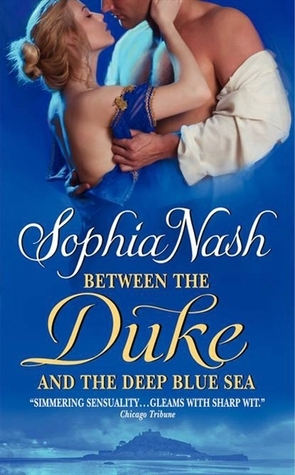
This book is prefaced with an impressive list of acknowledgements, but it's not clear how these informants, editors, publishers, friends, et al. contributed to what reads like a first attempt at self-publishing.
The prologue describes the aftermath of a drunken debauch by 'Prinny', star of stage, screen and hundreds of Regency romances, and his gang of ducal sycophants. Sadly the reader is left as confused about the debauch as its participants. Worried that his latest excess will spark an uprising against the monarchy, Prinny attempts to deflect public disgust by imposing stiff penalties on his gang of dukes.
Alex, Duke of Kress (where did that name come from?) is held accountable for the debauch and is exiled to St Michael's Mount, his family seat in Cornwall, ordered to restore his crumbling castle, and find a suitable wife forthwith.
The story segues to Cornwall, where Alex just happens to be walking along a cliff path when the Earl of Paxton, the villain of the story, tries to rid himself of his wife by leading her over the edge of the cliff. Paxton decamps, leaving Roxanne clinging to the cliff face and her inevitable fate. Alex rescues Roxanne and agrees to hide her in his castle.
Despite the ludicrous improbabilities, we now have the foundation and framework for an enjoyable romantic romp. Alex and Roxanne seem made for each other, the villain plots to find hidden wealth and marry an airhead debutante, and Roxanne's fake death holds promise of interesting developments.
Alas, at this point a gaggle of dukes, sisters, cousins, relatives and other forgettable characters descends on St Michael's Mount and the story falls apart in confused complexity. Fortunately, most of these side characters are soon sent away, narrowing the cast to manageable proportions.
The stereotyped on-off relationship between Roxanne and Alex continues but is smothered with an over-the-top Perils of Pauline story of tin mine treasure and the loathsome Paxton's increasingly hysterical intrusions.
The narrative descends into the abyss of pantomime with the sudden appearance of Prinny himself in a Cornish courtroom.
Having lost control of narrative and characterisation, the author completes the grand slam by ruining the Regency dialogues and internal monologues with late 20th century idioms.
I didn't enjoy this book at all and will certainly not be reading further installments in the series, but amidst the wreckage of the story are glimpses of potential.