

What do you think?

Uno de los nuestros: La historia de Anders Breivik y de la masacre de Utøya
El 22 de julio de 2011, una furgoneta aparcada frente la entrada de la oficina del primer ministro noruego explotó causando la muerte de ocho personas. Tras hacer detonar esa bomba, Anders Behring Breivik se presentó en la isla de Utøya disfrazado de policía con la intención de matar a los jóvenes que asistían al campamento del Partido Laborista Noruego. Sesenta y nueve personas más fallecieron ese día. Nadie podía imaginar que el autor de la peor masacre perpetrada en Noruega desde la Segunda Guerra Mundial no hubiera sido un fundamentalista islámico. Nadie podía pensar que hubiera sido «uno de los nuestros». La reconocida periodista Åsne Seierstad se adentra en la vida de Breivik para entender cómo un niño superdotado y sensible se convierte en uno de los terroristas más mortíferos de Europa. Además de ser un ejemplo del mejor periodismo de investigación, Uno de los nuestros es un estudio psicológico del extremismo, un relato de uno de los acontecimientos más trágicos de nuestra época y una conmovedora investigación de cómo una sociedad próspera se enfrenta al odio de uno de sus miembros y trata de reconstruirse después de un acto de violencia inimaginable.
640 pages, Paperback
First published January 1, 2013
About the author
Åsne Seierstad
13 books1,149 followersÅsne Seierstad is a Norwegian freelance journalist and writer, best known for her accounts of everyday life in war zones—most notably Kabul after 2001, Baghdad in 2002 and the ruined Grozny in 2006.
She has received numerous awards for her journalism and has reported from such war-torn regions as Chechnya, the Balkans, Afghanistan, and Iraq.
She is fluent in five languages and lives in Norway.
She has received numerous awards for her journalism and has reported from such war-torn regions as Chechnya, the Balkans, Afghanistan, and Iraq.
She is fluent in five languages and lives in Norway.
Ratings & Reviews
Friends & Following
Create a free account to discover what your friends think of this book!
Community Reviews
Displaying 1 - 30 of 1,534 reviews

September 8, 2015
“He advanced steadily through the heather. His boots stamped deeply into the ground as he walked over harebells, clover and trefoil. Some decaying branches snapped underfoot. His skin was pale and damp, and his thin hair was swept back. His eyes were light blue. Caffeine, ephedrine and aspirin ran in his bloodstream. By this point he had killed twenty-two people on the island…”
- Åsne Seierstad, One of Us: The Story of Anders Breivik and the Massacre in Norway
This is a hard book to review. Åsne Seierstad’s One of Us, is incredibly well-researched and written, a near-masterpiece of journalism. Its subject matter, though, is impossible: the massacre of seventy-seven Norwegians by bomb and firearm on July 22, 2011. Most of the victims were teens. They were among sixty-nine people killed on the island of Utøya, which a left-wing youth political party used as a summer camp. As I read One of Us, I kept wondering why I kept going. It became a philosophical point: Should I read – or recommend – a great book on a terrible subject?
At this point I should acknowledge my own hypocrisy. I read history books all the time. Therefore, almost by definition, I am reading about tragedies. In the past year, I’ve read a half dozen books on World War I (millions of men ground up in the trenches); a book on the Holocaust (millions of innocent men, women, and children, shot, gassed, and starved); and a book on the atomic bombs (tens of thousands of men, women, and children incinerated by advanced physics). Why should this be the line I draw in my mental sand?
(Also, despite what you’re thinking, I actually am a blast at parties!)
Part of it might be the forensic precision, the bullet-by-bullet account that Seirstad provides. Part of it is that – as an American – the slaughter of innocent kids has become such a common occurrence that its part of the background of life. Part of it is that – like many of you – I have kids, and I don’t particularly care to let my mind go to the places Seirstand takes the reader.
Mainly, though, it’s because the bulk of this relatively lengthy book – over 500 pages – is spent diving deep into the life, actions, and mind of the killer, Anders Breivik. It is an unwholesome journey into that intersection of paranoid politics, social awkwardness, and something else, something darker still, that allows one human being to murder another, and another, and another. Most spree killers end up taking their own lives, a function of their own mental state. Not Anders. He just kept going till law enforcement showed up, then surrendered.
***
In terms of authorial audacity and my own conflicted response, I can best compare One of Us to Norman Mailer’s improbable epic The Executioner’s Song. The Executioner’s Song is the story of convicted murderer Gary Gilmore, who was the first man executed following the Supreme Court’s resumption of capital punishment in 1977. At roughly a thousand pages, it’s insanely detailed, and spends an inordinate amount of time interpreting the soul of a two-bit sociopath. When I finished that book, I was exhausted. It was an exhilarating literary experience that also left me feeling I should scour my soul with a Brillo pad.
I had much the same sensation reading One of Us.
***
Seierstad begins with an in media res prologue, with Breivik already on the loose on the island of Utøya, almost two-dozen already dead, and the day not yet over.
After this, the book then jumps back in time, to the day of Anders Breivik’s birth. And if you think I’m kidding about the level of detail here, there are two pages devoted to his delivery. I’ve read a lot of books about terrible people, but none has ever asked me to imagine a monster’s first moment of life.
From there, Seierstad delivers the troubled life story of an infamous spree killer. His father had a good diplomatic job but was mostly absent; his mother had mental health issues and heavily utilized Norway’s generous welfare benefits. He got into trouble growing up, but mostly for garden variety delinquencies such as graffiti tagging. No torturing animals or anything like that. He seemed socially awkward yet had friends. He had enough ambition to start his own website selling “novelty” degrees. Somewhere along the line, he got swept up into far-right, anti-immigrant politics. So he plotted and planned and designed a two-pronged strike. First, he would kill the prime minister with a homemade bomb; second, he would drive to Utøya dressed as a police officer, take the ferry, and kill as many people as he could. Unlike many spree killers, he had no intent on taking his own life. Part of his plan was to surrender to police so that he’d have the chance to deliver his message via a trial.
Seirstad manages to create an incredibly detailed portrait of a troubled mind. This is part of what makes it a good book that doesn’t call out to be read.
Despite all the detail, however, there are certain things that needed more explanation. I had questions, for instance, about how easily Breivik managed to procure firearms. I was under the impression that this was difficult in Europe, yet he seemed to have no problem. Seirstad doesn’t go into this, and I wonder if it’s because she’s writing for a Norwegian audience, for whom this needs no explanation.
***
The bombing and the massacre on Utøya are delivered with excruciating detail. (Though certain obvious details, like the layout of the island, are neglected). Afterwards comes the trial. Again, since Seirstad is a Norwegian journalist, she makes a lot of assumptions about what her readers know. Thus, if you’re from America (or the UK), where a common law, adversarial system exists, you’re probably going to be confused by the Norwegian proceedings.
I gleaned that Norway uses some form of the inquisitorial system, where the court uses a trial to investigate the facts, rather than as a referee between the prosecution and the defense (as in America). To that end, the Norwegian court was made up of both lay and legal judges. There were attorneys for the prosecution, attorneys for the defendant, and attorneys for the victims. Rather than having a 5th Amendment right not to incriminate himself, Breivik eagerly availed himself of the opportunity to deliver a monologue to the court.
Norway is also a proponent of rehabilitative justice, which seeks to restore prisoners to society, rather than keep them locked away forever. That’s all well and good when the person on trial is not Anders Breivik. In this instance, Norway’s justice system looked impossibly naïve. Breivik was charged with violating Norway’s terrorism laws, and faced a maximum penalty of 21 years, which can be extended indefinitely. The prosecution itself actually argued that Breivik was criminally insane, which you almost never seen in an adversarial system. Nevertheless, Breivik eventually received the max of 21 years. Reading about these proceedings was like walking into Bizzaro Courtroom, where things appear familiar but are actually upside down.
As an aside, it is stating the obvious to note that the American justice system has a lot of problems. As a practicing criminal defense attorney, I’m the last person who believes in over-charging and over-sentencing defendants.
With that said, Breivik’s punishment is frankly insulting. He proudly admitted to killing 77 people in cold blood. That should be 77 charges of first degree murder, and the sentence should be life in prison, end of story. I’m not a punitive person, and I think we go overboard with punishment for non-violent crimes. But I also believe in what I call the Arendt Concept, taken from Arendt’s conclusion on the trial of the Nazi executioner Adolf Eichmann. Eichmann, Arendt stated, had forfeited his life by transgressing natural law: “No member of the human race can be expected to want to share the earth with you.”
I believe this applies to Breivik. I don’t think that any parent, sibling, friend, or spouse of Breivik’s seventy-seven victims should have to walk around in a world in which they might meet Breivik at the corner store.
***
Since One of Us falls within the genre of “true crime,” I should make mention of the issue of exploitation. Specifically, the notion that writing about criminal acts exploits the victims for the profit of the author. To that end, Seirstad makes clear that she not only interviewed the families, but also – in those instances where she described a child’s death – allowed the families to decide whether they wanted their child included in the book.
Moreover, she devotes substantial space to the stories of victims, focusing on five children in particular, representing a cross-section. By the crass metric of simple drama, these chapters pale in comparison to the dark narrative of Anders Breivik. Still, you cannot fault Seirstad for her efforts, especially in contrast to Mailer, who had a 1,000 pages to work with yet never found space to discuss those who died). The collaborative nature of this book doesn’t make it any easier to read, though it did soothe some of the guilt I usually feel when reading true crime.
***
One of Us takes us where we don’t want to go. It is a sad, brutal story, and it doesn’t come with a trite conclusion. There is no “ah-ha!” moment where we figure out what made Breivik tick, therefore allowing us to stop this in the future. There is no false redemption or banal legacy of hope in the wake of the senseless murder of talented children. This is a book realistic enough to say: This is the world. It is sad and beautiful and often nightmarish.
And that’s what stuck with me. This world. How it contains all these multitudes. All these irreconcilable things, side by side. A world in which people can hijack airplanes and crash them into buildings; a world in which a nun can spend 50 years tending to the poorest of the poor. A world where a man with a rifle steps into a roomful of little kids, with his finger on the trigger; a world in which a teacher steps in front of those same kids. A world where a bunch of idealistic and ambitious kids go to a political camp because they want to shape things; a world where one twisted soul can shoot them to bring attention to his own warped cause. A world big enough to embrace all the good and all the bad all at once. It doesn’t make sense. None of it makes any sense, and you’ll go crazy if you try.
- Åsne Seierstad, One of Us: The Story of Anders Breivik and the Massacre in Norway
This is a hard book to review. Åsne Seierstad’s One of Us, is incredibly well-researched and written, a near-masterpiece of journalism. Its subject matter, though, is impossible: the massacre of seventy-seven Norwegians by bomb and firearm on July 22, 2011. Most of the victims were teens. They were among sixty-nine people killed on the island of Utøya, which a left-wing youth political party used as a summer camp. As I read One of Us, I kept wondering why I kept going. It became a philosophical point: Should I read – or recommend – a great book on a terrible subject?
At this point I should acknowledge my own hypocrisy. I read history books all the time. Therefore, almost by definition, I am reading about tragedies. In the past year, I’ve read a half dozen books on World War I (millions of men ground up in the trenches); a book on the Holocaust (millions of innocent men, women, and children, shot, gassed, and starved); and a book on the atomic bombs (tens of thousands of men, women, and children incinerated by advanced physics). Why should this be the line I draw in my mental sand?
(Also, despite what you’re thinking, I actually am a blast at parties!)
Part of it might be the forensic precision, the bullet-by-bullet account that Seirstad provides. Part of it is that – as an American – the slaughter of innocent kids has become such a common occurrence that its part of the background of life. Part of it is that – like many of you – I have kids, and I don’t particularly care to let my mind go to the places Seirstand takes the reader.
Mainly, though, it’s because the bulk of this relatively lengthy book – over 500 pages – is spent diving deep into the life, actions, and mind of the killer, Anders Breivik. It is an unwholesome journey into that intersection of paranoid politics, social awkwardness, and something else, something darker still, that allows one human being to murder another, and another, and another. Most spree killers end up taking their own lives, a function of their own mental state. Not Anders. He just kept going till law enforcement showed up, then surrendered.
***
In terms of authorial audacity and my own conflicted response, I can best compare One of Us to Norman Mailer’s improbable epic The Executioner’s Song. The Executioner’s Song is the story of convicted murderer Gary Gilmore, who was the first man executed following the Supreme Court’s resumption of capital punishment in 1977. At roughly a thousand pages, it’s insanely detailed, and spends an inordinate amount of time interpreting the soul of a two-bit sociopath. When I finished that book, I was exhausted. It was an exhilarating literary experience that also left me feeling I should scour my soul with a Brillo pad.
I had much the same sensation reading One of Us.
***
Seierstad begins with an in media res prologue, with Breivik already on the loose on the island of Utøya, almost two-dozen already dead, and the day not yet over.
After this, the book then jumps back in time, to the day of Anders Breivik’s birth. And if you think I’m kidding about the level of detail here, there are two pages devoted to his delivery. I’ve read a lot of books about terrible people, but none has ever asked me to imagine a monster’s first moment of life.
From there, Seierstad delivers the troubled life story of an infamous spree killer. His father had a good diplomatic job but was mostly absent; his mother had mental health issues and heavily utilized Norway’s generous welfare benefits. He got into trouble growing up, but mostly for garden variety delinquencies such as graffiti tagging. No torturing animals or anything like that. He seemed socially awkward yet had friends. He had enough ambition to start his own website selling “novelty” degrees. Somewhere along the line, he got swept up into far-right, anti-immigrant politics. So he plotted and planned and designed a two-pronged strike. First, he would kill the prime minister with a homemade bomb; second, he would drive to Utøya dressed as a police officer, take the ferry, and kill as many people as he could. Unlike many spree killers, he had no intent on taking his own life. Part of his plan was to surrender to police so that he’d have the chance to deliver his message via a trial.
Seirstad manages to create an incredibly detailed portrait of a troubled mind. This is part of what makes it a good book that doesn’t call out to be read.
Despite all the detail, however, there are certain things that needed more explanation. I had questions, for instance, about how easily Breivik managed to procure firearms. I was under the impression that this was difficult in Europe, yet he seemed to have no problem. Seirstad doesn’t go into this, and I wonder if it’s because she’s writing for a Norwegian audience, for whom this needs no explanation.
***
The bombing and the massacre on Utøya are delivered with excruciating detail. (Though certain obvious details, like the layout of the island, are neglected). Afterwards comes the trial. Again, since Seirstad is a Norwegian journalist, she makes a lot of assumptions about what her readers know. Thus, if you’re from America (or the UK), where a common law, adversarial system exists, you’re probably going to be confused by the Norwegian proceedings.
I gleaned that Norway uses some form of the inquisitorial system, where the court uses a trial to investigate the facts, rather than as a referee between the prosecution and the defense (as in America). To that end, the Norwegian court was made up of both lay and legal judges. There were attorneys for the prosecution, attorneys for the defendant, and attorneys for the victims. Rather than having a 5th Amendment right not to incriminate himself, Breivik eagerly availed himself of the opportunity to deliver a monologue to the court.
Norway is also a proponent of rehabilitative justice, which seeks to restore prisoners to society, rather than keep them locked away forever. That’s all well and good when the person on trial is not Anders Breivik. In this instance, Norway’s justice system looked impossibly naïve. Breivik was charged with violating Norway’s terrorism laws, and faced a maximum penalty of 21 years, which can be extended indefinitely. The prosecution itself actually argued that Breivik was criminally insane, which you almost never seen in an adversarial system. Nevertheless, Breivik eventually received the max of 21 years. Reading about these proceedings was like walking into Bizzaro Courtroom, where things appear familiar but are actually upside down.
As an aside, it is stating the obvious to note that the American justice system has a lot of problems. As a practicing criminal defense attorney, I’m the last person who believes in over-charging and over-sentencing defendants.
With that said, Breivik’s punishment is frankly insulting. He proudly admitted to killing 77 people in cold blood. That should be 77 charges of first degree murder, and the sentence should be life in prison, end of story. I’m not a punitive person, and I think we go overboard with punishment for non-violent crimes. But I also believe in what I call the Arendt Concept, taken from Arendt’s conclusion on the trial of the Nazi executioner Adolf Eichmann. Eichmann, Arendt stated, had forfeited his life by transgressing natural law: “No member of the human race can be expected to want to share the earth with you.”
I believe this applies to Breivik. I don’t think that any parent, sibling, friend, or spouse of Breivik’s seventy-seven victims should have to walk around in a world in which they might meet Breivik at the corner store.
***
Since One of Us falls within the genre of “true crime,” I should make mention of the issue of exploitation. Specifically, the notion that writing about criminal acts exploits the victims for the profit of the author. To that end, Seirstad makes clear that she not only interviewed the families, but also – in those instances where she described a child’s death – allowed the families to decide whether they wanted their child included in the book.
Moreover, she devotes substantial space to the stories of victims, focusing on five children in particular, representing a cross-section. By the crass metric of simple drama, these chapters pale in comparison to the dark narrative of Anders Breivik. Still, you cannot fault Seirstad for her efforts, especially in contrast to Mailer, who had a 1,000 pages to work with yet never found space to discuss those who died). The collaborative nature of this book doesn’t make it any easier to read, though it did soothe some of the guilt I usually feel when reading true crime.
***
One of Us takes us where we don’t want to go. It is a sad, brutal story, and it doesn’t come with a trite conclusion. There is no “ah-ha!” moment where we figure out what made Breivik tick, therefore allowing us to stop this in the future. There is no false redemption or banal legacy of hope in the wake of the senseless murder of talented children. This is a book realistic enough to say: This is the world. It is sad and beautiful and often nightmarish.
And that’s what stuck with me. This world. How it contains all these multitudes. All these irreconcilable things, side by side. A world in which people can hijack airplanes and crash them into buildings; a world in which a nun can spend 50 years tending to the poorest of the poor. A world where a man with a rifle steps into a roomful of little kids, with his finger on the trigger; a world in which a teacher steps in front of those same kids. A world where a bunch of idealistic and ambitious kids go to a political camp because they want to shape things; a world where one twisted soul can shoot them to bring attention to his own warped cause. A world big enough to embrace all the good and all the bad all at once. It doesn’t make sense. None of it makes any sense, and you’ll go crazy if you try.

February 26, 2015
RADICALISATION
We hear a lot about radicalisation these days. Three girls aged 15 and 16 went off by themselves from east London to Syria to join Isis a couple of weeks ago. Three days ago a 19 year old guy was given 22 years in prison for wishing to cut off the head of a British soldier (he was caught before he did it, unlike Michael Adebolajo and Michael Adebowale, who did behead a British soldier on the streets of London on 22 May 2013). The word for all of these young people is jihadis.
One of Us is an excellent book about the radicalisation of an anti-jihadi.
On 22 July 2011 he left a van with a bomb next to a government building in Oslo which exploded and killed 8 people. Then he drove a second van out of Oslo to a place called Utoya which was an island in a fjord. This was where a summer camp was going on. It was run by the youth wing of the left wing Labour Party. He got on a ferry and when he was on the island he walked round shooting the children who were there. He killed 69 of them and wounded many more. 57 of them were between the ages of 14 and 19. It was a small island. They had nowhere to run. Some of them jumped into the cold waters of the fjord and he shot them as they swum. When the police finally arrived he gave himself up without a struggle. He was not one of those you’ll-never-take-me-alive-copper guys. The shootings were only Part One. The trial was Part Two.
THE EUROPEAN TIMOTHY MCVEIGH
Anders Breivik was the European Timothy McVeigh. Both these guys were in their own minds at war against their own governments, which they saw as tyrannical and evil. McVeigh’s specific complaints against Washington seem diffuse, but Breivik was very specific: Multiculturalism and cultural Marxism.
We need to ask what he meant by this. And he was at pains to explain. In fact, if people had only listened, he might not have had to shoot all those children.
It’s the media who are most to blame for what has happened today because they didn’t publish my views. One therefore has to get the message out by other means.
My responsibility is to save Norway. I take full responsibility for everything out here and I’m proud of the operation. If you only knew what hard work it’s been. It was bloody awful. I’ve been dreading this day for two years.
What did he mean by hard work? Well, he did everything himself.
Here are some of the things he had to buy (where did the money come from? A dozen maxed out credit cards) :
1 farm, isolated
Respirator mask
Heavy duty rubber gloves
Protective apron
TV stand
Hotplate
Sulphuric acid (large amount, from used car dealers)
Powdered sulphur
Sodium nitrate
Ethanol
Acetone
Caustic soda
Lab equipment (flasks, bottles, funnels, thermometers)
Fuses
several kilos of aspirin (for acetylsalic acid)
protein powder
steroids
shooting lessons
liquid nicotine
electric drill
metal cutters
superglue
bayonet
plastic sheeting
3 toilet brushes
Magnetic stirrer
Spatula
Distilled water
Microballoons
1 set of dumbbells
6 tonnes of fertilizer
6 food blenders
1 dozen 50 kilo bags
1 Glock 17 pistol
1 semi-automatic Ruger Mini-14 rifle
A whole lot of ammo
HARD WORK
He trained rigorously for the big day :
First he gulped down a big protein shake, then he fixed a big rucksack filled with stones on his back, another on his front, and carried a five-litre container filled with water in each hand.
Then he would stagger about for twenty minutes. And the bomb making was really dangerous :
The barn was full of chemicals, the liquids were unstable and his working processes were experimental. He had scarcely any safety measures.
It was such a shame he didn’t blow himself up with his dangerous unstable chemicals, but I guess he was just…lucky.
BACK TO THE QUESTION : WHY SHOOT ALL THOSE CHILDREN?
Strangely, this was a very similar attack to the Peshawar school massacre, which you will remember happened in December 2014. The Taliban were executing the children of the army, their enemy, both to punish the Army and to remove a number of future enemies. Really it was the same thing on Utoya island. These children were the future Labour Party elite. Breivik explained in his address to the court:
If we can force them to change direction by executing seventy people, then that is a contribution to preventing the loss of our ethnic group, our Christianity, our culture. It will also help to preventing a civil war that could result in the deaths of hundreds of thousands of Norwegians. It is better to commit minor barbarity than major barbarity.
His attitude to the massacre was strikingly similar to Himmler’s remarks about the mass killings of Jews – a truly unpleasant thing to have to do, but future generations will be grateful, of this we can be sure.
BREIVIK’S MAIN POINT
That ethnic white Norwegians would by 2048 be a minority in their own country unless steps were taken. That the great number of Muslim immigrants and their much larger families would be the majority. That this was a very bad thing – cultural suicide. And that this was happening with the connivance or the acquiescence of the liberal left, the “cultural Marxists” as he called them.
We can see that Breivik is a terminal point in the spectrum of populist/rightist anti-Islam anti-immigrant politics which are now so prominent in Europe. E.g. Marine le Pen’s National Front in France – check it out, in the Euro elections in 2009 they got 6.3% of the vote and were 6th, in the same elections in 2014 they got 25% and were 1st. Here in Britain we have the rise of Ukip, in the Netherlands they have the Freedom Party led by Geert (“I don’t hate Muslims, I hate Islam”) Wilders, and so on. So we see that Breivik’s views were extreme but were only the outer edge of what has now become part of the political mainstream.
A STRANGE COLLUSION OF NEED
Breivik saw his trial as the most important phase of his mission. Because he knew the world’s spotlight would be on him, and then he would have his chance to explain his political message. Everyone had ignored his internet rantings before, but now, now they wouldn’t. They’d be hanging on his every word.
However, there was a psychiatric report on him : paranoid schizophrenia. Insane! Not legally competent to stand trial!
He was outraged, offended, massively angry.
And so were all the families of the victims. They didn’t want him to be insane either. They wanted him to be judged responsible for his actions. (This strange conflict with the psychiatrists happens at many big trials, like that of Jeffrey Dahmer for instance.) A second report was commissioned. Result : dissocial personality disorder with narcissistic traits. Meaning : he was sane! Much relief by both Breivik and the victims’ families. How strange. ( A personality disorder is the psychiatrists’ get out of jail free card. It means you are a person who commits extreme acts without remorse but you aren’t mentally ill. You’re just evil.)
BREIVIK IN PRISON
He got 21 years, which doesn’t seem like enough, but they can extend it indefinitely, apparently. He thought he would be able to live the life of a political theoretician in jail, with a pc and a printer and correspondents all over the world. Turned out not to be like that at all. He got a typewriter which was glued to the desk and no pc. His correspondence dwindled to nothing quite quickly. He wasn’t any kind of hero to anyone. He had a string of complaints about his treatment :
He was often given only enough butter for two, or, at a pinch, three slices of bread, even though they knew he ate four. “This creates unnecessary annoyance because I either have to eat dry bread or be made to feel guilty for asking for more.”
God forbid that Anders Breivik should ever be made to feel guilty, hmm?
THIS BOOK
Is excellent, a very gripping read, and opens up a whole morass of complex questions. I thought Asne Seierstad strayed into tastelessness in some passages recounting the details of how some of the children died (“The bullet had hit Elizabeth’s ear canal, seared through her cranium and gone right into her brain and out the other ear. Only when it got to the pink phone cover did it stop”) but overall this was a great effort.
Recommended.

April 27, 2019
I’m not sure whether spoilers apply to a book based on such a widely reported news story, but to those that are considering reading this book soon, I have included some detail in this long review.
'‘One Of Us: The Story Of Anders Breivik And The Massacre In Norway'’ was a difficult and immersive read.
In fact, at times I worried about what I was immersing myself in.
Sections of the book read like a thriller .......... fast paced and frightening. Pages flew by in queasy excitement and then, every so often, I was hit by the shocking reality that I was reading a detailed account of what actually happened in Oslo and on Utøya Island.
The book brings together the personal histories of some of those involved in the events of July 22, 2011 - not least the life of Anders Breivik and his family.
Anders Breivik who in his home-made military uniform with a head full of ultra right wing dogma, detonated a massive bomb near a government building (killing 8, wounding 209) and then calmly moved on to a summer camp run by the Norwegian Labour Party, to shoot dead 69 mostly young people. 110 were also injured, 55 seriously.
One Of Us covers the historical setting, the period leading up to the massacre, a minute by minute account of what happened on that terrible day and the aftermath, including a detailed write up of the court case.
What this book doesn’t do is analyse, find definitive answers or attempt pseudo psychology. The facts are presented in dispassionate detail, based entirely on personal testimony, court and police records. The reader is given a vivid picture that will inevitably lead them to explore their own theories about how killings such as this could happen.
The story of Anders Breivik starts with a broken but not unremarkable home. We read of his teenage years fighting for the acceptance of the ‘cooler’ kids with his graffiti art obsession. We see his flirting with right wing politics, growing aware of increasing immigration in Norway. Later, we see several business ideas fail and him growing frustrated that he can’t attain the success and riches he feels he deserves. In his late twenties he becomes totally obsessed with video gaming, he opts out to live a solitary life in his bedroom, inhabiting the violent, strategic game ‘World of Warcraft’.
Breivik emerges from his full time virtual gaming world after many months and becomes seriously immersed in far right politics.
He is arrogant, self centred and sees himself as a leader (something he’s always failed to be) even a saviour of Europe against the rising tide of socialist thought and immigration.
He writes a rambling book, borrowing ideas freely from other right wing authors, bloggers etc - and sets himself up as the leader of a militant group (a group that doesn’t really exist) that is violently anti Islam, anti immigration, anti communist, anti government, anti feminist etc etc. He includes the imagery of the Knights Templer and freemasonry in his writings, a result of him half heartedly gaining an introduction to the Freemasons a few years earlier.
He sees himself as a hero destined to strike one earth shattering blow to wake up the world and mobilise the ‘Patriots’ to eventually take control.
The picture we get of Breivik is of a self important, self aware individual - frustrated in life, unable to really connect with people, solitary, vein, meticulous, obsessive, an outsider and clever. The psychologists spent much time trying to decide if he was insane. Some coming to the conclusion that he had 'Dissocial personality disorder with narcissistic traits'
Breivik’s biggest worry in court was that he would by found insane!
He claimed his actions were purely politically motivated.
The failings of the authorities, as the day of the bomb and shootings unfold, are laid out in embarrassing detail, from ignored phone messages, missed notes detailing descriptions and number plates, armed police meeting in the wrong place, rescue dinghies sinking and the pilot of the one police helicopter being on holiday!
The pictures of Breivik at his trial (he gave himself up peaceably and proudly) say a lot about him. From his polite smiles, his arrogant nazi style salute, his smart suit, his long rambling statement of his intentions ........ to his total lack of remorse.
One Of Us is a long book by Åsne Seierstad, a renowned journalist/ author. The personal stories woven into the narrative, stories of hope, grief and bravery, make this book horribly human.
The author realises that nothing can ever really make sense of this awful tragedy, but gives us the details that allow us to ponder.
We are also reminded in this meticulously researched book, that the line that divides normal, abnormal and catastrophic behaviour is frighteningly narrow.
'‘One Of Us: The Story Of Anders Breivik And The Massacre In Norway'’ was a difficult and immersive read.
In fact, at times I worried about what I was immersing myself in.
Sections of the book read like a thriller .......... fast paced and frightening. Pages flew by in queasy excitement and then, every so often, I was hit by the shocking reality that I was reading a detailed account of what actually happened in Oslo and on Utøya Island.
The book brings together the personal histories of some of those involved in the events of July 22, 2011 - not least the life of Anders Breivik and his family.
Anders Breivik who in his home-made military uniform with a head full of ultra right wing dogma, detonated a massive bomb near a government building (killing 8, wounding 209) and then calmly moved on to a summer camp run by the Norwegian Labour Party, to shoot dead 69 mostly young people. 110 were also injured, 55 seriously.
One Of Us covers the historical setting, the period leading up to the massacre, a minute by minute account of what happened on that terrible day and the aftermath, including a detailed write up of the court case.
What this book doesn’t do is analyse, find definitive answers or attempt pseudo psychology. The facts are presented in dispassionate detail, based entirely on personal testimony, court and police records. The reader is given a vivid picture that will inevitably lead them to explore their own theories about how killings such as this could happen.
The story of Anders Breivik starts with a broken but not unremarkable home. We read of his teenage years fighting for the acceptance of the ‘cooler’ kids with his graffiti art obsession. We see his flirting with right wing politics, growing aware of increasing immigration in Norway. Later, we see several business ideas fail and him growing frustrated that he can’t attain the success and riches he feels he deserves. In his late twenties he becomes totally obsessed with video gaming, he opts out to live a solitary life in his bedroom, inhabiting the violent, strategic game ‘World of Warcraft’.
Breivik emerges from his full time virtual gaming world after many months and becomes seriously immersed in far right politics.
He is arrogant, self centred and sees himself as a leader (something he’s always failed to be) even a saviour of Europe against the rising tide of socialist thought and immigration.
He writes a rambling book, borrowing ideas freely from other right wing authors, bloggers etc - and sets himself up as the leader of a militant group (a group that doesn’t really exist) that is violently anti Islam, anti immigration, anti communist, anti government, anti feminist etc etc. He includes the imagery of the Knights Templer and freemasonry in his writings, a result of him half heartedly gaining an introduction to the Freemasons a few years earlier.
He sees himself as a hero destined to strike one earth shattering blow to wake up the world and mobilise the ‘Patriots’ to eventually take control.
The picture we get of Breivik is of a self important, self aware individual - frustrated in life, unable to really connect with people, solitary, vein, meticulous, obsessive, an outsider and clever. The psychologists spent much time trying to decide if he was insane. Some coming to the conclusion that he had 'Dissocial personality disorder with narcissistic traits'
Breivik’s biggest worry in court was that he would by found insane!
He claimed his actions were purely politically motivated.
The failings of the authorities, as the day of the bomb and shootings unfold, are laid out in embarrassing detail, from ignored phone messages, missed notes detailing descriptions and number plates, armed police meeting in the wrong place, rescue dinghies sinking and the pilot of the one police helicopter being on holiday!
The pictures of Breivik at his trial (he gave himself up peaceably and proudly) say a lot about him. From his polite smiles, his arrogant nazi style salute, his smart suit, his long rambling statement of his intentions ........ to his total lack of remorse.
One Of Us is a long book by Åsne Seierstad, a renowned journalist/ author. The personal stories woven into the narrative, stories of hope, grief and bravery, make this book horribly human.
The author realises that nothing can ever really make sense of this awful tragedy, but gives us the details that allow us to ponder.
We are also reminded in this meticulously researched book, that the line that divides normal, abnormal and catastrophic behaviour is frighteningly narrow.

April 21, 2019
This book is about the murderous and horrible rampage of Anders Behring Breivik who, on July 22, 2011 bombed a government building and then proceeded by car to the island of Utoya where he shot and killed sixty-nine people – most of them young teenagers. Utoya is a small island donated to the Labour Party of Norway in the 1950’s. It has been used for an annual weekend festival for young members of the Labour Party, which was what Breivik deliberately went to.
The Labour Party is left-wing and this raised the wrath of Breivik. He was against immigration, Muslims, feminism, and socialism. He saw all of these as undermining a white Christian Europe (Breivik was not religious).
He planned and organized his day for months. He rented a small farm, under the pretense of becoming an agriculturalist, to assemble his bombs and accumulate his weapons.
The author describes his upbringing and the long road to this very sad day. There are stages where it seemed that Breivik could have adjusted into society – more so in his early twenties. But his narcissism took over. He never could fit in and had illusions of grandeur. He was thirty-three on the day in question – an age where most of us have started to find a role within the society – with a career, a family of some sort, a home, friends… – when we have shed the craziness and illusions of the 15 to 25-year age range. But Breivik could not cross into that “established” world and instead became obsessed and possessed by his hatreds and his ego-centric view of the world. Also, I get the impression, as others did, of a very lonely and isolated person.
We come out of this well written book with a deeper understanding of Norwegian life. There is extensive coverage of some of the lives that were so tragically ended that day – of their hopes and dreams that were vanquished. And of the family members who had loved ones killed and will never have life as it once was. There was one family, whose two daughters were members of the Labour Party, who had fled the carnage of Iraq. One of those girls was killed that day.
I was rather shocked that the Labour Party and/or the Norwegian Government did not make a permanent memorial on Utoya Island. Instead they went on with business as usual with the annual youth festivities. Utoya is a small island, so every pathway and park on it had dead bodies that day. It seems very sad, and indeed macabre, to continue to have festivals where so many died.
The Labour Party is left-wing and this raised the wrath of Breivik. He was against immigration, Muslims, feminism, and socialism. He saw all of these as undermining a white Christian Europe (Breivik was not religious).
He planned and organized his day for months. He rented a small farm, under the pretense of becoming an agriculturalist, to assemble his bombs and accumulate his weapons.
The author describes his upbringing and the long road to this very sad day. There are stages where it seemed that Breivik could have adjusted into society – more so in his early twenties. But his narcissism took over. He never could fit in and had illusions of grandeur. He was thirty-three on the day in question – an age where most of us have started to find a role within the society – with a career, a family of some sort, a home, friends… – when we have shed the craziness and illusions of the 15 to 25-year age range. But Breivik could not cross into that “established” world and instead became obsessed and possessed by his hatreds and his ego-centric view of the world. Also, I get the impression, as others did, of a very lonely and isolated person.
We come out of this well written book with a deeper understanding of Norwegian life. There is extensive coverage of some of the lives that were so tragically ended that day – of their hopes and dreams that were vanquished. And of the family members who had loved ones killed and will never have life as it once was. There was one family, whose two daughters were members of the Labour Party, who had fled the carnage of Iraq. One of those girls was killed that day.
I was rather shocked that the Labour Party and/or the Norwegian Government did not make a permanent memorial on Utoya Island. Instead they went on with business as usual with the annual youth festivities. Utoya is a small island, so every pathway and park on it had dead bodies that day. It seems very sad, and indeed macabre, to continue to have festivals where so many died.

April 11, 2021
Jahreshighlight! :)

December 19, 2015
This book was difficult for two reasons:
The first being the obvious horror and tragedy of the events it relates. Imaging the incredible fear of those people kicks you right in the gut. I genuinely felt sick reading parts of it.
The second is due to Seierstad's choice to write in a sensationalist novel format. If I hadn't known the reality, I would have thought it was another badly written crime novel. It almost made some of the information seem made up or too cliche. It made me feel guilty for mentally complaining about the style while reading about people I knew had died in terrible circumstances.
Regardless, I'm glad I read the book. It's important to try to find out why people chose to act this way. Not because it makes it more understandable or acceptable, but because it might help stop it from happening again.
Many thanks to Little, Brown Book Group and Netgalley for this copy in exchange for an honest review.
The first being the obvious horror and tragedy of the events it relates. Imaging the incredible fear of those people kicks you right in the gut. I genuinely felt sick reading parts of it.
The second is due to Seierstad's choice to write in a sensationalist novel format. If I hadn't known the reality, I would have thought it was another badly written crime novel. It almost made some of the information seem made up or too cliche. It made me feel guilty for mentally complaining about the style while reading about people I knew had died in terrible circumstances.
Regardless, I'm glad I read the book. It's important to try to find out why people chose to act this way. Not because it makes it more understandable or acceptable, but because it might help stop it from happening again.
Many thanks to Little, Brown Book Group and Netgalley for this copy in exchange for an honest review.

May 22, 2015
Åsne Seierstad is a nonfiction writer and foreign affairs journalist who had never written about her native Norway before she was asked to cover the case of Anders Breivik, on trial for mass murder in the city of Oslo and on the island of Utøya. She found herself uncertain how to explain the Breivik phenomenon after listening to ten weeks of trial testimony and decided she needed to go deeper. To Breivik’s story she adds those of three Breivik killed (Simon Sæbø, Bano Rashid, Anders Kristiansen) and one he did not kill (Viljar Hanssen). The only thing missing from this history are photographs, which I try to supply here.

Simon Saebo & Anders Kristiansen
Seierstad goes into great detail about Breivik’s personal upbringing which may be of use to some who think they can find a key to his behaviors as a 32-year old man. I am no expert on these things, but it didn’t help me to understand: what I did conclude is that family or community might be a more of a curb to deviance if they just spoke to the individual about their observations or concerns about their more anti-social behaviors. But this path may suppose those family or community members to have a well-developed sense of self, and right and wrong.
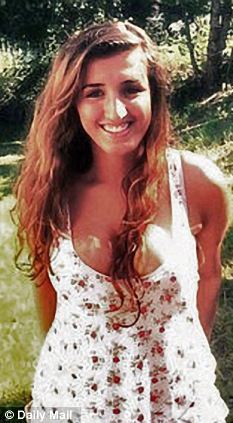
Bano Rashid
Breivik spent a great deal of time and money organizing and preparing for his big moment. He rented a farm, had tonnes of fertilizer delivered, and purchased many items online. It took months. He wasn’t stupid, exactly—he just didn’t listen to opposing views. The novelist Karl Ove Knausgård points out in a recent New Yorker article that the bonds, constraints, differences and fellowship of ordinary community around the world are breaking down and allowing folks to feel themselves distanced from neighbors, countrymen, fellow humans.

Viljar Hanssen
Knausgård argues that Breivik was not exceptional in any way: “Breivik’s history up until the horrific deed can more or less be found in every life story…he was and is one of us.” Seirestad says that this is a story of community: “this is also about looking for a way to belong and not finding it.” Breivik found groups he liked and who liked him throughout his development but gradually he was dropped from their ranks. So he made up his own international “Knights Templar Europe” of which he was Commander. All alone by himself.
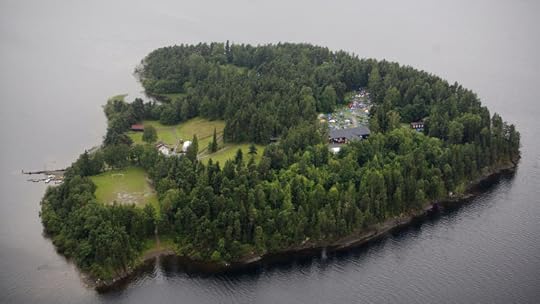
Island of Utøya
Having just finished a remarkable novel by Christie Watson, Where Women Are Kings , about severe child abuse and the damage it wreaks, I am inclined to think parenting may be the most important thing we should do well if we are going to participate in the world. It is not enough to have one’s own career and provide food and shelter. Even the indigent and refugee communities can do that now with government help. It takes more, much more, to create a home, or to run a school.
One of the more horrible (and horribly funny) portions of Seirestad’s account was how the police reacted to news of what they thought was the first major terrorist attack on Norwegian soil. A reader is simply undone by the Keystone Cops manner of their response. The police, living as they had in a civil society unused to such horrors, were extremely polite with one another and inefficient in the extreme. Every moment they delayed, another child was being shot. We are left with a vision of ten heavily armed police in a dangerously overloaded red rubber dinghy attempting to motor three kilometers to Utøya but getting stuck after a couple hundred meters offshore because the motor gave out when the craft was swamped. Rescued by a local holidaymaker, the dressed-to-kill warriors then overloaded the rescue craft.
We must realize, once again, that our protection must rely on us, the body politic. And I don’t mean we should arm ourselves. What I mean is that we are responsible for the children. It’s up to us to make the world safe for our children, and for ourselves. We may get help eventually, perhaps, but we should take that responsibility seriously.
Simon Saebo & Anders Kristiansen
Seierstad goes into great detail about Breivik’s personal upbringing which may be of use to some who think they can find a key to his behaviors as a 32-year old man. I am no expert on these things, but it didn’t help me to understand: what I did conclude is that family or community might be a more of a curb to deviance if they just spoke to the individual about their observations or concerns about their more anti-social behaviors. But this path may suppose those family or community members to have a well-developed sense of self, and right and wrong.
Bano Rashid
Breivik spent a great deal of time and money organizing and preparing for his big moment. He rented a farm, had tonnes of fertilizer delivered, and purchased many items online. It took months. He wasn’t stupid, exactly—he just didn’t listen to opposing views. The novelist Karl Ove Knausgård points out in a recent New Yorker article that the bonds, constraints, differences and fellowship of ordinary community around the world are breaking down and allowing folks to feel themselves distanced from neighbors, countrymen, fellow humans.
Viljar Hanssen
Knausgård argues that Breivik was not exceptional in any way: “Breivik’s history up until the horrific deed can more or less be found in every life story…he was and is one of us.” Seirestad says that this is a story of community: “this is also about looking for a way to belong and not finding it.” Breivik found groups he liked and who liked him throughout his development but gradually he was dropped from their ranks. So he made up his own international “Knights Templar Europe” of which he was Commander. All alone by himself.
Island of Utøya
Having just finished a remarkable novel by Christie Watson, Where Women Are Kings , about severe child abuse and the damage it wreaks, I am inclined to think parenting may be the most important thing we should do well if we are going to participate in the world. It is not enough to have one’s own career and provide food and shelter. Even the indigent and refugee communities can do that now with government help. It takes more, much more, to create a home, or to run a school.
One of the more horrible (and horribly funny) portions of Seirestad’s account was how the police reacted to news of what they thought was the first major terrorist attack on Norwegian soil. A reader is simply undone by the Keystone Cops manner of their response. The police, living as they had in a civil society unused to such horrors, were extremely polite with one another and inefficient in the extreme. Every moment they delayed, another child was being shot. We are left with a vision of ten heavily armed police in a dangerously overloaded red rubber dinghy attempting to motor three kilometers to Utøya but getting stuck after a couple hundred meters offshore because the motor gave out when the craft was swamped. Rescued by a local holidaymaker, the dressed-to-kill warriors then overloaded the rescue craft.
We must realize, once again, that our protection must rely on us, the body politic. And I don’t mean we should arm ourselves. What I mean is that we are responsible for the children. It’s up to us to make the world safe for our children, and for ourselves. We may get help eventually, perhaps, but we should take that responsibility seriously.

May 13, 2018
It's just not OK in non-fiction to tell us what (dead) people were thinking as if the book were a novel.
That undermines the truth-telling credibility of the author, so then the massive trivia-dump is just pointless. The book is way too long. That could have been OK if all those details eventually got connected into an interesting theme, but they don't. The guy was a sicko, which is expected and basically unexplainable, so there's not much interesting to say.
That undermines the truth-telling credibility of the author, so then the massive trivia-dump is just pointless. The book is way too long. That could have been OK if all those details eventually got connected into an interesting theme, but they don't. The guy was a sicko, which is expected and basically unexplainable, so there's not much interesting to say.

October 3, 2018
"I consider Anders Breivik to be a hero to his country."
Roman met my eyes as he said this, defiant, willing me to disagree. Around the table, several students nodded in agreement with his assertion. Others looked down or widened their eyes in disbelief.
It was 2012 and right-wing terrorist Anders Breivik was on trial for having murdered 77 people and wounding dozens of others on July 22nd of the previous year. I was spending the year working as an English teacher in Kharkiv, a city in eastern Ukraine. At this particular moment, I was presiding over a discussion in my twice-weekly conversational English class.
"Our country is being taken over," Roman said. "Soon no one will even speak Russian, but only some Muslim language.”
The irony in a student lamenting the possibility of no one wanting to speak Russian in Ukraine was rich.
“And how exactly do you stop immigration?” I asked.
“By making them too scared to come here."
“Violence never solves anything,” Olga, another student, said.
Roman shrugged his shoulders and a heavy silence descended.
A short while later he got up and left without a word. I had had him in my classes before, but I never saw Roman again after that. Was he so embarrassed by what he'd said that he didn't want to come back? Or maybe he was upset that no one spoke up to support him?
I was reminded of this conversation while reading Åsne Seierstad's brilliant and heartbreaking account of the massacre that took place in Norway in 2011. A lot has changed in Europe since then. Right-wing parties are either in power or are stronger in opposition than ever before. Norway's right-wing Progress Party - the party that Breivik had sought to become involved in, but that rejected him - is currently part of Norway's center-right coalition government.
These changes in Europe's political landscape are largely due to the 2015 migration crisis and Angela Merkel and other western leaders' reaction to it. If there is one thing that is clear now, it's that immigration from primarily Muslim countries is something that a majority of Europeans take issue with. There is nothing wrong with that in itself. Good people can disagree on issues like immigration without being "racist" or "islamophobic", and the left's recklessness when applying these terms to the population at large has undoubtedly fueled the rise of the right wing in Europe, as well as Trumpism in the U.S., but is right-wing ideology to blame for Breivik?
Åsne Seierstad doesn't directly address that question. The conclusion she does draw, the same as that of the court in Breivik's trial, is that Breivik was of sound mind when he set off a bomb that killed eight people in Oslo's government district and gunned down an additional 69 people on Utøtya island.
Seierstad has done an absolutely extraordinary job of getting insight into Breivik's thoughts and actions leading up to that terrible July day, but it's the insight she gives us into the families whose loved ones were lost that truly stays with us. Seierstad's recounting of the massacre on Utøya itself is one of the most harrowing things I've ever read. Reading "One of Us", you feel the weight of the lives lost.
"We want to be loved; failing that, admired; failing that, feared; failing that, hated and despised. At all costs we want to stir up some sort of feeling in others. Our soul abhors a vacuum. At all costs it longs for contact." - Hjalmar Söderberg, Doktor Glas, 1905
This is the quote that Seierstad opens her book with. By the end we're fully aware that Breivik, a man who'd largely been rejected by society, had decided it would be better to be hated and despised than rejected and forgotten.
"One of Us", Seierstad writes in the book's epilogue, "is a book about belonging, a book about community." She goes on to write that it "is also a book about looking for a way to belong and not finding it. The perpetrator ultimately decided to opt out of the community and strike at it in the most brutal of ways."
"One of Us" is a masterpiece.
Roman met my eyes as he said this, defiant, willing me to disagree. Around the table, several students nodded in agreement with his assertion. Others looked down or widened their eyes in disbelief.
It was 2012 and right-wing terrorist Anders Breivik was on trial for having murdered 77 people and wounding dozens of others on July 22nd of the previous year. I was spending the year working as an English teacher in Kharkiv, a city in eastern Ukraine. At this particular moment, I was presiding over a discussion in my twice-weekly conversational English class.
"Our country is being taken over," Roman said. "Soon no one will even speak Russian, but only some Muslim language.”
The irony in a student lamenting the possibility of no one wanting to speak Russian in Ukraine was rich.
“And how exactly do you stop immigration?” I asked.
“By making them too scared to come here."
“Violence never solves anything,” Olga, another student, said.
Roman shrugged his shoulders and a heavy silence descended.
A short while later he got up and left without a word. I had had him in my classes before, but I never saw Roman again after that. Was he so embarrassed by what he'd said that he didn't want to come back? Or maybe he was upset that no one spoke up to support him?
I was reminded of this conversation while reading Åsne Seierstad's brilliant and heartbreaking account of the massacre that took place in Norway in 2011. A lot has changed in Europe since then. Right-wing parties are either in power or are stronger in opposition than ever before. Norway's right-wing Progress Party - the party that Breivik had sought to become involved in, but that rejected him - is currently part of Norway's center-right coalition government.
These changes in Europe's political landscape are largely due to the 2015 migration crisis and Angela Merkel and other western leaders' reaction to it. If there is one thing that is clear now, it's that immigration from primarily Muslim countries is something that a majority of Europeans take issue with. There is nothing wrong with that in itself. Good people can disagree on issues like immigration without being "racist" or "islamophobic", and the left's recklessness when applying these terms to the population at large has undoubtedly fueled the rise of the right wing in Europe, as well as Trumpism in the U.S., but is right-wing ideology to blame for Breivik?
Åsne Seierstad doesn't directly address that question. The conclusion she does draw, the same as that of the court in Breivik's trial, is that Breivik was of sound mind when he set off a bomb that killed eight people in Oslo's government district and gunned down an additional 69 people on Utøtya island.
Seierstad has done an absolutely extraordinary job of getting insight into Breivik's thoughts and actions leading up to that terrible July day, but it's the insight she gives us into the families whose loved ones were lost that truly stays with us. Seierstad's recounting of the massacre on Utøya itself is one of the most harrowing things I've ever read. Reading "One of Us", you feel the weight of the lives lost.
"We want to be loved; failing that, admired; failing that, feared; failing that, hated and despised. At all costs we want to stir up some sort of feeling in others. Our soul abhors a vacuum. At all costs it longs for contact." - Hjalmar Söderberg, Doktor Glas, 1905
This is the quote that Seierstad opens her book with. By the end we're fully aware that Breivik, a man who'd largely been rejected by society, had decided it would be better to be hated and despised than rejected and forgotten.
"One of Us", Seierstad writes in the book's epilogue, "is a book about belonging, a book about community." She goes on to write that it "is also a book about looking for a way to belong and not finding it. The perpetrator ultimately decided to opt out of the community and strike at it in the most brutal of ways."
"One of Us" is a masterpiece.

Read
September 29, 2022Long ago in ancient Scilly there lived a Greek with a burning desire to be famous throughout all history. Sadly he had no reason to leep from his bath and run naked down a street crying Eureka. Nor did he know anything about triangles, so to ensure that his name would live forever he set fire to the greatest temple to Zeus on the island. I have come across his story a couple of times, but have not been able to remember his name.
This book reminded me of that story - if you want to be famous, to be seen & acknowledged, then doing something outrageous can seem an effective strategy to the perpetrator.
One could take Brevik's ideological statements seriously, but they seem as reported here such a rag bag of current complaints on internet fora that I got the impression that has he stumbled on a different forum or two or at a slightly different time that he would have developed a different emphasis, his anti feminism could have led him towards an Incel position, or his anti- Islam to something more explicitly racist. As it it is there is, at least for me, a huge gulf between his stated objective - a Muslim free Europe- and his actions: exploding a car bomb outside a government building and killing children from the Arbieterpartei youth movement. Presumably he expected a magic movement organised by others to connect the well separated dots, though I think a more serious conspirator would have at least started to arrange that before surrendering to the police. It is hard not to think that it was all about getting attention, and if he could not be admired by others, then if he could horrify enough people that would be good enough.
Seirestad's narrative reminded me me of Thucydides in two ways. Firstly in terms of her style, like the ancient Greek she is never explicit about her sources, apparently it would kill her to say that x or y person told her a,b, or c; ok that would clutter up the page, but there are such things as footnotes. In her earlier books I didn't find it a problem. In The Bookseller of Kabul, or A Hundred And One Days, Seierstad was reporting on where she was, who she saw, and what she did. Here though I found it problematic, and to a lesser extent I found it a problem in Two Sisters: A Father, His Daughters, and Their Journey into the Syrian Jihad too, as Seierstad is relying on information from other people that is reported to her, the crudest example is that she tells us that when Brevik's mother's relationship with a boyfriend broke down, Brevik bought her a Dildo and asked her a couple of times if she was using it. Ok, if true, this would be strange behaviour and gives a picture of just how odd Brevik was. Brevik refused to be interviewed by Seierstad, Brevik's mother did meet Seierstad while under going treatment for her, eventually fatal, cancer. Would she have told Seierstad such a story? Can we then consider it to be in anyway reliable?
There is masses of information about Brevik's efforts to build a bomb and to build himself up - apparently he kept a log book and no doubt that all came out in the trial, but what about the information from when Brevik, his mother and sister where reported to social services, given family support and taken in for psychological observation - is that in the public domain in Norway? Or did one or more of the social workers involved in the case tell Seierstad about it years later? There is to my mind a big difference between reading reports on the family and hearing recollections about them after the source of information knows that he has become a mass murderer.
Admittedly burying her sources makes for a smooth narrative, but as a reader you do have to take her on trust that she has evaluated the sources and is providing reliable information.
The second way that the book reminded me of Thucydides was his discussion of how in times of civil strife language changes, this is very marked with Brevik, to the point that conversation with him was impossible, once the social democratic state is redefined by him as a cultural Marxist establishment then by definition 'conservatives' like him must be excluded from the political process, likewise psychologists by his definition were intrinsically left wing and therefore incapable of assessing him fairly - here however he caught himself in his own trap as he also did not wanted to be labelled as insane for political reasons so his legal team had to organise a second psychological assessment.
It seems to me that Brevik's use of language was deliberate, he did not want discussion, he wanted to frame the debate in such a way that discussion would be impossible; there could either be submission to his views or conflict with him. It disturbs me that Brevik's talking points and language has remained current and even moved closer to the mainstream. The emphasis on social violence, and international relations as violence in the inaugural speech of President Trump came back to mind as I was reading about Brevik's outlook as reported here. But it's a small world of course.
Brevik had a disadvantaged background in that his parents broke up when he was young, his father was uninterested in Brevik - this was nothing personal he did not maintain relationships with any of his children. Brevik's mother had fled her own family at an early age and had no contact with them, she herself seems to have been a lonely figure. Still Brevik's early childhood was not unique, even in Norway I imagine there could have been hundreds of children with much the same background but only he went on to become a mass murderer. Still, the title reflects this disturbing, banal, ordinaryness of the man.
As a teenager he was involved in tagging and friendly with teenagers with an immigrant background. But for no clear reason he flipped and joined a political party with a strong anti-immigrant tradition which his mother also supported. He had some success selling genuine fake diplomas to an international market before withdrawing to spend years playing computer games and spending time on right-wing internet forums.
If mass murder satisfied him or got him the attention and respect that he felt he deserved. I could not say. This account of his life though certainly was unsettling and deftly written.
This book reminded me of that story - if you want to be famous, to be seen & acknowledged, then doing something outrageous can seem an effective strategy to the perpetrator.
One could take Brevik's ideological statements seriously, but they seem as reported here such a rag bag of current complaints on internet fora that I got the impression that has he stumbled on a different forum or two or at a slightly different time that he would have developed a different emphasis, his anti feminism could have led him towards an Incel position, or his anti- Islam to something more explicitly racist. As it it is there is, at least for me, a huge gulf between his stated objective - a Muslim free Europe- and his actions: exploding a car bomb outside a government building and killing children from the Arbieterpartei youth movement. Presumably he expected a magic movement organised by others to connect the well separated dots, though I think a more serious conspirator would have at least started to arrange that before surrendering to the police. It is hard not to think that it was all about getting attention, and if he could not be admired by others, then if he could horrify enough people that would be good enough.
Seirestad's narrative reminded me me of Thucydides in two ways. Firstly in terms of her style, like the ancient Greek she is never explicit about her sources, apparently it would kill her to say that x or y person told her a,b, or c; ok that would clutter up the page, but there are such things as footnotes. In her earlier books I didn't find it a problem. In The Bookseller of Kabul, or A Hundred And One Days, Seierstad was reporting on where she was, who she saw, and what she did. Here though I found it problematic, and to a lesser extent I found it a problem in Two Sisters: A Father, His Daughters, and Their Journey into the Syrian Jihad too, as Seierstad is relying on information from other people that is reported to her, the crudest example is that she tells us that when Brevik's mother's relationship with a boyfriend broke down, Brevik bought her a Dildo and asked her a couple of times if she was using it. Ok, if true, this would be strange behaviour and gives a picture of just how odd Brevik was. Brevik refused to be interviewed by Seierstad, Brevik's mother did meet Seierstad while under going treatment for her, eventually fatal, cancer. Would she have told Seierstad such a story? Can we then consider it to be in anyway reliable?
There is masses of information about Brevik's efforts to build a bomb and to build himself up - apparently he kept a log book and no doubt that all came out in the trial, but what about the information from when Brevik, his mother and sister where reported to social services, given family support and taken in for psychological observation - is that in the public domain in Norway? Or did one or more of the social workers involved in the case tell Seierstad about it years later? There is to my mind a big difference between reading reports on the family and hearing recollections about them after the source of information knows that he has become a mass murderer.
Admittedly burying her sources makes for a smooth narrative, but as a reader you do have to take her on trust that she has evaluated the sources and is providing reliable information.
The second way that the book reminded me of Thucydides was his discussion of how in times of civil strife language changes, this is very marked with Brevik, to the point that conversation with him was impossible, once the social democratic state is redefined by him as a cultural Marxist establishment then by definition 'conservatives' like him must be excluded from the political process, likewise psychologists by his definition were intrinsically left wing and therefore incapable of assessing him fairly - here however he caught himself in his own trap as he also did not wanted to be labelled as insane for political reasons so his legal team had to organise a second psychological assessment.
It seems to me that Brevik's use of language was deliberate, he did not want discussion, he wanted to frame the debate in such a way that discussion would be impossible; there could either be submission to his views or conflict with him. It disturbs me that Brevik's talking points and language has remained current and even moved closer to the mainstream. The emphasis on social violence, and international relations as violence in the inaugural speech of President Trump came back to mind as I was reading about Brevik's outlook as reported here. But it's a small world of course.
Brevik had a disadvantaged background in that his parents broke up when he was young, his father was uninterested in Brevik - this was nothing personal he did not maintain relationships with any of his children. Brevik's mother had fled her own family at an early age and had no contact with them, she herself seems to have been a lonely figure. Still Brevik's early childhood was not unique, even in Norway I imagine there could have been hundreds of children with much the same background but only he went on to become a mass murderer. Still, the title reflects this disturbing, banal, ordinaryness of the man.
As a teenager he was involved in tagging and friendly with teenagers with an immigrant background. But for no clear reason he flipped and joined a political party with a strong anti-immigrant tradition which his mother also supported. He had some success selling genuine fake diplomas to an international market before withdrawing to spend years playing computer games and spending time on right-wing internet forums.
If mass murder satisfied him or got him the attention and respect that he felt he deserved. I could not say. This account of his life though certainly was unsettling and deftly written.

August 21, 2018
O této knize bych raději vůbec nic nepsal. Byl bych raději, kdyby vůbec nemusela vzniknout. Jenže, v Norsku se 22. 7. 2011 stal patrně nejhorší teroristický čin moderní doby na území Evropy, a tato událost si reflexi zasloužila.
Åsne Seierstad v knize jeden z nás: Príbeh o Nórsku (četl jsem slovensky, česká verze se teprve připravuje) ukázala, jak se takový text má připravit. Rozhodla se totiž nepsat knihu o Andersi Breivikovi, ale o Norsku. O tom, jaké Norsko pomohlo Breivikovi dorůst do zrůdné podoby, jaká byla společnost, ve které žil. Rodina, ve které vyrůstal. Kdo byli jeho kamarádi (pokud vůbec doopravdy nějaké měl), kolegové... A současně popisuje několik rodin, kterých se jeho otřesný čin přímo dotkl (tedy rodiny několika jeho obětí). Dále popisuje zmatky v den jeho útoku, které vedly k tomu, že obětí bylo více, než jich být muselo (je to tvrdé takto říct, ale z textu to vyplývá). Popisuje ale také to, jak Norsko neztvrdlo, že se nenechalo změnit. Že neopustilo zásady humanismu, kterých si norská společnost tak váží, ačkoliv si ten humanismus konkrétní osoba nezaslouží. A v neposlední řadě kniha popisuje běsnění na ostrově Utøya, a to velmi podrobně.
Zde musím čtenáře varovat. Protože to, co Åsne Seierstad popisuje není ani trochu hezké. Já jsem dost otrlý člověk a něco jsem už (zvláště v severských thrillerech) vydržel přečíst. Ale určité pasáže z knihy jeden z nás jsem musel přeskakovat. Nešlo to. Autorka si navíc nic nevymýšlí – popisy scén vycházejí z líčení přeživších dětí.
Ta kniha má mnoho vrstev. Můžete ji číst jen pokud vás zajímá příběh Anderse Breivika. Můžete ji číst, pokud vás zajímá Norsko jako takové. Nebo ji můžete číst jako varování před populismem, extremismem a extrémním nacionalismem. Poslední kapitolu můžete číst (a pokud se chcete věnovat novinařině, tak byste rozhodně měli) jako návod o tom, jak napsat dobrou reportáž. Je děsivé, jak snadné je dnes možné stát se Breivikem. Jak snadné je zavraždit 77 lidí.
Pět hvězdiček se v poslední době snažím dávat jen tehdy, pokud mě kniha v rámci žánru něčím překvapí. Åsne Seierstad se to povedlo: překvapila mě důkladností, mravenčí prací, která je za knihou vidět. Překvapila a potěšila mě tím, že vytvořila mnohobarevný obraz, ve které je nechutný Breivikův čin stále středobodem, ale to pravé, co knihu dělá dokonalou jsou ty věci okolo.
Ještě jsem zapomněl zmínit jednu důležitou věc: Autorka v knize ani náznakem nesoudí. Neříká, že Breivik udělal něco špatně. A už vůbec neříká, že jeho názory byly špatné. Zdá se nám to nepochopitelné, ale ukázala, že i v takto extrémním případě je možné zachovat si odstup a reportérskou neutralitu. Za to ji absolutně obdivuju.
Tuto knihu navíc zařazuju do exkluzivního výběru knih, kam patří opravdový výběr z toho nejlepšího, co jsem kdy četl.
Åsne Seierstad v knize jeden z nás: Príbeh o Nórsku (četl jsem slovensky, česká verze se teprve připravuje) ukázala, jak se takový text má připravit. Rozhodla se totiž nepsat knihu o Andersi Breivikovi, ale o Norsku. O tom, jaké Norsko pomohlo Breivikovi dorůst do zrůdné podoby, jaká byla společnost, ve které žil. Rodina, ve které vyrůstal. Kdo byli jeho kamarádi (pokud vůbec doopravdy nějaké měl), kolegové... A současně popisuje několik rodin, kterých se jeho otřesný čin přímo dotkl (tedy rodiny několika jeho obětí). Dále popisuje zmatky v den jeho útoku, které vedly k tomu, že obětí bylo více, než jich být muselo (je to tvrdé takto říct, ale z textu to vyplývá). Popisuje ale také to, jak Norsko neztvrdlo, že se nenechalo změnit. Že neopustilo zásady humanismu, kterých si norská společnost tak váží, ačkoliv si ten humanismus konkrétní osoba nezaslouží. A v neposlední řadě kniha popisuje běsnění na ostrově Utøya, a to velmi podrobně.
Zde musím čtenáře varovat. Protože to, co Åsne Seierstad popisuje není ani trochu hezké. Já jsem dost otrlý člověk a něco jsem už (zvláště v severských thrillerech) vydržel přečíst. Ale určité pasáže z knihy jeden z nás jsem musel přeskakovat. Nešlo to. Autorka si navíc nic nevymýšlí – popisy scén vycházejí z líčení přeživších dětí.
Ta kniha má mnoho vrstev. Můžete ji číst jen pokud vás zajímá příběh Anderse Breivika. Můžete ji číst, pokud vás zajímá Norsko jako takové. Nebo ji můžete číst jako varování před populismem, extremismem a extrémním nacionalismem. Poslední kapitolu můžete číst (a pokud se chcete věnovat novinařině, tak byste rozhodně měli) jako návod o tom, jak napsat dobrou reportáž. Je děsivé, jak snadné je dnes možné stát se Breivikem. Jak snadné je zavraždit 77 lidí.
Pět hvězdiček se v poslední době snažím dávat jen tehdy, pokud mě kniha v rámci žánru něčím překvapí. Åsne Seierstad se to povedlo: překvapila mě důkladností, mravenčí prací, která je za knihou vidět. Překvapila a potěšila mě tím, že vytvořila mnohobarevný obraz, ve které je nechutný Breivikův čin stále středobodem, ale to pravé, co knihu dělá dokonalou jsou ty věci okolo.
Ještě jsem zapomněl zmínit jednu důležitou věc: Autorka v knize ani náznakem nesoudí. Neříká, že Breivik udělal něco špatně. A už vůbec neříká, že jeho názory byly špatné. Zdá se nám to nepochopitelné, ale ukázala, že i v takto extrémním případě je možné zachovat si odstup a reportérskou neutralitu. Za to ji absolutně obdivuju.
Tuto knihu navíc zařazuju do exkluzivního výběru knih, kam patří opravdový výběr z toho nejlepšího, co jsem kdy četl.

October 19, 2015
Oh my! What to say about this one? Seierstad has done a great job of pulling us into the world of Anders Breivik. Her research has been thorough,so far as that goes, and required a lot of travel and interviewing on her part. I think she has attempted to be very fair in her account, giving biographical sketches of the murderer and his victims. She has certainly managed to elicit sympathy for the victims, but I think she narrowly missed the mark in other areas.
Breivik's history, you see, is given in minute detail. We know where and how he was born, who his friends were, that he had an over-inflated sense of self worth. We know the reasons he gave for his attack, but I didn't come away with the why, the catalyst, the trigger if you will. Seierstad does not tell us why Breivik went from graffiti artist to mass murderer. Maybe it's just me, but I didn't have a sense of who he was...I was only told what he did.
Breivik started out as a relatively normal member of a broken home. His mother was odd, but functionally odd. He had friends of different ethnicities and eventually ran a marginally legal and prosperous business selling fake or "novelty" diplomas. Then it stopped. For two years he became a reclusive figure playing a video game in a dark room, unemployed and dodging friends. On the heels of this self-imposed seclusion, he took an extreme right-wing stance and commenced acquiring the materiel required for mass slaughter.
Breivik now hated immigrants and Marxists. He blamed the Labour party for flooding the country with refugees and migrants from the Middle East. This is a sentiment that is rapidly spreading in Scandinavian countries, by the way, with clashes between citizens and migrants an almost daily occurrence now. The normally tolerant Scandinavians are becoming fed up with the drain on the economy and still the government takes in more and more migrants. This is what Breivik had to say about it in his statement to the court on page 445:
Oslo is a city in ruins. I grew up in the West End, but I see that the city authorities are buying apartments, public property, for Muslims, who create ghettos. Many Muslims despise Norwegian culture, feminism, the sexual revolution, decadence. It starts with demands for special dispensations and ends with demands for self-rule. Sitting Bull and Crazy Horse are heroes acclaimed by the indigenous people of the United States - they fought against General Custer. Were they wicked or heroic? American history books describe them as heroes, not terrorists. Meanwhile, nationalists are called terrorists. Isn't that hypocritical and highly racist?"
So Breivik collected ingredients and made a bomb, thankfully a smaller bomb than he had wanted to make due to time constraints. He legally acquired firearms and stockpiled ammunition, then commenced his assault. He was cool and professional, unlike the local police forces who were totally unprepared for such an eventuality. Their response was like something out of Keystone Kops. Breivik crossed to the island where the youth wing of the labour party were having a rally, and started killing kids, unhurried and throwing in the odd snappy one-liner to boot, until the police finally managed to get to the island and arrest him. They showed remarkable restraint...many police forces would have shot him on sight, but Breivik got his day in court and his subsequent 21 years in jail, where he sits to this day.
I have to say that Seierstad has given a great account of the events leading up to the massacre, and the slaughter itself might be too much for some folks, but hey...it's slaughter....you know that going in. I don't think she quite captured the essence of Breivik, but perhaps that is unattainable. My biggest peeve is that there are no photos, sketches, maps...nothing!! I don't need photos of dead kids, but images of them alive and smiling so I know what they look like. And at least a map of the island showing the ferry landing and distance from the mainland...maybe a dot or two where bodies were found. Hell, you wrote a book over 500 pages long, go the extra mile and give me a map, why doncha?
Overall, an excellent gritty read, well worth your time.
Breivik's history, you see, is given in minute detail. We know where and how he was born, who his friends were, that he had an over-inflated sense of self worth. We know the reasons he gave for his attack, but I didn't come away with the why, the catalyst, the trigger if you will. Seierstad does not tell us why Breivik went from graffiti artist to mass murderer. Maybe it's just me, but I didn't have a sense of who he was...I was only told what he did.
Breivik started out as a relatively normal member of a broken home. His mother was odd, but functionally odd. He had friends of different ethnicities and eventually ran a marginally legal and prosperous business selling fake or "novelty" diplomas. Then it stopped. For two years he became a reclusive figure playing a video game in a dark room, unemployed and dodging friends. On the heels of this self-imposed seclusion, he took an extreme right-wing stance and commenced acquiring the materiel required for mass slaughter.
Breivik now hated immigrants and Marxists. He blamed the Labour party for flooding the country with refugees and migrants from the Middle East. This is a sentiment that is rapidly spreading in Scandinavian countries, by the way, with clashes between citizens and migrants an almost daily occurrence now. The normally tolerant Scandinavians are becoming fed up with the drain on the economy and still the government takes in more and more migrants. This is what Breivik had to say about it in his statement to the court on page 445:
Oslo is a city in ruins. I grew up in the West End, but I see that the city authorities are buying apartments, public property, for Muslims, who create ghettos. Many Muslims despise Norwegian culture, feminism, the sexual revolution, decadence. It starts with demands for special dispensations and ends with demands for self-rule. Sitting Bull and Crazy Horse are heroes acclaimed by the indigenous people of the United States - they fought against General Custer. Were they wicked or heroic? American history books describe them as heroes, not terrorists. Meanwhile, nationalists are called terrorists. Isn't that hypocritical and highly racist?"
So Breivik collected ingredients and made a bomb, thankfully a smaller bomb than he had wanted to make due to time constraints. He legally acquired firearms and stockpiled ammunition, then commenced his assault. He was cool and professional, unlike the local police forces who were totally unprepared for such an eventuality. Their response was like something out of Keystone Kops. Breivik crossed to the island where the youth wing of the labour party were having a rally, and started killing kids, unhurried and throwing in the odd snappy one-liner to boot, until the police finally managed to get to the island and arrest him. They showed remarkable restraint...many police forces would have shot him on sight, but Breivik got his day in court and his subsequent 21 years in jail, where he sits to this day.
I have to say that Seierstad has given a great account of the events leading up to the massacre, and the slaughter itself might be too much for some folks, but hey...it's slaughter....you know that going in. I don't think she quite captured the essence of Breivik, but perhaps that is unattainable. My biggest peeve is that there are no photos, sketches, maps...nothing!! I don't need photos of dead kids, but images of them alive and smiling so I know what they look like. And at least a map of the island showing the ferry landing and distance from the mainland...maybe a dot or two where bodies were found. Hell, you wrote a book over 500 pages long, go the extra mile and give me a map, why doncha?
Overall, an excellent gritty read, well worth your time.

October 5, 2019
I have very specific memories of July 22nd, 2011, that day Anders Breivik shocked Norway with two deadly acts of terror; first the bomb in Oslo's government area, a few hours later, his killing spree on the island of Utøya where he mercilessly gunned down mostly teenagers in the labour party's summer camp. I was in Hamburg that day, stuck in a traffic jam, when I heard the devastating news on the radio. I remember it so clearly because the car in front of me was from Norway, which isn't a common sight around here, and I felt the sudden urge to get out and offer some sort of sympathy to whoever was driving it. I didn't, but I remember the feeling, and in a way, this feeling of reaching out, of being there for one another when tragedy strikes, is one of the themes in Åsne Seierstad's most impressive book.
The central theme is titular, though: The murderer was "one of us", how could that happen? How did a rather ordinary Norwegian man radicalise himself to shake the rather peaceful and harmonic country of Norway in such a devastating way? This is the story Seierstad tells. She lets the facts speak for themselves, detailing every major step in Breivik's life. From his birth and early childhood, his complicated family dynamics and relations, his many failed attempts of being special, of belonging and never really achieving anything. The author doesn't blame society or outer circumstances, though; these issues do, however, all add up to the larger picture: be it the boundaries of Norway's youth care system, the unfit mother, the lack of psychological help. In the end, it was Breivik himself who fell for the old "islamisation of our country"-spiel and decided to act upon it in the most terrible way imaginable.
The sheer numbers of his victims - 77 dead in total - is devastating enough. Seierstad adds stories, families, relations to this number. She chronicles the fate of several young people who all were affected by Breivik's terror. She traces their history, their dreams, their possible future. They, also, were "one of us", each on their own, and their lifes and hopes ended or were crushed on that fateful day. It's these two ways of telling her story, that really got me - the unstoppable downward spiral of Breivik on the one, the upward movement of these promising young people on the other hand. The outcome is known, which makes the gradual build up leading to the clash of the storylines all the more horrifying.
Seierstad's approach to the subject matter is a journalistic one, the story - of the perpetrator as well as some of his victims - is reported in a narrating, very approachable way. Which stands in stark contrast to the story itself, of course. It's also very well researched, Seierstad not only covered all ten weeks of the trial, she spoke to many people who knew Breivik, including his parents, to several survivors, witnesses and families and friends of the victims. She didn't interview Breivik himself - he would've agreed to do so on his own obscure terms only - but since he left tons of material (police interviews, blog entries and his 1500+ page manifesto), his "take on things" is featured more than enough anyways. I'd compare this to In Cold Blood or Columbine, if you know either of these books, that's the kind of narrated true crime you'll get here.
The central theme is titular, though: The murderer was "one of us", how could that happen? How did a rather ordinary Norwegian man radicalise himself to shake the rather peaceful and harmonic country of Norway in such a devastating way? This is the story Seierstad tells. She lets the facts speak for themselves, detailing every major step in Breivik's life. From his birth and early childhood, his complicated family dynamics and relations, his many failed attempts of being special, of belonging and never really achieving anything. The author doesn't blame society or outer circumstances, though; these issues do, however, all add up to the larger picture: be it the boundaries of Norway's youth care system, the unfit mother, the lack of psychological help. In the end, it was Breivik himself who fell for the old "islamisation of our country"-spiel and decided to act upon it in the most terrible way imaginable.
The sheer numbers of his victims - 77 dead in total - is devastating enough. Seierstad adds stories, families, relations to this number. She chronicles the fate of several young people who all were affected by Breivik's terror. She traces their history, their dreams, their possible future. They, also, were "one of us", each on their own, and their lifes and hopes ended or were crushed on that fateful day. It's these two ways of telling her story, that really got me - the unstoppable downward spiral of Breivik on the one, the upward movement of these promising young people on the other hand. The outcome is known, which makes the gradual build up leading to the clash of the storylines all the more horrifying.
Seierstad's approach to the subject matter is a journalistic one, the story - of the perpetrator as well as some of his victims - is reported in a narrating, very approachable way. Which stands in stark contrast to the story itself, of course. It's also very well researched, Seierstad not only covered all ten weeks of the trial, she spoke to many people who knew Breivik, including his parents, to several survivors, witnesses and families and friends of the victims. She didn't interview Breivik himself - he would've agreed to do so on his own obscure terms only - but since he left tons of material (police interviews, blog entries and his 1500+ page manifesto), his "take on things" is featured more than enough anyways. I'd compare this to In Cold Blood or Columbine, if you know either of these books, that's the kind of narrated true crime you'll get here.

April 21, 2020
Harrowing and sometimes unbearable account of how Anders Breivik wrecked havoc in a summer camp filled with innocent children
He wasn't wanted by his father, his mother was unable to cope with parenthood. Ofcourse, not a happy home life, but not the standard recipe for a mass murderer. But after reading this book, already after a few chapters I came to the conclusion that he was a narcissist, believing in his own unique destiny. I wasn't surprised when in the end, the psychiatrists that talked to him and tried to determine if he was accountable for his action came to the same conclusion.
The book also tells about some of his victims: a young promising socialist, a Kurdish refugee turned into a Norwegian girl like anyone else. Innocent. But not in his eyes.
“I want to live,” some of the children begged him, their fingers blown off as their young hands reached up in futile protection. Asne Seierstad does not spare us the details.
In the end, one feeling remains: that of Anders, imagining his deed would spark an alt-right world revolution, only to result in an ever larger commitment of every Norwegian to do the right thing: continue the good, protect the weak and live happily ever after, together and united. I hope one day, Anders, while he sits in his cell, will realise that he has failed utterly and completely.
He wasn't wanted by his father, his mother was unable to cope with parenthood. Ofcourse, not a happy home life, but not the standard recipe for a mass murderer. But after reading this book, already after a few chapters I came to the conclusion that he was a narcissist, believing in his own unique destiny. I wasn't surprised when in the end, the psychiatrists that talked to him and tried to determine if he was accountable for his action came to the same conclusion.
The book also tells about some of his victims: a young promising socialist, a Kurdish refugee turned into a Norwegian girl like anyone else. Innocent. But not in his eyes.
“I want to live,” some of the children begged him, their fingers blown off as their young hands reached up in futile protection. Asne Seierstad does not spare us the details.
In the end, one feeling remains: that of Anders, imagining his deed would spark an alt-right world revolution, only to result in an ever larger commitment of every Norwegian to do the right thing: continue the good, protect the weak and live happily ever after, together and united. I hope one day, Anders, while he sits in his cell, will realise that he has failed utterly and completely.

September 9, 2020
Zacznę od tego, dlaczego tyle czasu zajęło mi czytanie tej książki. Otóż, musiałam odłożyć lekturę, żeby się zdystansować do tego, o czym czytam. Zrobiłam to w momencie, w którym Anders Breivik "dopiero" planował swoją wendetę. Mając świadomość tego, co się zdarzy 22 lipca na Utoyi i czytając z jaką pieczołowitością dopracowywał swój okrutny plan, musiałam zrobić sobie przerwę. Po jakimś czasie wróciłam do lektury. Nie było ani lepiej, ani łatwiej. No bo niektórzy z tych młodych ludzi byli moimi równolatkami. Dziś mieliby 27 lat i całe życie przed sobą. Tymczasem Breivik odebrał im tę szansę, ich rodzinom zgotował piekło i zniszczył wiele ludzkich istnień chcąc doprowadzić swój kraj do rozłamu. "(...) ta niewiarygodna liczba przerwanych ludzkich istnień i obecność tych którzy stracili najbliższych, najukochańszych, sprawiły, że przestało wystarczać słów, należało poszukać nowych, zmienić definicje, rozszerzyć je, rozciągnąć , a słowo 'piekło' nagle nabrało konkretnego znaczenia". Do masakry na Utoyi doprowadziła nie choroba psychiczna tylko zimna kalkulacja podsycana nacjonalistycznymi fantazjami jednego człowieka. Zawiódł też system. "Jeden z nas" to nie tylko reportaż na temat wydarzeń 22 lipca, nie opowieść o Breiviku, ale o Norwegii, a może i o całej Europie. Trudno się pogodzić z tym, że takiej zbrodni dopuścił się właśnie "Jeden z nas". Nas, czyli Europejczyków. Wyrazy uznania dla autorki za udźwignięcie tak trudnej historii, wykazanie się empatią i sprawienie, że każdy z bohaterów (celowo w tym przypadku nie używam słowa "ofiar") ma w jej książce znaczenie.

June 29, 2023
Reportaż totalny, bardzo szczegółowy, szeroko nakreśla temat.
Czyta się dobrze, jak trzymający w napięciu thriller, szkoda jedynie, że taka historia wydarzyła się naprawdę, a nie wyłącznie na kartach literackich.
Czyta się dobrze, jak trzymający w napięciu thriller, szkoda jedynie, że taka historia wydarzyła się naprawdę, a nie wyłącznie na kartach literackich.

November 30, 2024
When news of the mass killing of 77 people in Norway hit the news in July 2011, I was dumbfounded, a reaction I’m guessing was common around the globe. Aside from military conflicts, this sort of violence seemed uniquely American, not Scandinavian. Thus when I came across this highly rated book by a respected Norwegian war correspondent, I opened it in hopes of gaining some insight into this appalling event.
The book is constructed around profiles of both the perpetrator, Anders Breivik, and a dozen or so of the teenage victims of his shooting rampage at a youth political rally on a coastal island. Seierstad also delves into postwar Norwegian politics, necessary to appreciate the political rationale Breivik claimed for his actions.
Much of the book is devoted to a detailed recounting of the events of July 22, both in the government district of Oslo where Breivik detonated a bomb, and on the island. Seierstad explains in the epilogue that she was able to reconstruct these events in such granular detail using court documents, including Breivik’s journal, and the recollections of the survivors.
Breivik has never disputed that he committed these acts, and much of his trial was devoted to an effort to determine whether he was mentally unwell at the time and thus not responsible. The court ultimately decided against that contention and he was convicted and sentenced to prison.
The picture of him that emerges in the book is sadly similar to others who have committed mass violent attacks. His self-image as someone who was successful in a wide variety of activities throughout his life was not supported by the testimony of friends and acquaintances. His mother was clearly mentally unstable, likely the result of her own dismal childhood, and it appears that she probably contributed to Breivik’s psychological problems.
By contrast, the images of the teenagers who were his victims are of well-rounded individuals with stable family lives. They were active in liberal politics from an early age and committed to helping society in any way that they could. Not exactly angels, but the sort who would look to the political process, not violence, for resolutions to things that troubled them.
And what troubled Breivik to the point where he planned and executed these mass killings? First and foremost, the “Islamicization” of Norway resulting from admitting refugees from the Middle East and Africa, leading to what he saw as the inevitable destruction of Norwegian culture and blood purity. Also feminism and LBGTQ rights. The whole fear of anything that has changed since around 1957, sounding sadly familiar.
One other item of note is the way in which Norway was completely unprepared to deal with this sort of attack, beginning with how Breivik was able to park his explosive-laden van near a government building. Several opportunities to apprehend Breivik between the time of the explosion and when he reached the island were missed because of poor communications and coordination within the police forces.
The farce that was the police response continued. For example, all four police helicopter pilots had been granted vacation for the entire month of July. And the actions of the police on the scene as they ineptly prepared to reach the island were sadly akin to the Uvalde police response to their school shootings in 2022.
Not surprisingly, the saddest parts of the book are the struggles of the families described by Seierstad to carry on with their lives after losing their children. Tears came to my eyes more than once while reading these stories.
Breivik remains in prison. He had a parole hearing just last week, and although I haven’t read the results, it seems unlikely that he will be released based on some of his comments during the hearing. His initial sentence was for 21 years, although that time can be extended until he is assessed to no longer being a threat to society. His prison conditions seem luxurious when compared with what is available in the US system. Although this is just one of many differences between Norway and the US, both countries have proved vulnerable to the actions of seemingly mentally unstable, radicalized young men.
The book is constructed around profiles of both the perpetrator, Anders Breivik, and a dozen or so of the teenage victims of his shooting rampage at a youth political rally on a coastal island. Seierstad also delves into postwar Norwegian politics, necessary to appreciate the political rationale Breivik claimed for his actions.
Much of the book is devoted to a detailed recounting of the events of July 22, both in the government district of Oslo where Breivik detonated a bomb, and on the island. Seierstad explains in the epilogue that she was able to reconstruct these events in such granular detail using court documents, including Breivik’s journal, and the recollections of the survivors.
Breivik has never disputed that he committed these acts, and much of his trial was devoted to an effort to determine whether he was mentally unwell at the time and thus not responsible. The court ultimately decided against that contention and he was convicted and sentenced to prison.
The picture of him that emerges in the book is sadly similar to others who have committed mass violent attacks. His self-image as someone who was successful in a wide variety of activities throughout his life was not supported by the testimony of friends and acquaintances. His mother was clearly mentally unstable, likely the result of her own dismal childhood, and it appears that she probably contributed to Breivik’s psychological problems.
By contrast, the images of the teenagers who were his victims are of well-rounded individuals with stable family lives. They were active in liberal politics from an early age and committed to helping society in any way that they could. Not exactly angels, but the sort who would look to the political process, not violence, for resolutions to things that troubled them.
And what troubled Breivik to the point where he planned and executed these mass killings? First and foremost, the “Islamicization” of Norway resulting from admitting refugees from the Middle East and Africa, leading to what he saw as the inevitable destruction of Norwegian culture and blood purity. Also feminism and LBGTQ rights. The whole fear of anything that has changed since around 1957, sounding sadly familiar.
One other item of note is the way in which Norway was completely unprepared to deal with this sort of attack, beginning with how Breivik was able to park his explosive-laden van near a government building. Several opportunities to apprehend Breivik between the time of the explosion and when he reached the island were missed because of poor communications and coordination within the police forces.
The farce that was the police response continued. For example, all four police helicopter pilots had been granted vacation for the entire month of July. And the actions of the police on the scene as they ineptly prepared to reach the island were sadly akin to the Uvalde police response to their school shootings in 2022.
Not surprisingly, the saddest parts of the book are the struggles of the families described by Seierstad to carry on with their lives after losing their children. Tears came to my eyes more than once while reading these stories.
Breivik remains in prison. He had a parole hearing just last week, and although I haven’t read the results, it seems unlikely that he will be released based on some of his comments during the hearing. His initial sentence was for 21 years, although that time can be extended until he is assessed to no longer being a threat to society. His prison conditions seem luxurious when compared with what is available in the US system. Although this is just one of many differences between Norway and the US, both countries have proved vulnerable to the actions of seemingly mentally unstable, radicalized young men.

February 10, 2017
This book... where do I start with this book.
I have read a lot of true crime in my days. I have studied and read and researched all the serial killers I know of, all the mass shootings that I know of. But this book was something entirely unique to me. Somehow, for the most part, I usually can "distance" myself from these things. I don't relate to the killers, or the victims usually. But this was different.
One fine summer day I went to a breakfast restaurant with my mom and my sister. I had just turned 18 the month before. When we walked into the restaurant we got a table and on it was the newspaper. On the cover was a picture of an island with a whole bunch of white lumps on it and the headline talked about a mass shooting in Norway. For the entire breakfast we 3 went through the entire 27 page spread and read about this tragedy that happened to people that were the exact same age as me.
This is my memory of this event, and honestly normally I have none. Most of the serial killers I read about were active before I was born, and Columbine happened when I was a baby. This is the first instance where I read a book and this event has meaning to me because I remember following this event.
So, to say, this book was difficult to read. It took me almost a month to read because I just couldn't stomach some of it. Everything that happened was horrifying. The author wrote this in such a terrifying but effective way. It's almost like a story, like fiction. You grow to love these people and then they die. You know the entire time they will die, but you can't stop it. Just like you can't stop what the killer is going to do. You read what he does, his preparations for this horror, and then you see all the plans and dreams these teens had and it's so effective at displaying just how horrible this was.
There are a couple things about this book I didn't enjoy but appreciate them anyways because of the relevance. this is a brilliant translation as well (despite MANY spelling mistakes) and I just overall adore this.
I will say, this cannot dethrone Columbine as the best true crime novel I've ever read, but it does hit a close second.
I have read a lot of true crime in my days. I have studied and read and researched all the serial killers I know of, all the mass shootings that I know of. But this book was something entirely unique to me. Somehow, for the most part, I usually can "distance" myself from these things. I don't relate to the killers, or the victims usually. But this was different.
One fine summer day I went to a breakfast restaurant with my mom and my sister. I had just turned 18 the month before. When we walked into the restaurant we got a table and on it was the newspaper. On the cover was a picture of an island with a whole bunch of white lumps on it and the headline talked about a mass shooting in Norway. For the entire breakfast we 3 went through the entire 27 page spread and read about this tragedy that happened to people that were the exact same age as me.
This is my memory of this event, and honestly normally I have none. Most of the serial killers I read about were active before I was born, and Columbine happened when I was a baby. This is the first instance where I read a book and this event has meaning to me because I remember following this event.
So, to say, this book was difficult to read. It took me almost a month to read because I just couldn't stomach some of it. Everything that happened was horrifying. The author wrote this in such a terrifying but effective way. It's almost like a story, like fiction. You grow to love these people and then they die. You know the entire time they will die, but you can't stop it. Just like you can't stop what the killer is going to do. You read what he does, his preparations for this horror, and then you see all the plans and dreams these teens had and it's so effective at displaying just how horrible this was.
There are a couple things about this book I didn't enjoy but appreciate them anyways because of the relevance. this is a brilliant translation as well (despite MANY spelling mistakes) and I just overall adore this.
I will say, this cannot dethrone Columbine as the best true crime novel I've ever read, but it does hit a close second.

January 12, 2020
Ako očekujete napeti triler ili adrenalinsku akciju ostaćete razočarani. Ovo nije takva vrsta knjige. Autorka, koja je novinarka po zanimanju, odradila je ogroman istraživački rad i predstavila nam sociološku analizu ovog događaja. Vodi nas daleko u prošlost, još od pre Brejvikovog rođenja, i predstavlja nam sve društvene i političke faktore koji su doveli do tragedije. Istovremeno, ovo je i žestoka kritika Norveške koja je bila neorganizovana i nespremna u odlučujućim momentima.
Nekima bi početak mogao da bude preopširan i suvoparan, ali drugačije ne bismo imali savršenu sliku.
Bilo mi je mučno da čitam neke delove, posebno one na Uteji. Država je izneverila Brejvika, žrtve, njihove porodice, dovela u rizik celu naciju i prava je sreća što ova tragedija nije bila još gora. Ova knjiga je opomena svima i nadam se da su izvučene pouke i da se ovako nešto nikad neće ponoviti.
Žrtve nisu samo brojka, niti ime na papiru. Mnogima je dala glas i boje. Upoznali smo ih i otkrili delić njihovih neostvarenih snova. Možda još teži deo za čitanje, od samih ubistava, je bio deo sa roditeljskim razmišljanjima. Svako je morao da nauči ponovo da živi. A preživeli da konačno nauče da žive bez krivice.
Ovo nije knjiga za opušteno vikend uživanje, protrešće vas, ali biće vam drago što ste je pročitali.
Svako od nas samo želi negde da pripada...
Nekima bi početak mogao da bude preopširan i suvoparan, ali drugačije ne bismo imali savršenu sliku.
Bilo mi je mučno da čitam neke delove, posebno one na Uteji. Država je izneverila Brejvika, žrtve, njihove porodice, dovela u rizik celu naciju i prava je sreća što ova tragedija nije bila još gora. Ova knjiga je opomena svima i nadam se da su izvučene pouke i da se ovako nešto nikad neće ponoviti.
Žrtve nisu samo brojka, niti ime na papiru. Mnogima je dala glas i boje. Upoznali smo ih i otkrili delić njihovih neostvarenih snova. Možda još teži deo za čitanje, od samih ubistava, je bio deo sa roditeljskim razmišljanjima. Svako je morao da nauči ponovo da živi. A preživeli da konačno nauče da žive bez krivice.
Ovo nije knjiga za opušteno vikend uživanje, protrešće vas, ali biće vam drago što ste je pročitali.
Svako od nas samo želi negde da pripada...

June 29, 2015
This is a well-written and well-researched book by Åsne Seierstad (who also wrote the very interesting The Bookseller of Kabul) about the 2011 massacre in the generally tranquil country of Norway. Most of the 77 victims were teens. Seierstad focuses not only the murderer, Anders Breivik and his troubled childhood (which doesn't seem troubled enough to explain his horrific act) but on the lives of five of his victims. This makes their deaths even more painful for the reader.
I appreciated how Seierstad gave the stories of the victims, not just the killer but I must admit I found this a very difficult book to read. I often had to close it because it was just too painful. And ultimately I wondered if I learned anything new about this kind of terrorism (Breivik was a right-wing fanatic) by reading this book or if I was just indulging in a prurient interest in this kind of crime.
However, this book was ultimately a compelling read. I found the courtroom scenes somewhat confusing, not understanding how the Norwegian criminal systems works was definitely a disadvantage. Breivik is, despite his terrible actions, a boring man with no solid self of his own who takes the lives of these young people, committed to changing the world for the better.
It's a very, very sad and enraging story.
I appreciated how Seierstad gave the stories of the victims, not just the killer but I must admit I found this a very difficult book to read. I often had to close it because it was just too painful. And ultimately I wondered if I learned anything new about this kind of terrorism (Breivik was a right-wing fanatic) by reading this book or if I was just indulging in a prurient interest in this kind of crime.
However, this book was ultimately a compelling read. I found the courtroom scenes somewhat confusing, not understanding how the Norwegian criminal systems works was definitely a disadvantage. Breivik is, despite his terrible actions, a boring man with no solid self of his own who takes the lives of these young people, committed to changing the world for the better.
It's a very, very sad and enraging story.

September 5, 2014
Who was Anders Breivik, and why was he trying to destroy the heart of Norwegian democracy in the summer of 2011? This book tries to answer these questions.
It was a well written book, that introduced to reader to his world, and to the world of a few of those teenagers that were killed by him on Utöja.
Was he insane? well, she never answers that question. Instead the writer presents the facts, and then every reader has to decide for himself.
It was a well written book, that introduced to reader to his world, and to the world of a few of those teenagers that were killed by him on Utöja.
Was he insane? well, she never answers that question. Instead the writer presents the facts, and then every reader has to decide for himself.

October 29, 2019
Please read Keen Readers review as there’s nothing more I could add. I devoured this book. I was also impressed that Asne Seierstad donated all proceeds from the sales to a charity.
Highly recommended.
Highly recommended.

December 31, 2015
In 2011 Norway suffered its worst ever terrorist attack. A bomb, planted in a van outside of the Prime Minister’s office killed eight people in Oslo’s government quarter. As the terrorist walked away from the van, before the explosion, a witness noticed he carried a gun and noted down the number plate of the vehicle he drove off in. Sadly, this remarkable far-sighted action went unnoticed and the police did not act upon his call (the more such books I read, the more I come across these kind of major, human mistakes with terrible consequences). This mistake was certainly tragic and it certainly did have the most terrible consequences, for the terrorist was not finished with just one terrible atrocity. He drove off towards the small island of Utoya, where teenagers were enjoying a Norwegian Labour Party summer camp with community activities and political workshops. Posing as a police officer, the man had all the time he needed to gun down sixty nine innocent people – most of them just children…
When news of the events first unfolded, most people believed the terrorist atrocity had been carried out by Al Quaeda, or another such organisation. Most were horrified to discover that the gunman was in fact Anders Behring Breivik, a Norwegian man who was indeed, ‘One of Us.’ So, what turned this, seemingly ordinary, man to such actions? This book is journalism, but written almost as a novel, and what unfolds is the story of a troubled boy who became a disaffected man; told alongside the stories of some of his victims.
This is a troubling and unsettling read. Not only because of the terrible trauma of that day, when Breivik unleashed such violence on unsuspecting and totally innocent people, but also because you do wonder at the many stages of this story where something could surely have been done to stop what happened. This book could be seen as sensationalist in parts, but I believe the author really recreated the events of that day in a respectful, but vivid way. I cannot say that I enjoyed this book, but it was – I feel – important that it was written.
When news of the events first unfolded, most people believed the terrorist atrocity had been carried out by Al Quaeda, or another such organisation. Most were horrified to discover that the gunman was in fact Anders Behring Breivik, a Norwegian man who was indeed, ‘One of Us.’ So, what turned this, seemingly ordinary, man to such actions? This book is journalism, but written almost as a novel, and what unfolds is the story of a troubled boy who became a disaffected man; told alongside the stories of some of his victims.
This is a troubling and unsettling read. Not only because of the terrible trauma of that day, when Breivik unleashed such violence on unsuspecting and totally innocent people, but also because you do wonder at the many stages of this story where something could surely have been done to stop what happened. This book could be seen as sensationalist in parts, but I believe the author really recreated the events of that day in a respectful, but vivid way. I cannot say that I enjoyed this book, but it was – I feel – important that it was written.

November 15, 2018
This book was disappointing. I felt like I was reading a very long article in the New York Times. One of Us, which was a pretty good name for this book, was not immersive enough. The subject - Anders Breivik is a potentially influential terrorist who has made some grand claims for himself and the impact of his act on the future of Europe.
Breivik's transformation from a neglected teenager to a lonely young man who retreats into an isolated life on the internet, where he gets inspired by posts on right-wing message boards (and becomes obsessed with the posts by anonymous monikers whom he tries to get in touch with but is ignored) leading to his unassisted creation of a deadly bomb and single-handed murder of 77 people, is in itself an interesting and intriguing story. His insistence that his acts be declared that of a sane man, expressions of regret (he says he almost cancelled his plan to commit the massacre on Utoya island) and unwillingness to kill himself after committing such a terrible act of violence deserved more analysis. The long accounts of the lives of the left leaning Norwegian family and the immigrant Kurdish family juxtaposed with Breivik's story were a distraction. This book should have been about Breivik alone.
For me, Breivik's story is all about what a man can turn into when he spends too much time on the internet. Ultimately, civilization is a mask. There is only the animal inside. We try to keep the animal at bay by watching Netflix series and reading dangerous novels and drinking alcohol and eating fast food. But for some, these distractions are not enough. There will be many more Breivik's in the future. This quote by JG Ballard about his novel Crash came to mind while reading Brevik's story "the ultimate role of Crash is cautionary, a warning against that brutal, erotic and overlit realm that beckons more and more persuasively to us from the margins of the technological landscape."A more imaginative and clever author needs to write a book on Brievik.
Breivik's transformation from a neglected teenager to a lonely young man who retreats into an isolated life on the internet, where he gets inspired by posts on right-wing message boards (and becomes obsessed with the posts by anonymous monikers whom he tries to get in touch with but is ignored) leading to his unassisted creation of a deadly bomb and single-handed murder of 77 people, is in itself an interesting and intriguing story. His insistence that his acts be declared that of a sane man, expressions of regret (he says he almost cancelled his plan to commit the massacre on Utoya island) and unwillingness to kill himself after committing such a terrible act of violence deserved more analysis. The long accounts of the lives of the left leaning Norwegian family and the immigrant Kurdish family juxtaposed with Breivik's story were a distraction. This book should have been about Breivik alone.
For me, Breivik's story is all about what a man can turn into when he spends too much time on the internet. Ultimately, civilization is a mask. There is only the animal inside. We try to keep the animal at bay by watching Netflix series and reading dangerous novels and drinking alcohol and eating fast food. But for some, these distractions are not enough. There will be many more Breivik's in the future. This quote by JG Ballard about his novel Crash came to mind while reading Brevik's story "the ultimate role of Crash is cautionary, a warning against that brutal, erotic and overlit realm that beckons more and more persuasively to us from the margins of the technological landscape."A more imaginative and clever author needs to write a book on Brievik.

March 14, 2025
Uff, das war heftig. Ich habe fast zwei Monate an diesen ~530 Seiten gelesen. Es war keine leichte Lektüre. Åsne Seierstad zeichnet in "One of Us" die Geschichte des Massenmords in Oslo und Utøya vom 22. Juli 2011 nach. So. detailliert, so krass recherchiert.
Ich war zunächst skeptisch, hatte Angst, dass es eine Art Sensations-heischendes True Crime Protokoll sein würde oder ein typisches Porträt eines Massenmörders, voller Schauer und Geniekult. "One of Us" ist zum Glück nichts dergleichen. Denn auch wenn das Leben von Anders Behring Breivik von seiner Kindheit an beleuchtet und seine Entwicklung zum rechtsextremen Attentäter intensiv beschrieben wird, fehlt dem Buch jede Form von Pathos. Breivik ist weder "Monster" noch armes, missverstandenes Opfer. Er ist facettenreich, menschlich eben, ohne dass jemals Sympathie für ihn aufkommt.
Das wichtigste aber, was das das Buch für mich so lesenswert gemacht hat, sind die Geschichten der Opfer und ihrer Familien. Breivik hat 77 Menschen an einem Tag getötet, viele von ihnen minderjährig. Jeder einzelne dieser Menschen hätte eine eigene Geschichte, ein eigenes Buch verdient. Åsne Seierstad hat es geschafft, die Geschichten von drei Opferfamilien in den Mittelpunkt des Buches zu stellen. Ihr Leben und das ihrer getöteten Kinder bzw Geschwister nimmt mindestens so viel, wenn nicht mehr Raum ein, als das Leben ihres Mörders. So können Leser*innen niemals vergessen, worum es in dieser Geschichte geht.
Die Geschichte vom 22. Juli 2011 ist aber auch eine Geschichte des Staatsversagens, der Fehleinschätzung und des Fehlverhaltens der Polizei. Niemand außer dem Täter wurde für die 77 Morde je zur Rechenschaft gezogen. In "One of Us" wird minutiös dargelegt, wie viele Fehler in den drei Stunden zwischen der Detonation der Bombe in Oslo und der Festnahme von Breivik auf Utøya gemacht wurden.
Ich weiß noch ganz genau, wo ich war, als ich das erste Mal von dem Massaker im Radio hörte. Vieles hat sich damals für immer in mein Gedächtnis gebrannt. Das Buch von Åsne Seierstad hat jetzt irgendwie eine Art Abschluss für mich ermöglicht. Auch wenn ich natürlich nicht vergesse, dass unzählige Leute da draußen sind, die Breivik bis heute verehren. Rechter Terror ist leider keine Anekdote der Vergangenheit.
Ich war zunächst skeptisch, hatte Angst, dass es eine Art Sensations-heischendes True Crime Protokoll sein würde oder ein typisches Porträt eines Massenmörders, voller Schauer und Geniekult. "One of Us" ist zum Glück nichts dergleichen. Denn auch wenn das Leben von Anders Behring Breivik von seiner Kindheit an beleuchtet und seine Entwicklung zum rechtsextremen Attentäter intensiv beschrieben wird, fehlt dem Buch jede Form von Pathos. Breivik ist weder "Monster" noch armes, missverstandenes Opfer. Er ist facettenreich, menschlich eben, ohne dass jemals Sympathie für ihn aufkommt.
Das wichtigste aber, was das das Buch für mich so lesenswert gemacht hat, sind die Geschichten der Opfer und ihrer Familien. Breivik hat 77 Menschen an einem Tag getötet, viele von ihnen minderjährig. Jeder einzelne dieser Menschen hätte eine eigene Geschichte, ein eigenes Buch verdient. Åsne Seierstad hat es geschafft, die Geschichten von drei Opferfamilien in den Mittelpunkt des Buches zu stellen. Ihr Leben und das ihrer getöteten Kinder bzw Geschwister nimmt mindestens so viel, wenn nicht mehr Raum ein, als das Leben ihres Mörders. So können Leser*innen niemals vergessen, worum es in dieser Geschichte geht.
Die Geschichte vom 22. Juli 2011 ist aber auch eine Geschichte des Staatsversagens, der Fehleinschätzung und des Fehlverhaltens der Polizei. Niemand außer dem Täter wurde für die 77 Morde je zur Rechenschaft gezogen. In "One of Us" wird minutiös dargelegt, wie viele Fehler in den drei Stunden zwischen der Detonation der Bombe in Oslo und der Festnahme von Breivik auf Utøya gemacht wurden.
Ich weiß noch ganz genau, wo ich war, als ich das erste Mal von dem Massaker im Radio hörte. Vieles hat sich damals für immer in mein Gedächtnis gebrannt. Das Buch von Åsne Seierstad hat jetzt irgendwie eine Art Abschluss für mich ermöglicht. Auch wenn ich natürlich nicht vergesse, dass unzählige Leute da draußen sind, die Breivik bis heute verehren. Rechter Terror ist leider keine Anekdote der Vergangenheit.

December 14, 2015
This is in-depth look at domestic terrorist attack in Norway in 2011. Seirstad looks at both those who were killer and the killer. At points you want to weep. But considering Trump's popularity,among other things, it needs to be read.

March 13, 2015
I was really looking forward to reading a book about this tragedy in Norway, but unfortunately One of Us: Anders Breivik and the Massacre in Norway by Asne Seierstad is so damn boring that I cannot continue reading it. I applaud the author's attempt to tell the stories of not just the perpetrator (Anders Breivik) but also of the victims. She obviously did a lot of research and conducted many interviews and tells not just their biographies, but places their lives within the historical and political context of events in Norway. That's great. However, I think Seierstad includes way too many details and could have narrowed her focus a bit. Her writing style is dull and none of the people in the story, including Anders Breivik, never come alive for me. Plus, she does that thing that I absolutely hate when reading nonfictional accounts of events; she writes sentences like: "she worried about this" or "she thought about this" or "he sighed with impatience." Argh. I hate that. I don't care how many damn interviews the author conducted, she still never knows what these people thought or if they "sighed with impatience." Damn, I hate that. This is nonfiction, NOT a novel. Leave out those details. Or write a sentence that says something along the lines of "When I interviewed X, she told me she was worried about X or she thought about X." I get that the author wanted to remove herself from the book, but I'd rather be reminded that I'm getting this information via interviews and research than have that novelistic approach. So far, the absolute best book I've ever read that retold a horrific (recent-ish) event and dived into the lives of everyone affected is Dave Cullen's Columbine. Incredible book, well-researched and very well written. One of Us doesn't hold my attention and I cannot finish it.

May 18, 2014
On July 22, 2011 Norway experienced the worst post war massacre when Anders Behring Breivik first detonated a bomb in the government quarter in Oslo and then shot and killed 77 children in a political summer camp. I had just come back from holiday and I remember the shock and my fury at the perpetrator and the disbelief that this could happen in my adopted country. I approached the book tentatively - did I really want to relieve the emotions of July 22nd, 2011? Did I really want to learn ANYTHING about the motives of Anders? How would the events play out, would the victims be respectfully treated? However, my need to know what happened overpowered my scepticisim.
I brought this book on a business trip. It wasn't a wise choice, I ended up wiping the tears running down my face in a fully booked airplane.
The best thing about this book is that it shows the lives of a few of the youth on Utøya from before the tragedy. These stories are based on input from friends and family. They are very respectfully treated. The title "one of us" is not aimed at the killer, but of his victims.
All the earnings from this book go to charities chosen by the victim's friends and families.
This is an important book. It is a brutally honest one in describing the failures particularly of the police.
To Anders Behring Breivik: may you rot in prison and die alone and forgotten. I will never forgive you.
https://www.youtube.com/watch?v=Hpgjz...
I brought this book on a business trip. It wasn't a wise choice, I ended up wiping the tears running down my face in a fully booked airplane.
The best thing about this book is that it shows the lives of a few of the youth on Utøya from before the tragedy. These stories are based on input from friends and family. They are very respectfully treated. The title "one of us" is not aimed at the killer, but of his victims.
All the earnings from this book go to charities chosen by the victim's friends and families.
This is an important book. It is a brutally honest one in describing the failures particularly of the police.
To Anders Behring Breivik: may you rot in prison and die alone and forgotten. I will never forgive you.
https://www.youtube.com/watch?v=Hpgjz...

April 4, 2018
Kniha tří částí a třech rozdílných přístupů, které se však vzájemně doplňují a vypovídají o nejhorší poválečné tragédii Norska skrze osobní příběhy zainteresovaných; včetně Breivika.
První „beletrická“ část se zevrubně soustředí na Breivikovo dětství (včetně obsáhlého popisu jeho porodu), rodinné zázemí, školu, telecí léta, první kariérní a politické (ne)úspěchy i vzorce chování. Stejně detailně se přistupuje i k několika vybraným dětem/pozdějším obětem. Napsané to je jako beletrie (ovšem je to nekompromisně rešeršované a vzešlé ze stovek hodin rozhovorů se snad polovinou Norska a tisíců stran různých analýz, zpráv, posudků). Breivik po této úvodní části pro vás nebude jen těžko uchopitelným symbolem „nacionalistického terorismu“, stejně jako oběti nadále nebudou jen hrůznou statistikou sedmasedmdesáti mrtvých a desítek zraněných; obě kategorie jsou rázem konkrétními lidmi se svými sny, rodinami, plány, koníčky i chybami.
Druhá „procedurální“ část pak krok za krokem, dnem za dnem, kulku za kulkou zdánlivě chladně a nezúčastněně (ovšem v důsledku první části o to působivěji a drtivěji) popisuje jeho postupnou sociální nepřizpůsobivost, přes pozvolnou radikalizaci z diskutéra na obskurních blozích až po (tý)dny před, při a po samotných atentátech. Přesně je zachycen sled událostí na ostrově, jak si Breivik sháněl a vyráběl arsenál i ten svůj pamflet, jak žil, reakce bezpečnostních složek, chyby v procesech i komunikaci, špatná rozhodnutí, reakce politiků i médií, složitá identifikace obětí… Prostě vše. Snad až na detail, že zcela absentuje (údajná?) Breivikova pražská anabáze se sháněním zbraní, kterou naše média svého času hodně propírala. Docela by mě zajímalo, zda chybí protože to byla kachna či byla vynechána z jiného důvodu. S ohledem na to, že autorka pokrývá i jeho výpravu za slovanskou vyvolenou ze seznamky či jak objížděl desítky lékáren, aby mohl drtit tablety a dostat z nich potřebnou složku, tak toto opomenutí minimálně zarazí.
Třetí „procesní“ pasáž pak je tradičně vystavěné soudní drama o deseti týdenním přelíčení, o protiřečících si posudcích, výpovědích, názorech, médiích, zármutku pozůstalých, o specifických nedostatcích i přednostech norského právního systému, o ambivalentních morálních otázkách ve stylu „nebyli si jistí, že je nepříčetný, ale zároveň vážně pochybovali o jeho příčetnosti„ a dle toho vyměřené (ne)přiměřenosti trestu apod.
Jedna každá část je výtečná i nebývale silná sama o sobě; pospolu jako součást jednoho neoddělitelného celku jsou pak zdrcující. Není to však bez výtek. Respektive jedné; na to, že jde stále o svého druhu reportáž, která se až chorobně drží ověřených informací, tak autorka to ráda místy okořeňuje myšlenkami dotyčných. A zatímco u pozůstalých, přeživších, přátel či politiků to ještě smysl dává, mohli jí je sdělit, ale u myšlenek a pocitů obětí v různých fázích životů (včetně chvil před smrtí) už to je vyloženě na škodu. Jsou to momenty, kdy je v přímém rozporu reportážní a beletrický přístup. A v jednom každém případě jsem nad tím skřípal zuby. V první pasáži to až tak nevadí, tam to ke zvolenému stylu ještě i sedne, ovšem neplatí to v té čistě procedurální, kde si to naopak vůbec nesedne a jeden z toho má pocit až jako svého druhu autorčiny neúcty k dotyčným. Výsledkem je však nepopiratelně působivá kniha, kterou jsem každé tři stránky bezmezně miloval a pak jí kvůli pár slovům na pár vteřin upřímně nenáviděl.
Každopádně mě ani na moment nenechala chladným, což o sobě může říci málokterá publikace.
První „beletrická“ část se zevrubně soustředí na Breivikovo dětství (včetně obsáhlého popisu jeho porodu), rodinné zázemí, školu, telecí léta, první kariérní a politické (ne)úspěchy i vzorce chování. Stejně detailně se přistupuje i k několika vybraným dětem/pozdějším obětem. Napsané to je jako beletrie (ovšem je to nekompromisně rešeršované a vzešlé ze stovek hodin rozhovorů se snad polovinou Norska a tisíců stran různých analýz, zpráv, posudků). Breivik po této úvodní části pro vás nebude jen těžko uchopitelným symbolem „nacionalistického terorismu“, stejně jako oběti nadále nebudou jen hrůznou statistikou sedmasedmdesáti mrtvých a desítek zraněných; obě kategorie jsou rázem konkrétními lidmi se svými sny, rodinami, plány, koníčky i chybami.
Druhá „procedurální“ část pak krok za krokem, dnem za dnem, kulku za kulkou zdánlivě chladně a nezúčastněně (ovšem v důsledku první části o to působivěji a drtivěji) popisuje jeho postupnou sociální nepřizpůsobivost, přes pozvolnou radikalizaci z diskutéra na obskurních blozích až po (tý)dny před, při a po samotných atentátech. Přesně je zachycen sled událostí na ostrově, jak si Breivik sháněl a vyráběl arsenál i ten svůj pamflet, jak žil, reakce bezpečnostních složek, chyby v procesech i komunikaci, špatná rozhodnutí, reakce politiků i médií, složitá identifikace obětí… Prostě vše. Snad až na detail, že zcela absentuje (údajná?) Breivikova pražská anabáze se sháněním zbraní, kterou naše média svého času hodně propírala. Docela by mě zajímalo, zda chybí protože to byla kachna či byla vynechána z jiného důvodu. S ohledem na to, že autorka pokrývá i jeho výpravu za slovanskou vyvolenou ze seznamky či jak objížděl desítky lékáren, aby mohl drtit tablety a dostat z nich potřebnou složku, tak toto opomenutí minimálně zarazí.
Třetí „procesní“ pasáž pak je tradičně vystavěné soudní drama o deseti týdenním přelíčení, o protiřečících si posudcích, výpovědích, názorech, médiích, zármutku pozůstalých, o specifických nedostatcích i přednostech norského právního systému, o ambivalentních morálních otázkách ve stylu „nebyli si jistí, že je nepříčetný, ale zároveň vážně pochybovali o jeho příčetnosti„ a dle toho vyměřené (ne)přiměřenosti trestu apod.
Jedna každá část je výtečná i nebývale silná sama o sobě; pospolu jako součást jednoho neoddělitelného celku jsou pak zdrcující. Není to však bez výtek. Respektive jedné; na to, že jde stále o svého druhu reportáž, která se až chorobně drží ověřených informací, tak autorka to ráda místy okořeňuje myšlenkami dotyčných. A zatímco u pozůstalých, přeživších, přátel či politiků to ještě smysl dává, mohli jí je sdělit, ale u myšlenek a pocitů obětí v různých fázích životů (včetně chvil před smrtí) už to je vyloženě na škodu. Jsou to momenty, kdy je v přímém rozporu reportážní a beletrický přístup. A v jednom každém případě jsem nad tím skřípal zuby. V první pasáži to až tak nevadí, tam to ke zvolenému stylu ještě i sedne, ovšem neplatí to v té čistě procedurální, kde si to naopak vůbec nesedne a jeden z toho má pocit až jako svého druhu autorčiny neúcty k dotyčným. Výsledkem je však nepopiratelně působivá kniha, kterou jsem každé tři stránky bezmezně miloval a pak jí kvůli pár slovům na pár vteřin upřímně nenáviděl.
Každopádně mě ani na moment nenechala chladným, což o sobě může říci málokterá publikace.

March 29, 2016
Андерш Брейвик е оня норвежец, който изтрепа стотина тийнейджъри-социалисти преди няколко години на някакъв остров, а тази книга е историята на живота му, деянието му и досегашния му престой в затвора.
Книгата е подробна и описва всеки известен от документи и свидетели детайл за родителите, детството, израстването и живота на Брейвик, неговите приятели и познати, политическата обстановка в Норвегия през периода и т.н.
Прави чест на авторката, че не спестява изобщо влиянието върху Брейвик на ненормалната му майка и успява да е обективна относно политическата му и обществена дейност в дясната политическа партия на Норвегия. Изобщо книгата се стреми да е до крайност обективна и представя само факти, което я прави малко тегава за четене. Липсва и добър анализ на манифеста на Брейвик, който е 1500 страници - наистина главно копирани текстове но все пак основни за неговата мотивация.
Като цяло, ще разберете как е израснал ненормален, но нищо за идеологията му. Също така ще се запознаете с близката история и настоящето на Норвегия. Kак парите от нефта й позволяват да се превърне в социалистическа и феминистка утопия, където децата са индоктринирани с леви идеологии от детската градина, а социалната система е от люлка до гроб, което дотолкова намалява раждаемостта и потиска заетостта (буквално хората предпочитат да висят на социални помощи, отколкото да работят), че тя става първата държава, още през 80-те, която започва нарочно да кани емигранти от Близкия изток като работна ръка.
Книгата е подробна и описва всеки известен от документи и свидетели детайл за родителите, детството, израстването и живота на Брейвик, неговите приятели и познати, политическата обстановка в Норвегия през периода и т.н.
Прави чест на авторката, че не спестява изобщо влиянието върху Брейвик на ненормалната му майка и успява да е обективна относно политическата му и обществена дейност в дясната политическа партия на Норвегия. Изобщо книгата се стреми да е до крайност обективна и представя само факти, което я прави малко тегава за четене. Липсва и добър анализ на манифеста на Брейвик, който е 1500 страници - наистина главно копирани текстове но все пак основни за неговата мотивация.
Като цяло, ще разберете как е израснал ненормален, но нищо за идеологията му. Също така ще се запознаете с близката история и настоящето на Норвегия. Kак парите от нефта й позволяват да се превърне в социалистическа и феминистка утопия, където децата са индоктринирани с леви идеологии от детската градина, а социалната система е от люлка до гроб, което дотолкова намалява раждаемостта и потиска заетостта (буквално хората предпочитат да висят на социални помощи, отколкото да работят), че тя става първата държава, още през 80-те, която започва нарочно да кани емигранти от Близкия изток като работна ръка.
Displaying 1 - 30 of 1,534 reviews