

What do you think?

Alfred the Great
In an era darkened by the terror of Viking invasions, England's first and greatest king was a beacon of light. "This is the story of England's birth. A great story, beautifully told." (Bernard Cornwell, author of The Pale Horseman)
Alfred was England's first king, and his rule spanned troubled times. As his shores sat under constant threat from Viking marauders, his life was similarly imperiled by conspiracies in his own court. He was an extraordinary character - a soldier, scholar, and statesman like no other in English history - and out of adversity he forged a new kind of nation. Justin Pollard's enthralling account strips back centuries of myth to reveal the individual behind the legend. He offers a radical new interpretation of what inspired Alfred to create England and how it how it has colored the nation's history to the present day.
Alfred was England's first king, and his rule spanned troubled times. As his shores sat under constant threat from Viking marauders, his life was similarly imperiled by conspiracies in his own court. He was an extraordinary character - a soldier, scholar, and statesman like no other in English history - and out of adversity he forged a new kind of nation. Justin Pollard's enthralling account strips back centuries of myth to reveal the individual behind the legend. He offers a radical new interpretation of what inspired Alfred to create England and how it how it has colored the nation's history to the present day.
350 pages, Paperback
First published January 1, 2005
About the author
Justin Pollard
14 books100 followersJustin Pollard was born in Hertfordshire and educated at St. Albans School and Downing College, Cambridge where he was president of the Poohsticks Society.
Since then he has written nine books, a few articles for magazines like History Today, BBC History Magazine and the Idler and he is currently one of the writers of the BBC panel show QI.
He is one of the founders of Unbound - http://www.unbound.co.uk - a new crowd-funding site putting authors directly in touch with their readers.
He also runs a company called Visual Artefact which provides scripting and historical advice for feature films. His credits include Shekhar Kapur’s ‘Elizabeth’, Joe Wright’s ‘Atonement’, Tim Burton’s ‘Alice in Wonderland’ and Pirates of the Caribbean 4.
In television drama he is the historical consultant for the BBC TV/Showtime series ‘The Tudors’ - which gets him into a lot of trouble with other historians.
He is also the co-founder of crowd-funding book website www.unbound.co.uk.
He lives in Dorset where he grows vegetables and wonders where all the sheep have gone.
Since then he has written nine books, a few articles for magazines like History Today, BBC History Magazine and the Idler and he is currently one of the writers of the BBC panel show QI.
He is one of the founders of Unbound - http://www.unbound.co.uk - a new crowd-funding site putting authors directly in touch with their readers.
He also runs a company called Visual Artefact which provides scripting and historical advice for feature films. His credits include Shekhar Kapur’s ‘Elizabeth’, Joe Wright’s ‘Atonement’, Tim Burton’s ‘Alice in Wonderland’ and Pirates of the Caribbean 4.
In television drama he is the historical consultant for the BBC TV/Showtime series ‘The Tudors’ - which gets him into a lot of trouble with other historians.
He is also the co-founder of crowd-funding book website www.unbound.co.uk.
He lives in Dorset where he grows vegetables and wonders where all the sheep have gone.
Ratings & Reviews
Friends & Following
Create a free account to discover what your friends think of this book!
Community Reviews
Displaying 1 - 30 of 69 reviews

July 10, 2019
”Alfred lived and died in the ninth century, a time when nearly every known individual is as much fable as fact. It was a mysterious age, before dragons were confined to the pages of bestiaries, when saints walked the earth and when God proved his presence through almost daily miracles. But the God of the ninth century was as much a scourge as a comfort and his miracles were often set against a background of despair. For this was an era in which the established kingdoms of Europe faced a new and devastating enemy, who appeared without warning and who spread terror and misery without mercy.”
The Vikings!
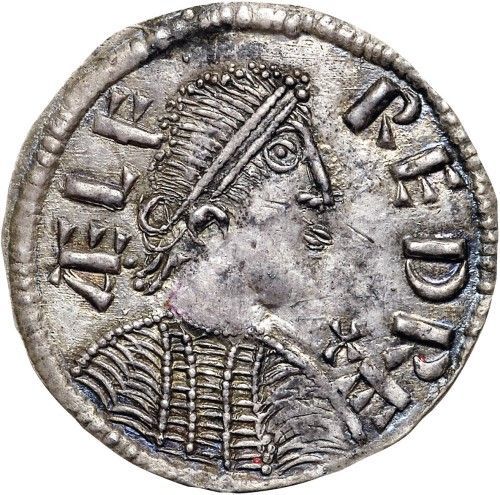
An Alfred the Great coin.
Alfred is the only British monarch that bears the epitaph of “Great.” If I had any doubts that he deserves that moniker, they have been duly laid to rest by this book. Without Alfred, a descendent of the Anglo Saxons, like myself, might very well have been speaking Danish today. Not that I have any problem with that because I actually like the Danish people, especially after they became a bit less blood thirsty.
These early English make it very easy for them. They build these nice monasteries and chapels, full of pretty bobbles, right along the coast in most places that make it very easy for the shallow, drafting Viking boats to pull up, almost as if it were a drive through for fast swag, and all they have to do is slice up a few unarmed monks. ”But what made this into a real booty bonanza was the fact that all these valuables were protected not by warriors or kings, not by the legendary Viking dragon Fafnir--slain for his treasure hoard by the hero Sigurd--but by monks. It really could not be easier.”
Then of course, they return home lugging all this church purloined plunder, brag about how easy it is to take, and more Viking ships head to England to seize their share of the bounty. The invaders of England have been emboldened.
I’ve always thought of Alfred as the first true king of England, though really he is more the king of Wessex, which is the last stronghold for the Anglo Saxons people. According to the chart of The Kings and Queens of England on the wall of my office, Ecgberht, Alfred’s grandfather, is the first acknowledged king of England. Then comes his father, Aethelwulf, who is followed by Alfred’s older brothers, Aethelberht and Aethelred, who each took a turn at the throne before meeting their own varied deaths. Finally, the baby of the family, Alfred, is the last one remaining. If I didn’t know the history of what type of leader Alfred becomes, I may be inclined to a King Johnesque shiver. What is interesting to me is that there are male heirs, sons of these kings, who are passed over. This will create issues for Alfred’s son, Edward, when he comes to the throne.
The Vikings hoards arrive every spring to devastate what they can and leave, or worse decide to stay. Some kings of the various provinces of England and France pay them to leave. This works but barely gives them a reprieve before another band of Vikings arrive demanding their cut of protection money.
The elders or aristocracy do not want a boy king. Under these trying circumstances, they want a man king, and Alfred is the best available choice. Alfred settles in and proves to be a competent king until disaster strikes. He is dethroned by Danish invaders and finds himself living in the fens and bogs, trying to stay one step ahead of his enemies. He is a hunted man in his own kingdom. Now interestingly enough, we don’t know who took over for Alfred, nor does my chart of the Kings and Queens of England have a listing for a Bjorn or a Guthrum, although there will be a series of Kings in the 11th century that bear names like Cnut, Harthacnut, and Harald.
We have to remember that, during this era, there is no sense of what it even means to be Anglo Saxon or even a thought for something called England. Alfred is the first king to start trying to define England and the people who populate her shores. He begins a guerrilla war campaign to wear down the Viking invaders and also to remind his people that he was their former and future king.
Alfred does regain power and decides that several things need to change for him to maintain control of his kingdom, but also keep his people safe so they can be productive without the constant shadow of a Viking sword looming over their heads. He creates burhs, which are fortifications set a certain distance from one another to make it so that, if one part of the kingdom is overrun, the rest can stay safe. It also creates a network of responses that allows one burh to come to the aid of another. He establishes new cities and designs their architectural layout.
Alfred is world building.
He also decides that something else is very important to his kingdom if he is ever going to achieve the society he envisions.
”Their mission, as he saw it, would be to restore Wessex to God’s favour, and to return Alfred’s people to the light of wisdom and Chrsitian truth. Wisdom was the medicine that he believed would ‘cure’ his country of heathen attack and he expressed his attitude towards it with great simplicity: ‘I can not find anything better in man than that he know, and nothing worse than he be ignorant.’”
He even begins to learn Latin so that he can translate the great books of the world so that his people can read them. Of course, he can also manipulate the translations to reflect his own personal beliefs.
Alfred is sick for the greater part of his adult life with stomach issues. There is some speculation that he was poisoned at a feast. Despite these physical limitations, he manages to find the energy he needs when his kingdom requires it the most. Bernard Cornwell brings him vividly to life in his Last Kingdom series, and the TV adaptation of his novels is superb. The idea I have of Alfred comes from Cornwell’s books, but Justin Pollard’s book has now added layers that allows me to see him in a larger context. I have an even better understanding of why he is Alfred the Great.
[image error]
David Dawson as King Alfred in the Last Kingdom series.
If you wish to see more of my most recent book and movie reviews, visithttp://www.jeffreykeeten.com
I also have a Facebook blogger page at:https://www.facebook.com/JeffreyKeeten
The Vikings!

An Alfred the Great coin.
Alfred is the only British monarch that bears the epitaph of “Great.” If I had any doubts that he deserves that moniker, they have been duly laid to rest by this book. Without Alfred, a descendent of the Anglo Saxons, like myself, might very well have been speaking Danish today. Not that I have any problem with that because I actually like the Danish people, especially after they became a bit less blood thirsty.
These early English make it very easy for them. They build these nice monasteries and chapels, full of pretty bobbles, right along the coast in most places that make it very easy for the shallow, drafting Viking boats to pull up, almost as if it were a drive through for fast swag, and all they have to do is slice up a few unarmed monks. ”But what made this into a real booty bonanza was the fact that all these valuables were protected not by warriors or kings, not by the legendary Viking dragon Fafnir--slain for his treasure hoard by the hero Sigurd--but by monks. It really could not be easier.”
Then of course, they return home lugging all this church purloined plunder, brag about how easy it is to take, and more Viking ships head to England to seize their share of the bounty. The invaders of England have been emboldened.
I’ve always thought of Alfred as the first true king of England, though really he is more the king of Wessex, which is the last stronghold for the Anglo Saxons people. According to the chart of The Kings and Queens of England on the wall of my office, Ecgberht, Alfred’s grandfather, is the first acknowledged king of England. Then comes his father, Aethelwulf, who is followed by Alfred’s older brothers, Aethelberht and Aethelred, who each took a turn at the throne before meeting their own varied deaths. Finally, the baby of the family, Alfred, is the last one remaining. If I didn’t know the history of what type of leader Alfred becomes, I may be inclined to a King Johnesque shiver. What is interesting to me is that there are male heirs, sons of these kings, who are passed over. This will create issues for Alfred’s son, Edward, when he comes to the throne.
The Vikings hoards arrive every spring to devastate what they can and leave, or worse decide to stay. Some kings of the various provinces of England and France pay them to leave. This works but barely gives them a reprieve before another band of Vikings arrive demanding their cut of protection money.
The elders or aristocracy do not want a boy king. Under these trying circumstances, they want a man king, and Alfred is the best available choice. Alfred settles in and proves to be a competent king until disaster strikes. He is dethroned by Danish invaders and finds himself living in the fens and bogs, trying to stay one step ahead of his enemies. He is a hunted man in his own kingdom. Now interestingly enough, we don’t know who took over for Alfred, nor does my chart of the Kings and Queens of England have a listing for a Bjorn or a Guthrum, although there will be a series of Kings in the 11th century that bear names like Cnut, Harthacnut, and Harald.
We have to remember that, during this era, there is no sense of what it even means to be Anglo Saxon or even a thought for something called England. Alfred is the first king to start trying to define England and the people who populate her shores. He begins a guerrilla war campaign to wear down the Viking invaders and also to remind his people that he was their former and future king.
Alfred does regain power and decides that several things need to change for him to maintain control of his kingdom, but also keep his people safe so they can be productive without the constant shadow of a Viking sword looming over their heads. He creates burhs, which are fortifications set a certain distance from one another to make it so that, if one part of the kingdom is overrun, the rest can stay safe. It also creates a network of responses that allows one burh to come to the aid of another. He establishes new cities and designs their architectural layout.
Alfred is world building.
He also decides that something else is very important to his kingdom if he is ever going to achieve the society he envisions.
”Their mission, as he saw it, would be to restore Wessex to God’s favour, and to return Alfred’s people to the light of wisdom and Chrsitian truth. Wisdom was the medicine that he believed would ‘cure’ his country of heathen attack and he expressed his attitude towards it with great simplicity: ‘I can not find anything better in man than that he know, and nothing worse than he be ignorant.’”
He even begins to learn Latin so that he can translate the great books of the world so that his people can read them. Of course, he can also manipulate the translations to reflect his own personal beliefs.
Alfred is sick for the greater part of his adult life with stomach issues. There is some speculation that he was poisoned at a feast. Despite these physical limitations, he manages to find the energy he needs when his kingdom requires it the most. Bernard Cornwell brings him vividly to life in his Last Kingdom series, and the TV adaptation of his novels is superb. The idea I have of Alfred comes from Cornwell’s books, but Justin Pollard’s book has now added layers that allows me to see him in a larger context. I have an even better understanding of why he is Alfred the Great.
[image error]
David Dawson as King Alfred in the Last Kingdom series.
If you wish to see more of my most recent book and movie reviews, visithttp://www.jeffreykeeten.com
I also have a Facebook blogger page at:https://www.facebook.com/JeffreyKeeten

November 20, 2016
During the Anglo-Saxon period there existed an institution called the witan-- an assembly of elders who could remove an inept or unpopular king. Think about that for a minute.
The Ninth Century in what is now England met the definition set by Hobbes. It was panicky and bad. Suddenly on the horizon, longships! Matters were now worse. Or were they, in terms of the longue duree Braudel asserts elsewhere that the marauding of the Vikings removed wealth from such intense concentration and helped distribute such, which likely inspired artisanal efforts and possibly investment. The Danish kickstart of the swerve or Renaissance is left under-reported. The Danes trading networks for the Berber coast to the House of Rurik can't be ignored.
Well, anyway, there were a number of kingdoms in that nascent England and Alfred was the youngest of the heirs. Attrition was common in the Anglo-Saxon era and before Bob's your uncle, he's king. He proceeds with caution and prefers negotiations with the Danes, unfortunately this drains the coffers and suddenly the witan toss him aside and the Vikings are invited in to the vacuum to stabilize. Alfred lives in the woods for a while and becomes a folk hero of sorts. There's a popular revolt and Alfred is back. Populism has been the coin of many realms. Well, all of this from a Welsh scribe named Asser, who happened to be in the employ of Good King Alfred.
Learning from the repeated Viking raids and plunder, Alfred institutes a civil defense network, he invites intellectuals to his side and begins some serious nation building, including legal codes and the promotion of literacy. He also modernized their navy and consequently the Danes left, or did they? I hear you knocking, Norman Invasion
The Ninth Century in what is now England met the definition set by Hobbes. It was panicky and bad. Suddenly on the horizon, longships! Matters were now worse. Or were they, in terms of the longue duree Braudel asserts elsewhere that the marauding of the Vikings removed wealth from such intense concentration and helped distribute such, which likely inspired artisanal efforts and possibly investment. The Danish kickstart of the swerve or Renaissance is left under-reported. The Danes trading networks for the Berber coast to the House of Rurik can't be ignored.
Well, anyway, there were a number of kingdoms in that nascent England and Alfred was the youngest of the heirs. Attrition was common in the Anglo-Saxon era and before Bob's your uncle, he's king. He proceeds with caution and prefers negotiations with the Danes, unfortunately this drains the coffers and suddenly the witan toss him aside and the Vikings are invited in to the vacuum to stabilize. Alfred lives in the woods for a while and becomes a folk hero of sorts. There's a popular revolt and Alfred is back. Populism has been the coin of many realms. Well, all of this from a Welsh scribe named Asser, who happened to be in the employ of Good King Alfred.
Learning from the repeated Viking raids and plunder, Alfred institutes a civil defense network, he invites intellectuals to his side and begins some serious nation building, including legal codes and the promotion of literacy. He also modernized their navy and consequently the Danes left, or did they? I hear you knocking, Norman Invasion

July 17, 2012
With my degree being mostly in medieval literature, and that of the Saxon period, it's not surprising that I'm a little more well-informed than the author of this book expects you to be, on the subject of Alfred. For example, I didn't know of him only because of the myth of the burning cakes: I actually knew the story of his mother giving him his first book, and the fact that he then later prioritised learning and knowledge.
Still, despite that assumption, it's a good book: it provides a clear context for Alfred's rule, following all the relevant threads of other ruling families, and commenting on what certainly seem to be key moments. It's a very readable book, not aimed at scholars but at readers of "popular history", so there aren't constant footnotes, etc, but the research certainly seems to have been done well.
Still, despite that assumption, it's a good book: it provides a clear context for Alfred's rule, following all the relevant threads of other ruling families, and commenting on what certainly seem to be key moments. It's a very readable book, not aimed at scholars but at readers of "popular history", so there aren't constant footnotes, etc, but the research certainly seems to have been done well.

October 6, 2008
Interesting book. There are a lot of very readable "history for the layman" books available these days, which is a great thing. I'd put this book in that category - it's an easy read, and it doesn't delve too deeply into historical uncertainties or points of contention amongst historians. Nor does it provide footnotes, although there are endnotes providing references for the direct quotations, and there is an extensive bibliography.
I'm no expert on Alfred - most of my knowledge of him comes from reading about other aspects of the period, or broad brush stroke general histories.
What I was looking for from this book was a good coverage of what we know of Alfred's life and the context, and enough pointers to seek out other sources for any area that struck me as interesting or contentious.
Unfortunately I didn't get everything I wanted. The overall narrative is pretty good - it's comprehensive, it's readable. There's a good introduction that briefly discusses the key primary sources and the problems of interpretation. But having raised those issues at the beginning, Pollard seems to have given himself a license to assume a particular version of events throughout the book.
There are many parts of Alfred's life, including details surrounding key events (such as the circumstances behind Alfred's flight from Chippenham on twelth night in 878), that are obscure and open to multiple interpretations on the available evidence. Pollard generally takes one interpretation and writes as though it were fact. He may present the evidence for that interpretation (such as his explanation for the flight from Chippenham), which is good, but he doesn't discuss other interpretations or present arguments.
There is some excuse for this. He's writing a narrative history for the general reader, who doesn't want to be bogged down every five minutes in a detailed discussion of sources and historiographical disputes. However, I believe it is incumbent on any author writing history to make it clear when things are not clear, and to provide the references for the reader to find the alternate arguments.
This can be done without breaking up the narrative. It can be done with a brief sentence flagging the issue, with a foot or end note that contains references, or it can even be done in an appendix that the reader can refer to after completing the rest of the book.
An example of the problem is the flight from Chippenham mentioned above. This is a key event in Alfred's life. Circumstances changed from a tenuous stalemate and truce with the viking army of Guthrum to (apparently) sudden defeat and flight for Alfred, and the primary sources are more or less silent on the details.
Pollard presents an ingenious explanation of what was going on, and does a good job of showing circumstantial evidence to support it. However, he presents no alternatives, no discussion of evidence that might suggest something different, and writes the rest of the book as if this explanation is an established fact - to the extent that some of his analysis of Alfred's character and later demeanour actually depends upon it.
I've never encountered Pollard's explanation for Alfred's flight from Chippenham to the Somerset Levels before, but I'm not an Alfred scholar. I have no way of knowing whether it represents a consensus view amongst historians, or a minority view, or whether Pollard came to it on his own. Without more references and context from Pollard, the only way to follow it up is a general review of the literature. Which is annoying.
In summary, this book is a fairly easy read, and seems to provide a reasonable overview of Alfred from birth to death, with enough information about contemporaneous events and figures to give some context to his life. Where it falls down is in the lack of references and historiographical context to both support Pollard's narrative and give the reader somewhere to go next.
For the casual reader wanting to fill in some of the background to later English history, or to discover something of who Alfred was and why he is considered an important figure, this book is probably good enough.
To anyone looking for an overview of what we really know about Alfred, or for a broad narrative with jumping off points to more detailed books and sources, it's likely to be something of a disappointment.
I'm no expert on Alfred - most of my knowledge of him comes from reading about other aspects of the period, or broad brush stroke general histories.
What I was looking for from this book was a good coverage of what we know of Alfred's life and the context, and enough pointers to seek out other sources for any area that struck me as interesting or contentious.
Unfortunately I didn't get everything I wanted. The overall narrative is pretty good - it's comprehensive, it's readable. There's a good introduction that briefly discusses the key primary sources and the problems of interpretation. But having raised those issues at the beginning, Pollard seems to have given himself a license to assume a particular version of events throughout the book.
There are many parts of Alfred's life, including details surrounding key events (such as the circumstances behind Alfred's flight from Chippenham on twelth night in 878), that are obscure and open to multiple interpretations on the available evidence. Pollard generally takes one interpretation and writes as though it were fact. He may present the evidence for that interpretation (such as his explanation for the flight from Chippenham), which is good, but he doesn't discuss other interpretations or present arguments.
There is some excuse for this. He's writing a narrative history for the general reader, who doesn't want to be bogged down every five minutes in a detailed discussion of sources and historiographical disputes. However, I believe it is incumbent on any author writing history to make it clear when things are not clear, and to provide the references for the reader to find the alternate arguments.
This can be done without breaking up the narrative. It can be done with a brief sentence flagging the issue, with a foot or end note that contains references, or it can even be done in an appendix that the reader can refer to after completing the rest of the book.
An example of the problem is the flight from Chippenham mentioned above. This is a key event in Alfred's life. Circumstances changed from a tenuous stalemate and truce with the viking army of Guthrum to (apparently) sudden defeat and flight for Alfred, and the primary sources are more or less silent on the details.
Pollard presents an ingenious explanation of what was going on, and does a good job of showing circumstantial evidence to support it. However, he presents no alternatives, no discussion of evidence that might suggest something different, and writes the rest of the book as if this explanation is an established fact - to the extent that some of his analysis of Alfred's character and later demeanour actually depends upon it.
I've never encountered Pollard's explanation for Alfred's flight from Chippenham to the Somerset Levels before, but I'm not an Alfred scholar. I have no way of knowing whether it represents a consensus view amongst historians, or a minority view, or whether Pollard came to it on his own. Without more references and context from Pollard, the only way to follow it up is a general review of the literature. Which is annoying.
In summary, this book is a fairly easy read, and seems to provide a reasonable overview of Alfred from birth to death, with enough information about contemporaneous events and figures to give some context to his life. Where it falls down is in the lack of references and historiographical context to both support Pollard's narrative and give the reader somewhere to go next.
For the casual reader wanting to fill in some of the background to later English history, or to discover something of who Alfred was and why he is considered an important figure, this book is probably good enough.
To anyone looking for an overview of what we really know about Alfred, or for a broad narrative with jumping off points to more detailed books and sources, it's likely to be something of a disappointment.

May 12, 2019
The case is made, and won, on the "Great".
Literacy, shared responsibility, and investment in one's own backyard: these three ideas became reality under Alfred's leadership, and planted the seeds for many of the societal bedrock philosophies we embrace, demand, and enjoy today.
The massive caveat to this, of course, is we're talking about the 9th century and all of the violence, superstition, and just as immovable prejudices that permeated. Most importantly, Alfred perpetrated, believed, and allowed his to drive behavior and much of his reign.
Context is vital.
Yet, despite all of those accepted norms, brutal modes of survival, and erroneous dependence on the power of magic, Alfred not only envisioned a different world but created one: and we're the beneficiaries more than a thousand years on.
Now, Alfred's motivations weren't altruistic, at least not in the majority, but he knew he needed buy-in and resulting participation from everyone in order to meet the needs of his kingdom. Even more so, if this kingdom was going to expand, the increased delegation of multiple functions was required.
As Pollard introduces Alfred's ideas and plans, he continues to weave and build the proof of their implementation all throughout, bringing them full circle on the last pages. All the while, he's telling the story of life in 9th century England: constant battling and coexistence with the invading Viking bands, the relentless push for more territory and power, and the never-ending challenges of meeting the needs of his citizens while simultaneously demanding the things he needs from them as his 'subjects' in order to deal with all of the above.
When a historian is a good storyteller, this is the result, and I enjoyed the heck out of getting to know my 33rd great-grandfather.
Literacy, shared responsibility, and investment in one's own backyard: these three ideas became reality under Alfred's leadership, and planted the seeds for many of the societal bedrock philosophies we embrace, demand, and enjoy today.
The massive caveat to this, of course, is we're talking about the 9th century and all of the violence, superstition, and just as immovable prejudices that permeated. Most importantly, Alfred perpetrated, believed, and allowed his to drive behavior and much of his reign.
Context is vital.
Yet, despite all of those accepted norms, brutal modes of survival, and erroneous dependence on the power of magic, Alfred not only envisioned a different world but created one: and we're the beneficiaries more than a thousand years on.
Now, Alfred's motivations weren't altruistic, at least not in the majority, but he knew he needed buy-in and resulting participation from everyone in order to meet the needs of his kingdom. Even more so, if this kingdom was going to expand, the increased delegation of multiple functions was required.
As Pollard introduces Alfred's ideas and plans, he continues to weave and build the proof of their implementation all throughout, bringing them full circle on the last pages. All the while, he's telling the story of life in 9th century England: constant battling and coexistence with the invading Viking bands, the relentless push for more territory and power, and the never-ending challenges of meeting the needs of his citizens while simultaneously demanding the things he needs from them as his 'subjects' in order to deal with all of the above.
When a historian is a good storyteller, this is the result, and I enjoyed the heck out of getting to know my 33rd great-grandfather.

February 9, 2026
Phenomenal. A fascinating and inspiring read about King Alfred, first true King of the English, and his incredible comeback against the Viking invasions.

December 24, 2016
I love Alfred.
“Very often it has come to my mind what men of learning there were formerly throughout England... and how there were happy times then.”
“Very often it has come to my mind what men of learning there were formerly throughout England... and how there were happy times then.”

March 11, 2011
Out of the mirk and mists of the Somersaetan fen lands, across eleven hundred years, comes Justin Pollard's biography of 'Alfred the Great', published 2005. 'A delicious historical treat' is how Stephen Fry regards this work. It's not just penetrating biography but also eulogistic homily. Pollard's Alfred is a potent and clearly focused figure with original insight based on sound historical research. Even the clearly mythical elements of the legendary man are given rational and insightful interpretation. The very original revelations of the coup on Monday the 6th of January 878 at Chippenham is historical detective work of the highest order. The author can even name the Saxon plotters who deposed Alfred in favour of the Viking Guthrum!
In this dark 9th century world, where vast heathen armies of 'Northmen' plundered Europe, as far south as the Mediterranean and North Africa, to destroy the Carolingian Empire of Charlemagne and systematically pick off and occupy the Saxon kingdoms of Britain (Northumbria, Essex, Anglia and Eastern Mercia), as well as Ireland. In January 878 Alfred was on his knees as a fugitive at Athelney, burning his cakes. From this position he earned the title 'Great'. In the following years, with Wessex standing totally alone, he dragged his nation up from the bootlaces. Drove the heathen armies to defeat, founded the English navy, planted the seeds of an English nation, personally promoted the English language, radically re-forged the administration of his realm, revised the laws of Ine, refounded the city of London.
Here in the twenty first century with 'Ingaland' searching for some self identity, the bones of Aelfred lie scattered and lost somewhere under a car park in Winchester.
In this dark 9th century world, where vast heathen armies of 'Northmen' plundered Europe, as far south as the Mediterranean and North Africa, to destroy the Carolingian Empire of Charlemagne and systematically pick off and occupy the Saxon kingdoms of Britain (Northumbria, Essex, Anglia and Eastern Mercia), as well as Ireland. In January 878 Alfred was on his knees as a fugitive at Athelney, burning his cakes. From this position he earned the title 'Great'. In the following years, with Wessex standing totally alone, he dragged his nation up from the bootlaces. Drove the heathen armies to defeat, founded the English navy, planted the seeds of an English nation, personally promoted the English language, radically re-forged the administration of his realm, revised the laws of Ine, refounded the city of London.
Here in the twenty first century with 'Ingaland' searching for some self identity, the bones of Aelfred lie scattered and lost somewhere under a car park in Winchester.

March 4, 2008
Very well written book about Alfred the Great, a remarkable medieval king. The book evokes the time in which Alfred lived, and the roles that he played in shaping the future of what was to become England.

June 3, 2022
The danger of homeschooling children is that you end up finding a historical figure who seems really interesting and grabs the imagination as someone who is unique for his or her time. This goes for Alfred the Great. While it seems that most people (in the UK at least) know him for two stories; one of graciously being scolded by a peasant woman for being inattentive over some baked bread and another for challenging himself to read at an early age to gain a book; it also seems that these two stories are only attributed to him but probably didn't happen. What makes him more interesting is that he embodies a hero's journey in his rule and his encouraging of learning and reading of his people.
Pollard's book has the ironic nature of its strength being one of its greatest weakness (also, depending on why you're reading it). As someone who doesn't know about the time (9th-10th century) or place (Wessex and then England in general), this provides a lot of background information on the culture, history, and people groups and society. While this book isn't extraordinarily long and does read quite quickly, it provides a lot of background information. So much so, that the title character of the book, Alfred, tends to get lost in a number of the pages. It takes a run up to his life and rule which is appreciated. However, once you get into the wars with the Vikings you almost forget what you're reading about. And yet, understanding just how formidable the Vikings were and the nuisance they enacted against king, country, and people is impressive. Also, the discussion on how women had a different role that the "subject of men and their fathers" that we think about was the status throughout history in the West was really interesting and puts rights of the time into perspective. Also, the idea that absolute monarchy wasn't a thing until much, much later is seen in the lesser magistrates coming together and kicking Alfred out of the office of king.
Alfred, was the young boy who never should have been king and never wanted to be king but took on the mantle for his family. He found unique ways to deal with Viking raiders after repossessing the throne. His character and especially his Christian convictions is seen throughout this book and with what little (compared to today) we have of historical knowledge of the time that is a great testament and challenge to all us Christians. As for being a unique character almost out of his timeframe (it would have been interesting to see Alfred 700 years later in the middle of the Reformation to see what he would do) we see his desire for both noble and normal person alike to learn Latin, learn to read, and learn to learn. This was done both as an overall increase in life and faith but also for the betterment of the kingdom and those who would supplant the older generation. There are a lot of current-day life lessons we can get from Alfred's rule. Reforming the legal system and seeing the theonomy of lesser judges who were encouraged to learn (some by even the threat of force) to be better judges is an impressive thing to see in the first millennium AD. I would even say that if Alfred's reforms on learning and legalism and leadership had continued well into the second millennium, the advancement of the West would have been even greater than we saw.
So while the detail can be a little overwhelming and not-Alfred centric, the second half of the book really centers on him and just how amazing and interesting of a life he led. The sad tale at the start of the book of a number of lost works of antiquity is almost heartbreaking. A study in the life of Alfred would be a good study for any father or church leadership or community leader. Seeing the need to build up the next generation from a cultural revolution with a strong leader who proved himself as someone to listen to and trust is a historical truth we can all follow. Final Grade - B
Pollard's book has the ironic nature of its strength being one of its greatest weakness (also, depending on why you're reading it). As someone who doesn't know about the time (9th-10th century) or place (Wessex and then England in general), this provides a lot of background information on the culture, history, and people groups and society. While this book isn't extraordinarily long and does read quite quickly, it provides a lot of background information. So much so, that the title character of the book, Alfred, tends to get lost in a number of the pages. It takes a run up to his life and rule which is appreciated. However, once you get into the wars with the Vikings you almost forget what you're reading about. And yet, understanding just how formidable the Vikings were and the nuisance they enacted against king, country, and people is impressive. Also, the discussion on how women had a different role that the "subject of men and their fathers" that we think about was the status throughout history in the West was really interesting and puts rights of the time into perspective. Also, the idea that absolute monarchy wasn't a thing until much, much later is seen in the lesser magistrates coming together and kicking Alfred out of the office of king.
Alfred, was the young boy who never should have been king and never wanted to be king but took on the mantle for his family. He found unique ways to deal with Viking raiders after repossessing the throne. His character and especially his Christian convictions is seen throughout this book and with what little (compared to today) we have of historical knowledge of the time that is a great testament and challenge to all us Christians. As for being a unique character almost out of his timeframe (it would have been interesting to see Alfred 700 years later in the middle of the Reformation to see what he would do) we see his desire for both noble and normal person alike to learn Latin, learn to read, and learn to learn. This was done both as an overall increase in life and faith but also for the betterment of the kingdom and those who would supplant the older generation. There are a lot of current-day life lessons we can get from Alfred's rule. Reforming the legal system and seeing the theonomy of lesser judges who were encouraged to learn (some by even the threat of force) to be better judges is an impressive thing to see in the first millennium AD. I would even say that if Alfred's reforms on learning and legalism and leadership had continued well into the second millennium, the advancement of the West would have been even greater than we saw.
So while the detail can be a little overwhelming and not-Alfred centric, the second half of the book really centers on him and just how amazing and interesting of a life he led. The sad tale at the start of the book of a number of lost works of antiquity is almost heartbreaking. A study in the life of Alfred would be a good study for any father or church leadership or community leader. Seeing the need to build up the next generation from a cultural revolution with a strong leader who proved himself as someone to listen to and trust is a historical truth we can all follow. Final Grade - B

November 21, 2013
There is much to like in this history of Alfred the Great, and how much you like it depends on the expectations you carry into the book. To start, this is a narrative history written for the lay reader as an introduction to Alfred. Pollard attempts to write a memorable history that best represents Alfred, the shaping of his character, and the events that led him to become so influential in the history of Western civilization. That he is so influential is indisputable, what is disputable are the facts vs. the myths that have arisen regarding Alfred’s life. As he is widely credited with formalizing the reintroduction of learning into popular society (as opposed to learning being relegated to the monasteries of the day), it is not surprising that the society which he helped create was not yet mature enough to record with factual certainty the events of his life. Much is open to conjecture, and if the reader is looking for a representation of scholarly debate as to the veracity of aspects of Alfred’s life, then the reader will be disappointed. For my part, I was interested in a narrative history that would educate me on the main aspects of Alfred’s life and legacy, and in this I was well satisfied.
A legitimate criticism of this work is that Pollard assumes as factual several versions of Alfred’s life. The events of his escape from Chippenham as presented as authoritative, although in reading it I could only wonder whether Pollard was narrating into the story too much that is not supported by obvious fact. Similarly, Guthrum’s transition into an ally is presented without a critical analysis of what may have caused this (and I was left puzzled).
There are moments of extreme clarity. Pollard is intent on sublimating the real Alfred from the “burning of the cakes” myth, and in this, he is highly successful. For instance, Pollard starts by describing this great king at his low point as the entry to the book. At Alfred’s low point – “Only weeks earlier, he had been king of Wessex, ruler of what was once the most powerful Anglo-Saxon kingdom in England. Now all those kingdoms were gone, destroyed by an enemy that no one in Christendom seemed able to either understand or answer in kind. All that was left was the Isle of Athelney, the last refuge of a small band of Anglo-Saxons who still held allegiance to Alfred and who had not, at least yet, bent their heads to new Viking overlords. It was a very damp, very cold and very small kingdom that Alfred now ruled but this one solid piece of ground in the swamp would provide the first footings for what would become the kingdom of England. It would also lay the foundations for a way of life that affects everyone in the Western world today.” (1) I can almost hear this paragraph narrated as the introductory seen into a great cinematic biography. It sets a perfect tone for the rest of the work. Pollard goes on to set the stage on why Alfred matters. To summarize, he says, “He was Alfred, king of Wessex, and the first man ever to have some right to call himself king of the English. His campaign was unique, waged not merely with weapons, but with a vision of a new type of kingdom, where protection and prosperity resulted not from physical force alone, but from education, public building, commerce and law. That a king in any age should prove so far-sighted is remarkable in itself, but history shows that Alfred was more extraordinary still, for we can piece together the story of how he achieved this from first-hand accounts.” (3) Well done, and if the casual reader took nothing else than this from the novel, they would leave more enlightened the 99% of Americans today, for whom Alfred is an historical figure relegated to college and masters history students, and nothing more.
I have always heard of the providential nature of English weather in the sinking of the Spanish armada. What I was surprised to learn was that that was a repeat event. Likely to be crushed by an invading Scandinavian armada, ”From his position in Exeter, it looked to Guthrum as if the game was almost won. Within days Wessex would become the last major kingdom to fall and England would, in effect, become a Scandinavian nation.
It was at this point that nature intervened, as it has often done at moments of incipient national disaster. Just as the Viking feet sailed past the headland at Swanage, off the Dorset coast, a terrible storm blew up (in some versions of the chronicle it is a strange ‘mist’), as fortuitous for Alfred as the one that destroyed the armada sent against Queen Elizabeth I some seven hundred years later. The great Viking fleet was caught by surprise and foundered, their vessels being lost or, as the twelfth-century chronicler Geoffrey Gaimar gleefully put it, ‘one hundred and forty of their ships went to the devil.’” (153) One can read Alfred’s memory when he wrote later, “Faith, Hope and Charity – these are the three anchors which hold fast the ship of the mind amidst the dangers of the waves.” – Alfred the Great, Augustine’s Soliloquies (59)
His innovations on how to co-locate defensive and trade interests led not only to the defensive improvement of his territory, but introduced a new way of life for English people, and the development of fortified cities throughout the middle ages. “The burhs that Alfred ordered built were not to be simply fortresses; many were to be communities – fortified towns – placed at the junctions of the trade routes, which were also of course the routes that armies travelled. If each burh could be a little market town on a trade route, the trade that was attracted there would help pay for its own defence, and the people drawn there by that trade would provide the manpower (and have the motivation) to defend it. It was a self-supporting protection system that provided everybody with a local refuge – their own Athelney, which generated its own finances and manpower for defence, controlled the important nodal points in Wessex’s communication lines and promoted trade.” (212)
In the end, Alfred helped initiate the policies that led to England becoming a land of learned people. Alfred gathered intellectuals together for the first time… “Wisdom was the medicine that he believed would ‘cure’ his country of heathen attack and he expressed his attitude towards it with great simplicity: ‘I can not find anything better in man that that he know, and nothing worse than that he be ignorant.’” (242) In the intellectual history of Western civilization, all serious students of history must understand Alfred’s focus on learning as an inflection point. His motives were not purely altruistic. As one of his son’s decrees points out, “Written orders that could be understood by everyone could take the will of the king anywhere and, unlike the words of messengers or the memories of nobles, could not, as one grant from the reign of Alfred’s son puts it, ‘be brought to naught by the assault of misty oblivion.’” (254)
In the end, this is a highly informative and readable work. For those like me that have heard of Alfred, and love history, this will be a highly rewarding read.
A legitimate criticism of this work is that Pollard assumes as factual several versions of Alfred’s life. The events of his escape from Chippenham as presented as authoritative, although in reading it I could only wonder whether Pollard was narrating into the story too much that is not supported by obvious fact. Similarly, Guthrum’s transition into an ally is presented without a critical analysis of what may have caused this (and I was left puzzled).
There are moments of extreme clarity. Pollard is intent on sublimating the real Alfred from the “burning of the cakes” myth, and in this, he is highly successful. For instance, Pollard starts by describing this great king at his low point as the entry to the book. At Alfred’s low point – “Only weeks earlier, he had been king of Wessex, ruler of what was once the most powerful Anglo-Saxon kingdom in England. Now all those kingdoms were gone, destroyed by an enemy that no one in Christendom seemed able to either understand or answer in kind. All that was left was the Isle of Athelney, the last refuge of a small band of Anglo-Saxons who still held allegiance to Alfred and who had not, at least yet, bent their heads to new Viking overlords. It was a very damp, very cold and very small kingdom that Alfred now ruled but this one solid piece of ground in the swamp would provide the first footings for what would become the kingdom of England. It would also lay the foundations for a way of life that affects everyone in the Western world today.” (1) I can almost hear this paragraph narrated as the introductory seen into a great cinematic biography. It sets a perfect tone for the rest of the work. Pollard goes on to set the stage on why Alfred matters. To summarize, he says, “He was Alfred, king of Wessex, and the first man ever to have some right to call himself king of the English. His campaign was unique, waged not merely with weapons, but with a vision of a new type of kingdom, where protection and prosperity resulted not from physical force alone, but from education, public building, commerce and law. That a king in any age should prove so far-sighted is remarkable in itself, but history shows that Alfred was more extraordinary still, for we can piece together the story of how he achieved this from first-hand accounts.” (3) Well done, and if the casual reader took nothing else than this from the novel, they would leave more enlightened the 99% of Americans today, for whom Alfred is an historical figure relegated to college and masters history students, and nothing more.
I have always heard of the providential nature of English weather in the sinking of the Spanish armada. What I was surprised to learn was that that was a repeat event. Likely to be crushed by an invading Scandinavian armada, ”From his position in Exeter, it looked to Guthrum as if the game was almost won. Within days Wessex would become the last major kingdom to fall and England would, in effect, become a Scandinavian nation.
It was at this point that nature intervened, as it has often done at moments of incipient national disaster. Just as the Viking feet sailed past the headland at Swanage, off the Dorset coast, a terrible storm blew up (in some versions of the chronicle it is a strange ‘mist’), as fortuitous for Alfred as the one that destroyed the armada sent against Queen Elizabeth I some seven hundred years later. The great Viking fleet was caught by surprise and foundered, their vessels being lost or, as the twelfth-century chronicler Geoffrey Gaimar gleefully put it, ‘one hundred and forty of their ships went to the devil.’” (153) One can read Alfred’s memory when he wrote later, “Faith, Hope and Charity – these are the three anchors which hold fast the ship of the mind amidst the dangers of the waves.” – Alfred the Great, Augustine’s Soliloquies (59)
His innovations on how to co-locate defensive and trade interests led not only to the defensive improvement of his territory, but introduced a new way of life for English people, and the development of fortified cities throughout the middle ages. “The burhs that Alfred ordered built were not to be simply fortresses; many were to be communities – fortified towns – placed at the junctions of the trade routes, which were also of course the routes that armies travelled. If each burh could be a little market town on a trade route, the trade that was attracted there would help pay for its own defence, and the people drawn there by that trade would provide the manpower (and have the motivation) to defend it. It was a self-supporting protection system that provided everybody with a local refuge – their own Athelney, which generated its own finances and manpower for defence, controlled the important nodal points in Wessex’s communication lines and promoted trade.” (212)
In the end, Alfred helped initiate the policies that led to England becoming a land of learned people. Alfred gathered intellectuals together for the first time… “Wisdom was the medicine that he believed would ‘cure’ his country of heathen attack and he expressed his attitude towards it with great simplicity: ‘I can not find anything better in man that that he know, and nothing worse than that he be ignorant.’” (242) In the intellectual history of Western civilization, all serious students of history must understand Alfred’s focus on learning as an inflection point. His motives were not purely altruistic. As one of his son’s decrees points out, “Written orders that could be understood by everyone could take the will of the king anywhere and, unlike the words of messengers or the memories of nobles, could not, as one grant from the reign of Alfred’s son puts it, ‘be brought to naught by the assault of misty oblivion.’” (254)
In the end, this is a highly informative and readable work. For those like me that have heard of Alfred, and love history, this will be a highly rewarding read.

July 15, 2017
Pollard's biography of Alfred is classic narrative history. There is just enough context to give meaning to the central character's actions but not so much as to upstage him. The focus is always on Alfred's personality, his mistakes, his insights, and the impact he had on the England that he helped bring into being.
Alfred's story is, of course, also the story of the Vikings and Pollard is particularly good at depicting his attitude to the cunning and ruthless Norsemen whom Alfred must have believed had been sent by God as a scourge upon an age that had failed to live up to its responsibilities.
The medieval mind-set is often difficult for the modern reader to fully take on board. The hand of God in perceived in every twist of and turn of the plot; the imminence of divine judgement is always just around the corner; and in a world where life-expectancy was as much as thirty-five years less than for contemporary people, perhaps that is not so surprising. All of this, Pollard incorporates into his story. It forms the background against which the portrait emerges of the only English king to be given the soubriquet "Great". From Pollard's account it would appear to be a title justly deserved.
Alfred's story is, of course, also the story of the Vikings and Pollard is particularly good at depicting his attitude to the cunning and ruthless Norsemen whom Alfred must have believed had been sent by God as a scourge upon an age that had failed to live up to its responsibilities.
The medieval mind-set is often difficult for the modern reader to fully take on board. The hand of God in perceived in every twist of and turn of the plot; the imminence of divine judgement is always just around the corner; and in a world where life-expectancy was as much as thirty-five years less than for contemporary people, perhaps that is not so surprising. All of this, Pollard incorporates into his story. It forms the background against which the portrait emerges of the only English king to be given the soubriquet "Great". From Pollard's account it would appear to be a title justly deserved.
September 2, 2025
Big fan of Alfred. Bit indifferent on the author - sometimes good, sometimes not.

April 19, 2026
I did enjoy this and it quenched my thirst for more knowledge about Alfred post watching The Last Kingdom, but as with all history books (I find) it was quite hard to get through at any great pace.
September 4, 2019
A compelling read and instructive look at the period in history when the foundation stones of England were being laid.

January 4, 2026
Alfred is the only English king to have been called 'Great'. This biography looks at his life and times and how he came to earn that title. It's a fascinating look at the Anglo-Saxon era with the coming of the Vikings, the Danelaw and the creation of England. Engaging and informative, this is a fantastic book if you're wanting to learn more about Alfred.

April 21, 2018
Alfred the Great is a wonderful book about the late ninth century king who saved Wessex (the last standing Anglo-Saxon kingdom in Britain) from Viking rule. Although a history, it reads like a novel. It is spellbinding.
The text carefully lays out what is actually known about Alfred from contemporary documents, what was once known but is now lost or survives only in copies of dubious faithfulness, and lore that is almost certainly untrue. But Alfred the Great is not a reference book and does not read like one. Instead it is a fascinating account of King Alfred’s life and reign.
One of Alfred’s many strengths was his ability to learn from his mistakes (some very unfortunate) and from the missteps of his predecessors and contemporaries. He experienced betrayals and learned the value of real friendships. He also learned the tactics and value systems of his Viking adversaries. Gift-giving became an important tool of his statesmanship. His adoption, baptism and co-option of the defeated Viking chieftain Guthrum and his generals was an example of unprecedented, out-of-the-box thinking that brought a rare period of peace to Wessex.
Alfred was a devout ruler who thought about the long-term health of England. He saw public literacy as a way of enabling his subjects to play a larger role in their own defense, governance and economy. To that end, he fostered schools and imported important academics. He encouraged people to create and move to more defensible “urban” centers. He learned Latin so he could translate important books into English for his subjects. He translated the Psalms, law books, philosophy and other works.
From his commentaries and his embellishments of the texts (an unfortunate but apparently rather common practice among translators and copyists of the time) we learn something more about his personality and motivation than is known about most people of that era.
In his 50 years (Alfred died a very old man by late ninth century standards) Alfred became a learned and foresighted ruler to whom few of today’s leaders compare. I absolutely loved this book and would recommend it to anyone.
“Then I say that true friends are the most precious of all this world’s blessings.” Alfred 849-899.
The text carefully lays out what is actually known about Alfred from contemporary documents, what was once known but is now lost or survives only in copies of dubious faithfulness, and lore that is almost certainly untrue. But Alfred the Great is not a reference book and does not read like one. Instead it is a fascinating account of King Alfred’s life and reign.
One of Alfred’s many strengths was his ability to learn from his mistakes (some very unfortunate) and from the missteps of his predecessors and contemporaries. He experienced betrayals and learned the value of real friendships. He also learned the tactics and value systems of his Viking adversaries. Gift-giving became an important tool of his statesmanship. His adoption, baptism and co-option of the defeated Viking chieftain Guthrum and his generals was an example of unprecedented, out-of-the-box thinking that brought a rare period of peace to Wessex.
Alfred was a devout ruler who thought about the long-term health of England. He saw public literacy as a way of enabling his subjects to play a larger role in their own defense, governance and economy. To that end, he fostered schools and imported important academics. He encouraged people to create and move to more defensible “urban” centers. He learned Latin so he could translate important books into English for his subjects. He translated the Psalms, law books, philosophy and other works.
From his commentaries and his embellishments of the texts (an unfortunate but apparently rather common practice among translators and copyists of the time) we learn something more about his personality and motivation than is known about most people of that era.
In his 50 years (Alfred died a very old man by late ninth century standards) Alfred became a learned and foresighted ruler to whom few of today’s leaders compare. I absolutely loved this book and would recommend it to anyone.
“Then I say that true friends are the most precious of all this world’s blessings.” Alfred 849-899.
December 31, 2020
Unashamedly got this book after watching the Last Kingdom. I was pleased to see various parallels between the historical Alfred and the portrayed Alfred. I am sure I projected a lot of the on screen Alfred onto his real history. I really enjoyed his political maneuvering, his negotiation of the Danes, his commitment to literacy, bureaucracy and also formalizing the buhr system throughout the land. However I was most captured by his lifelong commitment to his faith. Similar to the young Alfred I have also had formational experiences with religion and really enjoyed the account of him travelling to Rome with his father. If this account was accurate then what an outstanding psycho-spiritual experience for him to experience at such a young age. I am sure it also endowed him with a connection with the grandeur and magnitude that he was later to connect with as ruler of Wessex, and the unofficial Bretwalda, arguably. Other highlights include the loose account of Athelney and the marshland. Whether the burning of the cakes is true or not - surely there is some sort of allegory or metaphor to be drawn. Also fantastic to have more insight into the sons of Ragnar stories as well as Viking activity across the channel and throughout the continent. Lastly it should be noted how Alfred showed such great grit and stoicism managing his painful abdominal/gastro issues- while managing the royal court, making sure the population was being fed, and fighting off Danes. I would wonder if Alfred's lasting legacy was a reference point for decisive moments in British history such as the Armada, Waterloo or the Great War? Arguably Alfred fought off many Armadas with far fewer resources (and possibly mobilized the first English Navy as alluded to by the author?). Regardless of his dilution in historical record, his place in English history will never be in doubt.

January 24, 2016
Thoroughly interesting account of Alfred's rise to kingship in Wessex and the powerful intricacies of surrounding kingdoms of Mercia, Northumbria, Welsh kingdoms and the eastern areas of the Danelaw. The ravages of large numbers of Vikings almost forces Alfred to spend weeks in the Somerset levels or to consider fleeing abroad. His subsequent pact with the Viking King Guthrum ushers in a new era; he cleverly allows Guthrum to set up in East Anglia as an Anglo Saxon king under the name Aethelstan in return for being baptised.
Alfred begins to build the burhs, fortified communities a day's march apart which connected the army paths, to protect the land and to establish a more stable kingdom. He becomes "bretwalda", a term which meant he was effectively the ruler of Britain - a title belonging to the king who claimed nominal overlordship over the other kings of the various kingdoms. But he was never king over the whole of England - that was to come after Alfred's time.
His legacy was not even considered "Great" until the 16th century, and then not because of military victories or administrative reforms, but primarily because of his books - promoting learning, particularly of the English language through translations of important texts that he thought were important for men to know and through the commissioning of the Anglo Saxon Chronicle. It is in his wisdom that he is shown to be truly great, not in the myths of empire building which were built upon his name later in history. Alfred learnt through adversity to repair and build a new kingdom, for in his own words "in the midst of prosperity the mind is elated, and in prosperity a man forgets himself; in hardship he is forced to reflect on himself, even though he be unwilling."
Alfred begins to build the burhs, fortified communities a day's march apart which connected the army paths, to protect the land and to establish a more stable kingdom. He becomes "bretwalda", a term which meant he was effectively the ruler of Britain - a title belonging to the king who claimed nominal overlordship over the other kings of the various kingdoms. But he was never king over the whole of England - that was to come after Alfred's time.
His legacy was not even considered "Great" until the 16th century, and then not because of military victories or administrative reforms, but primarily because of his books - promoting learning, particularly of the English language through translations of important texts that he thought were important for men to know and through the commissioning of the Anglo Saxon Chronicle. It is in his wisdom that he is shown to be truly great, not in the myths of empire building which were built upon his name later in history. Alfred learnt through adversity to repair and build a new kingdom, for in his own words "in the midst of prosperity the mind is elated, and in prosperity a man forgets himself; in hardship he is forced to reflect on himself, even though he be unwilling."
Read
June 11, 2021Overall a very good book which certainly made great strides in bringing Alfred the Great to life, which is quite a challenge given that his times were so different from ours, and the written records aren't always that helpful or complete. If I had one criticism it would be that at times I did get the impression that the author was spinning it out a bit; some points were made, and then repeated, and for good measure, repeated again, sometimes on the same page. I did wonder whether he or the editor/publisher had set him(self) a goal of a minimum number of pages. But that comment really should not detract from the conclusion that this is a very informative book which brought out how different Alfred was and why he earned the epithet 'Great'.
I also agree with the implied comment of another reader that the book does suffer from poor proof-reading in one or two places, with some schoolboy howlers which got through what may only have been a spell-checker process. But such is the standard of modern printed books!
I also agree with the implied comment of another reader that the book does suffer from poor proof-reading in one or two places, with some schoolboy howlers which got through what may only have been a spell-checker process. But such is the standard of modern printed books!

Want to Read
September 7, 2017Bernard Cornwell wrote a wonderful 10-novel series fleshing out the creation of England in the Alfred years and later. Cornwell praises Pollard's biography in his afterword to book six: https://www.goodreads.com/review/show...
October 30, 2020
Great overview of Alfred the Great in a new lens. The book reads almost as a novel, while still retaining its credibility as a biography. Pollard offers some interesting alternate views of events, while also providing evidence for such theories. Overall a great book to begin an intro into pre Norman Conquest England.

February 8, 2016
Very interesting and an entertaining read. A lot of stuff about the Vikings and general anglo Saxon live in here too

March 9, 2018
A readable and entertaining biography by popular historian and television producer Justin Pollard.
Recommended.
Recommended.

September 10, 2022
This is a fantastic historical book telling the tale of King Alfred of England, one I haven't paid much attention to until stumbling upon this book. At first I was apprehensive, because some of the non-fiction books I've been reading lately have been very average, but Pollard's writing style was engaging and there was a perfect balance between using primary sources alongside his own engagement with the texts he was researching.
Pollard has a wealth of knowledge around the life of King Alfred, but goes above and beyond with telling the stories of Alfred's father, and his son, rather than leaving a cut-off point surrounding Alfred's life. In fact, there is a great section at the very start about Æthelwulf (Alfred's father) and the management of the Kingdoms of Wessex and Mercia. The prior knowledge greatly helped to solidify the reader's understanding of the context surrounding being a mediaeval king of Wessex, and progresses towards the gradual unification of England as a single nation.
Ironically, as I was reading the novel about one of the first English monarchs, Queen Elizabeth II passed away, which puts into greater perspective of how Alfred, who only reigned for around 20 years, has remained so poignant in history over the past 11 or so centuries. Pollard explores both the facts we know for sure, as well as the legendary tales that surfaced around Alfred's name as later writers in the 10th and 11th centuries wanted to create their own personalised anecdotes for this much-loved and respected king.
Moreover, as Pollard includes excerpts of Alfred's own writings, which have survived to some degree to today, brought me as the reader closer to Alfred's thought processes and what he wanted to achieve whilst on the throne of Wessex. A conscientious and calm individual shines through, one who greatly pondered over and thought about his role in the world when battling against numerous Viking campaigns and raids, but equally an intelligent strategist who was able to rise from a hideaway in Athelney, all the way to reconquering a country that very nearly betrayed him. There was a great patriotic spirit in the way Alfred was able to muster up support once more, even when he was working in the shadows of his own homeland.
I'd never realised just how prevalent in Viking history Alfred the Great was, but it's likely that the epithet comes from his ability to maintain an Anglo-Saxon populace, rather than being crushed by Scandinavian forces that could have altered the very history of England - this was a pinnacle moment in English history, one I never learnt about in school and one that's perhaps overshadowed by the Tudor and Victorian era monarchs. Alfred was, quite literally, an underrated king, not being acknowledged as 'Great' until half a millennium after his death. With his focus on Anglo-Saxon literature, it is probably thanks to Alfred that English became a literate language to begin with, rather than being unwritten and washed away with other parts of English history when the Normans invaded 200 years later.
This was a really interesting read, one I haven't been so engaged in for quite some time. I'm so glad I picked this up and invested my time in it, especially as it adds just a little bit of interest into an English identity.
Pollard has a wealth of knowledge around the life of King Alfred, but goes above and beyond with telling the stories of Alfred's father, and his son, rather than leaving a cut-off point surrounding Alfred's life. In fact, there is a great section at the very start about Æthelwulf (Alfred's father) and the management of the Kingdoms of Wessex and Mercia. The prior knowledge greatly helped to solidify the reader's understanding of the context surrounding being a mediaeval king of Wessex, and progresses towards the gradual unification of England as a single nation.
Ironically, as I was reading the novel about one of the first English monarchs, Queen Elizabeth II passed away, which puts into greater perspective of how Alfred, who only reigned for around 20 years, has remained so poignant in history over the past 11 or so centuries. Pollard explores both the facts we know for sure, as well as the legendary tales that surfaced around Alfred's name as later writers in the 10th and 11th centuries wanted to create their own personalised anecdotes for this much-loved and respected king.
Moreover, as Pollard includes excerpts of Alfred's own writings, which have survived to some degree to today, brought me as the reader closer to Alfred's thought processes and what he wanted to achieve whilst on the throne of Wessex. A conscientious and calm individual shines through, one who greatly pondered over and thought about his role in the world when battling against numerous Viking campaigns and raids, but equally an intelligent strategist who was able to rise from a hideaway in Athelney, all the way to reconquering a country that very nearly betrayed him. There was a great patriotic spirit in the way Alfred was able to muster up support once more, even when he was working in the shadows of his own homeland.
I'd never realised just how prevalent in Viking history Alfred the Great was, but it's likely that the epithet comes from his ability to maintain an Anglo-Saxon populace, rather than being crushed by Scandinavian forces that could have altered the very history of England - this was a pinnacle moment in English history, one I never learnt about in school and one that's perhaps overshadowed by the Tudor and Victorian era monarchs. Alfred was, quite literally, an underrated king, not being acknowledged as 'Great' until half a millennium after his death. With his focus on Anglo-Saxon literature, it is probably thanks to Alfred that English became a literate language to begin with, rather than being unwritten and washed away with other parts of English history when the Normans invaded 200 years later.
This was a really interesting read, one I haven't been so engaged in for quite some time. I'm so glad I picked this up and invested my time in it, especially as it adds just a little bit of interest into an English identity.

March 6, 2023
I picked up this book to read along with Bernard Cornwell’s Saxon series that's set in the 9th century when Viking raiders were a constant and dangerous threat. It was interesting to discover just how faithfully the Cornwell series reflected actual events, and Pollard’s book provides details from a historian’s perspective about what life was like during the dark and violent 9th century, focusing on the role Alfred played at the time. It’s not for nothing that his reputation earned him the title of the Great.
This book takes a long look at his life – beginning with historical events and personages from his grandfather’s time - to set the stage for what Alfred had to contend with once he became king following the previous reigns of three of his brothers. Constantly at war to ward off Viking invaders and successfully defend his kingdoms from their attempts at conquest, Alfred developed important administrative, legal and military reforms including the development of a system of fortified burghs located 19 miles apart in order to provide the people of his kingdom with a strong method of defense.
Alfred was also a deeply religious man who lived during a time when it was difficult to separate religion from superstition. (It was common to let God decide whether or not a person was guilty of a crime by requiring a trial of fire or immersion in boiling water to see if the accused recovered.) Alfred was a man of deep religious conviction and in his mind religion and politics were inseparable. So he felt it was his duty to do whatever he could to attend to the spiritual as well as the temporal needs of his kingdom.
For me, the most interesting thing about Alfred was his love of learning and the emphasis he placed on literacy. He established a school for his children and the children of those who worked for him so that future generations would be able to read and write. Having learned Latin, he set about translating Latin texts into English so they would be available not just to clerics and scholars but to everyone who wanted to read them. He often added his own thoughts to what he was translating, as well as quotes and passages from other things he had read and then copied into notebooks – just like many of us like to do with our own commonplace books.
Filled with details about the 9th century taken from a variety of sources, this was an interesting book to read about a historical figure whose remarkable achievements had a lot to do with why England is England and not part of Scandinavia.
This book takes a long look at his life – beginning with historical events and personages from his grandfather’s time - to set the stage for what Alfred had to contend with once he became king following the previous reigns of three of his brothers. Constantly at war to ward off Viking invaders and successfully defend his kingdoms from their attempts at conquest, Alfred developed important administrative, legal and military reforms including the development of a system of fortified burghs located 19 miles apart in order to provide the people of his kingdom with a strong method of defense.
Alfred was also a deeply religious man who lived during a time when it was difficult to separate religion from superstition. (It was common to let God decide whether or not a person was guilty of a crime by requiring a trial of fire or immersion in boiling water to see if the accused recovered.) Alfred was a man of deep religious conviction and in his mind religion and politics were inseparable. So he felt it was his duty to do whatever he could to attend to the spiritual as well as the temporal needs of his kingdom.
For me, the most interesting thing about Alfred was his love of learning and the emphasis he placed on literacy. He established a school for his children and the children of those who worked for him so that future generations would be able to read and write. Having learned Latin, he set about translating Latin texts into English so they would be available not just to clerics and scholars but to everyone who wanted to read them. He often added his own thoughts to what he was translating, as well as quotes and passages from other things he had read and then copied into notebooks – just like many of us like to do with our own commonplace books.
Filled with details about the 9th century taken from a variety of sources, this was an interesting book to read about a historical figure whose remarkable achievements had a lot to do with why England is England and not part of Scandinavia.

Read
June 27, 2026This is a popular biography of Alfred the Great, driven by a desire to get at the 'real' Alfred, rather than at the legend who burned the cakes. This presents quite the challenge because the source material for Alfred is a bit problematic. We almost have a contemporary biography, except that the original did not survive the flames of the Cotton Library fire, so we are stuck with a loose transcription of the text made for Archbishop Matthew Parker. The other main source is, of course, the Anglo-Saxon Chronicle, but this is a text that Alfred himself commissioned, so not only is it by nature light on details, but it chooses to leave out things that might be embarrassing to the king. Pollard admits these problems, but insists that he can use these and other sources and read between the lines to discover the 'hidden history' of the real Alfred.
This approach leads Pollard to his most controversial argument in the book, which takes center stage throughout the book: the argument (it's probably not his originally, but I could be wrong) that Alfred was actually deposed by his witan at Chippenham in 878 and had to flee from this coup attempt. Pollard presents a variety of 'evidence' for this interpretation, but in the end, it comes down to whether you are willing to go as far 'between the lines' as he wants to take you. (I was not.) This isn't the place to counter his argument in detail, but I think there are other more reasonable explanations of the evidence that don't require as much imagination.
This book is a decent read, but not only is it rather fanciful in places, it is also sometimes hyperbolic: Pollard really does believe that Alfred was 'Great'. (By the way, it always annoys me when people point out that Alfred is the only English king with the epithet 'the Great'--I like to point them to King Cnut the Great, who ruled England for about twenty years. Plus, I can only think of one French king known as the Great: Charlemagne (Carolus Magnus)). I would probably still recommend this book over Alfred Smyth's massive tome on Alfred, which actually spends most of its time trying to prove to you that the contemporary biography we have (by Asser) is a later forgery. I don't know what else is out there, biography-wise, but this book is a decent place to start pursuing any interest in Alfred.
This approach leads Pollard to his most controversial argument in the book, which takes center stage throughout the book: the argument (it's probably not his originally, but I could be wrong) that Alfred was actually deposed by his witan at Chippenham in 878 and had to flee from this coup attempt. Pollard presents a variety of 'evidence' for this interpretation, but in the end, it comes down to whether you are willing to go as far 'between the lines' as he wants to take you. (I was not.) This isn't the place to counter his argument in detail, but I think there are other more reasonable explanations of the evidence that don't require as much imagination.
This book is a decent read, but not only is it rather fanciful in places, it is also sometimes hyperbolic: Pollard really does believe that Alfred was 'Great'. (By the way, it always annoys me when people point out that Alfred is the only English king with the epithet 'the Great'--I like to point them to King Cnut the Great, who ruled England for about twenty years. Plus, I can only think of one French king known as the Great: Charlemagne (Carolus Magnus)). I would probably still recommend this book over Alfred Smyth's massive tome on Alfred, which actually spends most of its time trying to prove to you that the contemporary biography we have (by Asser) is a later forgery. I don't know what else is out there, biography-wise, but this book is a decent place to start pursuing any interest in Alfred.

February 5, 2025
I am keen on reading and investigating English history. I have always wondered about the transformation of King Alfred into Alfred the Great. I got the clues from Justin Pollard as to why the historians and the English mind ascribed a legacy worthy of the title “Great” to Alfred. Fictional or not, he is perceived as a nation and state builder rather than an ordinary ruler. His books and apprehensions for a united kingdom finally made Alfred Great. It is interesting to note that, beyond having an insatiable desire for knowledge, he wished his people to be equipped with knowledge. Hence, King Alfred translated many books into the old Anglo-Saxon language and designated the scholars in order to perpetuate these efforts. Pollard summarised the whole aim of Alfred in one sentence: “ Something of him still also resides in the laws that govern those towns and the nation beyond, and in his belief that the government of the country should be conducted, and conducted accountably, in the language of its people- English.” Nonetheless, he still lives in the pages of translated books by himself, in his own words. Indeed, Alfred's resonating words make him “Great.
August 17, 2020
As the author readily points out empirical historical data is extremely scant for the Saxon period so the authors approach is to take whatever sources are available often the Saxon Chronicles and build his narrative around those filling in missing details by assumption as best he can, however where important assumptions have been made Pollard does explain how he arrived at his conclusions. So as well as giving an insight into this distant Saxon period the reader also gets an appreciation as to how historians of the Saxon era have to painstakingly piece things together. The latter chapters of the book make clear why Alfred is called “The Great” as he creates institutions that Pollard points are were the forerunners of England as we now know it. Vikings dominate the history of this period so the book also gives an insight into how prevalent their presence was and how the same war bands of Vikings would ravage France, England and Ireland over periods of several years.

August 8, 2017
Readable and interesting, this biography does an excellent job of providing the context for Alfred the Great's rule, especially the political environment and constant Danish threat. The map in the beginning was helpful, but I'd have liked to see updated ones, spread throughout, as the rulers of the various English territories changed hands. The author has done his research, though, and goes to great lengths to make sure you know it. He makes some weird assumptions about the reader, though. Like the repeated mantra that I only know Alfred because of the "burning cakes story." This isn't my first time learning about Alfred, and I've never heard about the burning cakes before. Besides, that story sucked. It's a good biography, though. If you want to learn about the birth of England, it's a great place to start.
Displaying 1 - 30 of 69 reviews