Jump to ratings and reviews
Rate this book

The Friday Book

Rate this book
"Whether discussing modernism, postmodernism, semiotics, Homer, Cervantes, Borges, blue crabs or osprey nests, Barth demonstrates an enthusiasm for the life of the mind, a joy in thinking (and in expressing those thoughts) that becomes contagious... A reader leaves The Friday Book feeling intellectually fuller, verbally more adept, mentally stimulated, with algebra and fire of his own."--Washington PostBarth's first work of nonfiction is what he calls "an arrangement of essays and occasional lectures, some previously published, most not, most on matters literary, some not, accumulated over thirty years or so of writing, teaching, and teaching writing." With the full measure of playfulness and erudition that he brings to his novels, Barth glances into his crystal ball to speculate on the future of literature and the literature of the future. He also looks back upon historical fiction and fictitious history and discusses prose, poetry, and all manner of letters: "Real letters, forged letters, doctored letters... and of course alphabetical letters, the atoms of which the universe of print is made."

"The pieces brought together in The Friday Book reflect Mr. Barth's witty, playful, and engaging personality... They are lively, sometimes casual, and often whimsical--a delight to the reader, to whom Mr. Barth seems to be writing or speaking as a learned friend."--Kansas City Star

"No less than Barth's fiction these pieces are performances, agile, dexterous, robust, offering the cerebral delights of playful lucidity."--Richmond News Leader

283 pages, Paperback

First published October 26, 1984

7 people are currently reading
410 people want to read

About the author

John Barth

76 books797 followers
John Barth briefly studied "Elementary Theory and Advanced Orchestration" at Juilliard before attending Johns Hopkins University, received a bachelor of arts in 1951 and composed The Shirt of Nessus , a thesis for a Magister Artium in 1952.
He served as a professor at Penn State University from 1953. Barth began his career with short The Floating Opera , which deals with suicide, and The End of the Road on controversial topic of abortion. Barth later remarked that these straightforward tales "didn't know they were novels."
The life of Ebenezer Cooke, an actual poet, based a next eight-hundred-page mock epic of the colonization of Maryland of Barth. Northrop Frye called an anatomy, a large, loosely structured work with digressions, distractions, stories, and lists, such as two prostitutes, who exchange lengthy insulting terms. The disillusioned fictional Ebenezer Cooke, repeatedly described as an innocent "poet and virgin" like Candide, sets out a heroic epic and ends up a biting satire.
He moved in 1965 to State University of New York at Buffalo. He visited as professor at Boston University in 1972. He served as professor from 1973 at Johns Hopkins University. He retired in 1995.
The conceit of the university as universe based Giles Goat-Boy , a next speculative fiction of Barth comparable size. A half-goat discovers his humanity as a savior in a story, presented as a computer tape, given to Barth, who denies his work. In the course, Giles carries out all the tasks that Joseph Campbell prescribed in The Hero with a Thousand Faces . Barth meanwhile in the book kept a list of the tasks, taped to his wall.
The even more metafictional Lost in the Funhouse , the short story collection, and Chimera , the novella collection, than their two predecessors foreground the process and present achievements, such as seven nested quotations. In Letters , Barth and the characters of his first six books interact.
Barth meanwhile also pondered and discussed the theoretical problems of fiction, most notably in an essay, "The Literature of Exhaustion," first printed in the Atlantic in 1967, widely considered a statement of "the death of the novel" (compare with Roland Barthes's "The Death of the Author"). Barth has since insisted that he was merely making clear that a particular stage in history was passing, and pointing to possible directions from there. He later (1979) a follow-up essay, "The Literature of Replenishment," to clarify the point.
Barth's fiction continues to maintain a precarious balance between postmodern self-consciousness and wordplay on the one hand, and the sympathetic characterisation and "page-turning" plotting commonly associated with more traditional genres and subgenres of classic and contemporary storytelling.

Ratings & Reviews

What do you think?
Rate this book

Friends & Following

Create a free account to discover what your friends think of this book!

Community Reviews

5 stars
56 (28%)
4 stars
84 (42%)
3 stars
47 (23%)
2 stars
9 (4%)
1 star
1 (<1%)
Displaying 1 - 19 of 19 reviews
Profile Image for Gregsamsa.
73 reviews413 followers
June 7, 2014
Being a major meta-dude, Barth opens this collection of essays with a mini-piece on book titles, followed by one on book sub-titles, which is in turn followed by a short bit on introductions, by way of introduction.

A surprising bit of trivia ends this introduction: he notes that collections such as this usually contain collected book reviews, but this one does not, because, he writes,
...my vows to the muse, made long ago and reasonably well kept, prohibit among other things the giving or soliciting of advertising testimonials and the reviewing of books...
Highly unusual. But Barth is like that. Unusual, but no iconoclast, bomb-thrower, or enfant terrible. He is unconventional but quite institutional, specifically re higher ed, where he has worked his whole adult life and where he has set much of his fiction.

The first "proper" essay, written for one of those dorky assignments of the "Why I Write" variety by which periodicals hope to publish quick telling snapshots that reveal a writer to us, Barth sets about subverting with an intriguing reflection on language and being a twin. This reminded me of the strange case of Poto and Cabengo, two twin girls who, left alone for most of their early years, created their own private language, organically and independently, speaking it until the age of eight. Barth states that for twins language itself is almost already a second language to the primary communication with one's other half, for whom so much goes without saying: "Language is for getting to know you and getting to unknow you. We converse to convert, each the other, from an Other into an extension of ourself; and we converse conversely."

Barth's discovery of literature was late and nonchronological, and it makes me wonder what it's like to delve into Faulkner before Austen, Joyce before Dickens, Kafka before Dostoyevsky. It's difficult for me to imagine mentally constructing a World of Literature without a skyline dominated by the 19th century novel, especially given how modernism and post-modernism are so often contextualized as rebellious or revolutionary, counter to that dominant form. How do those rebels look, I wonder, in a light unshadowed like that?

It might be presumptuous to suggest that perhaps this is why Barth's attitude isn't contemptuous of convention--or of almost anything for that matter--but rather is generous and promiscuous, absent the pugilistic pose struck by so many experimentalists.

"For apprentices, all work is experimental, as in another sense it is even for seasoned professionals. In my own literary temperament, the mix of romantic and neoclassical is so mutable that I hold no particular brief either for or against programmatic experimentalism. Passion and virtuosity are what matter; where they are, they will shine through any aesthetics." (114)

Also unlike many other writers with whom he is grouped, he does not bristle at the label "postmodernist." He takes it seriously and attempts a definition, after a few light objections to the way others have, especially as an unsubtle dismissal: "John Gardner goes even farther in his tract On Moral Fiction (1978), an exercise in literary kneecapping that lumps modernists and postmodernists together without distinction and consigns us all to Hell with the indiscriminate fervor characteristic of late converts to the right." [oooo burn--Gardner is the only writer to suffer such digs in this book] Barth describes it as a "literature of replenishment" in an essay so entitled, correcting the previous "literature of exhaustion." He does not assert that it is new, though, and elsewhere quotes from a translated Egyptian Epic's intro:
"Would I had phrases that are not known, utterances that are strange, in new language that has not been used, free from repetition, not an utterance which men of old have spoken"
That's dated around 2000 BCE.

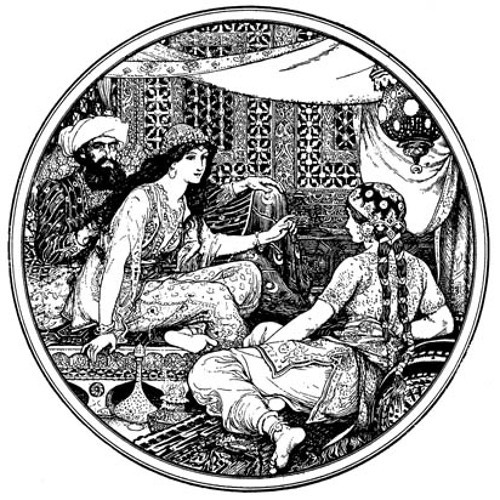
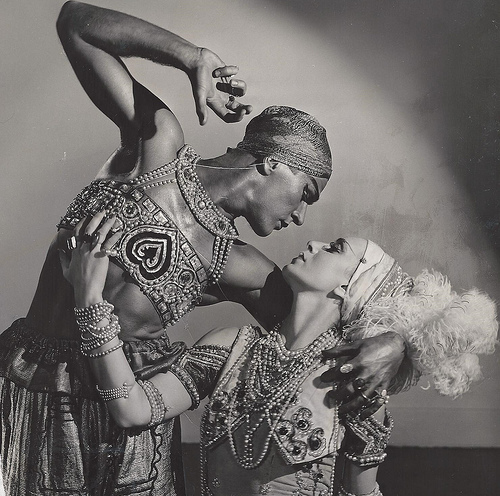
The two main motifs of this book are sailing and Scheherazade, two topics the return to which does not always seem voluntary on Barth's part. At the edges of these essays are the rocky shoals and shallows of the Chesapeake Bay area, scene and setting for the birth not only of storyteller and teacher Barth; he is also a mariner. Scheherazade's model of the frame-tale narrative structure as a way of seeing the mind's way of making sense of a busy day is demonstrated by Barth in a description of the practical necessities of sailing, tasks within tasks within tasks, beginning with a ship's underside needing a new coat: beginning at the bottom, upturned. Given how often sailing and Scheherazade came up I had started to wonder how he would bring the two together; it wasn't nearly as forced as I'd anticipated and came up unexpectedly in an address to a sci-fi conference in Boca Raton.

The book ends with the most curiously obsessive piece in the collection, one in which intricate gestational and menstrual mathematics account for the magical number of 1001 Nights. Rather than summarizing such, I think I'll just leave it at that.
Profile Image for Mala.
158 reviews198 followers
November 21, 2015
"My aspiration was to become a giant truffle, or one of those stones I used to strike with my spade in my salad garden in the Alleghenies: stones that seem like nothing much until you set about to dig them and find that they go to the bottom of the world. Indeed, that they are the bottom of the world.
Bedrock." – From the essay, The Tragic View of Recognition.

Where do I begin! I feel like Ali Baba saying "Open sesame" & getting dazzled by the sparkling array of endless riches in the thieves' cave – there is only so much the eyes-brain can absorb at a time, still, Essential Reading for anyone who wishes to win those contentious Goodreads debates (!) that stretch the review threads into hundreds of comments – Barth Is Your Man. Mug up this book.

The Friday Book
Barth reserved his friday mornings to writing non-fiction in his pleasant red house off Chesapeake Bay. Though most of the pieces assembled here were written over a period of thirty years, the later ones were composed following this calm friday morning rhythm:
"if I could revise it to my preferences, the pieces here collected would all have been written on Friday mornings on Langford Creek; then The Friday Book, itself conceived and executed over a year's Fridays, would be my Friday book indeed." – thus meeting the self-referential, self-reflexive, and self-demonstrative qualities – all the Barthian requirements of a "straight-forward" title!

Say it straight. Get on with it.

Barth's super brain is not so intimidating - his playfulness makes it extremely endearing & we go along wherever his erudition takes us. The fun nature of this collection is evident at the outset when Barth suggests the doing away with subtitiles, intro, epigraphs, & what have you & then himself provides all of these in such compelling writing you wouldn't want to miss a single word!
And now I must get on with it.
Books on Literary theories are usually so dry & academic in nature, ( [ I mean it here in terms of the writer's craft, their influences, their place in the various literary movements/schools]. Exception being Moore's novel books & some folks add the Eagleton books too) that unless it's absolutely essential (as students-teachers), people don't want to pick them up but this collection of essays & occasional lectures makes it look like the sexiest coolest thing ever - writing seen as an act of alternative (better) universe-building & writers as demiurges, Barth explaining Myth and Tragedy in terms of the Hero's journey - the bonus here & in most of the essays is the tying up of explication with details from his own books- The Sot Weed Factor, Giles Goat-Boy, Lost in the Funhouse, & so on.
And we are just warming up!
For a list of neat lists take a look at this!

So we have here the super famous lecture/essay The Literature of Exhaustion which carries many of Barth's seminal literary ideas –"passionate virtuosity" & the need for writers to be technically up-to-date & be bold in terms of both ideas & their execution. Barth holds up Borges & Beckett as aspirational models for creative writers with Nabokov coming a close third.This essay is a must-read for all Borges fans as it focusses heavily on some of his celebrated stories. Moving ahead the essays The Spirit of Place and The Literature of Replenishment, act as complementary pieces to this one.

Barth's fondness for & extensive usage of the frame-tales format is well-known but sometimes our coming across certain books is just as serendipitous as our reading of them — as an undergraduate at the John Hopkins university, Barth paid off part of his tuition fees working as a book-filer in the Classics and Oriental sections of its immense library-he often came across Somadeva's huge ten volumes of The Ocean of Streams of Story/Katha Sarit Sagar, ( which were never requested for), despite his fascination, he was then daunted by the sheer size of it & ended up taking out Burton's The Thousand and One Nights, & the Pent- Hept- and Decamerons & while acknowledging the most complex of all frame-tales structure of Somadeva; his heart really beats for Scheherazade's artistry:
' who (Barth)can wish nothing better than to spin like that vizier's excellent daughter, through what nights remain to him, tales within tales within tales, full-stored with "description and discourse and rare traits and anecdotes and moral instances and reminiscences. . . proverbs and parables, chronicles and pleasantries, quips and jests, stories and. . . dialogues and histories and elegies and other verses. . ." until he and his scribblings are fetched low by the Destroyer of Delights.'

A charming feature of this book is the opening chapter Some Reasons Why I Tell the Stories I Tell the Way I Tell Them Rather Than Some Other Sort of Stories Some Other Way, which gives a sort of overview of the kind of person John Barth is - a small-town boy with realistic dreams, his life, influences, etc — in the light of which, the bravura pieces that follow one after another, help you truly appreciate his literary achievements. Here are the excellent ones that cover all the topics you ever wanted to know but were afraid to ask your moma:

The Literature of Exhaustion
The Literature of Replenshment: Postmodernist Fiction— acts as a corrective & a companion piece to the earlier The Literature of Exhaustion.
How to Make a Universe
The Spirit of Place
The Future of Literature and the Literature of the Future
Algebra and Fire
Historical Fiction, Fictitious History, and Chesapeake Bay Blue Crabs, or, About Aboutness
The Self in Fiction, or, "That ain't no matter. That Is nothing."
Tales Within Tales Within Tales: This one got me all tangled up - need to re-read.
The Prose and Poetry of It All, or, Dippy Verses
Don't Count on It: You've to read it to grasp the crazy level of Barth's obsession with The Thousand and One Nights - really it's something!

In his good-humoured, commonsensical persona, Barth is a lot like Steven Moore -- In his footnote to A Prayer for All, his frank address to his students in the creative writing programme might not endear him to everyone ( as the Gr reviews of this book show), but you got to applaud his forthrightness & the ability of being inspiring at the same time.


Compare Barth's Intelligent Despisal – An Address to the Graduating Class of Western Maryland College, JUNE 1973, to DFW's commencement speech This is Water – & you'll get an idea what Barth is about! Really, it's a must-read & remains as topical as ever.

My copy is the 1997 revised edition which has the added benefits of Barth's postface, introductions & footnotes to the essays, updating, evaluating, agreeing/disagreeing with his earlier positions, etc.

Within its barely three hundred pages, this book is densely saturated with a life-time of rich impressions, deep learning, and precious insights.

I'm usually cagey about the book blurbs; taking them with not just a pinch, rather a bagful of salt but the Washington Post observation just nailed it:

"Whether discussing modernism, postmodernism, semiotics, Homer, Cervantes, Borges, blue crabs or osprey nests, Barth demonstrates an enthusiasm for the life of the mind, a joy in thinking (and in expressing those thoughts) that becomes contagious. . . A reader leaves The Friday Book feeling intellectually fuller, verbally more adept, mentally stimulated, with algebra and fire of his own."

I feel brainy already even if this review doesn't show it :p


Profile Image for Nathan "N.R." Gaddis.
1,342 reviews1,656 followers
Read
August 4, 2016
This is where it all started, almost. Where it started was Further Fridays but only because it fell into my lap first. With Barth the plethora and the cornucopia of postmodern fiction opened like a cliche’d flower opening. Gass and Gaddis just for beginners. So but this time around, the second through The Friday Book for me, was due to an itch ... and a lack of an index to this collection of essays and etc’s. I wanted to locate the location where I first ran across the name Christine Brooke-Rose ; and thumbing through this book for that purpose I saw names and names and names and many a title roll off the page back into my lap and I could not resist revisiting its pages one at a time. Report :: Amalgamemnon is not in here. But lots of other stuff is.

Before we get to the main event, here are a few essays required reading even for the non-Barthian ::

“The Literature of Exhaustion”
The Ocean of Story
“The Future of Literature and the Literature of the Future”
“Blue Crabs, or, About Aboutness”
“The Literature of Replenishment”
“The Self in Fiction, or, ‘That ain’t no matter. That Is Nothing.’”
“Tales Within Tales Within Tales”
“The Prose and Poetry of It All, or, Dippy Verses”

To the Lists.....

from “The Title of This Book”
The Canterbury Tales
The Trial
The Idiot
Moby-Dick
The Anatomy of Melancholy
The Friday Book
The Frogs
The Birds
Don Quixote
Tom Jones
Catch-22
The Adventures of Huckleberry Finn
Steal This Book
The Sun Also Rises
The Winter of Our Discontent
Tender Is the Night
How Green Was My Valley
Winter Blood
Not as a Stranger
The Executioner’s Song
War and Peace
Pride and Prejudice
Sense and Sensibility
The Beautiful and Damned
The Naked and the Dead
The Agony and the Ecstasy
By Love Possessed
Too Late the Phalarope
After Many a Summer Dies the Swan
The Bible
Film
Play
The Greatest Story Ever Told
The Great American Novel
Decameron
Heptameron
Pentameron
The Ocean of Story
Panchatantra
Vetalapanchavimsata
Book of the Dead
Guinness Book of World Records
Kitab Alf Laylah Wah Laylah
Book of the Thousand Nights and a Night
The Marvels and Wonders of the Thousand Nights and a Night
The Stories of the Thousand Nights and a Night
The Book of the Book of the Book of the Thousand Nights and a Night
The Title of This Book
Book-Titles Should Be Straightforward
Iliad

from “How to Make a Universe”
Thomas Mann
Richard Wagner
Robert Frost
François Rabelais
Marcel Proust
Honoré de Balzac
Lewis Carroll
Ezra Pound
Wallace Stevens
St Paul
Sophocles
Socrates
Shakespeare
Plato
Leslie Fiedler
Franz Kafka
Ortega y Gasset
Lucretius
Dostoevsky
Robert Louis Stevenson
Stendhal
Henry Fielding
Jane Austen
Charles Dickens
Gustave Flaubert
James Joyce
Aristotle
Leibnitz
Kenneth Burke
Trollope
Conrad
Don Quixote
Sancho Panza
Oedipus
Goethe
Hamlet
Turgenev
Schopenhauer
Paul Valéry
Sartre
Leonardo da Vinci
Kierkegaard
Faulkner
John Dewey
Horace
Huckleberry Finn
Alan Watts
Suzuki

from “The Ocean of Story”
“The road to India is a long road, but it is the only way to India.”
The Thousand and One Nights
Katha Sarit Sagara, or, The Ocean of Streams of Story
La Vida Es Sueño
The Panchatantra
Pent- Hept- and Decamerons
Lusiad
Eugene Onegin
Jerusalem Delivered
Vetalapanchavimsati
Siddhi-Kur
The Seven Sages
Kalilah and Dimnah
Syntipas the Philosopher
The Fables of Bidpai
Sindibad’s Parables
Dolopathos
Directorium Vitae Humanae
Discorsi degli Animali
Doni’s Novelle
Westward for Smelts
Troilus and Criseyde
Kathapitha
Brihat Katha
Odyssey
Katantra
La Bohème
Iliad
Samavidhana Brahmana

from “The Literature of Replenishment: Postmodernist Fiction”
William Gass
John Hawkes
myself
[the trick for the following, whether they pre- post- or modernist be]
Donald Barthelme
Robert Coover
Stanley Elkin
Thomas Pynchon
Kurt Vonnegut, Jr.
Saul Bellow
Norman Mailer
Samuel Beckett
Jorge Luis Borges
Vladimir Nabokov
Raymond Queneau
Nathalie Sarraute
Michel Butor
Alain Robbe-Grillet
Robert Pinget
Claude Simon
Claude Mauriac
John Fowles
Julio Cortázar
Michelangelo Antonioni
Federico Fellini
Jean-Luc Godard
Alain Resnais
Gabriel Garcia Márquez [exemplary]
Italo Calvino [exemplary]
T. S. Eliot
William Faulkner
André Gide
James Joyce
Franz Kafka
Thomas Mann
Robert Musil
Ezra Pound
Marcel Proust
Gertrude Stein
Miguel de Unamuno
Virginia Woolf
Alfred Jarry
Gustave Flaubert
Charles Baudelaire
Stéphane Mallamé
E. T. A. Hoffmann
Laurence Sterne
Miguel de Cervantes
John Cheever
Wallace Stegner
William Styron
John Updike
Joyce Carol Oates
John Gardner
Jonathan Swift
Alexander Pope
Verdi
Tennyson
Tolstoy
Stravinsky
Eliot
Joyce

Dickens
Twain
Hugo
Dostoevsky
Tolstoy
Homer
Aeschylus
Bertolt Brecht
Evgeny Zamyatin
James Michener
Irving Wallace
Gore Vidal
“Would I had phrases that are not known, utterances that are strange, in new language that has not been used, free from repetition, not an utterance that has grown stale, which men of old have spoken.” -- Khakheperresenb, Egypt 2000BC.

from “The Self in Fiction, or, ‘That ain’t no matter. That Is nothing.’”
Mark Twain
Huck Finn
Kurt Vonnegut
Philip Roth
John Updike
Bernard Malamud
Borges’s Borges
Nabokov’s Van Veen
the rest
Joyce’s Dedalus
Mann’s Kröger and Aschenbach
Proust’s Marcel
Kafka’s Samsa [and our Gregsamsa]
Flaubert
Henry James
Roland Barthes
Mister Charles Dickens
Goethe/Werther
Fielding’s Tom Jones
Smollett’s Roderick Random
Laurence Sterne’s Tristram Shandy
Don Quixote
Alcofribas Nasier’s Gargantua and pantagruel
Dante/Dante
Homer/Demodocus
The “I” of the scribe Khakheperresenb
Madame Bovery, c’est moi.
Monsieur Flaubert, c’est moi.
In other word’s, DFW’s convolutions about self-consciousness came waaay late.

from “Tales Within Tales Within Tales”
in place of a list :: “Derjenige, der den Mann, der den Pfahl, der auf der Brücke, der auf dem Weg, der nach Worms führt, liegt, steht, umgeworfen hat, anzeigt, bekommt eine Belohnung.” -- Todorov

from “The Prose and Poetry of It All, or, Dippy Verses”
first, in recognition of Friend Jeff Bursey reminding me whence comes the definition of The Novel, Randall Jarrell’s quip ;; “a prose narrative fiction of a certain length that has something wrong with it.” Here is what is wrong with that definition ::
Flaubert’s Madame Bovary
Capote’s and Mailer’s ‘nonfiction novels’
Alex Haley’s whatyoucallit novel Roots
Dino Buzzati’s comic-strip novel of the late 1960’s
Marc Saporta’s unbound, unpaginated, randomly package novel-in-a-box
Nikos Kazantzakis’s long verse-novel, The Odyssey: a modern sequel
The latest pornographic photonovel from Hamburg, Paris, or Rome
Marcel Proust’s zillion-word roman fleuve
Robert Coover’s very short new novel Spanking the Maid

And this is a good place to add the following footnote, from Further Fridays ::
[re :: Burton’s Anatomy of Melancholy] Not a novel? Sure it is, in this metabolic mode: a novel in which characteristics take the place of characters. Instead of Musil’s Man Without Qualities, Burton gives us the adventures of a Quality without particular embodiment. But the thing must be read properly, including every one of the Author’s Notes -- many per page, all in Latin, an effect the more piquant if, like me, you have but small Latin -- plus the appended glossary and the whole Nabokovian index, from ABBEYS, subversion of the, to YOUTH, impossible not to love in. Friedrich von Schlegel’s generous conception of der Roman (see the Friday-pieces on Postmodernism, Chaos Theory, and the Romantic Arabesque, farther on in this volume) would readily accommodate Burton’s Anatomy.
On with the Fridays..... And long live that dead and long=dying thing : THE NOVEL! And its godparent, FICTION!!
Profile Image for Jonathan.
1,010 reviews1,240 followers
January 3, 2021
There is something about his voice which is just impossible not to warm to - it is so kindly somehow. These are funny, fascinating, engaging pieces - they will bring new authors to your attention (if NR has not done so already!) and get you excited and enthusiastic about the possiblities of the written word. Lovely stuff, well worth tracking down. Reminds me I need to get round to reading more of this fellow's fiction....
Profile Image for Ian "Marvin" Graye.
952 reviews2,795 followers
January 14, 2016
Defining Postmodernism

John Barth was there the whole time Postmodernism was happening. However, I’m not sure whether he's the best person to attempt a definition of the term.

Sometimes, the best people to document history are not those who participated in the events, but those who came afterwards, and can look at the events from different and multiple perspectives.

Frankly, I expected more of Barth, one of my favourite authors. He is/was both a story-teller and a teacher of story-telling.

However, I wonder now whether it was unfair to expect more of him (i.e., more than expecting him to tell his own stories). Barth is the first to admit that his talent is for the writing rather than the critical analysis of his own or others' work:

"Writing well, reading or discussing well, are separate talents... There is simply no correlation either way between the two (or among the three) competencies."

description

The Postmodernist Program

Ultimately, Barth's real skill is to define precisely what he was trying to do (perpetuating the traditions of story-telling, frame-stories and his adoration of Scheherazade) and, in the absence of an adequate definition of Postmodernism, to describe what he felt other writers should be trying to do.

Thus, he doesn’t really come up with a definition, but a program:

“In my view, the proper program for postmodernism is neither a mere extension of the modernist program..., nor a mere intensification of certain aspects of modernism, nor on the contrary a wholesale subversion or repudiation of either modernism or what I'm calling premodernism: 'traditional' bourgeois realism.

“My ideal postmodernist author neither merely repudiates nor merely imitates either his twentieth-century modernist parents or his nineteenth-century premodernist grandparents...


Barth is really striving for the personal freedom of the author:

"...we may regard ourselves as being not irrevocably cut off from the nineteenth century and its predecessors by the accomplishment of our artistic parents and grandparents in the twentieth, but rather as free to come to new terms with both realism and antirealism, linearity and non-linearity, continuity and discontinuity. If the term "postmodern" describes anything worthwhile, it describes this freedom, successfully exercised."

To this I'd add the view that artistic movements become sterile when they become prescriptive and programmatic.

Passionate Virtuosity

Barth also emphasises certain basic skills. His is not solely an ideological agenda:

“I was on the whole more impressed by the jugglers and acrobats at Baltimore's old Hippodrome, where I used to go every time they changed shows: not artists, perhaps, but genuine virtuosi, doing things that anyone can dream up and discuss but almost no one can do...

“...in other words, [an artist] endowed with uncommon talent, who has moreover developed and disciplined that endowment into virtuosity...


So, what is this virtuosity applied to?

“The subject of literature, says Aristotle, is 'human life, its happiness and its misery.' I agree with Aristotle. That's why we object to the word experimental. It suggests cold exercises in technique, and technique in art, we all know, has the same importance as technique in love: Heartless skill has its appeal; so does heartfelt ineptitude; but what we want is passionate virtuosity.”

description

Algebra and Fire

Barth drew enormous inspiration from Jorge Luis Borges and his distinction between algebra and fire:

"Let Algebra stand for technique, or the technical and formal aspects of a work of literature; let Fire stand for the writer's passions, the things he or she is trying to get eloquently said. The simple burden of my sermon is that good literature, for example, involves and requires both the algebra and the fire; in short, passionate virtuosity. If we talk mainly about the algebra, that is because algebra lends itself to discussion. The fire has to speak for itself."

Technique is not all, nor is a rejection of all previous techniques. The author can pick and choose the strings for their bow:

"At heart I'm an arranger still, whose chiefest literary pleasure is to take a received melody - an old narrative poem, a classical myth, a shopworn literary convention, a shard of my experience, a New York Times Book Review series - and, improvising like a jazzman within its constraints, reorchestrate it to present purpose."

Besides, what Barth objected to most was the prosaic, especially if it was "dull and tedious writing" (a criticism I'd level at many humourless mega-novels). He was trying to entertain his readers. He was determined to enjoy himself in his works as well:

"They're meant to be serious enough to be taken seriously, but they're not long-faced. They're pessimistic, but I hope they're entertaining. In all of them, for better or worse, the process of narration becomes the content of the narrative, to some degree and in various ways; or the form or medium has metaphorical value and dramatical relevance. The medium really is part of the message."

The Death of the Novel

Barth was writing at a time when authors and critics were prophesying the death of the novel.

However, once he had discovered the fiction of Borges, he was much more optimistic about its future. The perceived problems actually illuminated the solutions or the way out. He wanted to explore whether:

"different kinds of artistical felt ultimacies and cul-de-sacs can be employed against themselves to do valid new work: whether disabling contradictions, for example, can be escalated or exacerbated into enabling paradoxes. "

Ultimately, to the extent that we were ever concerned that the novel might be dead, it’s partly because of Barth’s own passionate virtuosity that it is still alive, even if it owes considerably less to his literary criticism.

description

Barth, Fiedler and Gass

Two people inhabit this collection of essays, like ghosts or phantasms: Leslie Fiedler and William H. Gass.*

In retrospect, I probably first learned of Barth’s fiction in 1981, when I read a number of Fiedler’s collections of essays that had been published a decade earlier.

Barth describes him as “my friend and colleague the erudite, unpredictable, iconoclastic, large-spirited troublemaker Leslie Fiedler, from whose outrageous statements I have seldom failed to learn.”

I was familiar with Fiedler’s writing from his contributions to “Partisan Review”. However, he was more of a radical nonconformist than the usual contributors to that magazine. The nearest analogy I can think of, but in a musical context, is that he was literature’s Lester Bangs, only a better thinker and writer.

Fiedler wrote a very positive review of Barth’s “The Sot-weed Factor” (“John Barth: An Eccentric Genius”) that was published in January, 1961.

However, Fiedler was also one of the first literary critics I can recall using the word “Postmodernism” - in his 1970 essay, “Cross the Border – Close the Gap”:

“We are living, have been living for two decades - and have become acutely conscious of the fact since 1955 - through the death throes of Modernism and the birth pangs of Post-Modernism. The kind of literature which had arrogated to itself the name Modern (with the presumption that it represented the ultimate advance in sensibility and form, that beyond it newness was not possible), and whose moment of triumph lasted from a point just before World War I until one just after World War II is dead, i.e., belongs to history not actuality. In the field of the novel, this means that the age of Proust, Mann, and Joyce is over; just as in verse that of T.S. Eliot, Paul Valéry, Montale and Seferis is done with.”

Barth is equally complimentary of “my friend William H. Gass - a professional philosopher as well as a professional storyteller,” notwithstanding that the only fiction Gass had written during the timeframe of this collection (1960 to 1984) and then up to 1995 was one novel, one book of short stories and a novella. Still, they seemed to share at least some intellectual affinity about what the novel should be doing, if not necessarily the role of story-telling, character or plot. No doubt the relationship was cemented when the two of them (with John Hawkes and their wives) did a lecture tour to the University of Tubingen in 1979.

Barth and Gass Bag their Peers

Fiedler was a great promoter of the avant garde, the experimentalist and the non-conformist. However, he was also an astute critic of the novelists who preceded the generation of writers he was promoting.

Thus, his criticism is equally worth reading, whether he was writing about John Barth, John Hawkes, Saul Bellow, Philip Roth, Norman Mailer or John Updike.

Barth and Gass, on the other hand, despite Barth's own openness to traditional or pre-Modernist techniques, were participants in a battle for the attention of publishers and readers (not to mention comfortably tenured academic positions).

No matter what the author embraces or imitates from the past, at times it still seems necessary that they must repudiate the most recent movement before them.

One thing that spoils this collection is the snarkiness of comments about peers like Mailer (whose stylistic innovation Barth is reluctant to acknowledge, while he makes silly subjective comments about the titles of his novels), Updike, Bellow (“programmatically traditional writers like Styron, Updike, and Bellow”), even Roland Barthes (“French hyperbole”).

On the other hand, Barth is ever alert to promote the like-minded when they agree with him, such as Gass and John Hawkes.

Perhaps, though, we need to recognise that, in the generational wars between writers (or among writer-academics), our mythic heroes are human after all. As Barth says of Scheherazade, you're only as good as your next story; night by night, it's publish or perish. In the case of academia and public opinion, at least, you're threatened both by those who came before you and those who would come after you.

Quite apart from this reservation, readers will probably learn more about Postmodernism by reading Barth's fiction in all its liberated glory than his more prescriptive and programmatic non-fiction. In the end, to paraphrase Barth, fiction is something that most authors do better than discuss.

description


POST(MODERN)SCRIPT:

The Capriciousness and Ephemerality of Distinctions

* After writing my original review, I remembered another one of the connections between Barth, Fiedler and Gass:

Harold Augenbraum [currently Executive Director of the National Book Foundation] writes:

"I would love to have been a fly on the wall of the 1973 [National Book Award] Fiction panel discussions.

"The judges seem to have fallen into two camps: what you might call “post-modern” (Fiedler, Gass), and traditional (Connell, Percy, Yardley).

"And so they split the award between John Barth’s Chimera and John Williams’ Augustus, two novels as different in style as they could be, despite the link between the former imagining the inner lives of mythical characters and the latter the inner lives of historical people from the ancient world."
Profile Image for Ben Winch.
Author 4 books420 followers
May 8, 2022
Drole. Luxuriant. Self-indulgent. 4 or 5 substantial essays padded with 1-, 2- and 3-page transcripts of speeches, often repetitive, often regarding topics which Barth admits hold little interest for him, and which he justifies (in 1-, 2- and 3-page even more drole, luxuriant, self-indulgent introductions) on the grounds of his taste for travel to and from the events at which he delivers said speeches, especially when it’s paid for by arts councils and universities. There’s a few insights here, no doubt, and sure, Barth’s good-natured; it’s hard not to like him. But much of this is straight-up self-promotion, spoken in a tone that discourages me from delving further into his several-thousand page oeuvre. He says it himself early on: he became a lecturer so he could write “left-handed” in between shifts at the university. This here, for the most part―necessarily, since for the most part its shape is dictated by his audiences and his patrons (a discussion on the new American novel here, one on the self in postmodernism there)―is strictly left-handed. Clever (in the manner of witty dinner-party conversation) it may be; pertinent, revolutionary or mind-expanding (to this reviewer) it is not. A relic. Strictly for the fans.
Profile Image for Gustavo.
39 reviews5 followers
November 10, 2021
Barth's first collection of essays is a delightful tour-de-force of a journey and a brainy exploration into reading, writing, the nature of storytelling, the Novel (its past history and its future prospects), Literature with-a-capital-L, and many other mental excursions of remarkable insight. He not only makes one want to read more, but at the same time expands one's way of looking at this wonderful tradition, from Homer up to our present day. Chimera has been the only work of his that I have read so far (more to come soon, hopefully), but nevertheless JB stands as one of the best literary essayists (not to say writers) of the late XX Century to say the least, and that is nothing short of an outstanding achievement.

"In art as in lovemaking, heartfelt ineptitude has its appeal and so does heartless skill, but what you want is passionate virtuosity."
Profile Image for Stewart Mitchell.
549 reviews28 followers
September 19, 2024
My favorite thing about Barth’s novels has always been reading his introductions - he has such a relaxed, smirking tone to his nonfiction that is as pleasant as it is insightful - so I’m not surprised to find that his essay collections are among his best work. From early treatises on postmodernism (in a time when “postmodernism” wasn’t a term yet) to commencement speeches, to endless digressions on Scheherazade, he remains as clever and playful as in his fiction, and these pieces also offer a look into the creation of some of his most important novels. I enjoyed nearly every essay in here and this book boosted Barth even further in my esteem, something that I hardly thought possible until now.

Strange to read Barth twice in a year, once while he was still with us and once now that he’s gone. What a giant.
Profile Image for Mike.
862 reviews2 followers
May 17, 2020
A collection of essays and lectures from one of my favorite novelists. The later essays, especially the ones about Scherazade, are excellent. The lectures, usually talks written for symposia, are more ephemeral and less interesting.
Profile Image for E. C. Koch.
407 reviews29 followers
May 21, 2018
If nothing else this is a useful historical document about university life during the tumultuous sixties which saw the formation of the multiversity, continental philosophy redesigning what an English department did, and that thing called postmodernism all told by a guy on the inside. These essays - mostly opening remarks to lectures he gave on the occasion of one or another of the novels he published - are glimpses into how political and intellectual trends were received and discussed within one of the most liberal social institutions. And if that was all that these were then that would be great. But Barth is also offering the reader a look at how he approaches his work and how he contends with academia and what he wanted to accomplish with his novels. This might be easier to read if you A. have read his stuff already and B. liked it, but Barth is so enthusiastic about fiction and the craft and about life generally that this seems to me now to have been a book about passion, which is something anyone should find interesting.
Profile Image for Anthony Crupi.
137 reviews9 followers
December 18, 2016
Fun Friday Book drinking game: Every time Barth bangs on about Scheherazade, take a sip of the beverage of your choice that is off-limits to pregnant women and those operating heavy machinery. Oops—now you're dead! No more books for you.
Profile Image for Simon Stegall.
219 reviews13 followers
March 26, 2021
This book, and specifically its most famous essay "The Literature of Exhaustion" (1967), was the source of one of the weirder experiences of my (thank God, brief) foray into academia. I was writing some essay or other, about some postmodern topic or other, and I stumbled across "The Literature of Exhaustion" in my search for a reasonable, broad-minded approach to the novel post-1960. I quoted it in my essay. My professor, a lovely woman who, nevertheless, was a Sartre-loving Boomer, graded me down specifically for using John Barth to support my argument (which I've forgotten, but I'm sure was brilliant.) She wrote, and I remember this vividly, "Barth's not really used by us anymore. He's not a semiotician."

Now, setting aside her weird use of passive voice and all the exclusionary tribalism it implies, it's perfectly possible that I used the quote badly and my argument sucked. But this wasn't what she critiqued. She simply didn't like my choice of supporting text. Never mind that I happened to agree with what Barth was saying - Barth was not in. This innocuous gate-keeping catastrophically widened the fault lines between me and "the Academy."

You can come at postmodernism (that weird, protean movement which is only named for its having taken place after something else) from a variety of angles: semiotics, psychoanalysis, technology, the stage, the novel, whatever. Barth comes to it from the perspective of a novelist, and I think he has some pretty darn good things to say, and (gasp) without a hint of semiotics! Because, you see, he is concerned with how people, from Scheherazade to Samuel Beckett, tell stories. Perhaps the way we tell stories changed a bit after 1960, but our desire (nay, need!) thereunto did not.

This is all to say that I liked Barth in 2017, and I still like Barth in God-forsaken 2021. His is a narrow purview - what do we post-modernity Americans do with stories and novels? - but it's quite an interesting one. I recommend The Friday Book to anybody who likes post-'60 fiction and doesn't mind listening to a "no-longer-useful" novelist musing with childlike rapture about the 1001 Nights for a few hundred pages.
Profile Image for Eamonn Kelly.
63 reviews2 followers
January 6, 2024
Slow progress through this one, as I started it around March 2023. The concept behind it is that John Barth had every Friday off from his work teaching English Literature at various universities on the US Eastern Seaboard, this day he dedicated to writing critical essays as a way of "working" on his weekday-off. John Barth, alongside Jorge Luis Borges, was one of the earliest and best writers of metafiction, he wrote dense, erudite, demanding works of fiction which were highly theoretical and always extremely funny ("was" because I believe he's retired, he hasn't dropped a new book since 2011 or thereabouts). His criticism works out some of the tangles of the things he explored in his fiction, and is also extremely funny.

The big one here is probably "The Literature of Exhaustion" in which he makes the case for metafiction against realist fiction, which he states is a used-up tradition. Fantastic essay, a must read in my personal opinion.
Profile Image for Domiron.
151 reviews2 followers
August 2, 2025
Some fairly interesting essays here but more enlightening on John Barth himself than anything else. Extremely valuable for this reason. Nobody on his level.
Profile Image for Dan.
1,010 reviews136 followers
July 5, 2022
Some of Barth’s non-fictional essays and addresses, in many of which he discusses his approach to writing fiction. Includes the important essays “The Literature of Exhaustion” and “The Literature of Replenishment.”

Acquired Jun 15, 2001
Midway Books, St. Paul MN
Profile Image for Bill.
94 reviews8 followers
Read
August 3, 2011
Barth's first collection of his non-fiction essays. He has much to say of the literary trends of that day.
Author 32 books106 followers
October 23, 2014
The essays that I'm interested in are really good, but there are several that don't interest me whatsoever. Worth the read, though.
Displaying 1 - 19 of 19 reviews

Can't find what you're looking for?

Get help and learn more about the design.