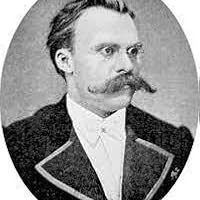
This book delivers on its implied promise, setting forth a straightforward and factually accurate account of the life of the renowned thinker it features. Though its sea of data maintains its calm surface throughout, devoid of any stormy scenes, psychologically delineated islands and inlets, and even outright sensationalistic tidal influxes -- as found in either Rollo May's affectionate portrait Paulus, or in Hannah Tillich's From Time To Time (often as and sometimes even more revealing of her life than that of her famous husband's) -- the record it leaves us with is remarkable and well worth having. It is nothing less than a sort of guidebook on how the increasingly rare life of a philosopher, which seems an endangered if not vanishing species, can actually be lived in modern times in the world as we know it today. For Tillich's whole being, after all, was that of a man totally given from his youth on to ideas and matters of thought. This never wavered once or changed throughout his entire life.
Though Paul Tillich personally lived through the cataclysmic events and earth-shaking cultural upheaval of fin de siècle Europe, as the 19th Century ended and the 20th Century muscled its way mightily, and anything but gradually, into human history -- with his serving as a young chaplain in the German army's trenches during World War I, while engaged in his own fledgling studies and emerging professorial career in the full turbulence and tumult of the 1920s, with the ensuing collapse of the Weimar Republic and Hitler's ominous rise to power -- and the staggering intellectual foment in all of the arts, sciences, literature, and socio-political revolutions of the time -- which Tillich experienced first, last, and always, for the most part, as real events in the arena of ideas. Who else but a person such as this would choose to characterize the vivid front-line horrors of war that he experienced first hand and face-to-face by saying, "Overnight I became an Existentialist."?
What might be called the "novelistic dimension" of Tillich's rich and eventful existence is by no means missing from either Tillich's life or Pauck's treatment of it. It's just that it isn't told straight out, nor could it ever be, in the way a writer would kay it out in a novel. Pauck, a died-in-the-wool intellectual of this kind himself, who also lived by ideas and took great pains to describe them as the full-fledged creatures they are, laid Tillich's life out as an unfolding of the ideas and key notions that made it up. The building blocks, discoveries, abrupt cave-ins, breakthroughs, reversals, sudden vivid illuminations and so on, are all in there still, but dressed up now in the finery of thoughts instead of presented as actions and feelings of characters shown as a passing parade of scenes and situations. Pauk knew Tillich long enough and in the very way required to do this fully as well as accurately, from the beginning of Tillich's life clear up to its end. Would anyone else have been able to do this? I, for one at least, honestly do not see how.
People no longer live this way today -- not within the particular belief-systems and academically seasoned theological and philosophical traditions Tillich and Pauck once did, nor do people any longer inhabit the institutionally religious organizations and occupations of the kind Tillich and Pauck both lived and worked in. Even the discourse they were so accustomed to is by now all but impossible to reconstruct. This is why what the Pauck's have given us counts for so much. Though neither an "entertaining" nor ever an "engrossing" book, it assuredly takes its place as an important one, and one as rare as it is eminently worth reading.
Those who do that, and who keep on to the end, will be rewarded by picking up on those difficult-to-discern strands which, when woven all together, make up the very kind of life Paul Tillich lived.
Authors Wilhelm and Marion Pauck wrote in the Preface to this 1976 book, “Our sense of the need for a contemporary biography of Paul Tillich was first brought to his attention in the autumn of 1960… Despite the fact that he had written three brief but telling autobiographies, he responded with enthusiasm… Tillich was by then at the zenith of his fame, a widely recognized public figure conscious of his image, and he was flattered that friends and colleagues were preparing to paint his portrait… His preoccupation with the ‘posthumous Tillich’ strengthened in him the wish to have his image preserved by those who had, for nearly a lifetime, heard his voice and seen his gesture.” (Pg. v)
They continue, “Tillich’s squirrellike tendency to preserve as much of his writing as possible made work in the archives immediately productive. Yet… many documents had been lost or destroyed… it was necessary to turn to living persons whose eye-witness accounts might supply the missing details. Tillich readily suggested names of persons who he felt should be visited, without restricting us to the list he suggested.” (Pg. vi)
In the first chapter, they note, “For the mature Tillich, death represented the ‘absolutely unknown,’ ‘the darkness in which there is no light at all,’ ‘the real and ultimate object of fear from which all other fears derive their power,’ ‘the anxiety of being eternally forgotten’---death meant parting, separation, isolation, and opposition. Tillich felt uneasy in the presence of the dying, partly because he was fearful of his own death; partly because he could not conceive that he would himself one day no longer be. For Tillich, death was never a friend or an achievement, but a stranger to be unmasked; yet he never thought of it as the ultimate victor… the infant who won his early struggle over death became the man whose statement, ‘Being overcomes nonbeing,’ is the very entrance to his thought.” (Pg. 2)
They point out, “Paul Tillich learned to preach superbly well… The sermons he wrote and delivered during World War I, as well as the chapel talks and Sunday sermons given in America, were the fruit of his natural talent, the influence and example of his father, and his own personal and professional experience. As a young vicar, for example, his contacts with members of the several congregations he served, rich or poor, ignorant or worldly wise, brought him into immediate contact with human problems… Tillich’s disposition was ad remained precarious: doubts often assailed him. Thus he responded with particular relish to the confusions and questions of parishioners and friends. Moreover… he began to realize that many Christians did not understand the language in which he had been taught to communicate the gospel.” (Pg. 33)
They recount his unfortunate first marriage: “By the time of his marriage he was a sought-after bachelor, outwardly proper and respectable but inwardly chafing under the burden of an enormous sensuality and sensitivity… In choosing to marry Grethi, Tillich found only temporary release from his prison. She was unconventional in thought and thus doubly attractive to him; she scoffed at the idea of monogamy, ridiculed his wish to be faithful only to her. During the war she became attracted to his friend Richard Wegener, with whom she had an affair, and to whom she bore two children… Grethi left Tillich in the spring of 1919… Deserted by his wife… and betrayed by his friend, for whom he felt no bitterness either then or later, Tillich arranged for a divorce which would neither ruin Wegener’s career nor saddle Tillich himself with the burden of the child that was not his.” (Pg. 80)
They acknowledge, “he was no Don Juan… Yet his flight from the law… drew him into more than one unconventional relationship… Rejection of the demands of chastity did not free him as he had hoped but thrust him into captivity of a different sort: namely, of chaos… Yet he clung to his new way of life, for he had convinced himself that his work suffered when he was deprived of the experience of the erotic, whether actual or sublimated… Thus he chose the fascination of variety and freedom of expression over against the monotony of the single, monogamous, bourgeois condition.” (Pg. 82-83) They note that Tillich “once confessed to [a friend] that he feared he was a great sinner. When [the friend] asked him why, Tillich replied, ‘Because I love women, drinking, and dancing.’” (Pg. 104)
Of the rise of the Nazis in Germany, they observe, “Tillich detested everything for which the Nazis stood, and his growing anger… was aroused in public a number of times, causing him to explode and frightening his friends and his wife, who felt he was endangering himself. On another occasion… [some bar patrons] asked him, ‘Professor, can you tell us whether there are any Christians in the world any more?’ Tillich shouted in reply, ‘No, not a single one. The only Christians in the world today are Jews!’” (Pg. 125-126) They continue, “The sight of the National Socialist uniform so infuriated Tillich that his friends often held him back to prevent him from becoming embroiled in trouble with brownshirts.” (Pg. 127) Ultimately, “the Nazi minister of culture informed Tillich that he was considered untrustworthy on account of his writings on socialism as well as because of his membership in the Social Democratic party, and would therefore not be permitted to hold an official position in German. This decision which finally deprived him of his professorial post and standing in German, came as a cruel blow rather than a release.” (Pg. 148)
However, at the Union Theological Seminary in America, “[president William Sloane] Coffin volunteered to provide a post for Tillich for one year… Tillich was little known in America. Nevertheless, the board of directors of Union Seminary voted to extend an invitation to him. The Union faculty also met, discussed the matter, and voted that each professor would give 5 percent of his salary toward Tillich’s stipend for the first year---a generous act, since the United States was in the midst of its own depression.” (Pg. 133-134)
They note that once in America and ensconced at Union, “[Reinhold] Niebuhr unfailingly encouraged Tillich in the early years when he was often depressed by his professional situation, and generously joined others in heaping praise upon him when he became well known… the two men shared a warm camaraderie, walking on Riverside Drive, discussing their sharply different points of view. Niebuhr always remained suspicious of Tillich’s use of Greek philosophy and ontology, and he was somewhat amused by his romantic attitude toward nature… Tillich’s fame came upon him at just the time when Niebuhr’s career, which had exploded like a meteor across America, was slowed in 1952 by a crippling stroke; in the ensuing years the two men saw less of each other… Tillich never forgot the debt he owed Niebuhr for his support and encouragement.” (Pg. 178-179)
Finally, “only a few years before his retirement from the seminary, Tillich acquired a wide and enthusiastic public which clamored to hear him. At the same time the ideas that had grown to maturity in German and had remained essentially unaltered… burst into print in an eruption of publications beginning in 1948 and ending in 1963.” (Pg. 219-220) They add, “Tillich’s healing message may be seen very clearly indeed in his sermons, which are the most widely read of this works and are regarded by many as his finest achievement… In pew and pulpit he learned what American students were able to take in, and taught himself painstakingly and laboriously how to preach to them, eventually becoming one of the most popular preachers to occupy the Union pulpit… His message was not couched in abstract language but in meditatively poetic or psychological terms.” (Pg. 227-229)
They point out, “Tillich was especially attracted to Buddhist mysticism, which he directly experienced as similar to Christian mysticism, whereupon he concluded that although the principles of identity and participation were exclusive, ‘the actual life of both Christianity… and Buddhism, especially in its monastic form, could receive elements from each other without losing their basic character.’ Zen Buddhist painting… especially pleased his eye.” (Pg. 260)
This is an excellent biography, which will be “must reading” for anyone seriously studying Tillich. Those wanting other (less hagiographic) treatments might read his friend Rollo May’s book 'Paulus.' or the often savagely critical book of Tillich’s second wife Hannah, 'From Time to Time.'
I'd long been curious to learn more about this monumental philosopher/theologian who had impacted many clergy of previous generations, and I was therefore glad to get a copy of this biography co-authored by one of Tillich's colleagues and one of his students. Factually it was good and I learned a great deal about his life, brief ministry, and vocation as professor and writer. Stylistically however I was disappointed. There were references in the book to Tillich's friendships and relationships with colleagues, friends, and students, and while he was often approachable and friendly there were occasions when he would leave work in New York to have lunch alone, or students who went to his office felt there was a certain distance. That's how I felt in reading this biography: a distance from the subject. Other biographies I've read in my life were much more engaging and could make me feel at moments as if I was right there with the subject. This however made me feel removed from Tillich, as if I was trying to relate to him more and instead found myself apart from the distant subject who was alone at home. I don't know if this is due to an academic style of writing by the Paucks, but it lessened the impact of the biography. Its still worth reading if you'd like to know more about Tillich, especially since I think biographies about him are thin on the ground. But if you're looking for a book that will make you feel more engaged rather than as if you're just reading a dry dissertation, look elsewhere.
Fairly even handed bio, steers clear of Rollo May's starry-eyed adulation and Hannah Tillich's myopic expose. A bit too general at times. I found myself wanting a bit more detail about his war years, for isntance, or about facing down Nazi stormtroopers in his Frankfurt classroom. His ideas are not given much attention, as a planned second volume was to cover those. The author died before that could be realized.