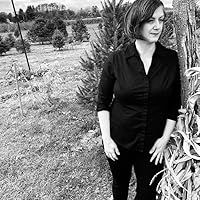
It was my job to look and look and never look away, until I had captured every part of the scene, until I had told the story of those last moments that the dead could not... For years, A.J. Hewitt was the first person into a crime scene. Before the detectives and the forensics team it was her alone with the body, the only sound her flashes firing as they lit up scenes of unimaginable horror. It was her job to shoot the photographs that revealed the circumstances of someone's final moments. Now in her debut book, The Darkroom, Hewitt takes us into the shadowy world of the crime scene photographer, and recounts remarkable tales, from murders to suicides, accidents to assassinations. In the tradition of Unnatural Causes, When the Dogs Don't Bark and All That Remains, this is a true crime book full of the wisdom that can be found in the darkness.
A.J. Hewitt is a former Police Forensic Photographer and Senior Photographic Officer with New Scotland Yard and in her book The Darkroom - Case Files of a Scotland Yard Forensic Photographer, she takes us through her career. For almost a decade, Hewitt was required to photograph the scenes of workplace accidents, accidental deaths, suspicious deaths, suicides and homicides. She frequently photographed and documented the injuries of survivors of assault, attempted murder and domestic violence.
The author explains how she was able to establish a quick rapport with victims in shock, and the gruelling repetitive nature of the work she conducted. I didn't appreciate just how physical the role is, and Hewitt explains how she had to navigate the sometimes remote and challenging terrain, or operate in tiny spaces with her camera gear without compromising the crime scene.
I never really considered the value of aerial shots and Hewitt was required to produce aerial shots from a police helicopter prior to major events or police operations which provided vital information in the planning stages. It sounds like a great job until the author explains how cold it is hanging out of the window at an angle to get the perfect shot. A particular case in the book that stuck with me was the search for human remains at a rubbish tip that took multiple resources and days of hard labour before partial success. The difficulty in photographing the scene from above was made clear, as was the fact that forensic staff strived to provide as much information as they could to aid in the upcoming court case.
Hewitt spends much of the book citing different cases and scenarios, with the names changed of course. One of the well known incidents she attended was the Marchioness disaster in 1989, which I mentioned in my review of Unnatural Causes: The Life and Many Deaths of Britain's Top Forensic Pathologist by Dr Richard Shepherd. Given Hewitt also took photographs during post mortem examinations I couldn't help but wonder if she and Dr Shepherd often worked alongside each other.
Always respectful of the dead, Hewitt rages against femicide and violence against women and girls.
"Male violence against women and girls is now at epidemic proportions worldwide. Women are exhausted." Chapter 6, No Monsters, Only Men
In her career, Hewitt says she only photographed one scene where a woman had killed a man, and noted that none of her colleagues mentioned doing the same, when they would have given the rarity. Later in the book, Hewitt also laments the epidemic of male suicides.
My only quibble was the number of times the author referred to being one of the only females on site, how rare it was to be the only woman on a search team and the fact that some of the uniforms didn't fit because she was a woman. I know I'm being a little harsh here, but I wish her message had been more about why women would be great in this role and encouraging more women to consider this career path instead of continuing to point out how unique she was in her field.
I listened to the audiobook narrated by Emma Spurgin Hussey and the content is quite graphic at times but it won't come as a surprise to those who pick up a book like this wanting to learn more about the role of a forensic photographer.
The Darkroom - Case Files of a Scotland Yard Forensic Photographer by A.J. Hewitt is recommended for readers of true crime and anyone considering a career in police forensic services.
As an ex-Police Civvy from the 1990s, I was lucky enough to become friends with a Scenes of Crime Officer, and I got to ask a lot of questions about forensics etc, so any books that pique my interest in all things crime are always on my radar. When I saw this, I just knew it was going to be an excellent read.
From page one this is an absolutely scintillating read. A. J Hewitt has laid her soul bare in The Darkroom and shared with us her journey from newly employed Polce Photographer to her final days as an experienced photographer, whose job eventually took its toll on her, mentally.
Written in an easy-to-read and unputdownable style, we are taken through crime scenes and how Police Photographers, in the days of non-digital photography, used their skills to light up forensic scenes and take the all-important photographs that the Detectives would use to help catch the perpetrator.
It wasn’t too technical, and I loved learning how these underrated and immensely skilled forensics officers worked their magic to find evidence and record it in the best way possible. The lengths at which A.J. Hewitt went to in some of the crime scenes were amazing. It isn’t for the faint-hearted as there are descriptions which may upset some readers, but it is written with such care and obvious respect for the victims that it does not glorify the nastiness of certain crime scenes at all.
It is no wonder that taking such photographs and being immersed in that world takes its toll on the Police Staff mentally, and A.J. Hewitt was deeply affected by certain scenes she encountered, to be honest, unless you are a robot, most people would be. I’m still affected by some events as a Station Officer 30 years ago, and like A.J Hewitt there was no counselling or care about the after-effects for me either. In those days you just moved on to the next job, without your superiors worrying about its effect on you. Thankfully I’d like to think that those times for Police Staff have improved nowadays.
I cannot praise the author enough for The Darkroom, it is a fabulous book that lifts the lid on the important work that police Photographers did before the digital age. Written with such care and compassion, it will move you and pique your interest in forensics at the same time.
Somewhat repetitious - I went here, I saw this, I took photographs, then I went there, I saw that, I took photographs - many sad scenes, limited information about outcomes (understandable). Her thoughts on humanity, our actions and reactions were of great interest given where she was coming from. A writing exercise no doubt cathartic for the author.
A.J. Hewitt, an Arts graduate with experience in commercial photography, was 24 years old when she secured a position with the New Scotland Yard’s Specialist Operations Photographic Branch as a forensic photographer. The Darkroom is a fascinating account of her near decade long civilian career in the Metropolitan Police Service, shining a light on the vital role photography plays in crime scene investigation and the judicial process.
“Crime scene photography is not just a visual experience. It’s an immersive experience. It’s visceral and emotional.”
The aftermath of murders, suicides, accidental and suspicious deaths, fatal car accidents, and a range of serious crimes such as assault and rape, all fall within the remit of a forensic crime scene photographer. In The Darkroom, Hewitt shares her experience of a selection of scenes involving a variety of methods, weapons, and circumstances, she attended during her career. These cases aren’t especially unusual, aside from two well known mass casualty events - the Marchioness disaster on the River Thames in 1989 and the Bishopsgate bombing by the IRA in 1993, but each is interesting in that it illustrates the scope and demands of Hewitt’s work. The narrative can actually be quite graphic at times but the vivid description of sights, sounds, and smells communicate the story of each trauma, and emphasise their emotional impact.
“I will carry the faces of the dead. The smiling, hopeful faces I saw in the newspapers after their murders, and the faces I photographed at their murder scenes – battered and bloodstained.”
Hewitt reveals that crime scene photography is high pressure, emotionally and physically taxing work that carries a lot of responsibility. A crime scene photographer can expect to work long hours, most often alone, with the photographic record of a scene taking anywhere from hours to days to complete. They may have to contend with numerous challenges such as lighting, accessibility, weather, physical hazards, crowds, distraught victims, and unruly perpetrators, to name but a few, all while working carefully to not disturb or overlook any obvious, or potential, evidence, and ensuring each photograph meets evidentiary standards. Hewitt shares how this stress, along with being confronted daily by humanity’s dark side, and as one of a handful of women in the field where sexist attitudes are rife, affected her. She occasionally expresses her frustration at the justice system regarding a case outcome, and rightly points out the failure of MPS to provide psychological support, both during and post employment.
The Darkroom reveals the role of a forensic photographer requires fortitude, discipline, immense skill, and flexibility. Crime scene photography is not the only assignment a forensic photographer will undertake in the MPS. They may also be required to take photographs of living people and their injuries, capture the process of an autopsy, participate in surveillance operations, photograph high-risk locations for the purposes of security, and take pictures during special or public relation events. Hewitt regularly flew with the police helicopter unit to take aerial shots of scenes. Forensic photographers will also be needed to testify in court.
“Dead people, they are with me day and night. They have been with me for decades. They come to me in a silent procession. They have passed through my life many times. I have passed through their deaths but once. It is a unique bond ; one most will never grasp. A rich and inviolable legacy.”
Related with candour, sentiment, and compassion, The Darkroom is an absorbing memoir that provides compelling personal insight into a unique profession. I highly recommend this for readers interested in the true crime genre, or policing and law in general.
I'm a touch ashamed to admit it now, but I've never really given much consideration to the role of the Crime Scene Photographer when it comes to a police investigation. I knew they existed. I've had an idea for a book in my head for the longest time, and one of the key characters played exactly that role, but, until now, I didn't really think about how crucial that particular person was. As the author herself says, if you see the person on the TV or in movies, they snap a couple of shots and then leave in favour of the glamourous (often not properly attired - do not get me started on CSI or CSI Miami - who goes to a blood bath in white wide leg trousers and heels for heaven's sake?) Detectives or Crime Scene technicians who are busy dusting every surface for prints.
But in truth, as becomes very evident in reading The Darkroom, that process doesn't happen for some time and the work of the Forensic Photographer is crucial, painstaking and sometimes exceedingly lengthy work that must be completed before evidence can be collected and a scene - criminal or otherwise - can be invaded by the rest of the team. This was just one of the many things which struck me as I read this book, of how fiction differs so vastly from really, that and the many, sometimes surprising ways in which the Photographer may plan a part in crime fighting.
The book covers much of the author's career, including an introduction as to how she came to the post of Forensic Photography in the first place. With a long love of photography, A.J. Hewitt was someone who sought more from life than simply taking fashion photos and, recognising her unsuitability - personality and physicality wise - for the role of paparazzi, took and entirely different path, answering the call for photographers to join Scotland Yard's Specialist Operations (SO3) Photographic Branch. Even learning about the history of this team, and some of the skin crawling initiation and training regimes she had to face was fascinating, a bit of an eye opener. Everything she described kind of made sense, but it's the kind of thing that general Joe Public just take for granted and don't really give much thought to how it might have come about or happened.
Now this is not a book for the faint hearted, and I can see why the author found the process of writing about her experiences cathartic. I cannot, for one moment, imagine what it was actually like being faced with the cases and crime scenes that she saw on a daily basis. She was the person who had to bear witness to every victim, every scene, even every post mortem, and in close and all too often, gory detail. There is a reason why the new recruits are treated to what is not incorrectly described 'gory box'. Each job came with its own set of sights, sounds and smells which much stay with you for a very long time. Some of what was described made my stomach churn and I like to think I'm fairly hardy. But that's just words, not actual pictures or being physically present in the worst moments of the victims often all too short lives. Thinking about how the author had to maintain a distance whilst seeing such harrowing scenes - well it's little wonder that people working in the emergency services often struggle to process what they have experienced and turn to drink and drugs as a coping mechanism. If nothing else the book has renewed my respect for the people who do these often thankless tasks.
The scale and scope of the cases that are recounted in the book vary so greatly, and it is a little odd to think that the very person who so happily shares competitions and book news on Twitter, is the very same person who was the first Forensic Photographer on the scene at the Marchioness disaster. That she had to bear witness to the aftermath of the BIshopsgate bombing, or various murders, suicides and accidental deaths that are detailed in the book. She does not go into great detail about the investigation - that was not her part in the case - but I found myself experiencing a kind of visceral response on occasion to what was being described. It is necessarily graphic at times but not in an exploitative way. There is lamentation when a case results in what is considered to be too lenient a sentence, or even no conviction at all. And there is a palpable sense of loss and compassion expressed for each and every victim, no matter who they are.
There are moments of levity which breaks up the sadness that we are understandably exposed to, but it is still a hard book to read at times. But that is the point. This book combines a real passion for the authors work, with a understanding of the failings of the system, both in the ability to secure a conviction for what seems the most clear cut of cases, and in the failure of the management to recognise the impact of such unrelenting sadness on the people who are paid to head straight to its heart. It exposes the darker side of human nature, and captures the heartbreak that impacts the victim's family and friends. There are so many details that the author talks about, things that really made me think about the full extent of what that role encompasses, that the book is perhaps as surprising as it is shocking.
If you are at all interested in the vital world of forensics then I would definitely recommend this book. It is shocking, often emotional, and completely unforgettable. Just ... maybe don't read it around meal times unless you are of a particularly strong constitution. There are some scenes which are memorable for all the wrong reasons. But don't let that put you off. You'll be missing out if you do.
I am hugely interested in anything to do with forensics, and have read various true accounts by ex officers in the job. This is the first time, as far as I'm aware, of a photographer detailing their experiences. What an eye opening, at times heart wrenching view it is. The forensic photographer is one of the first people allowed on scene and sees everything in all its horrific realness. Not just murder, but assaults, rape, suicides. It was fascinating to learn how much hard work went into making sure a scene was fully and accurately photographed for use later, in court or as a cold case review. AJ Hewitt, one of only 6 female photographers out of 89, details her experiences of misogyny, having to be the best to even compete with the men who thought she didn't deserve to be there. Something that really hit home was some of the passages about how dangerous it is to be a woman, even now. How other men need to do better in calling out sexist dangerous behaviour if they see it. AJ doesn't say that men, and boys, aren't at risk, but that on the while, being a woman is still a very scary proposition. There were light hearted moments, nearly making a helicopter pilot vomit, and meeting Princess Diana and her boys. Another aspect that was clear throughout was the huge psychological impact seeing the worst of humanity, on a daily basis, had on the author. She is speaking, at points, to her therapist. The police, never checked that those doing the job, were OK. This breaks my heart and seems a worrying statement for those still going. Overall it was a spectacular read. I couldn't put it down. It was fascinating, raw, and honest.
I enjoyed reading this account of forensic photography, The Darkroom: Case Files of a Scotland Yard Forensic Photographer. A.J. Hewitt’s book has so much more than I expected. I had expected a book of technical details of photography. I was also expecting gruesome photographs but didn’t miss them. The raw, first-person account allowed me to imagine with sometimes harrowing clarity the scenes that she experienced. Hewitt also recounts the unforgivable misogyny she experienced working with some of her male colleagues. The book is well-written and held my interest as Hewitt recounts numerous photographic assignments throughout her career. As someone with an interest in forensics, I now have a much better and deeper appreciation of the expertise and dedication of forensic photographers.
A detailed look into the working life of a specialist police photographer, AJ Hewitt shares every intricate and intimate moment of a few of the hundreds of crimes scenes she attended during her career as one of the very few female officers working for the Met at that time.
She painstakingly walks us through each crime scene as she walked through it, usually alone, and spares no feelings when describing them in chilling detail. She describes the feelings and emotions of everyone involved with care and consideration and you can feel the love she had for her work coming through every page.
This is a no holds barred memoir and AJ pulls no punches when describing the rampant sexism and misogyny of the Metropolitan Police and the hardships that some people are forced to live every day which sadly end in crime scenes; from abused spouses and children to drug raids and prostitution, no topic is taboo and I, for one, am glad about that.
This book is definitely not for the faint hearted but the obvious care and respect the author has for the victims and the glimpses of humanity she offers us by taking us into places no civilian has, nor would want to go, makes this book a must read.
This intriguing book delves into a world of crime scene photography with one the world's most well known forces, Scotland Yard. It feels like a genre blend of memoir and true crime which I found fascinating. Part forensic cases, part reflection on the nature of crime and misogyny, part grappling with the horrors and learning to love the world again, this book has such a broad range that kept me emotionally engaged.
Some favorite lines are: "Through my photographs, I was there to speak for the dead." "This was my London. Through my lens. Who could forget? Not me." "The black and yellow handled screwdriver that stuck out of the victim's forehead caught my attention first." I laughed at that one. Hewitt walks a fine line between her reverential respect for the victims and a dark sense of humor, deftly managing the tension. While I often wondered what happened in a case, like the author we do not always know; sometimes there is no resolution. And that sets this book apart with its raw honesty about the work and the belief one needs to have to carry on, a belief that justice (mostly) will prevail.
This is an honest and heart wrenching account of the life and career of a forensic photographer working out of New Scotland Yard for the London Met Police. As the story unfolds, the author takes the reader through firstly how she ended up working in such an important role, and the stories of the people and scenes she has photographed throughout her career. I enjoy reading true life accounts from people who have these difficult jobs, and it’s fascinating to hear first hand from those who have been on the front line. She explains how she dealt with her work, and the effects it had on her personally. At some points in the book it was very hard and emotional to read. I have no idea how she managed to get the job done with utter most respect for the people who had passed, treating them with dignity and compassion. Amazing woman, I am in awe!
Thank you so much for sharing your story, and giving us a true and clear insight in to the workings of the role, and how it affects everyone close to the cases. I really enjoyed reading this book, it was insightful and a great read!
What an incredible read! This book blew my mind. How fascinating it was to read AJ's story of her life as a forensic photographer. The sights she must have seen in her career are just remarkable!
This was an extremely interesting read, really opened my eyes and allowed us to see it from the other side of the lens. Notably, everything we see on TV is not as it actually is in the real world and to have someone tell their story in extreme detail was just absolutely fascinating. I love biographies anyway, but police/crime biographies are my favourite.
This has got to be one of the best books I've read about police procedures, I thoroughly enjoyed this and I also enjoyed how personal it was as well, with snippets documenting AJ's therapy sessions. Nobody ever thinks about these jobs which make people need therapy but you can just imagine the horrors these workers see day in day out, well you don't need to imagine because there are a lot of stories in this book and they are all incredibly fascinating and extremely eye opening.
This was a fascinating and challenging read. You get a frank account of the aftermath of the worst any individual can inflict on on another, but you are also offered a connection with the human experience of the unpredictable intrusiveness of remembered horror that walks with you forever afterwards… AJ writes with respect to all she witnessed and painful honesty of how is has shaped her life since. This is a book that describes events that will keep coming back to you and perhaps remind you of how precious life is. It is an account that we need in a society that often forgets the contribution of people who work on the frontline to serve justice.
The author recalls cases from the 1990s, and takes you into the world where women were not a common fixture in crime-scene photography. AJ describes the practical difficulties this presented as well and some of the attitudes common at the time. I read this quickly and immediately wanted to tell others about it.
A deep and disturbing insight into a world that few get close to. All we see are odd snippets in the press. AJ takes us deep into a world that most of us wouldn't feel comfortable in, and I suspect would find so emotionally and visually challenging that we, like AJ, would find it hard to cope. The book begins with a level of optimism, and AJ's writing style in these early pages is filled with metaphors and a lightness that precipitates page-turning delight. AJ's writing style subtly shifts to accommodate the case studies presented in themes throughout the chapters. It is interspersed with AJ's time in therapy, which sets the scene for her eventual departure from this very challenging career. Throughout, one is aware of her total respect for the deceased and abused people that have been photographed, but also the appalling lack of justice that follows perpetrators of the murders with such short sentences. There are also some very touching moments!
From being one of the first to a crime scene or unexplained death, the crime scene photographer would sometimes be on the scene for hours or days. AJ Hewitt’s account of her almost 10 years as a crime scene photographer for the Met police is both compelling and heart breaking. Her descriptions of what a photographer did in the years before digital technology is graphic and sometimes gruesome, but it’s thanks to people like her that cases were solved. As someone who studied Forensic Science this took me back to what unexplained deaths could look like. AJ’s attention to detail in all her cases were second to none and this book takes the reader through some that you would never hope to come across. A great book for anyone interested in Crime Scenes and murder.
I watch just about every crime drama available, and my main genre choice for reading is - guess what?- yet until reading this book, I'd seen/thought little of crime scene photographers. Autopsies and pathologists, expert witnesses of all kinds, lab work, etc etc. But photography? Next to nothing. What a huge gap!!! This book is so very well written, and far from being just a clinical description of (what is ) an amazing profession, the human impacts are beautifully documented. Do not consider your knowledge of crimes/crime scenes complete until you have read this book. And when you do read it, marvel that anyone has the stamina, capacity and soul to do this job. Recommended.
The author's compassion, warmth, and professionalism shine through in this memoir, which recalls her years working with Scotland Yard as a forensic photographer. She describes scenes in the aftermath of homicides, suicides and accidents, which few of us could imagine witnessing, let alone photographing day after day. A compelling read, The Darkroom throws a light on a job rarely acknowledged, despite its key role in the justice system, and one woman's resilience in such a challenging post.
I don't normally, in fact ever, leave reviews let alone recommend a book to anyone - like music - choice, preference, enjoyment is personal and so it should be as the world would be a sad(der) place if we all liked the same thing. Also I really don't want anyone coming back to me with "you recommended [........], it was shit"
I'm breaking my rule.
The Darkroom can be afforded many adjectives, too many. I'm going for POWERFUL.
If you read one book to 'wobble your mind' this year here it is and make your own decision ( just make sure you are not eating).
This is an extraordinarily book by an extraordinary woman. It brings home how grim the work of photographing crime scenes, from child abuse to bombings and stabbings, can be. Yet the humanity of the author shines through. Silent Witness it certainly isn’t and crime writers would do well to read this. A key message is that men treat women dreadfully and get away with it- a disgrace which still persists, thirty odd years from the time of the cases described in this book
Great! The writing quality wasn’t amazing, but not bad either. Just very now and then I’d notice something. The topic was fascinating! And super gross. Out of all the forensics things I’ve read, this is the one that has finally confirmed what I’ve feared: a career in forensics is NOT for me! I will be sticking to books, thank you! The author did a great job of telling stories and also being realistic about working for a police force. She also seemed very compassionate for the victims.
I often wonder what goes through the minds of police photographers and reading this book has given be a great understanding of what they go through every time they go to a devastating scene (or sometimes hilarious). Fantastic book.
Absolutely fascinating. I'm very interested in forensic science and the techniques behind it - yet I wasn't all too aware of the work that goes into forensic photography. A very accessible, interesting and thought provoking book about a very crucial career.
Read this hoping for a busman’s holiday type perspective but it never really lived up to that. Too much focus on the author’s introspection and it ended up being clichéd. I’d imagine that anyone that has never worked in emergency services would probably love this for all the above.
An excellent book which I highly recommend. What a career but as with any police career seem to be under appreciated and un- supported. Hard to image how they retain their employees with so little care and appreciation.