Melbourne's city life told in diary form, this contemporary and personal portrait depicts major events from the Australian heat wave, which culminated in more than 400 bushfires, to the destructive deluge of a hailstorm. While walking through Melbourne's oldest suburb to its largest market, experiencing an Australian Rules Football game, and attending the comedy festival, writer Sophie Cunningham journeys deep into her own recollections of the city she grew up in, and tells stories from its history. She strolls by Melbourne's rivers and creeks and considers the history of the wetlands and river that sit at Melbourne's heart, for it is water, the corralling of it, the excess of it, the squandering of it, the lack of it that defines Melbourne's history, its present, and its future.
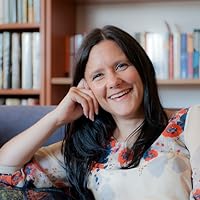
Sophie Cunningham is the author of six books including City of Trees: Essays on Life, Death and the Need for a Forest (Text, 2020). She is also the editor of the collection Fire, Flood, Plague: Australian writers respond to 2020 (Vintage, 2020).
To begin with, I want to say what a beautiful object the book Melbourne is. When people go on about the texture, weight, feel and smell of real books in the e-book debate, this is the book they mean. Melbourne, written by Sophie Cunningham and published by New South Books, is exquisite. A small, solid hardback, its elegant dustcover sheaths a simple cream cover embossed in gold. It looks like a book made for princes. The inside cover is an old-style map of Melbourne with icons highlighting features of the city. The pages are thick, rough-edged paper which provide a real tactile joy.
An object as lovely as this book ought to have magic in its pages, and it does. Sophie Cunningham’s tale is part memoir, part ode to the city. I began by thinking the story was like some densely woven cloth, linking the past and present, connecting people and events across the city and time, but cloth is flat, and this story is deep and rich. So the Melbourne of these pages is more like close-growing plants whose roots go deep and intertwine, and whose branches and leaves mingle equally above.
It’s all a pretty poetic approach, but what the hell—the book has a beauty and poetry that go beyond saying “this is a neat and evocative book about Melbourne and its history”. Cunningham’s personal history is revealed along with the city’s own story, and her emotional response to the places and people therein give the book real life and depth. Some of her experiences tally with or even cross over with mine, adding an extra tang of resonance.
Her story is full of extracts from essays, novels, emails and articles. The seasonal chapters flow from topic to topic, so that you may start with fruit bats in the gardens and end up at a book exhibition by way of Barry Humphries, football, TISM, indigenous history, Australian TV of the 1960s and the Victoria Markets. And every step leads logicially from start to finish. Along the way she talks about things I knew only in passing or not at all, adding to my own stash of knowledge about my adopted hometown.
New South has produced a number of books that give personal accounts of Australian cities, including the award-nominated Sydney by Delia Falconer. Cunningham’s Melbourne will surely be on upcoming lists. It sings a song of home to those of us who love this place, and perhaps may even explain that love to people who come from anywhere else.
Having been a resident of Melbourne for the last 7 years, and born and bred in Victoria, I was excited to read this book. I was in the end, however, disappointed.
Although I considered the book to be, in many ways, very "Melbourne", I did feel that the portrait provided was rather incomplete. I am not quite sure whether this was because of the way the book was written, or because the author's view and experiences of the city seemed so far removed from my own. Indeed, the occasional "soap-box" passages did nothing to improve my relationship with the book.
The book did make me think about the different attitudes people towards their idea of "home".
An ok read, one that would probably be experienced by other Melburnians in very different ways, but for me, well, nothing to write home about.
I was mentally in quite an agonised state. It was the early 70’s and for the first time I was venturing off my island to visit a place, to that point, I’d only seen on television, read about and listened to from afar on the radio. I was a late developer in terms of travel – everyone else I knew had made their rite of passage to destinations across the Strait, and beyond, to broaden their horizons, some never to return to my island. For various reasons, till my mid-twenties, I had remained adhered to Tasmania. But now, here I was, just after takeoff, staring out of the aeroplane – a stuttering old prop-driven Fokker – with ever widening eyes and increasing dread. Perched over the left wing, to my consternation something I assumed would be completely static and melded to the fuselage, appeared to be gyrating around of its own volition, seemingly, to me, completely out of unison with the movement of the rest of the airborne vehicle. The wing was obviously loose! At this rate it would soon fall off! Is there an emergency button I should press? Should I bring it to the attention of one of the seemingly unperturbed hostesses so she could inform the pilot that he would have to make a sudden descent to safety, presumably on King Island? Or maybe that is what a wing is supposed to do. It didn’t seem logical to me, but then again, the thought went through my fevered mind that I was notoriously lousy at physics – so I decided to remain stum and closed my eyes to it all, hoping this nightmare of impending disaster would go away. Gradually, as the journey continued, I opened my eyes and realised that nobody else seemed to be in the lather I was, so I started to relax. After an hour or so of bumping up and down on the air currents, my hand, vice-like, gripping an arm rest, I landed at Tullamarine to commence my first ‘overseas’ adventure. I cannot say at any point I enjoyed that bumpity flight, or any of the flying I have done since. But I realised it was a means to an end I could endure, and the city of Melbourne soon became a frequent terminal destination.
Apart form the episode with the apparently fault-free wing, I remember zilch of that first visit to Australia’s early capital city, but I was obviously hooked. The city has a hold on me. Living as we did on the coastline of my island with closest proximity to that metropolis, we, on the North West Coast, were far more fixated on Melbourne than we were Hobart-centric in those days of yore. The first television we watched, from 1957 through till 1962, when a station began operating out of Launceston, came in flickers from Melbourne over Bass Strait. In winter it was virtually impossible to pick up, but summer produced a more reliable signal. We were affixed to Happy Hammond’s ‘The Happy Show’; the drama of the courtroom in ‘Consider Your Verdict’; ‘In Melbourne Tonight’, featuring Australian television’s first superstar, Graham Kennedy; variety show ‘Sunnyside Up’, hosted by race-caller Bill Collins; and an early music show for teenagers, ‘The Go Show’. All these programmes were Melbourne productions, indelibly imprinted on my juvenile mind. The Greater 3UZ was my radio station of choice, again emanating out of that city on the Yarra; the deep voiced Stan ‘the Man’ Rolfe my favourite DJ. Our island’s best footy talent left the island to try their luck in the Melbourne based VFL, and we could read of their exploits in the Melbourne ‘Sun’, delivered to the Coast daily.
There is much I love about Melbourne. Early on I was besotted by the hugeness of its CBD, the ‘skyscrapers’ and shopping joys of Myer, David Jones and later, Daimaru. As I became worldlier, it was the alleyways and galleries that appealed to me more, together with the aerial ballet going on at the MCG and, in more recent times, Etihad. I started to fan out, discovering the delights of Carlton, Collingwood, Fitzroy, Richmond, South Melbourne and bayside St Kilda. The trams were a constant, providing a means of transport I prefer to any other, trains included. In the noughties I took to travelling across to the various Winter Masterpieces, and I have fallen in love with many watering holes dotted around the place. The multiculturalism of the inner suburbs is a great asset, and these days just poking around Melbourne’s nooks and crannies, with my camera at ready, is the best of pleasures.
As a place to live, I couldn’t imagine leaving my idyll by the river on the rurban fringe of Hobart. To start with, Sophie Cunningham doesn’t make Melbourne that attractive an alternative either, with her tales of that city’s criminal history. She has spent the best part of her life there, is a writer of quality as her splendid ‘Geography’ attests, and so is eminently placed to give a personalised view of her home town on Port Phillip Bay. She resides with her partner, Virginia, only a short distance away from the inner suburb of her upbringing. Our Sophie is Melbourne through and through. Her take at first seemed to me to be somewhat too personal in that we were learning more about her than the city. But as we passed through her seasonal reflections and expanded out from her local haunts, the personal intensity loosened and we started to gain a vibrant picture of this constantly expanding, constantly changing, multicultural, cultured, bookish, coffee stimulated, tribal and street-artified urban sprawl.
The book is not entirely hagiographic. The warts are there too as the aforementioned criminal ‘underbelly’ is prominent, and of course there is the weather. No treatise on this city would be complete without reference to its worship of our nation’s two greatest sporting events – the Boxing Day Test and the footy Grand Final. Forgetting horses going around in circles, it is the gladiatorial AFL that most captures her pen. Sadly Sophie is a Geelong supporter, and her dismissal of the magnificent Hawks’ 2008 victory of the underdog against her team, in just one sentence, is the only real travesty in the tome. Her team has been in its pomp over the last few years so she should be one happy feline.
As is proper, Cunningham takes great effort on linking it all back to the pre-Bearbrass days of the First Australians, before the 1835 treaty and all that. Her use of contemporary literary extracts enhances her salient points, and some of the great yarns of the city. These included Barak’s walk, the ‘Angry Penguins’, the Builders Labourers Federation’s green bans that saved some of the city’s heritage, and the story of travel publishers Lonely Planet. These are a few of many related that come to mind.
Cunningham’s book is ultimately more homage than otherwise, and hit the spot for this reader. I have two trips there already planned for 2013 – I can’t get enough. My latest sojourn flitting across the water was last spring. I was only staying a few days so, travelling light, I had only one set of clothes. I should have known better. On the first day I shivered as icy rain bearing gales came in from the south, on the last I sweltered as the north wind became a harbinger of the summer to come. The city’s climate is noted for its fickleness and, to me, the cool months suit it best. Sydney is imbued with a summery sheen to match its razzle dazzle as the face of the nation, but for all that Melbourne is Australia’s soul. Two immeasurably wonderful songs always seem to me the essence of Melbourne – Paul Kelly’s ‘Leaps and Bounds’ and Archie Roach’s ‘Charcoal Lane’. Sydney songs are froth and bubble, Melbourne’s have place.
What would any Melbournite wish to write (or read) about Melbourne? What would the reading experience be if you were not from Melbourne? Sophie Cunningham's book is one of a series about different Australian capital cities - Delia Falconer wrote a similar book about Sydney, for example.
It is a beautiful book to handle - a small hardback with rough-cut old style creamy pages and a silky finish to the cover shot of a murky Melbourne laneway. And this book is SO laneway.I felt like I was in a very small club (of people) reading in a very small and hidden Melbourne bar. You will know if you are in the club if you open the book. Its about (and for?) people who live on the map which is printed on the inside cover. Like me - middle class, university educated, inner-city bleeding heart liberal (lower case).
So it was a book of confirmation, rather than surprises. I liked it but found it faintly irritating for that reason. There was nothing new in it for me. So that's why I'm wondering who the predicted audience is for this book. I read a lot of Kristin Otto's book 'Capital' last year and found it a whole lot more interesting - it is a different beast of course as it's about time when Melbourne was the capital of Australia.
If you want to see if you're in the club or not - make a list of the five writers most likely to be referenced in a book about Melbourne, about the top five topics that would be covered (the 'action' of the book takes place over a year in 2009), of ten iconic leisure activities....
I'll start you off - Garner, Tsiolkas, Flanagan, Brunettis, Crystal Ballroom, Skyhooks, MIFF, the G, Paul Kelly - need I go on? (Apropos of nothing I had a taxi driver yesterday who needed directions to the MCG. He shyly confided at the end of the trip that it was his first day. "Yeah, I gathered that mate," I said).
I like Sophie Cunningham's writing - I enjoyed 'Geography' when it came out. I like the club I'm in - but probably don't need to read about it.
This is the third I've read of this series about Australian cities and the one I liked the least. I grew up in Melbourne but it was a very different Melbourne to the inner city Melbourne that Sophie Cunningham describes. Her views are partial and rather self-indulgent, I thought. At times I wondered who she thought her readers were - perhaps the inner circle of people who knew the many names in the literary and artistic worlds she inhabits.
I did like the concept behind the book - it's always difficult to find a structure to suit a book about a city. Cunningham takes each season (and Melbourne definitely has seasons!) and uses them to move backwards and forwards in time to flesh out a sense of place, history and identity. But in the end her use choice of detail obscured any main themes she might have been aiming for. Overall, disappointing.
During a recent 2-month sojourn in Melbourne, I saw this book everywhere - in the Readings in Hawthorn (which has a cameo appearance in the book), in bookshops in the CBD, outer eastern suburbs, Camberwell, down the Mornington Peninsula. On the penultimate day of my stay, reluctant to be leaving, I finally purchased a copy (at Hill of Content on Bourke St, for the record). I wanted to take a piece of Melbourne back to Vancouver with me, and this seemed to be the most appropriate artifact. The friendly bookseller warned me that although he had loved it, there was much in it that would not make sense to an outsider: he cited minutiae about the city's publishing industry as one example.
His review was spot-on. I loved many passages in this book, passages that I could relate to: an explanation of Melbourne's obsession with the AFL (thank you, finally I get it - and I'm also astonished and envious that sports and culture are so entwined in Melbourne...in Vancouver, instead, we have hooligans rioting over hockey games); a journey into the sewer tunnels underneath Hawthorn streets along which I'd walked many times, completely oblivious to what lay beneath; the exasperated and vivid descriptions of various weather conditions; and many more.
But I stalled on those passages that can only be relevant to those who have lived in the city for some time (or who are at least Australian and so familiar with many of the cultural references that went over this foreigner's head.) There was a lot of name-dropping that meant little to me. In this I found the book to be oddly schizophrenic: it seemed to alternate between being meant for readers such as myself, travellers and others curious about the city, and readers whose lives orbit around the day-to-day cultural vibrancy of Fitzroy, Carlton, and St Kilda.
However, since unfamiliar names are easily skimmed, this didn't slow me down much, and I'm still happy to have taken this piece of Melbourne home with me, in order to better remember and appreciate a city I love fron half a world away.
I greatly enjoyed this vignette on Melbourne, written as a year the author experiences in the life of this city. Melbourne is a city that I too have called home for most of my life.
Although these series on Australian cities are not meant to be comprehensive histories, Sophie Cunningham is able to weave so much into this book on Melbourne that really does capture much of the social history of this place.
I especially liked the way that Sophie's career in publishing provides even greater insights into a city that has a rich literary history.
It was also refreshing to read a biography of Melbourne that properly represents the rich indigenous history of the Kulin nation. This book documents the tragic and rapid dispossession of these peoples by early european settlements that made little attempt at understanding their spiritual connection to the land and the harmony in which they were able to live in this often dry and harsh climate. That the book was written a short time after tragic fire and drought conditions greatly impacted Melbourne draws even more attention to these lessons.
Is this a parochial view? Of course it is. That is the point of this series on Australian cities written by the people who live and love these places and want to share their insights and experiences!
I'm attempting a new strategy, the 50 page rule: if I'm not enjoying or interested in a book by page 50, unless there's a really good reason to keep going, I should give up and move on. I knew that this would be one of those by page 30, but pushed on to make sure... One of my book club friends lived in Melbourne and brought this back with her, but didn't exactly rave about it, so it's been on the shelf for a while. I was ready for something a bit different, but not too long, and open to a bit of non-fiction (unusual for me.) Some might enjoy this, but I found the burbling stream of consciousness downright irritating. The author jumps from personal anecdote to historical snippet to bland observation to quoting poetry with no common threads, and no structure; I found it tiring to read, and boring to boot. She describes the awful fires of 2009 but glosses over that, spending just as long recounting a wedding she attended. She repeatedly mentions Virginia without explaining who this is - partner, friend, sister, flatmate? It felt irrelevant. Similarly she name drops and mentions random previous jobs of no interest. It feels like cheating to add this to my total for the year, but I wanted to review it, so have to. Discarded with relief.
I wanted to like this book much more than I did. Parts were okay, but it was vaguely irritating.
Melbourne writer Sophie Cunningham is disdainful of "the suburbs" (she grew up in Hawthorn) and looks at Melbourne from her smug complacency in Fitzroy.
Her world mostly extends from Firzroy to Carlton, Brunswick and the ciry, with occasional forays to far-away St Kilda.
She does Pilates at 6:30am and rides her bike through downpours.
As befits a book about Melbourne there's a fairly long section about footy.
She spends rather too much energy on tedious mentions of Sydney. Yes, we "know" it's a physical, outdoorsy city with great weather! Focus, please. We just eant to know more about Melbourne.
There were parts of this book that I really enjoyed and parts of it that revealed interesting historical facts about Melbourne - such as the small section about the West Gate Bridge disaster. But I really felt that it should have been presented more as "Sophie Cunningham's Melbourne", rather than a book about Melbourne written by Cunningham...it was a very personal story and at times it felt like it was written specifically for her friends.
this is a terrific little book, captures the heartbeat of one part of Melbourne. I say one part because it really only looks at Melbourne from the perspective of the inner city, the sense is that there isn't much beyond the 10km radius. But anywhere, i loved it, it's my Melbourne
Depending on your mood, I suppose you could call this a meditation on Melbourne, but then that sounds incredibly pretentious. Maybe a tribute to the city through a shifting lens with lashings of social, political and personal history. Cunningham delves deep into many relating subjects as broad as AFL, Italian criminal networks, the music scene, Triple R and the origins and legacy of the comedy festival and the food scene.
She puts the huge gains in the development of Melbourne as a cultural and sporting event capital largely down to John Cain, who took office in 1982 and the first Labour premier of Victoria in 27 years, part of his strategy to counter act the deindustrialisation and decay of the 70s, it created jobs and attracted tourism from across the world. This work was later continued by Jeff Kennett later on too.
Now I would say that I’ve read my fair share of these kinds of books, short, whimsical accounts of someone’s experience of a particular city, and to be fair I think it’s quite a tricky balance to pull off, trying to get that sweet spot between whimsical without rambling and giving some sort of meaningful angle or insight that will make it of interest beyond your smug, middle-class friendship circle.
This starts of a little dull and sluggish, but as I found myself falling more into rhythm with it the further I read on. Cunningham is easy and pleasant enough company and she gives this an intimate, confessional and at times a warm feel to her journey through the city. There was some genuine nuggets in here and stories and names which were good to follow up on later, and I particularly enjoyed the accounts of St Kilda, which triggered some pleasant memories. This is also beautifully presented too and would make a really nice gift for someone, and I would like to maybe read some more in the series if I can get a hold of them.
Part of the New South Cities Series, for which the University of NSW Press published books on some of the major cities of Australia, this book tells the story of Melbourne through the lens of Sophie Cunningham's experience of 2009. Despite this present-day memoir style, Cunningham tells the history of everything she encounters in this year, both in terms of the personal significance the places hold for her, as the place she grew up in, and in terms of the longer history, stretching back to the early days of white colonisation and the Indigenous history before that.
To me, this format is perfect for a book about Melbourne. What I've always loved about Melbourne is that it's the perfect blend between modern metropolis and ancient colony, between impersonal city and intimate community. You can walk the streets with your smartphone with 4G coverage and see all the best technology the world has to offer, nestled amongst some of the most gorgeous architectural feats of the 19th century. Everywhere you go there are touchstones that vibrate with the significance they hold, both to history and to the lives of individuals, and the format of the book echoes this - every part of Sophie's year is inextricable from her experiences growing up in the suburbs, and the history of the suburbs themselves.
The idea that Melbourne is somewhat like a small town is something Cunningham refers to early on, but something I'm not sure I agree with. In a small town, you know everyone - for better or worse, you have no choice but to know everyone. By simple proximity and a dearth of alternatives, the range of people you are forced to interact with is simultaneously broader and narrower; narrower because in almost every sense, they all come from the same place; broader because you don't get to pick the people who share your beliefs to the same extent you do in the city. I think rather than a small town, it would be better to say Melbourne has a strong sense of community. Coming from the country, this is another reason I always loved it from afar - in a city of four million people, even the most obscure fancies have a group of adherents, a community you can call your own. There is no doubt that there is a definite community among those who run in the same circles, and Cunningham demonstrates this by the way certain names keep cropping up throughout the book - as she has worked in a million roles in the publishing and arts community, she has been surrounded by familiar faces, and there is a real feel of family when she speaks of them.
Cunningham refers to the way TV shows and songs would make reference to people and places she knew in Melbourne, and what an utter thrill this gave her - Homicide being filmed in Melbourne's streets, Paul Kelly's lyrics about the sign on the silo, AC/DC on the back of a truck heading down Swanston Street. I had always thought this was something that would have little effect on Melburnians and other city-dwellers - we country folk love it because we are so starved of media representations of ourselves and our homes, but they see it all the time - but I loved the fact that Cunningham gets the same kick out of it that I do.
Ultimately this is a book of connections - between a city and its past, between people who share passions in a city that fosters them, between the decisions we make and how they will affect the future. It is wide-ranging for its short page count, dealing with everything from Indigenous life to gentrification of slums, from the Black Saturday bushfires and accompanying heatwave to the waterways (both visible and invisible) which shape the city, from railways to immigration to football to live music. It is little anecdotes about the people and places Cunningham loves, the workplaces and institutions and fine details that are necessary for a memoir to resonate on a human level. It is that pleasant little thrill of recognition, of familiarity, of - in an odd sort of way - home.
It is a love letter to a city I have been nursing a crush on for many years. To someone who doesn't have the same infatuation with the city I do, I can see how it might sag in bits - but to me it was perfect.
Sophie Cunningham’s Melbourne is not your average local history book. Stories of Cunningham’s school days in Hawthorn and publishing adventures in Fitzroy and Carlton sit alongside the colonial settlement of Melbourne, the damming and many diversions of the Yarra, and events like the West Gate Bridge disaster of 1970, in which 35 construction workers fell to their deaths, or the infamous Hoddle Street massacre. Cunningham writes, ‘The cityscape has been embroidered over the years with impressions of these larger public dramas, moments that nestle alongside more private and fleeting experiences.’
What makes Melbourne different – and completely engrossing – is this patchwork of public and private. It’s the difference between riding an official tour bus around a city and having a resident take you on a personal journey, stopping by their favourite haunts while telling you stories that reflect the broader history of a city. The former is about getting an overview of agreed-upon significant icons and events; the latter is a deeper, if necessarily narrower, experience. It’s about sampling the soul of a city, which is what Cunningham does brilliantly.
Melbourne is ‘a city of inside places and conversation’, she writes. ‘It’s a city that lives in its head’. And so it’s appropriate that much of the book deals with Melbourne’s cultural life, often drawing on the various essays Cunningham commissioned and published during her three years at the helm of Meanjin. She writes about the importance of AFL, which turns the city into ‘a network of warring winter tribes’, explaining the history of the game, but also sharing her passion for Geelong and its integral role in her long-term relationship. She charts the city’s evolving culinary history, the evolution of the comedy festival, the city’s music and theatre scenes, and of course, the world of books and publishing, which she explores from the inside.
What really makes it so pleasurable, though, is the novelistic telling, immersing the reader in Cunningham’s Melbourne. The monstrously hot day in 2009 that spawned the Black Saturday bushfires is characterised in the inner-city by possums falling ‘dead, out of the trees’ in the Carlton Gardens and at the zoo by ‘lions lying on their backs, sprinklers cooling them’. The sense of contemporary Melbourne being overlaid on the site of a displaced earlier civilisation – another world altogether – is evoked by descriptions of ‘the waterfall that once fell around where Queen Street in the city now meets the river’ and the fact that ‘Melbourne’s bike trails trace the tracks used by the Kulin nation’.
The differences between the post-settlement Melbourne of 100 years ago and the present are starkly evoked, too. In a pleasingly macabre image, I learned that much of today’s Queen Victoria markets are built on the grounds of what was Melbourne’s first formal cemetery. (Forty-five bodies were exhumed to accommodate the expansion of the markets!) And I was shocked and frustrated to discover that, ‘In 1929, more suburban trains left Flinders Street Station in peak hour than they do now, they were more likely to be on time, and the city was considered to have one of the best railway systems in the world.’
And as a final layer, there are the cultural changes the average middle-aged person has seen (though maybe not thought too hard about) over their lifetime. The recent phenomenon of ‘bucket back’ among Melburnians watering their gardens with assorted buckets of hoarded shower water is juxtaposed with 1970s (and 80s) childhoods running under sprinklers on green lawns, a ‘lush image of excess’ that seems ‘as exotic, as decadent, as dated, as Mad Men’s Don Draper drinking whiskey for breakfast’.
The overall effect is a kind of collage of an ever-changing city, a carefully compiled album of snapshots that reflect one person’s considered experience of Melbourne. To be pored over, perhaps, over a drink at Fitzroy’s Standard Hotel, or St Kilda’s Leo’s Spaghetti Bar ... or one of the many other local haunts favoured by this tour guide.
Melbourne is Sophie Cunningham's memoir, history and study of the city's culture, and a warm love letter to Melbourne itself. Recounting life in Melbourne through one year - from the horrific 2009 bushfires to the hailstorms that battered the city just over a year later - weaving it through these seasonal changes makes for a deft play on the old "four seasons in one day" adage that, until recently, typified the unpredictable Melbourne weather.
Cunningham's approaches Melbourne in a memoir told through the history of the city, making it seem almost as if the place where personal history meets a more general history is where the stories of this city begin. Using the everyday stories of her life as a touchstone, Cunningham moves on to explore the particulars of Melbourne's geography, weather, houses, music, comedy, film, literature, culture, history, food, politics, immigration and population, gentrification, urban planning, public transport, architecture, sport, and crime. All those aspects which knit together to bring the city its unique character and quality. It is worth mentioning, however, that the stories don't often stray outside of the inner-city and its suburbs.
Melbournians and those familiar with the city will find a flush of recognition here and thrill in reading stories of streets, suburbs and buildings they too are acquainted with, though I have to wonder what non-Melbournians would make of it. Perhaps, for those readers, Melbourne may make the city seem impenetrable and insular - which, of course, it is. This is Melbourne's story warmly told by someone who so clearly loves it as much as I do.
Fittingly, this was my last read of 2011. I started 2011 in Melbourne (well, not technically...down on the Peninsula, but by the 2nd, I was back in Melbourne), and I would have been back there right now (no one in their right mind chooses to spend winter in Wisconsin) lolling about in the heat were it not for post-New Year's demands in the U.S.
It's hard for me to be objective about this book. I love Melbourne so much, particularly the Melbourne about which Cunningham writes...her inner-city stomping ground is my same stomping ground. And she writes a lot about that stomping ground, so the book resonated with me strongly. But reading some of the reviews, I can certainly understand why some people might feel alienated by Cunningham's book...the Melbourne she describes isn't the Melbourne that everyone knows. And for all Cunningham's ability to evoke the feel, and the smells, and the sensory experience of living in Melbourne, I don't think she's that great a writer. I've read worse but I've also read far better.
If you're from Melbourne and the inner-city and you live on the right side of the river (and if you live on the right side of the river, then you know which side I'm talking about...) then you will enjoy this book. If you're from St. Kilda, well, she gives the place its due, but really people, you are on the wrong side of the river...for everyone else, I'm not really sure. Maybe this book is simply for those of us who already call Melbourne home.
Not so much an ode to Melbourne as an elegy to Fitzroy and its eight kilometres of inner-city surrounds. The antidote to this insular angle is Cunningham's romantic writing; but with the diversity of experience this city must sire the total sum is somewhat of a shame.
This book is a memoir of Sophie Cunningham's relationship with Melbourne and its people.
Don't expect an exhaustive history of the city. It's a judicious blend of well-known Melbourne stories and historical information of interest, mixed with personal stories and memories. The author's working life and interests set the direction for a lot of the subject matter- the arts, architecture, the environment, footy.
She gives inner suburbs such as Fitzroy a fair bit of attention, which is understandable - they're a rich source of notable Melbourne stories, as well as being the setting of much of her personal history. There's still a good amount of coverage of other suburbs, although I would have liked to have heard more about them - as well as further coverage of Melbourne proper, ie the CBD.
If you're interested in understanding Melbourne, you'll find this book rewarding. It's akin to visiting a city and staying as a guest in someone's house - the experience is particular and personal, but it reveals more than a guidebook ever could.
Melbourne is a must for all home sick Melbournians. It makes you want to go back and visit your own stomping ground just as Sophie has done. While this book is a snapshot of a year in Melbourne, beginning with the horrific bush fires of 2009, it is also a reminder that one person’s Melbourne is certainly not another’s. Melbourne holds her secrets close and Sophie reveals some of them but they are Sophie’s stories and experiences and other Melbournians may not relate at all. She revisits the suburbs of her childhood and talks about the history of the literary scene in inner city Melbourne. No story of Melbourne is complete without a mention of the AFL and Sophie is unashamedly a fan of the sport.
She has captured the feel of Melbourne in this lovely little book which is part of a series, the other books are Brisbane by Mathew Condon and Sydney by Delia Falconer. The book is a lovely to hold and read.
If this memoir about life and the arts in Melbourne wasn't so damn charming and delightful its relentless name dropping might have been tiresome. Instead it's the best of the Melbourne you know, and a kind of aspirational fantasy of the Melbourne you wish you were cultured and well-connected enough to know.
Sophie Cunningham's Melbourne meanders through Fitzroy, Carlton, La mamas, The Standard, The Black Cat, the MCG, the Zoo, rising house prices, multiculturalism, gentrification, Black Saturday, the Melbourne 2030 plan, Roy Cazale, Paul Kelly, the gangland murders, Rod Quantock and the other comedy festival favourites, Marieke Hardy, Andrew Bolt, Circus Oz, the Green Guide, and almost every other landmark and personality you dare to recall. Ultimately, however, it's about the relationships and walks and events which make Melbourne home for Sophie Cunningham, and it's quite lovely.
This is such a special book. Part history of Melbourne and part memoir, it tracks a year in Sophie Cunningham's Melbourne life. There is such a richness of coverage here - areas from Footscray to Camberwell to St. Kilda and Melbourne's literary, art, music and sporting worlds and of course the weather that defines our city. Cunningham describes Melbourne moments that are new to me as well as those I look back on, be it fondly or sadly, as is the case for the recent Black Saturday bushfires. With little structure to the novel beyond a loose chronological order to her year (with plenty of detours), the book still flows wonderfully. This is an instant favourite and recommended to any Melbourne lover or newcomer. The only question is whether I, as a Melbournite, would get as much out of reading the remaining books in this series of guides to Australia's capital series.
I read this for book club and although I found some parts interesting, on the whole it wasn't what I would call enjoyable.
The book is based on a year in the life of Melbourne, but really it is a lot about the author. I share a love of this city, and liked learning some things I didn't know - even about my local area; but all the name-dropping got annoying to me - I really don't care about celebrities. Also, the way it was put together seemed contrived : now it is winter, so talk about footy; or I crossed the river one day so now I will tell you about the river. ..
Anyway, I liked reading about things that happened before I was born or before I lived in Melbourne. I liked learning about the city I love and the memories the book evokes.
I think I need to re-read this little book while walking the streets of Melbourne (or riding a tram) and perhaps then I'd award it 5 stars. There's more history, social commentary, current affairs, SPORTS (for goodness sake!) than I could possibly absorb without pictures or a map. The bibliography in the back is all marked up, now, and I'm on a mission to find and read many of the books referred to in this one!
If you're curious, read it! But be ready to devote some serious time, because it's not an easy-peasy travel book, that's for sure.
This book was really interesting and I will be keen to read the rest of the series. Focused on the inner suburbs/literature/afl. If you're interested in these topics, as I am, you will love it - otherwise it may seem a bit narrow. Highlights were reading the history of so many familiar inner city sites.
I learnt a lot - it has some very interesting 'don't put the book down' moments..but I also got bored quite a lot too! And for my liking it mentions Sydney just a few too many times for a book that's about Melbourne (but don't get me wrong I like Sydney!). Overall yes it was an interesting read on Melbourne's culture, history, geography, and, (some) of it's people.
Great mix of the author's own experience and life in Melbourne, and researched material on Melbourne's history. Very engaging and personal tone creates a story, rather than just providing facts. Links together the various and disparate elements that make Melbourne what it is - sport, food, immigration, weather, communities, writing, etc.
Some good bits but instead of getting a book on Melbourne, it was a book on the author's life and environs living in inner city Melbourne. There is lots on the Melbourne book and writing scene. Melbourne spans 10,000 sq kms. but this book spans only a small part of the geographic, commercial, cultural, ethnic and history of the city. A pity because it is a beautifully produced book.