Jump to ratings and reviews
Rate this book

The Heart of Haiku

Rate this book
In seventeenth-century Japan, the wandering poet Basho developed haiku, a seventeen-syllable poetic form now perhaps the most widely written type of poetry in the world. Haiku are practiced by poets, lovers, and schoolchildren, by “political haiku” twitterers, by anyone who has the desire to pin preception and experience into a few quick phrases. This essay offers readers unparalleled insight into the living heart of haiku—how haiku work and what they hold, and how to read through and into their images to find a full expression of human life and perceptions, sometimes profound, sometimes playful.

29 pages, Kindle Edition

First published June 21, 2011

552 people are currently reading
1689 people want to read

About the author

Jane Hirshfield

71 books620 followers
Jane Hirshfield is the author of nine collections of poetry, including the forthcoming Ledger (Knopf, March 2020), The Beauty (Knopf, 2015), longlisted for the National Book Award, Come Thief (Knopf, August 23, 2011), After (HarperCollins, 2006), which was named a “Best Book of 2006” by The Washington Post, The San Francisco Chronicle, and England’s Financial Times and shortlisted for England’s T.S. Eliot Award; and Given Sugar, Given Salt (finalist for the 2001 National Book Critics Circle Award); as well as two now-classic books of essays, Nine Gates: Entering the Mind of Poetry and Ten Windows: How Great Poems Transform the World. She has also edited and co-translated three books collecting the work of women poets from the distant past, and one e-book on Basho and the development of haiku, The Heart of Haiku. Hirshfield’s other honors include The Poetry Center Book Award, the California Book Award, fellowships from the Guggenheim and Rockefeller foundations, the National Endowment for the Arts, and the 40th Annual Distinguished Achievement Fellowship from the Academy of American Poets, an honor previously received by Robert Frost, Elizabeth Bishop, and William Carlos Williams. Her work has been featured in ten editions of The Best American Poems and appears in The New Yorker, The Atlantic, The Times Literary Supplement/TLS, The American Poetry Review, Poetry, The New York Review of Books, Orion, McSweeney’s, and elsewhere. Hirshfield’s poems have also been featured many times on Garrison Keillor’s Writers Almanac as well as two Bill Moyers’ PBS television specials. She has presented her poems and taught at festivals and universities throughout the U.S., in China, Japan, the Middle East, the U.K., Poland, and Ireland. In 2019, she was elected into the American Academy of Arts & Sciences.

Hirshfield's appearance schedule can be found at:

Ratings & Reviews

What do you think?
Rate this book

Friends & Following

Create a free account to discover what your friends think of this book!

Community Reviews

5 stars
521 (31%)
4 stars
626 (38%)
3 stars
368 (22%)
2 stars
79 (4%)
1 star
35 (2%)
Displaying 1 - 30 of 171 reviews
Profile Image for Katherine Cowley.
Author 7 books235 followers
October 6, 2014
A delightful book on the haiku genre and one of its major figures, Basho. I loved the way Hirshfield interweaves Basho's life story, poetry theory, connections to the audience, and poetry into a compelling story. I love the translations of the poetry, and the way Hirshfield sheds light on them without over-analyzing.

I also liked that this was a Kindle "Single"--it's a long essay, rather than a book, and only cost 99 cents (and you don't have to have a Kindle to read it). The length is perfect--I'd never read an entire book on haiku or on Basho, because even though I love literature, I would get bored quickly. This is perfect for someone with general interest in the subject matter; it's well-written, and compelling. If you are interested in poetry and/or Japan, I'd recommend it. I feel intellectually invigorated after reading this text.
Profile Image for Flo.
649 reviews2,248 followers
August 6, 2018
...haiku's essence was to find, in the face of the long-familiar, something not yet said.

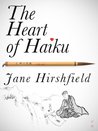
As part of a challenge, I had to pick a "book with a cover you hate", and found this one. Hate is a strong word, but I can't say this is a gorgeous, elegant cover. The font is anything but stylish. However, what really irks me is the little heart that apparently tries to embellish the letter "i". (A red heart, no less.) After making said changes, perhaps I could live with that floating pencil that at this moment looks rather superfluous to me.
(This could easily be another episode of The Best of Pointless Conversations.)

The cover might be questionable but the content is certainly engrossing. Due to her engaging writing, Hirshfield brings to the reader a vivid account of Bashō's life and his long-lasting relationship with poetry: his beginnings and the evolution of his creative process. Thus, this work also become a useful lesson on how to write haiku. Its 3-5-3 syllable structure is misleading since it entails a level of difficulty not many are able to manage. It reminds me of the plain words and random line breaks some people call poetry nowadays.
silence:
the cicada's cry
soaks into stone

When thinking of haiku, many link it to the evocation of seasons, but its nature is much more complex, considering it speaks of both the world and the self. Musicality and wordplay - often lost in translation - are other attributes that also show the poet's wit and power of observation. According to Hirshfield, there's an alloy of beauty and sadness in Bashō's poems known as sabi, which means to feel keenly one's own sharp and particular existence amid its own impermanence. At the same time, this idea relates to the concept of wabi, or beauty in the most ordinary situations and objects.
coldness—
deep-rooted leeks
washed white

Of course, Bashō's poems also contain mundane reactions, at times resembling petty complaints everyone thinks or a plea for someone's independence. There's an amusing poem I don't remember ever reading.
don't copy me,
like the second half
of a cut melon!

Unforgettable now.

The last haiku Bashō wrote was on November 25th, a few days before his death in 1694. Perhaps it has a completely different meaning, but it always reminded me of the feeling some older people speak of: waves of energy running through their bodies, which they can barely move now. An active mind inside a body unable to respond.
on a journey, ill,
dreams scouring on
through exhausted fields


Aug 4-5, 18
* Later on my blog.
85 reviews22 followers
October 31, 2022
أردت إنهاء تحدي القراءة ولم أحتمل أن أقرأ كتابا طويلا فاخترت هذا
أقصر شيء أمكنني إيجاده
هو من 50 صفحة على تلفوني
الكتاب مقدمة للهايكو، بسيط وقصير وسهل

يركز على مؤسس الهايكو تحديدا

ربما العنوان يوحي بعمق أكثر مما فيه في الحقيقة، ليس لدرجة "القلب"
ولأنه مجال أول مرة أقرأ فيه لا أعرف أين أضع الكتاب أو كيف أقيمه
لكن هل وصلتني فكرة عن الهايكو؟ بالطبع

جملة أوصلت لي روح الهايكو وأعجبتني بشدة - أنقلها من ذاكرتي لأنني أكسل من أن أفتح الكتاب وأبحث عنها - أن تطور الهايكو مثل أن يتطور فن محترم من اليوتيوب اليوم
وتبدو الآن غبية حين انتزعتها من سياقها ومع صياغتي لكنها عميقة والله
Profile Image for Jim.
2,417 reviews799 followers
October 2, 2011
This little gem of a book is about a Japanese 17th century poet called Matsu Basho, author of The narrow Road to the Far North and other collections of haiku, mostly relating to travel, with his "windswept spirit." What would I give to be able to do as he did and leave behind such crystalline work!
spring leaving--
birds cry,
fishes' eyes fill with tears

growing old:
eating seaweed,
teeth hitting sand

dusk: bells quiet,
fragrance rings
night-struck from flowers

a cuckoo!
masters of haiku
vanish

On a leafless branch,
a crow's settling:
autumn nightfall
My review could easily be as long as Hirshfield's little book, especially if I add my unfulfilled longings of travel. Of a good family, Basho chose enlightenment by poetry and travel, and I think he readily attained it. As he wrote:
The moon and sun are travelers of a hundred generations. The years, coming and going, are wanderers too. Spending a lifetime adrift on boat decks, greeting old age while holding a horse by the mouth -- for such a person, each day is a journey, and the journey itself becomes home.
It is entirely possible that I will re-read this book. Many times.
Profile Image for Kenya Wright.
Author 147 books2,647 followers
April 20, 2013
This book changed by life.

The author discusses the great Haiku poet Basho.

One of the most awesome things that this poet believed is that, it isn't the actually BOOK that is important.

It is the journey of writing the book, that's what authors should enjoy, the whole process of creating the story.

So. . .

that changed my freaking life!

I actually write faster for some reason because I'm not worried about profits or reviews or bestsellers' lists or rankings.

I'm just enjoying the journey and spreading out wishes that others enjoy it too.
Profile Image for Kelly Furniss.
1,030 reviews
December 31, 2017
After just finishing the poetry Milk and Honey by Rupi Kaur and looking to complete my reading challenge for 2017 I came across this. I have a interest in Japanese literature ( Murakami) and so I was very interested to read this short 29 page analysis on the development of Haiku, a Japanese poetical form by the poet Basho. It quickly skims on his life and how events shaped his poetry, it's analytical but insightful and powerful.
This has inspired me to look further in to Haiku and read Hirshfield's work also.
A very enjoyable read.
Profile Image for Dee.
37 reviews20 followers
November 23, 2019
Still oscillating between 3 and 4 stars so going ahead with a 3.5.
However, that is owed to the breaks I took in between, not for the writing. Because Jane Hirshfield has made a great effort to give a glimpse into the life and works of Basho.
Loved the way the author has weaved stories from Basho's life and what phase he was going through along with the Haiku, so much so the transition doesn't seem to protrude.

Favorites are here:


spring leaving—
birds cry,
fishes’ eyes fill with tears

first winter downpour:
the street monkey, too,
seems to look for his small straw raincoat

the crescent moon:
it also resembles
nothing

Year after year,
the monkey’s face
wears a monkey’s mask

year-end-thought:
one night,
even a thief came to visit


Loved wabi-sabi references.
Really intrigued to learn further about Zen way of life.
Profile Image for Nadya Booyse.
182 reviews29 followers
September 12, 2024
A very quick read exploring both the origins and form of Haiku in Japan through the works of its creator, Basho. I loved it for the elegant way it unravelled this very restrictive form of poetry through Basho's life, exploring the various ways to interpret verses. It's not about learning how to write haiku but you may find yourself inspired to try your hand at a few: it's just beautiful language and thoughtful feels.
Profile Image for Lena Lang.
80 reviews2 followers
Read
July 5, 2012
I really liked this short introduction to Basho's poetry. When I started this book I really didn't know too much about haiku beyond what I remember from grade 6 english. Strangely the only thing I was taught about them was that they drew their imagery from nature and also that they had a very set form.

What I learned in this book is that haiku, al least according to Basho, had less to do with form, and everything to do with experiencing life moment to moment. Basho was renowned for his snapshot like poems that in their simplicity opened a window onto the human experience. I think a Japanese speaker would be more apt at appreciating the rhythm of his poetry and the relationship of the form and the meaning that is inherent in the poems. Even though I don't speak Japanese I still want to read lots of his poetry because I think the images are ones that will stay with me for a long time. It't the kind of poetry you could keep on your coffee table and open up every once in a while to breathe in a poem and take a moment to contemplate life.

Two neat facts from the book. Basho was likely a homosexual. Basho is not his real name. Basho is a nickname meaning plantain tree. He lived in ahut that was next to a plantain tree and after a while people started to refer to him by that feature of his humble abode. He was poor , by choice, for the majority of his life.
Profile Image for Bookmuppet.
139 reviews21 followers
Read
June 14, 2023
A quick read about Bashō, with a small selection of some haikus from different periods of the poet's life.

Comparison can be the thief of joy, but skillful parallels can convey interesting insights. Like here:

"Bashō’s seventeen-syllable haiku, looked at closely, are much like Emily Dickinson’s poems: they are small but many (both poets left behind over a thousand poems), and the work of each of these poets crosses implausibly variable and precise terrains of mind and world."


Given haiku's association with solitude and moments of unique insight, I was really surprised to learn that larger groups of poems often emerged from a conversation among poets:

"Linked verse could be written by two people, but more often were composed over the course of several hours—during which a good amount of sake or rice wine might be consumed—by a larger group of three to seven poets."

Solitude is certainly important, but it's part of a larger story -- of Bashō, of haiku.
Profile Image for Vinay Leo.
1,006 reviews85 followers
June 6, 2024
I have been passionate about the haiku form of poetry since more than a decade. Through the heart of haiku, I have learned a part of its history, and about one of the masters of haiku - Matsuo Basho. It was also a way to reconnect with a part of myself, realizing why I find expressing a lot in brevity quite a beautiful challenge. It has given me food for thought.
Profile Image for Em.
468 reviews50 followers
June 27, 2017
Fun and informative

This was a quick look into the life of an important man in the history of the haiku. It was a lot of fun to read and I learned a lot.
Profile Image for Ioana Crețu.
194 reviews32 followers
July 27, 2020
„Bashō wrote, “The moon and sun are travelers of a hundred generations. The years, coming and going, are wanderers too. Spending a lifetime adrift on boat decks, greeting old age while holding a horse by the mouth—for such a person, each day is a journey, and the journey itself becomes home.”                                                                            
shy above flowers’ faces, a hazy moon.

lightning— a night heron’s cry flies into darkness

Bashō’s poems also instruct in an alternative possibility of being. One useful way to approach a haiku is to understand each of its parts as pointing toward both world and self. Read this way, haiku remind that a person should not become too fixed in a singular sense of what the self might consist of or know, or where it might reside. winter day: on horseback, a frozen shadow

Some haiku seem reports of internal awareness, some seem to point at the external, but Bashō’s work as a whole awakens us to the necessary permeability of all to all.

Feeling within ourselves the lives of others (people, creatures, plants, and things) who share this world is what allows us to feel as we do at all.”
Profile Image for Seren.
141 reviews
December 31, 2014
I enjoyed it so much, I bought my own ebook copy. It's very good the way the author works the poetry into a biography of the author, giving personal and social context to the compositions. It certainly helped me to understand Basho's forms better.
Profile Image for Aishwary Mehta (The_Fugitive_Biker).
230 reviews31 followers
November 19, 2024
12th book of 2024 (244 Books read overall)

Quote from the Book I Liked - Feeling within ourselves the lives of others (people, creatures, plants, and things) who share this world is what allows us to feel as we do at all. (Page no. 38-39)

Rating - 4 Stars

Read in - November 2024

*Important take from the book* - To read a haiku is to become its co-author, to place yourself inside its words until they reveal one of the proteus-shapes of your own life. (Page no. 9)

Summary - In seventeenth-century Japan, the wandering poet Basho developed haiku, a seventeen-syllable poetic form now perhaps the most widely written type of poetry in the world. Haiku are practised by poets, lovers, and schoolchildren, by “political haiku” twitterers, and by anyone who has the desire to pin perception and experience into a few quick phrases. This essay offers readers unparalleled insight into the living heart of haiku—how haiku work and what they hold, and how to read through and into their images to find a full expression of human life and perceptions, sometimes profound, sometimes playful.

My Review -

Where should I start? This type of book is not been read by me for a very long time. It's not one of those typical biographies with dates and when and what the person it's about did. It's been portrayed here as a journey taken by Matsuo Basho, a journey of Basho's life and we are on board to witness it through his eyes. Jane Hirshfield, the author, did a very-good job in translating and writing about the life of poet Basho. I don't know much about other readers but it felt as though Basho himself was talking to us and taking us through his life. The early days, the middle years of turmoil and slowly keeping up with his surroundings and writing whatever he can find a feeling in about, that is, in almost everything. From lethargy to sickness to joy of being in his Old-Hut's shade or simply watching the Travellers straw hat! His writing along with the Zen Buddhist teaching, feels warmth-giving when he undertook it. But I like how he defines his understanding of Zen with the poetry form he wrote, in his own words -

Zen is less the study of doctrine than a set of tools for discovering what can be known when the world is looked at with open eyes. Poetry can be thought of in much the same way, and the recognition of impermanence, ceaseless alteration, and interdependence—the connection of each person, creature, event, and object with every other—need not be “Buddhist.” (Page no. 13-14)

Thus, in all, this book is a good take on understanding the Haiku form of Poetry which is probably being loved by many! The small yet way deeper Art of poetry. And not to forget the Japanese culture and the landscape and time era of Matsuo Basho's life, from 1644 to 1694, is a charm in itself, to me for sure, as I love Japanese writing and the culture that's been followed there.

Conclusion - A beautifully written Biography without actually feeling like one.

Full Review on Blog.
Link to Blog - The Tales of Fugitive Biker
798 reviews123 followers
December 5, 2017
A very short, but probably as accurate as we can get, overview of Basho’s life. I enjoyed Hirschfield’s translations with Minako Awaki so much and am longing for a docudrama or a feature film of Basho’s life. It would be so cinematic!

This essay covers a lot of ground, but doesn’t spend much time on conjecture. I had no idea what kind of life Basho led, and found the anecdotes (even with notes explaining how accurate or how supplemented a particular point of the narrative was) to be so illuminating, and found a whole new appreciation for Haiku.

It’s so fascinating to know that a well-documented life still had many gaps of knowledge in it, and to hear the amount that Basho traveled was inspiring. And of course, I found it terribly intriguing to know that one of his friends deaths, a friend whose relationship with Basho has been referred to as ‘childhood friend’ or even ‘lover’, created a giant change in Basho’s life.

Instead of reading my poor, disorganized thoughts on this, you should just go read it.
Profile Image for Sarah Booth.
408 reviews45 followers
May 24, 2018
More about Bashō

This book is more about Bashō than about haiku per se. it’s a quick read telling about his life and his relationship to poetry. He lived as a wanderer in between spending a few years living in huts built or lent to him by students and admirers. He had lots of humor in his work and I bet would have been quite fun to have a couple bottles of saki with.
Haiku used to be something co-written. Someone writes a haiku and it is then given to someone else who writes two seven syllable lines after. I am fascinated by this. Must try it with friends. There is a name for this that the book tells us but I’m on the subway so looking for it right now is inconvenient.
Anyway, it’s a good read.
Profile Image for Kasey.
84 reviews2 followers
January 13, 2022
Was expecting more Haikus

Note to the future reader
Count the syllables in original Japanese and not the English translation. This threw me off at first until I caught it when I counted them.
I came into this expecting more poetry and less about the start of the Haiku. I did enjoy the historical context and stories though.
962 reviews15 followers
July 7, 2017
This books added depth to my understanding of Haiku. I do appreciate the brevity of the depth with just a few words.
Profile Image for Josh Guilar.
207 reviews4 followers
October 10, 2023
An overview of Basho's life and approach to haiku. This essay is enjoyable to read and provides some good advice for writing and reading haiku.
Profile Image for Marvin Brauer.
Author 9 books11 followers
January 3, 2024
A delightful little book in which the prose describing the haiku evokes the same sense as the poems. I’ll be reading this again
Profile Image for Tanya.
88 reviews
December 26, 2016
Insight

Like to learn more about haiku and one of its masters? This gem is for you. Quick read but could be savored and re-read daily.
Profile Image for Stormie Steele.
Author 3 books3 followers
January 8, 2014
The Heart of Haiku is an exceptional read. I found invaluable inspirations in this book. The significance of staying open and available for the simplicity of life's offerings - through "all things" - opens the door for a life of gratitude.

It is worthy of reading over & over again. One of my favorite quotes, "...each day is a journey, and the journey itself, becomes home"~Basho

I agree! ~Storm

The Heart of Haiku (Kindle Single) The Heart of Haiku by Jane Hirshfield

My rating: 5 of 5 stars


The Heart of Haiku is an exceptional read. I found invaluable inspirations in this book. The significance of staying open and available for the simplicity of life's offerings - through "all things" - opens the door for a life of gratitude.

It is worthy of reading over & over again. One of my favorite quotes, "...each day is a journey, and the journey itself, becomes home"~Basho

I agree! ~Storm


View all my reviews
Profile Image for Huda.
30 reviews
August 4, 2011
I really didn't know what to expect, and was surprised how much I liked this little book. It paints a real picture of the time and the role of one pretty unusual man, Bashō, in evolving this form of poetry.

The book has a way of connecting the past to the present. Here the author is talking about "renga" writing in 17th century Japan:

"As with Dungeons and Dragons a few years ago, or Worlds of War and Second Life today, linked verse brought its practitioners into an interactive community that was continually and rapidly evolving. Hovering somewhere between art-form and competition, renga writing provided both a party and a playing field in which intelligence, knowledge, and ingenuity might be put to the test. Add to this mix some of street rap’s boundary-pushing language, and, finally, the video images of You-Tube. Now imagine the possibility that a “high art” form of very brief films might emerge from You-Tube, primarily out of one extraordinarily talented young film-maker’s creations and influence. In the realm of 17th-century Japanese haiku, that person was Basho."

There are some very interesting renditions of concepts hard to capture in the English language, such as "sabi". And the poetry itself, then, takes on a whole different feeling. Some of it is quite funny:

a hangover?
who cares,
while there are blossoms  


Profile Image for David.
Author 1 book123 followers
April 28, 2013
At under 30 pages, this Kindle Single doesn't outstay its welcome. For that matter, at that length, it doesn't overwhelm the elegant simplicity of the haiku form itself.

I loved learning about Bashō, the creator of haiku. And I loved learning, briefly, about the other forms of poetry that entertained and enriched Japan (and in which Basho himself participated).

I love the idea of a boozed-up social gathering in which friends would create a communal poem, each adding a bit in turn and attempting to one-up each other with cleverness of verse. That would be a completely awesome way to spend an evening. If there's an actual group somewhere around me that does something like that, would I have the guts to join? Maybe I should start one.

Without Hirshfield's excellent explanations and background information, Basho's haikus would have left me completely baffled. I felt they completely enriched my understanding of what Basho might have meant by them. I also loved the fact that she admitted that we weren't entirely sure if Basho intended one or more or none of her offered explanations for the true meaning of his cryptic words. That's the kind of honesty that I love, love, love in any critical analysis of another person's work.

Wow, I used the word 'love' a lot in this review. I guess I need to bump my rating up to 5 stars. There we go.
Profile Image for Ulf Wolf.
55 reviews21 followers
June 28, 2015
This little jewel of a book takes you by the hand and leads you down the apparent mystery of Haiku; leads you down and clarifies lightly and nicely by alighting on the amazing life of Matsuo Bashō, the 17th Century father of the art form.

Haiku, according to Hirshfield, is “a near-weightless durable instrument for exploring a single moment’s precise perception,” and I cannot imagine a better, or more beautiful, encapsulation of this wonderful poetry, where, as Bashō puts it: “If you see for yourself, hear for yourself, and enter deeply enough this seeing and hearing, all things will speak with and through you.”

Hirshfield paints this life of search for poetic truth with clear and vivid colors, leaving you a full and living image of this ancient master, and leaving you with a thirst for more, for a need to explore further, for as Hirshfield puts it: “Bashō’s haiku, taken as a whole, conduct an extended investigation into how much can be said and known by image.” Who would not like to share in those findings?

Bashō was a Buddhist who sought to express the deathless in the not-so-deathless; and it seems to me that he might just have succeeded.

Anyone interested in the history of, the how and why of, and the wonder of Haiku will not go far wrong in availing him- or herself of this little wonder of a book.
Profile Image for Jason Kirk.
Author 10 books27 followers
June 25, 2013
Amazon.com Review: To hear Jane Hirshfield tell it, the 17th-century Japanese poetry scene was a cross between a Surrealist "exquisite corpse" session and a sake-lubed rap-battle circuit. But this is just one of the historically enlightening gems packed into her beautiful essay on Matsuo Bashō, the most famous purveyor of haiku. Packed with original translations, The Heart of Haiku is an elegant and reverent exploration of an itinerant artist who "wanted to renovate human vision by putting what he saw into a bare handful of mostly ordinary words, and… to renovate language by what he asked it to see." Absolutely no prior interest in poetry is necessary to take from Hirshfield's essay the inspiration to drop everything, walk out in to the wide world, open your eyes, and find out for yourself that "even the briefest form of poetry can have a wing-span of immeasurable breadth." --Jason Kirk
Displaying 1 - 30 of 171 reviews

Can't find what you're looking for?

Get help and learn more about the design.